The chain is fine...but I ordered the wrong size. Nine links of the chain I ordered equals six of the size I wanted. My error...
How can I straighten out the springs? I can't use them coil uo as is.
Your payment information is processed securely. We do not store credit card details nor have access to your credit card information.
Get fitment advice & recommendations
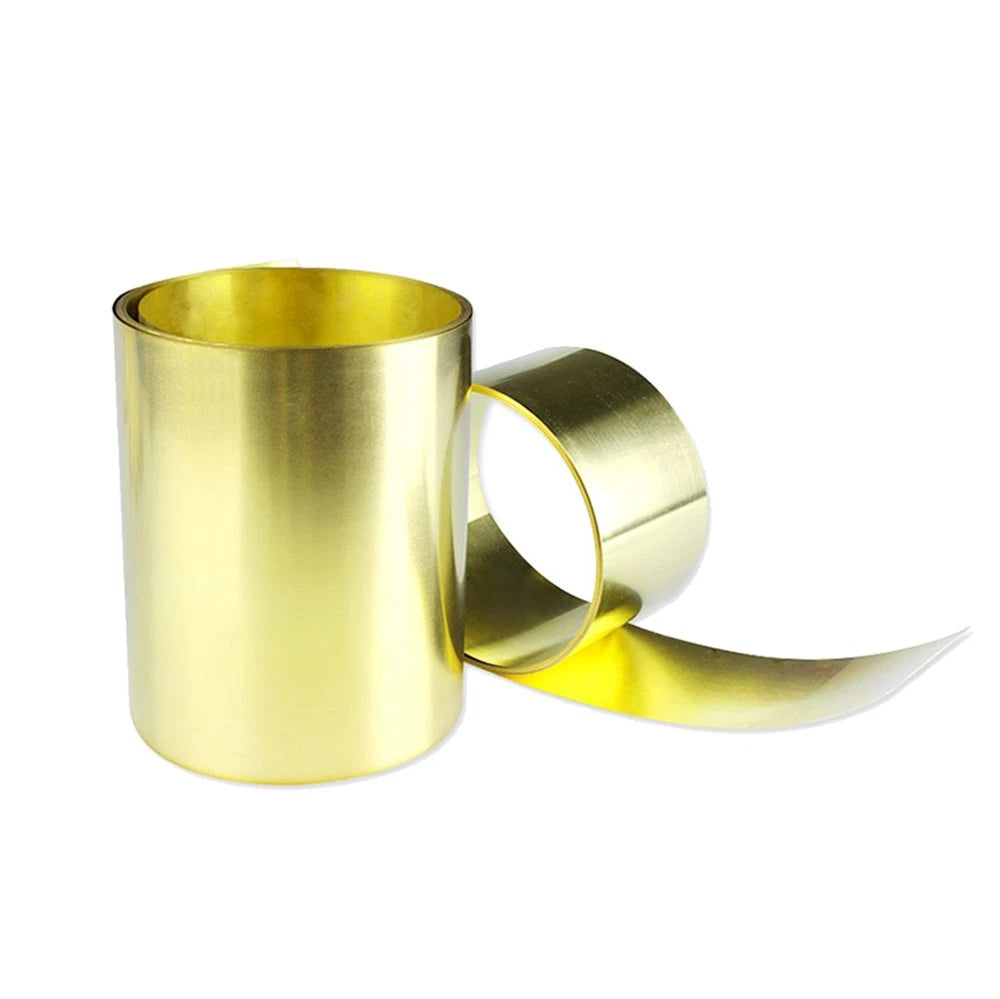
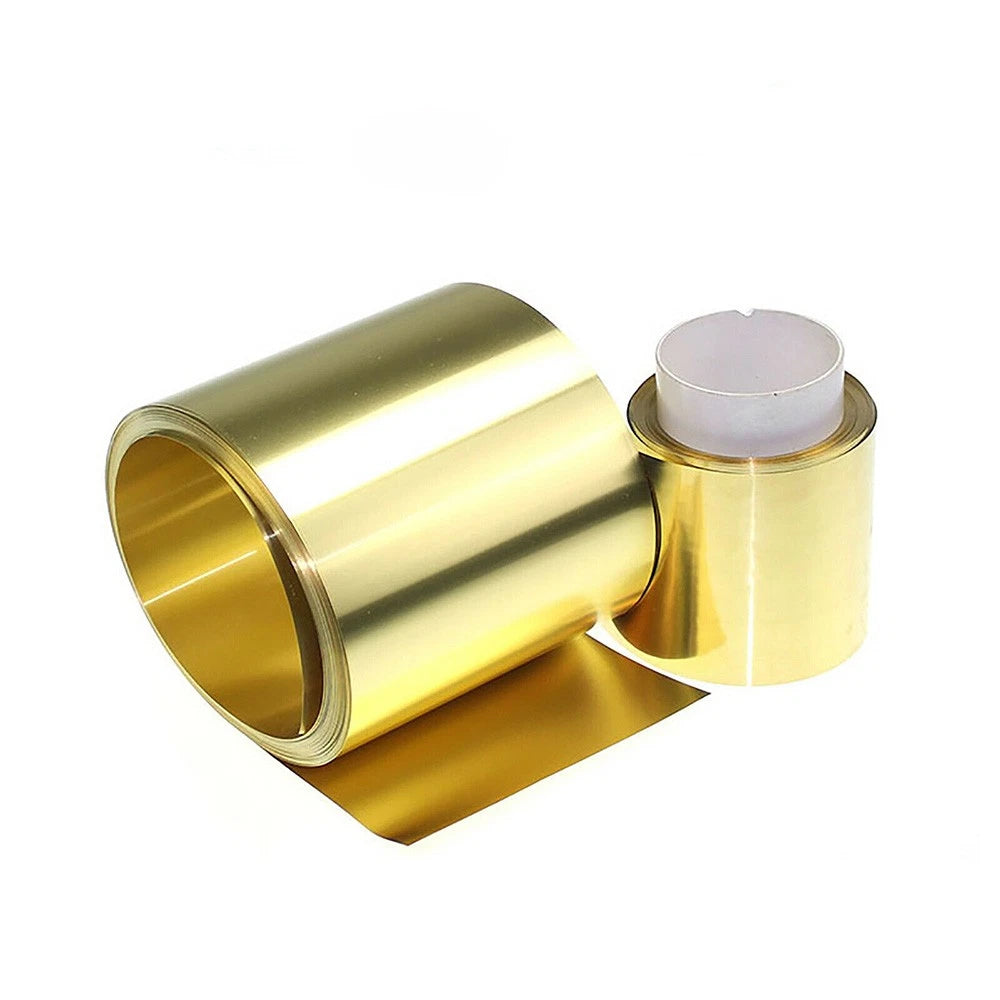
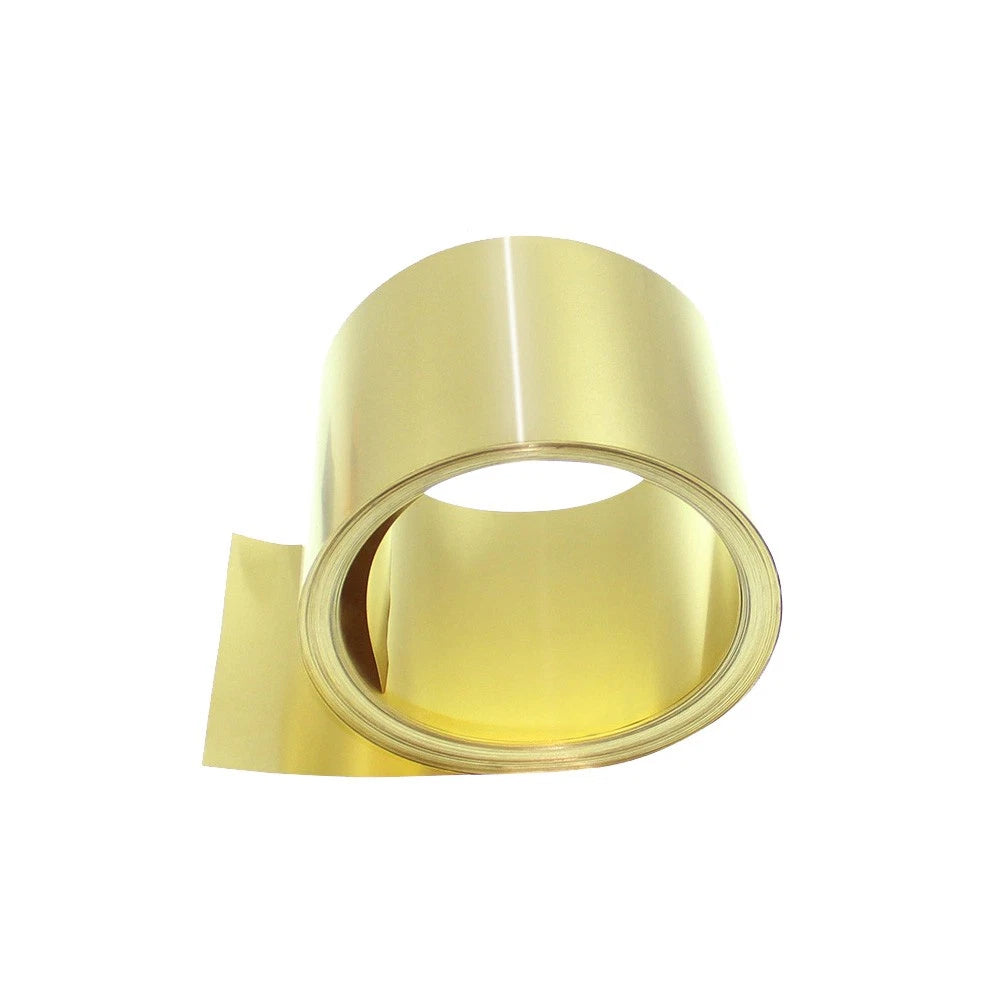
When your project demands exact tolerances and a material that holds its shape without adding bulk, standard sheet metal falls short. Machinists, model builders, electronics hobbyists, and DIY craftspeople who need reliable ultra-thin metal stock will find this brass foil strip an indispensable addition to their workshop. Whether you are closing a gap, reinforcing a joint, or crafting a decorative inlay, having the right thickness on hand makes all the difference.
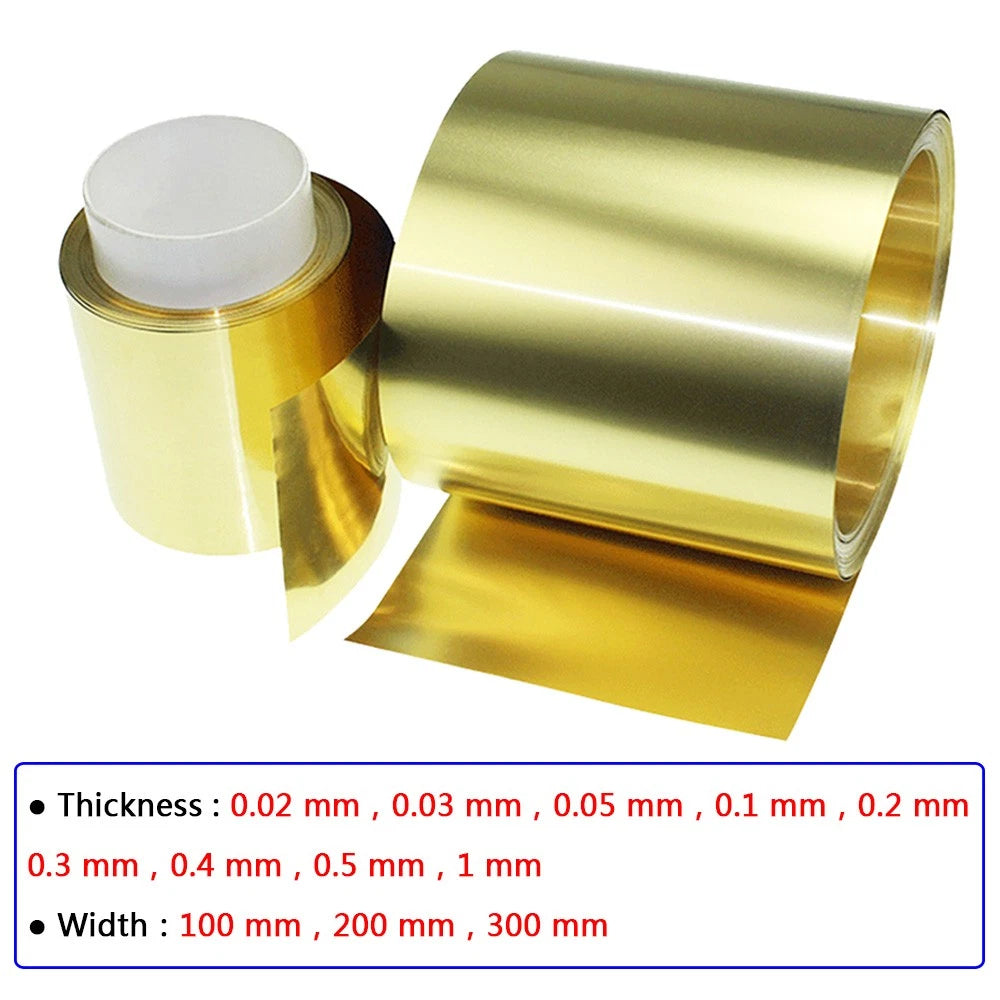
Each piece is cut from solid brass (copper-zinc alloy, CuZn) foil stock. Thickness options span 0.02 mm to 1 mm (approximately 0.0008 in to 0.039 in), with width choices of 100 mm (≈3.94 in), 200 mm (≈7.87 in), and 300 mm (≈11.81 in). Roll/strip lengths are available in 300 mm (≈11.81 in) and 1000 mm (≈39.37 in) formats, giving you the flexibility to cut exactly what you need with minimal waste.
Typical applications include precision shimming and gap-filling in mechanical assemblies, thin conductive layers for DIY electronics and PCB prototyping, decorative inlays and marquetry in woodworking, and scale model detailing where ultra-thin brass sheet for model making is essential. The natural golden finish also makes it a popular choice for jewelry crafting and artistic metalwork.
| Material | Brass (Copper-Zinc Alloy, CuZn) |
|---|---|
| Finish | Natural brass / polished golden |
| Thickness Range | 0.02 mm – 1 mm (0.0008 in – 0.039 in) |
| Width Options | 100 mm / 200 mm / 300 mm |
| Length Options | 300 mm / 1000 mm |
| Hardness | See variant options |
| Temper | See variant options |
| Tolerances | See variant options |
| Quantity per Order | 1 Pcs (per variant selected) |
| Item Type | Metal Sheet / Flat Stock / Foil Strip |
For shimming and gap-filling in precision mechanical assemblies, thicknesses of 0.02–0.1 mm are typically used to achieve fine adjustments. For structural reinforcement or decorative inlays, 0.3–1 mm provides more rigidity. If you are unsure, start with a mid-range option (0.1–0.2 mm) and test fit before committing to a thicker gauge.
Brass has a tensile strength typically in the range of 300–500 MPa depending on alloy composition and temper. For light-duty shimming and alignment tasks this is generally adequate. For heavy industrial load-bearing applications, consult an engineer to confirm suitability for your specific load and environment.
Brass does not rust (it contains no iron), but it can oxidize and develop a patina over time when exposed to moisture and air. For indoor or low-humidity applications this is rarely a concern. If corrosion resistance is critical, consider applying a clear lacquer coat or storing unused pieces in a sealed bag.
Yes. Brass is highly solderable with standard rosin-core or acid-core solder and a suitable flux. It also responds well to silver brazing for stronger joints. Thinner gauges (under 0.1 mm) heat up very quickly, so use a low-wattage iron and work fast to avoid warping.
Gauges of 0.02–0.2 mm can be cut cleanly with sharp scissors, a craft knife and steel ruler, or a rotary cutter. Gauges of 0.3–0.5 mm work well with tin snips or aviation shears. The 1 mm gauge is best cut with a metal-cutting blade on a jigsaw or angle grinder. Always deburr cut edges with a fine file or sandpaper for safety.
Yes. Brass is electrically conductive and is commonly used for grounding straps, EMI/RFI shielding enclosures, and low-current contact strips in DIY electronics. Thinner gauges (0.02–0.1 mm) are particularly popular for flexible shielding applications where the foil needs to conform to irregular surfaces.
Absolutely. The natural golden finish of brass makes it a popular choice for jewelry, decorative inlays, marquetry, and mixed-media art. Thinner gauges are easy to stamp, emboss, and cut into shapes. The material can be polished, patinated, or lacquered to achieve a range of decorative effects.