UPVC PVC Pipe Fittings — Versatile Clear Plumbing Connectors for Every Joint
When a leaking joint or an awkward pipe run brings your project to a halt, having the right fitting on hand makes all the difference. Whether you are a homeowner tackling a garden irrigation upgrade, a workshop builder routing coolant lines, or a tradesperson completing a plumbing rough-in, these UPVC PVC pipe fittings give you a reliable, chemical-resistant connection without the guesswork.
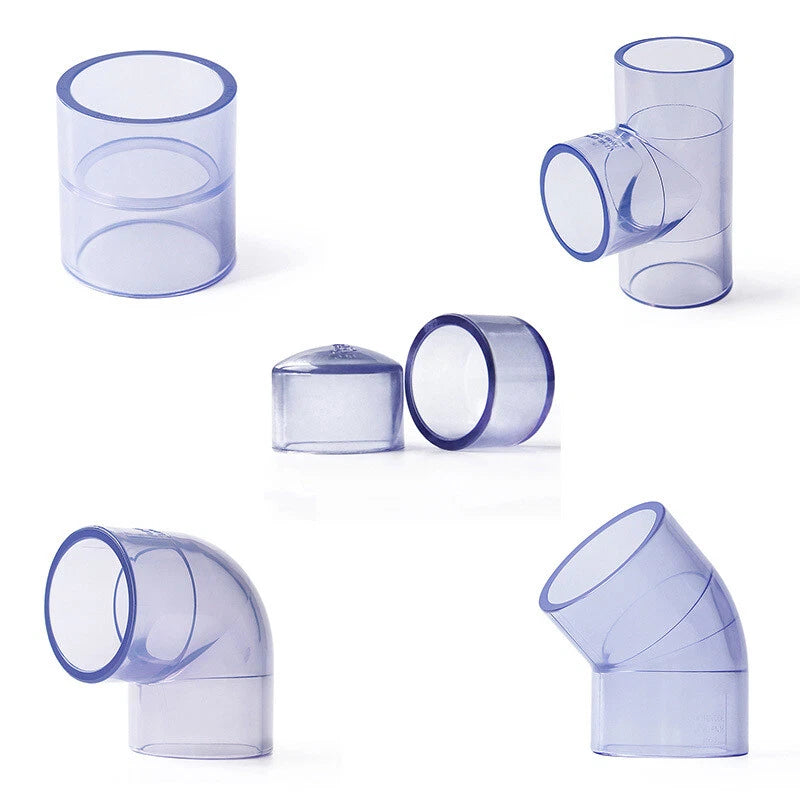
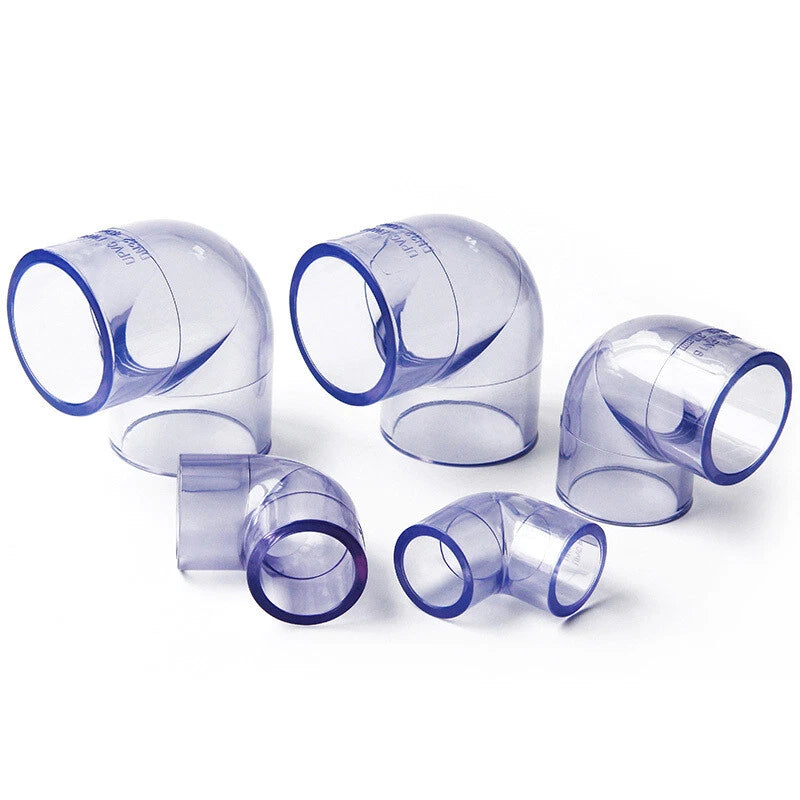
Each fitting is manufactured from unplasticised PVC (UPVC) in a clear finish, allowing you to visually confirm solvent-weld penetration and flow direction at a glance. The range covers inner diameters from 20 mm (approx. ¾ in) up to 110 mm (approx. 4⅓ in), with wall thickness typically 2–5 mm depending on diameter. Twelve fitting shapes are available: Straight coupler, 45° Elbow, 90° Elbow, Tee, Cap, Male Straight adaptor, Female Straight adaptor, Ball Valve, Double Union Ball Valve, Check Valve, Union Joint, and Cross.
Typical use cases include residential cold-water supply lines and drain runs, aquarium and pond filtration manifolds where flow visibility matters, and light-duty industrial process piping for non-aggressive fluids. Long-tail applications such as "clear PVC tee fitting for aquaponics", "UPVC 90 elbow 50mm irrigation", and "solvent weld ball valve 32mm pool plumbing" are all covered within this single product listing.
🔗 Compatible with standard UPVC / PVC pressure pipe (PN10–PN16) in matching inner diameters. Solvent-cement jointing method. Not rated for hot-water or steam service.
✅ Key Features of These UPVC PVC Pipe Fittings
🔍
Clear UPVC Construction — Transparent body lets you inspect solvent-weld depth and monitor flow without cutting into the line.
📐
Wide Size Range — Inner diameters from 20 mm to 110 mm (¾ in to ~4⅓ in) cover the majority of residential and light commercial pipe schedules.
🔧
12 Fitting Shapes — Straight, 45° Elbow, 90° Elbow, Tee, Cap, Male Straight, Female Straight, Ball Valve, Double Union Ball Valve, Check Valve, Union Joint, and Cross — one listing covers your entire run.
🛡️
Corrosion & Chemical Resistance — UPVC is unaffected by chlorinated water, mild acids, and common cleaning agents, making it suitable for pool, irrigation, and aquaculture systems.
⚡
Solvent-Weld Ready — Smooth socket bores are machined to tight tolerances for a full-contact solvent-cement bond — no threading, no gaskets, no leak paths.
🌡️
Cold-Water Rated — Designed for cold-water service (typically up to 60 °C / 140 °F at reduced pressure); check valve and ball valve variants include a lever handle for quick shut-off.
📐 Technical Specifications — UPVC PVC Pipe Fittings
| Material |
UPVC (Unplasticised PVC), clear finish |
| Inner Diameter Range |
20 mm – 110 mm (approx. ¾ in – 4⅓ in) |
| Wall Thickness |
Typically 2–5 mm (varies by diameter and shape) |
| Fitting Shapes |
Straight, 45° Elbow, 90° Elbow, Tee, Cap, Male Straight, Female Straight, Ball Valve, Double Union Ball Valve, Check Valve, Union Joint, Cross |
| Connection Method |
Solvent-weld (socket type); Male/Female Straight variants include BSP thread |
| Pressure Rating |
See variant options |
| Temperature Range |
0 °C – 60 °C (32 °F – 140 °F) at rated pressure |
| Colour / Finish |
Clear (transparent) |
| Standards Compliance |
See variant options |
| Weight |
See variant options |
❓ Frequently Asked Questions
How do I choose the correct inner diameter for my pipe?
Measure the outside diameter of your existing pipe, then subtract the wall thickness twice to get the inner diameter — or simply check the pipe's printed markings (e.g. "20 mm UPVC"). The fitting's inner diameter must match your pipe's outer diameter for a solvent-weld socket fit. If you are unsure, bring a short pipe offcut and compare it against the size options listed above.
Can these fittings handle hot water?
These UPVC fittings are rated for cold-water service, typically up to 60 °C (140 °F) at reduced pressure. They are not suitable for hot-water heating systems, steam lines, or continuous service above 60 °C. For hot-water applications, consider CPVC or copper fittings instead.
Are these fittings resistant to pool chemicals and chlorine?
Yes. UPVC has excellent resistance to chlorinated water, common pool sanitisers, and mild acids or alkalis. This makes the fittings well-suited for swimming pool plumbing, pond filtration, and aquaculture systems where chemical exposure is routine.
What adhesive should I use to join these fittings?
Use a PVC/UPVC solvent cement (also called solvent weld adhesive) rated for the pipe schedule you are working with. Clean and lightly abrade both the pipe end and the socket bore, apply primer if required by local code, then apply solvent cement to both surfaces and push firmly together with a quarter-turn. Allow the joint to cure per the adhesive manufacturer's instructions before pressurising.
What is the difference between the Ball Valve and the Double Union Ball Valve?
The standard Ball Valve is a single-body valve solvent-welded directly into the line — it provides shut-off but must be cut out for servicing. The Double Union Ball Valve features threaded union connections on both ends, allowing you to remove and reinstall the valve body without cutting the pipe. This makes it the preferred choice for equipment isolation points such as pump inlets and filter housings.
Can I use these fittings for compressed air or gas lines?
These fittings are designed and rated for water and compatible liquid service only. Using PVC/UPVC fittings for compressed air or gas is not recommended, as a sudden failure under pneumatic pressure can cause brittle fracture. For compressed air, use fittings specifically rated for pneumatic service.
How do the Male Straight and Female Straight adaptors differ from the plain Straight coupler?
The plain Straight coupler joins two plain-end UPVC pipes socket-to-socket with solvent cement. The Male Straight adaptor has a solvent-weld socket on one end and a BSP male thread on the other, allowing connection to a threaded female port (e.g. a pump or valve body). The Female Straight adaptor reverses this — socket on one end, BSP female thread on the other — for connecting to a male-threaded fitting or tap.
Which fitting shape should I choose for a branch connection?
For a single branch at 90°, choose the Tee. For a four-way branch (two inline, two lateral), choose the Cross. If you need to isolate the branch flow independently, pair a Tee with a Ball Valve on the branch outlet. The Union Joint is useful when you need to disconnect a section of pipe for maintenance without cutting.
🛒 Select your Fitting Shape and Inner Diameter above, then add to cart.