The chain is fine...but I ordered the wrong size. Nine links of the chain I ordered equals six of the size I wanted. My error...
How can I straighten out the springs? I can't use them coil uo as is.
Your payment information is processed securely. We do not store credit card details nor have access to your credit card information.
Get fitment advice & recommendations
When a bicycle hub starts to feel rough underfoot or a headset develops play that no amount of adjustment can fix, the culprit is almost always worn or incorrectly sized loose ball bearings. Cyclists, mechanics, and workshop technicians who need an exact replacement — not a close approximation — rely on dimensionally accurate loose ball bearings to restore factory-smooth rotation without shimming or guesswork.
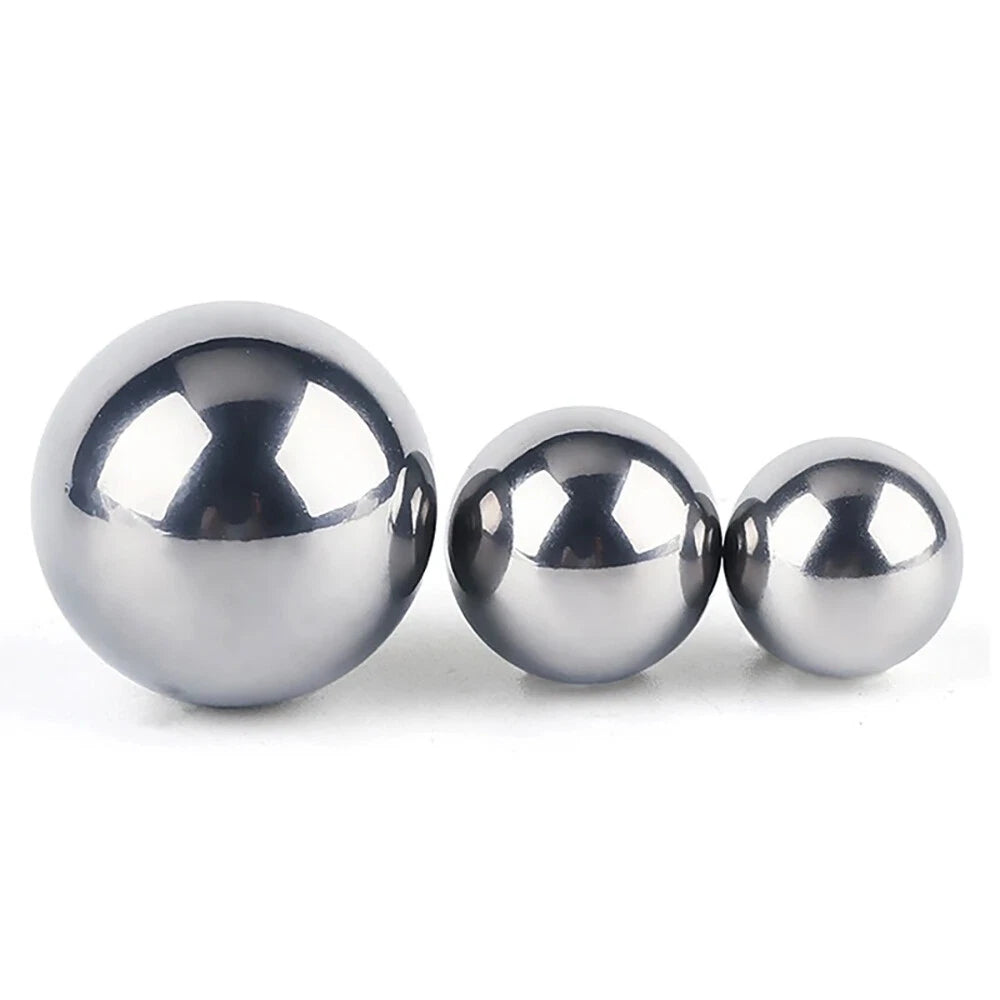
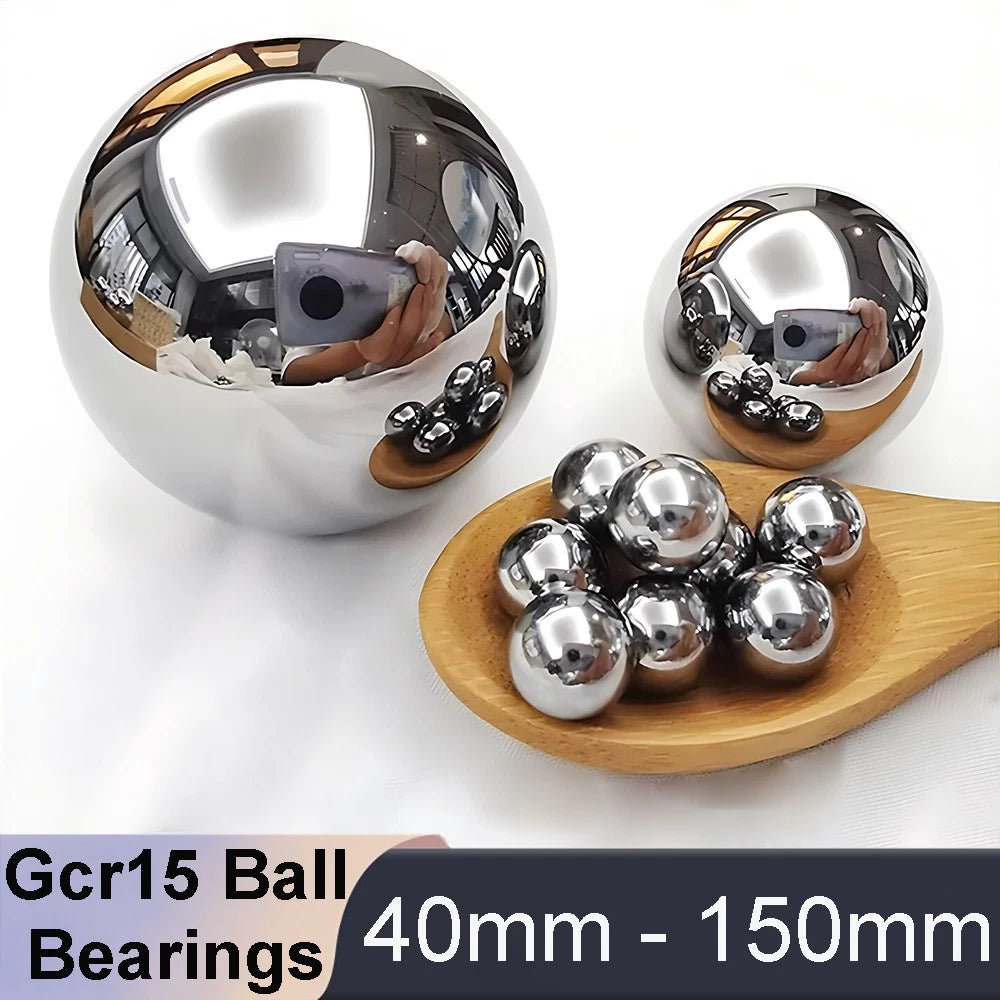
These Weldtite bicycle loose ball bearings are precision-ground steel rolling elements available in item diameters from 40.1 mm (approx. 1.579 in) up to 150 mm (approx. 5.906 in), sold individually or in packs of 2, 3, or 5. Each ball is manufactured to tight spherical tolerances to ensure consistent contact across the bearing race and even load distribution under pedalling forces.
Typical applications include cup-and-cone front and rear wheel hubs, threaded and threadless headsets, loose-ball bottom brackets, and vintage or custom bicycle builds where caged bearings are not an option. The wide diameter range also makes these bearings suitable for bicycle-adjacent applications such as cargo bike pivots, recumbent steering assemblies, and tandem drivetrain components.
Available from 40.1 mm to 150 mm, covering the vast majority of cup-and-cone hub, headset, and bottom bracket specifications found on road, mountain, touring, and vintage bicycles.
Each ball is ground to a consistent spherical geometry, minimising surface deviation across the rolling contact zone and reducing vibration transmitted through the frame during riding.
Manufactured from hardened bearing steel to resist deformation under the compressive loads generated by rider weight, road shock, and pedalling torque across the full diameter range.
Order 1, 2, 3, or 5 balls per transaction to match the exact retainer count of your specific hub or headset — no excess stock, no hunting for individual units.
Dimensioned to match OEM loose-ball specifications for common cup-and-cone systems, allowing straightforward replacement without machining or race modification.
Suitable for professional workshop use and home maintenance alike — pair with fresh grease and a cone spanner for a complete hub service that restores smooth, drag-free wheel rotation.
| Item Diameter Range | 40.1 mm – 150 mm (approx. 1.579 in – 5.906 in) |
|---|---|
| Material | Hardened bearing steel |
| Surface Finish | Precision-ground, smooth spherical |
| Bearing Type | Loose ball (uncaged) |
| Compatible Systems | Cup-and-cone hubs, headsets, loose-ball bottom brackets |
| Pack Quantity Options | 1, 2, 3, or 5 balls |
| Diameter Tolerance | See variant options |
| Load Rating | See variant options |
| Corrosion Resistance | Contact us to confirm |
Use a digital micrometer or vernier caliper to measure an existing ball from your hub or headset. Place the ball between the jaws and read the diameter in millimetres. Even a 0.1 mm difference in ball size changes the preload on the bearing race, so always measure rather than estimate. If the original balls are too worn to measure accurately, consult your hub manufacturer's service manual for the specified ball diameter.
No. All balls in a single bearing race must be the same diameter. Mixing sizes causes uneven load distribution across the race, accelerates wear on both the balls and the cup-and-cone surfaces, and can lead to sudden bearing failure. Always replace the full complement of balls in each race at the same time using balls of identical diameter.
The number varies by component. A standard front hub typically uses 9–10 balls per side, a rear hub 9 balls per side, and a threaded headset 18–22 balls per race (upper and lower). Bottom bracket counts depend on the design. Always count the existing balls before ordering, or refer to your component's service documentation. Our pack options of 1, 2, 3, and 5 allow you to order the exact quantity needed.
These hardened steel loose ball bearings are designed to handle the compressive and impact loads typical of road and trail cycling. For sustained high-load applications such as loaded touring, cargo bikes, or aggressive downhill riding, ensure you select the correct diameter for a proper race fit and re-grease the bearings more frequently — typically every 500–1,000 km depending on conditions. Correct preload adjustment after installation is critical for longevity under demanding use.
A medium-weight lithium or lithium-complex bicycle grease is suitable for most cup-and-cone applications. Apply a generous layer to the cup surface so the balls are held in place during assembly and fully coated once the cone is tightened. Avoid thin oils, which wash out quickly, and avoid overly stiff greases in cold climates, which can increase bearing drag at low temperatures.
Cup-and-cone hubs (common on many road and commuter bikes) use loose ball bearings that sit directly in a machined cup and are adjusted via a threaded cone. Cartridge bearing hubs use sealed bearing units pressed into the hub shell and are not serviceable with loose balls. To identify your system, look for an adjustable cone locknut on the axle — if present, you have a cup-and-cone system compatible with these loose ball bearings.
Basic cup-and-cone hub service requires a cone spanner (thin-profile wrench sized to your specific cone flats, typically 13–17 mm), a standard open-end spanner for the locknut, and a clean workspace. A bearing press is not required — loose balls are placed by hand into the greased cup. A pair of tweezers or a magnetised screwdriver tip helps position small-diameter balls without dropping them.