
The chain is fine...but I ordered the wrong size. Nine links of the chain I ordered equals six of the size I wanted. My error...
How can I straighten out the springs? I can't use them coil uo as is.
Your payment information is processed securely. We do not store credit card details nor have access to your credit card information.
Get fitment advice & recommendations
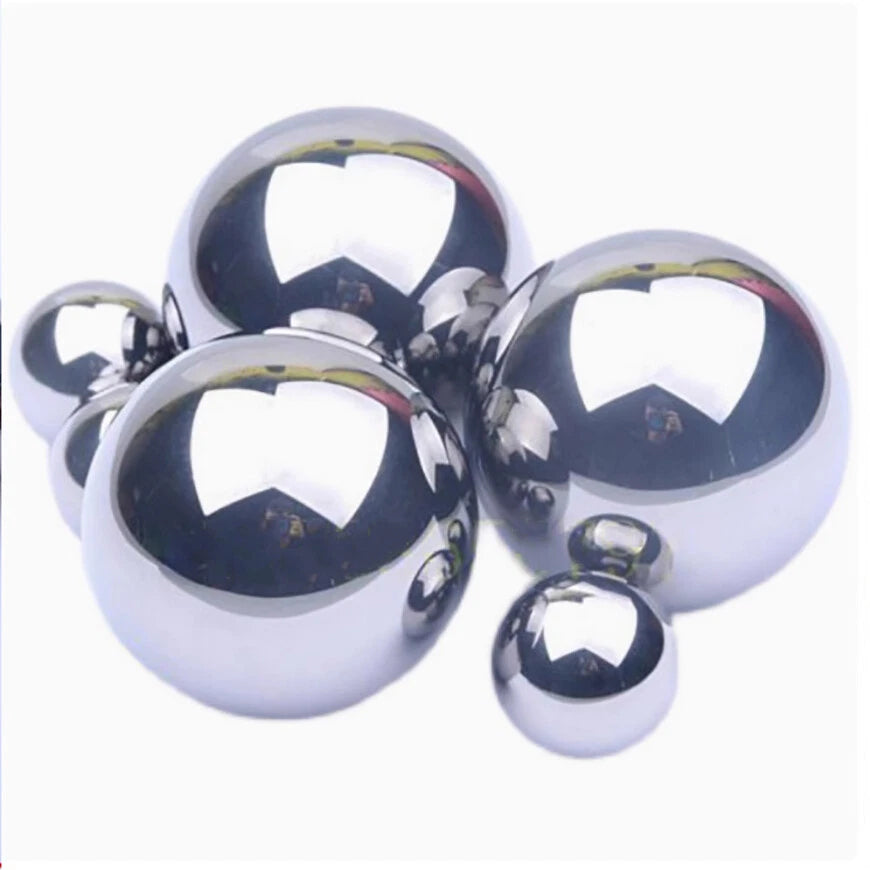
When standard steel or ceramic balls fail under abrasive slurries, corrosive media, or extreme contact loads, engineers and maintenance professionals turn to solid carbide balls. YG6 tungsten carbide balls in G10 grade deliver the dimensional accuracy and surface finish required for direct drop-in replacement in precision bearing seats, valve assemblies, and metering pumps — without the premature wear that shortens service intervals.
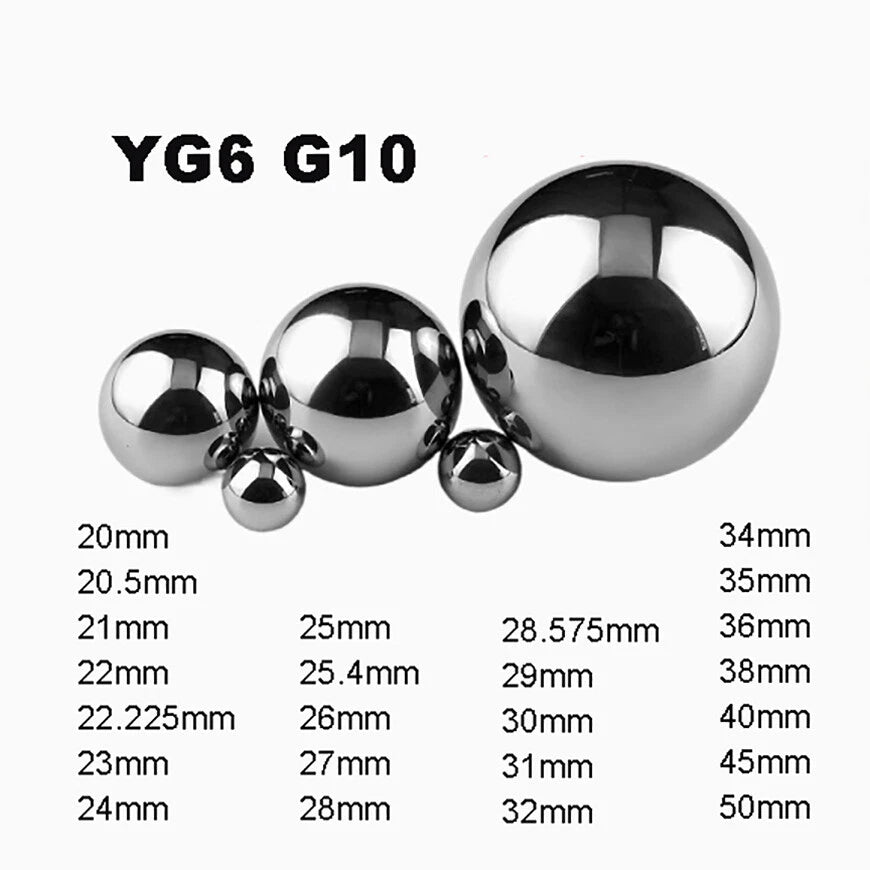
Each ball is manufactured from YG6 grade tungsten carbide (WC with 6% cobalt binder), offering a density of approximately 14.9 g/cm³ and a Rockwell A hardness of ≥89.5 HRA. Available diameters span 20 mm (0.787 in) through 50 mm (1.969 in), with select inch-equivalent sizes including 22.225 mm (7/8 in), 25.4 mm (1 in), and 28.575 mm (1-1/8 in) for compatibility with imperial-dimensioned housings. G10 grade specifies a diameter tolerance of ±0.0025 mm and a surface roughness of Ra ≤0.025 µm.
Typical deployment scenarios include check valve seats in chemical dosing systems, ball-type flow control valves handling abrasive slurries, precision spindle bearing replacement in CNC grinding machines, and wear-resistant balls in hydraulic pump assemblies. The cobalt-bonded carbide matrix resists most dilute acids, alkalis, and organic solvents, making these balls a reliable choice for solid carbide ball bearings in corrosive process environments.
Diameter tolerance held to ±0.0025 mm with surface roughness Ra ≤0.025 µm, enabling direct replacement in precision bearing and valve seats without additional lapping.
WC-Co composition with 6% cobalt binder delivers a hardness of ≥89.5 HRA — significantly harder than tool steel — resisting indentation and surface fatigue under cyclic contact loads.
The dense carbide matrix is resistant to dilute acids, alkalis, and many organic solvents, extending service life in chemical processing, water treatment, and hydraulic applications.
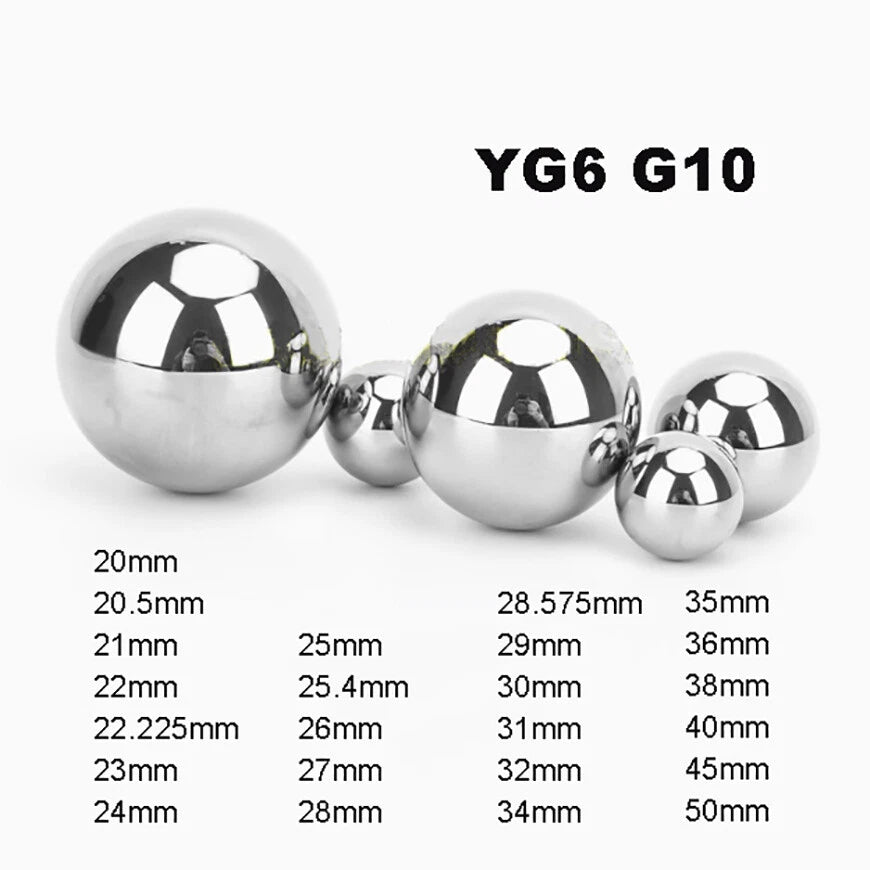
24 discrete sizes from 20 mm to 50 mm, including imperial equivalents (7/8", 1", 1-1/8"), cover the majority of industrial valve and bearing replacement requirements in a single product line.
At approximately 14.9 g/cm³, the elevated mass of each ball promotes reliable seating in gravity-assisted check valves and reduces chatter in high-flow valve applications.
Spherical form accuracy and consistent diameter across the production run allow these balls to replace worn steel or ceramic balls in existing housings without machining modifications.
| Material Grade | YG6 (WC + 6% Co tungsten carbide) |
|---|---|
| Precision Grade | G10 (ISO 3290) |
| Diameter Range | 20 mm – 50 mm (0.787 in – 1.969 in) |
| Available Diameters | 20, 20.5, 21, 22, 22.225, 23, 24, 25, 25.4, 26, 27, 28, 28.575, 29, 30, 31, 32, 34, 35, 36, 38, 40, 45, 50 mm |
| Diameter Tolerance | ±0.0025 mm (G10) |
| Surface Roughness | Ra ≤0.025 µm |
| Hardness | ≥89.5 HRA |
| Density | ~14.9 g/cm³ |
| Cobalt Content | 6% (by weight) |
| Finish | Ground and lapped spherical surface |
| Packing | See variant options |
| Application | Valve seats, check valves, precision bearings, hydraulic pumps, metering equipment |
G10 is a precision grade defined by ISO 3290. It specifies a maximum diameter variation of 0.0025 mm and a surface roughness of Ra ≤0.025 µm. This level of accuracy is suitable for precision bearing replacement and tight-tolerance valve seats where dimensional consistency directly affects sealing performance and load distribution.
YG6 tungsten carbide is harder than both 440C stainless steel (typically ~60 HRC / ~81 HRA) and standard zirconia ceramic. Its ≥89.5 HRA hardness translates to superior abrasion resistance in slurry and particulate-laden media. Unlike silicon nitride, YG6 also offers higher density, which aids seating in gravity check valves. The trade-off is that carbide is more brittle under impact loads compared to steel.
Match the ball diameter to the seat bore diameter specified in your valve or bearing housing drawing. For imperial-dimensioned equipment, note that 22.225 mm = 7/8", 25.4 mm = 1", and 28.575 mm = 1-1/8". If your required size falls between listed options, contact us — we can advise on the closest fit or discuss custom sizing.
YG6 carbide resists most dilute inorganic acids, alkalis, and organic solvents. However, concentrated hydrofluoric acid, strong oxidizing acids at elevated temperatures, and certain chlorinated compounds can attack the cobalt binder over time. For aggressive chemical environments, confirm compatibility with your specific process fluid before specifying these balls.
Yes, provided the seat material can accommodate the hardness of carbide. Carbide balls should be seated against carbide, hardened steel, or ceramic seats. Seating a G10 carbide ball against a soft or unhardened housing can cause seat deformation. Verify that your housing material is rated for carbide contact before installation.
In abrasive slurry service (e.g., sand-laden water, ceramic slips, or mineral processing fluids), tungsten carbide balls typically outlast hardened steel balls by a factor of 10–50×, depending on particle hardness, concentration, and flow velocity. This extended service interval reduces downtime and replacement frequency in high-wear pump and valve applications.
The current listing is sold per piece (1 pcs per variant). If you require larger quantities for maintenance stock or production use, please contact us through the store's contact page — volume pricing and bulk packaging options may be available depending on the diameter and quantity needed.





