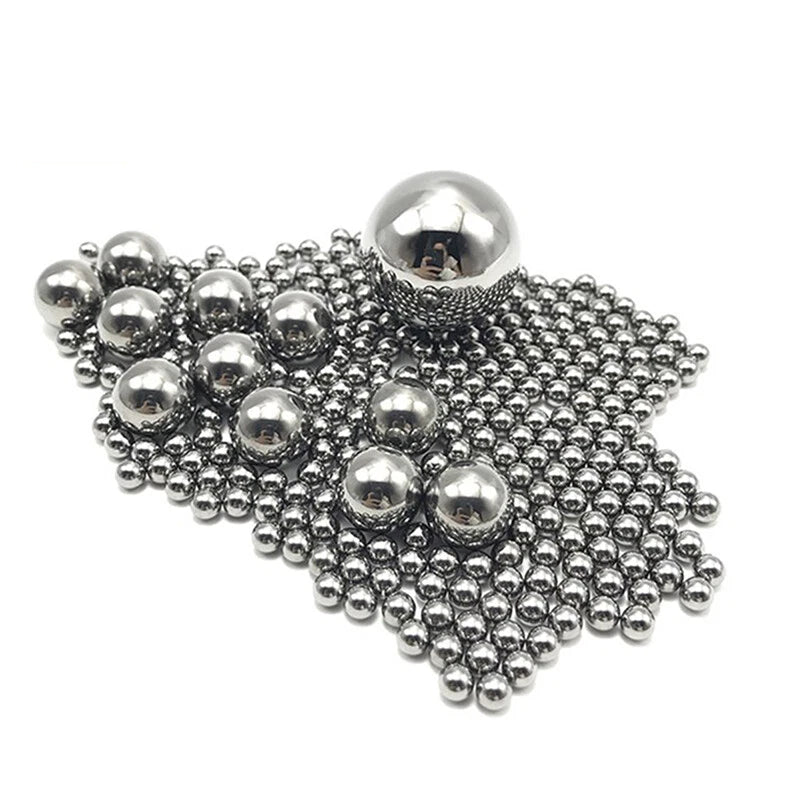
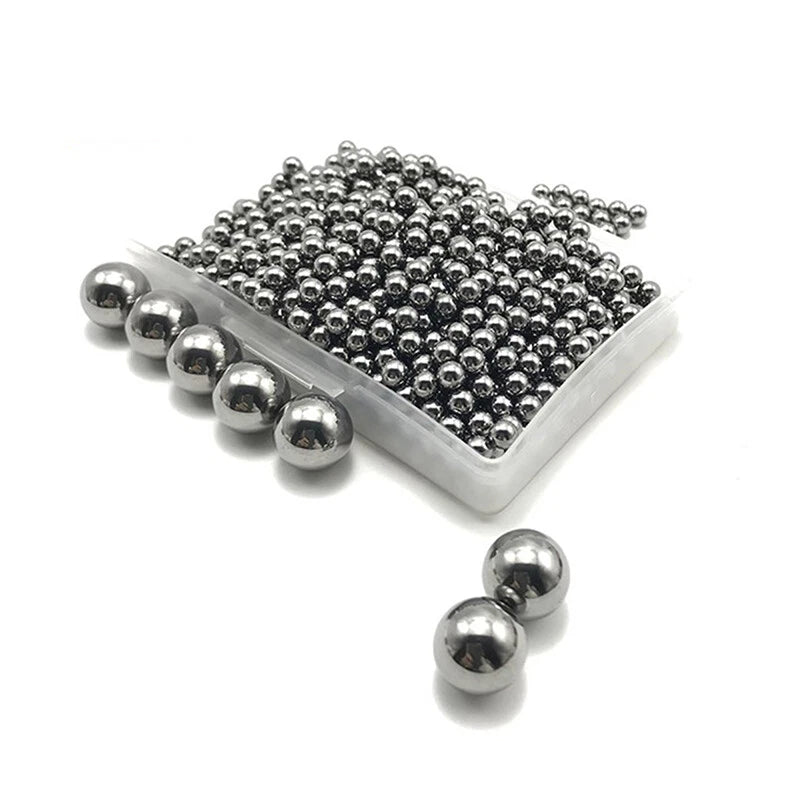
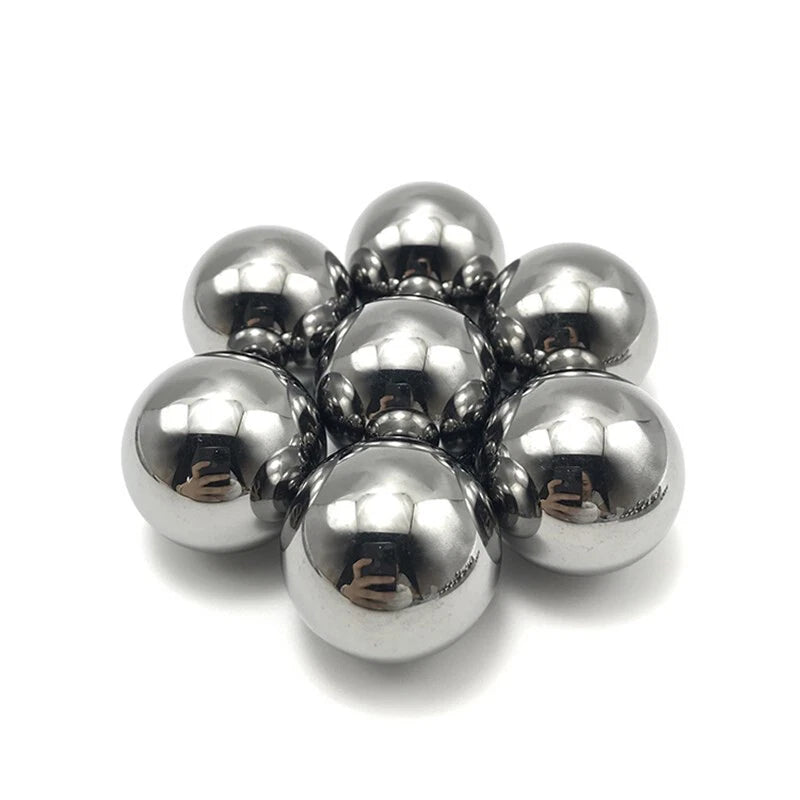
Single Solid Carbide Ball YG6 Carbide Steel Balls Bearings Sizes: 1mm to 10mm

No reviews

Price:
Sale price$9.40 USD
Stock:
In stock (500 units), ready to be shipped

Payment & Security

Ach Direct Debit Amazon American Express Apple Pay Bancontact BLIK Diners Club Discover EPS Google Pay iDEAL Wero JCB Maestro Mastercard Multibanco MobilePay PayPal Przelewy24 Shop Pay Twint Union Pay USDC Visa

Your payment information is processed securely. We do not store credit card details nor have access to your credit card information.

Limited Offer — Spend More, Save More
Spend $55+
Save $5
Spend $100+
Save $10
Spend $200+
Save $25
HomeDIYer DIY Expert Support

DIY Expert Support

Get fitment advice & recommendations

Mon–Fri  8:30 AM – 8:00 PM
24-Hour Fast Ship
Arrives in 3–14 Days
Worldwide Shipping
30-Day Returns
1 tree planted with every purchase

Description

YG6 Solid Carbide Balls — Precision Rolling Elements for Demanding Applications

When standard steel balls wear out too fast or corrode in aggressive environments, engineers and precision machinists turn to solid carbide balls. These YG6 solid carbide balls are engineered for applications where dimensional stability, surface hardness, and chemical resistance cannot be compromised — from CNC tooling fixtures and flow-control valves to custom bearing assemblies and gauging instruments.

Each ball is manufactured from YG6 tungsten carbide grade (6% cobalt binder), delivering a Vickers hardness of approximately HV 1500 and a density of roughly 14.9 g/cm³. The diameter range spans 1 mm (≈0.039 in) to 10 mm (≈0.394 in), with fractional inch sizes such as 3/32" (2.381 mm), 1/8" (3.175 mm), 3/16" (4.763 mm), 7/32" (5.556 mm), 1/4" (6.35 mm), and 3/8" (9.525 mm) also available as variant options.

Typical use cases include replacement rolling elements in miniature ball bearings and linear guides, check-ball seats in hydraulic and pneumatic valves, wear-resistant contact points in precision gauges and CMM fixtures, and grinding media in laboratory mills where contamination from iron must be avoided.

⚙️ Compatibility Note: Verify bore diameter and tolerance class of your bearing housing or valve seat before ordering. Carbide balls are not magnetic and are not suitable as direct replacements in applications requiring ferromagnetic properties.

✅ Key Features of These YG6 Solid Carbide Balls

🔩 YG6 Tungsten Carbide Grade

6% cobalt binder composition balances extreme hardness (~HV 1500) with sufficient toughness to resist chipping under cyclic load — a step up from lower-cobalt grades in impact-prone assemblies.

📏 Wide Diameter Selection

24 diameter options from 1 mm to 10 mm, including both metric and fractional inch sizes (e.g., 3/32", 1/8", 1/4", 3/8"), reduce the need for custom sourcing across multiple suppliers.

🛡️ Corrosion & Chemical Resistance

Tungsten carbide with cobalt binder resists most dilute acids, alkalis, and cutting fluids, making these balls suitable for wet or chemically active environments where stainless steel balls may still corrode.

⚖️ High Density for Positive Valve Seating

At ~14.9 g/cm³, carbide balls provide reliable gravity-assisted seating in vertical check valves without requiring additional spring force — useful in low-flow or low-pressure hydraulic circuits.

🔬 Dimensional Stability Under Heat

Tungsten carbide maintains its geometry at elevated temperatures better than hardened steel, making these balls appropriate for tooling fixtures used in heat-assisted forming or sintering processes.

📦 Flexible Pack Quantities

Available in quantities from 1 to 30 pieces per order depending on diameter, allowing you to stock exactly what your maintenance schedule or production run requires without over-ordering.

📐 Technical Specifications — YG6 Solid Carbide Balls

Material Grade YG6 Tungsten Carbide (WC-Co, 6% Co)
Hardness Approx. HV 1500 (HRA 91.5)
Density Approx. 14.9 g/cm³
Diameter Range 1 mm – 10 mm (0.039 in – 0.394 in)
Available Diameters 1, 1.5, 2, 2.381, 2.5, 3, 3.175, 3.5, 4, 4.5, 4.763, 5, 5.556, 6, 6.35, 6.5, 7, 7.5, 8, 8.5, 8.731, 9, 9.525, 10 mm
Surface Finish See variant options
Tolerance Grade See variant options
Magnetic Properties Non-magnetic
Quantity per Pack 1 – 30 pcs (varies by diameter)
Application Bearings, valves, gauging, grinding media, tooling fixtures

❓ Frequently Asked Questions

How do I choose the right diameter for my bearing or valve application?

Measure the bore or seat diameter of your housing with a calibrated micrometer or bore gauge. For bearing replacements, match the ball diameter to the original specification listed on the bearing datasheet. For valve seats, the ball diameter should be 5–15% larger than the seat orifice to ensure positive sealing. If you are between two sizes, select the larger diameter and verify fit before committing to a full order.

What is the difference between YG6 and YG8 carbide grades?

YG6 contains 6% cobalt binder and YG8 contains 8%. Higher cobalt content increases toughness and impact resistance but slightly reduces hardness. YG6 is preferred for applications requiring maximum wear resistance and surface hardness, such as precision gauging contacts and high-speed valve seats. YG8 is better suited where shock loading is a concern. These balls are YG6.

Are these carbide balls corrosion-resistant enough for use with cutting fluids or coolants?

YG6 tungsten carbide resists most water-based and oil-based cutting fluids, as well as dilute acids and alkalis commonly found in machining environments. However, concentrated strong acids (e.g., hydrofluoric acid or concentrated sulfuric acid) can attack the cobalt binder over time. For highly aggressive chemical environments, confirm compatibility with your specific fluid before long-term deployment.

Can I use these balls as direct replacements for chrome steel or stainless steel balls in a bearing?

Yes, provided the diameter matches your bearing's ball complement specification. Carbide balls are harder and denser than steel, which can increase load capacity and wear life in abrasive conditions. However, the higher density adds slight rotational inertia, and carbide is more brittle than steel under sharp impact loads. Verify that your bearing cage material and retainer design are compatible with carbide balls before substituting.

What pack quantities are available, and how are they determined?

Pack quantities range from 1 to 30 pieces and vary by diameter — smaller diameters (1–2 mm) are available in packs of 10, 20, and 30; mid-range diameters (3–6 mm) in packs of 1–8; and larger diameters (7–10 mm) in packs of 1–5. Select your preferred diameter first, then choose the quantity that matches your maintenance stock or production requirement. Bulk pricing is reflected in the per-unit cost at higher quantities.

How should I store and handle carbide balls to prevent chipping?

Store carbide balls in a dry environment, separated from other hard metal components to prevent ball-to-ball contact during storage. Use soft-lined containers or individual compartments. When handling, avoid dropping balls onto hard surfaces — tungsten carbide is brittle and can chip if subjected to sharp impact. For precision applications, inspect balls under magnification before installation to confirm surface integrity.

Are fractional inch sizes available, and which metric sizes correspond to them?

Yes. The following fractional inch sizes are stocked as variant options: 3/32" = 2.381 mm, 1/8" = 3.175 mm, 3/16" = 4.763 mm, 7/32" = 5.556 mm, 1/4" = 6.35 mm, 11/32" = 8.731 mm, and 3/8" = 9.525 mm. Select the diameter that matches your application's inch-based specification directly from the variant selector.

🛒 Select your Diameter and Quantity above, then add to cart.


You may also like

Recently viewed