The chain is fine...but I ordered the wrong size. Nine links of the chain I ordered equals six of the size I wanted. My error...
How can I straighten out the springs? I can't use them coil uo as is.
Your payment information is processed securely. We do not store credit card details nor have access to your credit card information.
Get fitment advice & recommendations
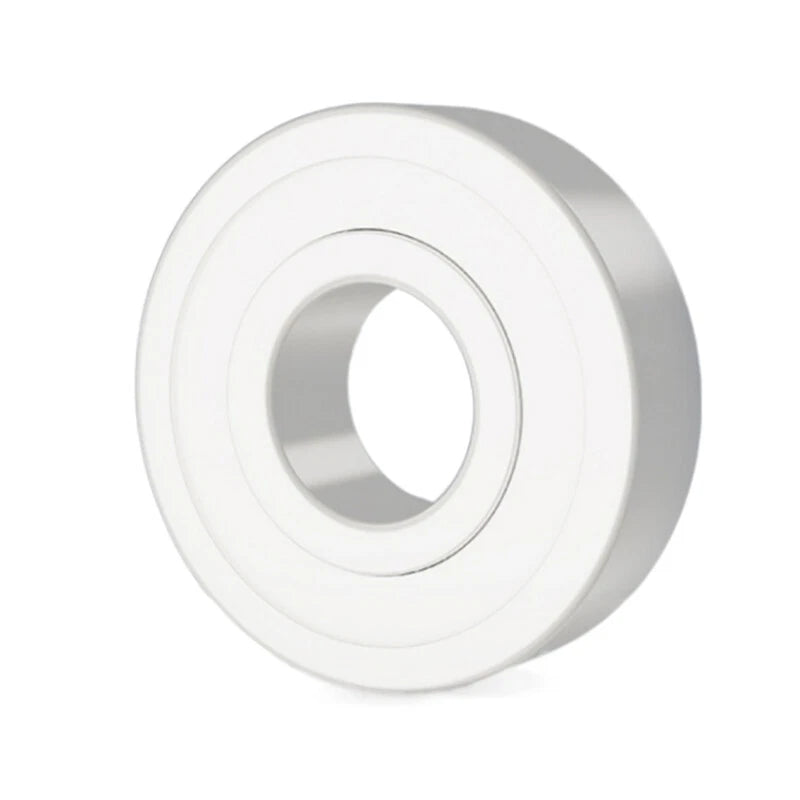
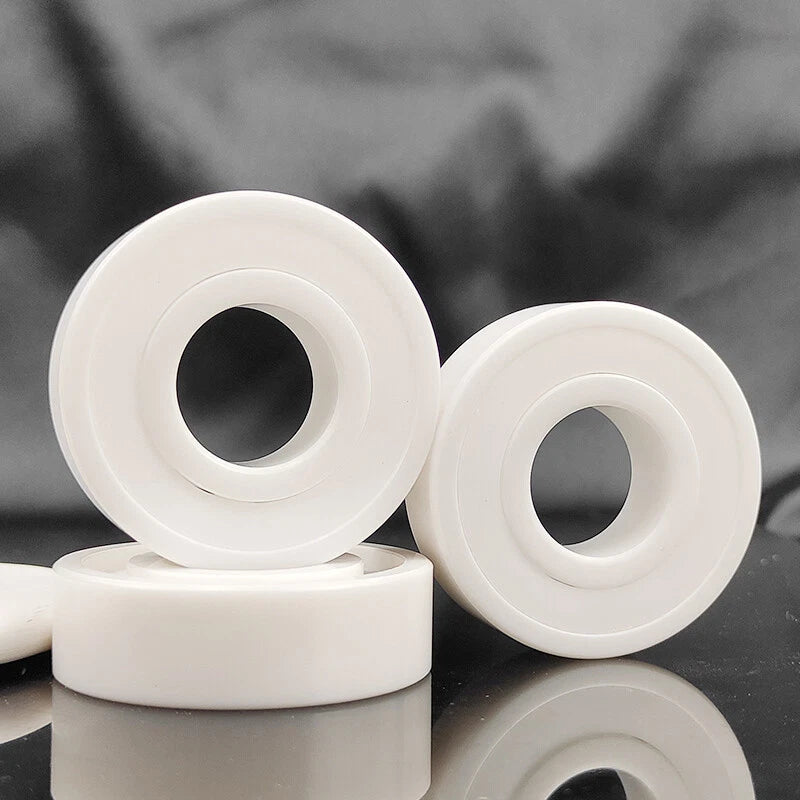
When standard steel bearings fail in wet, chemically aggressive, or electrically sensitive environments, engineers and equipment builders turn to ZrO2 ceramic deep groove ball bearings. Whether you are maintaining pumps, food-processing machinery, medical devices, or high-speed spindles, these double-shielded 2RS bearings deliver reliable rotation where metal bearings corrode or conduct unwanted current.
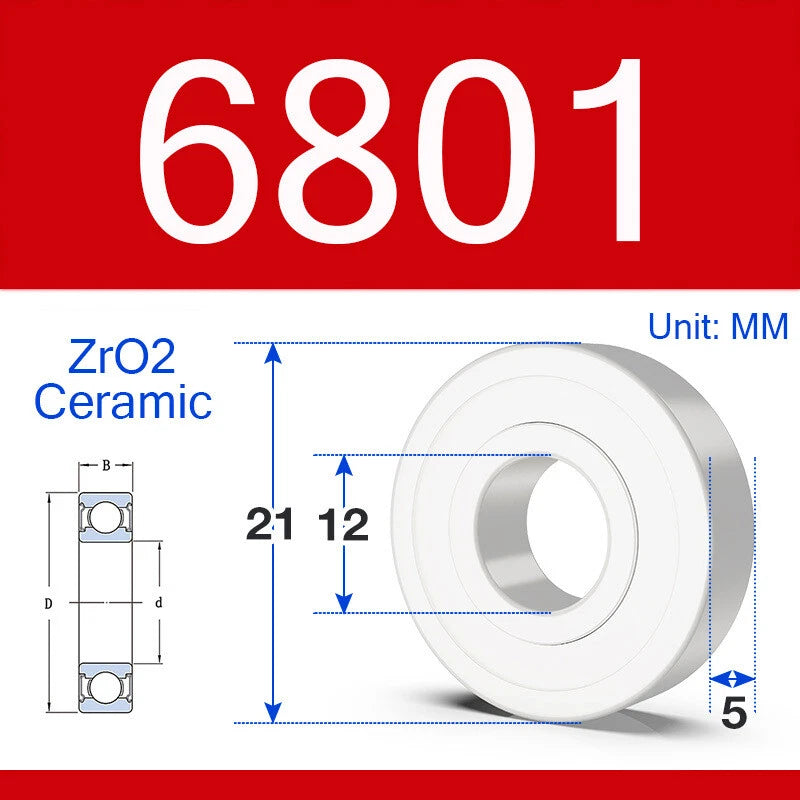
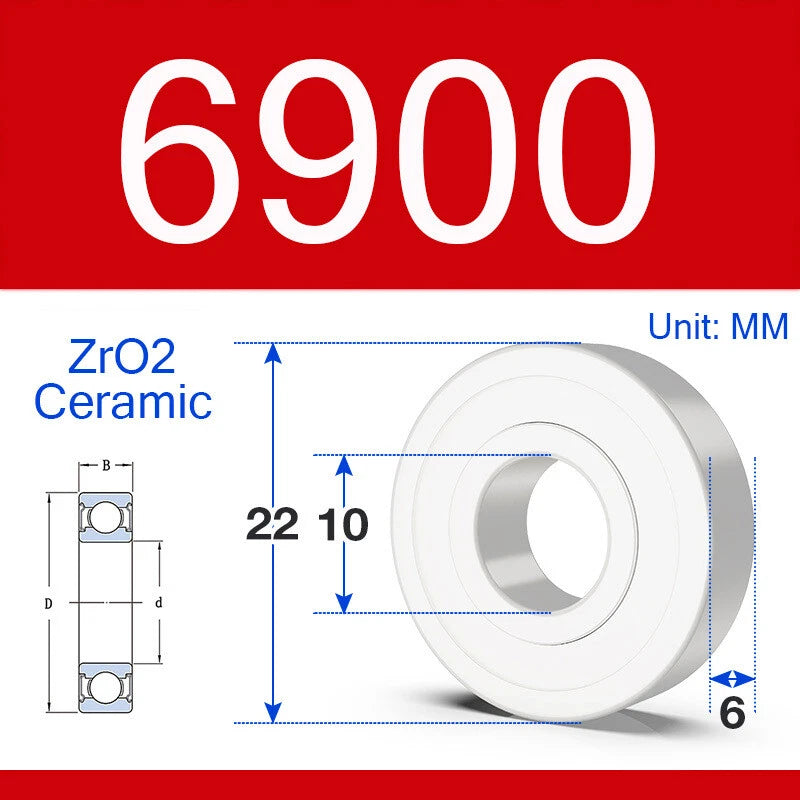
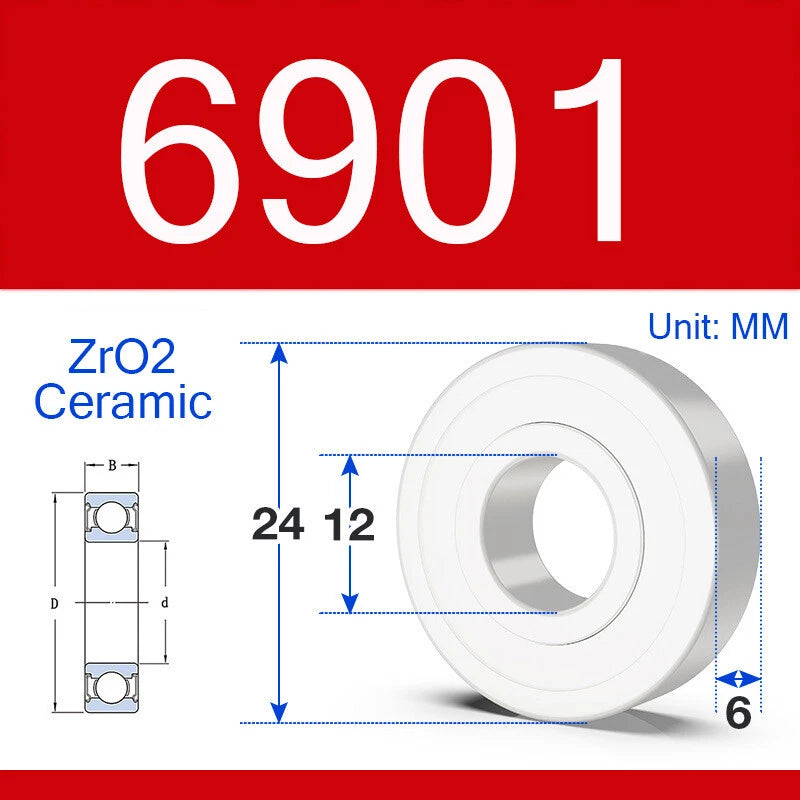
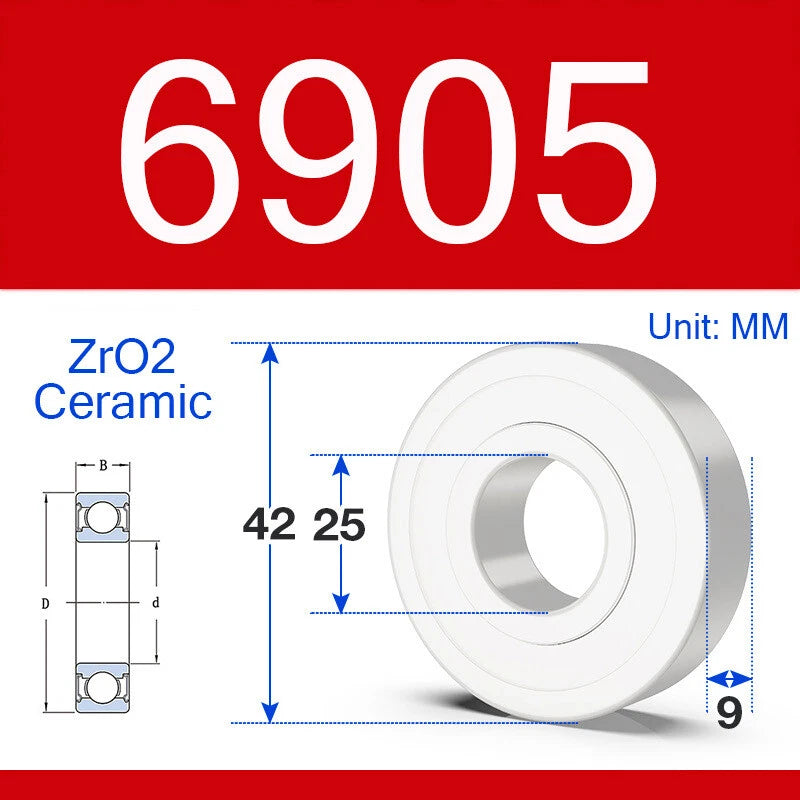
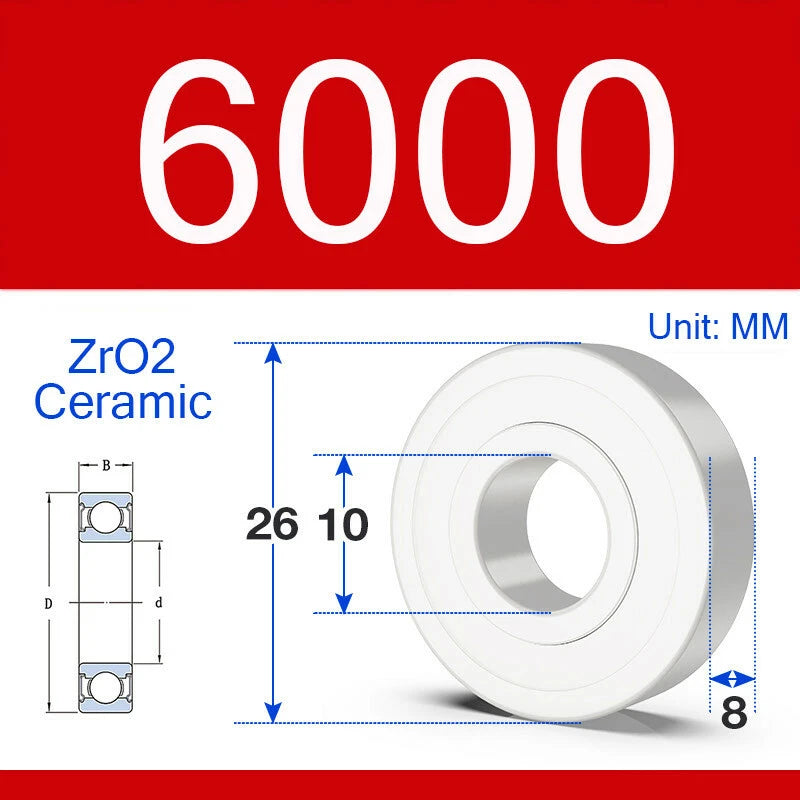
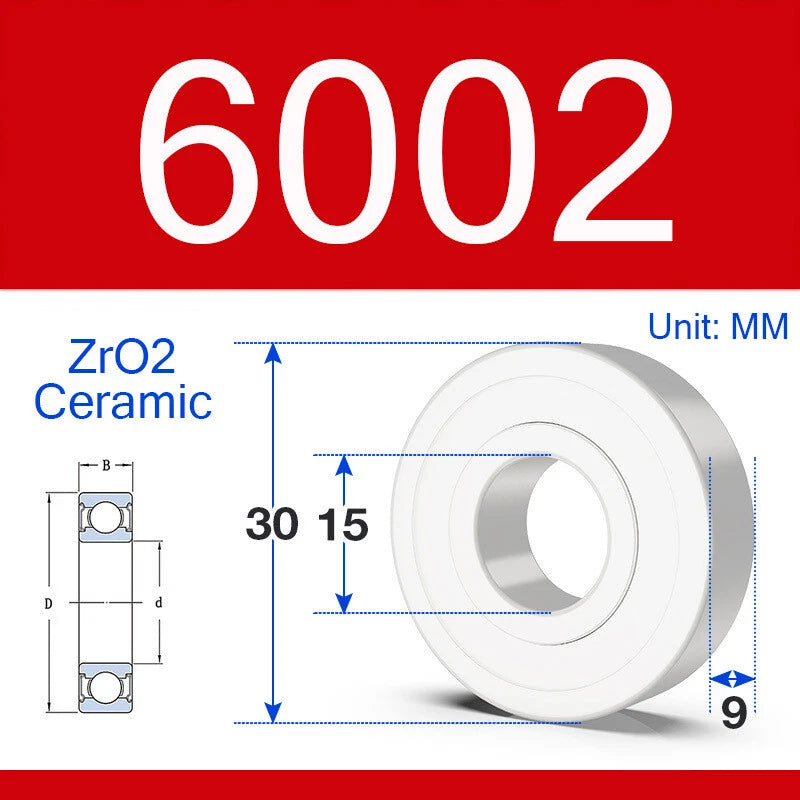
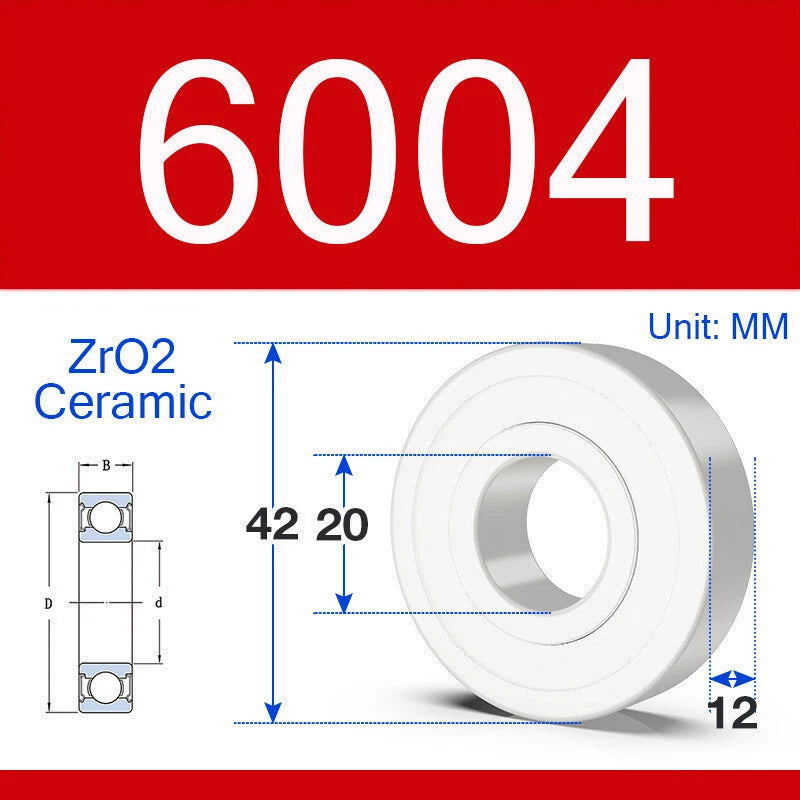
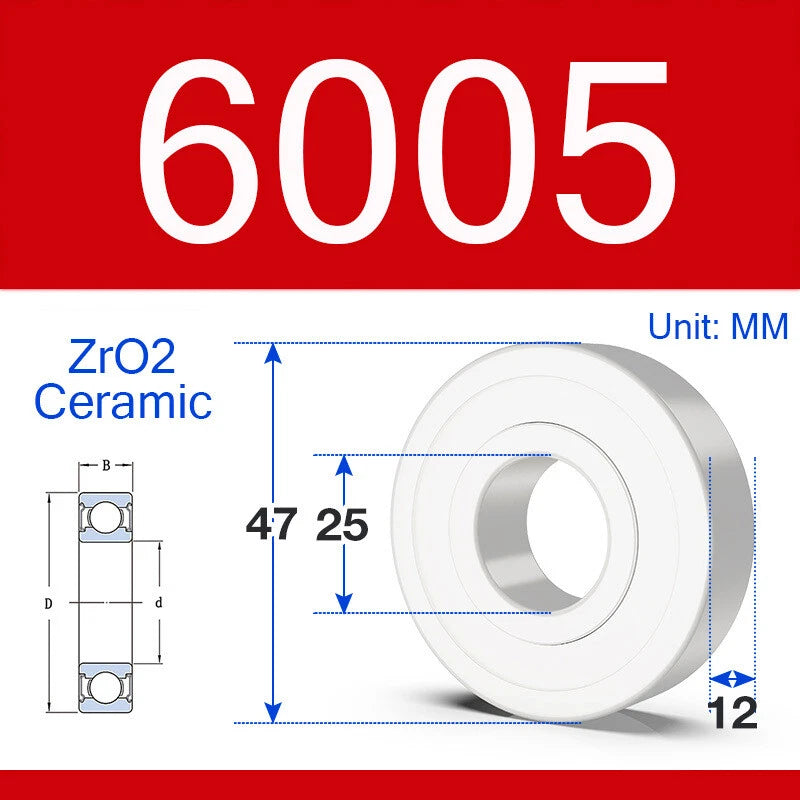
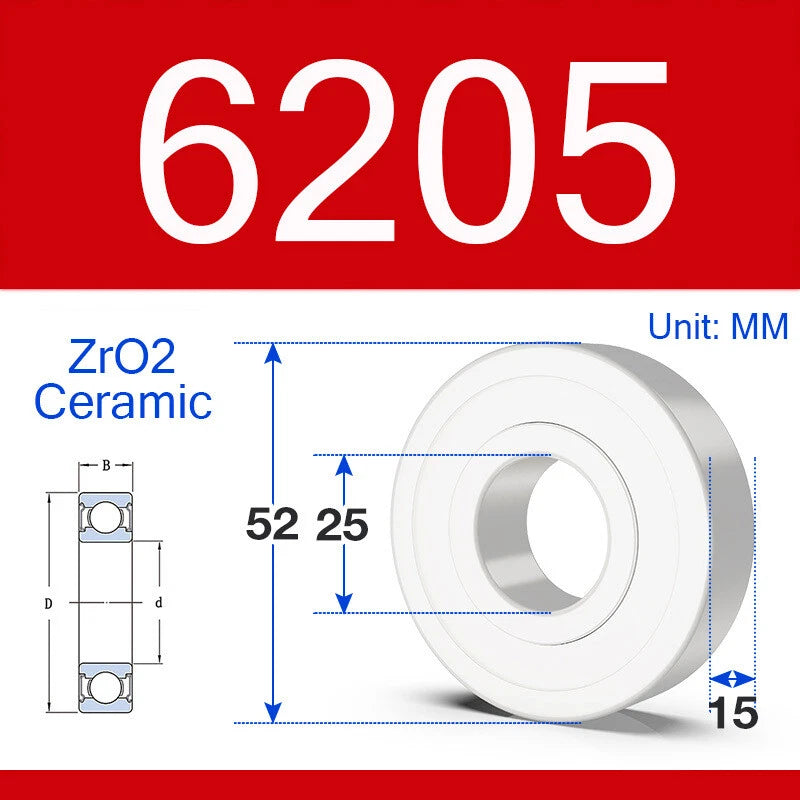
Each bearing is constructed with a zirconia (ZrO2) ceramic ball set running in steel races, sealed on both sides with rubber contact seals (2RS designation). Available across four series — 68xx, 69xx, 60xx, and 62xx — with bore diameters from 10 mm (0.39 in) to 40 mm (1.57 in) and outer diameters from 19 mm (0.75 in) to 68 mm (2.68 in). Thickness ranges from 5 mm to 16 mm depending on the selected model.
Typical applications include corrosion-prone pump shafts where a ceramic deep groove ball bearing replacement extends service intervals, laboratory centrifuge spindles requiring non-magnetic rotating components, and food or beverage equipment where chemical washdowns demand rust-free bearing solutions.
Zirconia (ZrO2) Ceramic Balls — Harder and lighter than steel balls; resists corrosion from water, mild acids, and alkaline cleaning agents without surface degradation.
Double Rubber Seal (2RS) — Contact seals on both sides retain grease and block contaminants, reducing relubrication frequency in dusty or wet operating conditions.
Electrically Non-Conductive — Ceramic balls interrupt electrical current paths, protecting adjacent components in variable-frequency drive (VFD) motor applications from bearing fluting damage.
Low Thermal Expansion — ZrO2 has a lower coefficient of thermal expansion than steel, maintaining tighter dimensional stability across temperature cycles in precision spindle and instrument applications.
Wide Size Range — 29 Models — Four series (68xx / 69xx / 60xx / 62xx) cover bore sizes from 10 mm to 40 mm, letting you source the correct replacement or design-in size from a single listing.
Drop-In ISO Dimensional Compatibility — Outer dimensions conform to standard ISO series envelopes, so these ceramic bearings replace steel equivalents in existing housings without machining changes.
| Ball Material | Zirconia (ZrO2) Ceramic |
|---|---|
| Race Material | Bearing Steel (Chrome Steel) |
| Seal Type | Double Rubber Contact Seal (2RS) |
| Series Available | 68xx, 69xx, 60xx, 62xx |
| Bore Diameter (ID) | 10 mm – 40 mm (0.39 in – 1.57 in) |
| Outer Diameter (OD) | 19 mm – 68 mm (0.75 in – 2.68 in) |
| Width (Thickness) | 5 mm – 16 mm (0.20 in – 0.63 in) |
| Lubrication | Grease-packed (factory pre-lubricated) |
| Electrical Conductivity | Non-conductive (ceramic balls) |
| Corrosion Resistance | Resistant to water, mild acids, and alkalis |
| Quantity per Order | 1 piece |
| Dimensional Standard | ISO 6800 / 6900 / 6000 / 6200 series |
Match the bore diameter (ID), outer diameter (OD), and width to your housing and shaft dimensions. The model name encodes these: for example, 6204-2RS has ID 20 mm, OD 47 mm, and width 14 mm. Cross-reference with the variant list above to find your size. If you are replacing an existing bearing, the model number is usually stamped on the bearing face.
ZrO2 ceramic balls are harder than steel (approximately 1200 HV vs. 700 HV for bearing steel), which reduces surface wear under rolling contact. However, ceramics are more brittle under impact loads. These bearings are best suited for smooth rotational loads in corrosive or electrically sensitive environments rather than heavy shock-load applications.
The ZrO2 ceramic balls resist corrosion from water, mild acids, and alkaline cleaning solutions. Note that the outer races are chrome steel, which can corrode if exposed to prolonged moisture without the rubber seals intact. For fully submerged or highly aggressive chemical environments, confirm compatibility with your specific media before installation.
Yes — the outer dimensions (OD and width) conform to standard ISO 68xx, 69xx, 60xx, and 62xx series envelopes. They are direct dimensional replacements for steel bearings of the same model number. No housing machining is required. Always verify the exact ID, OD, and width from the variant name before ordering.
Variable-frequency drives (VFDs) generate high-frequency shaft voltages that discharge through conventional steel bearings, causing pitting and fluting damage (electrical erosion). ZrO2 ceramic balls are electrically non-conductive, breaking the current path and preventing this type of bearing failure. This makes them a cost-effective solution compared to full ceramic or insulated bearing alternatives.
Yes, each bearing is factory pre-lubricated with grease and sealed with double rubber contact seals (2RS). The 2RS seal design is a contact seal, which means it is not intended to be opened and relubricated in the field. For applications requiring periodic relubrication, consider open or single-shield (Z) variants. Under normal operating conditions, the factory grease fill provides adequate lubrication for the bearing's service life.