The chain is fine...but I ordered the wrong size. Nine links of the chain I ordered equals six of the size I wanted. My error...
How can I straighten out the springs? I can't use them coil uo as is.
Your payment information is processed securely. We do not store credit card details nor have access to your credit card information.
Get fitment advice & recommendations
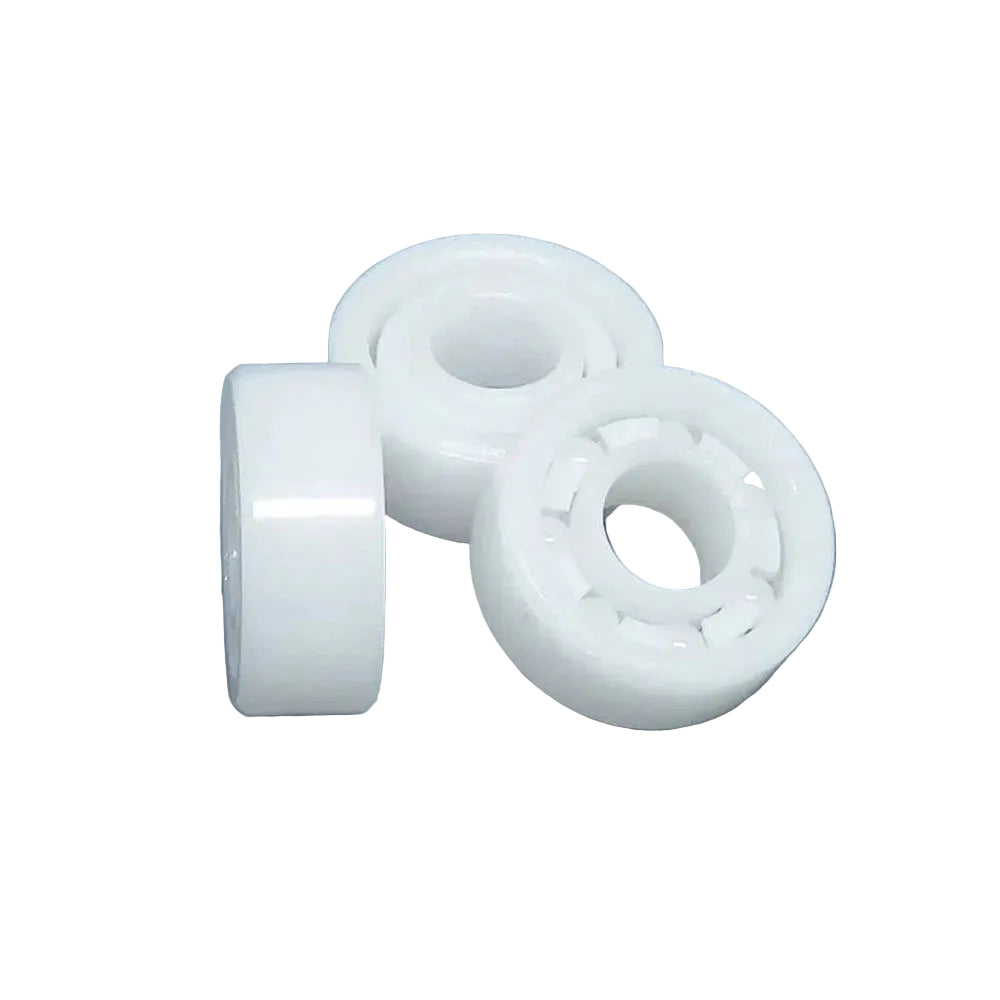
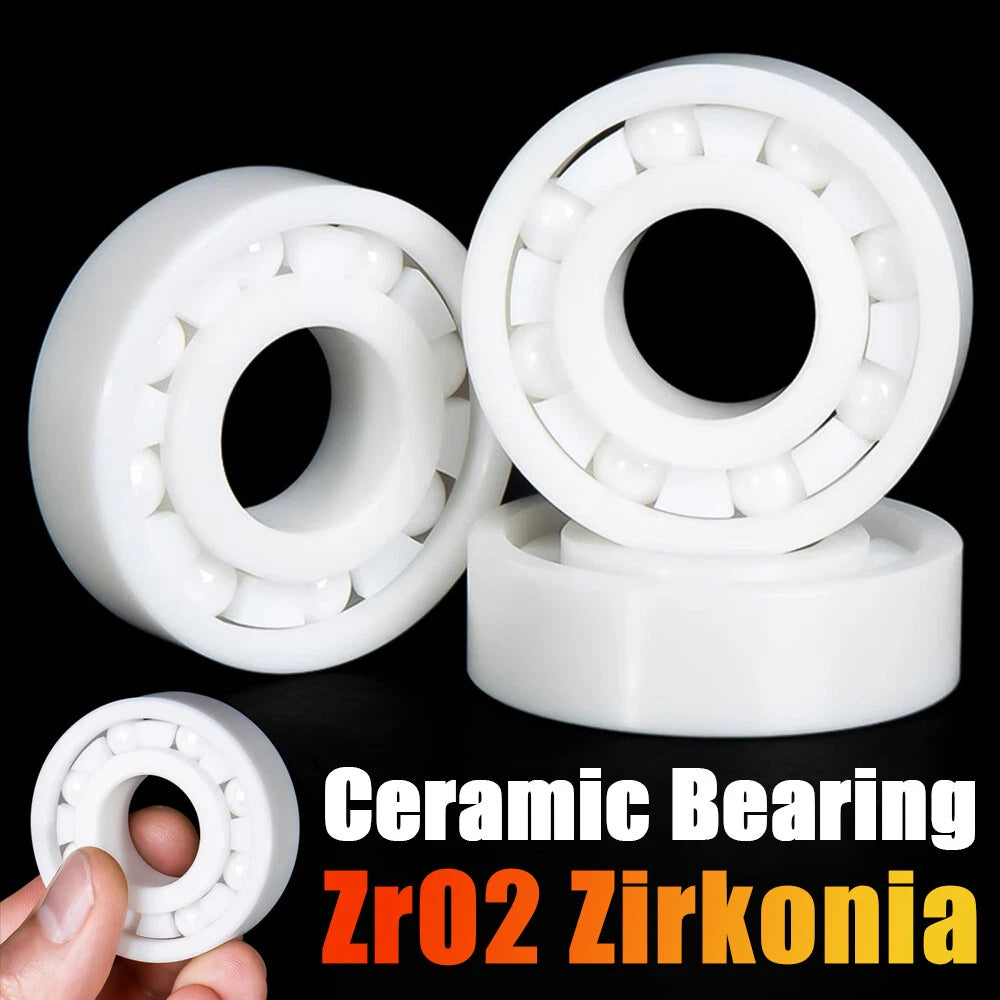
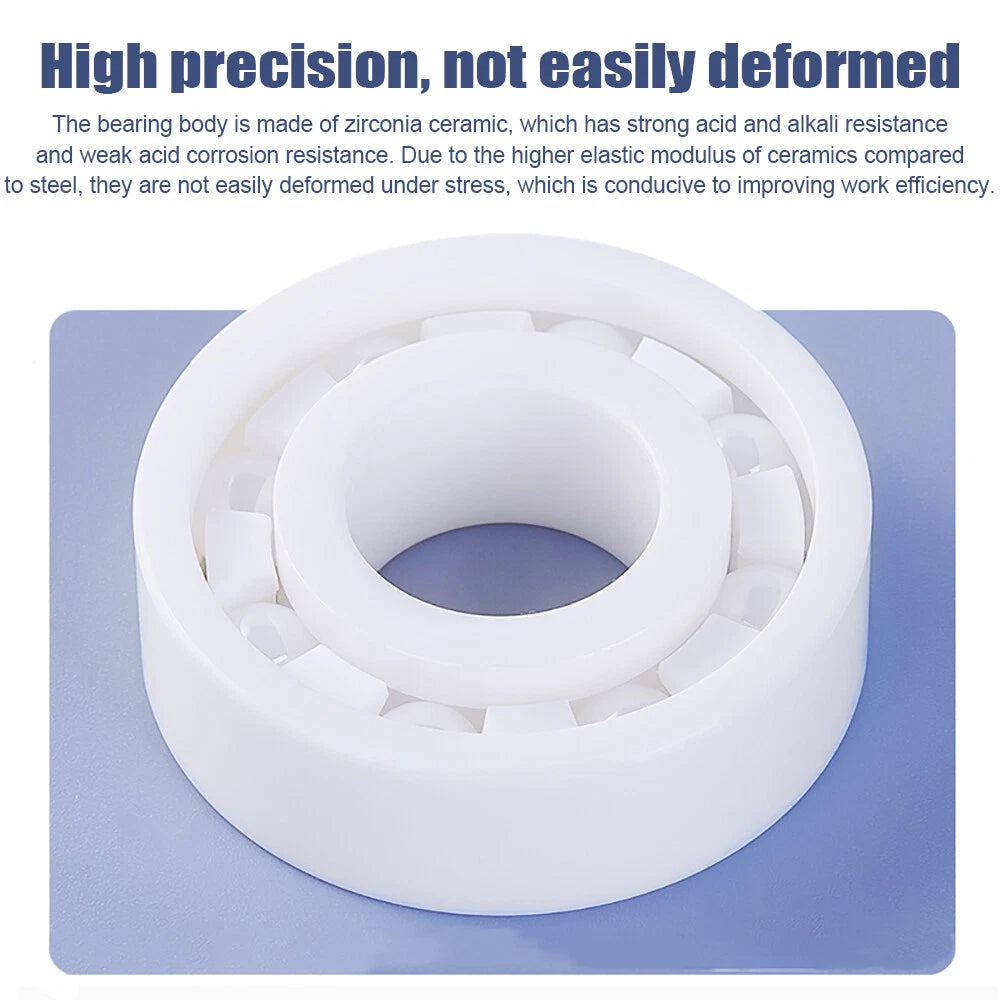
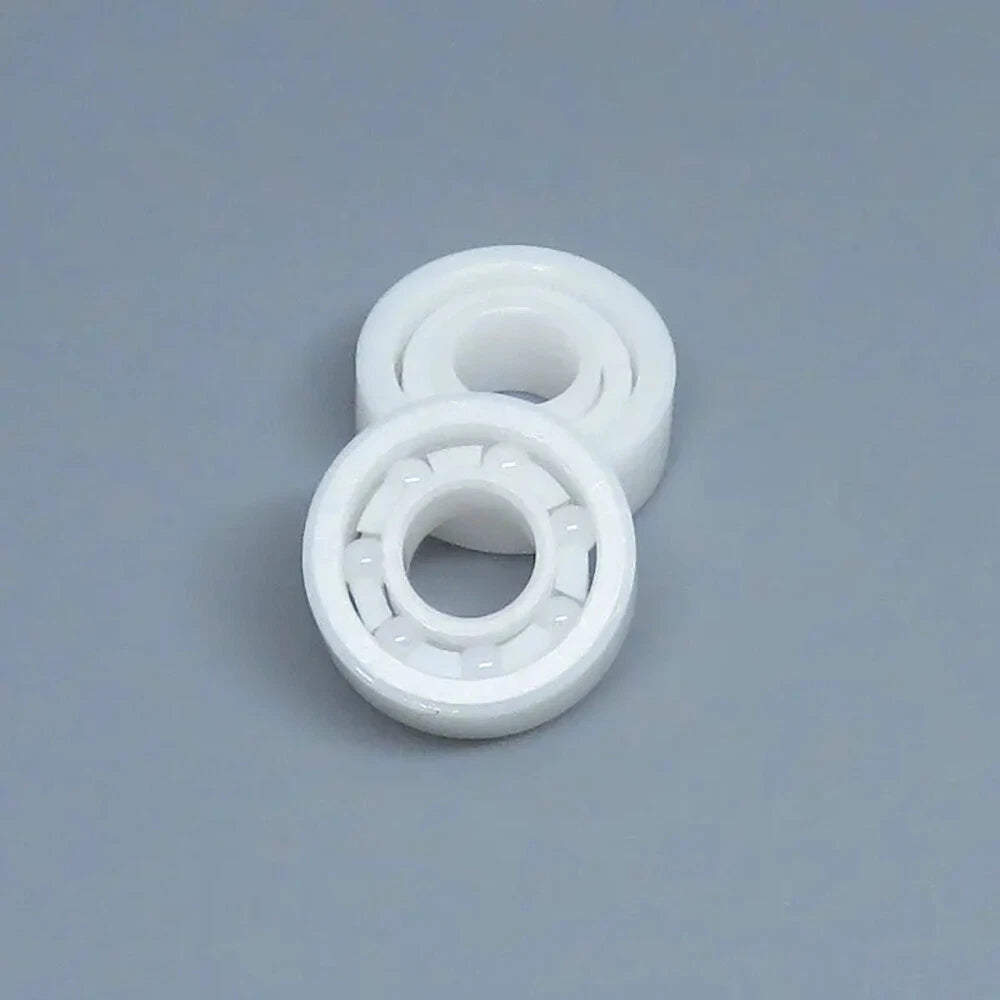
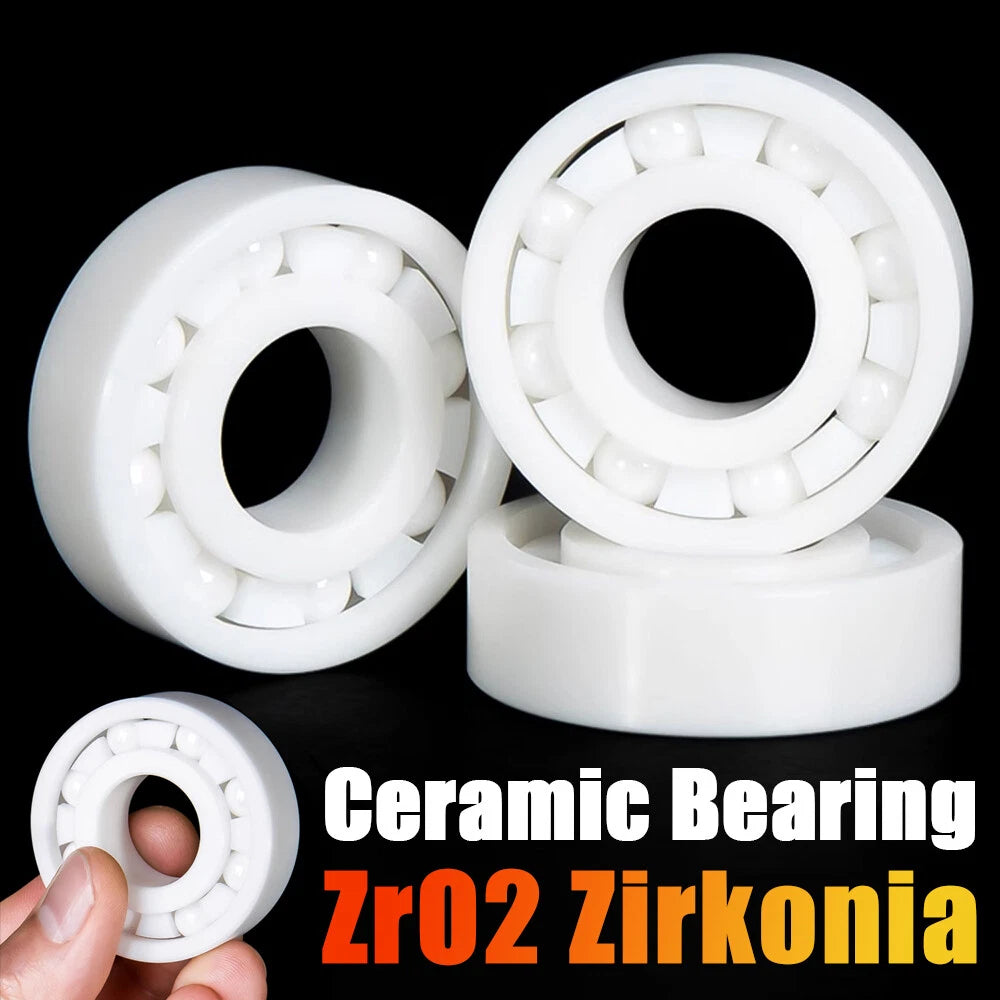
When standard steel bearings corrode, seize, or interfere with sensitive electronics, engineers and makers reach for a ceramic alternative. ZrO2 zirconia full ceramic ball bearings are built for hobbyists, robotics builders, medical device technicians, and industrial maintenance professionals who need reliable rotation in wet, chemical, or magnetically sensitive environments — without the failure modes of metal.
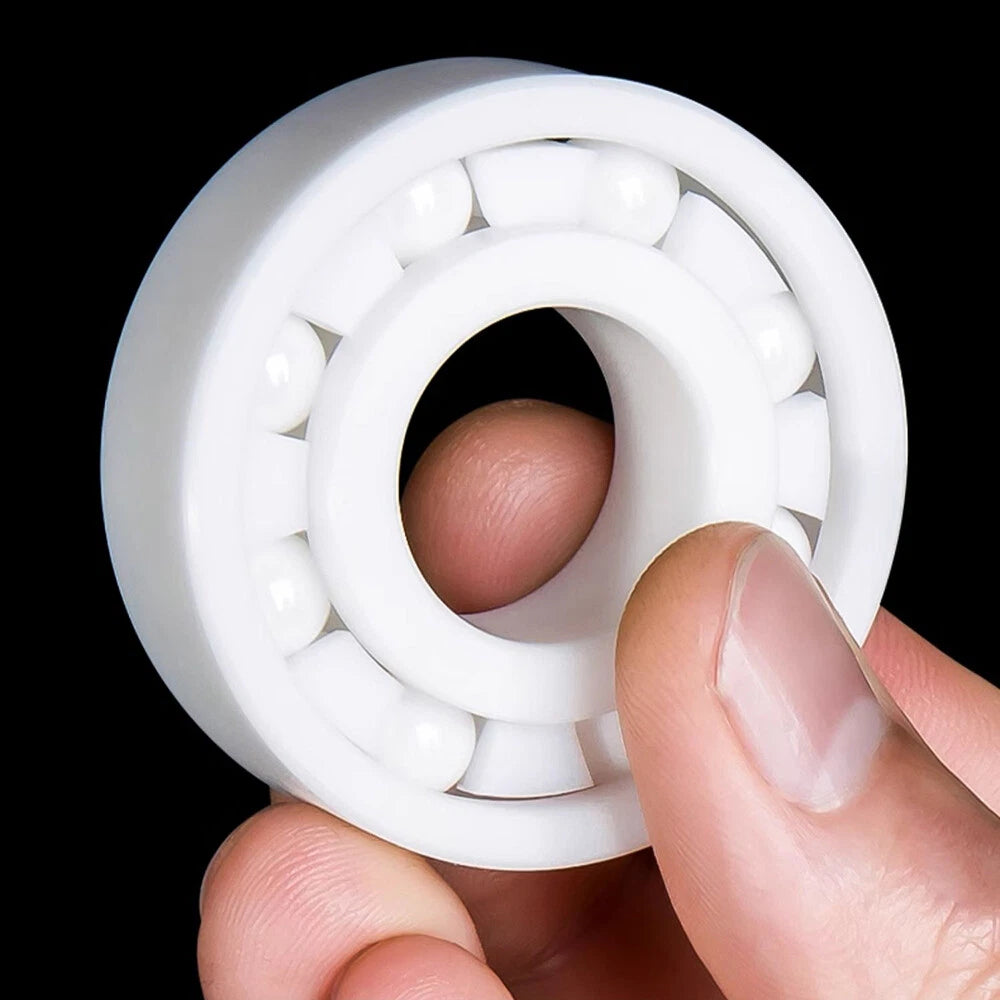
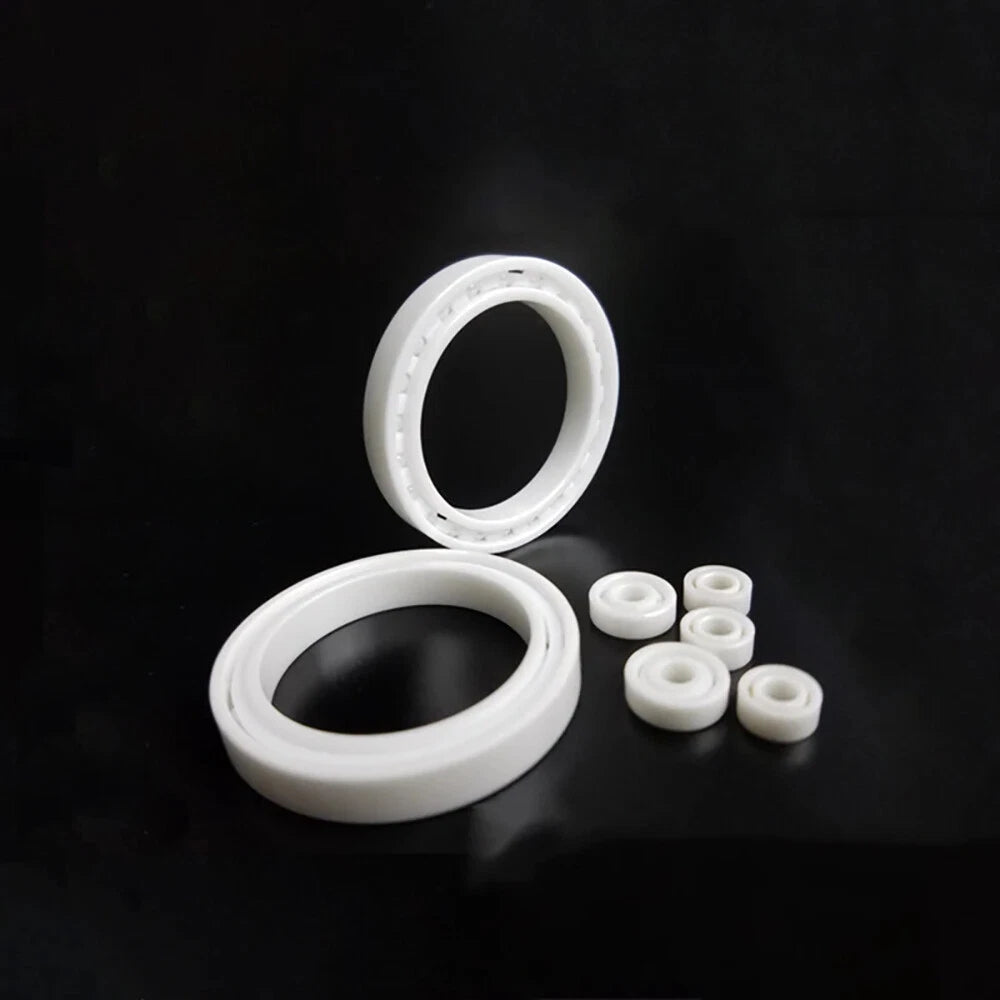
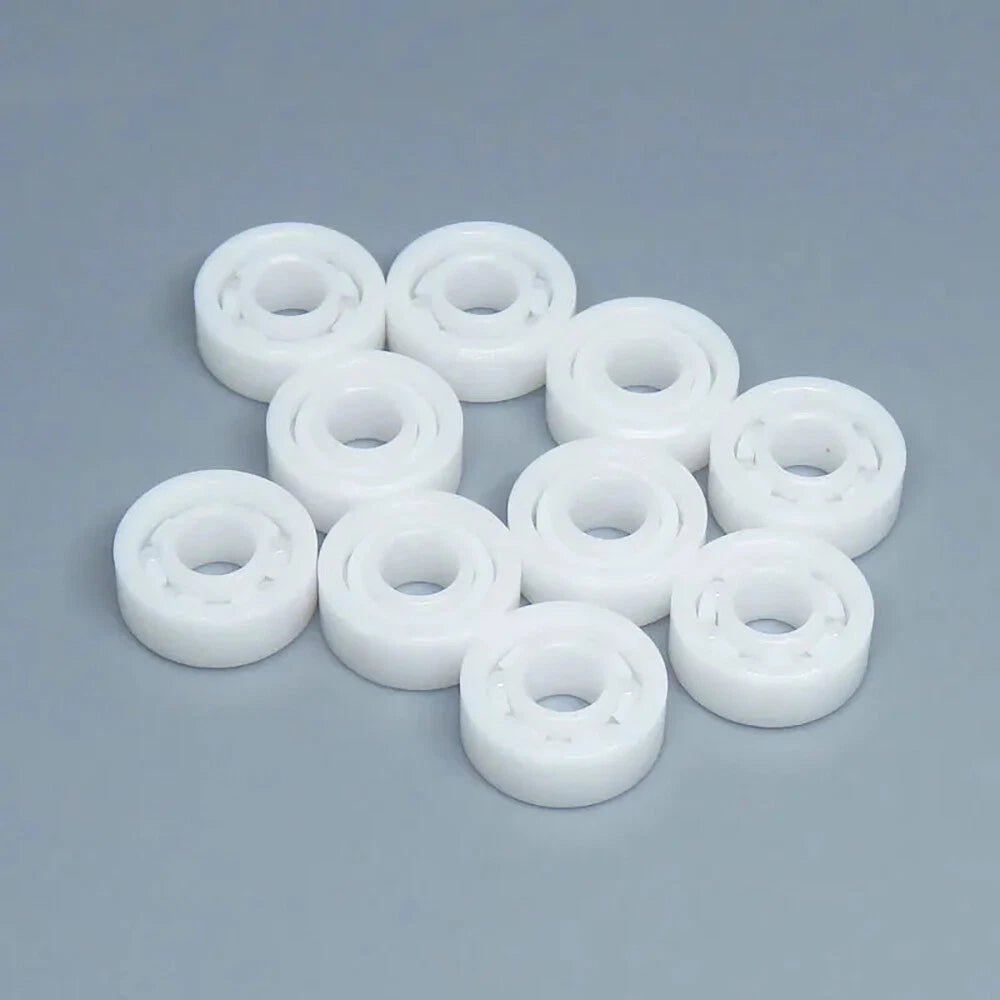
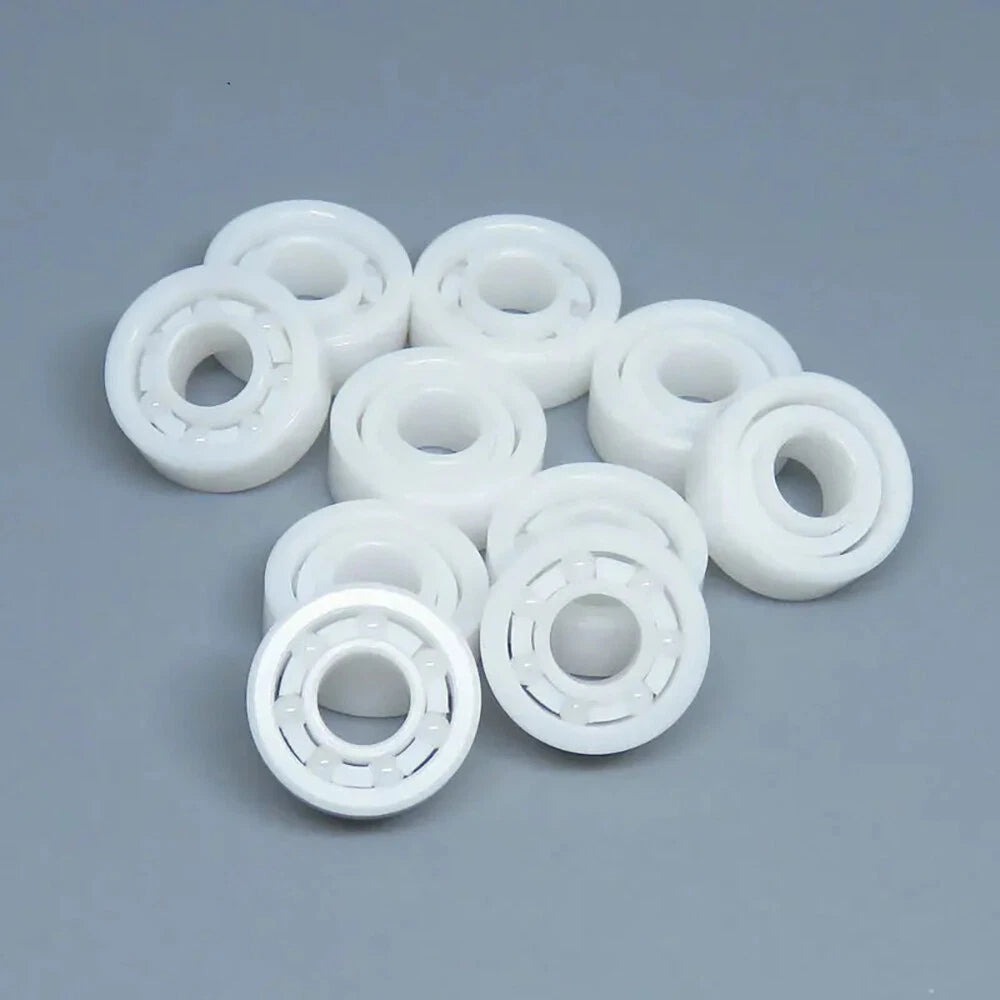
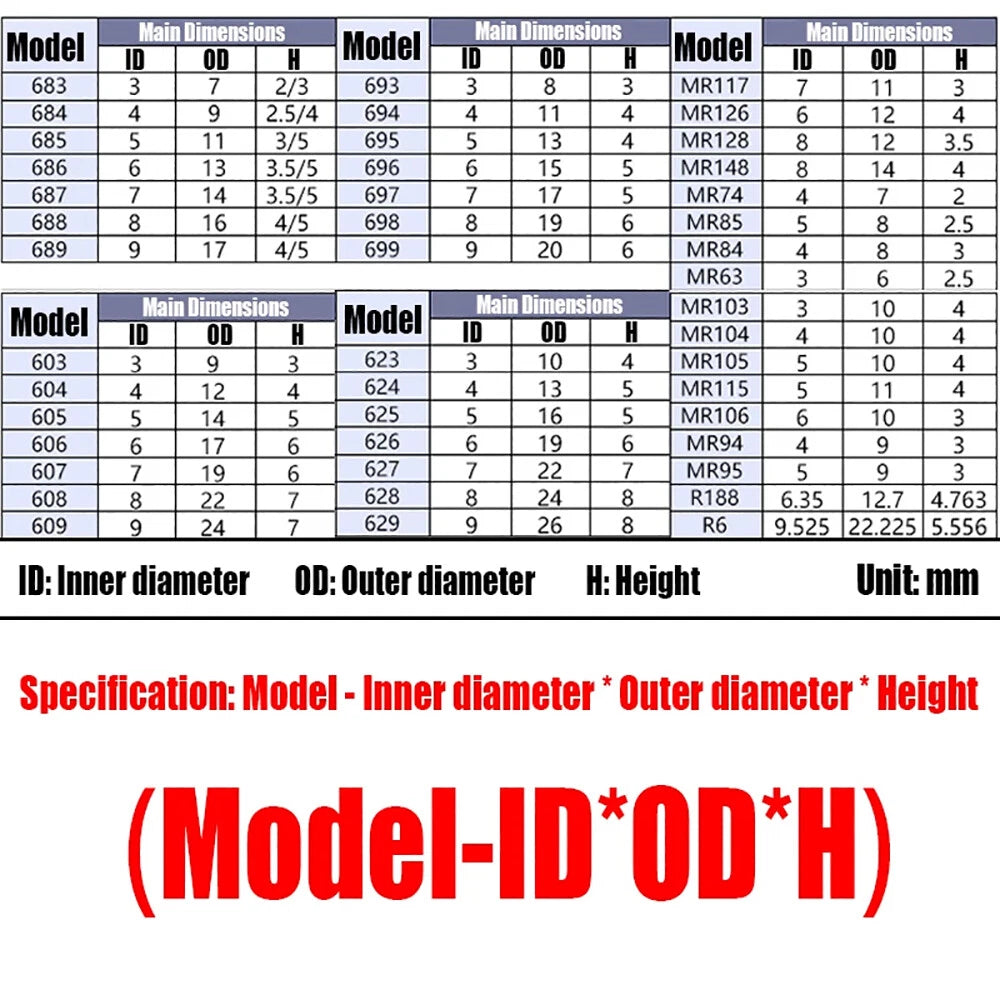
Each bearing is manufactured entirely from zirconium dioxide (ZrO2) ceramic — balls, inner race, and outer race — with no metal components. The range spans miniature sizes from 3 mm bore (e.g. 603/3×9×3 mm) up to 75 mm outer diameter (e.g. 6712/60×75×7 mm), covering standard series including 6700, 6701–6712, MR-series (MR63 through MR148), 60x-series (603–629), 68x-series (683–689), 69x-series (693–699), and 62x-series (623–629). Bore diameters range from approximately 3 mm (0.12 in) to 60 mm (2.36 in); outer diameters from approximately 6 mm (0.24 in) to 75 mm (2.95 in); widths from approximately 2 mm (0.08 in) to 7 mm (0.28 in).
Typical use cases include RC car and drone wheel hubs requiring lightweight non-magnetic rotation, laboratory centrifuge and pump shafts exposed to acids or solvents, and food-processing or marine equipment where rust contamination is unacceptable. Long-tail applications: miniature ceramic bearing for 3D printer extruder, zirconia bearing for saltwater fishing reel, non-magnetic bearing for MRI-adjacent equipment.
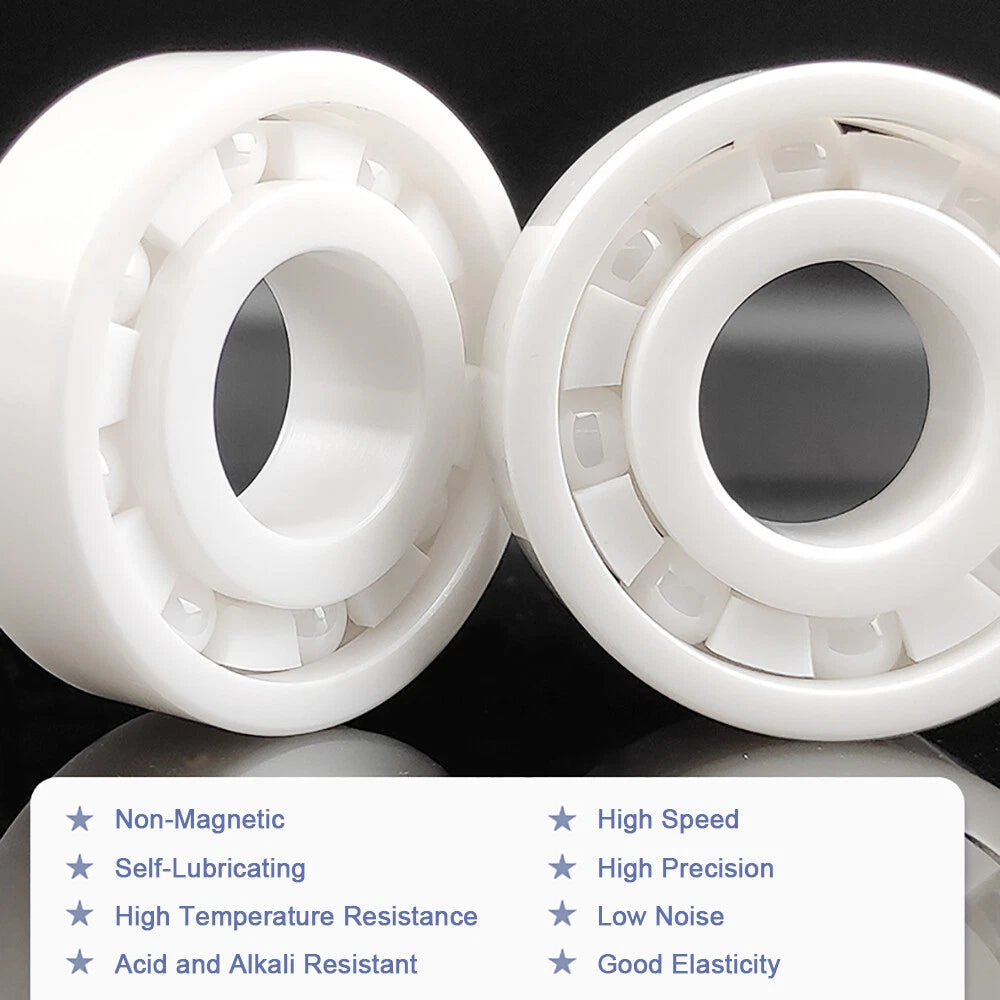
Inner race, outer race, and balls are all ZrO2 zirconia — no metal parts means zero galvanic corrosion and no rust, even in prolonged water or chemical exposure.
ZrO2 is inherently non-magnetic and does not conduct electricity, making these bearings suitable for use near sensitive sensors, MRI-adjacent equipment, and high-voltage environments.
Zirconia ceramic is approximately 40% lighter than bearing steel at equivalent volume, reducing rotational inertia in high-speed or weight-sensitive assemblies such as drone motors and RC drivetrains.
ZrO2 ceramic maintains dimensional stability across a wide temperature range (typically −40 °C to +300 °C / −40 °F to +572 °F), outperforming standard grease-lubricated steel bearings in thermal cycling applications.
From ultra-compact MR63 (3×6×2 mm) to the larger 6712 (60×75×7 mm), a single listing covers the most common miniature and small bearing series — select your exact bore × OD × width from the size dropdown.
Full ceramic bearings can run dry or with ceramic-compatible lubricants (PTFE-based or silicone grease), eliminating the need for petroleum-based oils that degrade in chemical environments.
| Material | Zirconium Dioxide (ZrO2) Ceramic — full ceramic (races + balls) |
|---|---|
| Bearing Series | 6700–6712, MR63–MR148, 603–629, 683–689, 693–699, 623–629 (incl. -2RS sealed variants) |
| Bore Diameter (ID) | 3 mm – 60 mm (0.12 in – 2.36 in) — See variant options |
| Outer Diameter (OD) | 6 mm – 75 mm (0.24 in – 2.95 in) — See variant options |
| Width | 2 mm – 7 mm (0.08 in – 0.28 in) — See variant options |
| Shield / Seal Type | Open (unshielded) standard; -2RS rubber-sealed where indicated in size name |
| Operating Temperature | Typically −40 °C to +300 °C (−40 °F to +572 °F) |
| Magnetic Properties | Non-magnetic |
| Electrical Conductivity | Non-conductive |
| Corrosion Resistance | Resistant to water, mild acids, alkalis, and most organic solvents |
| Lubrication | Dry-run capable; compatible with PTFE-based or silicone grease |
| Quantity per Order | See variant options |
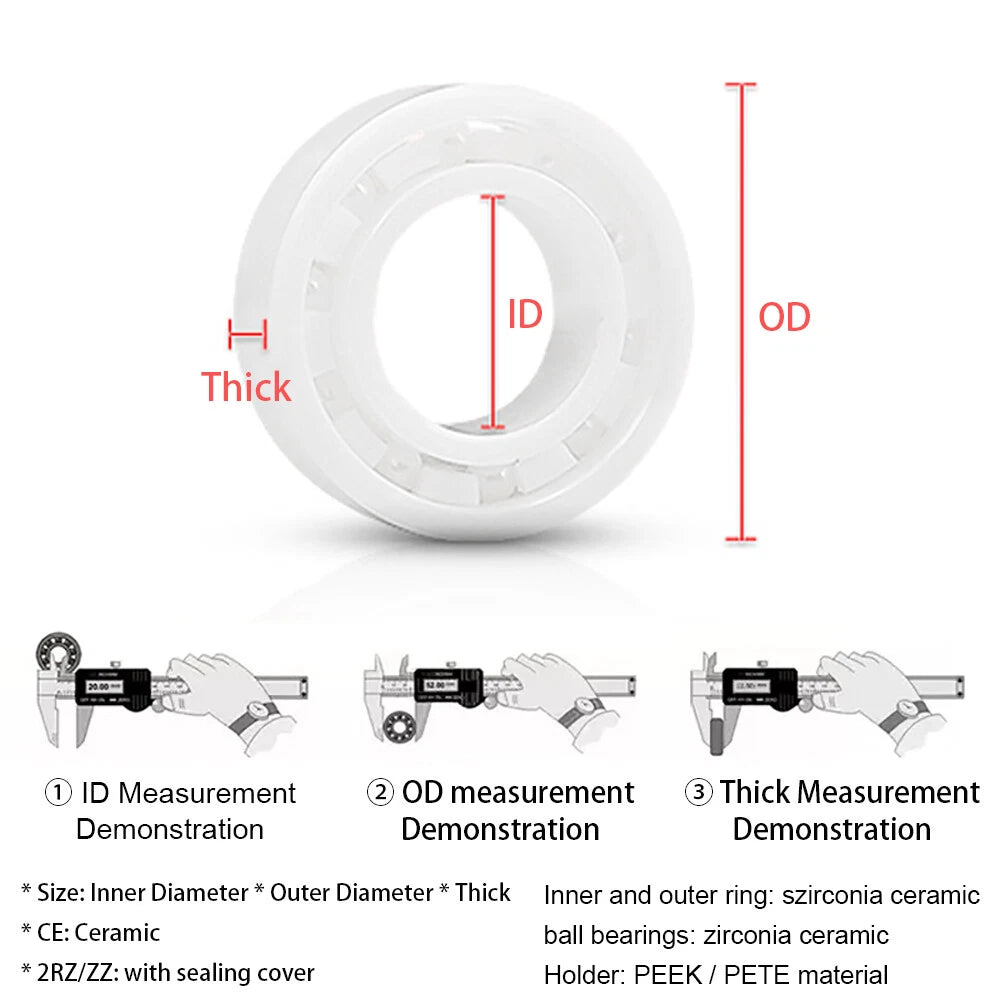
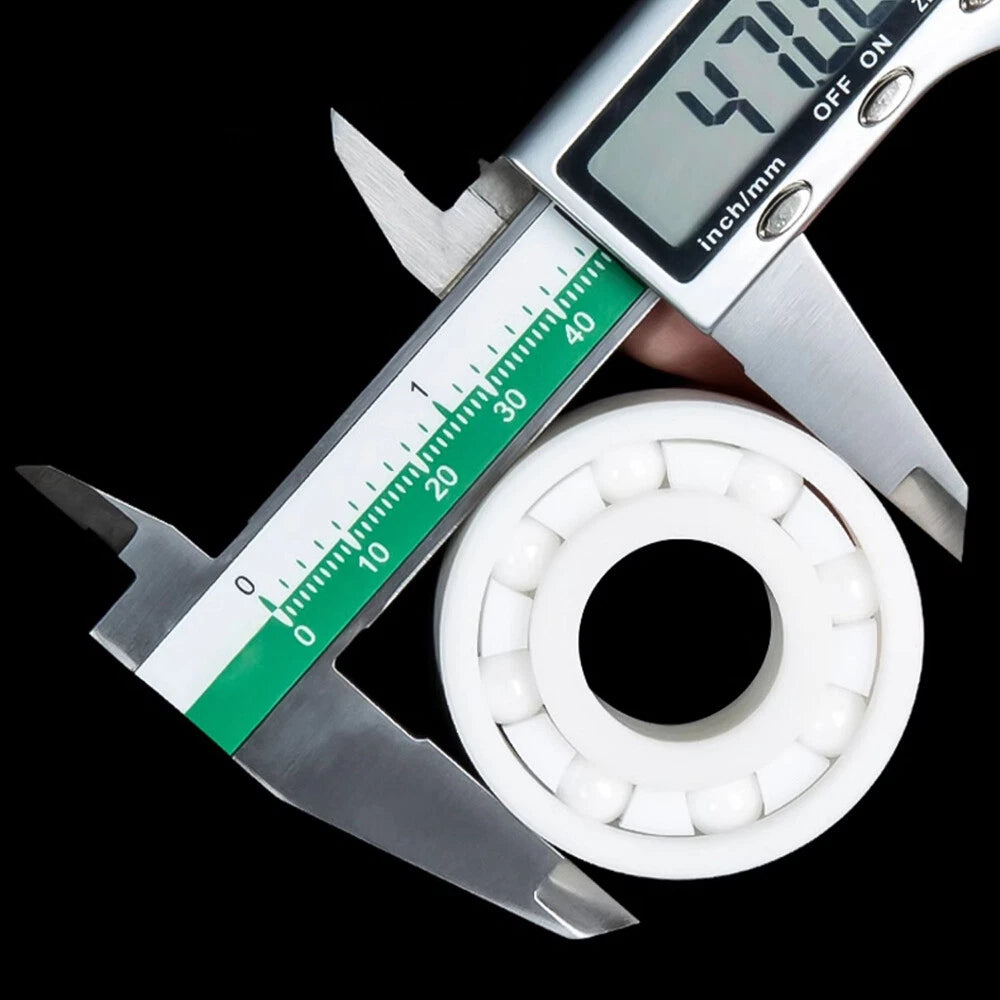
Match the three dimensions shown in the size name: bore (ID) × outer diameter (OD) × width, all in millimetres. For example, "608/8×22×7mm" means 8 mm bore, 22 mm OD, 7 mm wide — the same footprint as a standard 608 steel bearing. Use calipers to measure your existing bearing or housing if you are unsure.
ZrO2 ceramic has high compressive strength and hardness (Vickers hardness typically 1,100–1,200 HV vs. ~700 HV for bearing steel), making it resistant to deformation under radial loads. However, ceramic is more brittle than steel under sharp impact loads. These bearings are well-suited for steady rotational loads but should not be subjected to heavy shock or hammer impacts.
No. ZrO2 ceramic is chemically inert and does not oxidise. Full ceramic bearings (with ceramic races and balls) can operate continuously in fresh water, saltwater, and many chemical environments without corrosion. This makes them a popular choice for marine, aquatic, and wet-process applications.
Yes. ZrO2 is non-magnetic and electrically non-conductive, so these bearings will not be attracted to magnets, will not generate eddy currents, and will not interfere with nearby sensors or electronics. They are commonly used in MRI-adjacent equipment, electric motors, and precision instruments.
Open bearings (no suffix) have no shields or seals — they allow free flow of lubricant or coolant and are easier to clean, but offer less protection against particulate contamination. The -2RS suffix (e.g. 6700-2RS) indicates rubber contact seals on both sides, which retain grease and exclude dust and light moisture. Choose -2RS for dusty or lightly wet environments where you want a maintenance-reduced option.
Full ceramic bearings can run dry in clean, low-load applications. For higher speeds or loads, a small amount of PTFE-based (e.g. dry film) or silicone grease extends service life. Avoid petroleum-based oils, as they can degrade in chemical environments and may not be compatible with ceramic surfaces at elevated temperatures.
This listing covers 60+ sizes across the following series: 6700–6712 (standard metric miniature), MR-series (MR63, MR74, MR84, MR85, MR117, MR126, MR128, MR148), 60x-series (603–609), 62x-series (623–629), 68x-series (683–689), and 69x-series (693–699). Select your exact size from the dropdown. If your required size is not listed, contact us to confirm availability.
Yes. The miniature size range (starting from 3 mm bore) and non-magnetic, lightweight properties make these bearings well-matched for 3D printer extruder idlers, RC car wheel hubs, drone motor mounts, and similar hobby and maker applications where weight and corrosion resistance matter.