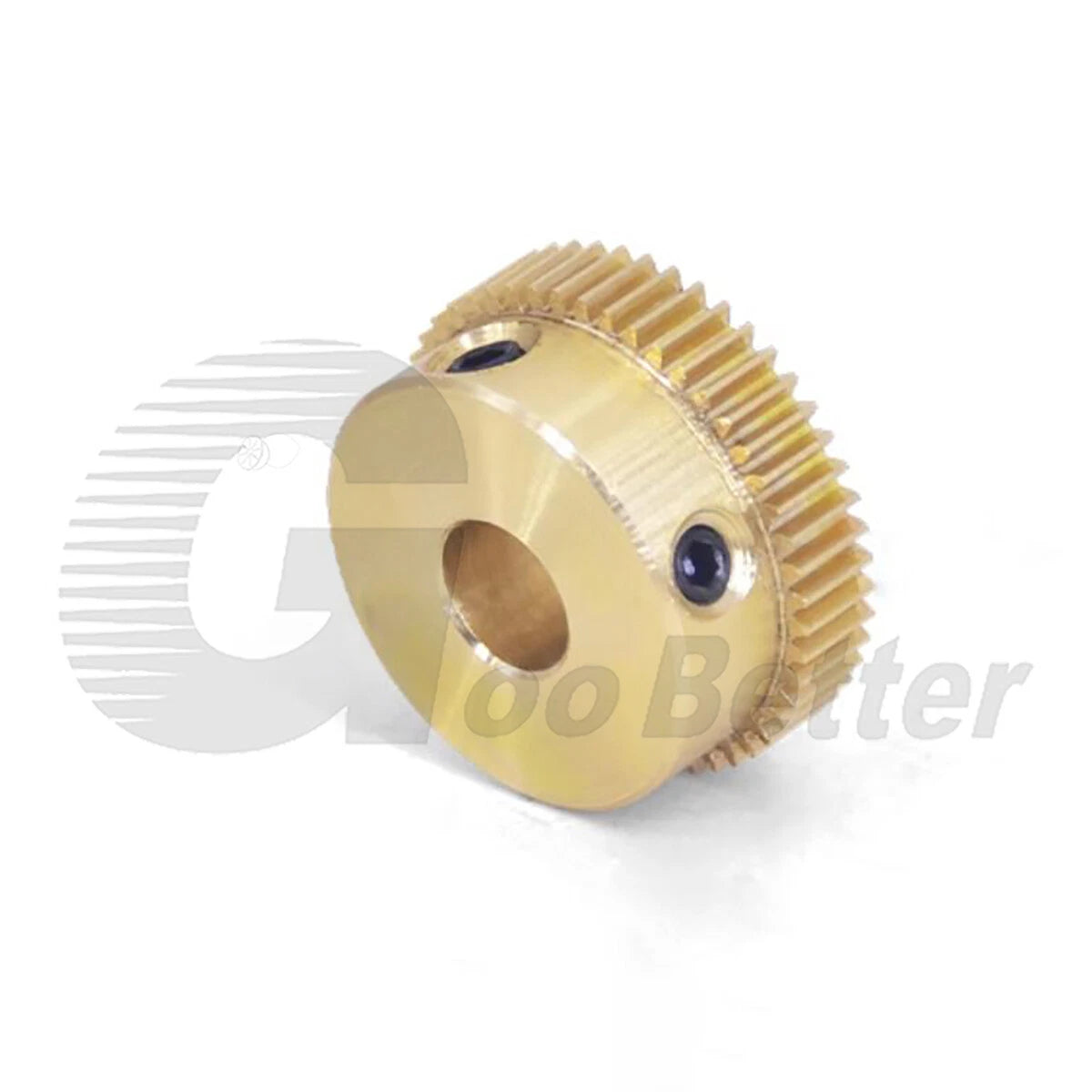
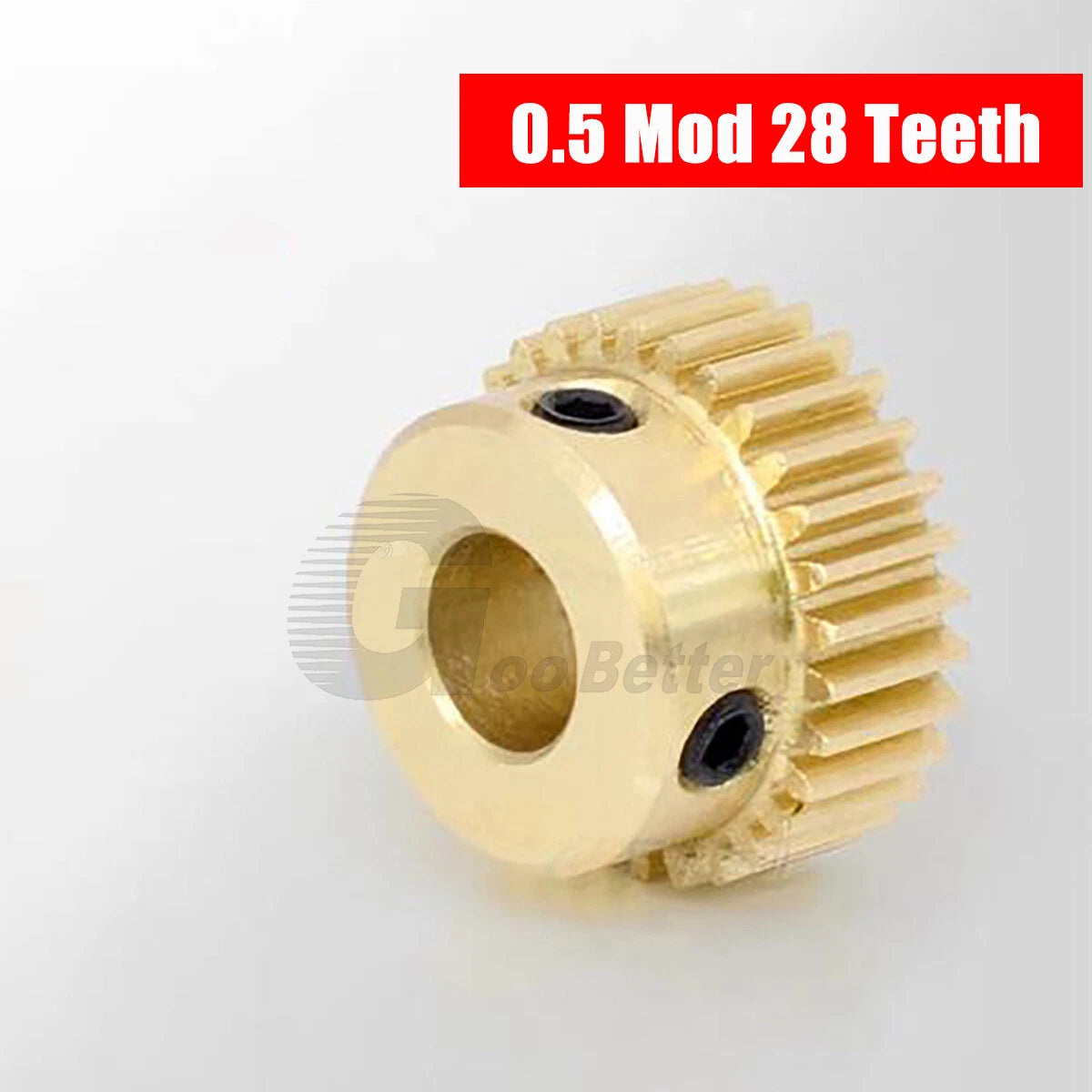
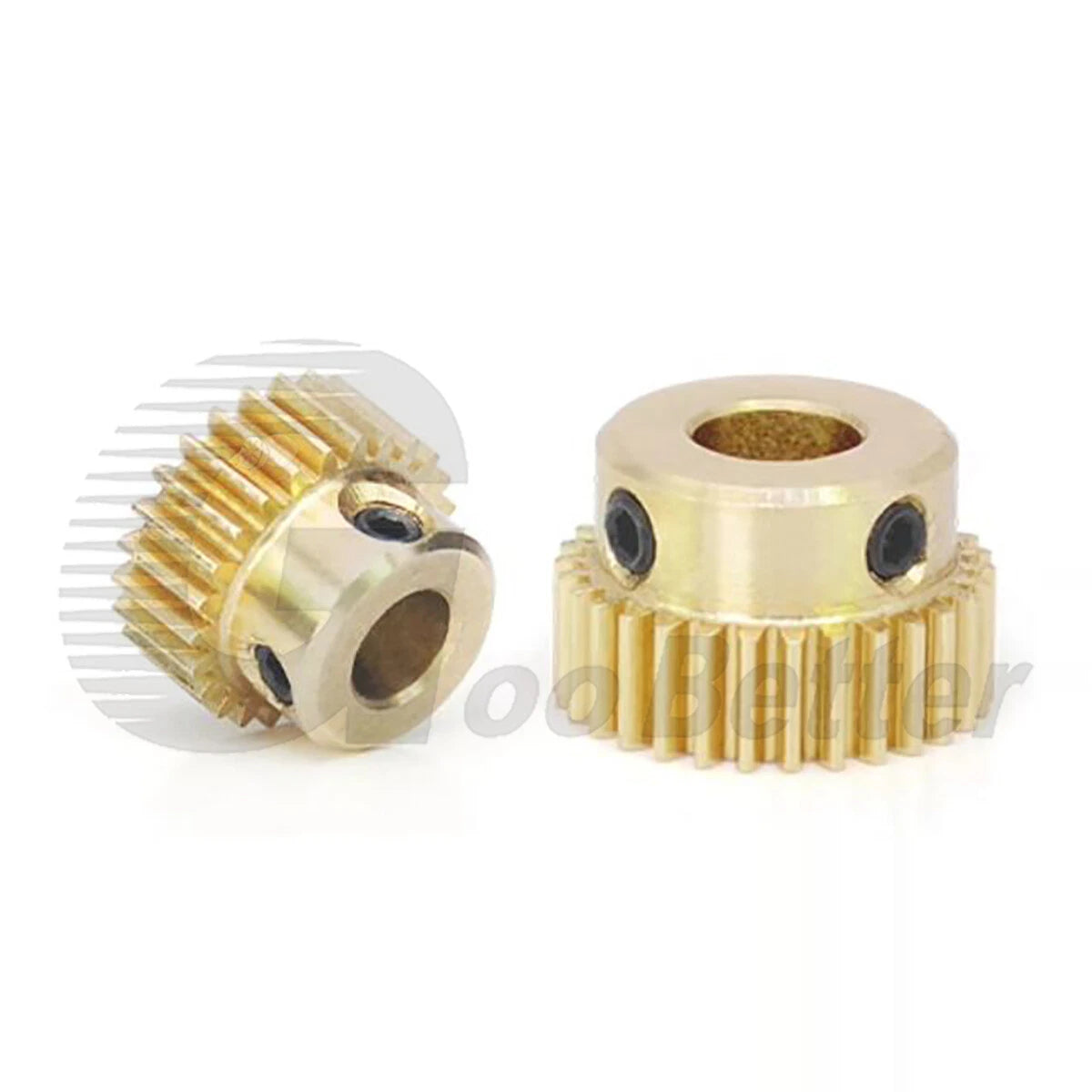
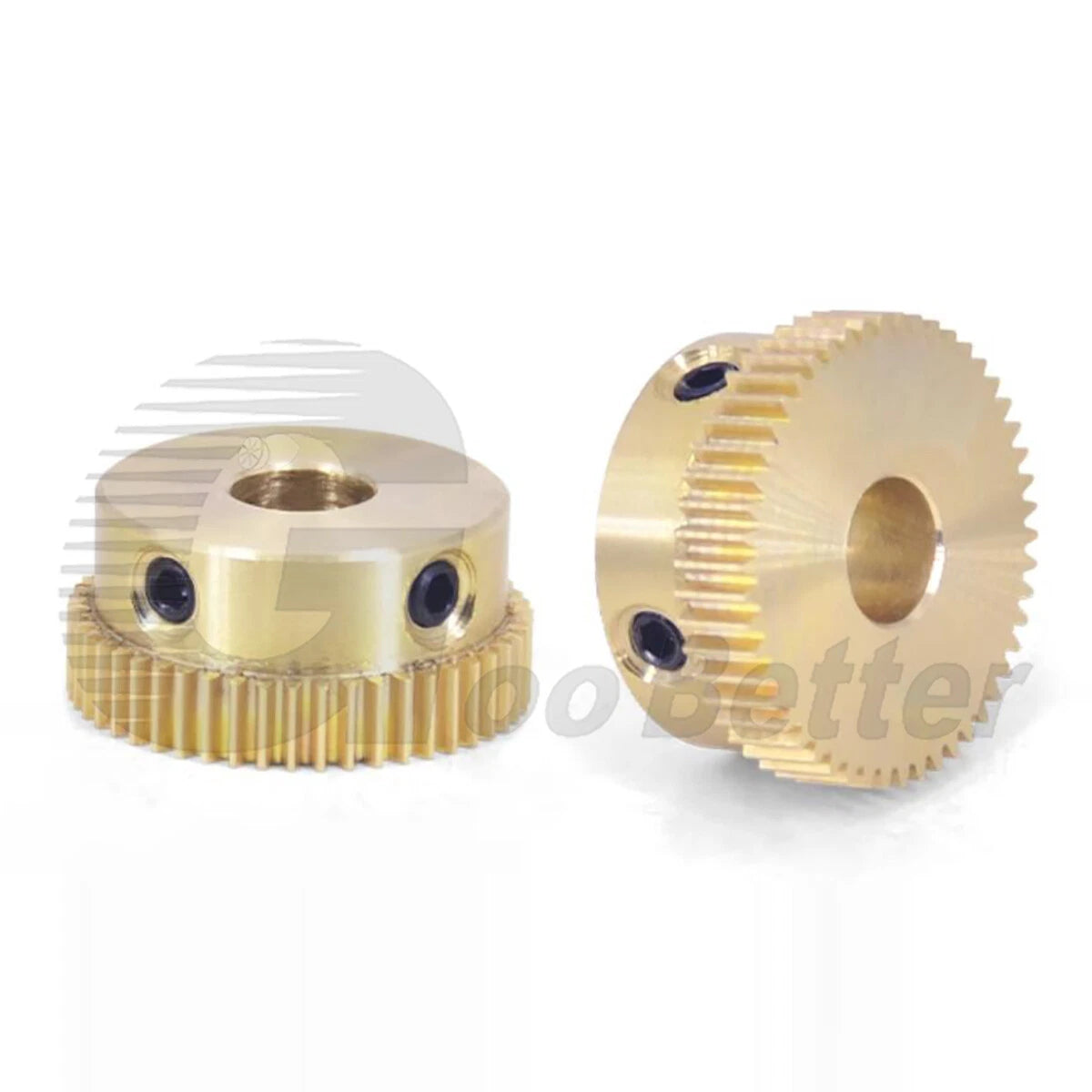
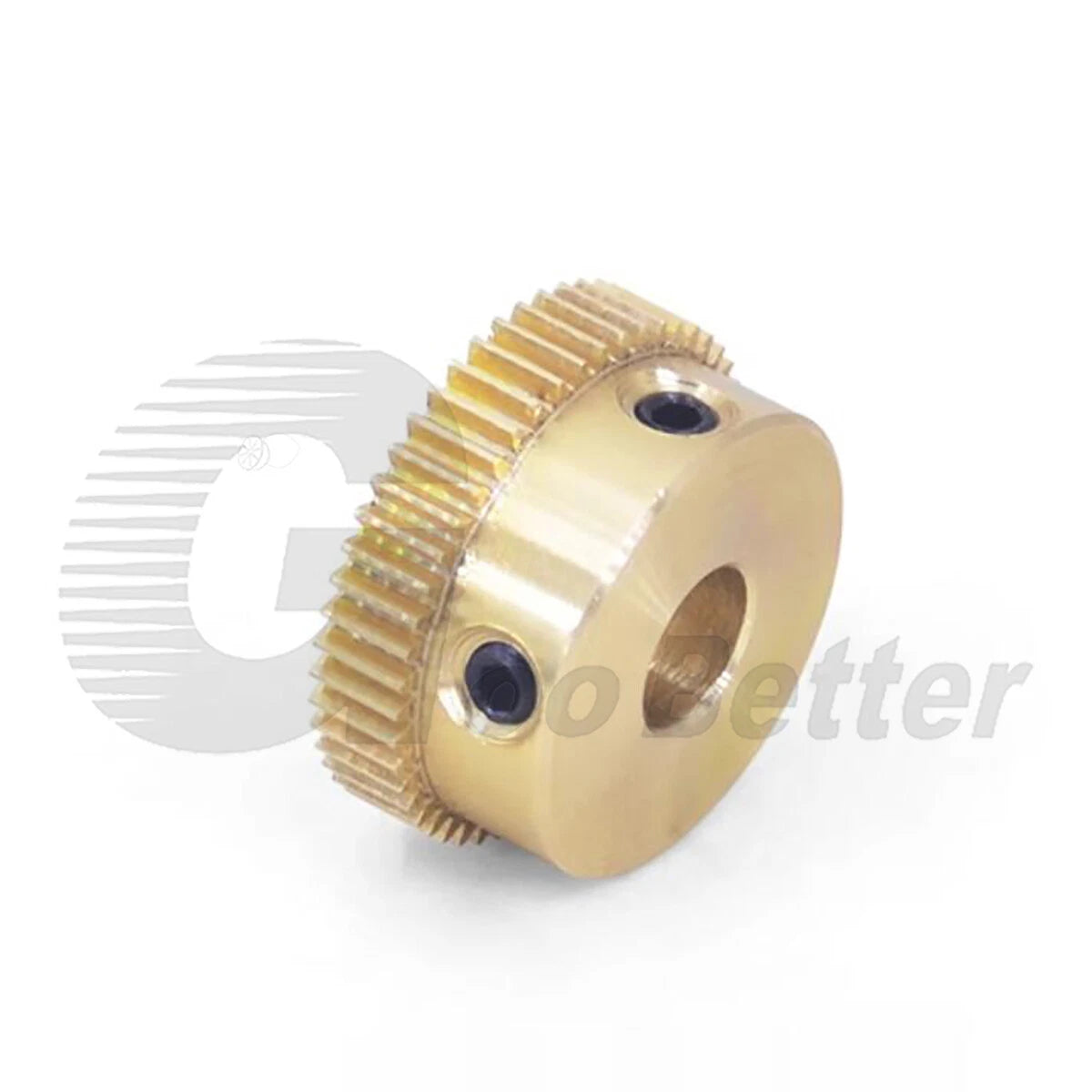
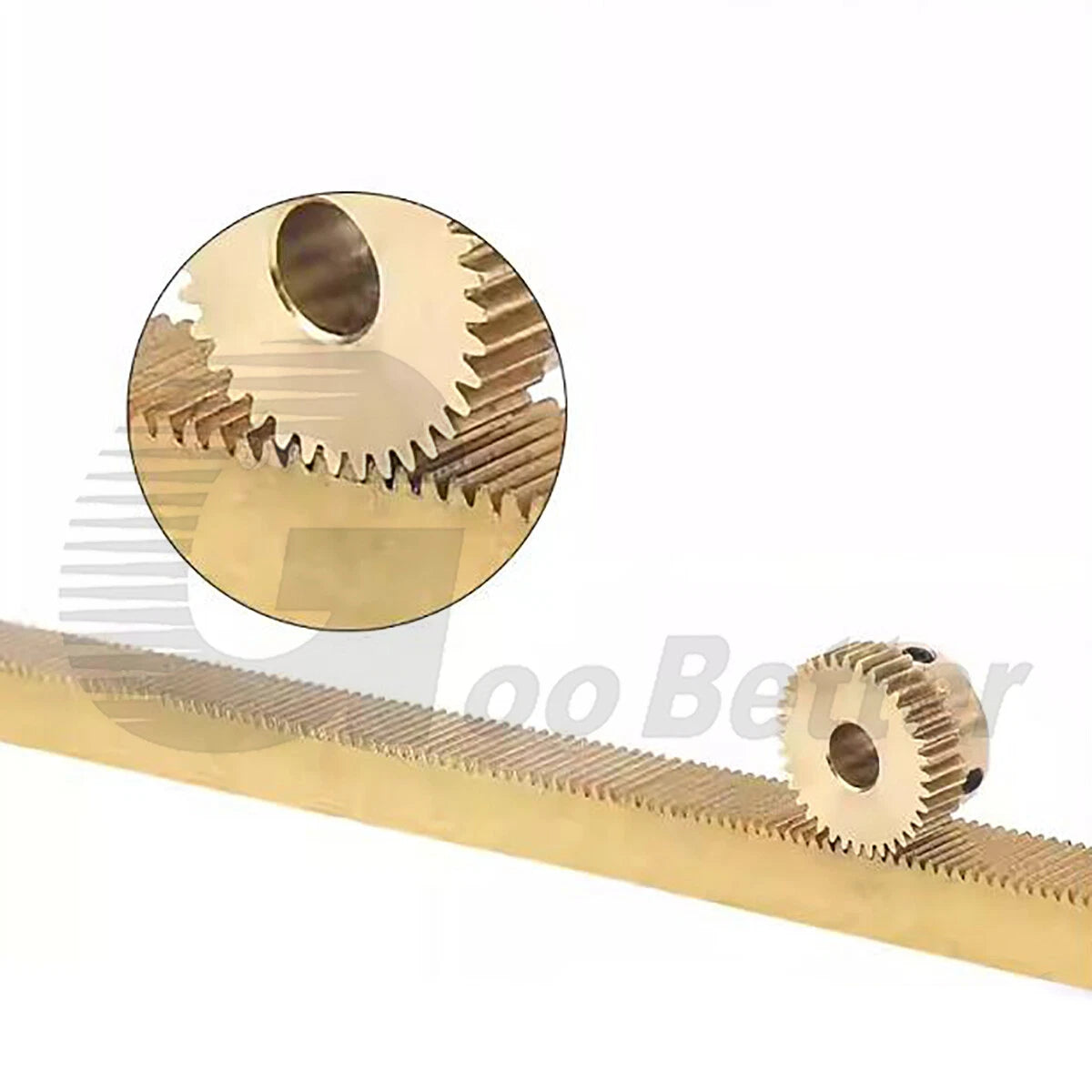
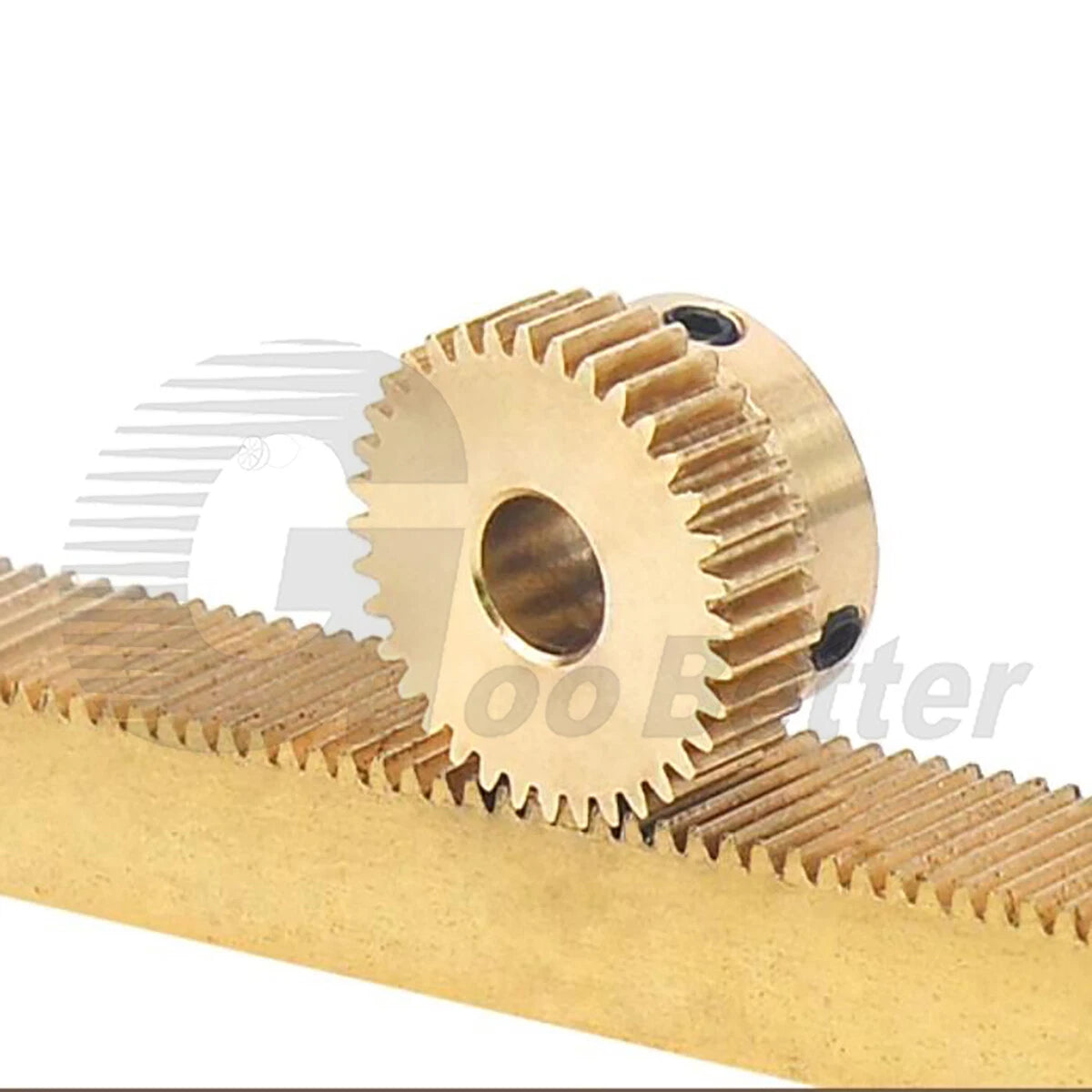
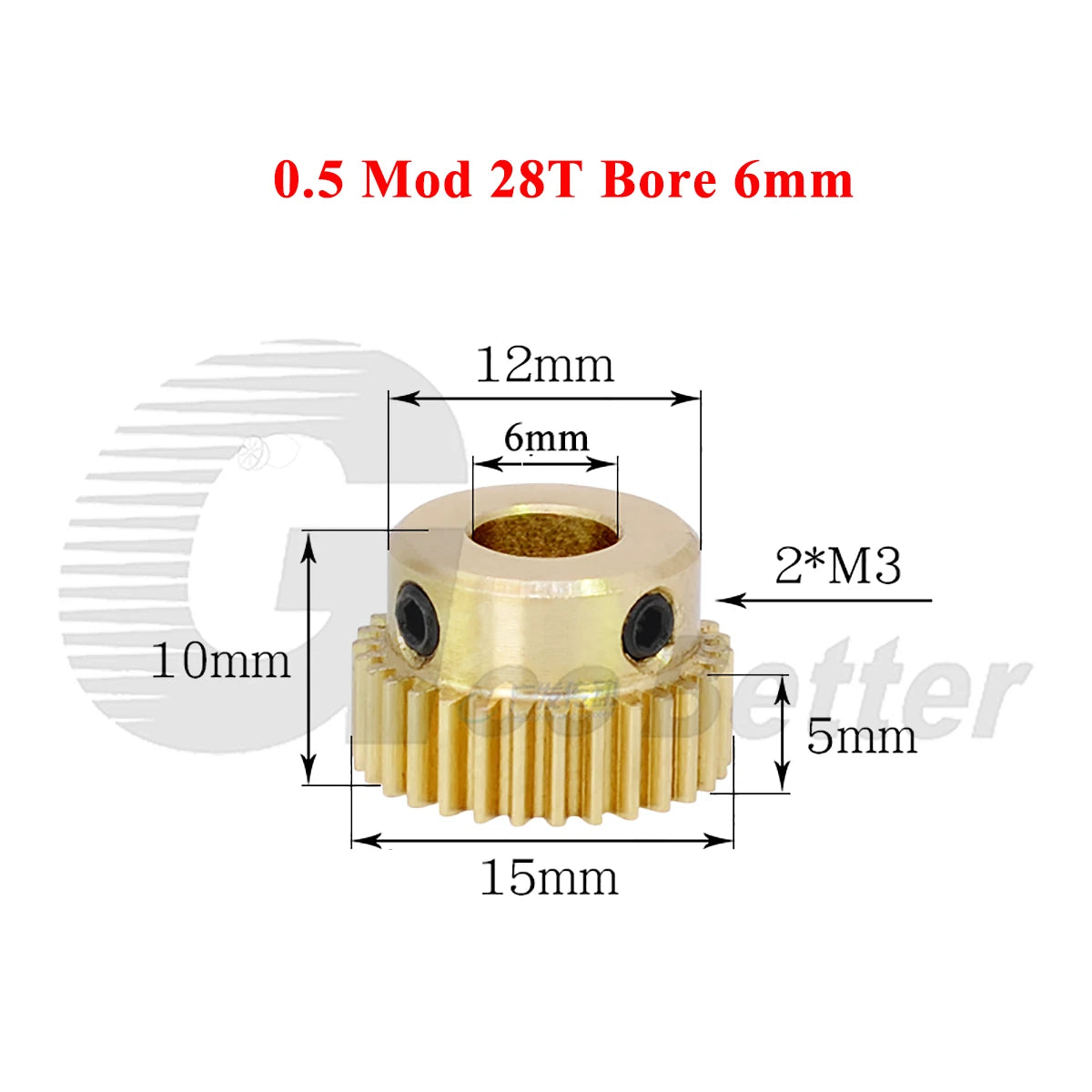
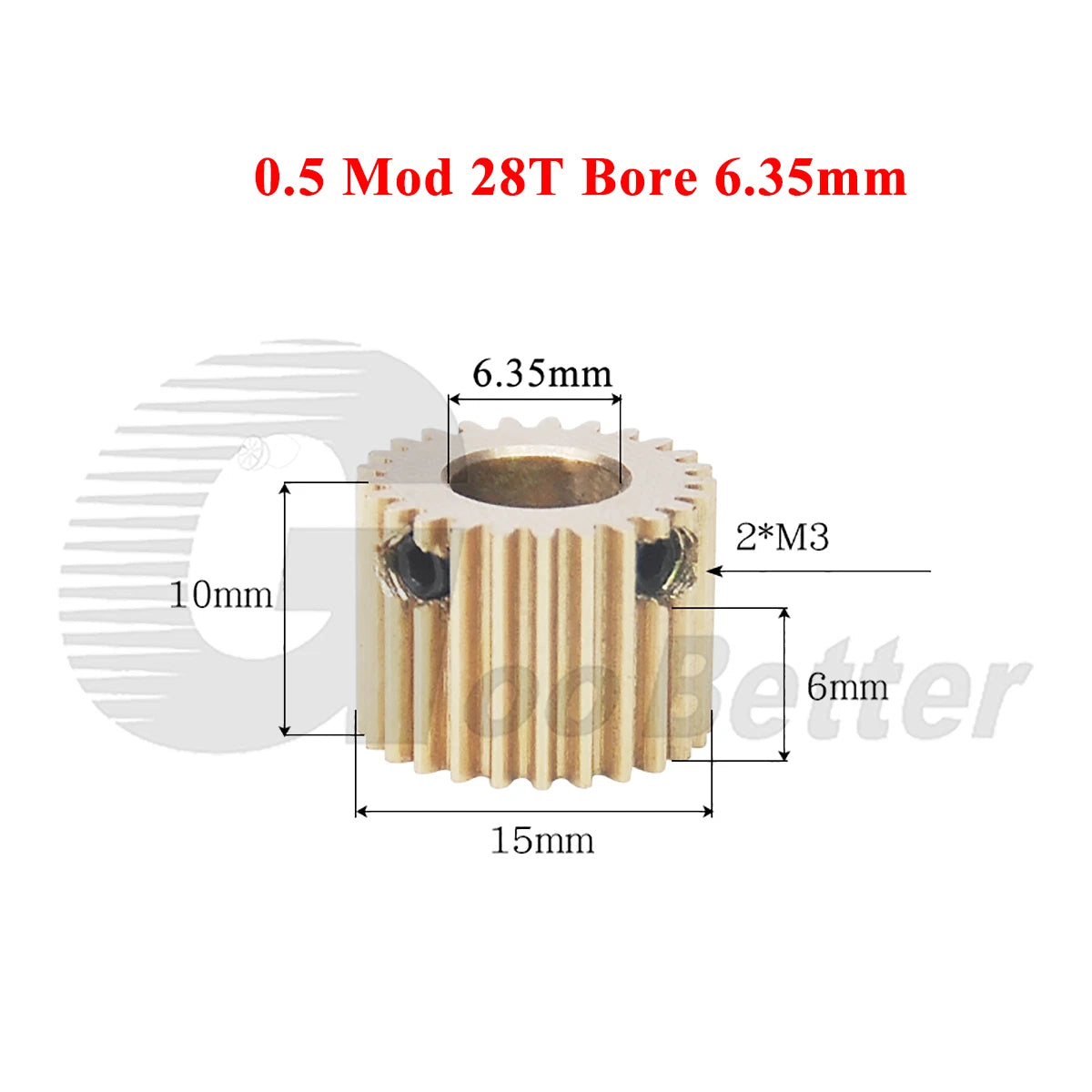
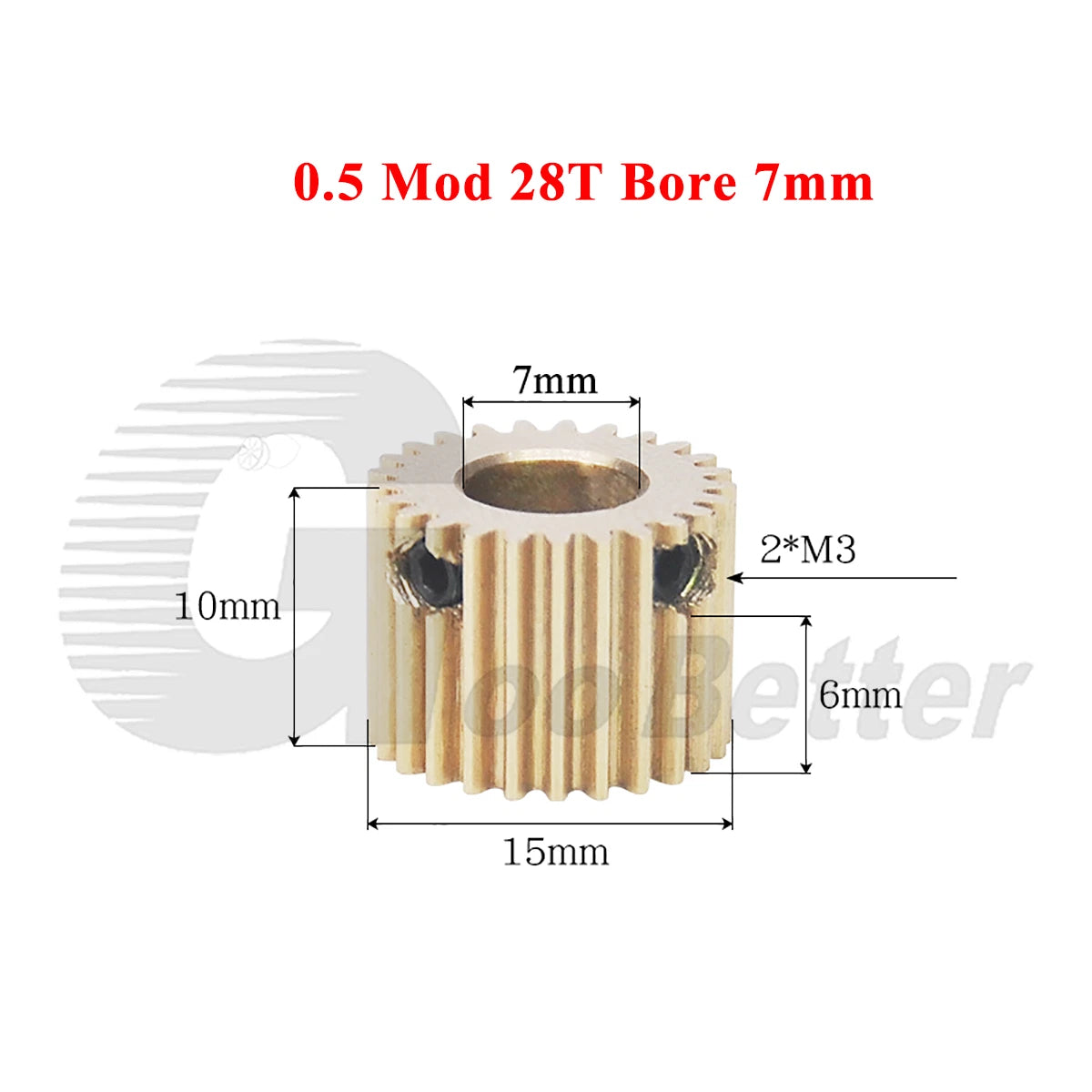
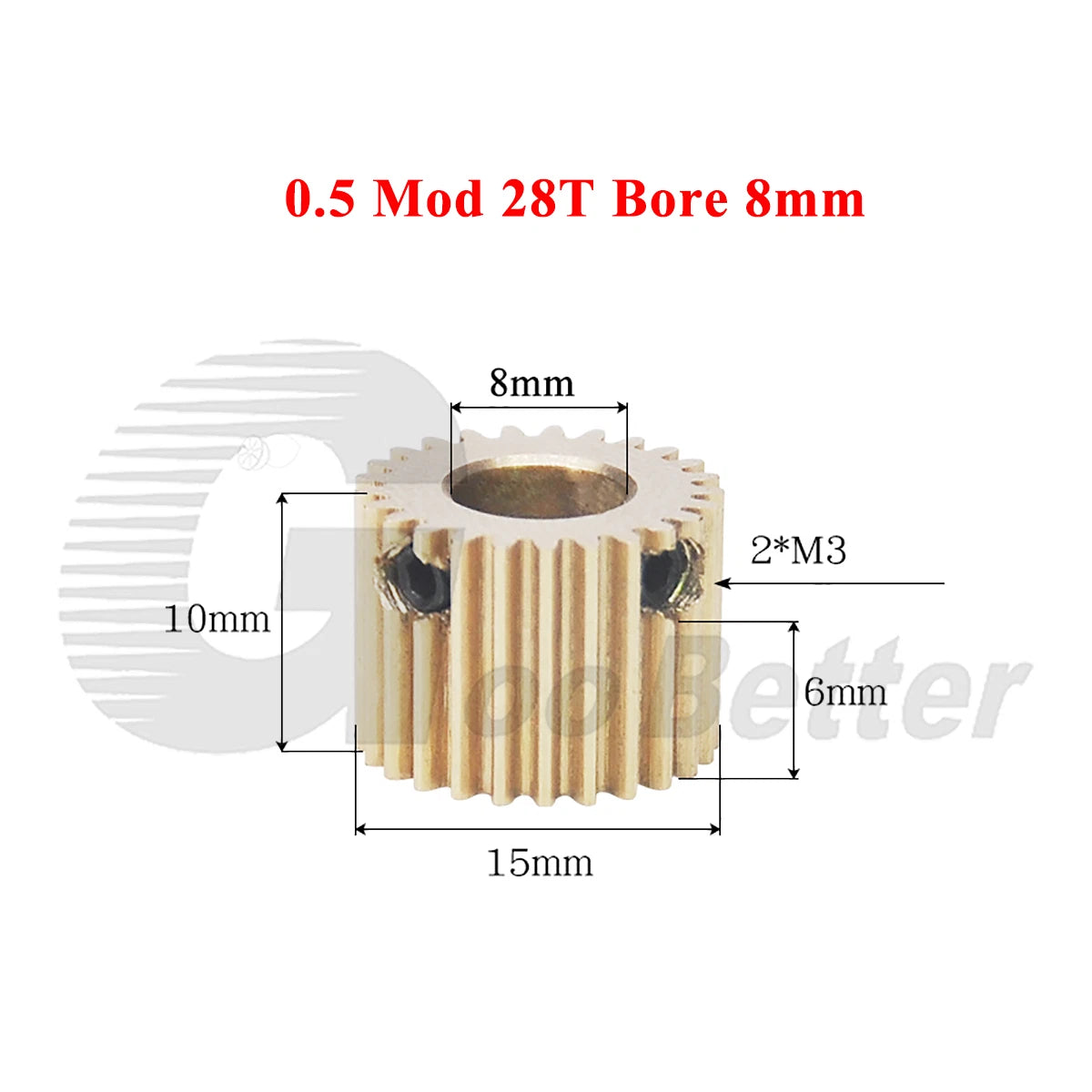
0.5 Mod Brass Pinion Spur Gear 28 Teeth Bore 4/5/6/6.35/7/8mm Transmission Gear

No reviews

Price:
Sale price$8.64 USD
Stock:
In stock (500 units), ready to be shipped

Payment & Security

Ach Direct Debit Amazon American Express Apple Pay Bancontact BLIK Diners Club Discover EPS Google Pay iDEAL Wero JCB Maestro Mastercard Multibanco MobilePay PayPal Przelewy24 Shop Pay Twint Union Pay USDC Visa

Your payment information is processed securely. We do not store credit card details nor have access to your credit card information.

Limited Offer — Spend More, Save More
Spend $55+
Save $5
Spend $100+
Save $10
Spend $200+
Save $25
HomeDIYer DIY Expert Support

DIY Expert Support

Get fitment advice & recommendations

Mon–Fri  8:30 AM – 8:00 PM
24-Hour Fast Ship
Arrives in 3–14 Days
Worldwide Shipping
30-Day Returns
1 tree planted with every purchase

Description

0.5 Mod Brass Pinion Spur Gear 28T — Reliable Transmission for Precision Mechanical Drives

When a mismatched or undersized pinion gear causes slippage, noise, or premature wear in your drive train, the entire mechanism suffers. Hobbyists, robotics engineers, and small-machine builders who need a dimensionally accurate, corrosion-resistant 0.5 module spur gear with 28 teeth will find this brass pinion gear a dependable solution for tight-tolerance assemblies.

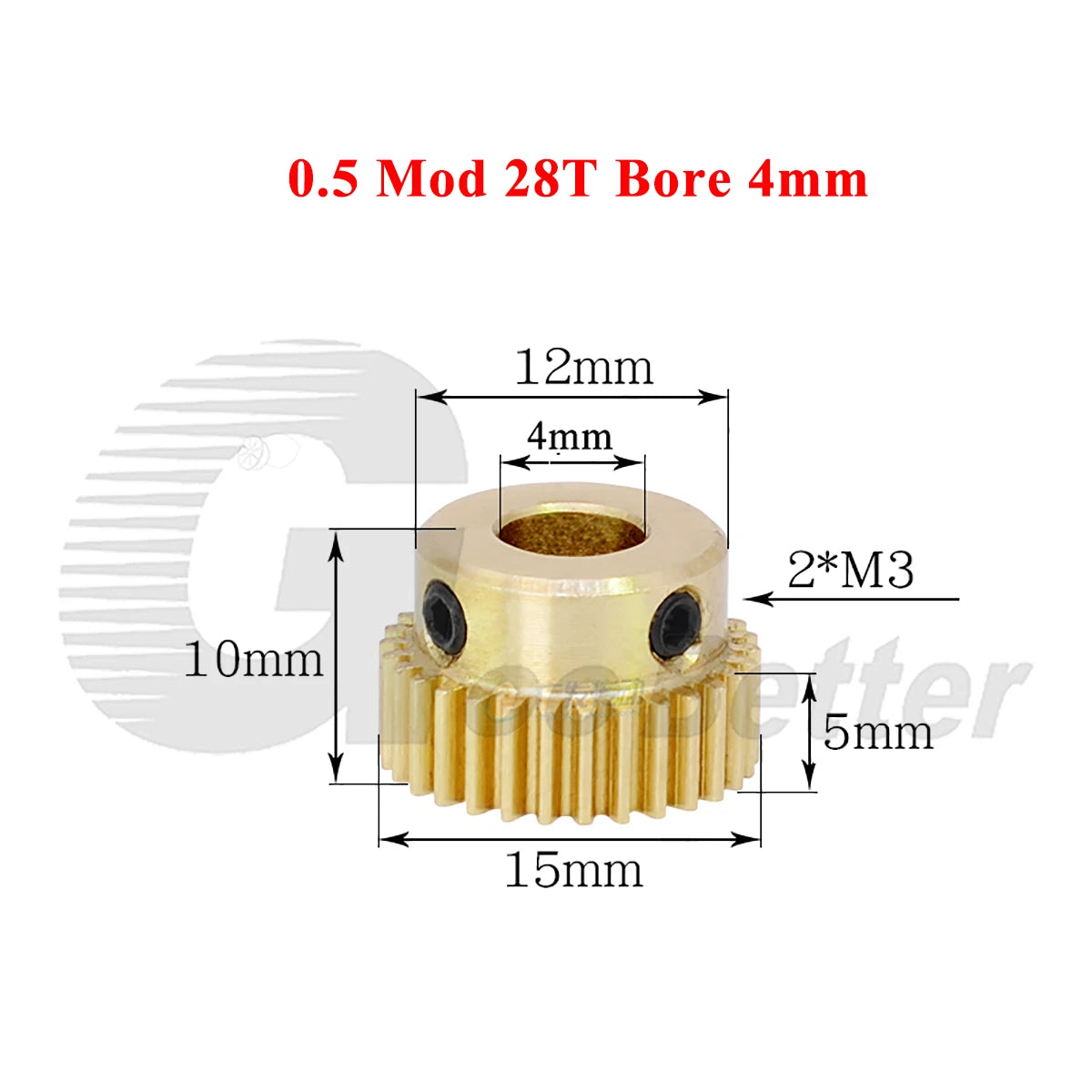
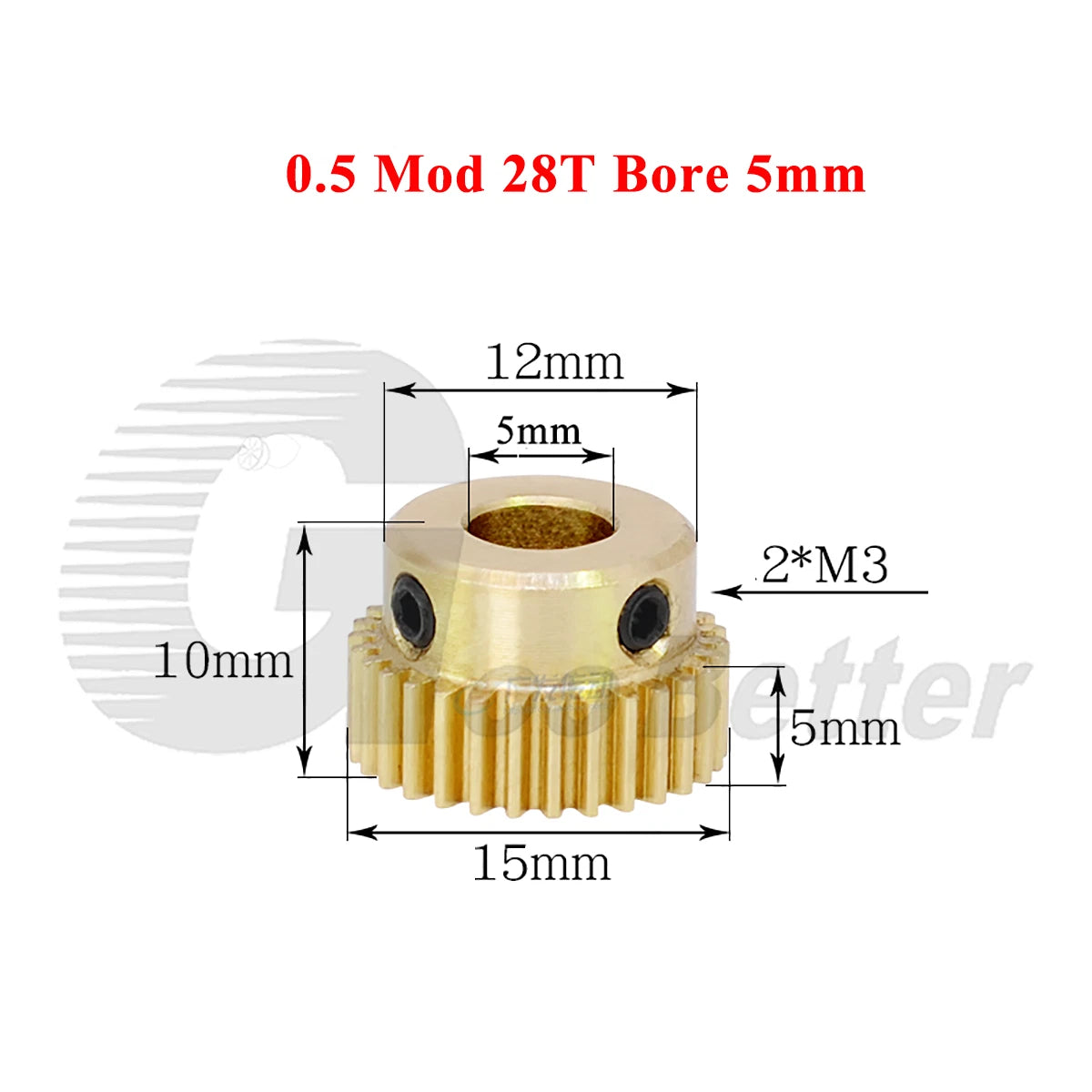
Each gear is machined from solid brass, offering a balance of machinability, low friction, and natural corrosion resistance without surface coatings. The module is 0.5 (Mod 0.5), tooth count is 28T, and bore options span 4 mm (0.157 in), 5 mm (0.197 in), 6 mm (0.236 in), 6.35 mm (0.250 in / 1/4 in), 7 mm (0.276 in), and 8 mm (0.315 in). Outer diameter is approximately 14.5 mm (0.571 in) based on the standard formula OD = (T + 2) × m.

Typical use cases include RC car and drone transmission stages requiring a compact 0.5 mod pinion gear, desktop CNC and 3D-printer extruder drives where a brass spur gear 28 teeth resists wear against plastic mating gears, and small robotic joint actuators where a lightweight metal pinion gear for robotics keeps inertia low while maintaining torque transfer accuracy.

⚙️ Compatibility: Meshes with any Mod 0.5 spur, rack, or pinion gear. Verify bore diameter matches your shaft before ordering. Pressure angle: 20° (standard).

✅ Key Features of These 0.5 Mod Brass Pinion Spur Gears

🔩 Solid Brass Construction

Machined from brass alloy for inherent corrosion resistance, smooth meshing, and compatibility with both metal and plastic mating gears without aggressive wear.

📐 Standard Mod 0.5 — 28 Teeth

Conforms to the ISO/DIN Mod 0.5 standard with 28 teeth and a 20° pressure angle, ensuring interchangeability with any compliant Mod 0.5 gear in your drivetrain.

🎯 Six Bore Sizes Available

Choose from 4 / 5 / 6 / 6.35 / 7 / 8 mm bore diameters to match common motor shafts, including the 6.35 mm (1/4 in) imperial size used in many North American motors.

⚖️ Compact & Lightweight

With an outer diameter of approximately 14.5 mm, this pinion gear fits into space-constrained assemblies such as micro-gearboxes, RC transmissions, and compact robotic joints.

📦 Flexible Pack Quantities

Available in 1, 2, 5, or 10-piece packs so you can order a single replacement or stock spares for production runs and prototyping batches.

🔄 Low-Friction Meshing

Brass-on-brass or brass-on-plastic contact produces lower operating noise and reduced heat compared to steel pinions in lightly loaded, high-speed applications.

📐 Technical Specifications — Mod 0.5 Brass Spur Gear

Module (Mod) 0.5
Number of Teeth 28T
Pressure Angle 20°
Outer Diameter (OD) Approx. 14.5 mm (0.571 in)
Bore Diameter 4 / 5 / 6 / 6.35 / 7 / 8 mm (see variant options)
Material Brass
Finish Natural brass (uncoated)
Hub / Face Width See variant options
Gear Type Spur (parallel axis)
Standard ISO / DIN Mod 0.5
Pack Quantity 1 / 2 / 5 / 10 PCS (see variant options)

❓ Frequently Asked Questions

How do I choose the correct bore size for my motor shaft?

Measure your motor or drive shaft diameter with a caliper. Select the bore that matches exactly — for example, choose 6.35 mm if your shaft is a standard 1/4-inch imperial shaft. A bore that is too large will cause runout and slippage; a bore that is too small cannot be pressed on without machining.

Will this gear mesh with my existing Mod 0.5 gears?

Yes. Any gear marked Mod 0.5 (or Module 0.5) with a 20° pressure angle will mesh correctly with this 28T pinion, regardless of tooth count on the mating gear. Confirm the pressure angle of your existing gears before mixing gear sets from different manufacturers.

Is brass strong enough for my application?

Brass is well-suited for light-to-moderate load applications such as RC vehicles, small robots, instrumentation, and hobby CNC machines. For heavy industrial loads or high-impact environments, a steel gear would be more appropriate. Brass offers lower noise and better corrosion resistance than steel in most hobby and light-duty scenarios.

Does brass corrode or require lubrication?

Brass is naturally corrosion-resistant and will not rust. For best longevity, apply a light machine oil or grease to the tooth faces, especially in continuous-duty or high-speed applications. This reduces friction heat and extends the service life of both this gear and its mating gear.

Can I use this gear with a plastic mating gear?

Yes. Brass is commonly paired with POM (Delrin), nylon, or other engineering plastics. The softer plastic gear acts as the sacrificial wear component, protecting the brass pinion. This combination is widely used in 3D printer extruders, RC gearboxes, and small appliance drives.

How do I secure the gear to the shaft — is a set screw included?

Retention method depends on the specific variant. Many brass pinion gears of this type are secured with a set screw threaded into the hub. Check the product images for your selected bore size. If a set screw is not included or visible, the gear may be press-fit or require a separate retaining collar.

What is the outer diameter and pitch diameter of this gear?

For a Mod 0.5 gear with 28 teeth: Pitch Diameter (PD) = T × m = 28 × 0.5 = 14.0 mm. Outer Diameter (OD) = (T + 2) × m = 30 × 0.5 = 15.0 mm. Note: actual machined OD may vary slightly by ±0.1–0.2 mm depending on manufacturing tolerance.

🛒 Select your bore size and pack quantity above, then add to cart.

You may also like

Recently viewed