The chain is fine...but I ordered the wrong size. Nine links of the chain I ordered equals six of the size I wanted. My error...
How can I straighten out the springs? I can't use them coil uo as is.
Your payment information is processed securely. We do not store credit card details nor have access to your credit card information.
Get fitment advice & recommendations
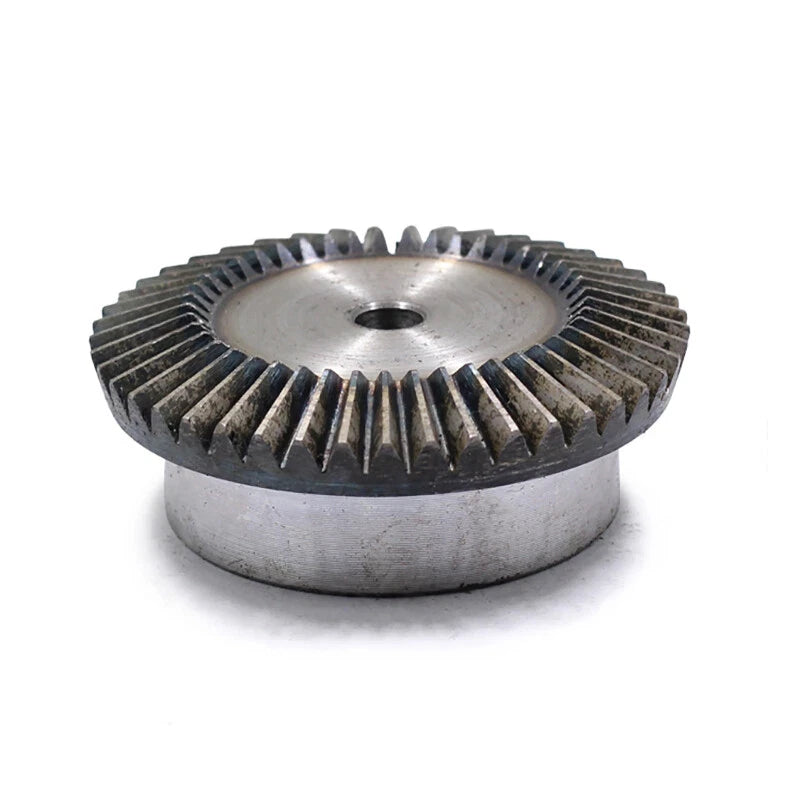
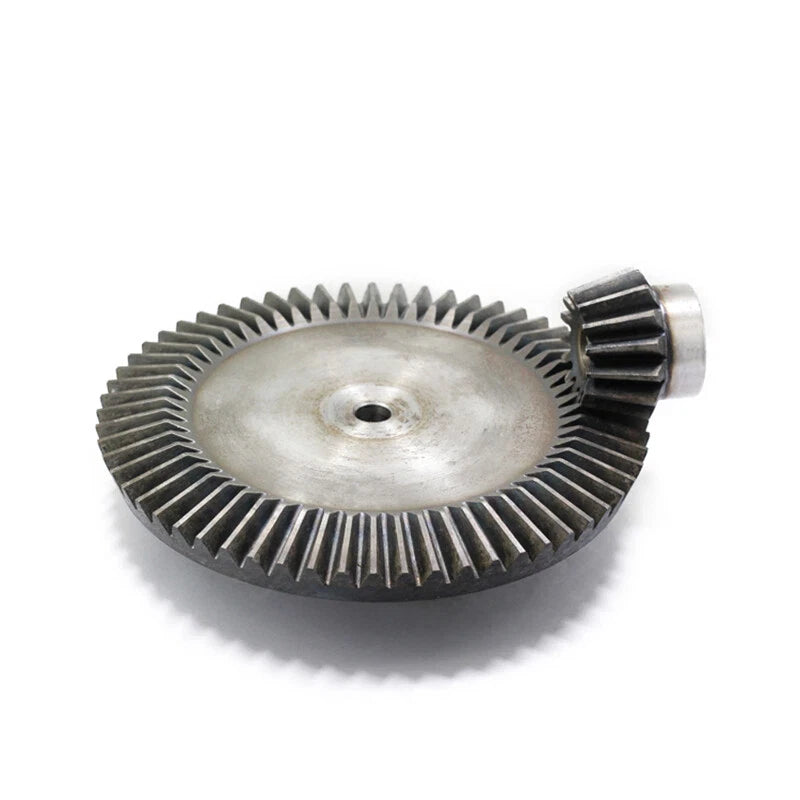
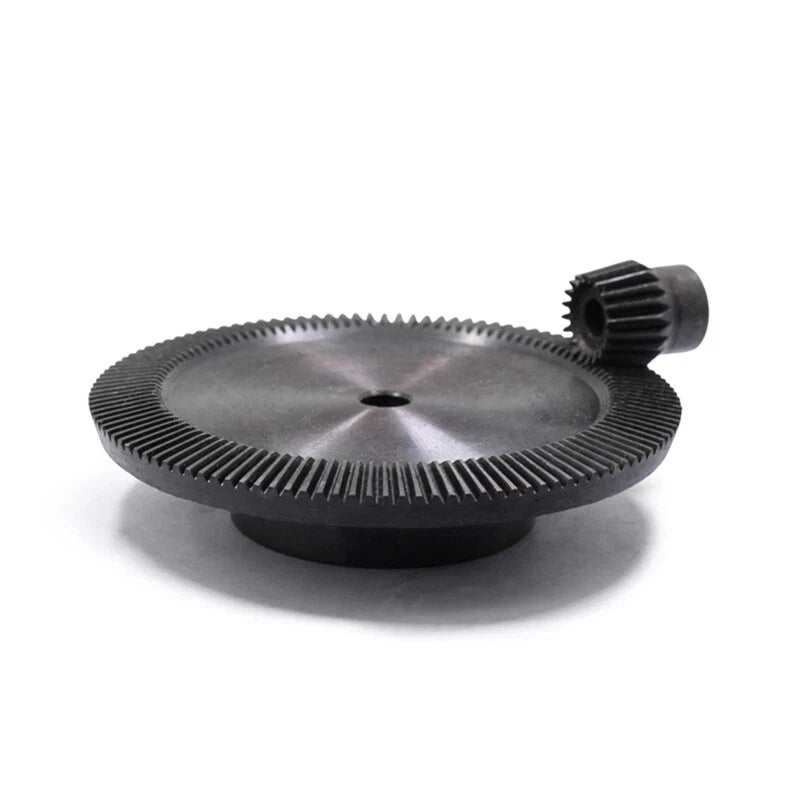
When your project demands a reliable 90-degree power transfer — whether you're building a custom CNC axis, a robotic arm joint, or a motorized mechanical assembly — mismatched or imprecise bevel gears become the weakest link. These pair bevel gear sets are engineered for makers, hobbyists, and small-scale machine builders who need consistent mesh quality and repeatable torque transmission without sourcing industrial-grade components at industrial prices.
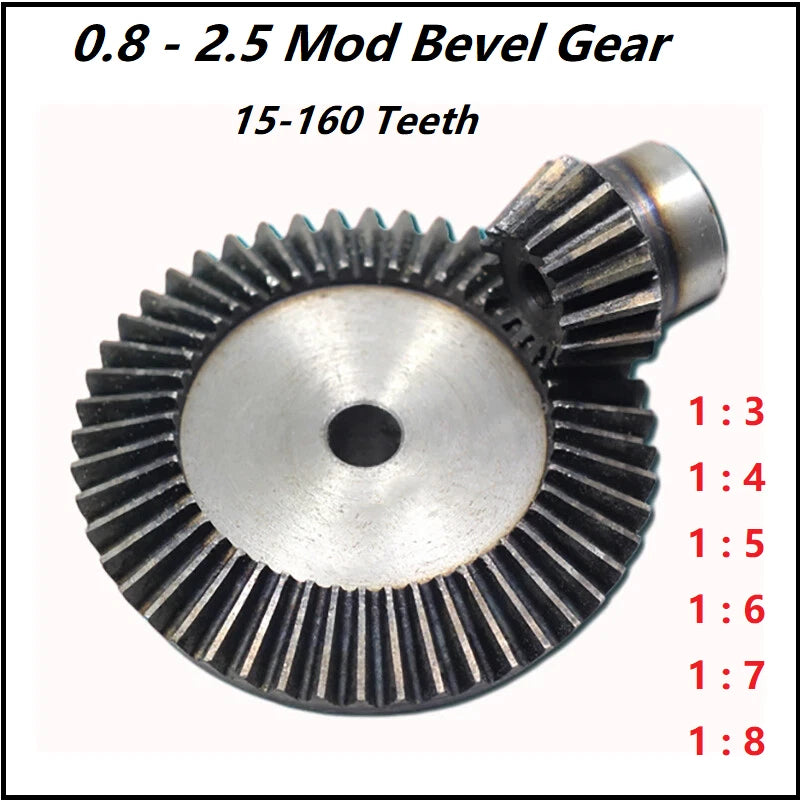
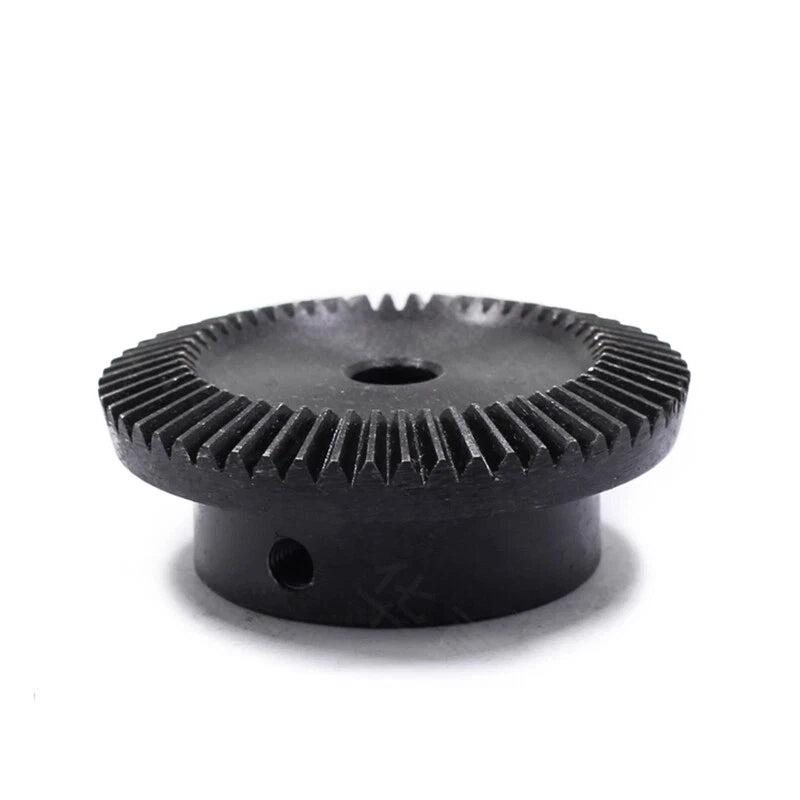
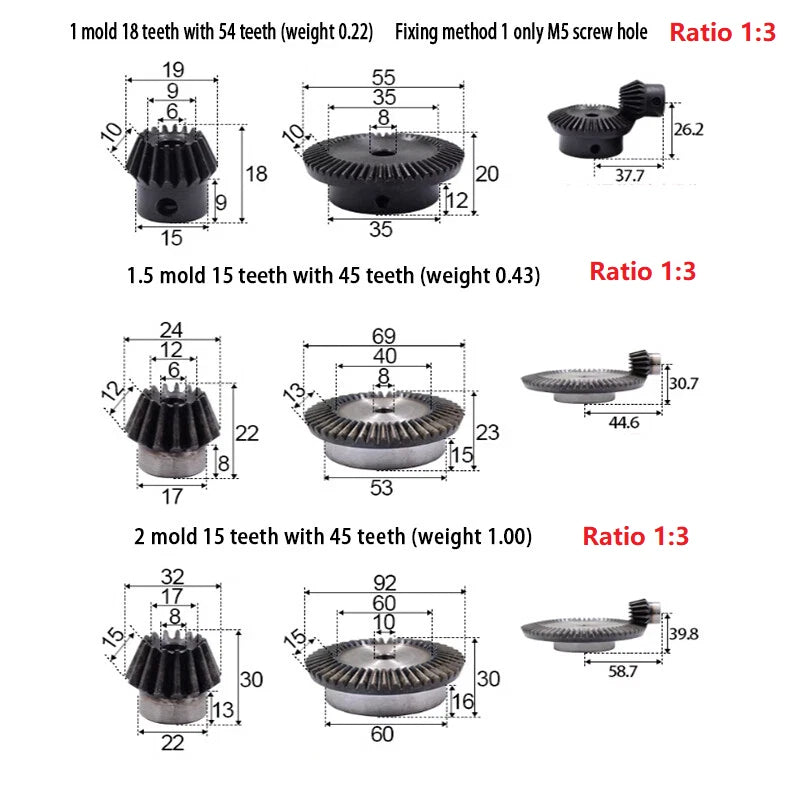
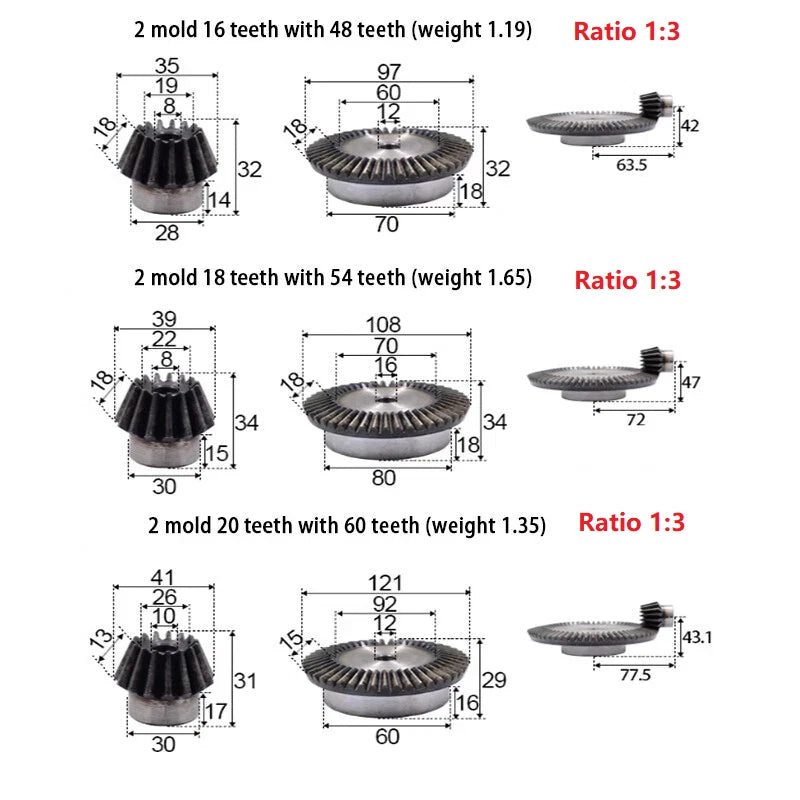
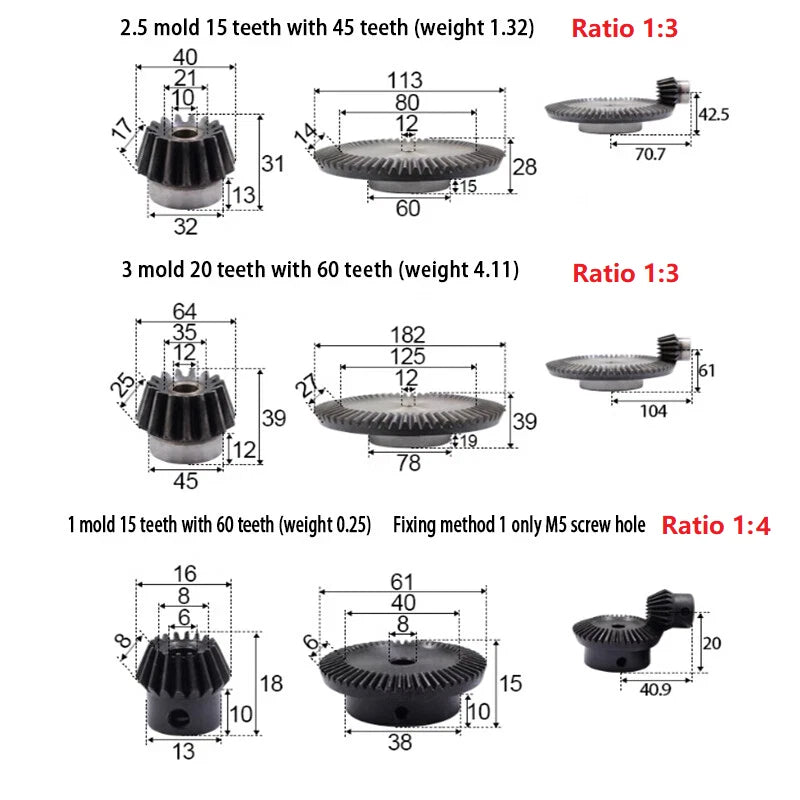
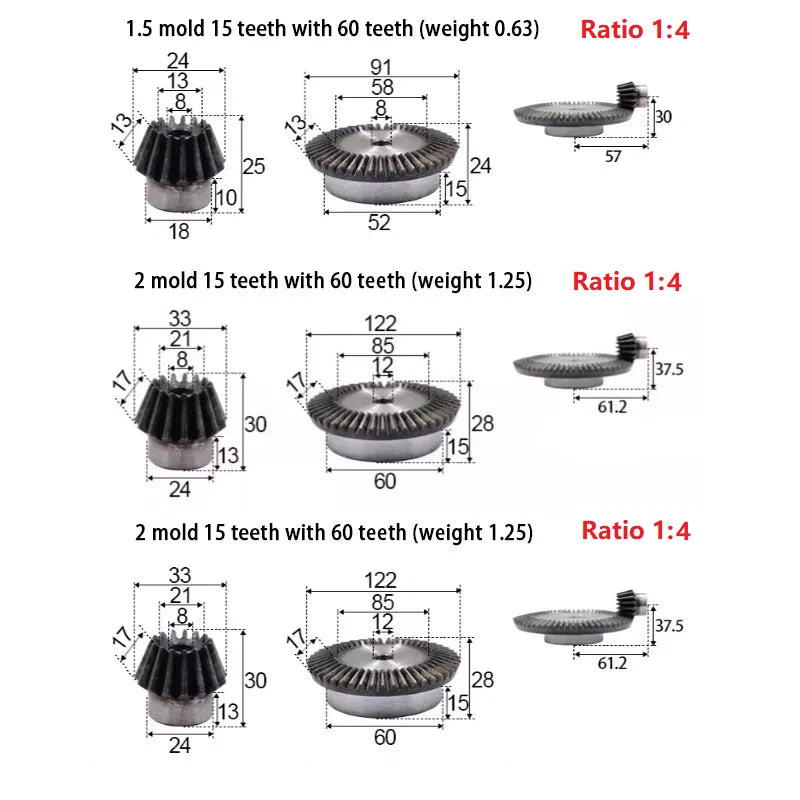
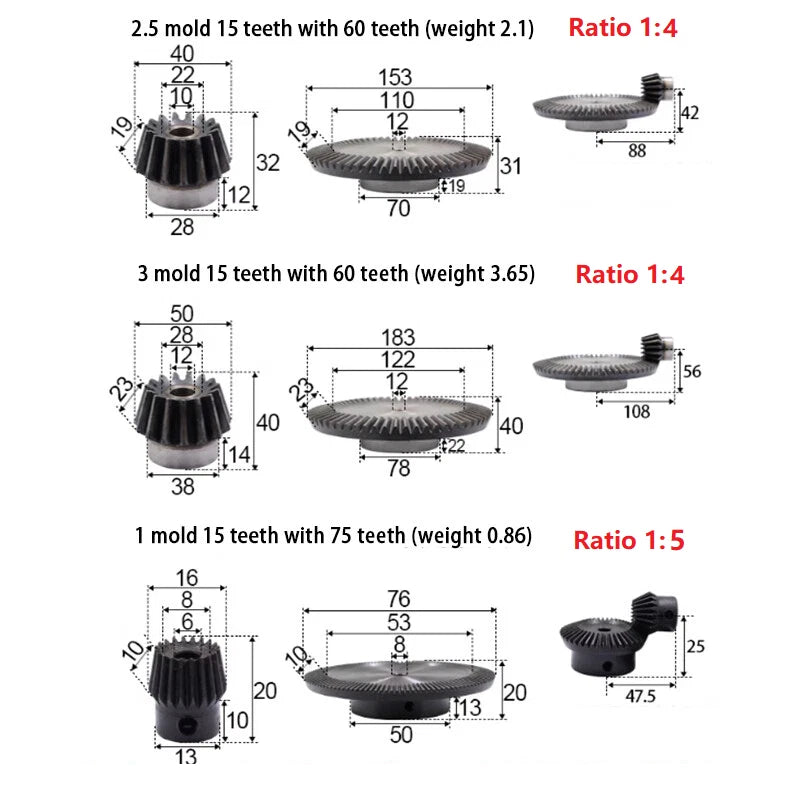
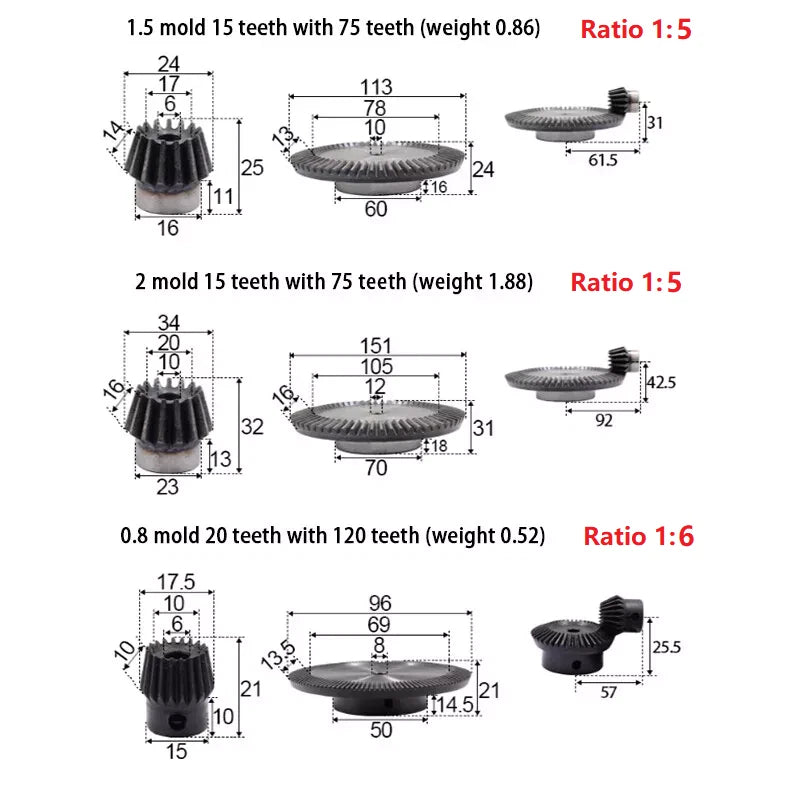
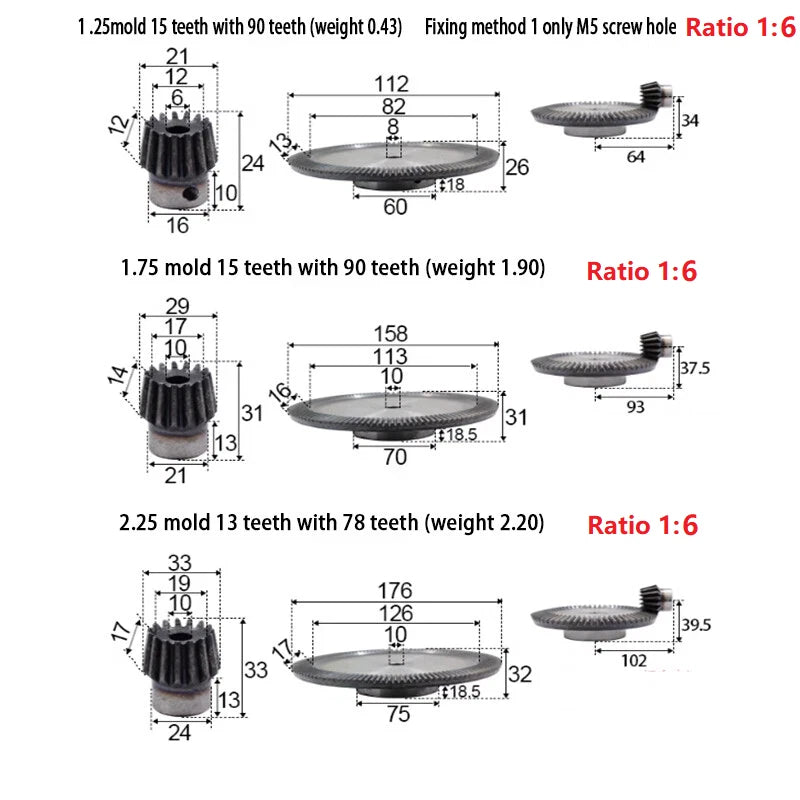
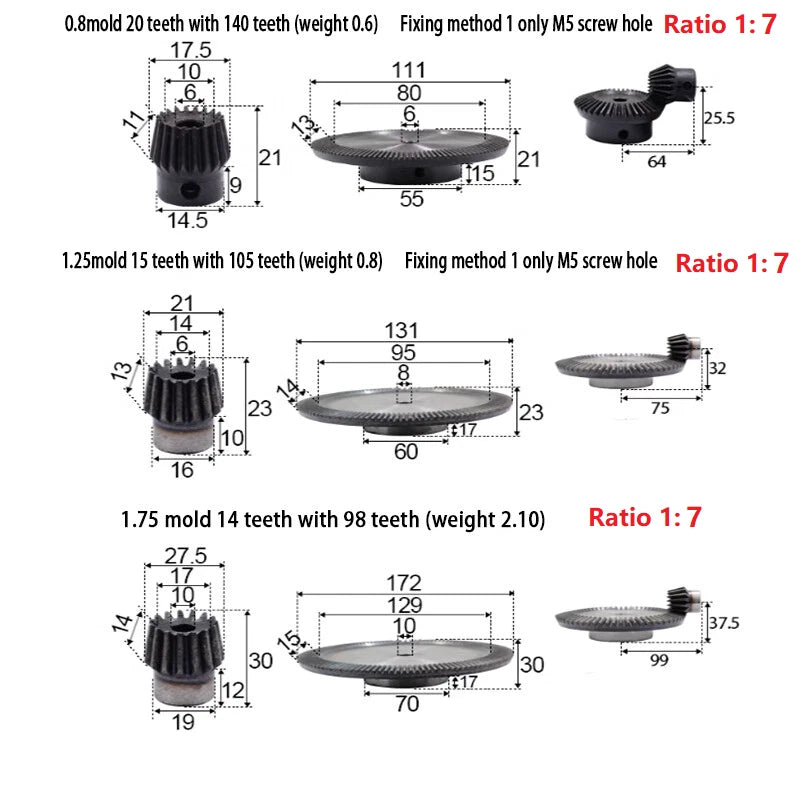
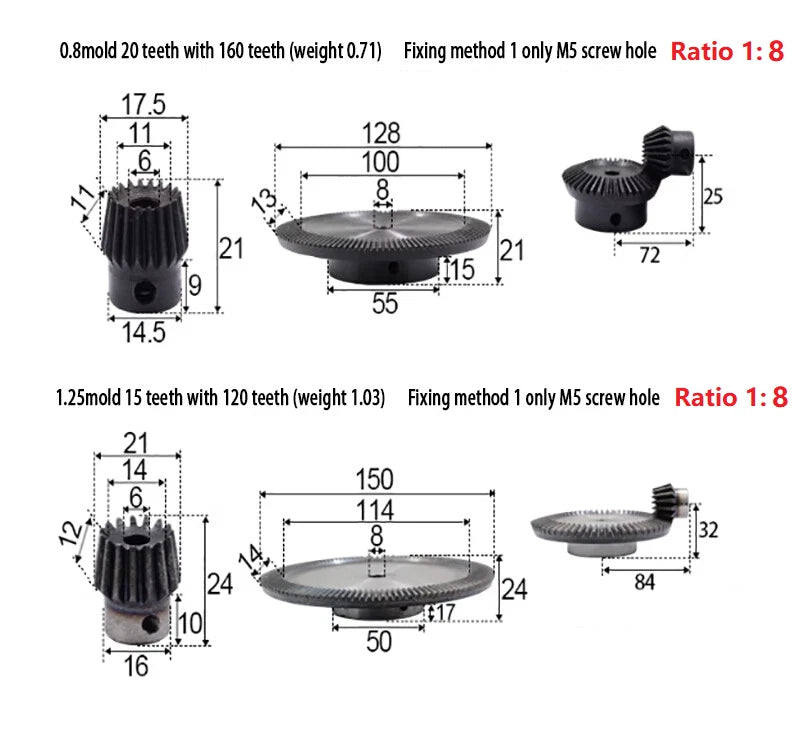
Each set consists of a matched pinion and wheel gear pair, precision-cut from C45 medium-carbon steel for a balance of hardness and machinability. Module sizes range from 0.8 Mod to 2.5 Mod, with tooth counts spanning 15T to 160T depending on the selected specification. Gear ratios available are 1:3, 1:4, 1:5, 1:6, 1:7, and 1:8, covering a wide range of speed-reduction and torque-multiplication requirements. Bore diameter and hub dimensions vary by module — see variant options for exact measurements.
Typical applications include DIY gearbox assemblies for stepper motor drives, right-angle transmission in 3D printer Z-axis upgrades, custom rotary indexing tables, and educational robotics platforms requiring a compact pair bevel gear with defined reduction ratios. The C45 steel construction also suits light-duty industrial prototyping where aluminum gears lack the necessary load capacity.
Machined from C45 steel, these bevel gears offer a tensile strength typically in the 600–800 MPa range, providing solid load-bearing capacity for motorized DIY and light mechanical applications without the brittleness of cast alternatives.
Available in 0.8, 1, 1.25, 1.5, 1.75, 2, and 2.5 module sizes, this pair bevel gear lineup covers compact micro-drive assemblies up to medium-torque transmission systems — all within a single product family.
Choose from 1:3, 1:4, 1:5, 1:6, 1:7, or 1:8 gear ratios to dial in the exact speed reduction and torque multiplication your drivetrain requires, without custom machining or secondary modification.
Every order includes both the driving pinion and the driven wheel gear, pre-matched to the same module and ratio. This eliminates the guesswork of sourcing compatible individual gears and ensures correct tooth mesh from the start.
Bevel gear geometry enables smooth right-angle torque transfer between intersecting shafts — ideal for changing the axis of rotation in compact mechanical assemblies, robotic joints, and custom gearbox designs.
C45 steel's machinability allows the bore to be enlarged or keyway-cut on a lathe or mill to match non-standard shaft diameters, giving builders the flexibility to adapt these gears to existing hardware without sourcing custom parts.
| Material | C45 Medium-Carbon Steel |
|---|---|
| Module Range | 0.8 Mod – 2.5 Mod |
| Tooth Count (Pinion) | 15T – 20T (varies by specification) |
| Tooth Count (Wheel) | 45T – 160T (varies by specification) |
| Available Ratios | 1:3, 1:4, 1:5, 1:6, 1:7, 1:8 |
| Shaft Angle | 90° |
| Bore Diameter | See variant options |
| Hub Diameter | See variant options |
| Overall Gear Diameter | See variant options |
| Surface Finish | Natural steel (uncoated) |
| Sold As | Matched pair (pinion + wheel) |
| Weight | See variant options |
Module (Mod) determines the size of each tooth — a higher module means larger, stronger teeth suited for higher torque. Match the module to your load requirements: 0.8–1 Mod suits light-duty or compact builds; 1.5–2.5 Mod handles heavier loads. The tooth count ratio between pinion and wheel determines your gear reduction — for example, a 15T pinion paired with a 60T wheel gives a 1:4 ratio. Select the specification that matches both your torque needs and available shaft space.
This product is available in 1:3, 1:4, 1:5, 1:6, 1:7, and 1:8 ratios. A higher ratio (e.g., 1:8) reduces output speed more while multiplying torque proportionally — useful for slow, high-force applications. A lower ratio (e.g., 1:3) preserves more speed with less torque multiplication, better suited for moderate-speed drives. Choose based on your motor's RPM and the output speed or torque your mechanism requires.
C45 steel is not inherently corrosion-resistant. For outdoor, humid, or wet environments, we recommend applying a light machine oil or grease coating during assembly and periodically re-lubricating in service. For applications requiring corrosion resistance, consider stainless steel or nylon gear alternatives. These gears are best suited for indoor mechanical assemblies, enclosed gearboxes, or protected environments.
Bore diameter varies by module and specification — please refer to the variant options or contact us to confirm the exact bore size for your selected specification. C45 steel is machinable, so the bore can be enlarged or a keyway added by a machinist to fit non-standard shaft sizes if needed.
Each order includes a matched pair — both the pinion (smaller driving gear) and the wheel (larger driven gear) are included. They are pre-matched to the same module and ratio, ensuring correct tooth mesh. You do not need to purchase them separately or verify compatibility between the two pieces.
Yes. These pair bevel gears are well-suited for stepper and servo motor applications in DIY CNC machines, robotic joints, and custom actuators. Ensure the bore diameter matches your motor shaft (or machine it to fit), and select a module and ratio appropriate for your motor's torque output and target output speed. For high-cycle or precision applications, lubricate the gear mesh with a light grease to reduce wear.
As a conservative guideline: 0.8–1 Mod is suitable for light loads under approximately 1–2 Nm of torque; 1.25–1.5 Mod handles moderate loads in the 2–5 Nm range; 2–2.5 Mod is appropriate for heavier loads above 5 Nm. If you are unsure, size up — a larger module gear in the same ratio will always handle more load than a smaller one. Contact us if you need help selecting the right specification for your project.