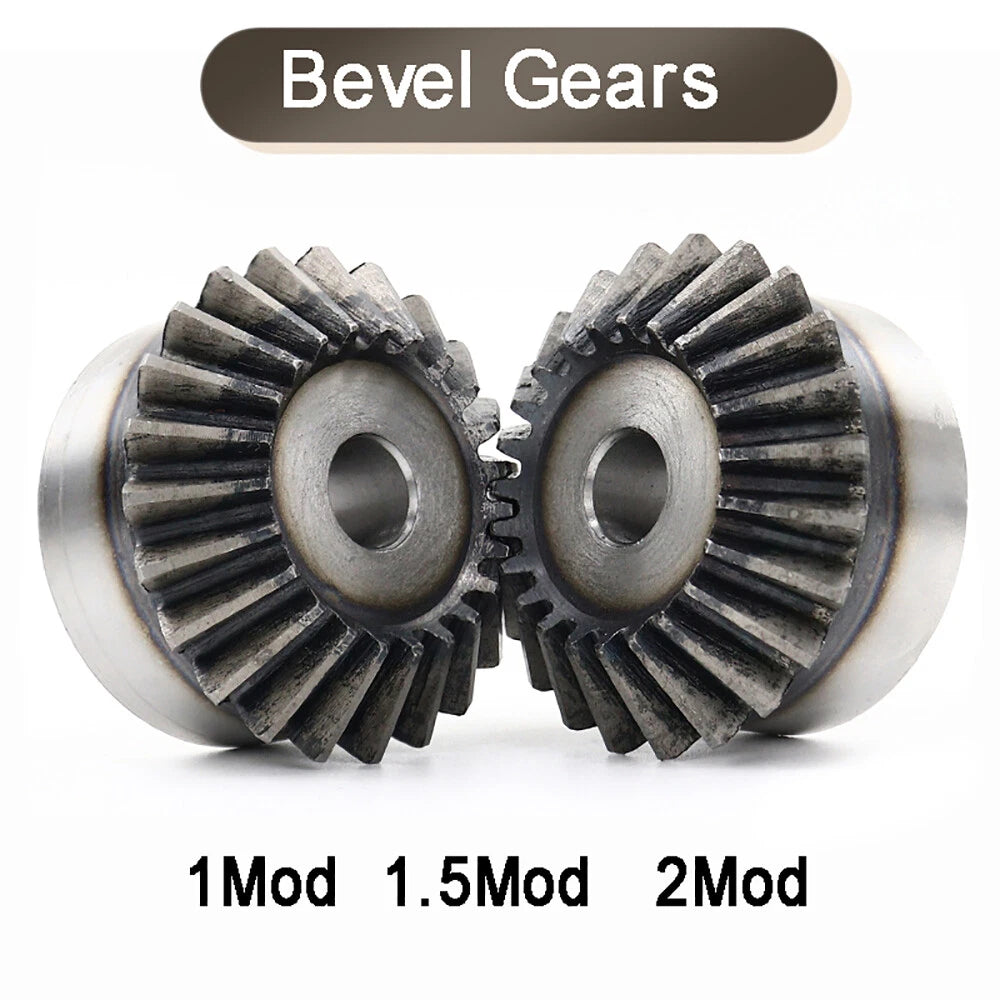
1/1.5/2 Modul 15~40T Bevel Gears 45# Carbon Steel Transmission Gear Spur Pinion

No reviews

Price:
Sale price$5.52 USD
Stock:
In stock (500 units), ready to be shipped

Payment & Security

Ach Direct Debit Amazon American Express Apple Pay Bancontact BLIK Diners Club Discover EPS Google Pay iDEAL Wero JCB Maestro Mastercard Multibanco MobilePay PayPal Przelewy24 Shop Pay Twint Union Pay USDC Visa

Your payment information is processed securely. We do not store credit card details nor have access to your credit card information.

Limited Offer — Spend More, Save More
Spend $55+
Save $5
Spend $100+
Save $10
Spend $200+
Save $25
HomeDIYer DIY Expert Support

DIY Expert Support

Get fitment advice & recommendations

Mon–Fri  8:30 AM – 8:00 PM
24-Hour Fast Ship
Arrives in 3–14 Days
Worldwide Shipping
30-Day Returns
1 tree planted with every purchase

Description

Spur Pinion Gear in 45# Carbon Steel — Reliable Transmission for Every Drive System

When a loose or mismatched gear causes vibration, noise, or premature wear in your drive train, the root cause is almost always an imprecise tooth profile or an unsuitable material. Engineers, robotics builders, and DIY machine makers who demand repeatable, low-backlash motion need a spur pinion gear they can trust across a wide range of module and tooth-count combinations.

These spur pinion gears are machined from 45# carbon steel — a medium-carbon structural steel known for its balanced hardness, machinability, and fatigue resistance. Available in three standard modules (1M, 1.5M, and 2M) and tooth counts from 15T to 40T, pitch diameters range from approximately 15 mm (0.59 in) for a 1M/15T gear up to 80 mm (3.15 in) for a 2M/40T gear, covering a broad spectrum of torque and speed requirements.

Typical applications include small CNC router Z-axis drives, 3D printer extruder gear trains, robotic arm joint actuators, conveyor indexing mechanisms, and custom DIY reduction gearboxes — anywhere a compact, involute-tooth spur gear is needed for precise rotational transmission.

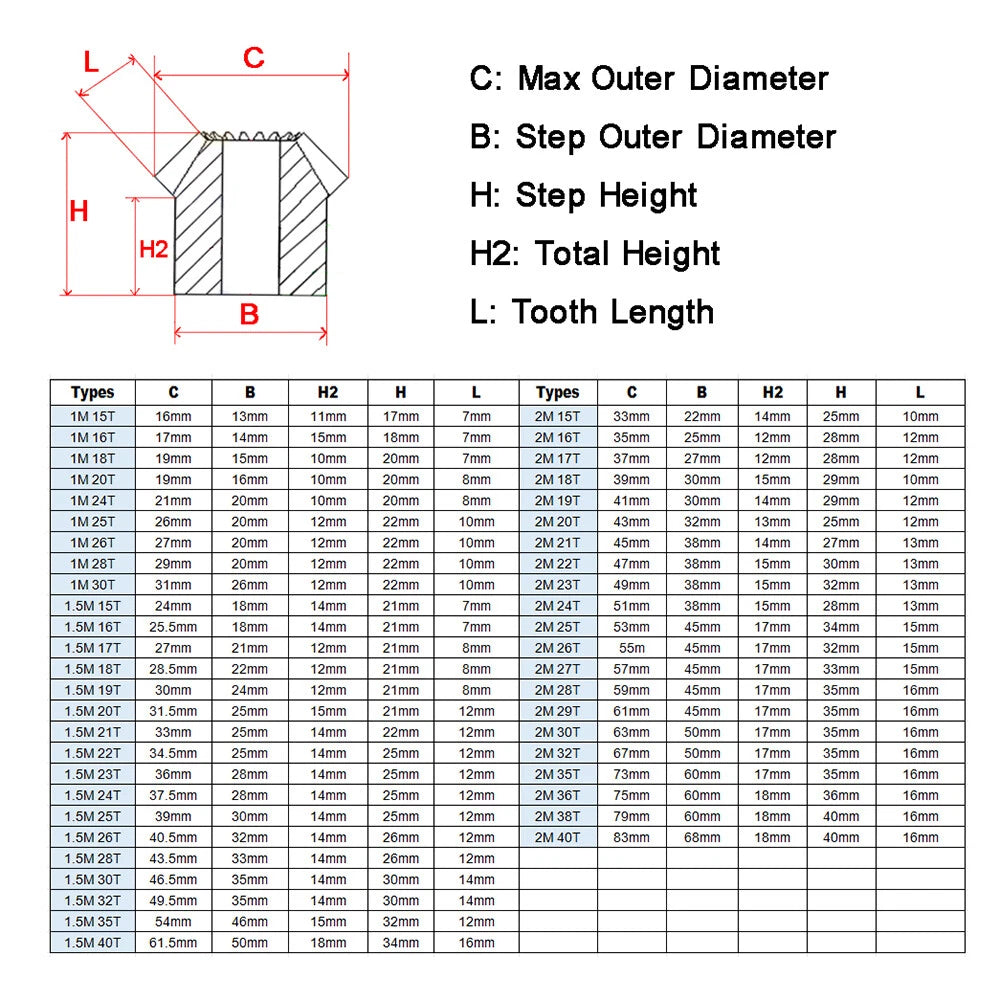
⚙️ Compatible with standard metric module gear systems. Pair with matching module rack, pinion, or mating spur gear. Bore diameter varies by tooth count — see variant options for shaft fit details.

✅ Key Features of These Spur Pinion Gears

  • 🔩 45# Carbon Steel Construction — Medium-carbon steel delivers a strong balance of surface hardness and core toughness, resisting tooth deformation under cyclic load.
  • 📐 Three Module Options (1M / 1.5M / 2M) — Standard metric modules ensure interchangeability with racks, pinions, and mating gears across common drive system designs.
  • 🔢 Wide Tooth Count Range (15T–40T) — Select the exact gear ratio you need; more teeth increase pitch diameter and torque capacity while reducing speed.
  • 🎯 Involute Tooth Profile — Standard 20° pressure angle involute geometry ensures smooth, consistent tooth engagement and minimizes noise during operation.
  • Broad Application Compatibility — Suited for CNC machines, robotics, 3D printers, conveyor systems, and custom DIY gearboxes requiring compact spur gear transmission.
  • 🛠️ Machinable for Custom Bore Sizing — 45# carbon steel is readily machinable, allowing bore diameter modification to fit non-standard shaft sizes if required.

📐 Technical Specifications — Spur Pinion Gear

Material 45# Carbon Steel
Module (Types) 1M / 1.5M / 2M
Tooth Number Range 15T – 40T (see variant options)
Pressure Angle 20° (standard involute)
Pitch Diameter Range Approx. 15 mm – 80 mm (0.59 in – 3.15 in)
Bore Diameter See variant options
Hub Width / Face Width See variant options
Surface Finish Natural steel (uncoated)
Gear Type Spur (straight tooth)
Packing Quantity 1 Pcs per order

❓ Frequently Asked Questions

How do I choose the right module for my application?

The module must match the mating gear or rack in your system. Module 1M is suited for light-load, compact drives (e.g., 3D printer extruders). Module 1.5M balances size and torque for mid-range robotics and CNC axes. Module 2M handles higher torque loads in larger machines. Never mix modules — mismatched gears will not mesh correctly.

How do I select the correct tooth count (T)?

Tooth count determines pitch diameter and gear ratio. A higher tooth count increases the pitch diameter and reduces output speed (higher torque). Calculate your required ratio by dividing the driven gear tooth count by the driving gear tooth count. For example, a 15T pinion driving a 30T gear gives a 2:1 reduction ratio.

What is the strength of 45# carbon steel for gear applications?

45# carbon steel has a tensile strength of approximately 600–800 MPa in its normalized state, making it suitable for moderate-load gear applications. It can be further heat-treated (quench and temper) to increase surface hardness if your application demands higher wear resistance. For very high-speed or heavy-shock-load applications, consider alloy steel gears instead.

Are these gears corrosion resistant?

45# carbon steel has limited corrosion resistance in humid or wet environments. For indoor, dry, or lightly oiled environments these gears perform well. If your application involves moisture exposure, we recommend applying a light machine oil or grease coating, or considering a stainless steel or zinc-plated alternative for long-term corrosion protection.

Will these gears fit my existing shaft diameter?

Bore diameter varies by tooth count and module. Please check the variant options for bore size details. Because 45# carbon steel is readily machinable, the bore can be enlarged by a machinist to fit non-standard shaft diameters if needed. Always verify bore size before ordering if shaft fit is critical.

Can I use these gears in a CNC router or 3D printer?

Yes. These spur pinion gears are commonly used in CNC router axis drives, 3D printer extruder gear trains, and similar precision motion applications. Select the module that matches your existing rack or mating gear, and choose a tooth count that achieves your target gear ratio. The involute tooth profile ensures smooth, low-noise engagement suitable for precision positioning systems.

What is the difference between a spur gear and a bevel gear?

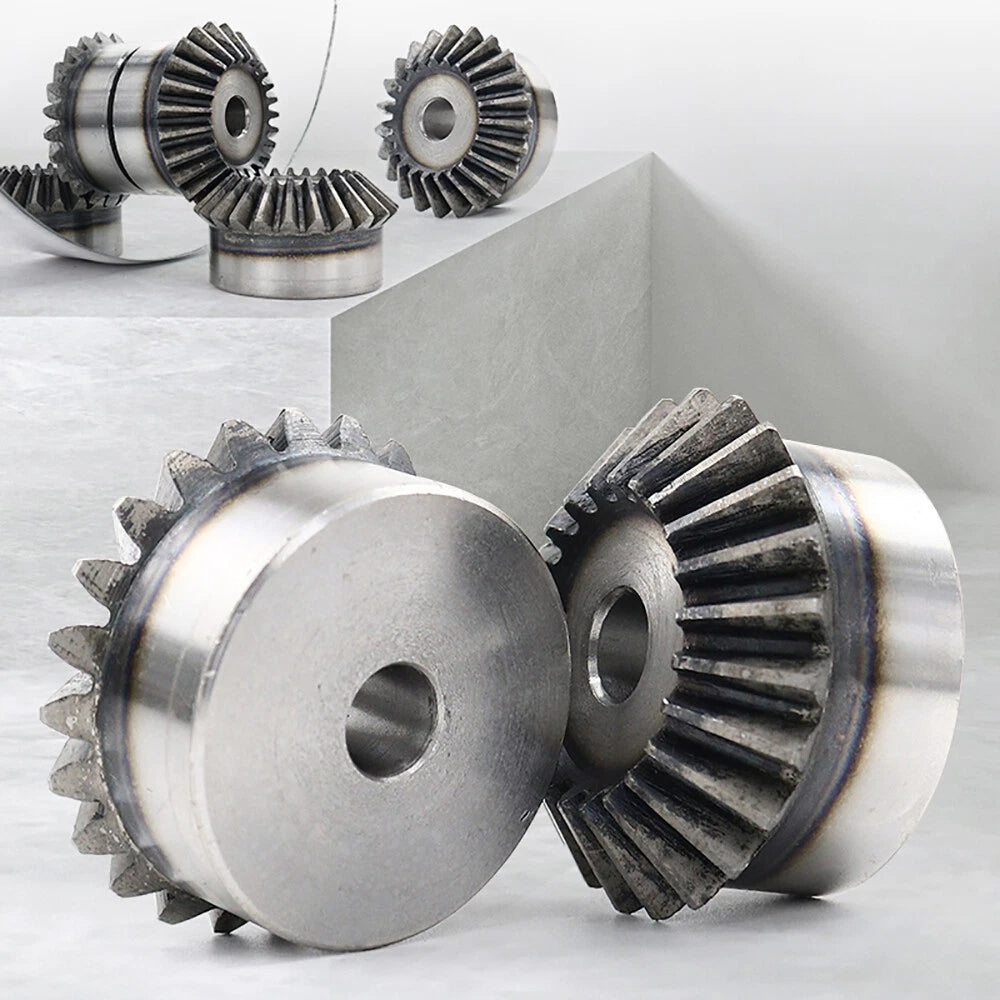
Spur gears have straight teeth parallel to the gear axis and transmit motion between parallel shafts — this is the type described in this listing. Bevel gears have angled teeth and transmit motion between intersecting shafts (typically at 90°). Despite the word "bevel" appearing in the product title (a common catalog term for this gear family in some markets), these are straight-tooth spur pinion gears designed for parallel-shaft drives.

🛒 Select your Module (Types) and Tooth Number above, then add to cart.

You may also like

Recently viewed