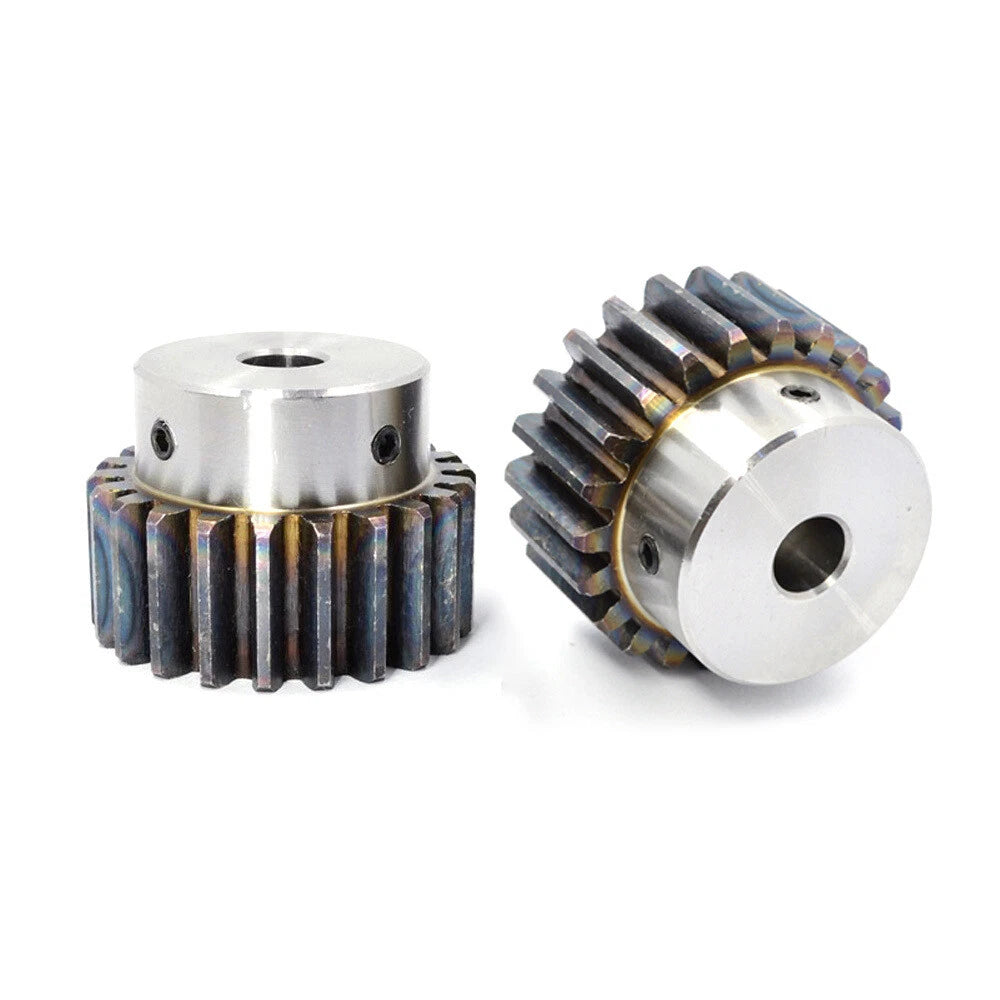
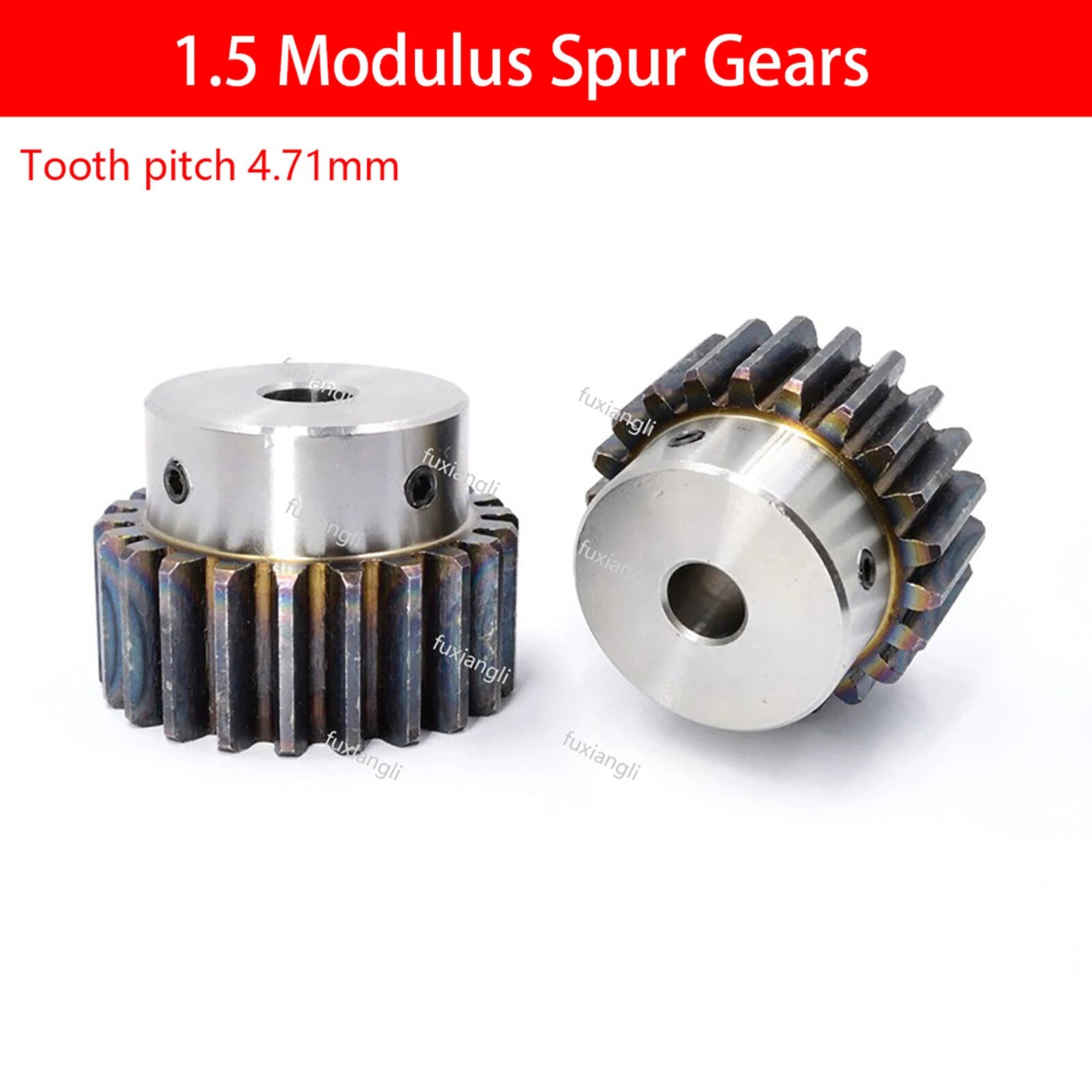
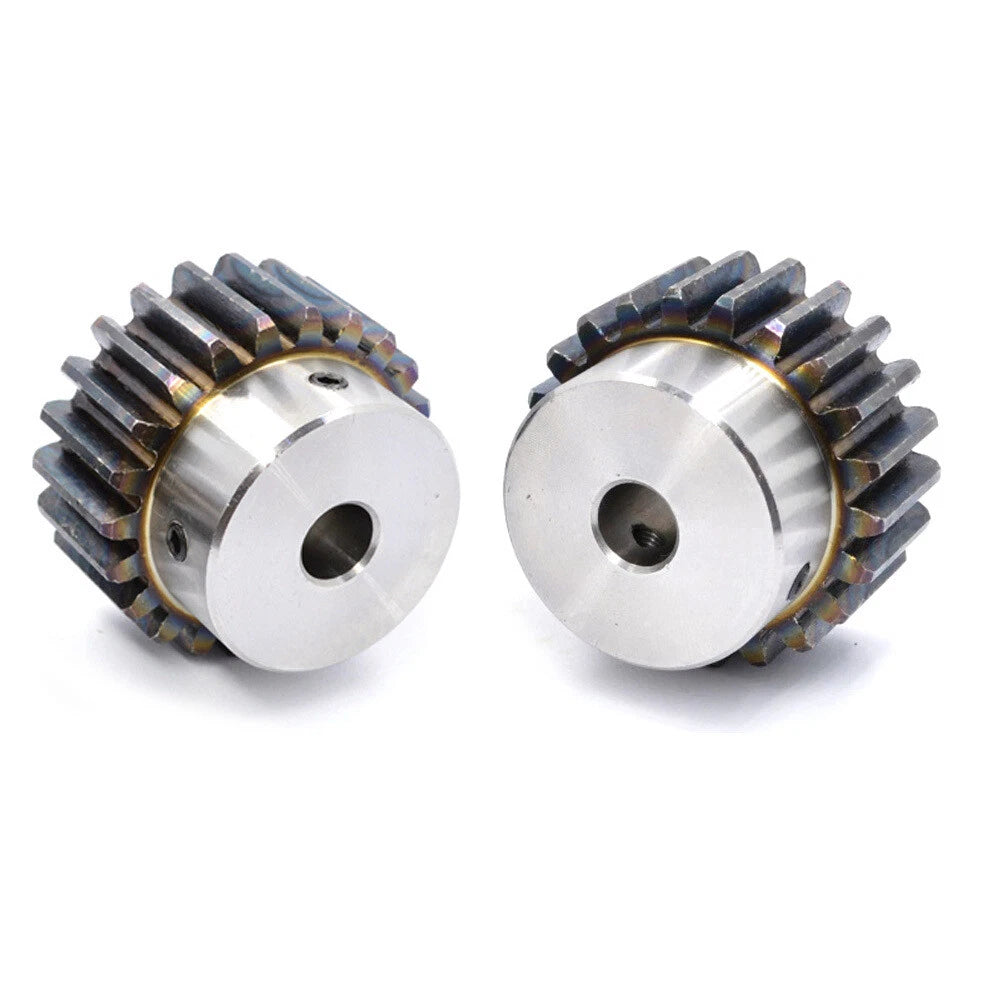
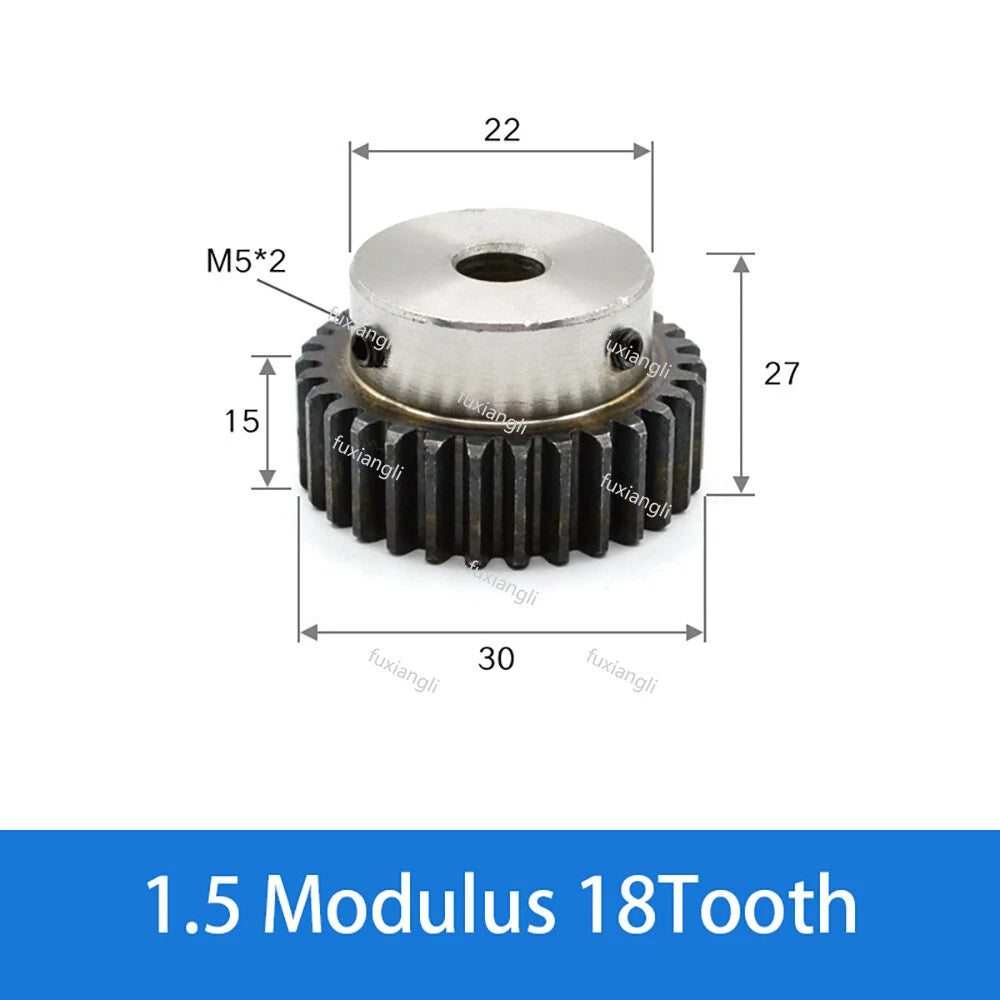
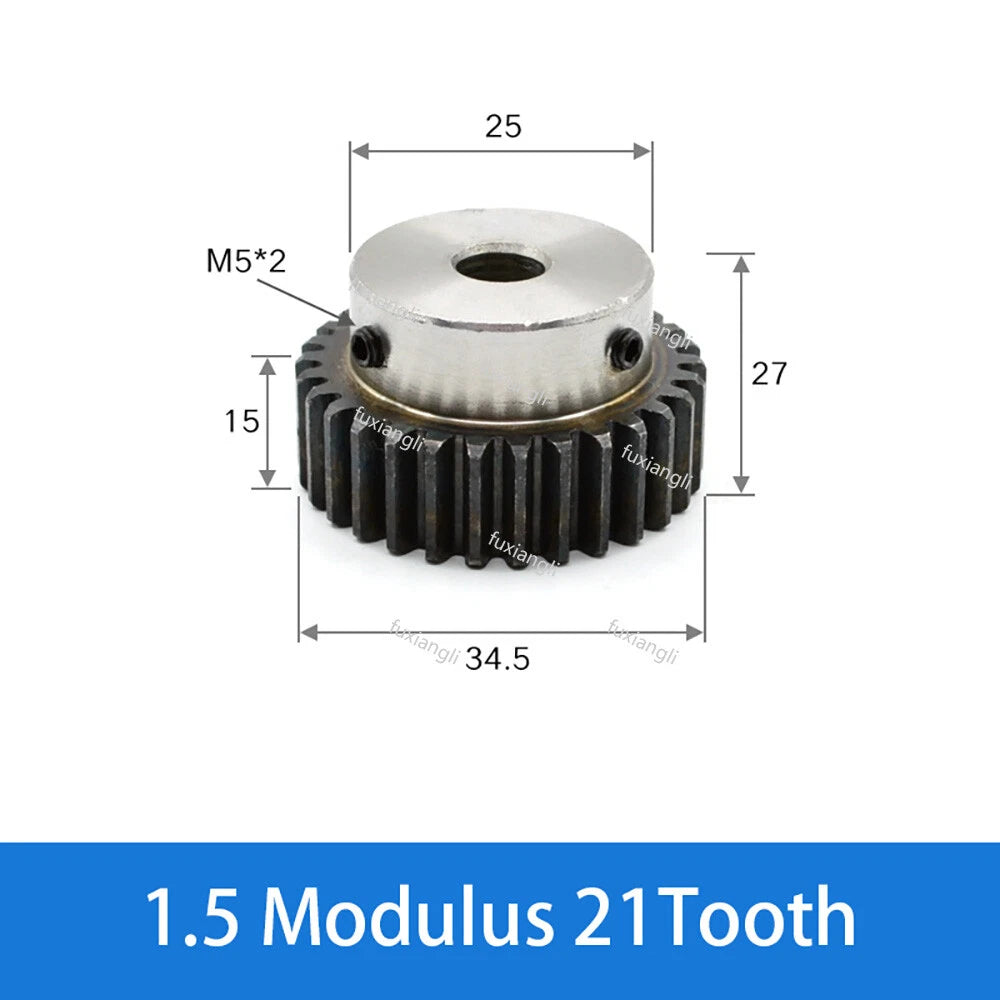
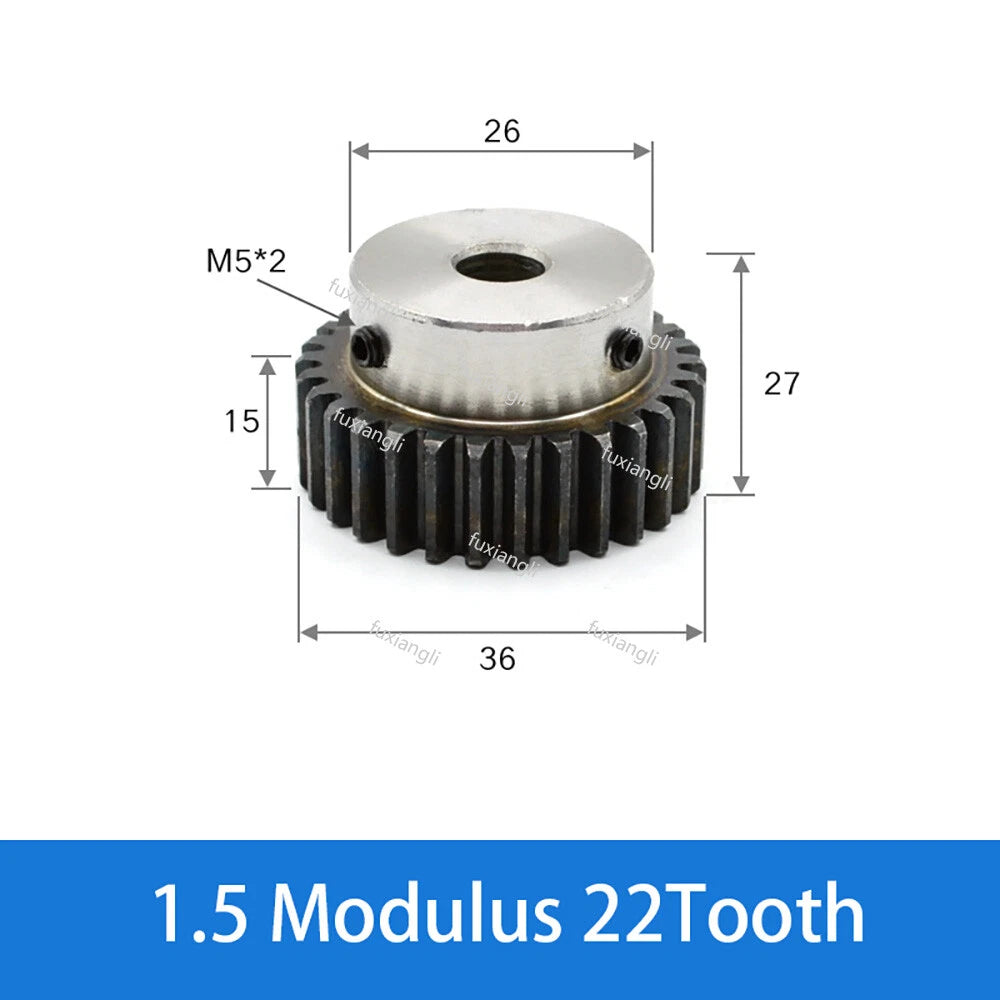
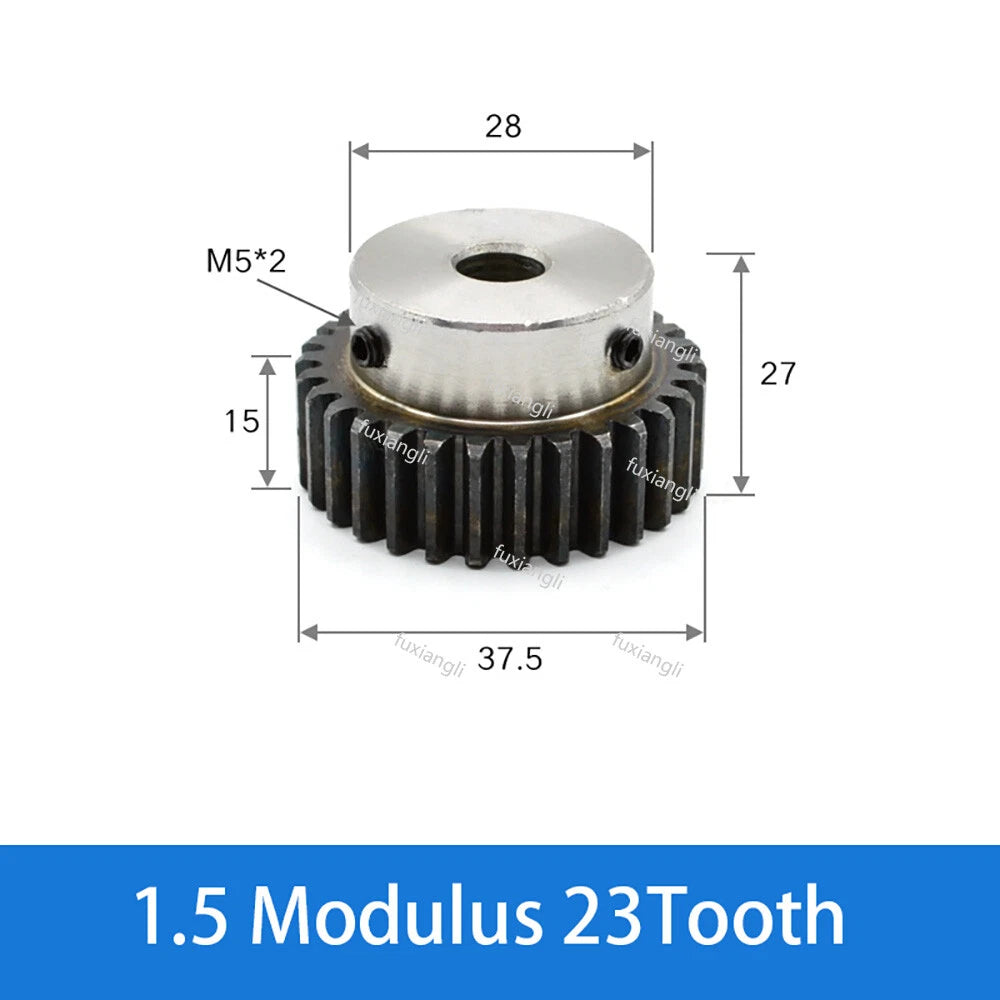
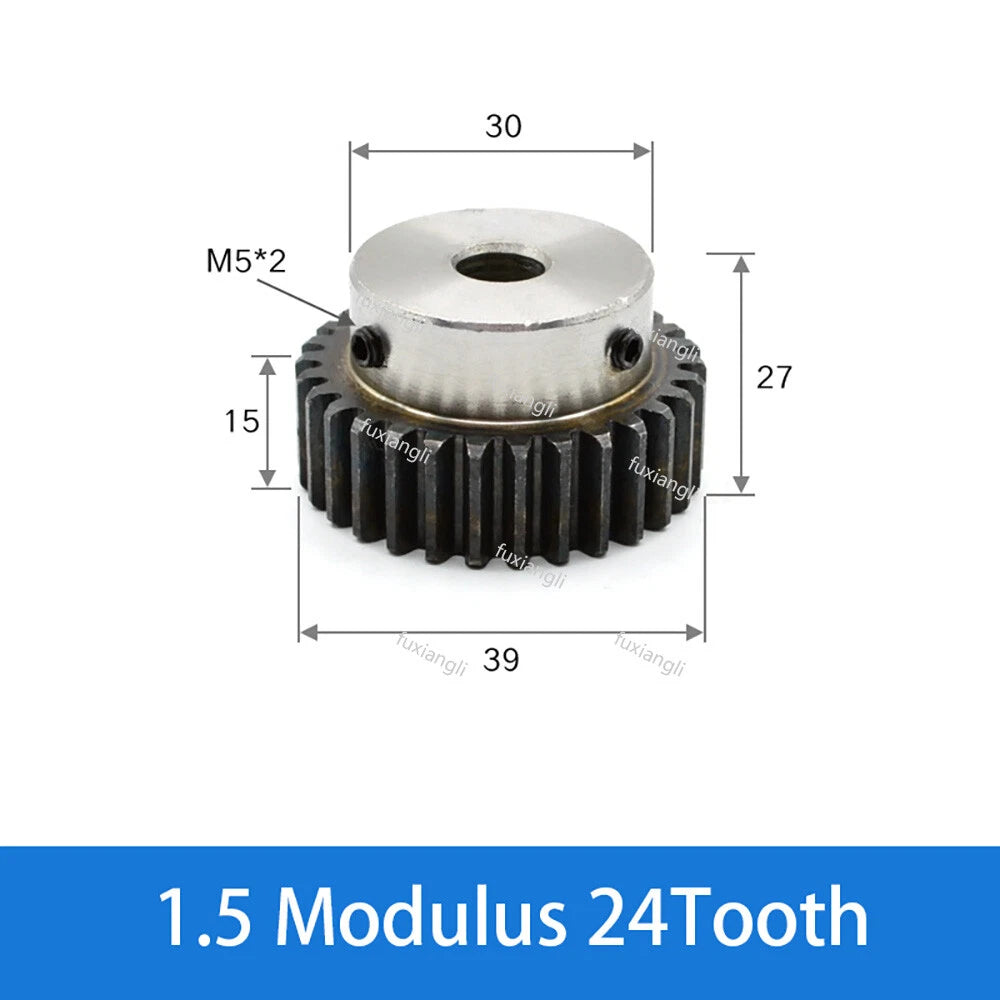
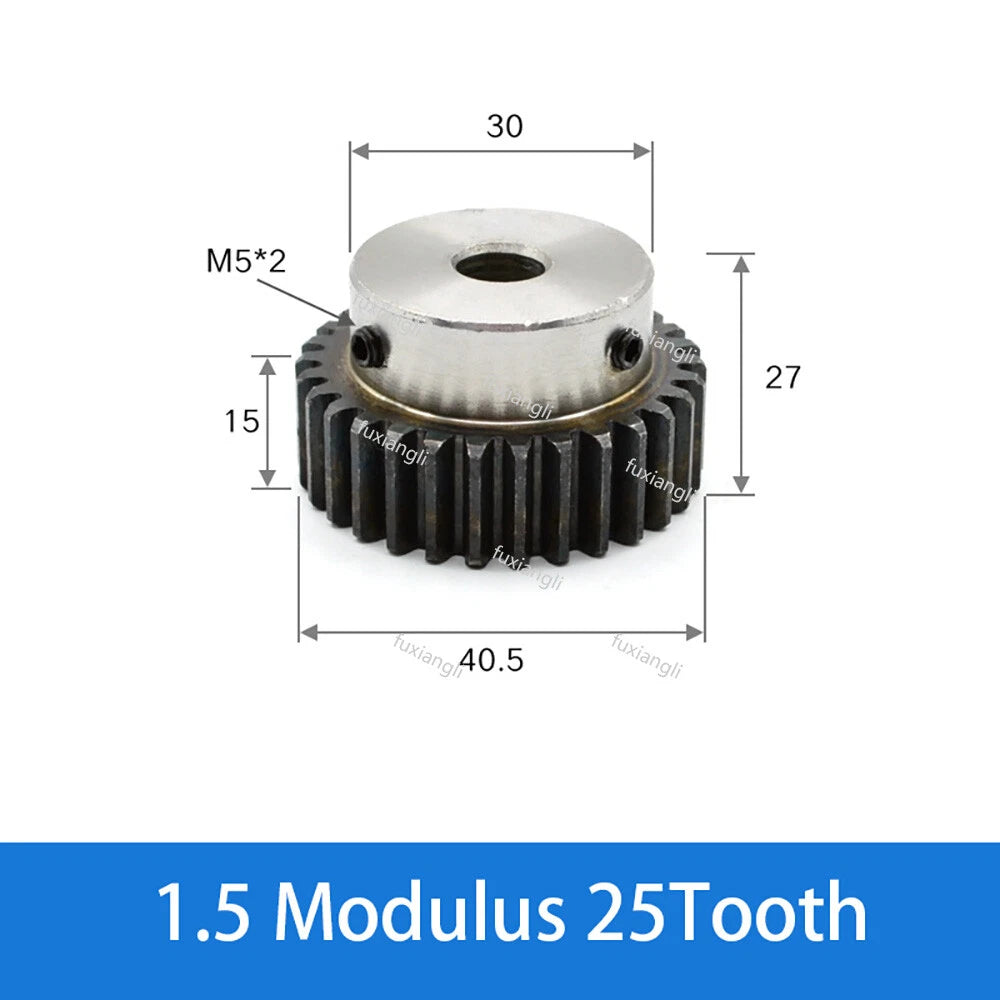
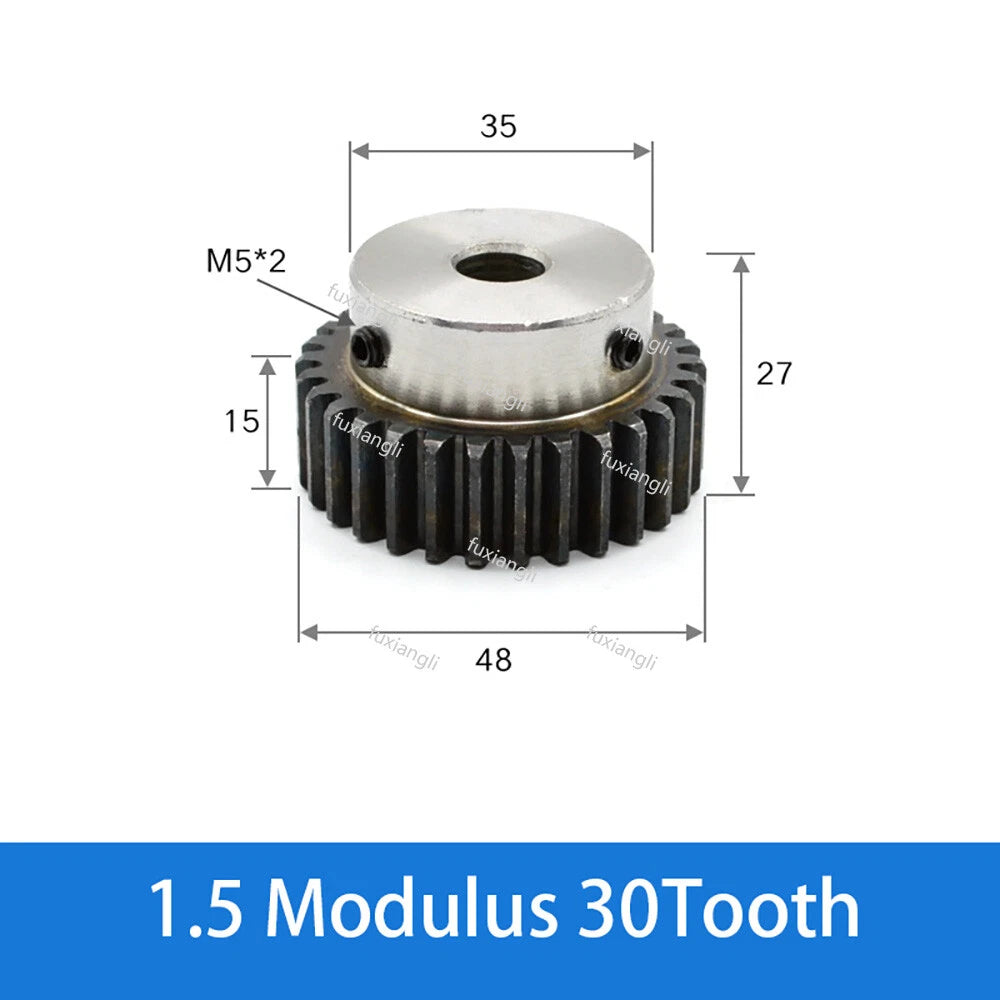
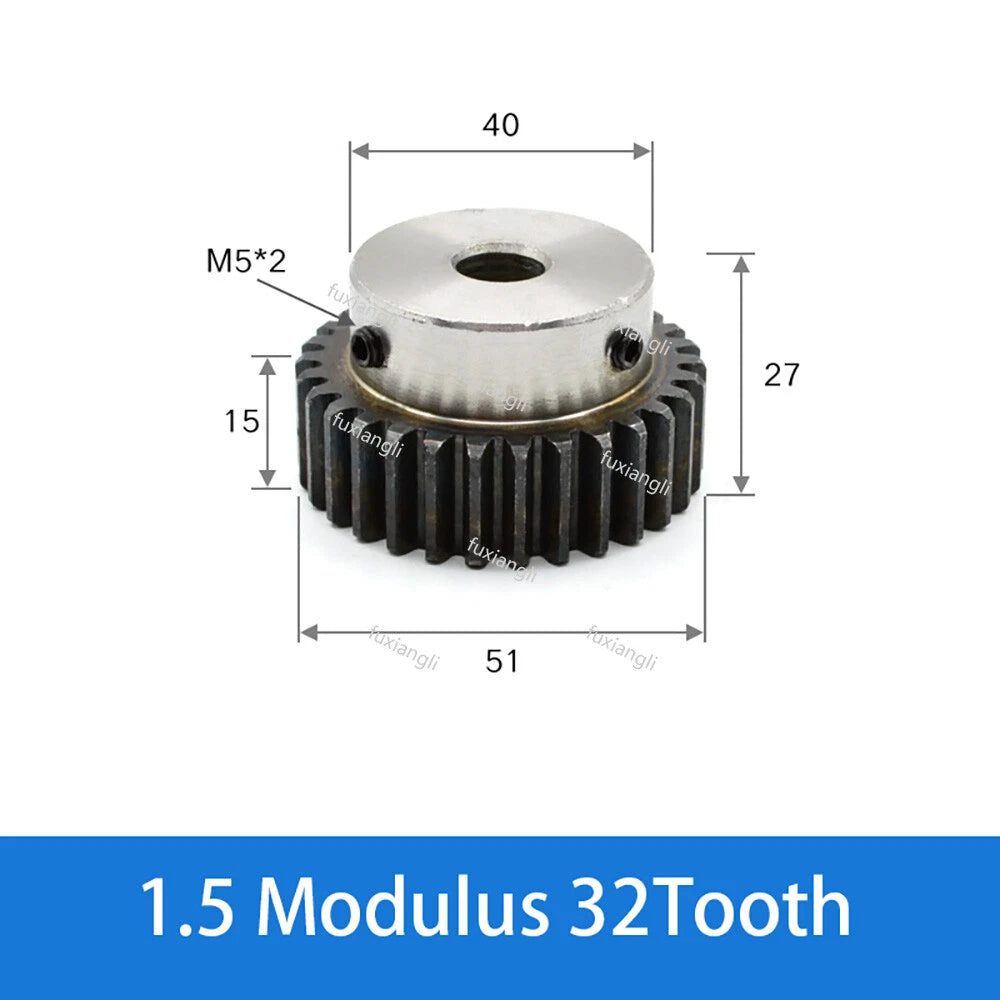
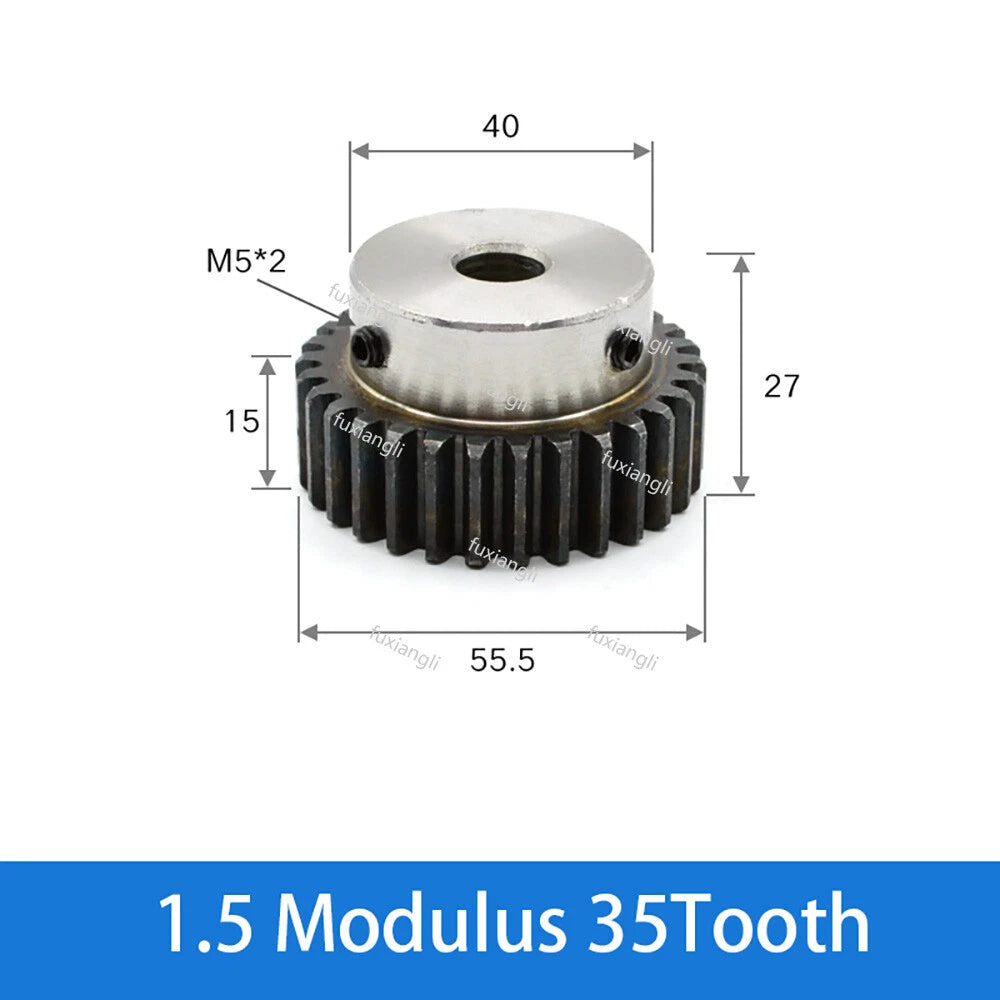
1.5 Modulu 12T-40T Spur Gears pitch 4.71mm 45# Steel With Step Pinion Motor Gear

No reviews

Price:
Sale price$7.74 USD
Stock:
In stock (500 units), ready to be shipped

Payment & Security

Ach Direct Debit Amazon American Express Apple Pay Bancontact BLIK Diners Club Discover EPS Google Pay iDEAL Wero JCB Maestro Mastercard Multibanco MobilePay PayPal Przelewy24 Shop Pay Twint Union Pay USDC Visa

Your payment information is processed securely. We do not store credit card details nor have access to your credit card information.

Limited Offer — Spend More, Save More
Spend $55+
Save $5
Spend $100+
Save $10
Spend $200+
Save $25
HomeDIYer DIY Expert Support

DIY Expert Support

Get fitment advice & recommendations

Mon–Fri  8:30 AM – 8:00 PM
24-Hour Fast Ship
Arrives in 3–14 Days
Worldwide Shipping
30-Day Returns
1 tree planted with every purchase

Description

1.5 Modulus Spur Gears — Reliable Power Transmission for DIY Automation Projects

When a loose or mismatched gear causes your motor to skip, stall, or strip mid-project, the whole build grinds to a halt. Whether you're a maker building a CNC router, a hobbyist assembling a robotic arm, or an engineer prototyping a small automation system, you need a spur gear that fits precisely, holds torque, and stays true under load. These 1.5 modulus spur gears are engineered for exactly that kind of demanding, hands-on work.

Each gear is machined from 45# medium-carbon steel — a material known for its balanced hardness and machinability — and features a step pinion (stepped hub) profile that simplifies shaft mounting and reduces axial play. The module is 1.5, with a circular pitch of 4.71mm (approximately 0.185 in). Tooth counts range from 12T to 40T, and bore diameters span 6mm to 16mm (approximately 0.24 in to 0.63 in), giving you a wide selection matrix to match your shaft and gear ratio requirements precisely.

These gears are well-suited for small motor drive trains in desktop CNC machines, stepper-motor-driven linear actuators, robotic joint assemblies, and educational mechatronics platforms. The step pinion design makes them especially practical for direct motor shaft coupling in DIY automation builds where axial alignment and compact form factor matter.

⚙️ Compatibility: Designed for 1.5 modulus gear systems. Bore diameters of 6 / 8 / 10 / 12 / 14 / 15 / 16mm. Verify your shaft diameter and module before ordering. Pairs with any standard 1.5M mating gear or rack.

✅ Key Features of These 1.5 Modulus Step Pinion Spur Gears

🔩 45# Medium-Carbon Steel Construction

Machined from 45# steel for a reliable balance of surface hardness, tensile strength, and machinability — suitable for continuous-duty motor drive applications.

📐 1.5 Modulus, 4.71mm Pitch

Standard 1.5M module with a circular pitch of 4.71mm (≈0.185 in) ensures direct interchangeability with any 1.5M mating gear, rack, or pinion in your drivetrain.

🎯 Wide Tooth Count Range: 12T to 40T

Twenty tooth-count options from 12T to 40T let you dial in the exact gear ratio your motor and load demand — from fast, low-torque output to slow, high-torque reduction.

🔧 Step Pinion (Stepped Hub) Design

The stepped hub profile provides a positive shoulder for shaft seating, reducing axial drift and simplifying assembly on motor shafts in compact drive systems.

📏 Multiple Bore Diameters: 6–16mm

Seven bore options (6 / 8 / 10 / 12 / 14 / 15 / 16mm) cover the most common motor shaft sizes used in stepper motors, DC gear motors, and servo applications.

Ready for Motor Shaft Coupling

Designed as a direct motor pinion gear for small automation drives — compatible with NEMA 17/23 stepper shafts and standard DC motor output shafts within the bore range.

📐 Technical Specifications — 1.5 Modulus Spur Gears

Module 1.5
Circular Pitch 4.71mm (≈0.185 in)
Pressure Angle 20° (standard)
Tooth Count 12T / 14T / 15T / 16T / 17T / 18T / 19T / 20T / 21T / 22T / 23T / 24T / 25T / 26T / 27T / 28T / 30T / 32T / 35T / 40T
Bore Diameter 6mm / 8mm / 10mm / 12mm / 14mm / 15mm / 16mm
Material 45# Medium-Carbon Steel
Hub Style Step Pinion (Stepped Hub)
Gear Type External Spur Gear
Pitch Diameter See variant options (Module × Tooth Count)
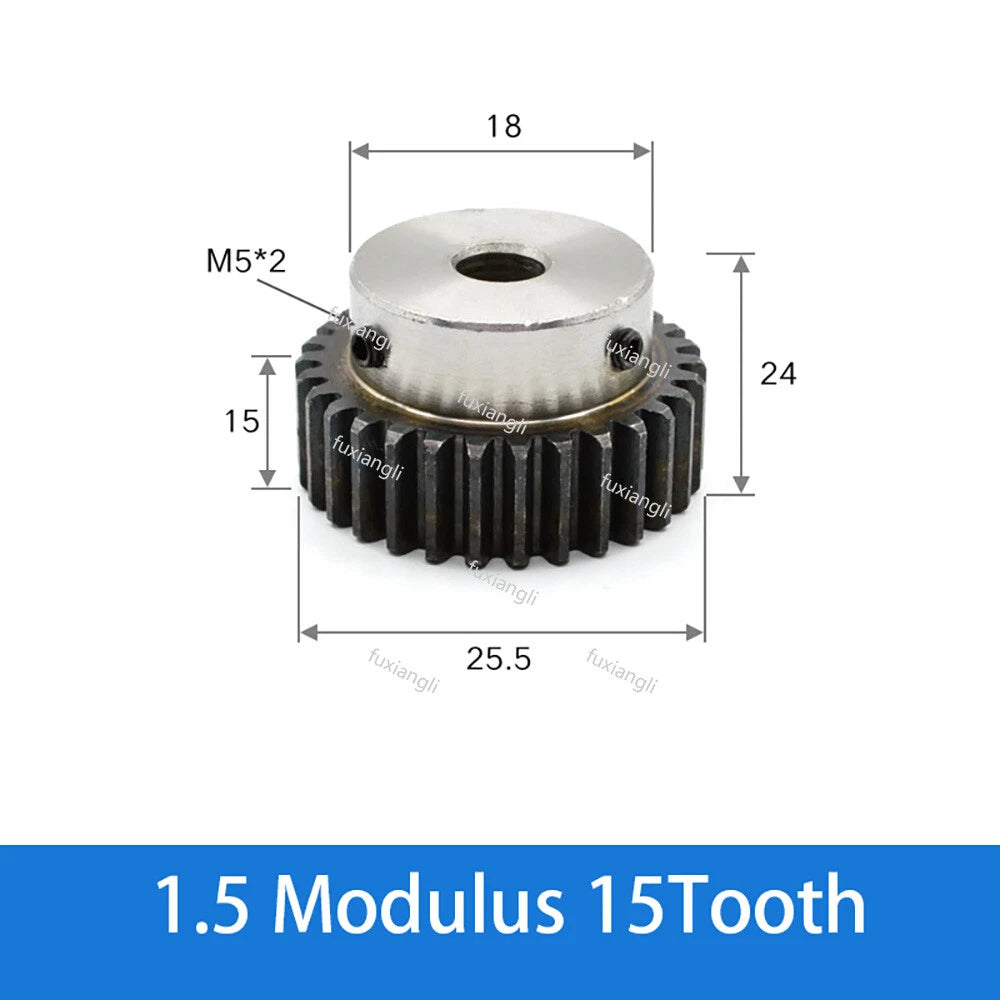
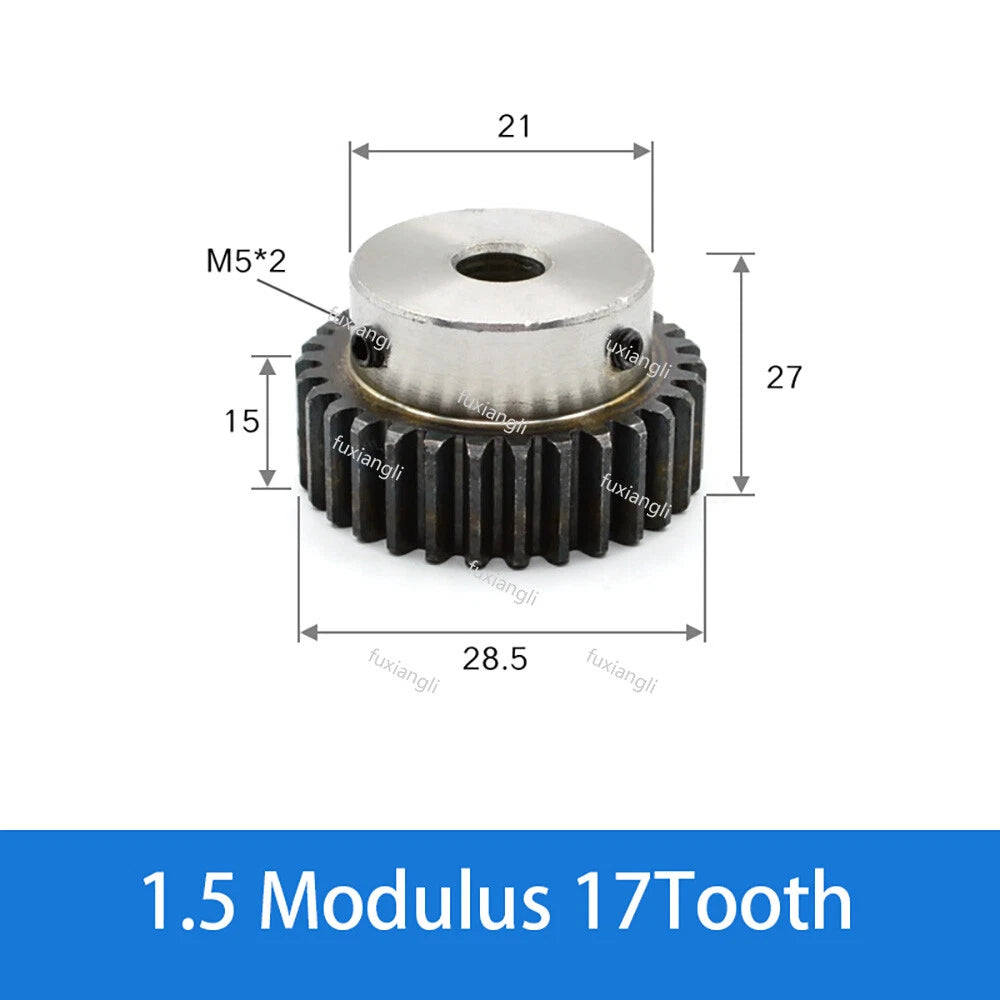
Face Width See variant options
Hub Diameter See variant options
Overall Length See variant options
Surface Finish See variant options
Quantity per Order 1 piece

❓ Frequently Asked Questions

How do I choose the right tooth count for my application?

The tooth count determines your gear ratio. Divide the driven gear's tooth count by the driving gear's tooth count to get the ratio. For example, pairing a 12T pinion with a 24T gear gives a 2:1 reduction — the output shaft turns at half the speed but with twice the torque. Choose a smaller tooth count (12T–18T) for high-speed, lower-torque output, and a larger count (30T–40T) when you need more torque at lower RPM.

How do I select the correct bore diameter?

Measure your motor or shaft output diameter with a caliper before ordering. The bore must match your shaft diameter exactly for a secure fit. Available bores are 6mm, 8mm, 10mm, 12mm, 14mm, 15mm, and 16mm. If your shaft uses a keyway or set-screw, confirm the hub wall thickness is sufficient for your fastening method — contact us to confirm for larger bore sizes.

Are these gears compatible with other 1.5 modulus gears and racks?

Yes. These gears follow the standard 1.5M module specification with a 20° pressure angle, which is the most common standard for metric spur gears. They will mesh correctly with any other 1.5M external spur gear or 1.5M rack of the same pressure angle, regardless of brand, as long as the tooth profile and module match.

How strong are these gears under continuous load?

45# steel (equivalent to SAE 1045) has a tensile strength of approximately 600–700 MPa in its normalized state, making it suitable for moderate continuous-duty drive applications such as CNC axis drives, robotic joints, and small conveyor systems. For very high shock loads or continuous heavy-duty industrial use, consider heat-treated or alloy steel alternatives. These gears are well-matched to stepper and DC motor outputs in the 1–50W range.

Do these gears resist corrosion?

45# carbon steel has moderate corrosion resistance. For indoor, dry environments — typical of desktop CNC machines, 3D printer extruder drives, and lab automation — no additional treatment is generally needed. For humid or outdoor environments, applying a light machine oil or grease to the gear teeth will extend service life and reduce surface oxidation. If corrosion resistance is a primary requirement, consider stainless steel or plastic gears instead.

What is the step pinion (stepped hub) design and why does it matter?

A step pinion features a hub with a stepped (shoulder) profile rather than a plain cylindrical hub. The shoulder acts as a positive axial stop when the gear is pressed or slid onto a shaft, preventing the gear from migrating along the shaft axis during operation. This is especially useful in motor pinion applications where axial positioning must be maintained without additional retaining hardware. It simplifies assembly and improves positional repeatability in your drivetrain.

Can I use these gears with NEMA 17 or NEMA 23 stepper motors?

Yes, with the correct bore selection. NEMA 17 stepper motors typically have a 5mm output shaft, so you would need to use a 6mm bore variant with a 5mm-to-6mm shaft adapter or a set-screw hub. NEMA 23 motors commonly use an 8mm or 6.35mm (1/4 in) shaft — the 8mm bore variant fits directly on an 8mm NEMA 23 shaft. Always verify your specific motor's shaft diameter in its datasheet before ordering.

How do I calculate the pitch diameter for a specific tooth count?

For a 1.5 modulus gear, the pitch diameter (PD) is calculated as: PD = Module × Tooth Count. For example, a 20-tooth gear has a pitch diameter of 1.5 × 20 = 30mm. The outside diameter (OD) is approximately PD + 2 × Module = PD + 3mm. Use these values to verify clearance and center distance in your gear assembly before finalizing your design.

🛒 Select your Tooth Number and Bore Diameter above, then add to cart.


You may also like

Recently viewed