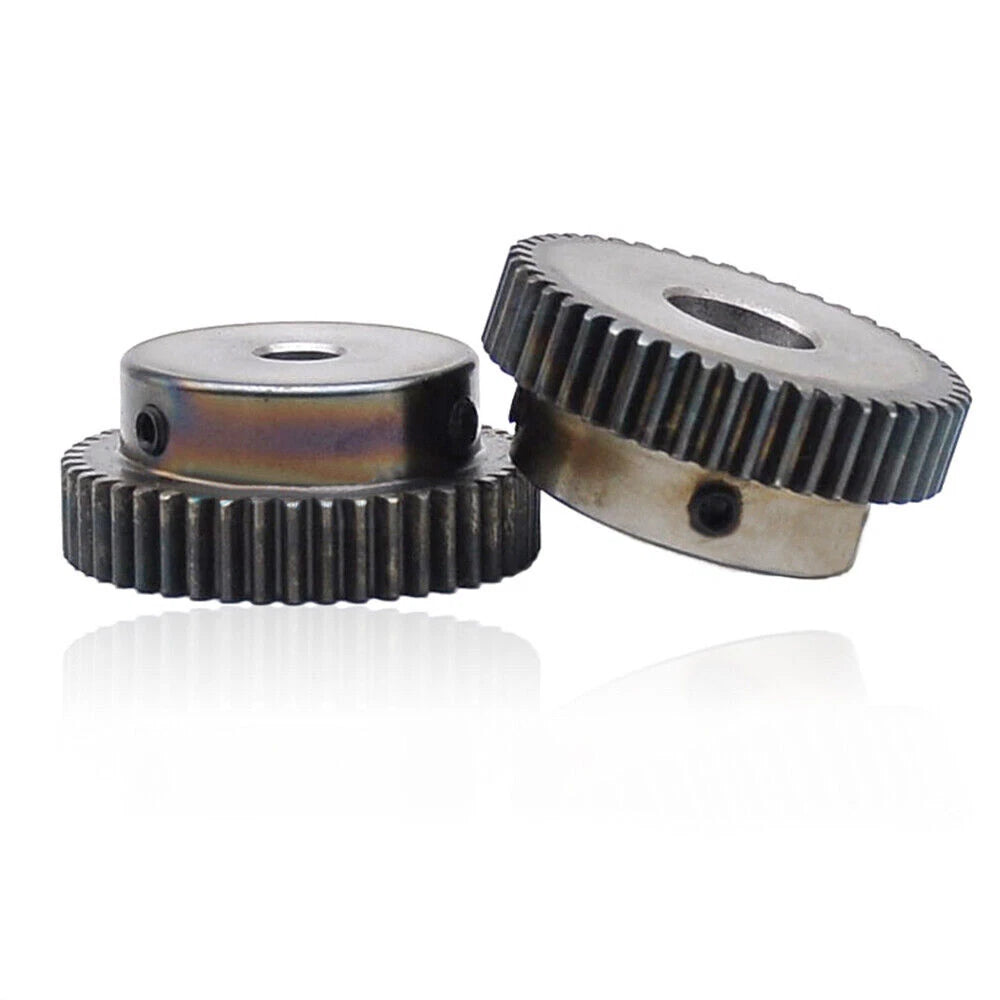
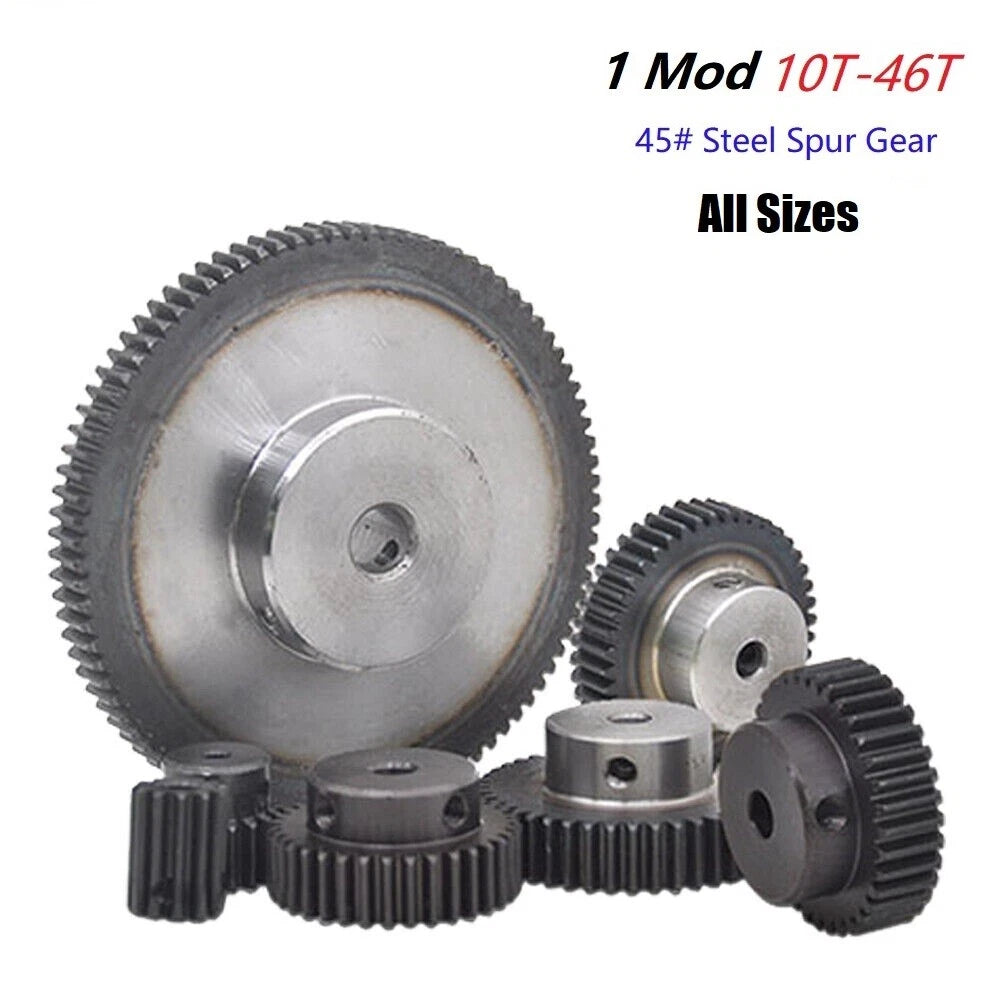
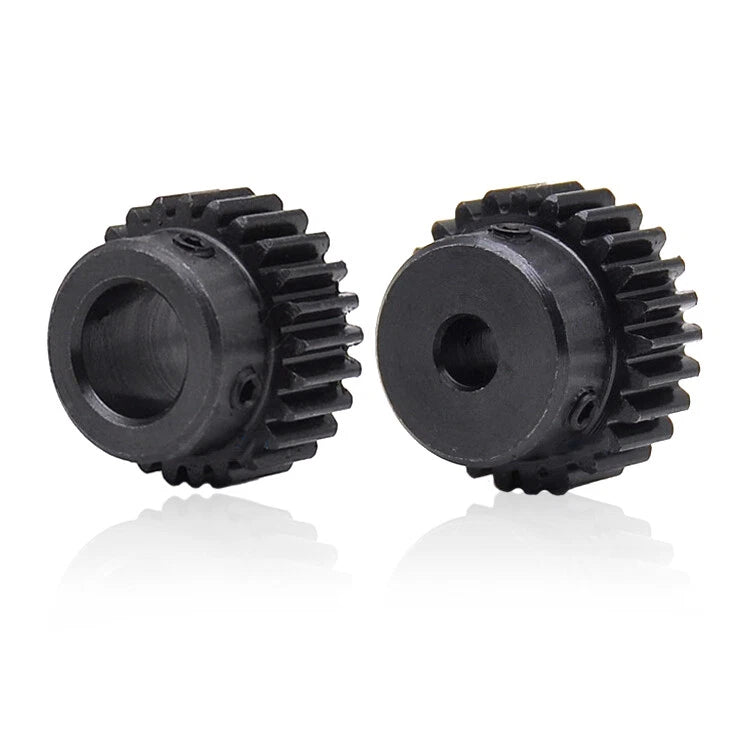
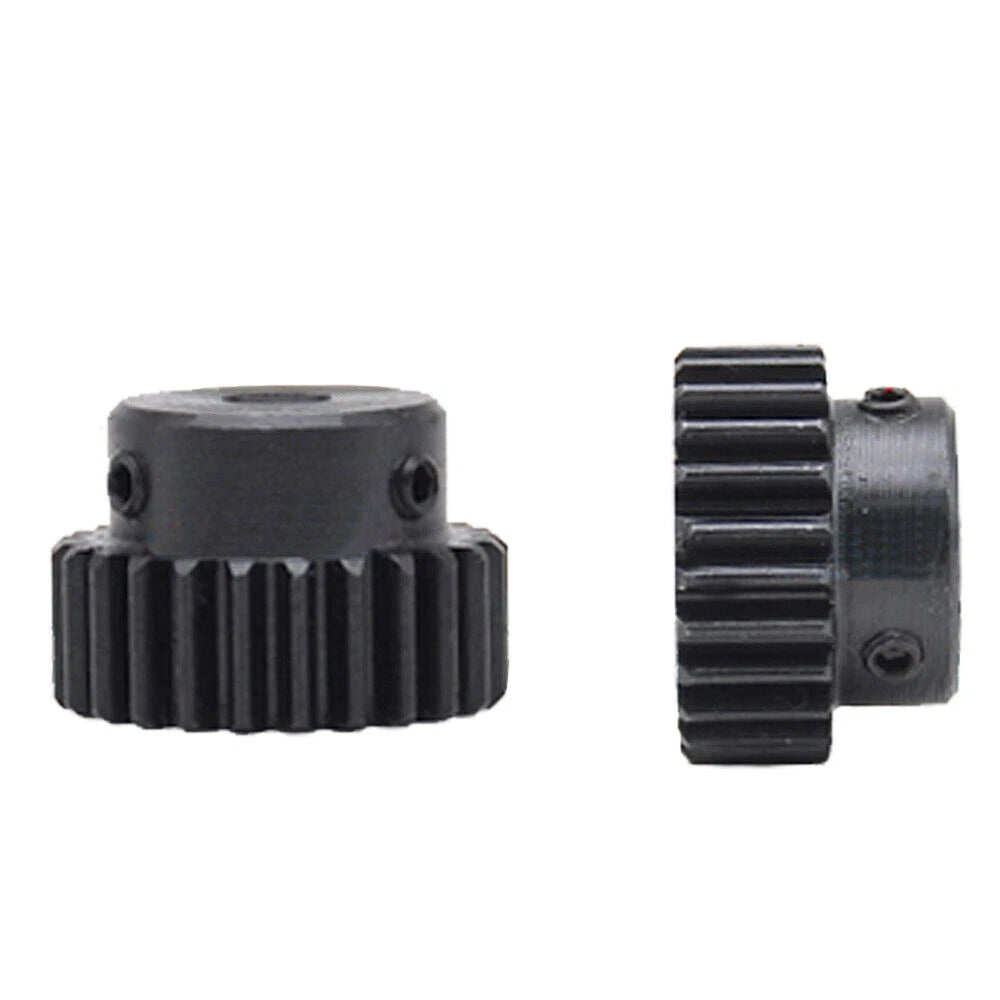
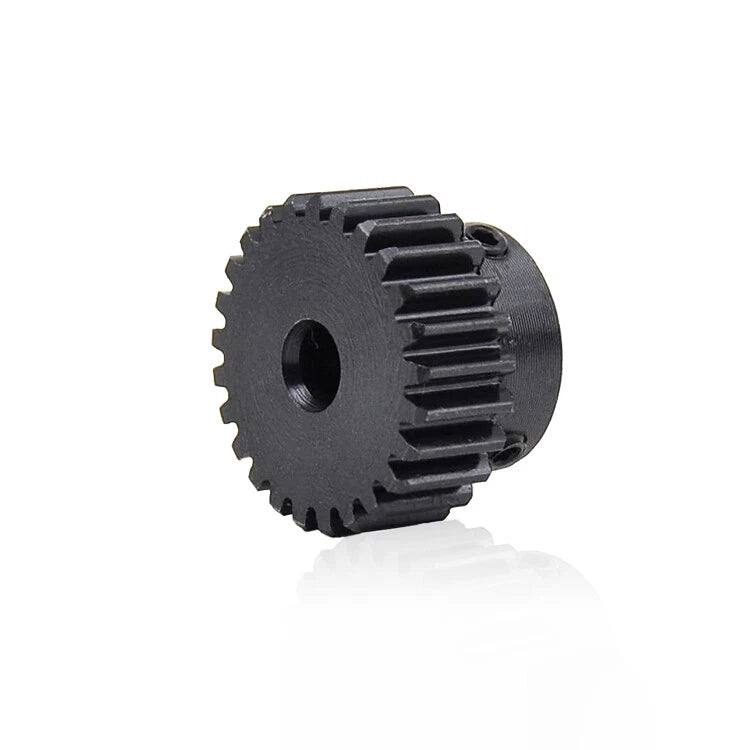
1 Mod 10T-46T Precision Spur Pinion Gear With Step 45# Steel Motor Gear All size

No reviews

Price:
Sale price$3.06 USD
Stock:
In stock (500 units), ready to be shipped

Payment & Security

Ach Direct Debit Amazon American Express Apple Pay Bancontact BLIK Diners Club Discover EPS Google Pay iDEAL Wero JCB Maestro Mastercard Multibanco MobilePay PayPal Przelewy24 Shop Pay Twint Union Pay USDC Visa

Your payment information is processed securely. We do not store credit card details nor have access to your credit card information.

Limited Offer — Spend More, Save More
Spend $55+
Save $5
Spend $100+
Save $10
Spend $200+
Save $25
HomeDIYer DIY Expert Support

DIY Expert Support

Get fitment advice & recommendations

Mon–Fri  8:30 AM – 8:00 PM
24-Hour Fast Ship
Arrives in 3–14 Days
Worldwide Shipping
30-Day Returns
1 tree planted with every purchase

Description

Module 1 Spur Pinion Gear — Precision 45# Steel Drive Component for Robotics & CNC

When your motor drive system demands tight tolerances and consistent mesh quality, an undersized or poorly machined pinion gear becomes the weakest link in the chain. Engineers, robotics builders, and CNC hobbyists who need a reliable Module 1 spur pinion gear with a broad selection of tooth counts and bore diameters will find this range covers virtually every common configuration in a single listing.

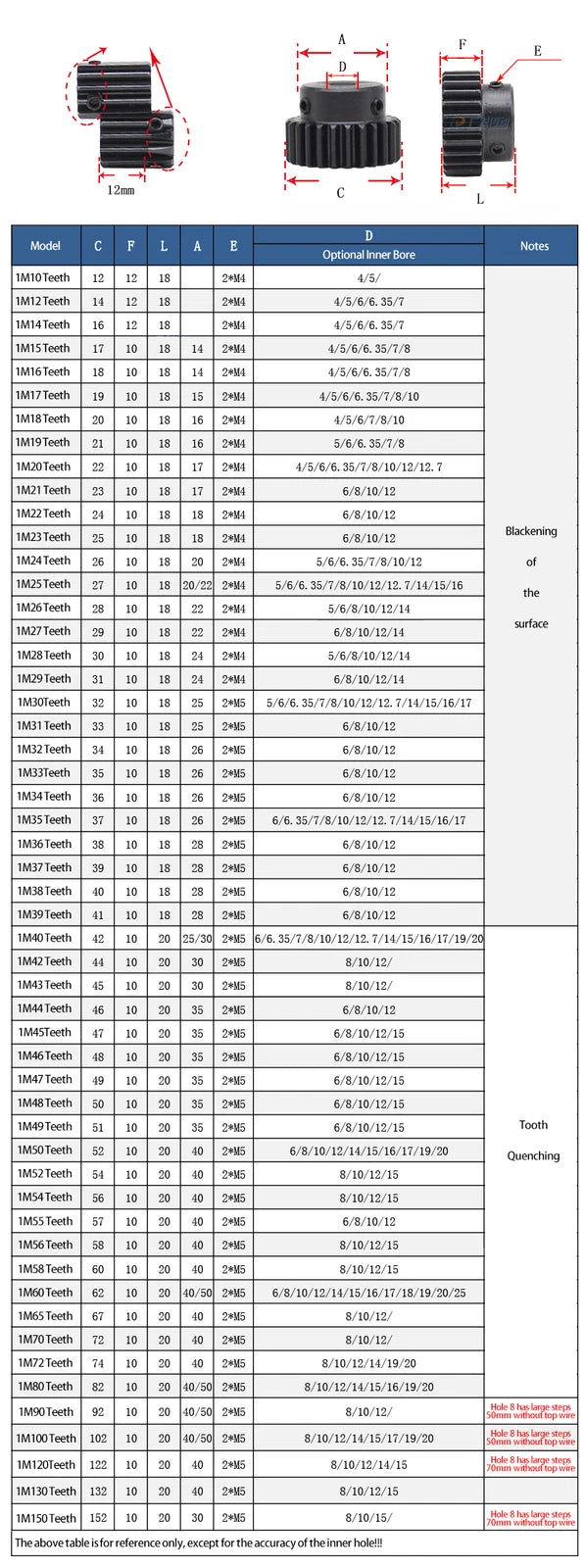
Each gear is machined from 45# carbon steel — a medium-carbon structural steel known for its balance of hardness and machinability. The module is 1M (metric), with tooth counts spanning 10T through 46T and bore diameters from 4 mm (0.157 in) up to 25 mm (0.984 in). Select step-bore variants are also available for applications requiring a shoulder or hub register. Outer diameter scales with tooth count: approximately 12 mm (0.47 in) for 10T up to approximately 48 mm (1.89 in) for 46T.

Typical use cases include DC motor pinion drives in wheeled robots and AGVs, stepper motor output stages in desktop CNC routers and 3D printer extruder gearboxes, and general-purpose speed-reduction or torque-multiplication stages in light industrial automation. The wide bore range — including 6.35 mm (1/4 in) and 12.7 mm (1/2 in) imperial-standard options — makes these gears compatible with both metric and fractional motor shafts.

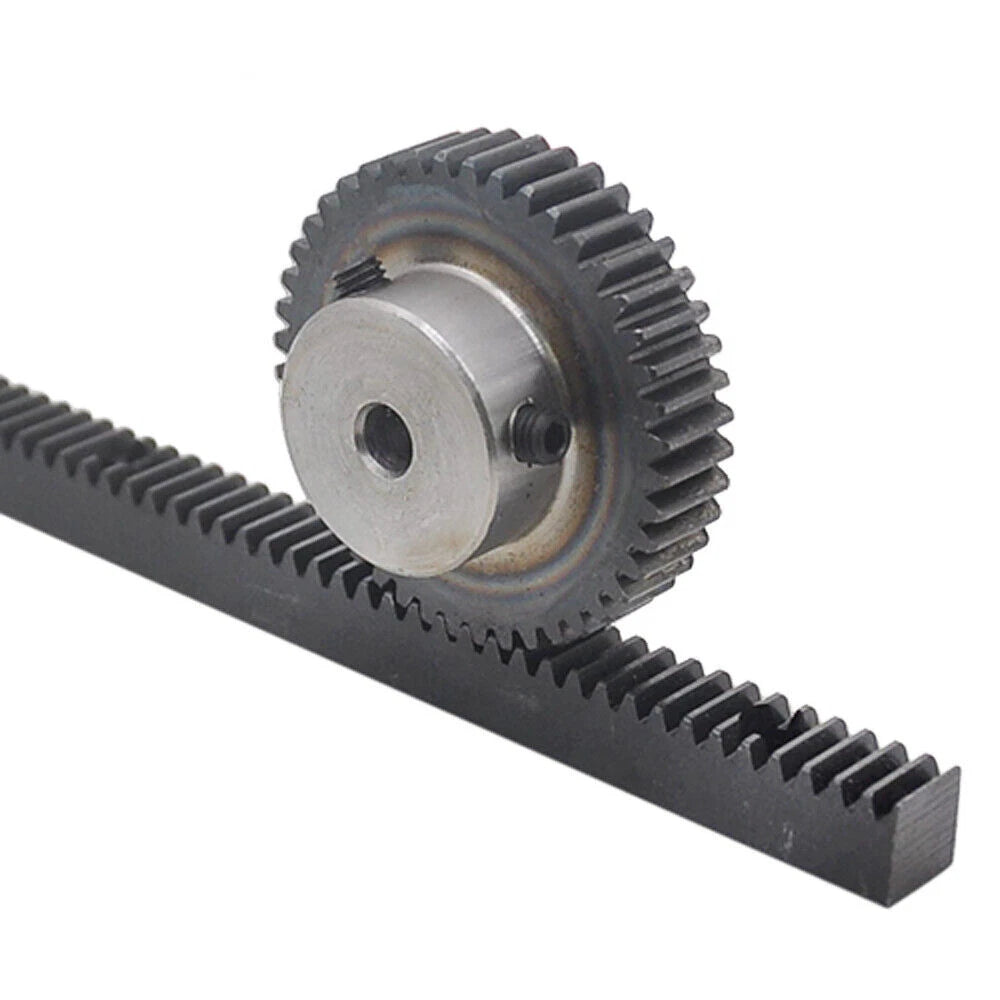
⚙️ Compatibility: Module 1 (1M) metric standard. Meshes with any Module 1 spur or rack gear. Verify bore diameter matches your motor shaft before ordering.

✅ Key Features of These Module 1 Spur Pinion Gears

🔩 45# Carbon Steel Construction
Machined from 45# medium-carbon steel for a reliable combination of surface hardness and core toughness suited to motor pinion duty cycles.
📐 Module 1 Metric Standard
Full compliance with the M1 metric gear standard ensures direct mesh compatibility with any Module 1 spur gear, rack, or gearbox in your drivetrain.
🎯 Wide Tooth Count Range: 10T–46T
Over 30 tooth-count options in a single listing let you dial in the exact gear ratio you need without sourcing from multiple suppliers.
🔄 Broad Bore Selection: 4–25 mm
Bore options include metric sizes (4, 5, 6, 7, 8, 10, 11, 12, 14, 15, 16, 17, 18, 19, 20, 22, 25 mm) and imperial-friendly 6.35 mm and 12.7 mm for fractional motor shafts.
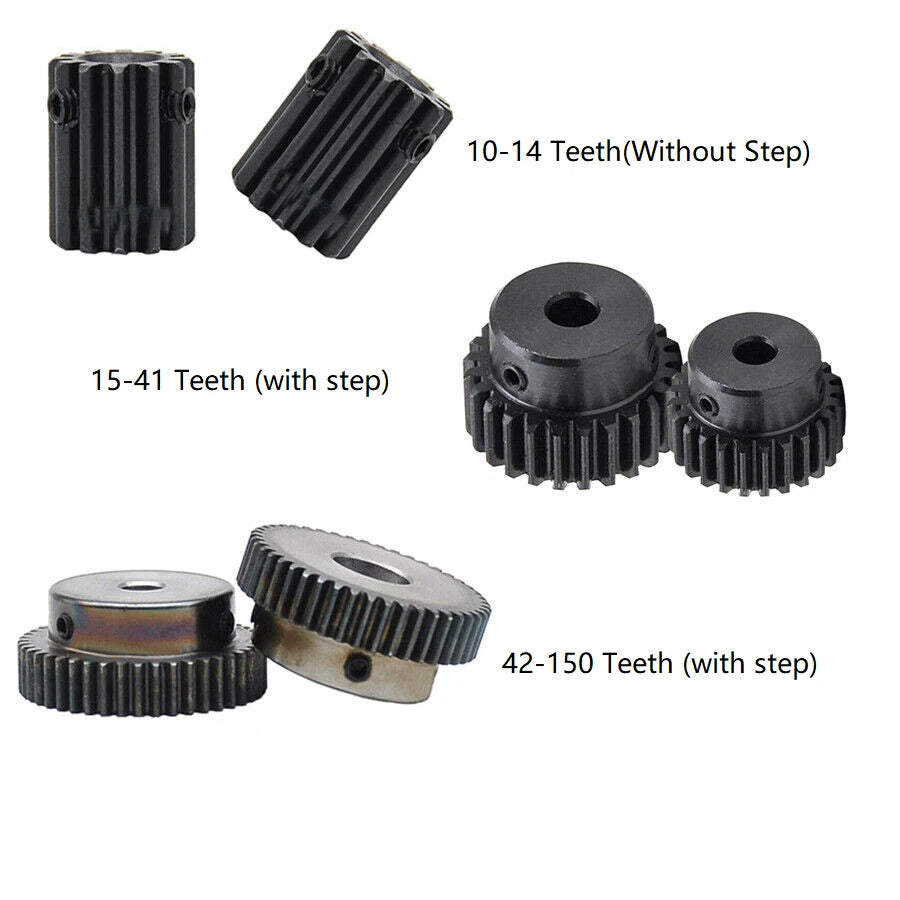
🏗️ Step-Bore Variants Available
Selected tooth counts (24T, 25T, 40T, 44T) are offered with stepped hub diameters (17, 20, 22, 25, 30, 38 mm) for applications requiring a shoulder register or bearing seat.
Motor-Ready Pinion Profile
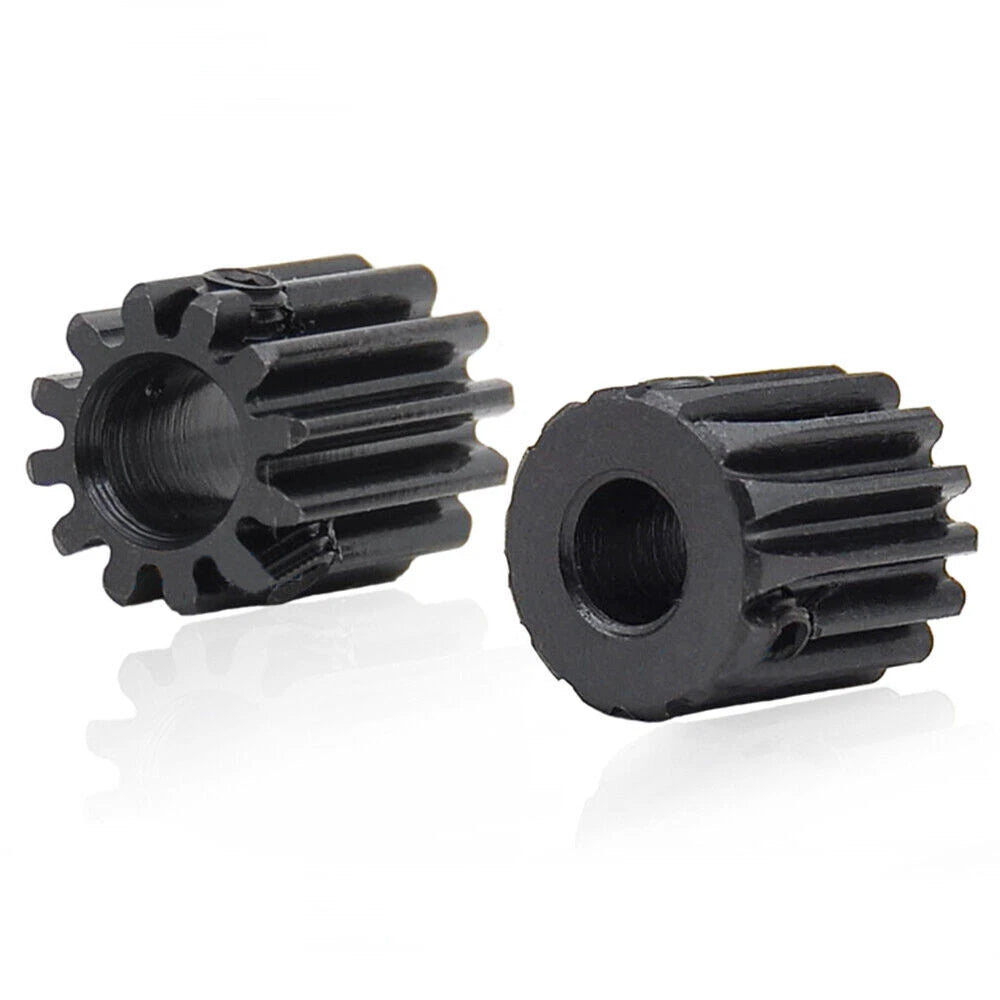
Designed as a motor output pinion: compact face width, standard pressure angle, and a bore sized for direct shaft press-fit or setscrew retention.

📐 Technical Specifications — Module 1 Spur Pinion Gear

Module 1M (Metric Module 1)
Material 45# Carbon Steel
Tooth Count Range 10T – 46T
Bore Diameter Range 4 mm – 25 mm (see variant options)
Step-Bore Options Available on select tooth counts (see variant options)
Outer Diameter (approx.) ~12 mm (10T) to ~48 mm (46T)
Pressure Angle See variant options
Face Width See variant options
Hub / Step Diameter See variant options
Surface Treatment See variant options
Weight See variant options

❓ Frequently Asked Questions

How do I choose the right tooth count for my application?

The tooth count determines your gear ratio when meshed with a mating gear. Divide the driven gear's tooth count by the pinion's tooth count to get the reduction ratio. For example, a 10T pinion driving a 40T gear gives a 4:1 reduction. Choose a lower tooth count for higher speed reduction and more torque; choose a higher tooth count for a closer-to-1:1 ratio.

How do I select the correct bore diameter?

Measure your motor shaft diameter with a caliper. Select the bore that matches your shaft exactly — a bore that is too large will cause runout and noise. If your shaft is a fractional size such as 1/4 in (6.35 mm) or 1/2 in (12.7 mm), those bore options are available in this listing. For setscrew retention, the bore should be a close sliding fit on the shaft.

What is a step-bore (stepped hub) variant and do I need one?

A step-bore gear has a larger-diameter hub shoulder machined into the gear body. This shoulder can register against a bearing face, a motor flange, or a housing bore to control axial positioning. If your design requires the gear to be located axially by a shoulder rather than a setscrew or retaining ring alone, choose a step-bore variant. If axial location is handled by other means, a standard bore variant is sufficient.

Are these gears compatible with Module 1 racks and other Module 1 gears?

Yes. All gears in this listing are Module 1 (1M) metric standard. They will mesh correctly with any other Module 1 spur gear, helical gear (same helix angle), or rack regardless of brand, provided the pressure angle also matches. The standard pressure angle for Module 1 gears is typically 20°; confirm your mating gear's pressure angle before assembly.

How strong are 45# steel gears compared to other materials?

45# carbon steel (approximately equivalent to AISI 1045) has a tensile strength typically in the range of 600–800 MPa in the normalized condition and can be heat-treated to higher hardness for demanding applications. It is significantly stronger than aluminum or plastic gears and is the standard material for motor pinions in robotics, CNC, and light industrial drives. For very high-load or high-speed applications, consider whether additional surface hardening is required.

Do these gears require any surface treatment or lubrication?

45# steel gears are susceptible to surface oxidation in humid environments. For indoor, dry applications a light machine oil or grease on the tooth flanks is sufficient. For outdoor or high-humidity environments, consider applying a corrosion-inhibiting grease or a surface coating after installation. Lubrication also reduces tooth wear and noise, so periodic re-greasing is recommended for continuous-duty applications.

Can I use these as a direct press-fit onto a motor shaft?

These gears are designed for motor pinion use. The bore is typically machined to an H7 or similar close-tolerance fit suitable for a light press-fit or a setscrew/grub-screw retention. For a true interference press-fit, verify the bore tolerance against your shaft tolerance class. If in doubt, contact us to confirm bore tolerance for your specific variant before ordering.

🛒 Select your Model (tooth count) and Bore diameter above, then add to cart.

You may also like

Recently viewed