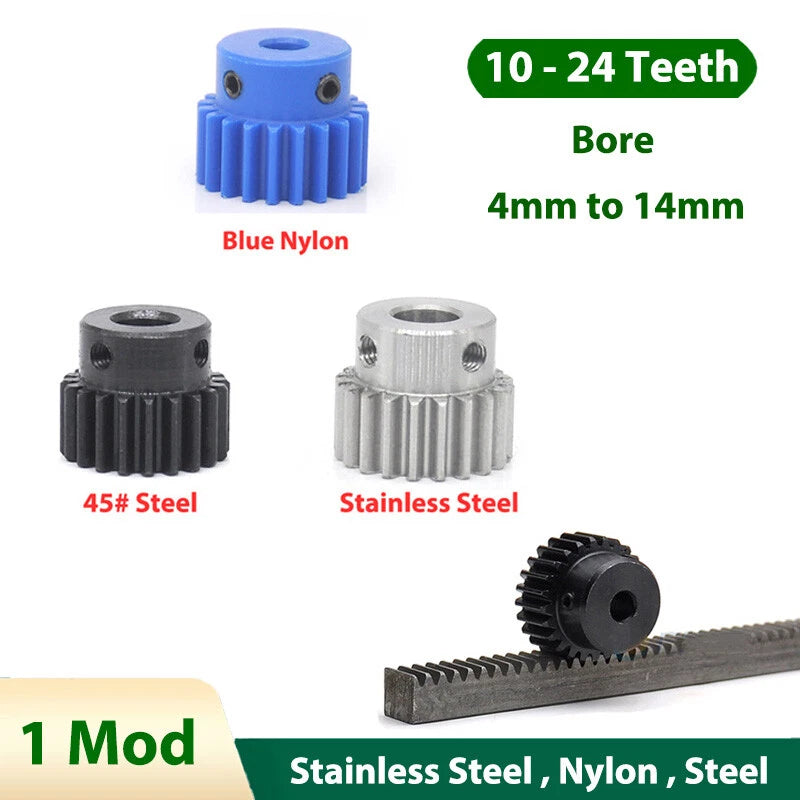
1 Mod Spur Gear Pinion Gears with Step Transmission Stainless Steel,Nylon,Steel

No reviews

Price:
Sale price$7.64 USD
Stock:
In stock (500 units), ready to be shipped

Payment & Security

Ach Direct Debit Amazon American Express Apple Pay Bancontact BLIK Diners Club Discover EPS Google Pay iDEAL Wero JCB Maestro Mastercard Multibanco MobilePay PayPal Przelewy24 Shop Pay Twint Union Pay USDC Visa

Your payment information is processed securely. We do not store credit card details nor have access to your credit card information.

Limited Offer — Spend More, Save More
Spend $55+
Save $5
Spend $100+
Save $10
Spend $200+
Save $25
HomeDIYer DIY Expert Support

DIY Expert Support

Get fitment advice & recommendations

Mon–Fri  8:30 AM – 8:00 PM
24-Hour Fast Ship
Arrives in 3–14 Days
Worldwide Shipping
30-Day Returns
1 tree planted with every purchase

Description

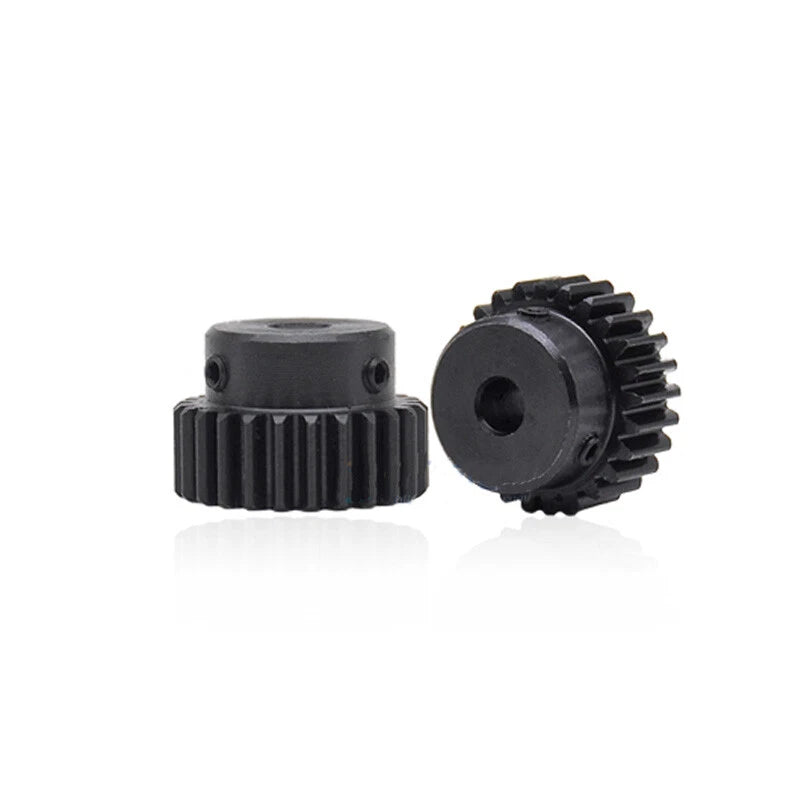
1 Mod Spur Gear Pinion Gears with Step — Precision Motion Control for Makers and Engineers

When your CNC router, robotic arm, or automation rig demands consistent torque transfer without slop or backlash, choosing the wrong gear material or bore size can bring your entire build to a halt. These 1 Mod spur gear pinion gears with step are engineered for makers, hobbyists, and small-batch manufacturers who need reliable, dimensionally accurate motion-control components that drop straight into their drivetrain.

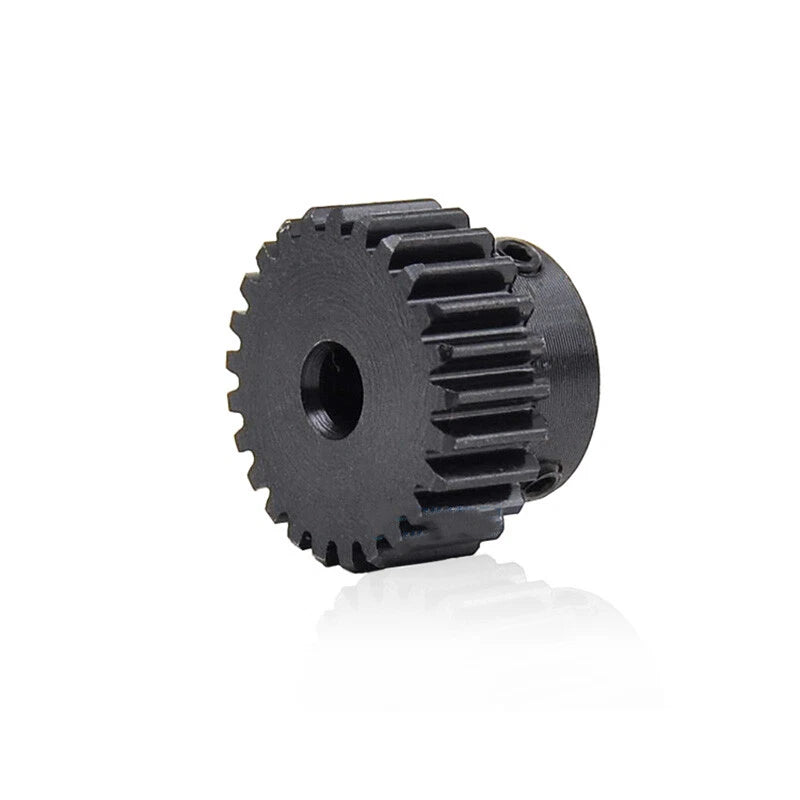
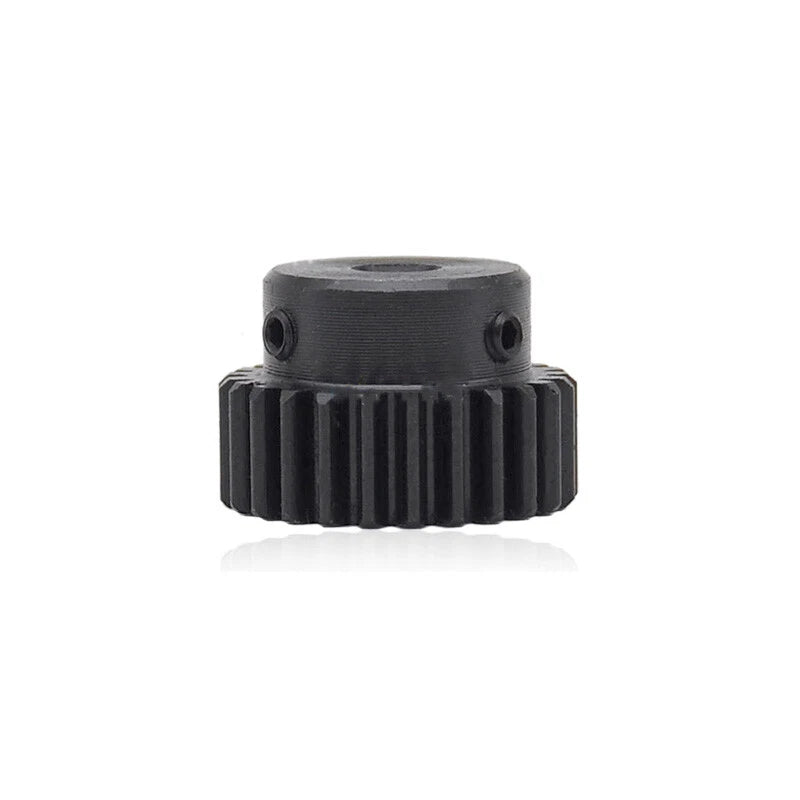
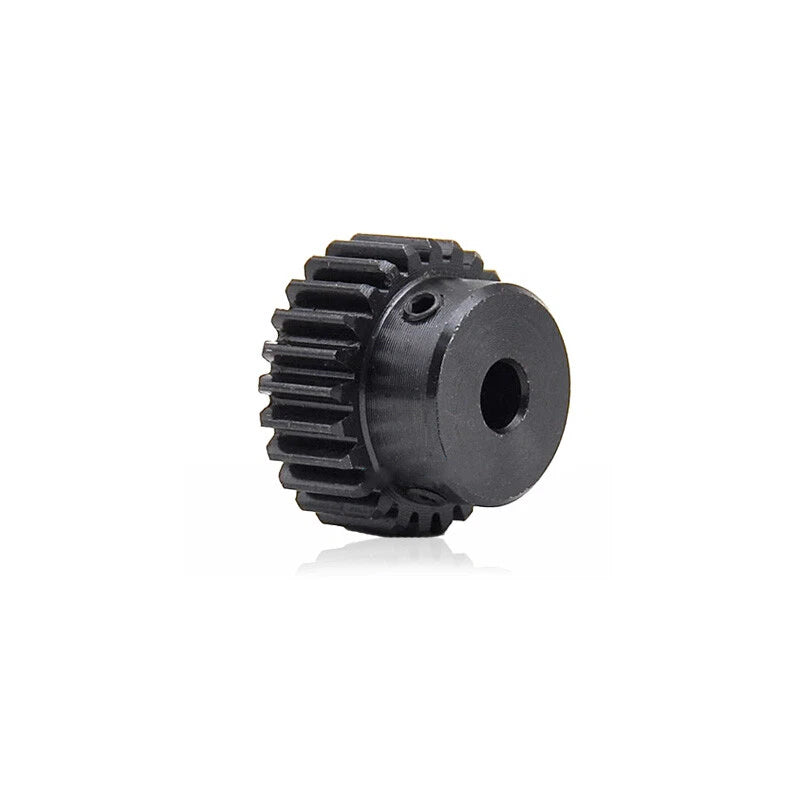
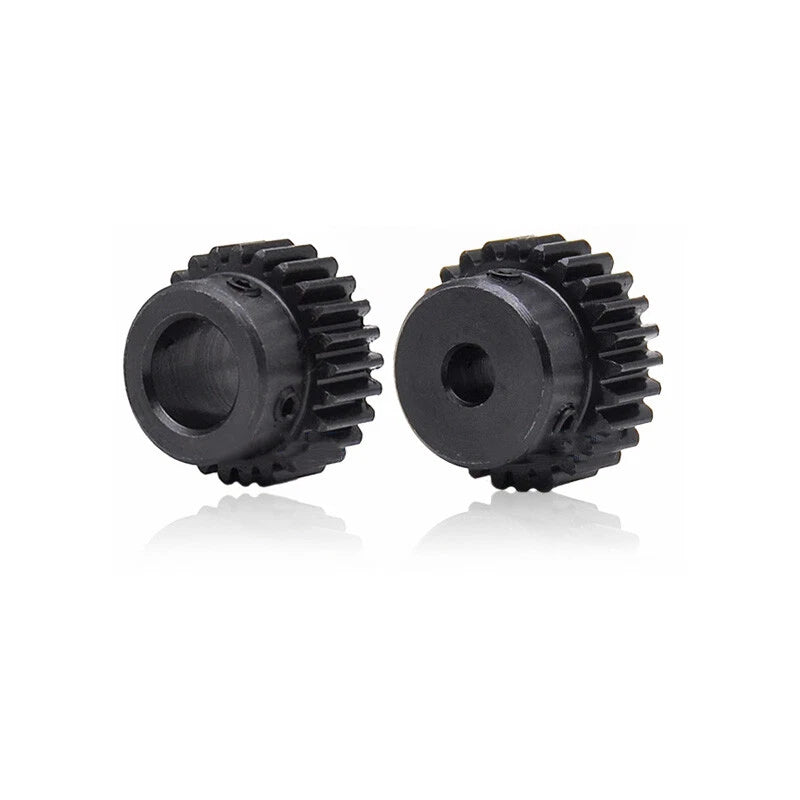
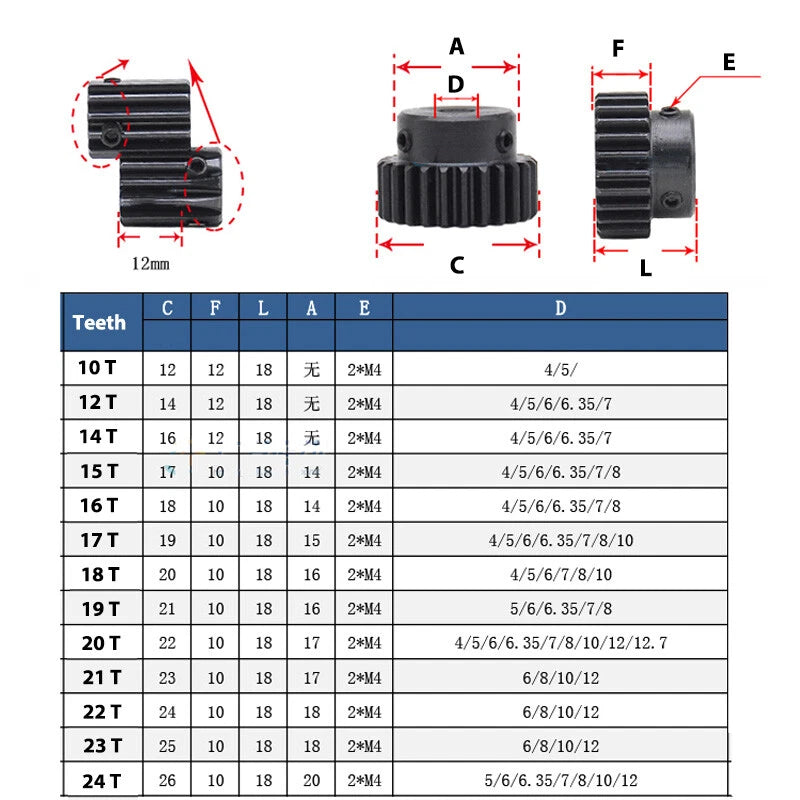
Each pinion gear features a Module 1 (Mod 1) tooth profile and is available in three material grades — 45# carbon steel for general-purpose strength, 304 stainless steel for corrosion-resistant environments, and blue engineering nylon for lightweight, low-noise applications. Tooth counts range from 10T to 24T, with bore diameters spanning 4 mm (0.16 in) to 14 mm (0.55 in), including round bores, D-shaft bores, and keyway bores to suit a wide range of motor shafts. The stepped hub design provides a positive axial stop for set-screw retention and simplified assembly.

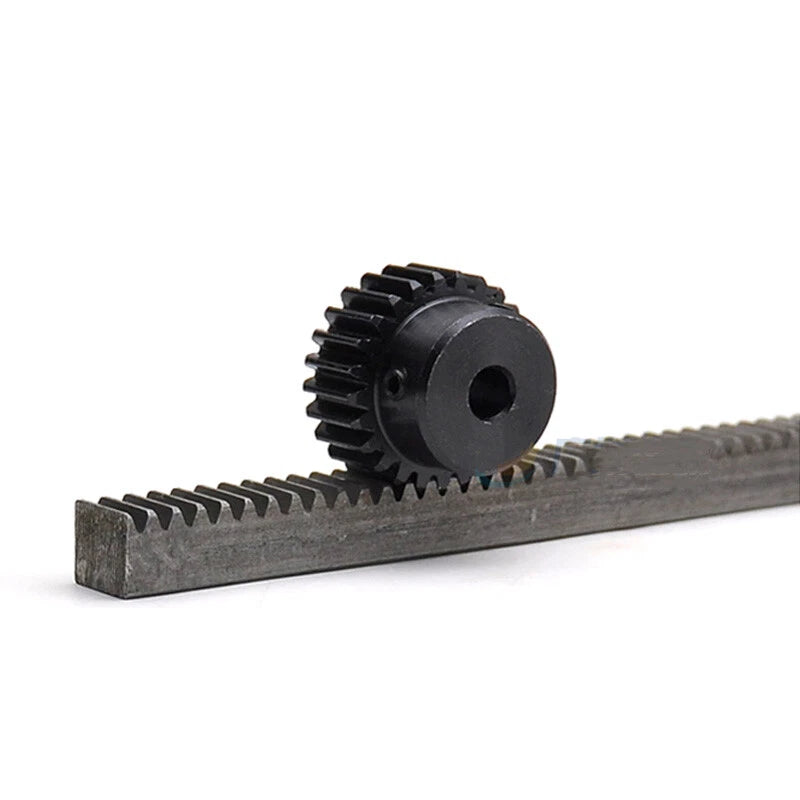
Typical use cases include 1 Mod gear rack and pinion linear actuators for CNC gantries, small servo-driven robotic joints requiring a compact spur gear pinion, and DIY automation conveyor drives where a nylon spur gear reduces noise and eliminates lubrication requirements.

⚙️ Compatibility: Designed for Module 1 (Mod 1) gear systems. Mates with any standard Mod 1 spur gear, rack, or internal ring gear. Verify bore diameter and shaft type before ordering.

✅ Key Features of These 1 Mod Spur Gear Pinion Gears

🔩
Three Material Options

Choose 45# carbon steel for cost-effective strength, 304 stainless steel for rust resistance in humid or washdown environments, or blue engineering nylon for quiet, lubrication-free operation.

📐
Module 1 Tooth Profile

Standard Mod 1 geometry ensures full interchangeability with any Mod 1 rack, gear, or gearbox component — no custom tooling or adapters required.

🎯
Stepped Hub Design

The integrated step provides a positive axial reference surface, simplifying shaft positioning and improving set-screw retention compared to plain-hub pinions.

🔄
Wide Bore Selection

Available in round bores (4–14 mm), D-shaft bores (5×4.5 mm to 12×11 mm), and keyway bores (8 mm, 10 mm, 12 mm) to match virtually any motor or gearbox output shaft.

10T to 24T Tooth Range

Select the tooth count that delivers your target gear ratio. Lower tooth counts (10T–14T) maximize speed reduction; higher counts (20T–24T) provide smoother, higher-speed transmission.

🛡️
Precision Machined Teeth

Hobbed tooth flanks maintain consistent pitch and pressure angle across the full face width, reducing vibration and extending the service life of mating gears and racks.

📐 Technical Specifications — 1 Mod Spur Gear Pinion

Module 1 (Mod 1)
Pressure Angle 20°
Tooth Count 10T, 12T, 14T, 15T, 16T, 17T, 18T, 19T, 20T, 21T, 22T, 23T, 24T
Material 45# Carbon Steel / 304 Stainless Steel / Blue Engineering Nylon
Bore Type Round bore, D-shaft bore, Keyway bore
Bore Diameter 4 mm – 14 mm (see variant options)
Hub Style Stepped hub (step variants); plain hub (without step variants)
Pitch Diameter See variant options (= Teeth × Module)
Face Width See variant options
Finish Natural / Bright (steel); Blue (nylon)
Package Quantity 1 Pcs per order

❓ Frequently Asked Questions

How do I choose the right tooth count for my application?

The gear ratio between two meshing gears equals the driven gear tooth count divided by the driving pinion tooth count. For example, pairing a 10T pinion with a 20T gear gives a 2:1 reduction. Lower tooth counts on the pinion increase torque and reduce output speed; higher tooth counts reduce the ratio and allow higher output speeds. Match your required ratio to the available tooth counts (10T–24T) and verify the resulting pitch diameter fits your housing clearance.

Which material should I choose — 45# steel, stainless steel, or nylon?

45# carbon steel offers the best strength-to-cost ratio and suits most indoor, dry-environment drives. 304 stainless steel is recommended where moisture, mild chemicals, or food-adjacent environments are present, as it resists surface rust without additional coating. Blue engineering nylon is ideal when noise reduction is a priority, when the mating gear is metal (nylon absorbs shock and runs quietly), or when the application is too light-duty to justify metal gears. Nylon gears do not require lubrication.

What is the difference between a stepped hub and a plain hub (without step)?

A stepped hub has a shoulder machined into the hub that acts as an axial stop — you slide the gear onto the shaft until the step contacts the shaft end or a collar, then tighten the set screw. This makes positioning repeatable and reduces the chance of the gear walking along the shaft under load. Plain hub (without step) variants have a uniform cylindrical hub and are used when the gear must be positioned at a custom axial location or when the shaft geometry does not accommodate a step.

How do I select the correct bore type — round, D-shaft, or keyway?

Round bore gears are retained by a set screw pressing against the shaft and work well for light-to-medium loads. D-shaft bores (e.g., 5×4.5 mm) match the flat-sided output shafts common on hobby servo motors and small gearmotors, providing positive rotational engagement without relying solely on the set screw. Keyway bores (e.g., 8 mm with 3×1.4 mm keyway) are used with keyed shafts in higher-torque industrial or semi-industrial applications where slip under load must be prevented. Measure your shaft diameter and check whether it has a flat or keyway before selecting.

Are these gears compatible with Mod 1 gear racks and other Mod 1 gears?

Yes. All gears in this listing use a standard Module 1, 20° pressure angle tooth profile. They will mesh correctly with any other Mod 1 spur gear, Mod 1 gear rack, or Mod 1 internal ring gear regardless of brand or material, provided the face widths are compatible. Do not attempt to mesh Mod 1 gears with Mod 0.8, Mod 1.25, or other module sizes — the pitch will not match and the teeth will not engage correctly.

What is the corrosion resistance of the 45# steel variants?

45# carbon steel has moderate corrosion resistance suitable for dry indoor environments. In humid, outdoor, or chemical-exposure conditions, surface rust can develop over time. If corrosion resistance is required, select the 304 stainless steel variant, which provides significantly better resistance to oxidation and mild chemical exposure. Alternatively, 45# steel gears can be protected with a light machine oil or anti-rust spray in environments with occasional moisture exposure.

How many pieces are included per order?

Each order includes 1 piece (1 Pcs) of the selected gear variant. If you need multiple gears — for example, a matched pair for a gear train — simply increase the quantity at checkout or add multiple variants to your cart.

🛒 Select your Teeth count and Bore Diameter above, then add to cart.

You may also like

Recently viewed