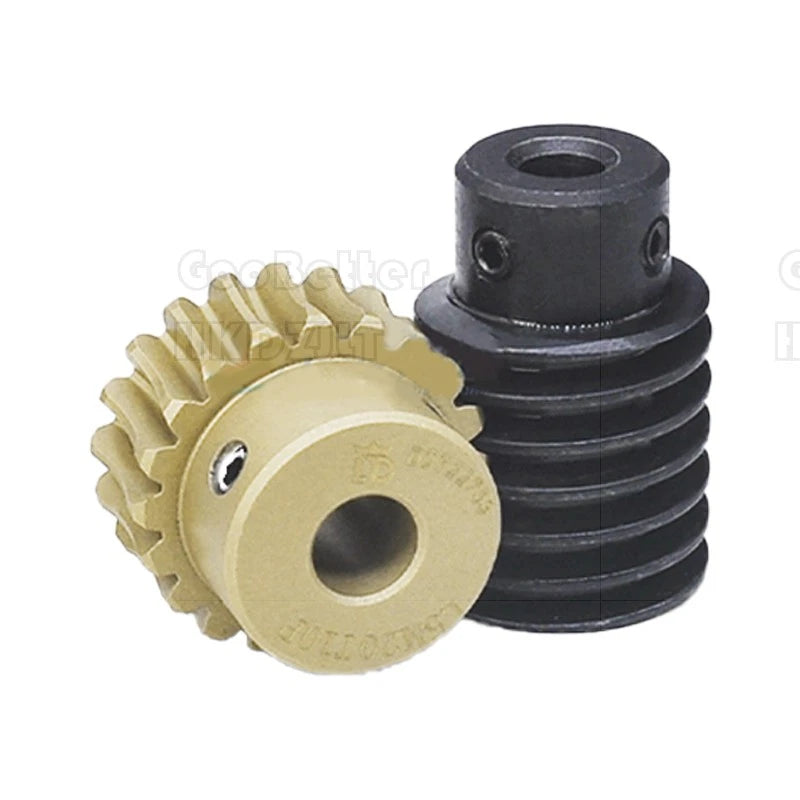
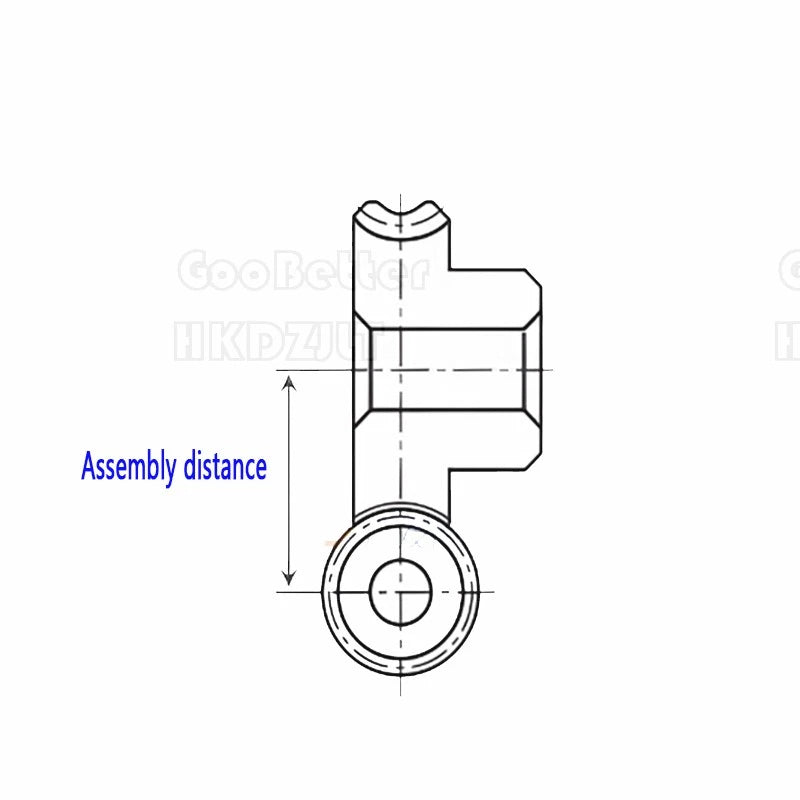
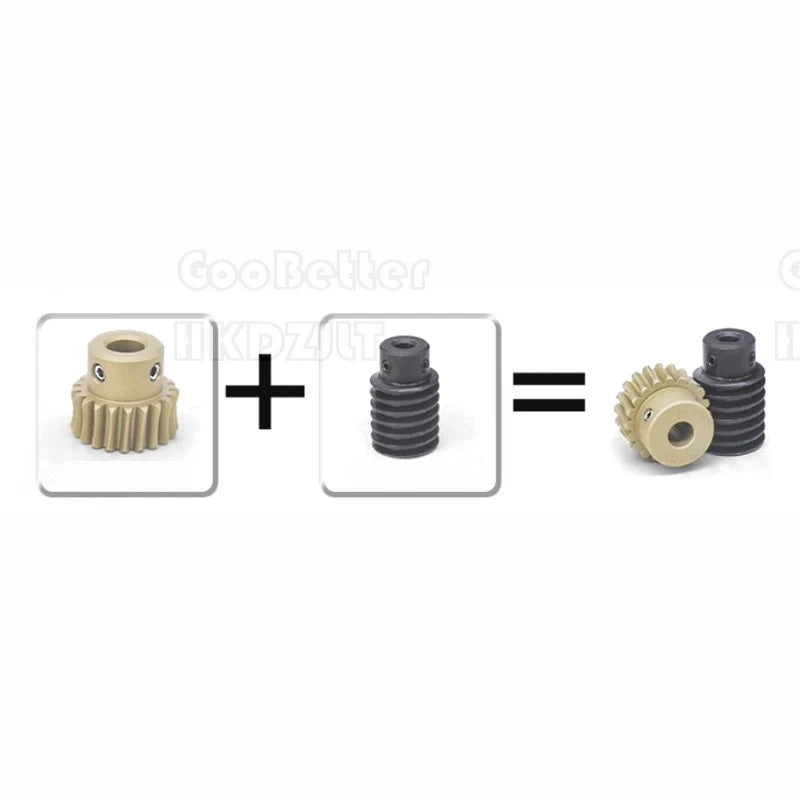
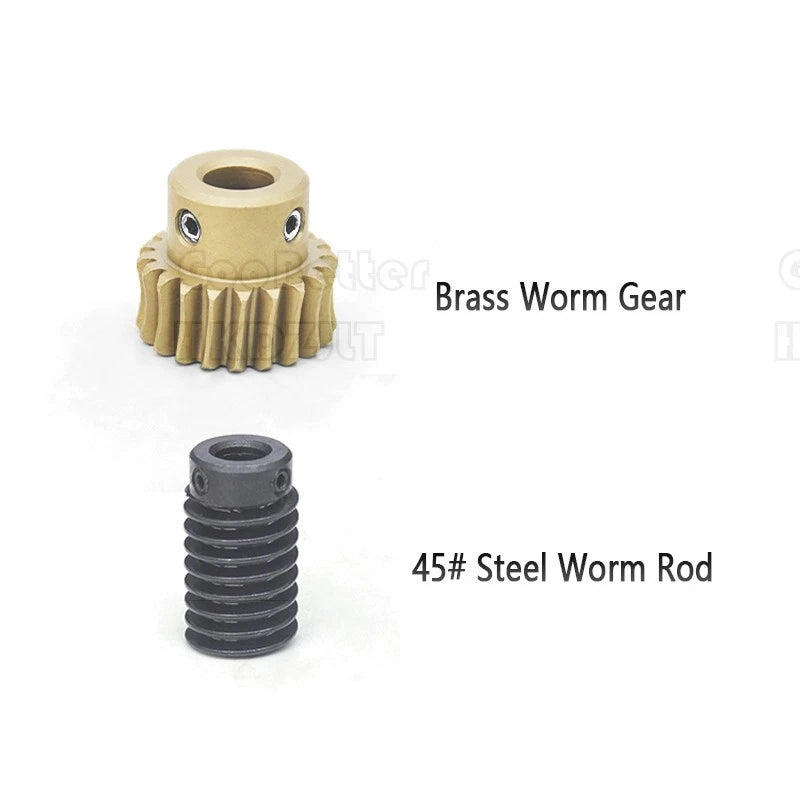
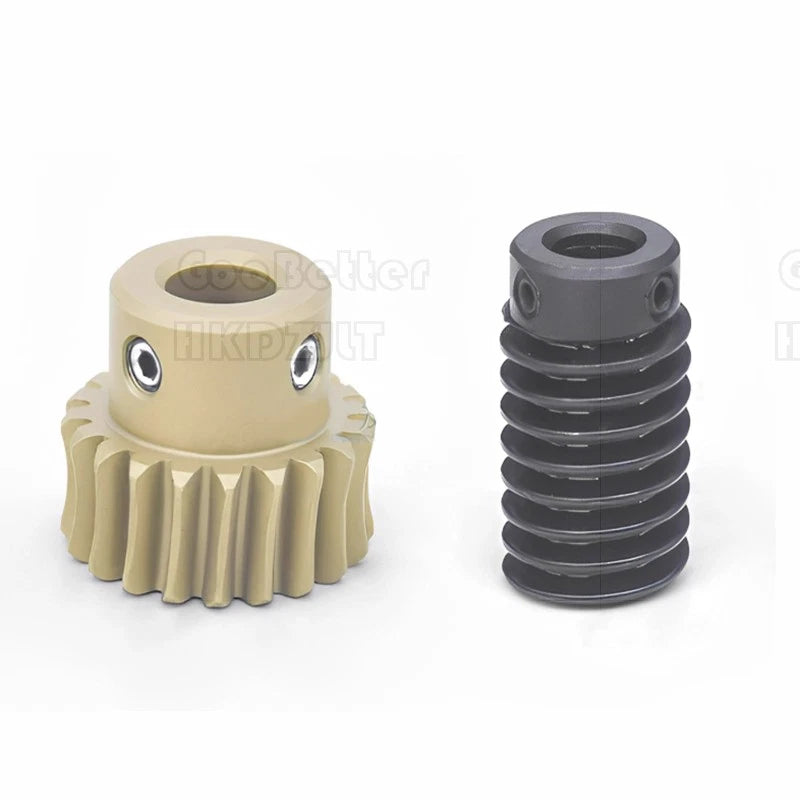
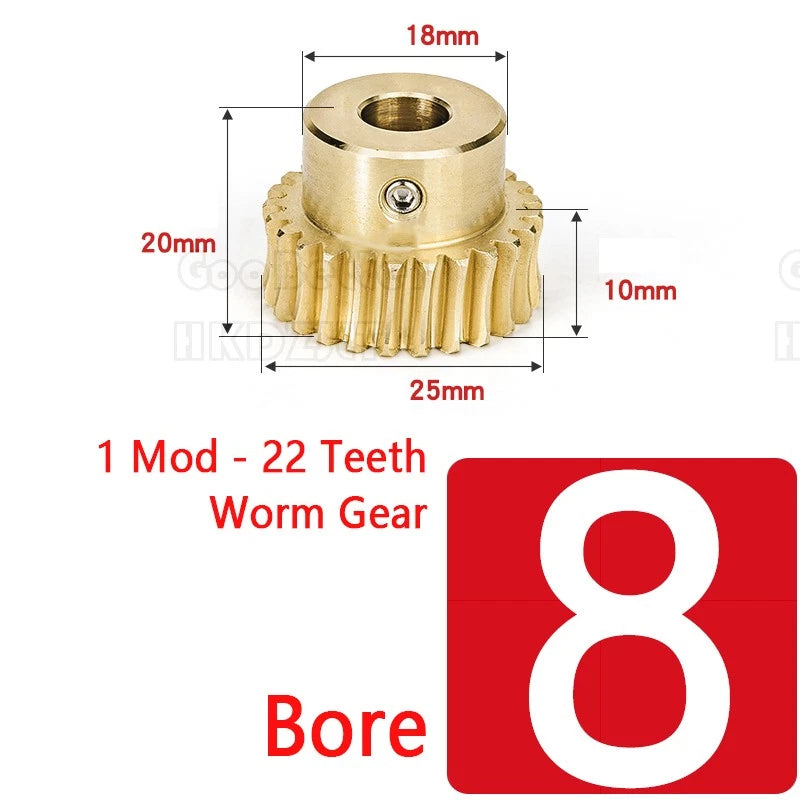
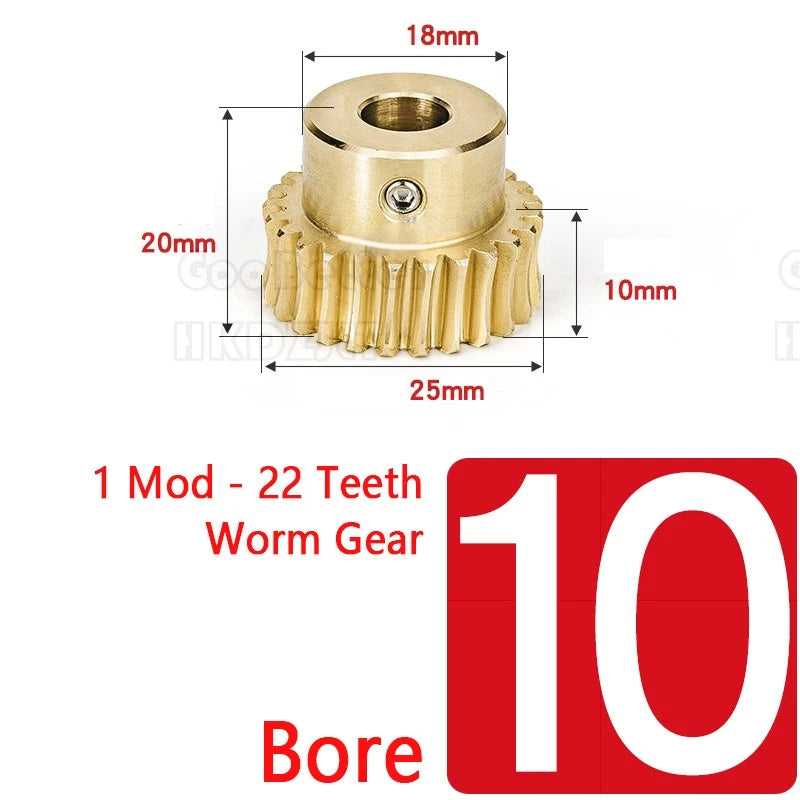
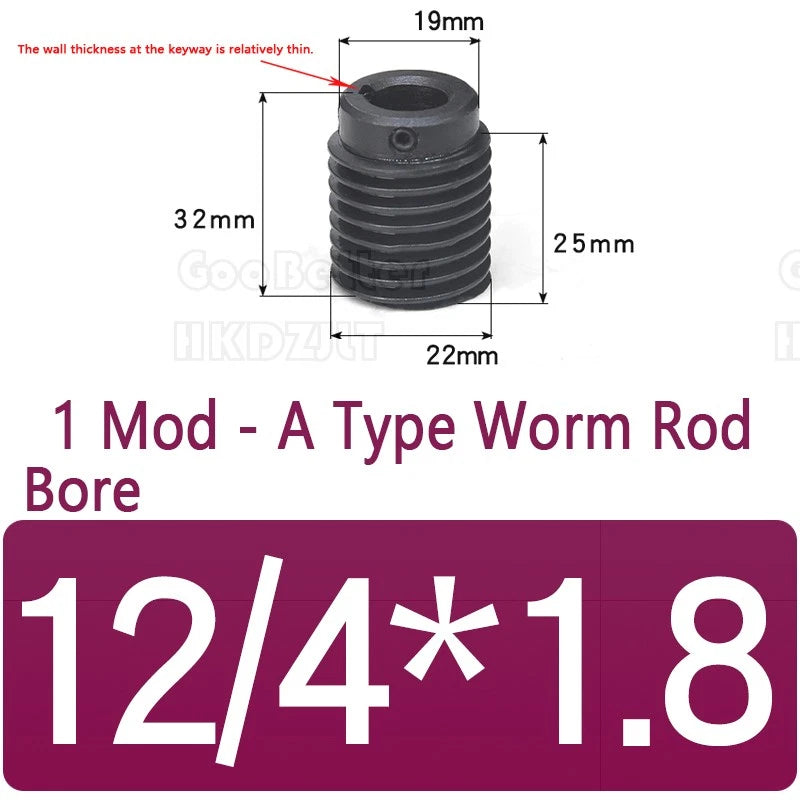
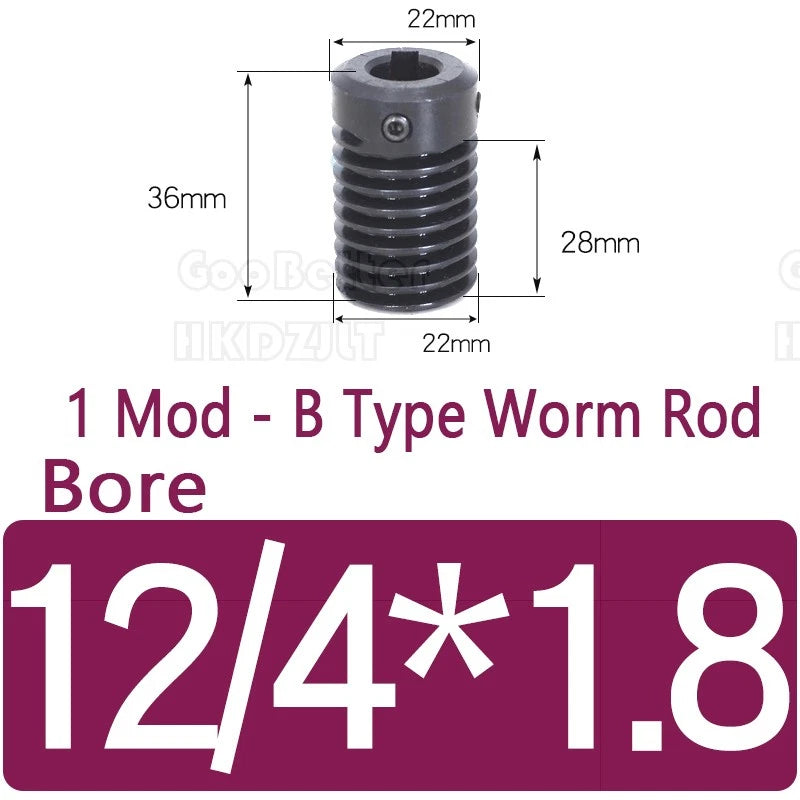
1 Module 1:22 Worm Wheel Gear & Worm Gear Shaft 22 Teeth Worm Wheel Gear Brass

No reviews

Price:
Sale price$19.92 USD
Stock:
In stock (500 units), ready to be shipped

Payment & Security

Ach Direct Debit Amazon American Express Apple Pay Bancontact BLIK Diners Club Discover EPS Google Pay iDEAL Wero JCB Maestro Mastercard Multibanco MobilePay PayPal Przelewy24 Shop Pay Twint Union Pay USDC Visa

Your payment information is processed securely. We do not store credit card details nor have access to your credit card information.

Limited Offer — Spend More, Save More
Spend $55+
Save $5
Spend $100+
Save $10
Spend $200+
Save $25
HomeDIYer DIY Expert Support

DIY Expert Support

Get fitment advice & recommendations

Mon–Fri  8:30 AM – 8:00 PM
24-Hour Fast Ship
Arrives in 3–14 Days
Worldwide Shipping
30-Day Returns
1 tree planted with every purchase

Description

1 Module Worm Gear & Worm Rod Set — Precision 1:22 Ratio for Robotics and CNC Builds

When your motion-control project demands a compact, high-ratio drive that fits in tight spaces, a mismatched or undersized worm gear set becomes the bottleneck that stalls everything. Engineers, robotics builders, and CNC hobbyists who need a reliable 1:22 reduction in a small footprint will find this 1 Module worm gear and worm rod set a direct, no-compromise solution.

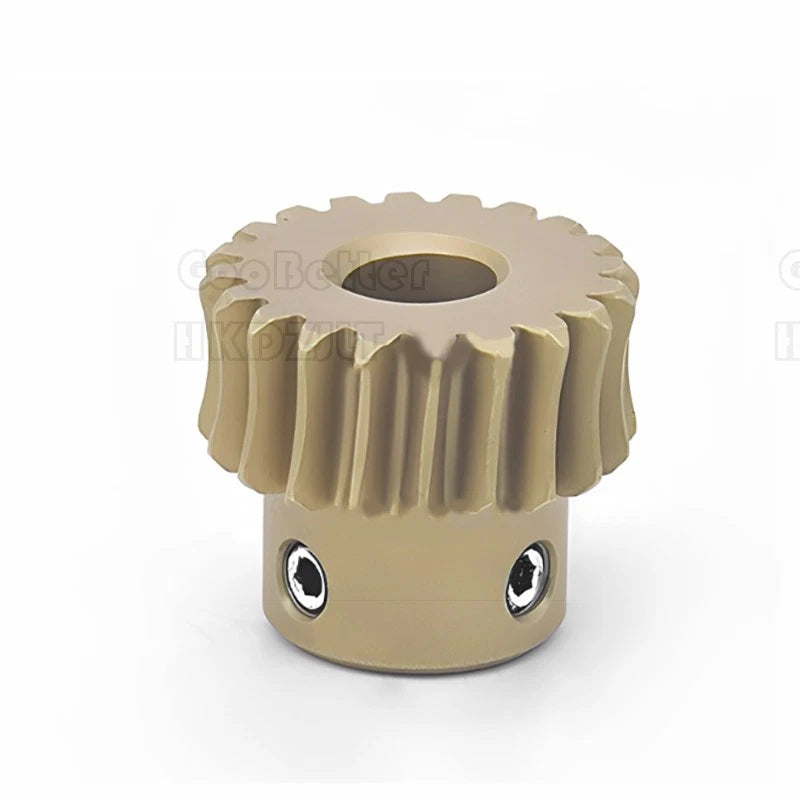
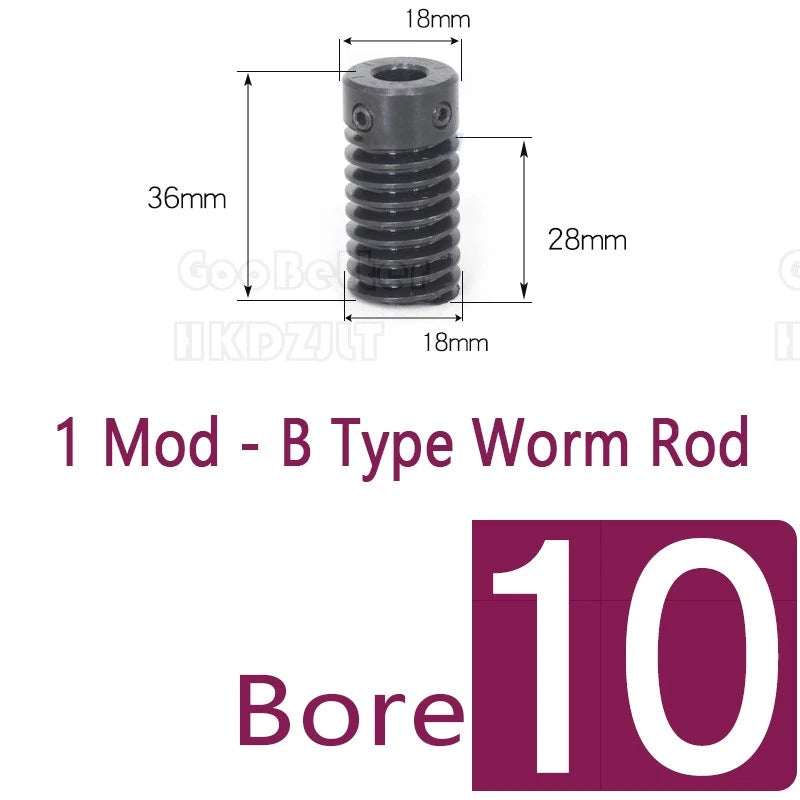
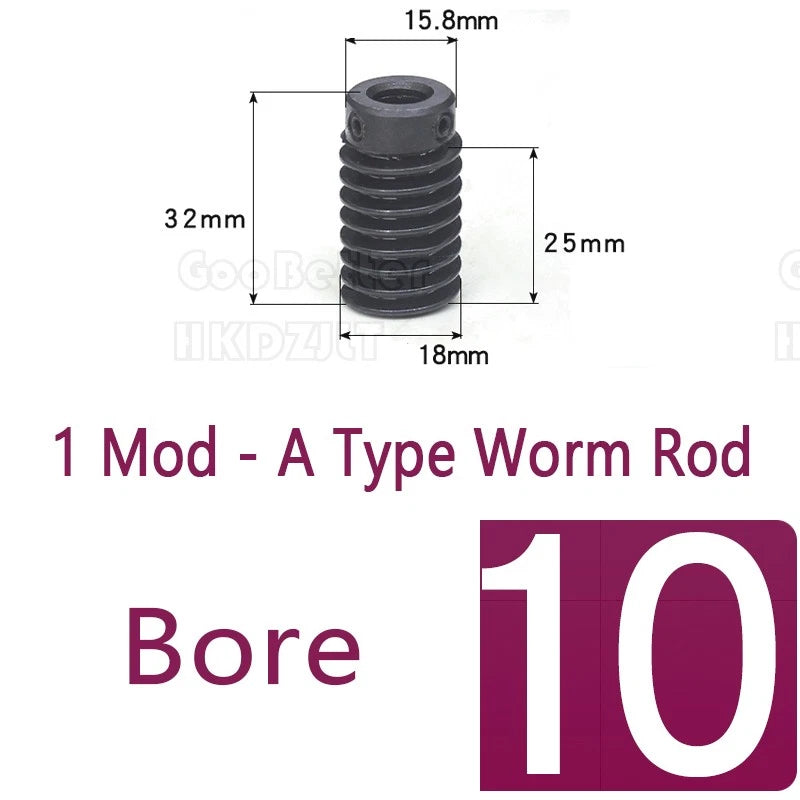
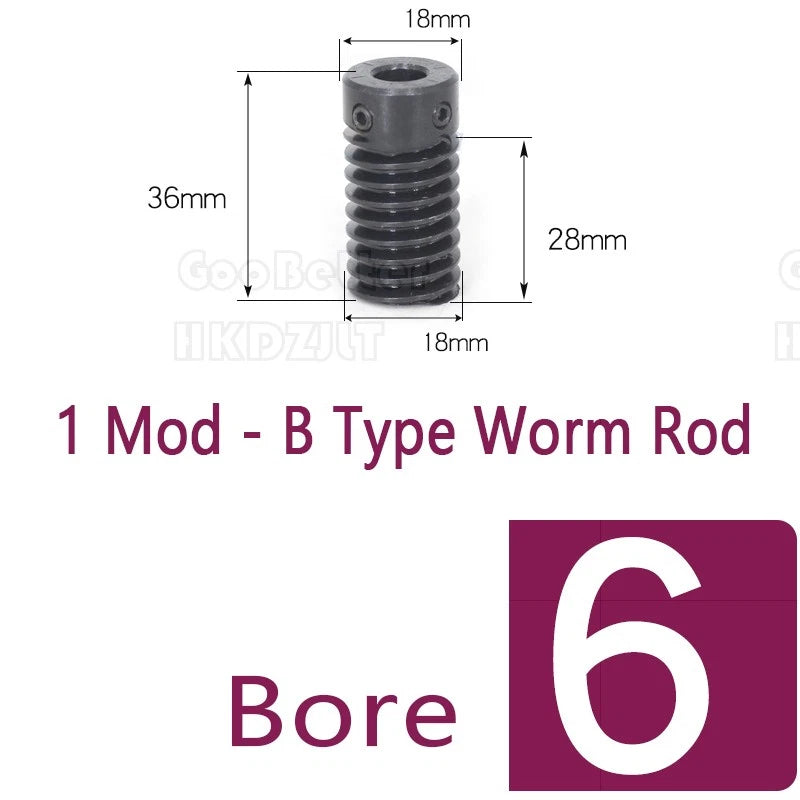
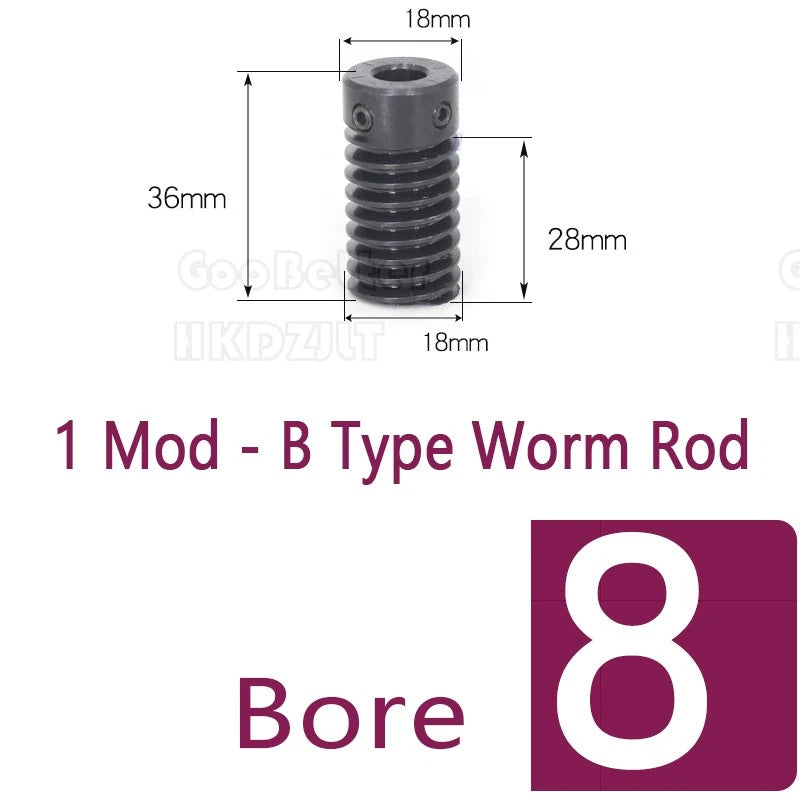
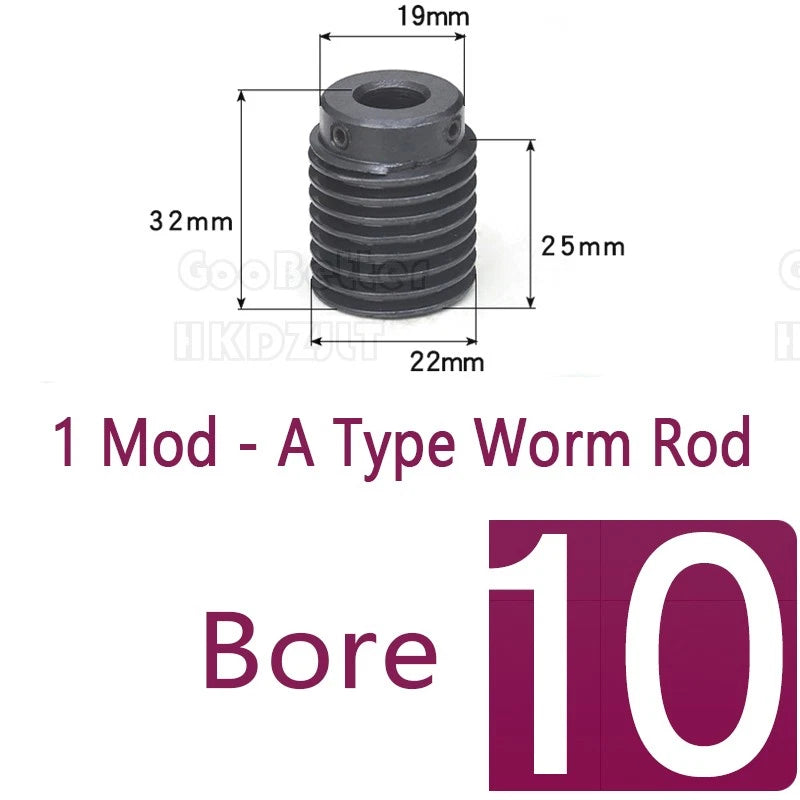
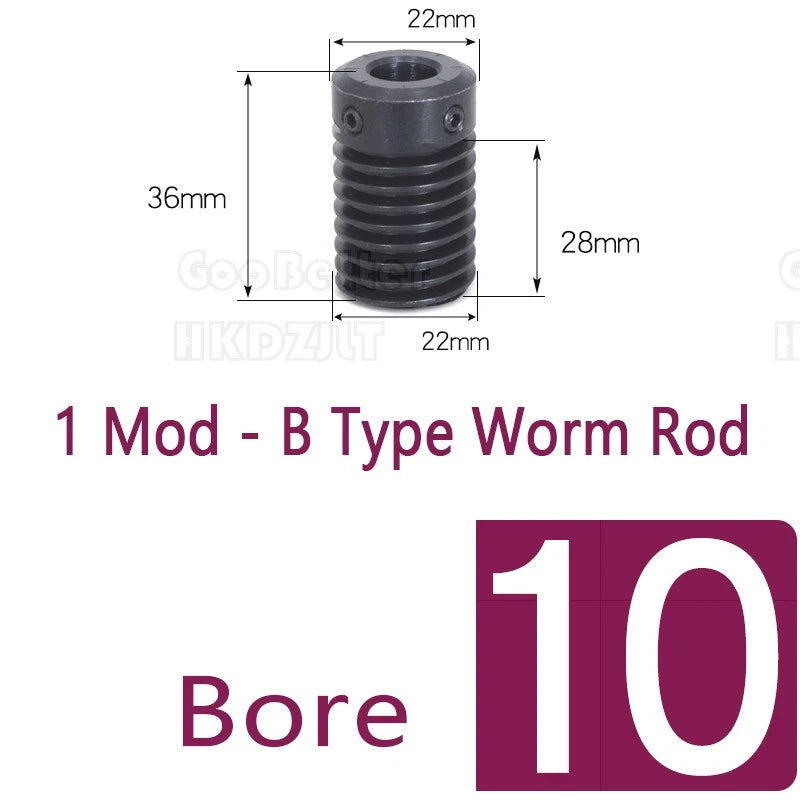
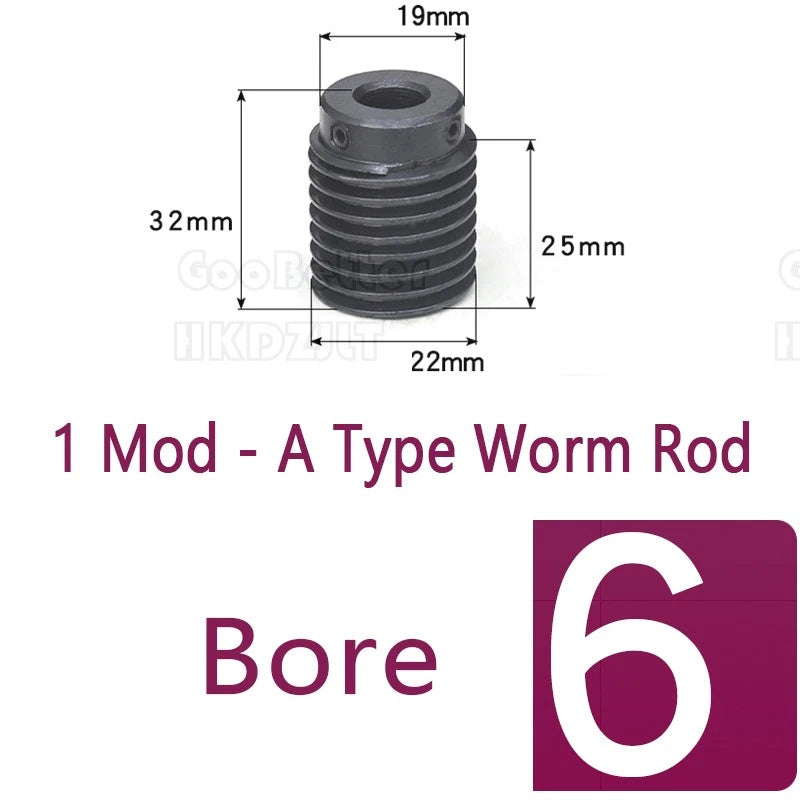
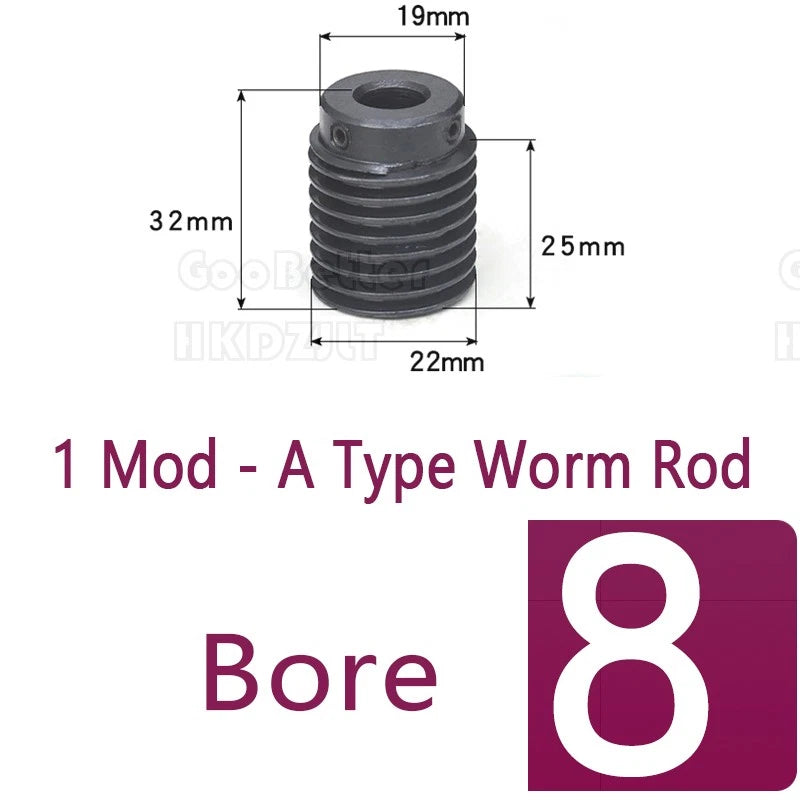
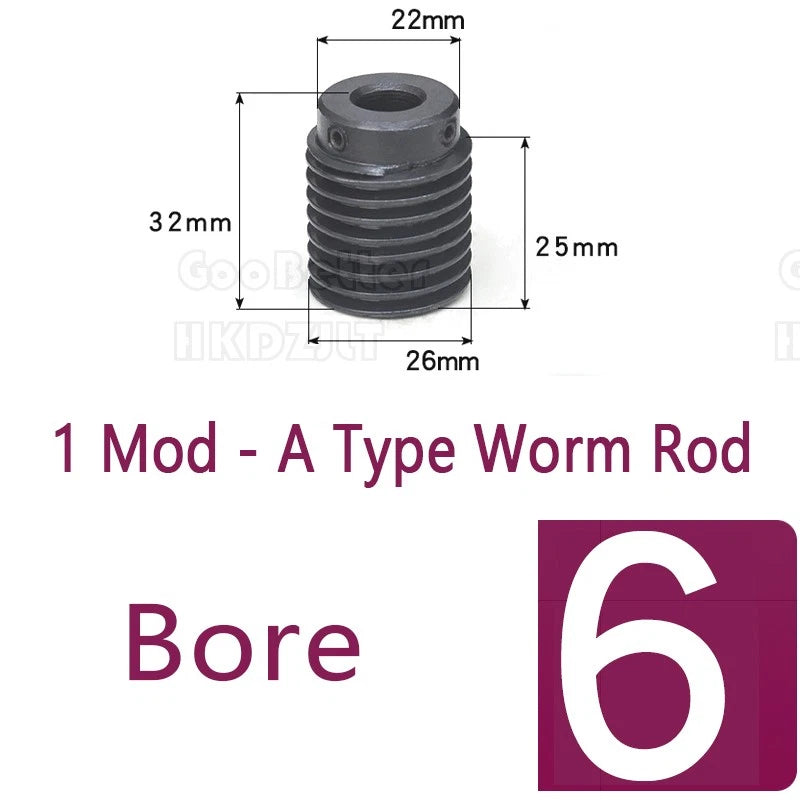
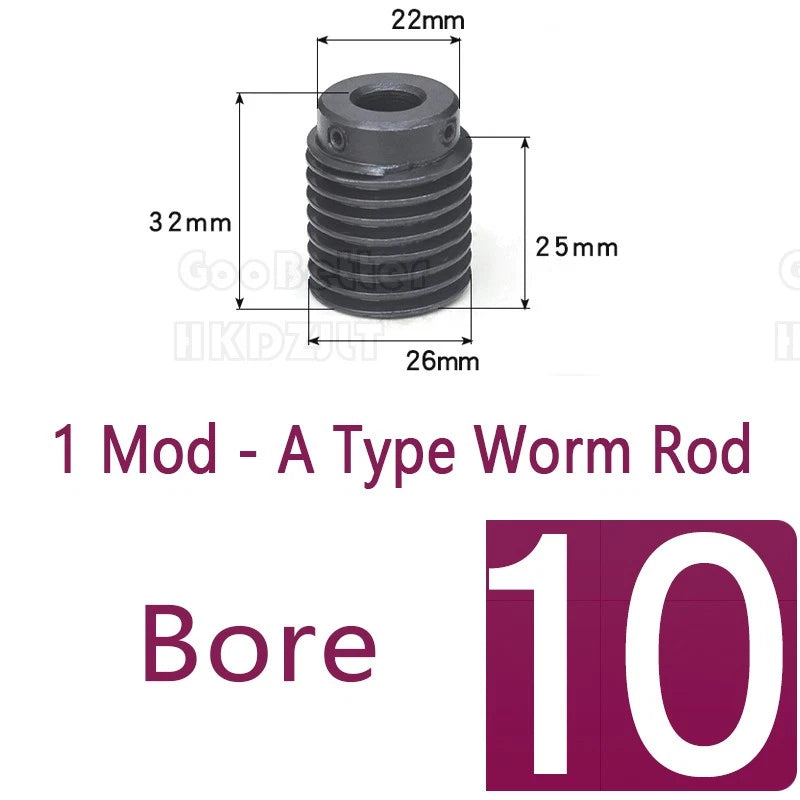
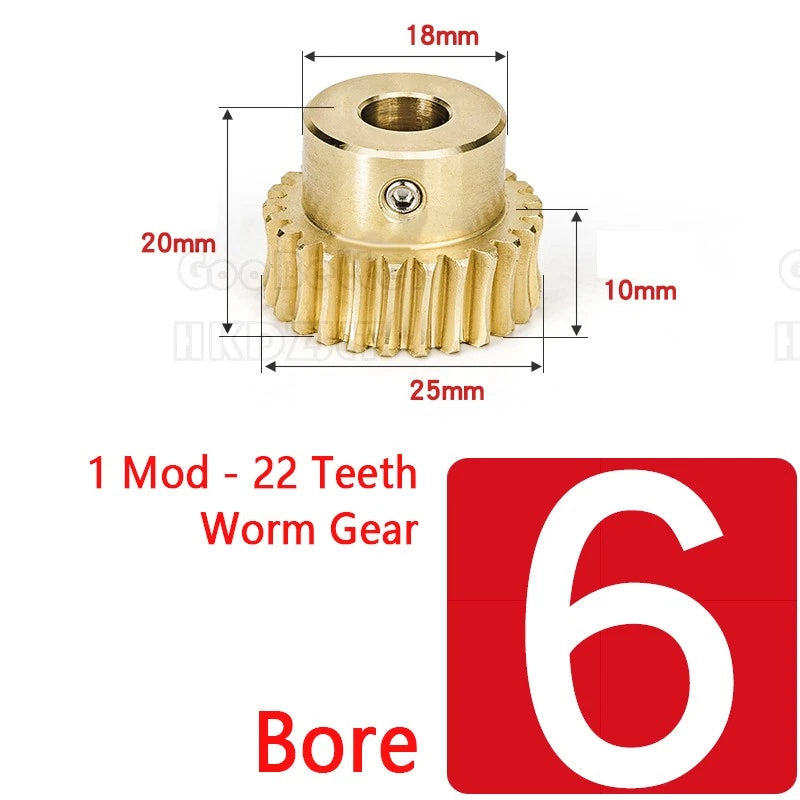
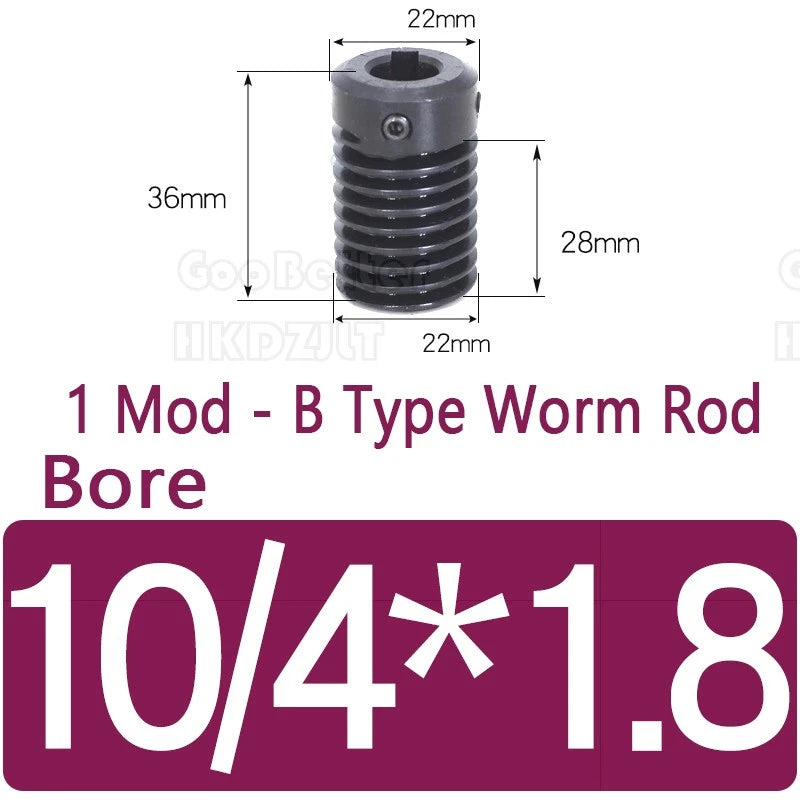
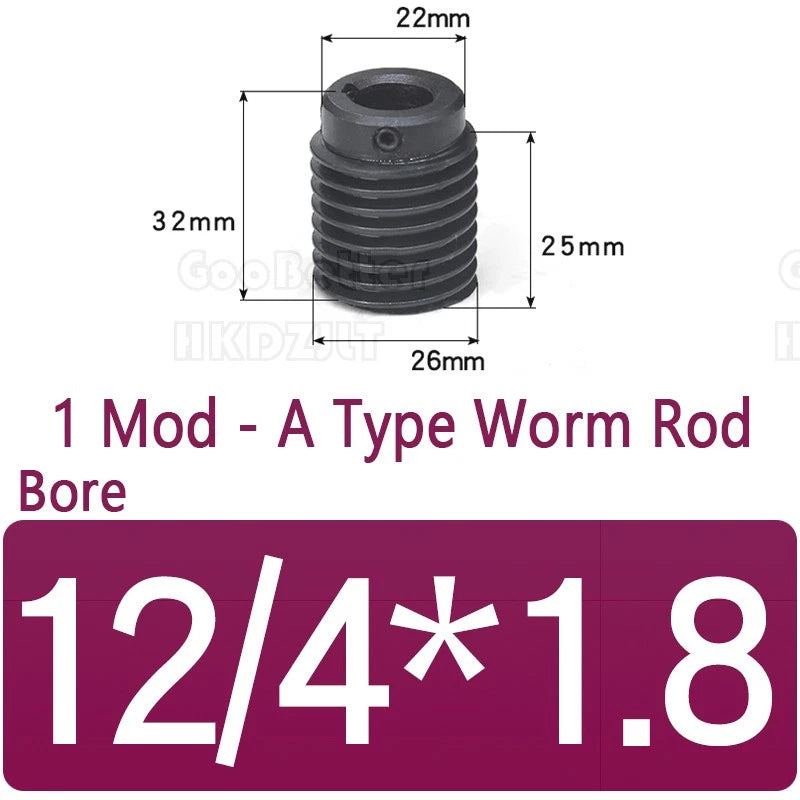
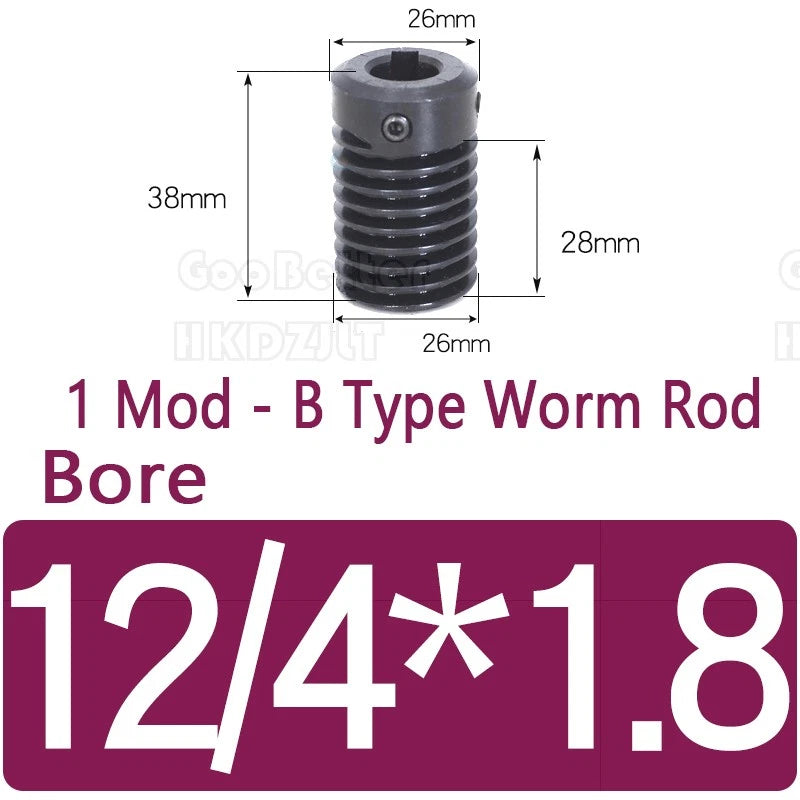
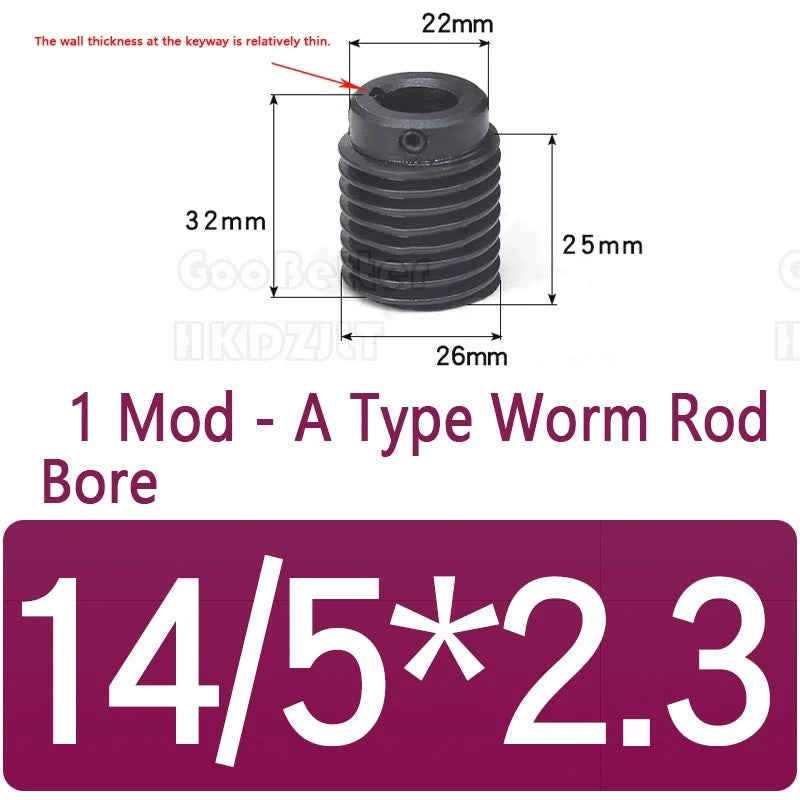
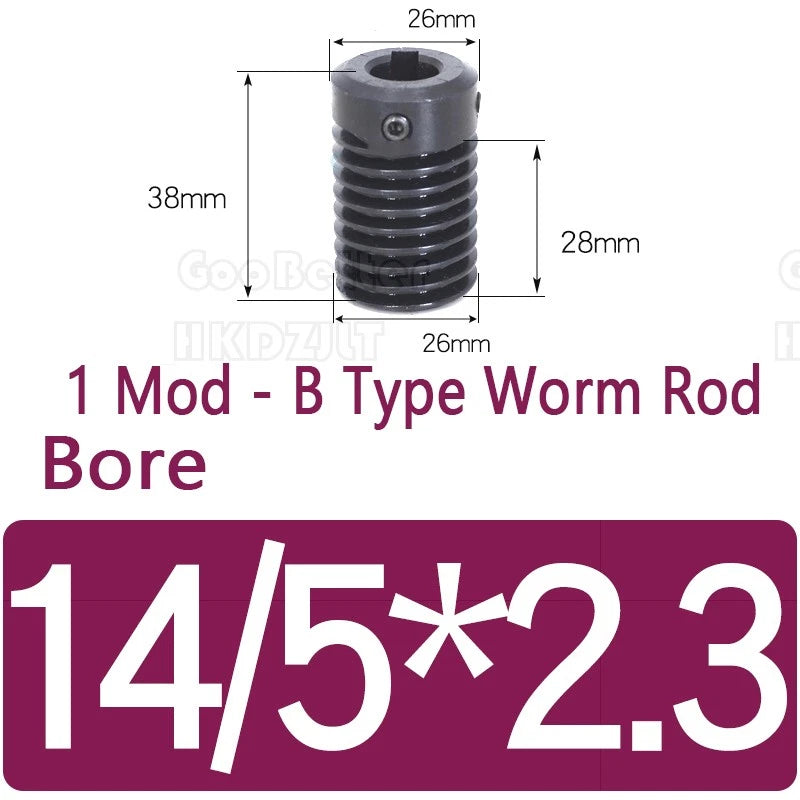
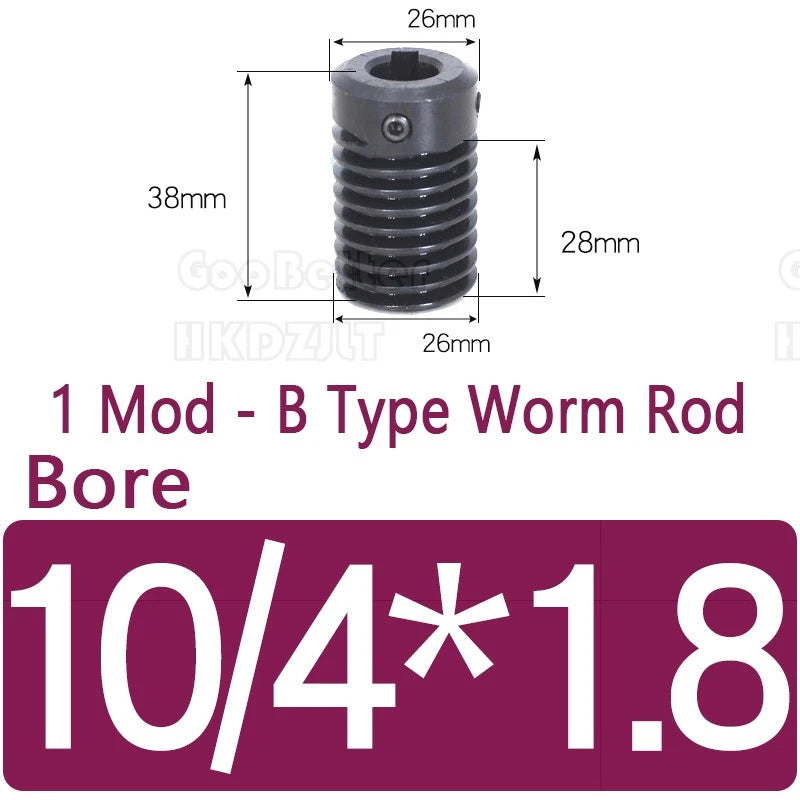
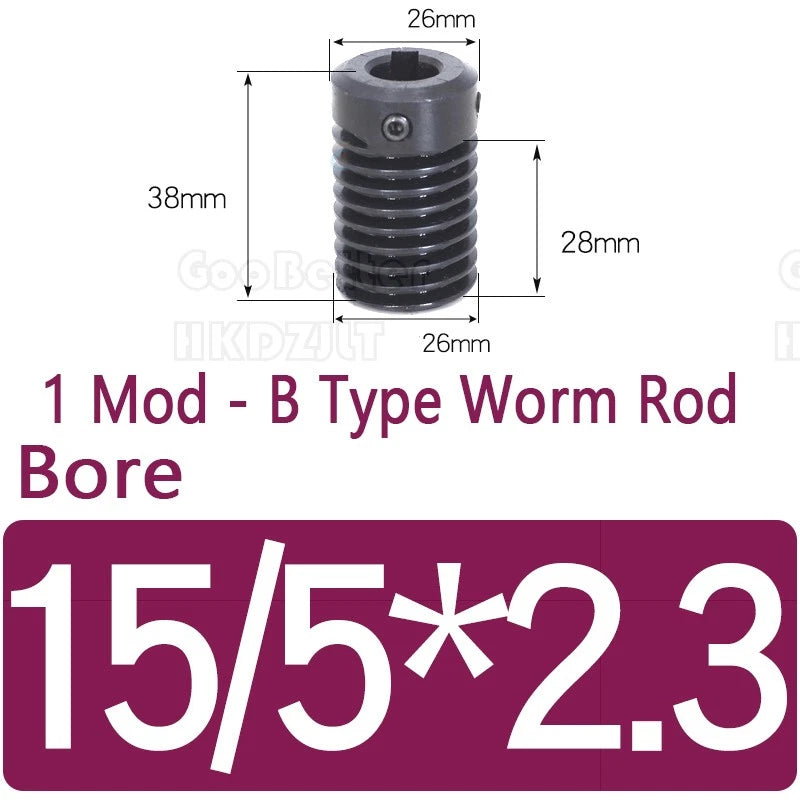
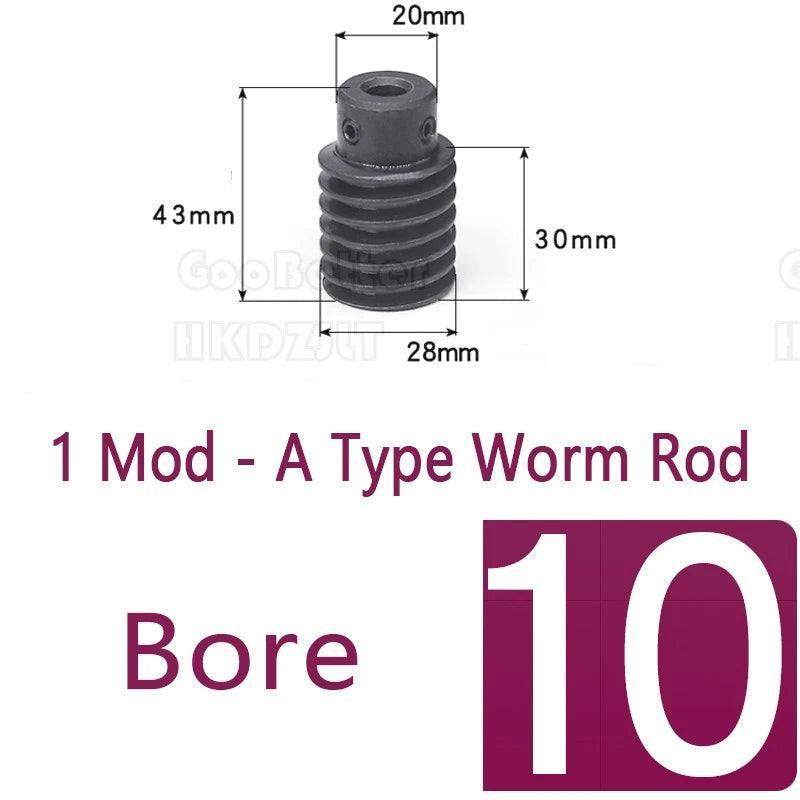
The set pairs a 22-tooth worm wheel gear machined from brass with a mating worm rod available in 45# steel. Module (pitch) is 1 mm. Bore diameters range from 6 mm to 15 mm (approximately 0.24 in to 0.59 in); worm rod outer diameters span 18 mm to 28 mm (approximately 0.71 in to 1.10 in). Both A-type (straight-end) and B-type (stepped-end) worm rod profiles are offered to suit different shaft-retention methods.

Typical use cases include low-speed, high-torque actuators in desktop robotic arms, lead-screw-free Z-axis drives on compact CNC routers, and self-locking positioning stages where back-driving must be prevented. The 1:22 ratio also suits motorized camera sliders and automated valve actuators where precise angular control is required.

⚙️ Compatibility: Designed for Module 1 (1 mm pitch) gear systems. Confirm bore diameter and worm rod outer diameter match your shaft and housing before ordering. Keyway variants available for positive shaft locking.

✅ Key Features of These 1 Module Worm Gear & Worm Rod Sets

🔩
1:22 Reduction Ratio
Delivers significant torque multiplication in a compact envelope — ideal for space-constrained actuator and positioning applications.
🟡
Brass Worm Wheel
22-tooth wheel machined from brass for smooth meshing, reduced noise, and natural corrosion resistance in moderate-humidity environments.
🔧
45# Steel Worm Rod
Worm shafts are turned from 45# carbon steel, offering a practical balance of machinability, surface hardness, and fatigue strength for continuous-duty drives.
📐
Multiple Bore & OD Options
Bore sizes from 6 mm to 15 mm; worm rod OD from 18 mm to 28 mm. Keyway variants (4×1.8 mm and 5×2.3 mm) available for positive shaft engagement.
🔄
A-Type & B-Type Worm Rod Profiles
A-type features a plain cylindrical end; B-type offers a stepped shoulder — choose the profile that matches your bearing housing and retention method.
📦
Flexible Pack Quantities
Available in 1, 2, 3, 5, or 10-piece packs so you can order exactly what your prototype or production run requires without overstocking.

📐 Technical Specifications — 1 Module Worm Gear & Worm Rod

Module (Pitch) 1 mm
Gear Ratio 1:22
Number of Teeth (Worm Wheel) 22
Worm Wheel Material Brass
Worm Rod Material 45# Carbon Steel
Bore Diameter Range 6 mm – 15 mm (0.24 in – 0.59 in)
Worm Rod Outer Diameter 18 mm – 28 mm (0.71 in – 1.10 in)
Worm Rod Types A-Type (plain end), B-Type (stepped end)
Keyway Options 4×1.8 mm, 5×2.3 mm (select variants)
Pack Quantity Options 1, 2, 3, 5, 10 PCS
Surface Finish See variant options
Tooth Profile See variant options

❓ Frequently Asked Questions

How do I choose between the A-Type and B-Type worm rod?

The A-Type worm rod has a plain cylindrical shaft end, making it straightforward to secure with a set screw or shaft collar. The B-Type has a stepped shoulder that locates against a bearing face, which simplifies axial positioning in housings where the bearing inner race needs a positive stop. Choose A-Type for simple set-screw retention and B-Type when your housing design relies on a shoulder for axial location.

What bore diameter should I select for my motor shaft?

Measure your motor or input shaft diameter precisely with calipers. Select the bore that matches your shaft — available options include 6 mm, 8 mm, 10 mm, 12 mm, 14 mm, and 15 mm. For shafts requiring positive rotational locking, choose a keyway variant (4×1.8 mm or 5×2.3 mm) and cut a matching keyway in your shaft.

Is the 1:22 worm gear set self-locking?

Worm gear sets with a low lead angle — typical of 1-module, single-start worms — are generally self-locking under static conditions, meaning the output shaft cannot back-drive the worm. However, self-locking behavior depends on the friction coefficient between the mating surfaces. Under vibration or dynamic loads, some back-driving may occur. For safety-critical applications, always add a mechanical brake or locking mechanism.

How corrosion-resistant is the brass worm wheel?

Brass offers good resistance to atmospheric corrosion and mild moisture. It is suitable for indoor environments and light-duty outdoor enclosures. For harsh environments with exposure to saltwater, strong acids, or prolonged high humidity, consider adding a protective coating or selecting a stainless-steel alternative if available.

Can I use this worm gear set with a standard NEMA stepper motor?

Yes. NEMA 17 stepper motors typically have a 5 mm output shaft; select the 6 mm bore variant and use a 5-to-6 mm shaft adapter or a split-clamp hub. NEMA 23 motors commonly use 6.35 mm or 8 mm shafts — the 8 mm bore variant fits directly. Always verify the shaft diameter of your specific motor before ordering.

What is the difference between the brass worm wheel and the 45# steel worm rod in terms of wear?

The brass-and-steel pairing is intentional: the softer brass wheel acts as the sacrificial wear component, protecting the harder steel worm rod. This is standard practice in worm drive design — when the gear set eventually wears, replacing the brass wheel is less costly than replacing the steel worm. Regular lubrication with a suitable gear grease extends the service life of both components significantly.

How many pieces should I order for a prototype vs. a small production run?

For a single prototype or proof-of-concept build, the 1 PCS option is the most economical. For small production runs of 5–10 units, the 5 PCS or 10 PCS packs offer a lower per-unit cost. The 2 PCS and 3 PCS packs are useful when you need spares on hand during development without committing to a full bulk quantity.

🛒 Select your Type, Bore, and Material & Amount above, then add to cart.

You may also like

Recently viewed