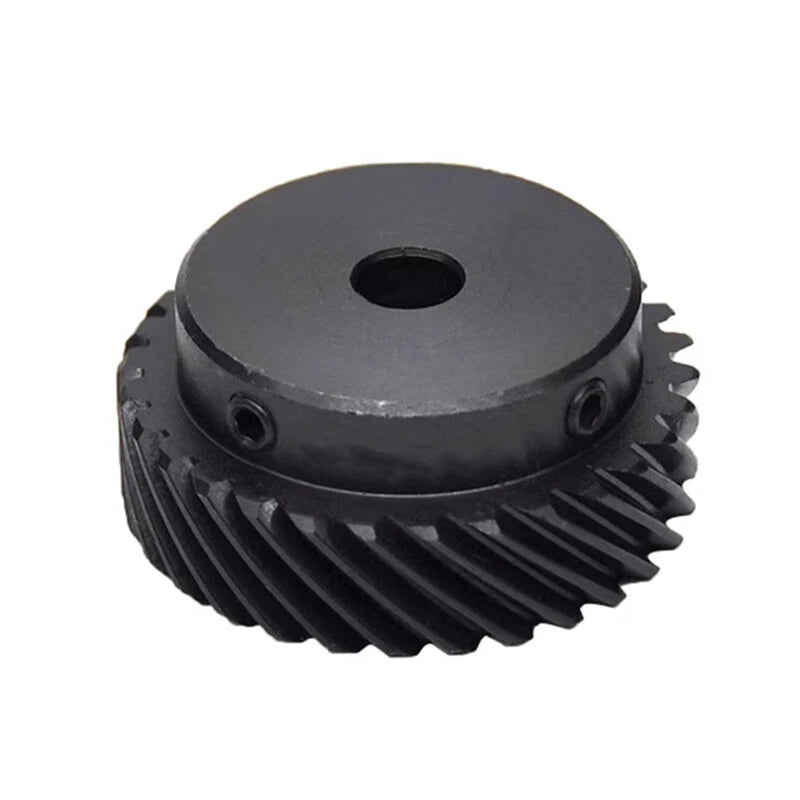
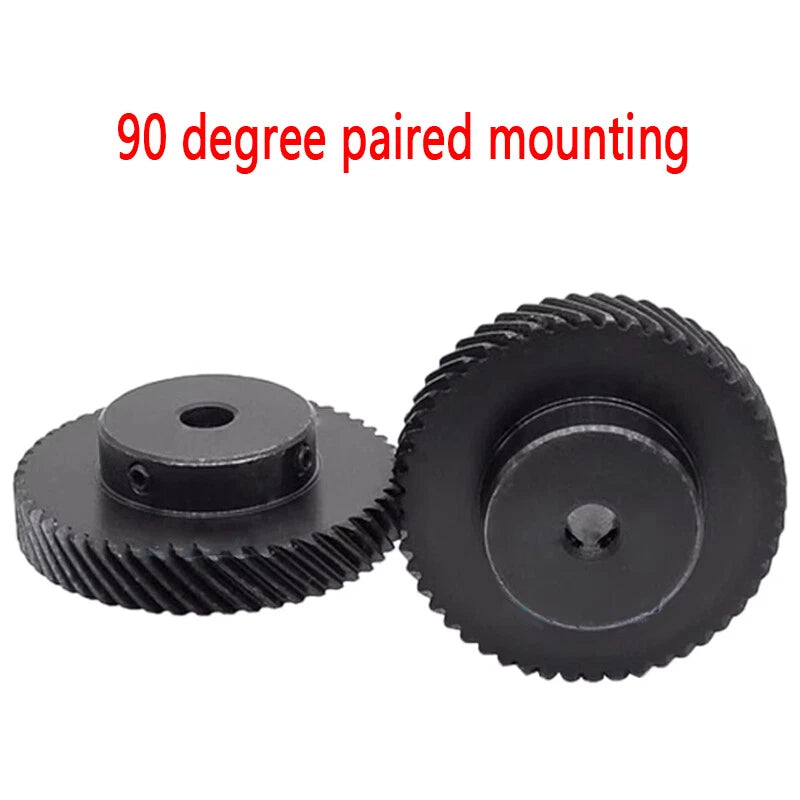
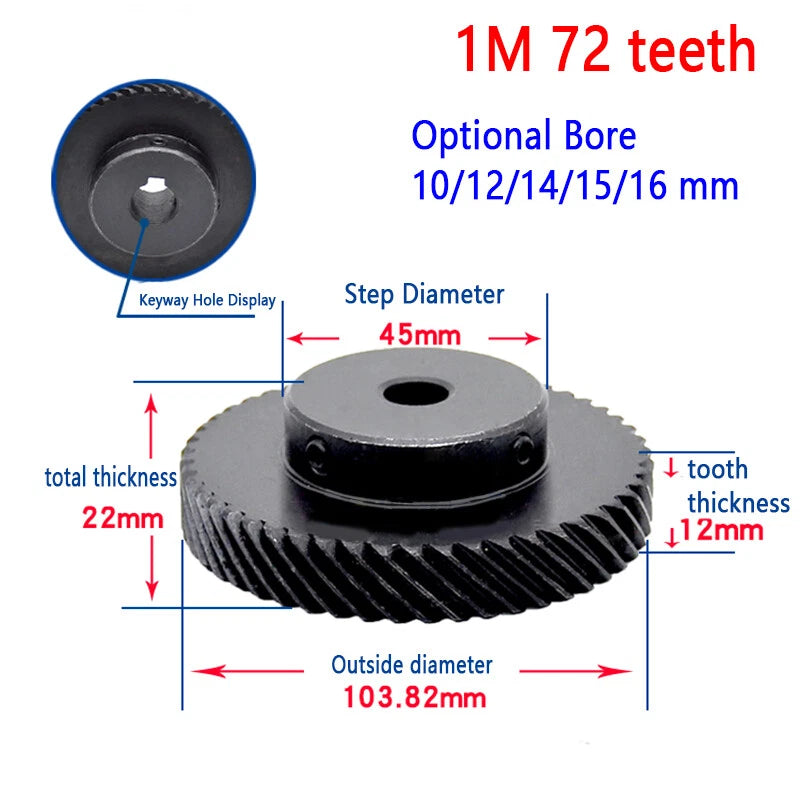
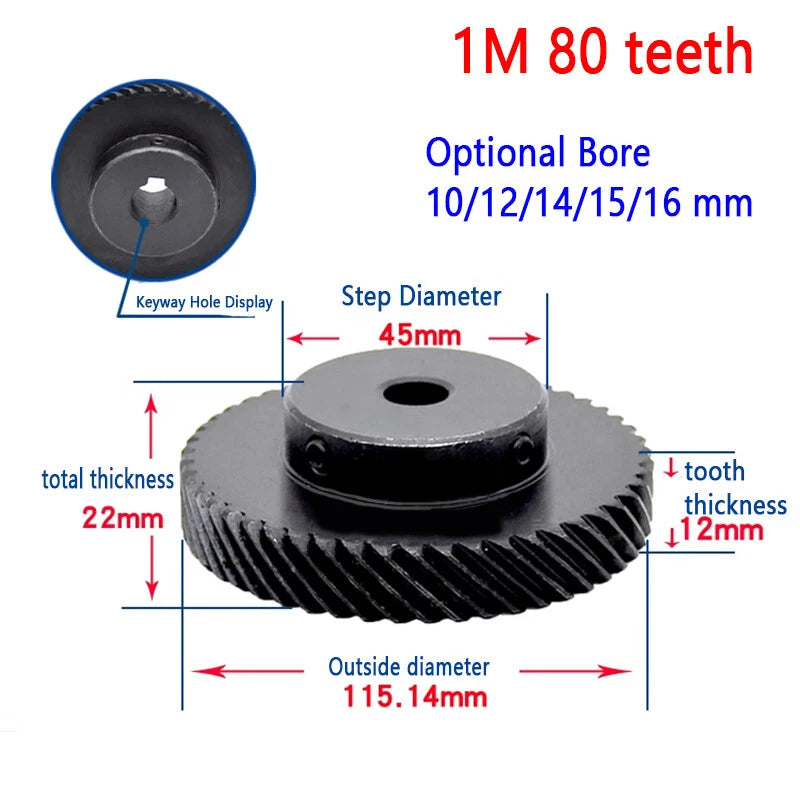
1 Module Helical Gear With Step 45°Left-Right Spiral Motor Transmission Gear

No reviews

Price:
Sale price$13.70 USD
Stock:
In stock (500 units), ready to be shipped

Payment & Security

Ach Direct Debit Amazon American Express Apple Pay Bancontact BLIK Diners Club Discover EPS Google Pay iDEAL Wero JCB Maestro Mastercard Multibanco MobilePay PayPal Przelewy24 Shop Pay Twint Union Pay USDC Visa

Your payment information is processed securely. We do not store credit card details nor have access to your credit card information.

Limited Offer — Spend More, Save More
Spend $55+
Save $5
Spend $100+
Save $10
Spend $200+
Save $25
HomeDIYer DIY Expert Support

DIY Expert Support

Get fitment advice & recommendations

Mon–Fri  8:30 AM – 8:00 PM
24-Hour Fast Ship
Arrives in 3–14 Days
Worldwide Shipping
30-Day Returns
1 tree planted with every purchase

Description

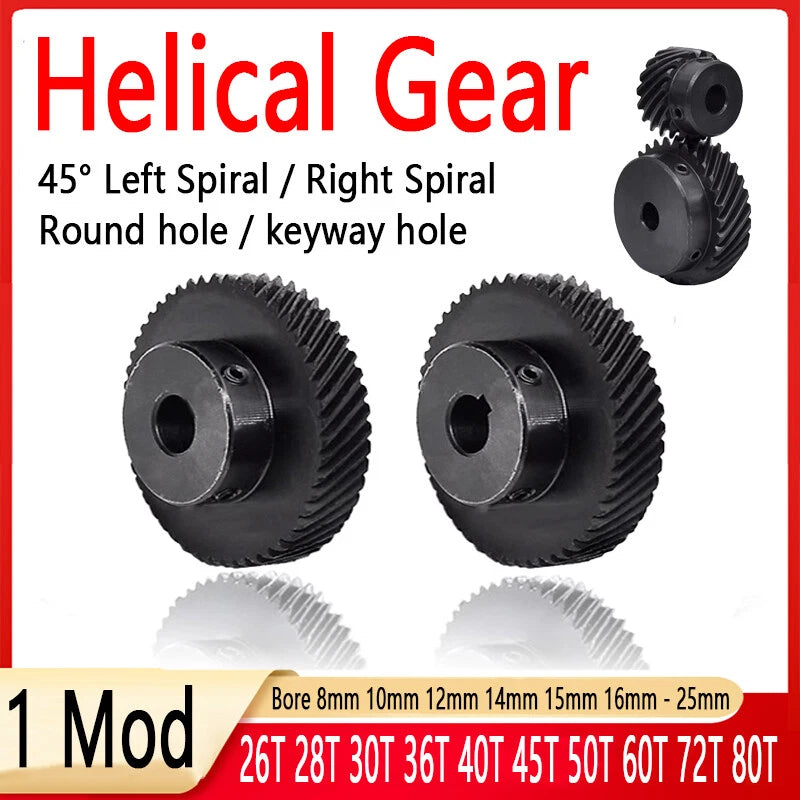
1 Module Helical Gear with 45° Spiral — Reliable Motor Transmission Drive Component

When a standard spur gear introduces too much noise or vibration into your drive train, engineers and makers reach for helical gears. This 1 Module Helical Gear with 45° spiral angle delivers smoother tooth engagement and quieter operation, making it the go-to choice for hobbyists, robotics builders, and small-machine designers who need dependable rotational power transfer without the clatter of straight-cut gears.

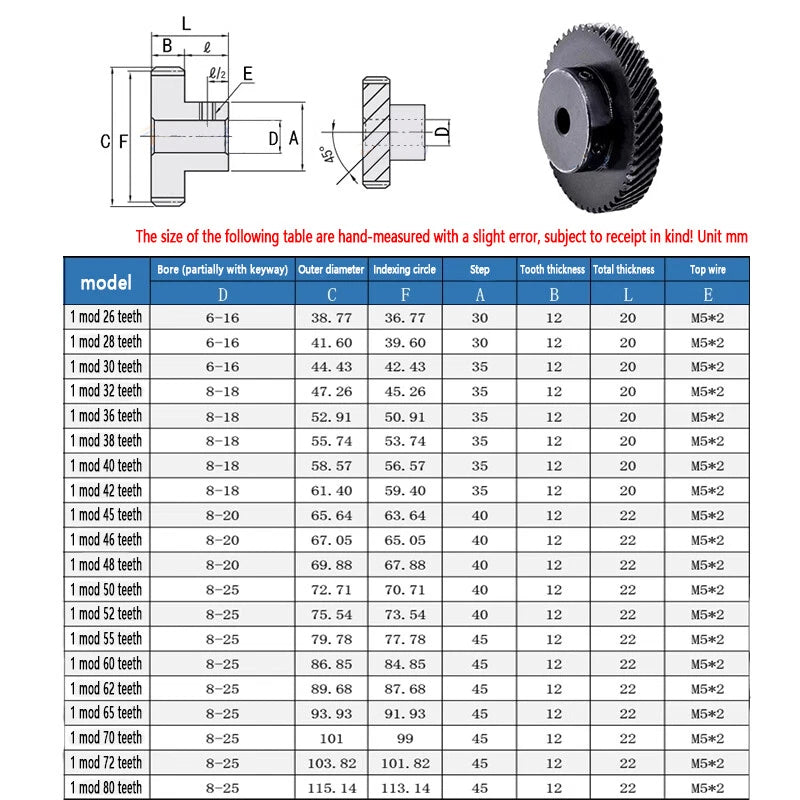
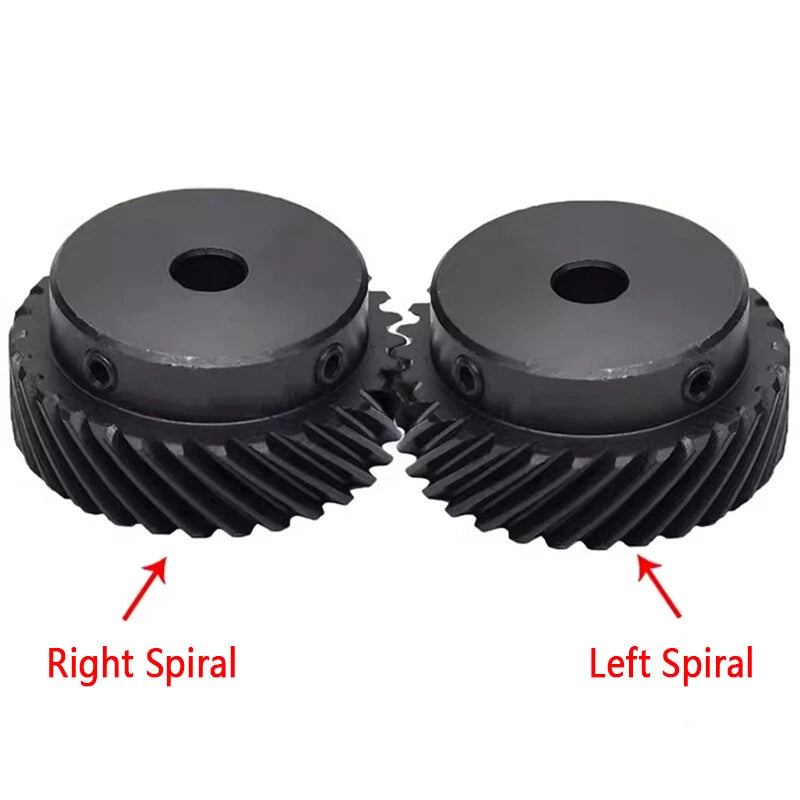
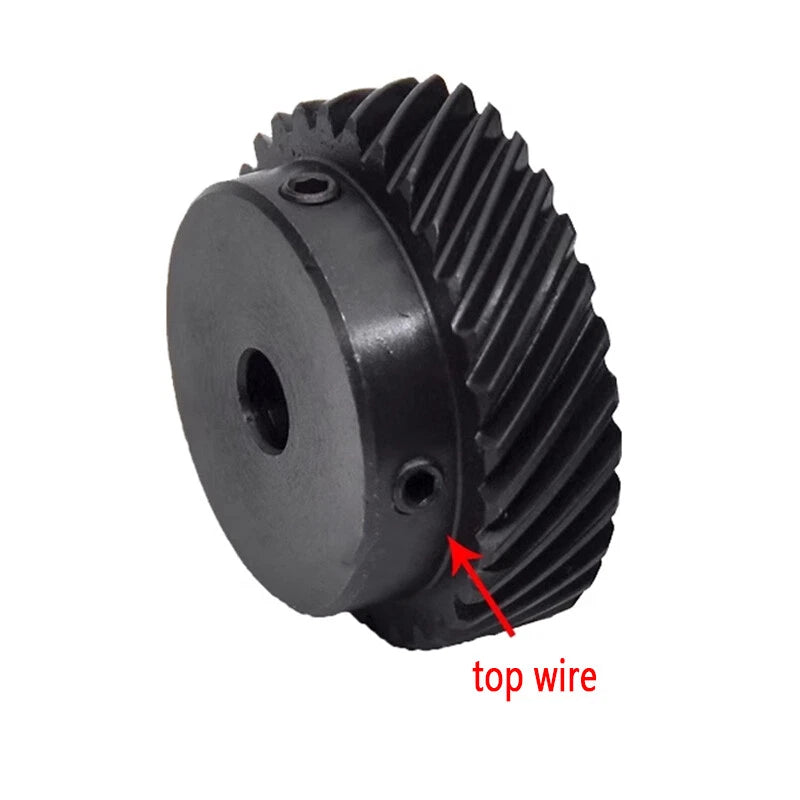
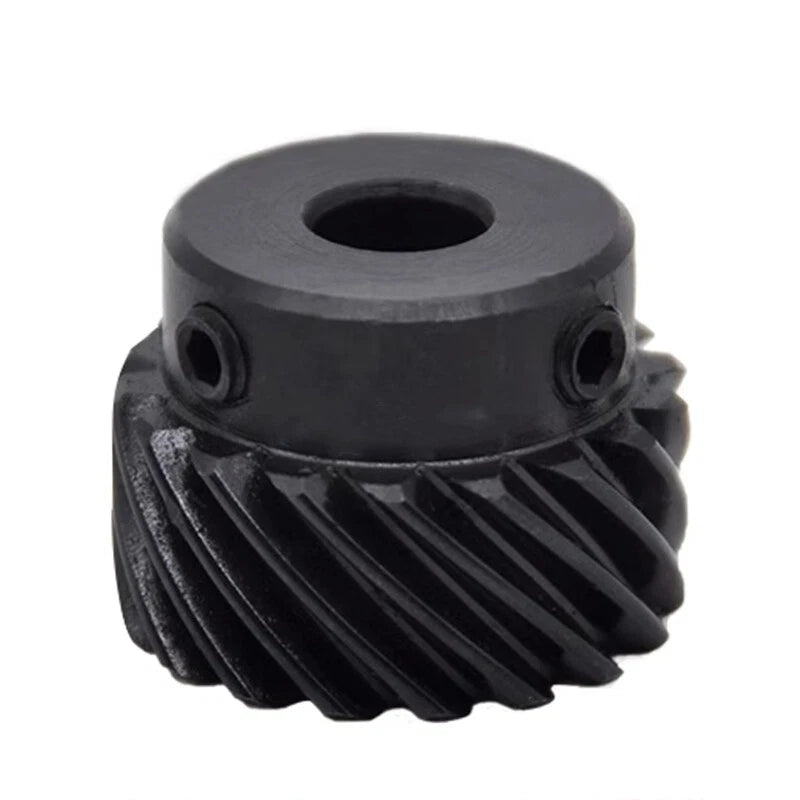
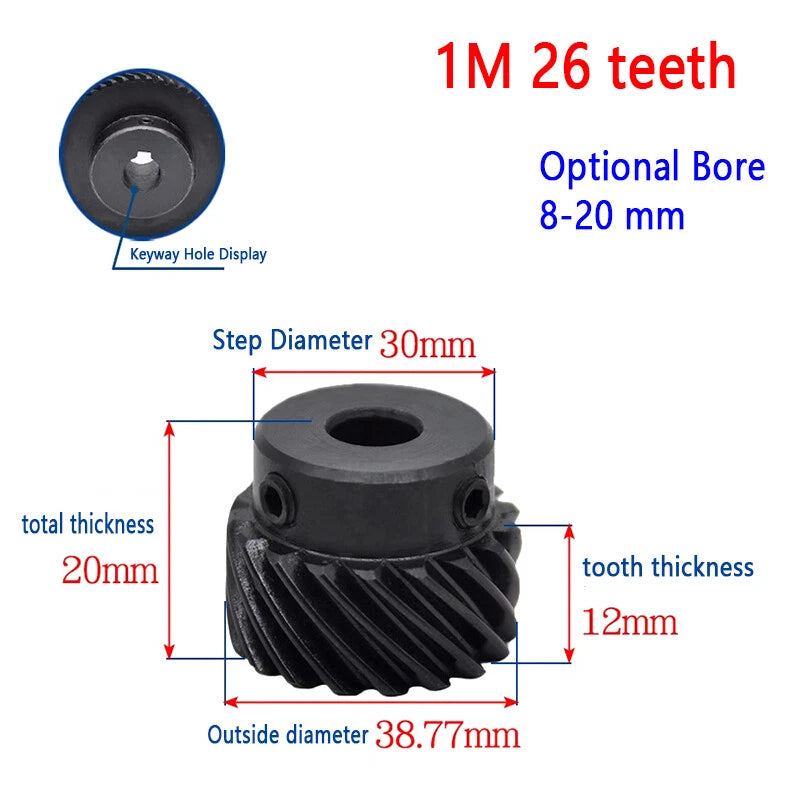
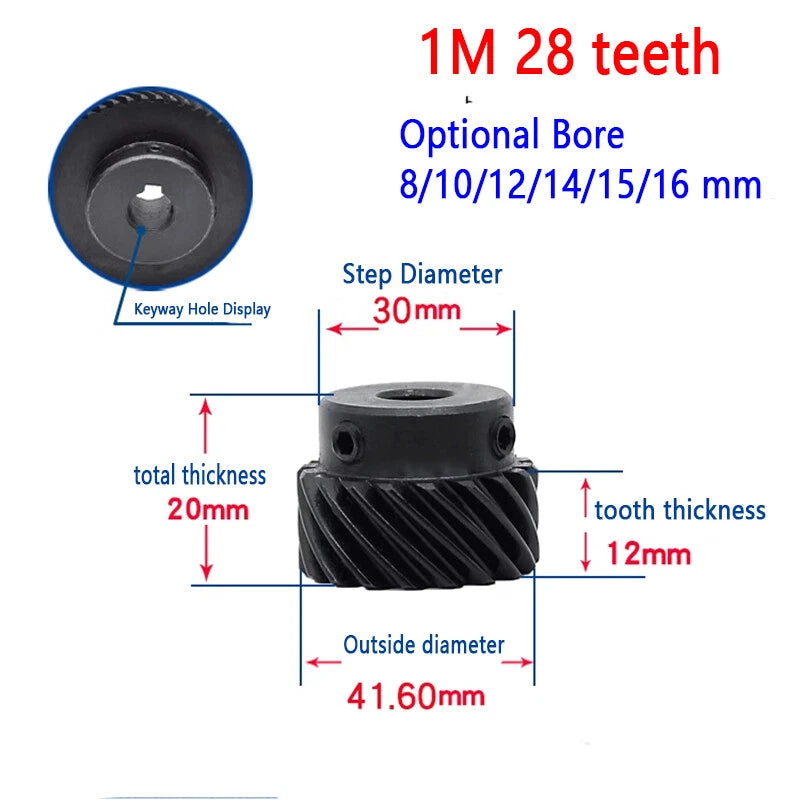
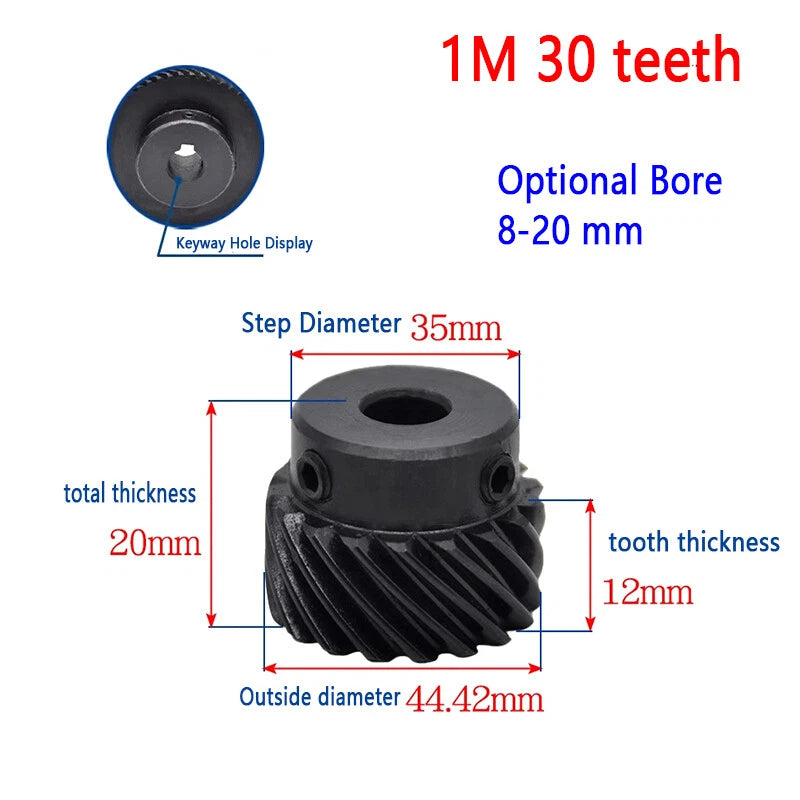
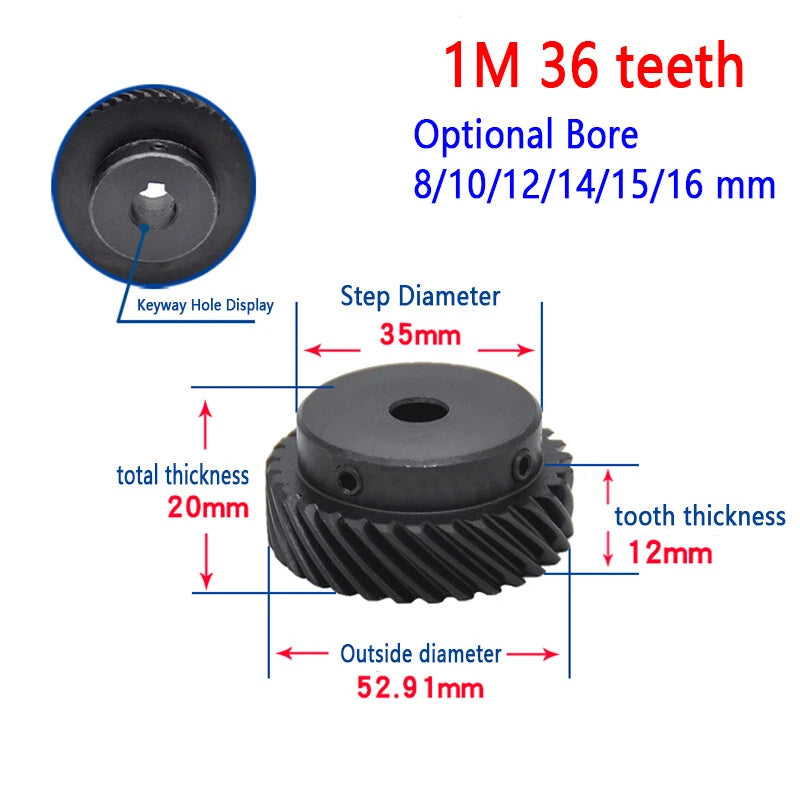
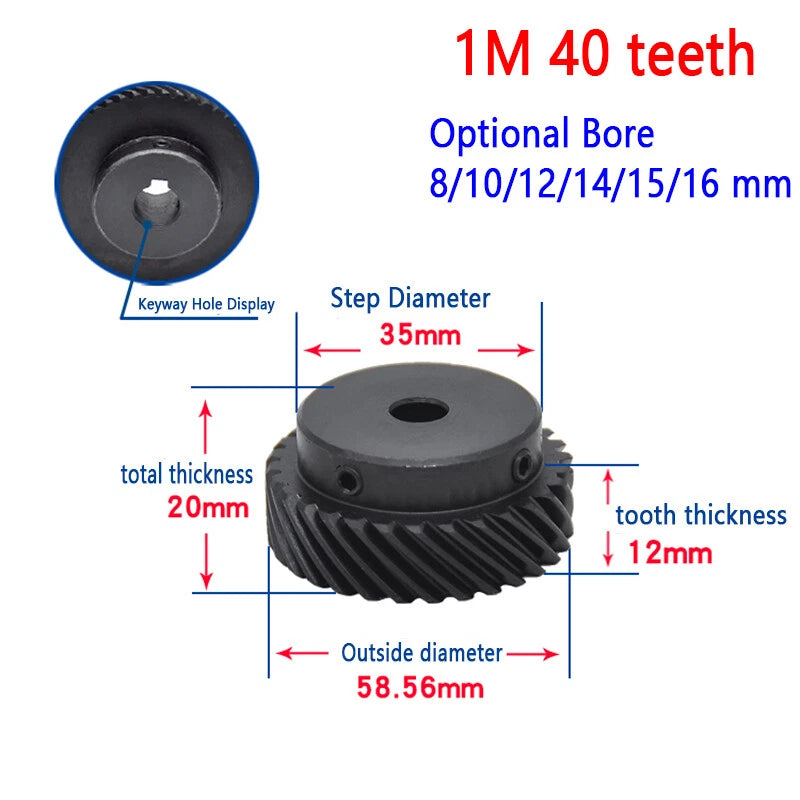
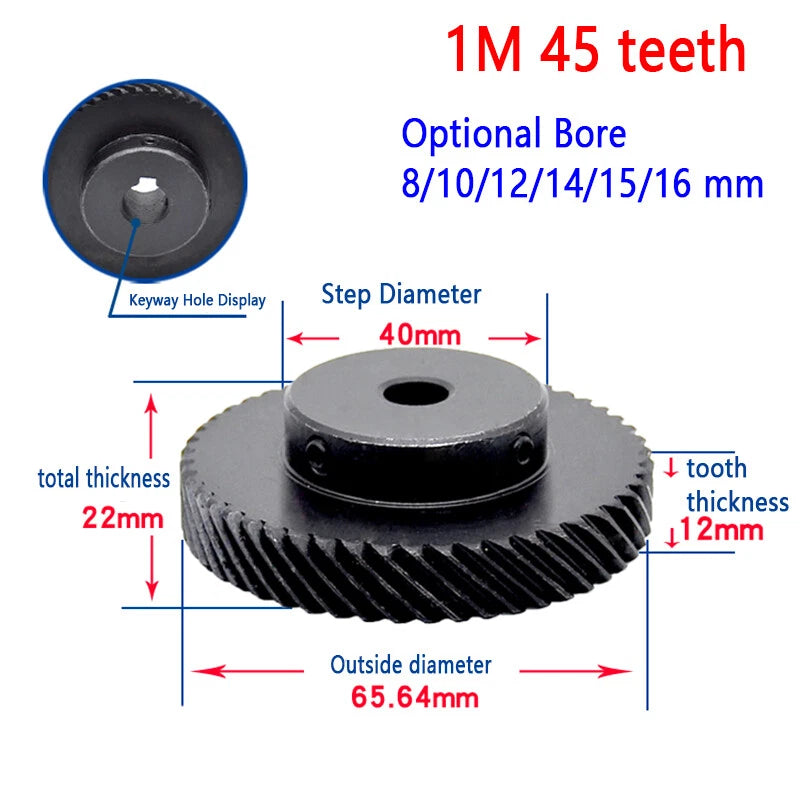
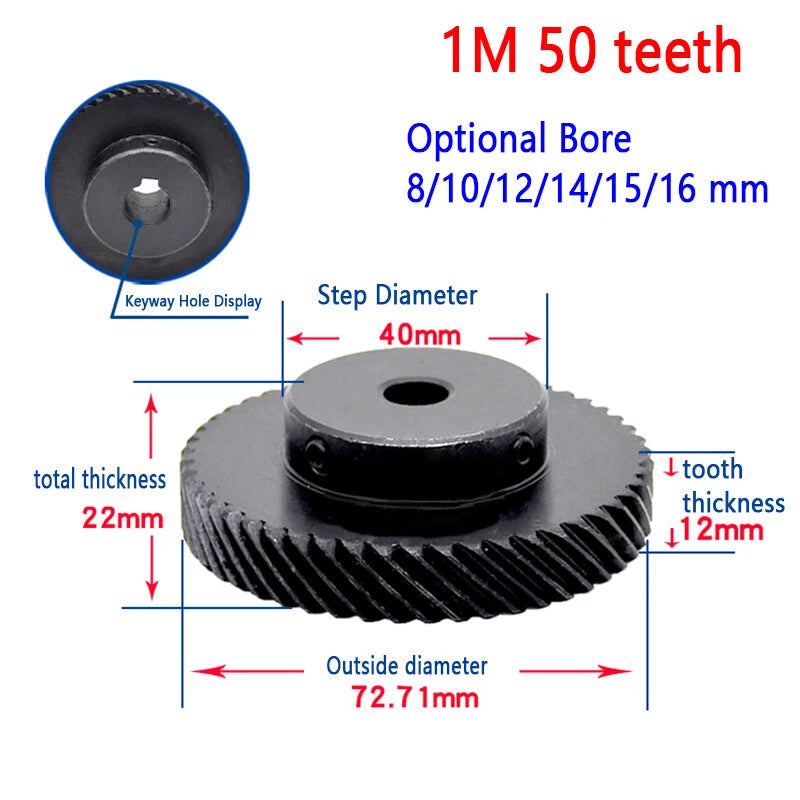
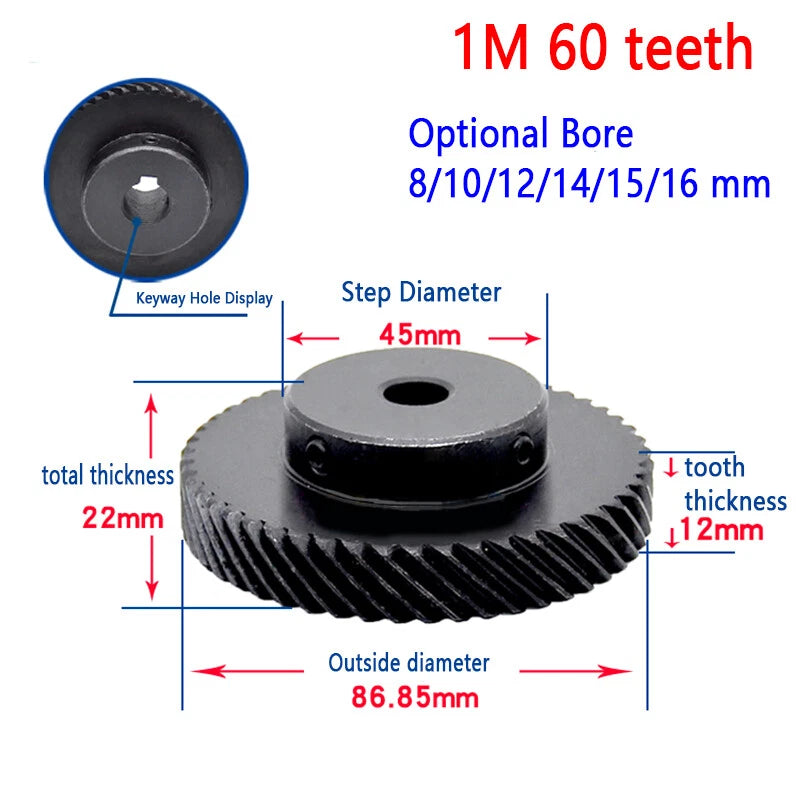
Each gear is machined from engineering-grade steel and features a 45° helix angle available in both left-hand (Left Spiral) and right-hand (Right Spiral) configurations. The tooth count spans from 26 to 80 teeth, with bore diameters ranging from 8 mm (0.31 in) to 25 mm (0.98 in). Keyway variants are available with standard DIN keyway dimensions — 3×1.4 mm, 4×1.8 mm, 5×2.3 mm, and 6×2.8 mm — to suit a wide range of shaft sizes. The stepped hub design provides axial location and simplifies assembly onto motor shafts.

Typical use cases include DC motor output stages in CNC router Z-axis drives, servo-driven conveyor reduction stages, and compact gearbox assemblies in 3D printer extruder mechanisms. The 1-module pitch makes these gears directly interchangeable with other Module 1 components, enabling straightforward gear-ratio selection for custom motor transmission gear projects.

⚙️ Compatibility: Module 1 (1 mod) pitch standard. Mates with any Module 1 helical gear of the same helix angle and opposite hand (left meshes with right). Verify bore diameter and keyway dimensions against your shaft before ordering.

✅ Key Features of These 1 Module Helical Gears

🔩
45° Helix Angle

The 45° spiral angle maximises tooth overlap ratio, distributing load across multiple teeth simultaneously for smoother, quieter operation compared to straight-cut spur gears.

↔️
Left & Right Spiral Options

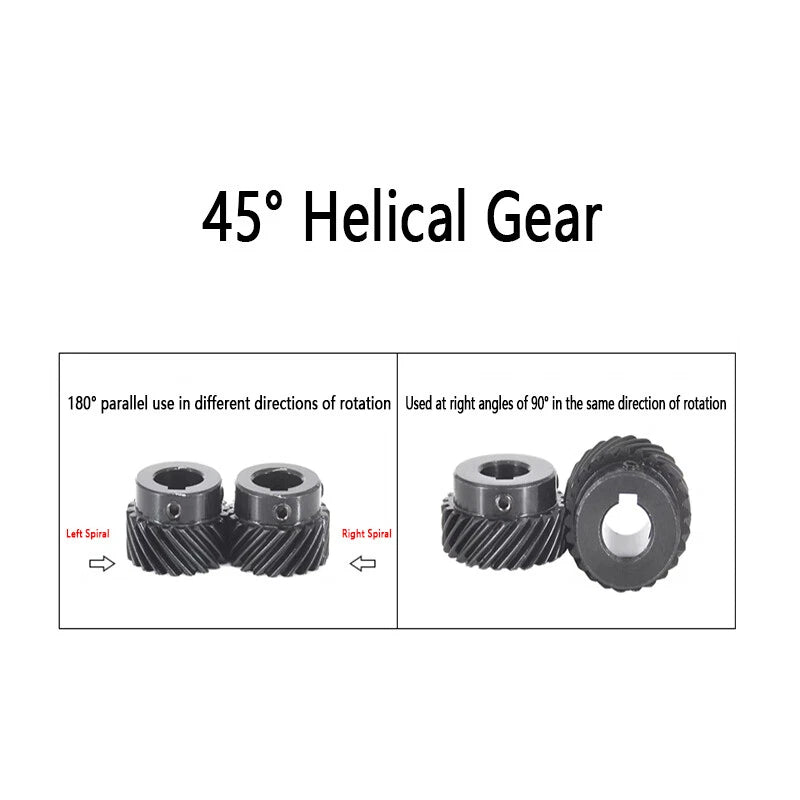
Available in both left-hand and right-hand spiral configurations. Helical gears of opposite hand mesh together on parallel shafts, giving you full flexibility in drive layout design.

📐
Wide Tooth & Bore Range

26 to 80 teeth and bore diameters from 8 mm to 25 mm (0.31–0.98 in) cover a broad range of gear ratios and shaft sizes in a single product family.

🔑
Optional Keyway Variants

Select from plain bore or keyway-bored versions (3×1.4 mm, 4×1.8 mm, 5×2.3 mm, 6×2.8 mm) to match standard DIN shaft keyways and eliminate rotational slip under load.

🏗️
Stepped Hub Design

The integrated step on the hub provides a positive axial shoulder for easy shaft positioning and reduces the need for additional spacers during assembly.

🔄
Module 1 Interchangeability

Conforms to the Module 1 pitch standard, allowing direct substitution or pairing with other Mod 1 gears, racks, and pinions for scalable motor transmission gear systems.

📐 Technical Specifications — Helical Gear

Module 1
Helix Angle 45°
Spiral Direction Left Spiral / Right Spiral (see variant options)
Tooth Count 26 / 28 / 30 / 36 / 40 / 45 / 50 / 60 / 72 / 80 teeth
Bore Diameter 8 – 25 mm (0.31 – 0.98 in) — see variant options
Keyway Plain bore or keyway (3×1.4 / 4×1.8 / 5×2.3 / 6×2.8 mm) — see variant options
Hub Style Stepped hub
Material Engineering-grade steel
Pitch Standard Module 1 (metric)
Pressure Angle See variant options
Surface Finish See variant options
Weight See variant options

❓ Frequently Asked Questions

How do I choose the right tooth count and bore size?

First determine your required gear ratio: divide the driven gear tooth count by the driving gear tooth count. Then match the bore diameter to your motor or shaft diameter. If your shaft has a keyway, select the corresponding keyway variant (e.g., 5×2.3 mm for a 14–17 mm shaft). Use the variant selector above to filter by Teeth & Bore.

Do left-spiral and right-spiral gears mesh together?

Yes. On parallel shafts, a left-hand helical gear meshes with a right-hand helical gear of the same module and helix angle. If you need two gears on the same shaft driving a single output, both driving gears must be the same hand. Confirm your drive layout before ordering both spiral directions.

What is the helix angle and why does it matter?

The helix angle is the angle between the tooth trace and the gear axis — 45° in this case. A higher helix angle increases the tooth overlap ratio, meaning more teeth share the load at any instant. This results in smoother, quieter operation and higher load capacity per tooth compared to spur gears, at the cost of introducing an axial thrust force that must be managed by thrust bearings.

Are these gears compatible with Module 1 spur gears or racks?

These gears share the Module 1 pitch but have a 45° helix angle. They will not mesh correctly with straight-cut (0° helix) Module 1 spur gears or standard Module 1 racks. They must be paired with other Module 1 helical gears of the same helix angle and opposite hand for parallel-shaft applications.

What material are these gears made from, and how corrosion-resistant are they?

The gears are machined from engineering-grade steel. Steel helical gears offer good strength and wear resistance for dry or lightly lubricated environments. For applications exposed to moisture or corrosive media, consider applying a light machine oil or grease coating, or contact us to confirm material options for your specific environment.

Can I use these gears in a high-speed motor drive application?

Yes, helical gears are well-suited to higher-speed applications due to their gradual tooth engagement. Ensure the bore fits your shaft with an appropriate tolerance (typically H7/h6 for a sliding fit), use a keyway variant if torque is high, and apply adequate lubrication. For very high-speed or high-load applications, consult a mechanical engineer to verify dynamic load ratings.

What is the difference between plain bore and keyway bore variants?

Plain bore variants have a smooth cylindrical bore and rely on a set screw or interference fit to transmit torque. Keyway bore variants include a machined slot that accepts a standard key, providing a positive mechanical connection between the gear and shaft. Keyway variants are recommended for applications with reversing loads or where precise angular positioning is required.

🛒 Select your Teeth & Bore size and Direction of Rotation above, then add to cart.

You may also like

Recently viewed