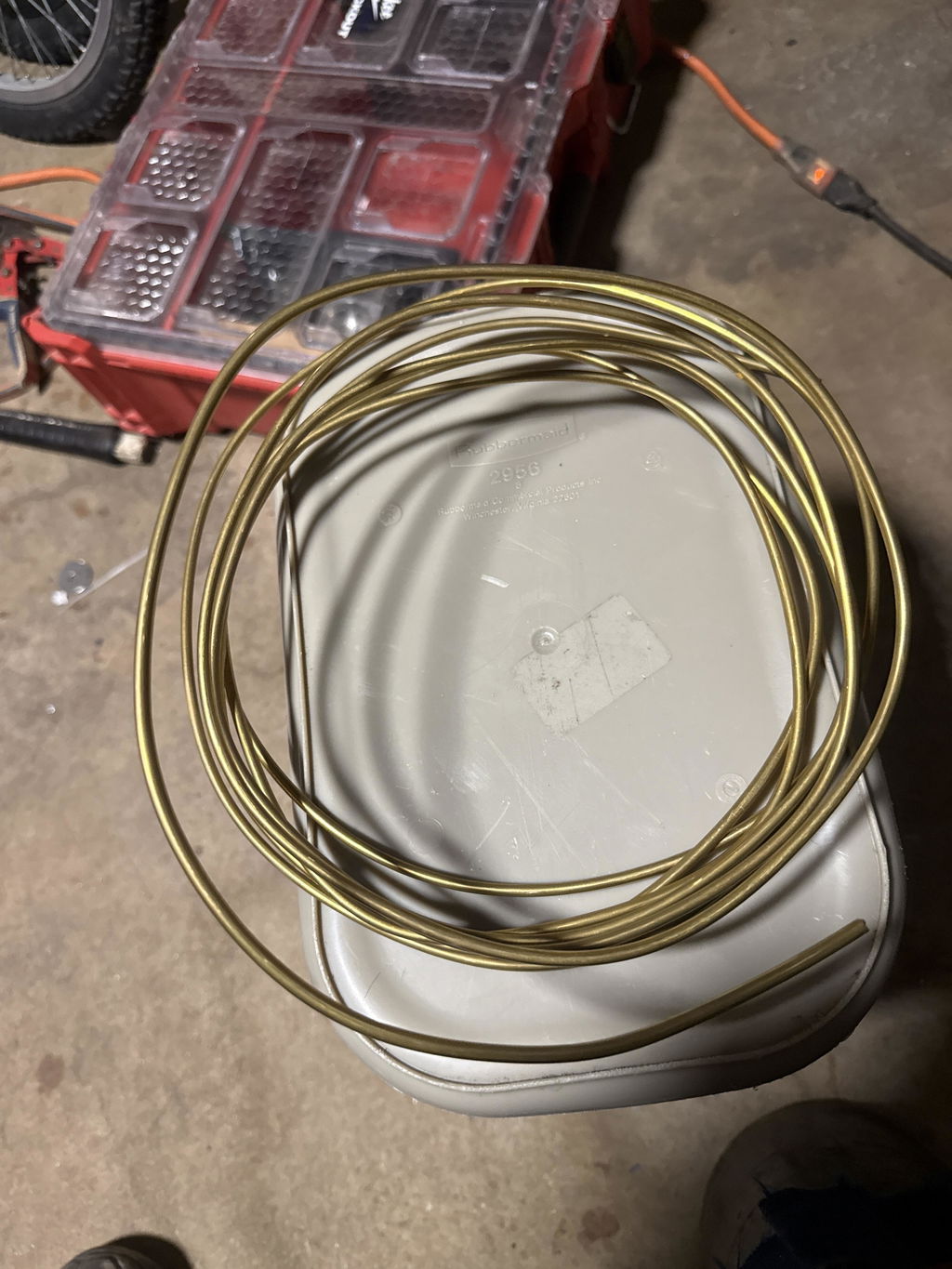
The chain is fine...but I ordered the wrong size. Nine links of the chain I ordered equals six of the size I wanted. My error...
How can I straighten out the springs? I can't use them coil uo as is.
Your payment information is processed securely. We do not store credit card details nor have access to your credit card information.
Get fitment advice & recommendations
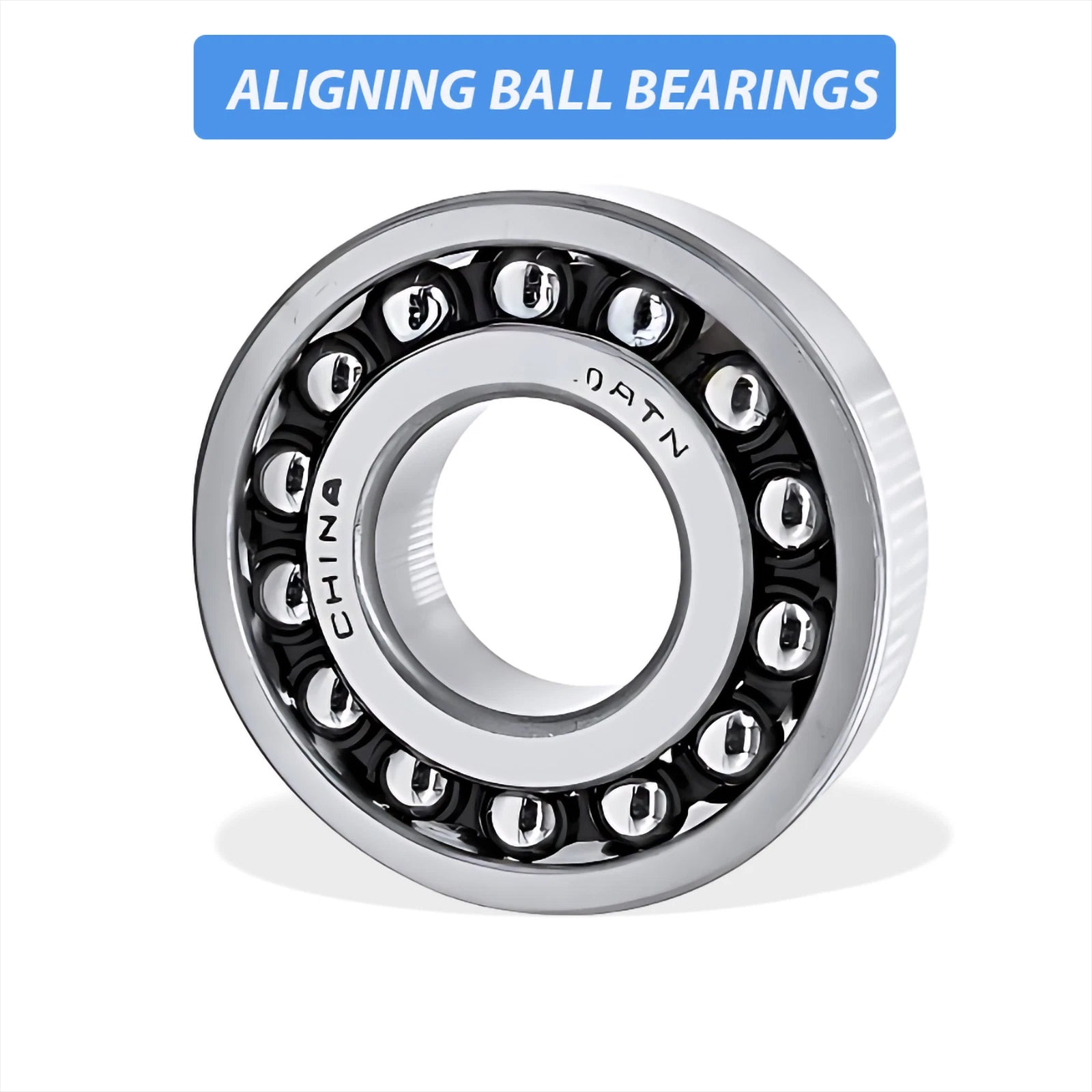
When shaft deflection, housing misalignment, or installation error causes premature bearing failure, engineers and maintenance technicians need a bearing that can compensate without sacrificing load capacity. These 1308–1315 self-aligning ball bearings are designed for exactly that — delivering consistent radial load performance even when the shaft and housing centerlines are not perfectly aligned.
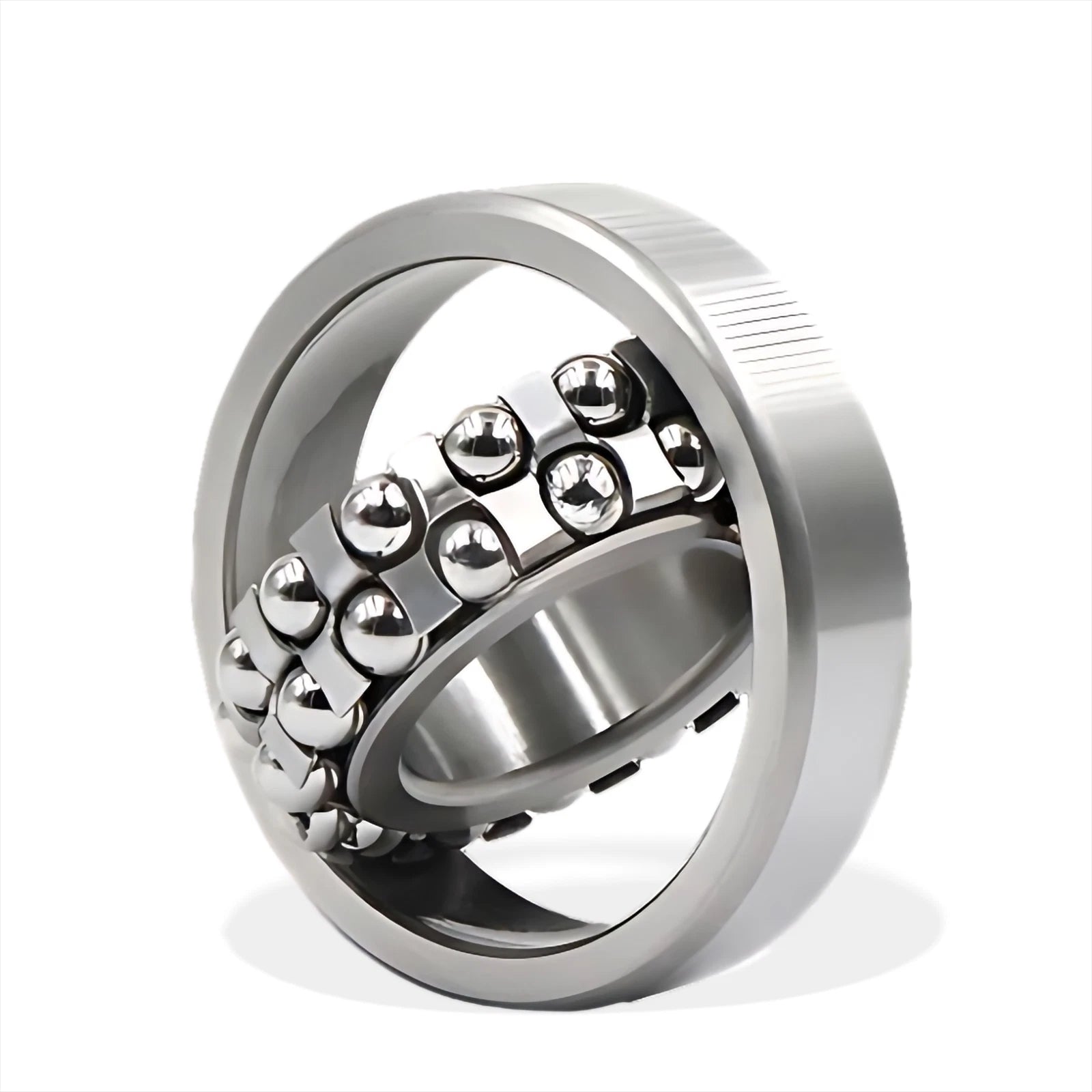
Each bearing features a double-row ball arrangement running in a sphered outer raceway, allowing angular misalignment of up to approximately 3°. The cylindrical bore fits standard shaft diameters ranging from 40mm (1.575 in) to 75mm (2.953 in), with outer diameters spanning 90mm (3.543 in) to 160mm (6.299 in) and widths from 23mm (0.906 in) to 37mm (1.457 in). Rings are manufactured from through-hardened bearing steel for consistent dimensional accuracy across the size range.
Typical applications include agricultural gearboxes and conveyor drive shafts where shaft flex is unavoidable, textile machinery spindles requiring smooth low-vibration rotation, and industrial fans or blowers where housing bore alignment cannot be guaranteed during installation. The self-aligning ball bearing design also suits light-duty pumps and general power transmission assemblies where occasional angular deviation must be tolerated without relubrication intervals being shortened.
The sphered outer raceway allows the inner ring and ball complement to tilt up to approximately 3° relative to the outer ring, compensating for shaft deflection and housing bore misalignment without generating edge loading on the raceways.
Available in 1308 through 1315 designations covering bore diameters of 40mm, 45mm, 50mm, 55mm, 60mm, 65mm, 70mm, and 75mm — allowing you to source the correct size for your application without switching suppliers.
The straight cylindrical bore mounts directly onto a turned shaft with a standard interference or transition fit, eliminating the need for adapter sleeves and simplifying installation in most industrial housings.
Inner ring, outer ring, and balls are produced from through-hardened bearing steel, providing the dimensional stability and fatigue resistance required for continuous-duty rotating applications under combined radial and light axial loads.
Two rows of balls distribute the radial load evenly across the raceway width, reducing contact stress per ball and contributing to quieter, lower-vibration operation compared to single-row designs at equivalent load levels.
Suited for conveyor systems, agricultural equipment, fans, blowers, textile machinery, and general power transmission drives where shaft misalignment or deflection under load is a known operating condition.
| Bearing Type | Self-Aligning Ball Bearing, Double Row |
|---|---|
| Bore Type | Cylindrical (straight bore) |
| Bore Diameter Range | 40mm – 75mm (1.575 in – 2.953 in) |
| Outer Diameter Range | 90mm – 160mm (3.543 in – 6.299 in) |
| Width Range | 23mm – 37mm (0.906 in – 1.457 in) |
| Available Designations | 1308, 1309, 1310, 1311, 1312, 1313, 1314, 1315 |
| Angular Misalignment Capacity | Up to approximately 3° |
| Ring Material | Through-hardened bearing steel |
| Cage Type | See variant options |
| Lubrication | See variant options |
| Dynamic Load Rating (C) | See variant options |
| Static Load Rating (C₀) | See variant options |
| Weight | See variant options |
| Dimensional Standard | ISO 15 / DIN 630 |
Match the bore diameter to your shaft diameter first. The 1308 fits a 40mm shaft, 1309 fits 45mm, 1310 fits 50mm, 1311 fits 55mm, 1312 fits 60mm, 1313 fits 65mm, 1314 fits 70mm, and 1315 fits 75mm. Then confirm the outer diameter and width fit within your housing bore and axial space. Refer to the variant dimensions listed in the size selector above.
These self-aligning ball bearings accommodate angular misalignment of up to approximately 3° between the shaft and housing centerlines. This is sufficient for most applications involving shaft deflection under load, slight housing bore misalignment, or minor installation errors. Exceeding this limit will increase edge loading and reduce service life.
Yes. Self-aligning ball bearings are primarily designed for radial loads but can accommodate light axial loads in both directions. They are not suited for applications where axial load is the dominant force — for those cases, angular contact or thrust bearings are more appropriate. Contact us to confirm suitability for your specific load combination.
No. These bearings have a cylindrical (straight) bore and mount directly onto a turned shaft using a standard interference or transition fit per ISO tolerance recommendations. If your application requires mounting on an unground or tapered shaft, a tapered bore variant with an adapter sleeve would be needed instead.
Standard bearing steel rings provide good wear resistance but are not inherently corrosion-resistant in continuously wet or chemically aggressive environments. For outdoor, washdown, or humid conditions, consider using sealed or shielded variants with appropriate grease, or contact us to confirm if a stainless steel or coated option is available for your size.
These bearings are widely used in agricultural equipment (grain augers, combine drives), conveyor systems, industrial fans and blowers, textile machinery spindles, light-duty gearboxes, and general power transmission assemblies. Any application where shaft deflection or housing misalignment is a known operating condition is a strong candidate for this bearing type.
If the bearing is supplied without pre-applied grease, pack the bearing with a lithium-based or polyurea-based grease rated for your operating temperature and speed before installation. Fill approximately 30–50% of the free internal volume. Avoid over-greasing, which can cause churning, heat buildup, and premature seal failure. Relubrication intervals depend on speed, load, and operating temperature — contact us to confirm if you need application-specific guidance.