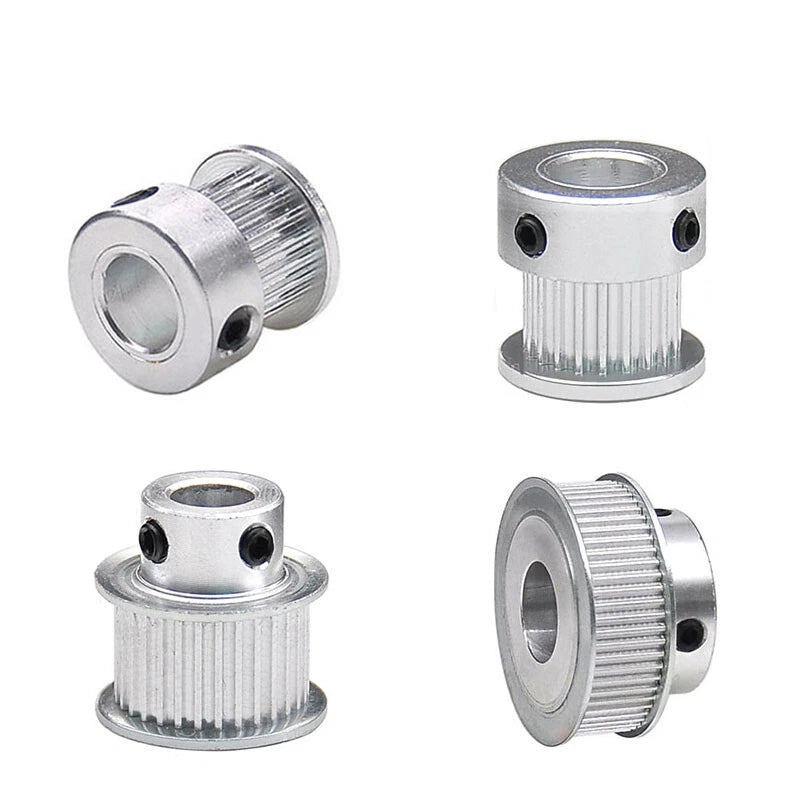
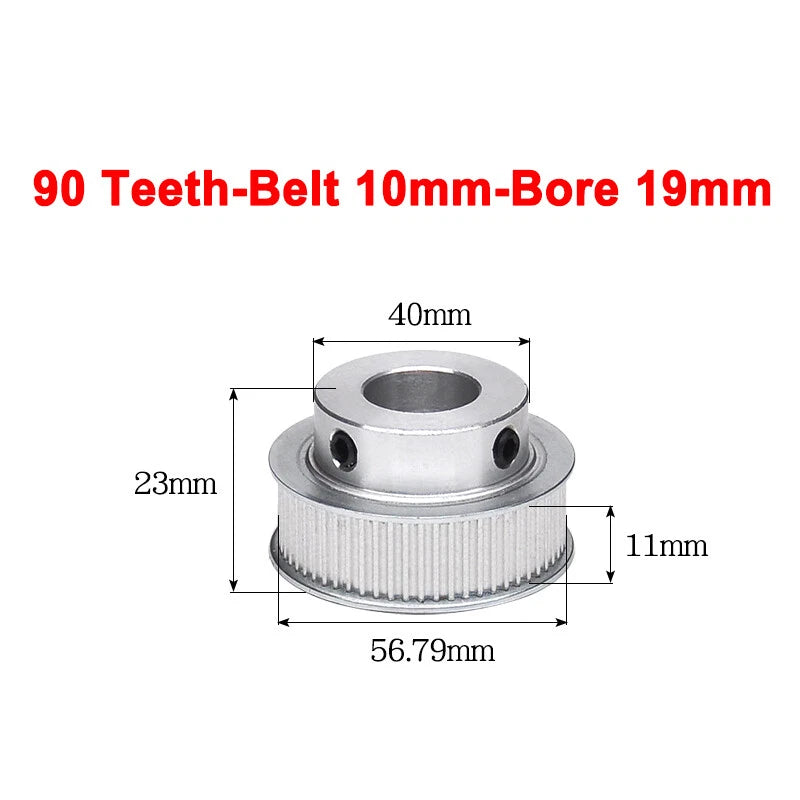
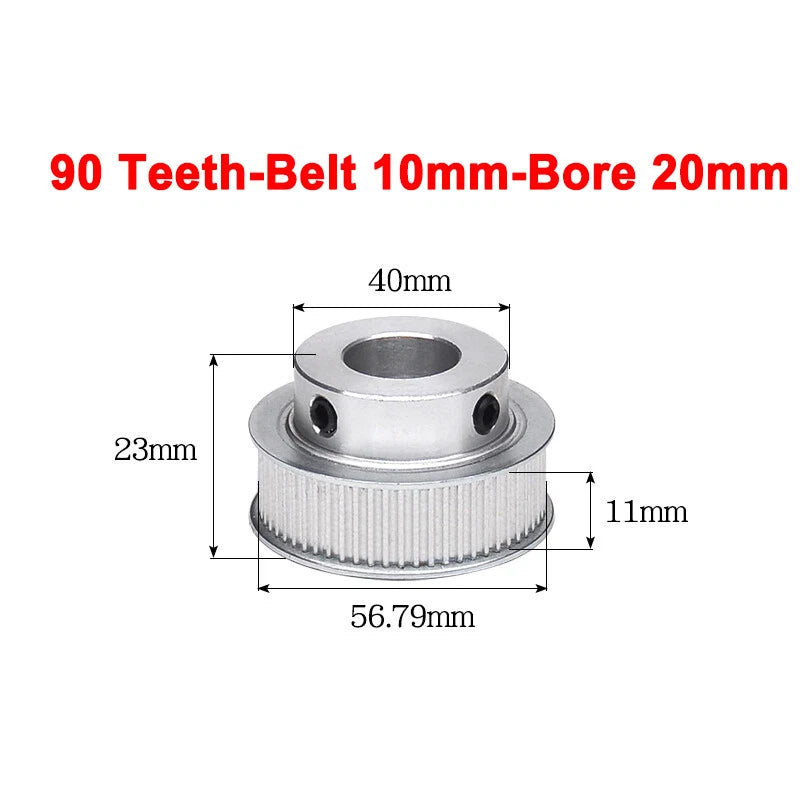
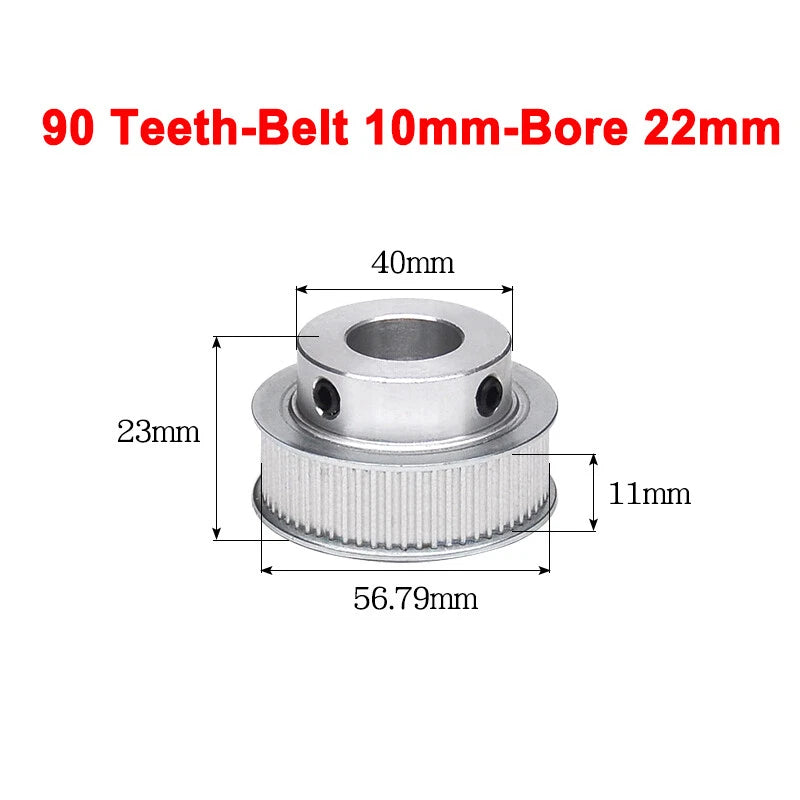
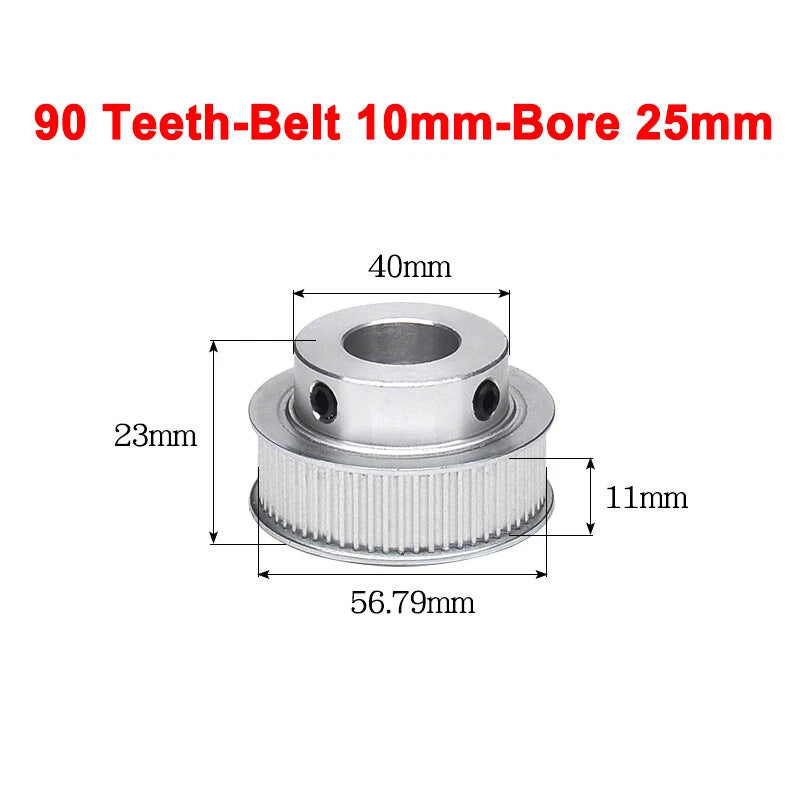
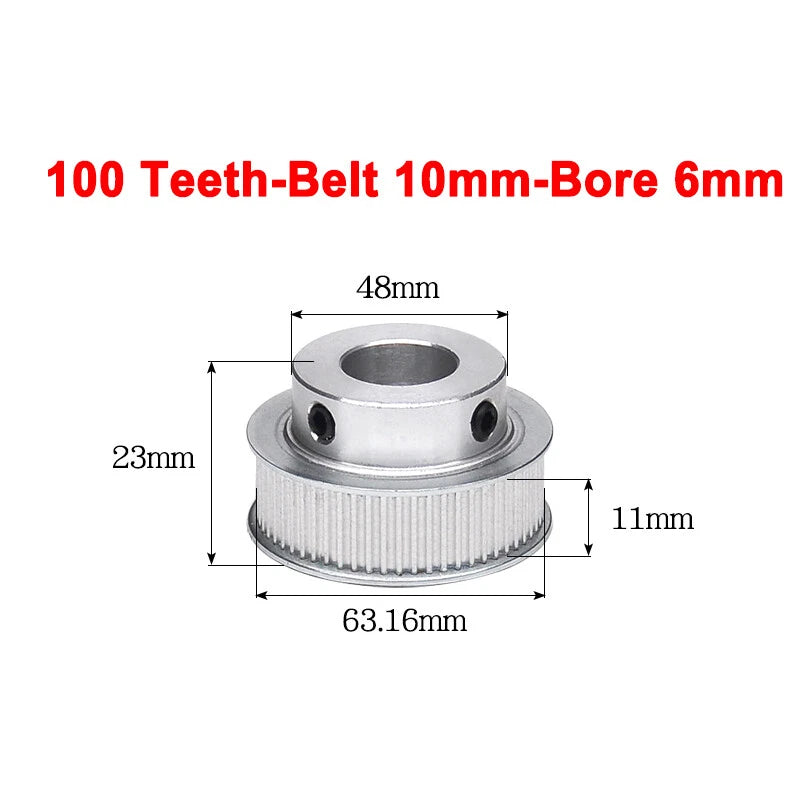
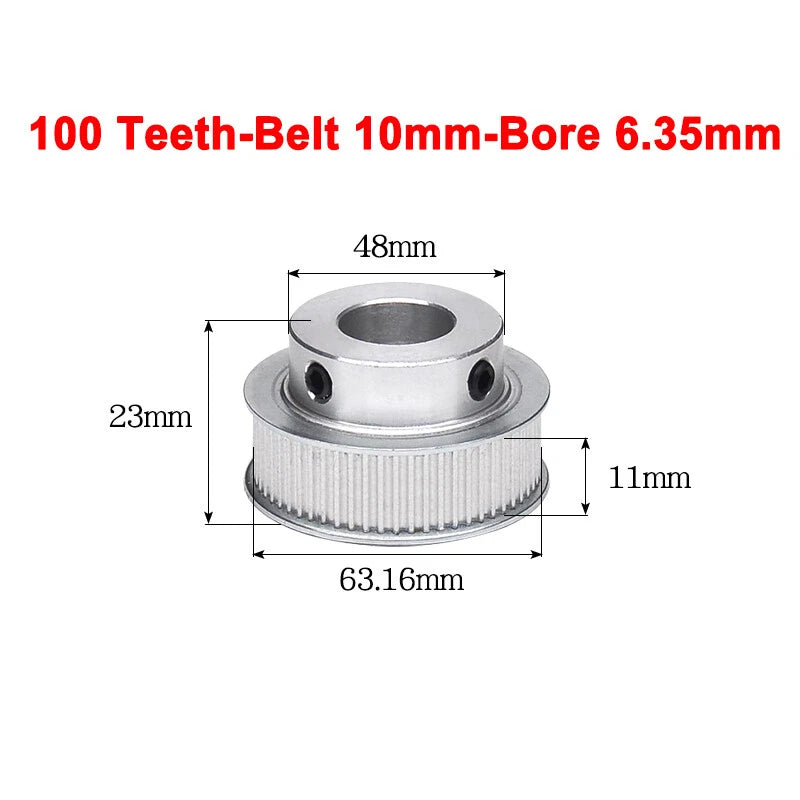
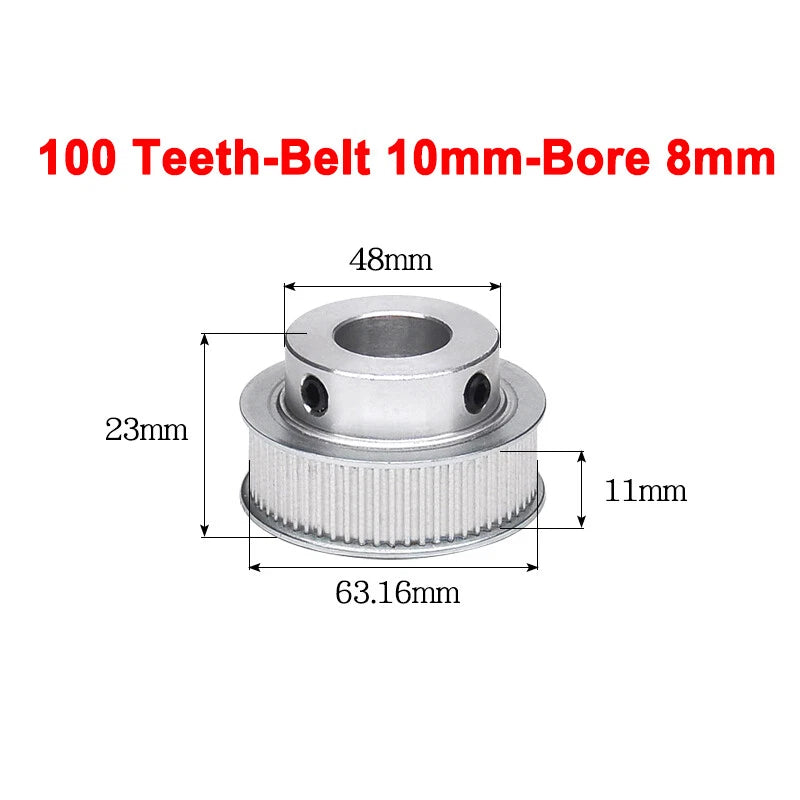
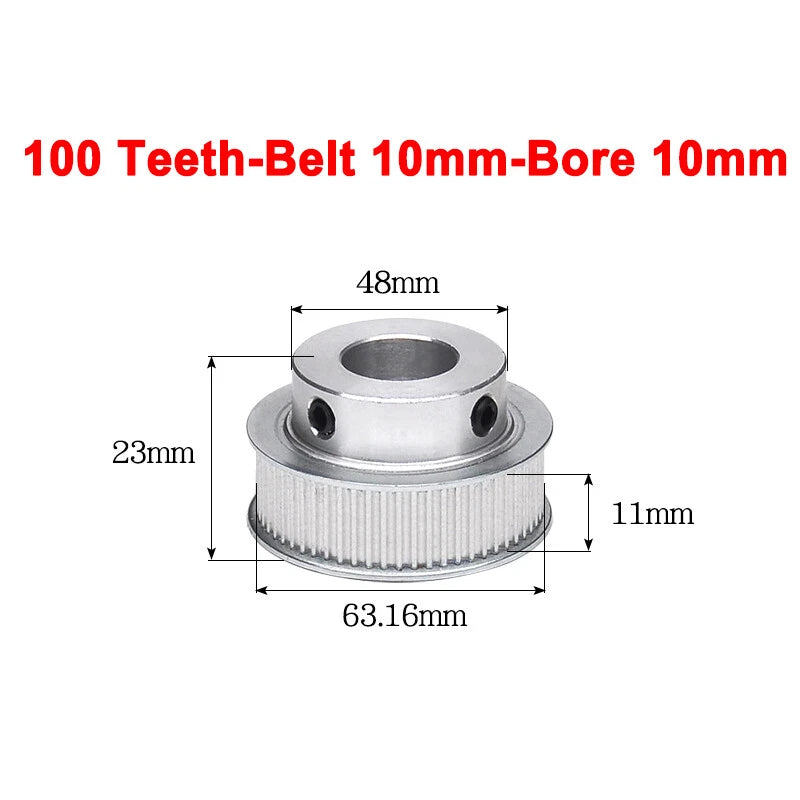
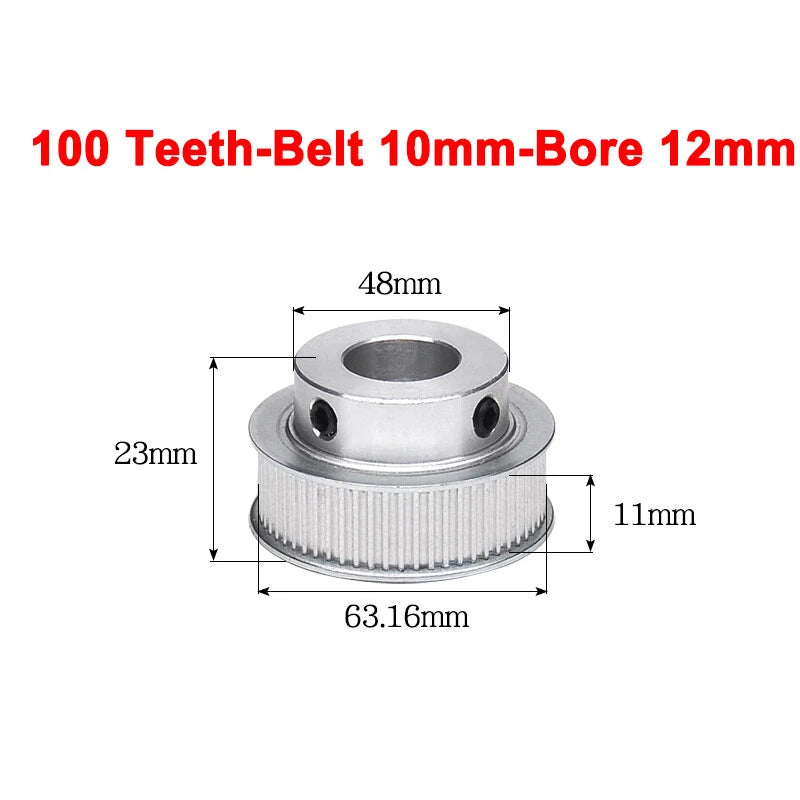
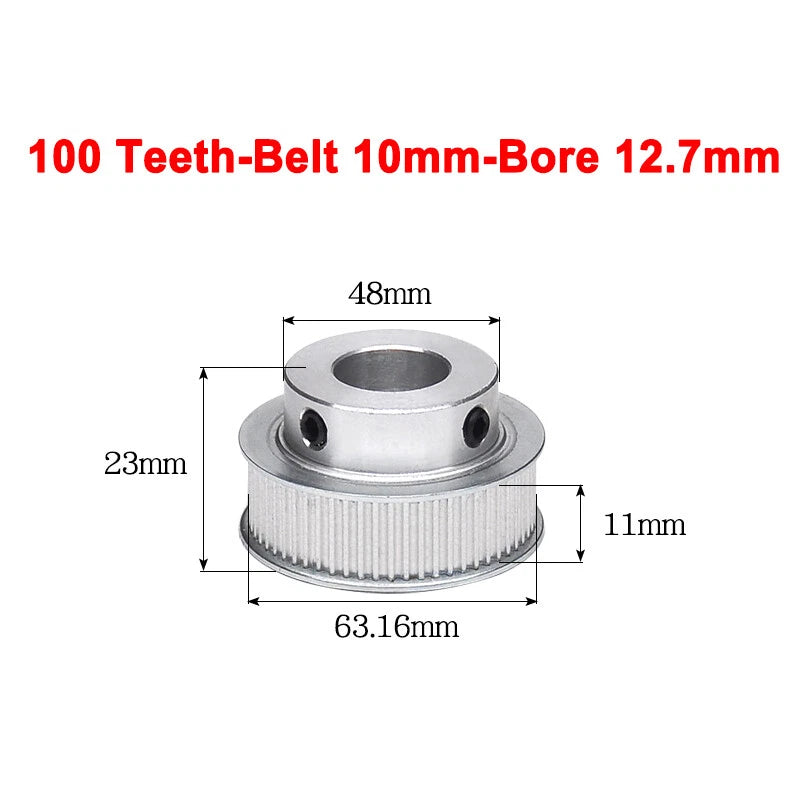
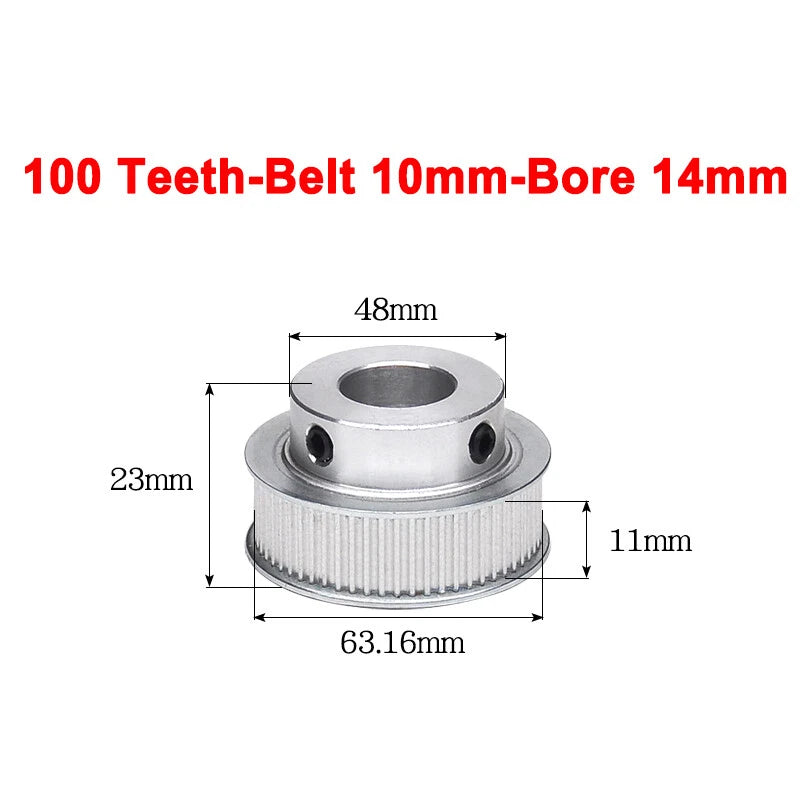
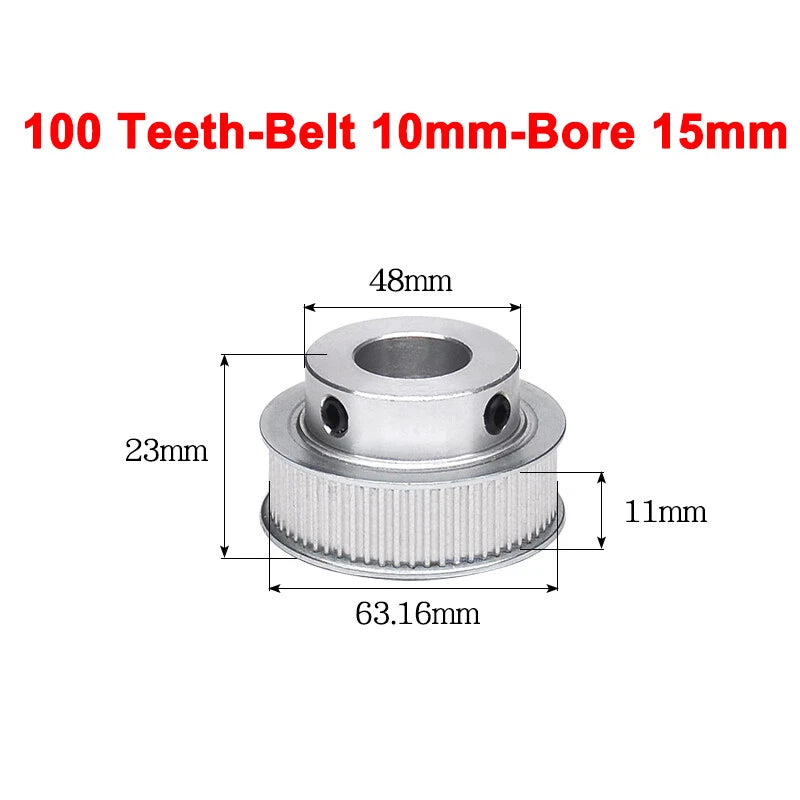
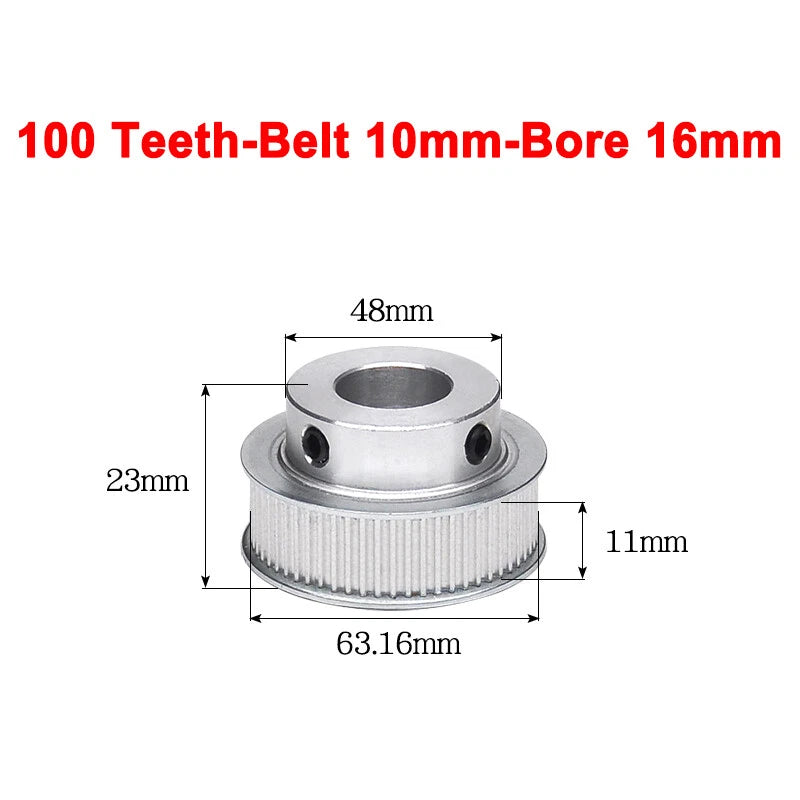
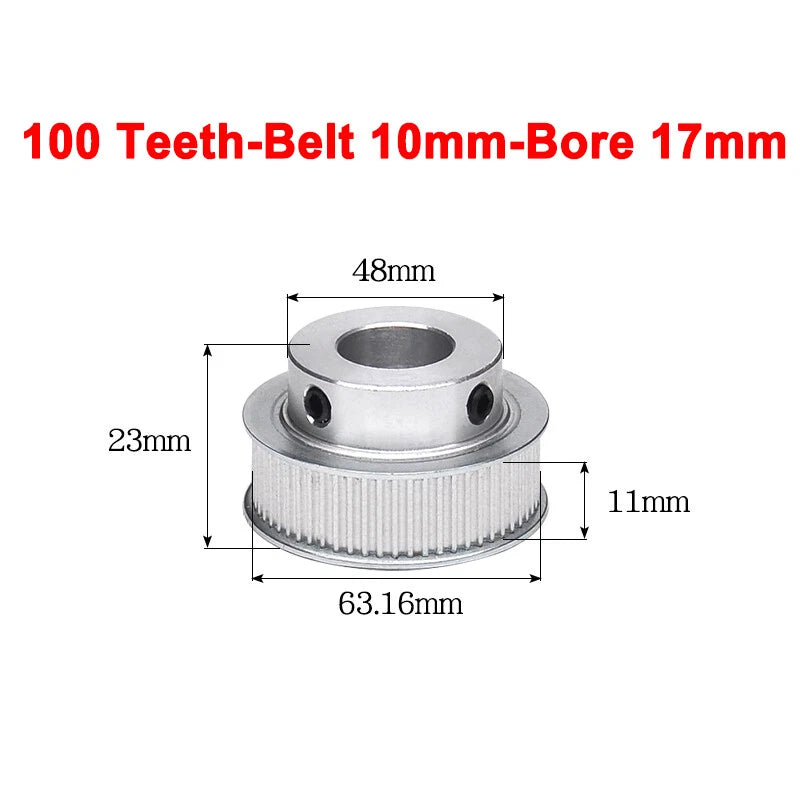
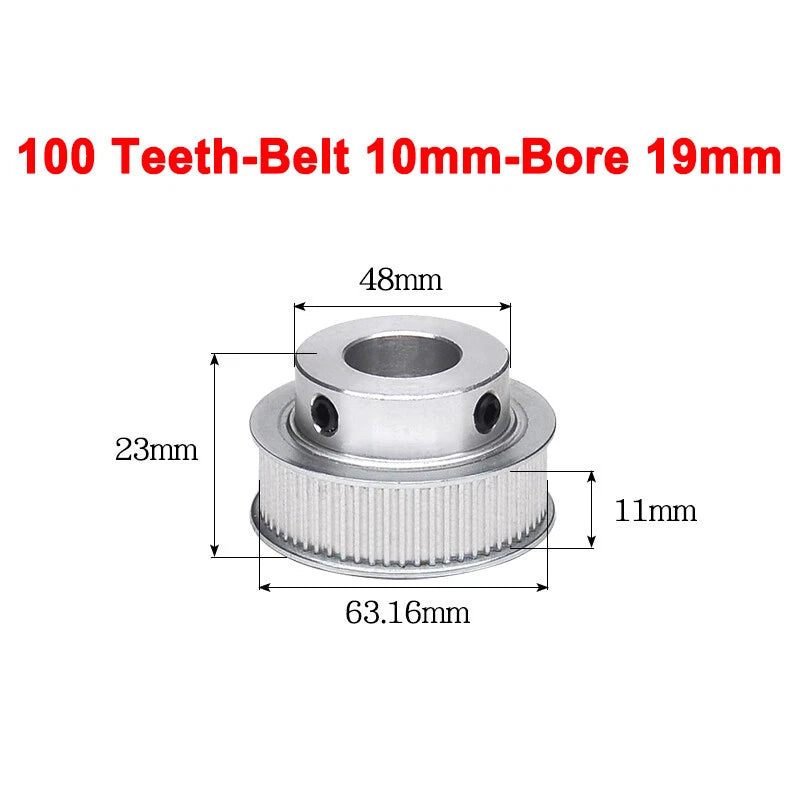
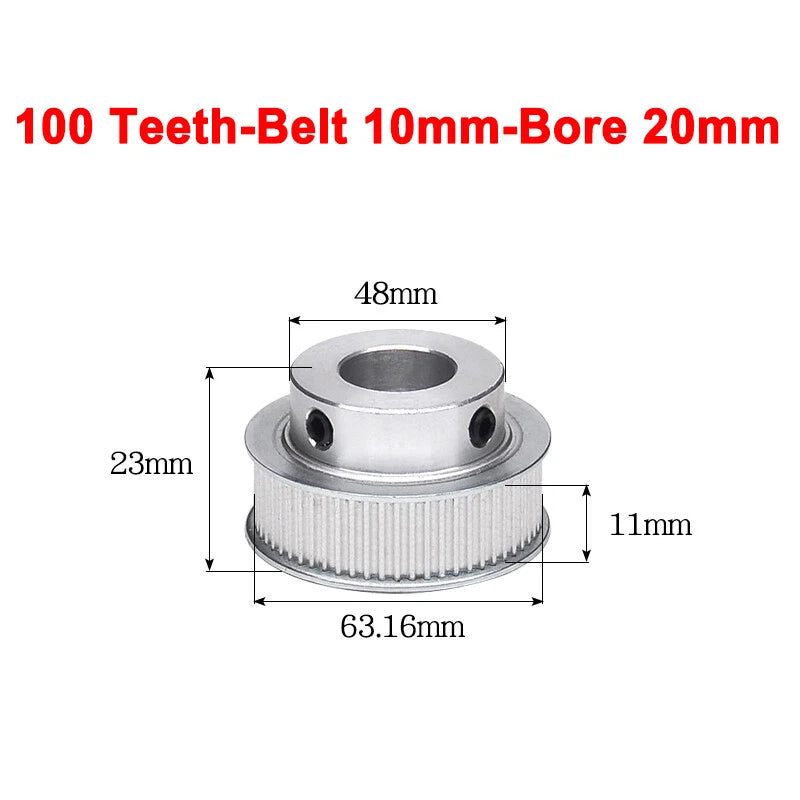
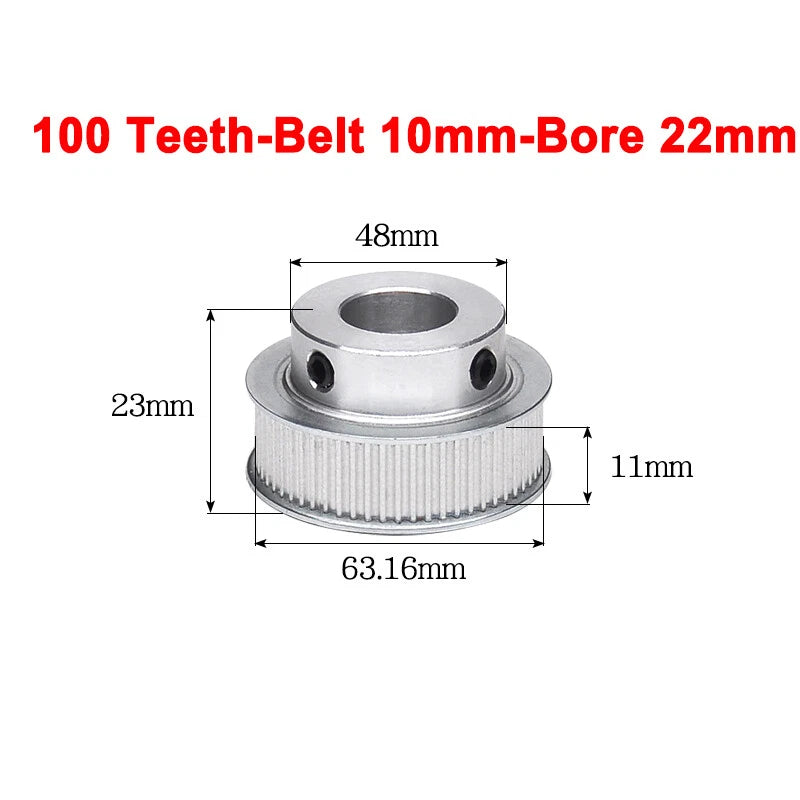
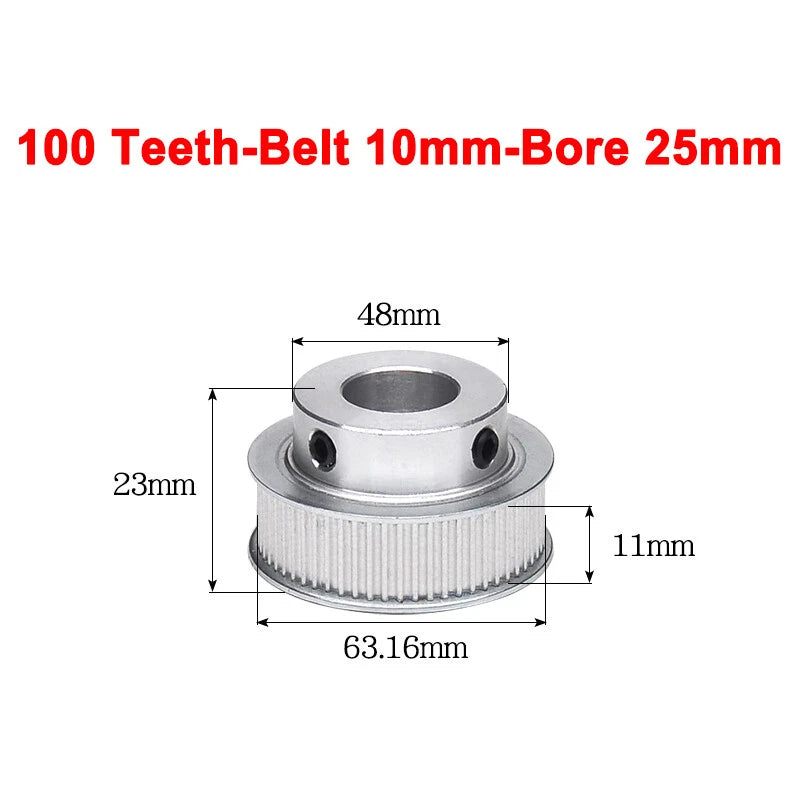
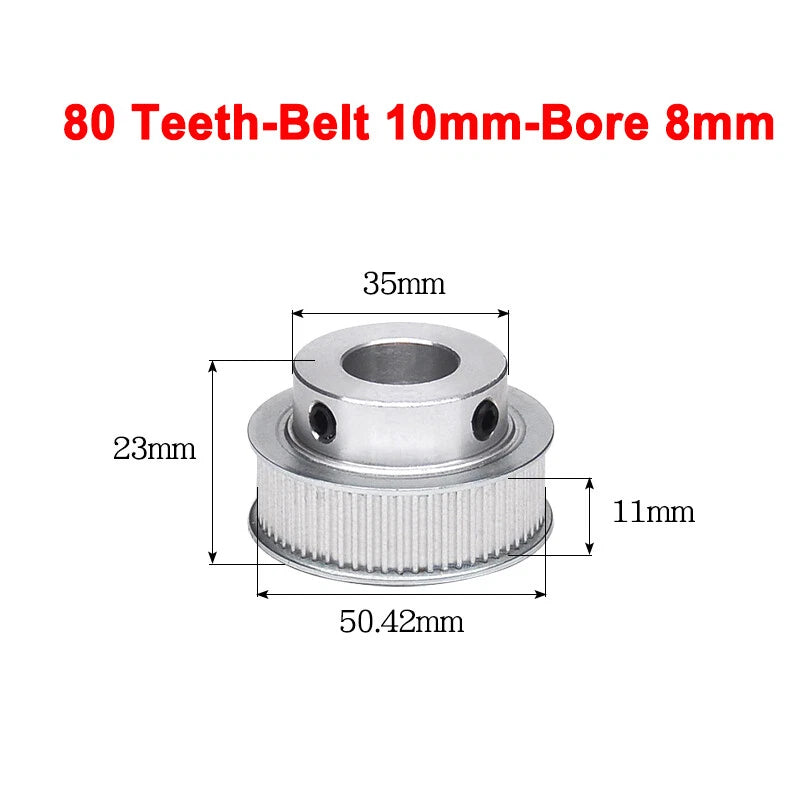
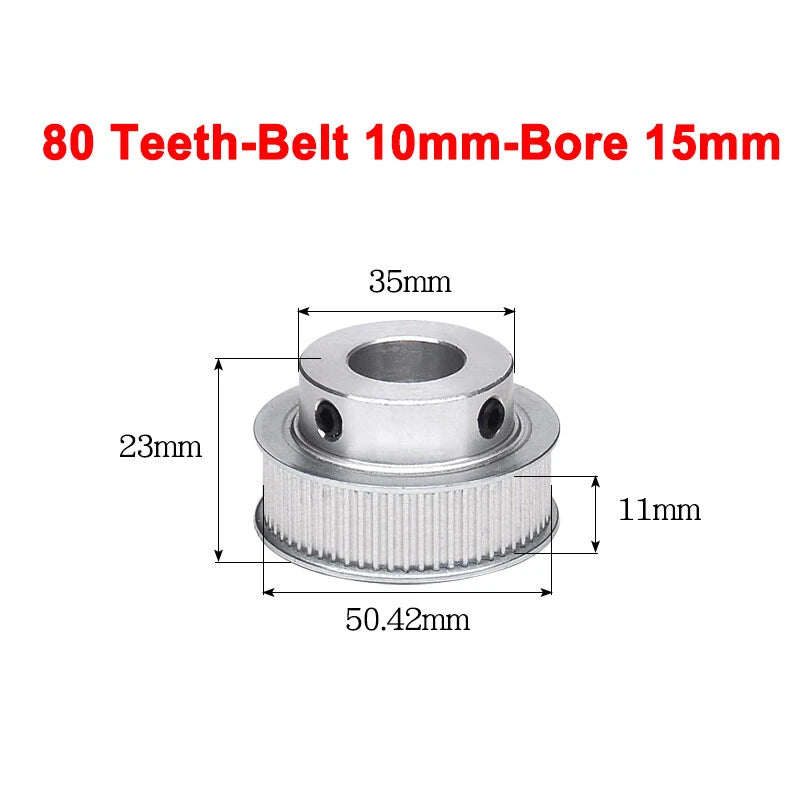
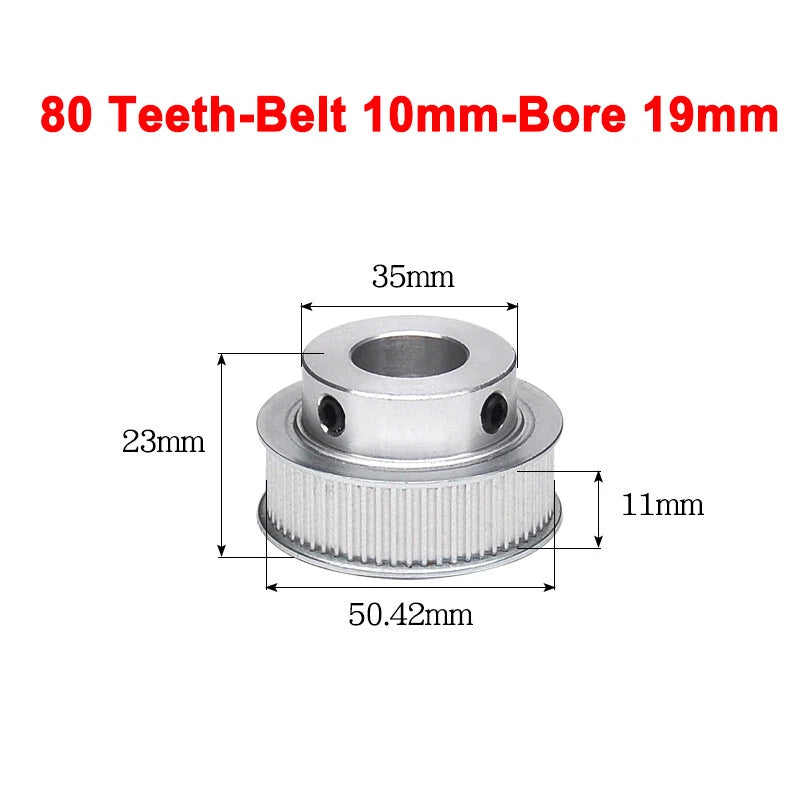
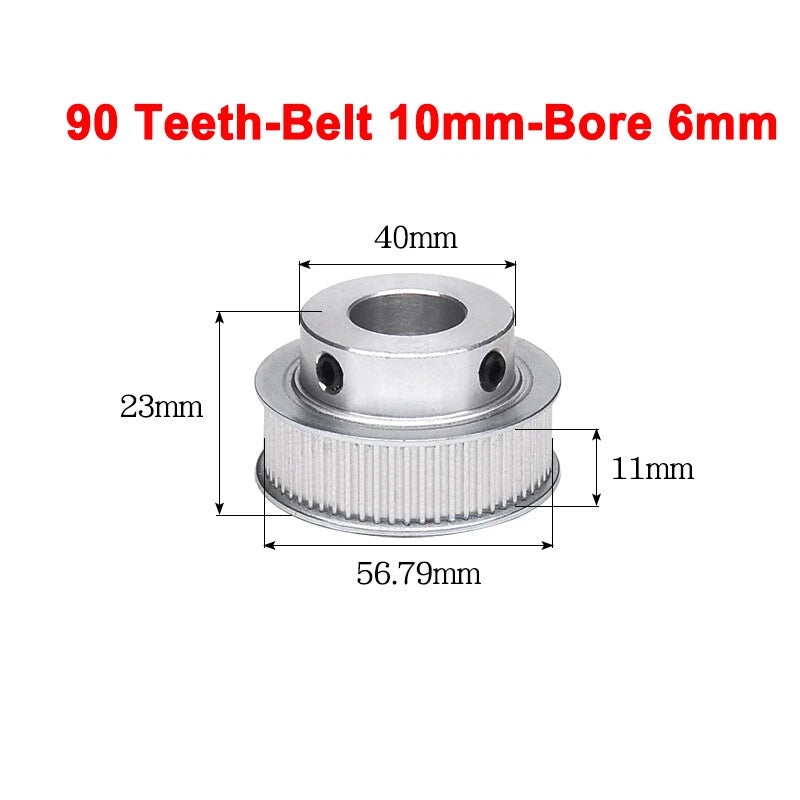
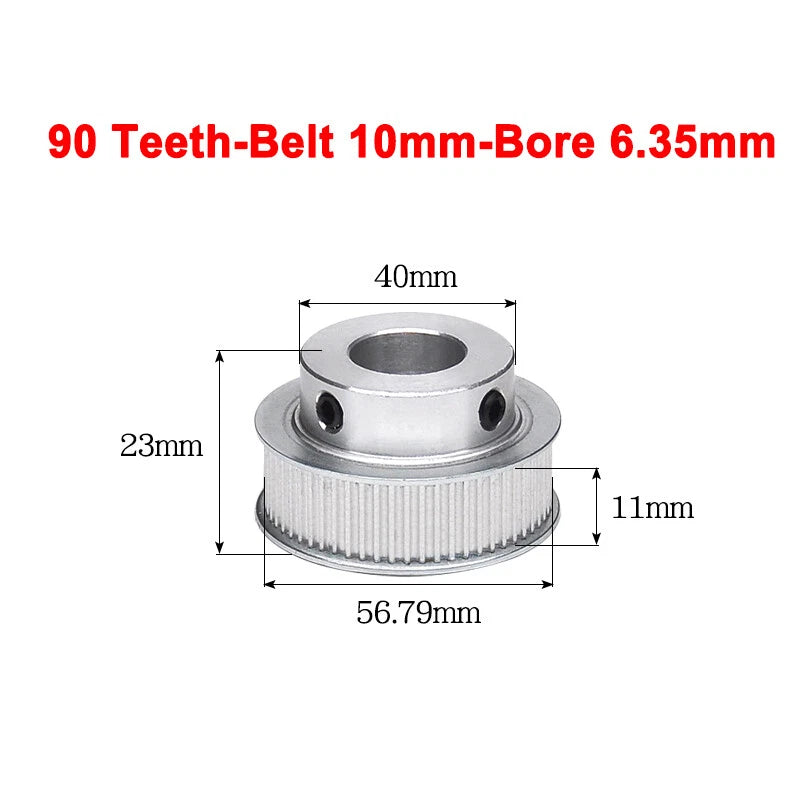
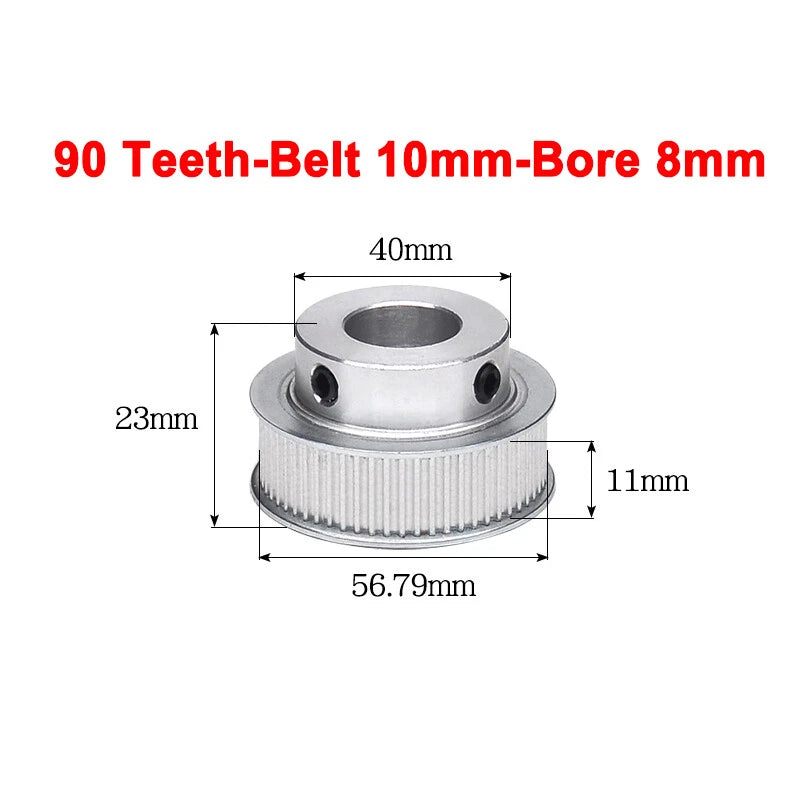
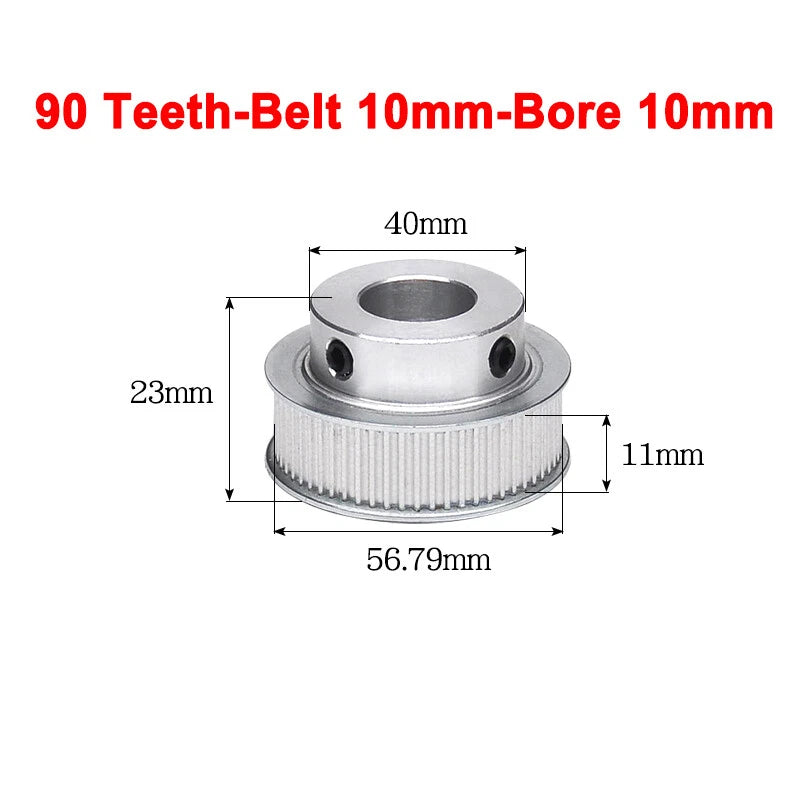
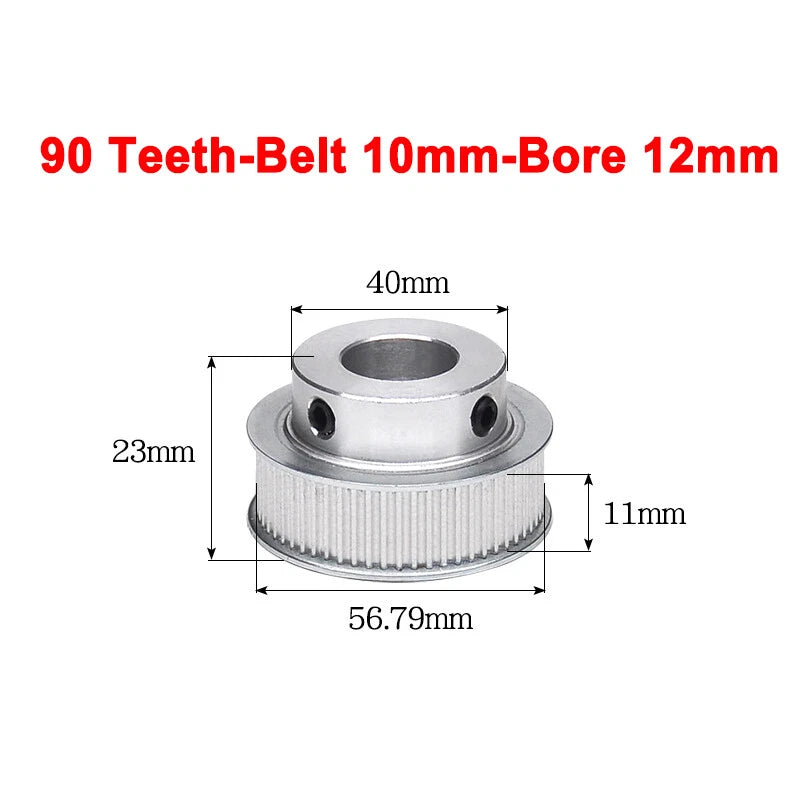
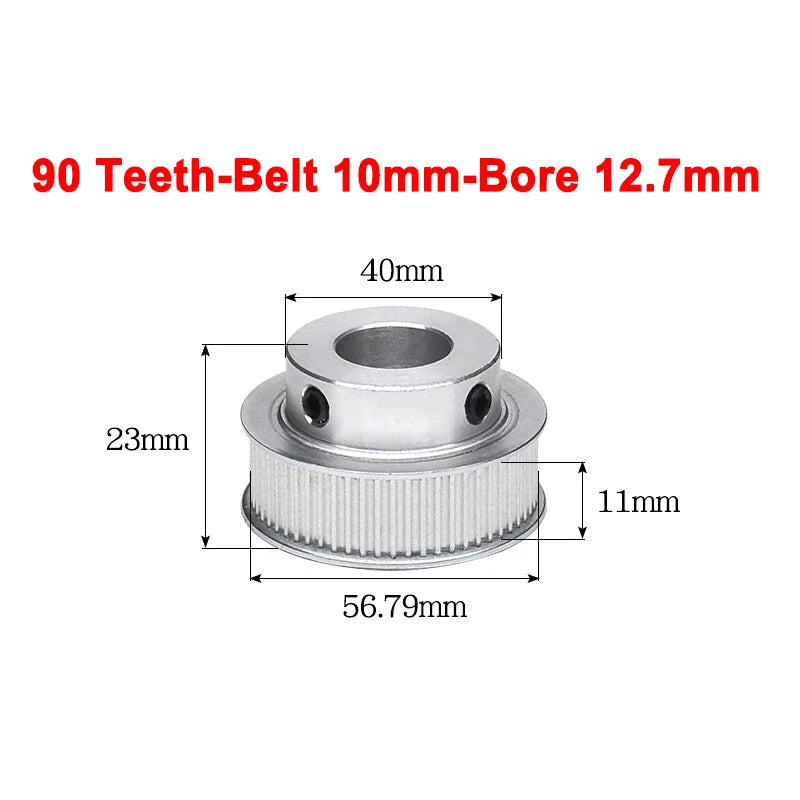
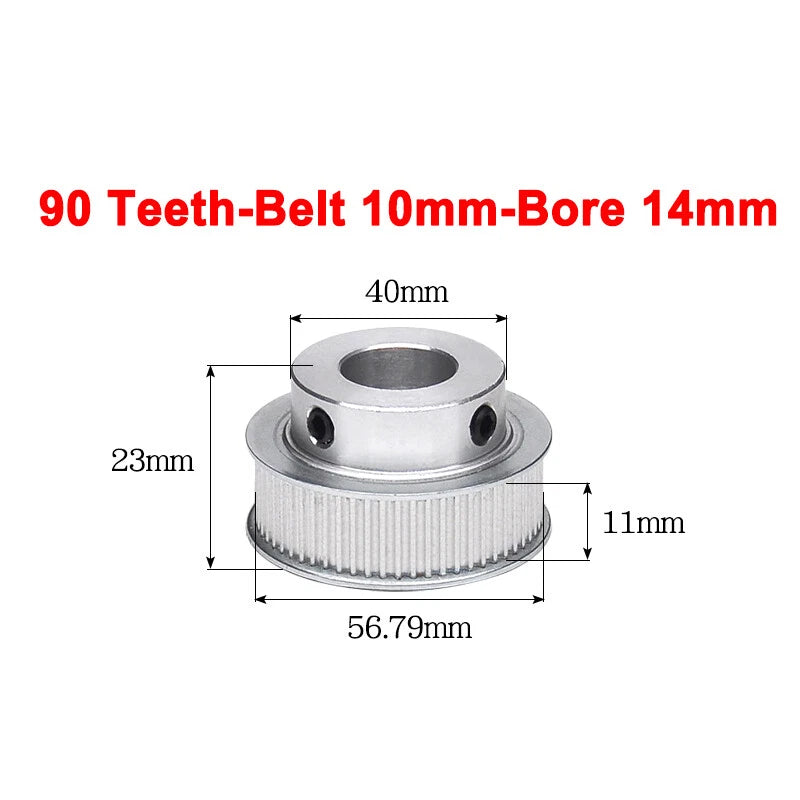
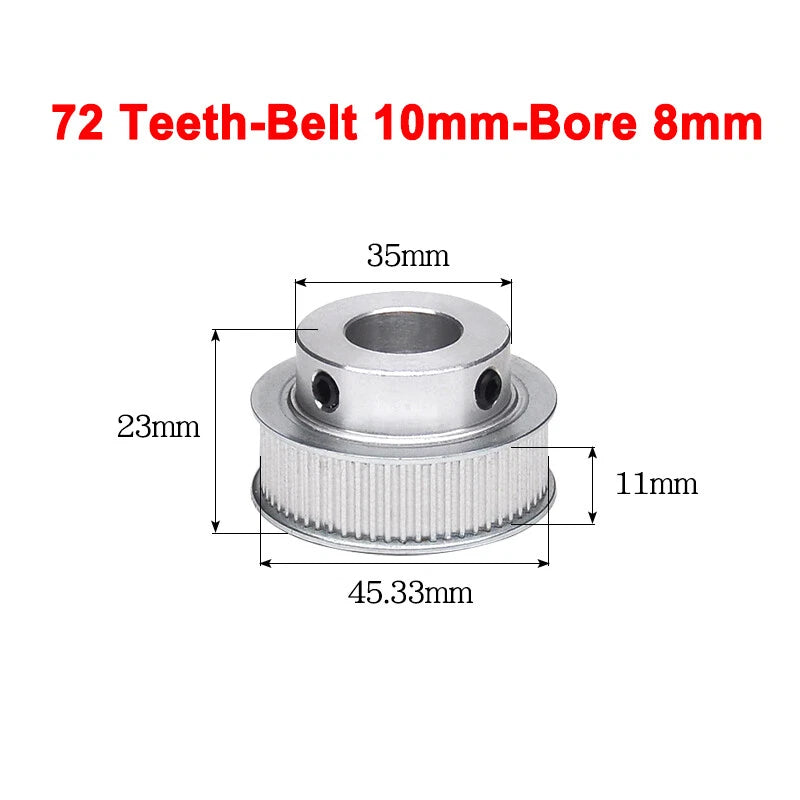
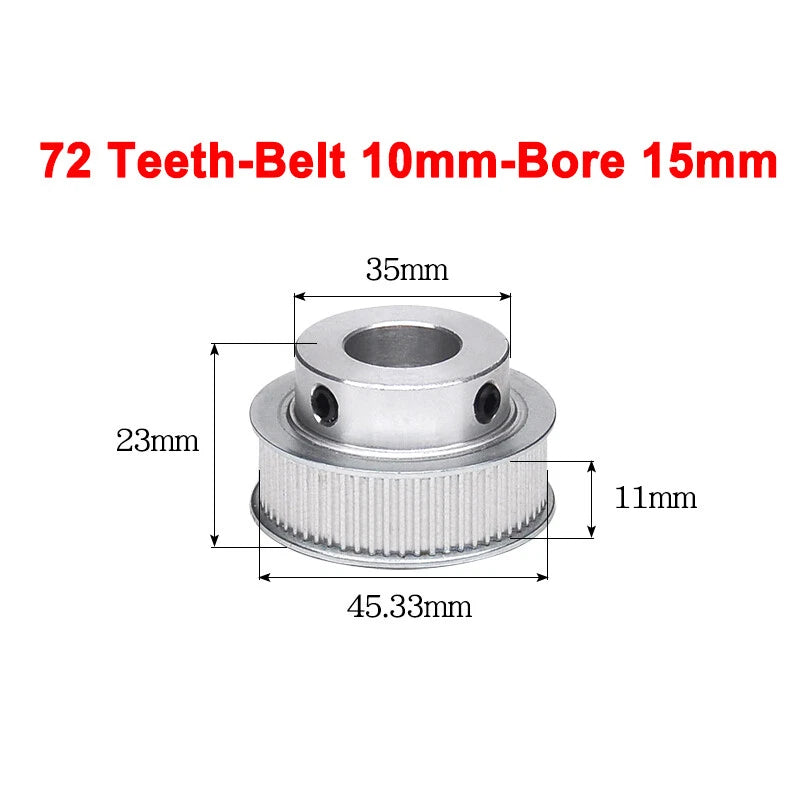
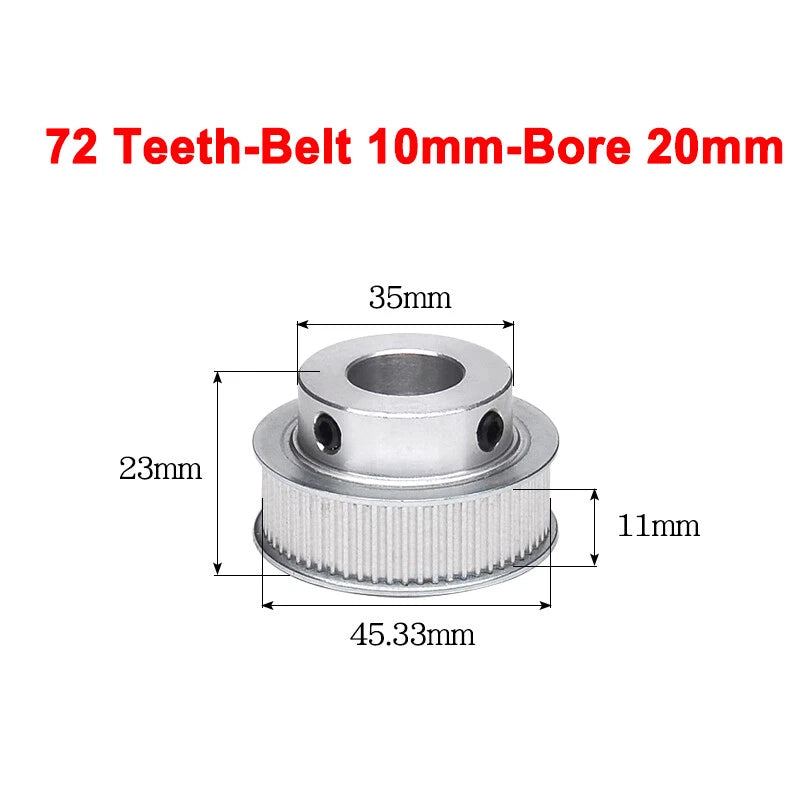
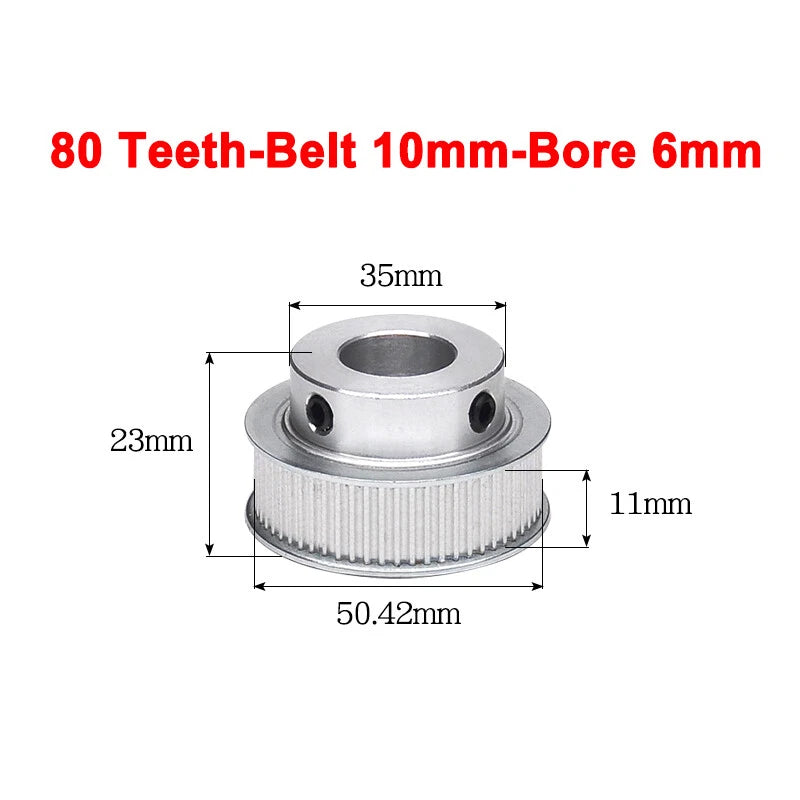
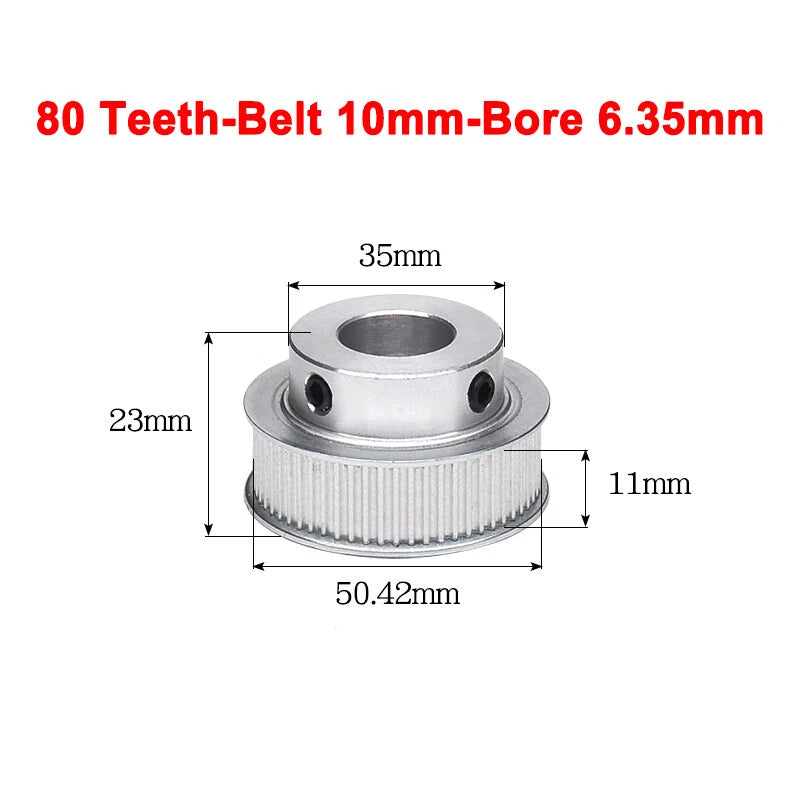
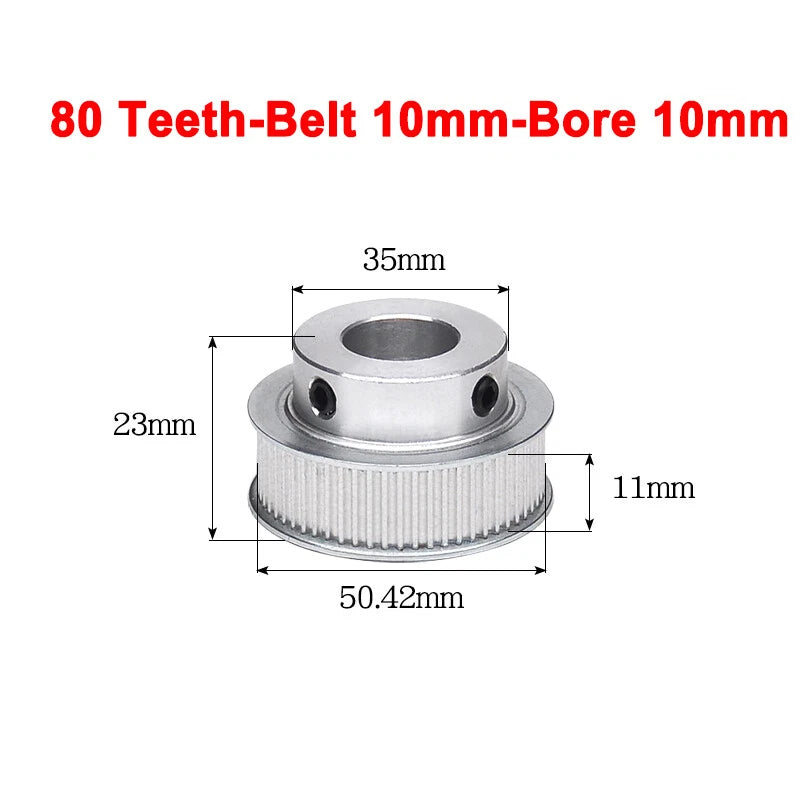
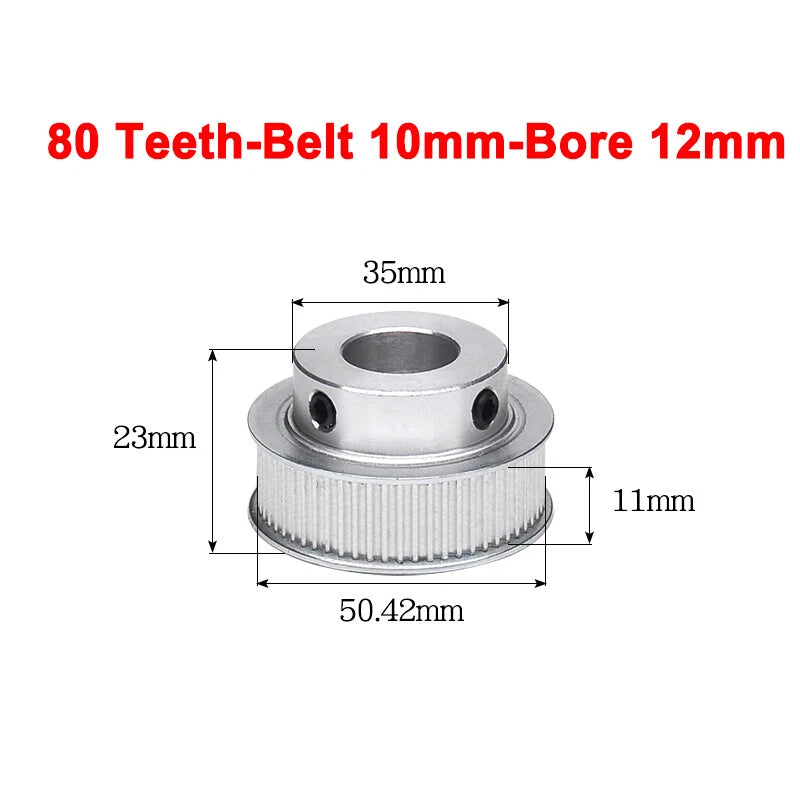
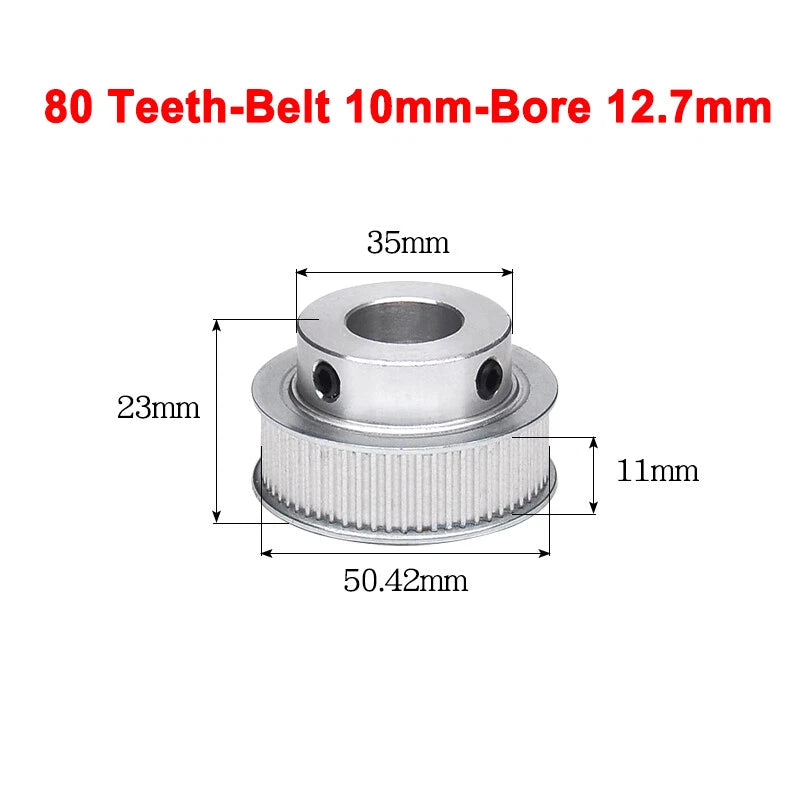
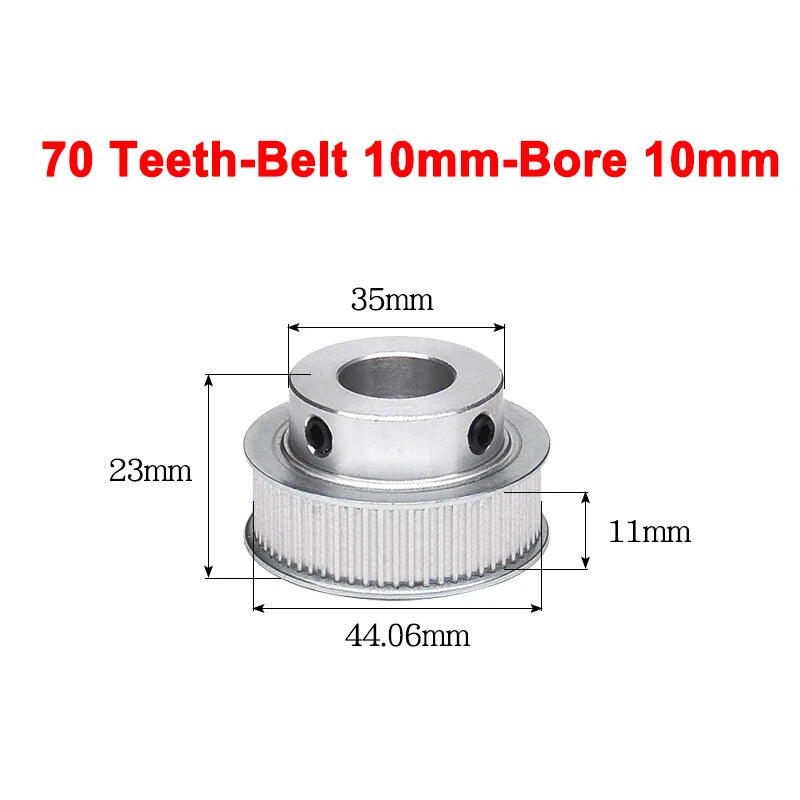
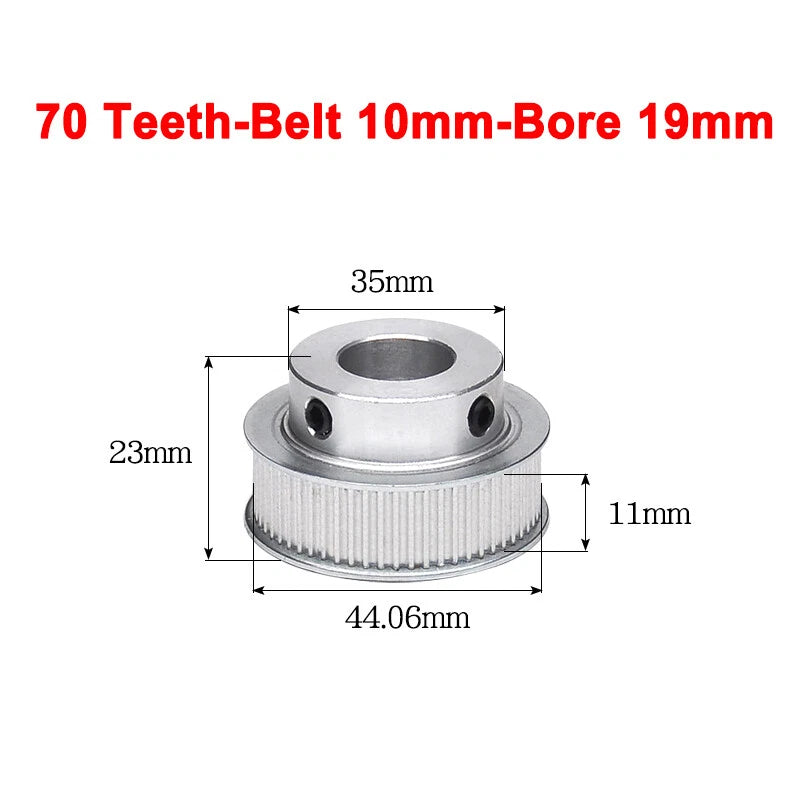
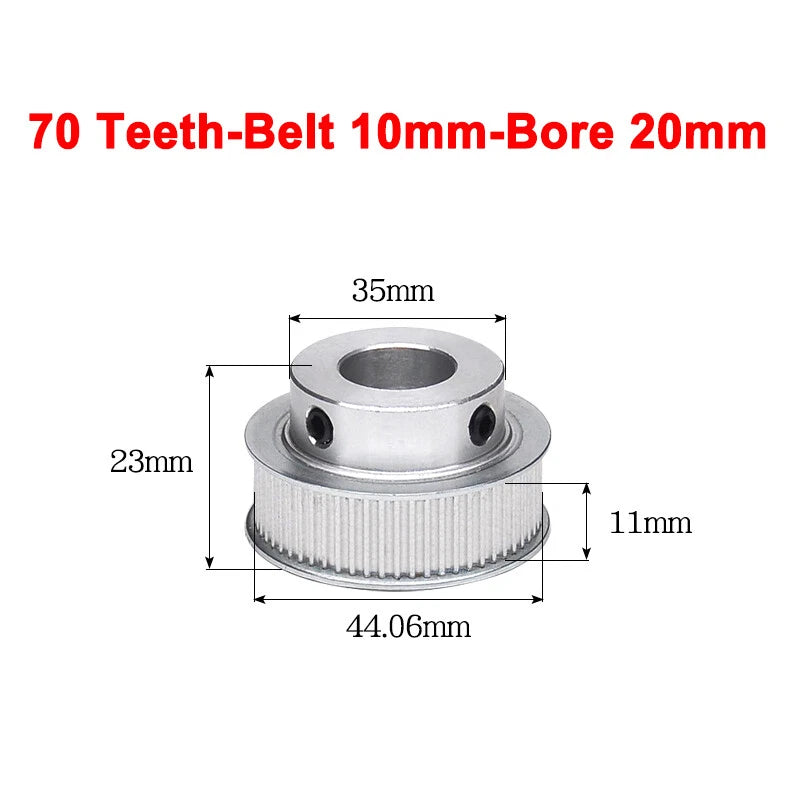
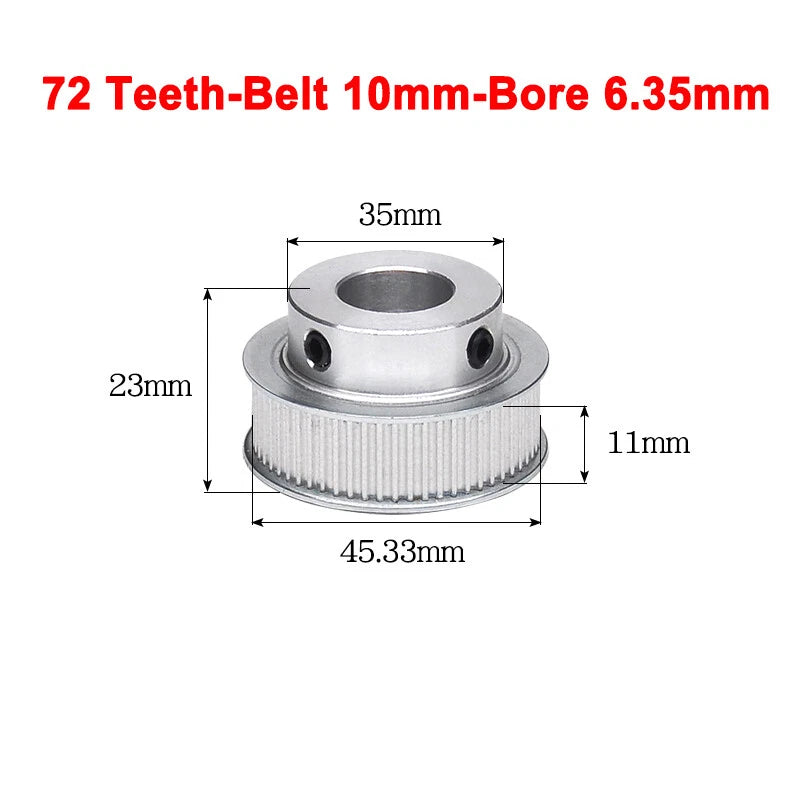
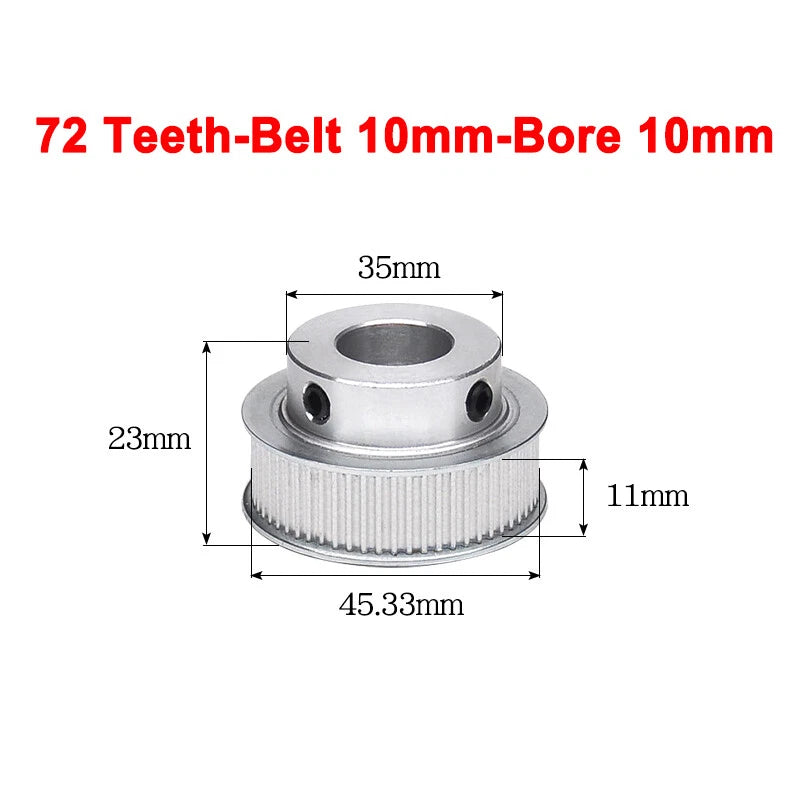
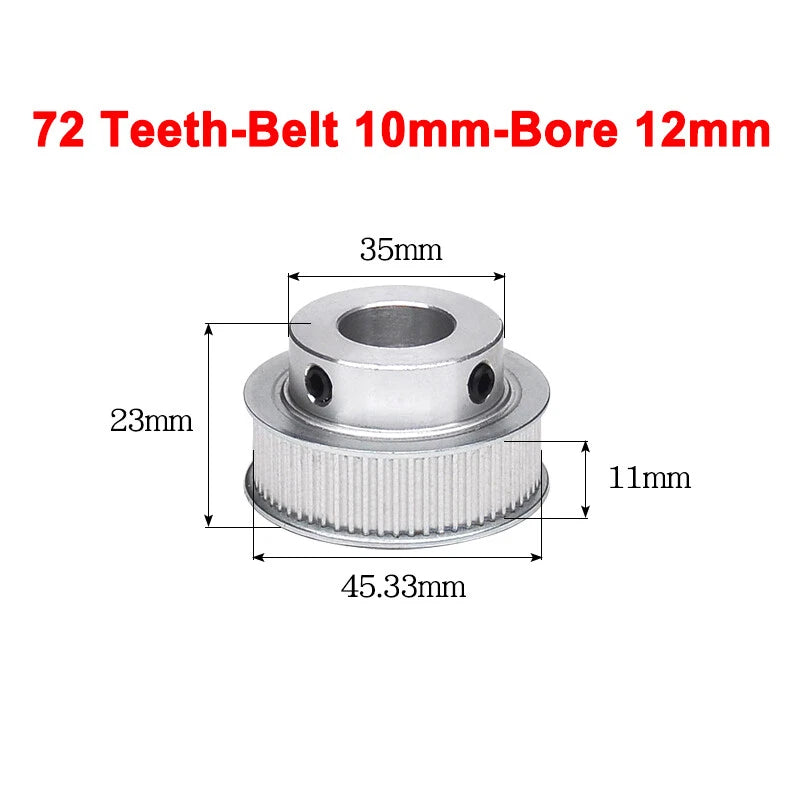
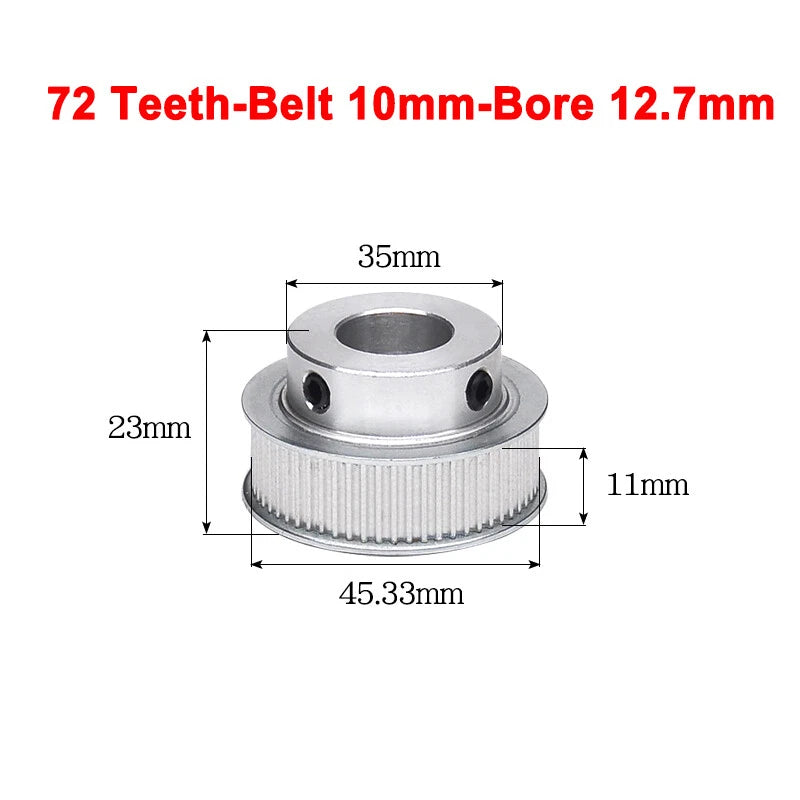
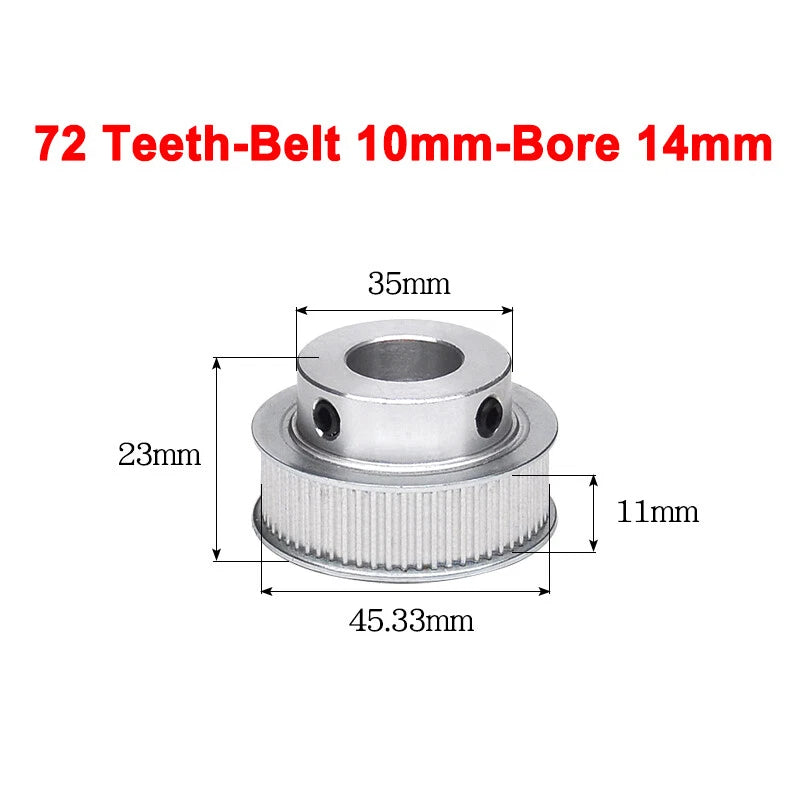
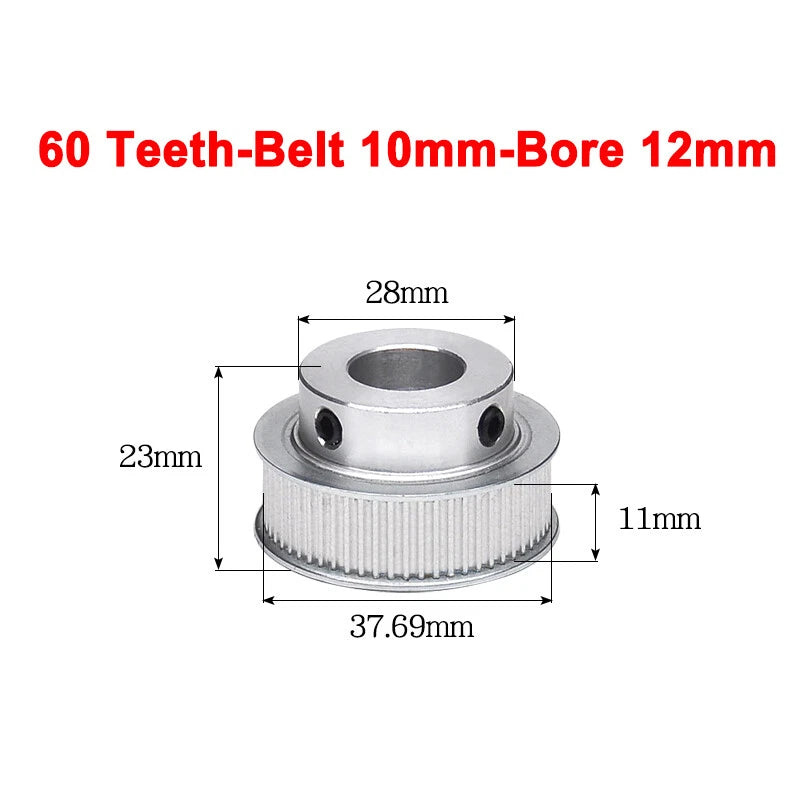
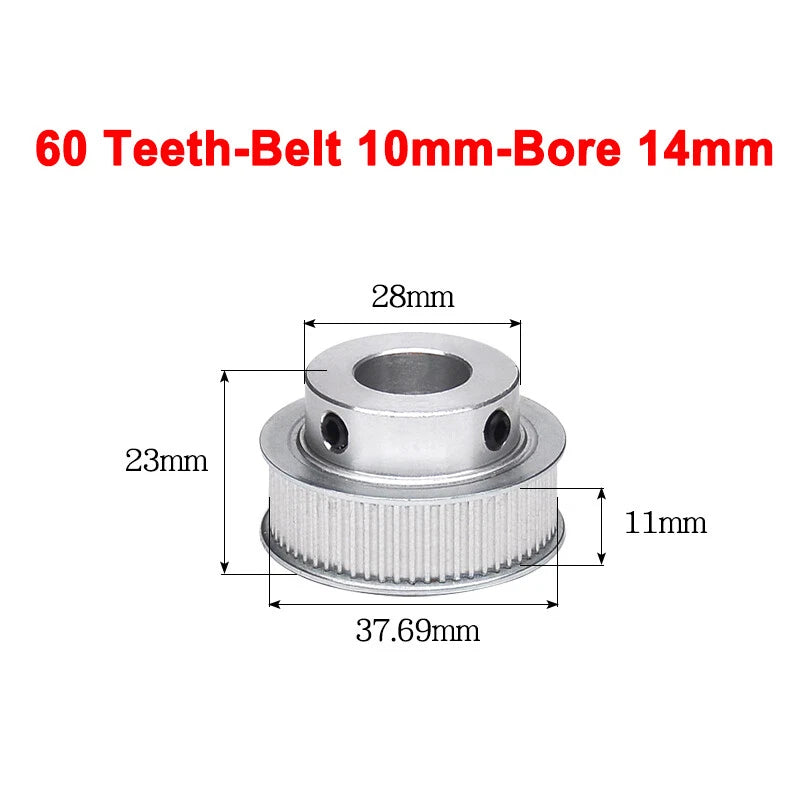
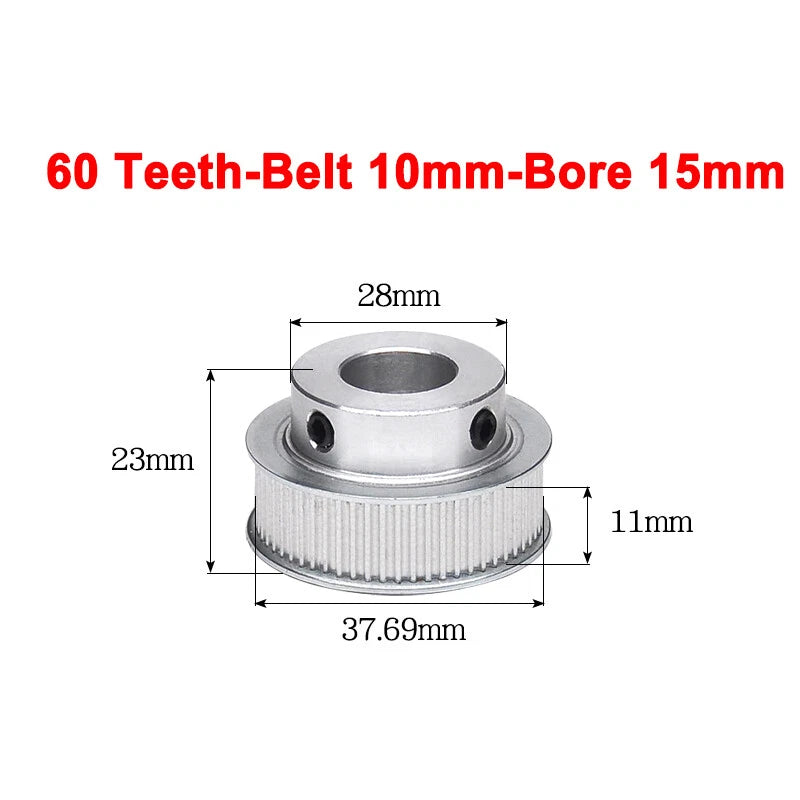
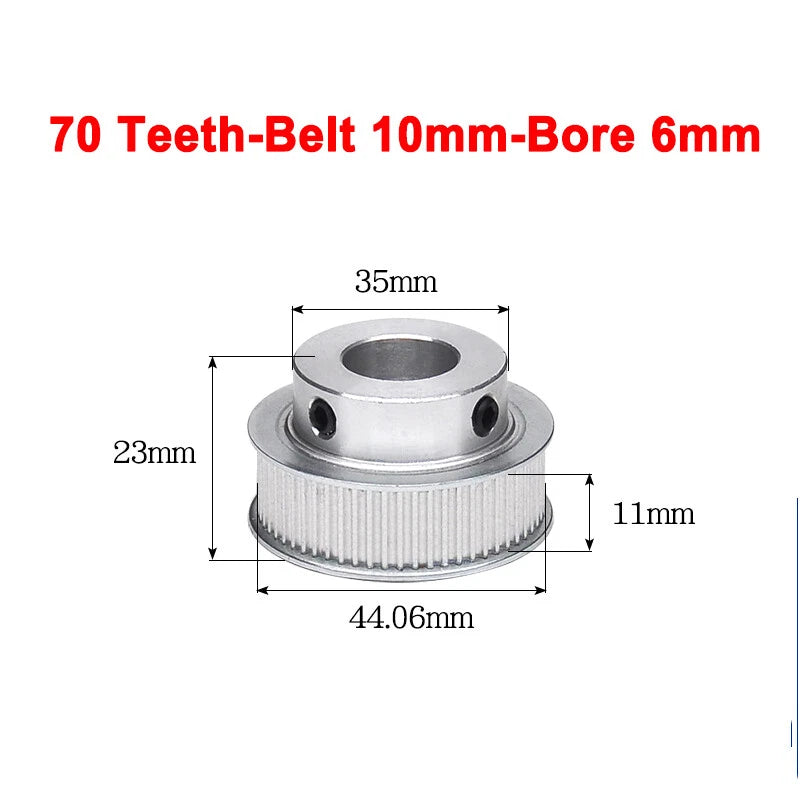
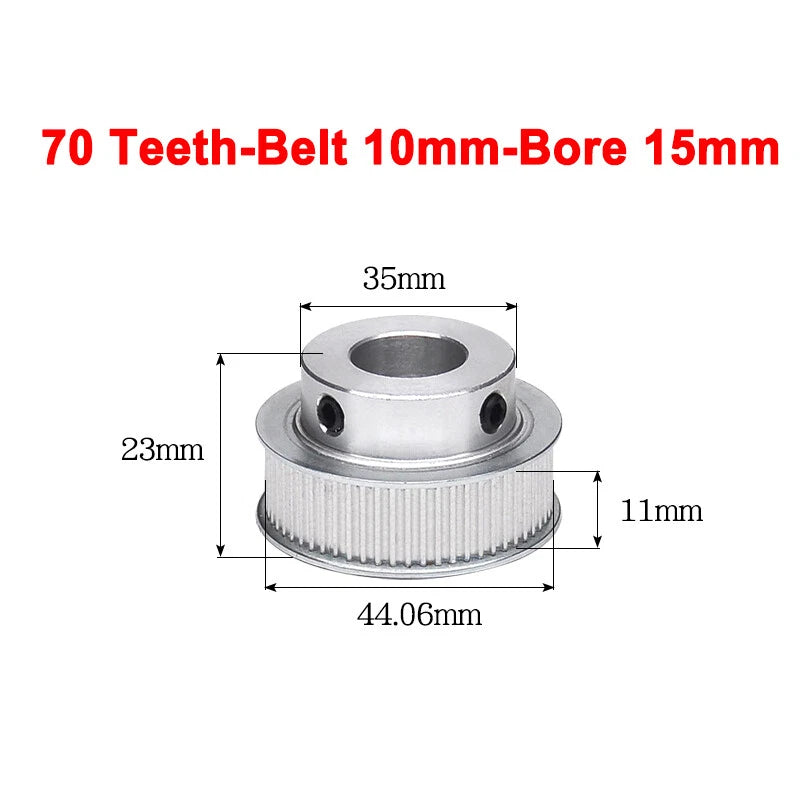
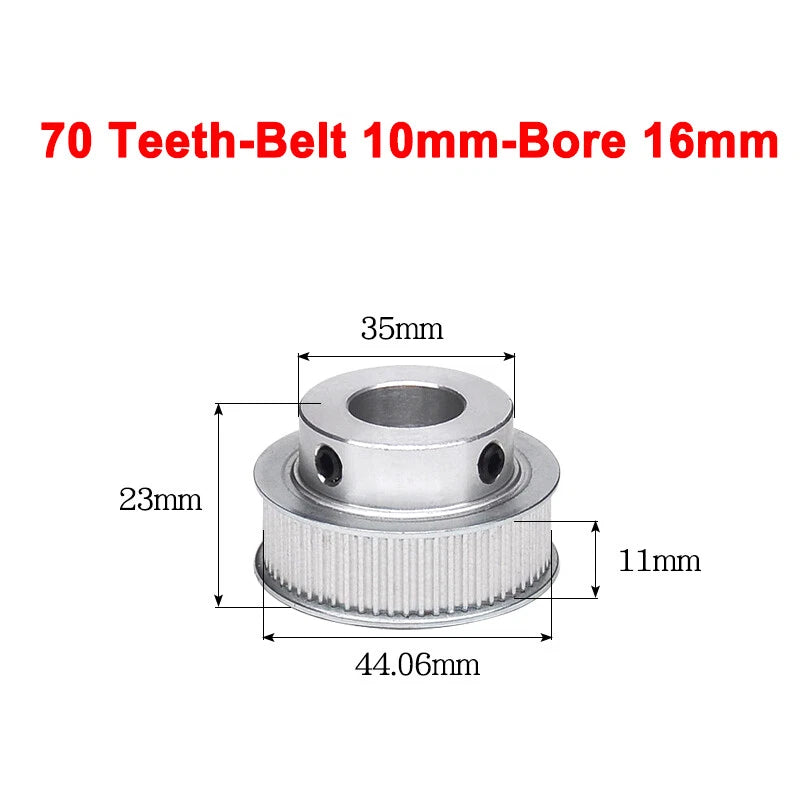
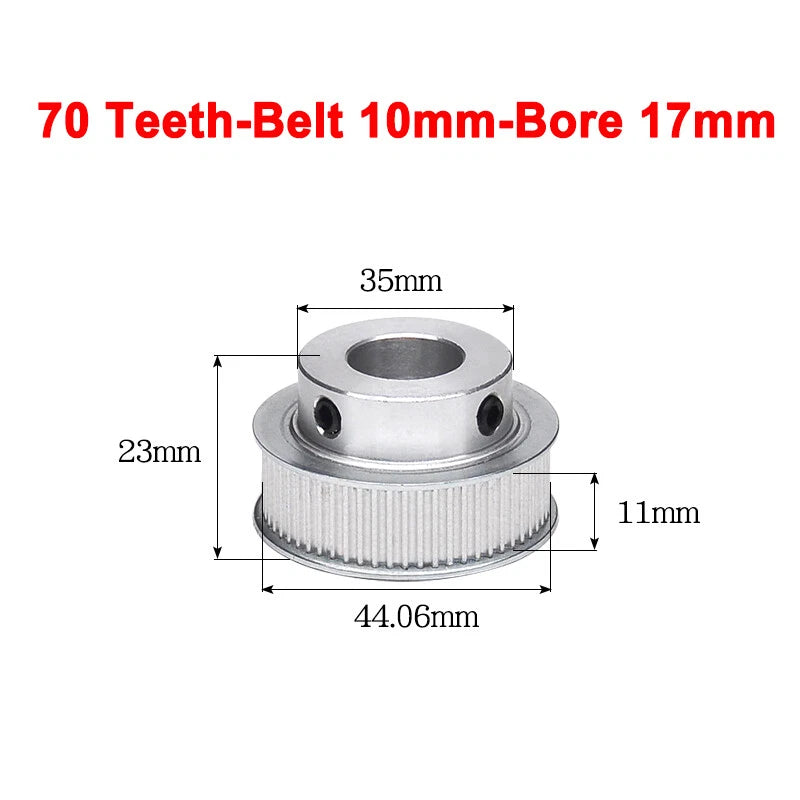
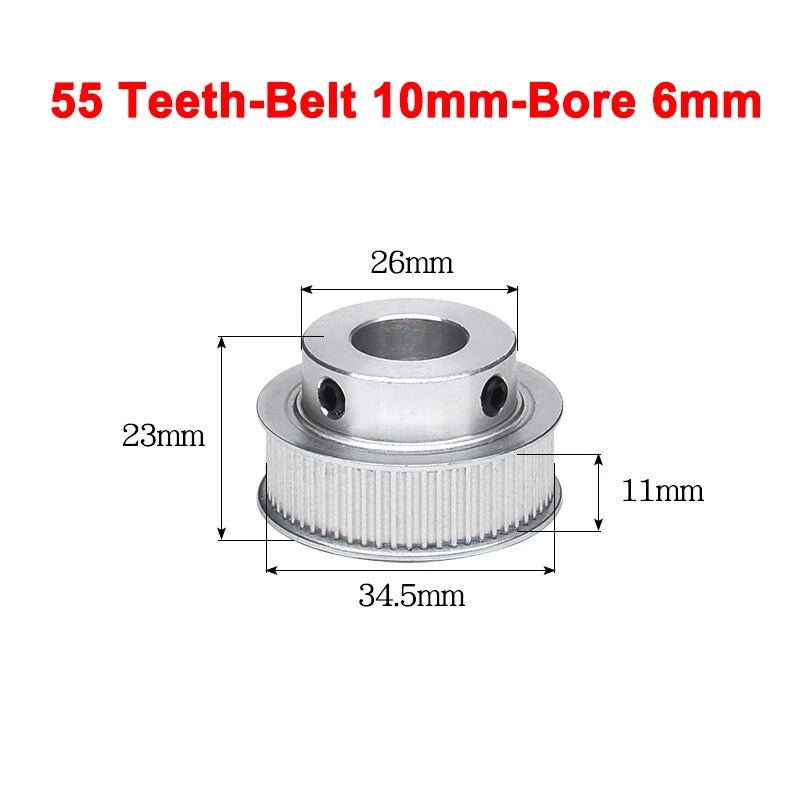
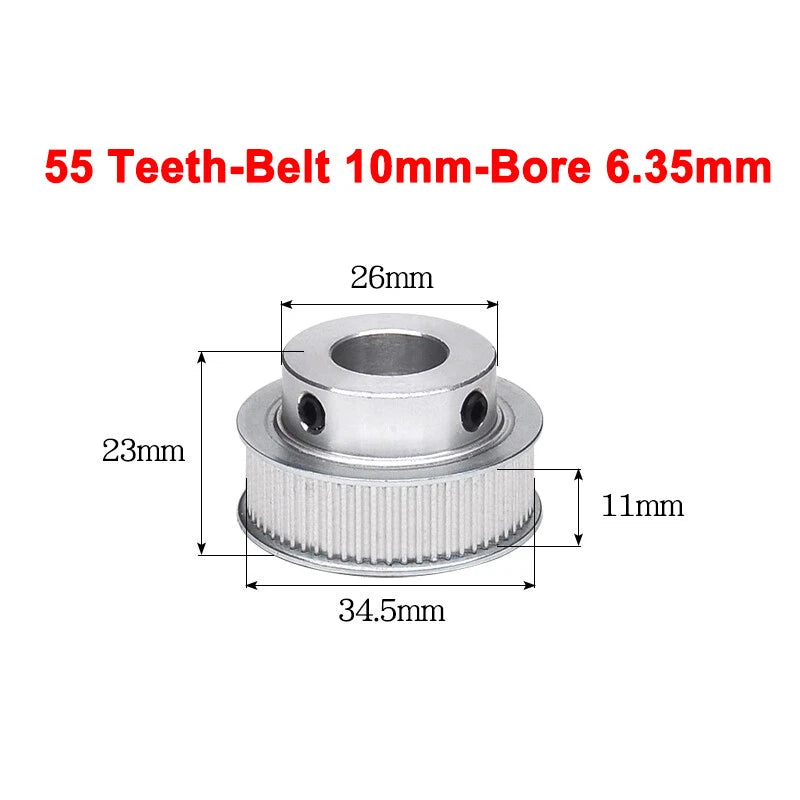
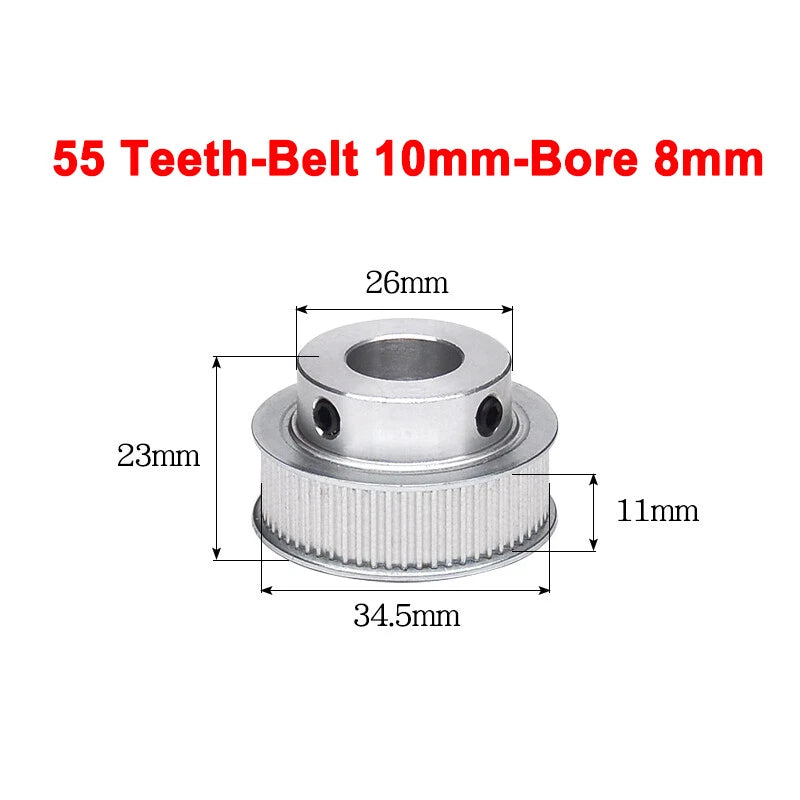
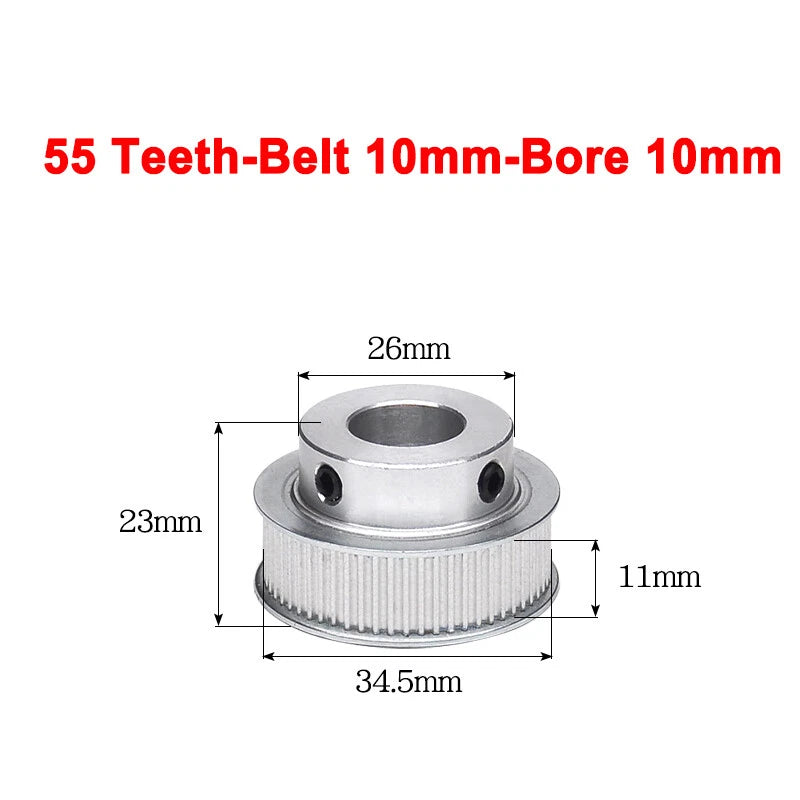
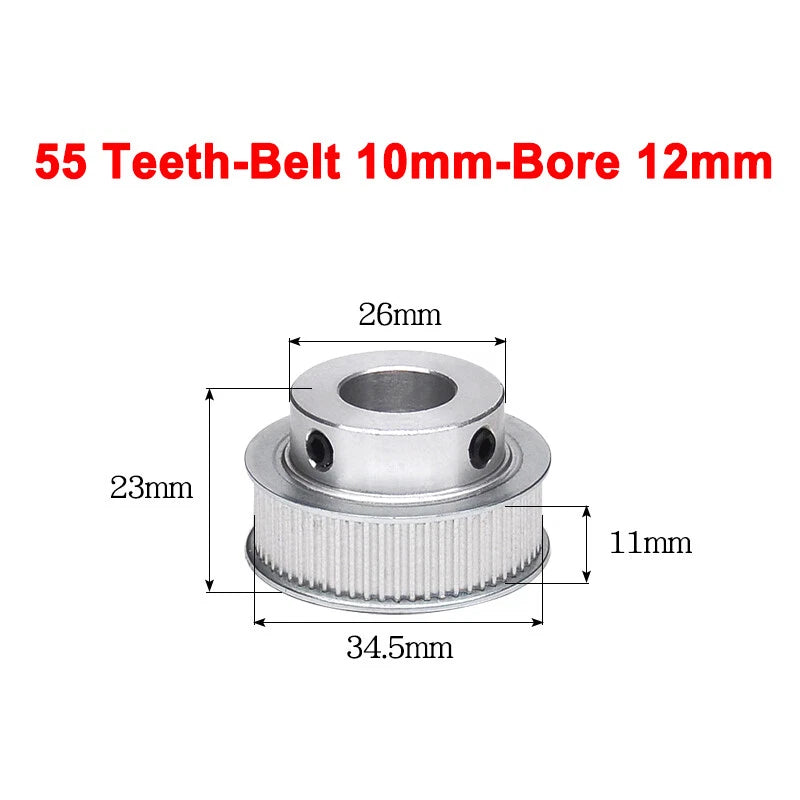
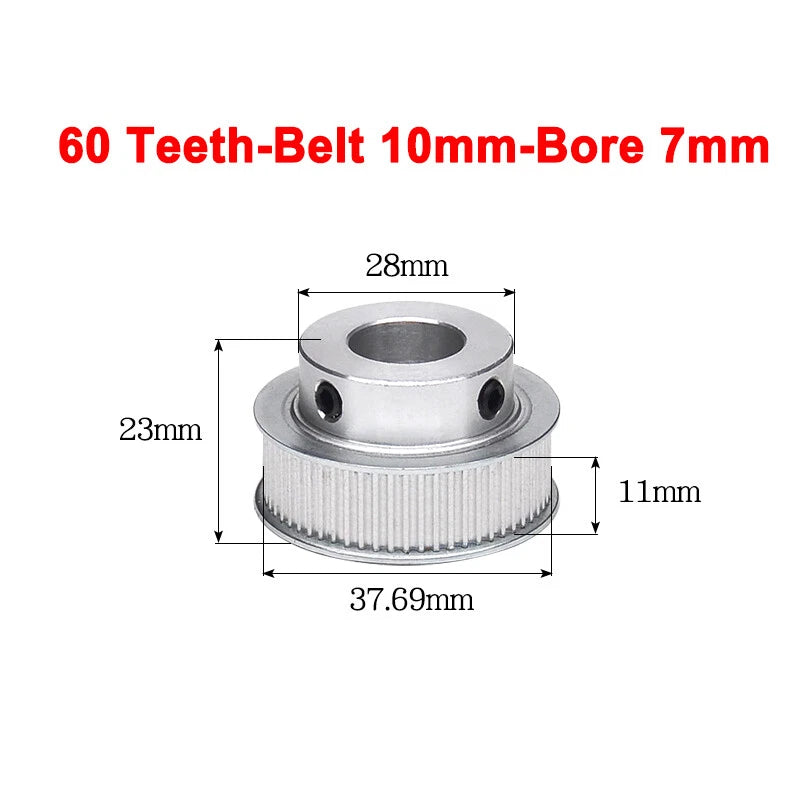
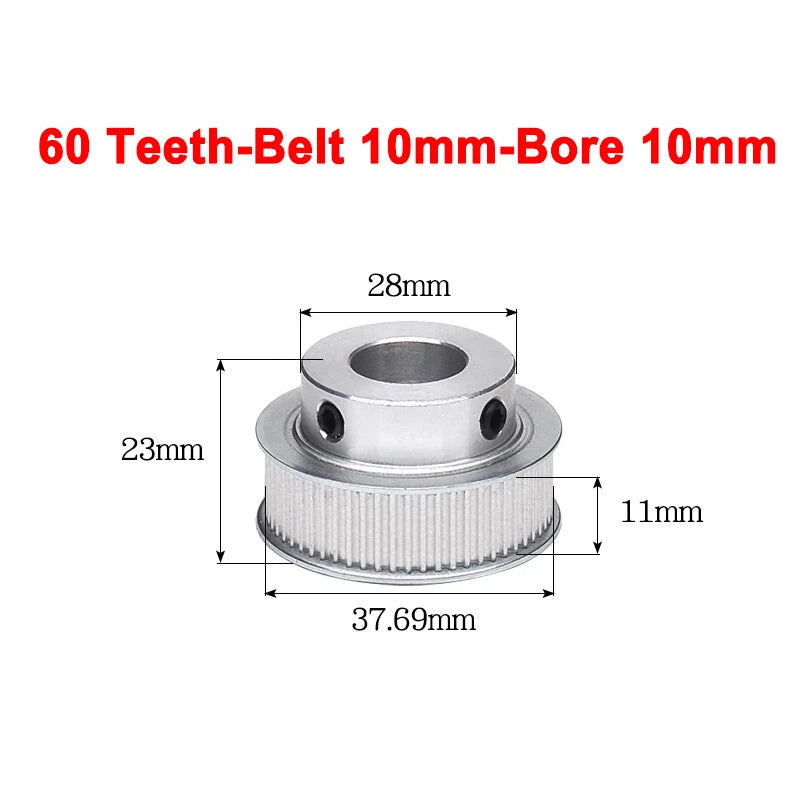
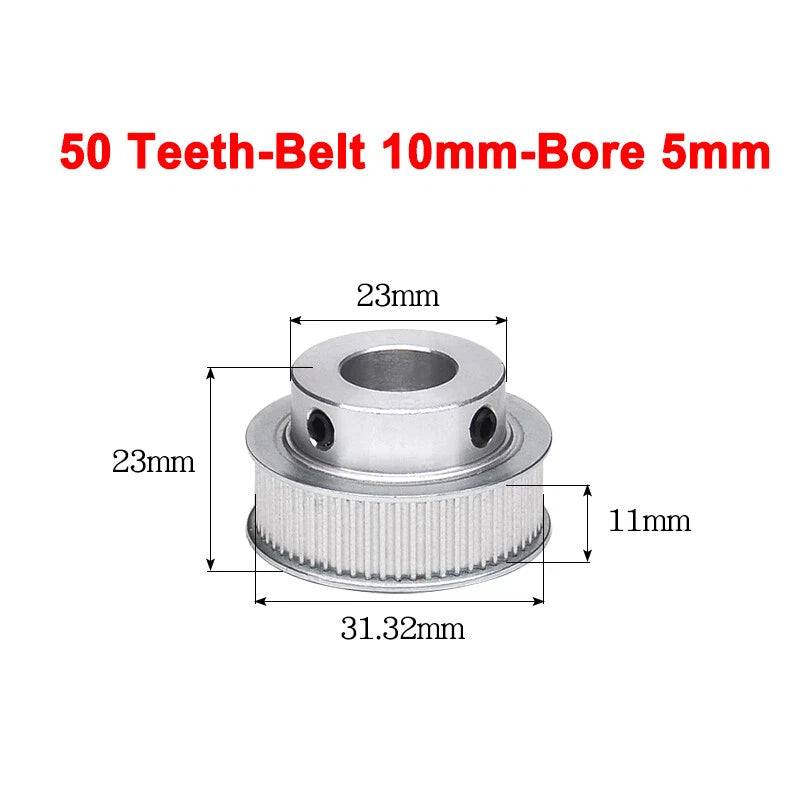
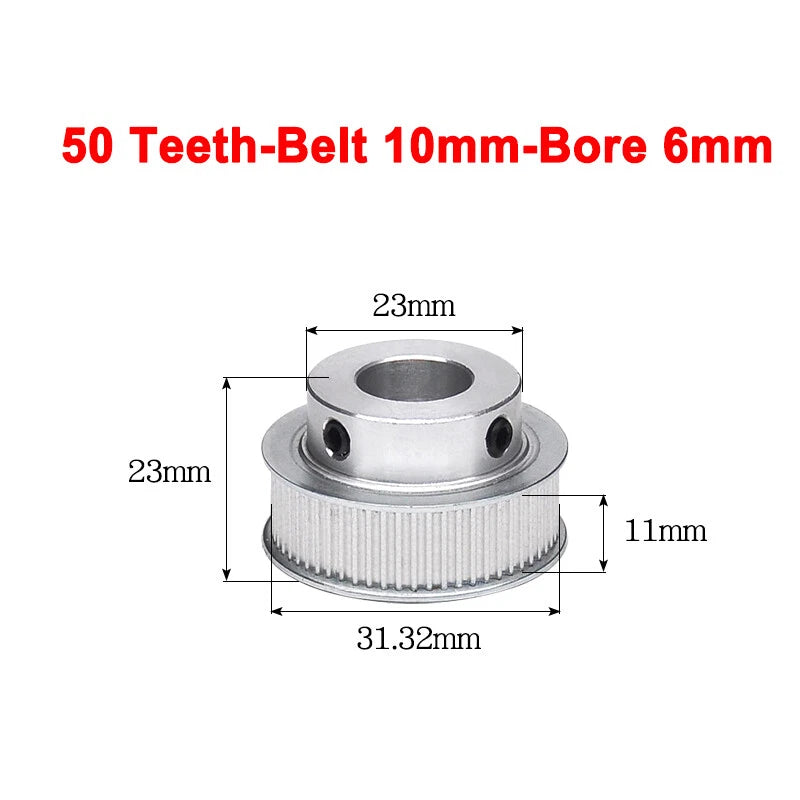
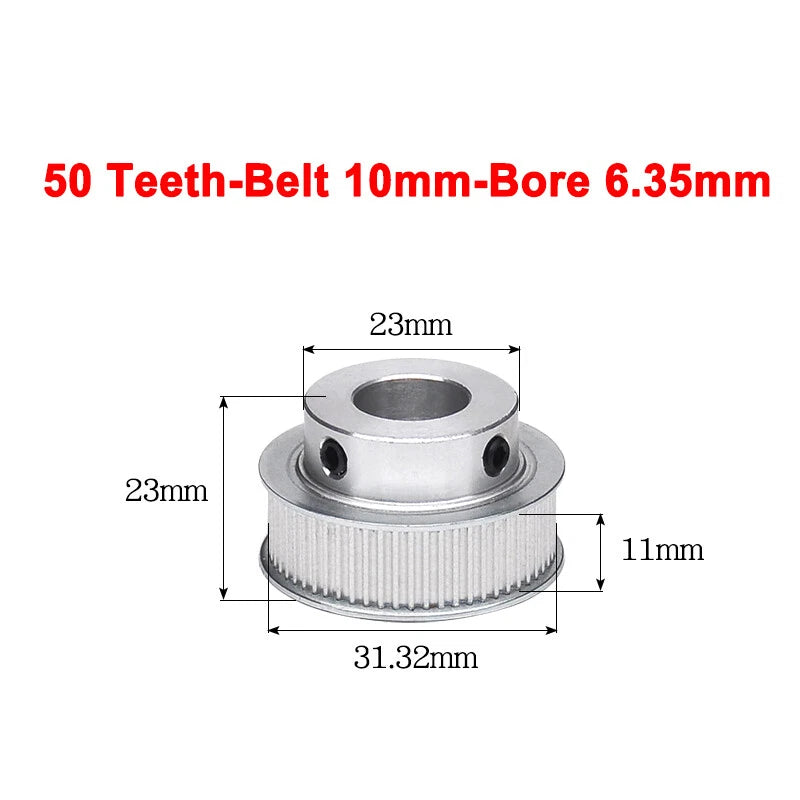
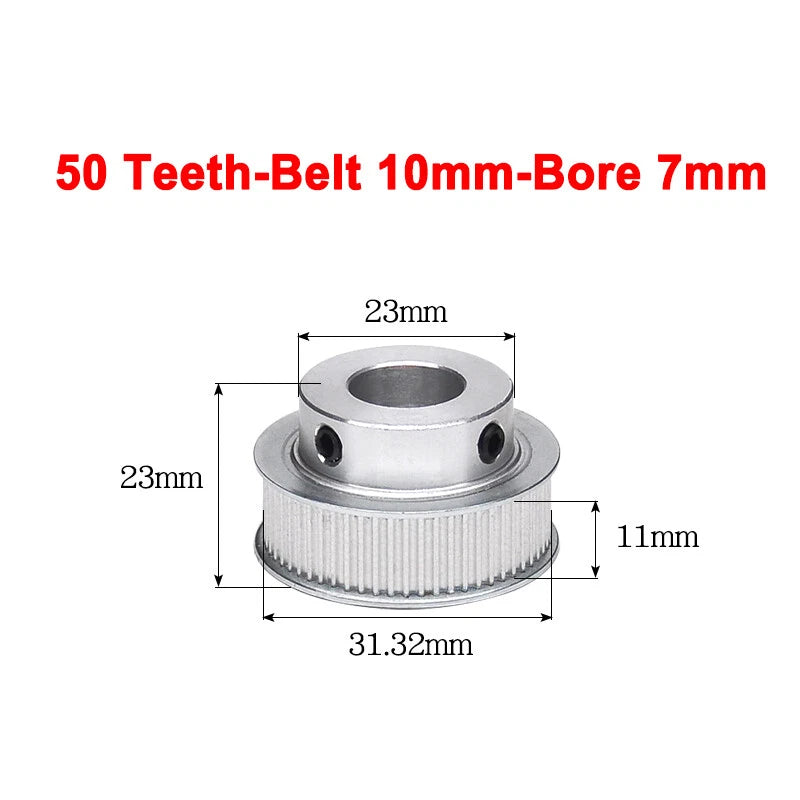
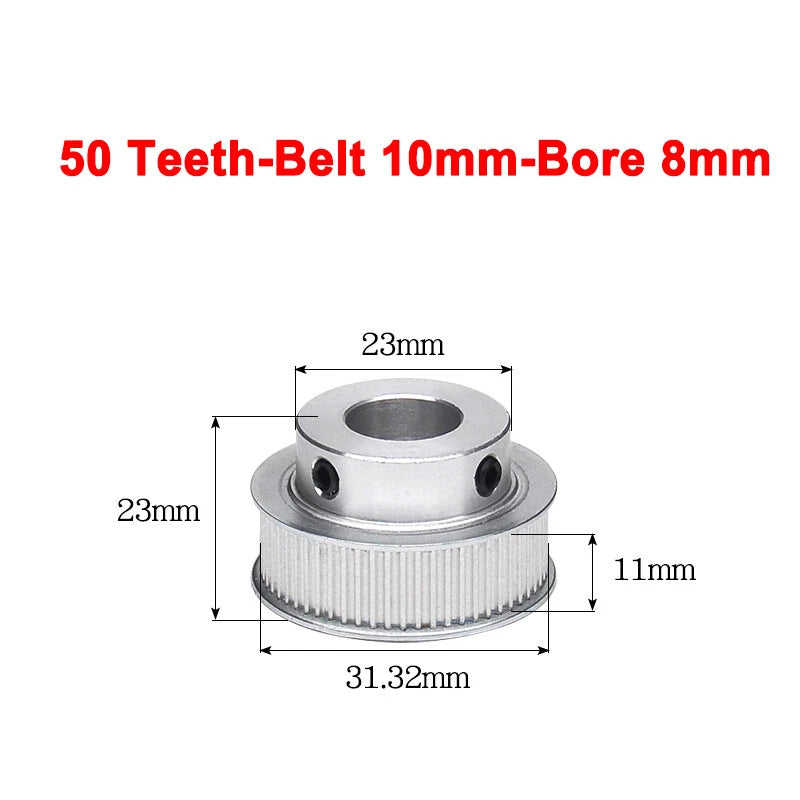
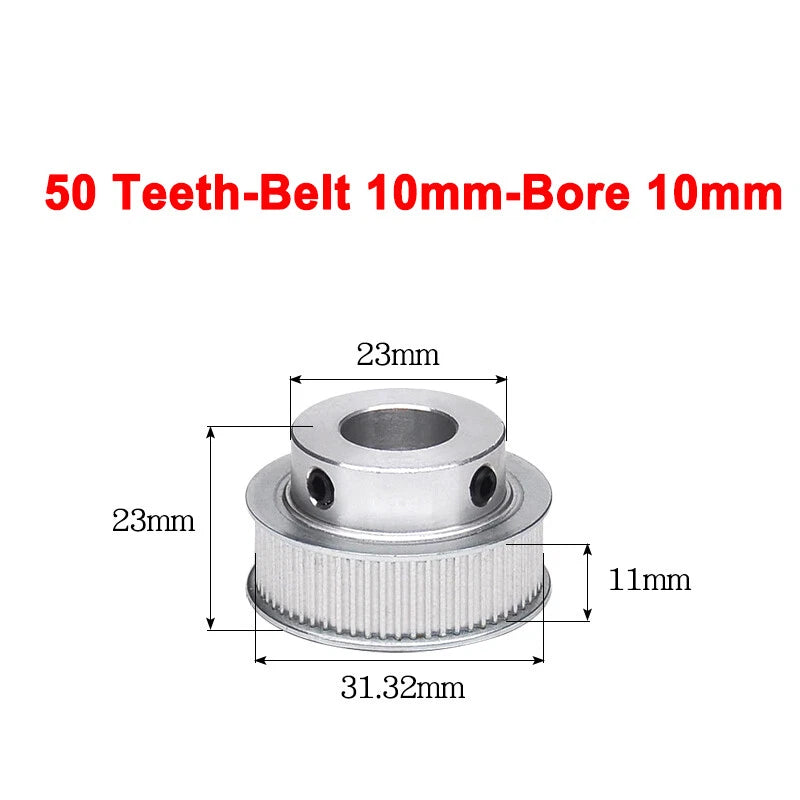
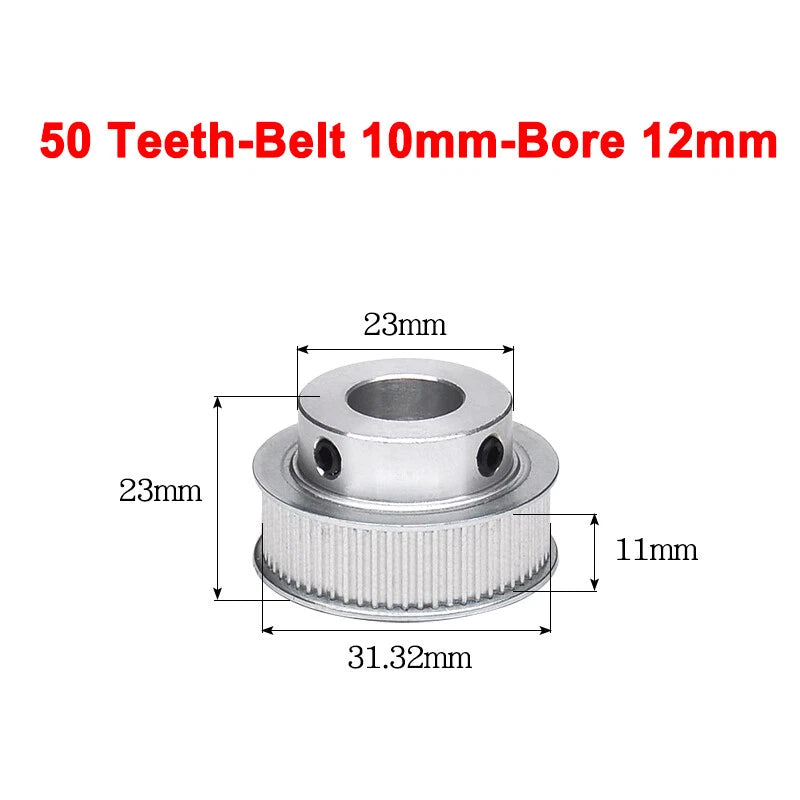
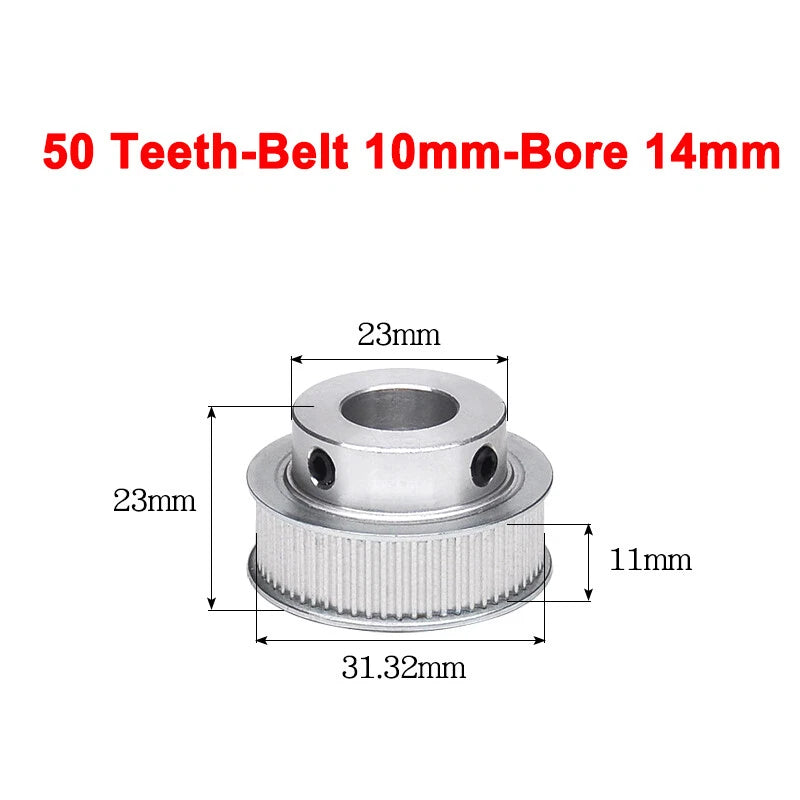
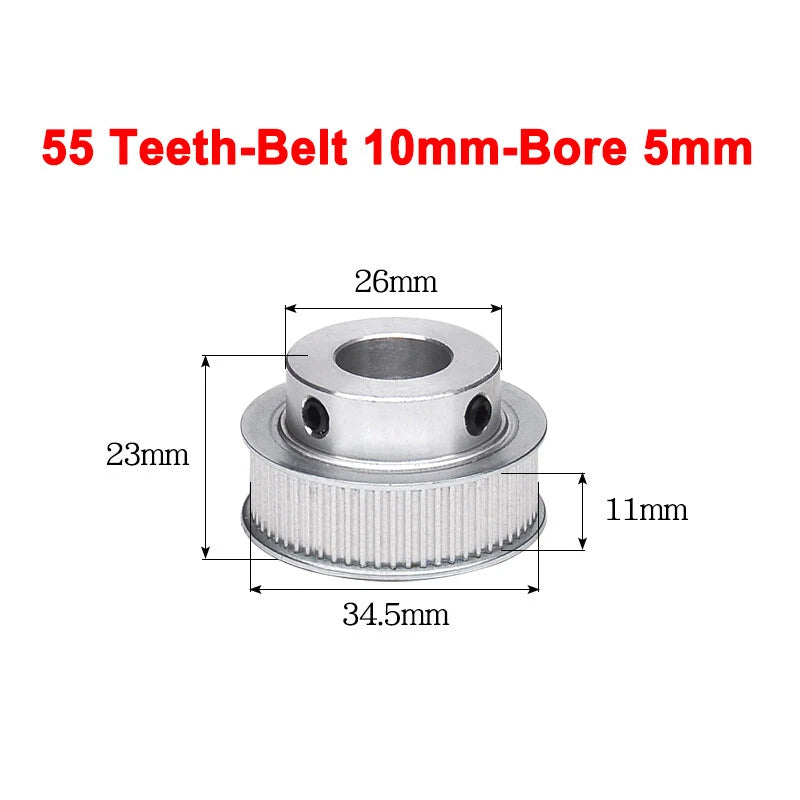
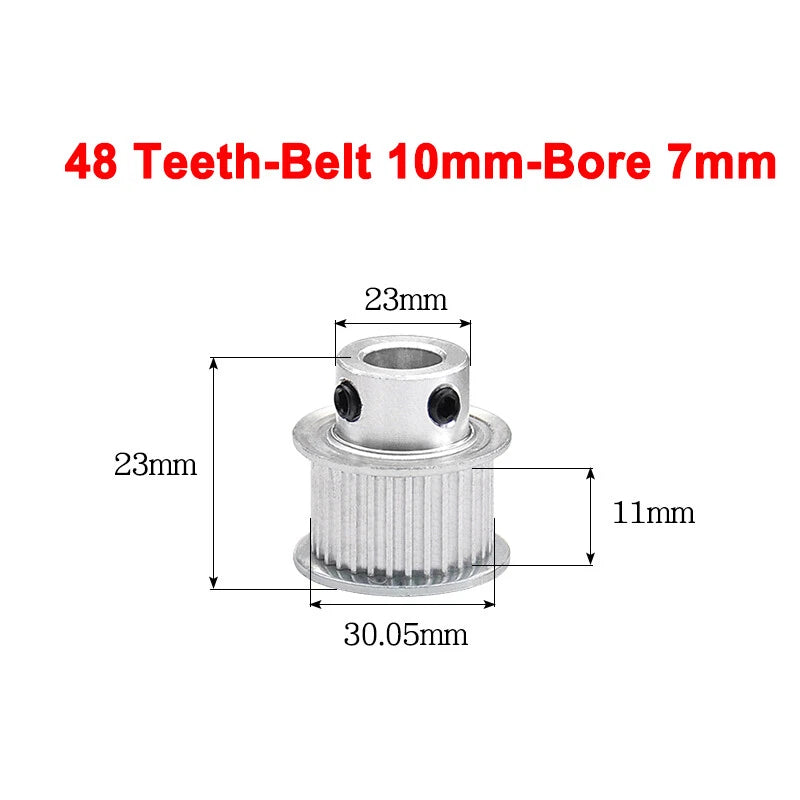
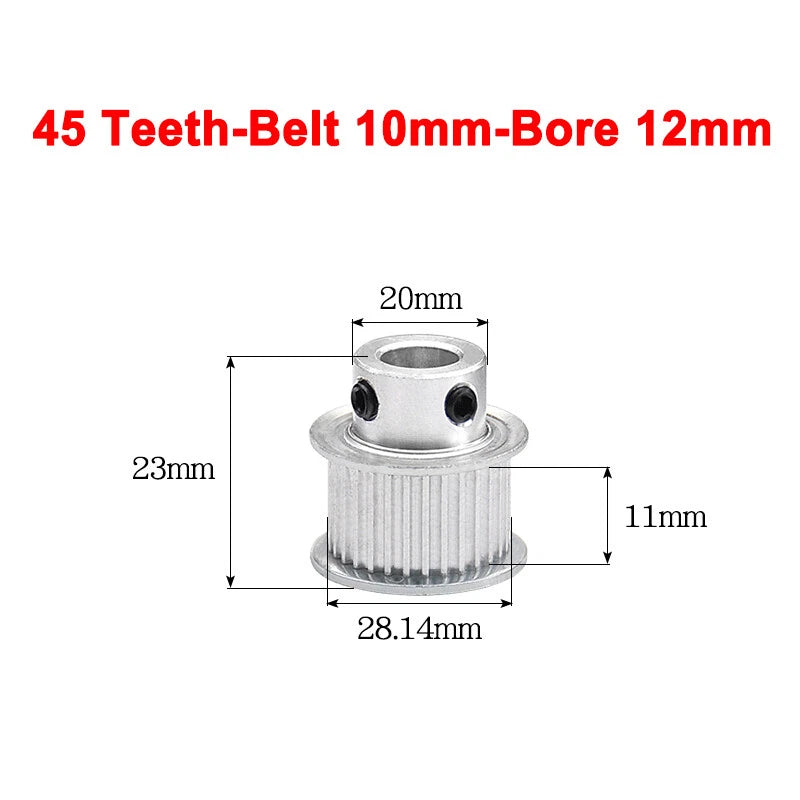
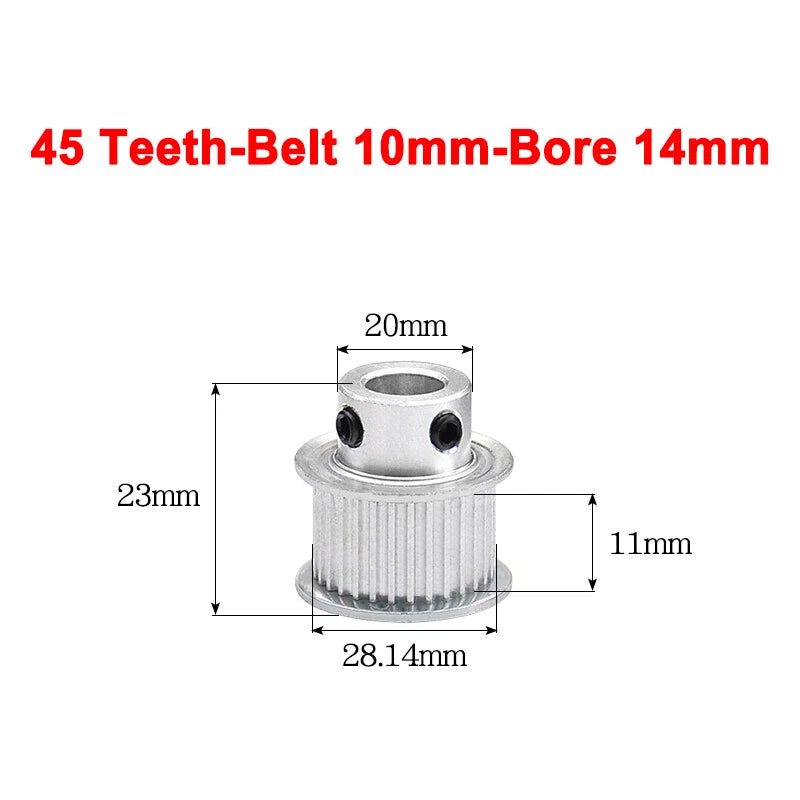
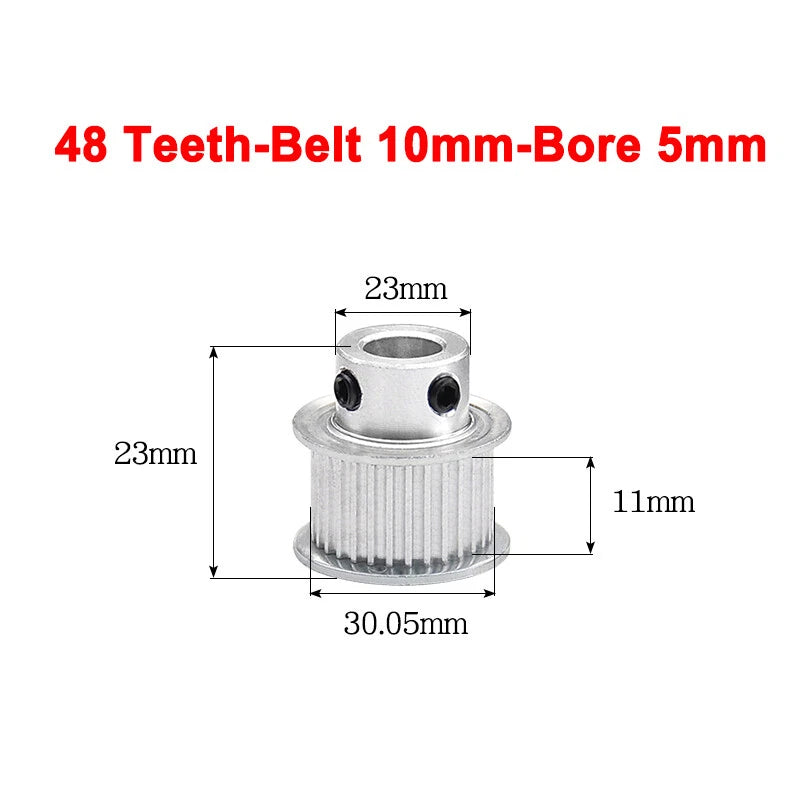
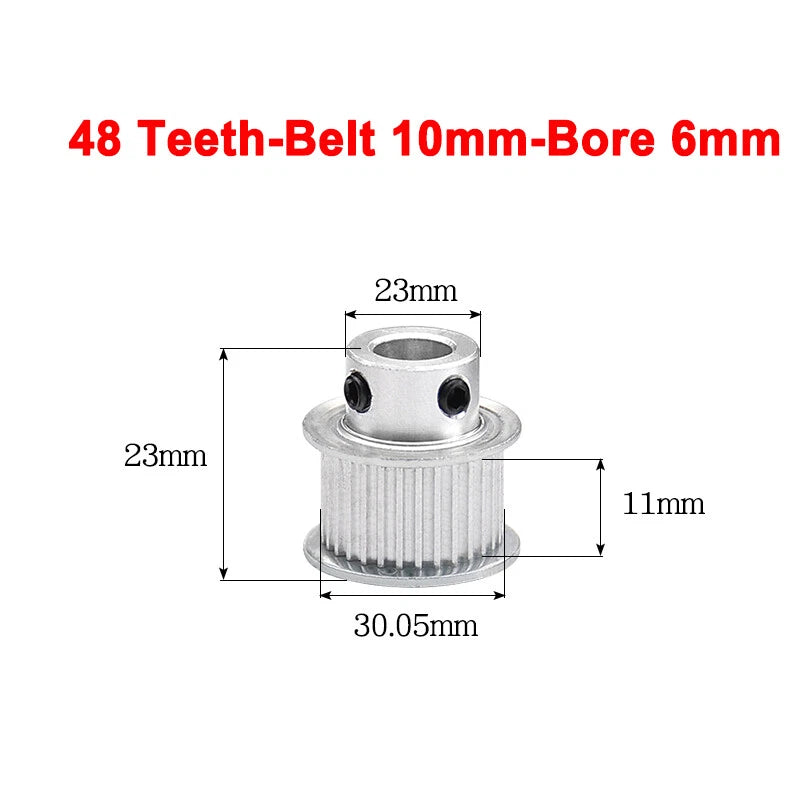
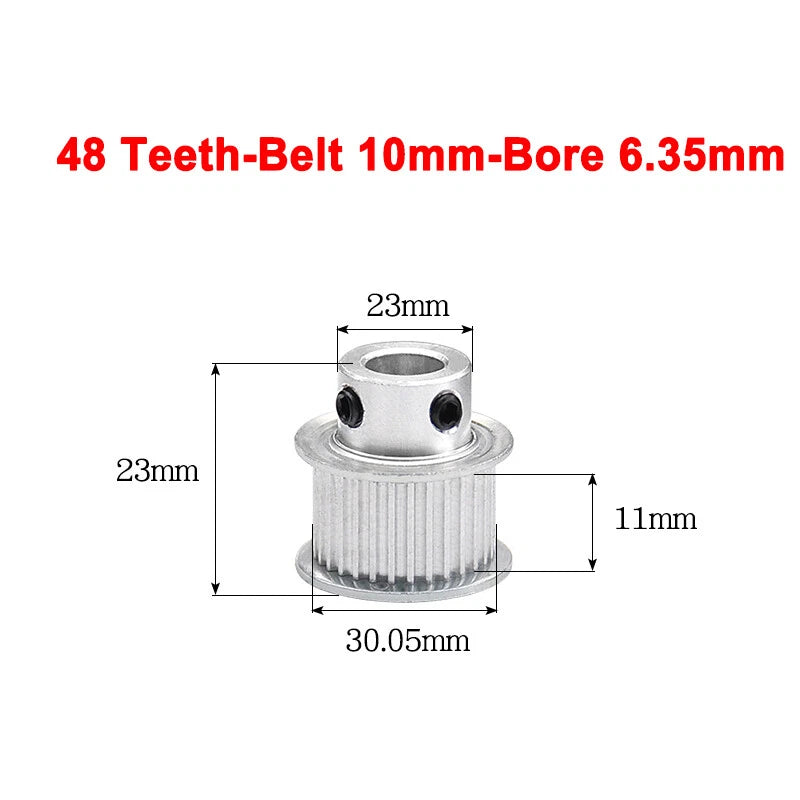
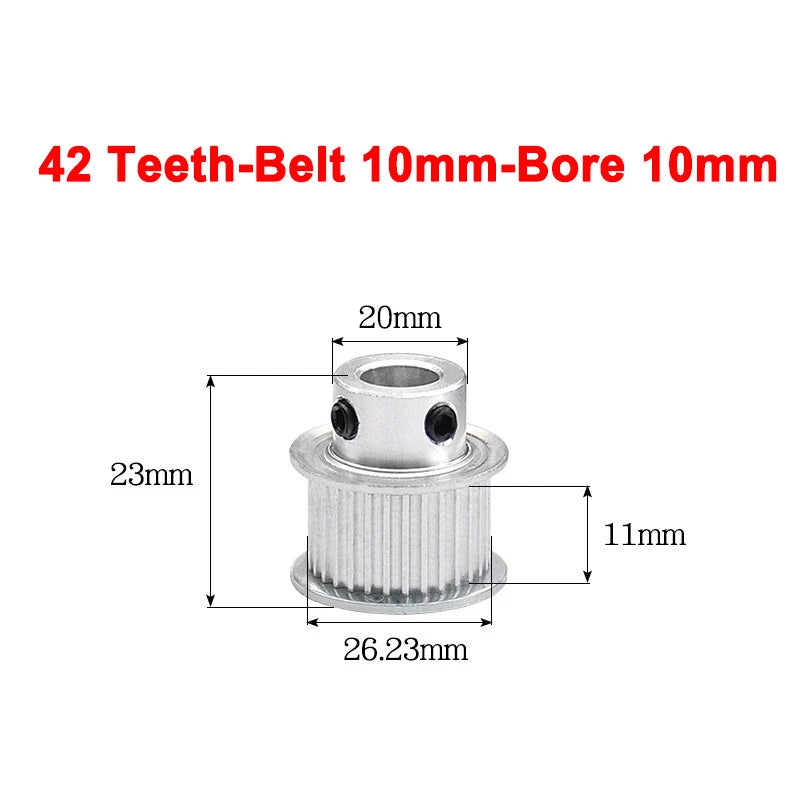
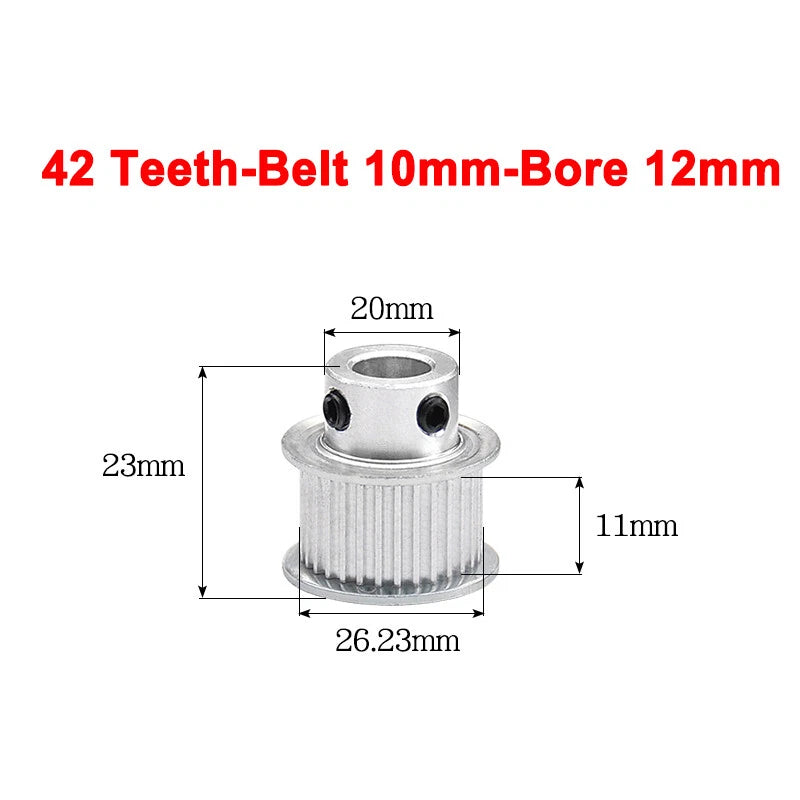
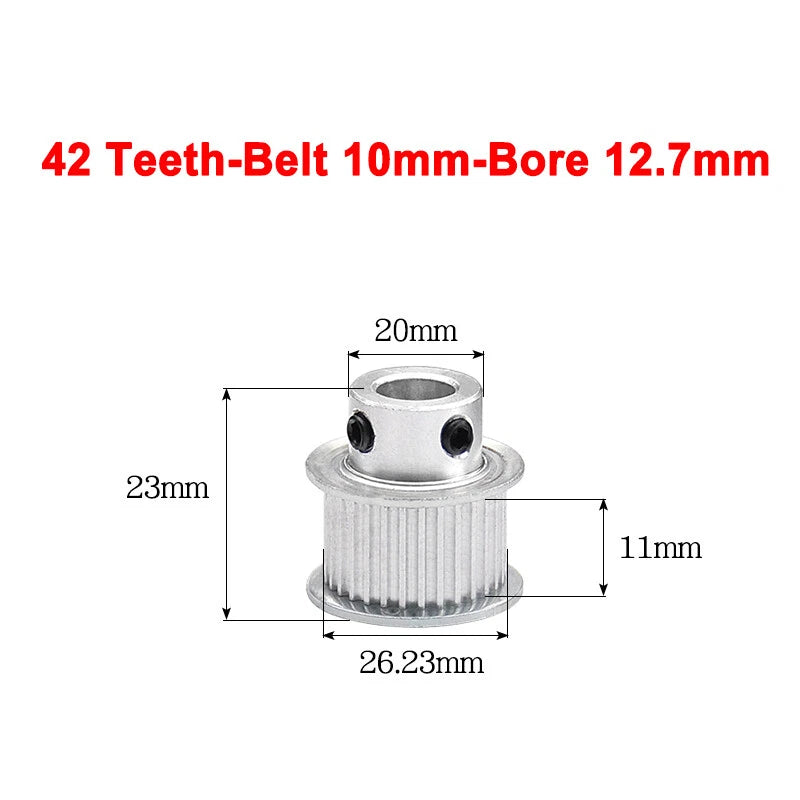
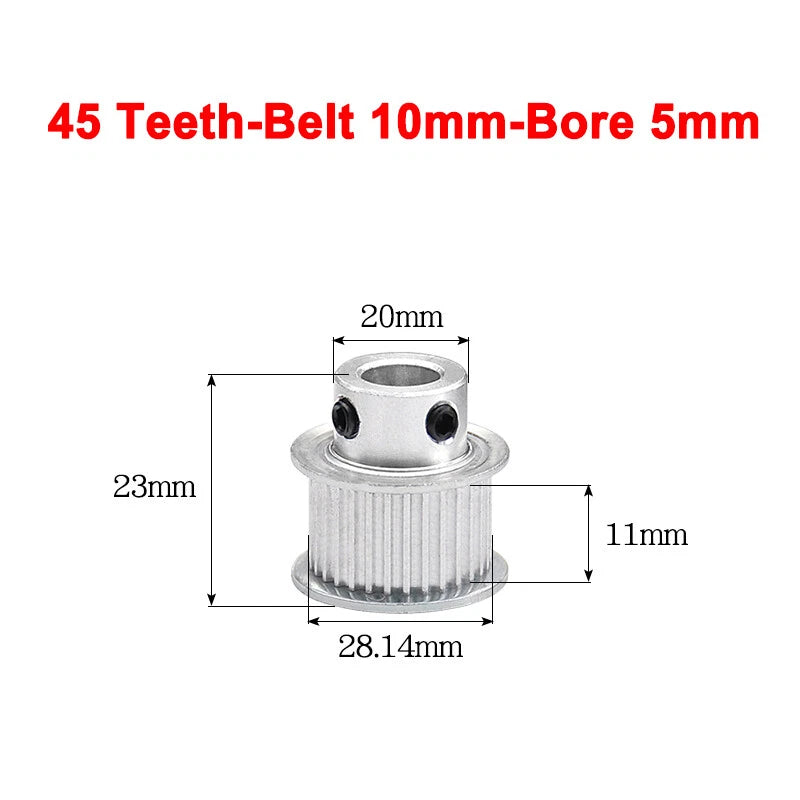
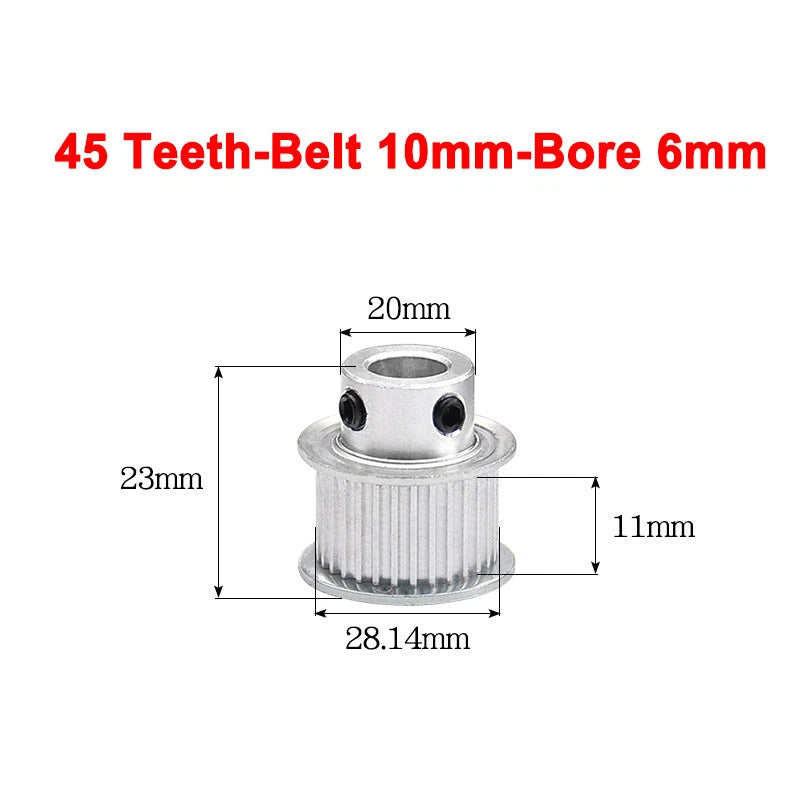
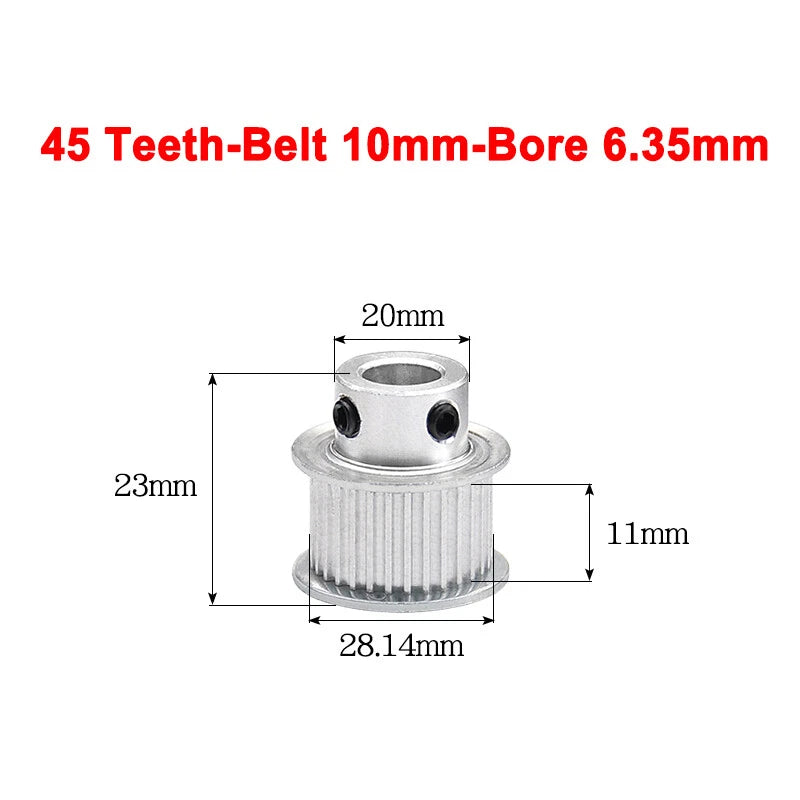
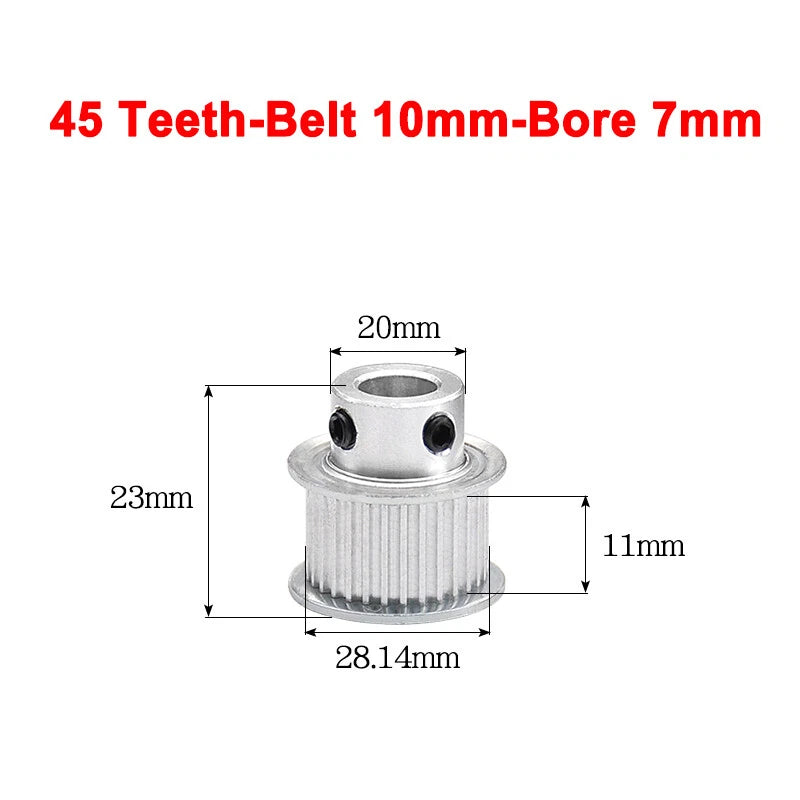
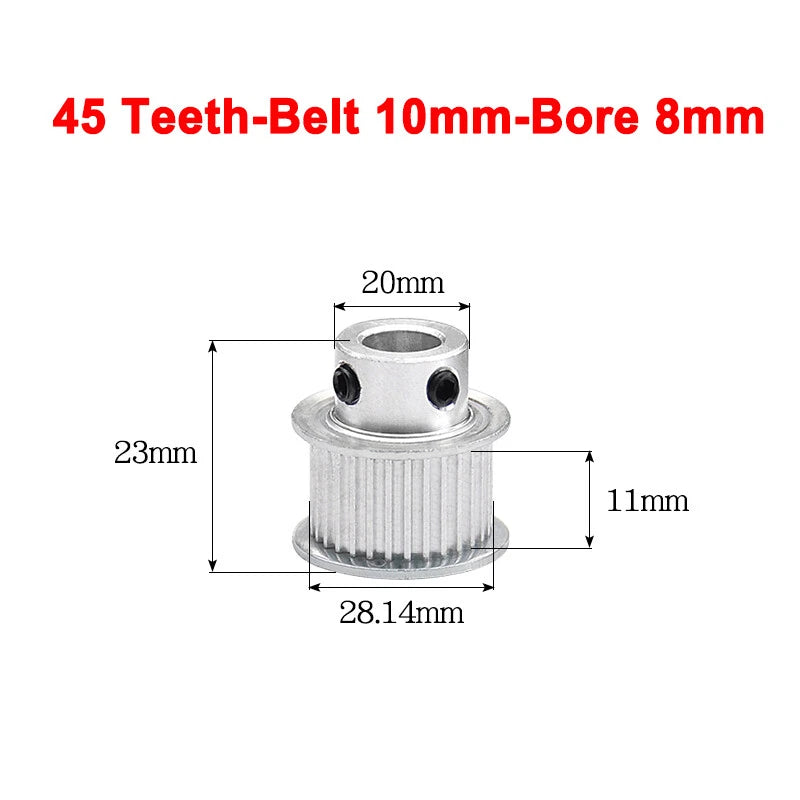
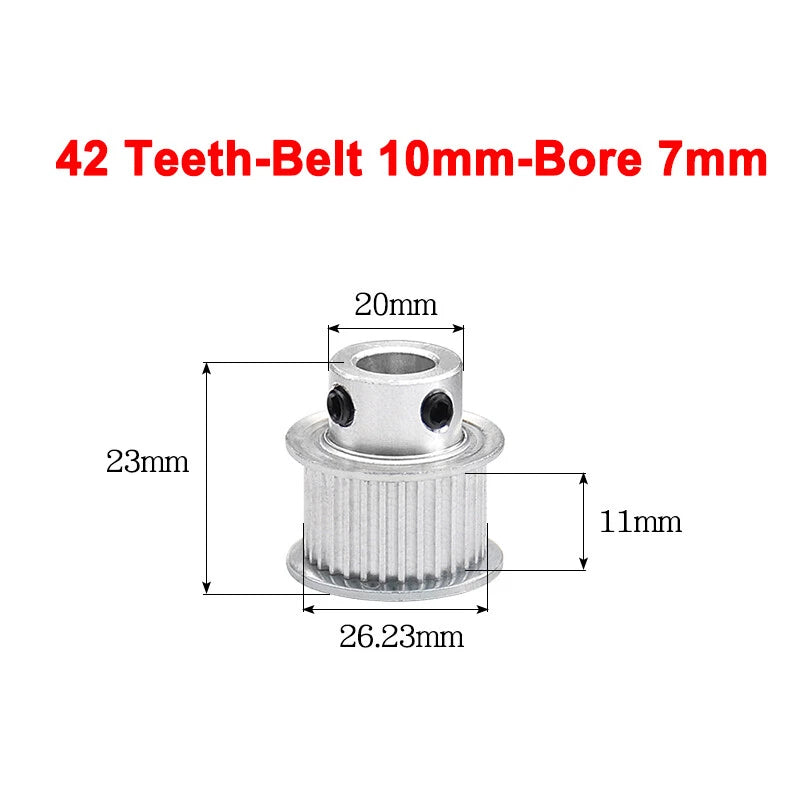
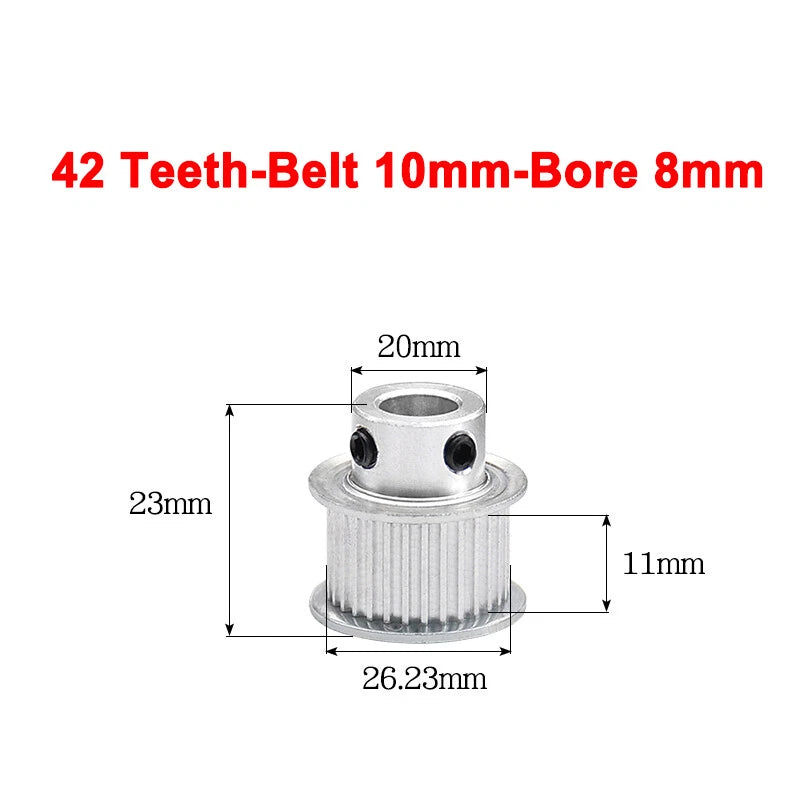
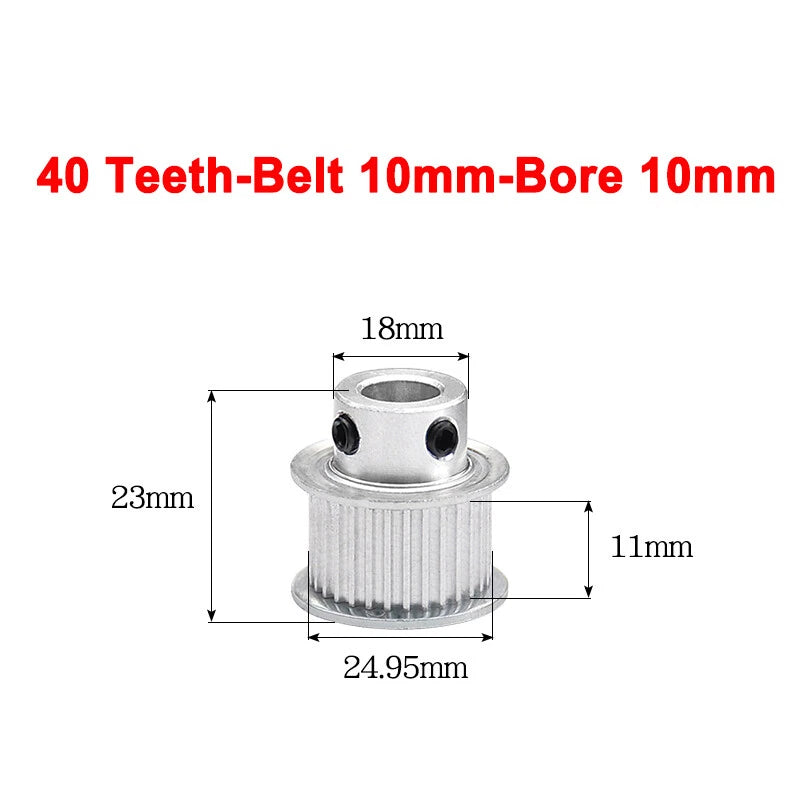
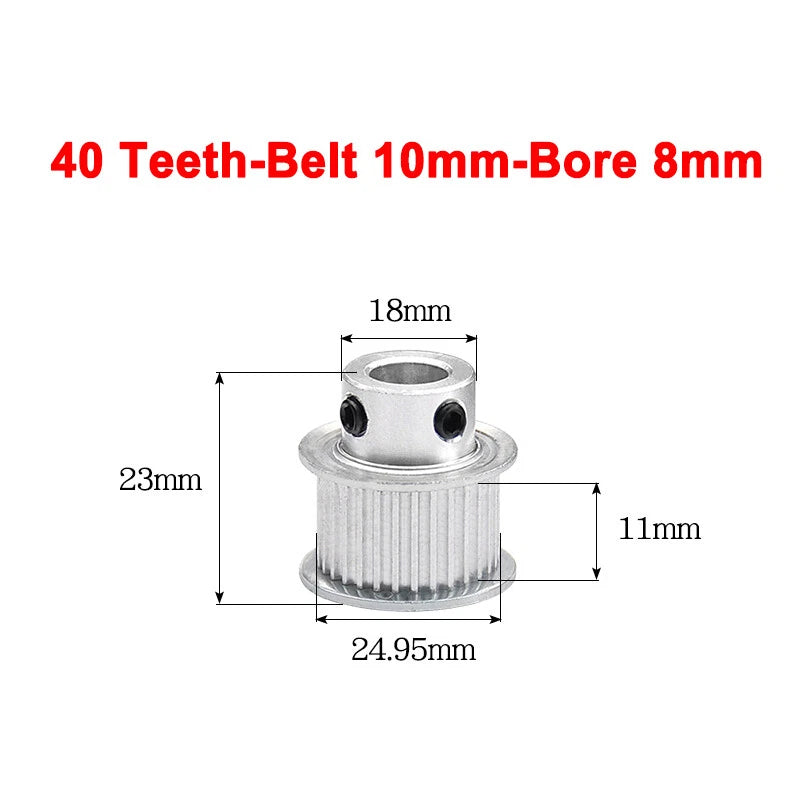
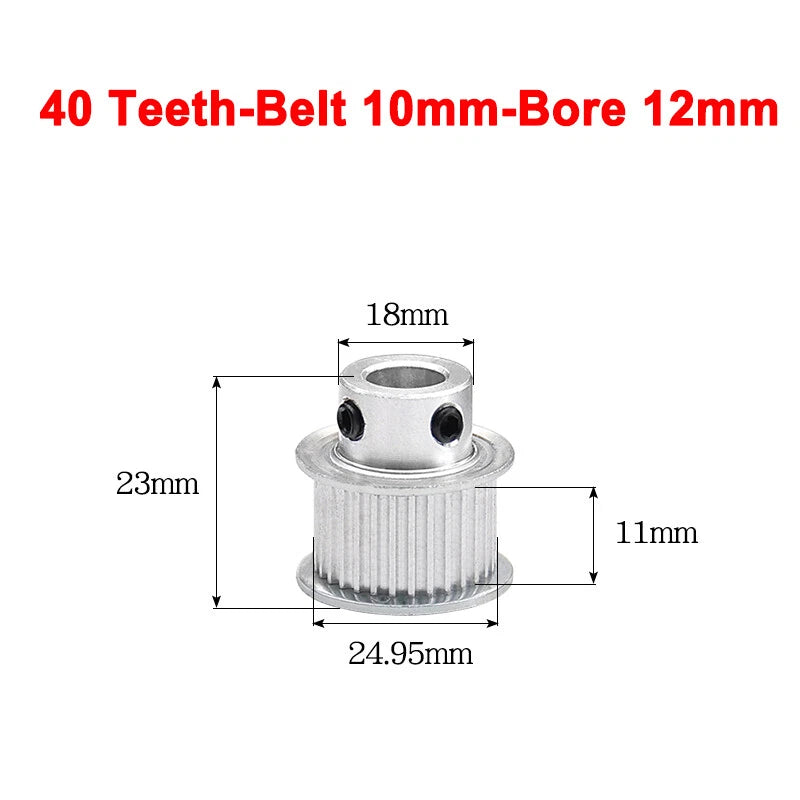
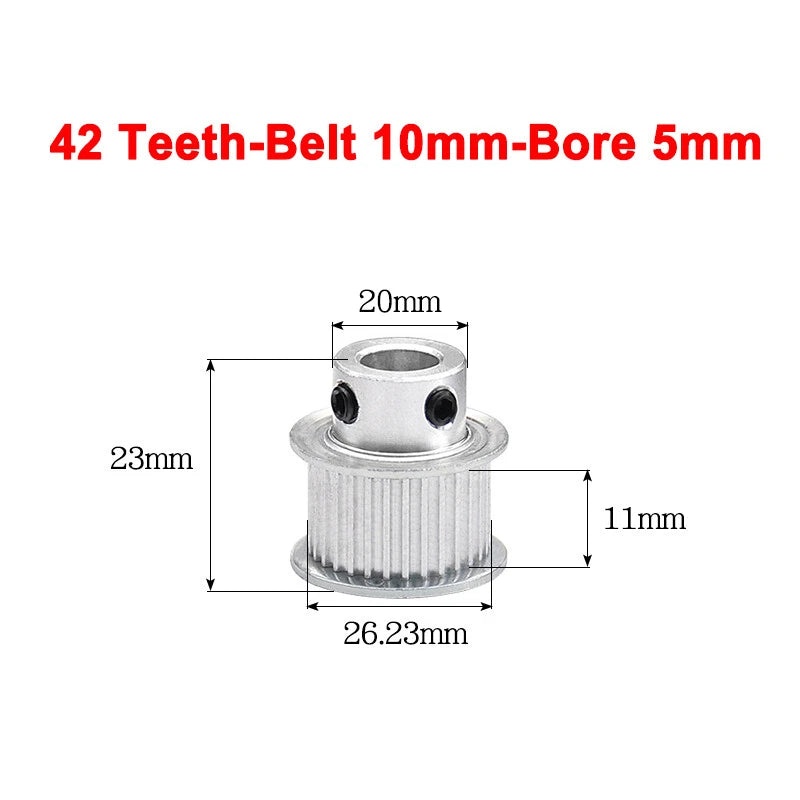
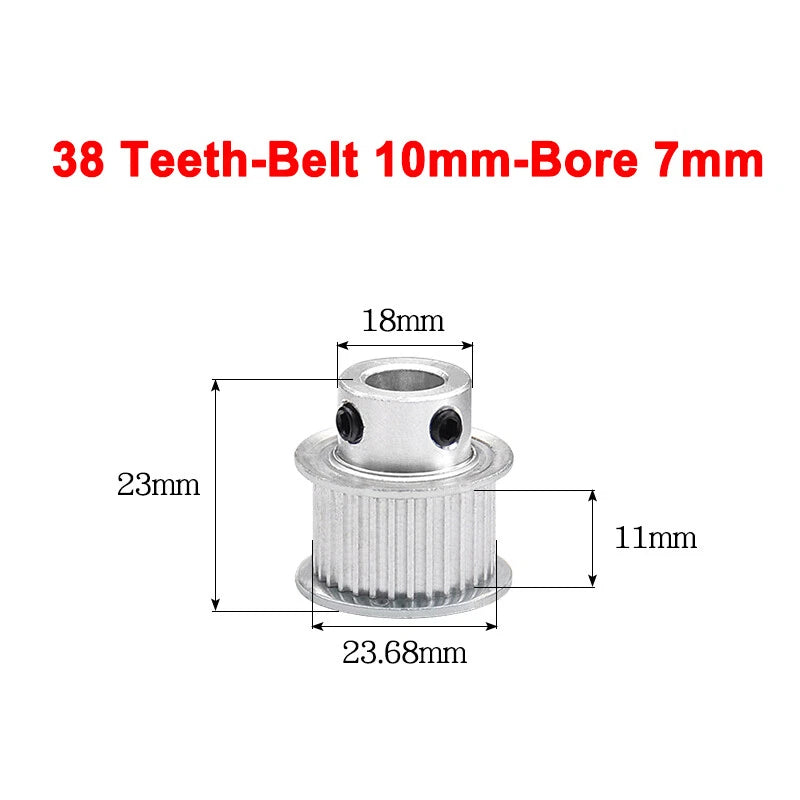
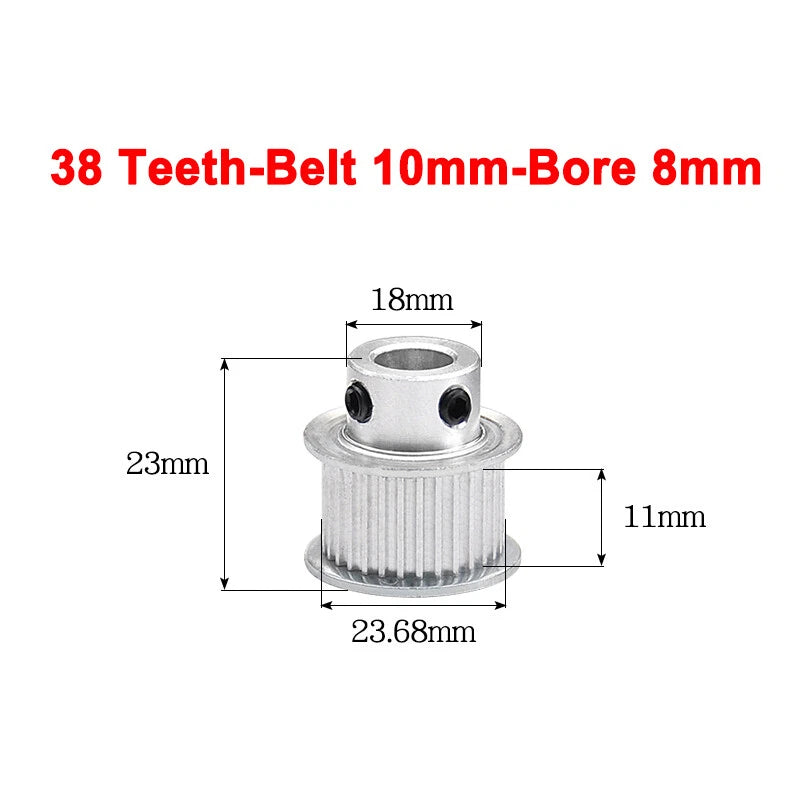
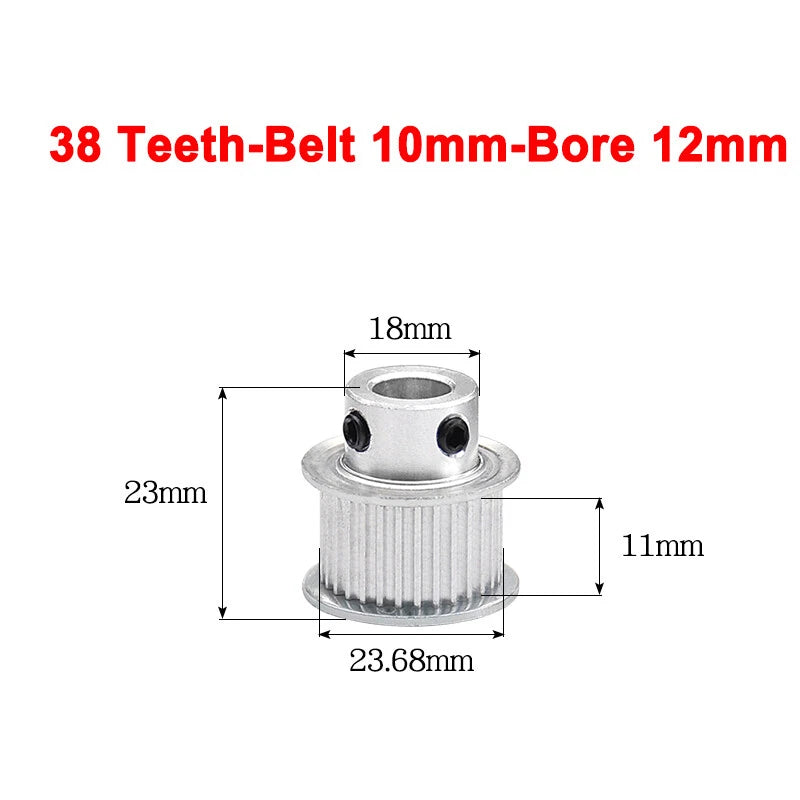
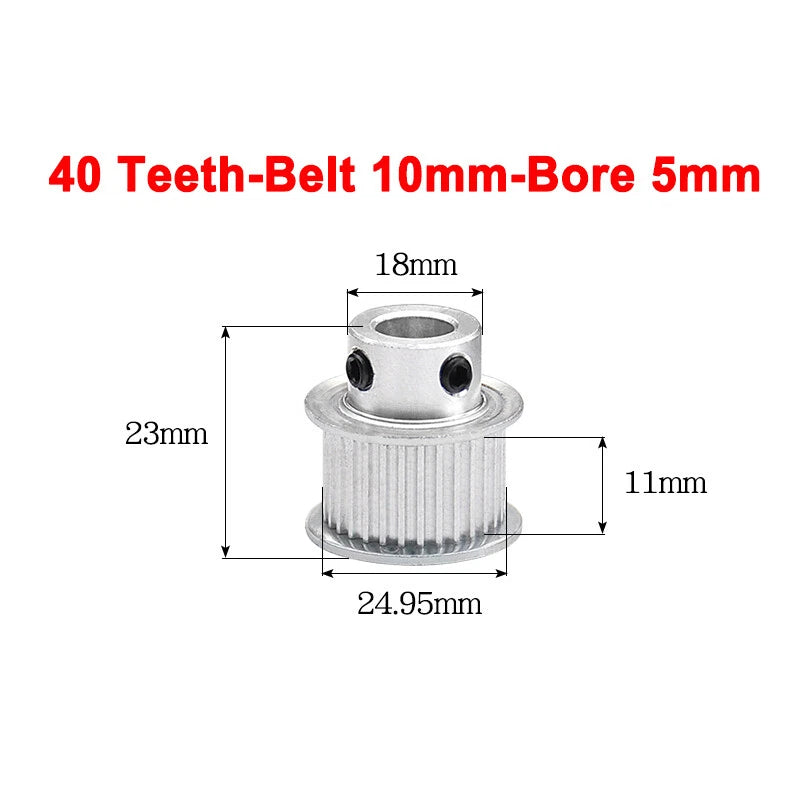
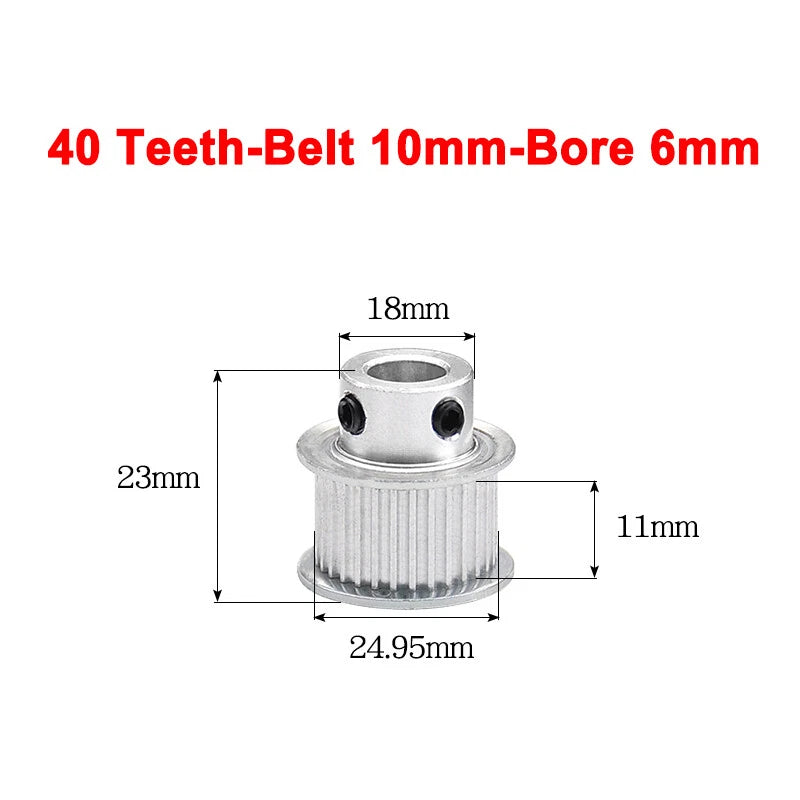
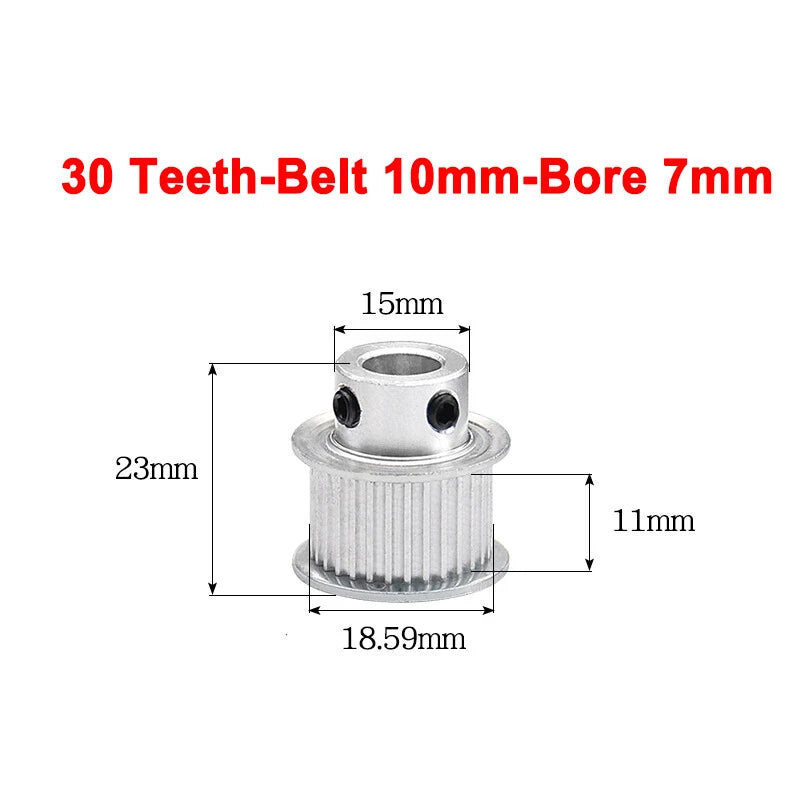
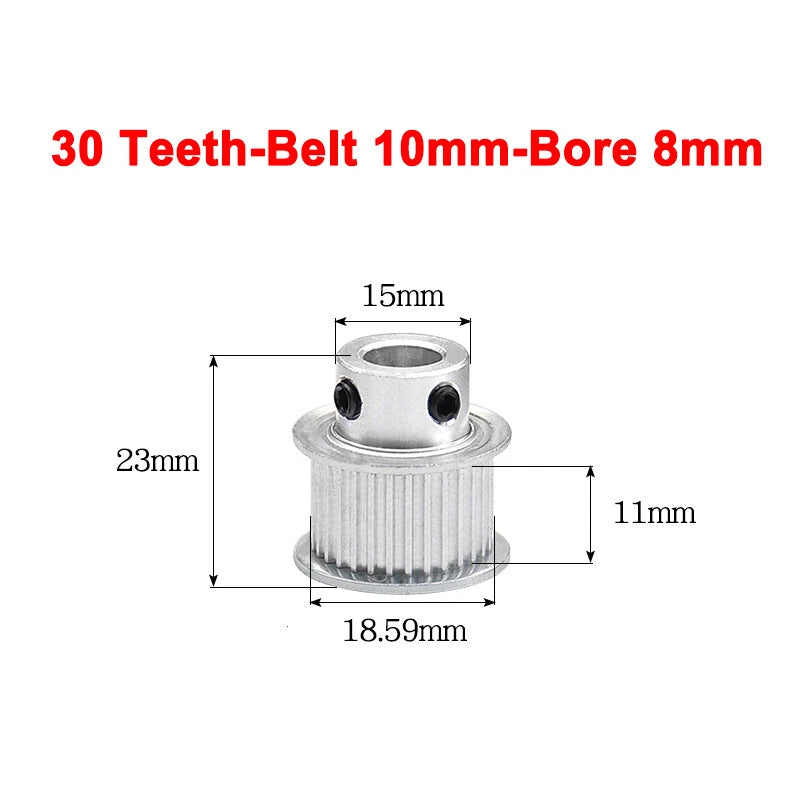
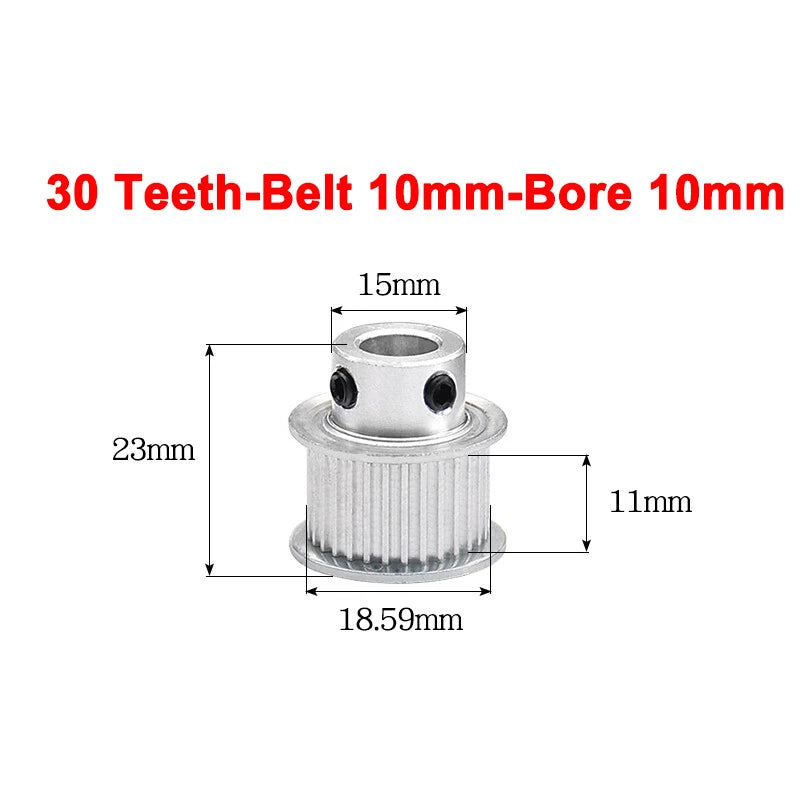
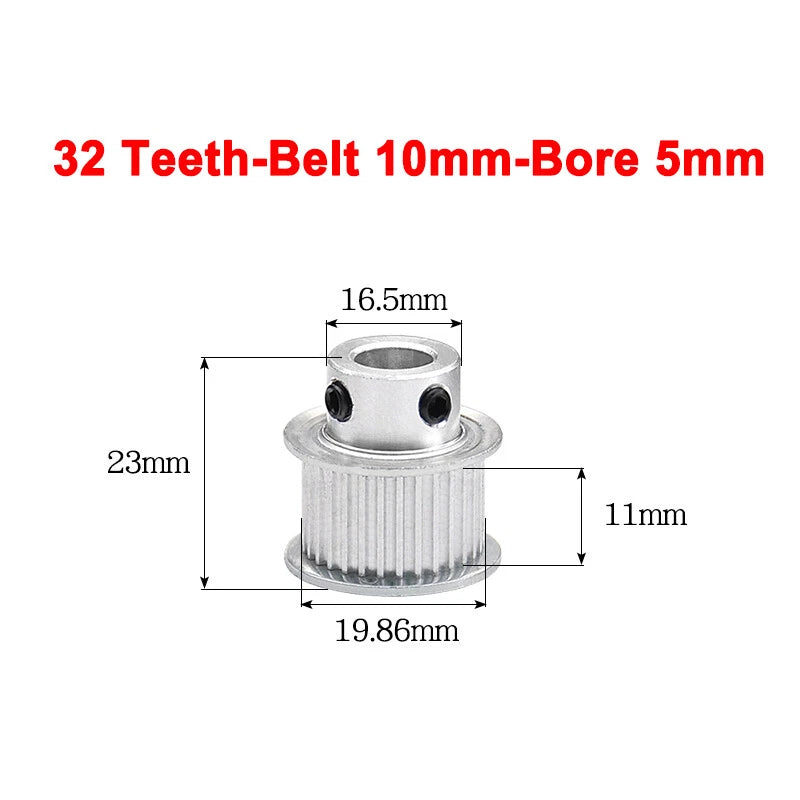
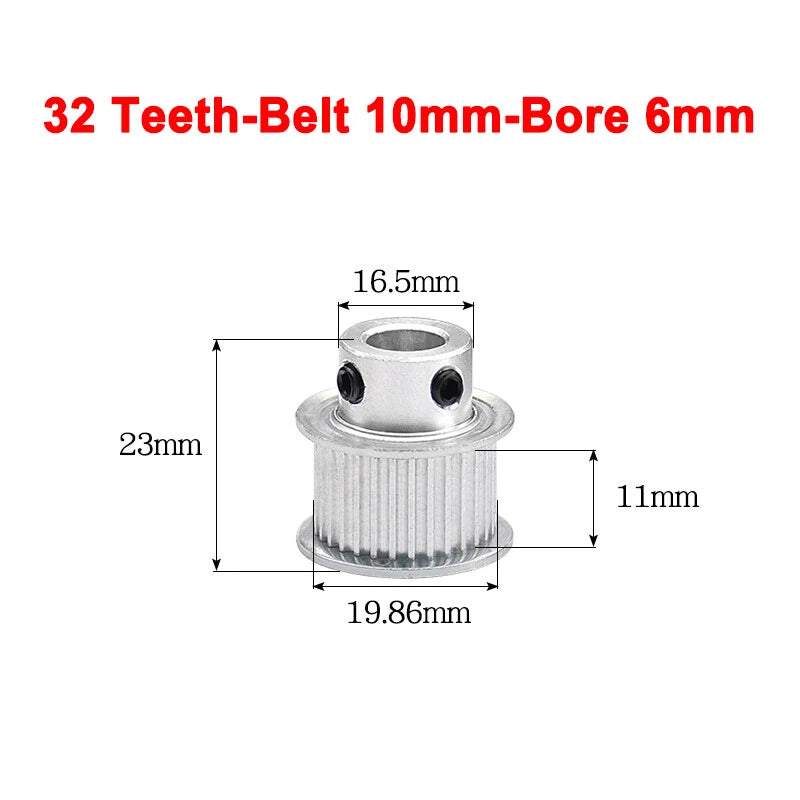
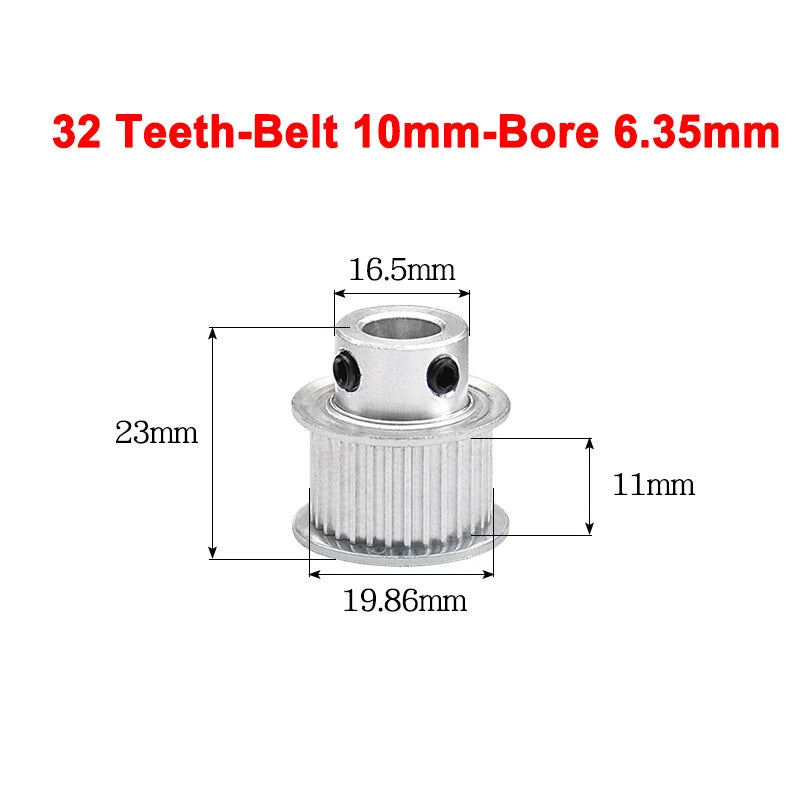
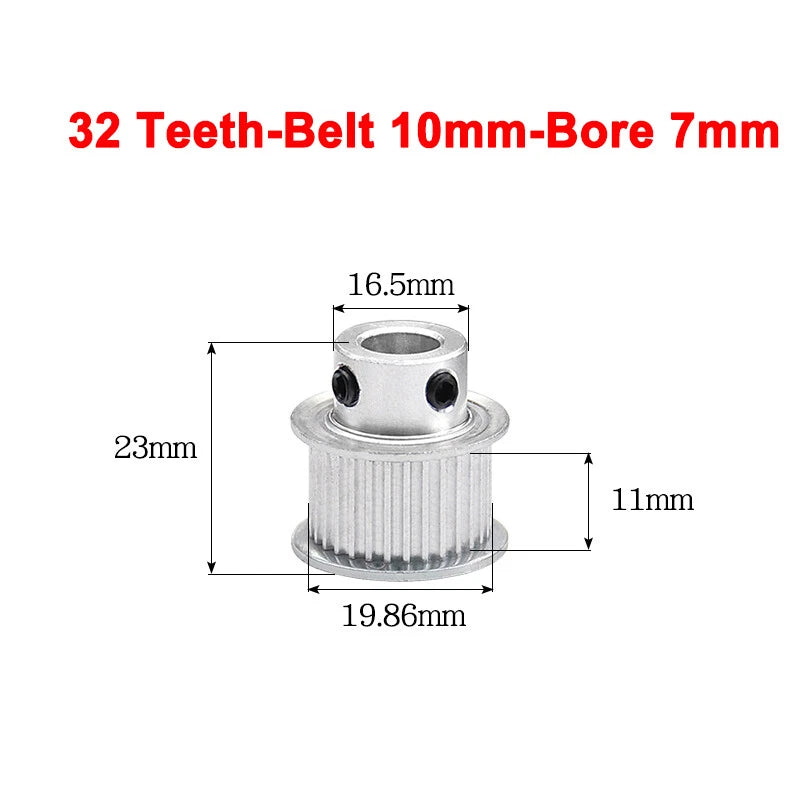
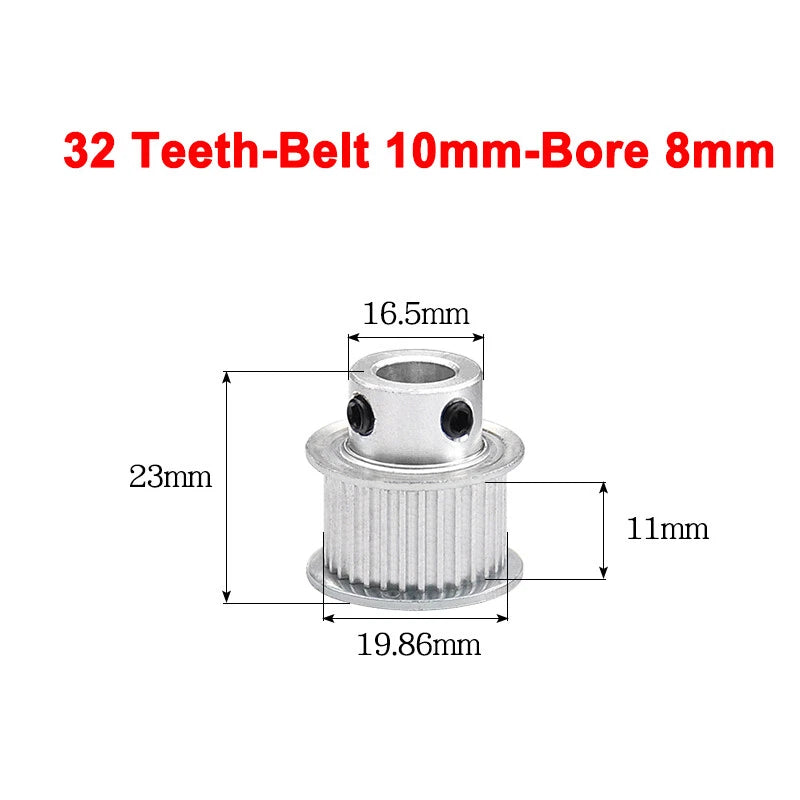
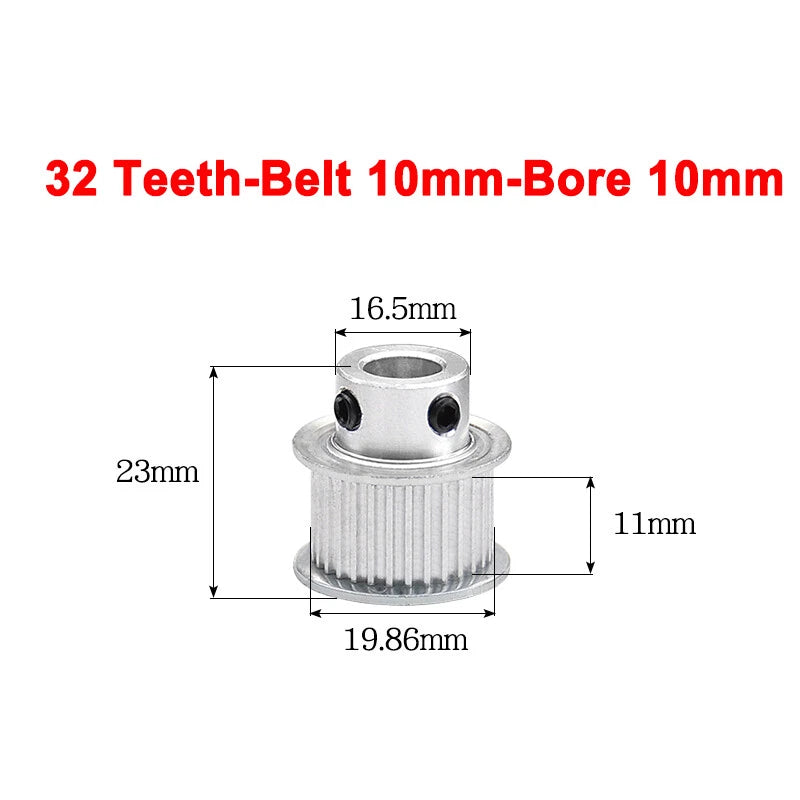
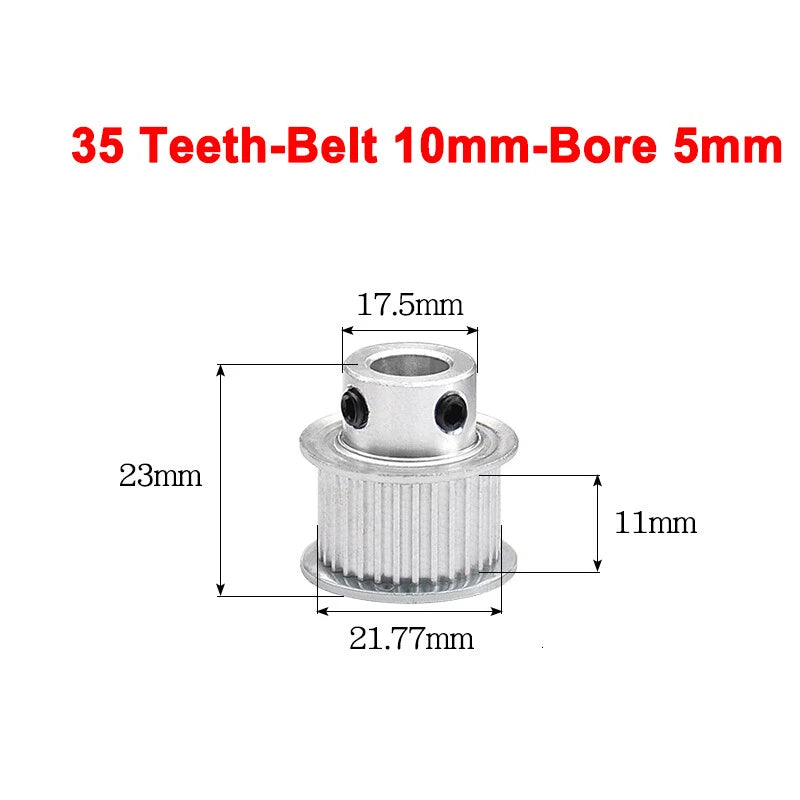
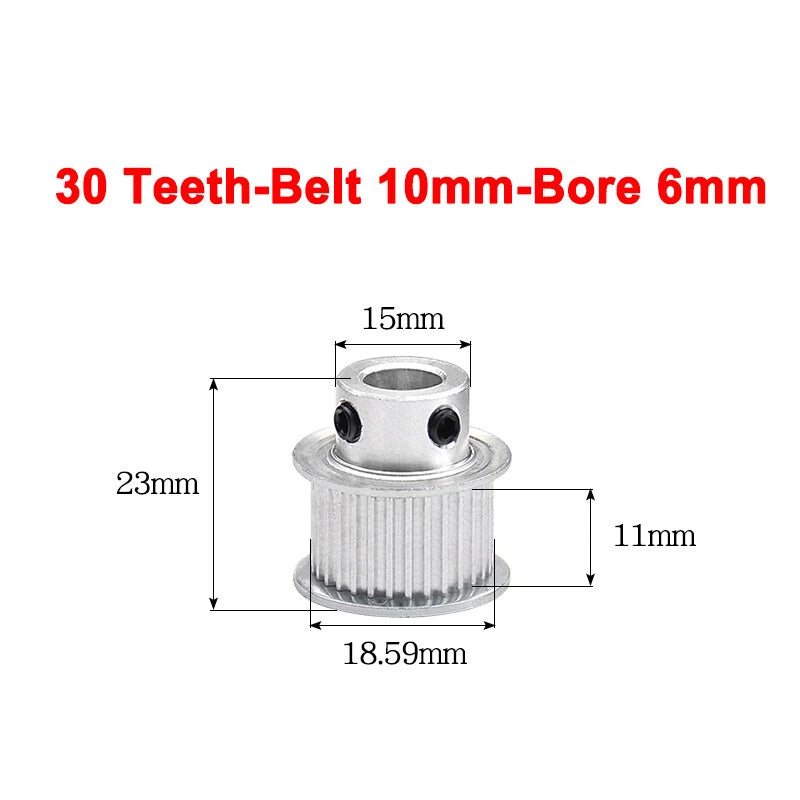
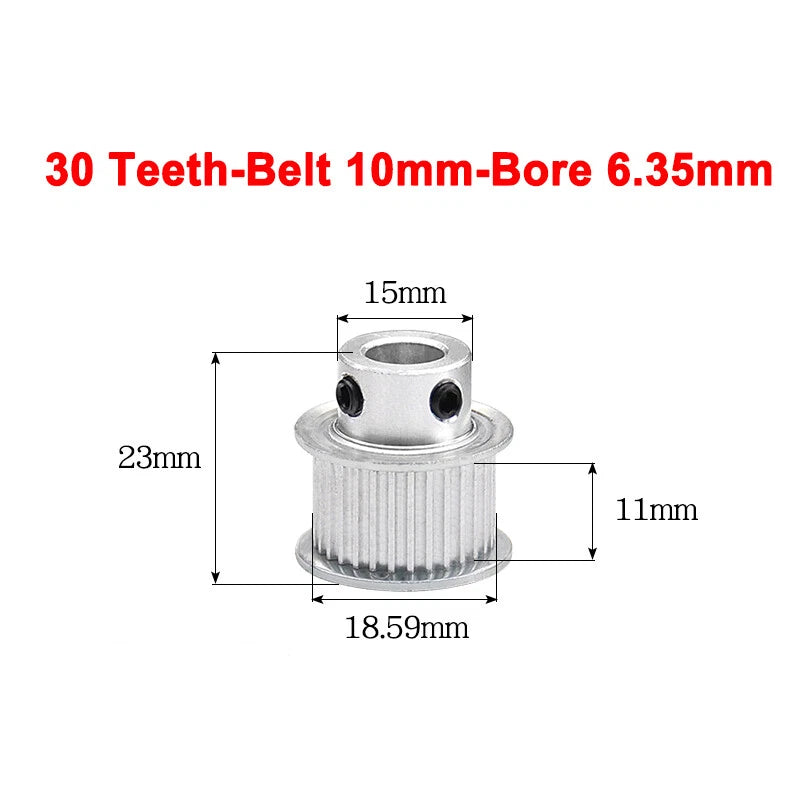
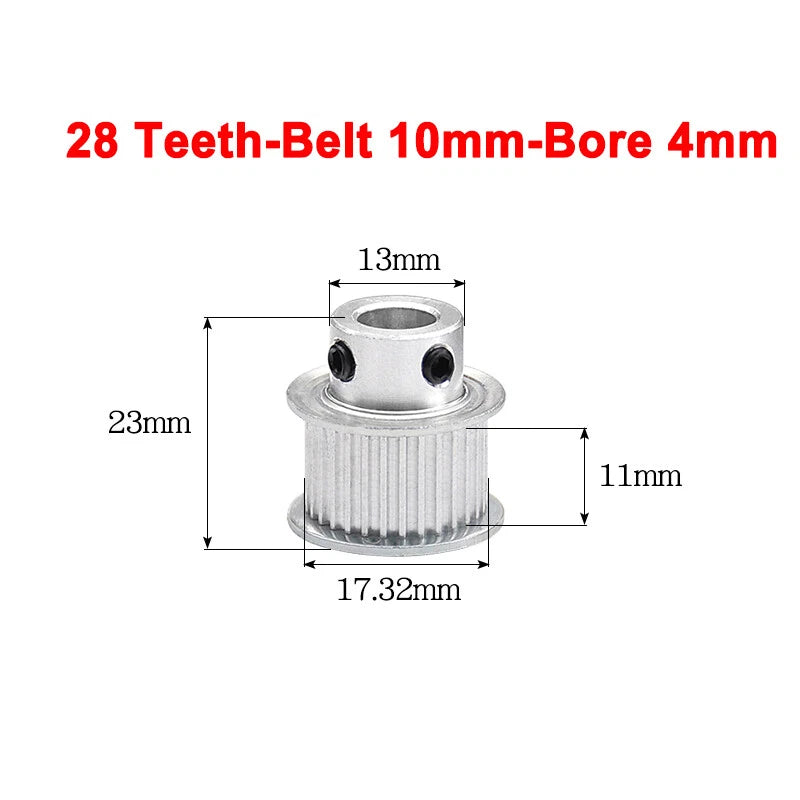
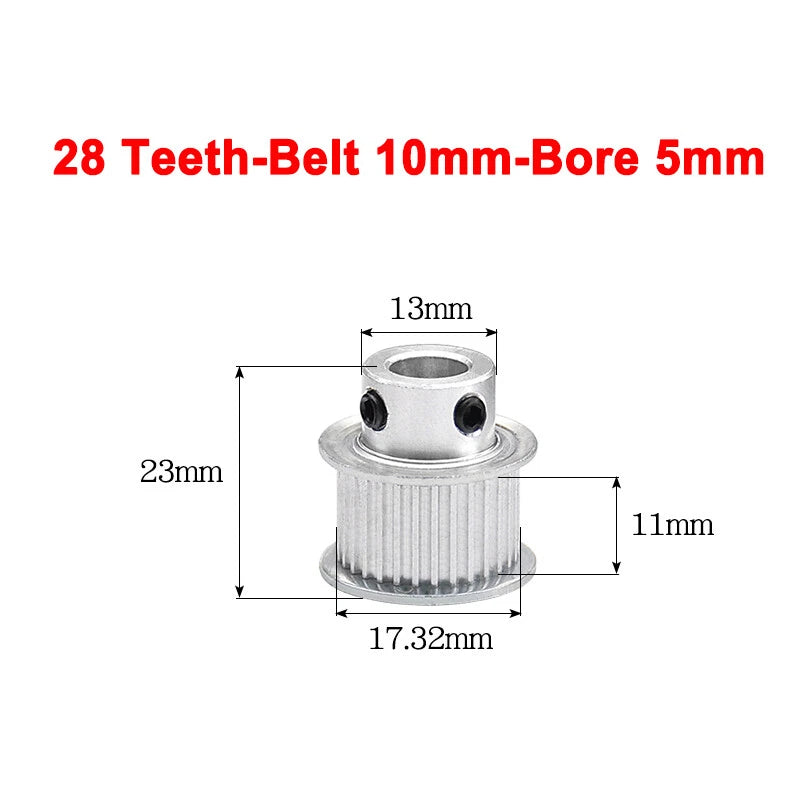
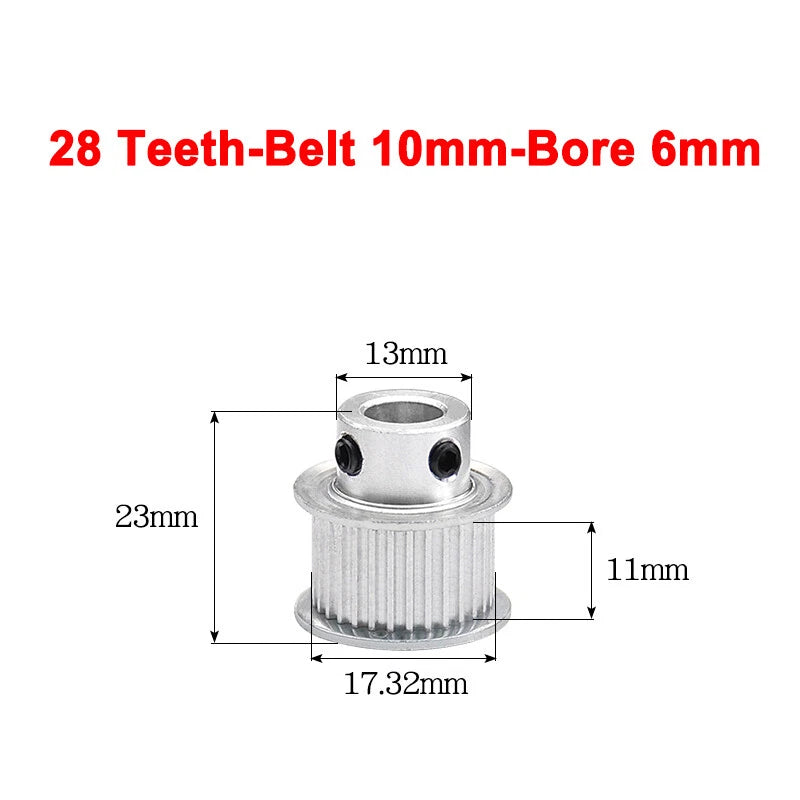
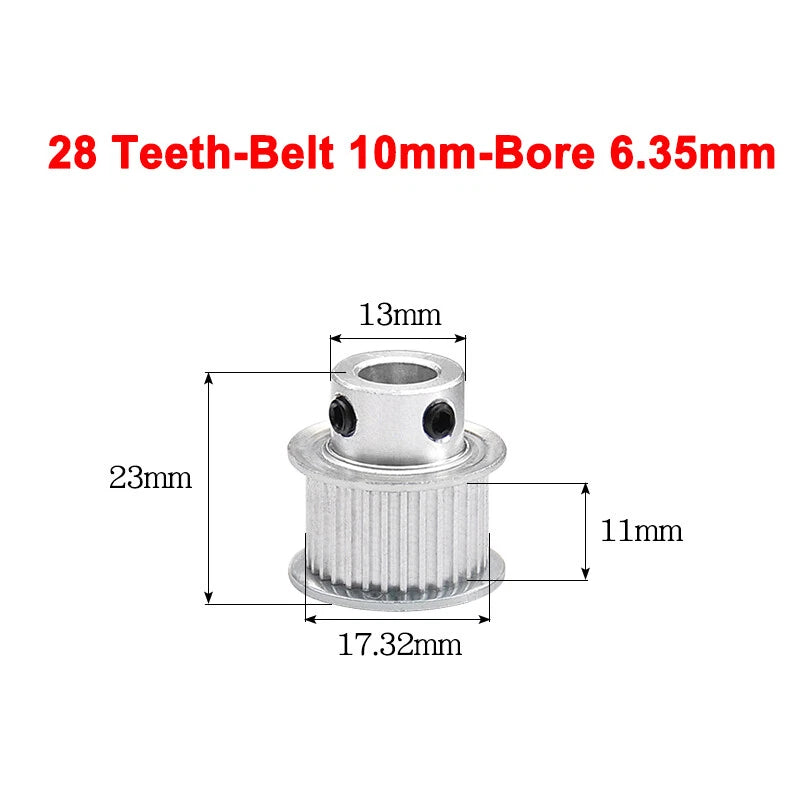
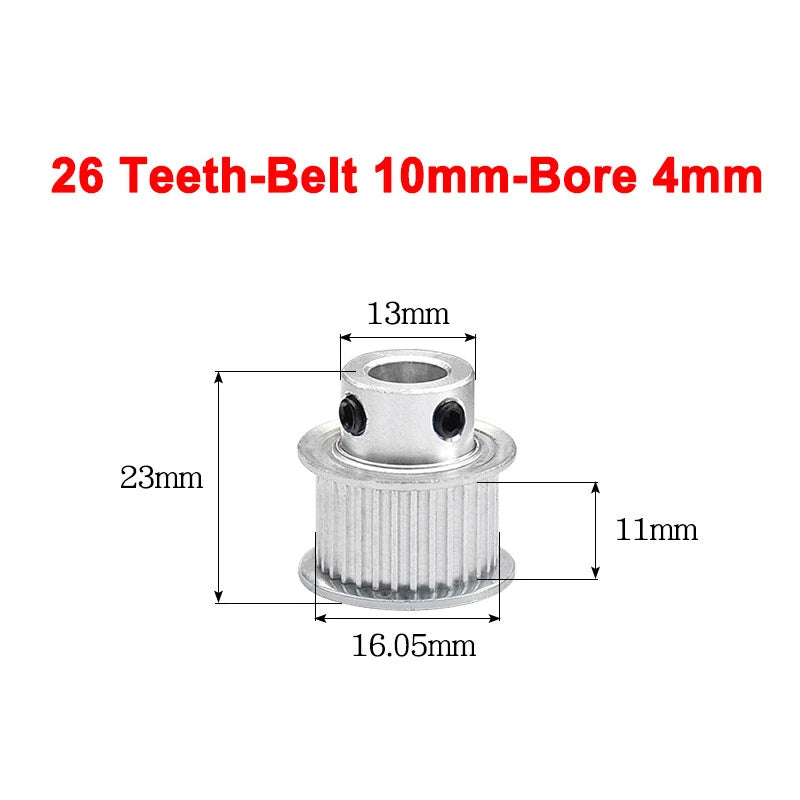
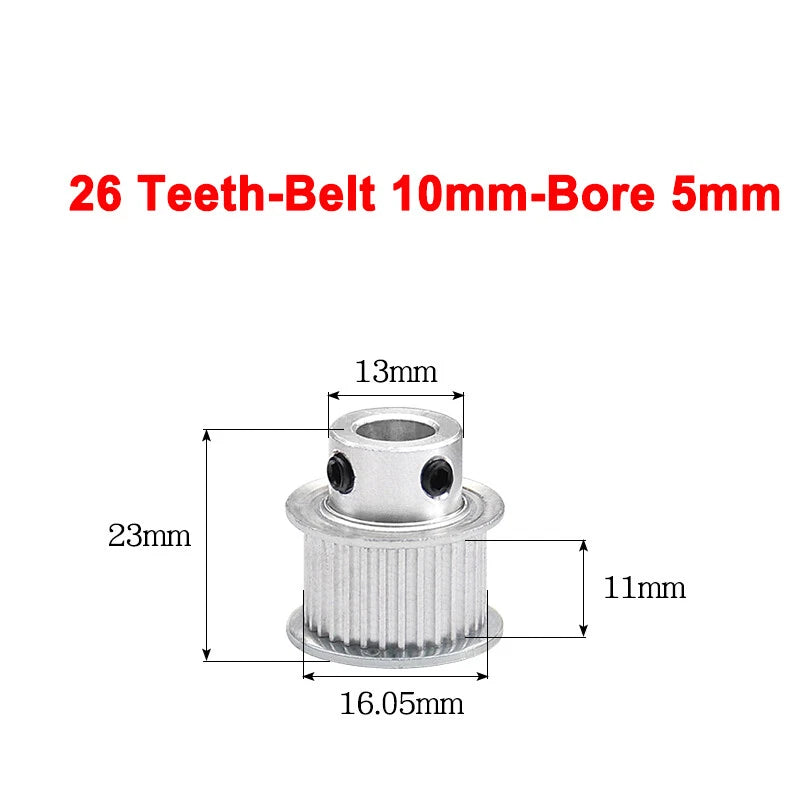
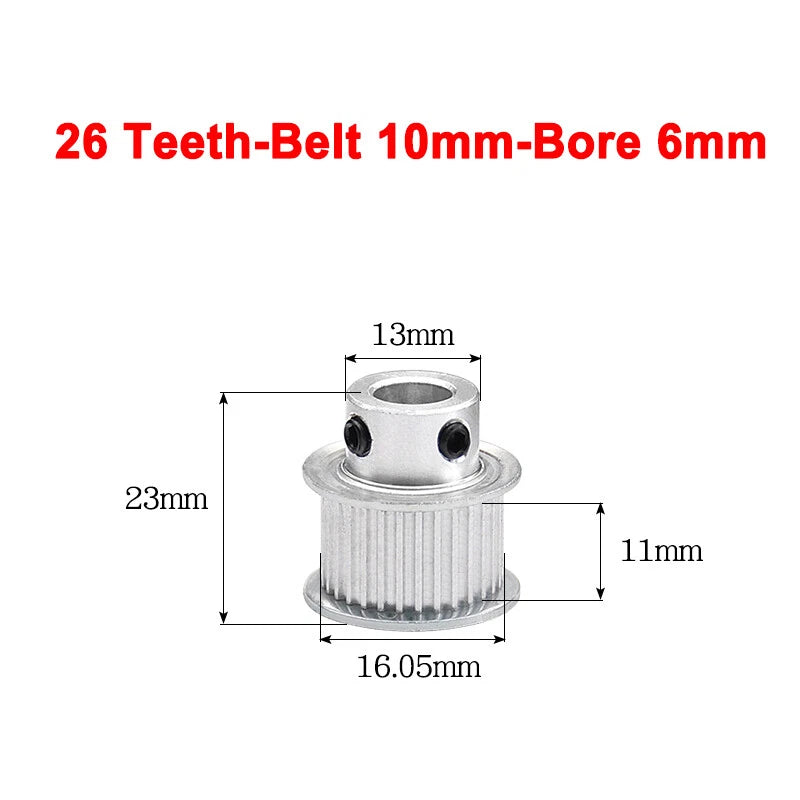
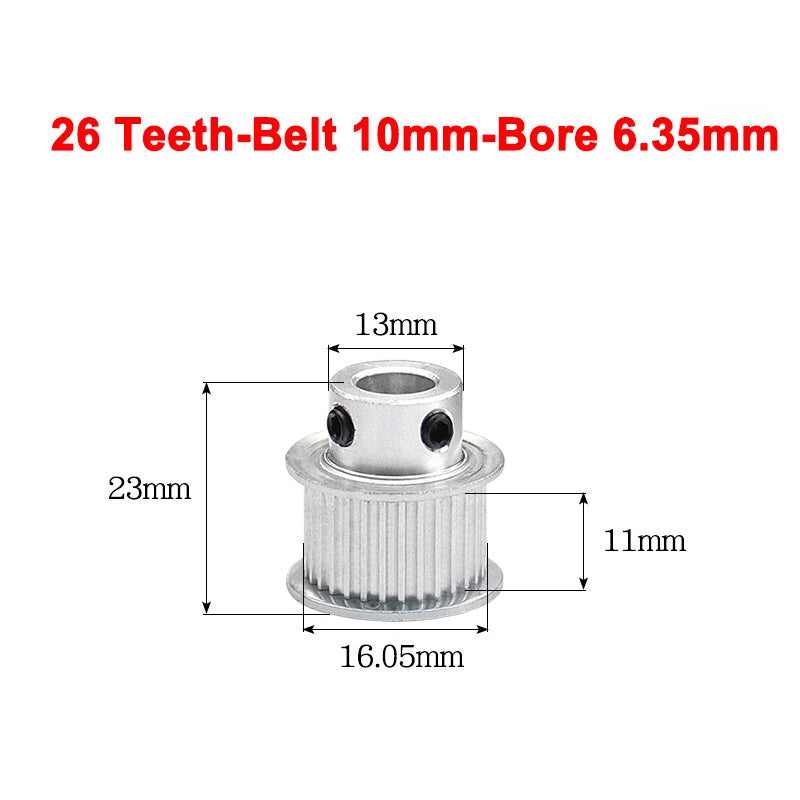
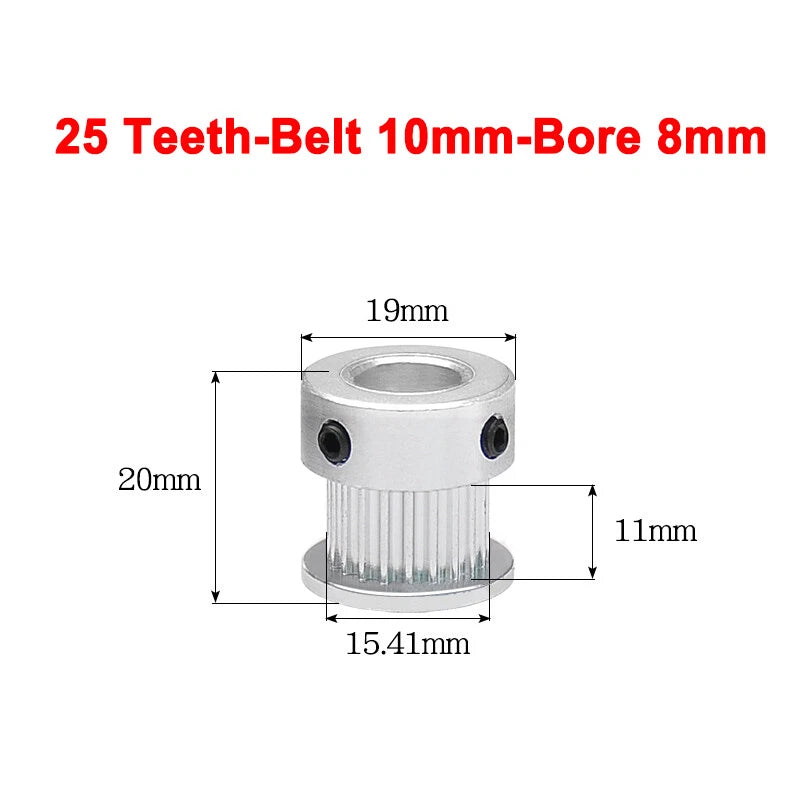
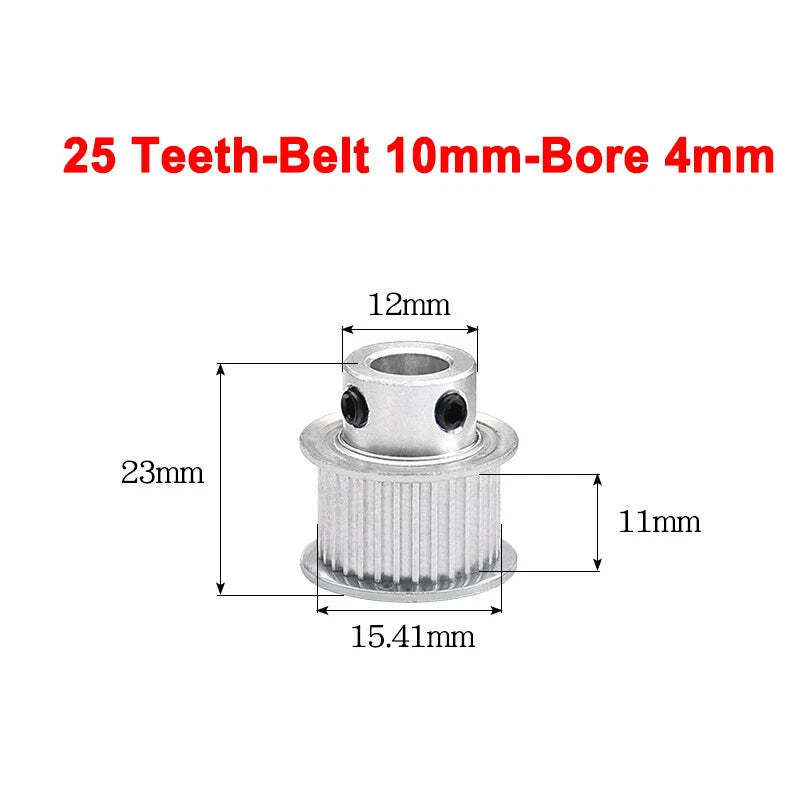
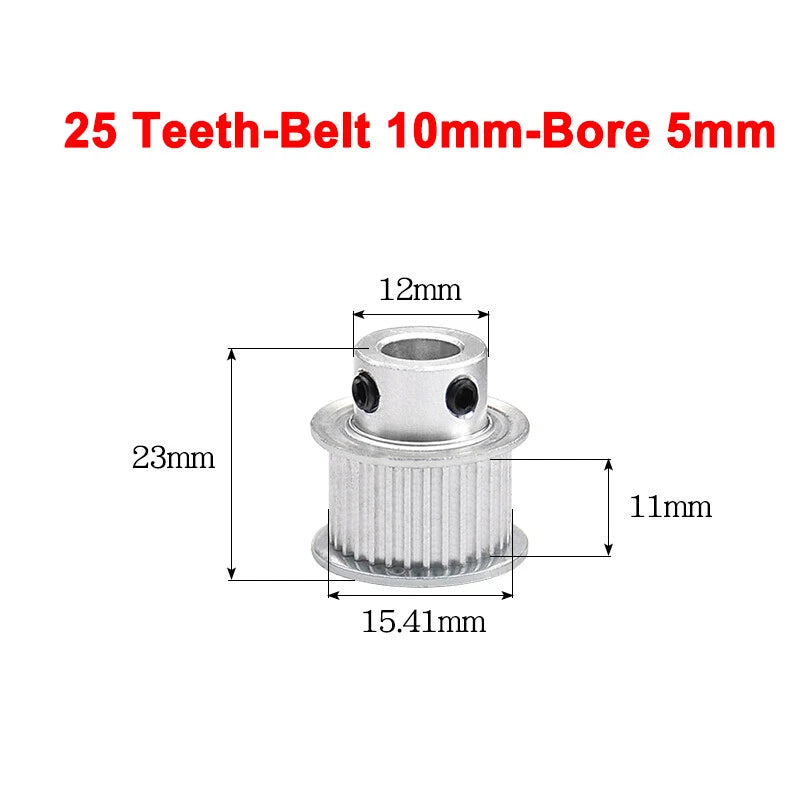
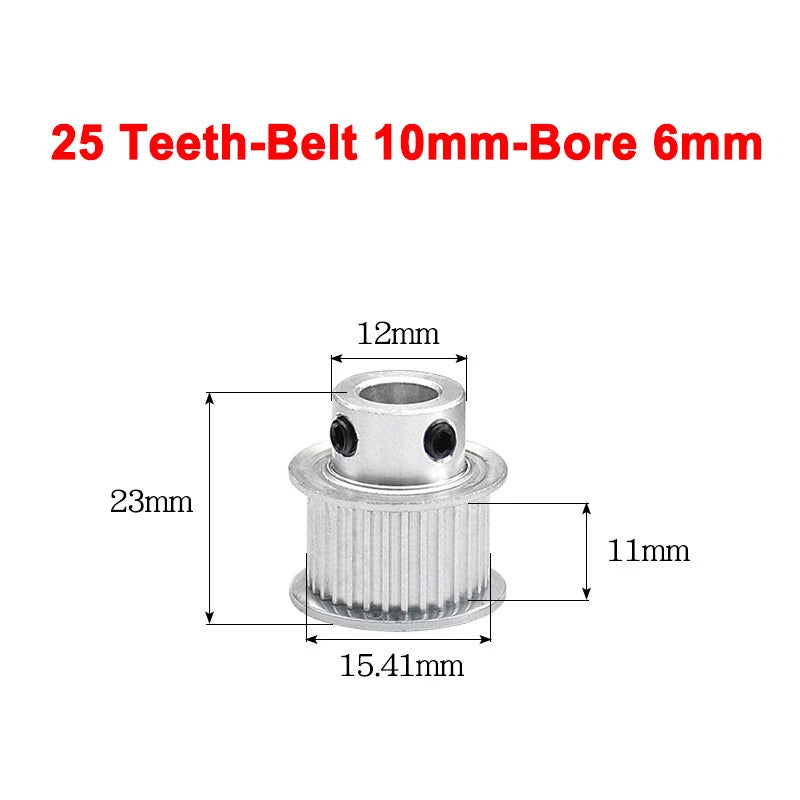
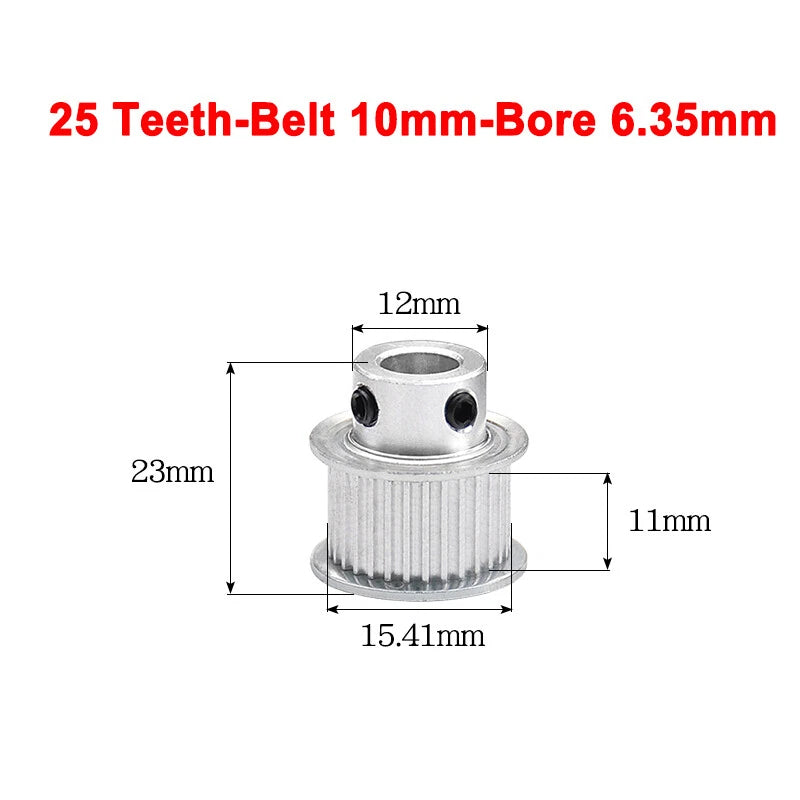
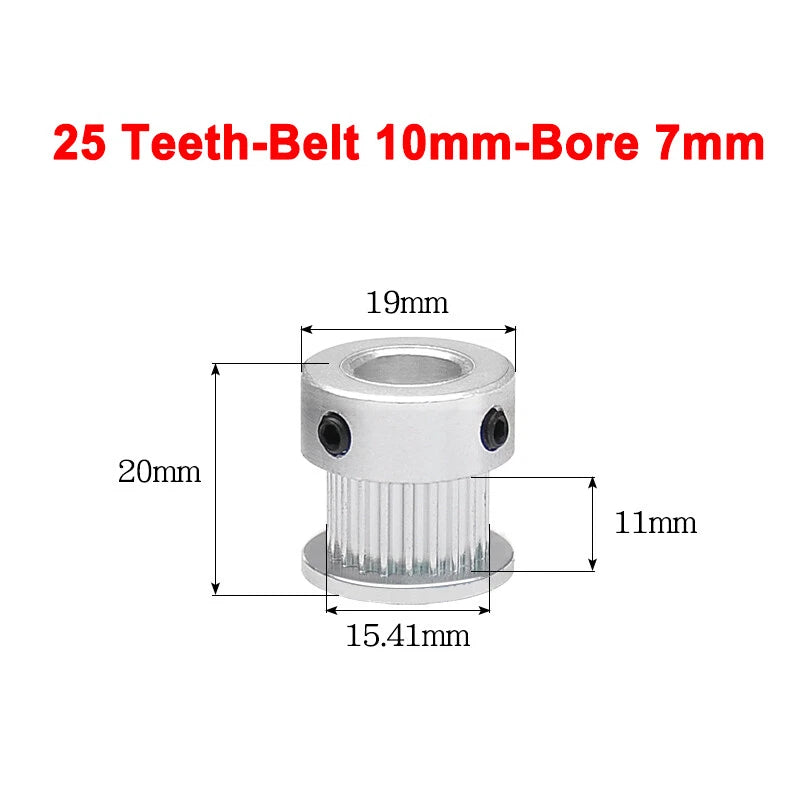
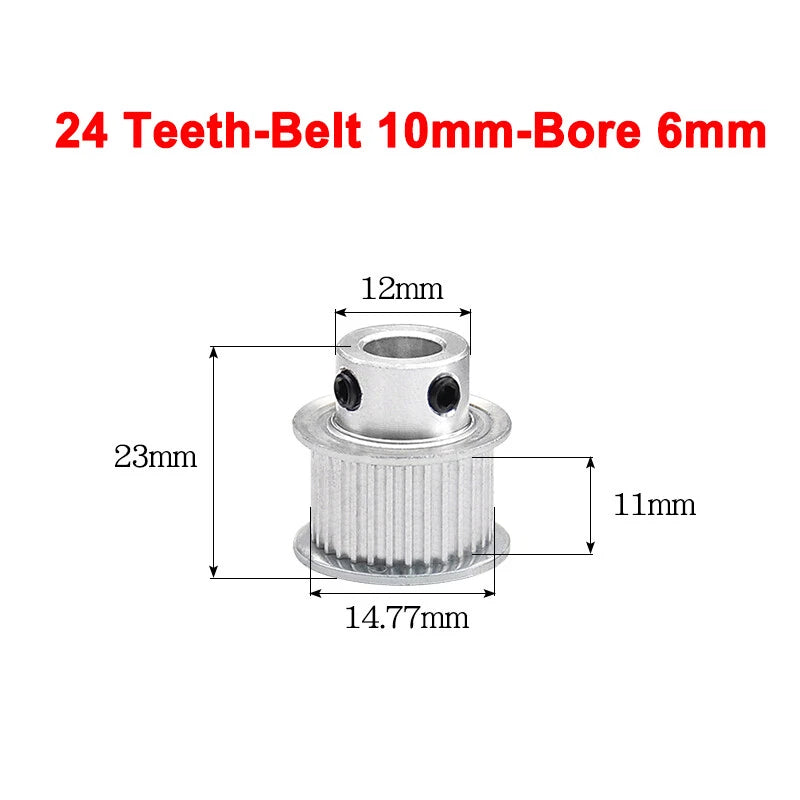
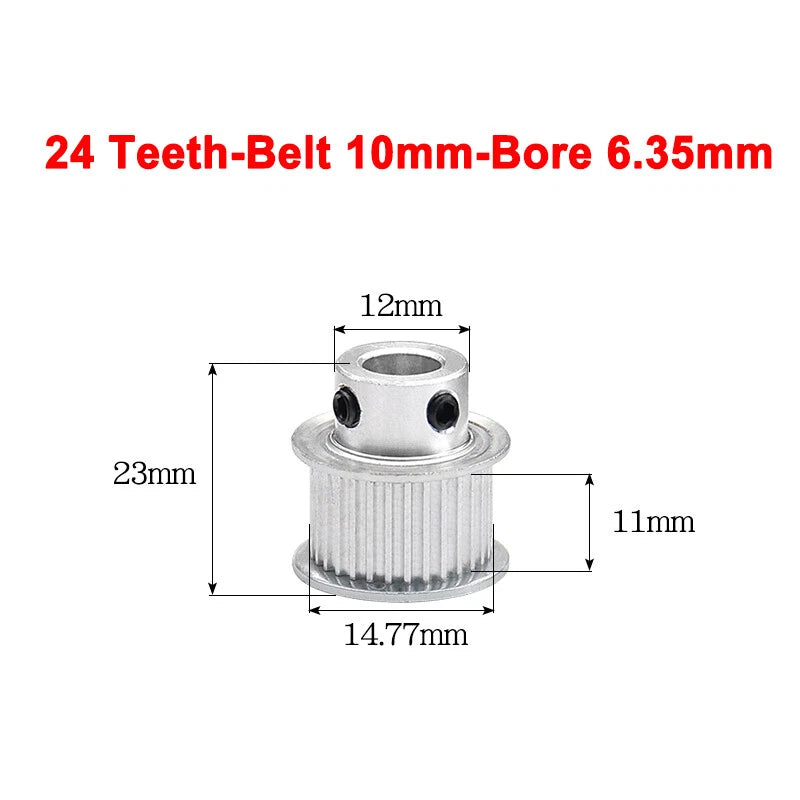
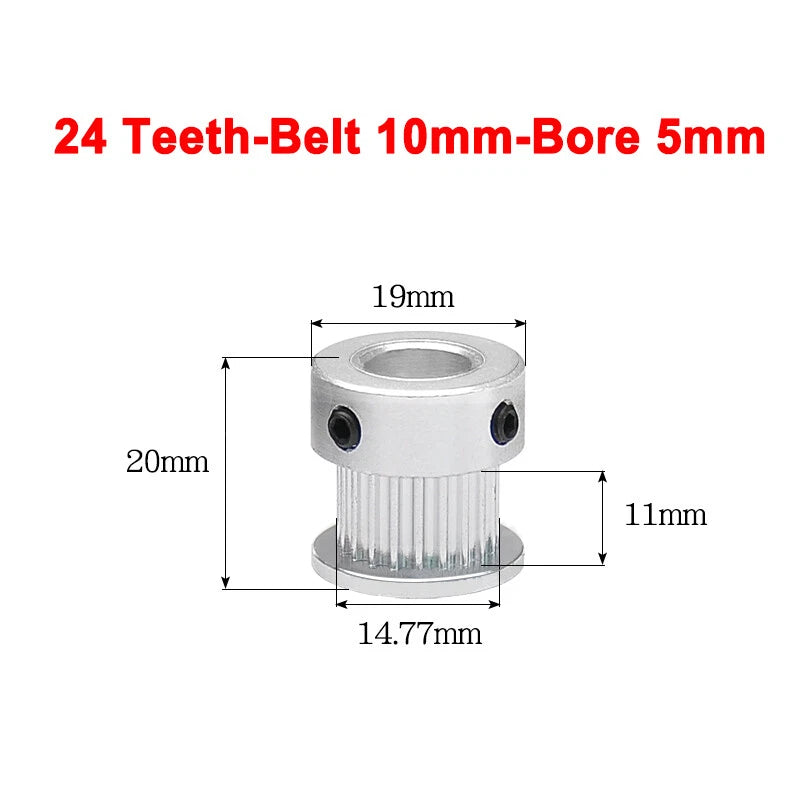
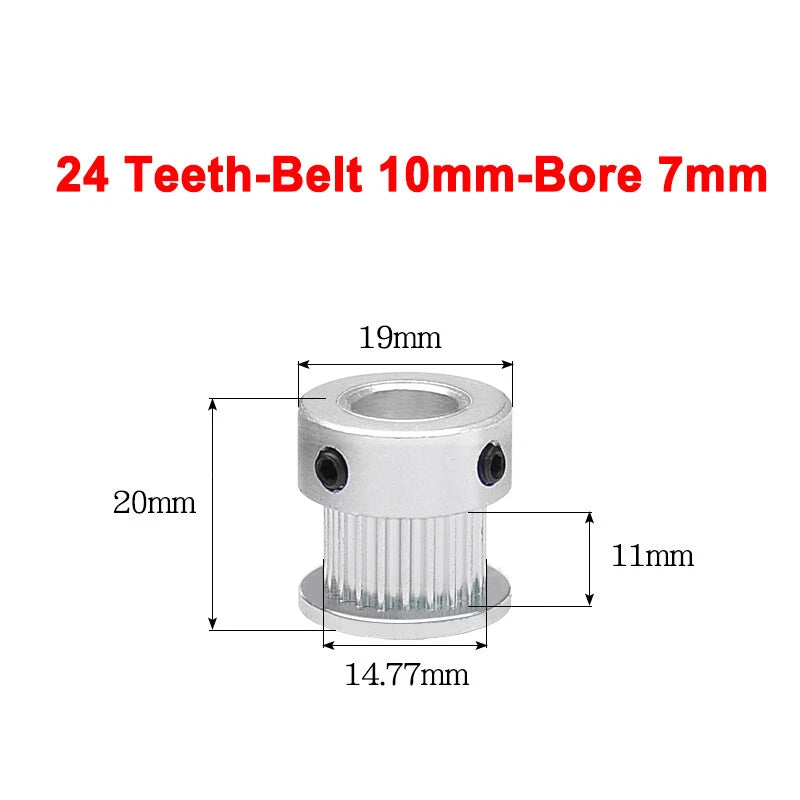
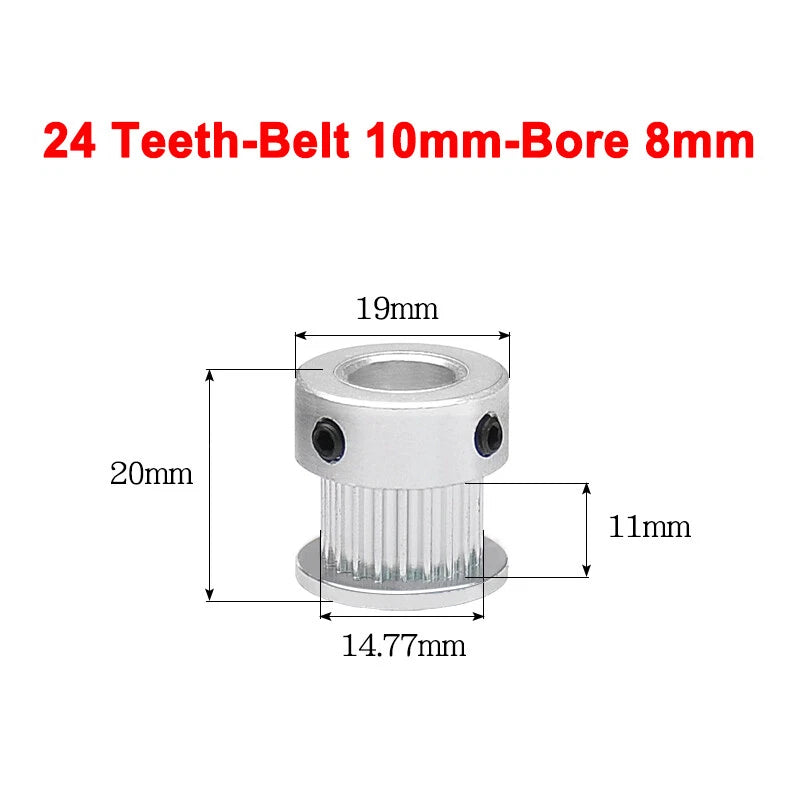
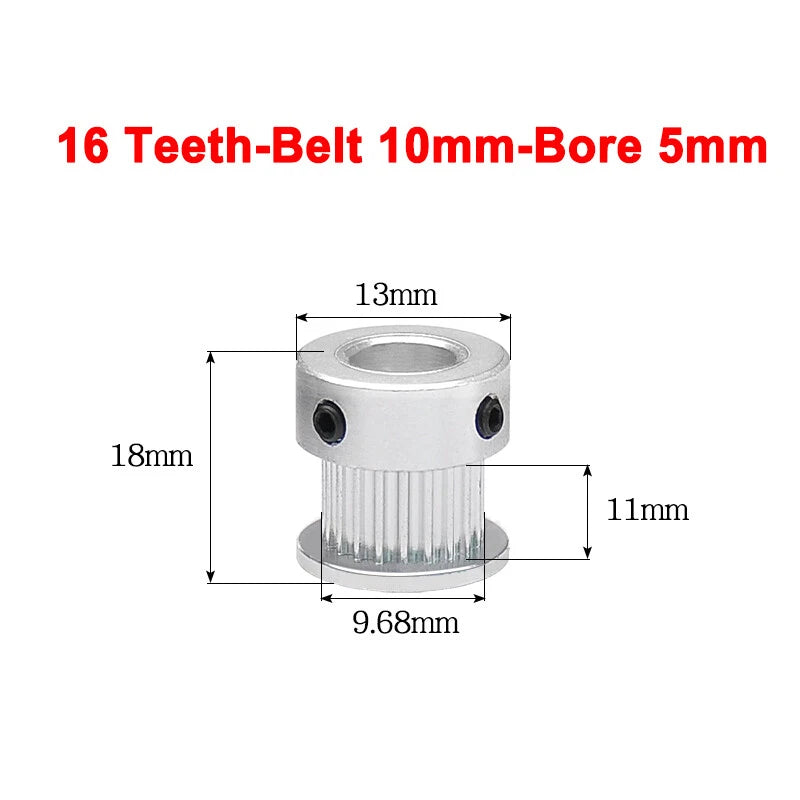
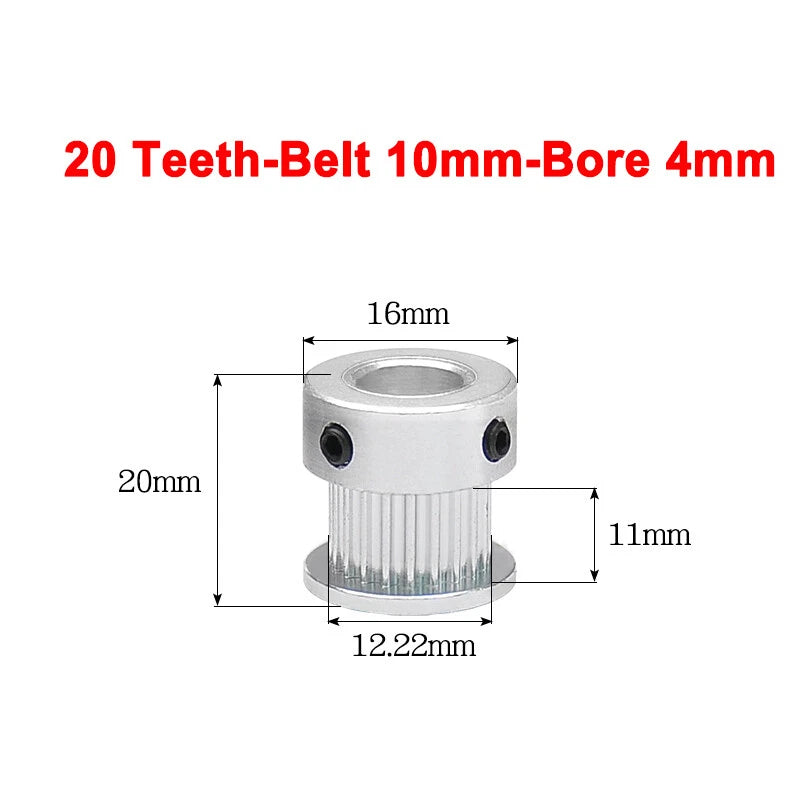
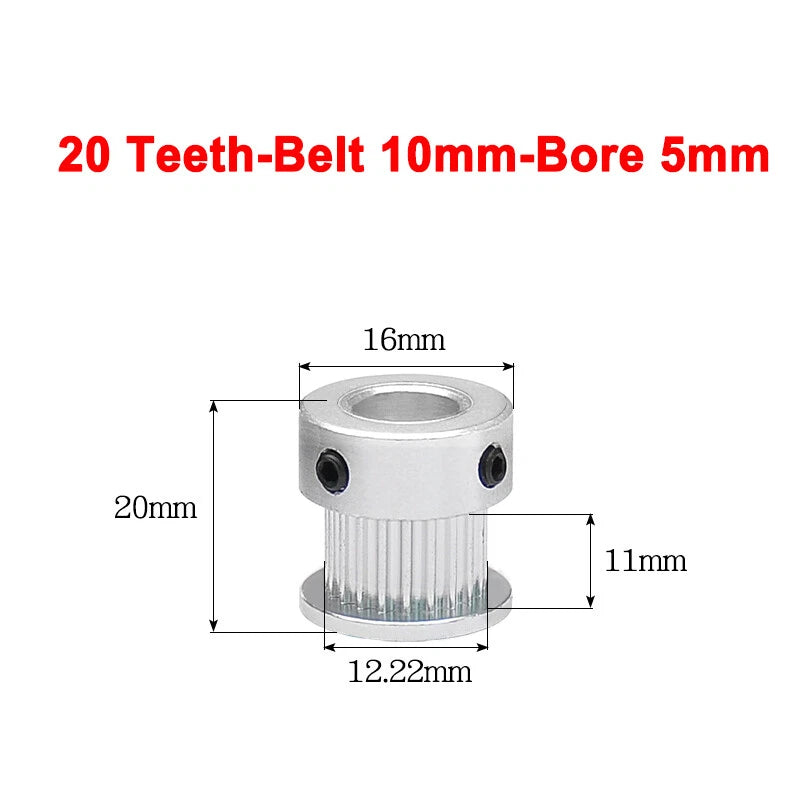
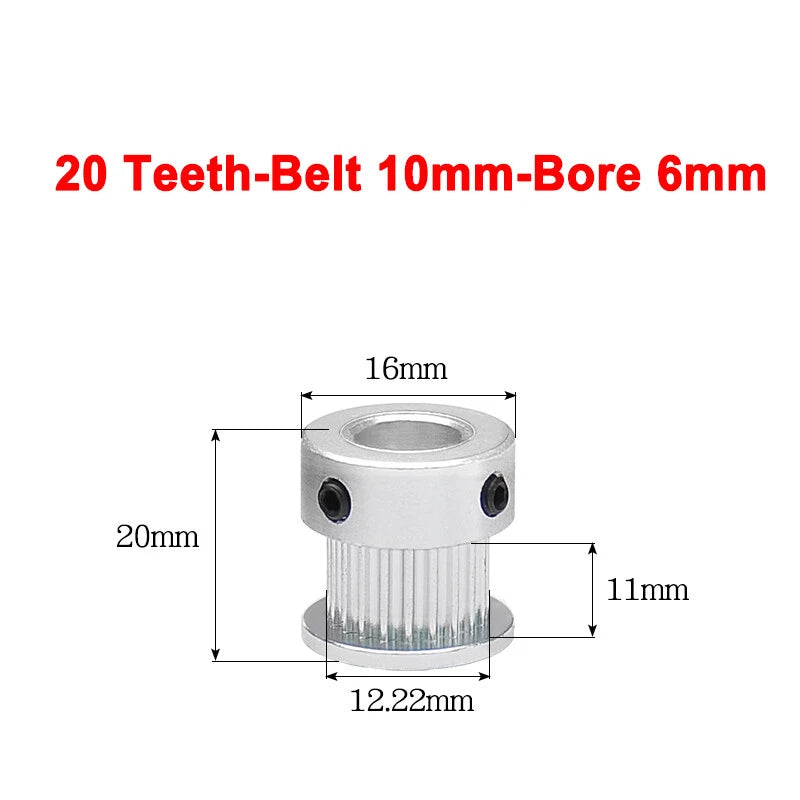
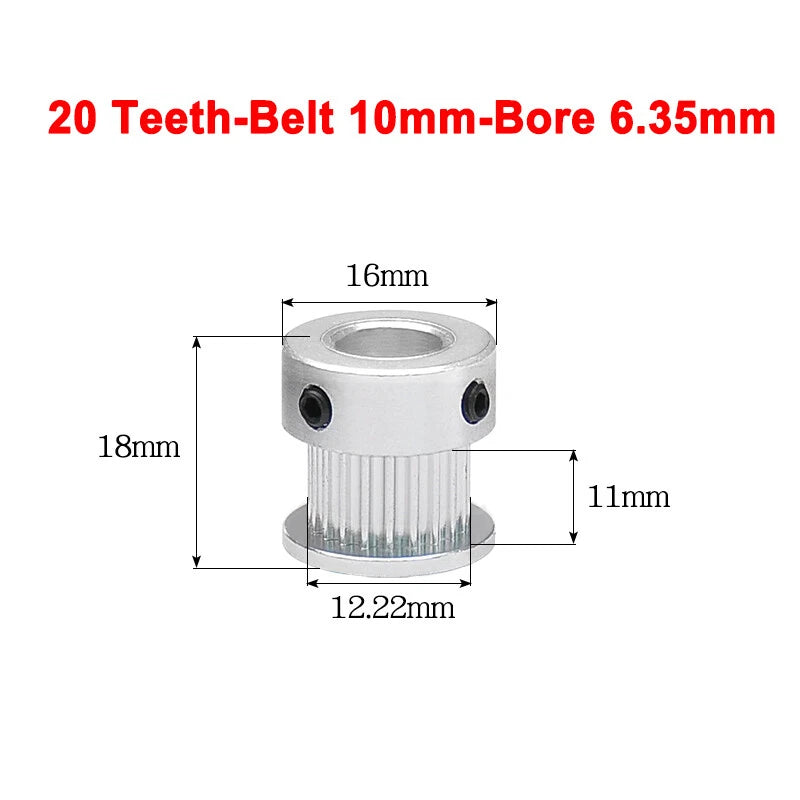
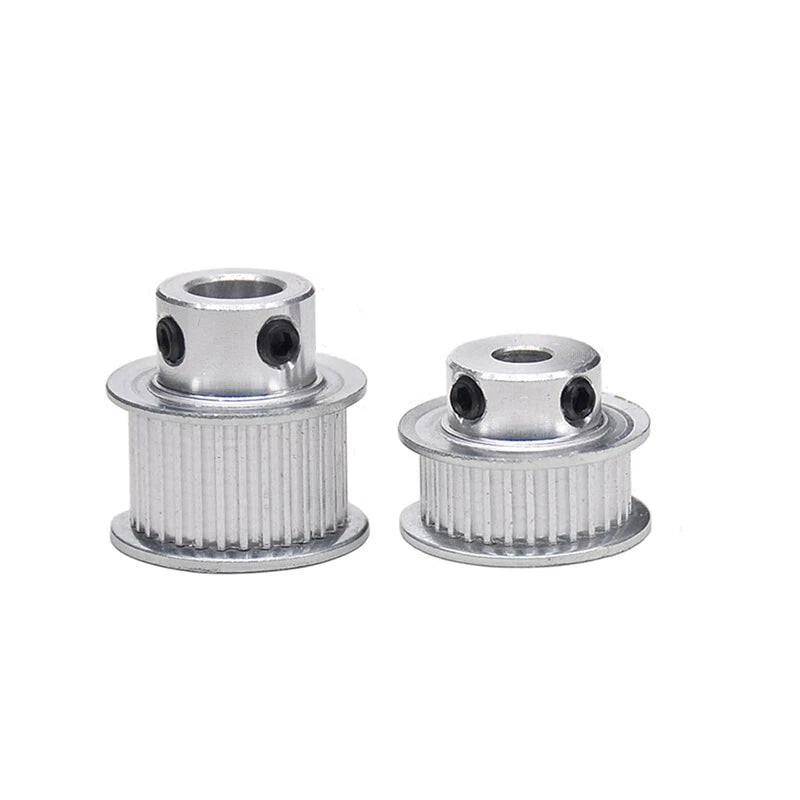
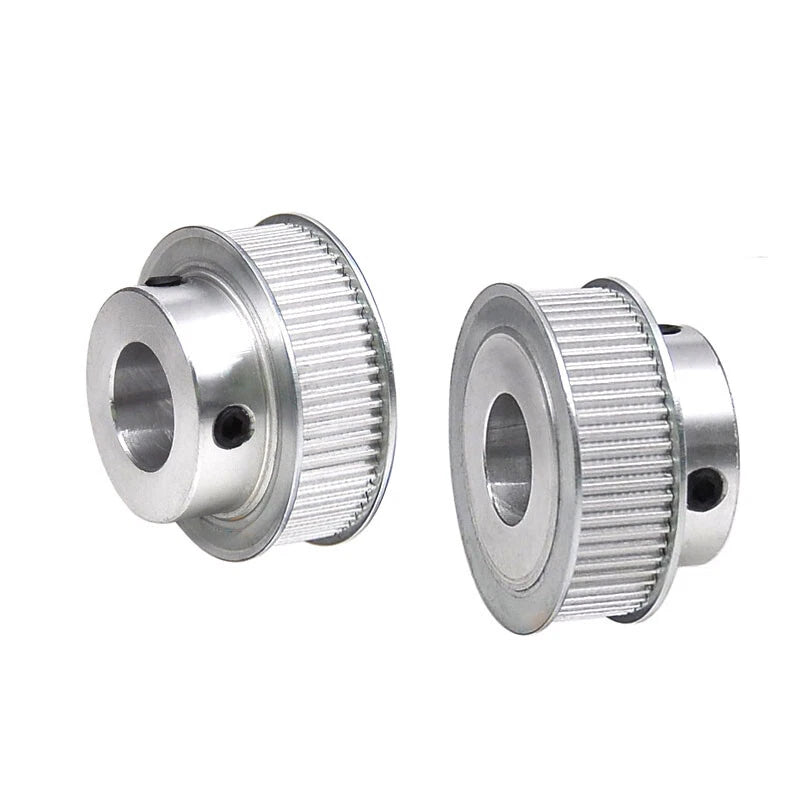
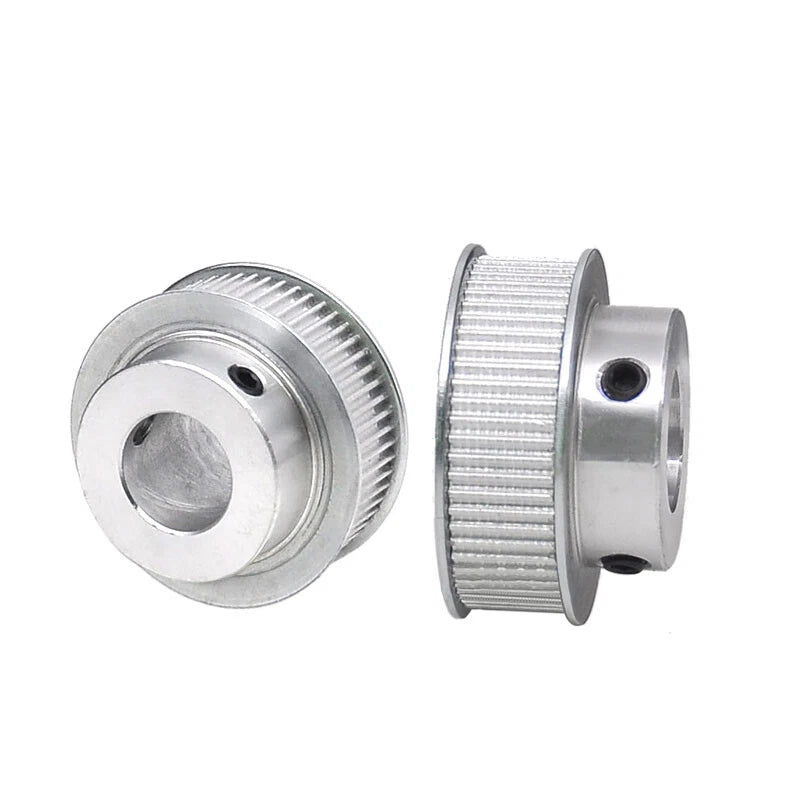
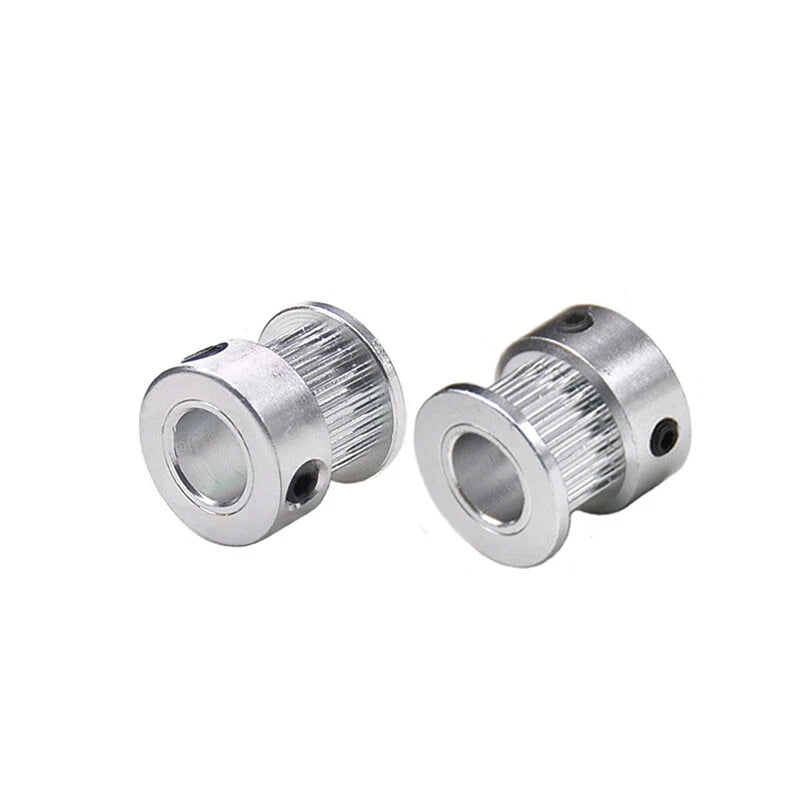
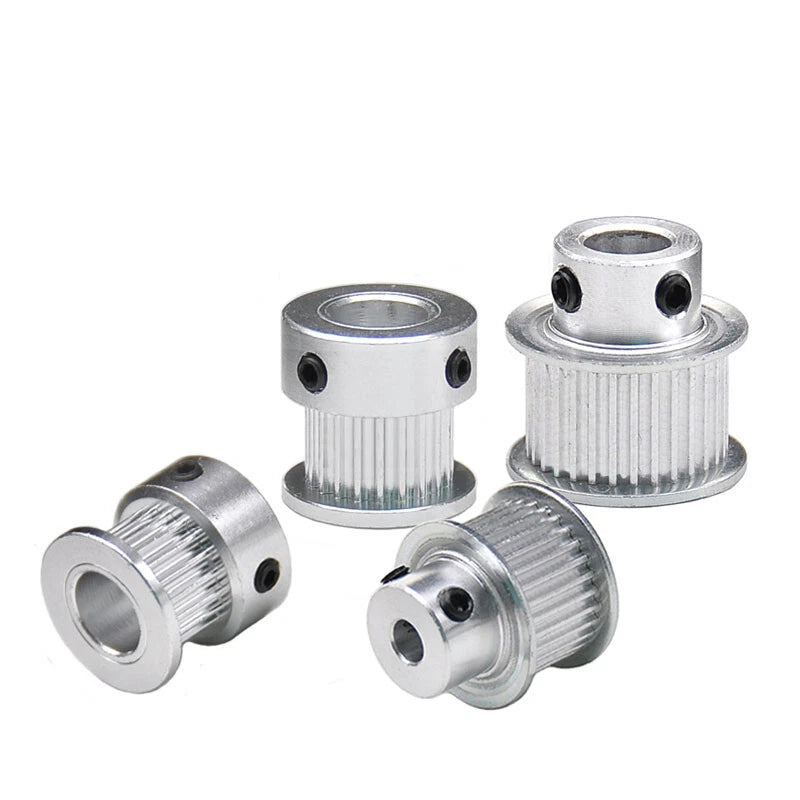
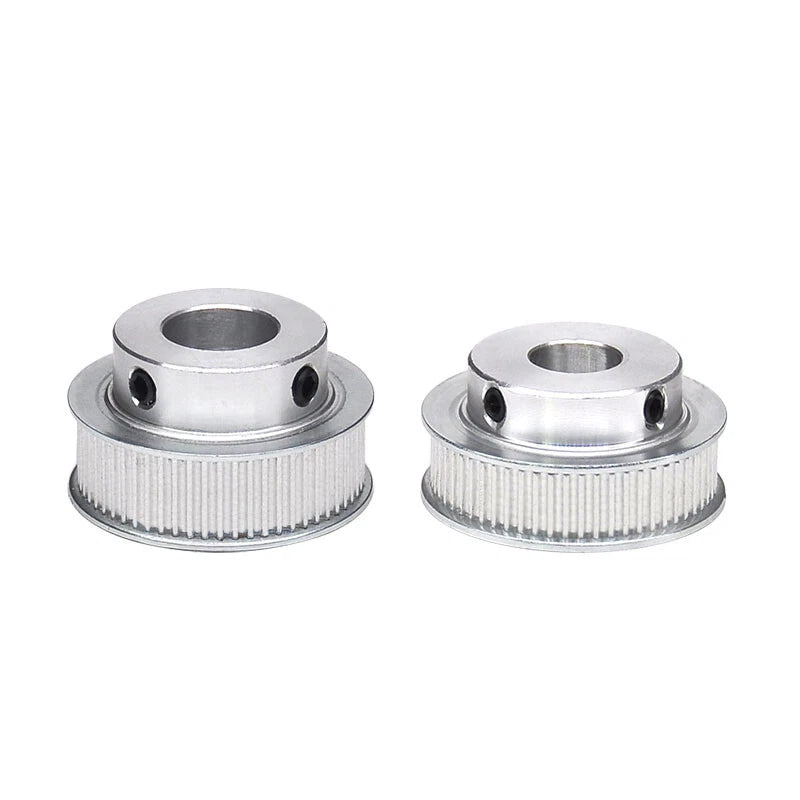
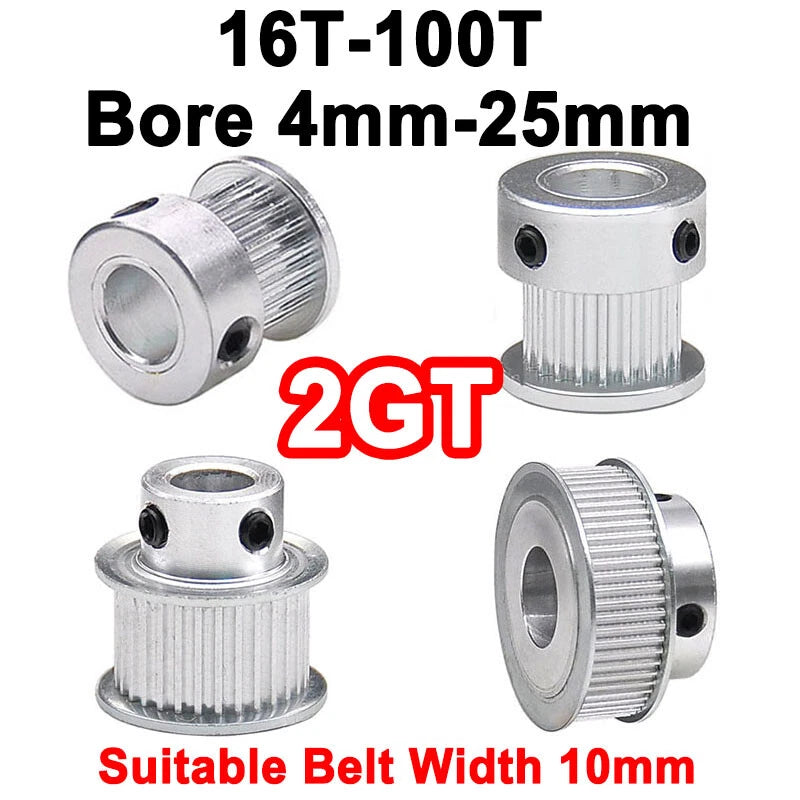
2GT Drive Pulley With Step 16 Tooth - 100 Tooth Bore 4mm - 25mm for 10mm Belt

No reviews

Price:
Sale price$4.94 USD
Stock:
In stock (500 units), ready to be shipped

Payment & Security

Ach Direct Debit Amazon American Express Apple Pay Bancontact BLIK Diners Club Discover EPS Google Pay iDEAL Wero JCB Maestro Mastercard Multibanco MobilePay PayPal Przelewy24 Shop Pay Twint Union Pay USDC Visa

Your payment information is processed securely. We do not store credit card details nor have access to your credit card information.

Limited Offer — Spend More, Save More
Spend $55+
Save $5
Spend $100+
Save $10
Spend $200+
Save $25
HomeDIYer DIY Expert Support

DIY Expert Support

Get fitment advice & recommendations

Mon–Fri  8:30 AM – 8:00 PM
24-Hour Fast Ship
Arrives in 3–14 Days
Worldwide Shipping
30-Day Returns
1 tree planted with every purchase

Description

2GT Stepped Drive Pulley — Precision Motion Control for 10mm GT2 Belts

When your CNC router, 3D printer, or robotics platform demands repeatable, slip-free motion, a mismatched or worn pulley becomes the weakest link in the entire drivetrain. Engineers and makers who rely on 10mm GT2 belt systems need a stepped drive pulley that locks onto the shaft without play and meshes cleanly with every tooth of the belt. This 2GT drive pulley with step is designed for exactly that scenario — available in K-type (set-screw clamping) and BF-type (flanged) configurations to suit your specific build requirements.

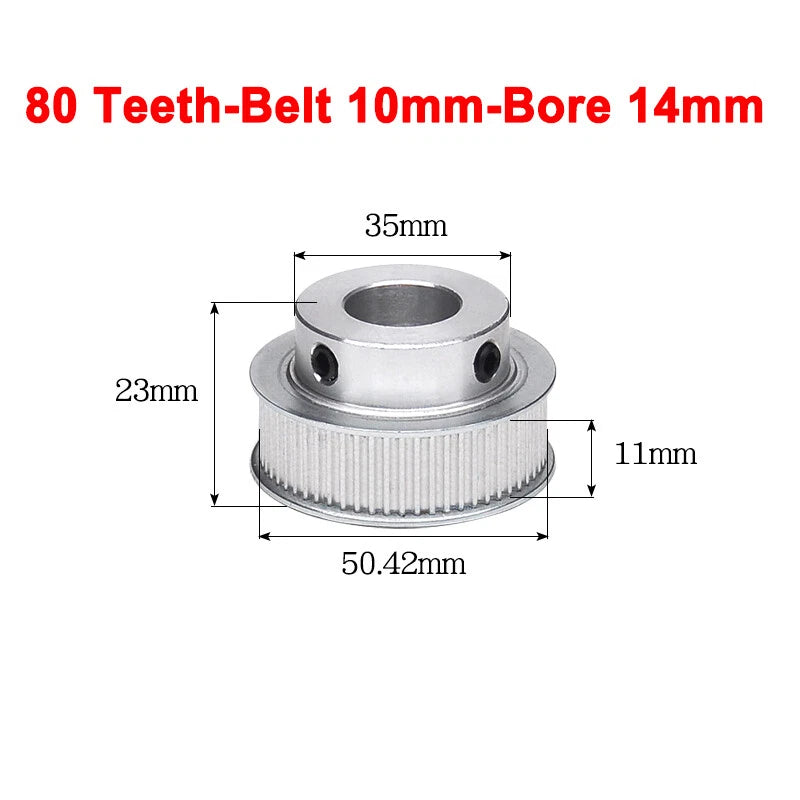
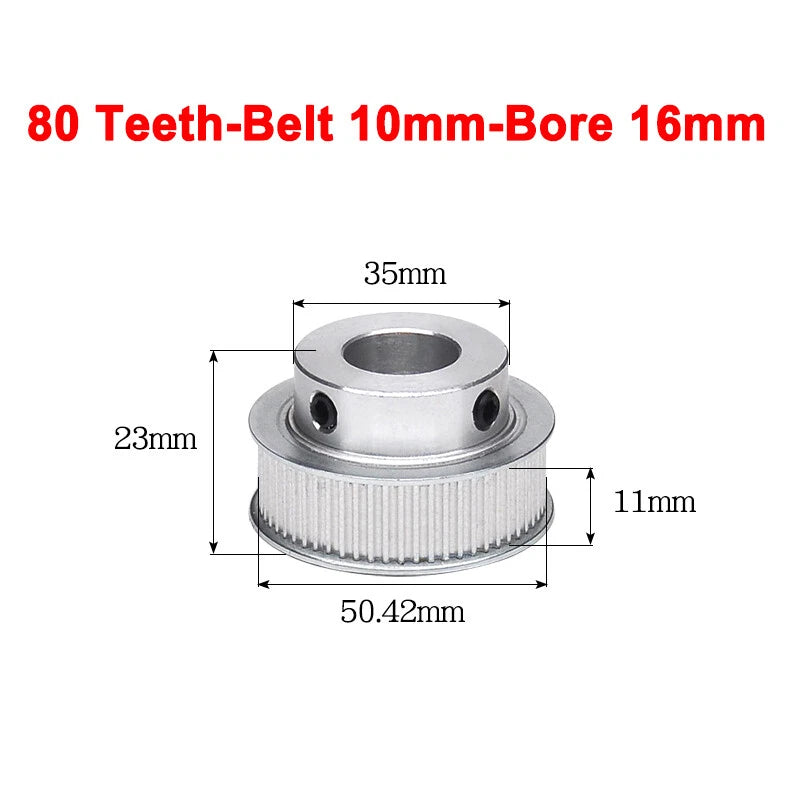
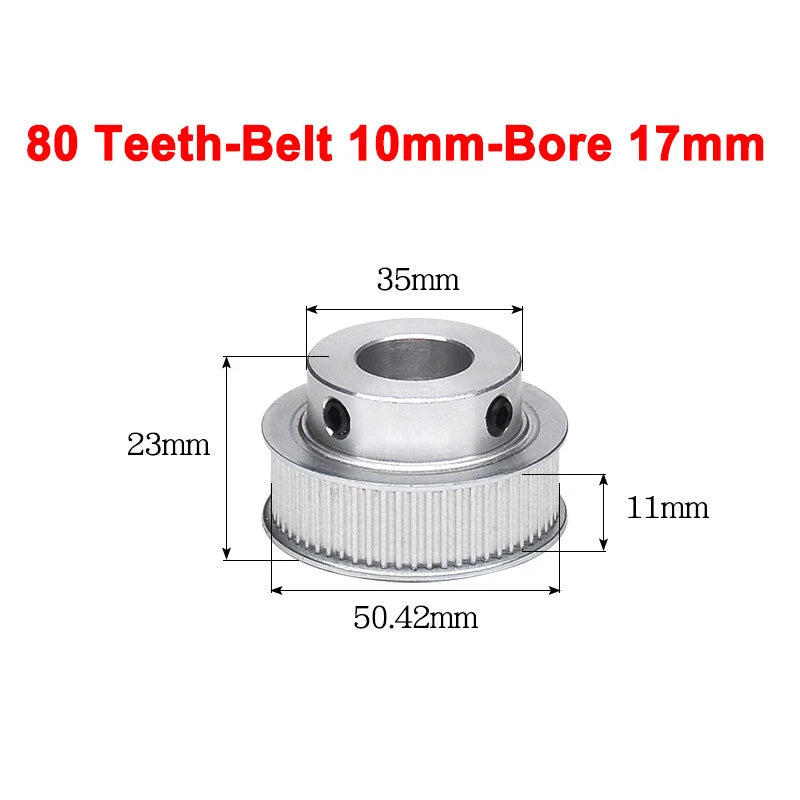
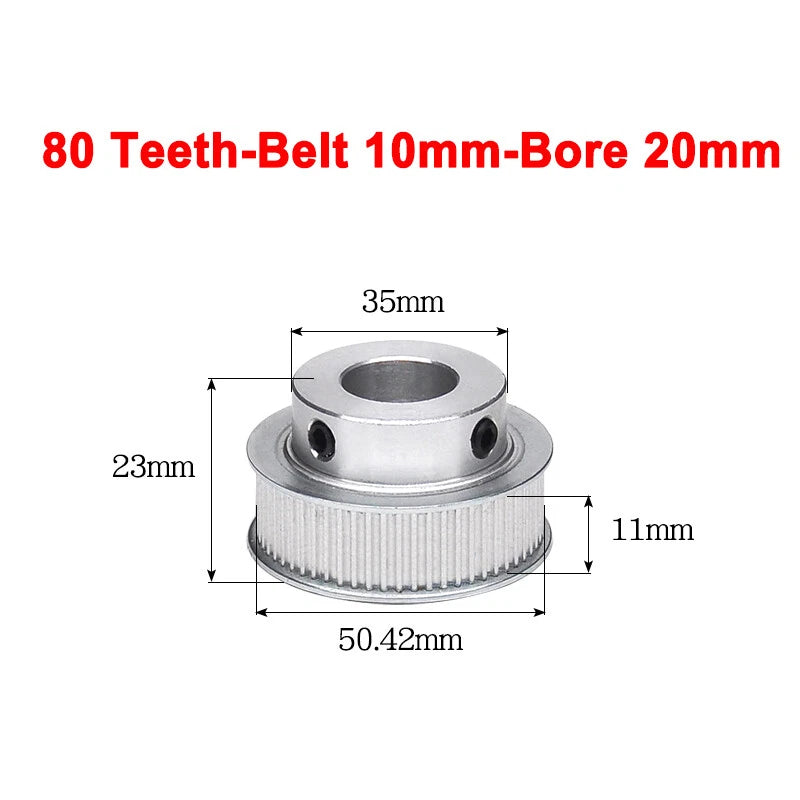
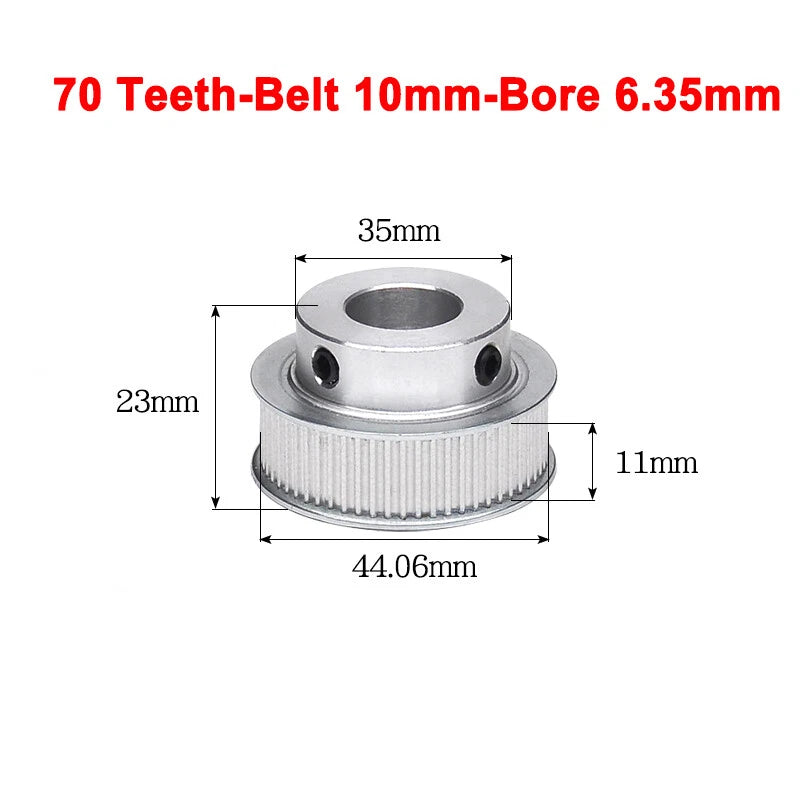
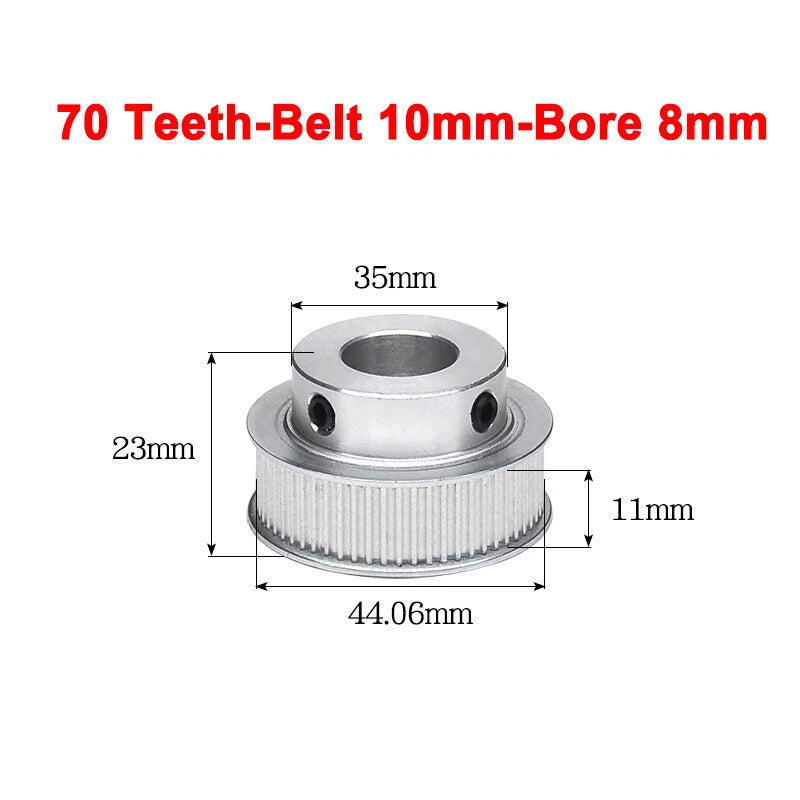
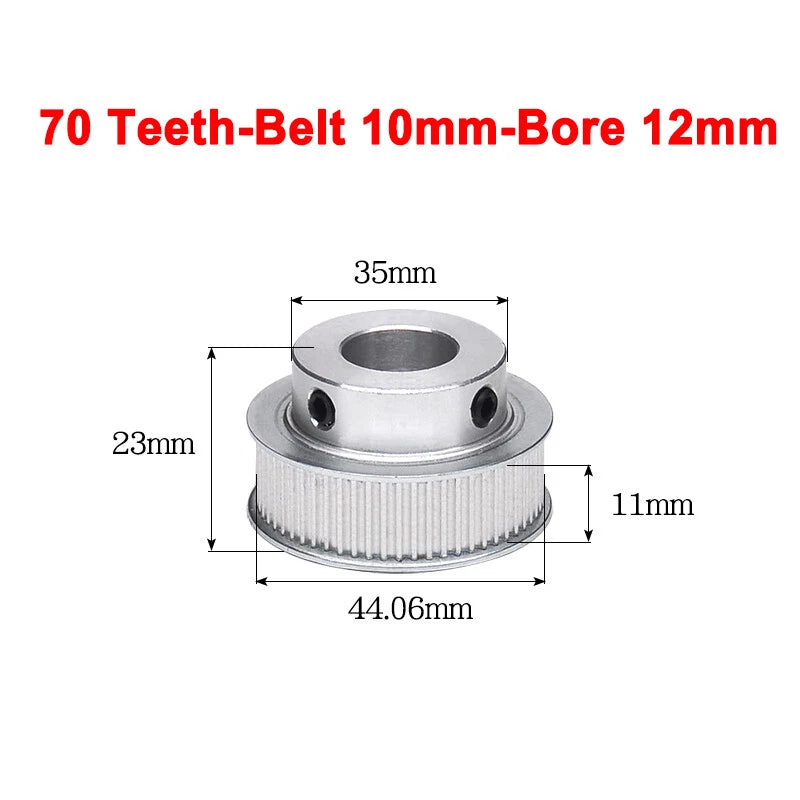
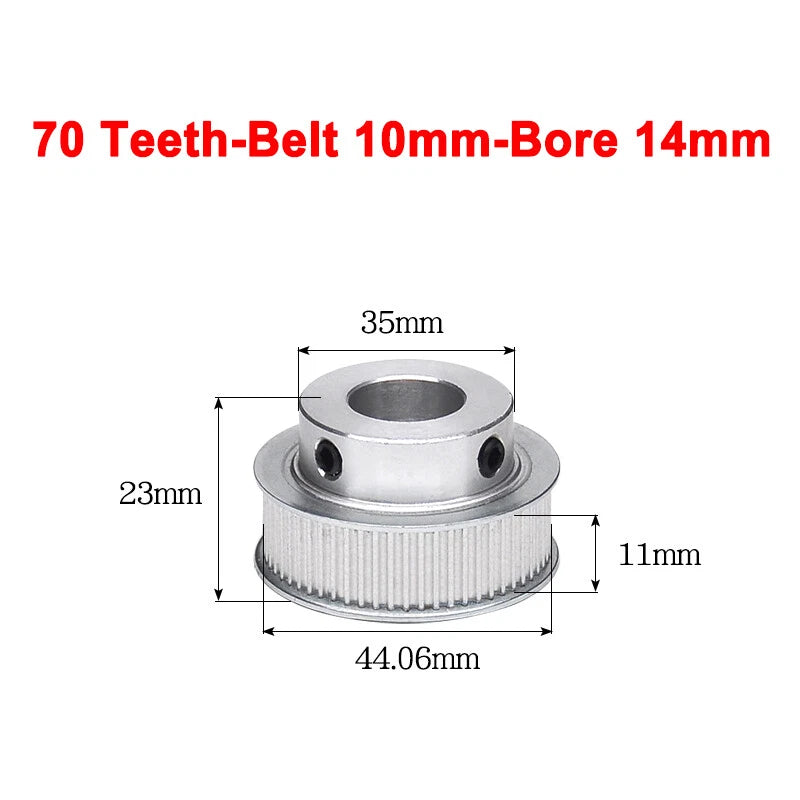
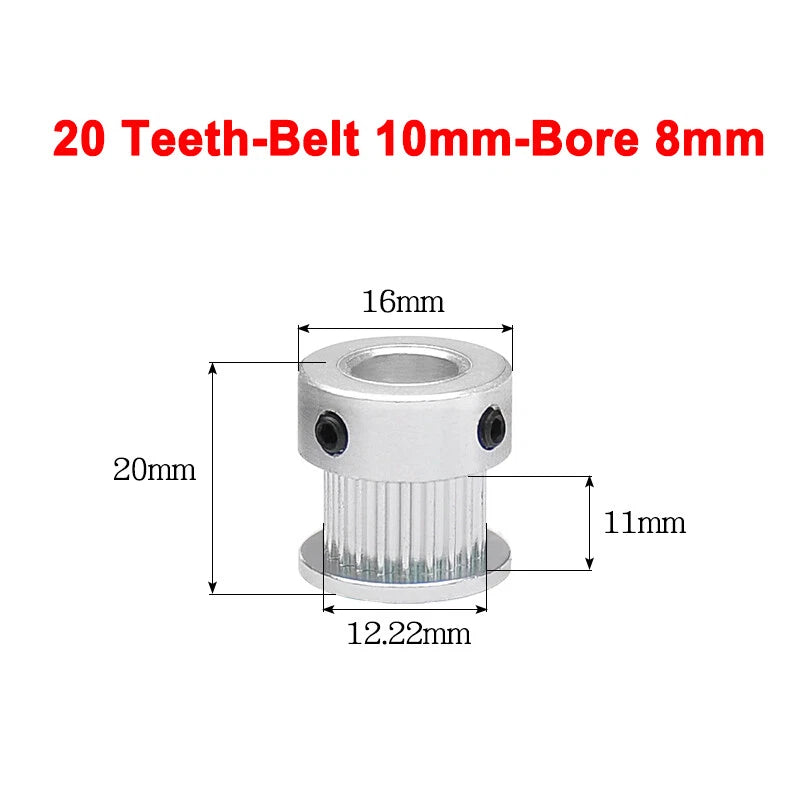
Each pulley is machined from aluminum alloy with an anodized finish, offering a balance of low rotational inertia and corrosion resistance. Tooth count ranges from 16 to 100 teeth, with bore diameters spanning 4 mm (approx. 0.16 in) to 25 mm (approx. 0.98 in). Belt width compatibility is fixed at 10 mm, matching standard GT2 / 2GT open-loop and closed-loop belt profiles. The stepped hub design provides a positive axial stop for the belt, keeping tracking consistent under load.

Typical use cases include X/Y axis drives on desktop CNC mills and laser cutters, extruder and Z-axis assemblies on FDM 3D printers, and servo-driven articulation joints in robotic arms. The wide tooth-count selection also makes these pulleys suitable for gear-ratio tuning in custom automation conveyor systems and pick-and-place machines.

⚙️ Compatibility: Designed for standard 2GT / GT2 timing belts with 10 mm width and 2 mm pitch. Verify your shaft diameter matches the selected bore before ordering.

✅ Key Features of These 2GT Drive Pulleys

  • 🦷Wide Tooth Range (16–100T): Choose the exact tooth count for your target gear ratio — from high-speed 16T pinions to large 100T reduction pulleys — all in one product family.
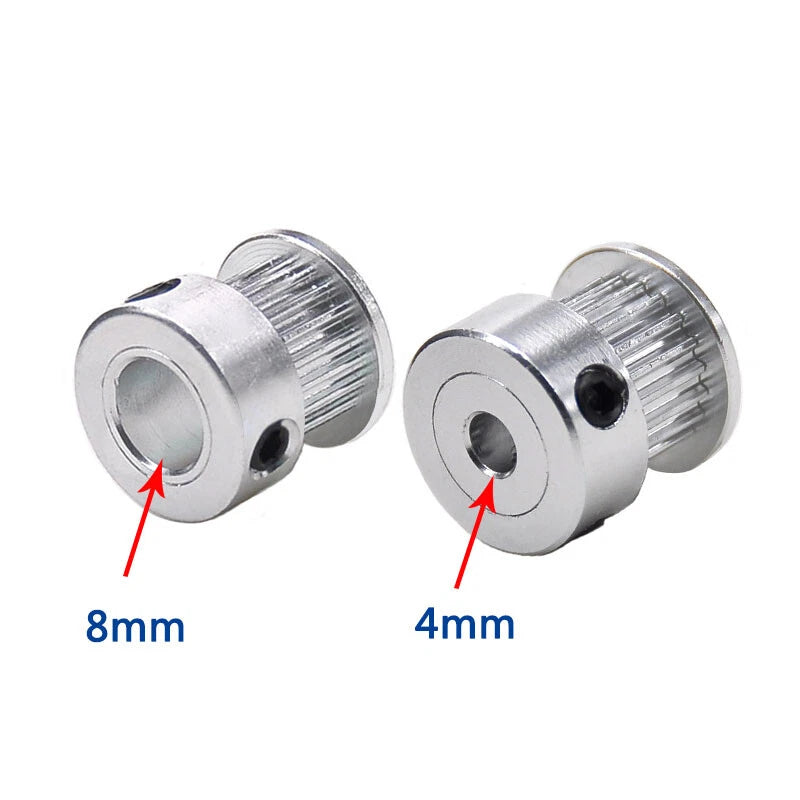
  • 🔩Broad Bore Selection (4–25 mm): Fits common shaft sizes including 5 mm, 6 mm, 6.35 mm (1/4"), 8 mm, 10 mm, 12 mm, 14 mm, 17 mm, 20 mm, and 25 mm, covering most stepper and servo motor shafts.
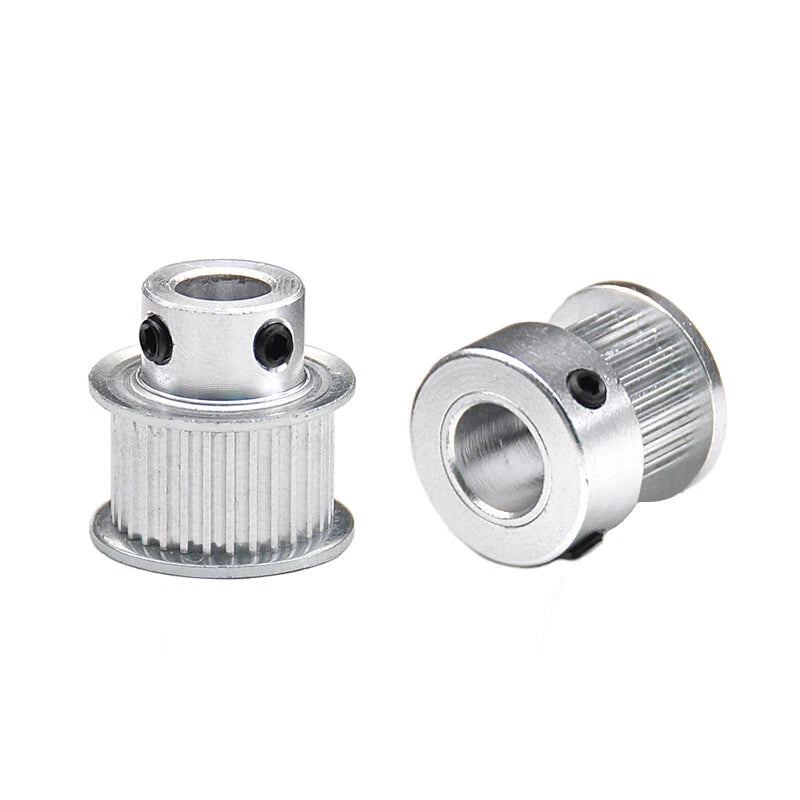
  • 🏗️K-type & BF-type Options: K-type uses a set screw for quick shaft clamping; BF-type adds flanges on both sides of the belt track to prevent lateral belt walk in high-speed or vertical-axis applications.
  • 📐Stepped Hub Design: The integrated step provides a positive axial reference for the belt, reducing the need for external belt guides and simplifying frame design.
  • 🛡️Aluminum Alloy Construction: Lightweight yet rigid, with an anodized surface that resists oxidation and wear over extended duty cycles in workshop and industrial environments.
  • 🔄2 mm GT2 Tooth Profile: Matches the 2GT / GT2 standard for zero-backlash, synchronous power transmission — critical for accurate positioning in CNC and 3D printing applications.

📐 Technical Specifications — 2GT Drive Pulley

Belt Profile 2GT / GT2, 2 mm pitch
Belt Width 10 mm
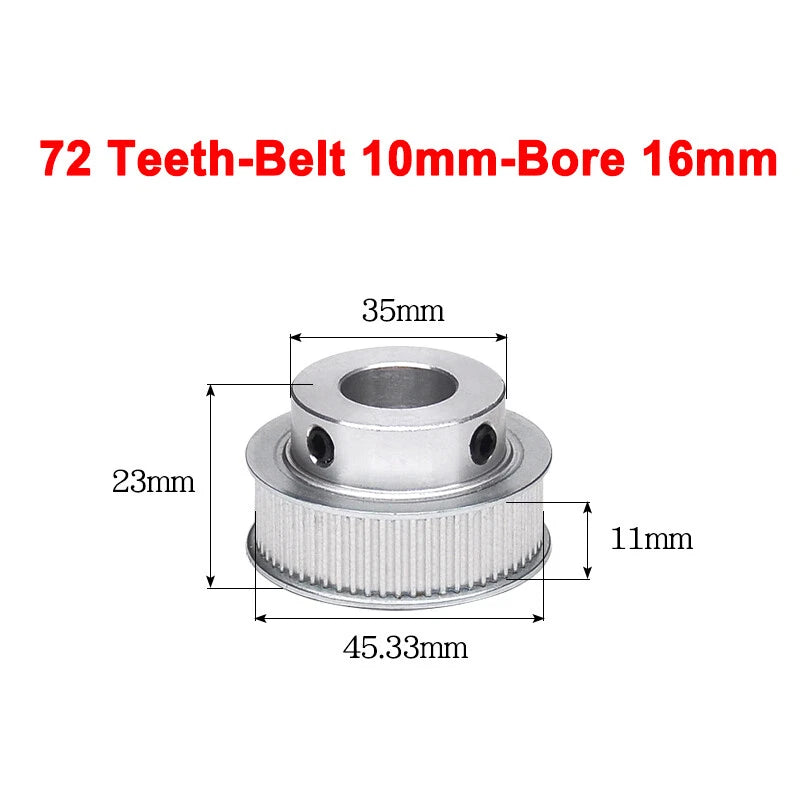
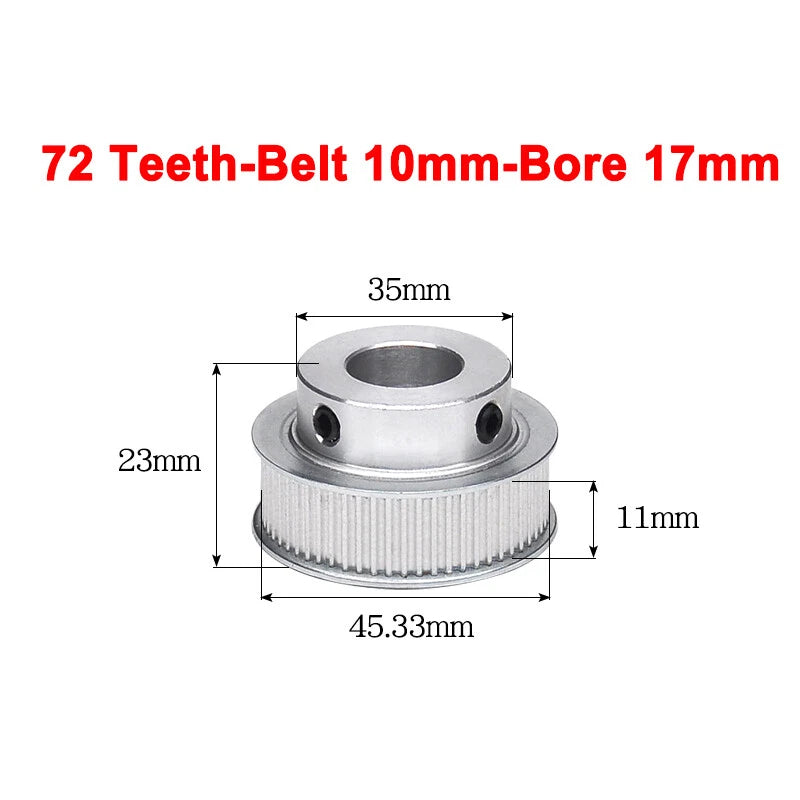
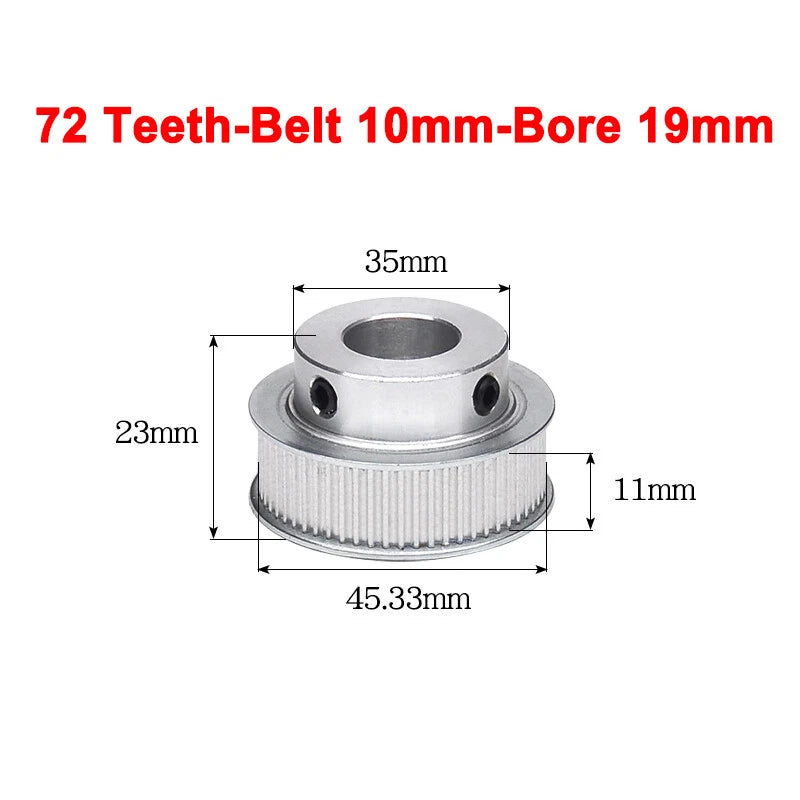
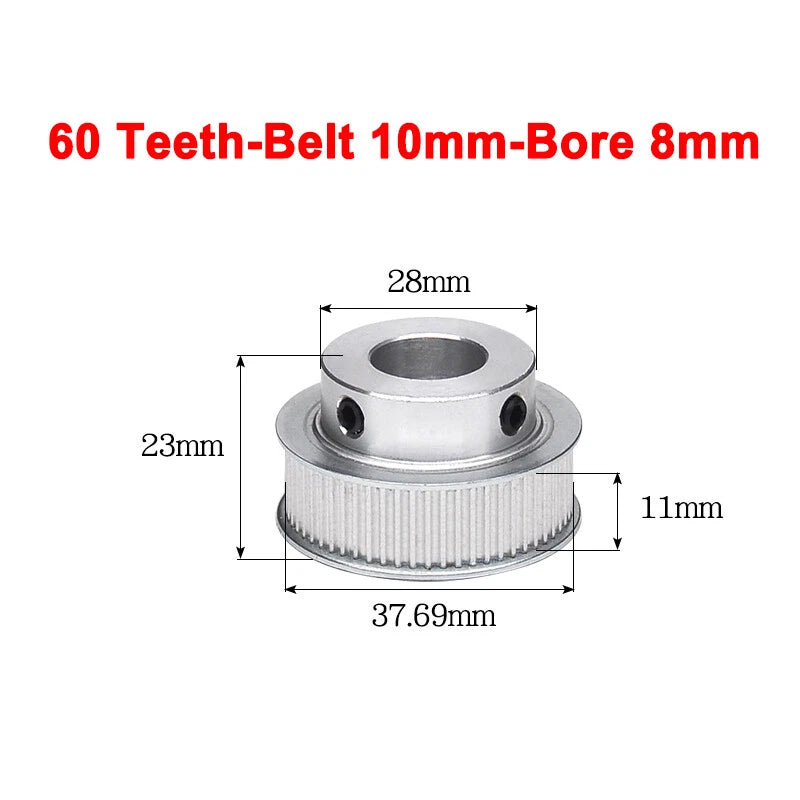
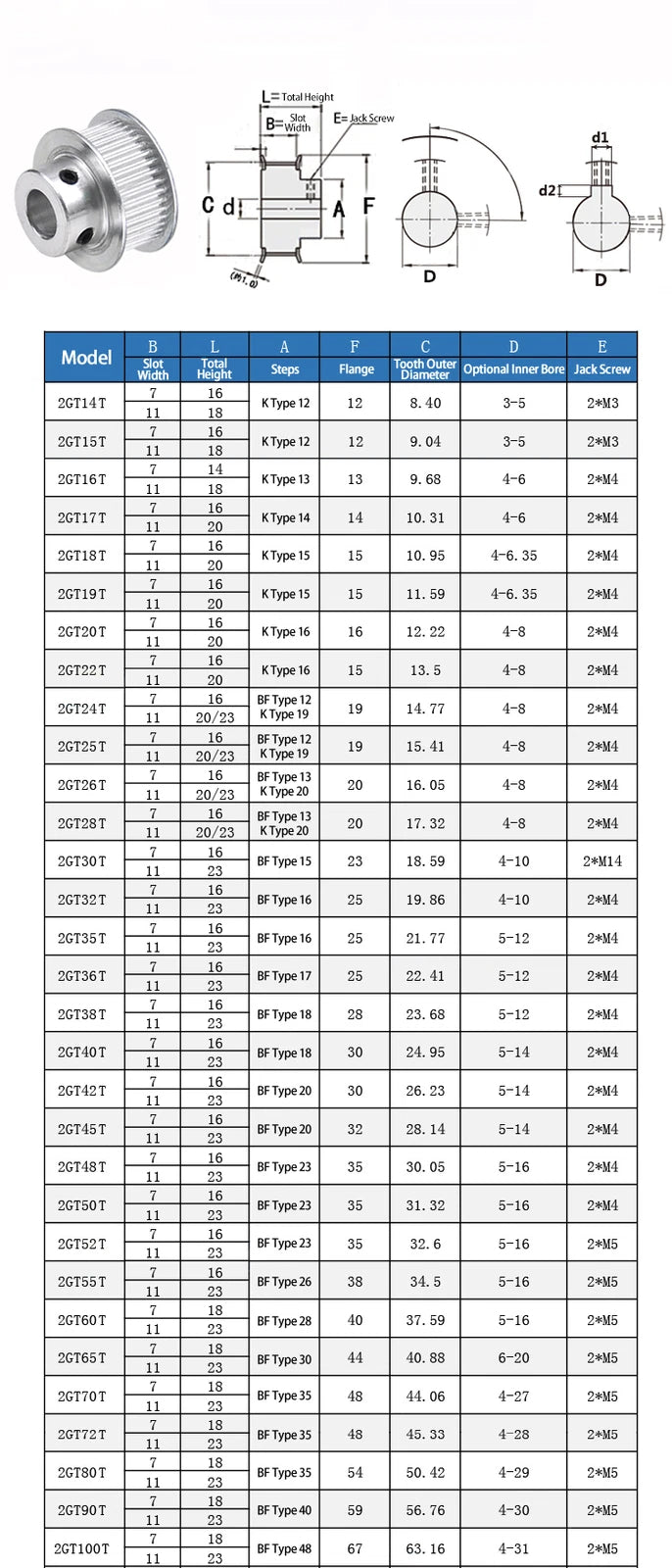
Tooth Count 16 / 20 / 24 / 25 / 26 / 28 / 30 / 32 / 35 / 36 / 38 / 40 / 42 / 45 / 48 / 50 / 55 / 60 / 70 / 72 / 80 / 90 / 100
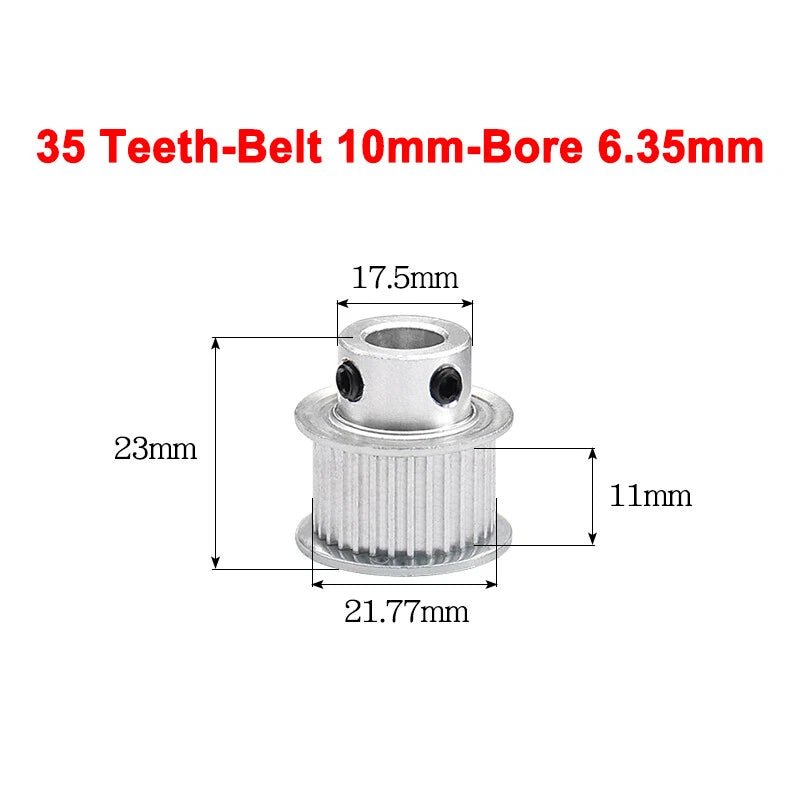
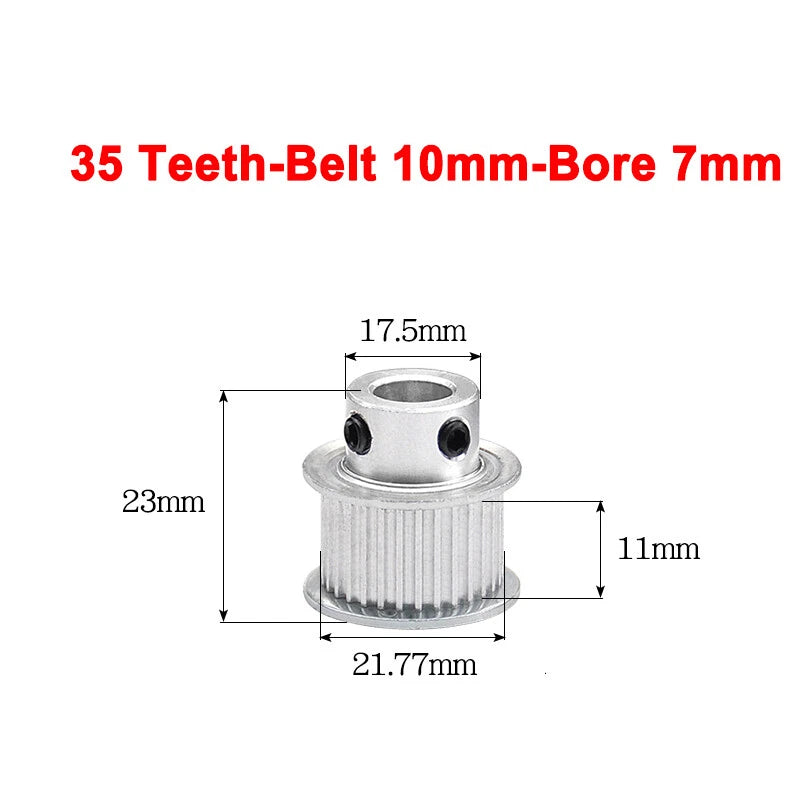
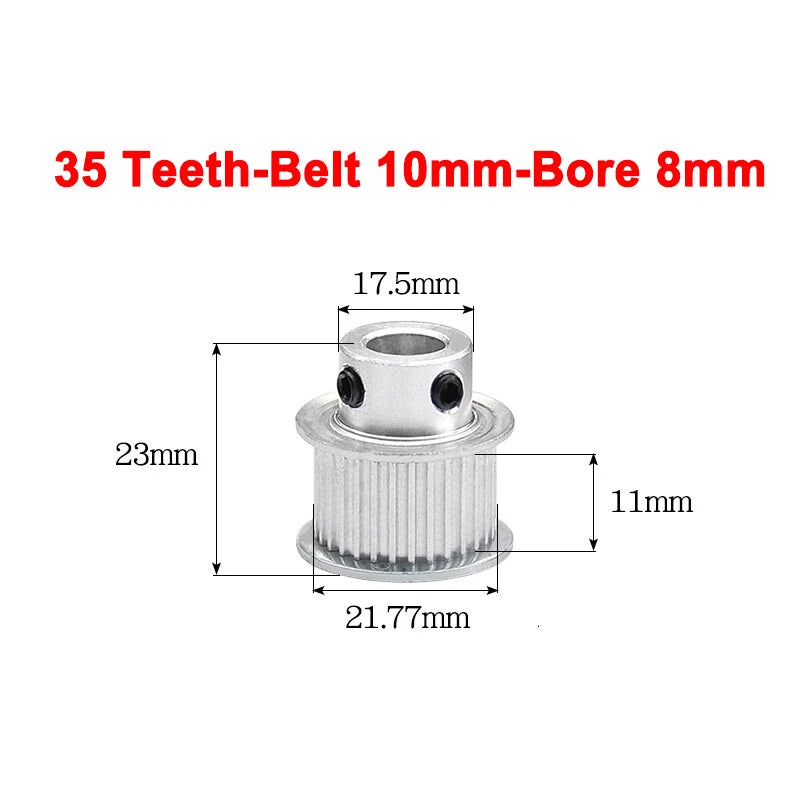
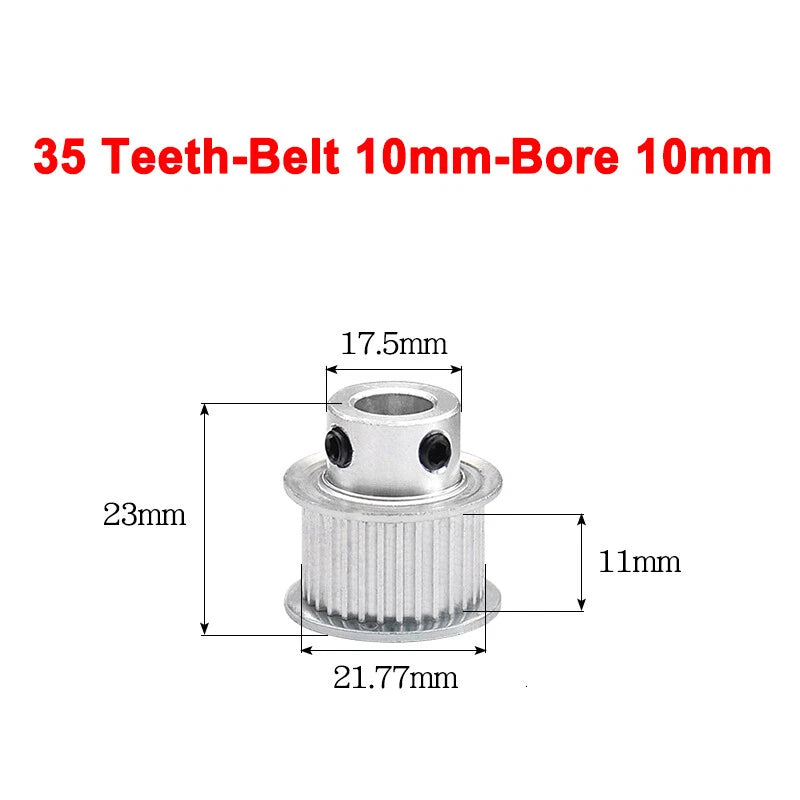
Bore Diameter 4 mm – 25 mm (see variant options)
Hub Type K-type (set screw) / BF-type (flanged)
Material Aluminum alloy
Surface Finish Anodized
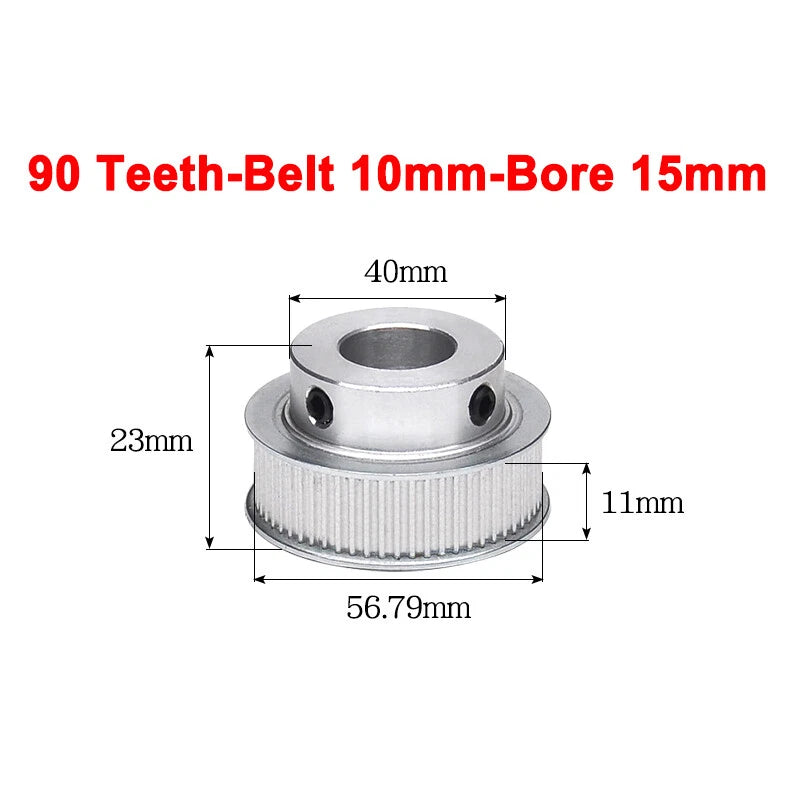
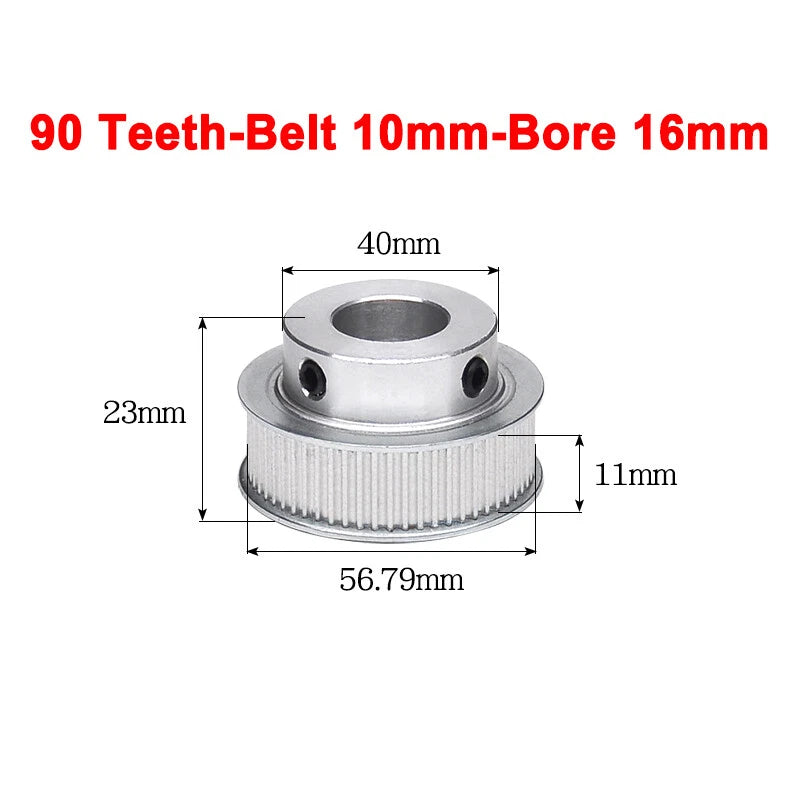
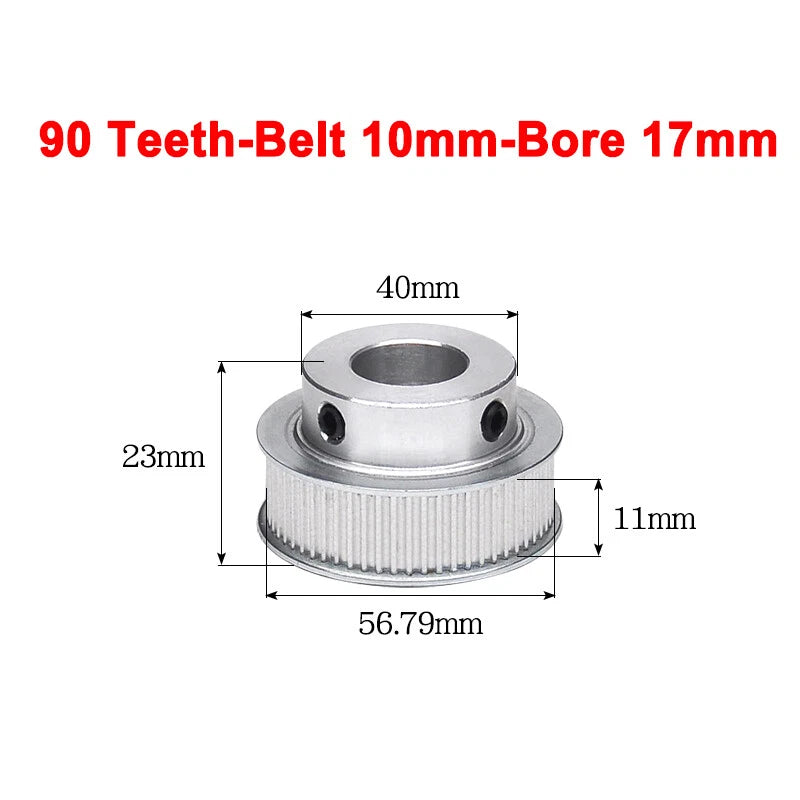
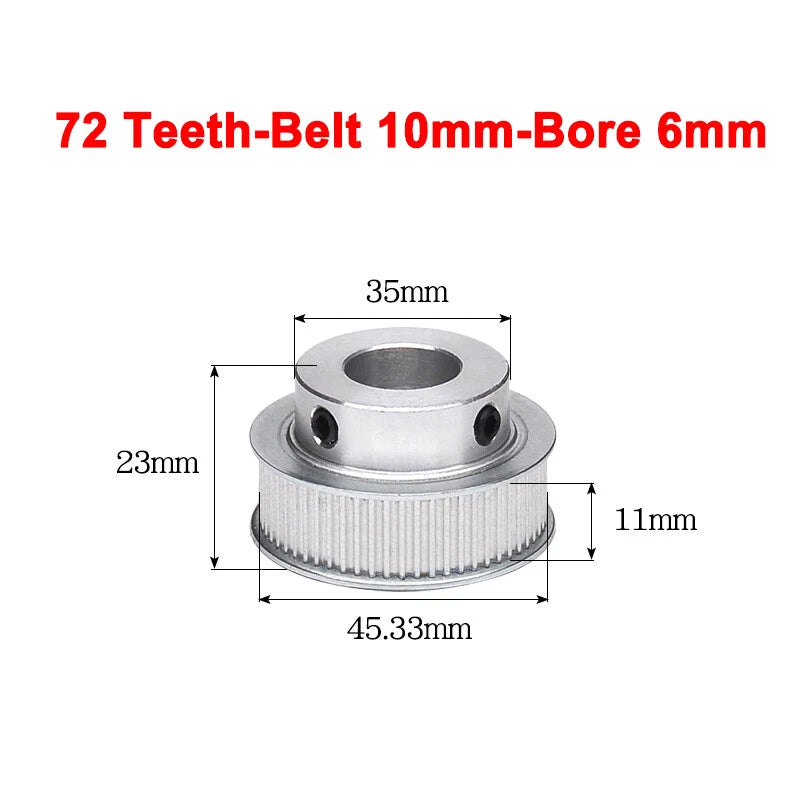
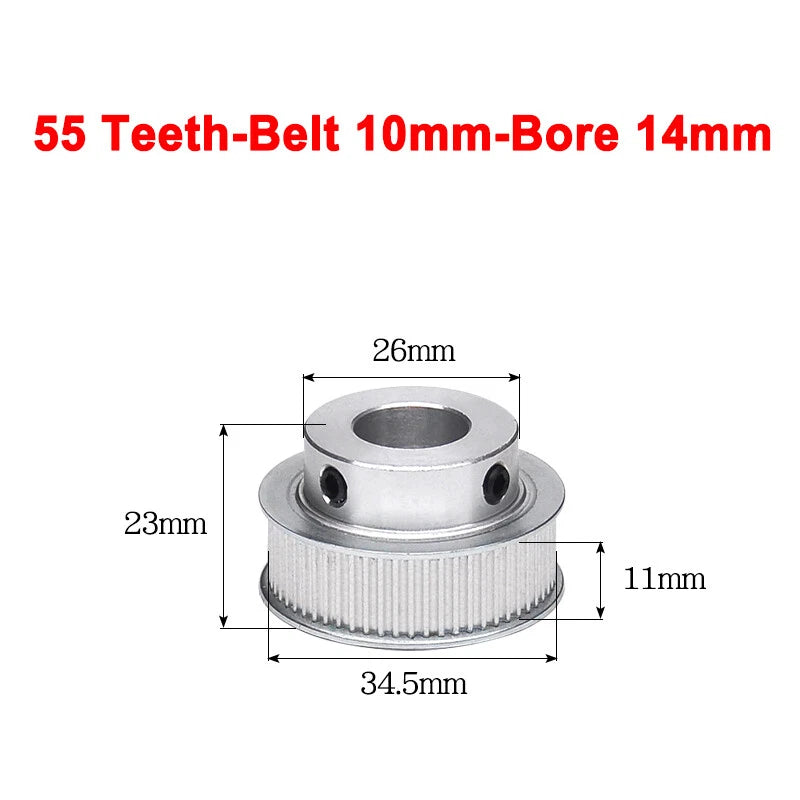
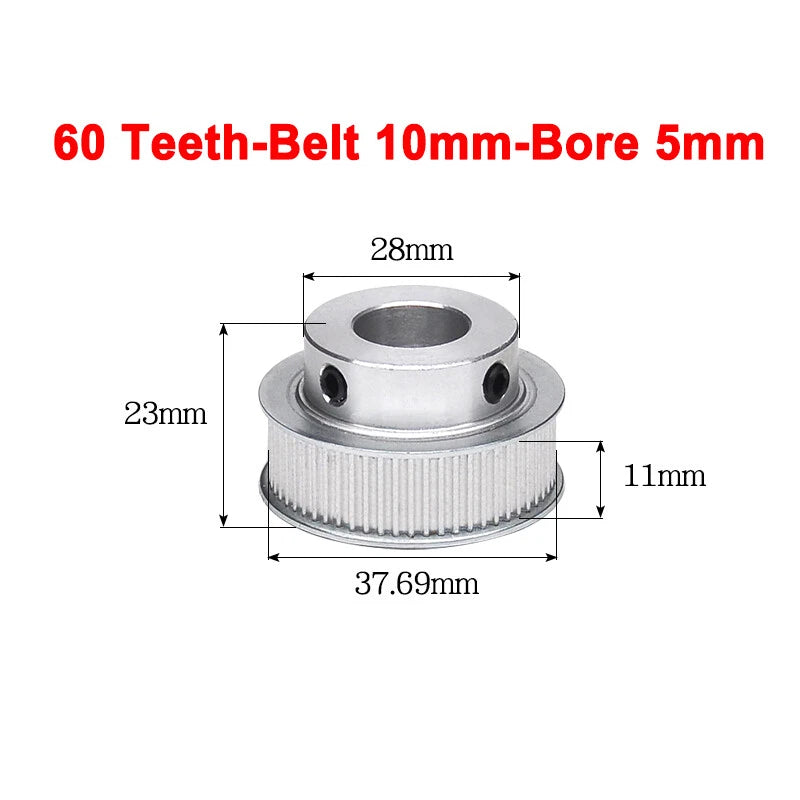
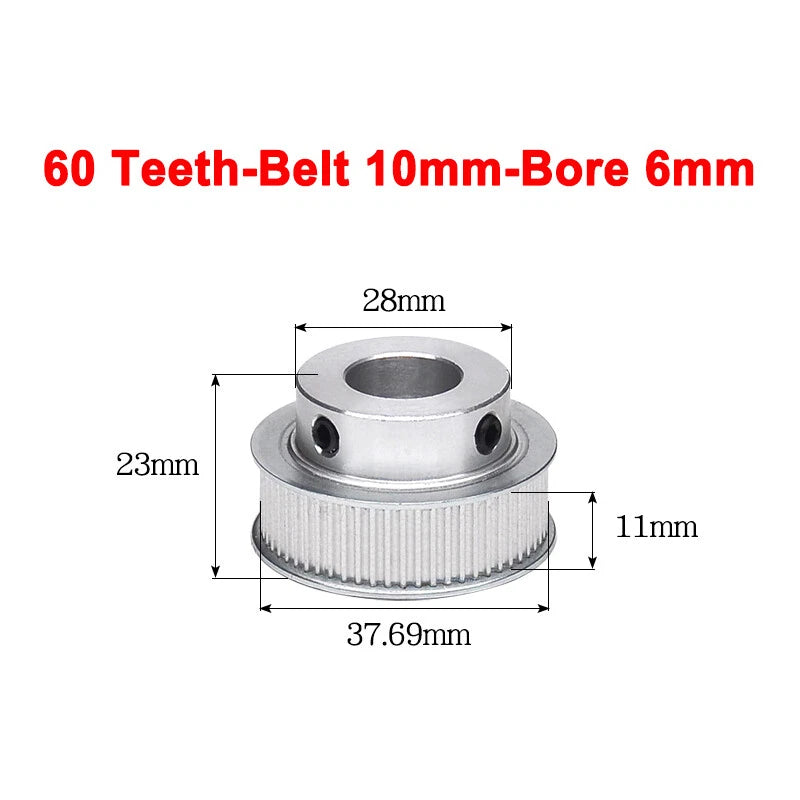
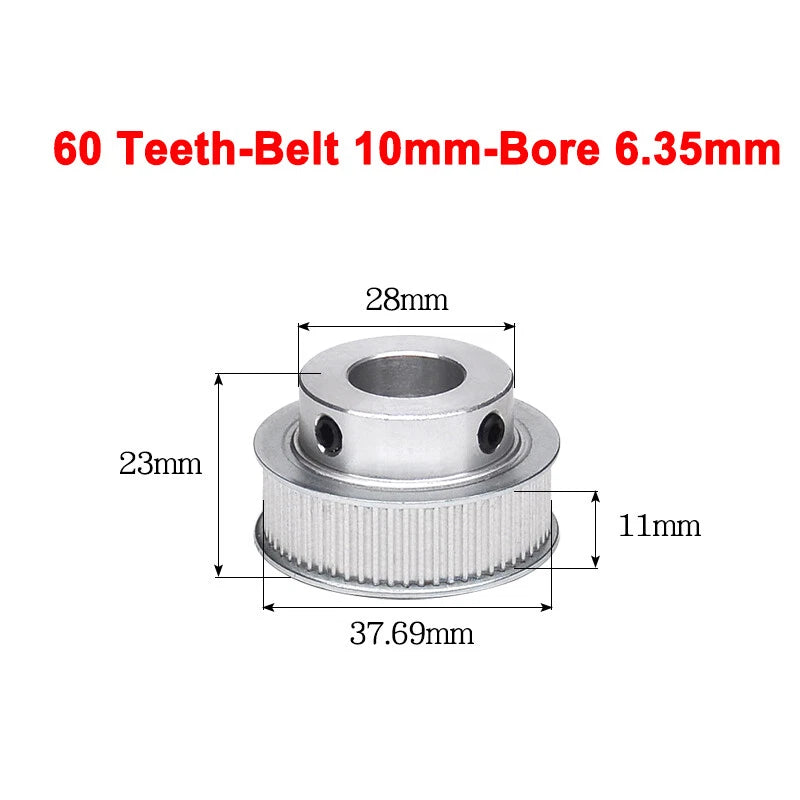
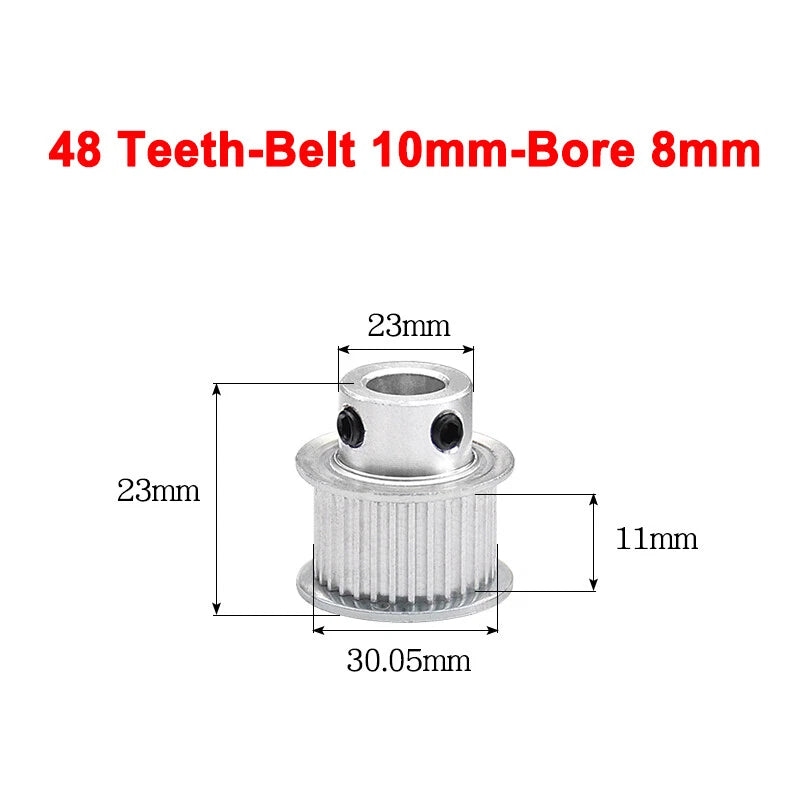
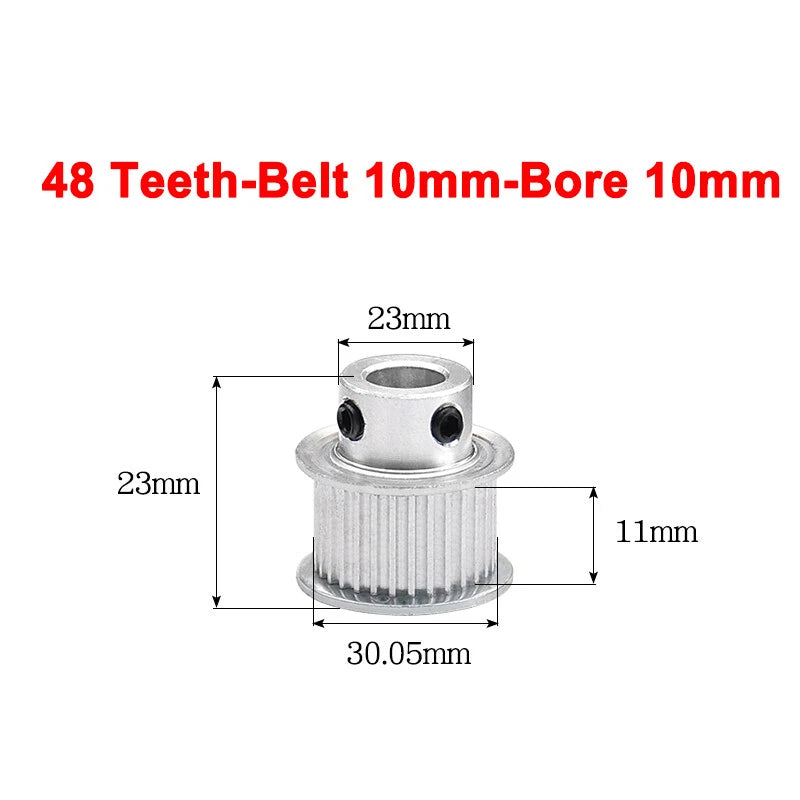
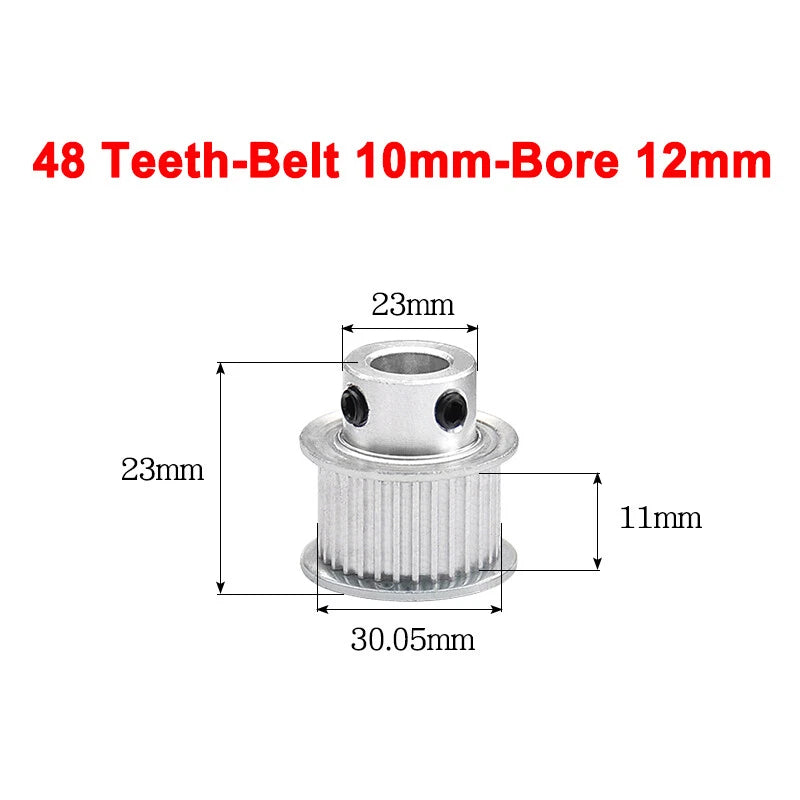
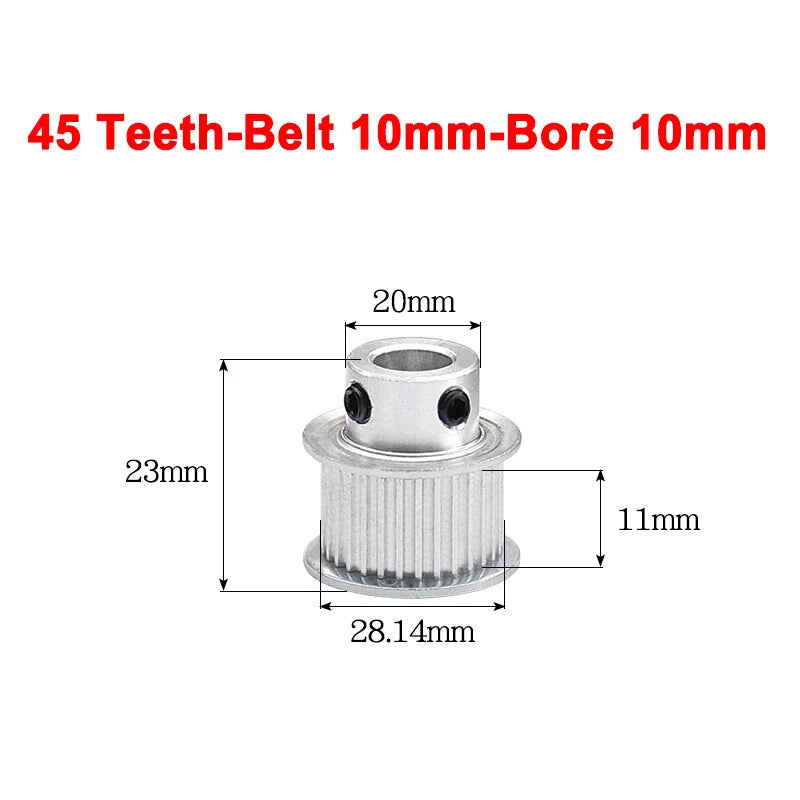
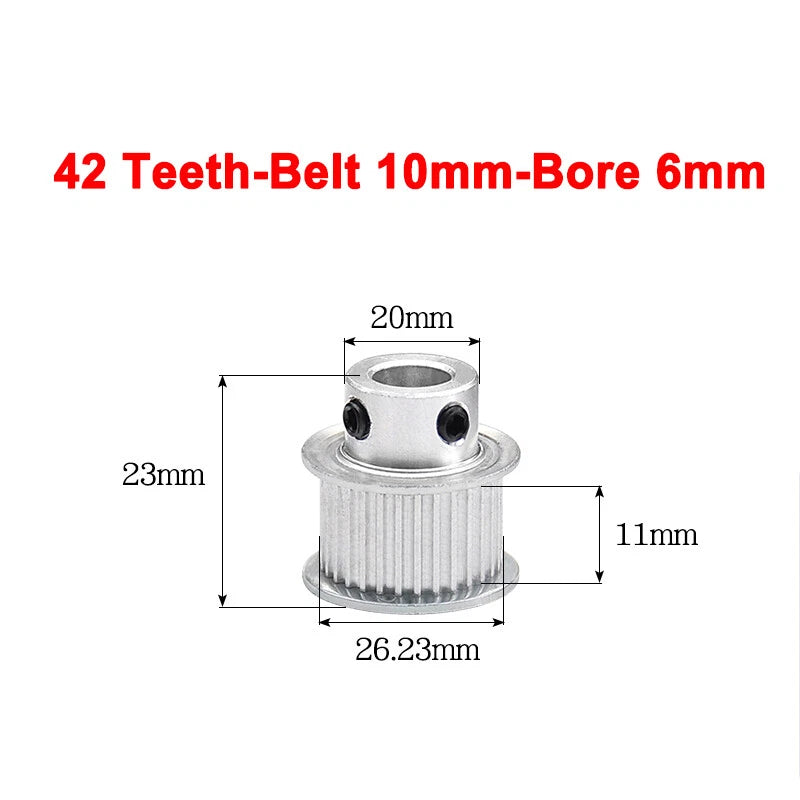
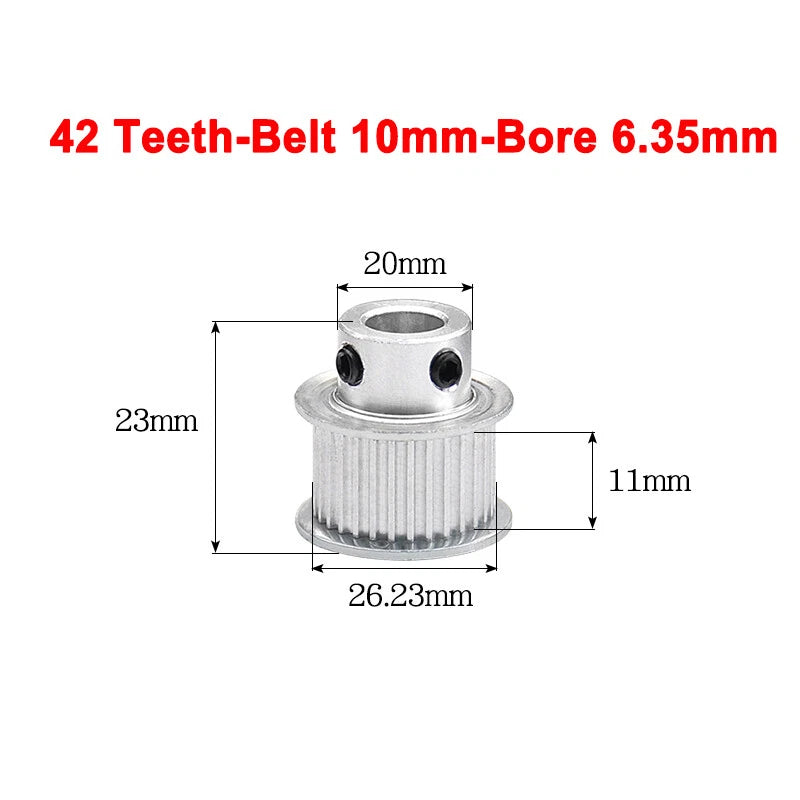
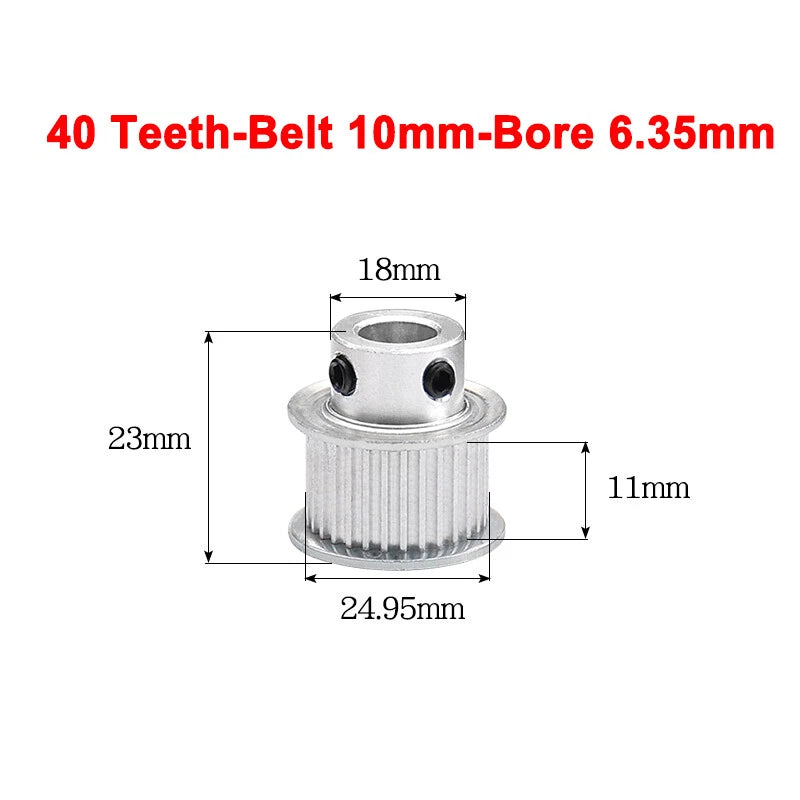
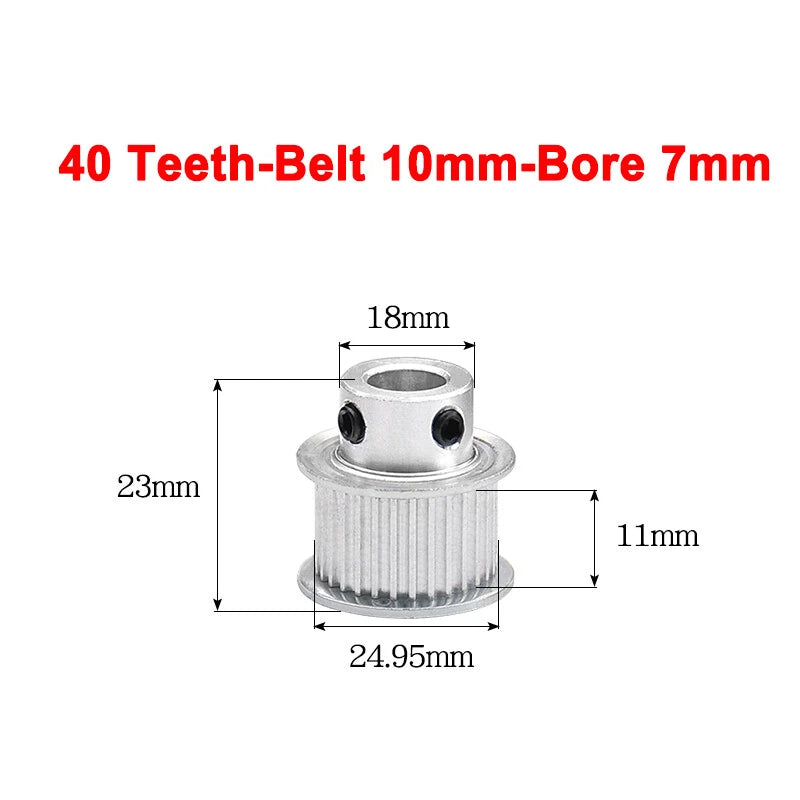
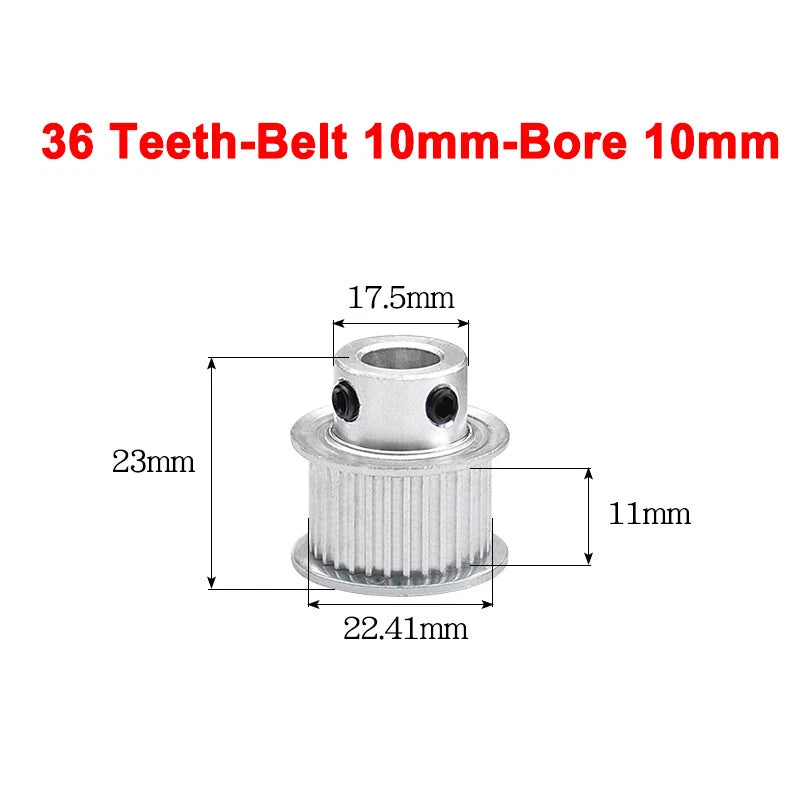
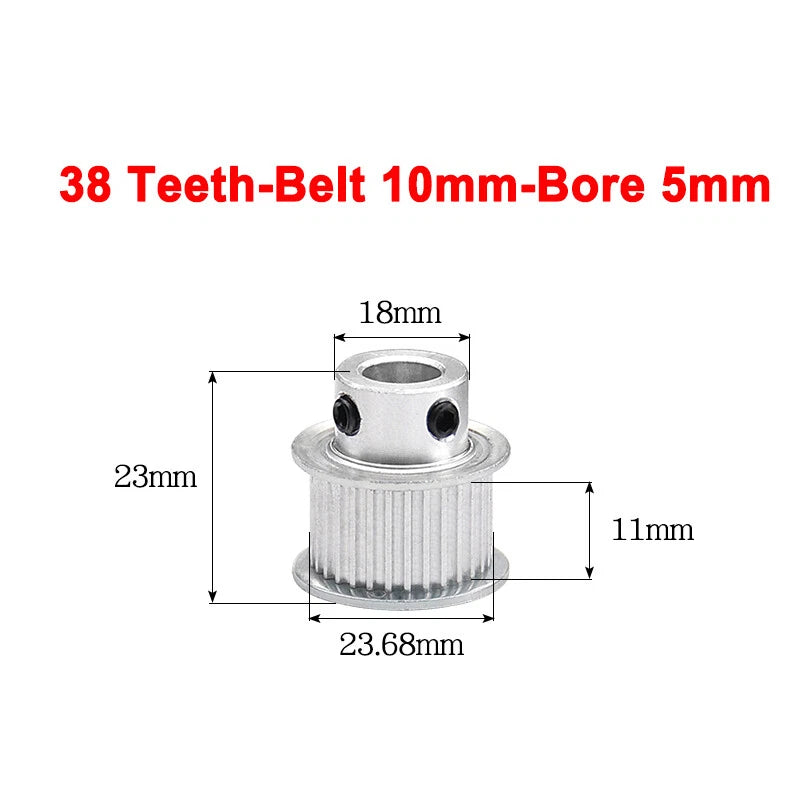
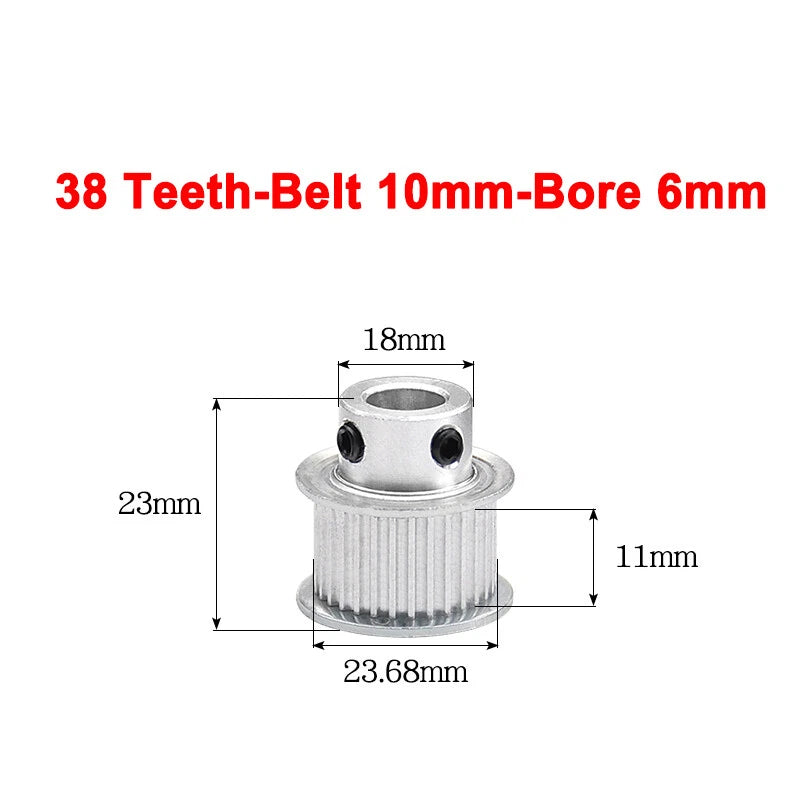
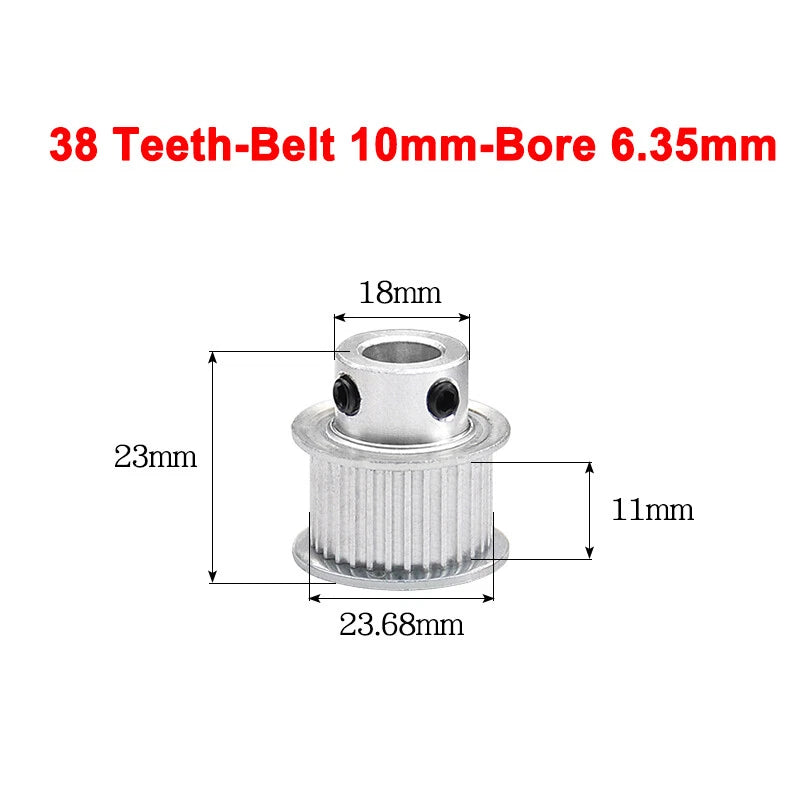
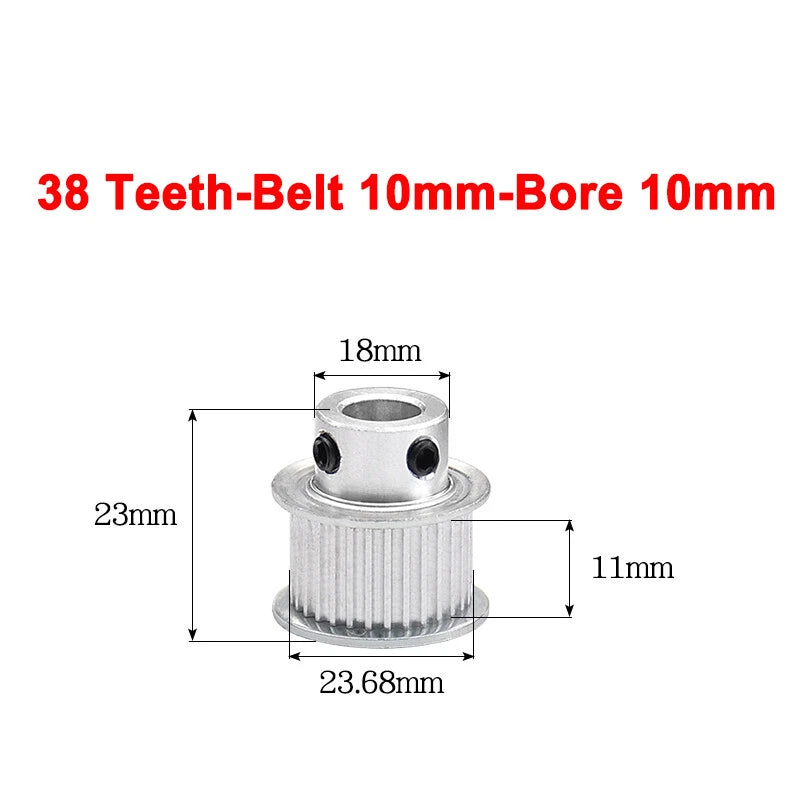
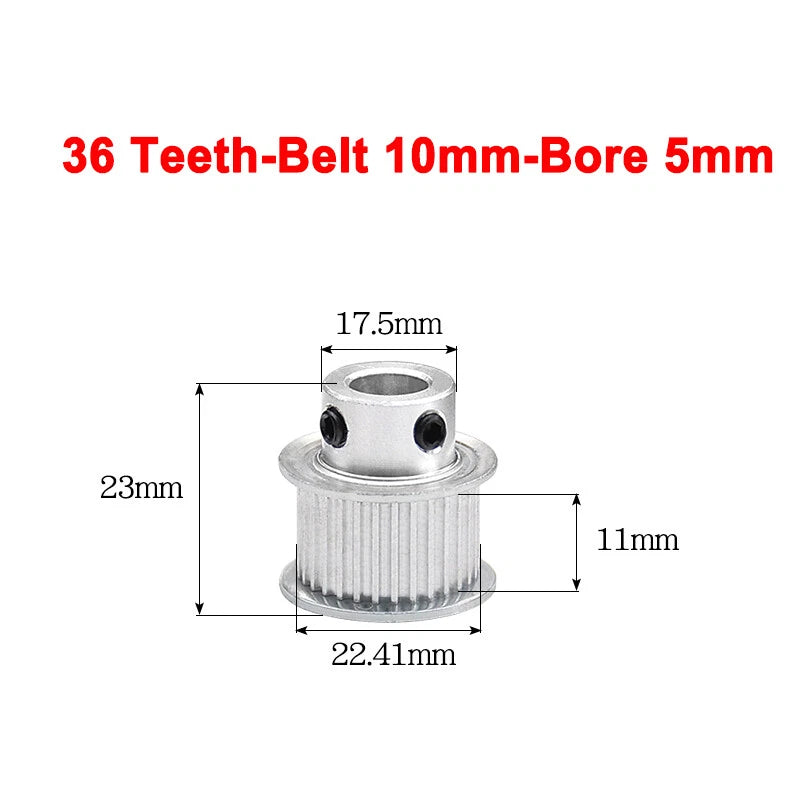
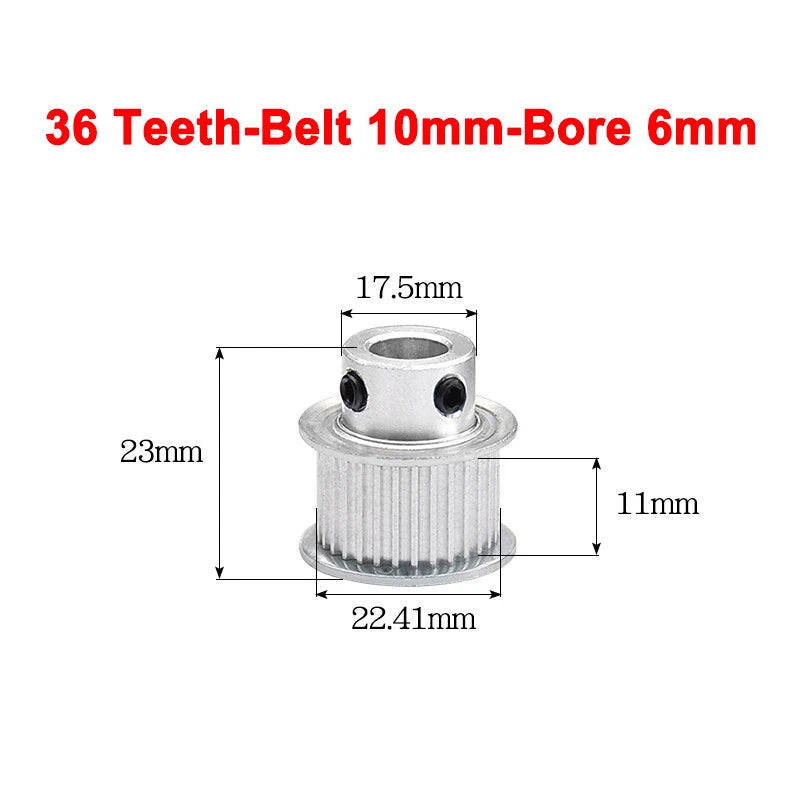
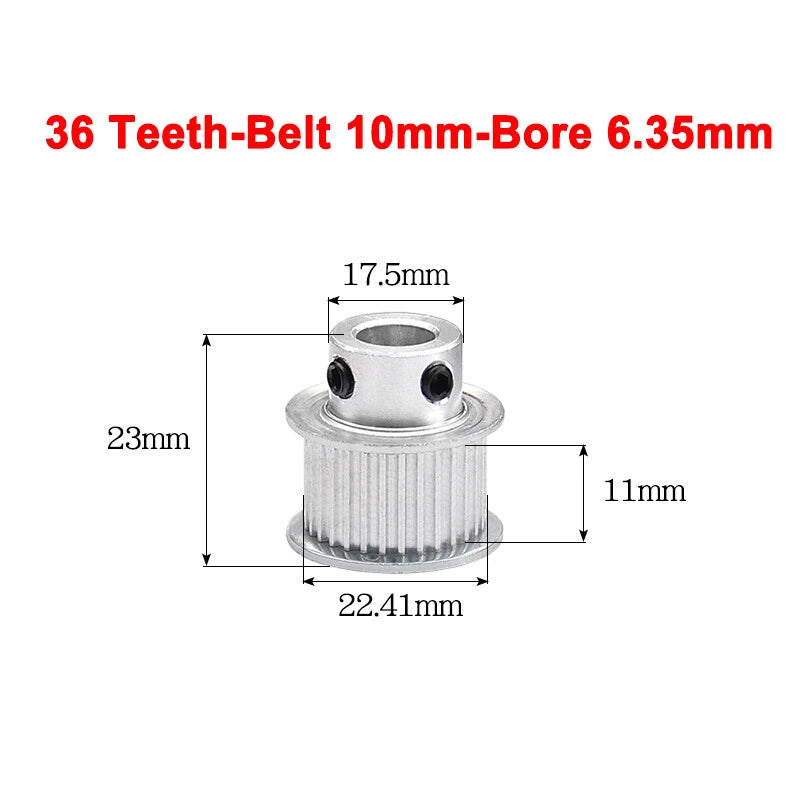
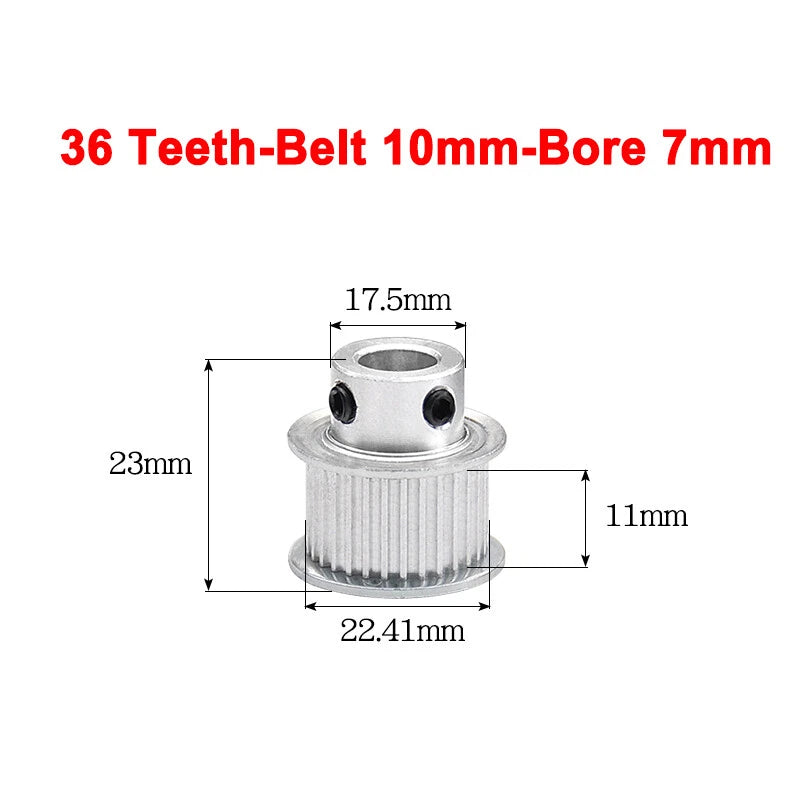
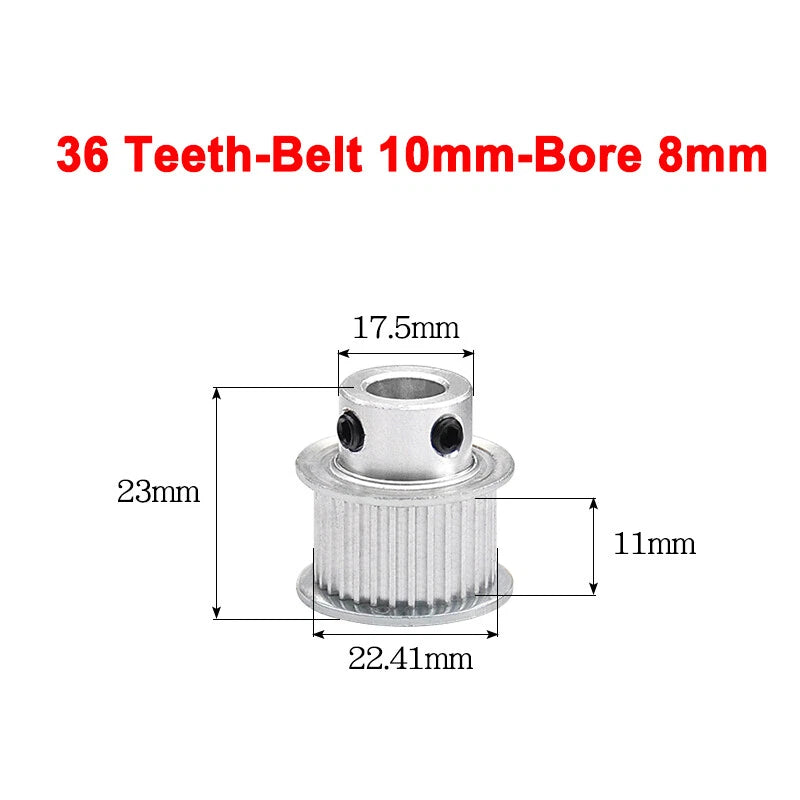
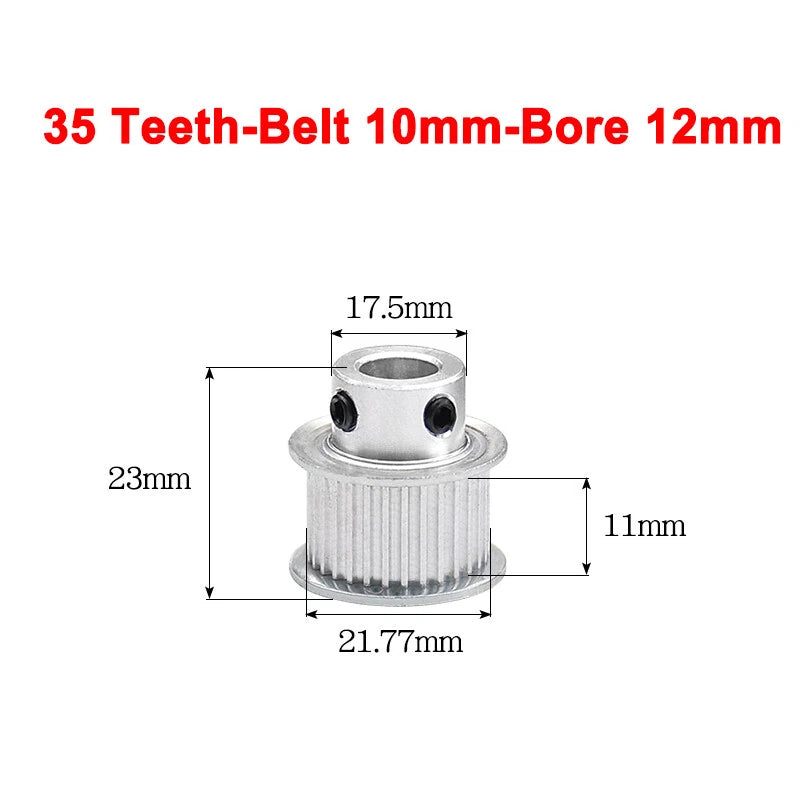
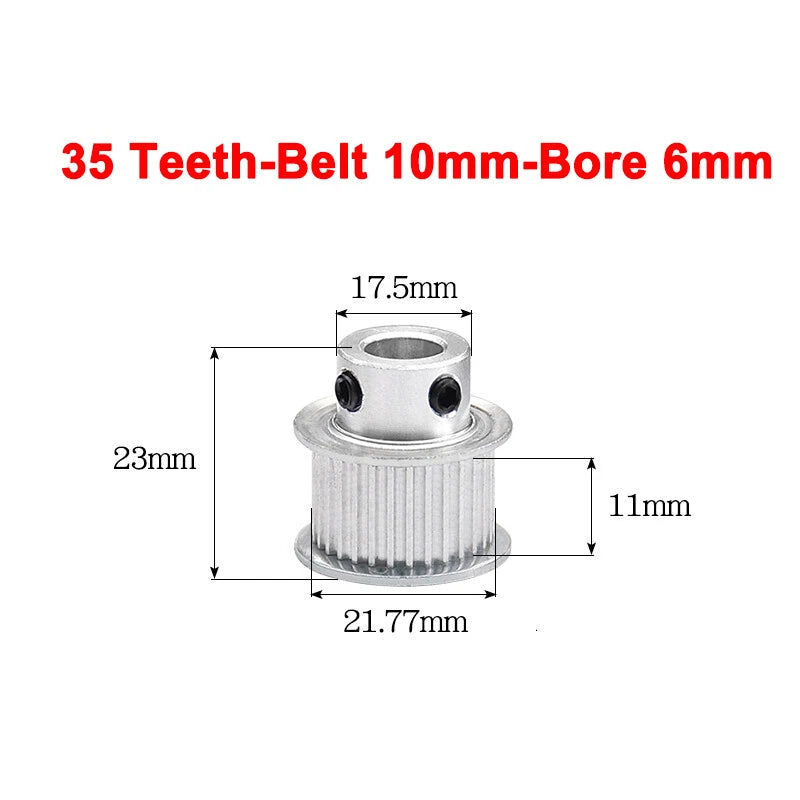
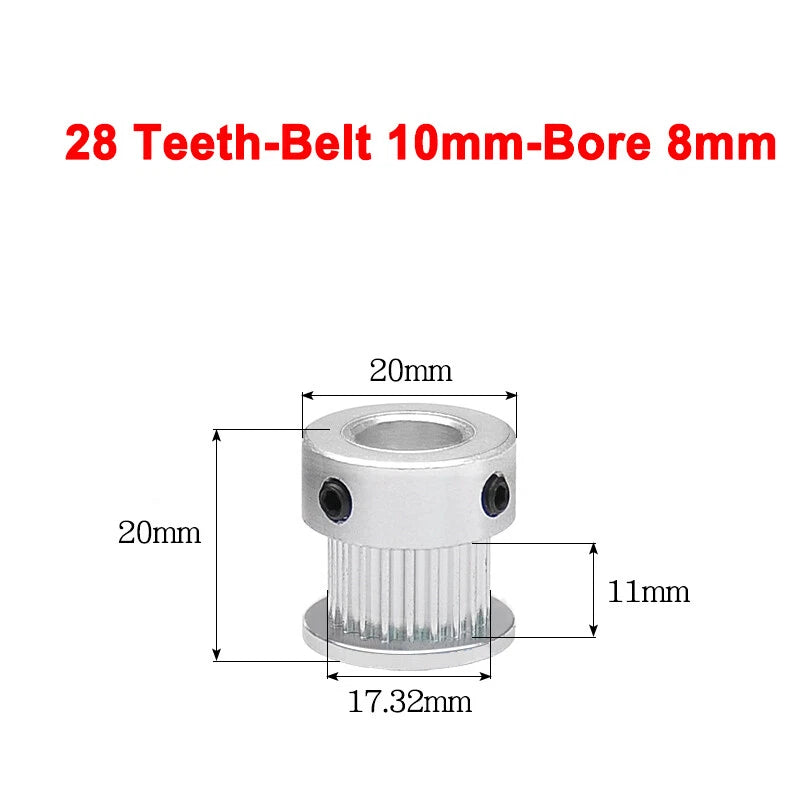
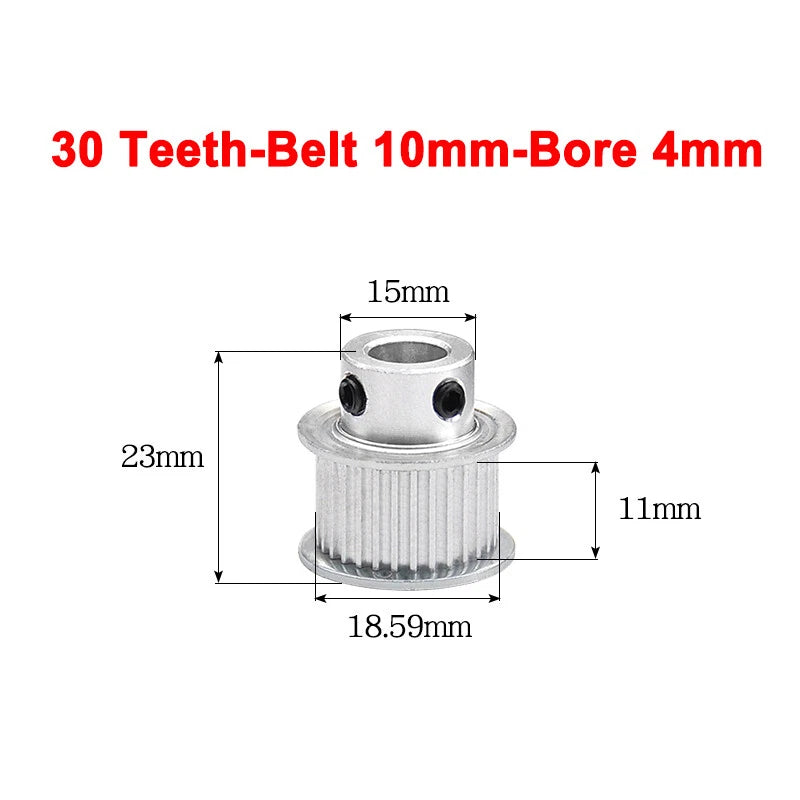
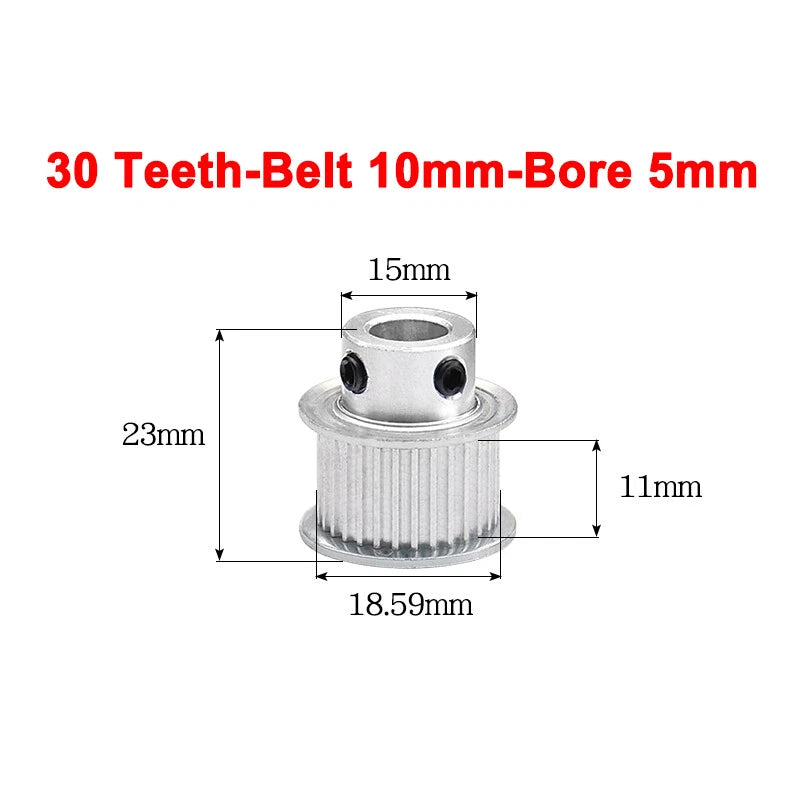
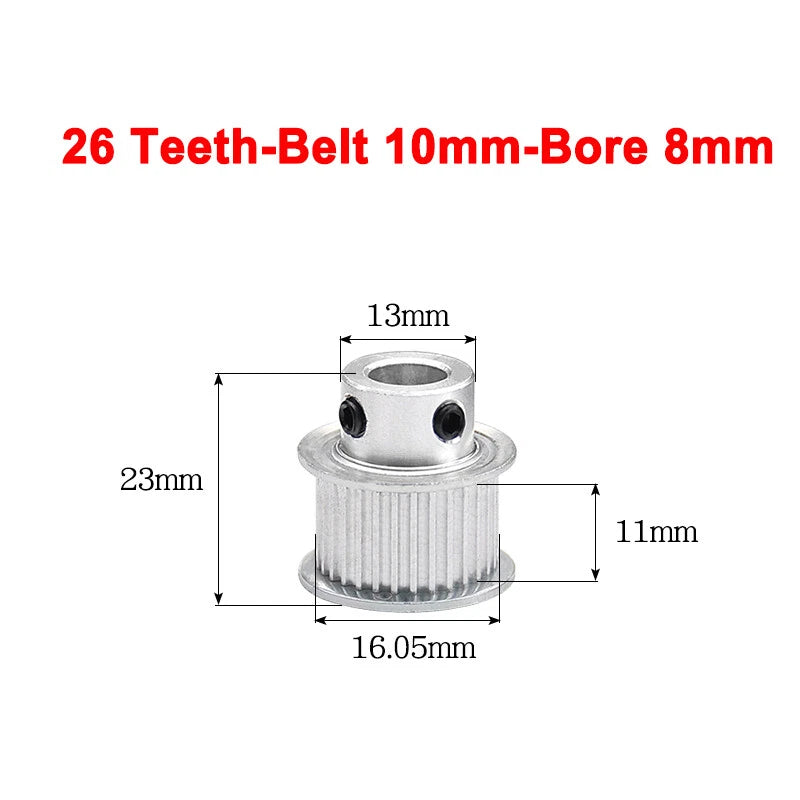
Outer Diameter See variant options
Hub Length See variant options
Quantity per Order 1 piece

❓ Frequently Asked Questions

How do I choose the right tooth count for my application?

Tooth count determines your drive ratio and linear speed per motor revolution. Divide the driven pulley teeth by the drive pulley teeth to get the reduction ratio. For CNC and 3D printers, 20T is a common starting point for balanced speed and torque. Larger tooth counts (40T+) are used when you need higher linear speed or a larger pitch diameter to reduce belt wrap angle on long spans.

What is the difference between K-type and BF-type pulleys?

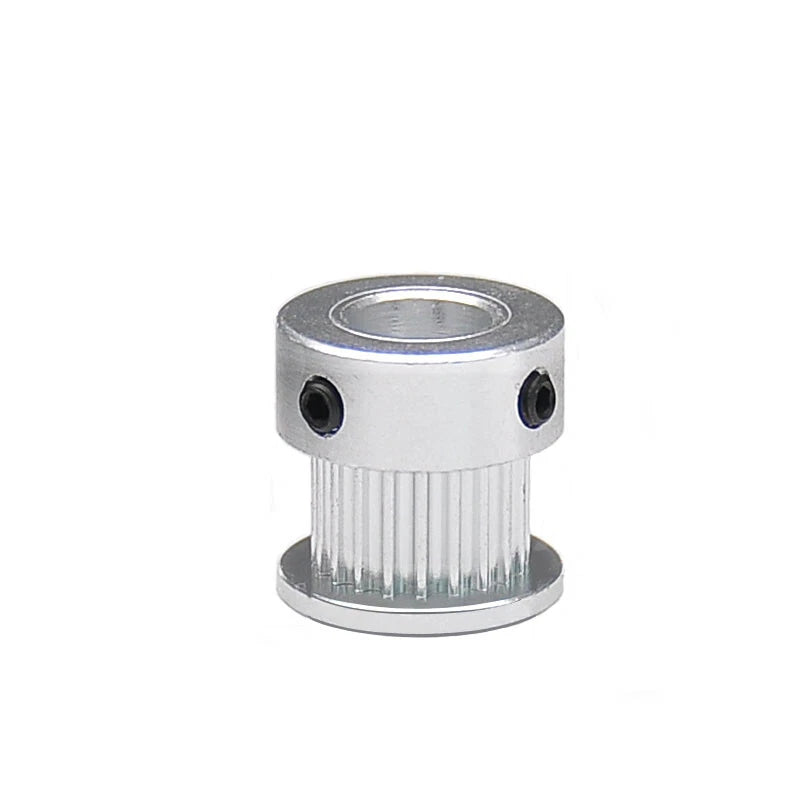
K-type pulleys use one or two set screws threaded radially into the hub to clamp onto the shaft. They are compact and easy to reposition. BF-type pulleys add flanges (raised lips) on both sides of the belt groove, which physically constrain the belt laterally. BF-type is recommended for vertical axes, high-speed runs, or any setup where the belt might walk sideways under load.

How do I select the correct bore diameter?

Measure your motor or drive shaft diameter with a caliper. Common stepper motor shaft sizes are 5 mm and 6.35 mm (1/4"); servo motors often use 6 mm, 8 mm, or 10 mm shafts. Select the bore that matches your shaft exactly — a loose bore will cause runout and positioning errors even when the set screw is tightened.

Are these pulleys compatible with GT2 belts from other brands?

Yes. The 2GT tooth profile is an open standard with a 2 mm pitch and a specific tooth geometry. Any belt labeled GT2 or 2GT with 10 mm width will mesh correctly with these pulleys, regardless of brand. Avoid mixing with HTD or T2.5 belts, which have different tooth profiles and are not interchangeable.

How strong is the set screw clamping on K-type pulleys?

K-type set screws provide adequate clamping for typical stepper motor torques in 3D printing and light CNC applications. For higher torque loads, consider using a shaft with a flat (D-shaft) so the set screw bears against a flat surface rather than a round shaft, which significantly increases holding force. BF-type pulleys with a keyway option are recommended for heavy-duty servo applications.

Can I use these pulleys in a corrosive or outdoor environment?

The anodized aluminum finish provides good resistance to oxidation and mild chemical exposure, making these pulleys suitable for workshop environments with coolant mist or humidity. For prolonged outdoor exposure or contact with aggressive chemicals, consider applying a light coat of dry lubricant or corrosion inhibitor to the bore and set screw threads. The belt groove itself should remain clean and dry for optimal grip.

What should I check before finalizing my pulley selection?

Confirm three things: (1) shaft diameter matches the bore you select, (2) your belt is 10 mm wide with a 2 mm GT2 pitch, and (3) the tooth count gives you the gear ratio and pitch diameter your design requires. Also verify that the pulley outer diameter fits within your frame clearance — larger tooth counts produce larger outer diameters. If you are unsure, contact us to confirm before ordering.

🛒 Select your tooth count, type, and bore diameter above, then add to cart.


You may also like

Recently viewed