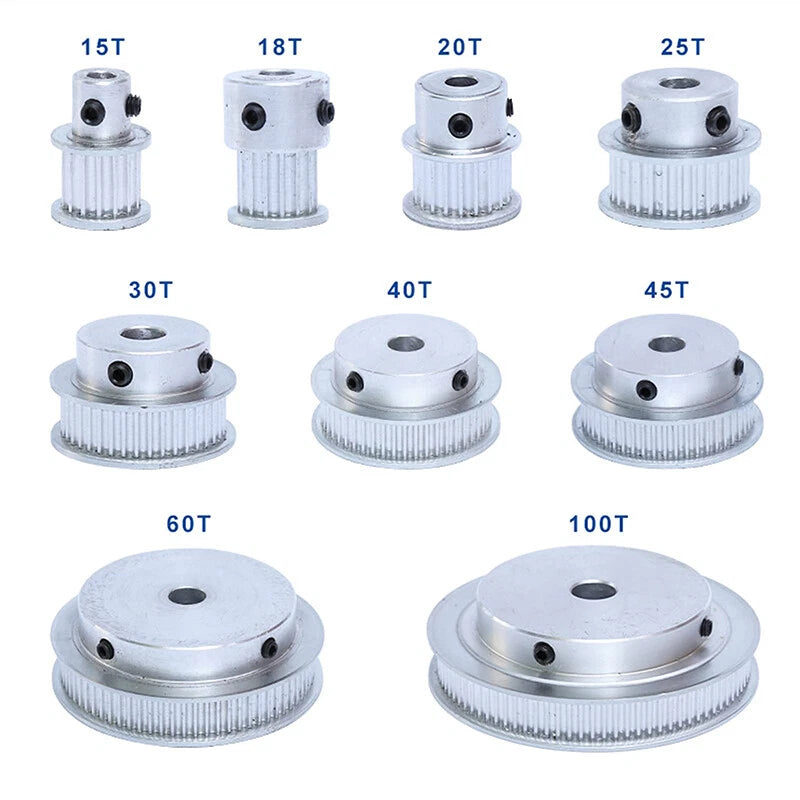
2GT Timing Pulley Synchronous Wheel 14-30 Teeth 6/10mm Belt 4mm-15mm Bore for 3D

No reviews

Price:
Sale price$8.55 USD
Stock:
In stock (500 units), ready to be shipped

Payment & Security

Ach Direct Debit Amazon American Express Apple Pay Bancontact BLIK Diners Club Discover EPS Google Pay iDEAL Wero JCB Maestro Mastercard Multibanco MobilePay PayPal Przelewy24 Shop Pay Twint Union Pay USDC Visa

Your payment information is processed securely. We do not store credit card details nor have access to your credit card information.

Limited Offer — Spend More, Save More
Spend $55+
Save $5
Spend $100+
Save $10
Spend $200+
Save $25
HomeDIYer DIY Expert Support

DIY Expert Support

Get fitment advice & recommendations

Mon–Fri  8:30 AM – 8:00 PM
24-Hour Fast Ship
Arrives in 3–14 Days
Worldwide Shipping
30-Day Returns
1 tree planted with every purchase

Description

2GT Timing Pulley Synchronous Wheel — Precise Drive for 3D Printers, CNC & Robotics

When belt slip or inconsistent motion ruins a print or throws off a CNC cut, the root cause is often an undersized or poorly matched timing pulley. Makers, engineers, and machine builders who need repeatable, low-backlash motion depend on correctly specified 2GT synchronous wheels to keep their systems running true.

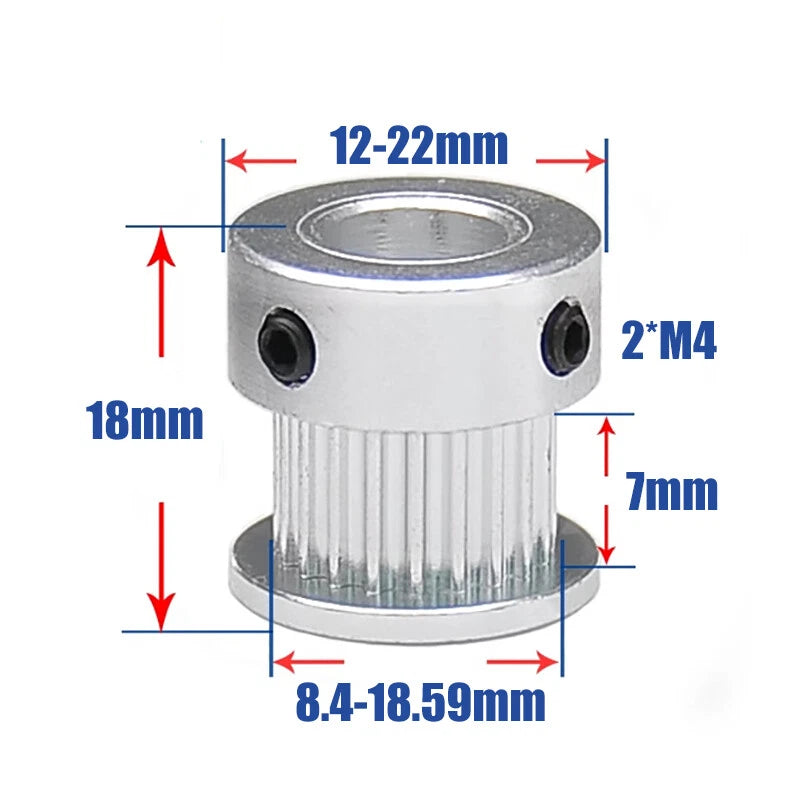
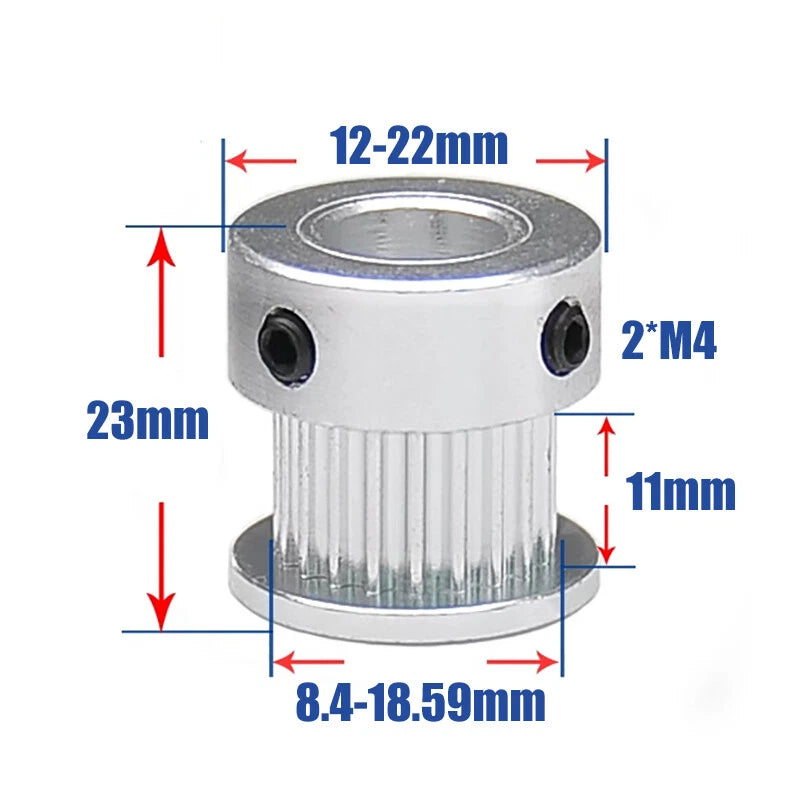
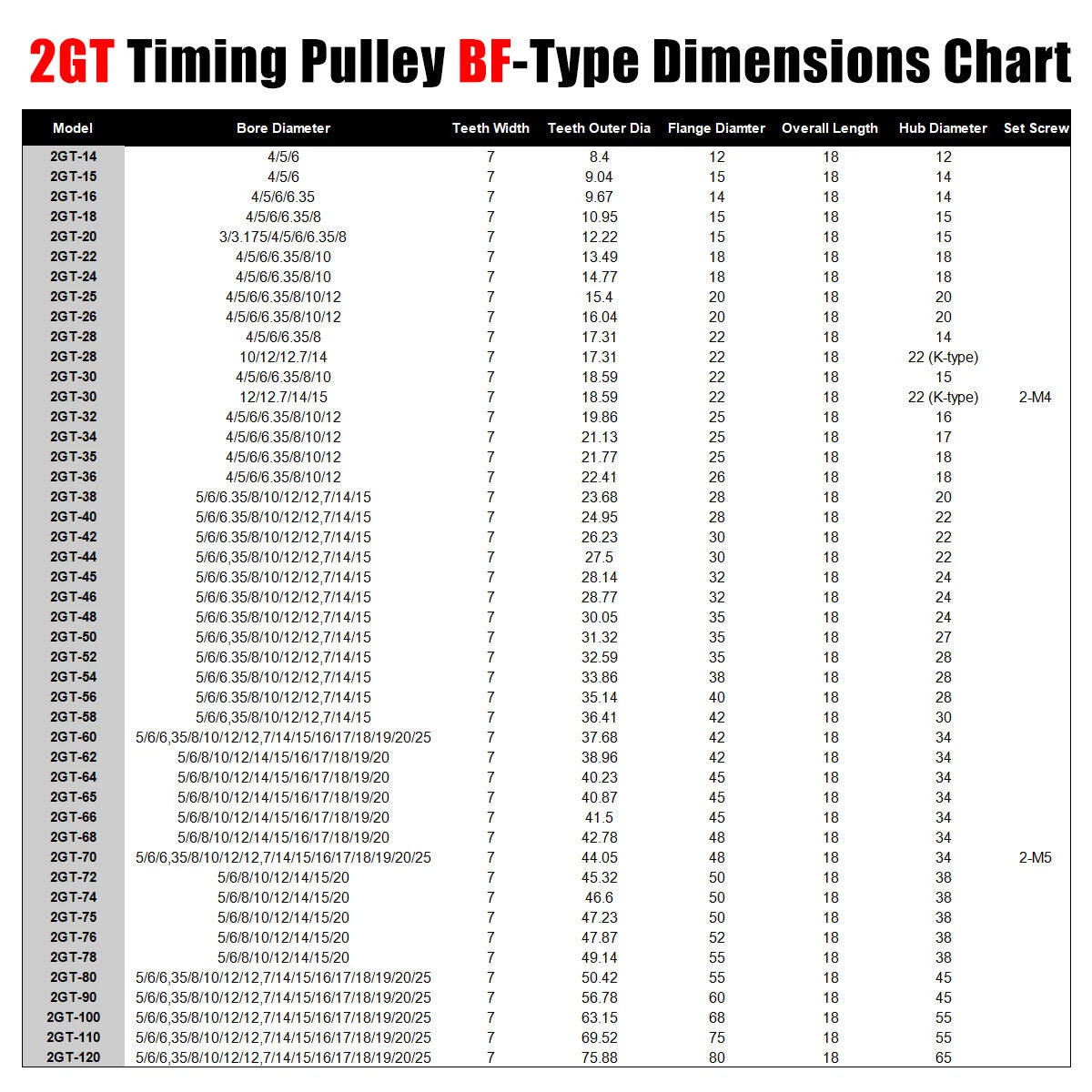
These 2GT timing pulleys feature a 2mm pitch profile machined from aluminum alloy, available in 14 to 30 tooth counts and two belt widths — 7mm (for 6mm belts) and 11mm (for 10mm belts). Bore options span 3mm to 15mm, including plain round bores and keyway variants (Bore 8 Keyway 3mm, Bore 10 Keyway 3mm/4mm, Bore 12 Keyway 4mm) for positive shaft locking. Outer diameter ranges from approximately 9mm (14T) to approximately 19mm (30T).

Typical applications include 3D printer X/Y axis drives (CoreXY, Cartesian, delta), desktop CNC router feed axes, robotic arm joint drives, and compact conveyor systems where a 2GT synchronous wheel with a matched bore keeps positioning accurate across thousands of cycles.

⚙️ Compatibility: Designed for standard 2GT / GT2 open or closed-loop belts, 6mm or 10mm wide. Verify your belt pitch (2mm) and width before selecting a variant.

✅ Key Features of These 2GT Timing Pulleys

  • 🔩Wide tooth range: 14T through 30T in a single listing — cover small-diameter, high-speed drives and larger, torque-biased configurations without sourcing from multiple suppliers.
  • 📏Dual belt-width options: 7mm flange-to-flange (suits 6mm belts) and 11mm flange-to-flange (suits 10mm belts) — choose the width that matches your existing belt stock.
  • 🔧Broad bore selection: Plain bores from 3mm to 15mm plus keyway variants (8×3, 10×3, 10×4, 12×4 mm) for positive shaft engagement without relying solely on set screws.
  • ⚖️Aluminum alloy construction: Lightweight yet rigid body keeps rotational inertia low — important for fast-reversing axes in 3D printers and pick-and-place machines.
  • 🎯2GT / GT2 profile: The 2mm pitch curvilinear tooth form reduces belt stress concentration and maintains consistent pitch-line engagement, supporting accurate positioning over extended run times.
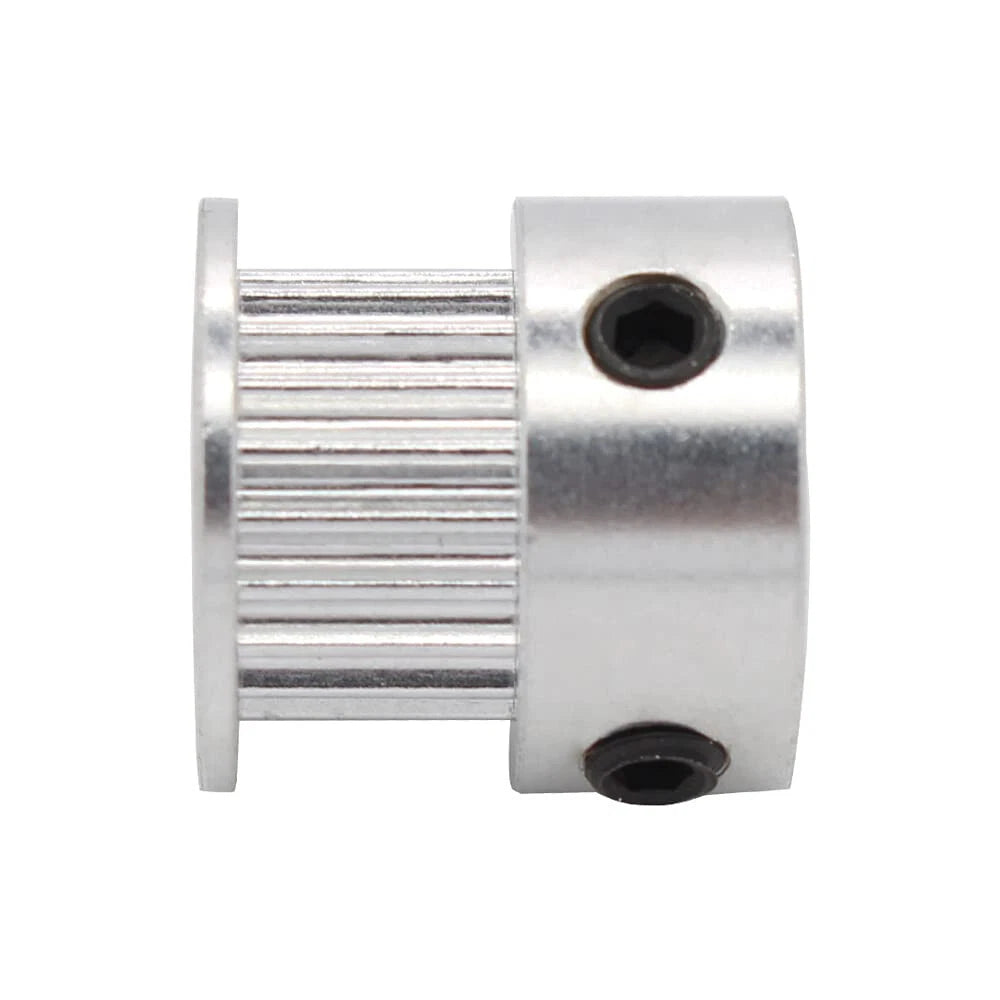
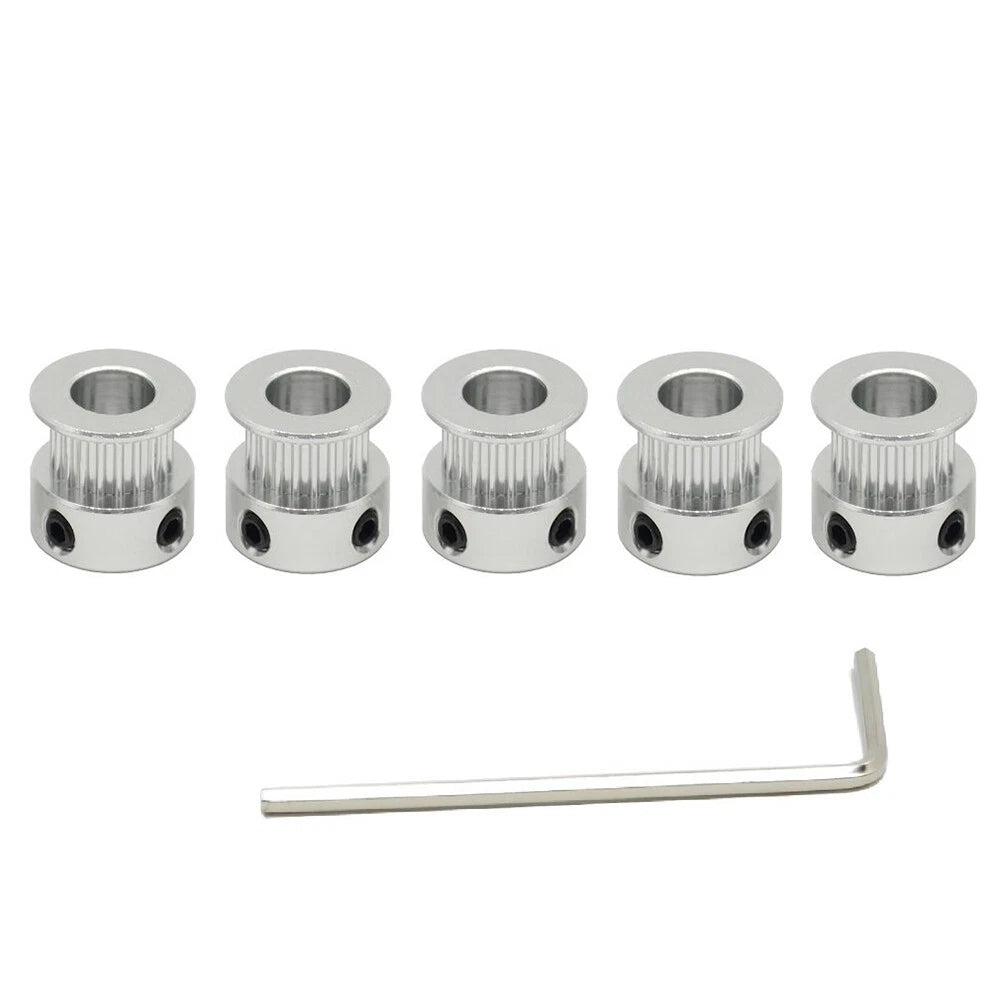
  • 🛠️Set-screw hub included: Each pulley ships with a set screw for initial shaft retention; keyway variants provide additional positive drive for higher-torque applications.

📐 Technical Specifications — 2GT Timing Pulley

Belt Pitch 2mm (2GT / GT2)
Tooth Count 14T, 15T, 16T, 18T, 20T, 22T, 24T, 25T, 26T, 28T, 30T
Belt Width Compatibility 6mm belt (7mm teeth width) / 10mm belt (11mm teeth width)
Bore Diameter 3mm, 3.175mm, 4mm, 5mm, 6mm, 6.35mm, 8mm, 10mm, 12mm, 12.7mm, 14mm, 15mm
Keyway Options Bore 8 Keyway 3mm / Bore 10 Keyway 3mm / Bore 10 Keyway 4mm / Bore 12 Keyway 4mm
Material Aluminum alloy
Outer Diameter (approx.) See variant options (scales with tooth count)
Hub Retention Set screw (keyway variants: set screw + keyway)
Weight See variant options

❓ Frequently Asked Questions

How do I choose the right tooth count for my application?

Tooth count determines the pitch diameter and, combined with your motor's RPM, the linear speed of the belt. Smaller tooth counts (14T–18T) suit high-speed, low-torque axes like 3D printer X/Y. Larger counts (24T–30T) increase torque multiplication and reduce belt tension for heavier loads. Match the tooth count on both the drive and idler/driven pulleys to maintain the correct gear ratio.

What is the difference between the 7mm and 11mm teeth-width options?

The teeth width refers to the usable belt contact surface between the flanges. The 7mm option is designed for standard 6mm-wide 2GT belts; the 11mm option is designed for 10mm-wide 2GT belts. Using a wider belt increases load capacity and reduces the risk of belt tracking off the pulley under lateral forces.

Do I need a keyway bore, or will a plain bore with a set screw be sufficient?

For light-duty applications such as 3D printer axes, a plain bore with a set screw is typically sufficient. For higher-torque applications — stepper-driven CNC axes, conveyor drives, or any setup where the shaft reverses direction under load — a keyway bore provides positive mechanical engagement and prevents the pulley from rotating on the shaft under shock loads.

Are these pulleys compatible with GT2 belts from other brands?

Yes. The 2GT profile is dimensionally equivalent to the GT2 profile used by most belt manufacturers. These pulleys will mesh correctly with any standard 2mm-pitch GT2 or 2GT open or closed-loop belt of the matching width (6mm or 10mm).

How do I measure my existing bore to select the correct size?

Use a digital caliper to measure the shaft diameter at the point where the pulley will sit. Select the bore size that matches your shaft diameter. If your shaft is an imperial size (e.g., 1/4" = 6.35mm, 1/2" = 12.7mm), choose the corresponding metric-equivalent bore listed in the variant options.

What material are these pulleys made from, and will they corrode?

These pulleys are machined from aluminum alloy, which forms a natural oxide layer that resists corrosion in typical indoor environments (workshops, labs, enclosed machines). They are not recommended for prolonged exposure to salt spray or highly acidic/alkaline environments without additional surface treatment.

Can I use these pulleys as idler pulleys without a belt tooth engagement?

These are drive pulleys with teeth intended to engage a toothed belt. For smooth idler use (belt back-side contact), a smooth idler pulley or bearing is more appropriate. However, toothed pulleys can function as idlers on the toothed side of the belt if the belt path requires it.

🛒 Select your Teeth Width, Teeth Number, and Bore Size above, then add to cart.


You may also like

Recently viewed