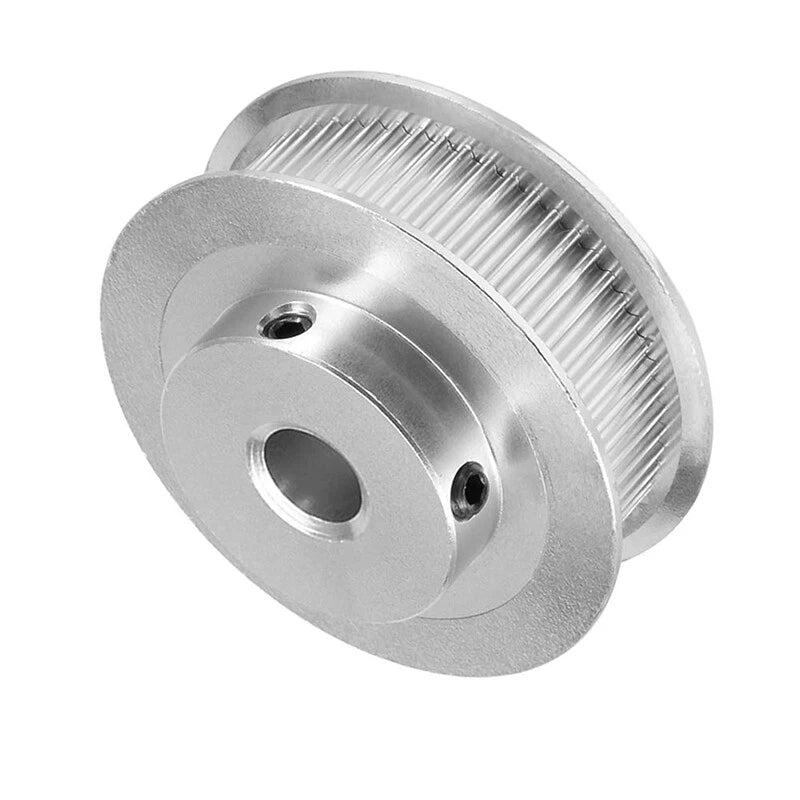
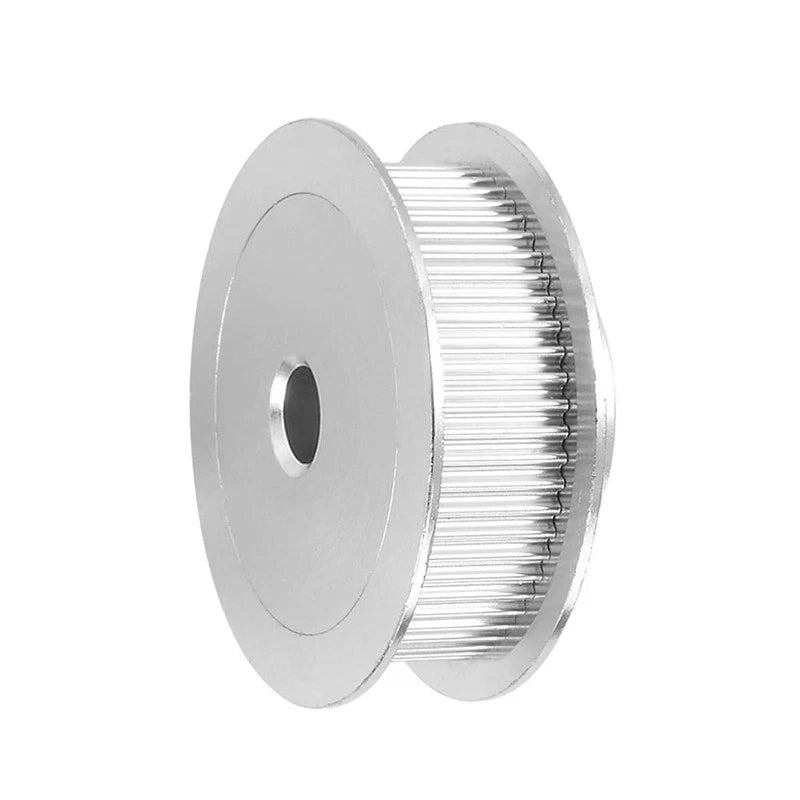
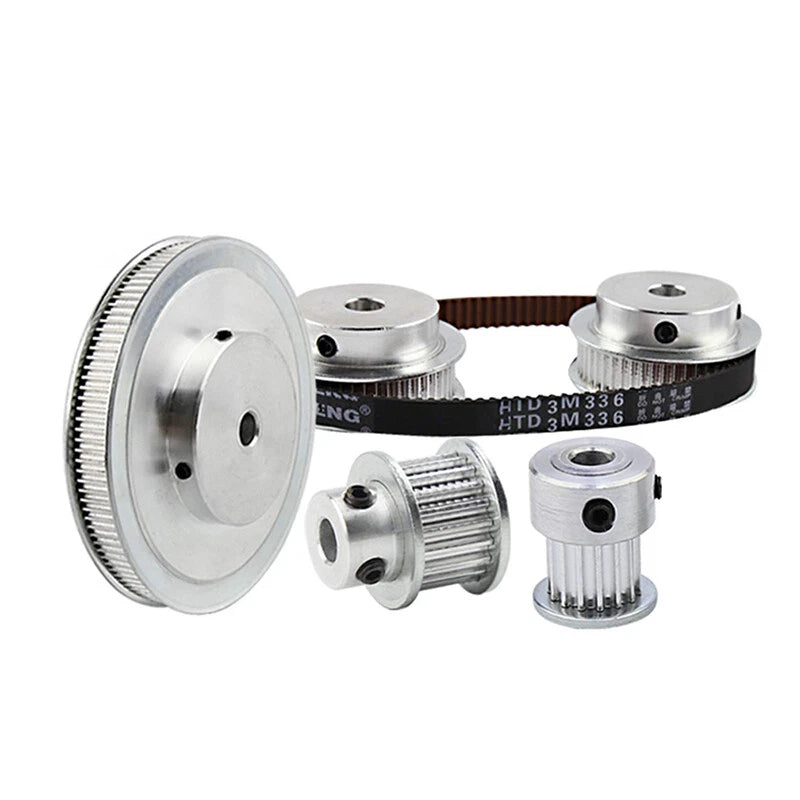
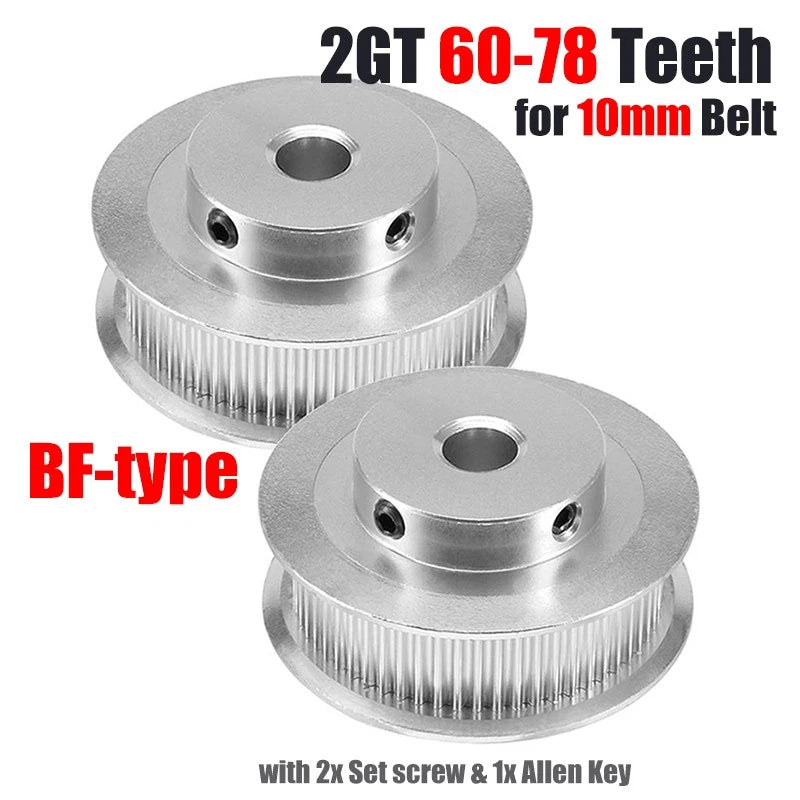
2GT Timing Pulley Synchronous Wheel 60-78 Teeth 10mm Belt 5mm-20mm Bore for 3D

No reviews

Price:
Sale price$19.57 USD
Stock:
In stock (500 units), ready to be shipped

Payment & Security

Ach Direct Debit Amazon American Express Apple Pay Bancontact BLIK Diners Club Discover EPS Google Pay iDEAL Wero JCB Maestro Mastercard Multibanco MobilePay PayPal Przelewy24 Shop Pay Twint Union Pay USDC Visa

Your payment information is processed securely. We do not store credit card details nor have access to your credit card information.

Limited Offer — Spend More, Save More
Spend $55+
Save $5
Spend $100+
Save $10
Spend $200+
Save $25
HomeDIYer DIY Expert Support

DIY Expert Support

Get fitment advice & recommendations

Mon–Fri  8:30 AM – 8:00 PM
24-Hour Fast Ship
Arrives in 3–14 Days
Worldwide Shipping
30-Day Returns
1 tree planted with every purchase

Description

2GT Timing Pulley Synchronous Wheel — Precise Motion Control for 3D Printers, CNC & Robotics

When your 3D printer skips steps or your CNC axis drifts, the culprit is often a worn or mismatched timing pulley. Makers, engineers, and workshop builders who demand repeatable, slip-free motion need a synchronous wheel that holds its tooth profile under continuous load. These 2GT timing pulleys are engineered for exactly that — delivering consistent belt engagement across a wide range of tooth counts and bore sizes.

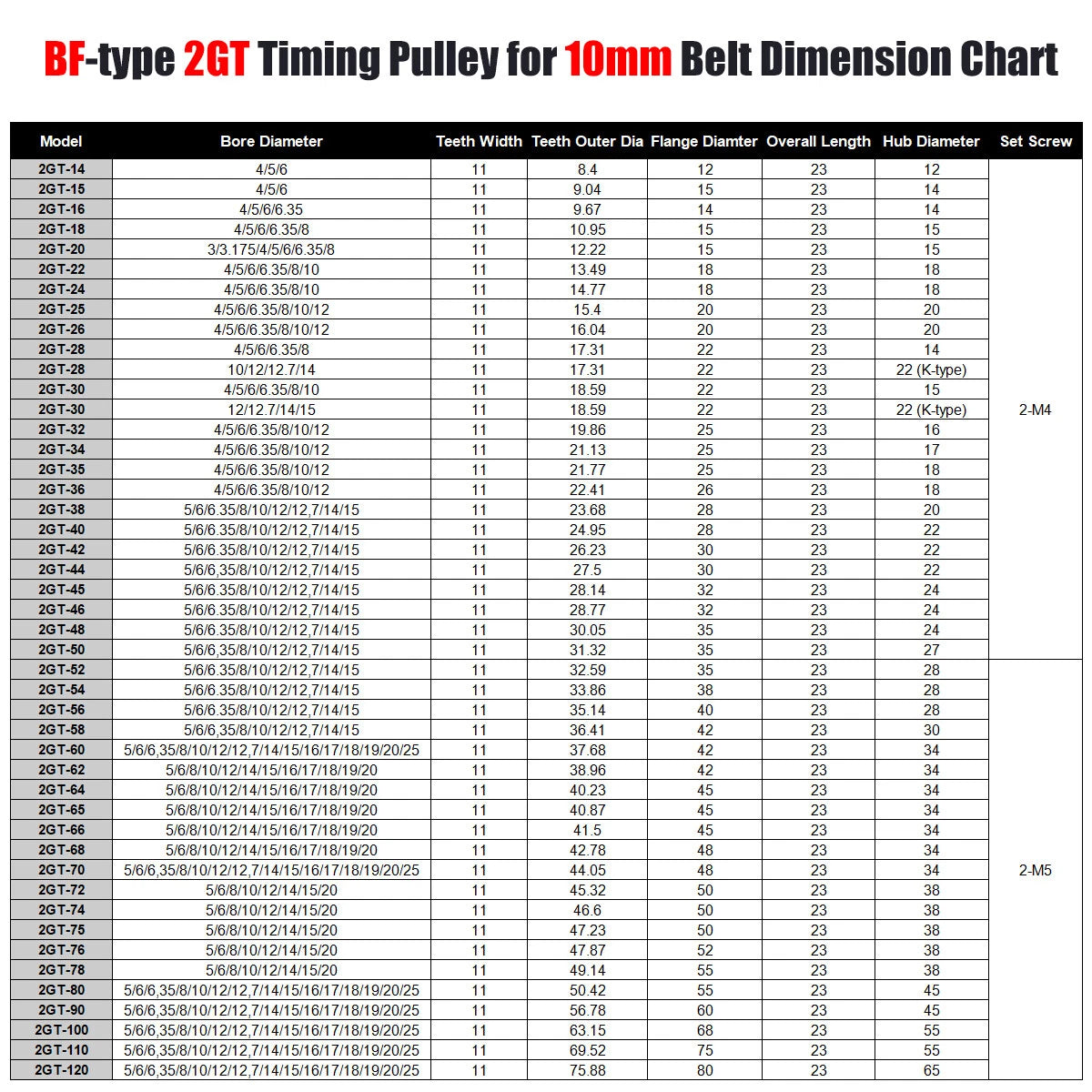
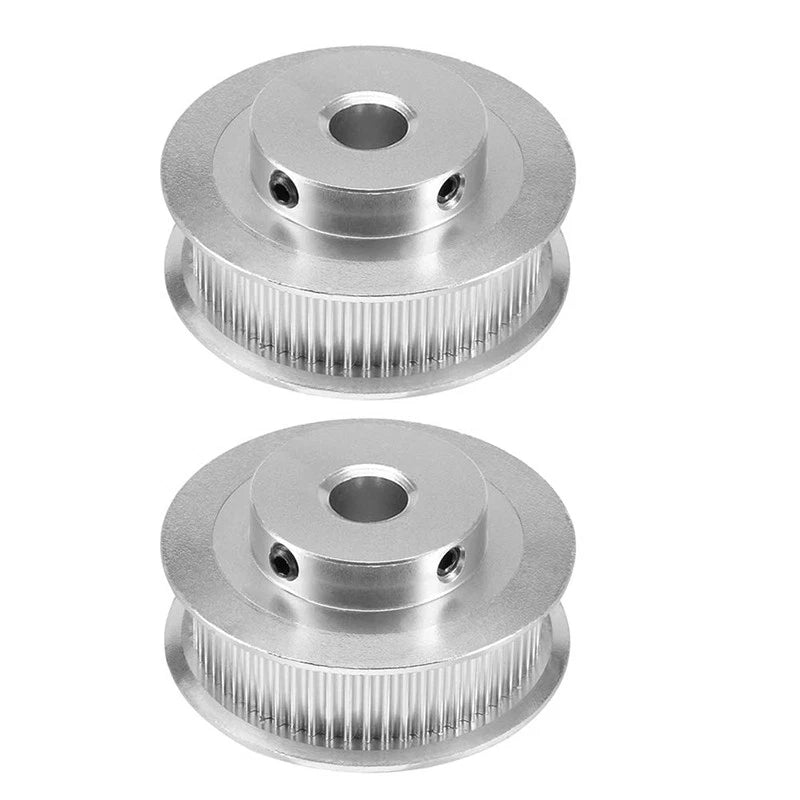
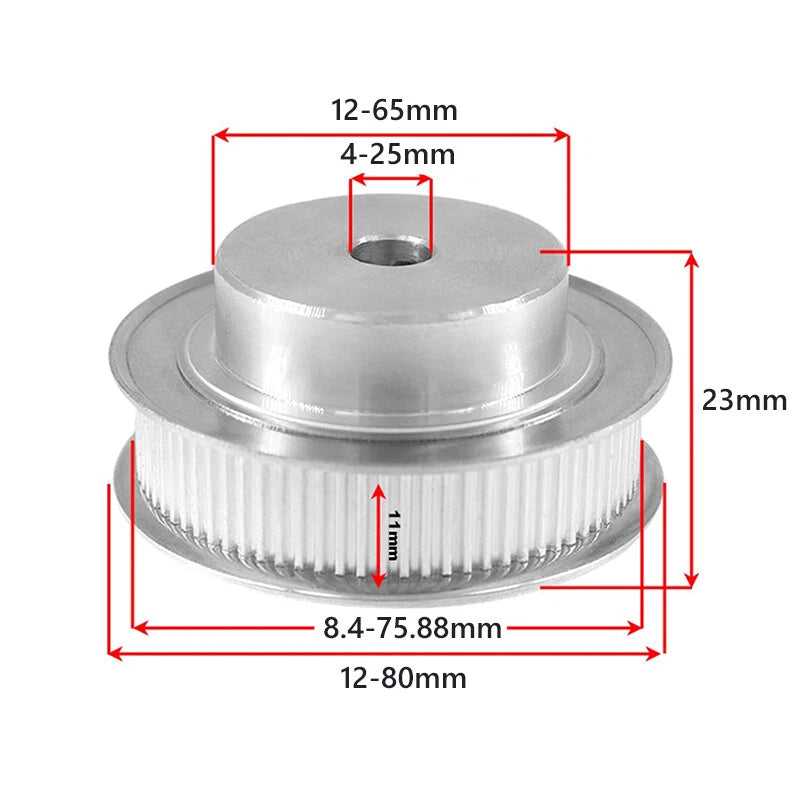
Each pulley is machined from aluminum alloy with a hard-anodized finish, offering a lightweight yet rigid body. The 2GT tooth profile is compatible with standard 2mm-pitch GT2 belts at 10mm width. Tooth counts span 60 to 78 teeth, with outer diameters ranging from approximately 38mm to 50mm (1.50"–1.97"). Bore options cover 5mm to 25mm (0.20"–0.98"), with keyway variants available for positive shaft locking.

Typical applications include open-loop stepper-driven 3D printer axes (X/Y gantry, Z-lead assist), CNC router belt drives, laser engraver carriages, and custom robotics joint actuators. The wide tooth-count range makes these pulleys well-suited for fine-tuning belt drive ratios in DIY motion systems and light industrial automation.

⚙️ Compatibility: Fits standard 2GT / GT2 open or closed-loop belts with 10mm width and 2mm pitch. Verify your shaft diameter and keyway requirement before ordering.

✅ Key Features of These 2GT Timing Pulleys

  • 🦷60–78 Tooth Range — Twelve tooth-count options let you dial in the exact belt drive ratio your motion system requires without custom machining.
  • 📏Wide Bore Selection — Plain bores from 5mm to 25mm plus keyway variants (3mm, 4mm, 5mm, 6mm, 8mm keyways) accommodate most stepper and servo shaft standards.
  • 🔩2GT / GT2 Profile — The 2mm-pitch curvilinear tooth form reduces backlash and belt wear compared to trapezoidal profiles, maintaining positioning accuracy over long print runs.
  • 🏗️Aluminum Alloy Body — Lightweight construction reduces rotational inertia, allowing faster acceleration and deceleration in high-speed 3D printer and CNC applications.
  • 🛡️Hard-Anodized Finish — The surface treatment resists abrasion from continuous belt contact and protects against oxidation in workshop environments.
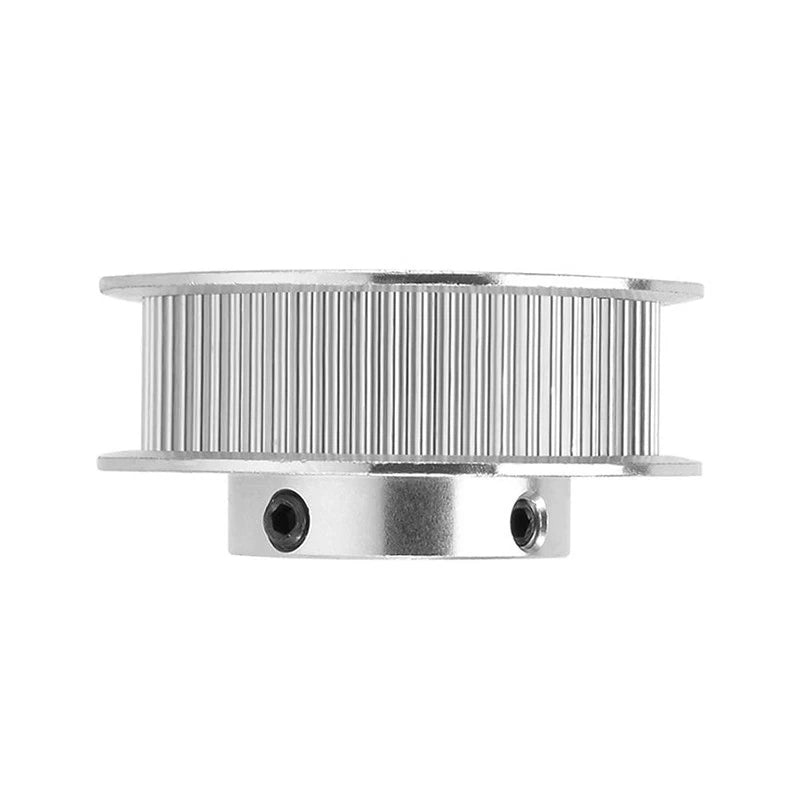
  • 🔄Set Screw Retention — Each pulley includes a set screw bore for secure shaft clamping; keyway variants provide additional torque transfer for demanding drive applications.

📐 Technical Specifications — 2GT Timing Pulley

Belt Profile 2GT (GT2), 2mm pitch
Belt Width 10mm
Teeth Number 60 / 62 / 64 / 65 / 66 / 68 / 70 / 72 / 74 / 75 / 76 / 78
Bore Diameter 5 / 6 / 6.35 / 8 / 10 / 12 / 12.7 / 14 / 15 / 16 / 17 / 18 / 19 / 20 / 25mm (see variant options)
Keyway Options 3mm / 4mm / 5mm / 6mm / 8mm (see variant options)
Outer Diameter (approx.) ~38mm–50mm (1.50"–1.97"), varies by tooth count
Material Aluminum alloy
Surface Finish Hard anodized
Flange See variant options
Retention Set screw; keyway variants available
Quantity 1 piece per order

❓ Frequently Asked Questions

How do I choose the right tooth count for my application?

The tooth count determines your pulley's pitch diameter and, combined with your motor pulley tooth count, sets the belt drive ratio. For 3D printer CoreXY or Cartesian axes, 20-tooth motor pulleys paired with these 60–78 tooth idler or driven pulleys create reduction ratios from 3:1 to ~3.9:1. For direct-drive or 1:1 belt runs, match the tooth count on both ends. Use the formula: ratio = driven teeth ÷ drive teeth.

Which bore size should I select for my stepper motor shaft?

Most NEMA 17 stepper motors use a 5mm shaft; NEMA 23 motors typically use an 8mm or 1/4" (6.35mm) shaft. Measure your shaft diameter with calipers before ordering. If your shaft has a flat or keyway, select the matching keyway variant (e.g., Bore 8 Keyway 3mm) for positive torque transfer without relying solely on the set screw.

Are these pulleys compatible with GT2 belts from other brands?

Yes. The 2GT tooth profile is an industry-standard 2mm-pitch curvilinear form, dimensionally identical to GT2. These pulleys are compatible with any 10mm-wide GT2 or 2GT open or closed-loop belt regardless of brand, as long as the belt pitch is 2mm and the width is 10mm.

How strong is the aluminum body under continuous belt tension?

Aluminum alloy pulleys are standard in 3D printing and light CNC applications where belt tensions typically range from 5N to 30N. The hard-anodized surface resists groove wear from belt contact. For heavy-duty industrial drives with sustained high tension, consider steel pulleys instead. For typical maker and workshop use cases, aluminum is the appropriate choice.

Will the anodized finish resist corrosion in a workshop environment?

Hard anodizing creates an aluminum oxide layer that is significantly harder than bare aluminum and provides good resistance to oxidation, mild chemical exposure, and abrasion. In normal indoor workshop conditions — including exposure to cutting fluid mist or humidity — the finish performs reliably. Avoid prolonged immersion in strong acids or alkalis.

Can I use these pulleys as idlers (without a shaft drive)?

These pulleys are designed as driven or drive pulleys with a set screw for shaft mounting. To use one as a smooth idler, you would need to press-fit a bearing into the bore — the bore diameter must match your bearing's outer diameter. For dedicated idler use, a flanged bearing or purpose-built idler pulley is typically a more direct solution.

What is the difference between a plain bore and a keyway bore variant?

A plain bore relies entirely on the set screw to prevent the pulley from rotating on the shaft. A keyway bore adds a rectangular slot that mates with a matching key on the shaft, providing a positive mechanical lock that transfers torque without depending on set screw friction alone. Keyway variants are recommended for higher-torque applications or where the set screw may loosen under vibration.

🛒 Select your Teeth Number and Bore Size above, then add to cart.


You may also like

Recently viewed