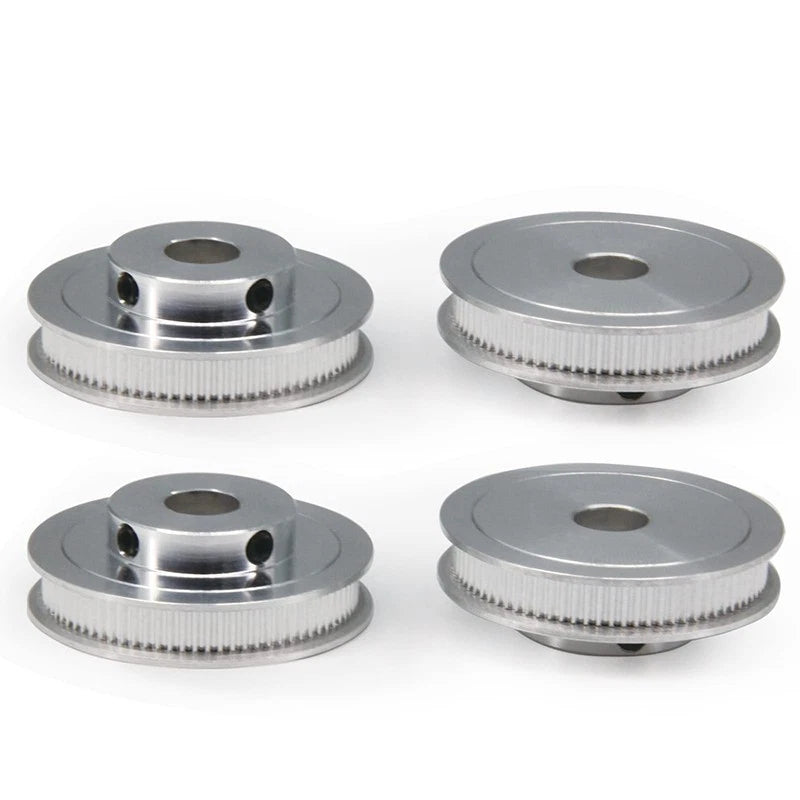
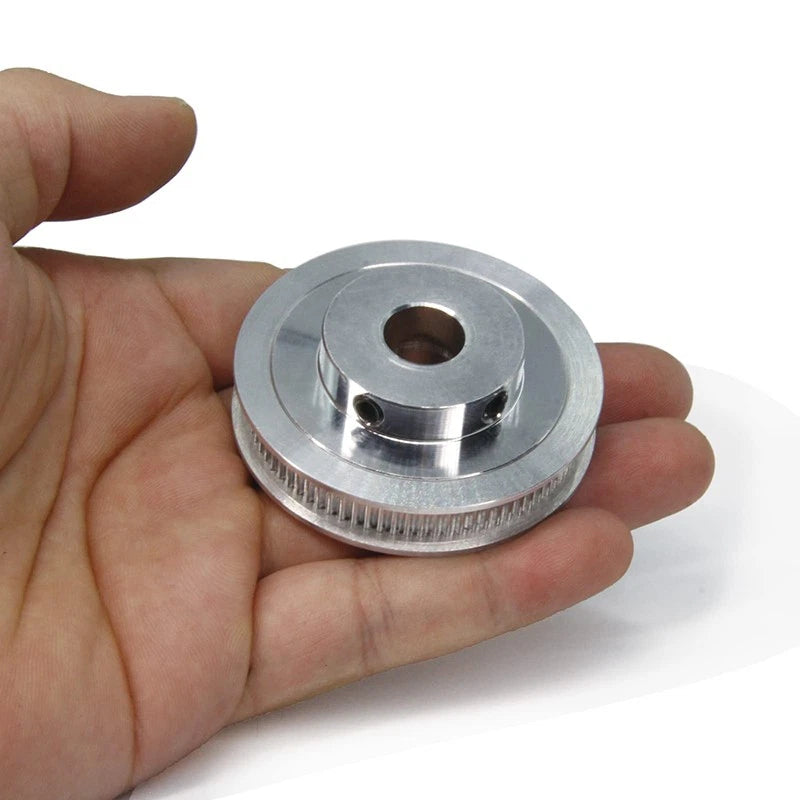
2GT Timing Pulley Synchronous Wheel 74-120 Teeth 6mm Belt 5mm-20mm Bore for 3D

No reviews

Price:
Sale price$21.75 USD
Stock:
In stock (500 units), ready to be shipped

Payment & Security

Ach Direct Debit Amazon American Express Apple Pay Bancontact BLIK Diners Club Discover EPS Google Pay iDEAL Wero JCB Maestro Mastercard Multibanco MobilePay PayPal Przelewy24 Shop Pay Twint Union Pay USDC Visa

Your payment information is processed securely. We do not store credit card details nor have access to your credit card information.

Limited Offer — Spend More, Save More
Spend $55+
Save $5
Spend $100+
Save $10
Spend $200+
Save $25
HomeDIYer DIY Expert Support

DIY Expert Support

Get fitment advice & recommendations

Mon–Fri  8:30 AM – 8:00 PM
24-Hour Fast Ship
Arrives in 3–14 Days
Worldwide Shipping
30-Day Returns
1 tree planted with every purchase

Description

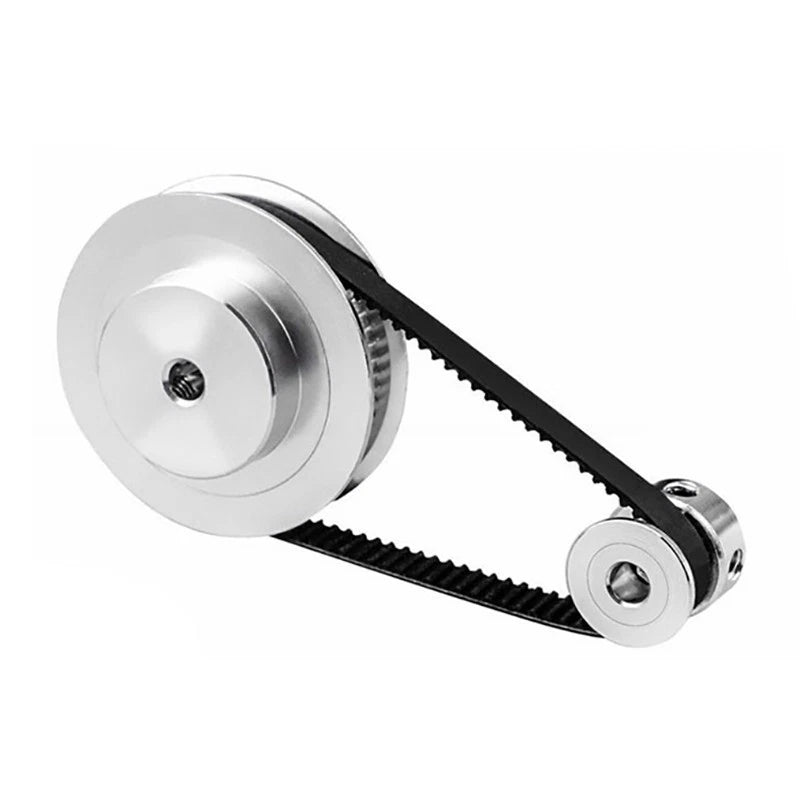
2GT Timing Pulley Synchronous Wheel — Precision Drive for 3D Printers, CNC & Robotics

When your motion-control build demands repeatable, slip-free power transfer, a mismatched or worn pulley becomes the weakest link in the chain. Engineers, makers, and repair technicians working on 3D printers, CNC routers, laser cutters, and robotic arms need a 2GT synchronous wheel they can trust to hold tooth engagement under continuous load — without backlash or belt skip.

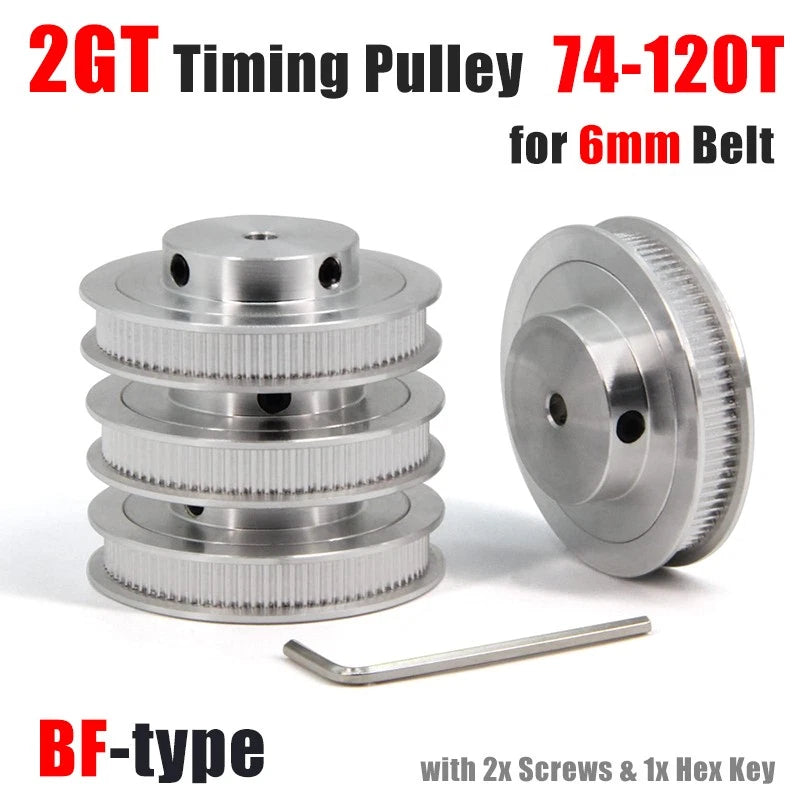
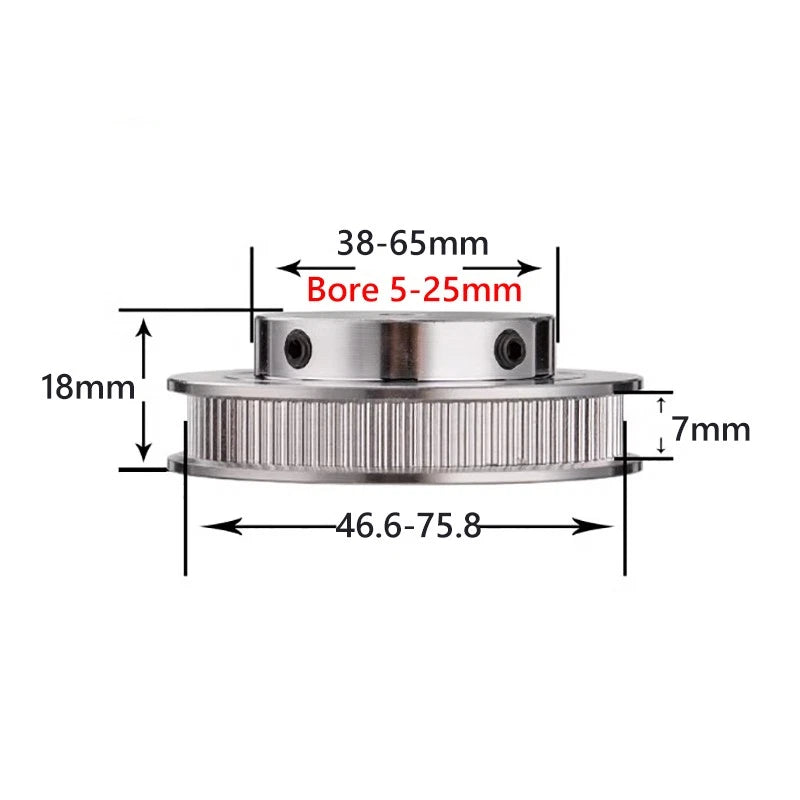
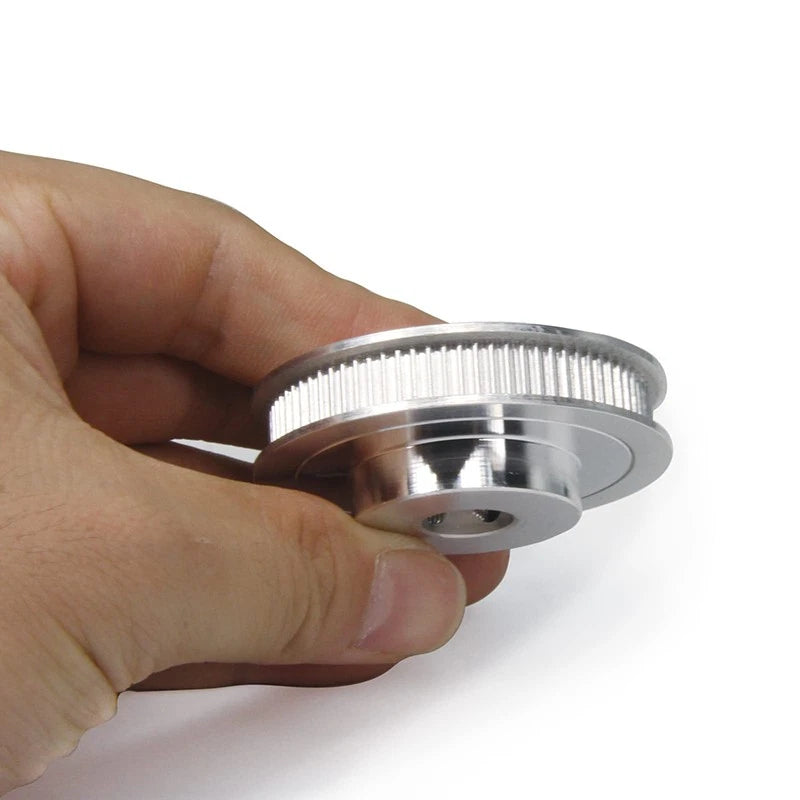
These 2GT timing pulleys are machined from aluminum alloy with a natural anodized finish. The 2GT (GT2) tooth profile is designed for 6 mm wide timing belts. Teeth count ranges from 74 to 120 teeth, giving outer diameters that typically span approximately 47 mm to 76 mm (1.85 in to 3.0 in). Bore options cover 5 mm through 25 mm (0.20 in to 0.98 in), with plain-bore and keyway variants available for positive shaft locking.

Typical use cases include: replacing worn drive pulleys on Cartesian or CoreXY 3D printers using 2GT belt systems; building custom CNC axis drives requiring a specific reduction ratio via 2GT pulley-and-belt transmission; and assembling lightweight robotic joint actuators where a low-backlash 2GT synchronous wheel keeps positioning error minimal.

⚙️ Compatibility: Designed for standard 2GT / GT2 open or closed-loop timing belts with 6 mm width and 2 mm pitch. Verify your shaft diameter and keyway requirement before ordering.

✅ Key Features of These 2GT Timing Pulleys

🦷
Wide Teeth Range: 74–120 Teeth

Nine tooth-count options (74, 75, 76, 78, 80, 90, 100, 110, 120) let you dial in the exact drive ratio your project needs without custom machining.

🔩
Multiple Bore Sizes with Keyway Options

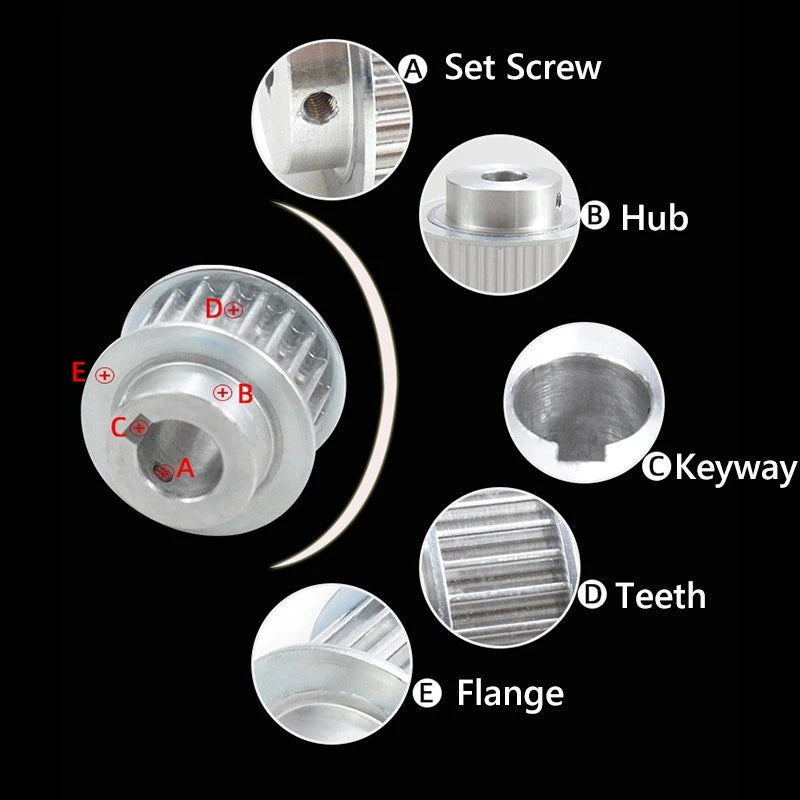
Plain bores from 5 mm to 25 mm, plus keyway variants (e.g., 8 mm bore + 3 mm keyway, 20 mm bore + 6 mm keyway) for positive shaft engagement and zero rotational slip.

📐
2GT / GT2 Tooth Profile for 6 mm Belt

The 2 mm pitch curvilinear tooth form meshes cleanly with standard 2GT belts, reducing noise and distributing load evenly across multiple teeth in contact.

🏗️
Aluminum Alloy Construction

Lightweight yet rigid aluminum alloy body keeps rotational inertia low — critical for fast-accelerating axes on 3D printers and CNC machines.

🔄
Consistent Tooth Geometry

Machined tooth profiles maintain consistent pitch diameter across the full teeth range, ensuring predictable steps-per-mm calibration on motion-control systems.

🛠️
Drop-In Replacement Compatibility

Standard 2GT dimensions make these pulleys direct drop-in replacements for worn or undersized pulleys on popular 3D printer frames and open-source CNC platforms.

📐 Technical Specifications — 2GT Timing Pulley

Belt Type 2GT / GT2
Belt Width 6 mm
Tooth Pitch 2 mm
Teeth Count Options 74 / 75 / 76 / 78 / 80 / 90 / 100 / 110 / 120
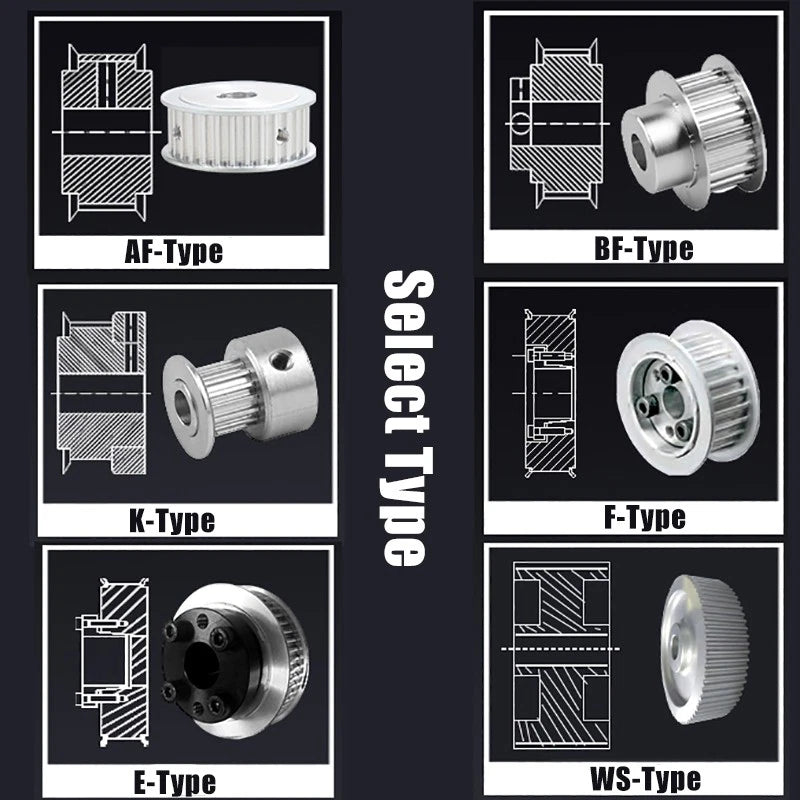
Bore Size Options 5 mm – 25 mm (plain bore); keyway variants available
Keyway Options See variant options
Material Aluminum alloy
Outer Diameter (approx.) See variant options (scales with teeth count)
Flange See variant options
Weight (per unit) See variant options

❓ Frequently Asked Questions

How do I choose the right teeth count for my application?

The teeth count determines the pulley's pitch diameter and, combined with your motor pulley, sets the drive ratio. For 3D printers, 80-tooth pulleys are common on idler or large-diameter drive positions. For CNC reduction drives, pair a small motor pulley (e.g., 20T) with a larger driven pulley (e.g., 80T or 100T) to achieve the desired speed reduction. Calculate pitch diameter as: PD = (Teeth × Pitch) ÷ π = (Teeth × 2) ÷ π mm.

What bore size should I select for my shaft?

Measure your shaft diameter with calipers before ordering. Select the bore that matches your shaft exactly — a loose bore causes runout and belt skip. If your shaft has a flat or keyway, choose the corresponding keyway bore variant (e.g., "Bore 10 Keyway 3mm") to prevent rotational slipping under load.

What is the difference between a plain bore and a keyway bore?

A plain bore relies on a set screw pressing against the shaft to transmit torque. A keyway bore includes a machined slot that accepts a standard key inserted between the shaft and pulley, providing a positive mechanical lock. Keyway variants are recommended for higher-torque applications or where the set screw alone may loosen over time.

Are these pulleys compatible with GT2 belts?

Yes. The 2GT tooth profile is functionally identical to the GT2 profile for 2 mm pitch, 6 mm wide belts. These pulleys are compatible with standard open-end and closed-loop GT2 / 2GT belts widely used in 3D printers (e.g., Ender, Voron, RatRig) and CNC machines.

How strong are aluminum timing pulleys compared to steel?

Aluminum alloy pulleys offer sufficient strength for the belt tension loads typical in 3D printing and light CNC routing. They are significantly lighter than steel, reducing rotational inertia for faster acceleration. For heavy-duty industrial CNC or high-tension belt drives, steel pulleys may be preferable. For most maker and desktop-machine applications, aluminum is the standard choice.

Will these pulleys corrode or require lubrication?

Aluminum alloy naturally forms a thin oxide layer that resists corrosion in typical indoor environments. No lubrication is required or recommended on the belt contact surface — lubricants attract dust and can degrade belt rubber. Keep the pulley and belt clean and free of debris for optimal performance.

Can I use these pulleys as idlers without a belt load on the bore?

These are drive pulleys designed to be fixed to a rotating shaft. For idler use, you would typically mount the pulley on a bearing-equipped bolt or shaft. The bore must still match your idler bolt/shaft diameter. Select a plain bore variant sized to your idler bolt for this application.

🛒 Select your Teeth Number and Bore Size above, then add to cart.


You may also like

Recently viewed