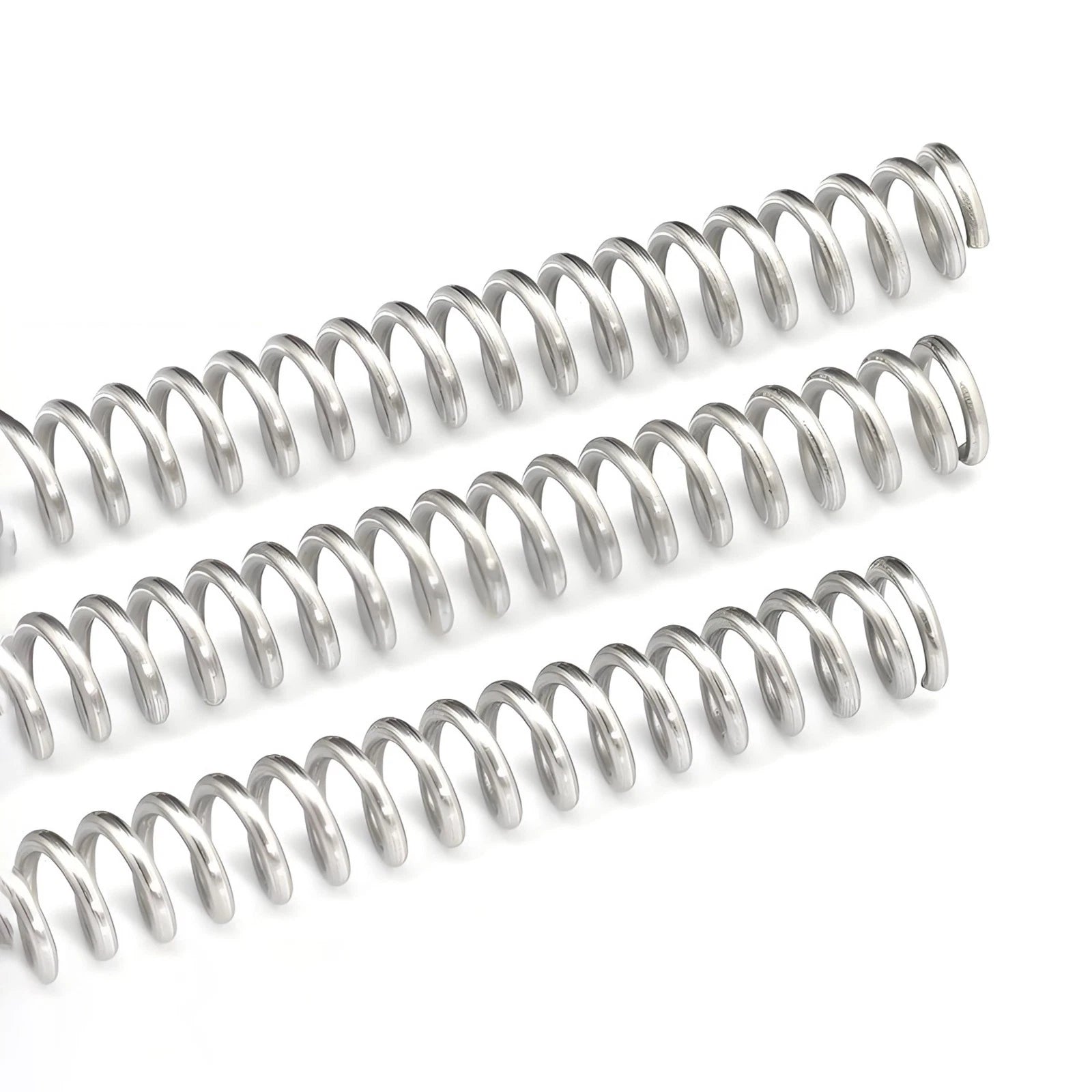
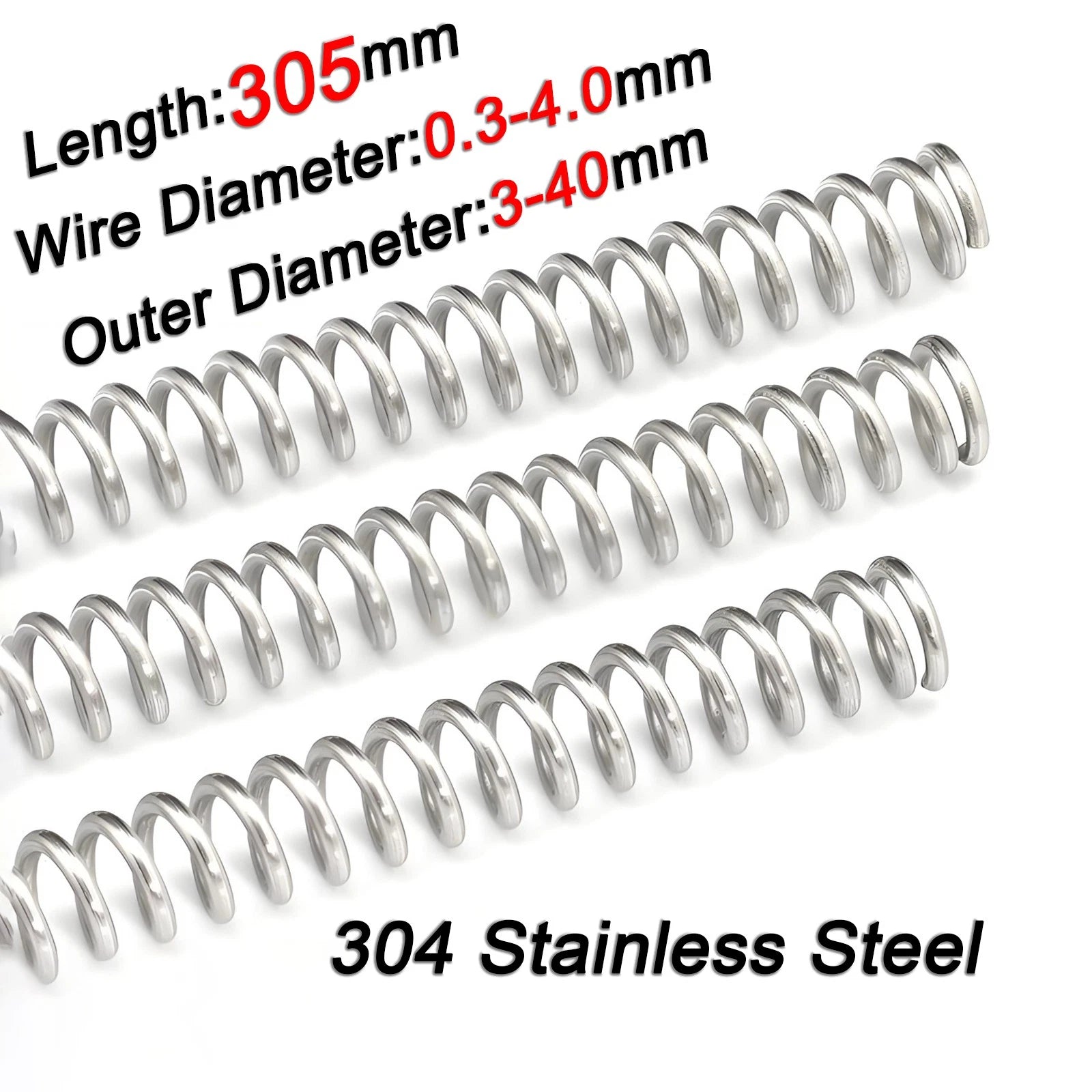
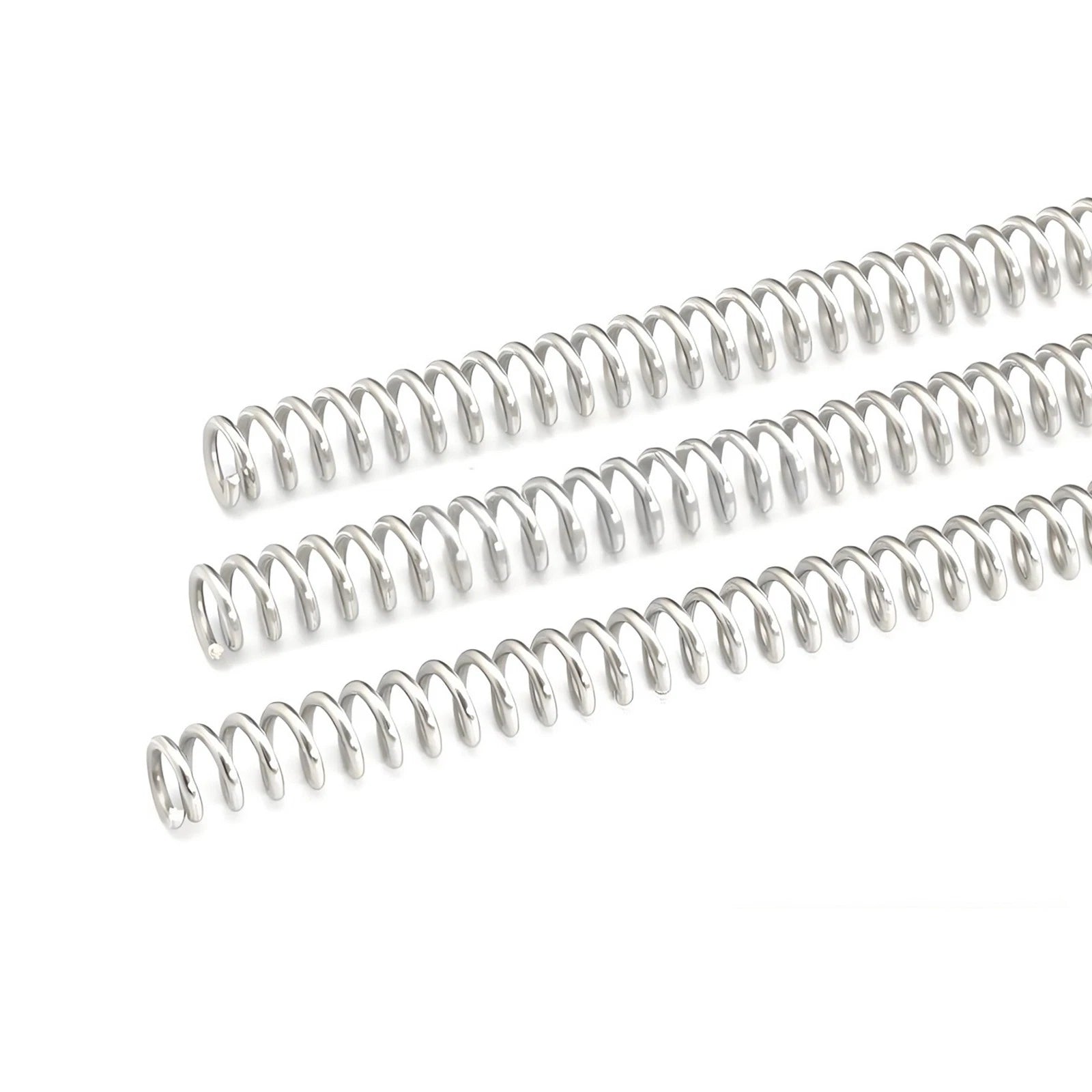
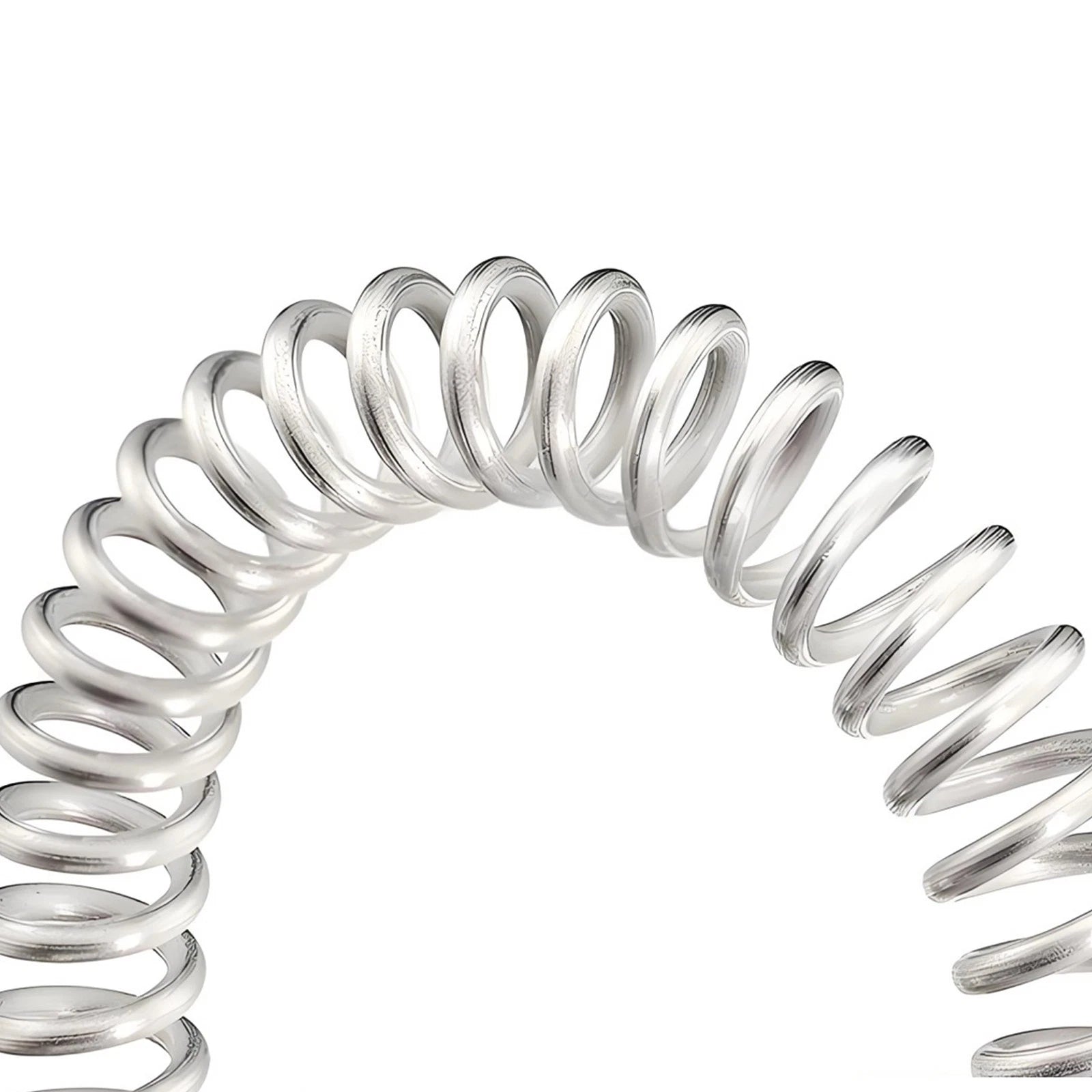
305mm Long Compression Spring 304 Stainless Steel Pressure-Coil Springs

No reviews

Price:
Sale price$7.14 USD
Stock:
In stock (500 units), ready to be shipped

Payment & Security

Ach Direct Debit Amazon American Express Apple Pay Bancontact BLIK Diners Club Discover EPS Google Pay iDEAL Wero JCB Maestro Mastercard Multibanco MobilePay PayPal Przelewy24 Shop Pay Twint Union Pay USDC Visa

Your payment information is processed securely. We do not store credit card details nor have access to your credit card information.

Limited Offer — Spend More, Save More
Spend $55+
Save $5
Spend $100+
Save $10
Spend $200+
Save $25
HomeDIYer DIY Expert Support

DIY Expert Support

Get fitment advice & recommendations

Mon–Fri  8:30 AM – 8:00 PM
24-Hour Fast Ship
Arrives in 3–14 Days
Worldwide Shipping
30-Day Returns
1 tree planted with every purchase

Description

305mm Compression Springs — Reliable Coil Tension for Every DIY and Mechanical Application

When a project demands consistent return force and dimensional accuracy, choosing the wrong spring leads to premature failure, misalignment, or unpredictable load behavior. Engineers, makers, and workshop professionals who need a dependable 305mm compression spring will find this range covers the widest practical selection of wire diameters and outer diameters in a single catalog.

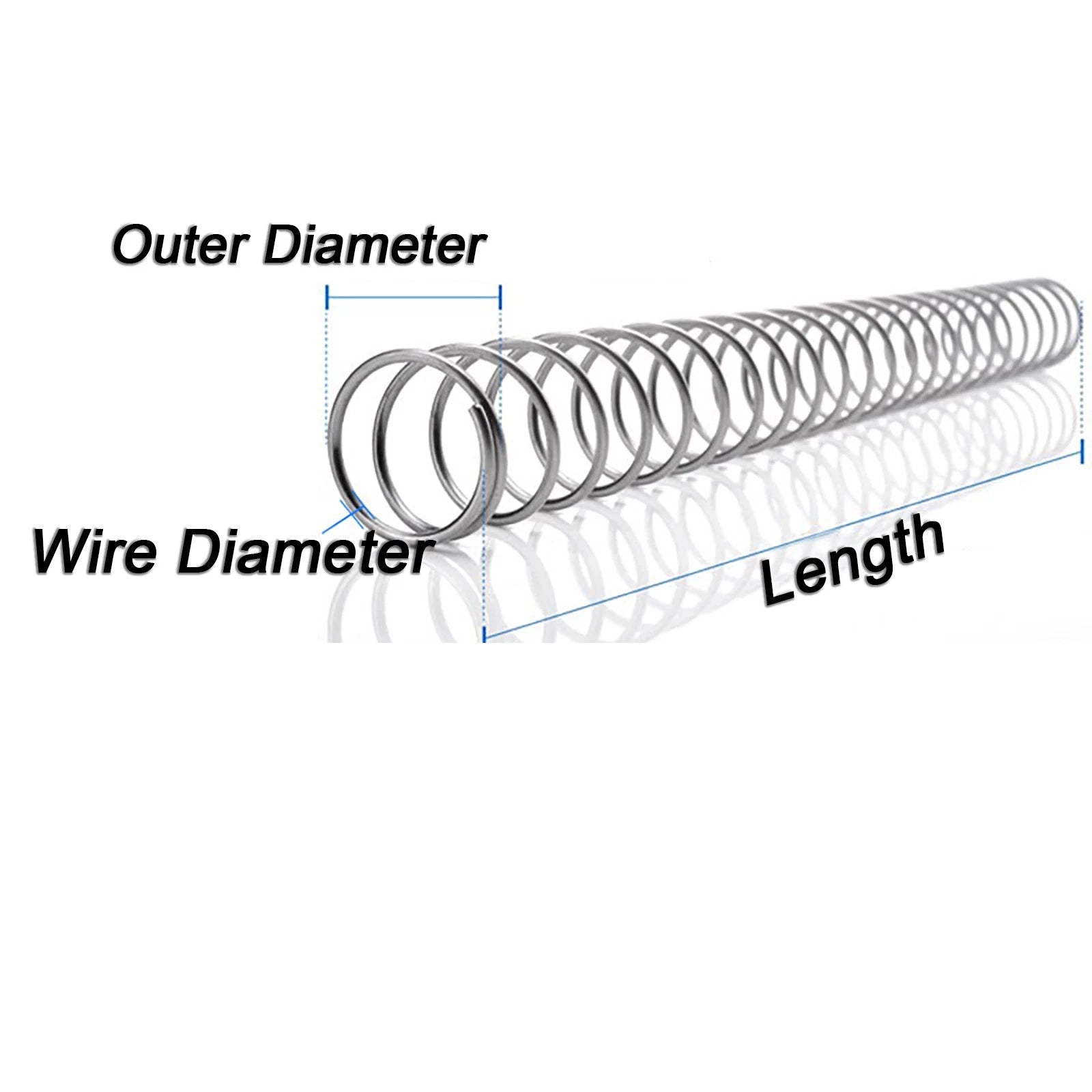
Each spring is wound from 304 stainless steel wire, with wire diameters ranging from 0.3mm to 4.0mm (approximately 0.012 in to 0.157 in) and outer diameters from 3mm to 40mm (approximately 0.118 in to 1.575 in). The free length is 305mm (approximately 12 inches). The open-coil helical design delivers linear load characteristics across the compression stroke.

Typical use cases include DIY automation jigs requiring consistent return force, mechanical assemblies such as valve actuators and latch mechanisms needing precise spring tension, and prototyping or educational lab setups where a broad selection of compression spring sizes is essential for rapid iteration.

⚙️ Compatibility: Suitable for standard spring housings and guide rods sized to match the selected outer diameter. Verify bore clearance and rod diameter against your chosen OD variant before ordering.

✅ Key Features of These 304 Stainless Steel Compression Springs

🔩 304 Stainless Steel Construction

Wound from 304-grade stainless steel wire for solid corrosion resistance in humid, mildly acidic, and outdoor environments — a reliable choice over plain carbon steel for long-term service life.

📏 305mm Free Length

A 305mm (12 in) free length provides generous working travel, making these springs well-suited for applications requiring extended compression stroke or precise deflection control.

🎯 Wide Size Matrix

Wire diameters from 0.3mm to 4.0mm paired with outer diameters from 3mm to 40mm give you 154 size combinations in one product family — reducing sourcing complexity for multi-spec projects.

⚖️ Linear Load Characteristics

Open-coil helical geometry delivers a consistent spring rate across the compression range, supporting predictable force calculations for mechanical design and DIY automation builds.

🛡️ Corrosion-Resistant Finish

The natural 304 stainless surface requires no additional coating, eliminating flaking or delamination concerns in applications where surface contamination is a factor.

📦 Single-Piece Packaging

Each variant ships as 1 piece per pack, letting you order exactly the quantity you need without committing to bulk minimums — ideal for prototyping, repair, and small-batch production.

📐 Technical Specifications — Compression Spring

Material 304 Stainless Steel
Free Length 305mm (approx. 12 in)
Wire Diameter Range 0.3mm – 4.0mm (0.012 in – 0.157 in)
Outer Diameter Range 3mm – 40mm (0.118 in – 1.575 in)
Coil Type Open-coil helical (compression)
End Type See variant options
Spring Rate See variant options
Max Load Capacity See variant options
Surface Finish Natural stainless (no coating)
Pack Quantity 1 piece

❓ Frequently Asked Questions

How do I choose the right wire diameter for my application?

Wire diameter directly determines the spring rate and load capacity. Thinner wire (e.g., 0.3mm–0.8mm) produces lighter, more flexible springs suited for delicate mechanisms, sensors, or light-duty return functions. Thicker wire (e.g., 2.0mm–4.0mm) yields stiffer springs capable of handling heavier loads in industrial or structural applications. As a starting point, calculate the required spring force and deflection, then use standard spring design formulas (or a spring rate calculator) to identify the wire diameter that meets your load and travel requirements.

What outer diameter should I select to fit my housing or guide rod?

For a housing bore, the spring's outer diameter should be slightly smaller than the bore ID to allow free movement — typically 0.5mm to 1.5mm clearance on each side. For a guide rod, the spring's inner diameter (outer diameter minus twice the wire diameter) should be slightly larger than the rod OD to prevent binding. Measure your housing bore or rod diameter first, then select the OD variant that provides the appropriate clearance.

How strong are these 304 stainless steel compression springs?

304 stainless steel has a tensile strength typically in the range of 515–860 MPa depending on temper and wire diameter. The actual spring load capacity depends on the specific wire diameter, outer diameter, and number of active coils. Larger wire diameters and smaller outer diameters generally produce higher spring rates and load capacities. For precise load data, refer to the variant-specific specifications or contact us to confirm.

Are these springs corrosion-resistant enough for outdoor or humid environments?

Yes. 304 stainless steel offers solid resistance to atmospheric corrosion, moisture, and mild chemical exposure, making it suitable for outdoor enclosures, garden equipment, marine-adjacent applications (non-saltwater immersion), and humid workshop environments. For direct saltwater or highly acidic exposure, 316 stainless steel would be a more appropriate choice.

Can I cut these springs to a shorter length?

Cutting a compression spring is possible but will alter its spring rate, load capacity, and end condition. If you need a shorter free length, it is generally more reliable to select a spring designed to the required length rather than cutting. If cutting is necessary, use a rotary tool with a cutting disc and be aware that the cut end will need to be ground flat to maintain consistent seating.

What is the difference between compression springs and extension springs — which do I need?

Compression springs resist being compressed and push back when force is applied along their axis — they are used in applications where you need a return force when two surfaces come together (e.g., button mechanisms, valve returns, shock absorption). Extension springs, by contrast, resist being stretched and pull two components together. If your application requires a spring to push apart or absorb impact between two surfaces, a compression spring is the correct choice.

How do I verify the spring rate before purchasing?

Spring rate (k) can be estimated using the formula: k = (G × d⁴) / (8 × D³ × n), where G is the shear modulus of 304 stainless steel (approximately 69 GPa), d is the wire diameter, D is the mean coil diameter (OD minus wire diameter), and n is the number of active coils. If you need confirmed spring rate data for a specific variant, please contact us with your selected wire diameter and outer diameter and we will provide the specification.

🛒 Select your Wire Diameter and Outer Diameter above, then add to cart.

You may also like

Recently viewed