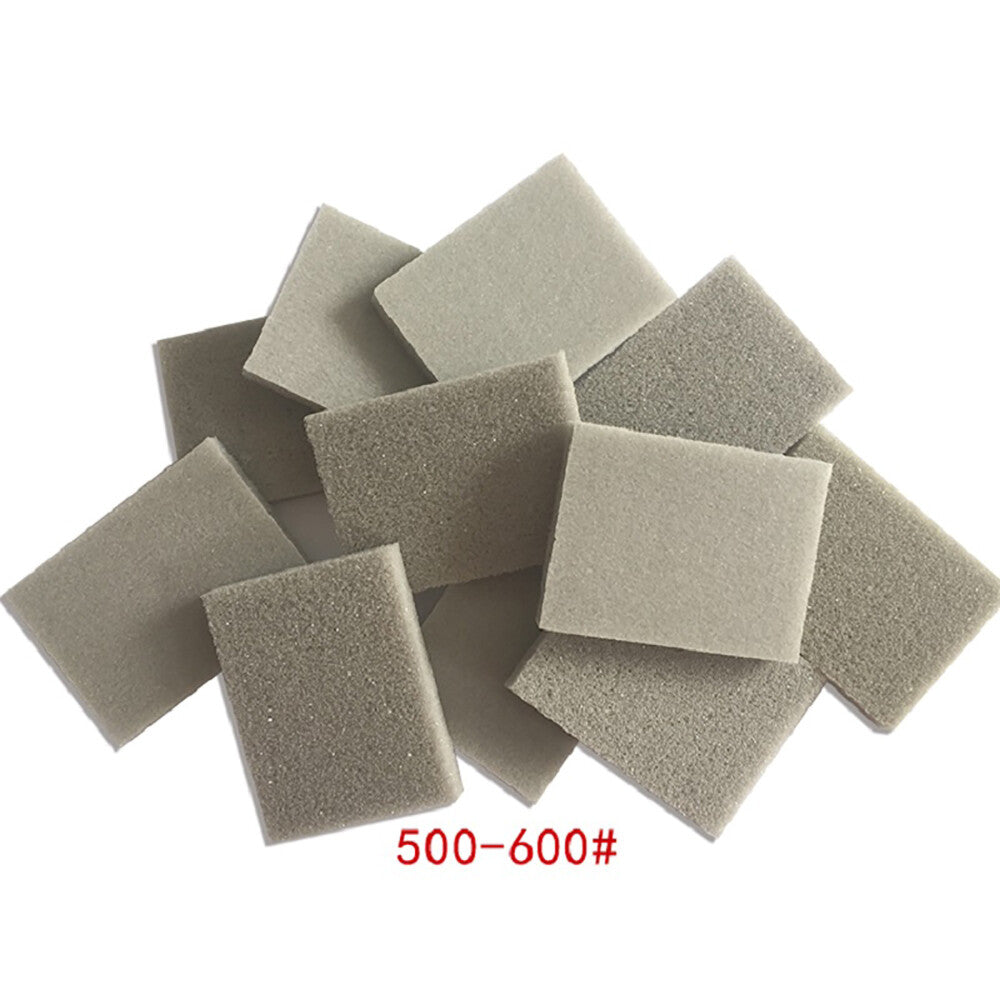
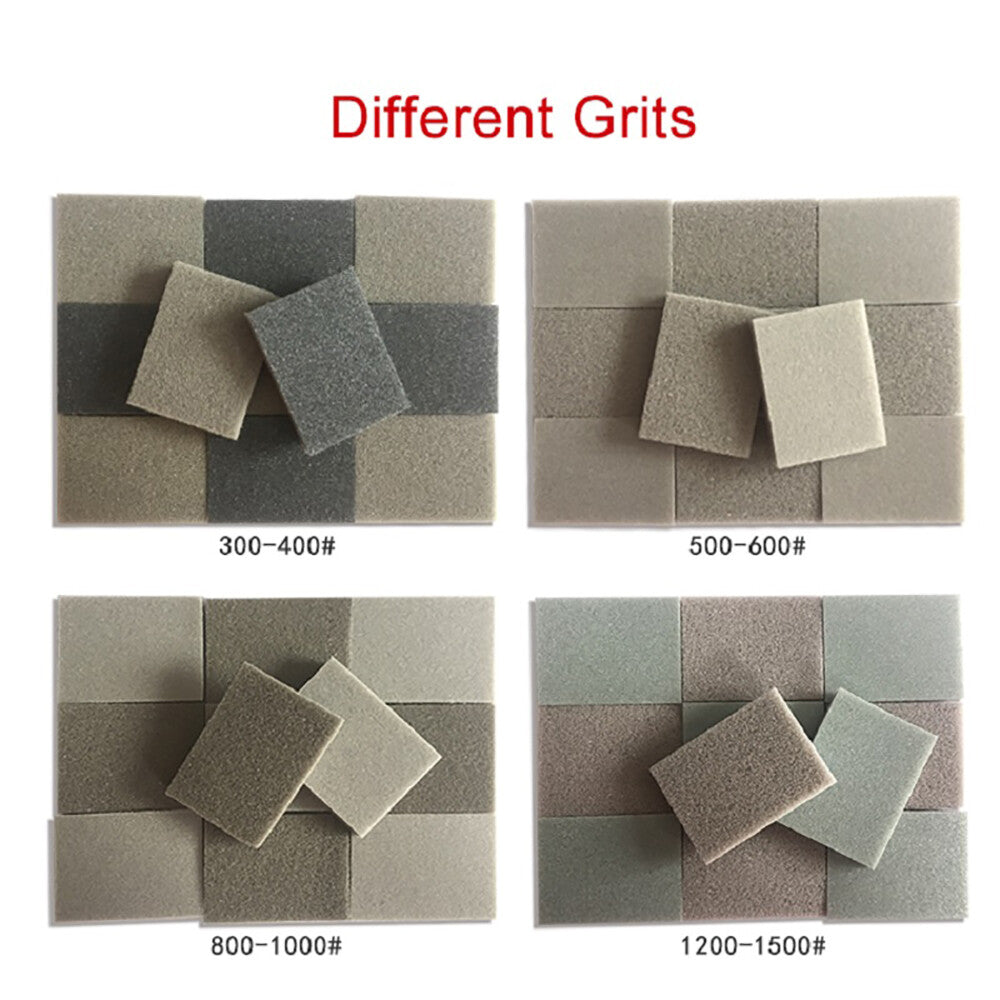
🛠️ Whether you're tackling body filler in the garage, wet-sanding clear coat between paint layers, or putting a glass-smooth finish on a woodworking piece, having the right abrasive in hand changes everything. This 30x40mm wet-dry sanding sponge block is built for those detail-oriented jobs where a full-size sheet just gets in the way. The hook and loop backing grips your orbital sander securely, while the sponge core flexes into curves and contours that rigid discs can't touch. With a grit range spanning 300 to 3000, you can strip material fast, then step through to a polished finish — all with one consistent pad system. Designed for DIYers, auto body hobbyists, and woodworkers who want pro results without the pro price tag.
💡 Wet Dry Sandpaper FAQ – Your Questions Answered
🔹 Can I really use this sanding sponge with water? Won't it fall apart?
Absolutely — these sponge sanding pads are designed for both wet and dry use. The abrasive grains are bonded to a flexible, water-resistant sponge core that holds up fine when soaked. Wet sanding with this block helps carry away debris, dramatically reduces airborne dust, and prevents the grit from loading up with paint or clear coat residue. Just rinse the pad occasionally as you work, and let it air dry between sessions. It won't disintegrate or delaminate under normal wet-sanding conditions.
🔹 Will the hook and loop backing fit my orbital sander?
These pads feature a standard hook and loop (Velcro-style) backing that's compatible with most orbital sanders and random orbital sanders that accept 30x40mm pad sizes. If your sander's backing plate measures approximately 30mm by 40mm, these will attach securely. For larger backing plates, these pads can be used for spot sanding or by hand. Always double-check your tool's pad dimensions before ordering to ensure a proper fit.
🔹 What's the real difference between 300 grit and 3000 grit? Do I need both?
Think of grit progression as a staircase: 300 grit (very coarse) is your first step — it removes material aggressively, levels body filler, strips old paint, and knocks down rough surfaces fast. 3000 grit (ultra-fine) is the final step before polishing — it refines the surface to a near-mirror sheen, perfect for clear coat finishing and removing fine scratches left by coarser grits. The intermediate grits in this kit let you bridge that gap smoothly. Skipping steps leaves visible scratch marks, so having the full 300–3000 range ensures a professional, swirl-free result.
🔹 How does a sponge sanding pad compare to regular paper sandpaper?
The key advantage is flexibility and longevity. Regular paper-backed sandpaper is rigid, prone to creasing, and tends to clog quickly — especially with paint or filler. A sponge sanding block conforms to curves, compresses around contours, and distributes pressure more evenly, which means fewer flat spots and more consistent results. The sponge structure also resists loading better than paper, and when it does load up, a quick rinse under water restores cutting performance. For auto body work on curved panels, headlights, or detailed wood projects, sponge pads simply outperform paper.
🔹 How many times can I reuse a single pad before tossing it?
With proper care, each pad can be reused multiple times — often through an entire project. For wet sanding, rinse the pad frequently during use to flush out debris; when you're done, rinse it clean and let it air dry completely before storing. For dry sanding, tap or brush off accumulated dust regularly. You'll know it's time to replace the pad when the abrasive surface feels smooth to the touch and stops cutting effectively. Compared to single-use sandpaper sheets, these sponge pads offer significantly more mileage per piece.
🔹 Can I use these for headlight restoration and clear coat work?
Yes — in fact, that's one of the most popular use cases for this wet dry sanding sponge kit. The compact 30x40mm size is ideal for headlight lenses, and the 300–3000 grit range covers every stage: start with coarse grits to remove oxidation and yellowing, progress through medium grits to level the surface, and finish with 2000–3000 grit for a crystal-clear polish before applying a UV sealant. The wet-sanding capability is especially valuable here, as it keeps the lens cool and prevents plastic dust from becoming airborne.