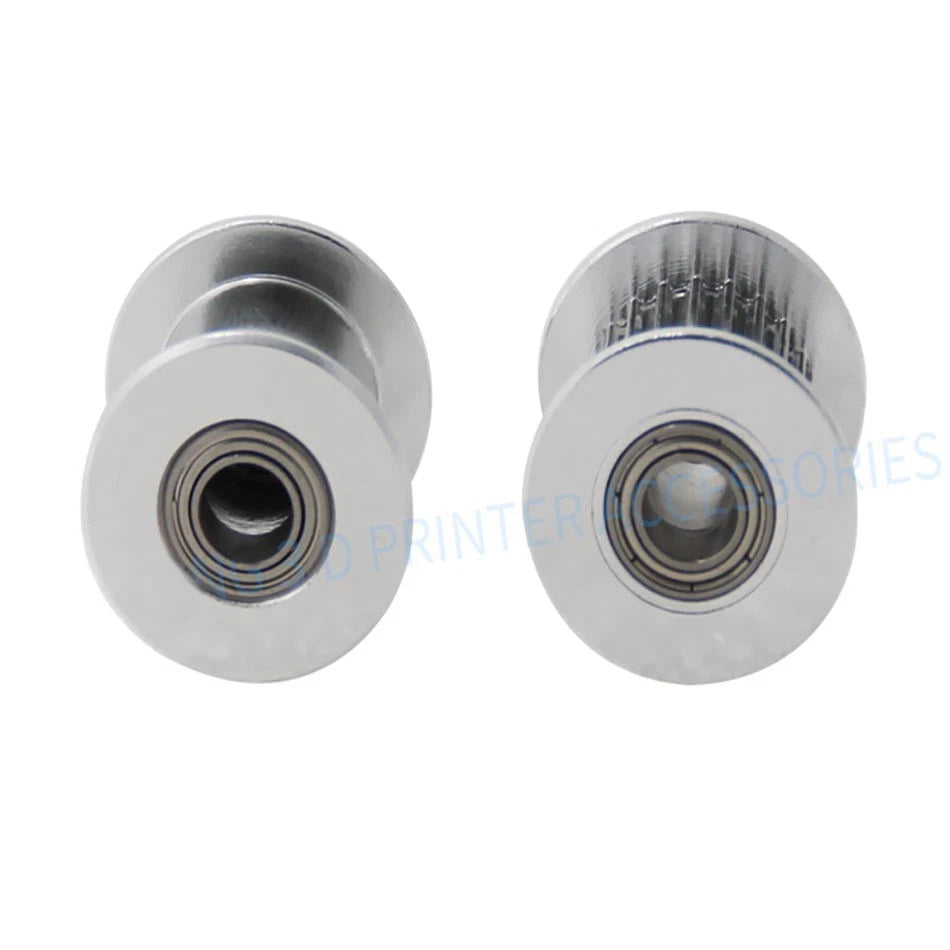
3D Printer GT2 Timing Belt Idler Pulley 6/10mm Belt 3/5mm Idle Bearing 16T 20T

No reviews

Price:
Sale price$2.99 USD
Stock:
In stock (500 units), ready to be shipped

Payment & Security

Ach Direct Debit Amazon American Express Apple Pay Bancontact BLIK Diners Club Discover EPS Google Pay iDEAL Wero JCB Maestro Mastercard Multibanco MobilePay PayPal Przelewy24 Shop Pay Twint Union Pay USDC Visa

Your payment information is processed securely. We do not store credit card details nor have access to your credit card information.

Limited Offer — Spend More, Save More
Spend $55+
Save $5
Spend $100+
Save $10
Spend $200+
Save $25
HomeDIYer DIY Expert Support

DIY Expert Support

Get fitment advice & recommendations

Mon–Fri  8:30 AM – 8:00 PM
24-Hour Fast Ship
Arrives in 3–14 Days
Worldwide Shipping
30-Day Returns
1 tree planted with every purchase

Description

GT2 Timing Belt Idler Pulley — Precision Motion Control for 3D Printers

When your 3D printer's belt tension drifts or your motion system develops unwanted slack, the culprit is often a worn or undersized idler pulley. Makers, hobbyists, and workshop engineers who demand consistent layer quality need an idler that holds its position under continuous load — without introducing backlash or vibration into the print head path.

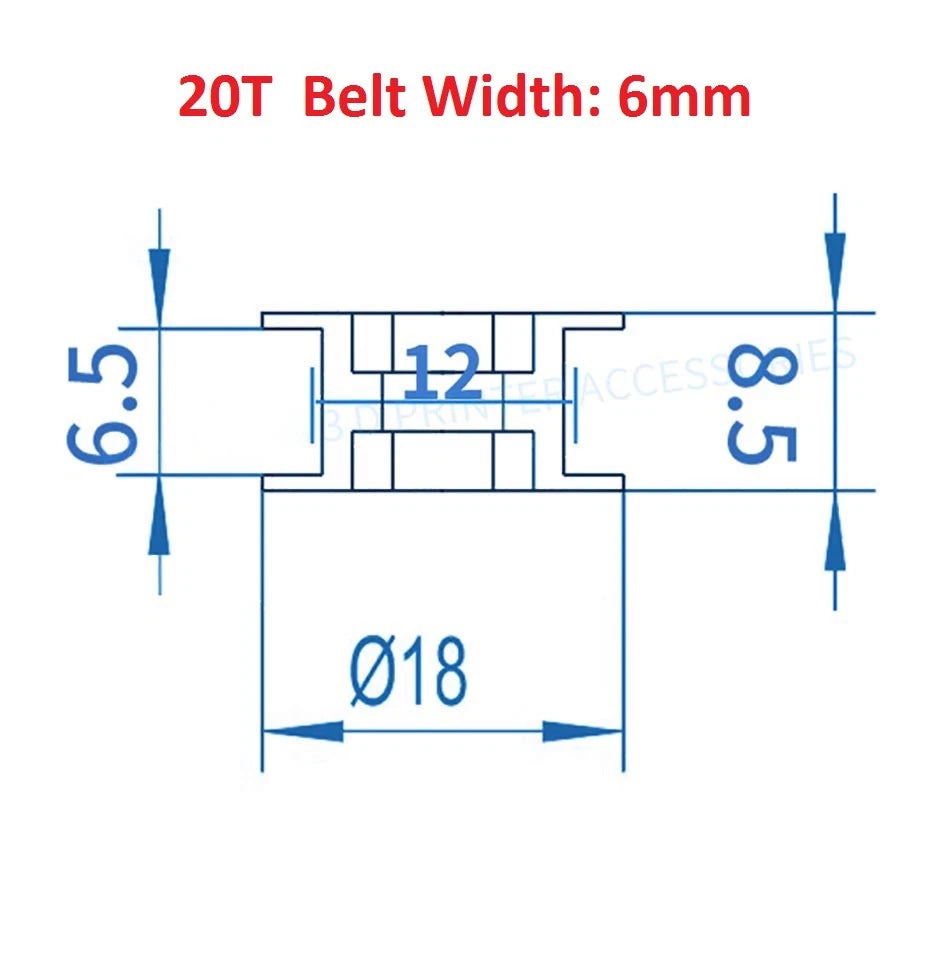
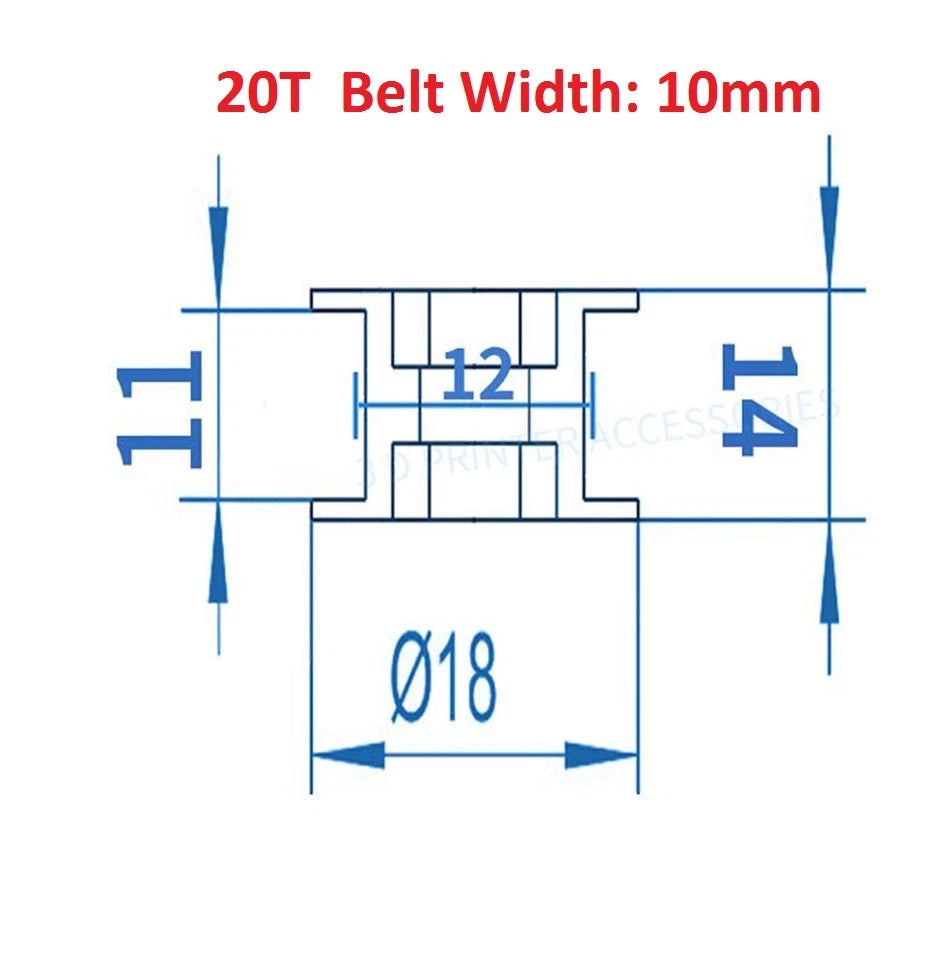
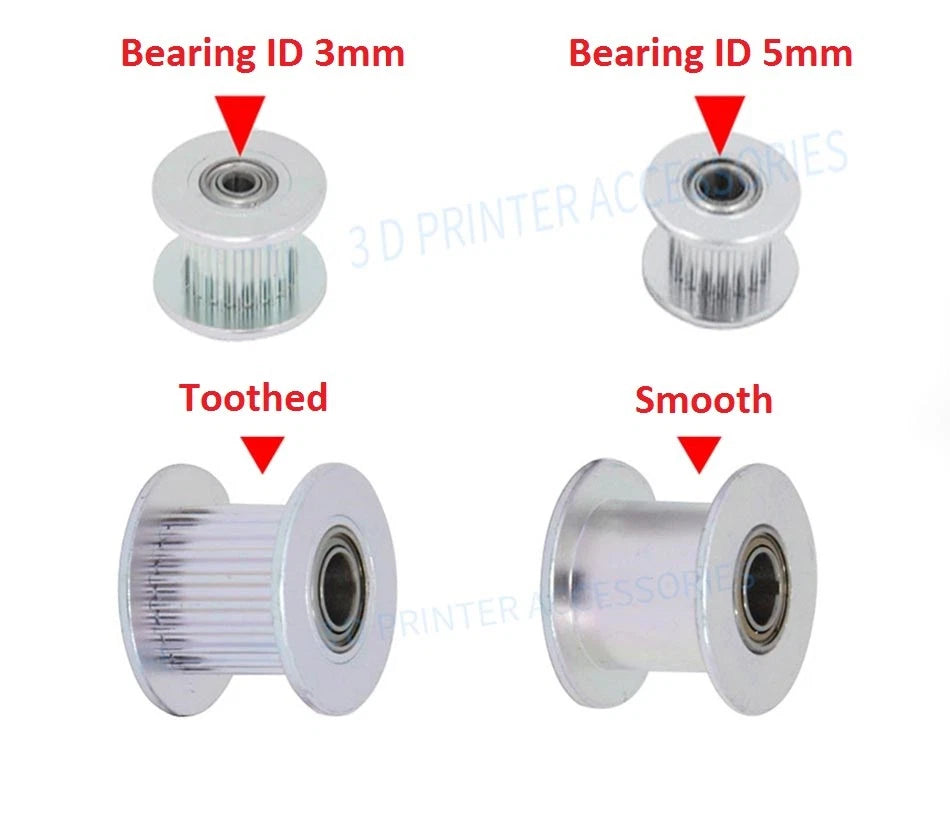
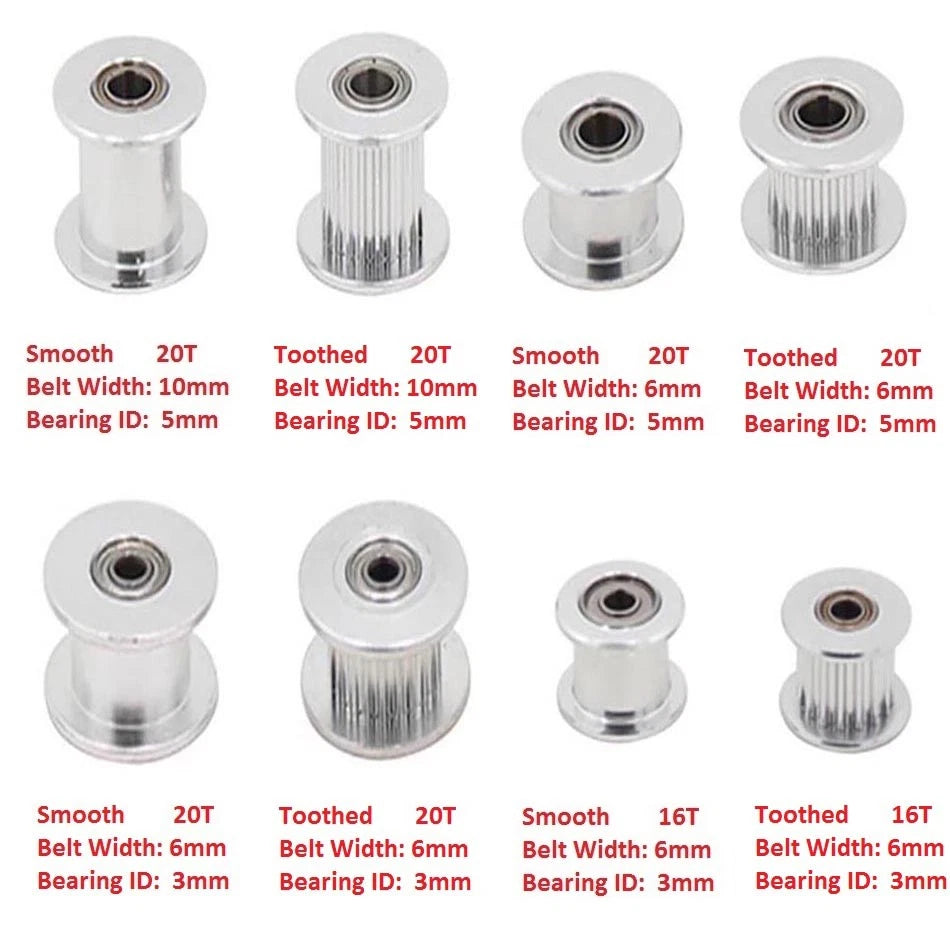
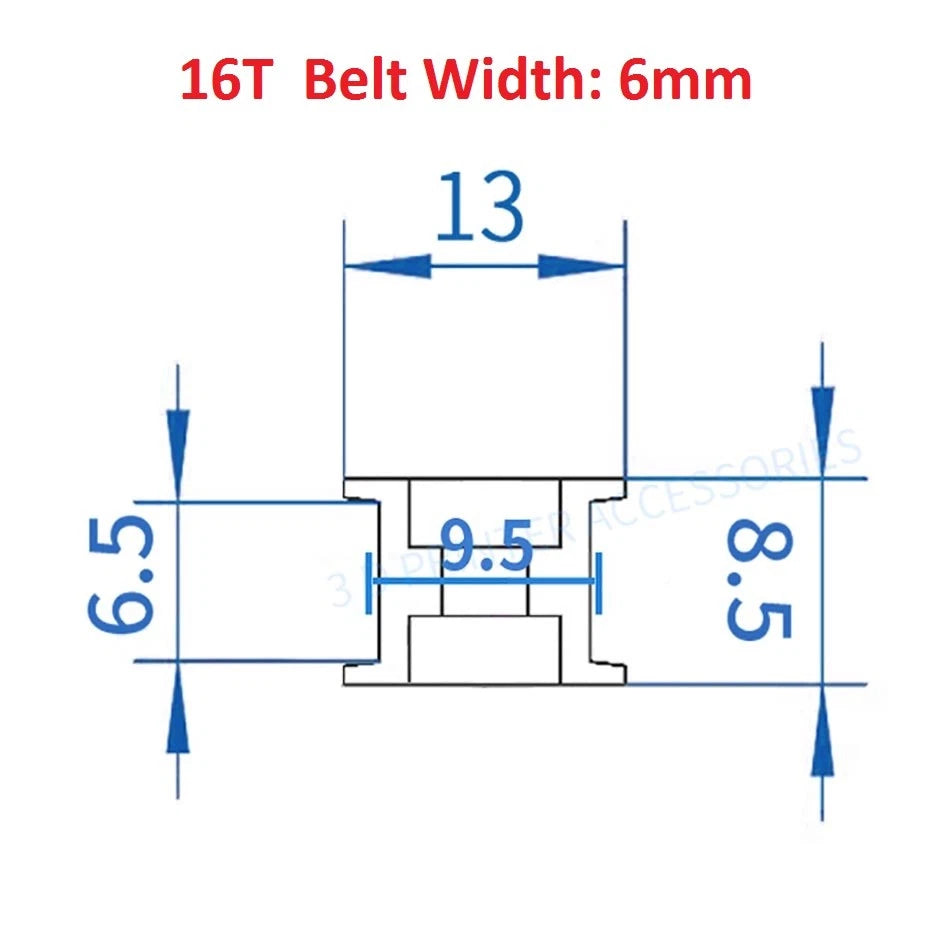
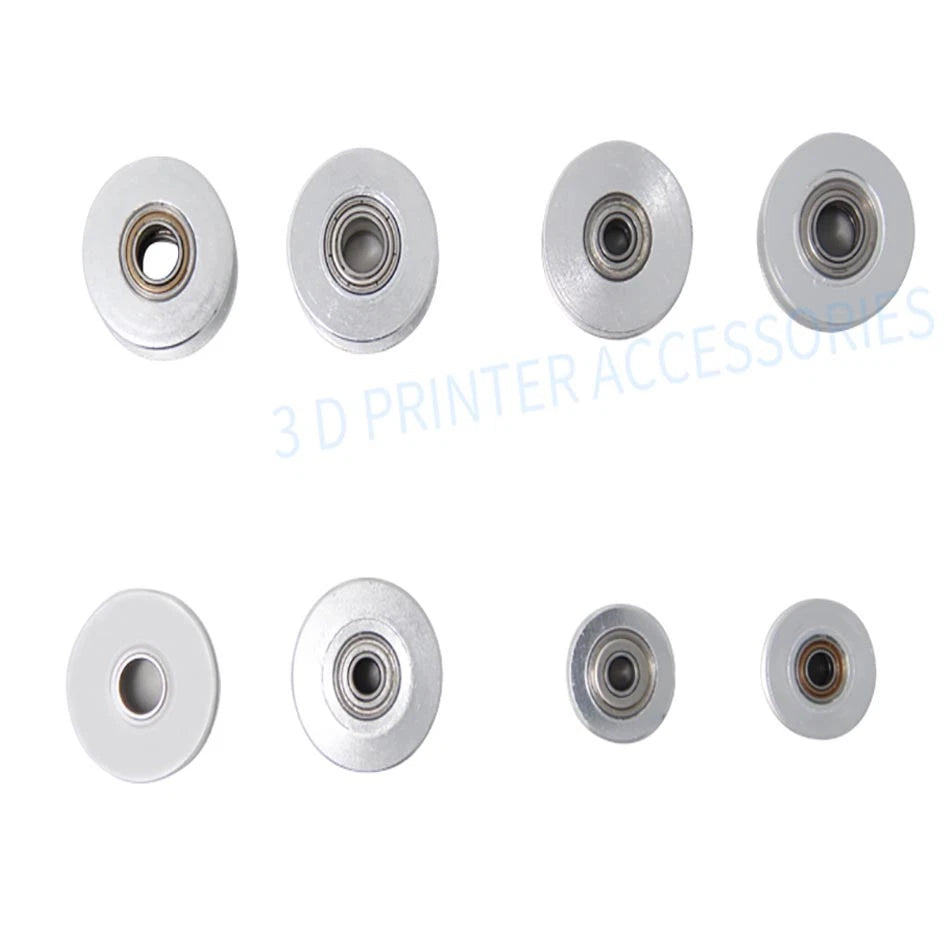
These GT2 idler pulleys are machined to accept standard GT2 timing belts in 6 mm (0.24 in) and 10 mm (0.39 in) widths. Each pulley seats a precision radial bearing with an inner diameter of either 3 mm (0.12 in) or 5 mm (0.20 in). Tooth count options are 16T and 20T for toothed variants; smooth-bore versions are also available for belt-return and tensioner positions. Overall pulley outer diameter is typically 12–17 mm depending on tooth count.

Typical use cases include CoreXY and Cartesian 3D printer belt routing, CNC router axis tensioning, and lightweight robotic arm drive systems where GT2 belt idler pulley replacement or upgrade is required.

⚙️ Compatible with: GT2 2 mm pitch timing belts, 6 mm or 10 mm width — fits Ender 3, Ender 5, CR-10, Voron, RatRig, and most CoreXY / Cartesian 3D printer frames using standard GT2 belt systems.

✅ Key Features of These GT2 Idler Pulleys

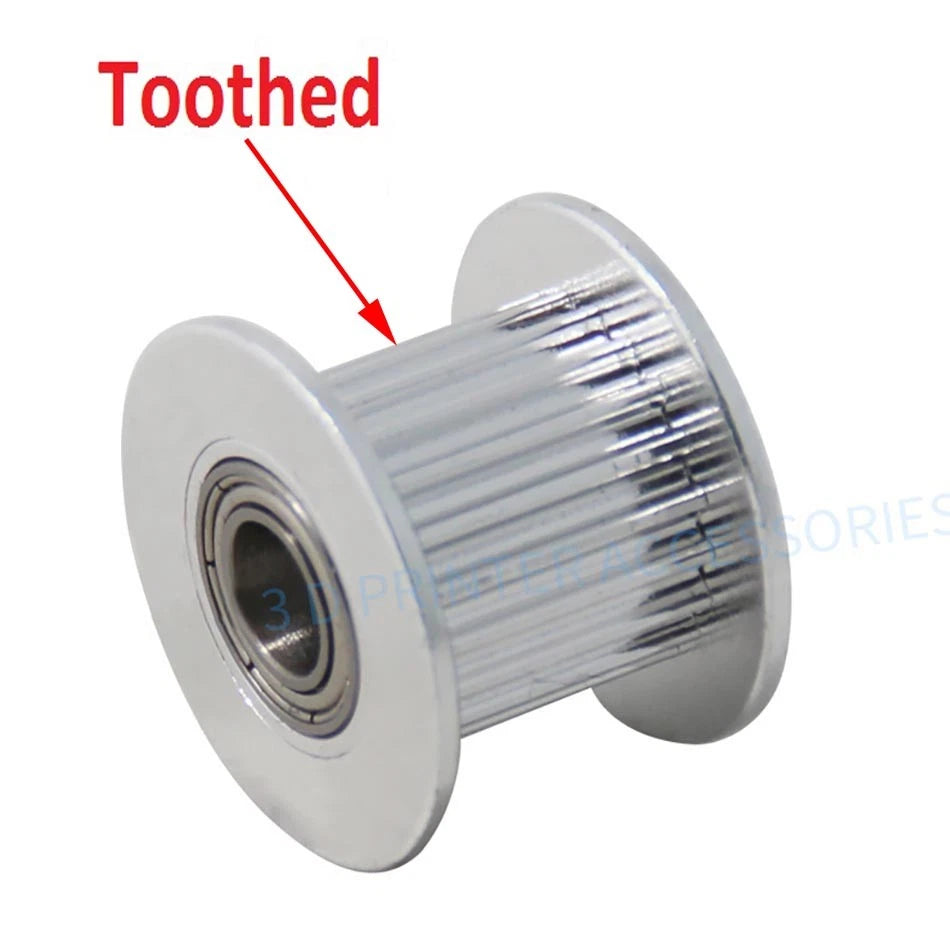
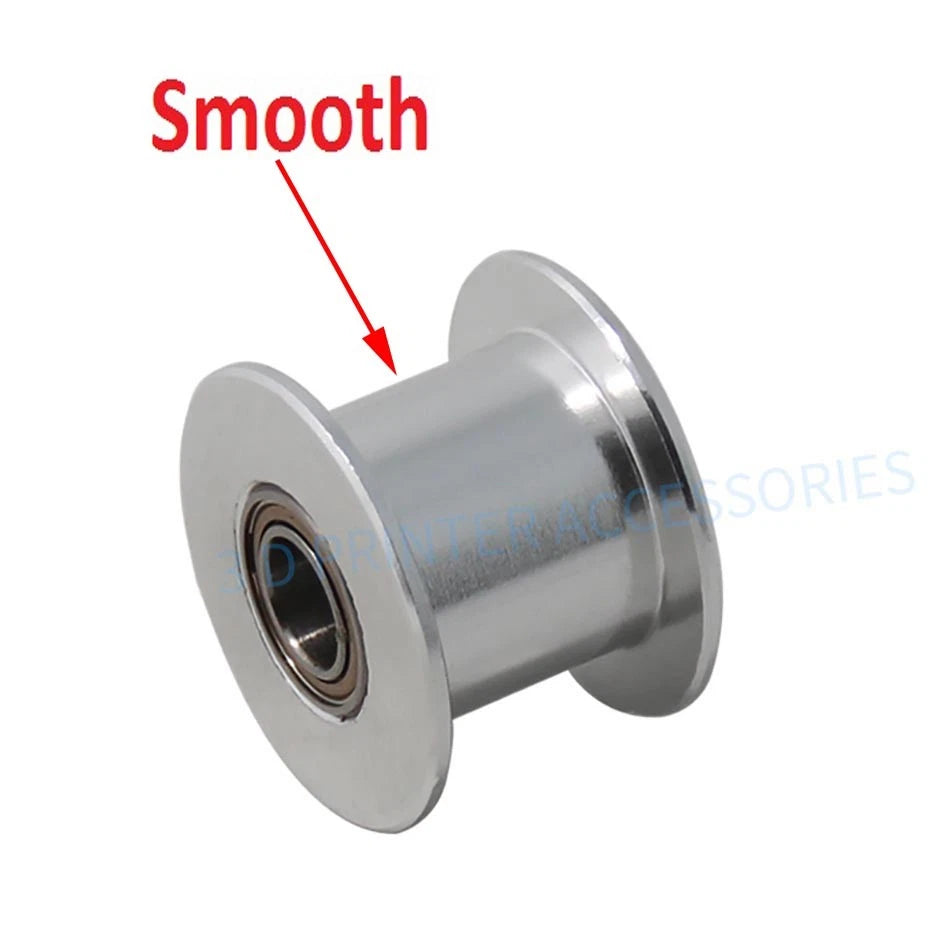
  • 🔩 Smooth & Toothed Options — Choose a smooth idler for belt-return runs or a toothed idler for positive engagement; both share the same bore and belt-width dimensions.
  • 📐 16T and 20T Tooth Counts — 16-tooth pulleys suit tighter belt paths with smaller wrap angles; 20-tooth pulleys reduce belt stress and are preferred for longer belt spans.
  • 📏 Dual Belt Width Support — Available in 6 mm and 10 mm belt widths so you can match your existing belt without adapters or spacers.
  • 🎯 3 mm & 5 mm Bearing ID — Precision radial bearings with 3 mm or 5 mm inner diameter fit standard M3 and M5 shoulder bolts or smooth rods used in most printer frames.
  • 🔄 Low-Friction Rotation — Sealed radial bearings provide smooth, consistent rotation under belt tension, reducing motor load and improving positional accuracy.
  • 📦 Flexible Pack Quantities — Available in 1, 2, 5, or 10-piece packs so you can stock spares for a full printer build or a single replacement without over-ordering.

📐 Technical Specifications — GT2 Idler Pulley

Belt Profile GT2 (2 mm pitch)
Belt Width 6 mm or 10 mm (see variant options)
Tooth Count 16T or 20T (toothed variants); smooth bore also available
Bearing Inner Diameter 3 mm or 5 mm (see variant options)
Pulley Outer Diameter See variant options
Bearing Type Sealed radial ball bearing
Material See variant options
Pack Quantity 1 / 2 / 5 / 10 pcs (see variant options)
Compatible Belt GT2 2 mm pitch timing belt

❓ Frequently Asked Questions

How do I choose between a smooth and a toothed idler pulley?

Use a smooth idler on the non-toothed (back) side of the belt — for example, at a belt-return or tensioner position where the belt wraps around the pulley without engaging teeth. Use a toothed idler when the belt's tooth side contacts the pulley and positive engagement is needed to prevent slipping, such as in some CoreXY path configurations.

Which tooth count should I choose — 16T or 20T?

A 16T pulley has a smaller diameter and suits tighter belt routing with limited space. A 20T pulley has a larger diameter, distributes belt stress over more teeth, and is generally preferred for longer belt spans or when reducing belt wear is a priority. Check your printer's frame design or belt path diagram to confirm which fits your geometry.

What is the difference between 3 mm and 5 mm bearing inner diameter?

The bearing inner diameter must match the shaft or bolt that the pulley rotates on. A 3 mm ID fits M3 shoulder bolts or 3 mm smooth rods, common on compact printer frames. A 5 mm ID fits M5 shoulder bolts or 5 mm rods, used on heavier-duty frames. Check your printer's idler mount hardware before ordering.

Are these pulleys compatible with my Ender 3 / Voron / RatRig printer?

These pulleys use the standard GT2 2 mm pitch profile and are dimensionally compatible with most Ender 3, Ender 5, CR-10, Voron 0/1/2, RatRig V-Core, and similar CoreXY or Cartesian printers that use GT2 belts. Verify the belt width (6 mm or 10 mm) and bearing bore (3 mm or 5 mm) against your printer's specifications before purchasing.

How many pulleys do I need for a full printer build?

The number varies by printer design. A typical CoreXY printer uses 4–8 idler pulleys per axis. A Cartesian printer may use 2–4. We recommend ordering a 5-pack or 10-pack if you are doing a full build or want spares on hand for future maintenance. The 1-pack and 2-pack options are ideal for single-pulley replacements.

Will these pulleys handle continuous high-speed printing without wearing out quickly?

The sealed radial ball bearings in these pulleys are rated for continuous rotation under belt tension loads typical of desktop 3D printers. Bearing life depends on belt tension, print speed, and environmental conditions. For best longevity, ensure belt tension is within your printer manufacturer's recommended range — over-tensioning accelerates bearing wear on any idler pulley.

Can I use a 6 mm belt pulley with a 10 mm belt, or vice versa?

No — the belt width must match the pulley width. Using a narrower pulley with a wider belt causes the belt to overhang the pulley flanges, leading to misalignment, increased wear, and potential belt derailment. Always select the pulley variant that matches your belt width exactly.

🛒 Select your Idler Type, Belt Width, and Bearing ID & Pack Quantity above, then add to cart.


You may also like

Recently viewed