3M Timing Belt Pulley — Precision Synchronous Drive for CNC, Robotics & Automation
When a slipping or mismatched pulley derails your build mid-run, the cost is more than downtime — it's lost confidence in your drivetrain. Engineers, hobbyists, and automation integrators who demand repeatable, zero-slip motion need a 3M timing belt pulley they can spec once and forget. This listing covers the full BF-type and K-type range in 12 to 45 teeth, designed to pair directly with standard 3M pitch synchronous belts.
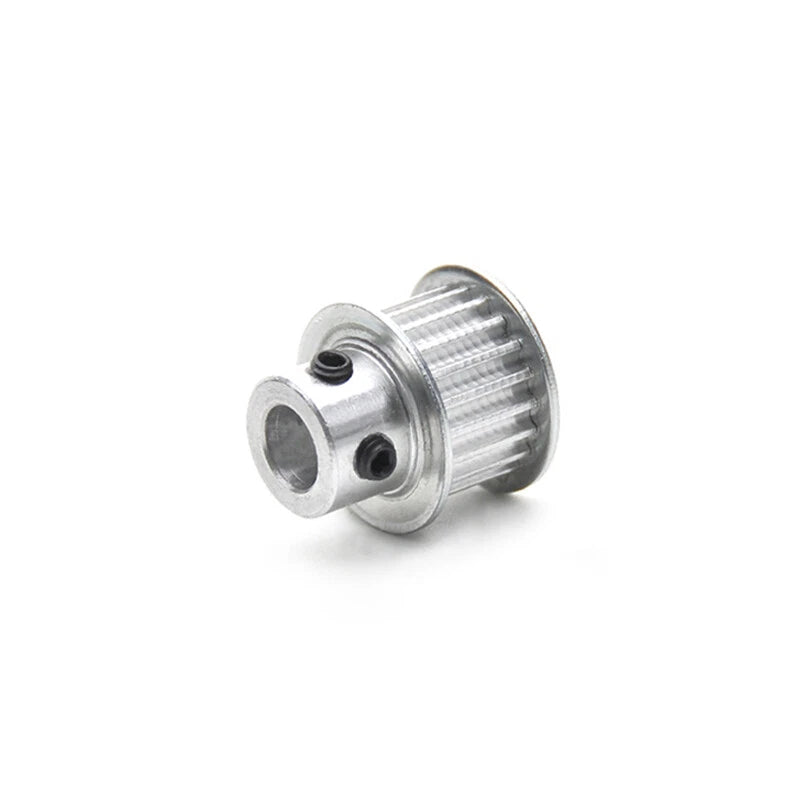
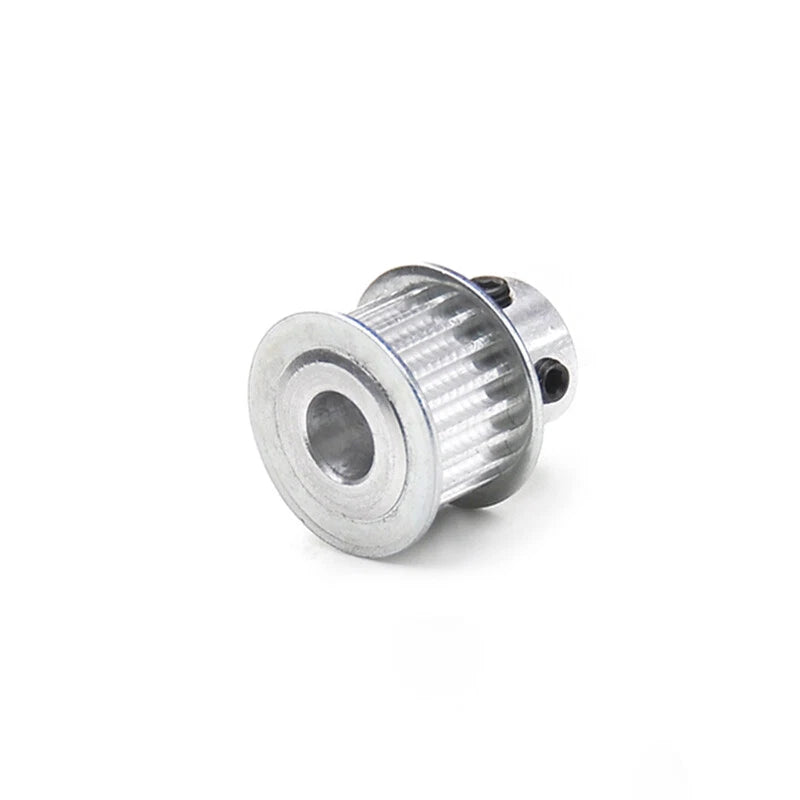
Each pulley is machined from aluminum alloy with a natural or anodized finish. The hub features a precision-bored center hole ranging from 3 mm (≈0.118 in) to 25 mm (≈0.984 in), with a slot width of 11 mm across all variants. Tooth count spans 12T through 45T, giving you a wide gear-ratio selection from a single product family. BF-type pulleys include a flange on both sides; K-type pulleys are flangeless for applications requiring belt lateral adjustment.
Typical use cases include 3M belt CNC router axis drives, desktop robotic arm joints, 3D printer extruder and motion systems, and light-duty conveyor synchronization. Long-tail search terms this product addresses: 3M pitch aluminum timing pulley, GT3M synchronous wheel with keyway, BF flange pulley 3mm bore, K-type timing pulley 20T 6mm bore.
⚙️ Compatibility: Designed for standard 3M pitch (3 mm tooth pitch) synchronous timing belts. Verify belt width matches your selected pulley flange clearance. BF-type suits fixed-width belt tracks; K-type suits adjustable or wide-belt setups.
✅ Key Features of These 3M Timing Belt Pulleys
🔩
Two Hub Styles — BF & K Type
BF-type includes dual flanges to keep the belt centered under load. K-type is flangeless for lateral belt float or multi-belt stacking. Select the style that matches your drive geometry.
🎯
Wide Tooth Count Range: 12T – 45T
Twenty tooth-count options let you dial in the exact speed ratio your application needs without custom machining. Covers both high-speed low-torque and low-speed high-torque configurations.
📐
Bore Diameter 3 mm – 25 mm with 11 mm Slot
Standard round bores from 3 mm to 25 mm, plus keyed bore options (e.g., 8 mm 3×1.4 mm keyway, 10 mm 4×1.8 mm keyway, 12.7 mm 5×2.3 mm keyway) for positive shaft locking without set-screw slip.
🏗️
Aluminum Alloy Construction
Lightweight yet rigid aluminum body keeps rotational inertia low — critical for servo-driven axes where acceleration response matters. Corrosion resistance suits indoor automation environments.
📏
3M Pitch Tooth Profile
Tooth geometry is matched to the 3M synchronous belt standard (3 mm pitch, trapezoidal profile). Ensures full tooth engagement across the wrap arc, minimizing backlash and tooth wear.
🔄
Drop-In Replacement Geometry
Outer diameter and hub dimensions follow standard 3M pulley conventions, making these direct replacements for worn pulleys in existing machines without frame modification.
📐 Technical Specifications — 3M Timing Belt Pulley
| Belt Pitch |
3M (3 mm) |
| Tooth Profile |
Trapezoidal (MXL-compatible 3M standard) |
| Hub Style |
BF-type (dual flange) / K-type (flangeless) |
| Number of Teeth |
12T, 14T, 15T, 16T, 17T, 18T, 20T, 22T, 24T, 25T, 28T, 30T, 32T, 35T, 36T, 38T, 40T, 42T, 44T, 45T |
| Bore Diameter Range |
3 mm – 25 mm (see variant options for keyed bores) |
| Slot Width |
11 mm |
| Keyway Options |
3×1.4 mm, 4×1.8 mm, 5×2.3 mm, 6×2.8 mm (see variant options) |
| Material |
Aluminum alloy |
| Finish |
See variant options |
| Outer Diameter |
See variant options |
| Belt Width Compatibility |
See variant options |
| Weight |
See variant options |
❓ Frequently Asked Questions
How do I choose between BF-type and K-type pulleys?
BF-type pulleys have flanges on both sides of the tooth face, which physically constrain the belt from walking off the pulley — ideal for single-axis drives, vertical runs, or any setup where belt tracking is critical. K-type pulleys are flangeless, giving the belt freedom to shift laterally. Choose K-type when you need to align multiple pulleys across a wide shaft, or when your belt tensioner handles tracking. If in doubt, BF-type is the safer default for most CNC and robotics applications.
Which bore diameter and keyway should I select for my shaft?
Match the bore diameter to your shaft OD exactly — a loose fit causes runout and premature wear. For shafts requiring positive torque transmission (servo motors, stepper motors), select a keyed bore variant: 8 mm bore uses a 3×1.4 mm keyway, 10 mm bore offers either 3×1.4 mm or 4×1.8 mm keyways, 12.7 mm bore uses a 5×2.3 mm keyway, and 19 mm bore uses a 6×2.8 mm keyway. For light-duty or low-torque applications, a plain round bore with a set screw is sufficient.
What belt pitch and width is compatible with these pulleys?
These pulleys are designed exclusively for 3M pitch synchronous timing belts (3 mm tooth pitch, trapezoidal profile). They are not compatible with GT2, HTD 3M, or other pitch standards. Belt width must be equal to or narrower than the pulley's usable tooth face width — check the specific variant's slot width (11 mm across all variants in this listing) and confirm your belt width does not exceed the flange clearance on BF-type models.
How strong are aluminum timing pulleys for my application?
Aluminum alloy pulleys are well-suited for light-to-medium duty synchronous drives — typical in CNC routers, 3D printers, desktop robots, and small conveyor systems. For continuous high-torque industrial applications (heavy conveyor lines, high-cycle packaging machinery), consider whether a steel pulley is more appropriate. Aluminum's advantage is low rotational inertia, which improves acceleration response in servo-driven axes. Avoid applications with sustained side-loading that exceeds the hub's radial capacity.
Are these pulleys corrosion-resistant for my environment?
Aluminum alloy naturally forms a thin oxide layer that provides good corrosion resistance in dry indoor environments — standard for electronics enclosures, lab automation, and workshop CNC machines. They are not rated for continuous exposure to saltwater, strong acids, or high-humidity outdoor environments without additional surface treatment. If your application involves occasional moisture or mild chemicals, an anodized variant (where available) offers improved surface hardness and corrosion protection.
Can I use these pulleys as a direct replacement for worn pulleys in my existing machine?
Yes, provided your existing machine uses 3M pitch timing belts and the replacement pulley matches the original tooth count, bore diameter, and hub style (BF or K). Measure your current pulley's tooth count and bore before ordering. The outer diameter of a 3M pulley is determined by tooth count (OD ≈ teeth × 3 mm / π), so matching tooth count ensures the belt tension and center distance remain unchanged. If your original pulley had a keyway, select the matching keyed bore variant.
What tooth count should I choose for my speed ratio requirement?
Speed ratio = driven pulley teeth ÷ driving pulley teeth. For example, a 12T drive pulley paired with a 36T driven pulley gives a 3:1 reduction (output shaft turns at 1/3 the motor speed, with 3× the torque). This listing covers 12T through 45T, enabling ratios from 1:1 (matched pair) up to approximately 3.75:1 within a single product family. For higher ratios, combine with a larger pulley from a compatible 3M series listing.
🛒 Select your Model (BF/K type), Number of Teeth, and Bore Diameter & Slot Width above, then add to cart.