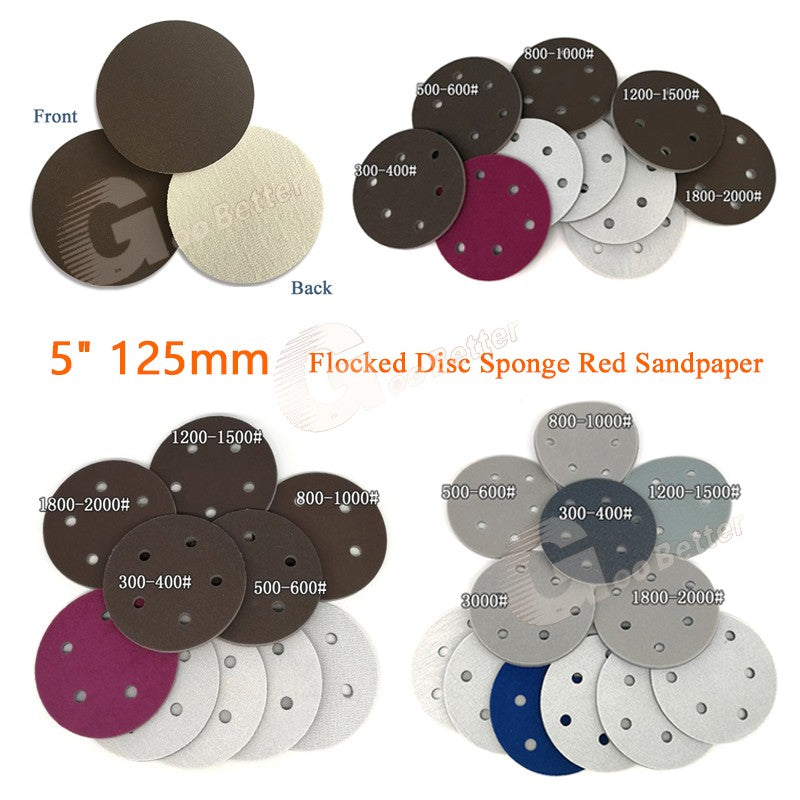
Can I really use these 5‑inch sponge discs wet?
Absolutely. They’re designed for both wet and dry sanding. For best results with wet sanding, soak the sponge sheet in water for a few minutes, then keep the surface wet. Wet sanding greatly reduces airborne dust, cools the abrasive, and yields a smoother finish — especially important on automotive clear coats and acrylics.
What is the advantage of the red sponge backing over regular paper?
The flexible sponge acts as a built‑in cushion. It evenly distributes pressure on curved panels, prevents “finger marks”, and allows you to sand contours without cutting through edges. It’s also more durable when used wet compared to standard paper-backed abrasives.
I have a 5″ hook & loop sander. Will these stick?
These discs are plain‑backed sponge (no Velcro). They’re primarily for hand sanding, but many detailers use them with a PSA (pressure‑sensitive adhesive) backup pad on DA sanders — just apply a little spray adhesive if needed. For dedicated interface pads, you can also use a hook‑and‑loop conversion disc. We recommend them for hand work, soft blocks, or with a sticky‑back sanding block for maximum control.
What grits are included in the 300P‑3000P assortment?
The set covers a full spectrum: typically includes 300, 400, 500, 600, 800, 1000, 1200, 1500, 2000, 2500, and 3000 grit. Exact piece count may vary, but you’ll have all the essential steps for cut and polish. For headlight restoration or paint correction, we suggest starting at 800–1000 and working up.
Are these suitable for automotive clear coat sanding?
Yes, and they excel at it. Use 1500–3000 grit wet to level orange peel or remove nibs without burning through the clear. Always follow with a fine polishing compound for a glossy OEM finish. The sponge prevents pressure spots.
How long does each sheet last?
Lifespan depends on pressure and material, but these silicon carbide sponges hold up very well. When used wet, they resist loading and can be rinsed clean. You’ll notice they continue to cut even after several minutes of sanding — a great value for both a single project and repeated use.