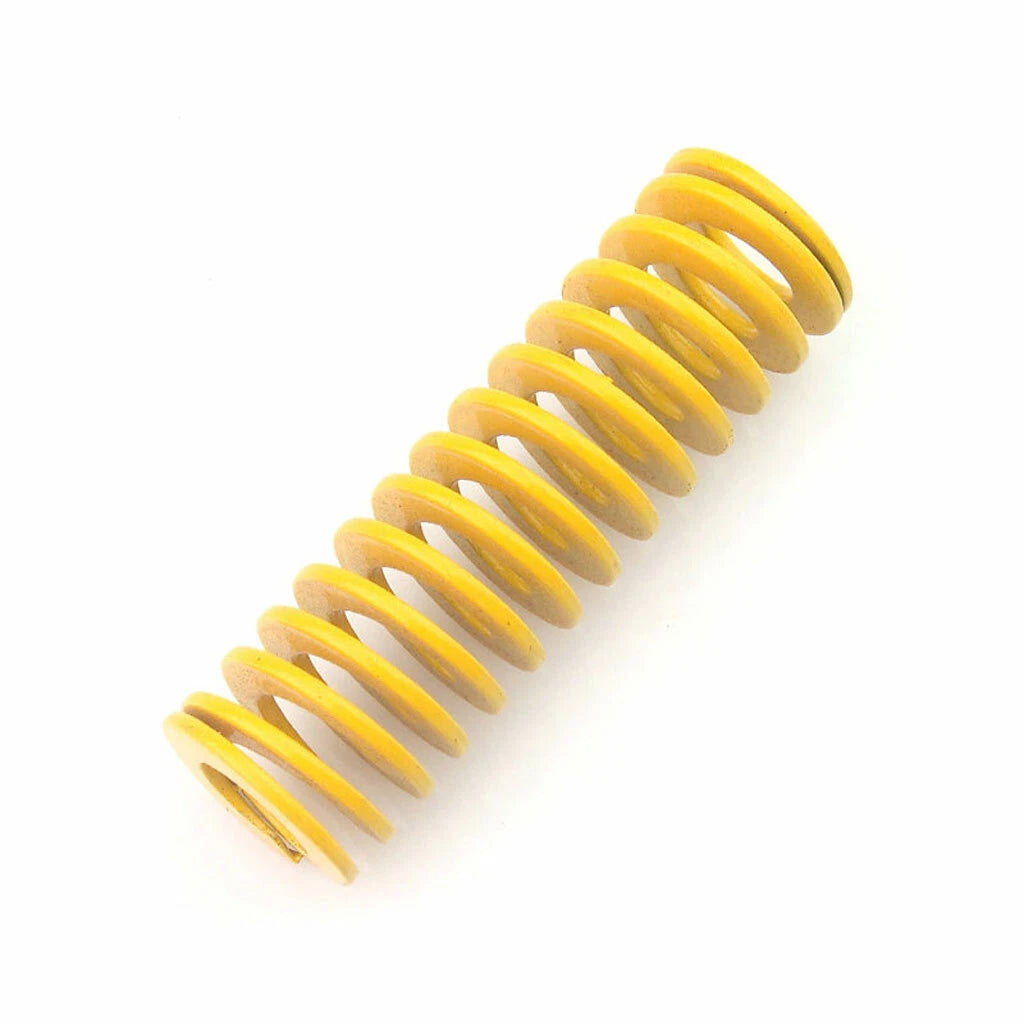
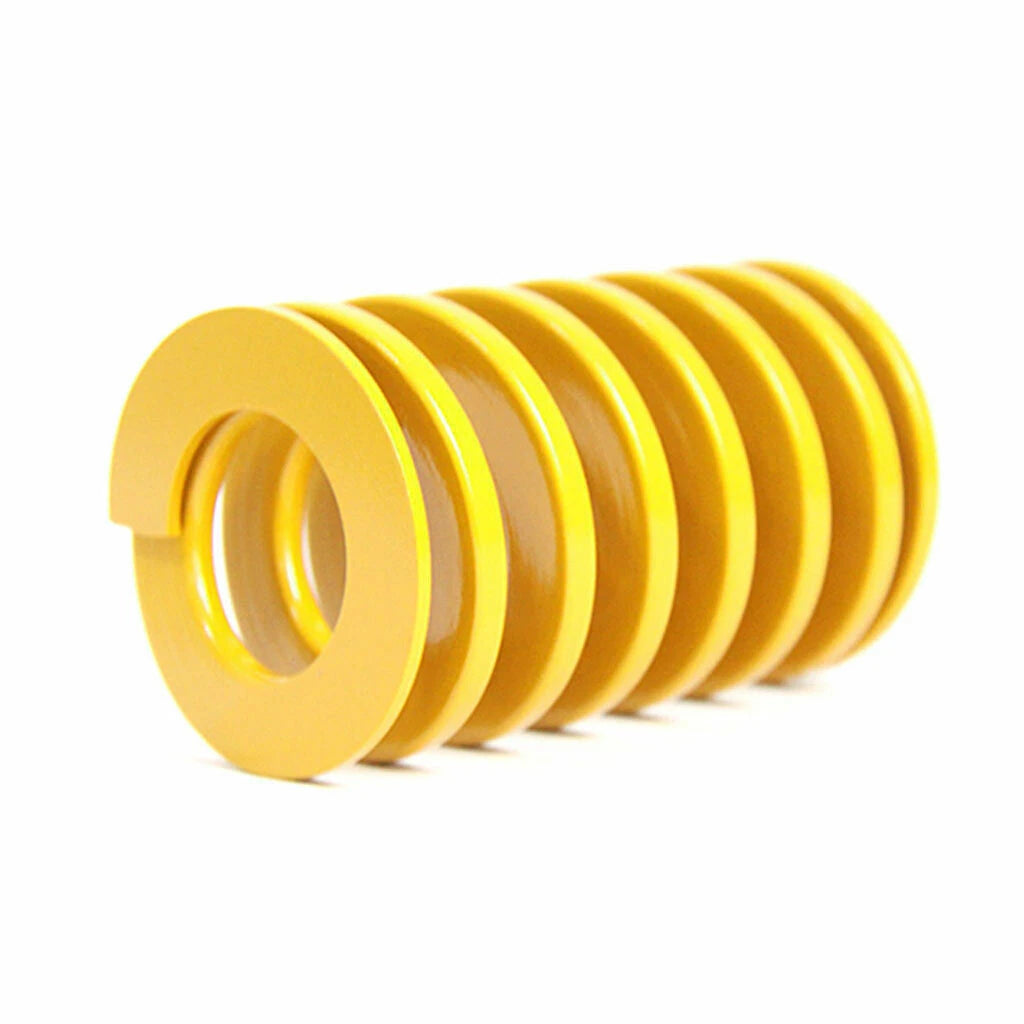
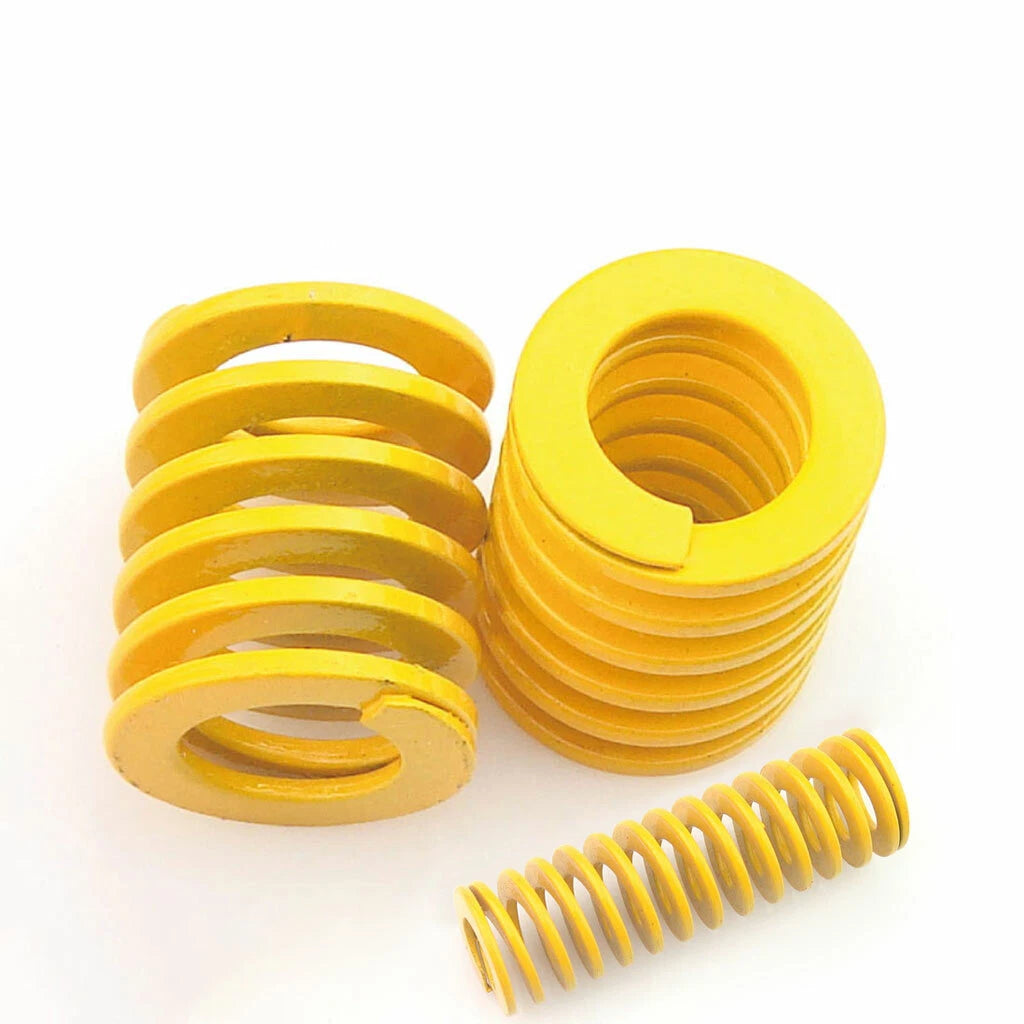
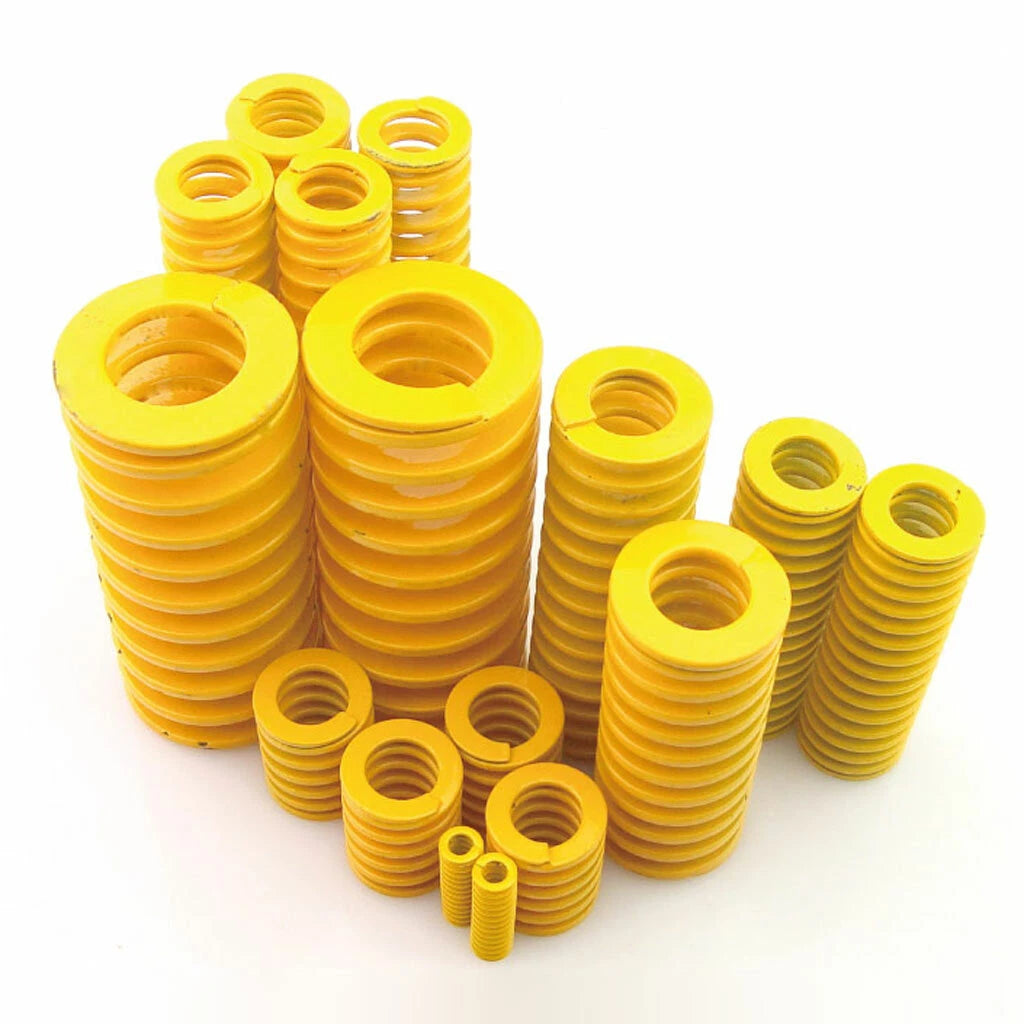
50mm OD Yellow Extra Light Load Compression Mould Die Spring 25mm ID All Sizes

No reviews

Price:
Sale price$22.15 USD
Stock:
In stock (500 units), ready to be shipped

Payment & Security

Ach Direct Debit Amazon American Express Apple Pay Bancontact BLIK Diners Club Discover EPS Google Pay iDEAL Wero JCB Maestro Mastercard Multibanco MobilePay PayPal Przelewy24 Shop Pay Twint Union Pay USDC Visa

Your payment information is processed securely. We do not store credit card details nor have access to your credit card information.

Limited Offer — Spend More, Save More
Spend $55+
Save $5
Spend $100+
Save $10
Spend $200+
Save $25
HomeDIYer DIY Expert Support

DIY Expert Support

Get fitment advice & recommendations

Mon–Fri  8:30 AM – 8:00 PM
24-Hour Fast Ship
Arrives in 3–14 Days
Worldwide Shipping
30-Day Returns
1 tree planted with every purchase

Description

50mm OD Yellow Compression Die Springs — Extra Light Load for Precision Mould & Tooling Applications

When your stamping die, injection mould, or press tool demands consistent, repeatable spring force without overloading delicate components, an incorrectly rated spring causes premature fatigue, misalignment, and costly downtime. These yellow-coded extra light load compression die springs are engineered for engineers, toolmakers, and maintenance professionals who need reliable, standards-compliant springs across a wide range of stroke lengths.

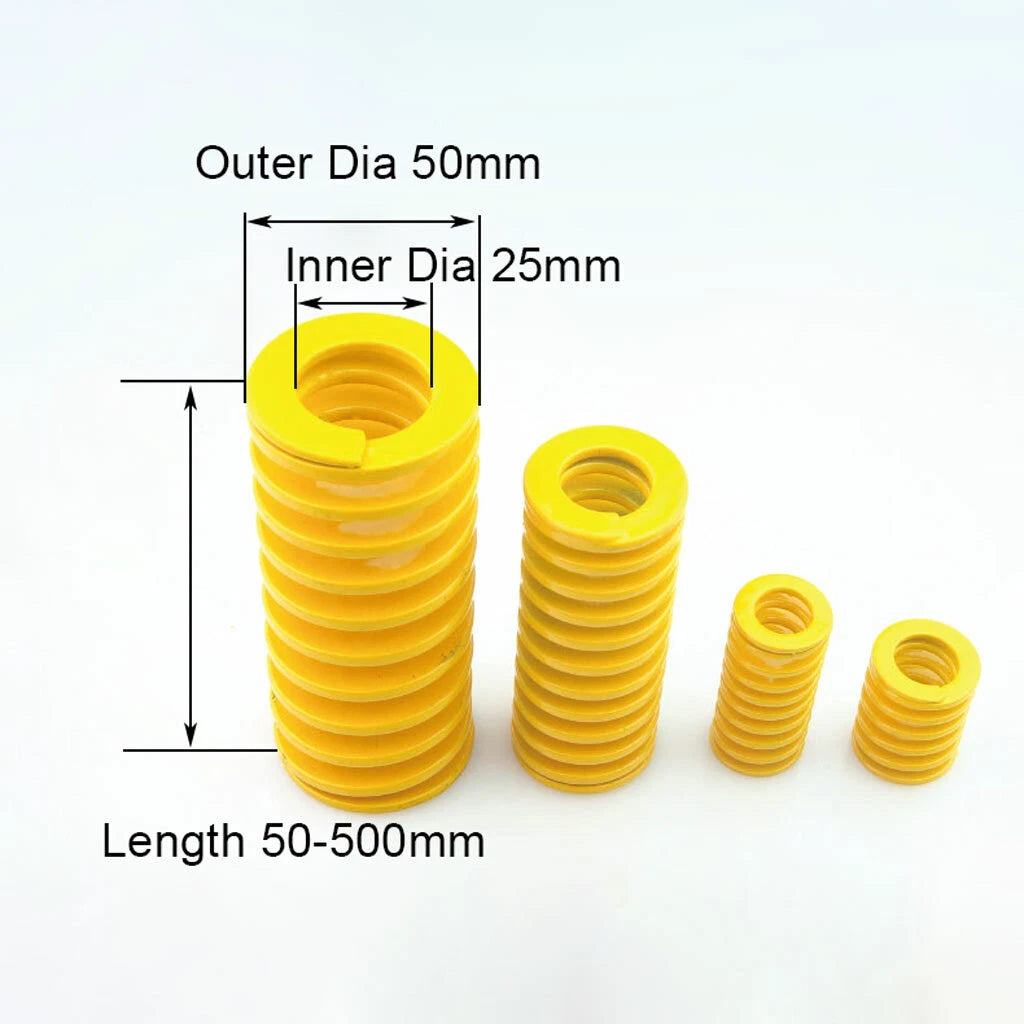
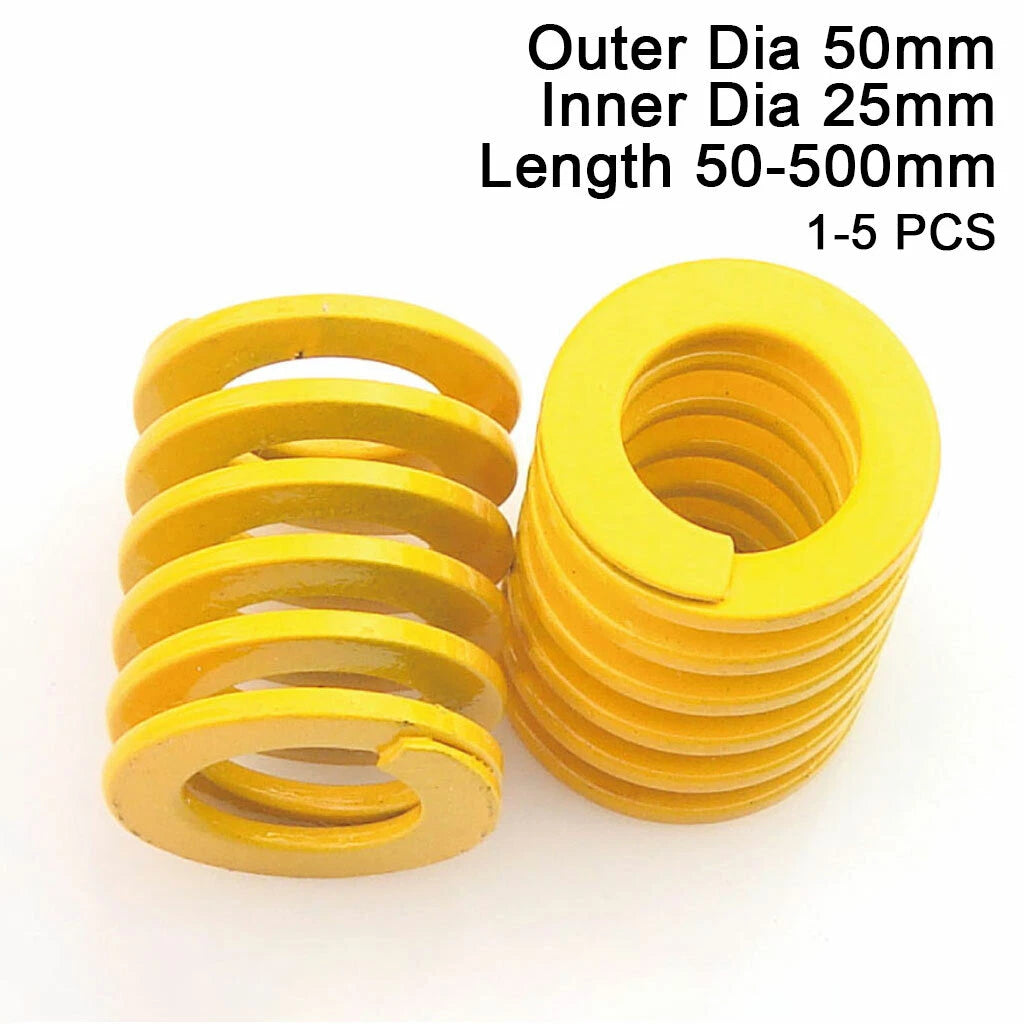
Each spring features a 50mm outer diameter (OD) and 25mm inner diameter (ID), manufactured from high-carbon chromium alloy steel wire with a yellow powder-coat finish for instant load-class identification. Wall thickness is typically 10–12mm. Available lengths range from 50mm to 500mm (~2 in to ~19.7 in), covering short-stroke ejector applications through to deep-draw tooling setups.

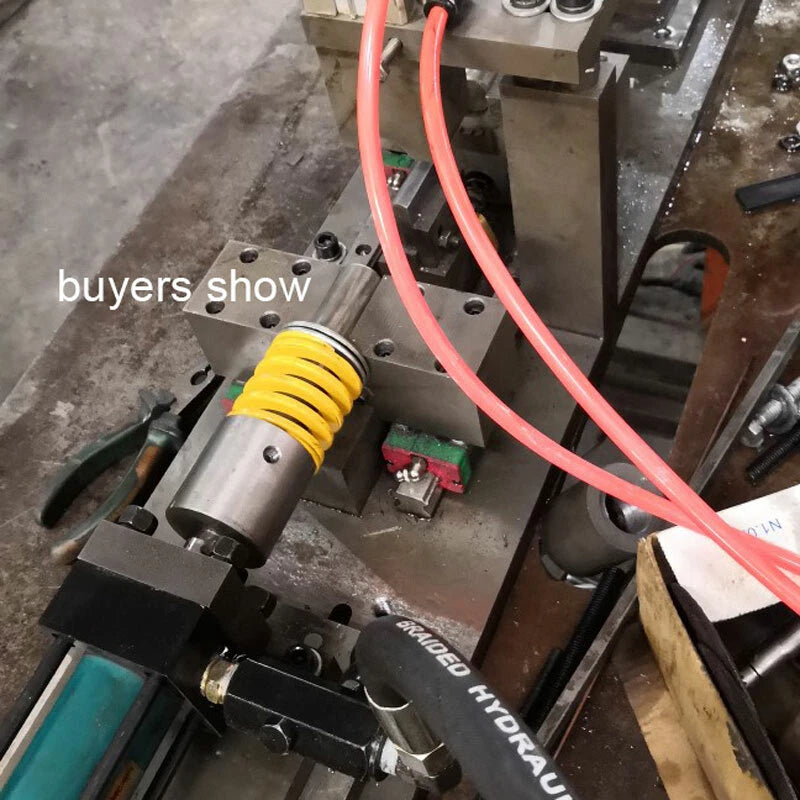
Typical use cases include injection mould ejector pin return springs, progressive die stripper plate springs, and hydraulic press cushion assemblies — all scenarios where an extra light load compression mould die spring with a 50mm OD is the correct specification for controlled, low-force cycling.

⚙️ Compatibility: Fits spring pockets with a minimum bore of 50mm OD and a guide pin of up to 25mm ID. Conforms to ISO 10243 / JIS B 5012 extra light load (yellow) classification. Suitable for use in mould bases, die sets, and standard tooling spring housings.

✅ Key Features of These 50mm OD Yellow Compression Die Springs

🟡
Yellow Extra Light Load Rating

Color-coded yellow per ISO 10243 / JIS B 5012 standards for instant load-class identification on the shop floor, reducing setup errors.

📐
50mm OD × 25mm ID Precision Sizing

Consistent outer and inner diameters ensure drop-in fit into standard 50mm spring pockets with guide pins up to 25mm — no machining required.

📏
Wide Length Range: 50mm–500mm

Sixteen length options from 50mm (~2") to 500mm (~19.7") cover short ejector-pin returns through to deep-draw and long-stroke press applications.

🔩
Alloy Steel Construction

Wound from high-carbon chromium alloy steel wire for fatigue resistance and dimensional stability across repeated compression cycles.

🔄
Consistent Spring Rate per Length

Each length variant is manufactured to a defined spring rate, ensuring predictable force output for stripper plates, ejector systems, and cushion assemblies.

🛡️
Corrosion-Resistant Finish

Yellow powder-coat surface treatment provides a protective layer against workshop humidity and coolant exposure, extending service life in production environments.

📐 Technical Specifications — Compression Die Spring

Outer Diameter (OD) 50mm (1.97")
Inner Diameter (ID) 25mm (0.98")
Wall Thickness Typically 10–12mm
Available Lengths 50mm, 60mm, 70mm, 80mm, 90mm, 100mm, 125mm, 150mm, 175mm, 200mm, 250mm, 300mm, 350mm, 400mm, 450mm, 500mm
Load Class Extra Light (Yellow)
Material High-carbon chromium alloy steel
Finish / Color Yellow powder coat
Standard ISO 10243 / JIS B 5012
Spring Rate See variant options
Max. Deflection See variant options
Quantity per Order 1 PCS

❓ Frequently Asked Questions

How do I choose the correct length for my application?

Measure the free length of the spring pocket or the distance between the spring seat and the retaining shoulder when the tool is open. Select a free length equal to or slightly longer than this measurement. For ejector pin return springs, the free length should equal the ejector stroke plus the compressed height required to maintain preload.

What does the yellow color code mean?

Yellow indicates an extra light load classification per ISO 10243 and JIS B 5012 standards. This is the lowest load rating in the standard die spring color system (yellow → blue → red → green → brown), making it suitable for applications requiring minimal spring force with controlled deflection.

Are these springs compatible with standard mould bases and die sets?

Yes. The 50mm OD and 25mm ID dimensions conform to ISO 10243 standard sizing, which is widely adopted in mould base and die set designs. They will fit any spring pocket bored to 50mm with a guide pin up to 25mm diameter.

How corrosion-resistant are these die springs?

The yellow powder-coat finish provides a protective barrier against light moisture and coolant splash typical in toolroom and press environments. For highly corrosive or submerged environments, additional protective measures or stainless-steel alternatives should be considered.

Can I use these springs in a hydraulic or pneumatic press?

Yes. These compression die springs are suitable for use as cushion or return springs in hydraulic and pneumatic press tooling, provided the applied load does not exceed the extra light load rating for the selected length. Always verify the spring rate and maximum deflection for your specific stroke requirements before installation.

What is the difference between a die spring and a standard coil spring?

Die springs are manufactured to tighter dimensional tolerances, use higher-grade alloy steel wire, and are rated for millions of compression cycles under consistent loads. Standard coil springs are general-purpose and not designed for the repetitive, high-cycle demands of stamping dies, injection moulds, or press tooling.

How do I know when a die spring needs to be replaced?

Replace a die spring if you observe: visible cracking or fracture, a free length that has shortened by more than 3–5% from the original specification, uneven coil spacing, or if the tool begins producing inconsistent part quality that cannot be attributed to other causes. Regular inspection at scheduled maintenance intervals is recommended.

🛒 Select your Outer Dia × Inner Dia, Length, and Qty above, then add to cart.

You may also like

Recently viewed