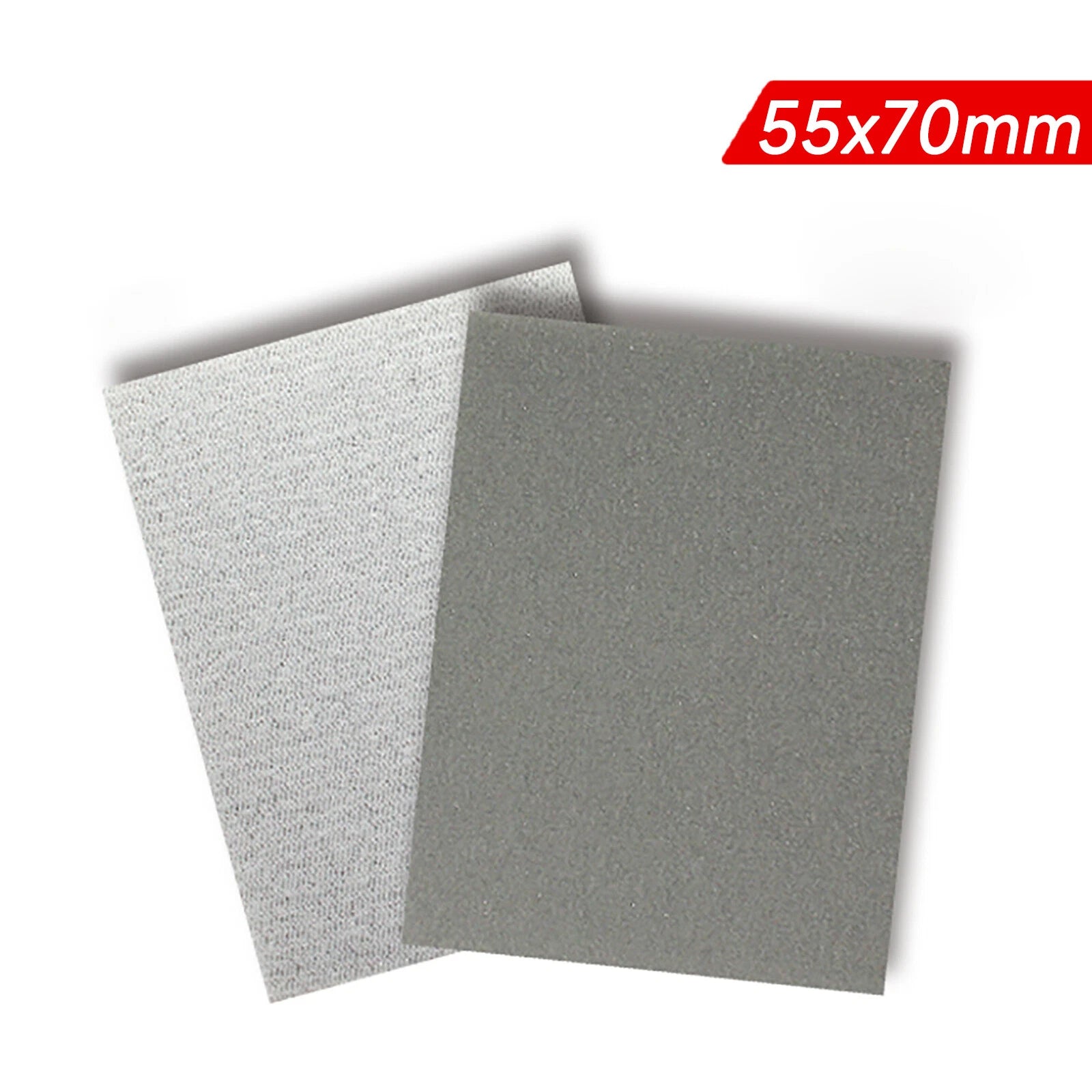
55mm x 70mm Wet & Dry Foam Sanding Sponge Block – Tackle Every Surface with One Kit
Whether you're bringing an old piece of furniture back to life, prepping a car panel for paint, or removing stubborn scratches from a household surface, this set of foam sanding blocks gets the job done with less effort. The soft-yet-firm sponge core conforms to curves and contours that hard sanding blocks simply can't handle, while the open‑cell structure makes these pads genuinely effective for both wet and dry sanding. From heavy stock removal at 300 grit to a glass‑smooth finish at 3000 grit, you have every stage of surface refinement in one compact pack – no extra sheets, no blocks to wrap, and far less hand fatigue.
Why These Foam Sanding Blocks Belong in Your DIY Kit
-
💧True Wet & Dry Sanding Performance – Use them damp for reduced dust and a cleaner finish on metal, clear coat, or stone; use them dry for rapid material removal on wood and drywall.
-
🎯Full Grit Range from Coarse to Ultra-Fine (300–3000) – Move logically from 300/600 grit shaping through 1000/1500 refining to 2000/3000 final polishing without switching to a different system.
-
🧽Flexible Sponge Core Reaches Curves & Profiles – The padded body hugs curved chair legs, contoured auto trim, and rounded edges that rigid blocks miss.
-
🔁Rinse, Squeeze, and Reuse – Non‑loading foam rinses clean under running water, restoring grip and cut time after time.
-
🤲Ergonomic, Anti‑Fatigue Shape – At 55mm x 70mm, the block fits naturally in your palm, giving you steady pressure control without cramping your fingers.
-
🌍Works on Almost Any Material – Proven on wood, metal, plastic, ceramic, drywall compound, fiberglass, and automotive paints.
-
📦Compact Assortment – No Wasted Sheets – Each grit block is ready to go right out of the pack; say goodbye to cutting and folding sandpaper sheets.
Wet Dry Sanding Block Pad Specifications
| Block Dimensions |
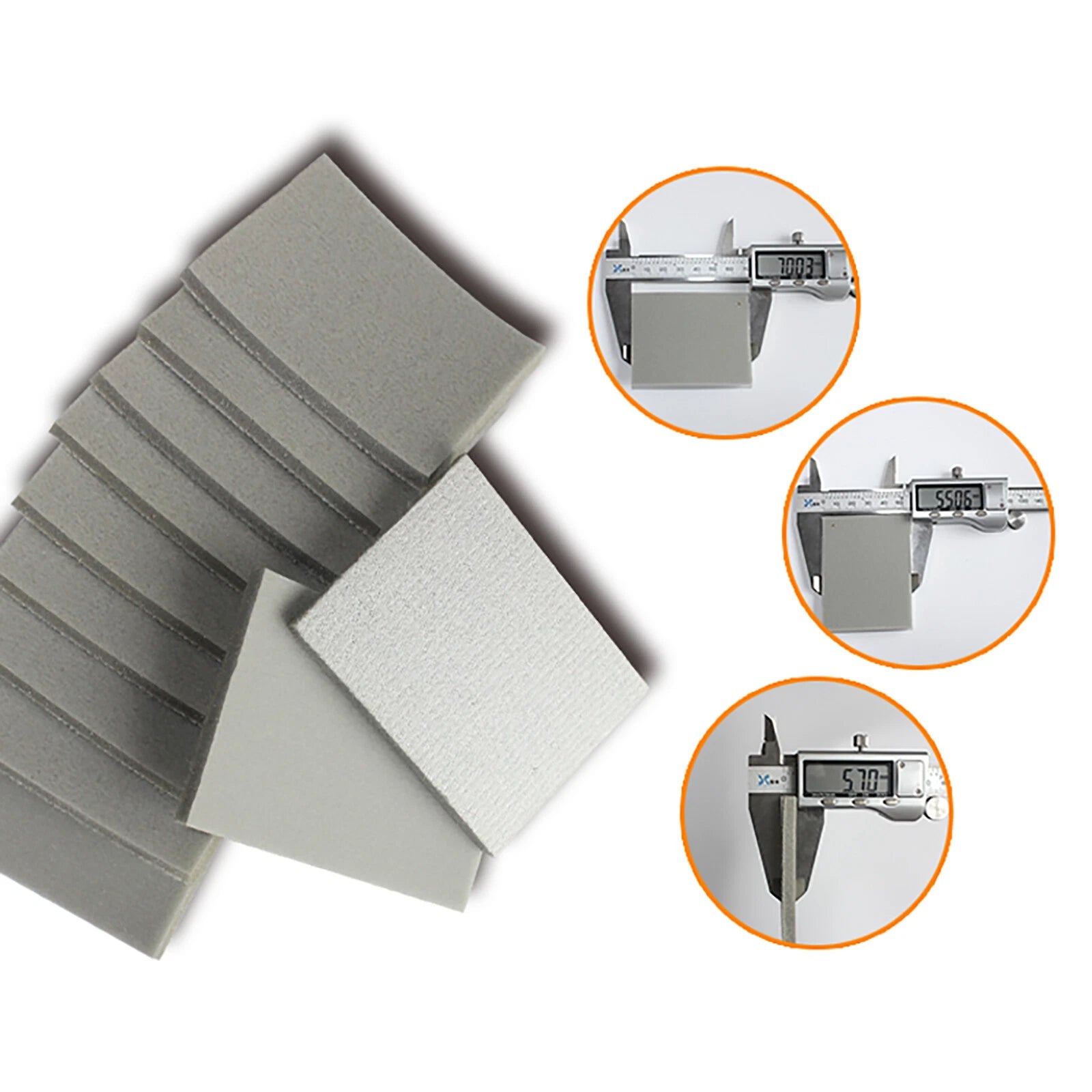
55mm x 70mm (approx. 2.16" x 2.76") |
| Thickness |
5mm – flexible yet durable |
| Grit Range |
300 · 600 · 1000 · 1500 · 2000 · 3000 (assorted) |
| Material |
High‑density abrasive foam over a sponge base |
| Color |
Grey (grit‑dependent shade variation) |
| Usage Mode |
Wet or dry |
| Package Content |
Assorted grit blocks set – ready to use |
| Country of Manufacture |
China |
Frequently Asked Questions About 300–3000 Grit Sanding Sponge Blocks
🔹 Can I really use these blocks with water? Will the grit come off?
Absolutely. The abrasive is bonded to a water‑resistant foam base, so you can soak the block, damp‑sand under a trickle of water, or dunk it in a bucket. Just rinse out the loaded material periodically and squeeze gently – the grit stays intact and keeps cutting.
🔹 How do I know which grit to start with?
Start with the coarsest grit you think you’ll need based on the scratch depth. For raw wood or heavy orange peel, begin at 300 or 600. Move up through the grades progressively – never skip more than one grit level – until you reach the 2000 or 3000 polish stage. The range gives you full control.
🔹 Will these blocks clog up and stop working after a few uses?
They are specifically designed to resist loading. When you feel the surface start to glaze, simply rinse the block under water, give it a light squeeze, and the built‑up dust washes out. Many users report getting multiple projects out of a single block before the abrasive begins to wear down.
🔹 Are these suitable for automotive clear coat or headlight restoration?
Yes – that’s one of the most popular uses. The 1000–3000 grit blocks work exceptionally well for wet‑sanding clear coat, removing orange peel, and restoring faded headlights when followed by a polishing compound. The soft foam backing helps you avoid creating flat spots on curved panels.
🔹 Can I cut or trim the blocks to fit a tight space?
You can. The foam cuts easily with scissors or a utility knife, allowing you to shape a small piece for hard‑to‑reach corners, louvers, or intricate moldings. You still get the same consistent abrasive performance from the off‑cut.
⚠️ For best results, always use a light touch and let the abrasive do the work. Keep blocks clean between grit changes to avoid cross‑contamination.