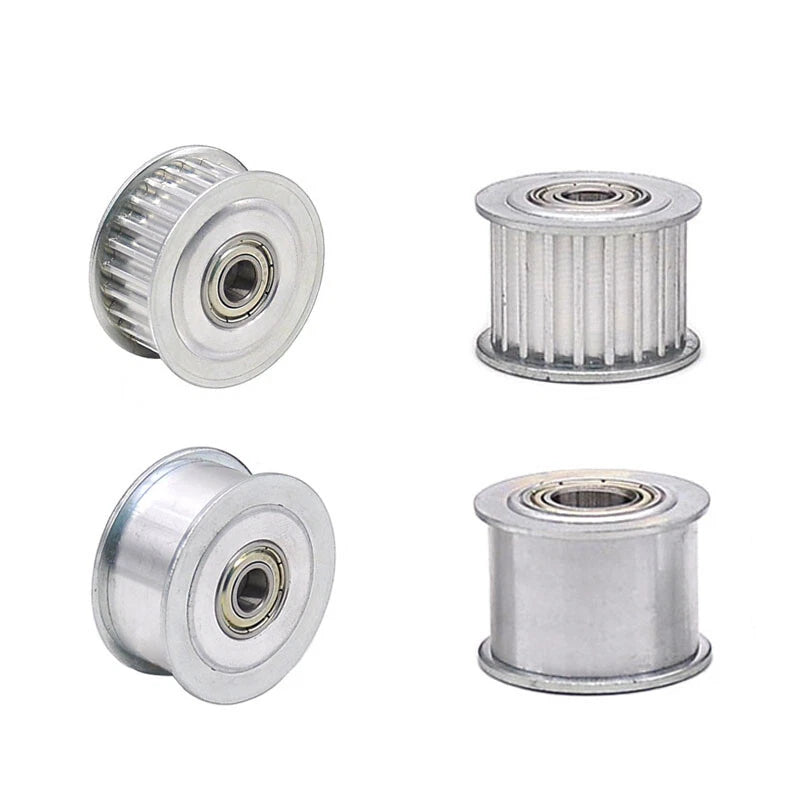
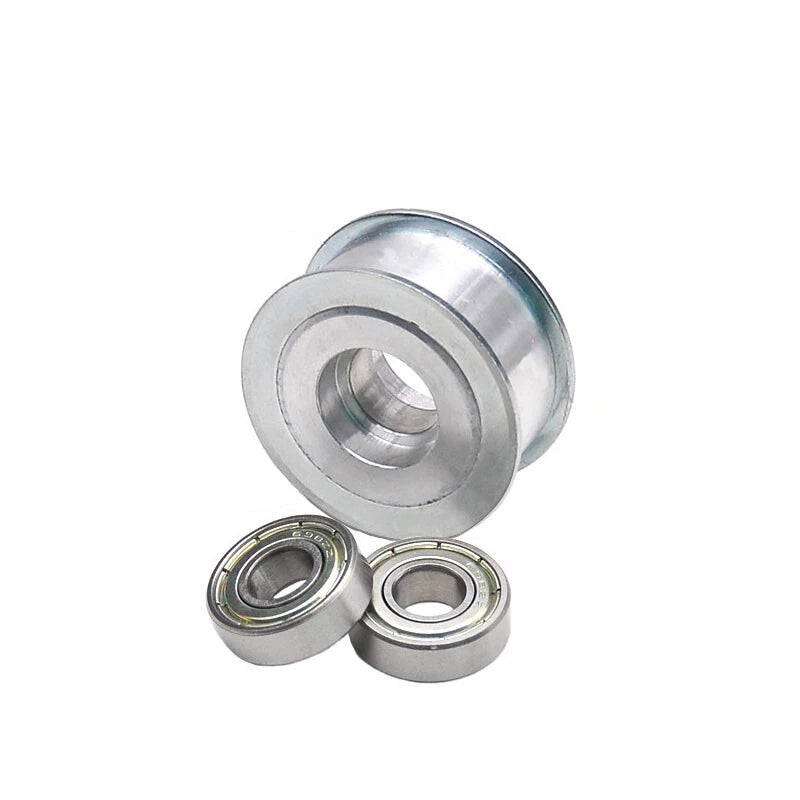
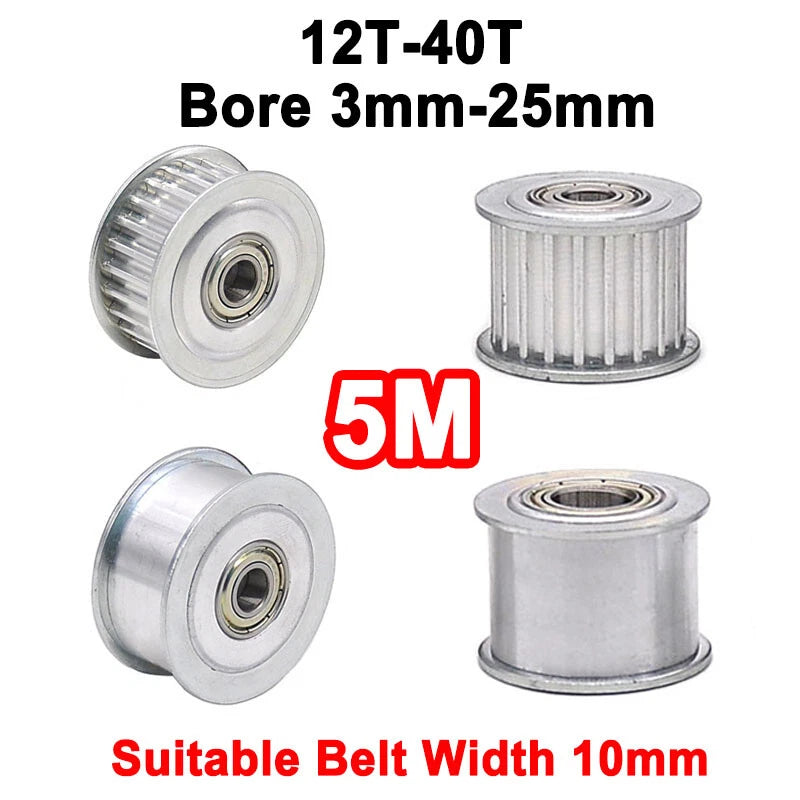
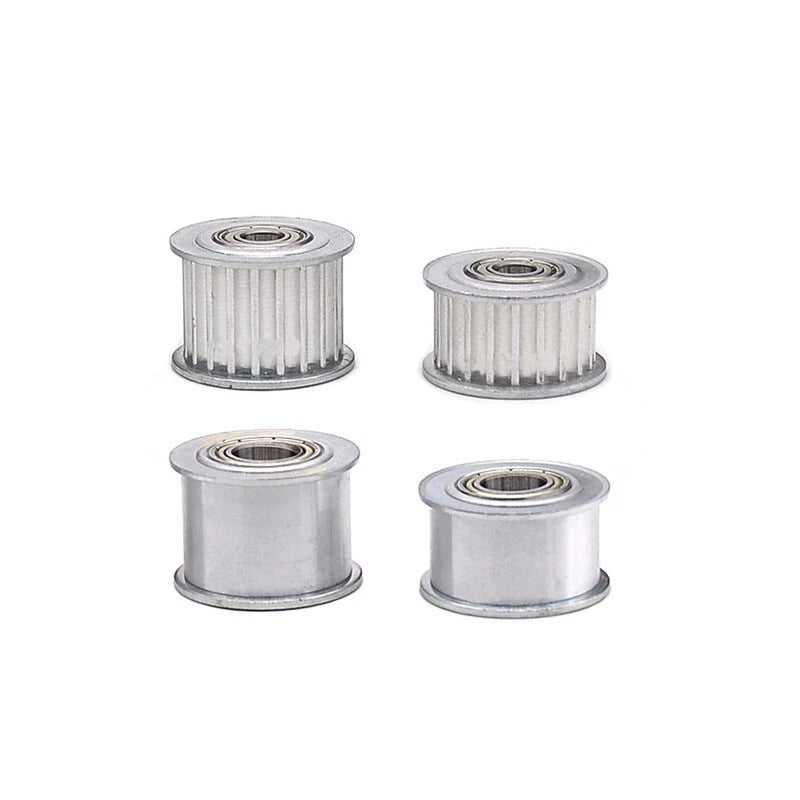
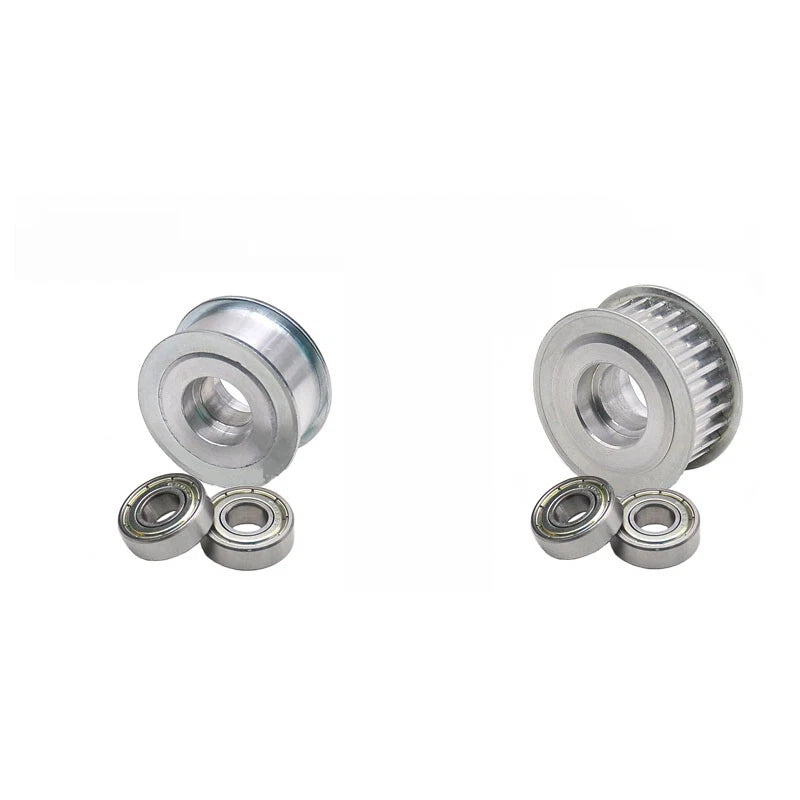
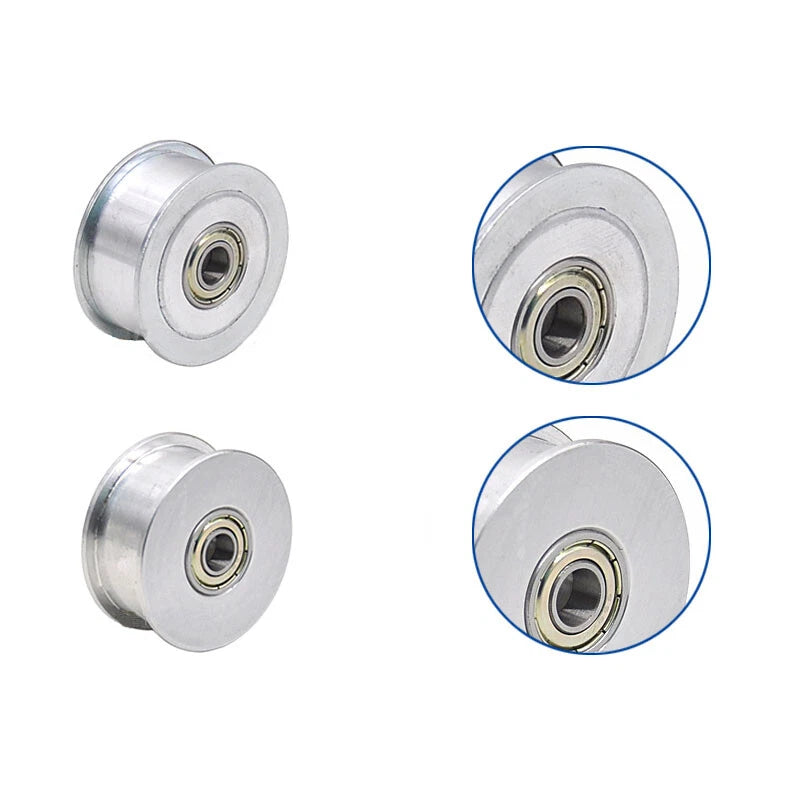
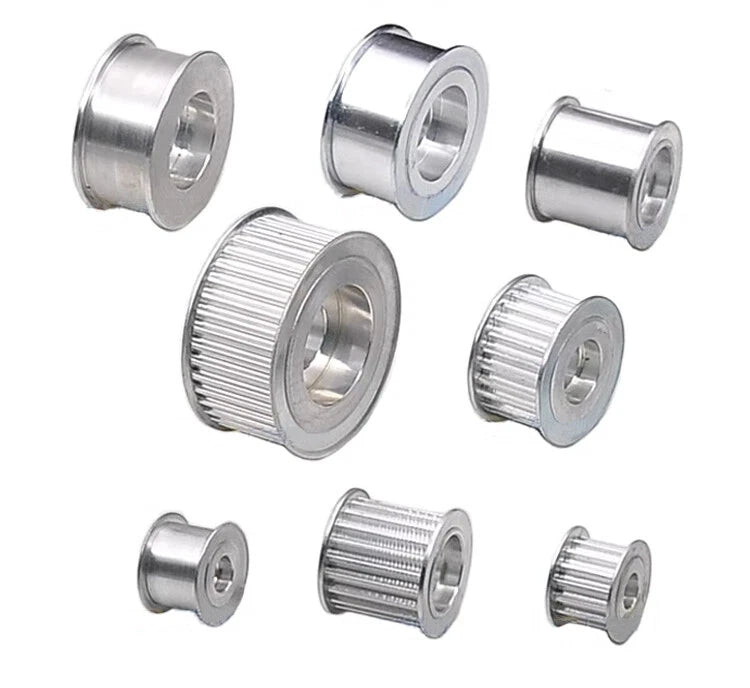
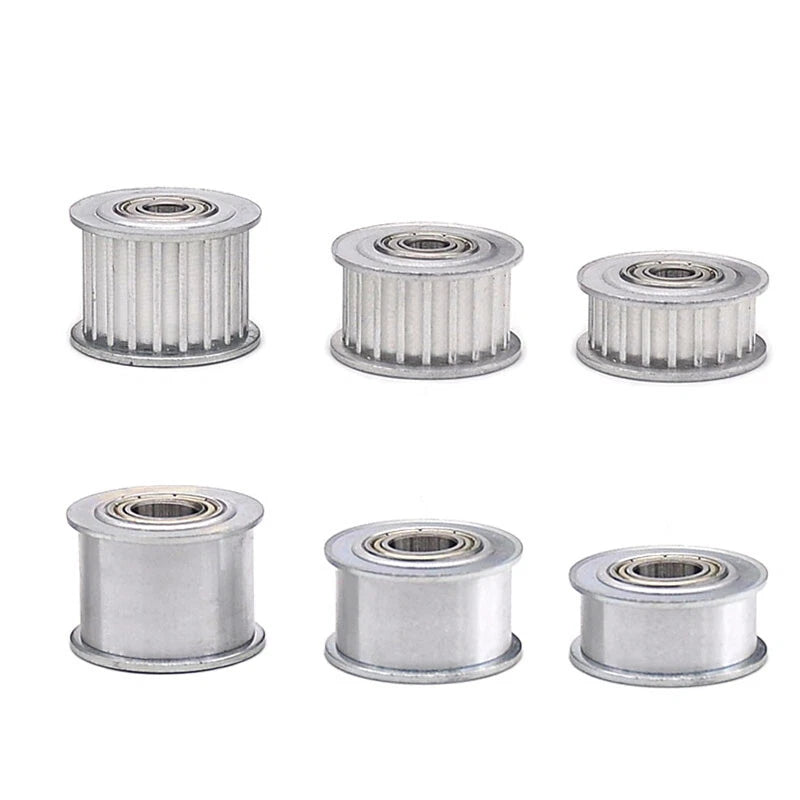
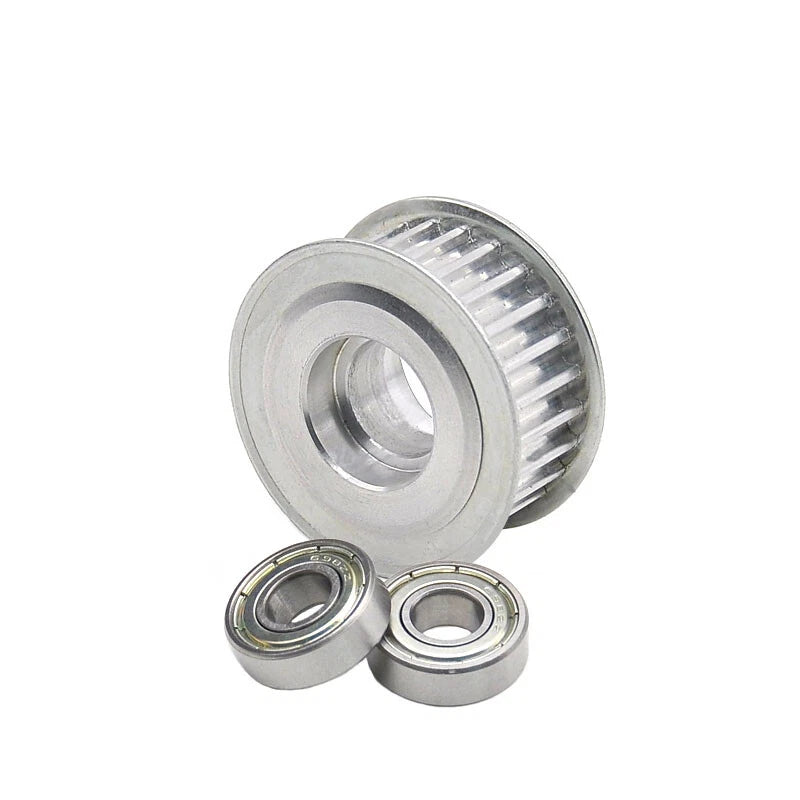
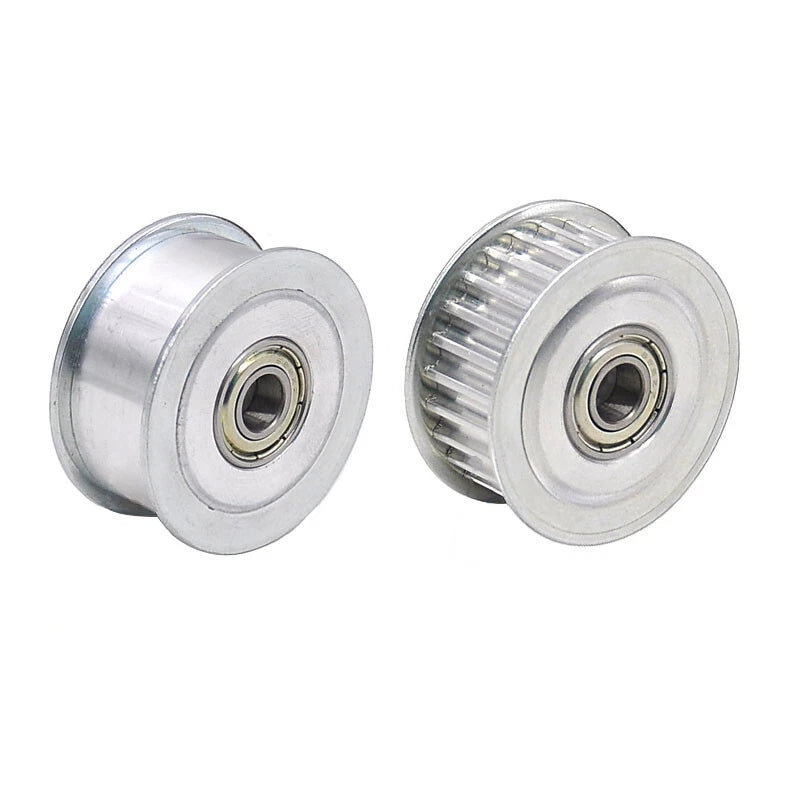
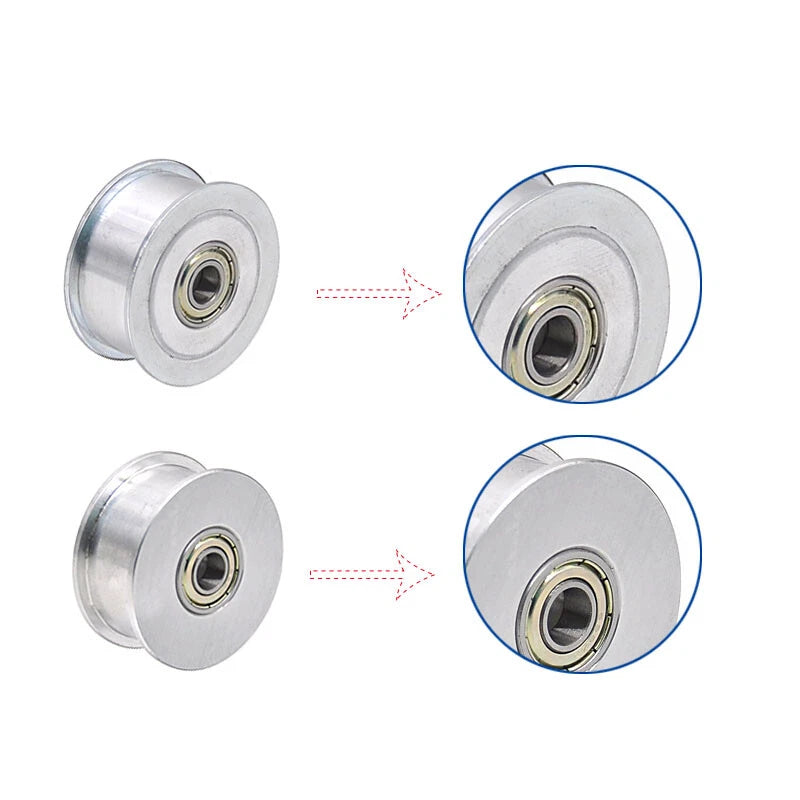
5M Smooth-Tooth Idler Pulley 12-40 Teeth Bore 3mm-25mm for 10mm Width Belt

No reviews

Price:
Sale price$7.92 USD
Stock:
In stock (500 units), ready to be shipped

Payment & Security

Ach Direct Debit Amazon American Express Apple Pay Bancontact BLIK Diners Club Discover EPS Google Pay iDEAL Wero JCB Maestro Mastercard Multibanco MobilePay PayPal Przelewy24 Shop Pay Twint Union Pay USDC Visa

Your payment information is processed securely. We do not store credit card details nor have access to your credit card information.

Limited Offer — Spend More, Save More
Spend $55+
Save $5
Spend $100+
Save $10
Spend $200+
Save $25
HomeDIYer DIY Expert Support

DIY Expert Support

Get fitment advice & recommendations

Mon–Fri  8:30 AM – 8:00 PM
24-Hour Fast Ship
Arrives in 3–14 Days
Worldwide Shipping
30-Day Returns
1 tree planted with every purchase

Description

5M Idler Pulley — Smooth & Toothed Drive for Precise Belt Tensioning

When your CNC router, 3D printer, or linear motion system loses belt tension, the entire build suffers — missed steps, layer shifts, and inconsistent cuts become the norm. Engineers and makers who demand repeatable accuracy need an idler pulley that holds its position under load without introducing backlash. These 5M idler pulleys are designed for exactly that application, serving hobbyists, prototypers, and production automation teams alike.

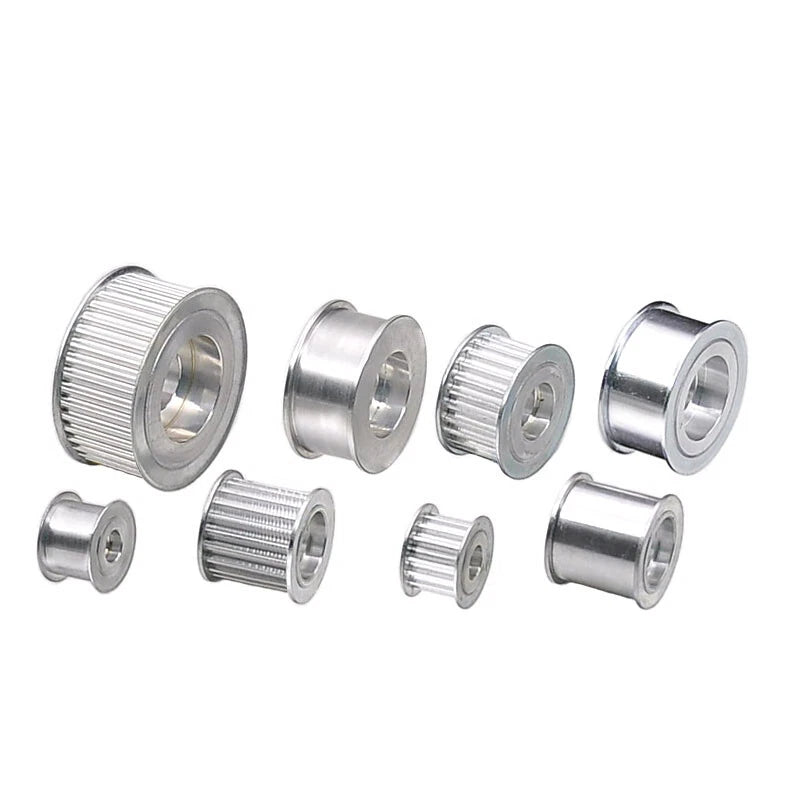
Each pulley is machined to suit the 5M (5mm pitch) belt profile and is available in two surface types — smooth bore (for free-spinning tension) and toothed (for positive engagement). The bore diameter ranges from 3mm to 25mm (~0.12 in to ~0.98 in), and the pulley fits 10mm (~0.39 in) wide belts. Tooth counts span 12T to 40T, covering a wide range of drive ratios and wrap angles. The body is typically constructed from aluminum alloy with a precision-bored center, and variants are sold individually (x1) or in pairs (x2).

Typical use cases include belt tensioning in CoreXY 3D printer frames, anti-backlash idler stages in CNC gantry systems, and passive redirection pulleys in conveyor or pick-and-place automation. Long-tail applications include replacement idler pulleys for laser engravers, routing belt paths around obstacles in custom robotics, and dual-drive extruder belt loops.

⚙️ Compatibility: Designed for 5M pitch (5mm) timing belts, 10mm belt width. Verify bore diameter and tooth count match your shaft and drive ratio before ordering.

✅ Key Features of These 5M Idler Pulleys

🔩
Wide Bore Range

Available in bore sizes from 3mm to 25mm, accommodating standard motor shafts, shoulder bolts, and custom axle diameters across a broad range of machine designs.

⚙️
Smooth & Toothed Variants

Choose smooth idler for free-spinning belt tension or toothed idler for positive belt engagement — both machined to the 5M pitch profile for accurate meshing.

📐
12T to 40T Tooth Count Selection

Spanning 12 to 40 teeth, these pulleys support a wide range of wrap angles and drive ratios, making them suitable for compact and large-format motion systems alike.

🏗️
10mm Belt Width Fit

Precisely sized for 10mm wide 5M timing belts — the most common width in desktop CNC, 3D printing, and light industrial automation — ensuring flush belt tracking without edge wear.

🔄
Single or Pair Quantity Options

Order as a single unit (x1) for replacement or as a pair (x2) for symmetric drive setups such as CoreXY or H-bot configurations, reducing per-unit cost on multi-axis builds.

🛡️
Machined Aluminum Construction

Typically manufactured from aluminum alloy with a precision-bored center hole, offering a favorable strength-to-weight ratio and resistance to deformation under sustained belt tension loads.

📐 Technical Specifications — 5M Idler Pulley

Belt Pitch 5M (5mm)
Suitable Belt Width 10mm (~0.39 in)
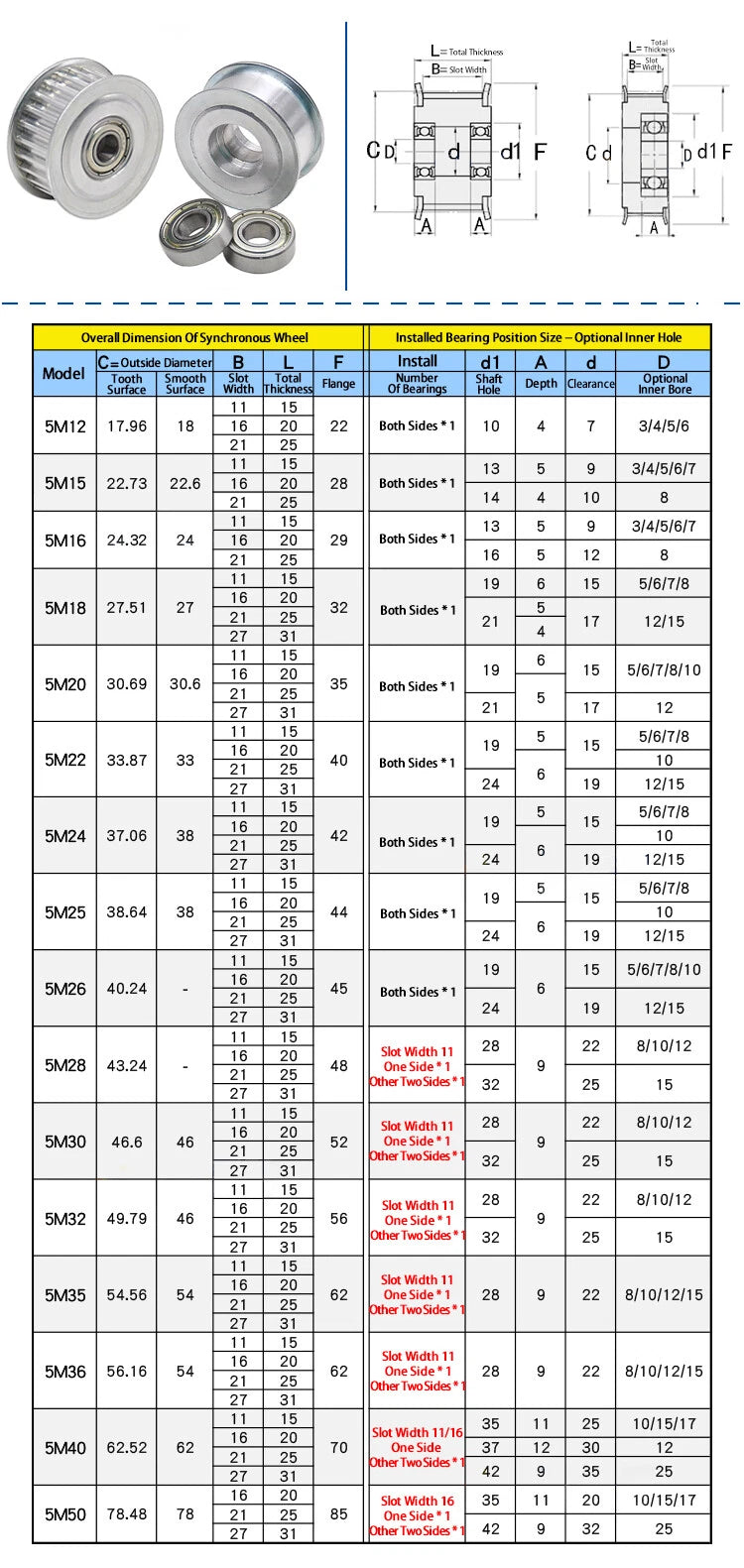
Tooth Count Options 12T, 15T, 16T, 18T, 20T, 24T, 25T, 28T, 30T, 32T, 40T
Bore Diameter Options 3mm, 4mm, 5mm, 6mm, 7mm, 8mm, 10mm, 12mm, 15mm, 17mm, 25mm
Drive Type Smooth Idler or Toothed Idler (see variant options)
Material Aluminum alloy (typically)
Outer Diameter See variant options
Quantity per Order 1 pc (x1) or 2 pcs (x2) — see variant options
Finish See variant options

❓ Frequently Asked Questions

What is the difference between a smooth idler and a toothed idler pulley?

A smooth idler pulley has a flat or flanged rim with no teeth. It is used to redirect or tension the belt without engaging the belt's tooth profile — the belt slides freely over the smooth surface. A toothed idler pulley has teeth that mesh with the belt's tooth profile, providing positive engagement. Toothed idlers are used when you need the pulley to actively drive or precisely guide the belt, while smooth idlers are preferred for tensioning and path redirection where slip is acceptable.

How do I choose the correct bore diameter for my application?

The bore diameter must match the shaft or bolt diameter on which the pulley will be mounted. Measure your shaft with calipers before ordering. Common choices include 5mm for NEMA 17 motor shafts, 8mm for standard shoulder bolts used in 3D printers, and larger bores (10mm–25mm) for industrial axles or custom CNC builds. If you are using a flanged bearing inside the pulley, match the bore to the bearing's outer diameter.

Which tooth count should I select for my belt drive system?

Tooth count affects the wrap angle and the effective pitch diameter of the pulley. Smaller tooth counts (12T–16T) result in a smaller pulley diameter and are suited for compact, high-speed setups. Larger tooth counts (24T–40T) increase the pitch diameter, reduce belt stress at the wrap point, and are better for high-torque or low-speed applications. For most desktop CNC and 3D printer idler applications, 12T–20T is the most common range.

Are these pulleys compatible with GT2 or HTD belts?

No. These pulleys are designed specifically for the 5M belt profile (5mm pitch, trapezoidal or curvilinear tooth form depending on variant). GT2 belts use a 2mm pitch and a different tooth geometry, and HTD 5M uses a rounded tooth profile. Always confirm that your belt's pitch and tooth profile match the pulley before ordering. Using mismatched profiles will result in poor engagement, accelerated wear, and potential belt skipping.

Can I use these pulleys without a bearing, or do they require one?

These pulleys are sold as the pulley body only — they do not include a bearing. Whether you need a bearing depends on your mounting method. If the pulley is mounted on a fixed bolt and needs to spin freely, you should press-fit an appropriate flanged or standard bearing into the bore. If the pulley is keyed or clamped to a rotating shaft, no bearing is needed inside the pulley itself. Check the bore diameter and select a bearing with a matching outer diameter.

Should I order x1 or x2 quantity?

Order x1 if you need a single replacement pulley or are building a single-axis tensioner. Order x2 if your machine uses a symmetric belt path — such as CoreXY, H-bot, or dual-idler gantry designs — where two identical pulleys are required on opposite sides. Ordering x2 at once ensures matched parts from the same production batch, which is important for consistent belt tracking and tension balance.

What is the corrosion resistance of these pulleys?

Aluminum alloy pulleys offer moderate corrosion resistance suitable for indoor environments, including workshops, labs, and enclosed machine frames. They are not recommended for prolonged exposure to moisture, salt spray, or aggressive chemicals without additional surface treatment. For outdoor or high-humidity applications, consider anodized variants or apply a protective coating after installation.

🛒 Select your Types & Teeth Number, Bore & QTY above, then add to cart.


You may also like

Recently viewed