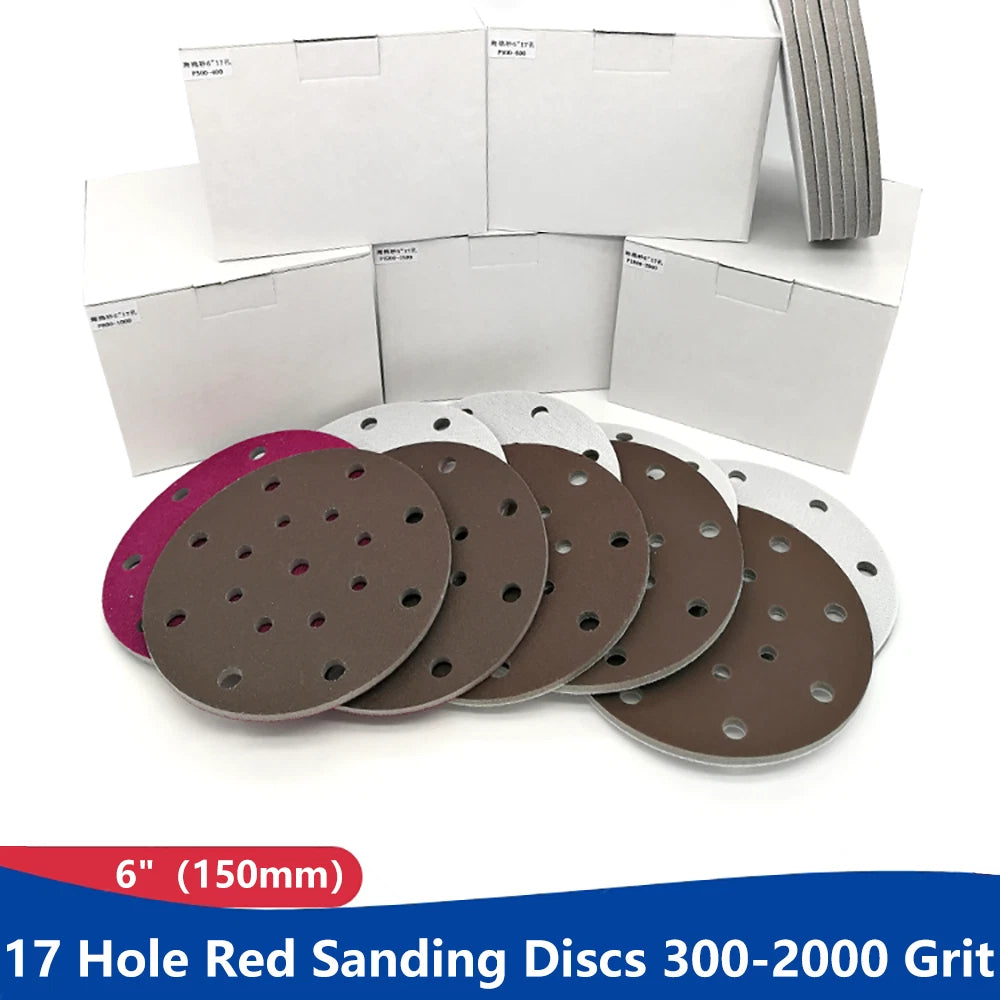
🛠️ 6" 17-Hole Hook & Loop Sponge Sanding Discs – 300 to 2000 Grit Assortment
🎯 Whether you're a weekend woodworker, an auto body enthusiast, or a professional detailer, these 6-inch 17-hole sanding discs take the frustration out of surface prep. The sponge-backed, hook & loop design grips securely to your random orbital sander while the 17-hole pattern aligns perfectly with dust extraction systems—keeping your workspace cleaner and your abrasive sharper longer. From rough shaping with 300 grit to a mirror‑like finish at 2000 grit, this set handles wood, metal, clear coats, and primer with uniform scratch patterns and minimal clogging.
✨ Key Features of Our 6" 17-Hole Sponge Sandpaper Discs
-
17-Hole Dust Extraction: Engineered to match standard 6" random orbital sanders with 17-hole backup pads, maximizing dust removal and keeping the abrasive surface clean for faster cutting.
-
Flexible Sponge Backing: The cushioned sponge layer conforms to curves, contours, and edges—dramatically reducing the risk of burn‑through or gouging compared to flat paper discs.
-
Secure Hook & Loop (Velcro) Attachment: Firmer grip than generic hook & loop; discs stay put during high‑speed sanding yet peel off effortlessly for quick grit changes.
-
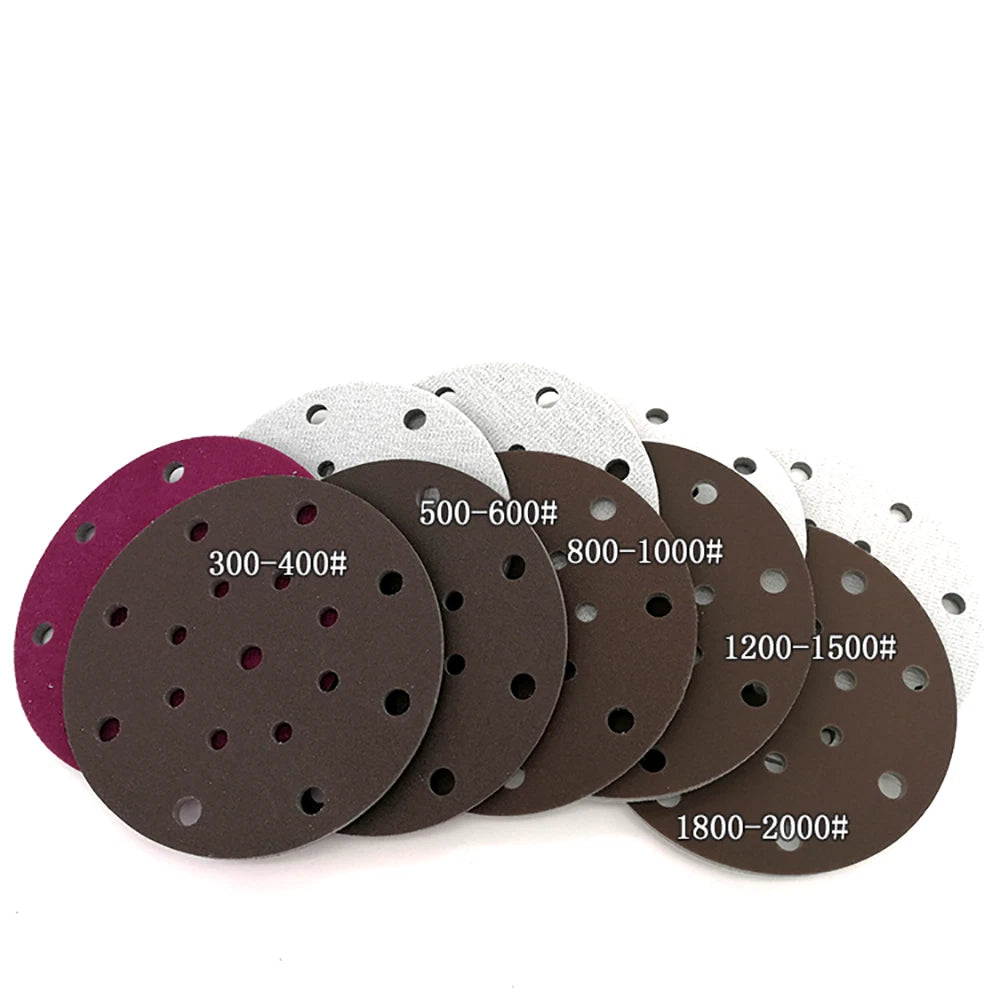
Complete Grit Range (300 – 2000): Covers very coarse (300-400), medium (600-800), fine (1000-1200), and very fine (1500-2000). One pack lets you progress from stock removal to final polishing.
-
Anti‑Clogging & Long‑Lasting: Premium aluminum oxide abrasive bonded to a tear‑resistant cloth/sponge base resists loading and delivers consistent performance across multiple uses.
-
Versatile Dry Sanding Applications: Perfect for auto body repair, woodworking, furniture refinishing, drywall, painted surfaces, and metal polishing.
📋 6-Inch Hook & Loop Sanding Disc Specifications
| Diameter |
6 Inch (150mm) |
| Hole Pattern |
17 Holes |
| Backing Type |
Sponge with Hook & Loop (Velcro) |
| Abrasive Material |
Aluminum Oxide |
| Grit Range |
300 · 400 · 600 · 800 · 1000 · 1200 · 1500 · 2000 |
| Sanding Grade |
Coarse / Medium / Fine / Very Fine |
| Application |
Dry Sanding – Auto Body, Wood, Metal, Paint |
| Suitable Sander |
Random Orbital Sander (6" pad with 17-hole pattern) |
| Condition |
Brand New – Unused, Unopened |
❓ Hook and Loop Sanding Discs FAQ – Common Questions Answered
🔹 Will these 17-hole discs fit my 6‑inch random orbital sander?
Yes, as long as your backing pad uses a hook & loop (Velcro) system and has a 17‑hole pattern. Please double‑check your machine’s pad before ordering—most 6" random orbital sanders accept 17‑hole discs, but some older models may use a different hole layout.
🔹 What do the different grit numbers mean, and which should I use first?
Lower numbers (300–600) are coarse and remove material quickly—ideal for stripping paint or leveling uneven surfaces. Medium grits (800–1200) refine the scratch pattern, and high grits (1500–2000) deliver a near‑polish finish. We always recommend starting with the coarsest necessary grit and stepping up progressively.
🔹 Can I reuse these sponge sanding discs, and how do I clean them?
Absolutely. The anti‑clogging coating and durable sponge backing allow multiple uses. For the best life, tap or brush off dust buildup between sessions. A sanding belt cleaner stick can also help revive clogged grits. Replace once the abrasive wears smooth, or the hook & loop loses grip.
🔹 Are these suitable for wet sanding?
These discs are designed for dry sanding applications. Using them with water will degrade the hook & loop backing and may cause the abrasive to separate. If you need a wet sanding solution, look for waterproof silicon carbide paper.
🔹 What makes sponge‑backed discs better than regular sandpaper for auto body work?
The foam layer behind the abrasive helps distribute pressure more evenly, following subtle body lines and curves without creating flat spots or deep scratches. This results in a more consistent finish and reduces the risk of cutting through clear coats.
📦 Packed fresh and ready to ship from US stock. Grit selection included as listed—please refer to the variation images for exact quantities.