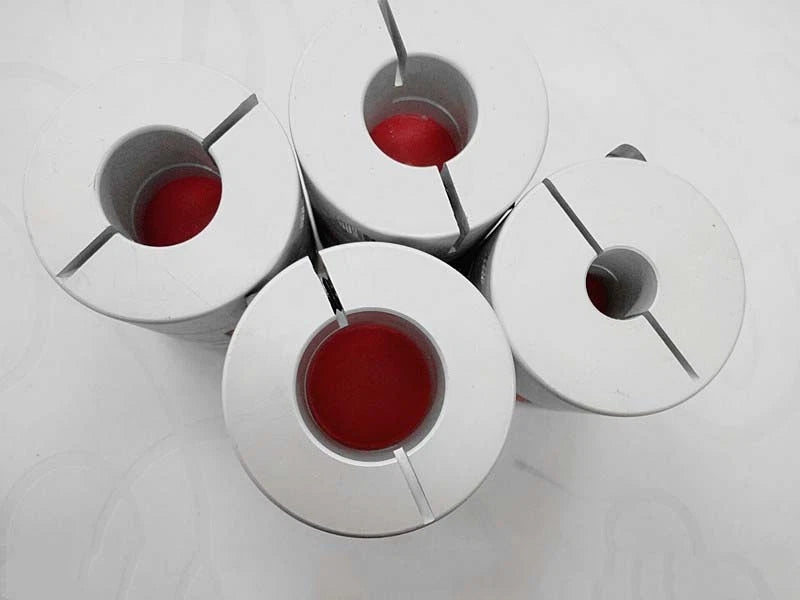
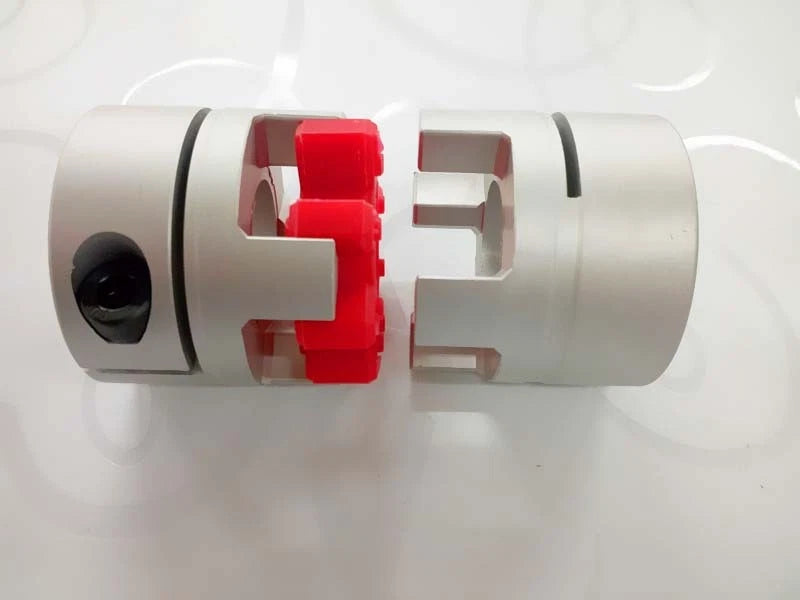
6-22mm D40L55 Flexible Jaw Coupler CNC Shaft Spider Stepper Motor Plum Coupling

No reviews

Price:
Sale price$12.43 USD
Stock:
In stock (500 units), ready to be shipped

Payment & Security

Ach Direct Debit Amazon American Express Apple Pay Bancontact BLIK Diners Club Discover EPS Google Pay iDEAL Wero JCB Maestro Mastercard Multibanco MobilePay PayPal Przelewy24 Shop Pay Twint Union Pay USDC Visa

Your payment information is processed securely. We do not store credit card details nor have access to your credit card information.

Limited Offer — Spend More, Save More
Spend $55+
Save $5
Spend $100+
Save $10
Spend $200+
Save $25
HomeDIYer DIY Expert Support

DIY Expert Support

Get fitment advice & recommendations

Mon–Fri  8:30 AM – 8:00 PM
24-Hour Fast Ship
Arrives in 3–14 Days
Worldwide Shipping
30-Day Returns
1 tree planted with every purchase

Description

D40L55 Flexible Jaw Coupler — Precision Shaft Coupling for CNC & Stepper Motor Drives

When shaft misalignment or motor vibration causes premature wear on your CNC machine, 3D printer, or automation rig, the coupling is almost always the culprit. Engineers and DIY builders who demand smooth, low-backlash power transmission rely on the D40L55 flexible jaw coupler to bridge motor and lead screw without transferring shock loads or angular error.

This plum-style spider coupling consists of two aluminum hubs (outer diameter 40 mm / 1.57 in, length 55 mm / 2.17 in total) and a polyurethane spider insert. Inner bore sizes range from 6 mm to 22 mm (approx. 0.24 in – 0.87 in), covering the most common NEMA stepper motor shaft and lead-screw combinations. Each hub is secured with a radial clamping screw for a firm, slip-free grip.

Typical applications include CNC router Z-axis and X/Y drives, NEMA 17/23 stepper motor to ball-screw connections, servo motor test benches, and light-duty rotary encoder mounts — anywhere a flexible jaw coupler for stepper motor is needed to absorb torsional shock and compensate for minor parallel or angular misalignment.

🔧 Compatible with: NEMA 17 & NEMA 23 stepper motors · Ball screws & lead screws (T8, T12, SFU1204, SFU1605) · Servo motor shafts · CNC router, 3D printer, and laser engraver drive systems

✅ Key Features of These D40L55 Flexible Jaw Spider Couplings

⚙️ Wide Bore Range 6–22 mm

23 inner-size variants from 6×6 mm up to 8×22 mm let you match both motor shaft and lead-screw diameters in a single coupling without adapters.

🛡️ Vibration & Shock Absorption

The polyurethane spider insert cushions torsional impulses from stepper motor step pulses, reducing resonance and protecting downstream components.

📐 Misalignment Compensation

Accommodates angular misalignment up to typically 1°–3° and parallel offset up to ~0.2 mm, keeping your axis running true even when mounting isn't perfect.

🔩 Aluminum Alloy Hubs

Lightweight yet rigid 6061-series aluminum hubs resist corrosion and keep rotational inertia low — critical for responsive stepper motor acceleration.

🔒 Radial Clamping Screw Design

Set-screw clamping on each hub provides a secure, tool-adjustable grip on the shaft, preventing axial slip under load reversals common in CNC cutting cycles.

🔄 Drop-In Replacement Spider Insert

The polyurethane spider is a separate, replaceable element — swap it out for a stiffer or softer durometer without replacing the entire coupling assembly.

📐 Technical Specifications — Flexible Jaw Coupler

Outer Diameter (D) 40 mm (1.57 in)
Overall Length (L) 55 mm (2.17 in)
Inner Bore Range 6 mm – 22 mm (0.24 in – 0.87 in)
Bore Configuration See variant options
Hub Material Aluminum alloy (6061-series)
Spider Insert Material Polyurethane (PU)
Finish Natural anodized / mill finish
Fastening Method Radial set screw (hex key)
Angular Misalignment Typically 1°–3°
Parallel Offset Tolerance Typically ≤ 0.2 mm
Max Recommended RPM See variant options
Coupling Style Jaw / Spider (Plum)

❓ Frequently Asked Questions

How do I choose the right bore size for my stepper motor and lead screw?

Measure the output shaft diameter of your motor (commonly 5 mm for NEMA 17, 6.35 mm or 8 mm for NEMA 23) and the lead-screw or ball-screw shaft diameter separately. Select the variant whose two bore dimensions match — for example, 6×10 mm means one hub bored to 6 mm and the other to 10 mm. If both shafts are the same diameter, choose a matching pair such as 6×6 mm or 8×8 mm.

Can this coupling handle the torque of a NEMA 23 stepper motor?

The D40L55 jaw coupler is rated for light-to-medium duty CNC and automation loads. NEMA 23 motors in typical CNC router or 3D printer applications operate well within the coupling's torsional capacity. For high-torque servo drives or heavy milling applications, verify the rated torque against your motor's holding torque specification before ordering.

Is the spider insert replaceable, and what hardness options are available?

Yes — the polyurethane spider is a separate component that can be removed and replaced without disturbing the hubs. Standard inserts are medium-durometer PU, which balances vibration damping with torsional stiffness. If you need a stiffer insert for higher-precision positioning, contact us to confirm availability of alternative durometer options.

How corrosion-resistant are the aluminum hubs?

The 6061-series aluminum hubs form a natural oxide layer that provides good resistance to moisture and mild chemicals in typical workshop environments. For exposure to coolant mist in CNC machining, the anodized finish adds an additional protective barrier. They are not recommended for prolonged immersion in harsh acids or salt-spray environments.

Will this coupler fit a T8 lead screw and a NEMA 17 motor shaft?

A standard T8 lead screw has an 8 mm shaft, and most NEMA 17 motors have a 5 mm output shaft. You would need the 5×8 mm variant — however, the current range starts at 6 mm minimum bore. If your motor shaft is 5 mm, please contact us to confirm availability of a 5×8 mm option, or consider a 6 mm bore with a 5-to-6 mm shaft adapter sleeve.

How do I install and tighten the set screws correctly?

Insert each shaft fully into its respective hub bore until it bottoms out or reaches the desired engagement depth. Use the supplied hex key to tighten the radial set screw firmly — typically 1.5–2 N·m for M3 screws. Avoid over-tightening, which can deform the bore. After initial run-in (approximately 30 minutes of operation), re-check and re-torque the screws as the spider insert may compress slightly under load.

What is the difference between a jaw coupler and a rigid coupler for CNC use?

A rigid coupler transmits torque with zero compliance — any shaft misalignment creates bearing side-loads and accelerated wear. A jaw (spider) coupler like this D40L55 introduces a small amount of controlled flex through the polyurethane insert, absorbing vibration and compensating for minor misalignment without sacrificing positional accuracy for typical CNC routing and 3D printing tasks.

🛒 Select your Inner Size above, then add to cart.

You may also like

Recently viewed