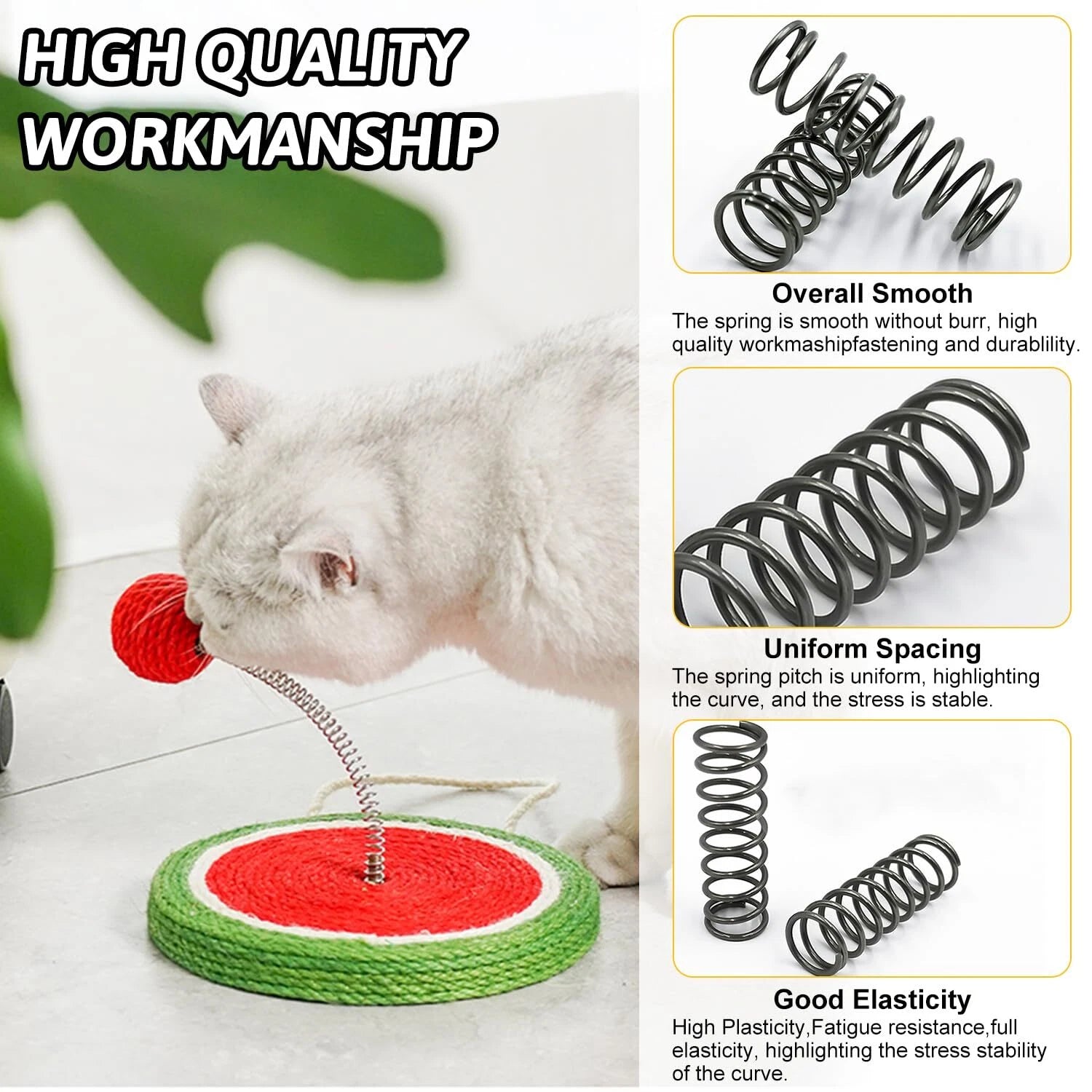
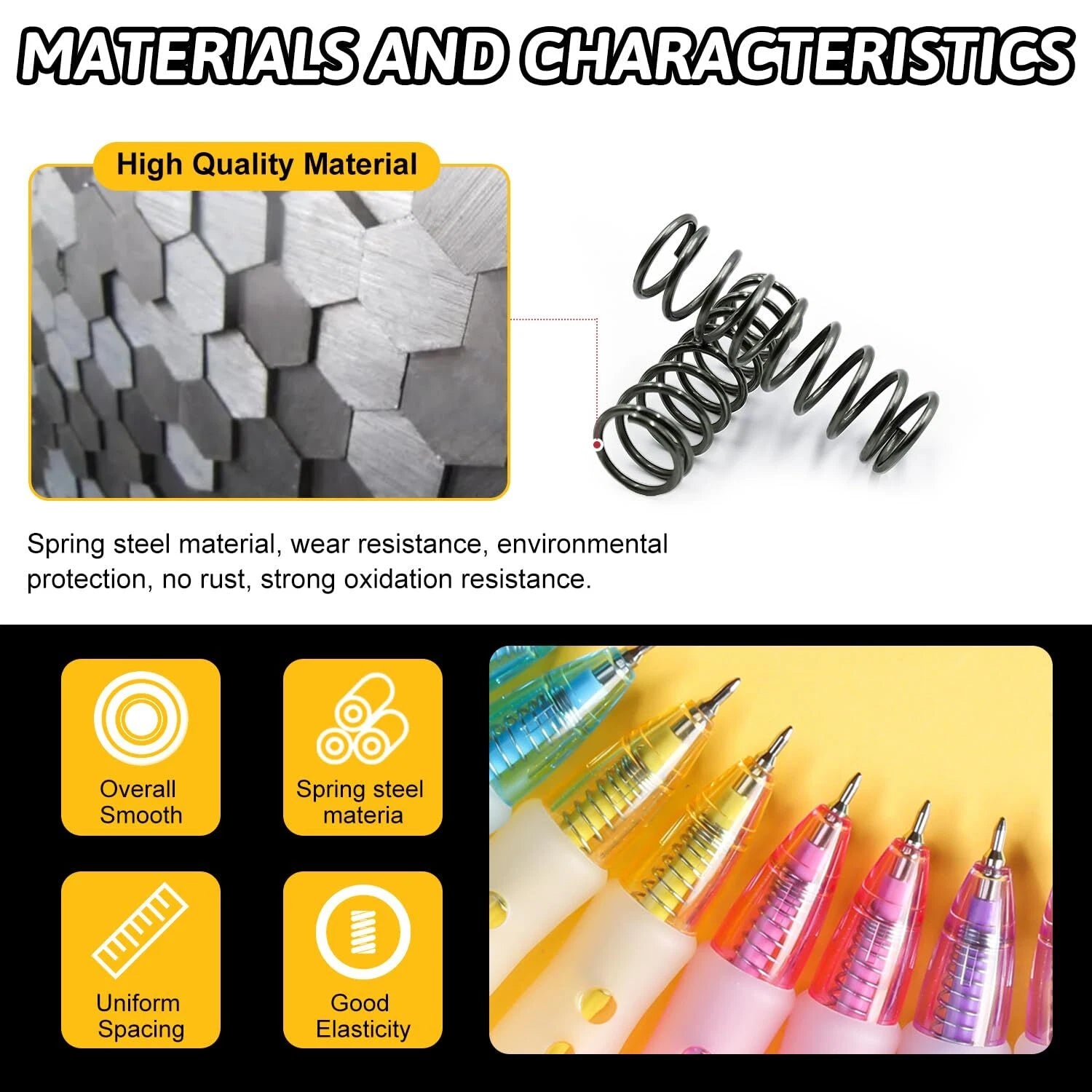

80mm Long Compression Spring 3mm - 30mm Diameter,Pressure- coiled springs

No reviews

Price:
Sale price$3.71 USD
Stock:
In stock (500 units), ready to be shipped

Payment & Security

Ach Direct Debit Amazon American Express Apple Pay Bancontact BLIK Diners Club Discover EPS Google Pay iDEAL Wero JCB Maestro Mastercard Multibanco MobilePay PayPal Przelewy24 Shop Pay Twint Union Pay USDC Visa

Your payment information is processed securely. We do not store credit card details nor have access to your credit card information.

Limited Offer — Spend More, Save More
Spend $55+
Save $5
Spend $100+
Save $10
Spend $200+
Save $25
HomeDIYer DIY Expert Support

DIY Expert Support

Get fitment advice & recommendations

Mon–Fri  8:30 AM – 8:00 PM
24-Hour Fast Ship
Arrives in 3–14 Days
Worldwide Shipping
30-Day Returns
1 tree planted with every purchase

Description

80mm Compression Springs — Reliable Coil Force for Every Repair & Build

When a drawer stops closing flush, a valve loses its return force, or a DIY mechanism needs consistent push-back, the culprit is almost always a worn or incorrectly sized compression spring. Whether you are a home repair enthusiast, a mechanical hobbyist, or a small-batch manufacturer, finding the exact coil diameter and wire gauge in one place saves hours of searching.

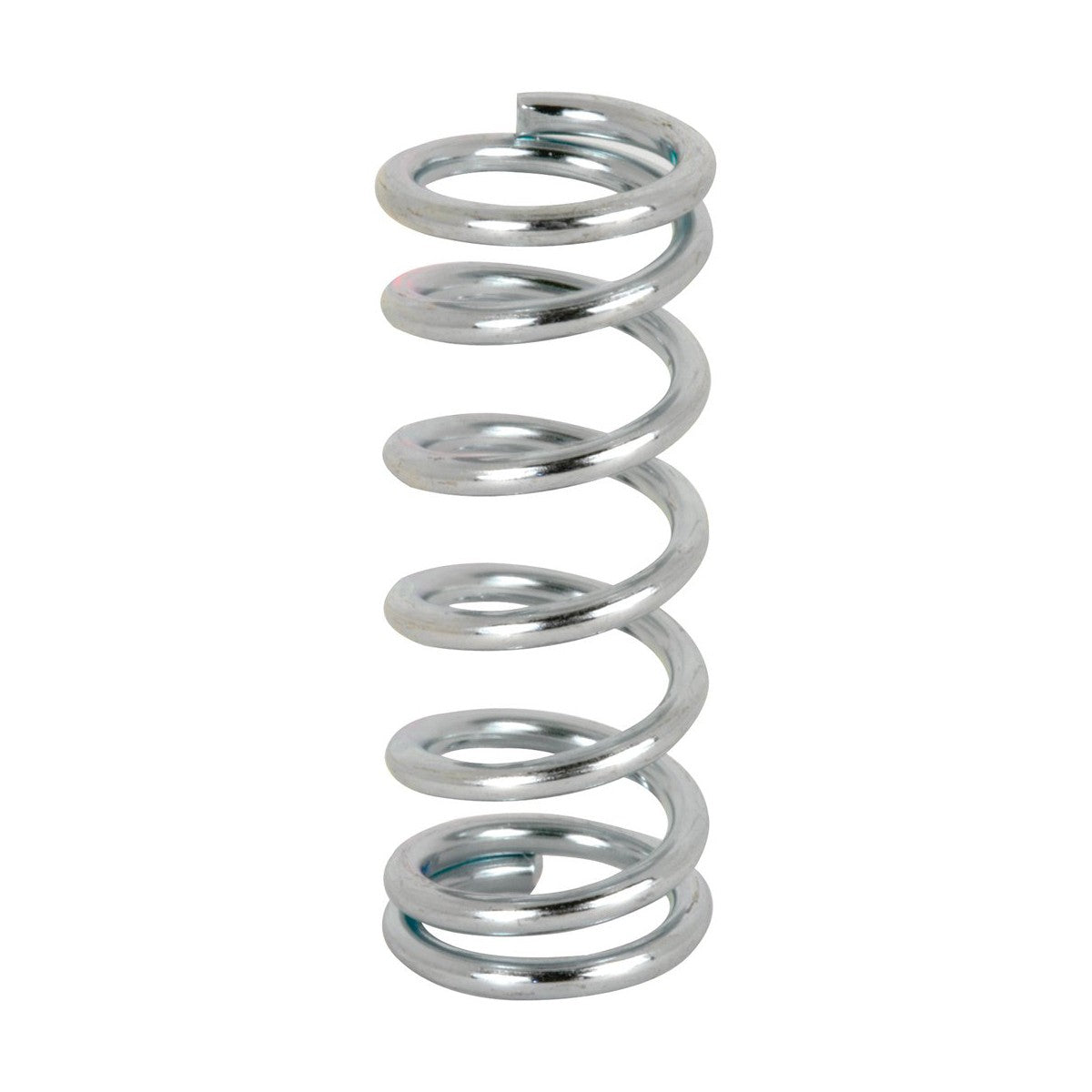
These 80 mm (≈ 3.15 in) long compression springs are wound from round wire and are available in three materials — spring steel, stainless steel, and zinc-plated carbon steel — with wire diameters ranging from 0.5 mm to 1.8 mm (0.020–0.071 in) and coil outer diameters from 3 mm to 30 mm (0.12–1.18 in). Pack sizes range from 1 pc to 5 pcs per order, letting you stock exactly what you need.

Typical applications include furniture hardware and drawer slides, automotive and motorcycle valve assemblies, pneumatic and hydraulic control valves, electronic enclosure latches, and custom jigs or fixtures in workshop settings — all scenarios where a consistent, repeatable spring force is essential.

⚙️ Compatible with standard spring seats and bores sized to match the selected outer diameter. Verify bore clearance and seat depth before ordering. See variant options for exact dimensions.

✅ Key Features of These 80mm Compression Springs

  • 📏 Fixed 80 mm Free Length — Consistent uncompressed length of 80 mm (3.15 in) across all variants, making replacement and pairing straightforward.
  • 🔩 Wide Diameter Range — Outer coil diameters from 3 mm to 30 mm (0.12–1.18 in) cover the majority of standard spring seats found in furniture, appliances, and light machinery.
  • 🧵 Multiple Wire Gauges — Wire diameters from 0.5 mm to 1.8 mm let you tune spring rate: thinner wire for lighter loads, thicker wire for heavier compression duty.
  • 🛡️ Three Material Options — Spring steel for general-purpose use, stainless steel for corrosion-sensitive environments (marine, food-adjacent, outdoor), and zinc-plated carbon steel for a cost-effective corrosion barrier in dry indoor settings.
  • 📦 Flexible Pack Quantities — Available in 1 pc, 2 pcs, or 5 pcs per order so you can buy a single replacement or keep spares on hand without over-ordering.
  • 🔄 Closed & Ground Ends — Flat, closed ends provide stable seating on flat surfaces and reduce lateral deflection during compression, extending service life in repetitive-cycle applications.

📐 Technical Specifications — Compression Springs

Free Length 80 mm (3.15 in)
Wire Diameter 0.5 mm – 1.8 mm (0.020 – 0.071 in) — See variant options
Outer Diameter 3 mm – 30 mm (0.12 – 1.18 in) — See variant options
Material Spring steel / Stainless steel / Zinc-plated carbon steel — See variant options
Pack Quantity 1 pc / 2 pcs / 5 pcs — See variant options
End Type Closed & ground (flat ends)
Spring Type Compression (push / return force)
Wind Direction Right-hand
Surface Finish Natural (spring steel), Bright (stainless steel), Zinc-plated (carbon steel)
Operating Temperature Spring steel: typically –20 °C to +120 °C; Stainless steel: typically –60 °C to +200 °C

❓ Frequently Asked Questions

How do I choose the right outer diameter for my application?

Measure the bore or housing that the spring sits inside, then select an outer diameter (OD) that is 0.5–1 mm smaller than the bore for a sliding fit. If the spring sits over a rod or pin, measure the rod diameter and choose an inner diameter (ID = OD minus twice the wire diameter) that clears the rod by at least 0.5 mm. Use the variant selector to match your measured bore or rod size.

What is the difference between spring steel and stainless steel for these springs?

Spring steel (high-carbon steel) offers a higher spring rate per unit of wire diameter and is the standard choice for dry, indoor environments where corrosion is not a concern. Stainless steel costs more but resists rust, salt spray, and mild chemical exposure, making it the better choice for outdoor fixtures, marine hardware, food-processing equipment, or anywhere moisture is present. Zinc-plated carbon steel sits between the two: it provides a basic corrosion barrier at a lower cost than stainless, suitable for lightly humid indoor settings.

Will these springs lose their tension over time?

All metal springs experience a small amount of stress relaxation (set) over their service life, especially when compressed beyond their elastic limit. To maximise longevity, avoid compressing the spring to solid height (coil-bind) in normal operation. Stainless steel variants generally exhibit better fatigue resistance in cyclic applications compared to plain carbon spring steel.

Can I use these springs outdoors or in wet environments?

For outdoor or wet environments, select the stainless steel variants. The zinc-plated option provides limited corrosion protection and is best suited to dry or lightly humid indoor use. Spring steel without a protective coating will rust if exposed to moisture and is not recommended for outdoor applications.

How do I calculate the spring rate (stiffness) for my project?

Spring rate (k) is determined by wire diameter (d), coil outer diameter (D), number of active coils (n), and the shear modulus of the material. The formula is k = (G × d⁴) / (8 × D³ × n). Because the number of active coils varies by variant, contact us with your required load and deflection values and we can help confirm the best wire gauge and diameter combination for your load case.

What pack size should I order for a repair job?

For a single repair where you know the exact spring that failed, a 1 pc or 2 pcs pack is sufficient. If you are servicing multiple units of the same product (e.g., a set of drawers or a batch of valves), the 5 pcs pack offers a lower per-unit cost and leaves you with spares for future maintenance. For workshop stock or prototyping, the 5 pcs pack is the most practical choice.

🛒 Select your Length, Wire Diameter, Coil Diameter, Material, and Quantity above, then add to cart.

You may also like

Recently viewed