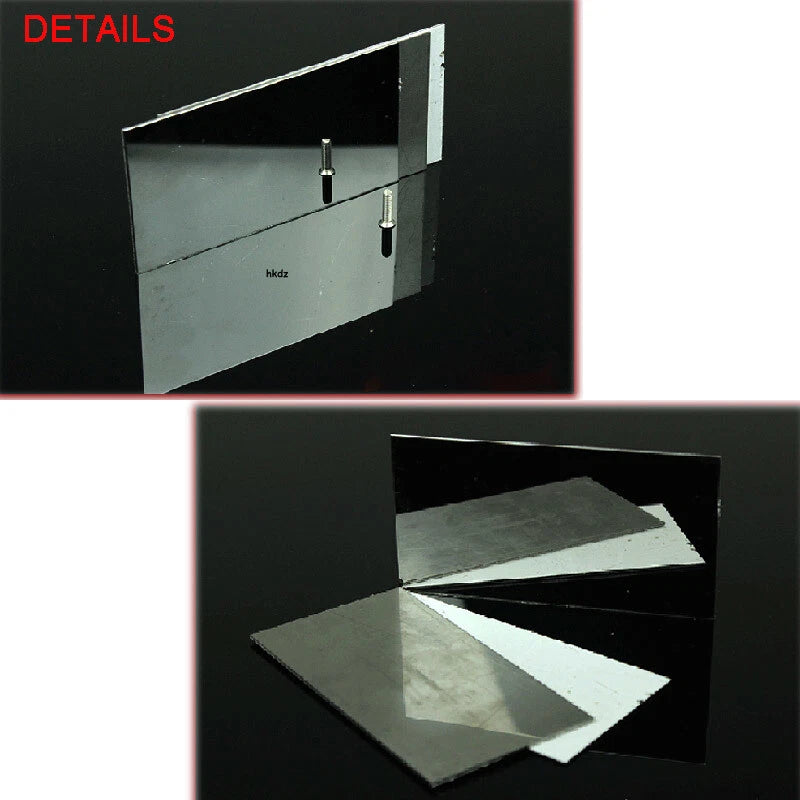
Thick 1mm-3mm 8K Mirror Stainless Steel Sheet Polished Bright Plate 100*100mm

No reviews

Price:
Sale price$19.99 USD
Stock:
In stock (500 units), ready to be shipped

Payment & Security

Ach Direct Debit Amazon American Express Apple Pay Bancontact Diners Club Discover Google Pay iDEAL Wero Mastercard PayPal Shop Pay USDC Visa

Your payment information is processed securely. We do not store credit card details nor have access to your credit card information.

Quantity Discount Promotion
🎯 BULK DISCOUNT: Buy More, Save More!
Buy 2 Items
5% OFF
Buy 4 Items
10% OFF
Buy 6 Items
15% OFF
Expert

DIY Expert Support

Get fitment advice & recommendations

Mon-Fri, 8:30AM-8PM
24-Hour Fast Ship
🚚
Arrives in 3-14 days
🌍
Global Reach
↩️
30-Day Returns
🌱 1 tree planted with every purchase

Description

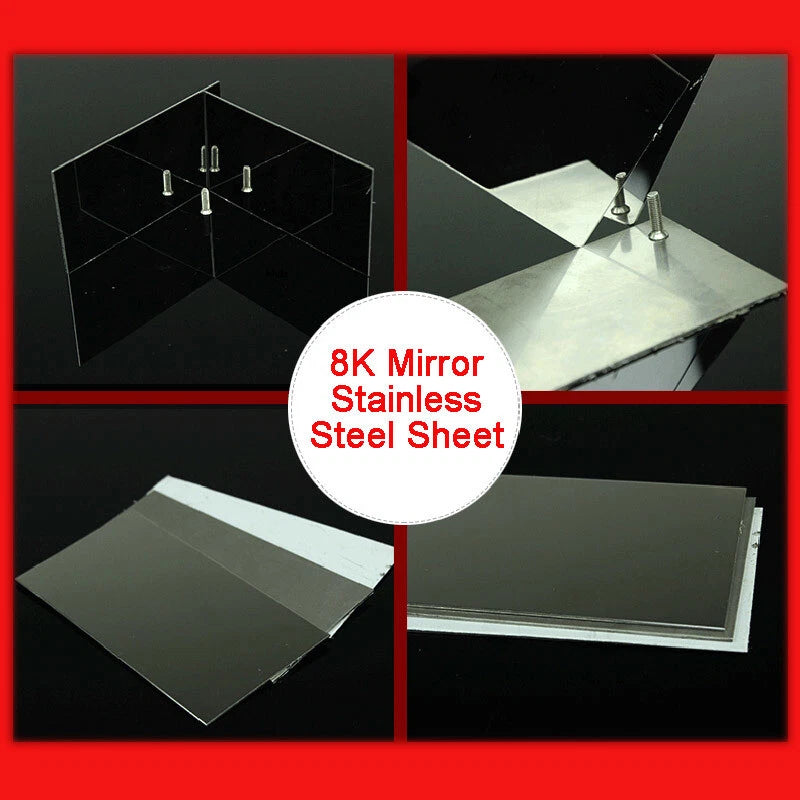
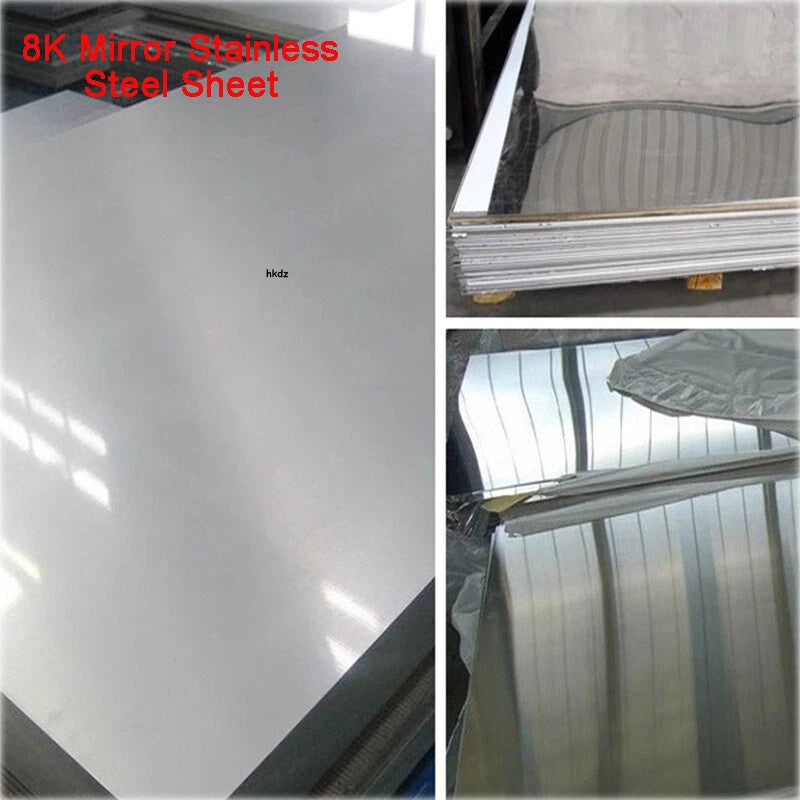
8K Mirror Stainless Steel Sheet — Polished Bright Plate for Decorative, Architectural & Fabrication Use

When a project calls for a reflective metal surface that holds its finish, resists fingerprints better than raw steel, and cuts cleanly without delaminating, most fabricators and interior designers find that standard brushed or mill-finish sheet simply doesn’t deliver. These 8K mirror stainless steel sheets are polished to a near-perfect reflective finish — the highest standard grade in stainless steel surface finishing — making them the go-to choice for makers, metalworkers, and designers who need both function and appearance in one material.

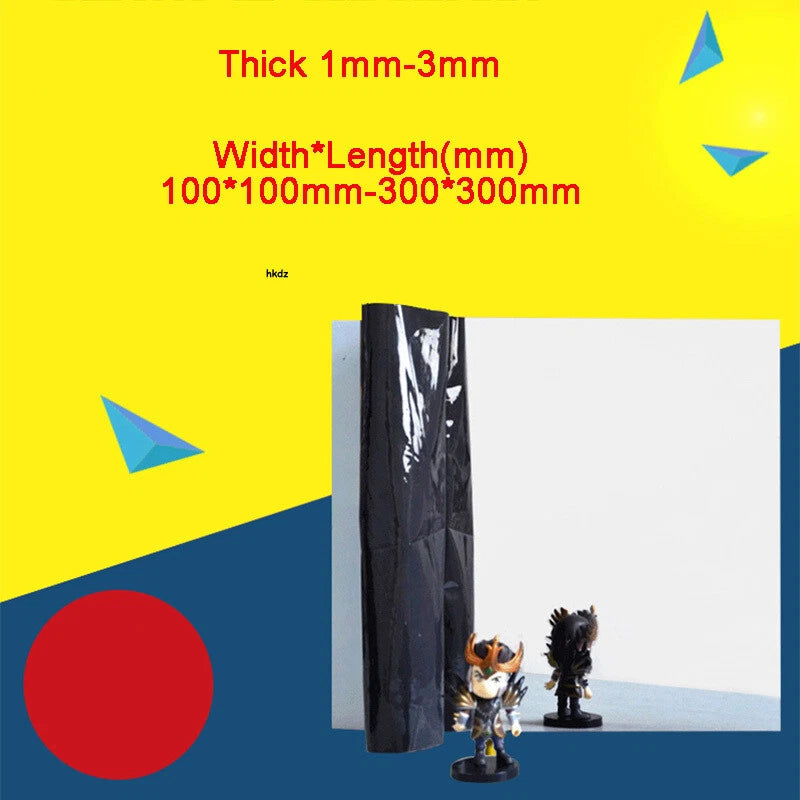
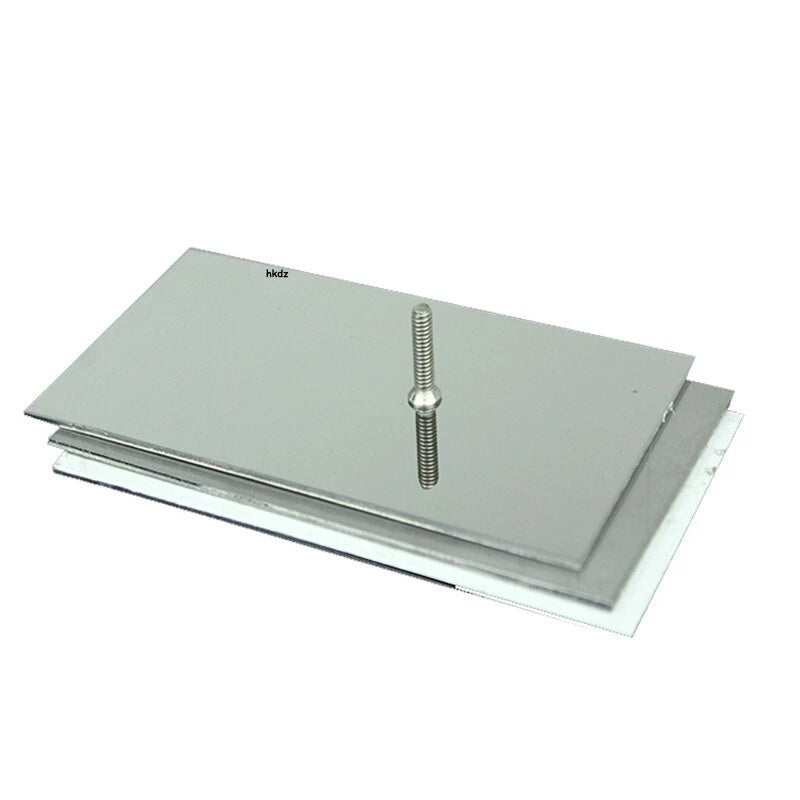
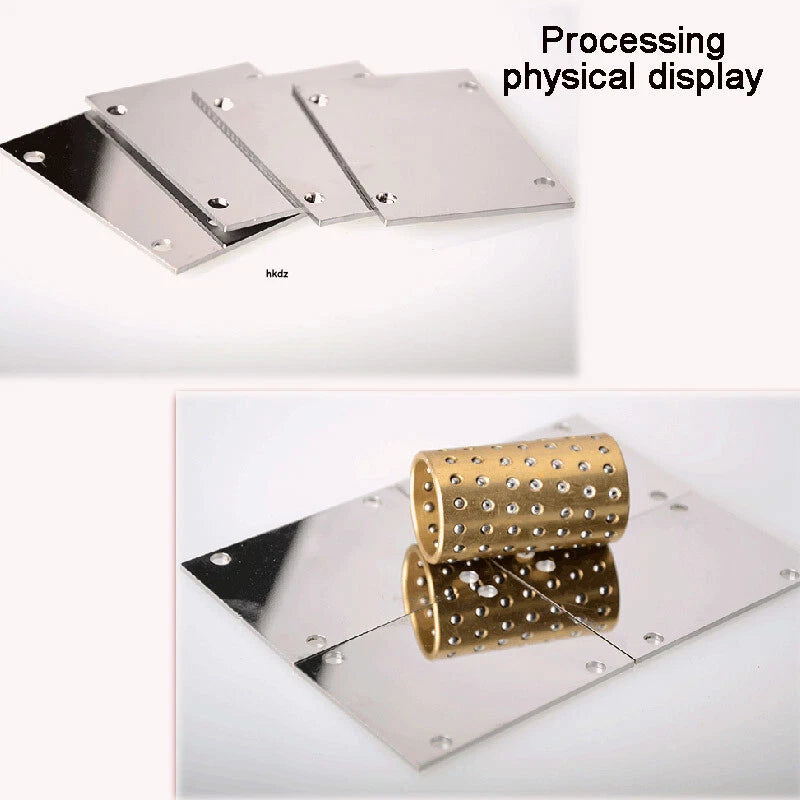
Each panel is a single-layer flat sheet of Grade 304 stainless steel with an 8K mirror polish applied to one face. Thickness options are 1 mm, 1.5 mm, 2 mm, and 3 mm. Panel sizes range from compact 100 mm × 100 mm squares (approximately 3.9" × 3.9") up to 100 mm × 200 mm (approx. 3.9" × 7.9"), 200 mm × 200 mm (approx. 7.9" × 7.9"), and 300 mm × 300 mm (approx. 11.8" × 11.8"). Quantity options per order range from 1 to 10 pieces depending on the size-thickness combination selected.

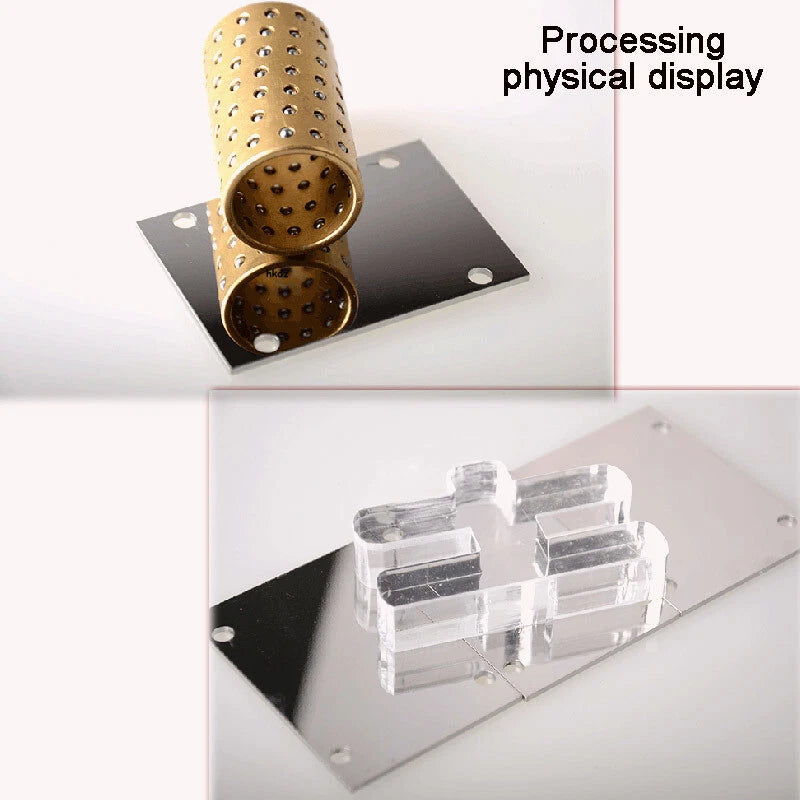
Typical applications include decorative wall cladding panels and elevator interior liners where a mirror-like surface is specified, custom kitchen backsplash tiles and range hood facings, jewelry display fixtures and retail shelving accents, and precision-cut blanks for laser engraving or etching where a polished base surface is required. The 8K finish is also widely used for architectural column wraps and signage backing where maximum reflectivity is needed.

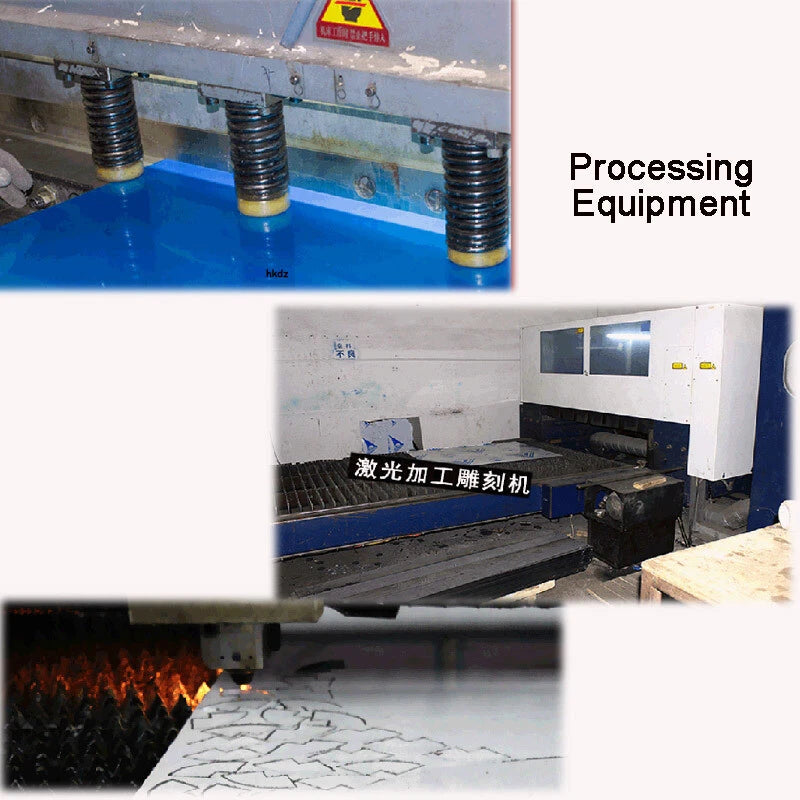
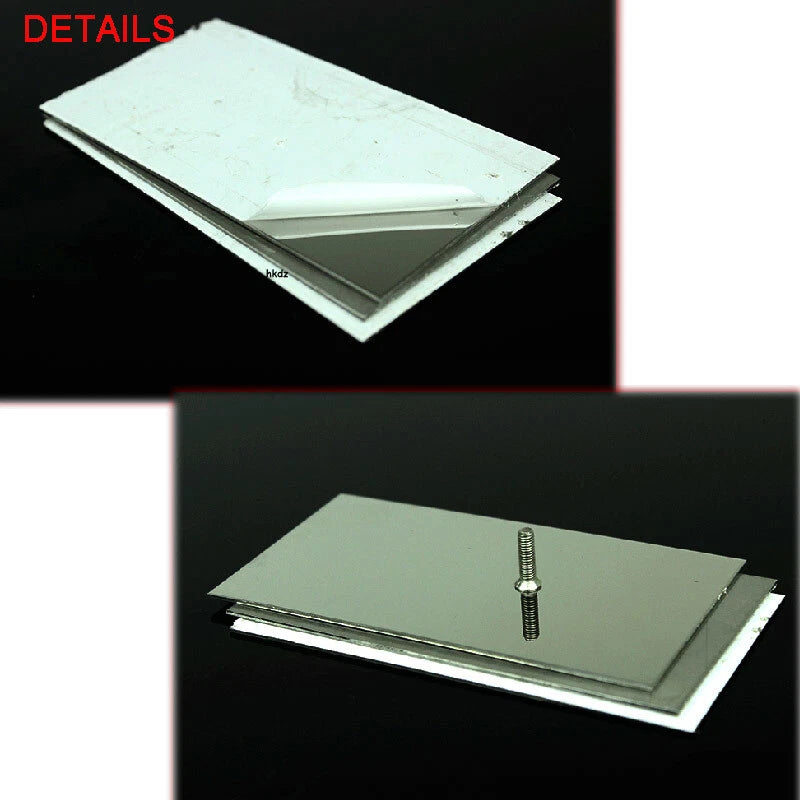
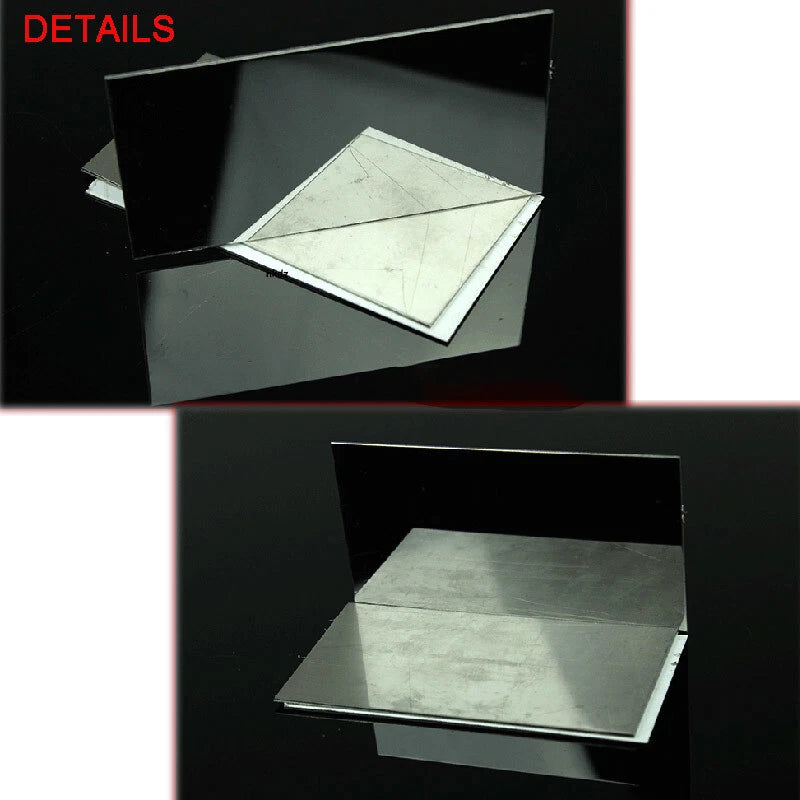
🔧 Compatibility note: These sheets have an 8K mirror polish on one face; the reverse face is mill finish. They are compatible with laser cutting, waterjet cutting, and careful shearing. Avoid abrasive cutting methods on the polished face. Verify your required thickness, panel size, and quantity combination in the variant selectors before ordering.

✅ Key Features of These 8K Mirror Stainless Steel Sheets

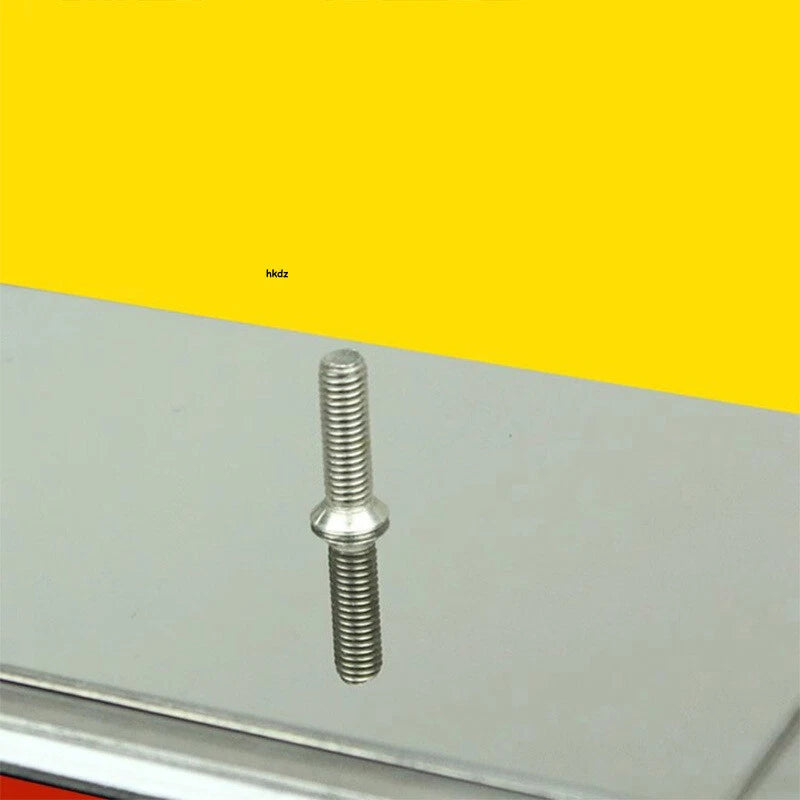
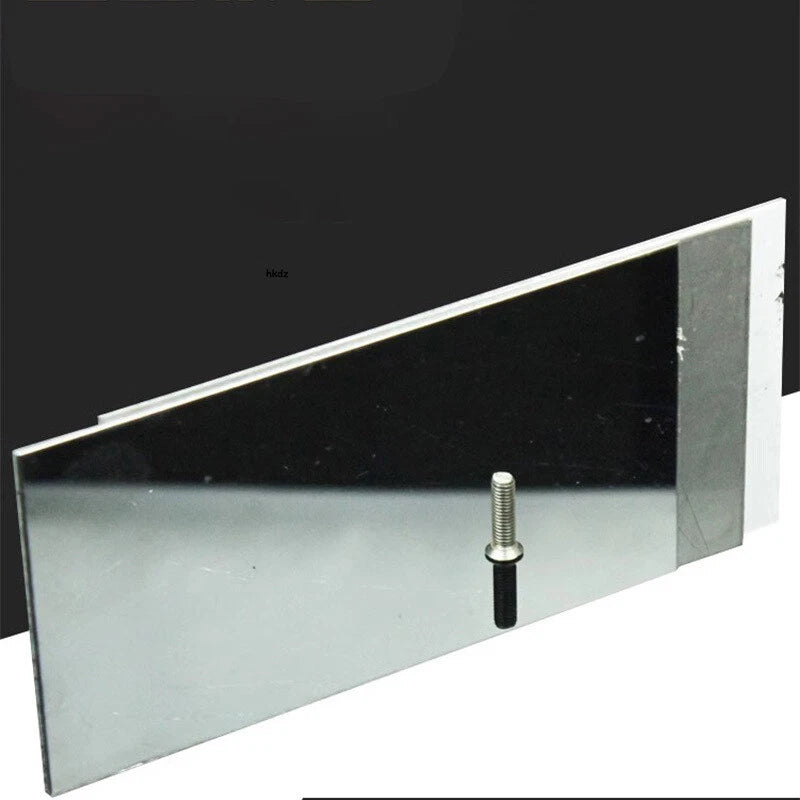
  • 🪞 True 8K mirror polish — The 8K designation indicates a surface roughness of Ra ≤ 0.05 µm, achieved through progressive buffing with increasingly fine abrasive compounds. The result is a near-perfect reflective surface comparable to a glass mirror, with no visible grain lines.
  • 🛡️ Grade 304 stainless steel base — The 18% chromium / 8% nickel composition provides the corrosion resistance and structural integrity expected of 304 stainless, while the polished surface adds an additional barrier against surface oxidation and staining.
  • 📐 Multiple thickness and panel size options — Four thickness options (1–3 mm) and four panel sizes (100×100 mm to 300×300 mm) in a single listing let you match the sheet to your project’s structural and dimensional requirements without ordering oversized stock.
  • ✂️ Laser and waterjet cuttable — All thickness variants are compatible with laser cutting and waterjet cutting, which preserve the polished face without introducing abrasive scratches. For thinner gauges (1–1.5 mm), careful shearing with a clean blade is also viable.
  • 🧹 Fingerprint-resistant with proper handling — The dense, smooth 8K surface is easier to wipe clean than brushed finishes. Use a microfiber cloth with a stainless steel cleaner or isopropyl alcohol to restore full reflectivity after handling. Avoid steel wool or abrasive pads.
  • 🏗️ Suitable for interior architectural applications — At 1–3 mm thickness, these panels are rigid enough for wall cladding, column wraps, and decorative insets without requiring a backing substrate for most applications, while remaining light enough to handle and position by one person.

📐 Technical Specifications — 8K Mirror Polished Stainless Steel Sheet

Material Grade 304 Stainless Steel (18/8)
Surface Finish 8K mirror polish (one face); mill finish (reverse face)
Surface Roughness Ra ≤ 0.05 µm (8K standard)
Available Thickness 1 mm, 1.5 mm, 2 mm, 3 mm (see variant options)
Available Panel Sizes (W × L) 100×100 mm, 100×200 mm, 200×200 mm, 300×300 mm
Quantity per Order 1–10 pieces (see variant options for available combinations)
Chromium Content 17.5–19.5%
Nickel Content 8.0–10.5%
Density Approx. 7.93 g/cm³
Tensile Strength Typically 515–620 MPa
Yield Strength Typically 205 MPa minimum
Magnetic Generally non-magnetic (annealed); may be slightly magnetic after cold working
Weldability Good — TIG/MIG with 308L filler; protect polished face during welding
Weight See variant options (varies by size and thickness)

❓ Frequently Asked Questions

What does "8K mirror finish" actually mean, and how does it compare to 6K or BA finish?

The "K" number in stainless steel finishing refers to the number of polishing stages used. An 8K finish uses 8 progressive buffing steps, resulting in a surface roughness of Ra ≤ 0.05 µm — the smoothest commercially available stainless finish. A 6K finish (Ra ≤ 0.1 µm) is slightly less reflective with faint directional marks visible at certain angles. BA (Bright Annealed) is a rolled finish with good reflectivity but not as deep or distortion-free as 8K. For applications where mirror-quality reflection is required, 8K is the correct choice.

How do I cut these sheets without scratching the polished face?

Laser cutting and waterjet cutting are the safest methods — both work from above without contacting the polished surface with abrasives. If shearing thinner gauges (1–1.5 mm), apply a protective film or masking tape to the polished face before cutting. Avoid angle grinders with abrasive discs on the polished side; use a thin cutting disc on the reverse face only. Deburr cut edges with a fine file, working away from the polished face.

Will the mirror finish scratch easily during installation or use?

The 8K surface is harder than paint or anodized coatings but will scratch if contacted with abrasive materials. During handling and installation, keep the protective film (if supplied) in place until the panel is fully positioned. Use felt-backed clamps or suction cups rather than metal clamps directly on the polished face. Once installed, the surface resists normal cleaning contact but should not be scrubbed with steel wool, abrasive sponges, or harsh chemical cleaners.

Is Grade 304 stainless steel with an 8K finish suitable for outdoor use?

Grade 304 performs well in most outdoor atmospheric environments and resists rust in typical urban and suburban conditions. The polished 8K surface adds a slight additional barrier against surface oxidation. However, in coastal environments with direct saltwater exposure or high-chloride industrial atmospheres, Grade 316 stainless steel is recommended for long-term outdoor use. For indoor architectural applications, 304 with 8K finish is fully suitable.

How do I clean and maintain the mirror finish after installation?

For routine cleaning, wipe with a soft microfiber cloth dampened with warm water or isopropyl alcohol. For fingerprints and smudges, a dedicated stainless steel cleaner applied with a microfiber cloth restores full reflectivity. Always wipe in the same direction (if any grain is present) and avoid circular motions that can create visible swirl marks. Never use bleach-based cleaners, steel wool, or abrasive pads on the polished face.

Can I weld or bend these sheets without damaging the finish?

Cold bending is possible on 1–2 mm variants using a press brake with a polished or urethane-covered die to protect the mirror face. Tight bends (small radius) may cause surface stress marks on the polished side — test on a scrap piece first. Welding is feasible with TIG using ER308L filler, but the heat-affected zone will discolor and lose the mirror finish. Plan to re-polish or mask the weld area. For decorative applications, mechanical fastening (adhesive, rivets, or hidden clips) is preferred over welding.

How do I choose between 1 mm, 1.5 mm, 2 mm, and 3 mm thickness?

For decorative wall panels, backsplash tiles, and lightweight cladding that will be bonded to a substrate, 1–1.5 mm is sufficient and easier to cut and handle. For freestanding panels, column wraps, or applications where the sheet must be self-supporting without a backing board, 2–3 mm provides the rigidity needed to prevent oil-canning (surface waviness). For structural brackets or parts that will be drilled and fastened, 2–3 mm is recommended.

🛒 Select your Thickness, Panel Size, and Quantity above, then add to cart.

You may also like

Recently viewed