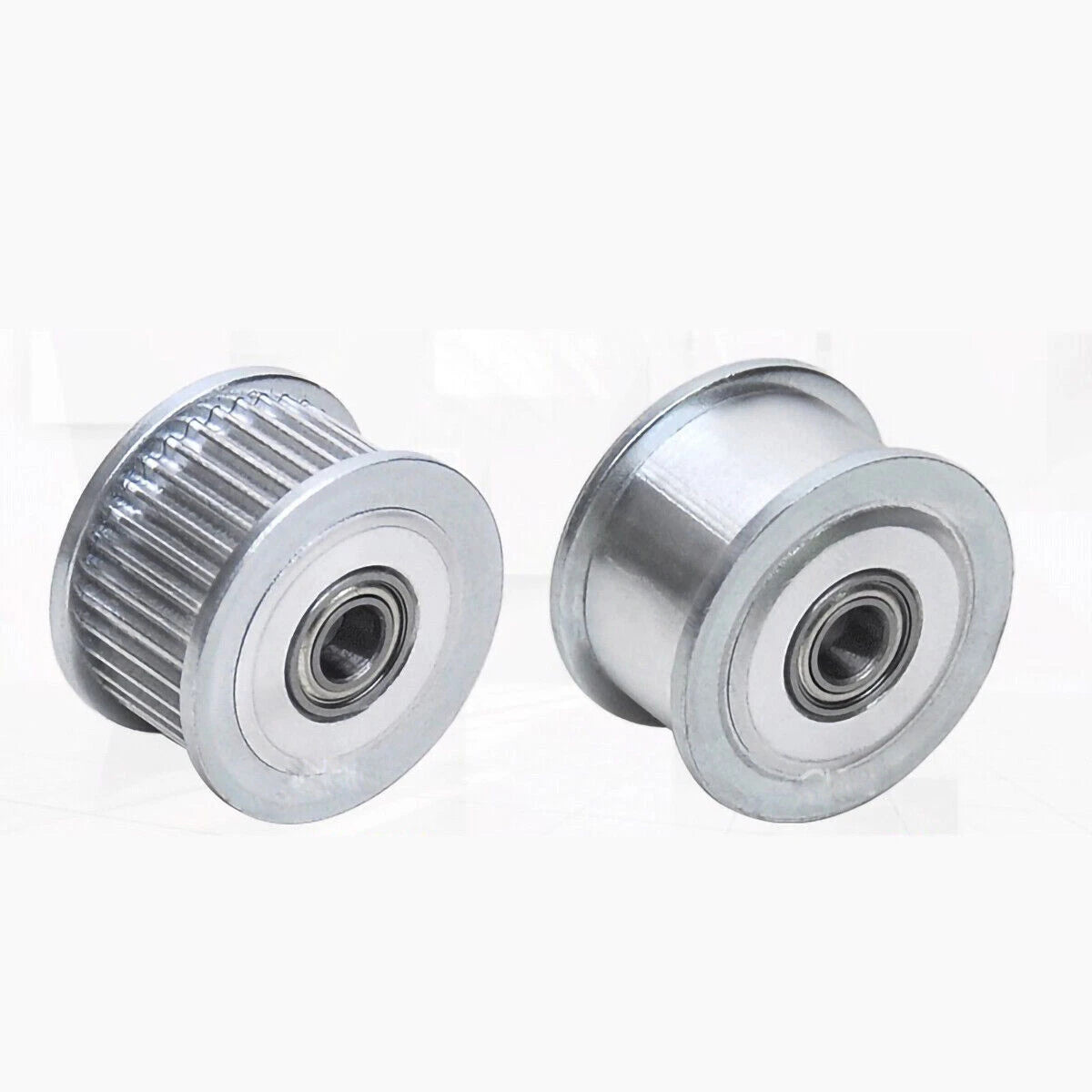
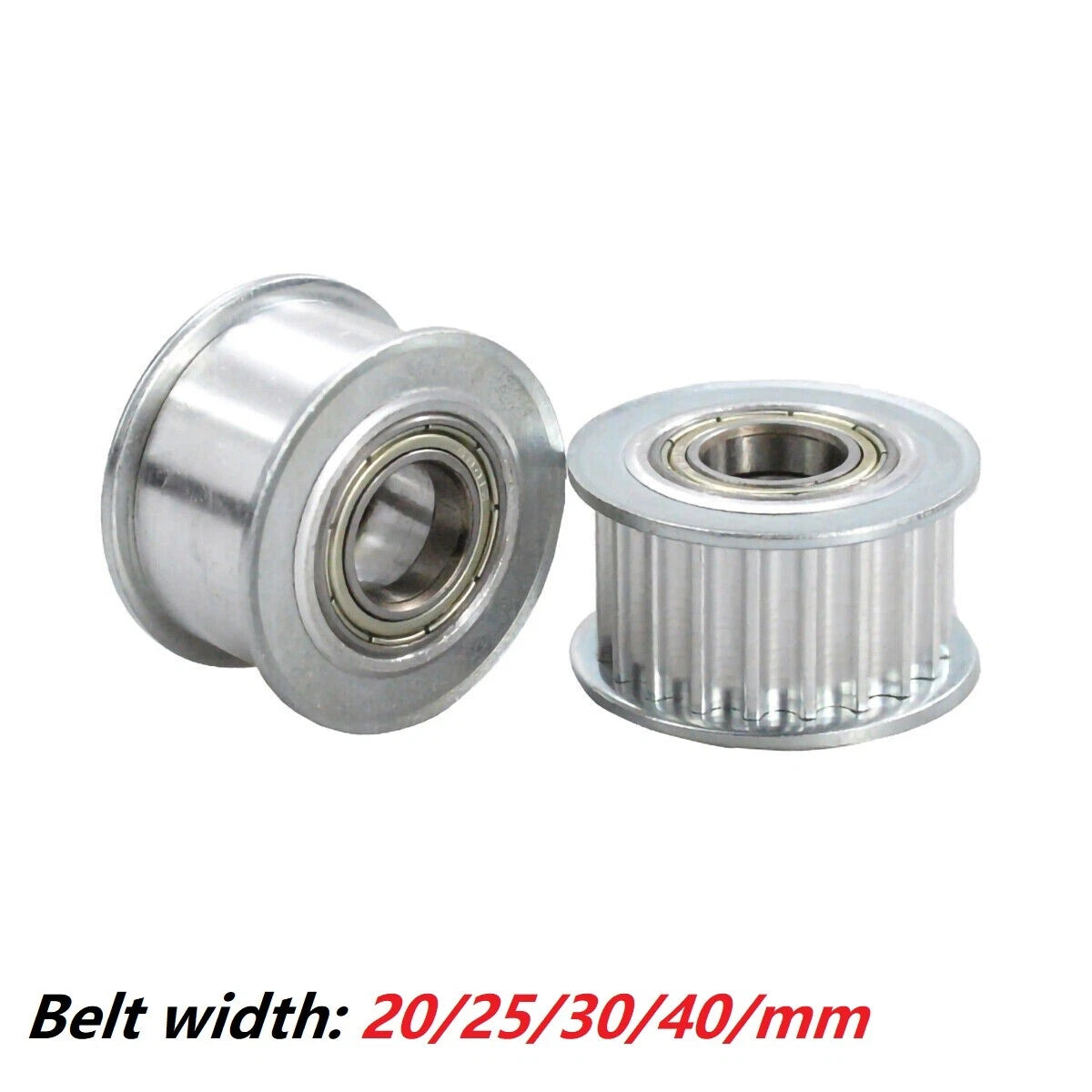
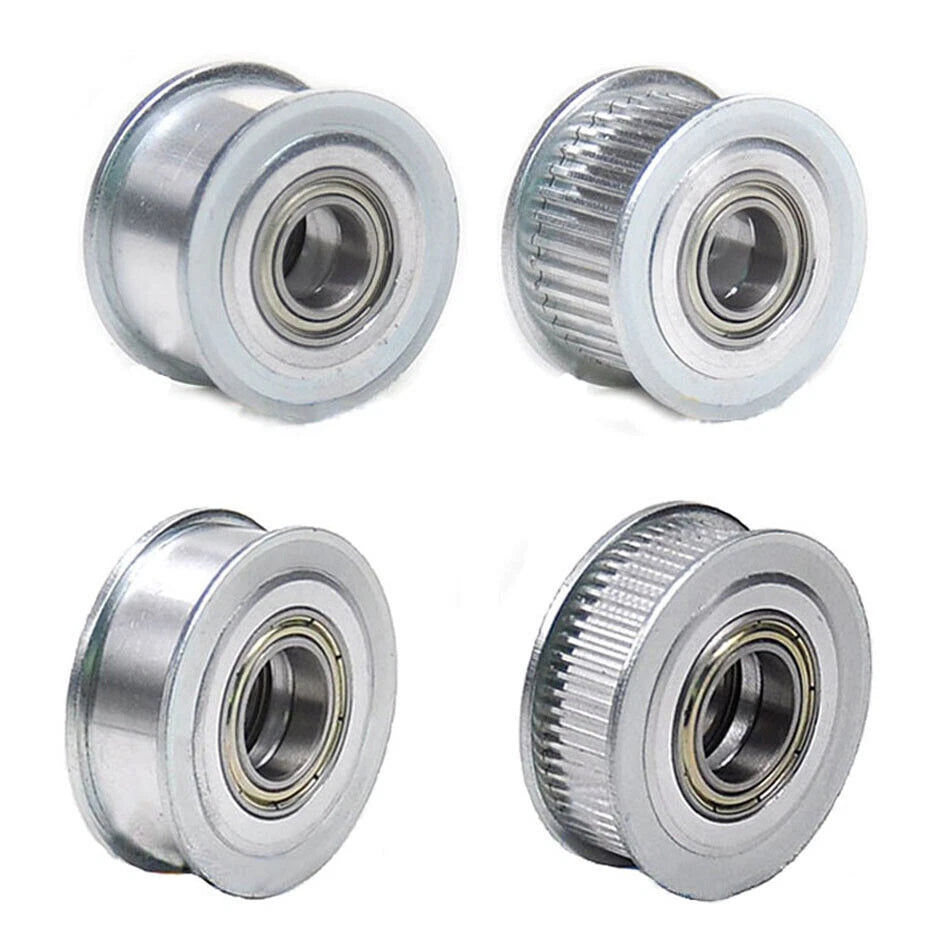
8M 20/25/30/40/mm Timing Belt Smooth Tooth Idler Drive Pulley 15 16 20 -30 Teeth

No reviews

Price:
Sale price$21.90 USD
Stock:
In stock (500 units), ready to be shipped

Payment & Security

Ach Direct Debit Amazon American Express Apple Pay Bancontact BLIK Diners Club Discover EPS Google Pay iDEAL Wero JCB Maestro Mastercard Multibanco MobilePay PayPal Przelewy24 Shop Pay Twint Union Pay USDC Visa

Your payment information is processed securely. We do not store credit card details nor have access to your credit card information.

Limited Offer — Spend More, Save More
Spend $55+
Save $5
Spend $100+
Save $10
Spend $200+
Save $25
HomeDIYer DIY Expert Support

DIY Expert Support

Get fitment advice & recommendations

Mon–Fri  8:30 AM – 8:00 PM
24-Hour Fast Ship
Arrives in 3–14 Days
Worldwide Shipping
30-Day Returns
1 tree planted with every purchase

Description

8M Timing Belt Idler Pulley — Reliable Tension Control for Synchronous Belt Drives

When your 8M synchronous belt drive loses tension or runs misaligned, the entire system suffers — skipped teeth, premature belt wear, and unpredictable motion. Engineers, makers, and workshop builders who rely on precise linear or rotary motion need an idler pulley that holds its position under load without adding backlash. These 8M timing belt idler pulleys are designed to slot into existing drive layouts and restore consistent belt tension with minimal setup effort.

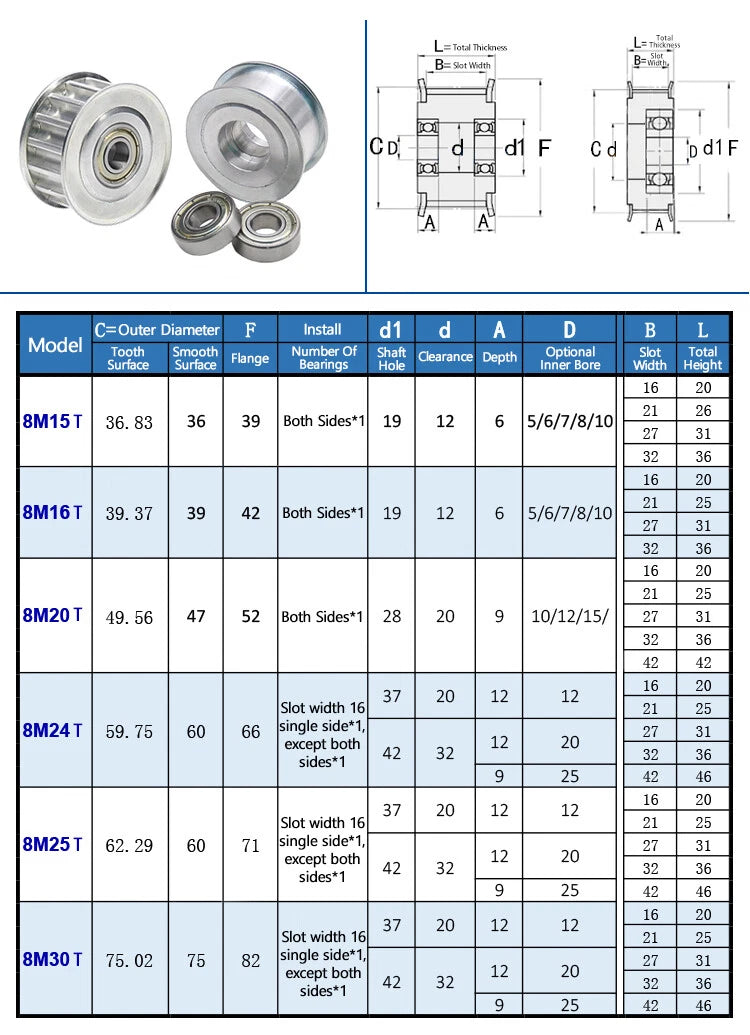
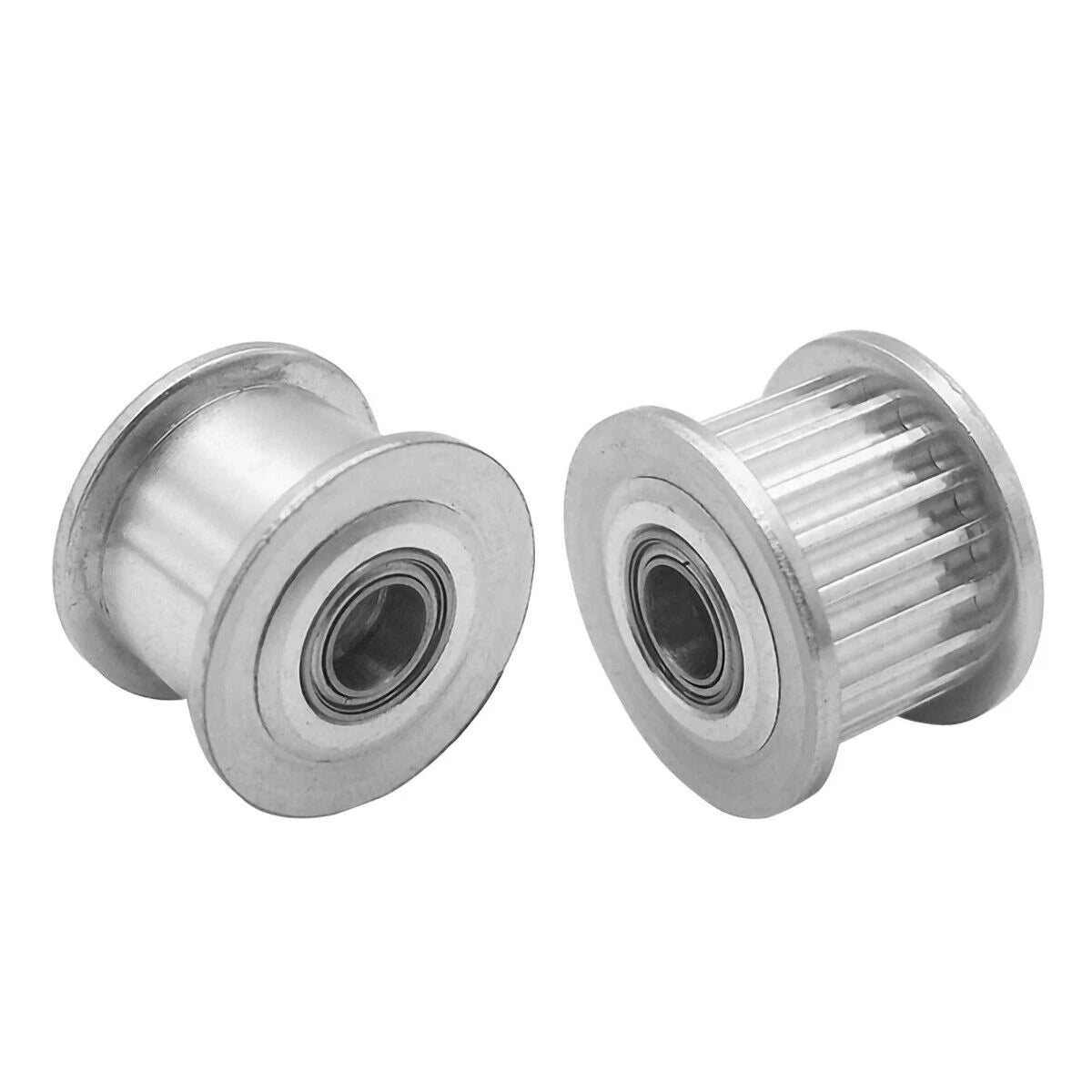
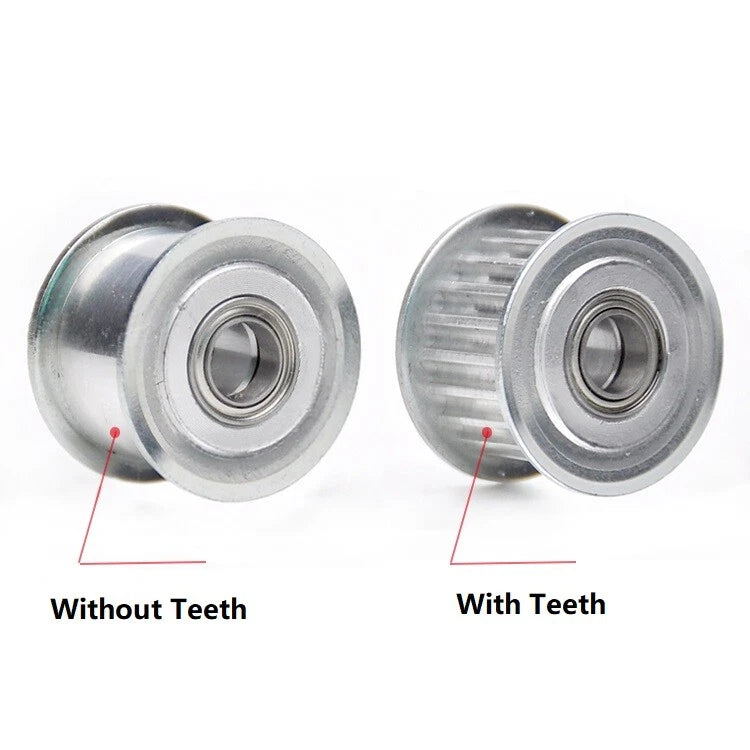
Each pulley is machined from aluminum alloy with a hard-anodized or natural finish, available in toothed (with teeth) and smooth (without teeth) face profiles. The toothed variants engage the belt directly for positive drive or re-routing, while the smooth variants act as pure tension idlers on the back face of the belt. Tooth counts range from 15T to 30T, belt width compatibility covers 20 mm (~0.79 in), 25 mm (~0.98 in), 30 mm (~1.18 in), and 40 mm (~1.57 in), and bore diameters span 5 mm to 25 mm to suit a wide range of shaft sizes.

Typical use cases include 8M belt-driven CNC router axes where a toothed idler re-routes the belt around a corner, 3D printer or laser cutter gantry systems using a smooth idler to maintain back-face tension, and industrial conveyor or packaging machine drives that require a fixed-position tensioner to compensate for belt stretch over time.

⚙️ Compatibility: Designed for standard 8M pitch synchronous timing belts. Toothed variants engage the toothed face; smooth variants contact the back face. Verify your belt width and shaft bore before ordering.

✅ Key Features of These 8M Timing Belt Idler Pulleys

🔩Two Face Profiles
Choose toothed (positive engagement on belt tooth face) or smooth (back-face tension idler) to match your drive layout without modifying the belt path.
📐Wide Size Matrix
Six tooth counts (15T, 16T, 20T, 24T, 25T, 30T) × four belt widths (20 / 25 / 30 / 40 mm) × bore options from 5 mm to 25 mm — one listing covers most 8M drive configurations.
🏗️Aluminum Alloy Construction
Lightweight yet rigid body keeps rotational inertia low, reducing dynamic load on bearings and motor shafts in high-cycle applications.
🎯Precision-Machined Bore
Bores are machined to close tolerance for a snug shaft fit. Pair with a set-screw collar or keyway shaft for secure axial retention.
🔄Drop-In Replacement Geometry
Standard 8M tooth profile (8 mm pitch, 3.4 mm tooth height) matches off-the-shelf 8M belts from major suppliers, simplifying maintenance and sourcing.
🛠️Versatile Application Range
Suitable for CNC machines, 3D printers, laser cutters, conveyor systems, and custom automation rigs where consistent belt tension is critical to positional accuracy.

📐 Technical Specifications — 8M Timing Belt Idler Pulley

Belt Pitch 8M (8 mm pitch)
Tooth Profile HTD 8M (curvilinear)
Available Tooth Counts 15T, 16T, 20T, 24T, 25T, 30T
Belt Width Compatibility 20 mm, 25 mm, 30 mm, 40 mm
Bore Diameter Range 5 mm – 25 mm (see variant options)
Face Type With teeth (toothed face) / Without teeth (smooth back-face)
Body Material Aluminum alloy
Finish See variant options
Flange See variant options
Weight See variant options

❓ Frequently Asked Questions

How do I choose between a toothed and a smooth idler pulley?

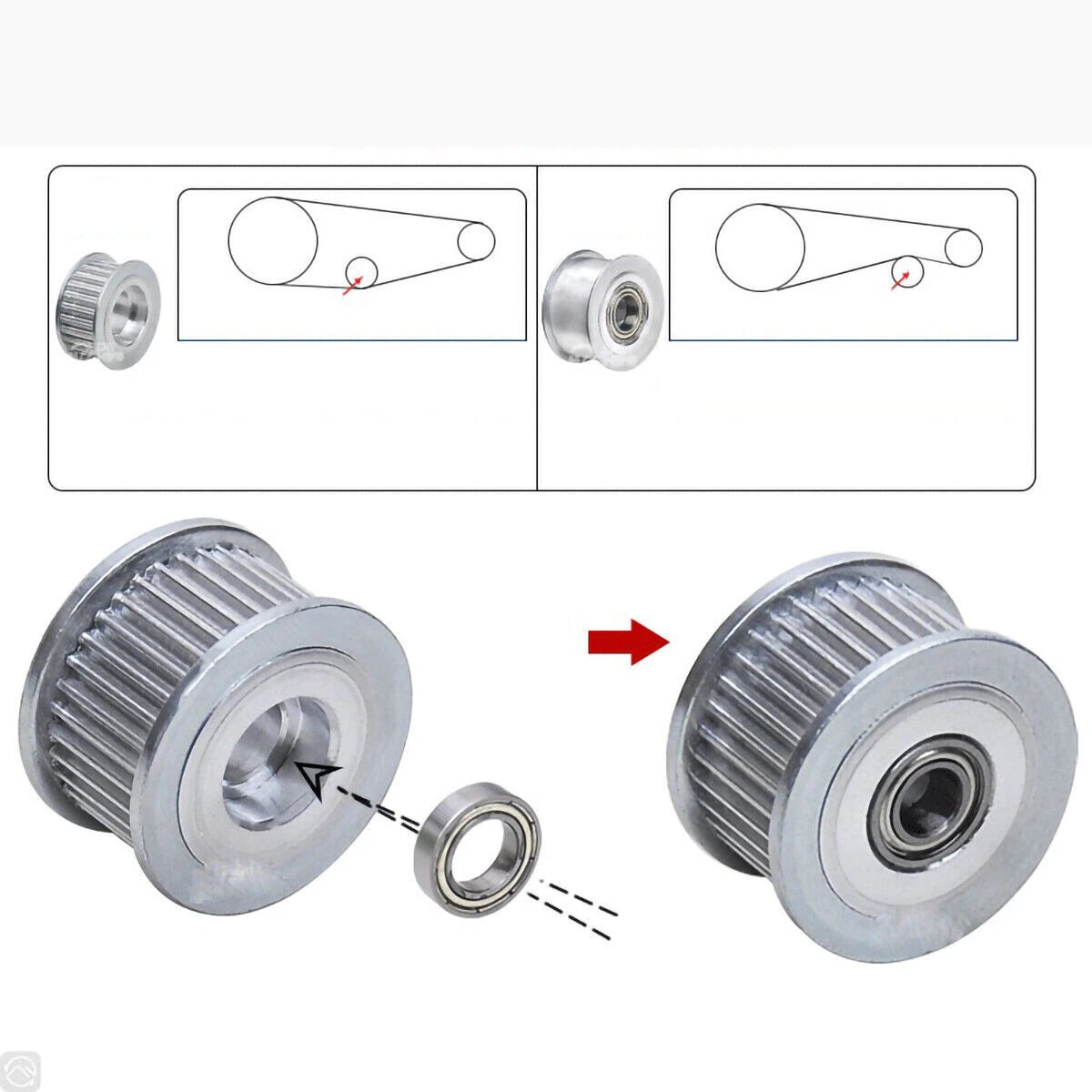
Use a toothed idler when you need the pulley to engage the tooth face of the belt — for example, to re-route the belt around a corner or to add a second drive point. Use a smooth idler when the pulley contacts the back (flat) face of the belt purely to maintain tension. Applying a toothed pulley to the back face can damage belt teeth over time.

Which tooth count should I select for my drive?

The idler tooth count affects the wrap angle and the minimum bend radius imposed on the belt. A larger tooth count (e.g., 24T or 30T) gives a gentler curve and is preferred for high-tension or high-speed drives. Smaller counts (15T or 16T) are compact and suit space-constrained layouts. Match the tooth count to your available mounting space and the belt manufacturer's minimum pulley diameter recommendation.

What bore size do I need?

Select the bore that matches your shaft diameter. Available bores range from 5 mm to 25 mm depending on the model and belt width combination. If your shaft uses a keyway, confirm the bore variant includes a keyway slot, or plan to use a set-screw collar for axial retention. Bore sizes are listed in the Product Type & Bore variant option.

Are these pulleys compatible with all 8M timing belts?

Yes — the tooth profile follows the standard HTD 8M curvilinear geometry (8 mm pitch, ~3.4 mm tooth height), which is compatible with 8M timing belts from all major belt manufacturers. Verify that your belt width matches the pulley's rated belt width (20, 25, 30, or 40 mm) to ensure the belt tracks correctly within the pulley flanges.

How durable are aluminum idler pulleys in continuous-duty applications?

Aluminum alloy pulleys perform well in light-to-medium duty continuous applications such as CNC routers, 3D printers, and packaging conveyors. For heavy industrial drives with high belt tension (above ~500 N) or abrasive environments, consider adding a bearing insert or selecting a steel pulley. In typical maker and automation lab conditions, aluminum idlers offer a good balance of weight, machinability, and service life.

Can I use these pulleys without a bearing?

These pulleys are supplied as bare pulleys (hub only) intended to be mounted on a fixed or rotating shaft. If you need the pulley to spin freely on a stationary shaft (as a true idler), you will need to press in or mount a suitable ball bearing (e.g., a standard metric deep-groove bearing matching the bore diameter) before installation. If the pulley is keyed to a rotating shaft, no bearing is required in the pulley itself.

What is the difference between the 20 mm, 25 mm, 30 mm, and 40 mm belt width variants?

The belt width dimension refers to the width of the timing belt the pulley is designed to guide. A wider belt carries more load and is used in higher-torque or higher-tension drives. Select the belt width that matches your existing belt. Using a pulley narrower than your belt will cause the belt to overhang the flanges; using one wider than your belt is generally acceptable but may reduce lateral guidance.

🛒 Select your Model, Belt Width, and Product Type & Bore above, then add to cart.

You may also like

Recently viewed