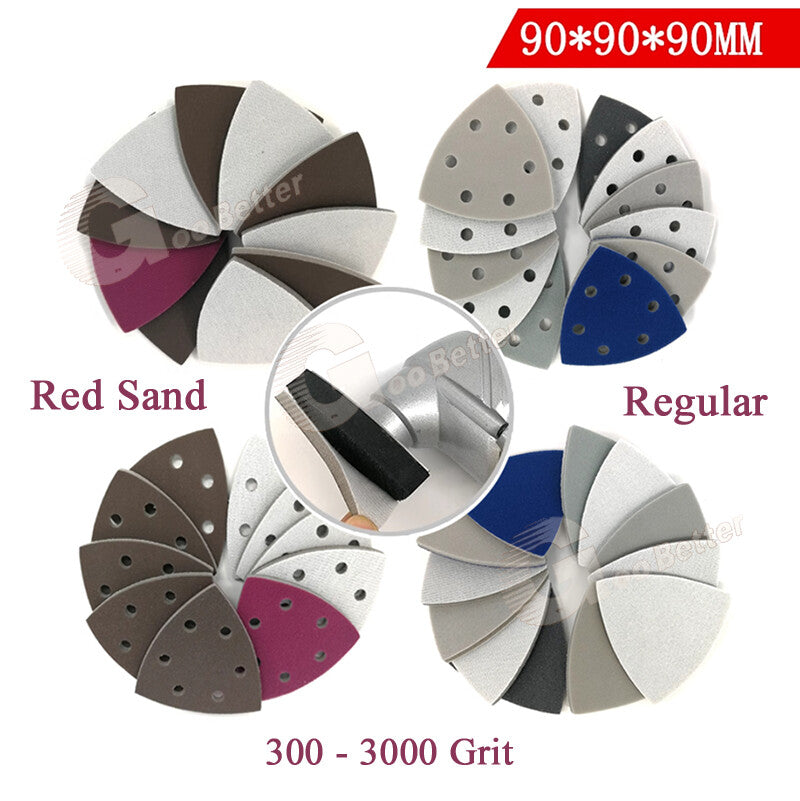
Q1. Can I use these triangular sponge sanding sheets with water? Will the abrasive wash off?
✅ Absolutely. These are specifically designed for wet & dry sanding. The waterproof resin bonding keeps the abrasive grains firmly attached even when submerged. Wet sanding reduces heat, prevents clogging, and produces a finer finish — especially on automotive paint, gelcoat, and metal. Rinse the pad frequently to maintain peak performance.
Q2. How do these compare to regular sandpaper or sanding sponges? Are they washable?
🔄 Unlike traditional paper‑backed sheets, the foam core is both flexible and durable. You can rinse out sanding dust and debris under a tap — the pad will recover much of its cutting ability. Many users report getting 3–5 times more use compared to non‑washable abrasives. The triangular shape is also superior for corners and intricate profiles.
Q3. What grit should I choose for my project? (300 to 3000?)
📊 300–600 grit: Rapid paint removal, wood shaping, and smoothing rough drywall.
800–1500 grit: General surface prep, between coats, sanding, removing light scratches.
2000–3000 grit: Final polishing, wet sanding clear coat, achieving a glossy finish on metal or resin. For best results, work through grits progressively.
Q4. Is the foam backing durable enough for metal or sharp edges?
⚙️ Yes. The high‑density foam provides excellent support while still conforming to contours. On sharp edges or heavy burrs, the abrasive will wear first — the foam is resilient and won't tear easily. For heavy deburring, start with a coarser grit (300–400) and let the sandpaper do the work. The sponge cushion also reduces the risk of "flat‑spotting" curved surfaces.
Q5. Can these be used on plastic, drywall, or fiberglass?
🧴 Definitely. They’re excellent on plastic (model kits, 3D prints), drywall compound, fiberglass, gelcoat, and even glass with fine grits. Wet sanding is recommended for plastics and fiberglass to prevent melting or static. The sponge's flexibility helps follow compound curves without scuffing adjacent areas.
Q6. Do these fit standard hook & loop sanders?
🛠️ These are primarily hand-sanding pads. However, with a triangular hook‑and‑loop interface pad (often sold separately for multi‑tools), they may be attached to oscillating tools. For hand use, they're ready to go — just grip and sand.