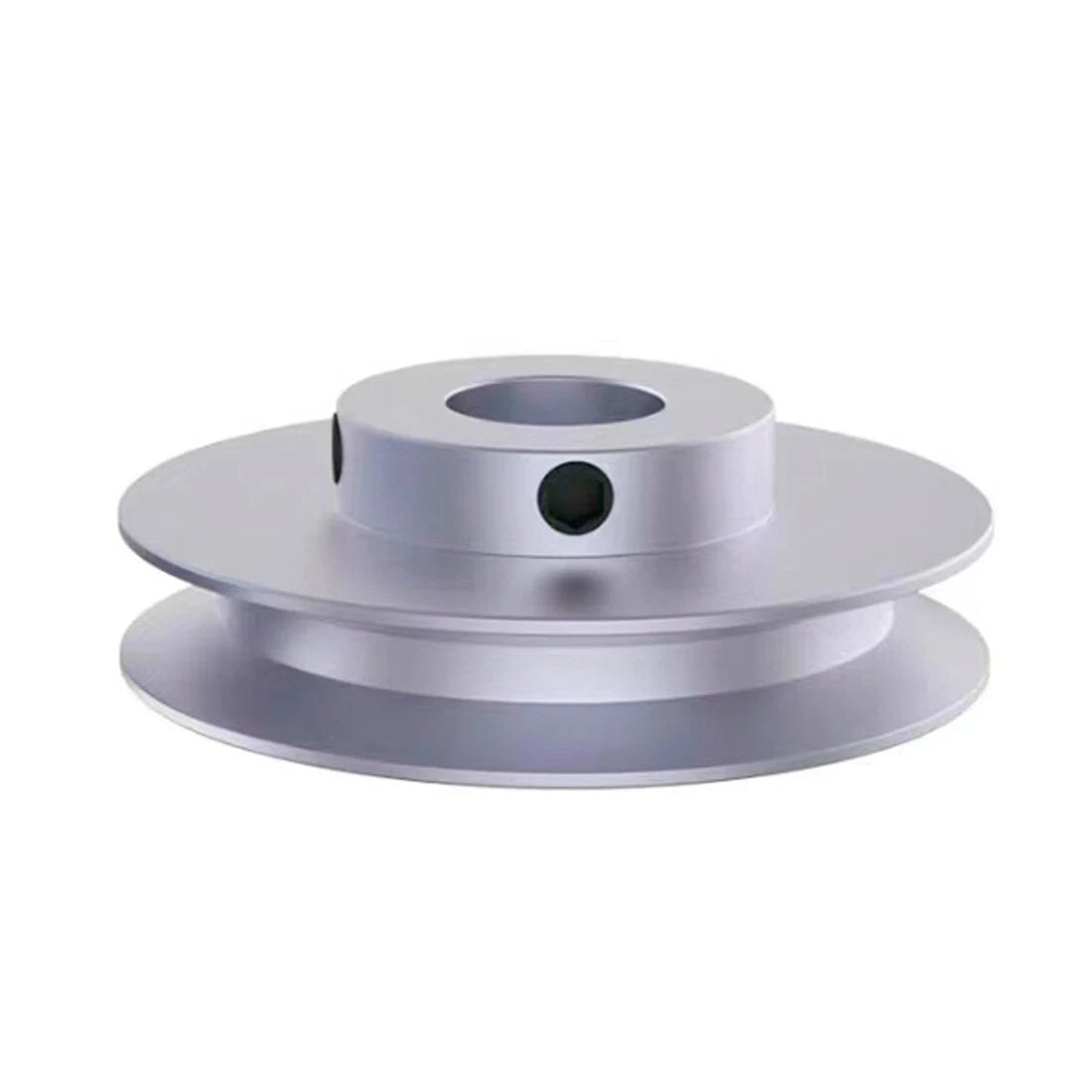
Aluminium Single-slot Belt Pulleys OD 40/50/60/80/100mm for A-type Triangle Belt

No reviews

Price:
Sale price$23.38 USD
Stock:
In stock (500 units), ready to be shipped

Payment & Security

Ach Direct Debit Amazon American Express Apple Pay Bancontact BLIK Diners Club Discover EPS Google Pay iDEAL Wero JCB Maestro Mastercard Multibanco MobilePay PayPal Przelewy24 Shop Pay Twint Union Pay USDC Visa

Your payment information is processed securely. We do not store credit card details nor have access to your credit card information.

Limited Offer — Spend More, Save More
Spend $55+
Save $5
Spend $100+
Save $10
Spend $200+
Save $25
HomeDIYer DIY Expert Support

DIY Expert Support

Get fitment advice & recommendations

Mon–Fri  8:30 AM – 8:00 PM
24-Hour Fast Ship
Arrives in 3–14 Days
Worldwide Shipping
30-Day Returns
1 tree planted with every purchase

Description

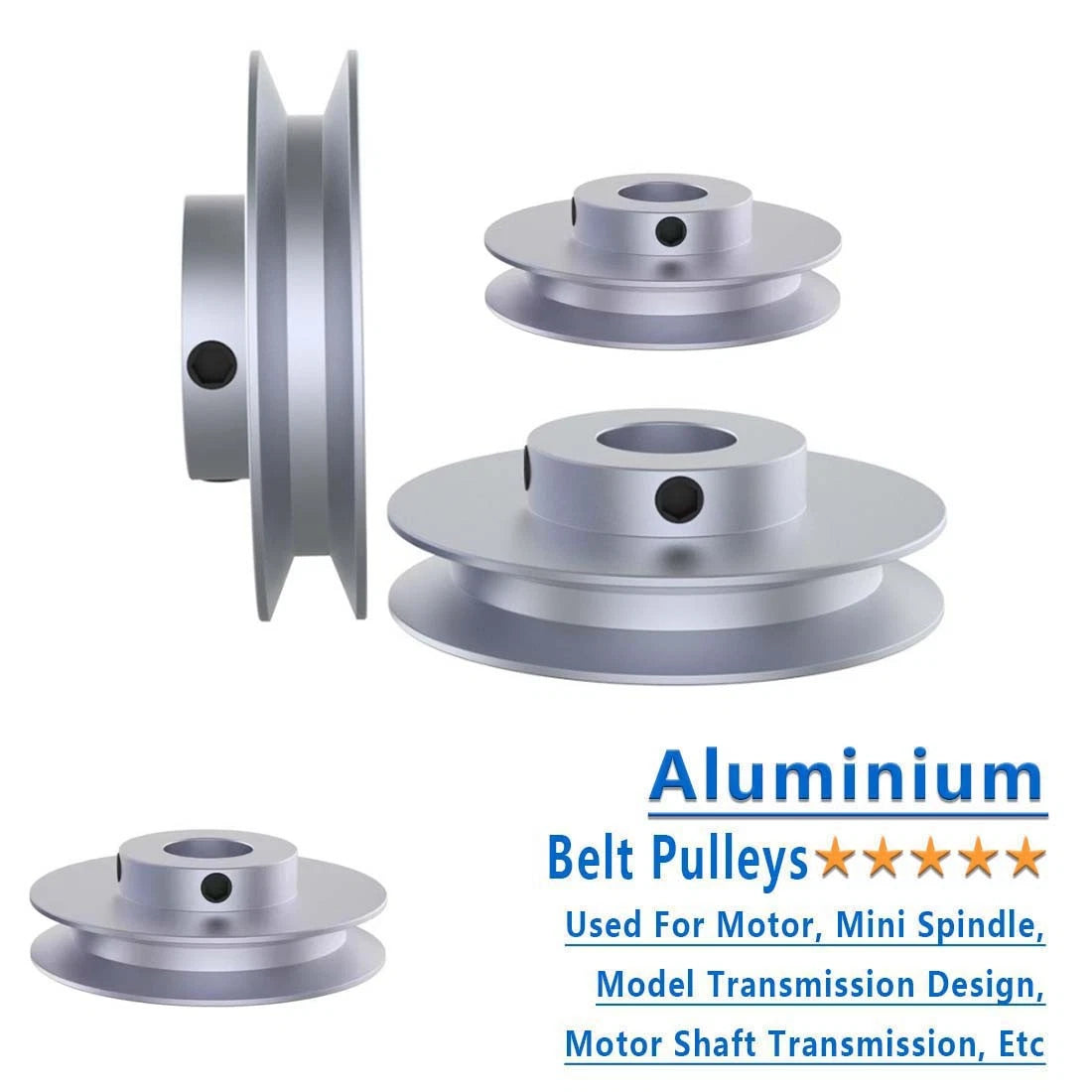
Aluminium Single-slot Belt Pulleys — Reliable A-type Drive for Motors & Machinery

When a slipping or mismatched pulley stalls your conveyor, motor test rig, or DIY power-transmission project, you need a dimensionally accurate drop-in replacement you can trust. These aluminium single-slot belt pulleys are engineered for hobbyists, makers, and small-machine builders who demand consistent torque transfer without the weight penalty of cast iron.

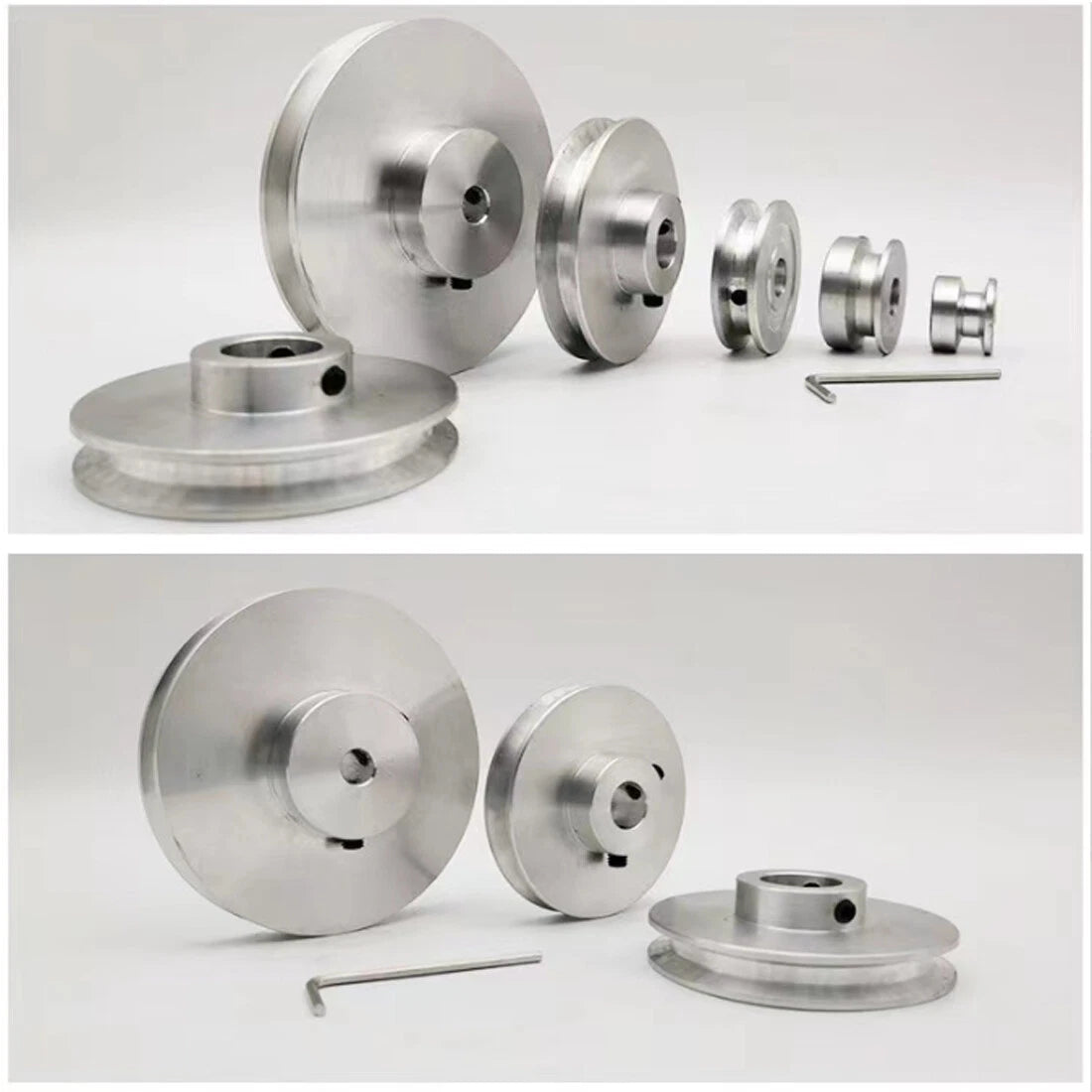
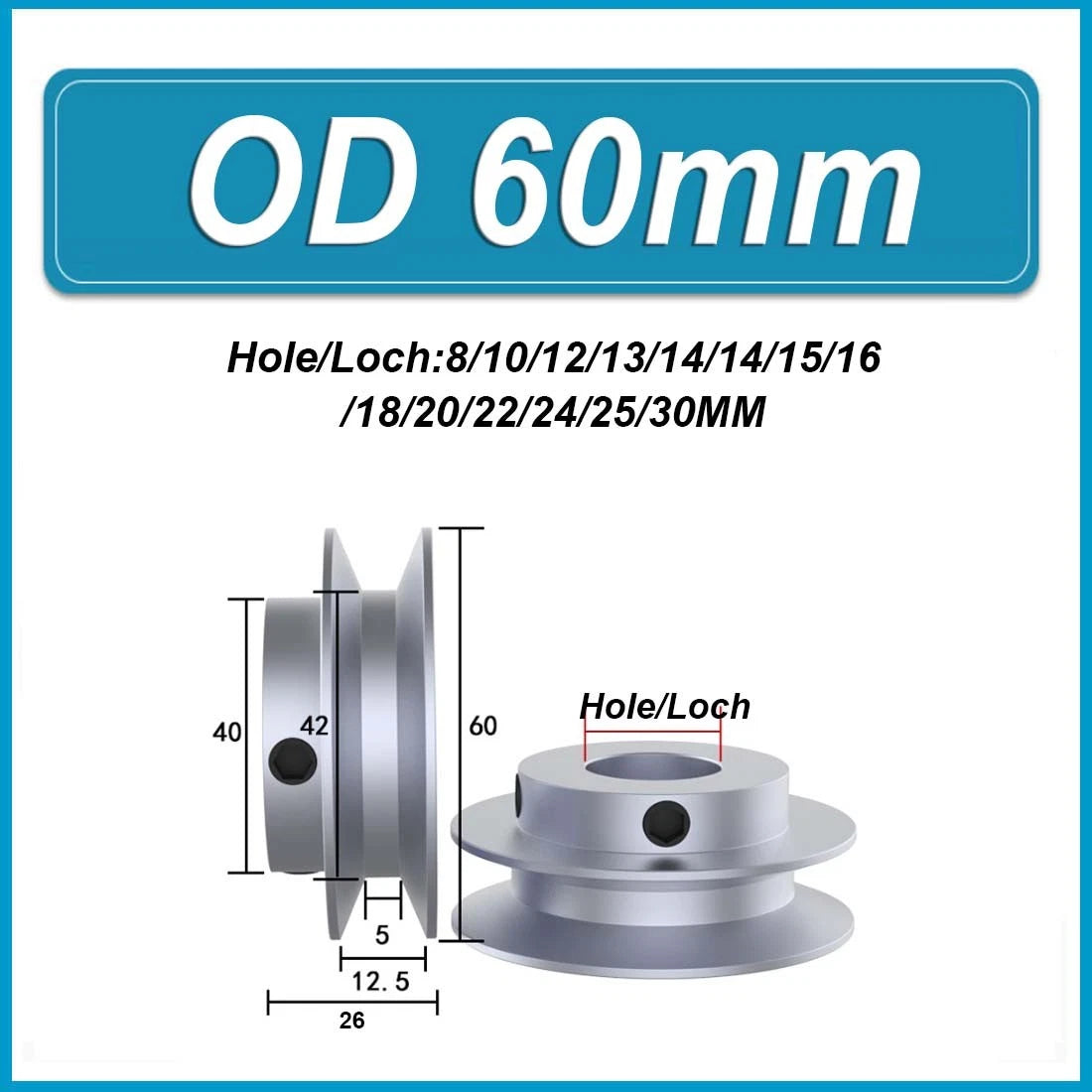
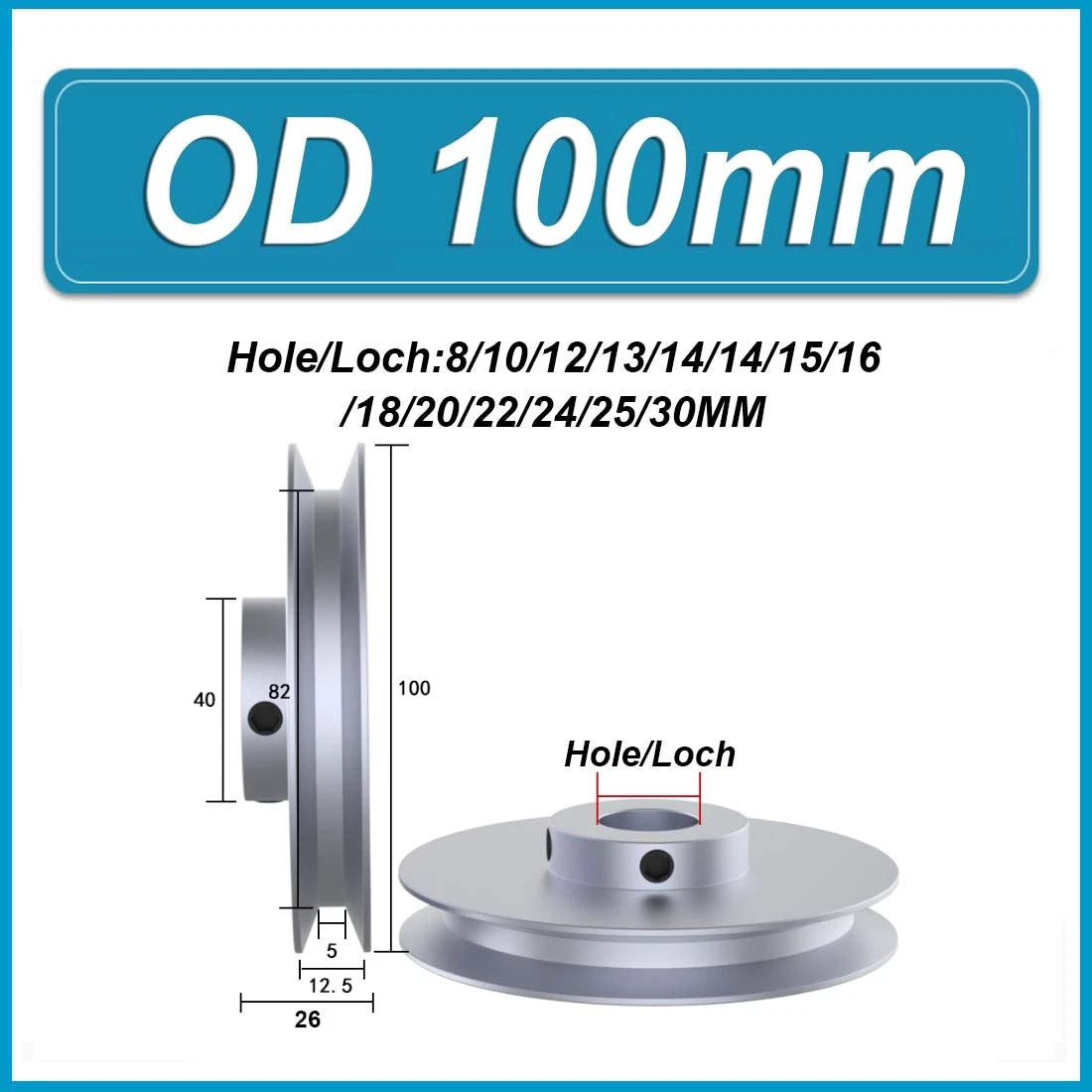
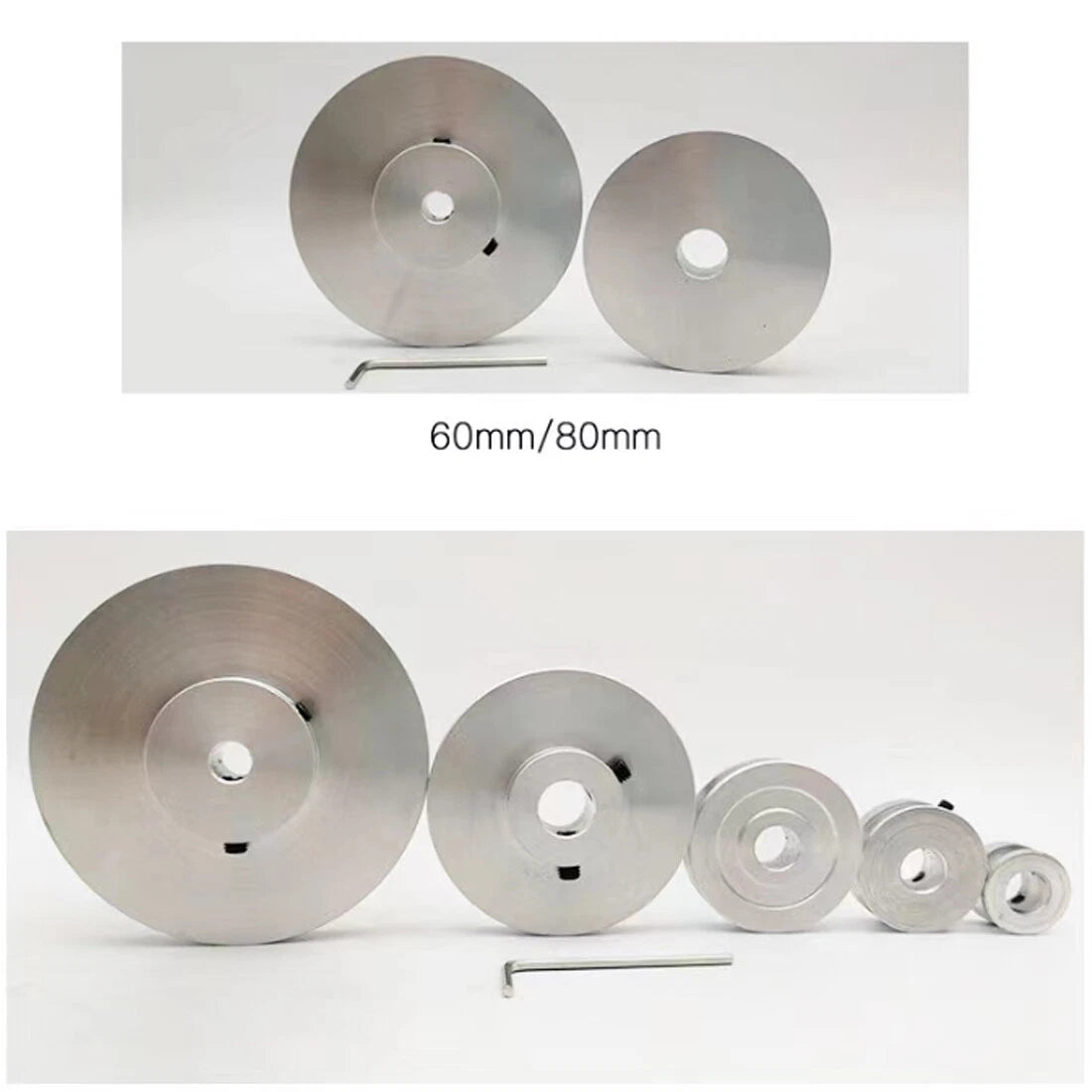
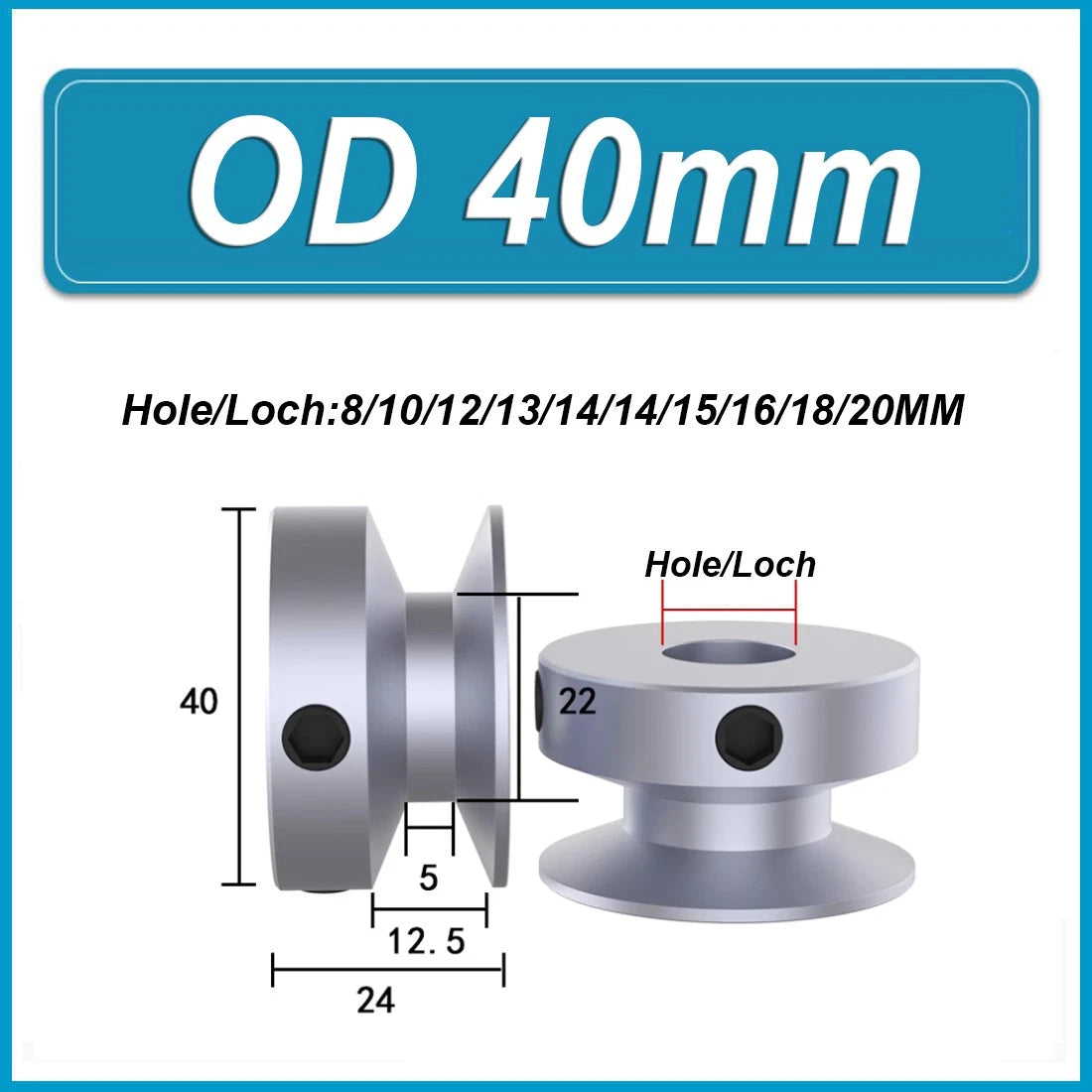
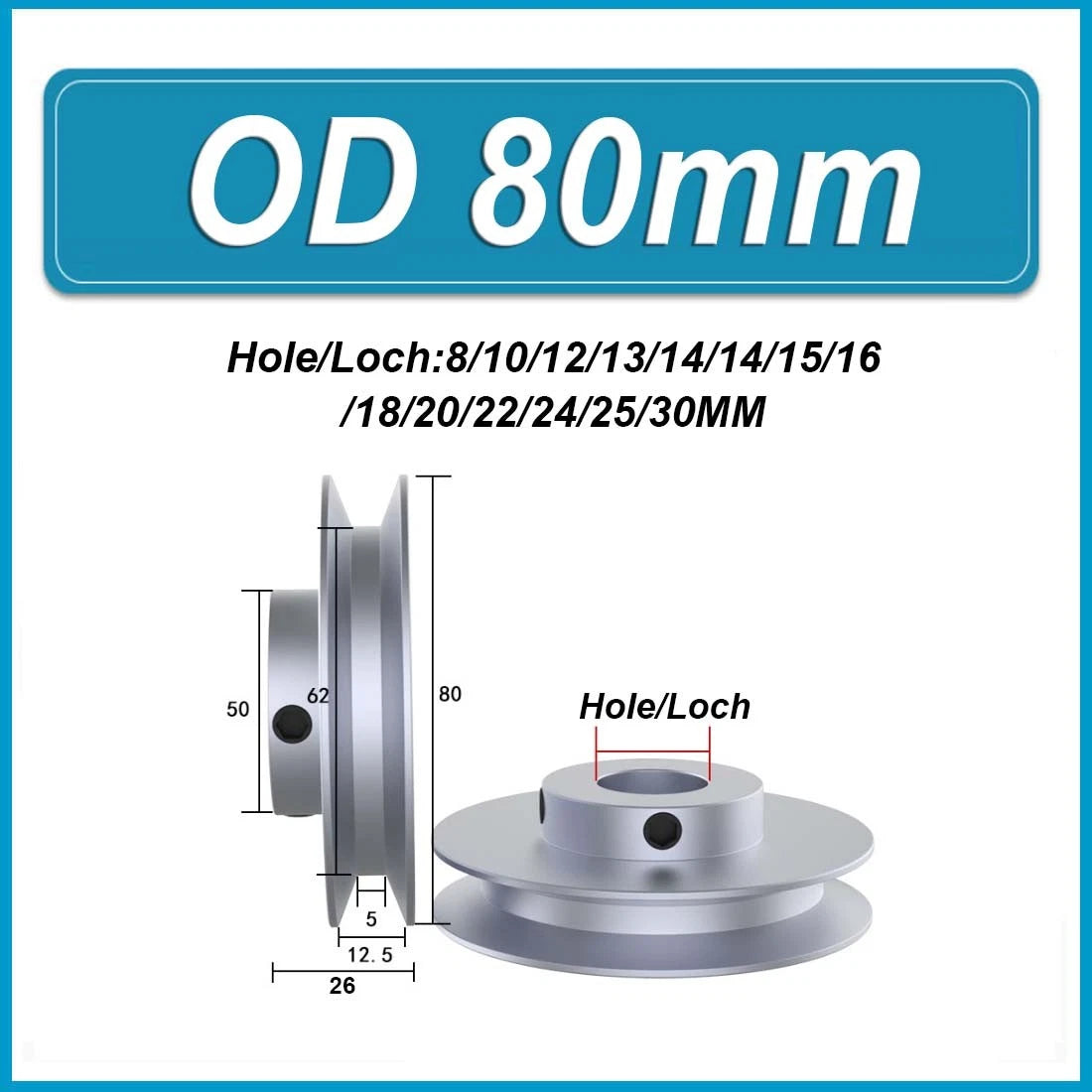
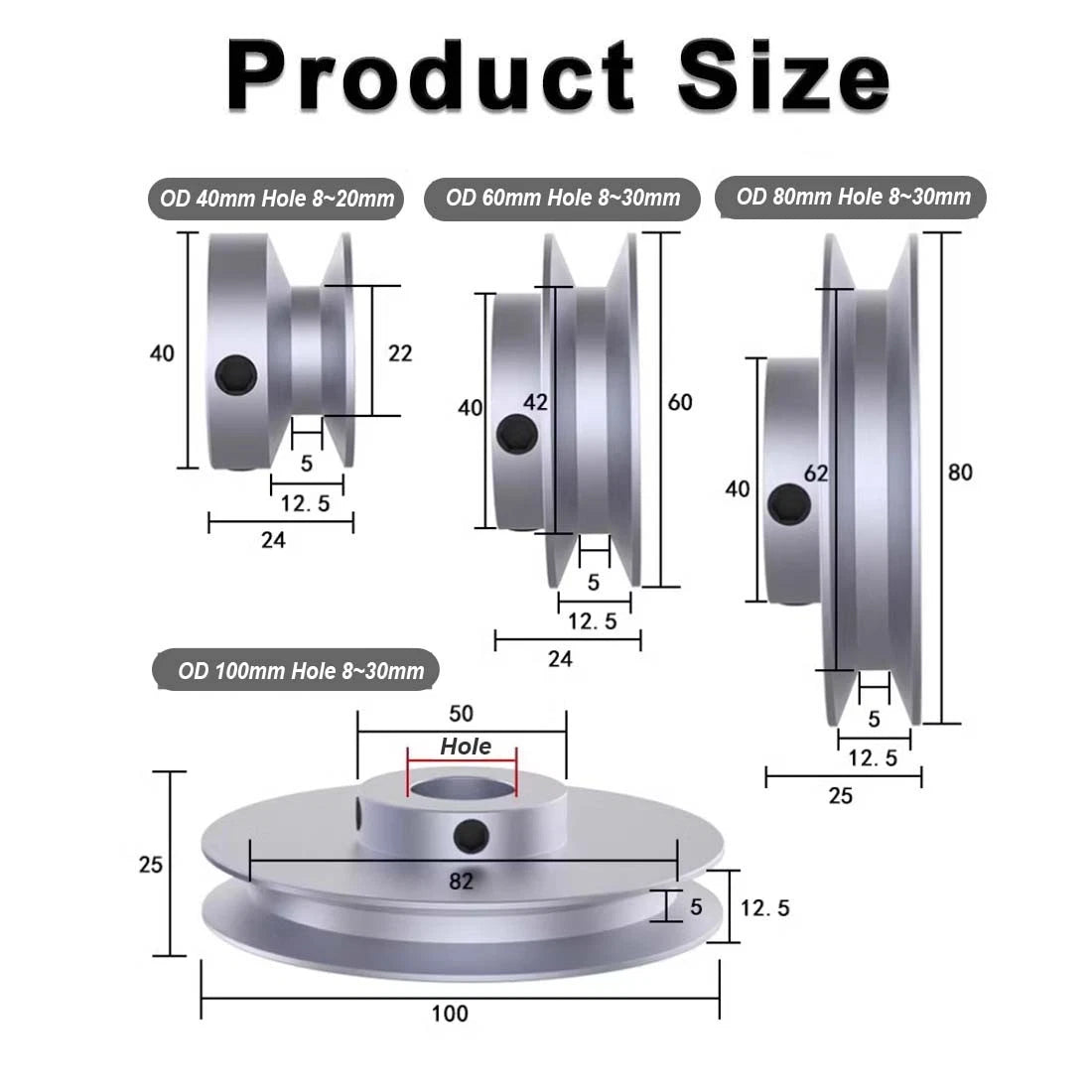
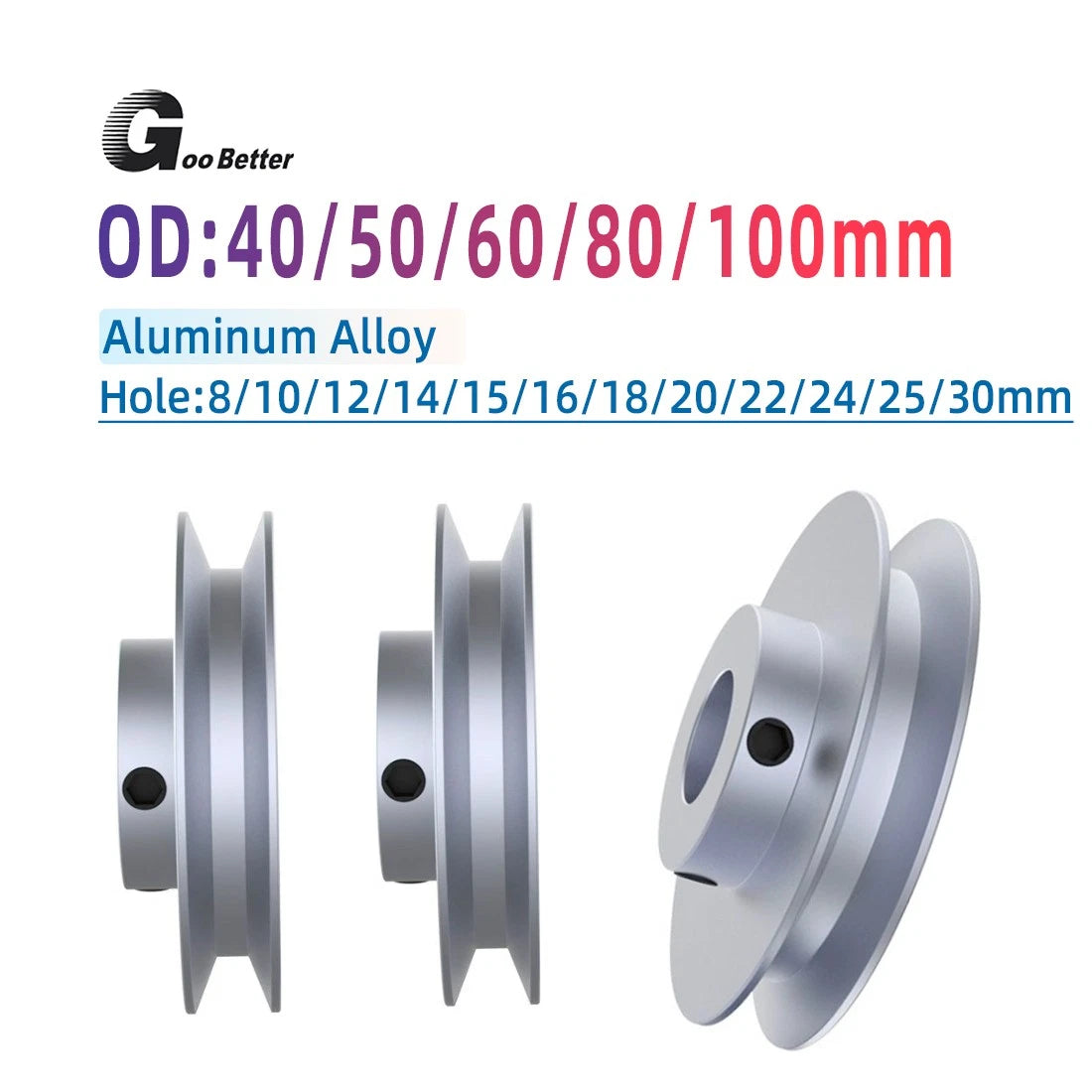
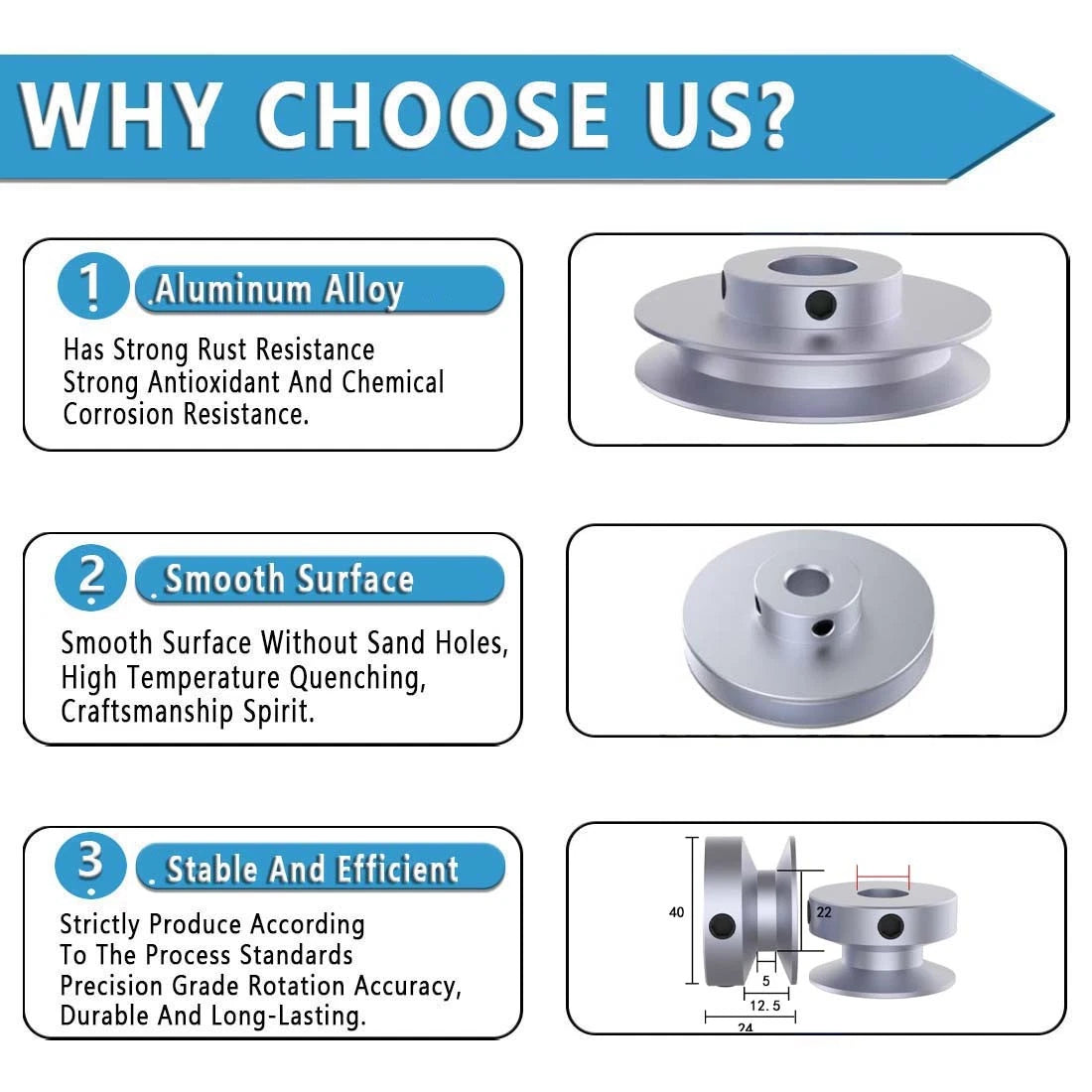
Each pulley is machined from aluminium alloy, delivering a lightweight yet rigid body with a natural resistance to oxidation. Outer diameters span 40 mm (≈1.57 in) to 100 mm (≈3.94 in), and bore diameters range from 8 mm (≈0.31 in) to 30 mm (≈1.18 in), covering the most common shaft sizes used in compact drive systems. The single groove is profiled to the A-type (13 mm top-width) V-belt standard.

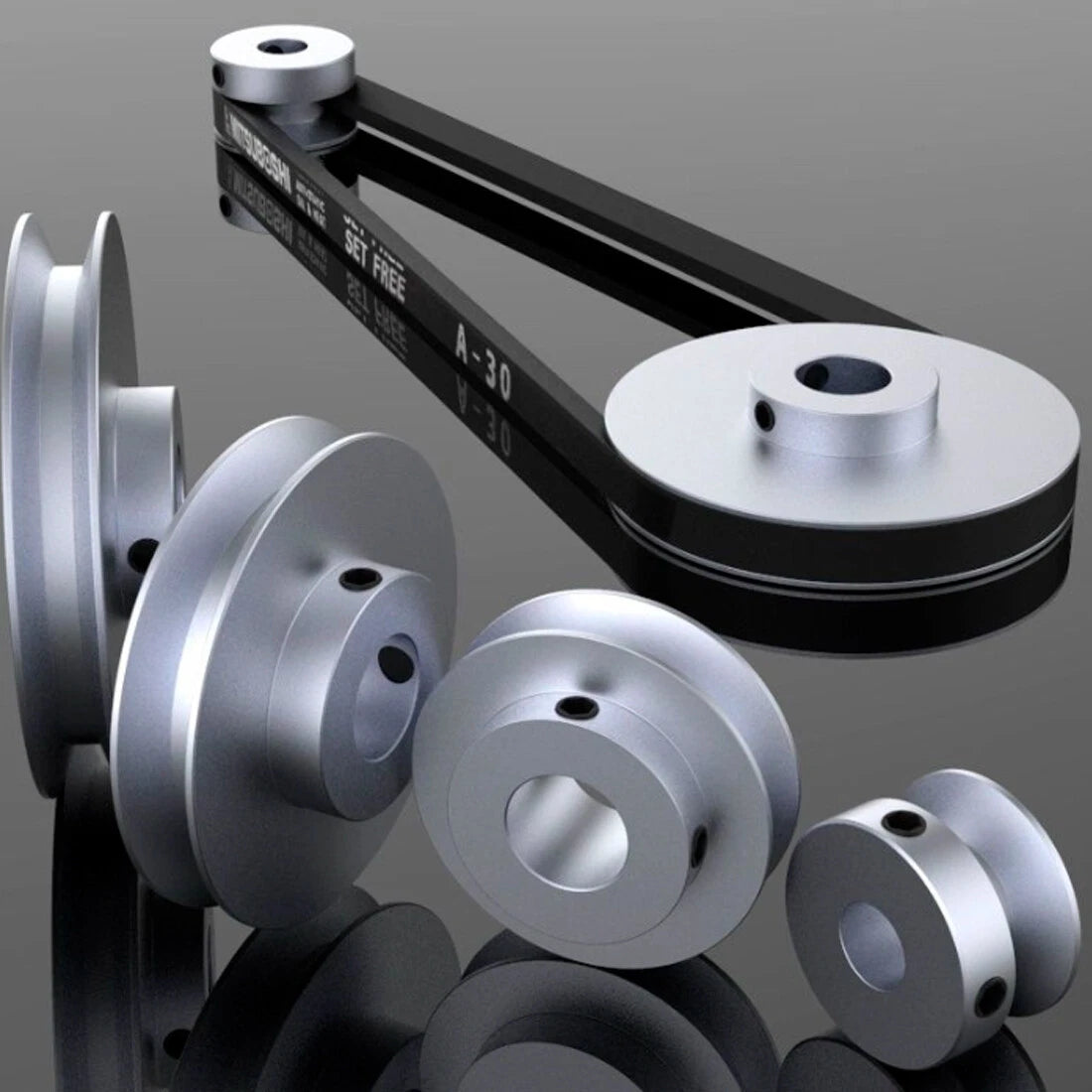
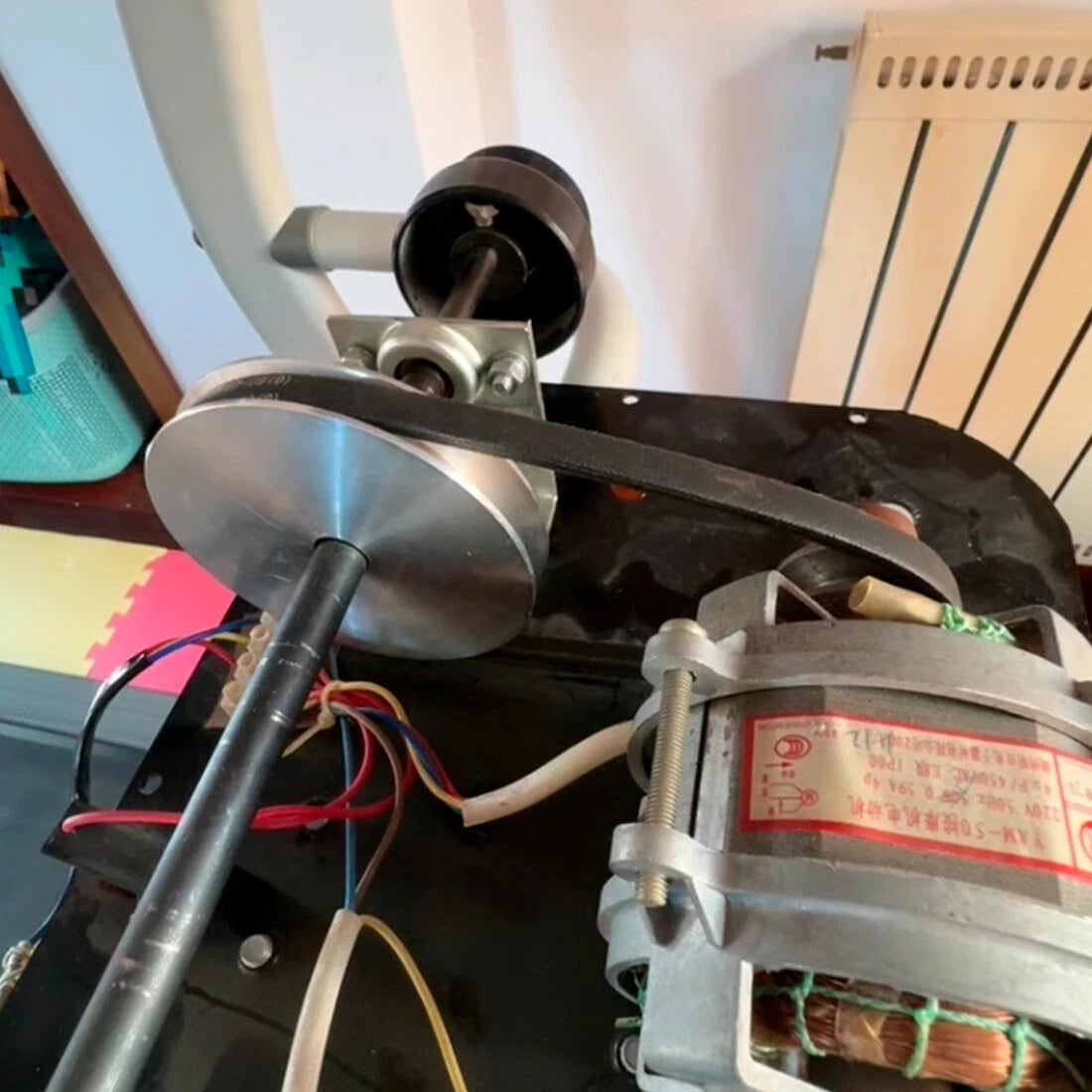
Typical applications include small electric motor drives for bench-top lathes and drill presses, conveyor belt tensioning systems in light automation rigs, and custom speed-reduction assemblies in robotics or CNC router builds — all scenarios where an aluminium single-slot A-type belt pulley keeps the build compact and the drive efficient.

⚙️ Compatibility: Designed for standard A-type (A-section) V-belts with 13 mm top width. Verify your shaft diameter against the bore options (8 / 10 / 12 / 13 / 14 / 15 / 16 / 18 / 20 / 22 / 24 / 25 / 30 mm) before ordering. Set-screw or keyway machining may be required for your shaft — see variant options.

✅ Key Features of These Aluminium Single-slot A-type Belt Pulleys

  • 🔩Aluminium Alloy Construction — Significantly lighter than cast-iron equivalents, reducing bearing load and enabling higher-speed operation in compact drive trains.
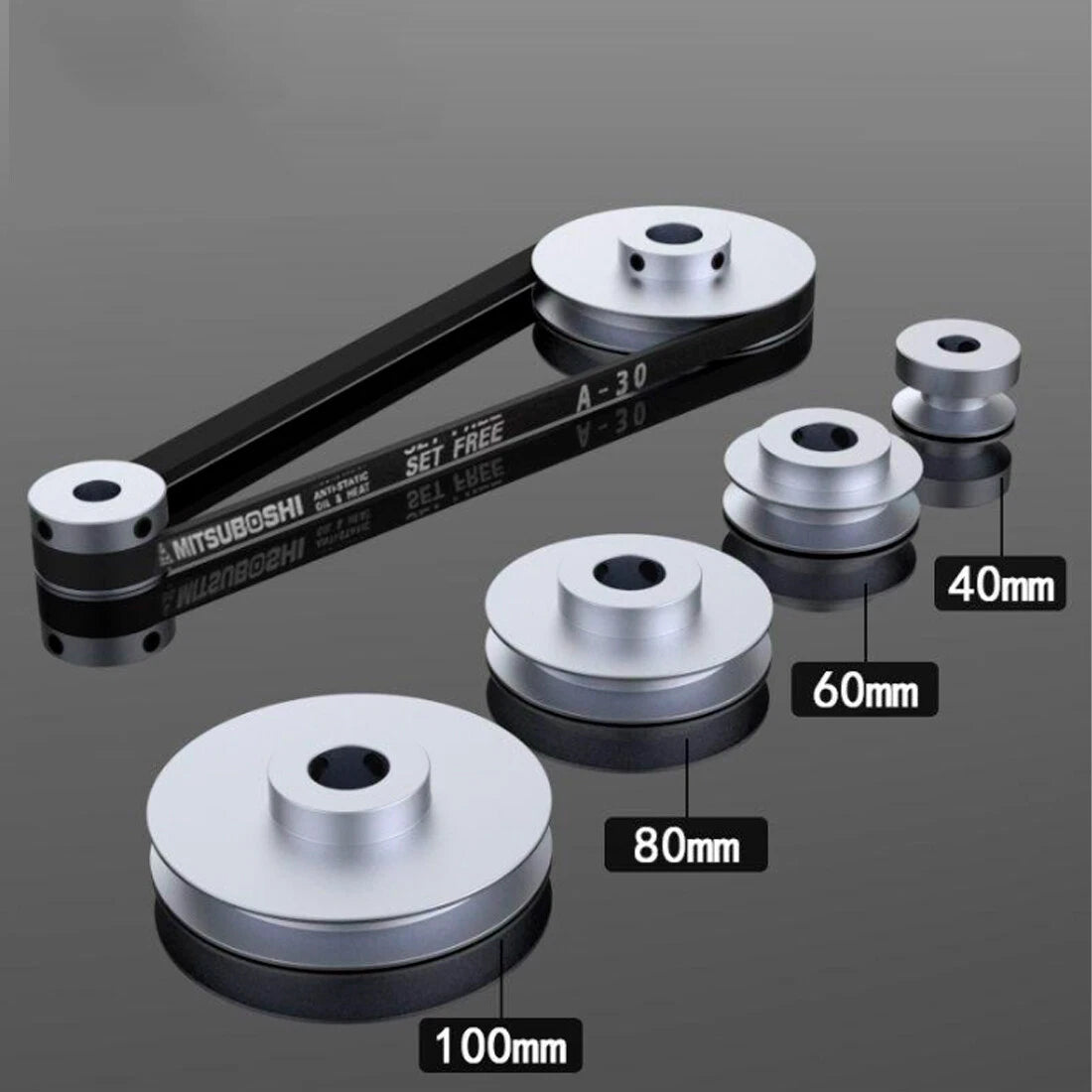
  • 📐Wide Size Matrix — Five outer diameters (40 / 50 / 60 / 80 / 100 mm) paired with up to thirteen bore sizes per OD, giving you precise shaft-fit options without custom machining.
  • 🔄A-type V-belt Groove Profile — Single groove machined to A-section geometry for secure belt seating, minimal slip, and efficient power transfer across the full speed range.
  • 🛡️Corrosion-resistant Surface — Aluminium's natural oxide layer resists rust in workshop and light-industrial environments, extending service life without additional coating.
  • ⚖️Balanced for Smooth Running — Machined concentrically to minimise vibration at operating RPM, protecting motor bearings and prolonging belt life.
  • 🔧Versatile Bore Range — Bore diameters from 8 mm to 30 mm accommodate standard motor shafts, gearbox output shafts, and custom drive axles across a broad range of DIY and light-industrial builds.

📐 Technical Specifications — Aluminium Single-slot Belt Pulleys

Material Aluminium alloy
Belt Type A-type (A-section) V-belt
Number of Grooves 1 (single-slot)
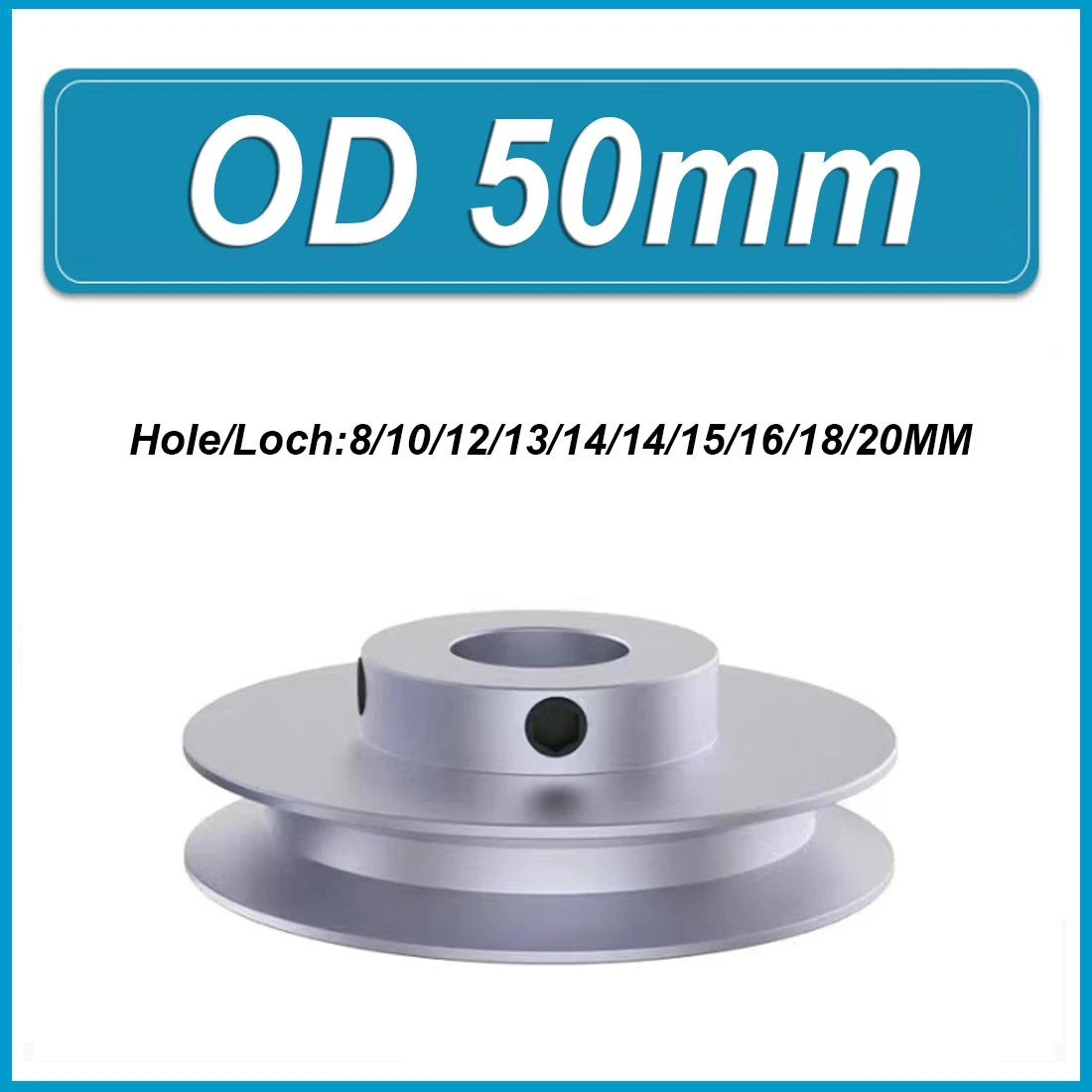
Outer Diameter (OD) 40 mm / 50 mm / 60 mm / 80 mm / 100 mm
Bore Diameter 8 / 10 / 12 / 13 / 14 / 15 / 16 / 18 / 20 / 22 / 24 / 25 / 30 mm (see variant options)
Groove Profile A-section (13 mm top width, 40° included angle)
Surface Finish Natural aluminium (machined)
Weight See variant options
Quantity per Order 1 Pcs

❓ Frequently Asked Questions

How do I choose the right outer diameter for my drive system?

The OD determines your speed ratio. Divide the motor pulley OD by the driven pulley OD to get the reduction ratio. For example, a 40 mm drive pulley paired with an 80 mm driven pulley gives a 2:1 reduction. Select the OD combination that achieves your target output RPM based on your motor speed.

Which bore size should I order for my motor shaft?

Measure your shaft diameter with a vernier caliper. Choose the bore that matches exactly — a bore that is too large will cause runout and vibration. If your shaft uses a keyway, you will need to have the bore keyway-machined after purchase, as these pulleys are supplied with a plain bore.

Are these pulleys strong enough for continuous-duty applications?

Aluminium alloy pulleys are well-suited for light-to-medium duty continuous operation — typical for bench-top machinery, small conveyors, and DIY CNC builds. For heavy shock loads or very high torque (e.g., large industrial compressors), cast-iron or steel pulleys are generally recommended.

Will these pulleys corrode in a damp workshop environment?

Aluminium forms a stable oxide layer that resists rust in typical workshop conditions. For environments with exposure to saltwater, acids, or strong alkalis, consider applying a light coat of protective spray or anodising the pulley surface for extended service life.

What A-type V-belt should I pair with these pulleys?

Any standard A-section V-belt (13 mm top width, 8 mm height, 40° angle) will seat correctly in the groove. Measure the centre distance between your two pulleys and calculate the required belt length using the standard formula: L ≈ 2C + 1.57(D + d) + (D − d)² / 4C, where C is centre distance and D/d are the two pulley ODs.

Can I use these pulleys on both the drive (motor) side and the driven side?

Yes. These pulleys are interchangeable between drive and driven positions. Simply select the appropriate OD for each position to achieve your desired speed ratio. Ensure both pulleys are aligned on the same plane to prevent belt tracking issues and premature wear.

How do I secure the pulley to the shaft?

These pulleys are supplied with a plain bore. Securing methods include: (1) drilling and tapping a set-screw hole through the hub, (2) having a keyway machined to match your shaft, or (3) using a locking collar alongside the pulley. Choose the method appropriate for your torque level and shaft configuration.

🛒 Select your Size (Outer Diameter × Bore) above, then add to cart.


You may also like

Recently viewed