🎸 Product Overview
Shaping a guitar nut or saddle by hand is one of the most precision-demanding tasks in luthier work — and doing it without a proper sanding block almost guarantees an uneven result. Holding sandpaper freehand introduces rocking and tilting that rounds off edges, creates uneven contact surfaces, and makes it nearly impossible to achieve the flat, square base that a well-fitted nut or saddle requires.
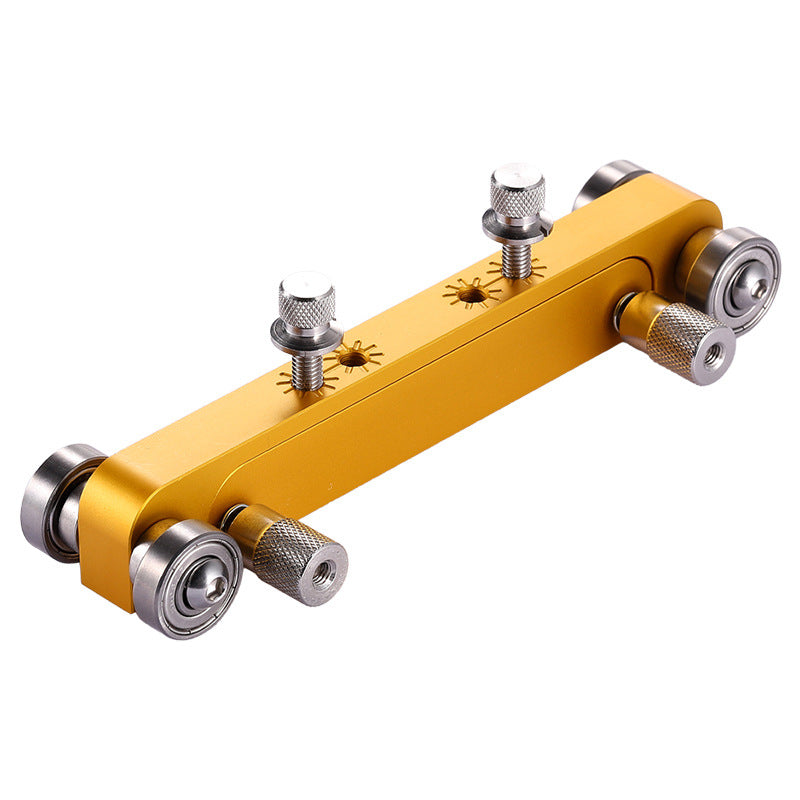
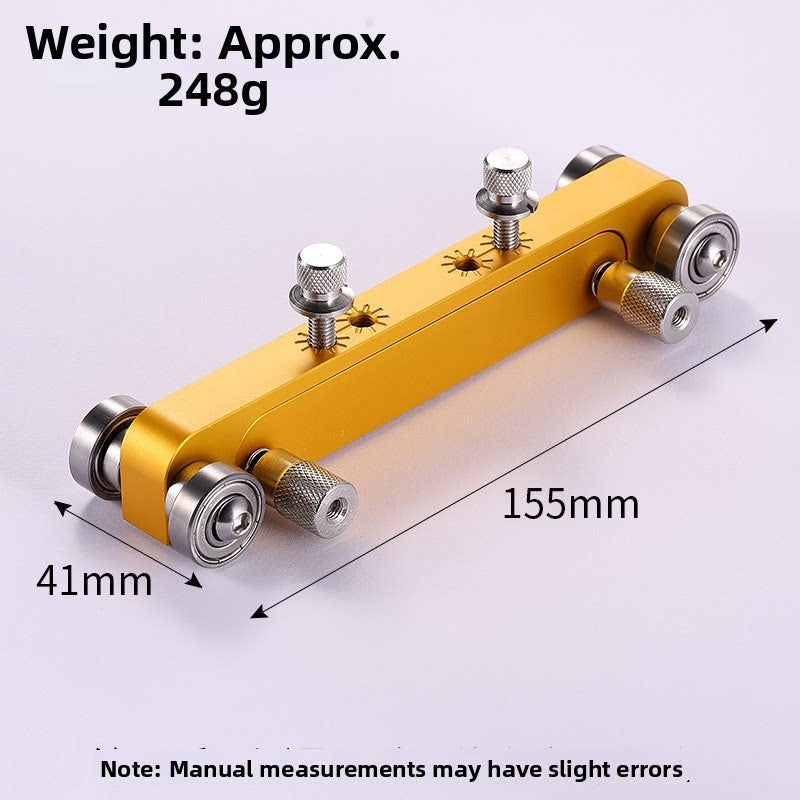
This Aluminum Alloy Guitar Nut Sanding Block gives you a rigid, flat reference surface to sand against, so every stroke removes material evenly and consistently. Made from durable aluminum alloy and available in gold, black, and silver finishes, it comes with sandpaper included — ready to use straight out of the box for nut shaping, saddle fitting, bridge surface prep, and more. 🛠️
✅ Why Luthiers & Guitarists Choose This Tool
- ✔ Flat, Consistent Sanding Surface
The rigid aluminum alloy body maintains a perfectly flat sanding plane, eliminating the rocking and tilting that causes uneven material removal when sanding freehand.
- ✔ Precise Nut & Saddle Fitting
Achieve a flat, square nut or saddle base that seats properly in the slot — essential for good tone transfer, sustain, and intonation accuracy.
- ✔ Durable Aluminum Alloy Construction
Won't flex, warp, or wear out like wood or plastic sanding blocks. Built to maintain its flat reference surface through repeated use.
- ✔ Sandpaper Included
Comes ready to use — no need to source separate sandpaper before you can start working.
- ✔ Three Color Options
Available in gold, black, and silver — choose the finish that suits your workshop aesthetic or matches your other tools.
- ✔ Versatile Luthier Tool
Useful for nut shaping, saddle bottom flattening, bridge plate prep, and any other guitar repair task requiring controlled flat sanding.
🔧 Common Problem → Solution
Problem: Sanding a nut blank freehand produces a rocking, uneven base that doesn't sit flat in the nut slot, causing buzzing and poor string height consistency.
Solution: The rigid aluminum sanding block keeps the nut perfectly perpendicular to the sandpaper surface, ensuring a flat, square base with every stroke.
Problem: The saddle bottom isn't making full contact with the saddle slot, causing dead spots, poor sustain, and uneven string height across the fretboard.
Solution: Use the sanding block to flatten the saddle bottom on a known-flat surface — a standard luthier technique that significantly improves tone transfer and sustain.
Problem: Holding sandpaper directly against a nut or saddle is awkward and gives you no control over the angle or pressure of each stroke.
Solution: The block's ergonomic form gives you a comfortable, stable grip so you can apply consistent pressure and maintain the correct sanding angle throughout the job.
Problem: Cheap plastic or wood sanding blocks flex under pressure, making it impossible to maintain a truly flat sanding surface.
Solution: Aluminum alloy is rigid enough to maintain its flat reference surface even under firm sanding pressure, giving you reliable results every time.
🎸 Instrument Compatibility
Works With:
- ✔ Acoustic Guitar (nut and saddle shaping, bridge plate prep)
- ✔ Classical Guitar (bone or synthetic nut and saddle work)
- ✔ Electric Guitar (nut shaping and fitting)
- ✔ Bass Guitar (nut shaping)
- ✔ Any stringed instrument requiring nut or saddle fitting and surface prep
⭐ Key Features
- Aluminum alloy guitar nut sanding block for precise flat sanding
- Rigid body maintains a flat reference surface for consistent material removal
- Suitable for nut shaping, saddle bottom flattening, and bridge surface prep
- Sandpaper included — ready to use out of the box
- Available in three finishes: Gold, Black, Silver
- Compatible with bone, plastic, TUSQ, and synthetic nut and saddle materials
- Durable construction built for repeated use in luthier and repair work
- Ergonomic grip for comfortable, controlled sanding strokes
📋 How to Use
Step 1 — Attach the included sandpaper to the flat sanding surface of the block. Ensure it lies flat with no wrinkles or gaps that could affect the sanding plane.
Step 2 — Hold the nut or saddle blank firmly against the sanding block surface. Apply even downward pressure and use straight, consistent strokes to remove material from the base.
Step 3 — Check your progress frequently by test-fitting the nut or saddle in its slot. Look for even contact across the full base width — no rocking or gaps.
Step 4 — Once the base is flat and the piece seats correctly, switch to a finer grit sandpaper to smooth the surface before final fitting and installation.
📐 Product Specifications
| Specification |
Details |
| Material |
Aluminum Alloy |
| Color Options |
Gold / Black / Silver |
| Includes |
Sanding block + sandpaper |
| Compatible Materials |
Bone, Plastic, TUSQ, Synthetic Nut & Saddle |
| Applications |
Nut shaping, saddle bottom flattening, bridge surface prep |
| Compatibility |
Acoustic, Classical, Electric, Bass Guitar |
🎯 Perfect For
- 🎸 Home luthiers shaping nuts and saddles from blanks
- 🎸 Guitar repair technicians doing setup and maintenance work
- 🎸 Guitar builders fitting hardware on new builds
- 🎸 Players who do their own setups and want professional-level results
- 🎸 Music stores handling instrument repairs and setups
- 🎸 Anyone upgrading from freehand sanding to a more controlled, consistent method
❓ FAQ
Q: Why use a sanding block instead of just holding the sandpaper by hand?
A: A rigid sanding block maintains a flat, consistent sanding plane with every stroke. Freehand sanding introduces rocking and tilting that rounds off edges and creates uneven surfaces — especially problematic when fitting a nut or saddle that needs a perfectly flat base.
Q: What sandpaper grit is included?
A: Please refer to the product images for the specific grit included. For best results, we recommend progressing from the included sandpaper to a finer grit for final surface finishing.
Q: Can I replace the sandpaper when it wears out?
A: Yes. The sanding block itself is reusable. When the included sandpaper wears out, replace it with standard sandpaper cut to fit the block's sanding surface.
Q: Will this work on a bone nut?
A: Yes. The block works effectively with bone, plastic, TUSQ, and other synthetic nut and saddle materials.
Q: Is the aluminum alloy body truly flat?
A: Yes. The sanding surface is machined flat to serve as a reliable reference plane. This is the key advantage over wood or plastic blocks, which can warp or flex over time.
Q: Does the color affect the tool's performance?
A: No. Gold, black, and silver are purely finish options — all three variants are functionally identical. Choose the color that suits your preference.
Q: Is this suitable for saddle bottom flattening on an acoustic guitar?
A: Yes. This is one of the most common uses for a nut sanding block. Sand the saddle bottom against the block's flat surface to ensure full, even contact with the saddle slot — a simple technique that can noticeably improve tone and sustain.