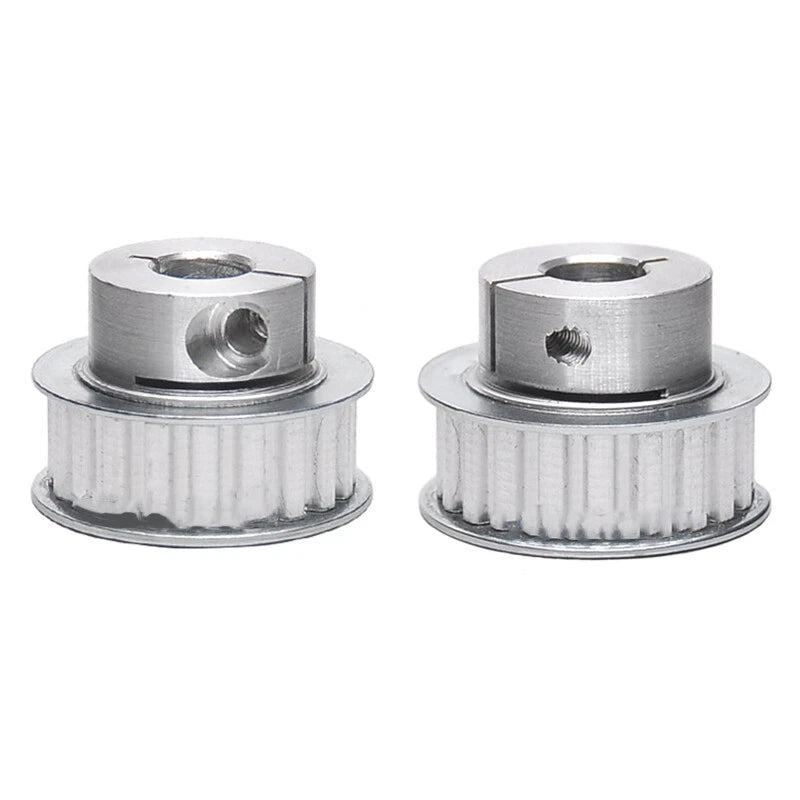
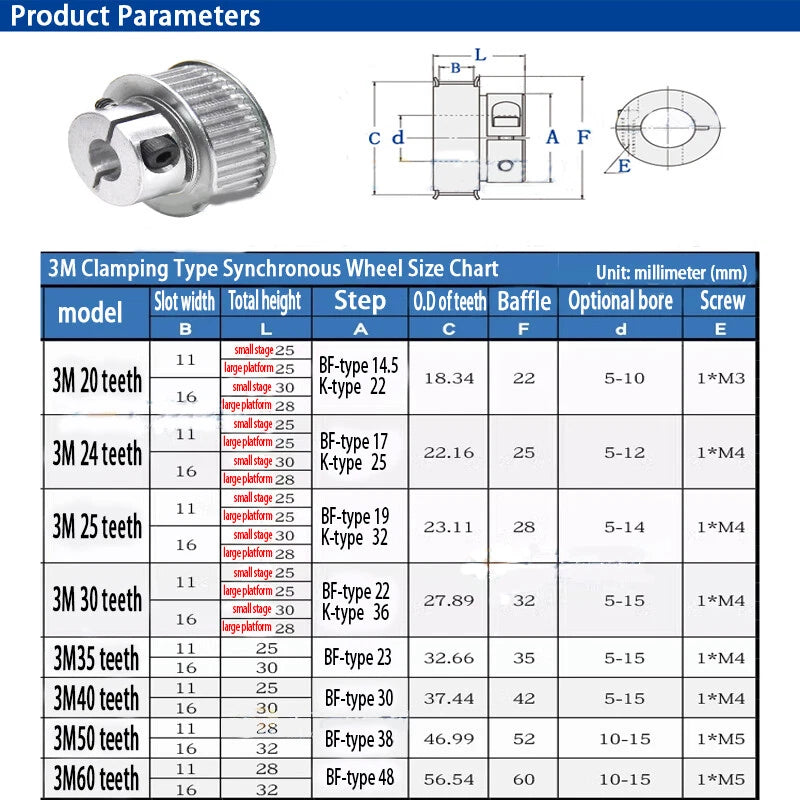
Bore 5 to 15mm CNC Pulley, Clamping Type, For 10mm/15mm Wide 3M Timing Belt

No reviews

Price:
Sale price$8.96 USD
Stock:
In stock (500 units), ready to be shipped

Payment & Security

Ach Direct Debit Amazon American Express Apple Pay Bancontact BLIK Diners Club Discover EPS Google Pay iDEAL Wero JCB Maestro Mastercard Multibanco MobilePay PayPal Przelewy24 Shop Pay Twint Union Pay USDC Visa

Your payment information is processed securely. We do not store credit card details nor have access to your credit card information.

Limited Offer — Spend More, Save More
Spend $55+
Save $5
Spend $100+
Save $10
Spend $200+
Save $25
HomeDIYer DIY Expert Support

DIY Expert Support

Get fitment advice & recommendations

Mon–Fri  8:30 AM – 8:00 PM
24-Hour Fast Ship
Arrives in 3–14 Days
Worldwide Shipping
30-Day Returns
1 tree planted with every purchase

Description

3M CNC Clamping-Type Timing Pulleys — Precision Bore Fit for 10mm & 15mm Belt Drives

When a loose or slipping pulley undermines your motion control project, the root cause is often an imprecise bore-to-shaft fit. Engineers, robotics builders, and small-batch machine designers who need repeatable, zero-backlash shaft engagement rely on clamping-type timing pulleys that lock firmly without set-screw damage to the shaft surface.

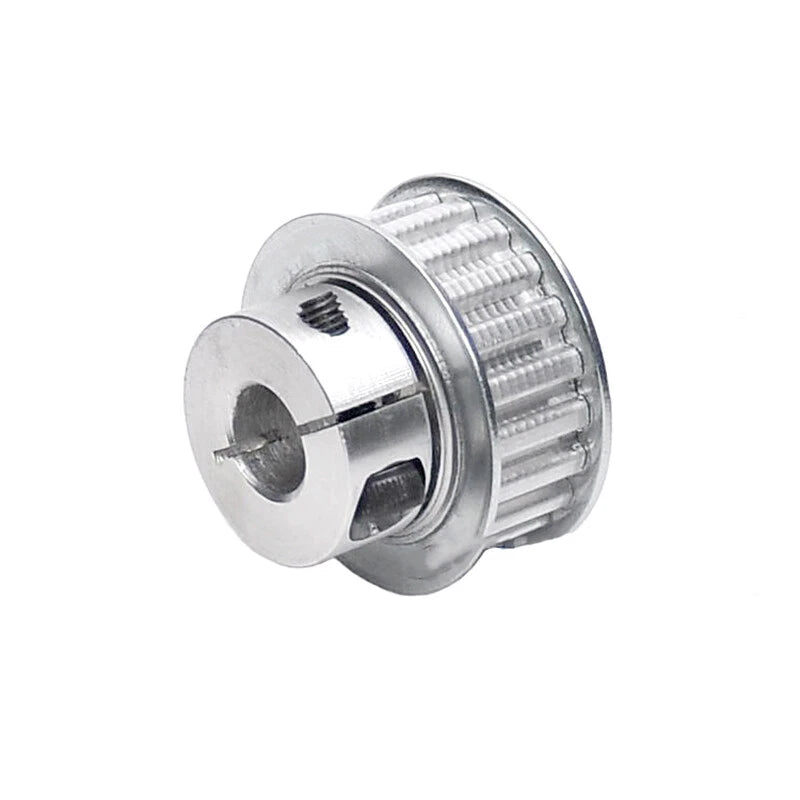
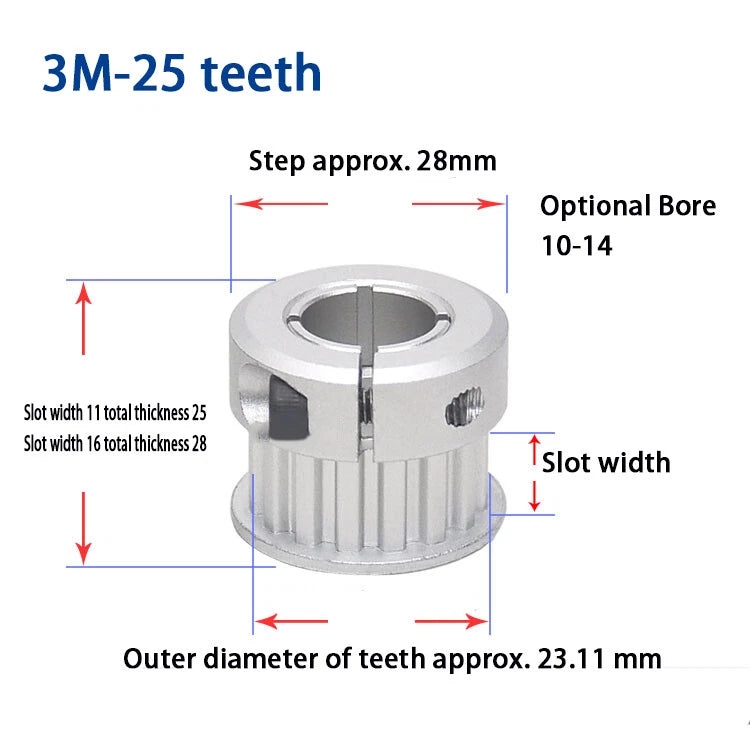
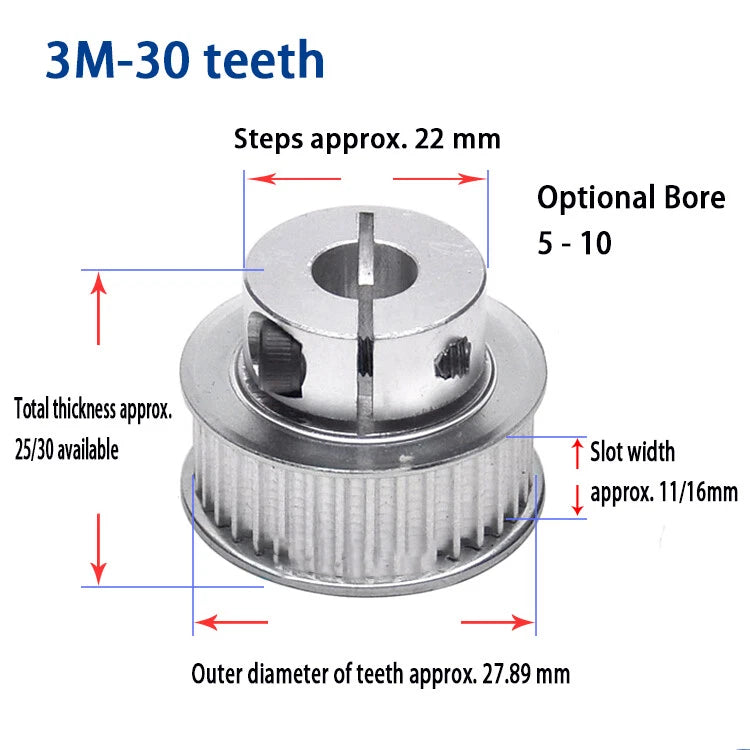
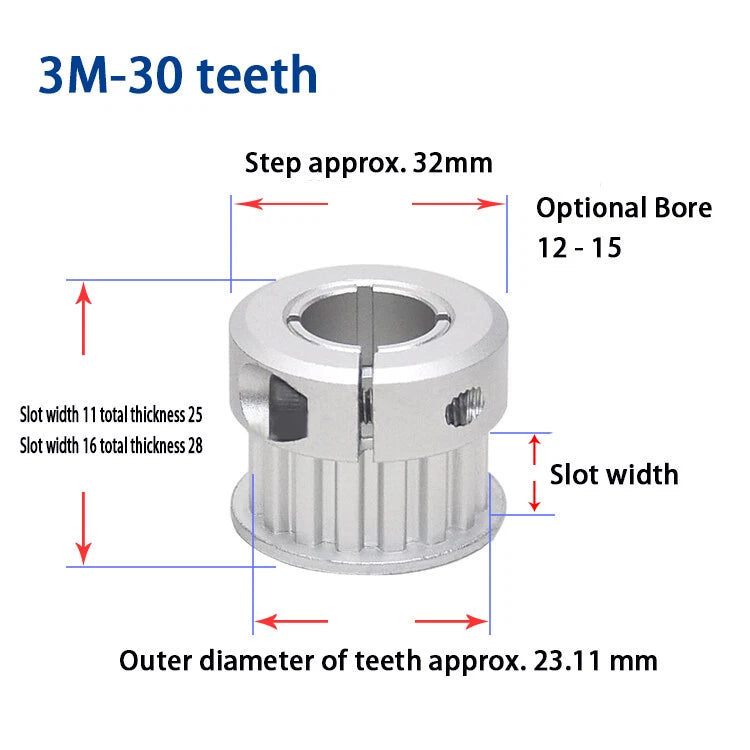
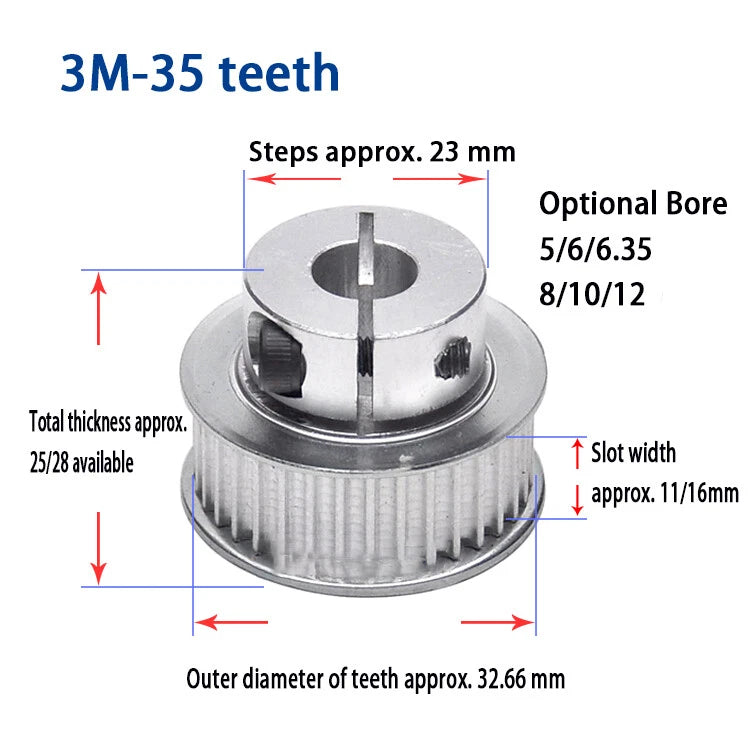
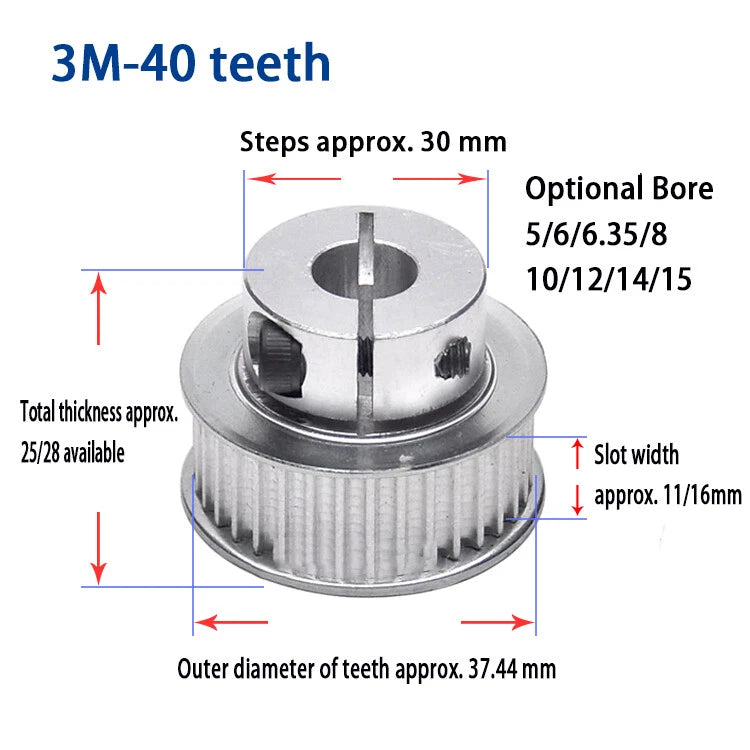
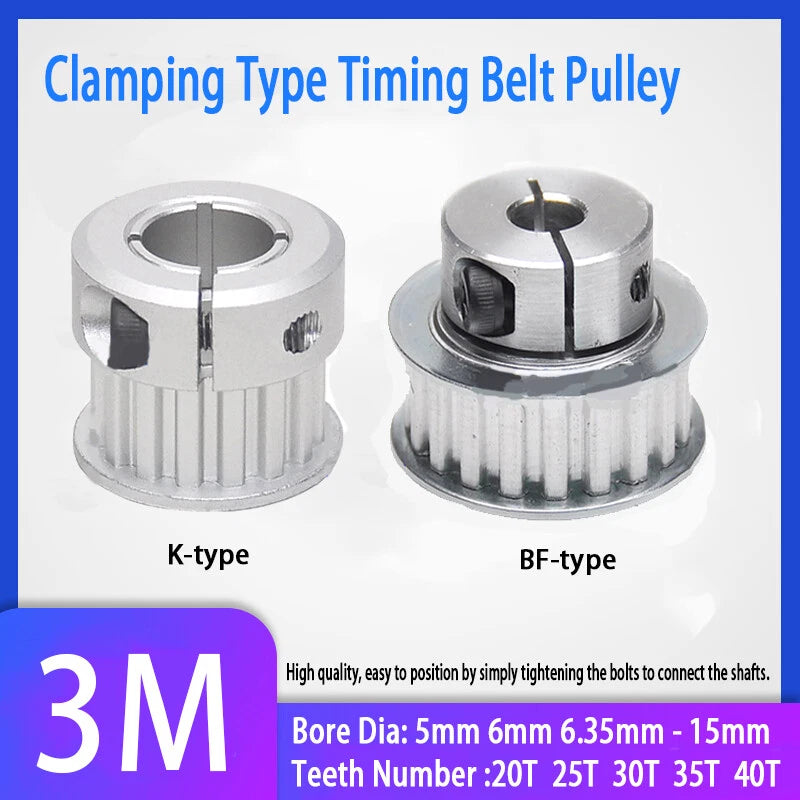
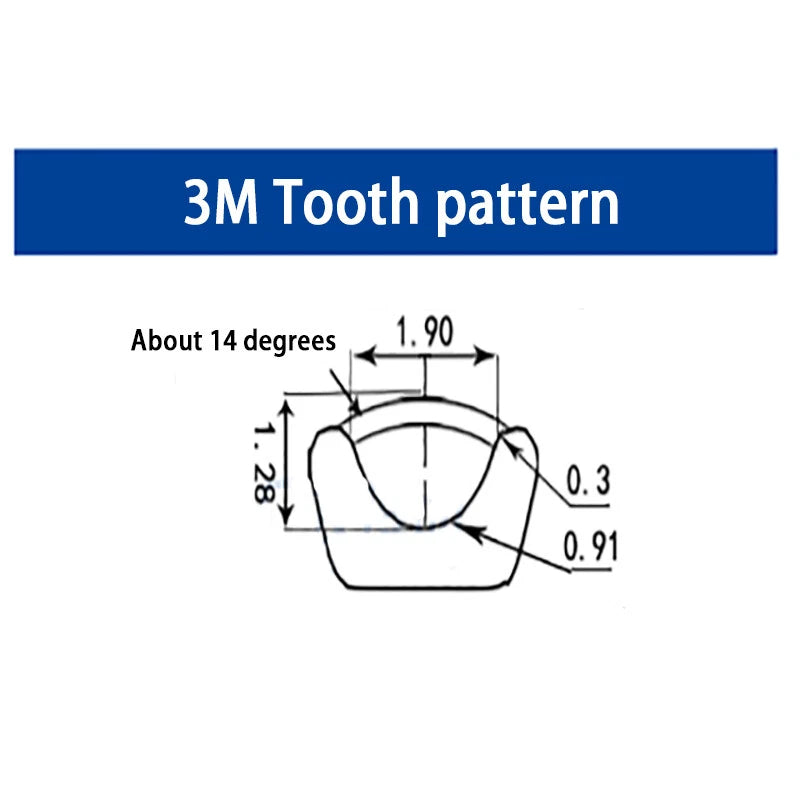
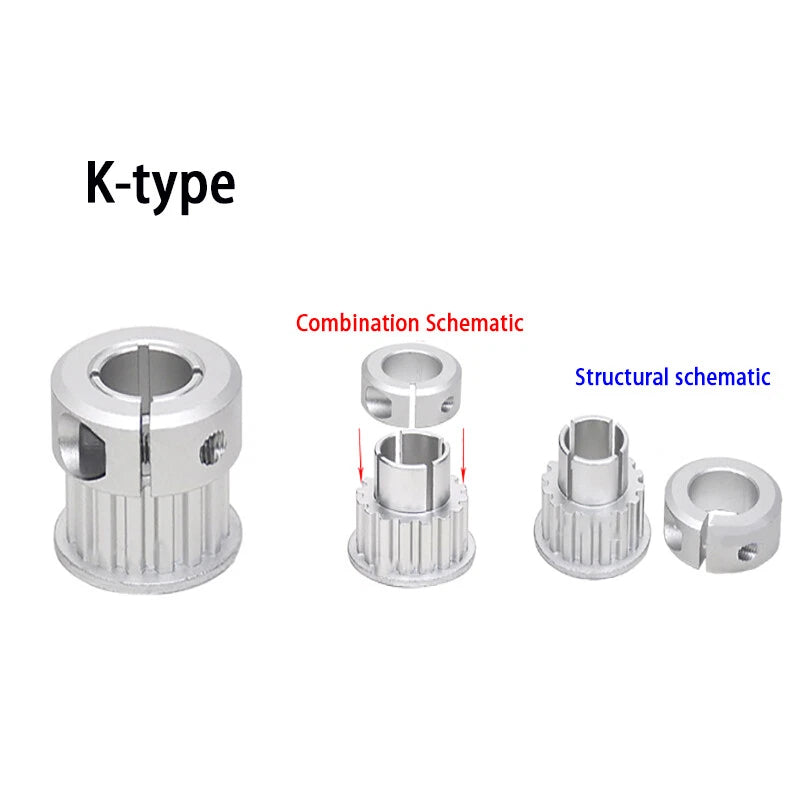
These 3M CNC clamping-type timing pulleys are machined from aluminum alloy and are available in bore diameters from 5 mm (0.197 in) to 15 mm (0.591 in). Two hub styles are offered — BF-type (flanged, for guided belt tracking) and K-type (keyway-compatible, for torque-critical applications). Tooth counts span 20T, 25T, 30T, 35T, and 40T, all cut to the 3M tooth profile (3 mm pitch). Belt width compatibility covers both 10 mm and 15 mm wide 3M synchronous belts.

Typical use cases include desktop CNC router axis drives requiring a 3M 30T pulley with 8 mm bore, lightweight robotic arm joints using a 3M 20T BF-type pulley with 5 mm bore, and 3D printer extruder or gantry upgrades where a clamping-style 3M timing pulley replaces a set-screw variant for improved shaft retention.

⚙️ Compatibility: Fits standard 3M synchronous timing belts — 10 mm or 15 mm wide. Select your bore diameter and tooth count to match your shaft and drive ratio.

✅ Key Features of These 3M CNC Clamping-Type Timing Pulleys

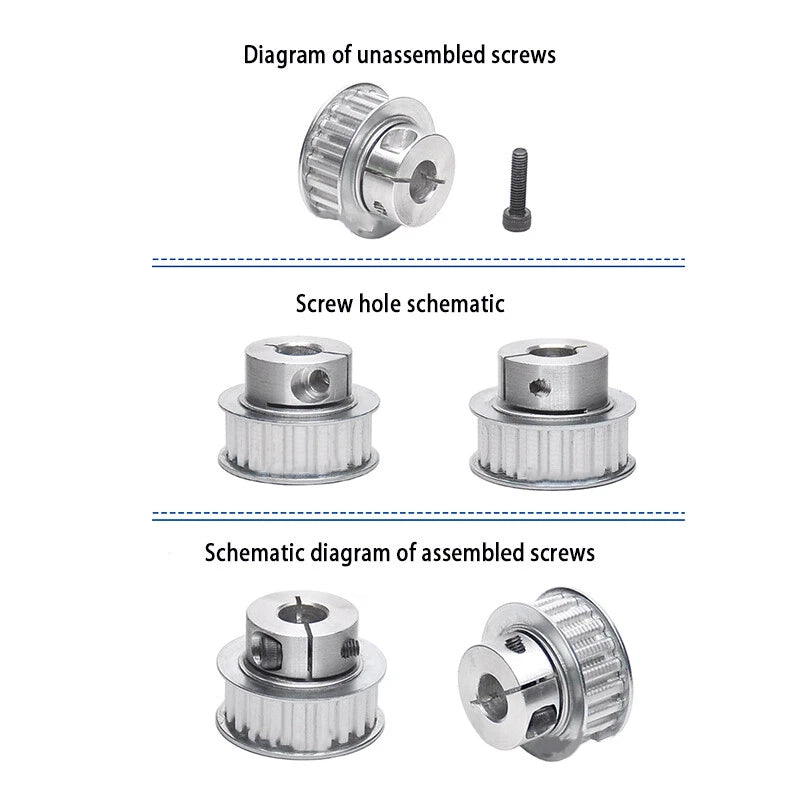
🔩 Clamping Hub Design

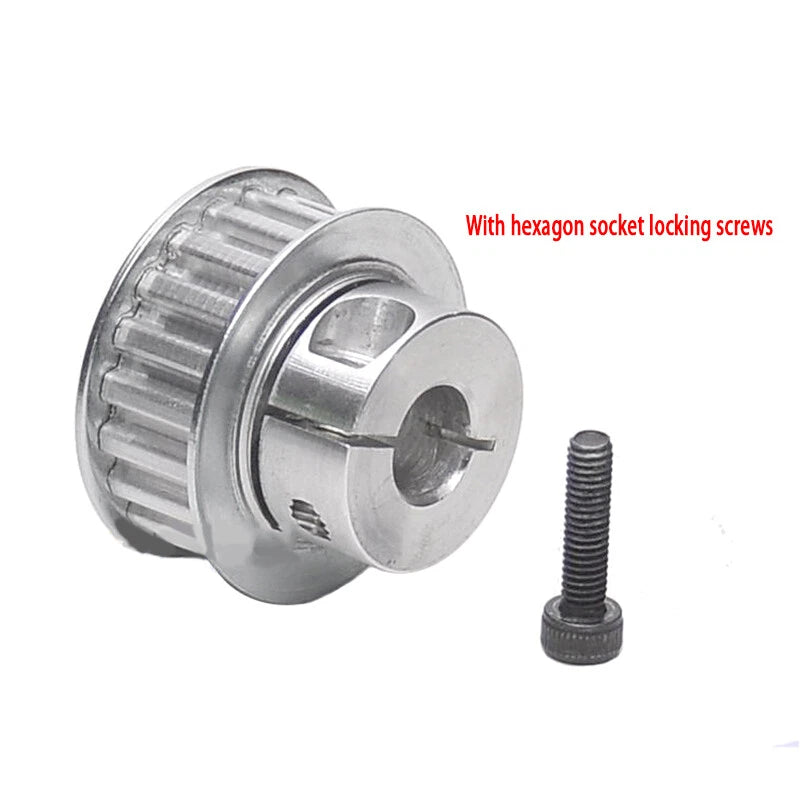
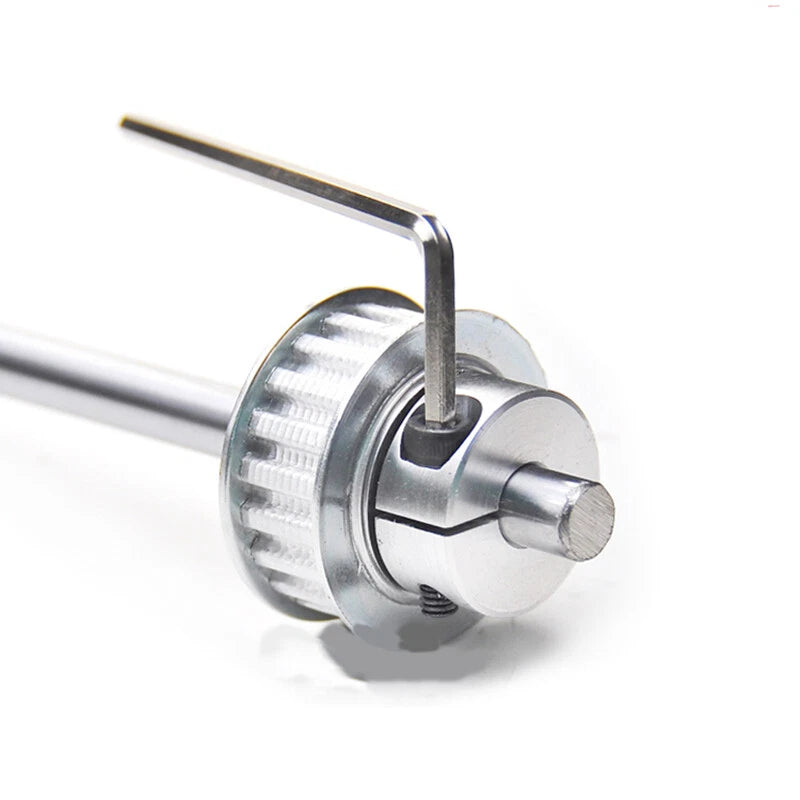
Split-collar clamping mechanism grips the shaft evenly around its circumference, eliminating point-load damage and allowing precise angular positioning without marring the shaft.

🎯 Wide Bore Range — 5 mm to 15 mm

Covers the most common shaft sizes used in robotics, CNC, and automation: 5, 6, 6.35, 7, 8, 10, 12, 12.7, 14, and 15 mm bores available across the variant matrix.

⚙️ BF-Type & K-Type Hub Options

BF-type includes integrated flanges to keep the belt centered on the pulley face. K-type features a keyway slot for positive torque transmission in higher-load drive systems.

📐 3M Tooth Profile, 20T–40T

Five tooth counts (20T, 25T, 30T, 35T, 40T) let you dial in the exact drive ratio needed. All teeth are cut to the 3 mm pitch 3M standard for full belt compatibility.

🏗️ CNC-Machined Aluminum Body

Machined from aluminum alloy for a balance of low rotational inertia and structural rigidity. Suitable for continuous-duty motion control in enclosed or open-frame machines.

📏 Dual Belt Width Support

Each variant is specified for either 10 mm or 15 mm wide 3M timing belts — select the belt width that matches your existing drive to ensure correct pulley face width and flange clearance.

📐 Technical Specifications — 3M CNC Clamping-Type Timing Pulley

Belt Profile 3M (3 mm pitch, synchronous)
Tooth Count Options 20T / 25T / 30T / 35T / 40T
Hub Type BF-type (flanged) / K-type (keyway)
Bore Diameter Range 5 mm – 15 mm (0.197 in – 0.591 in)
Available Bore Sizes 5, 6, 6.35, 7, 8, 10, 12, 12.7, 14, 15 mm
Compatible Belt Width 10 mm or 15 mm (see variant options)
Material Aluminum alloy
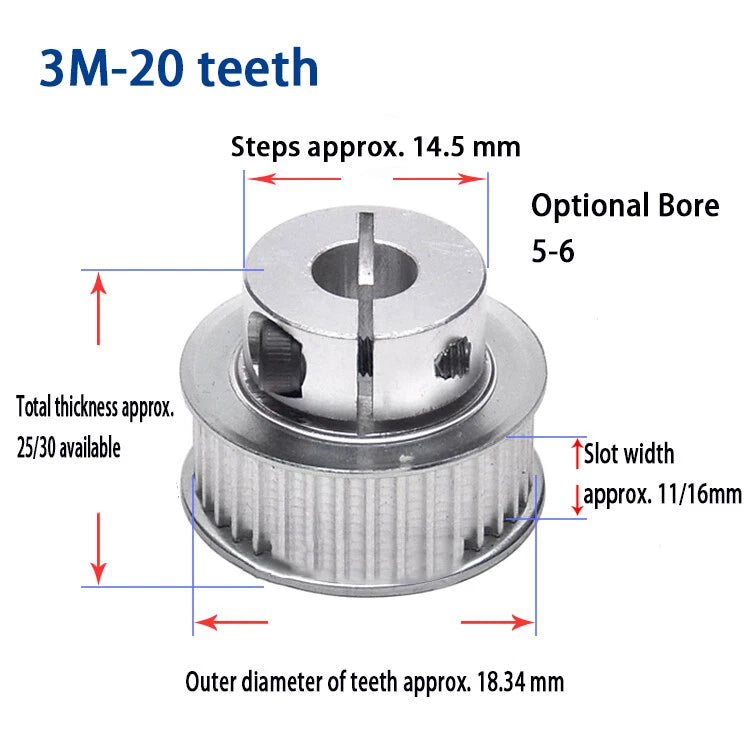
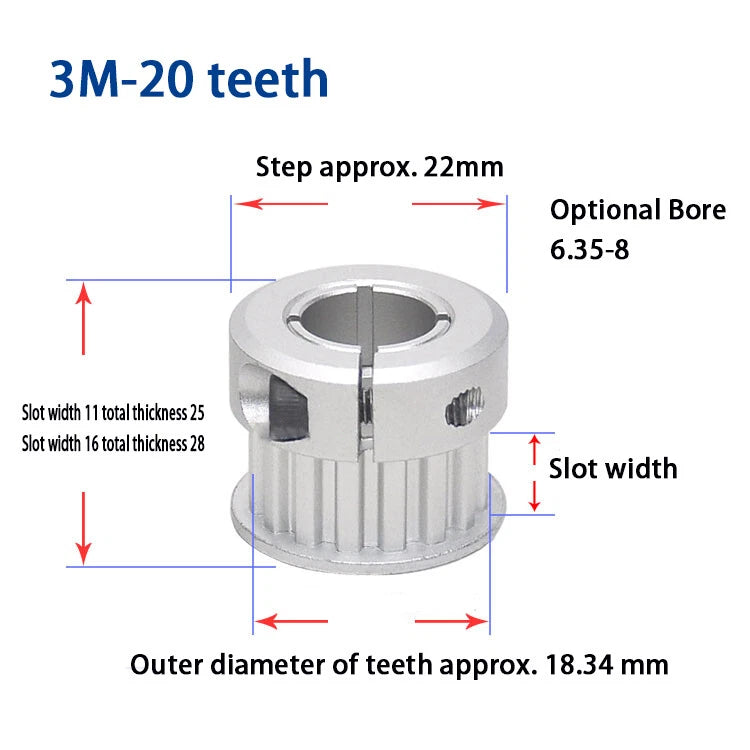
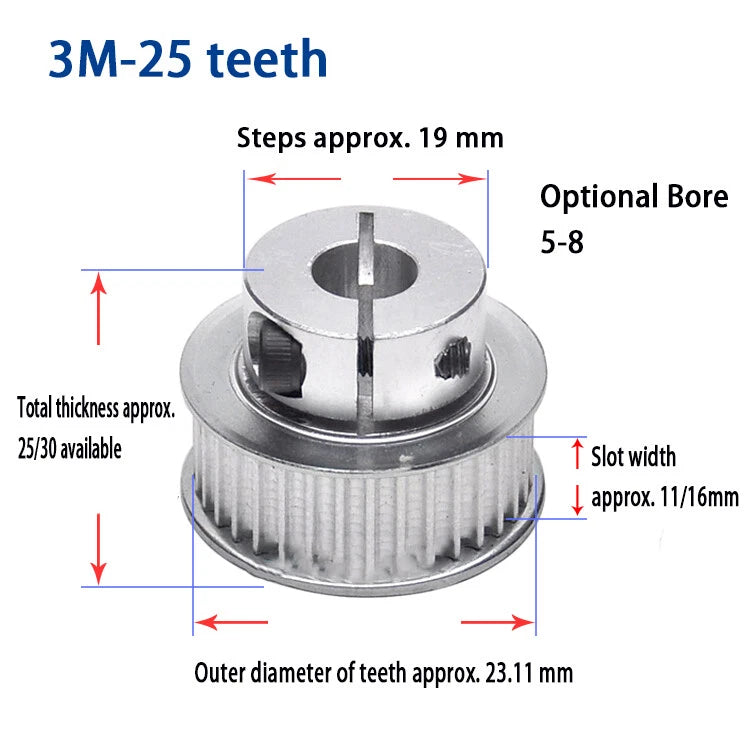
Outer Diameter See variant options
Hub Length See variant options
Finish See variant options
Weight See variant options

❓ Frequently Asked Questions

How do I choose between BF-type and K-type?

Choose BF-type if your belt tends to walk sideways — the integrated flanges keep it centered on the pulley face without additional guides. Choose K-type if your application involves significant torque or shock loads and your shaft has a matching keyway slot, as the key provides positive rotational locking beyond what clamping friction alone delivers.

How do I select the correct tooth count for my drive ratio?

Divide the driven pulley tooth count by the driving pulley tooth count to get your reduction ratio. For example, pairing a 20T driving pulley with a 40T driven pulley gives a 2:1 reduction. Use the tooth count that achieves your target speed or torque ratio while keeping belt wrap angle above 90° on the smaller pulley.

Will a 10 mm belt fit a pulley listed for 15 mm belt width?

It is not recommended. The pulley face width and flange spacing are sized for the specified belt width. Using a narrower belt on a wider pulley face reduces lateral support and may cause belt tracking issues. Always match the belt width to the pulley variant specification.

What shaft tolerance is required for the clamping bore?

The clamping collar is designed to work with standard h6 or h7 tolerance shafts. For best results, the shaft surface should be smooth and free of burrs. The split-collar design accommodates minor shaft diameter variation, but shafts significantly undersized relative to the bore may not clamp securely.

Is the aluminum body suitable for outdoor or humid environments?

Aluminum alloy has inherent oxidation resistance that provides moderate protection in humid indoor environments. For prolonged outdoor exposure or washdown environments, consider applying a compatible lubricant or corrosion inhibitor to the bore and clamping surfaces. The tooth profile itself does not require lubrication in normal dry-belt operation.

Can I use these pulleys with GT2 or HTD belts?

No. These pulleys are cut specifically to the 3M tooth profile with a 3 mm pitch. GT2 belts use a 2 mm pitch and a different tooth geometry, and HTD profiles differ in tooth depth and radius. Mixing incompatible belt and pulley profiles causes accelerated wear and unreliable power transmission. Use only 3M synchronous belts with these pulleys.

How do I install and tighten the clamping collar?

Slide the pulley onto the shaft at the desired position. Hand-tighten the clamping screws alternately in a cross pattern to seat the collar evenly. Then torque the screws to the specification printed on the pulley hub (typically 1.5–3 N·m for M3 screws, depending on hub size). Verify the pulley runs true before final tightening. Contact us to confirm the exact screw torque spec for your variant.

🛒 Select your bore diameter, tooth count, and belt width above, then add to cart.


You may also like

Recently viewed