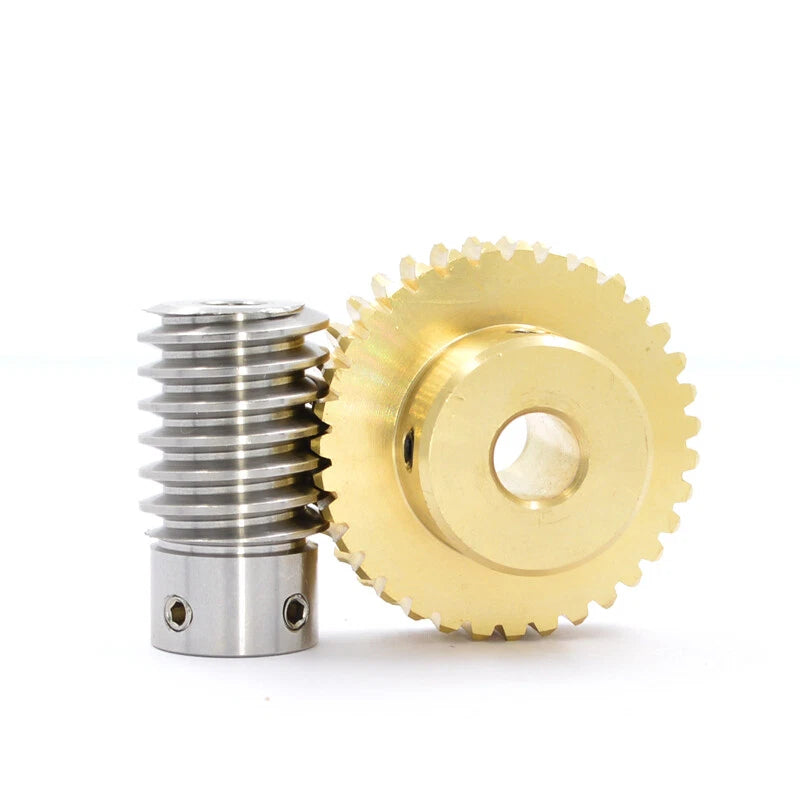
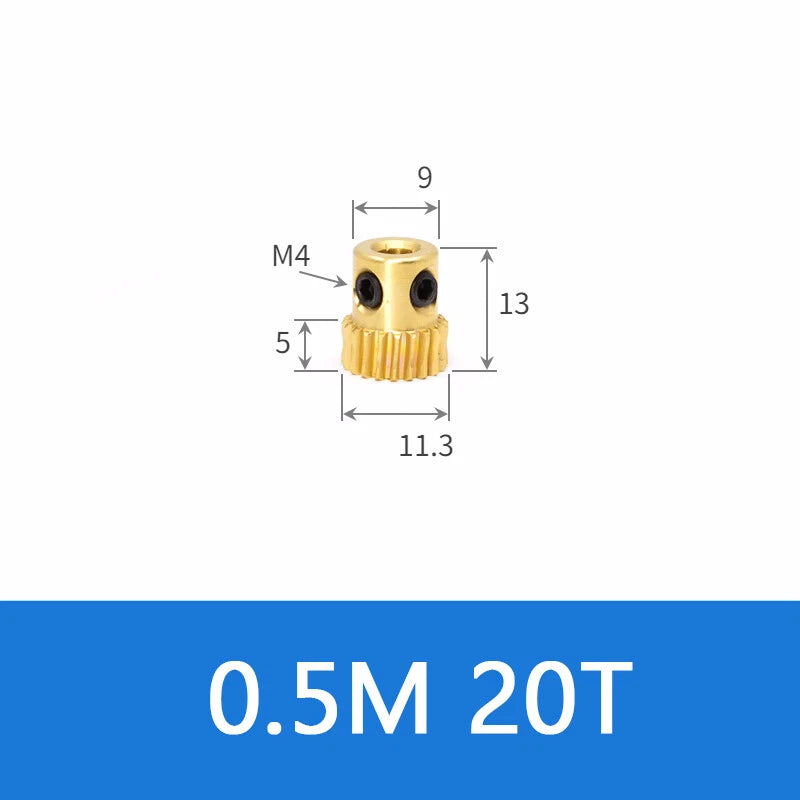
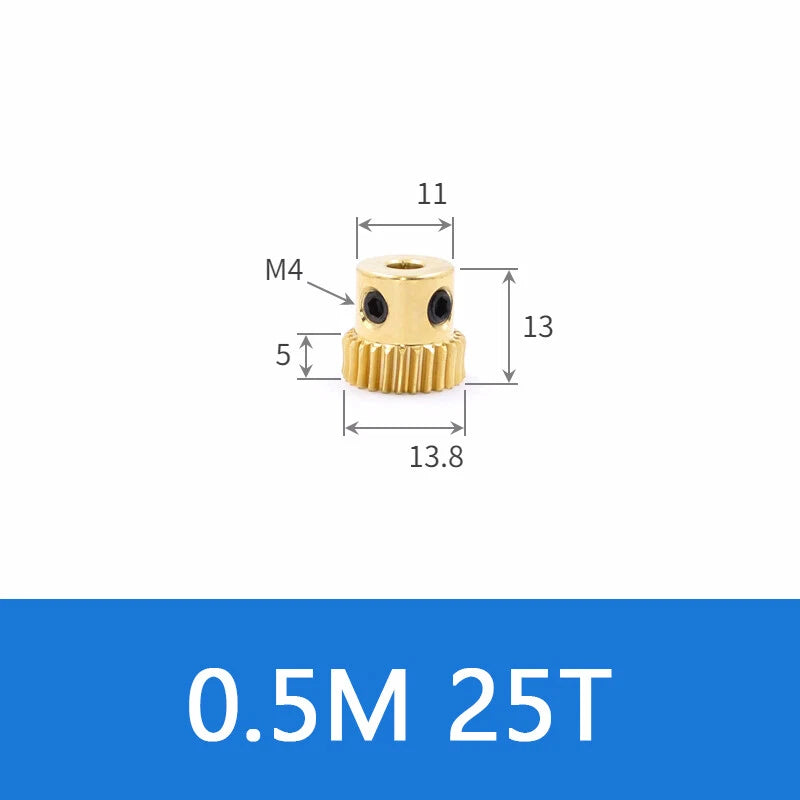
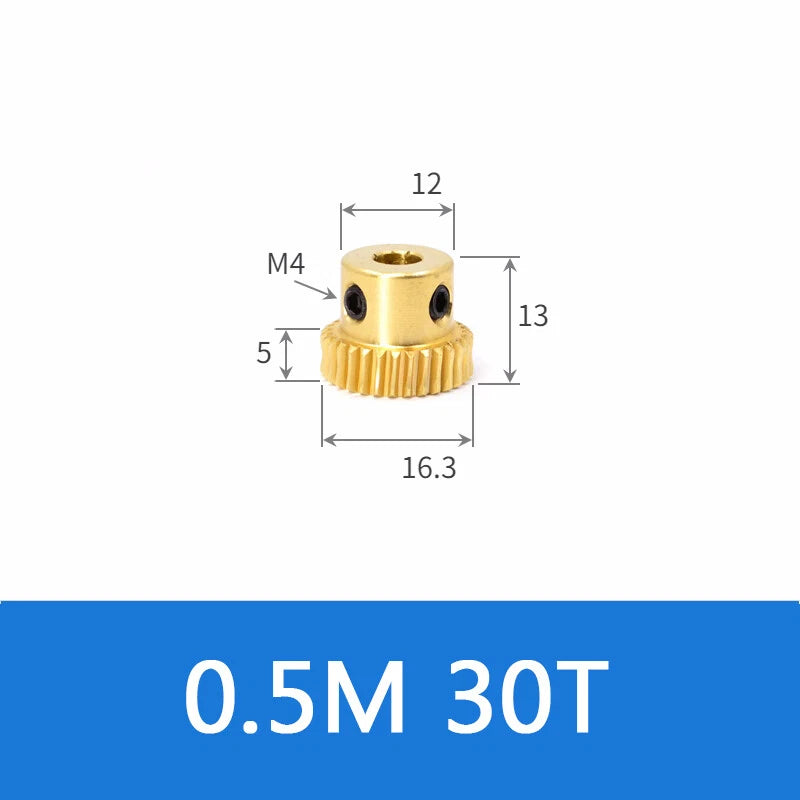
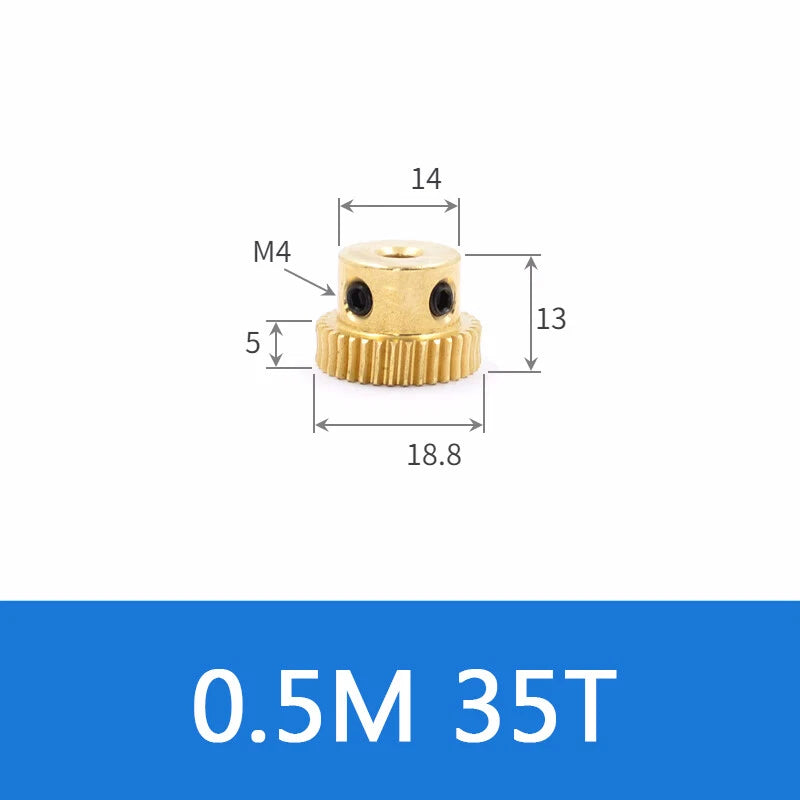
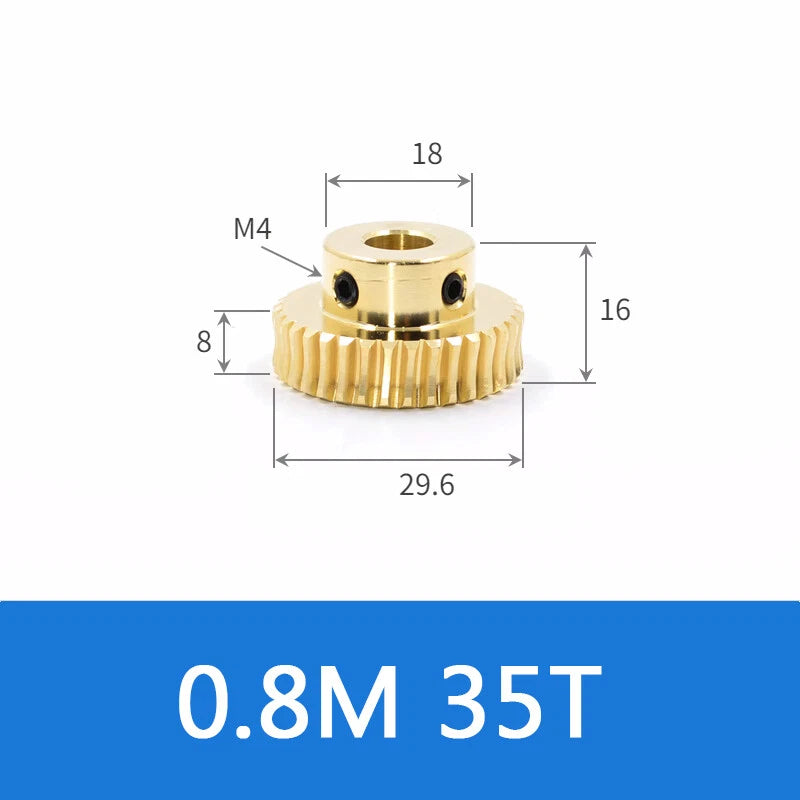
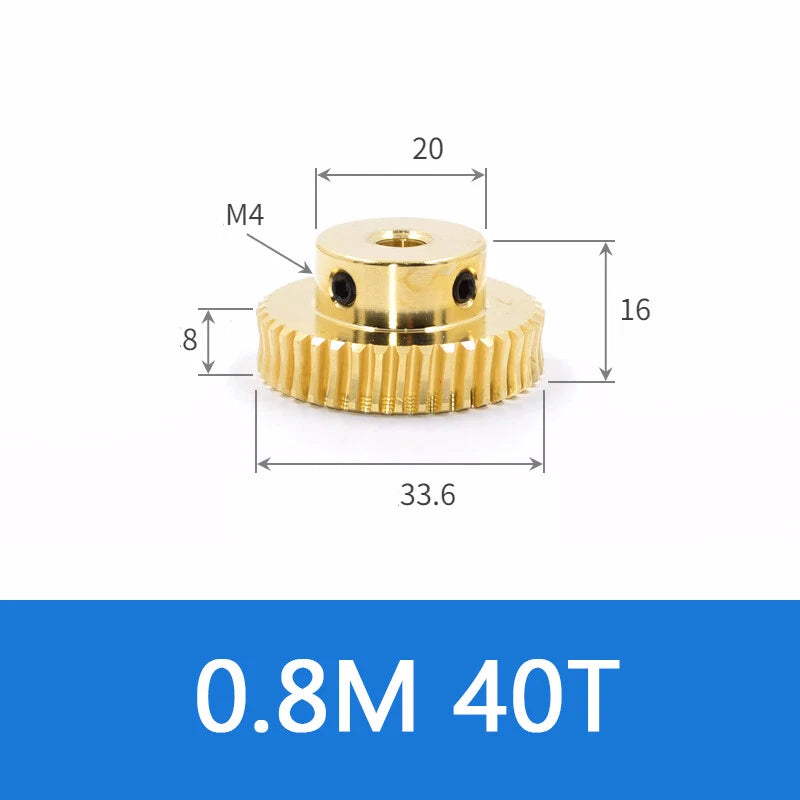
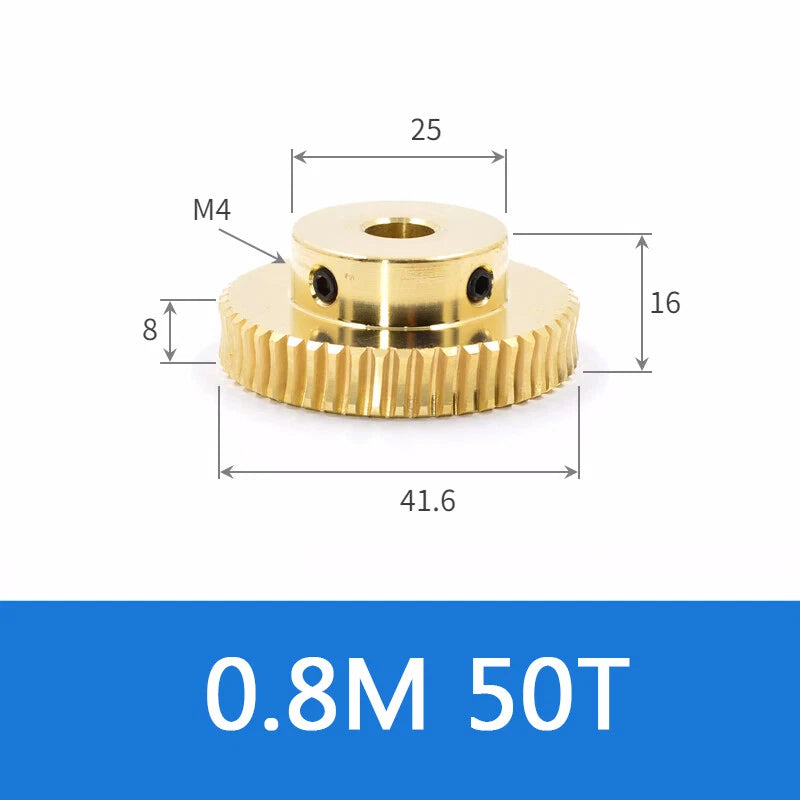
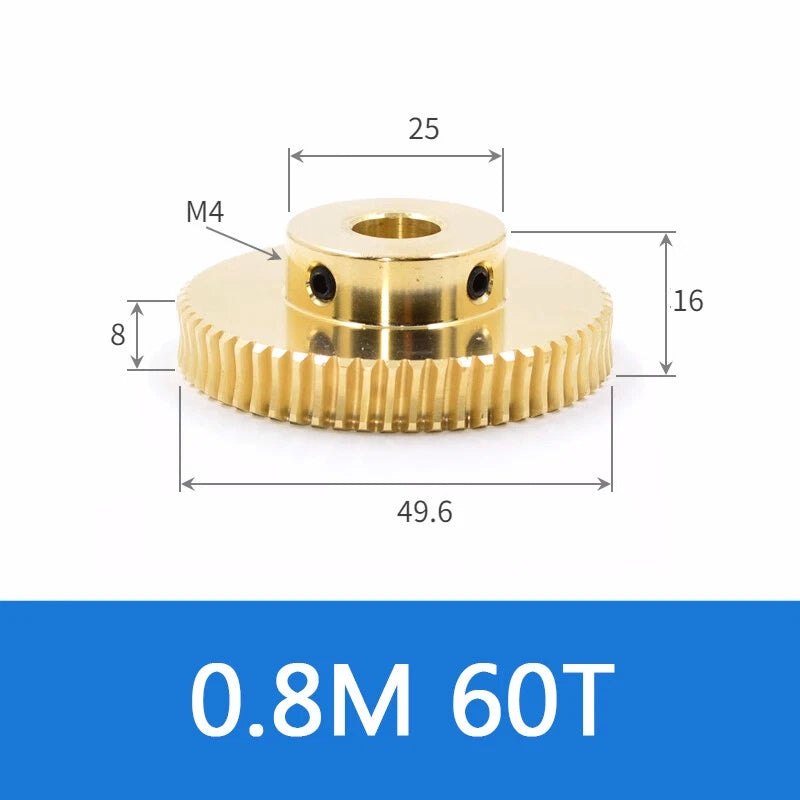
Brass Worm Wheel Gear 0.5/0.8/1/1.5 Module Transmission Gear Worm Rod Gear Shaft

No reviews

Price:
Sale price$7.89 USD
Stock:
In stock (500 units), ready to be shipped

Payment & Security

Ach Direct Debit Amazon American Express Apple Pay Bancontact BLIK Diners Club Discover EPS Google Pay iDEAL Wero JCB Maestro Mastercard Multibanco MobilePay PayPal Przelewy24 Shop Pay Twint Union Pay USDC Visa

Your payment information is processed securely. We do not store credit card details nor have access to your credit card information.

Limited Offer — Spend More, Save More
Spend $55+
Save $5
Spend $100+
Save $10
Spend $200+
Save $25
HomeDIYer DIY Expert Support

DIY Expert Support

Get fitment advice & recommendations

Mon–Fri  8:30 AM – 8:00 PM
24-Hour Fast Ship
Arrives in 3–14 Days
Worldwide Shipping
30-Day Returns
1 tree planted with every purchase

Description

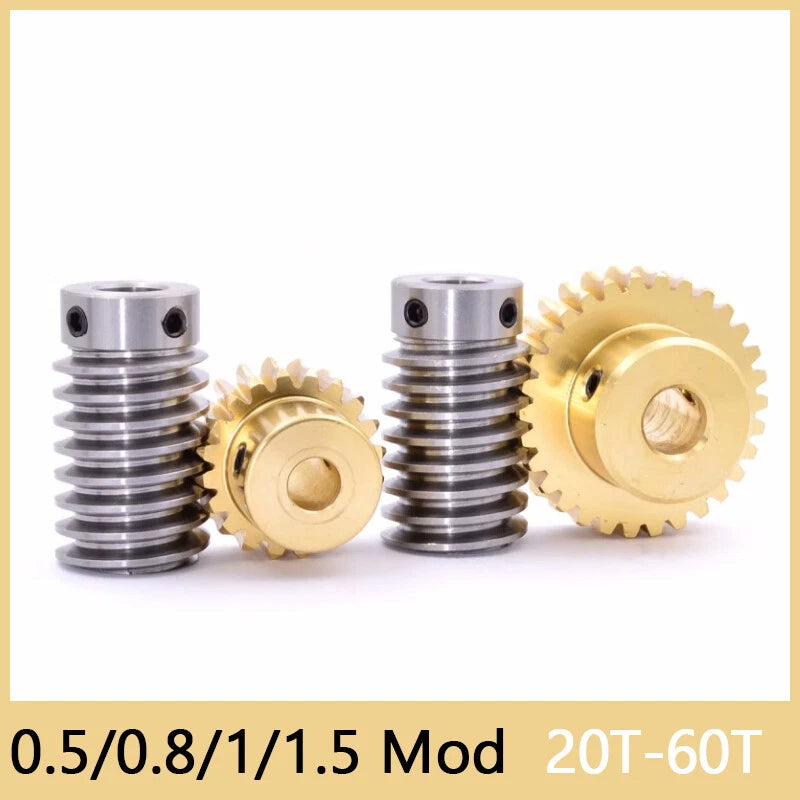
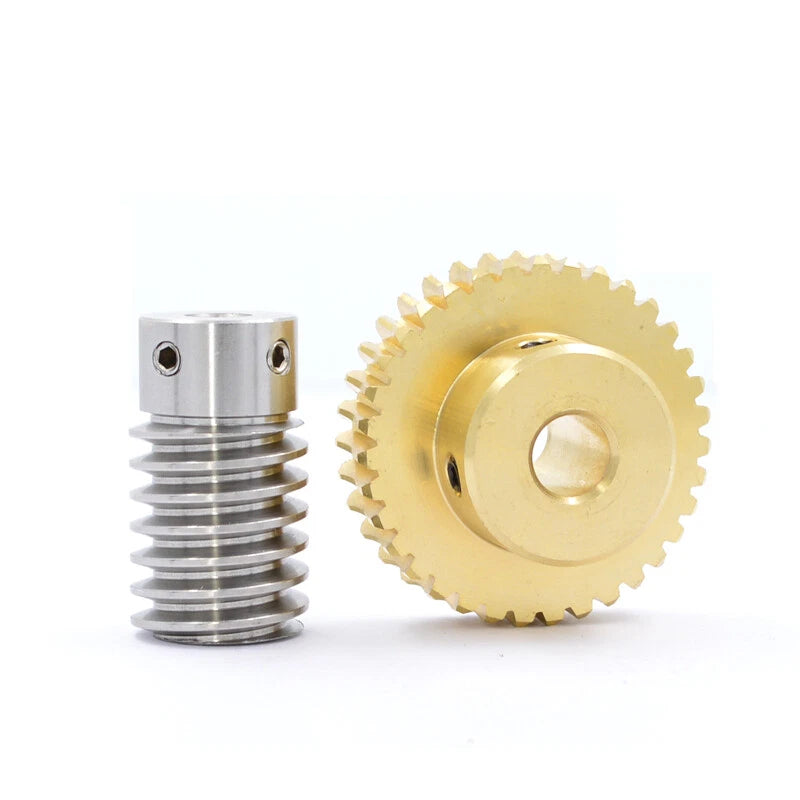
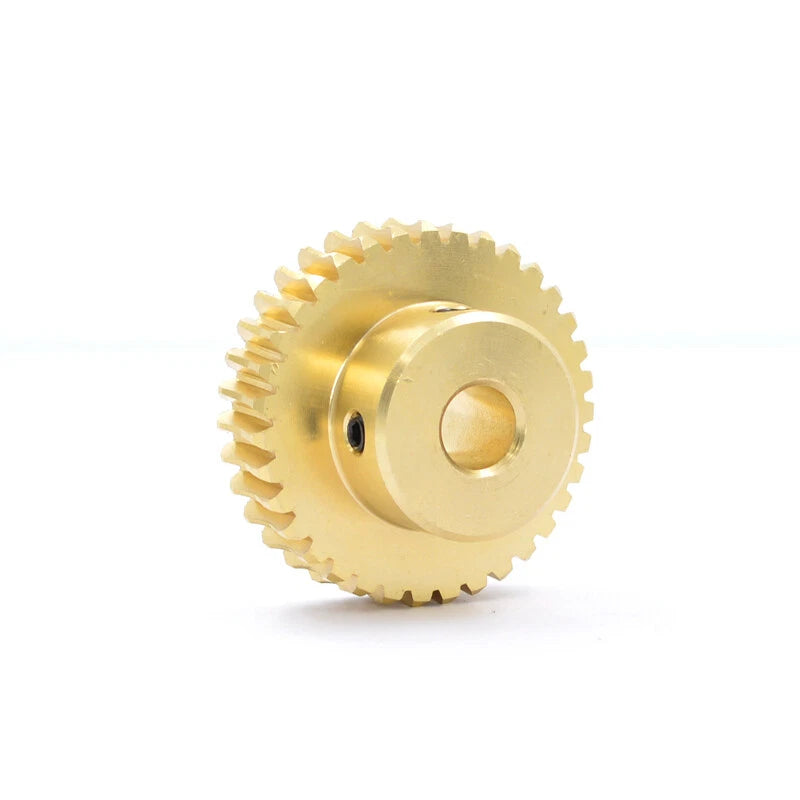
Brass Worm Wheel Gear & Worm Rod — Precision 0.5–1.5 Module Transmission Components

When your motion-control build demands a compact right-angle drive with reliable speed reduction, finding matched worm gear sets in the right module and bore can be a real bottleneck — especially for robotics builders, automation hobbyists, and small-machine designers who need interchangeable parts without custom machining. This listing covers a complete family of worm wheel gears and worm rods engineered to work together straight out of the box.

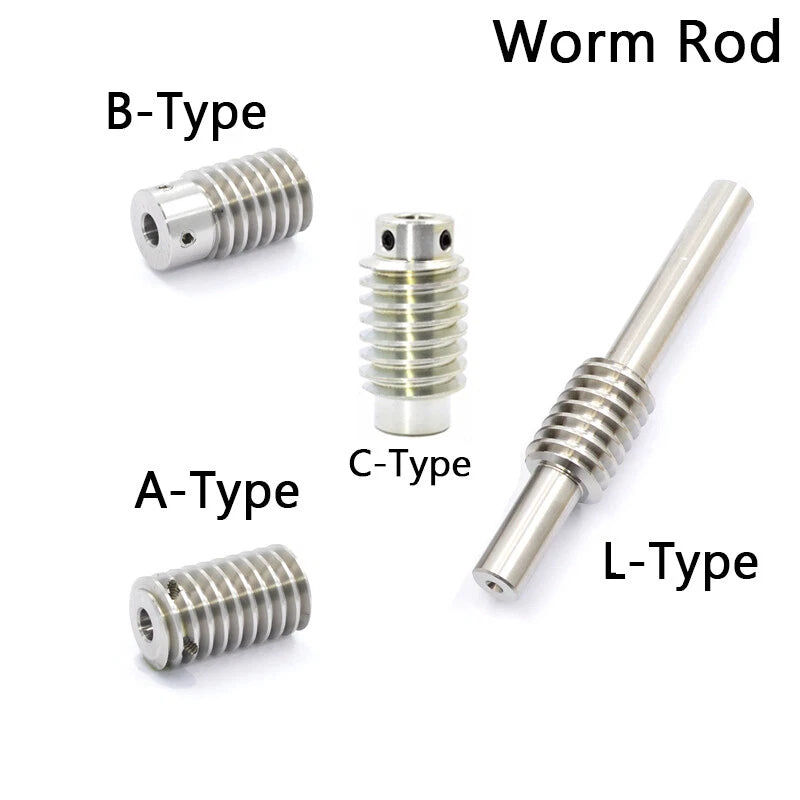
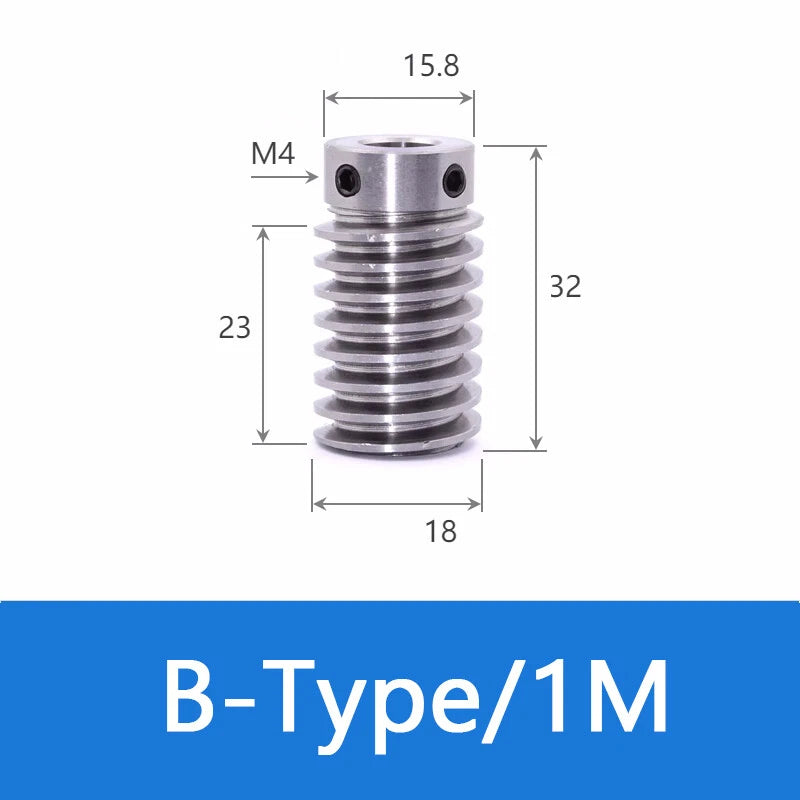
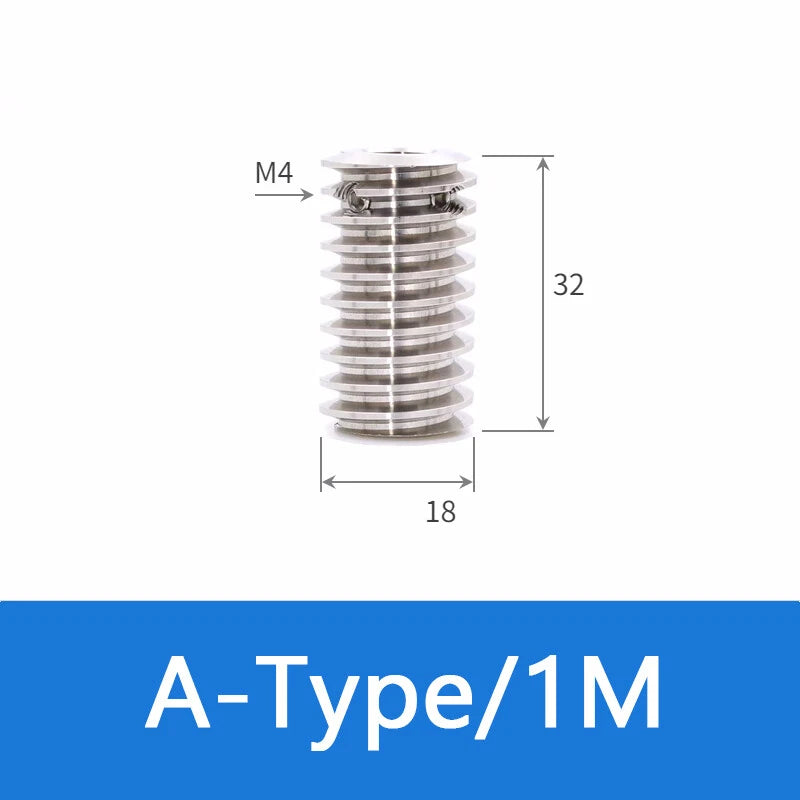
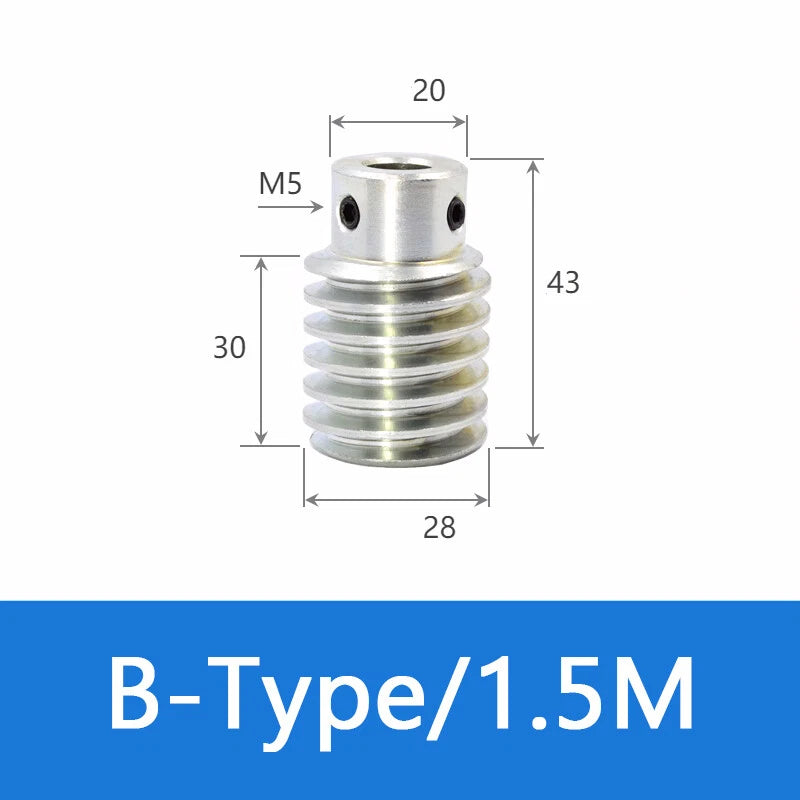
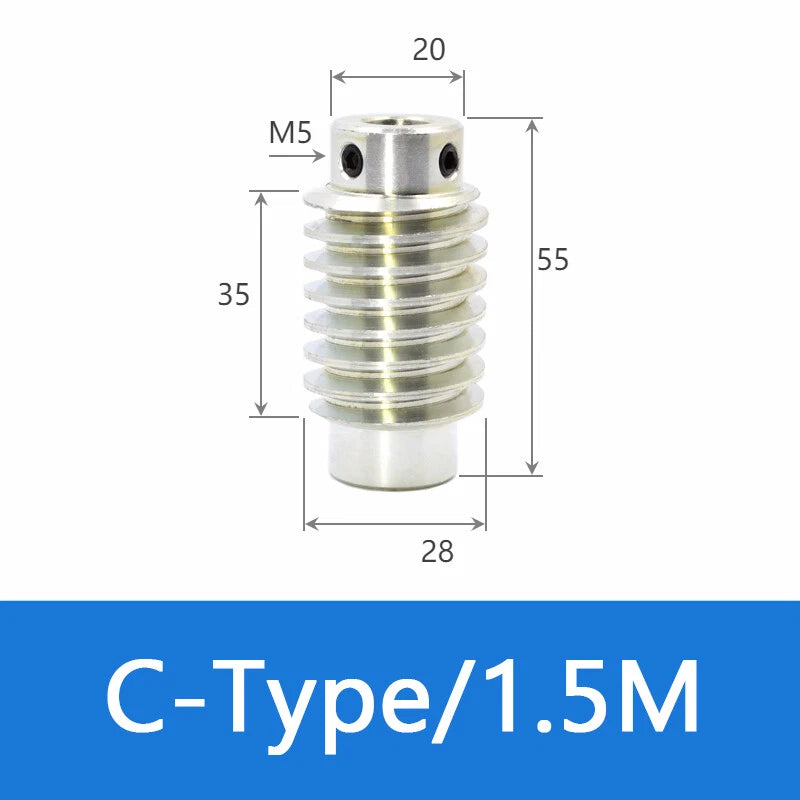
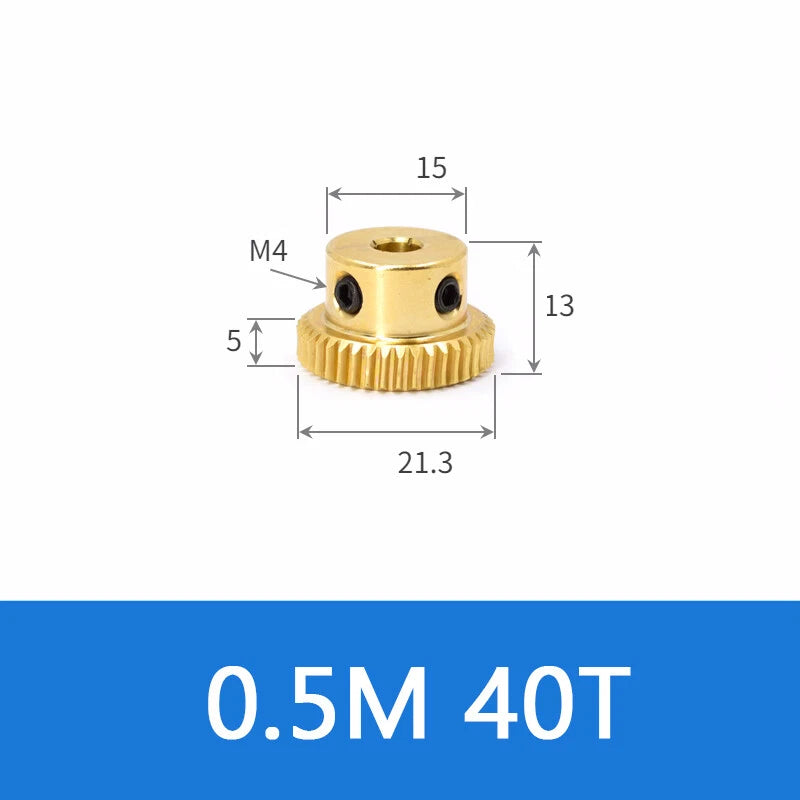
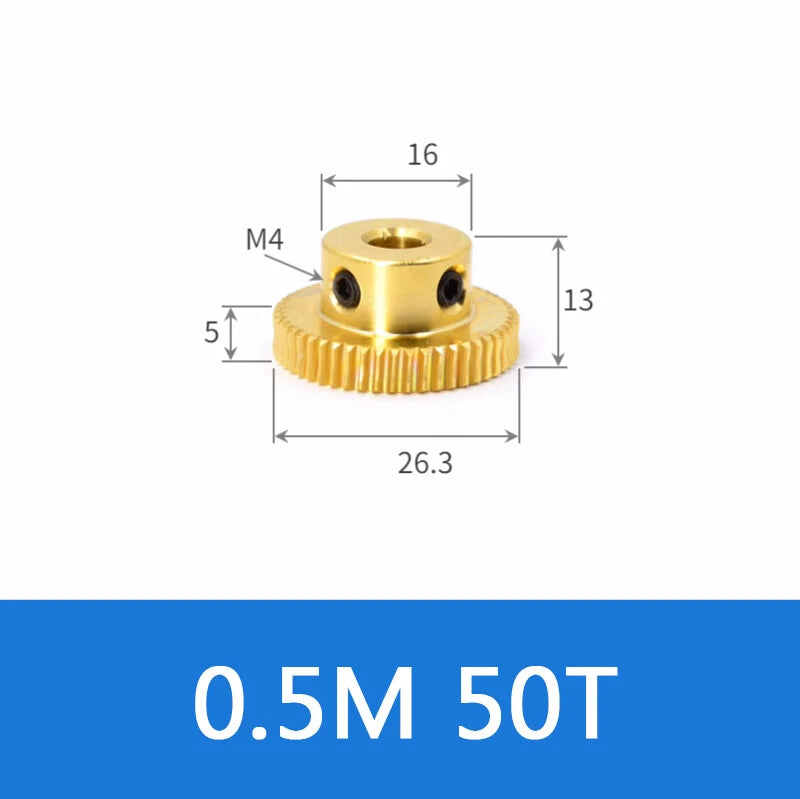
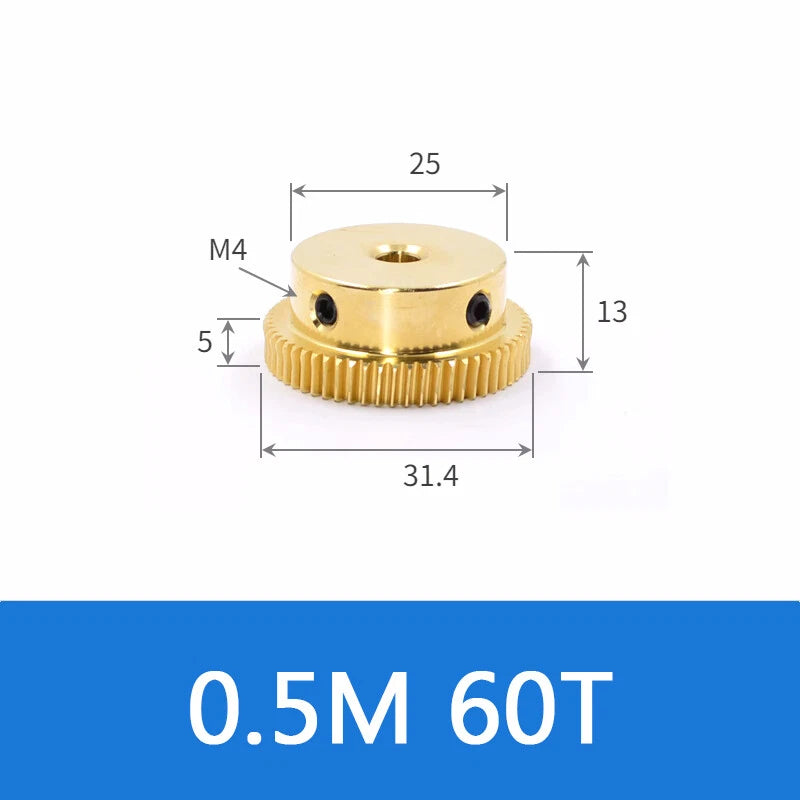
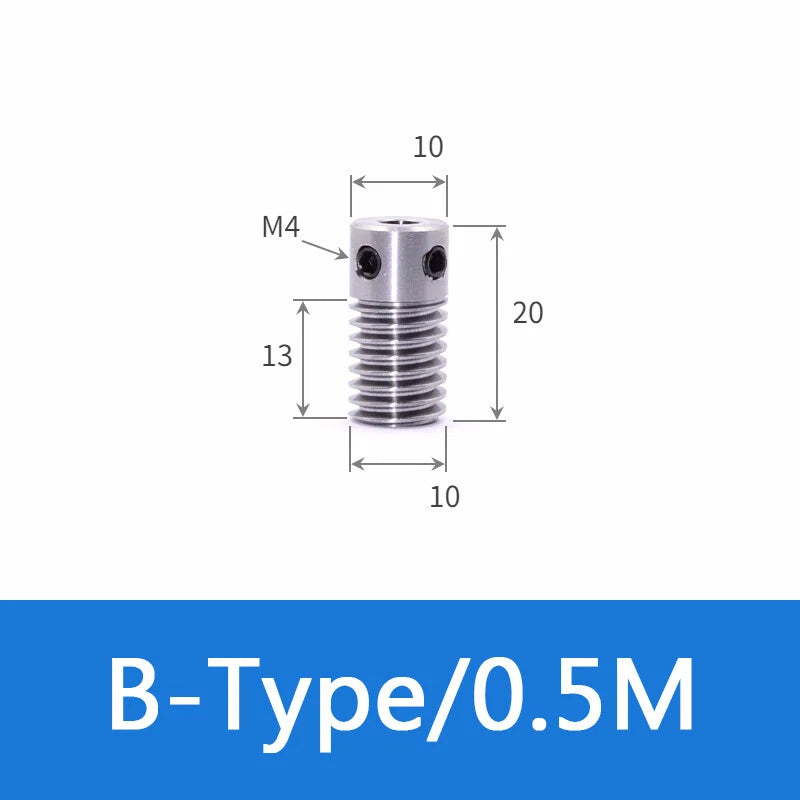
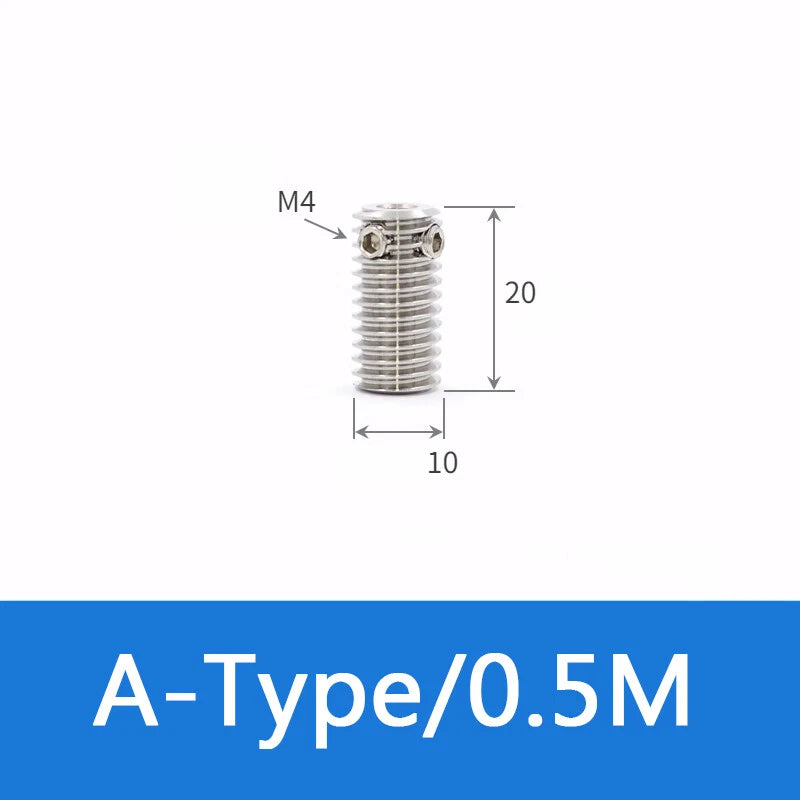
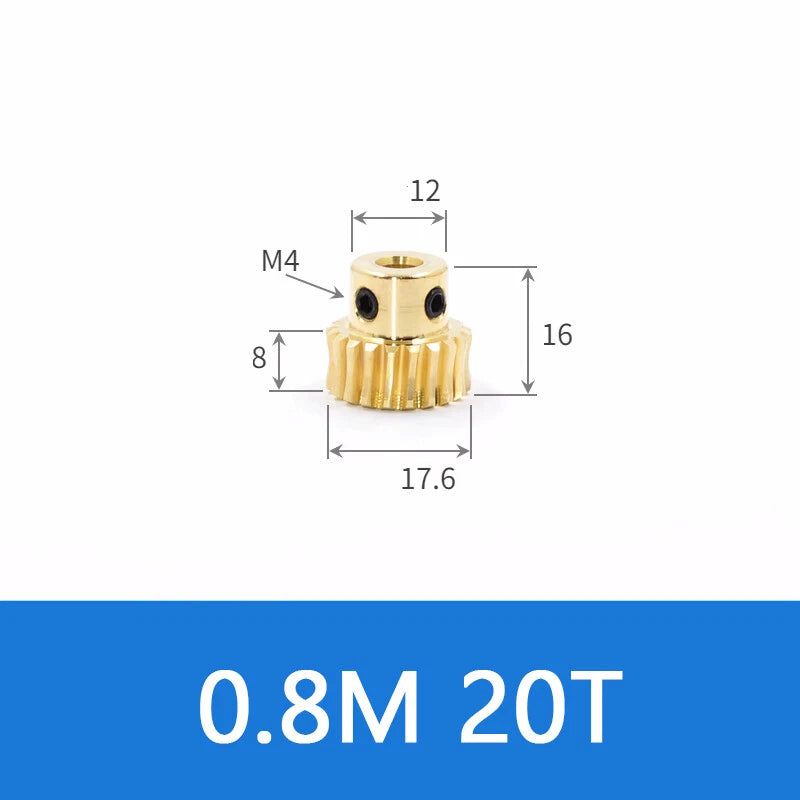
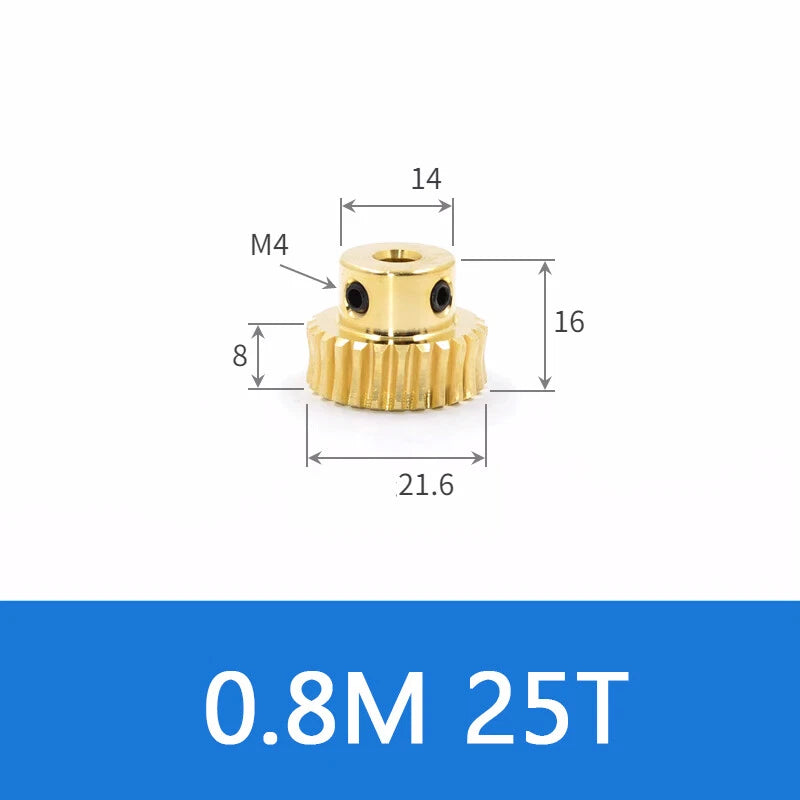
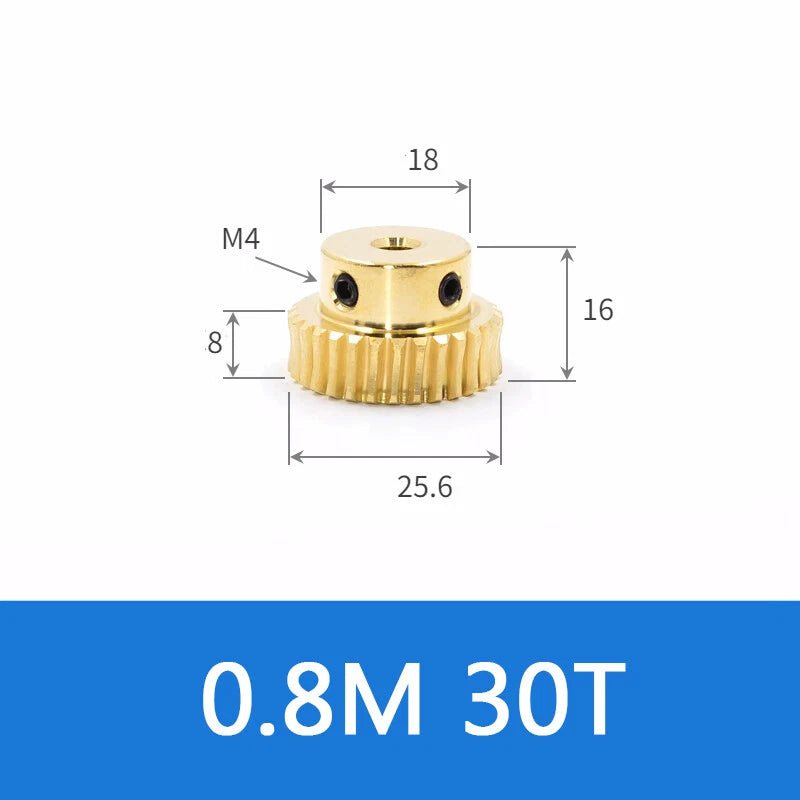
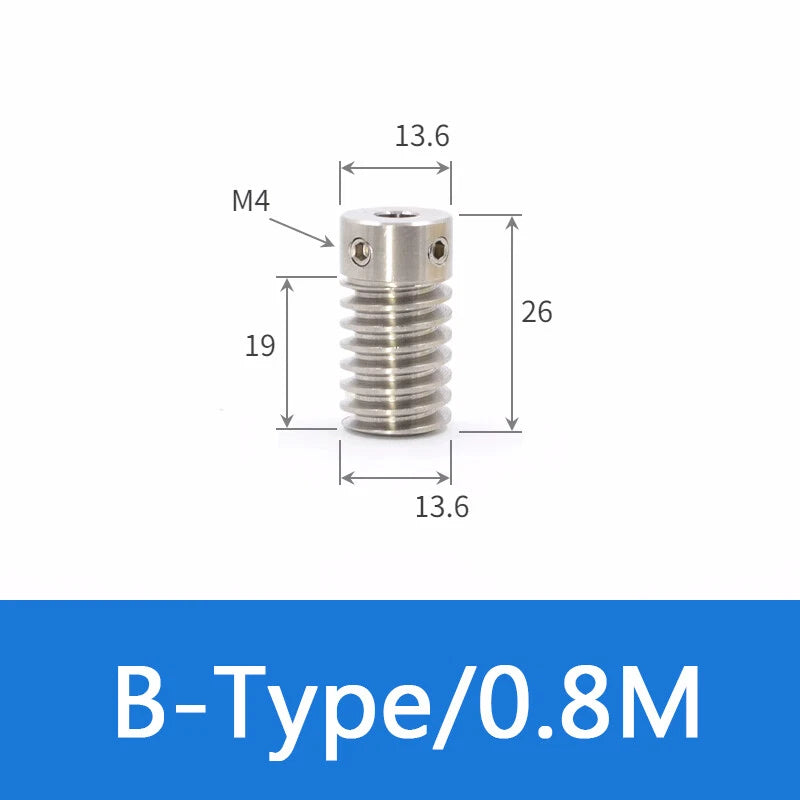
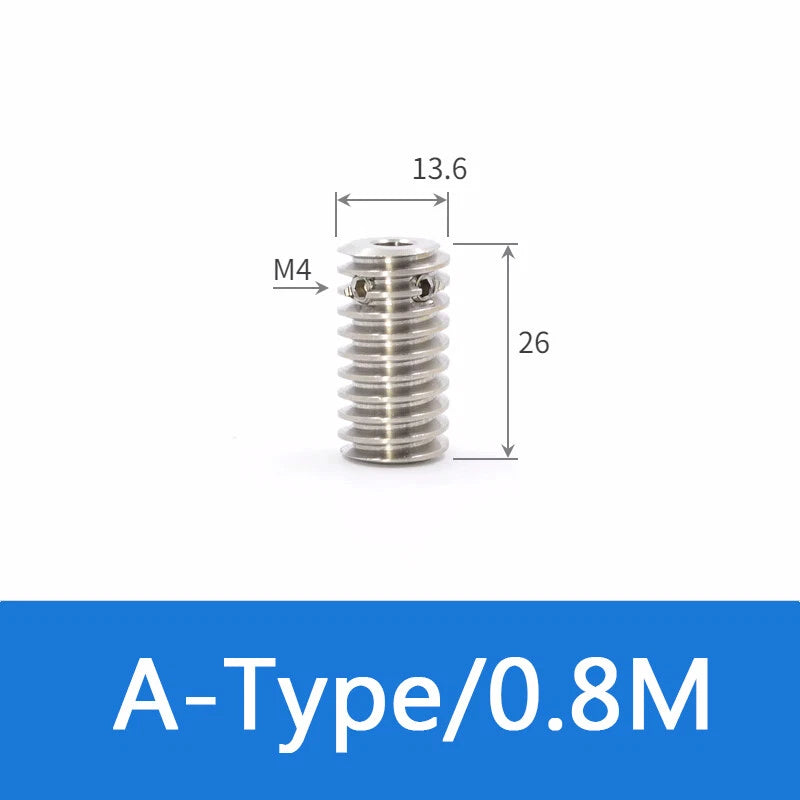
The set spans three material grades — brass, stainless steel, and 45# carbon steel — across four module sizes (0.5M, 0.8M, 1M, and 1.5M). Worm gears are available in tooth counts from 20T to 60T with bore diameters ranging from 4 mm (approx. 0.157 in) to 12 mm (approx. 0.472 in), including a 12 mm + 4 mm keyway option for keyed-shaft applications. Worm rods come in A-Type and B-Type (and C-Type for 1.5M) configurations to suit different housing geometries. Overall gear outer diameters typically range from approximately 18 mm to 65 mm (0.71–2.56 in) depending on module and tooth count.

Typical use cases include DIY CNC axis drives requiring a worm gear speed reducer for stepper motors, compact robotic joint actuators using a brass worm wheel gear set for low-backlash positioning, and small conveyor or indexing table builds where a stainless steel worm rod and gear shaft provide corrosion resistance in light-wash environments.

⚙️ Compatibility Note: Worm gears and worm rods within the same module (e.g., 0.5M gear + 0.5M rod) are designed to mesh together. Always match module numbers. Bore diameter must match your shaft OD; use the keyway variant for keyed shafts. Check center distance requirements against your housing design before ordering.

✅ Key Features of These Worm Wheel Gears & Worm Rods

🔩
Three Material Options

Choose brass for low-noise, self-lubricating drives; stainless steel for corrosion-resistant environments; or 45# carbon steel for higher-load, cost-effective applications.

📐
Four Module Sizes: 0.5M / 0.8M / 1M / 1.5M

Covers a wide range of speed-reduction ratios and torque requirements. Larger modules handle greater loads; smaller modules suit compact, fine-pitch drives.

⚙️
Tooth Counts 20T–60T

Select the tooth count that matches your target reduction ratio when paired with a single-start worm rod (e.g., 40T gear = 40:1 ratio with a 1-start worm).

🔧
Bore Diameters 4–12 mm, Including Keyway

Seven bore options — 4, 5, 6, 8, 10, 12 mm, and 12 mm + 4 mm keyway — accommodate a broad range of motor and shaft sizes without additional boring.

🔗
Matched Worm Rod Types (A / B / C)

A-Type and B-Type rods differ in shaft-end geometry; C-Type is available for 1.5M. Select the type that fits your housing or coupling arrangement.

🏭
Broad Application Compatibility

Suited for DIY CNC machines, robotic joints, conveyor indexers, camera pan-tilt rigs, and other compact right-angle drive systems requiring a worm gear speed reducer.

📐 Technical Specifications — Worm Wheel Gear & Worm Rod

Product Type Worm Wheel Gear / Worm Rod (Gear Shaft)
Module Options 0.5M, 0.8M, 1M, 1.5M
Material Options Brass, Stainless Steel, 45# Carbon Steel
Gear Tooth Count 20T, 25T, 30T, 35T, 40T, 50T, 60T (gear variants)
Worm Rod Types A-Type, B-Type, C-Type (1.5M only)
Bore Diameter 4 mm / 5 mm / 6 mm / 8 mm / 10 mm / 12 mm / 12 mm + keyway 4 mm
Gear Outer Diameter (approx.) See variant options
Worm Rod Length (approx.) See variant options
Tooth Profile Standard involute worm gear profile
Pressure Angle 20° (standard)
Helix Direction Right-hand (standard)
Surface Finish — Brass Natural machined brass
Surface Finish — Stainless Steel Natural machined stainless
Surface Finish — 45# Steel Natural machined carbon steel
Quantity per Order 1 piece

❓ Frequently Asked Questions

How do I choose the right module size for my project?

Module size determines the tooth size and load capacity. Smaller modules (0.5M, 0.8M) are suited for light-duty, compact drives — such as camera rigs or small robotic joints — where space is limited. Larger modules (1M, 1.5M) handle greater torque and are better for CNC axis drives or conveyor indexers. Match the module of the worm gear to the module of the worm rod for proper meshing.

What reduction ratio will I get with a specific tooth count?

For a single-start worm rod, the reduction ratio equals the number of teeth on the worm gear. For example, a 40T worm gear paired with a 1-start worm rod gives a 40:1 ratio. If you use a 2-start worm rod, the ratio is halved (e.g., 40T ÷ 2 = 20:1). All worm rods in this listing are single-start unless otherwise specified in the variant name.

Which material should I choose — brass, stainless steel, or 45# steel?

Brass worm gears are self-lubricating, run quietly, and are ideal for light-to-medium loads where noise reduction matters (e.g., camera pan-tilt, small automation). Stainless steel suits environments with moisture or mild chemical exposure where corrosion resistance is needed. 45# carbon steel offers higher strength and is cost-effective for dry, higher-load applications. A common pairing is a brass worm gear with a steel worm rod to reduce wear on the softer gear.

How do I select the correct bore diameter?

Measure your motor or drive shaft outer diameter (OD) precisely with calipers. Select the bore that matches your shaft OD. If your shaft has a keyway, choose the "12mm + keyway 4mm" variant for a keyed connection. For shafts between listed bore sizes, you may need to bore out the gear — consult a machinist. Do not force a gear onto an oversized shaft.

What is the difference between A-Type and B-Type worm rods?

A-Type and B-Type worm rods differ in their shaft-end geometry — specifically the length and style of the non-threaded shaft extensions on each end. B-Type rods typically have a longer usable shaft section, while A-Type may have a shorter or differently proportioned end. C-Type (available in 1.5M) has a further variation in end geometry. Choose the type that fits your housing bore spacing and coupling requirements. If unsure, contact us with your housing drawing for confirmation.

Are these worm gears self-locking?

Worm gear sets with a low lead angle (typically modules 0.5M–1M with single-start worms) tend to be self-locking or near-self-locking, meaning the load cannot back-drive the worm rod. This is useful for positioning applications where you want the load to hold position when the motor is off. However, self-locking behavior depends on friction conditions, lubrication, and load magnitude — do not rely on self-locking as a safety brake in critical applications.

Do I need to lubricate these gears?

Yes, lubrication extends service life significantly. Brass-on-steel worm gear pairs benefit from a light gear grease or worm gear oil applied to the mesh contact area before first use. Stainless steel pairs also benefit from lubrication. Re-lubricate periodically based on duty cycle and operating speed. Avoid dry running, especially at higher speeds, as it accelerates wear on the worm gear teeth.

🛒 Select your Material, Type, and Bore Diameter above, then add to cart.

You may also like

Recently viewed