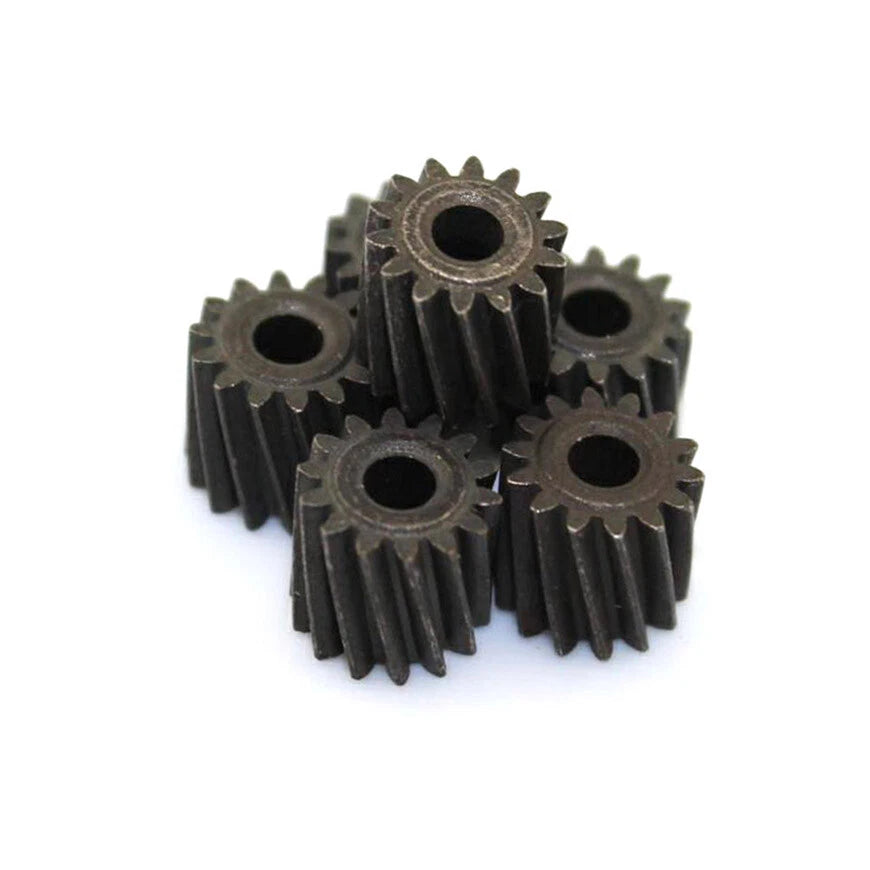
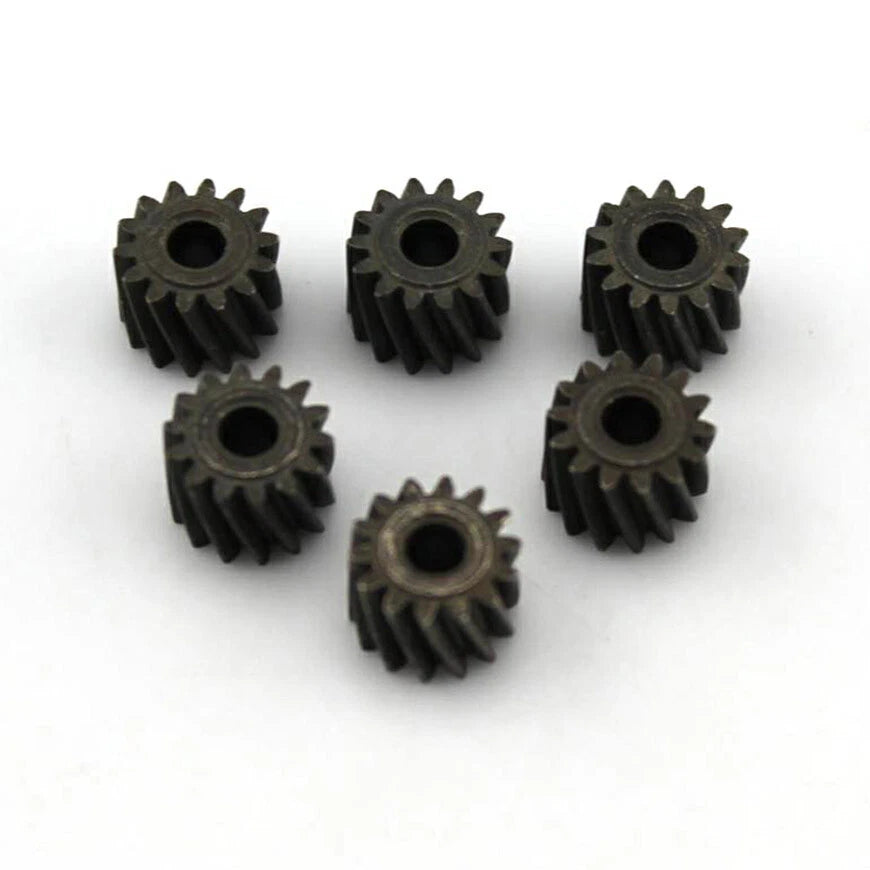
Carbon Steel Pinion Gear Helical Gears Wheel 0.5M 14 Teeth 2.9mm Bore Bevel Gear

No reviews

Price:
Sale price$4.46 USD
Stock:
In stock (500 units), ready to be shipped

Payment & Security

Ach Direct Debit Amazon American Express Apple Pay Bancontact BLIK Diners Club Discover EPS Google Pay iDEAL Wero JCB Maestro Mastercard Multibanco MobilePay PayPal Przelewy24 Shop Pay Twint Union Pay USDC Visa

Your payment information is processed securely. We do not store credit card details nor have access to your credit card information.

Limited Offer — Spend More, Save More
Spend $55+
Save $5
Spend $100+
Save $10
Spend $200+
Save $25
HomeDIYer DIY Expert Support

DIY Expert Support

Get fitment advice & recommendations

Mon–Fri  8:30 AM – 8:00 PM
24-Hour Fast Ship
Arrives in 3–14 Days
Worldwide Shipping
30-Day Returns
1 tree planted with every purchase

Description

Carbon Steel Helical Pinion Gear — Smooth, Low-Noise Power Transmission for Precision DIY Builds

When a noisy, imprecise gear train is holding back your project — whether it's a robotic arm, a motorized camera slider, or a compact automation mechanism — the right pinion gear makes all the difference. This carbon steel helical pinion gear is designed for makers, engineers, and hobbyists who need reliable torque transfer in tight spaces without the rattle and backlash of lower-grade components.

Each gear is machined from carbon steel and features a helical tooth profile at 0.5 module (M0.5) with 14 teeth and a 2.9mm (approximately 0.114 in) bore diameter. The overall gear width is typically 5–8mm (0.20–0.31 in), making it well-suited for compact drive trains. Available in packs of 1, 5, or 10 pieces to match your project scale.

Typical applications include DIY robotics and servo-driven mechanisms, RC vehicle gearboxes requiring low-noise helical mesh, compact stepper motor drive stages, and small-scale automation or 3D printer extruder assemblies — all scenarios where a helical gear's gradual tooth engagement reduces vibration and extends component life compared to straight-cut spur gears.

⚙️ Compatibility: Designed to mesh with other 0.5 module (M0.5) gears. Verify bore diameter (2.9mm) matches your shaft before ordering. Pairs with M0.5 rack, spur, or helical gears of the same module.

✅ Key Features of These Carbon Steel Helical Pinion Gears

  • 🔩 Carbon Steel Construction — Offers a strong strength-to-weight ratio suitable for moderate-load drive applications, with better wear resistance than plastic alternatives.
  • 🌀 Helical Tooth Profile — Gradual tooth engagement reduces impact noise and vibration compared to straight spur gears, resulting in smoother operation at higher RPMs.
  • 📐 Precise 0.5 Module Specification — Standardized M0.5 tooth geometry ensures accurate meshing with any compatible M0.5 gear, rack, or pinion in your drivetrain.
  • 🕳️ 2.9mm Bore Diameter — Sized to fit common small-diameter motor and servo shafts used in robotics, RC, and automation builds. Confirm shaft OD before assembly.
  • 📦 Flexible Pack Quantities — Available in 1, 5, or 10-piece packs so you can order exactly what your build requires — from a single replacement to a full project batch.
  • 14-Tooth Pinion Configuration — A 14-tooth count provides a useful gear ratio when paired with larger driven gears, enabling speed reduction or torque multiplication in compact gearbox designs.

📐 Technical Specifications — Helical Pinion Gear

Module 0.5M
Number of Teeth 14T
Bore Diameter 2.9mm (~0.114 in)
Gear Width Typically 5–8mm (0.20–0.31 in)
Pitch Diameter 7mm (0.5M × 14T)
Tooth Profile Helical
Material Carbon Steel
Finish See variant options
Packing Quantity 1pcs / 5pcs / 10pcs (see variant options)
Compatible Module M0.5 gear systems
Pressure Angle Contact us to confirm

❓ Frequently Asked Questions

What does "0.5 module" mean and how do I know if it's compatible with my existing gears?

Module (M) is the standardized unit that defines gear tooth size. M0.5 means the pitch diameter divided by the number of teeth equals 0.5mm. For two gears to mesh correctly, they must share the same module. Check the module specification on your existing gear or motor pinion — if it reads M0.5 or 0.5M, this gear will mesh with it.

Why choose a helical gear over a straight spur gear for my project?

Helical gears have teeth cut at an angle to the gear axis, so multiple teeth engage simultaneously rather than one at a time. This distributes load more evenly, reduces impact noise, and produces smoother rotation — especially at higher speeds. If your application is noise-sensitive (e.g., a camera slider or indoor robot), helical gears are a meaningful upgrade over spur gears of the same module.

Will a 2.9mm bore fit my motor shaft?

The bore is 2.9mm, which fits shafts with an outer diameter of approximately 2.9mm. Many small DC motors, micro gear motors, and stepper motor output shafts in the 3mm class may require light fitting or a set screw for secure attachment. Measure your shaft OD with calipers before ordering. If your shaft is slightly larger (e.g., 3.0mm), a light press fit or reaming may be needed.

Is carbon steel suitable for outdoor or humid environments?

Carbon steel offers good mechanical strength but has limited corrosion resistance compared to stainless steel. For outdoor or high-humidity applications, we recommend applying a light machine oil or grease to the gear teeth and bore after installation. For fully corrosion-resistant builds, consider stainless steel alternatives. For indoor robotics, automation, and RC applications, carbon steel performs reliably with minimal maintenance.

How do I select the right pack quantity for my project?

If you're building a single mechanism or replacing one worn gear, the 1-piece pack is sufficient. For projects with multiple gear stages or if you want spares on hand, the 5-piece pack offers better value per unit. The 10-piece pack is ideal for batch builds, classroom projects, or production prototypes where you need consistent parts across multiple assemblies.

What gear ratio can I achieve by pairing this 14-tooth pinion with a larger gear?

Gear ratio is calculated as the number of teeth on the driven gear divided by the number of teeth on the driving pinion. With this 14-tooth pinion driving a 28-tooth gear, you get a 2:1 reduction (half the speed, double the torque). Pairing with a 42-tooth gear gives 3:1, and so on. All mating gears must be M0.5 module to mesh correctly.

Can I use this gear in a 3D printer extruder or CNC machine?

Yes — M0.5 helical pinion gears are commonly used in compact extruder drive mechanisms and small CNC axis drives. Verify that your existing gear train uses M0.5 module components and that the 2.9mm bore matches your motor shaft. For high-cycle or high-torque CNC applications, ensure adequate lubrication to extend service life.

🛒 Select your Size and Packing Qty above, then add to cart.


You may also like

Recently viewed