CNC Shaft Coupler Flexible Plum Spider Jaw Coupling Stepper Motor All Bore Sizes

No reviews

Price:
Sale price$4.28 USD
Stock:
In stock (500 units), ready to be shipped

Payment & Security

Ach Direct Debit Amazon American Express Apple Pay Bancontact BLIK Diners Club Discover EPS Google Pay iDEAL Wero JCB Maestro Mastercard Multibanco MobilePay PayPal Przelewy24 Shop Pay Twint Union Pay USDC Visa

Your payment information is processed securely. We do not store credit card details nor have access to your credit card information.

Limited Offer — Spend More, Save More
Spend $55+
Save $5
Spend $100+
Save $10
Spend $200+
Save $25
HomeDIYer DIY Expert Support

DIY Expert Support

Get fitment advice & recommendations

Mon–Fri  8:30 AM – 8:00 PM
24-Hour Fast Ship
Arrives in 3–14 Days
Worldwide Shipping
30-Day Returns
1 tree planted with every purchase

Description

CNC Shaft Coupler Flexible Plum Spider Jaw Coupling — Precision Motion for Every Build

When a rigid connection between your motor and lead screw causes vibration, backlash, or premature wear, the right flexible coupling makes all the difference. These CNC shaft couplers are designed for makers, machinists, and automation engineers who need reliable torque transmission with built-in tolerance for shaft misalignment — without sacrificing positional accuracy.

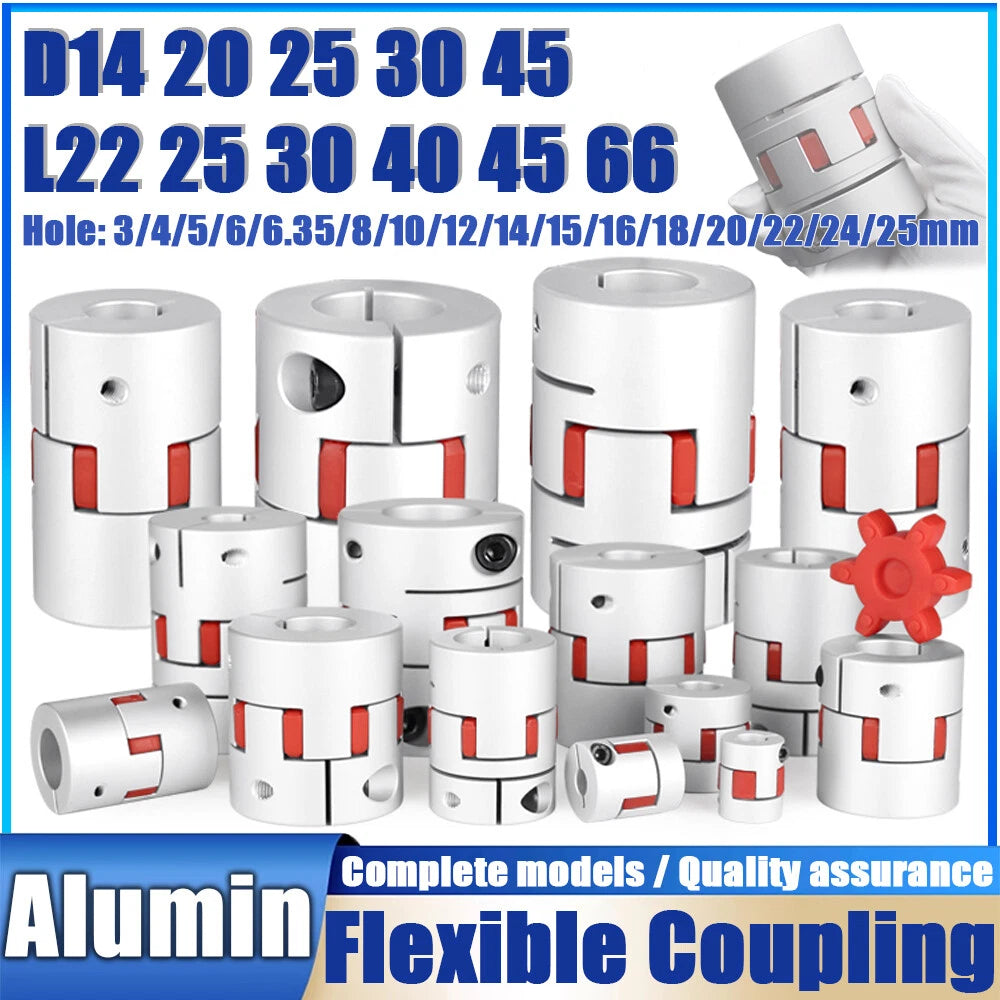
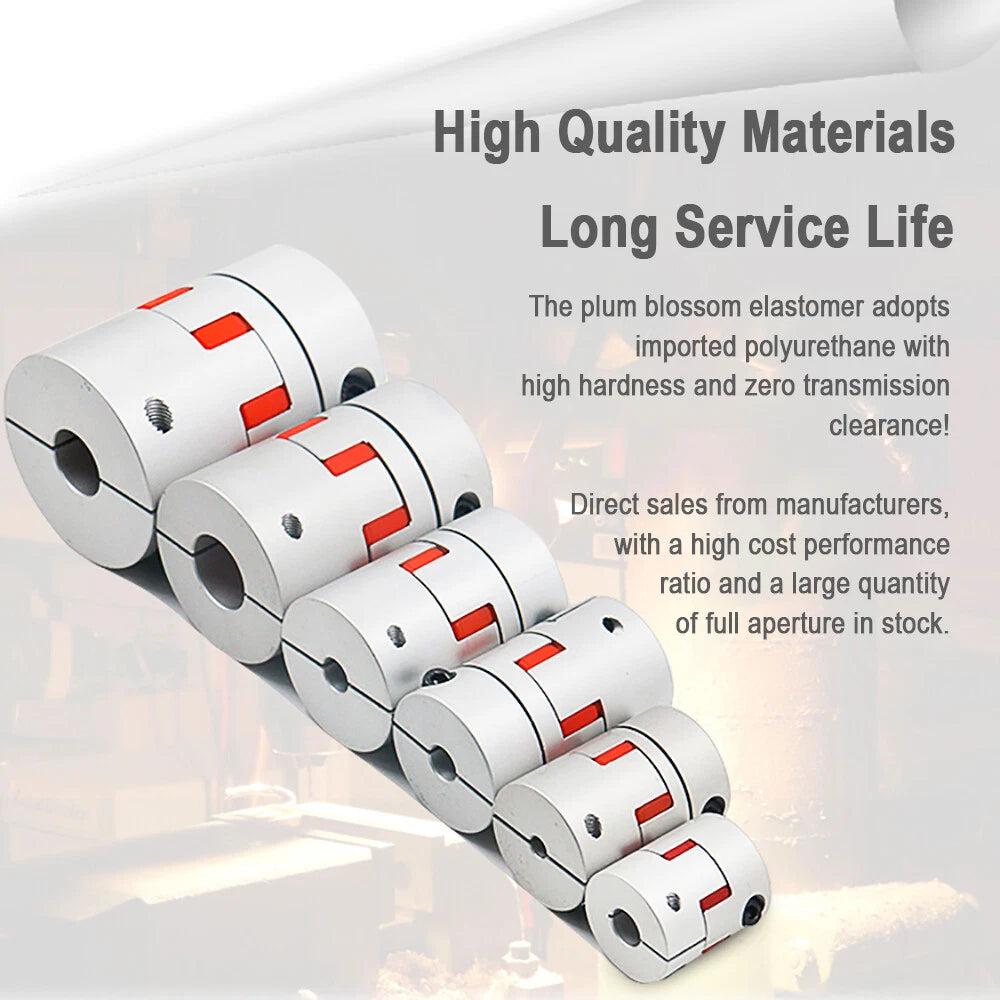
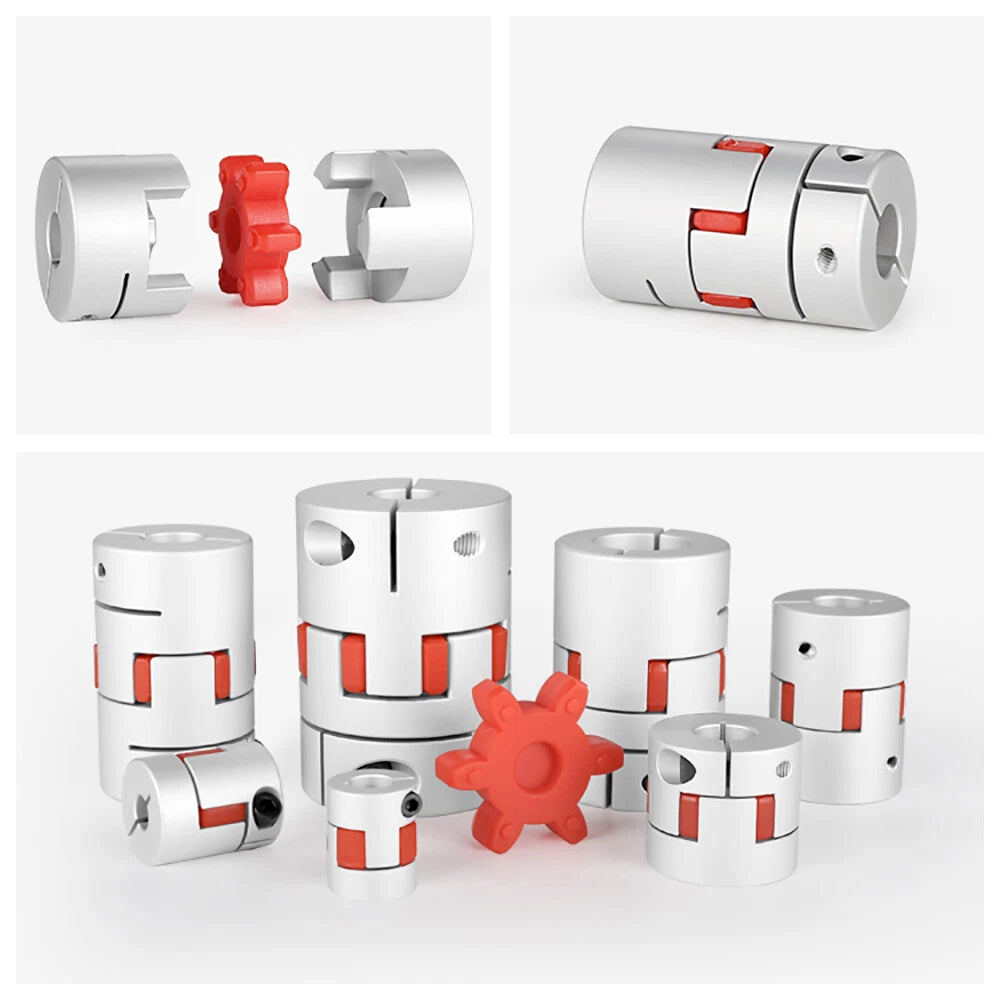
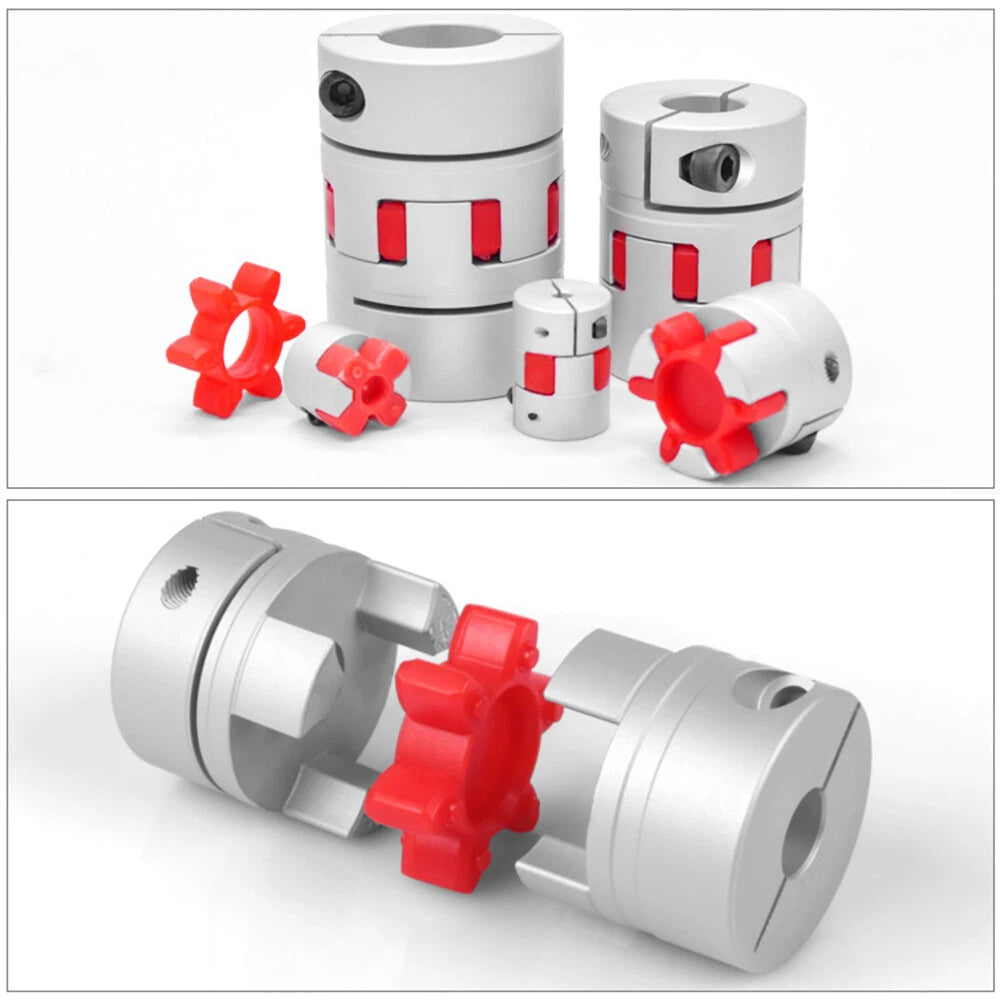
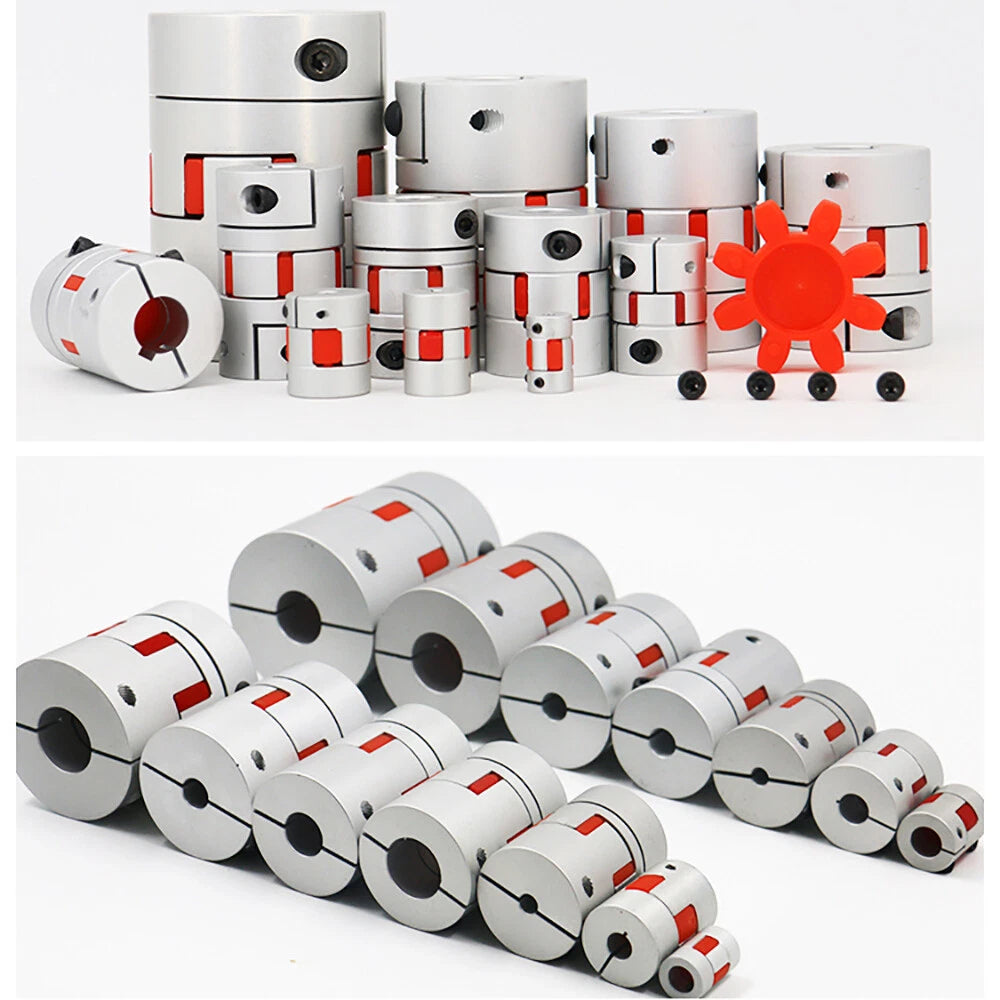
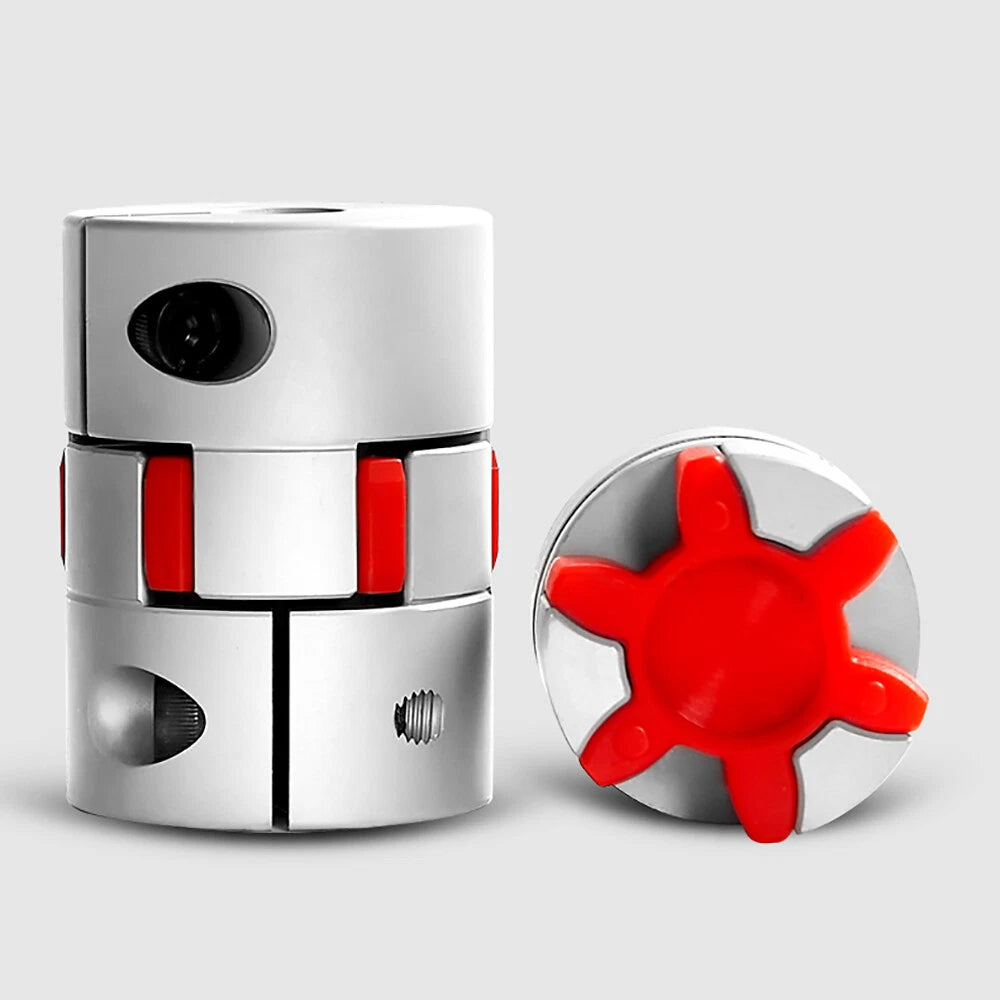
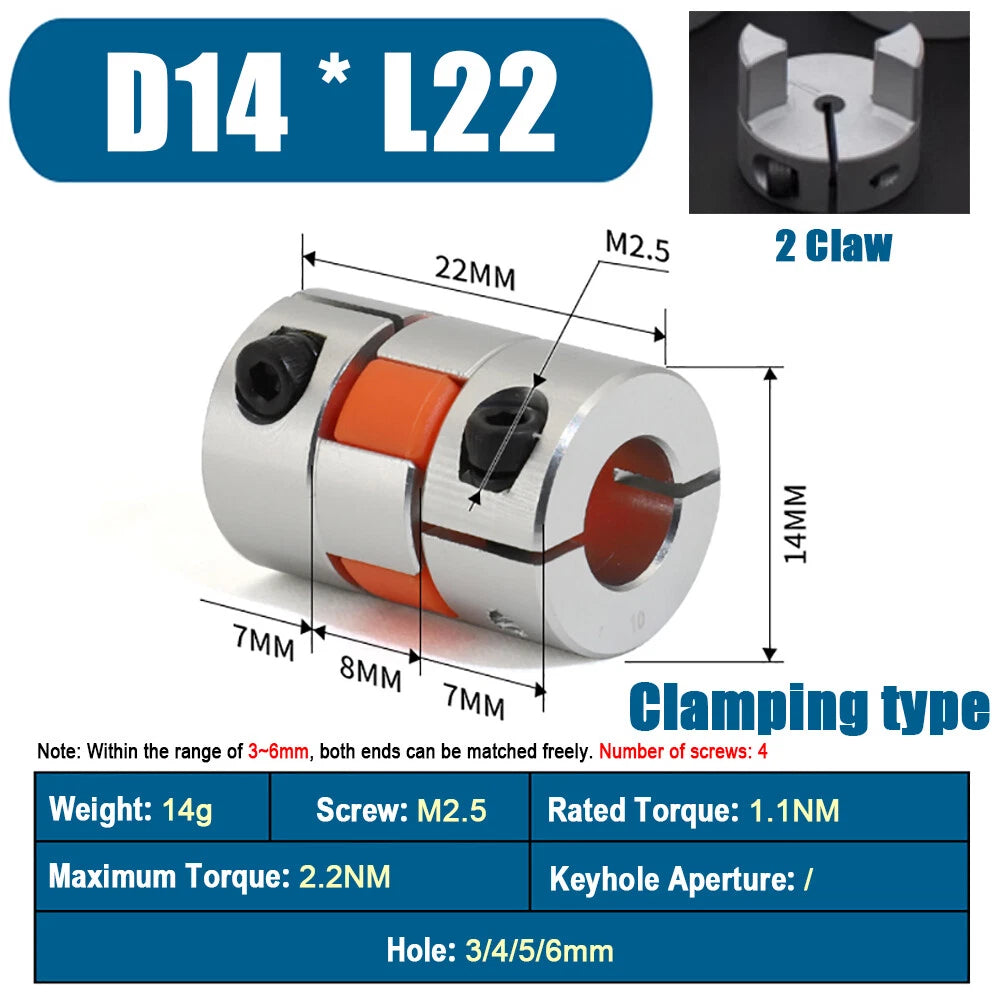
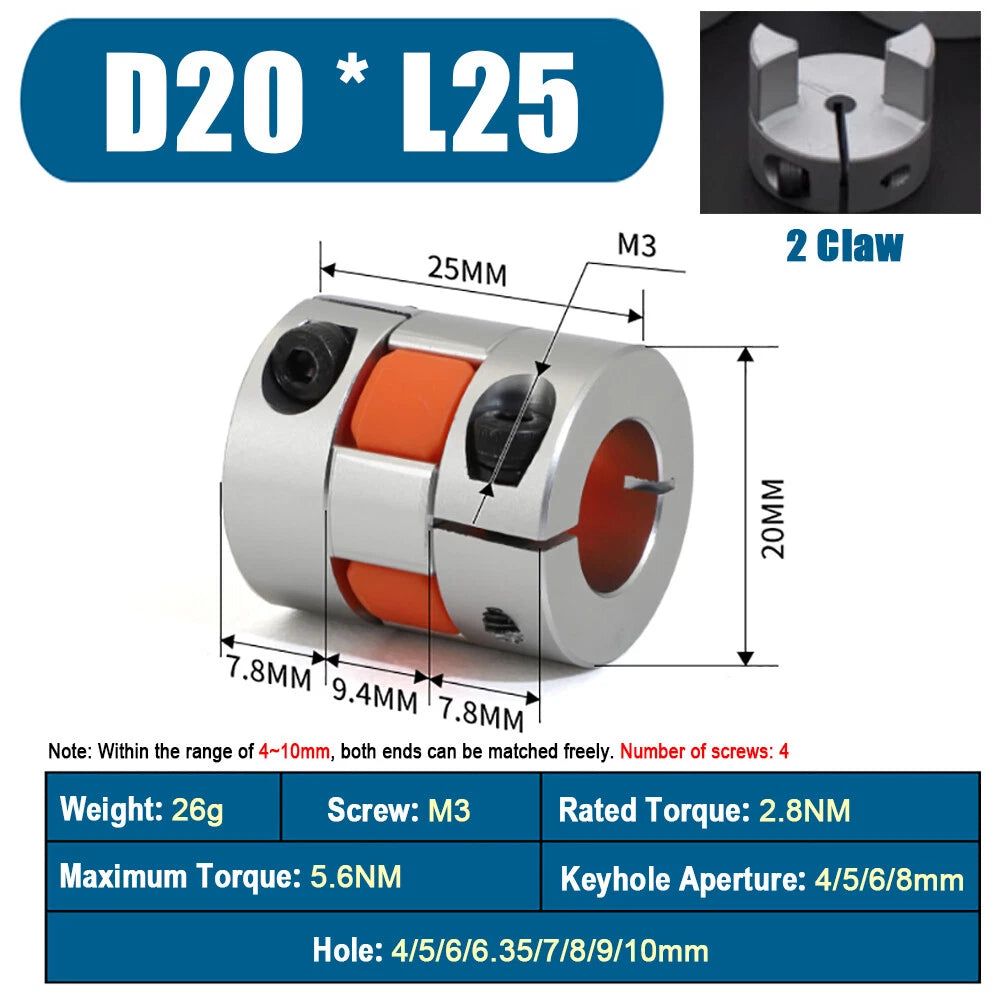
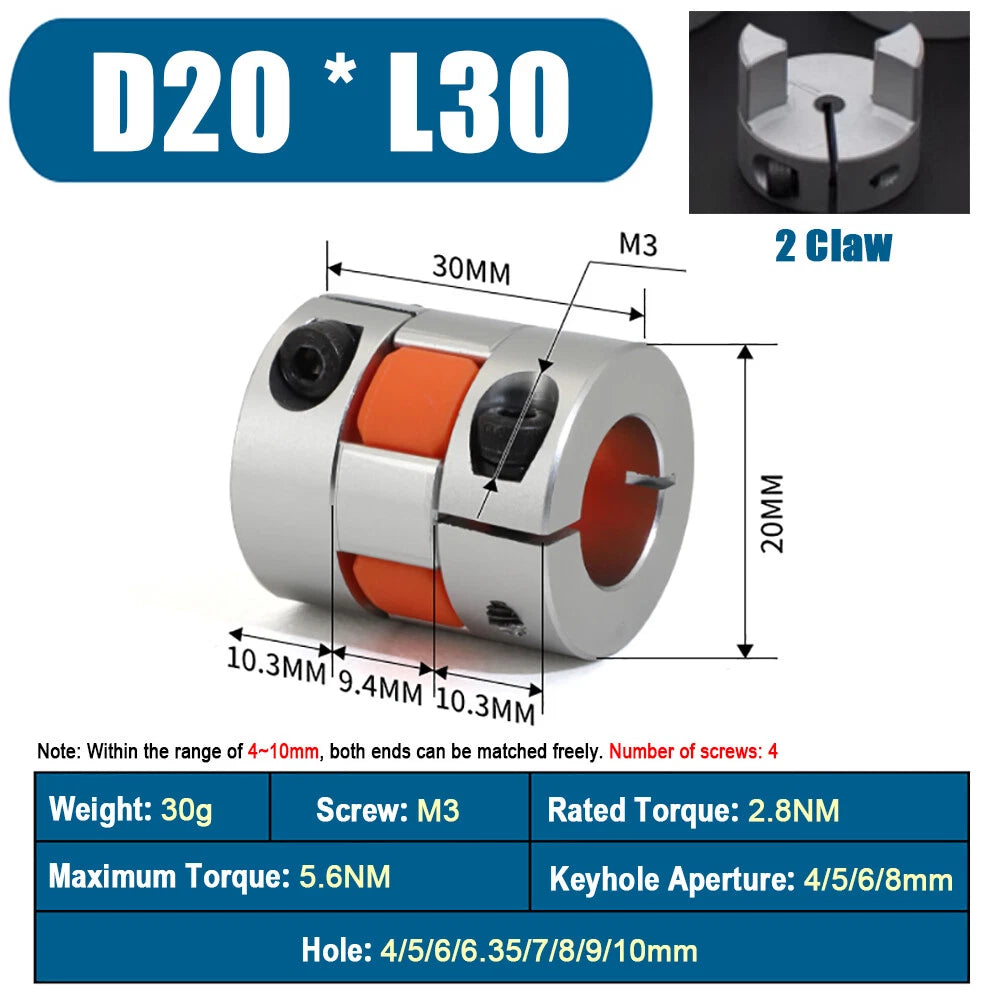
Each coupler consists of two aluminum alloy hubs and a polyurethane spider insert (plum-type elastomer). Bore sizes range from 3 mm (0.12 in) up to 25 mm (0.98 in) on each side, with outer diameters spanning 14 mm (0.55 in) to 45 mm (1.77 in) and lengths from 22 mm (0.87 in) to 66 mm (2.60 in). Both metric and inch-fractional bore combinations (including 6.35 mm / 1/4 in) are available across the variant range.

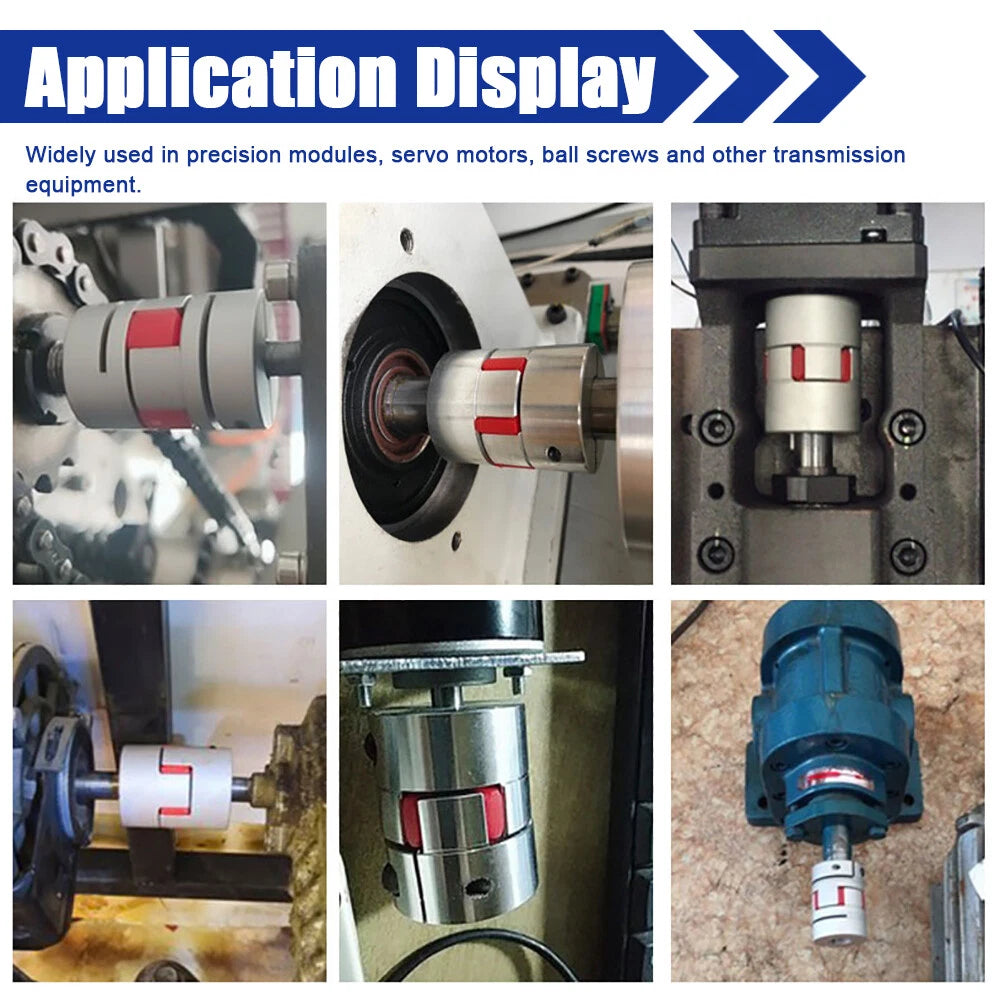
Typical applications include NEMA 17 and NEMA 23 stepper motor to lead screw connections on 3D printers and CNC routers, servo motor shaft coupling on laser engravers, and flexible shaft coupling for ball screw assemblies in DIY milling machines and pick-and-place systems.

⚙️ Compatible with: NEMA 17 / NEMA 23 stepper motors, servo motors, lead screws, ball screws, encoder shafts — any two shafts requiring flexible torque coupling with bore sizes 3–25 mm.

✅ Key Features of These CNC Shaft Couplers

🔩 Wide Bore Range

Covers d1 and d2 bore combinations from 3 mm up to 25 mm, including 6.35 mm (1/4 in) imperial sizes — one product line for metric and inch shafts.

🌀 Plum Spider Elastomer Insert

Polyurethane spider absorbs angular, parallel, and axial misalignment while dampening vibration and shock loads between motor and driven shaft.

🏗️ Aluminum Alloy Hubs

Lightweight yet rigid aluminum construction keeps rotational inertia low — critical for responsive acceleration and deceleration in CNC and 3D printing applications.

📐 Multiple Body Sizes

Seven outer diameter / length combinations (D14×L22 through D45×L66) let you match the coupler to your motor frame size and available shaft clearance.

🔧 Clamp-Style Locking

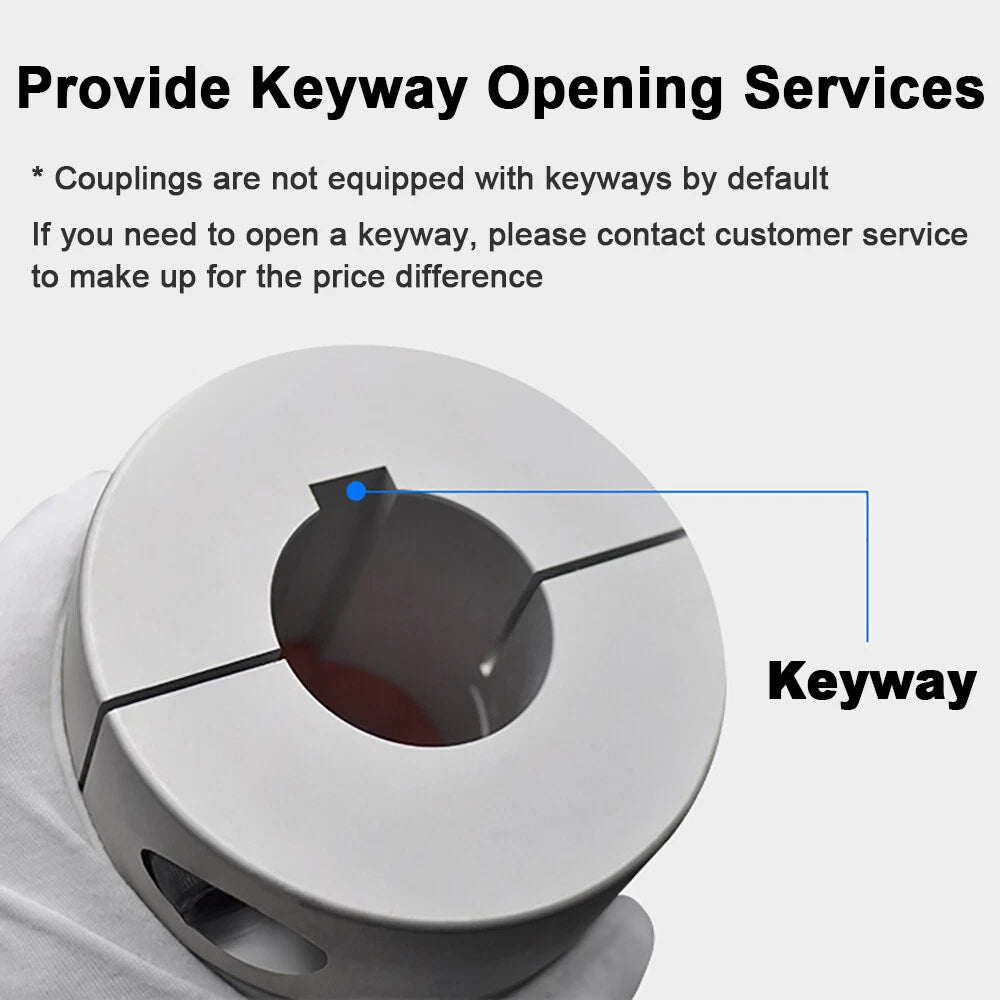
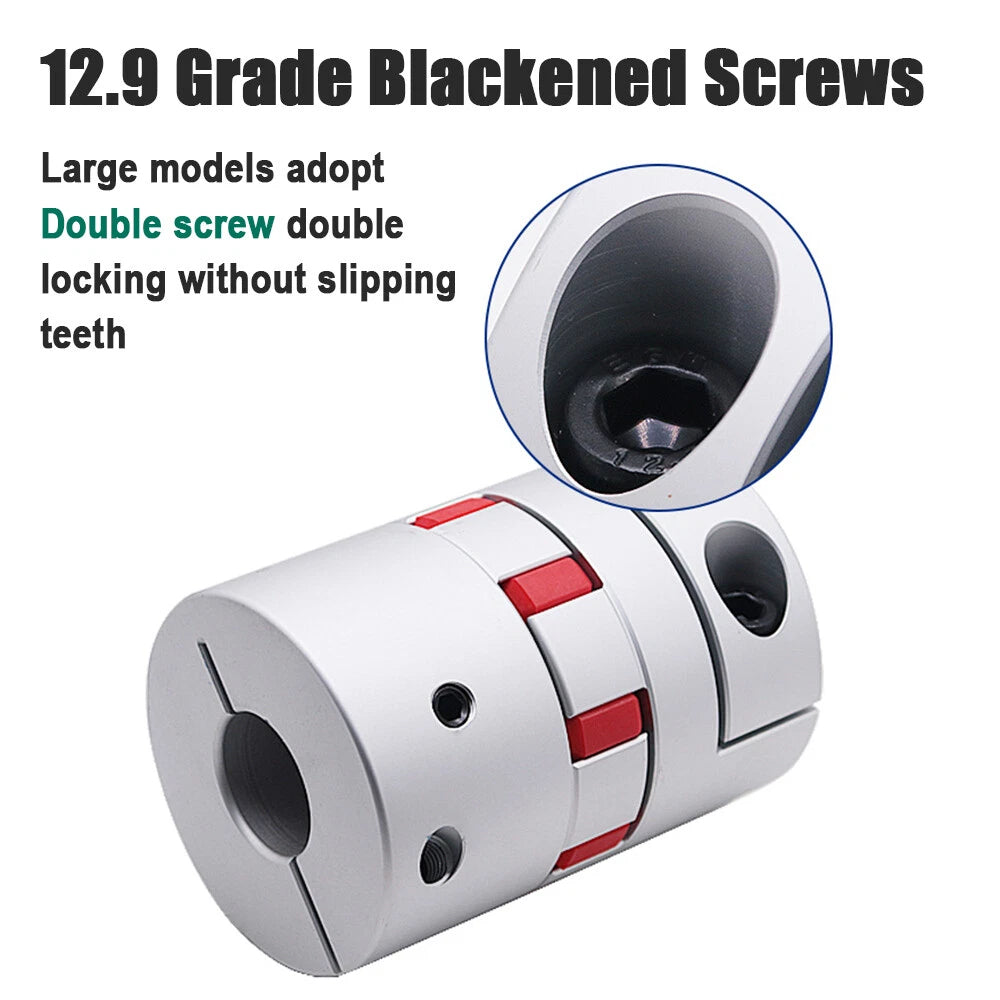
Split-hub clamp design with set screws secures each bore independently — no keyway required, and re-centering is straightforward if shaft positions change.

♻️ Replaceable Spider Insert

The elastomer spider can be replaced independently of the aluminum hubs, extending service life and reducing maintenance cost on high-cycle machines.

📐 Technical Specifications — Flexible Jaw Shaft Coupler

Coupler Type Plum / Spider Jaw (Oldham-style elastomer)
Hub Material Aluminum alloy
Spider Insert Material Polyurethane (PU) elastomer
Bore d1 Range 3 mm – 25 mm (metric & 6.35 mm / 1/4 in imperial)
Bore d2 Range 3 mm – 25 mm (metric & 6.35 mm / 1/4 in imperial)
Outer Diameter (D) 14 mm / 20 mm / 25 mm / 30 mm / 45 mm — see variant options
Overall Length (L) 22 mm / 25 mm / 30 mm / 40 mm / 42 mm / 66 mm — see variant options
Finish Natural anodized aluminum
Fastening Method Clamp-style split hub with set screws
Misalignment Tolerance See variant options
Max Torque See variant options
Weight See variant options

❓ Frequently Asked Questions

How do I choose the right bore size (d1 and d2)?

Measure the outer diameter of each shaft you need to connect — your motor shaft is d1 and your lead screw or driven shaft is d2. Select the variant whose d1 × d2 combination matches those measurements. If one shaft is metric and the other is imperial (e.g., 1/4 in = 6.35 mm), choose the mixed-bore variant accordingly.

How do I choose the right outer diameter and length (D × L)?

The outer diameter (D) should be compatible with the clearance around your motor face and mounting bracket. Larger D values generally support higher torque. The length (L) affects how much axial misalignment the coupler can absorb — longer couplers offer slightly more flexibility. Match the D × L to your motor frame size: D14–D20 suits NEMA 17, D25–D30 suits NEMA 23, and D45 suits larger servo or stepper frames.

Can this coupler handle angular and parallel shaft misalignment?

Yes. The polyurethane spider insert accommodates angular misalignment (typically up to 1°–3°), parallel offset, and minor axial displacement. It is not designed for large misalignments — always align shafts as closely as possible during installation to maximize coupler lifespan and minimize vibration.

Is the spider insert replaceable without replacing the whole coupler?

Yes. The elastomer spider sits between the two aluminum hubs and can be removed and replaced independently. This is useful on high-duty-cycle machines where the spider may wear before the hubs do, saving cost on replacement parts.

Will this coupler work with both metric and imperial (inch) shafts?

Yes. Several variants include a 6.35 mm bore, which is the metric equivalent of 1/4 inch. Mixed-bore variants (e.g., 6.35 mm × 8 mm) allow you to connect an imperial motor shaft to a metric lead screw or vice versa. Check the variant list for the exact d1 × d2 combination you need.

What is the difference between a plum/spider jaw coupler and a rigid coupler?

A rigid coupler transmits torque with zero flex — any shaft misalignment creates bearing stress and vibration. A plum spider jaw coupler uses an elastomer insert to absorb misalignment and dampen vibration, making it far more forgiving in real-world CNC and 3D printer builds where perfect shaft alignment is difficult to achieve.

How do I install and secure the coupler on the shafts?

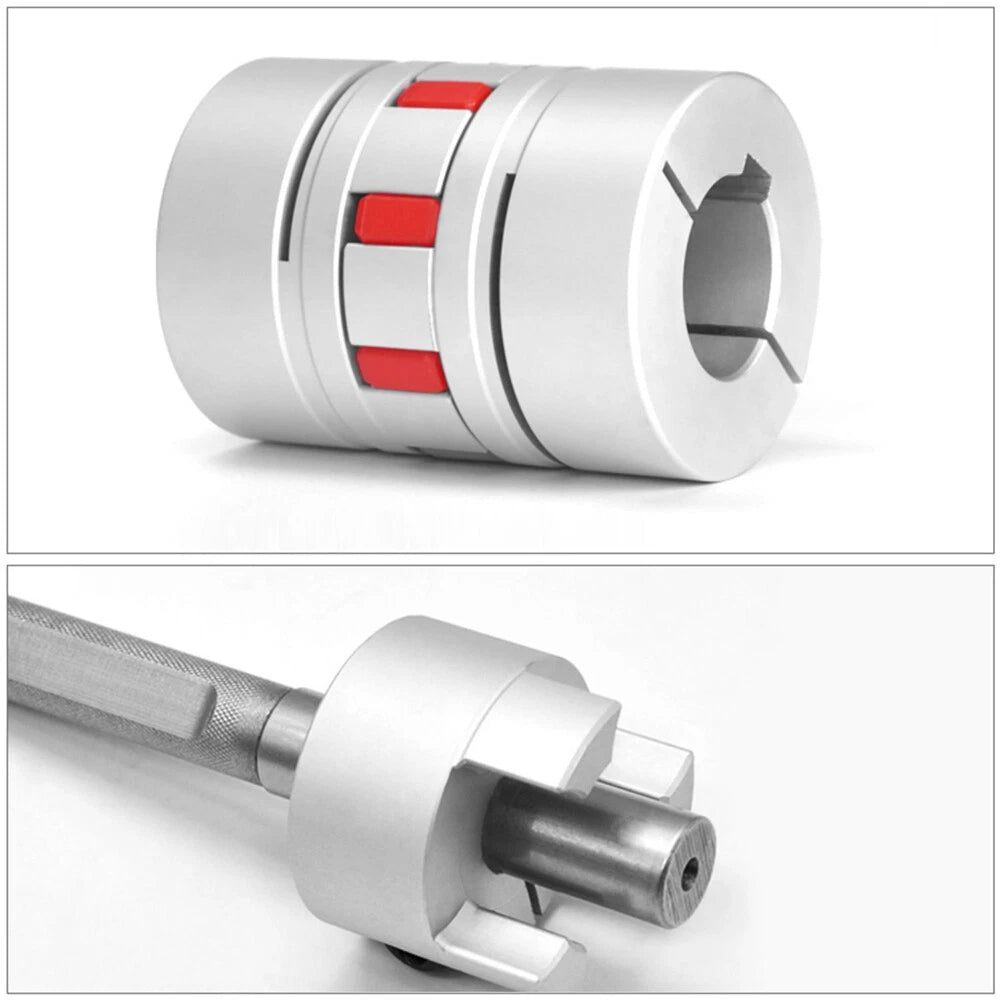
Slide each hub onto its respective shaft, position the spider insert between the hubs, then tighten the set screws on each hub to clamp the bore. Ensure the shaft ends are flush with or slightly recessed from the inner face of each hub for maximum grip. Use a hex key (Allen wrench) matching the set screw size. Re-check tightness after the first few hours of operation.

🛒 Select your Hole (d1 × d2) and Size (D × L) above, then add to cart.

You may also like

Recently viewed