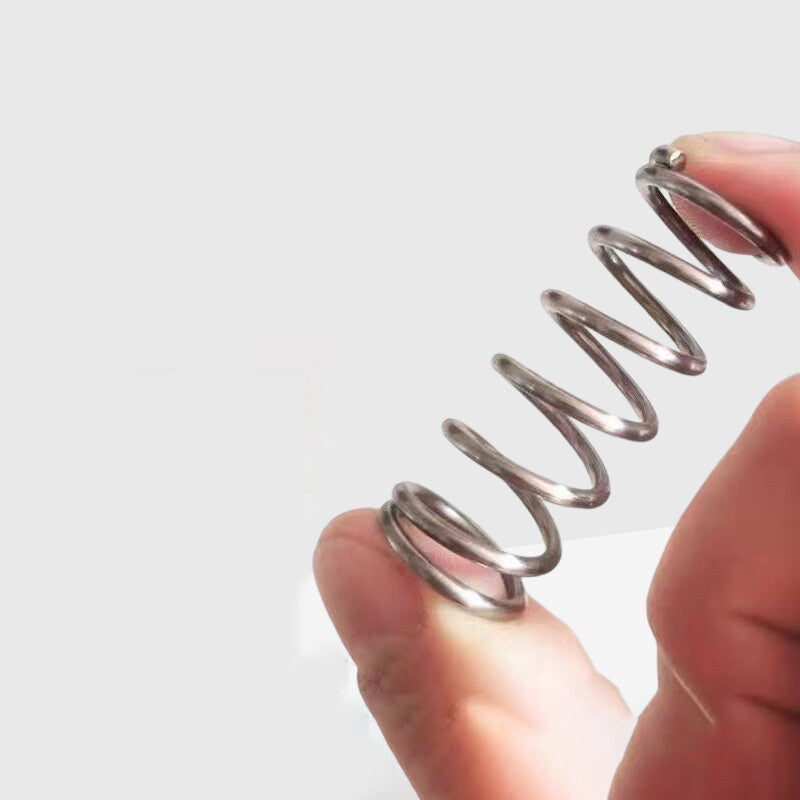
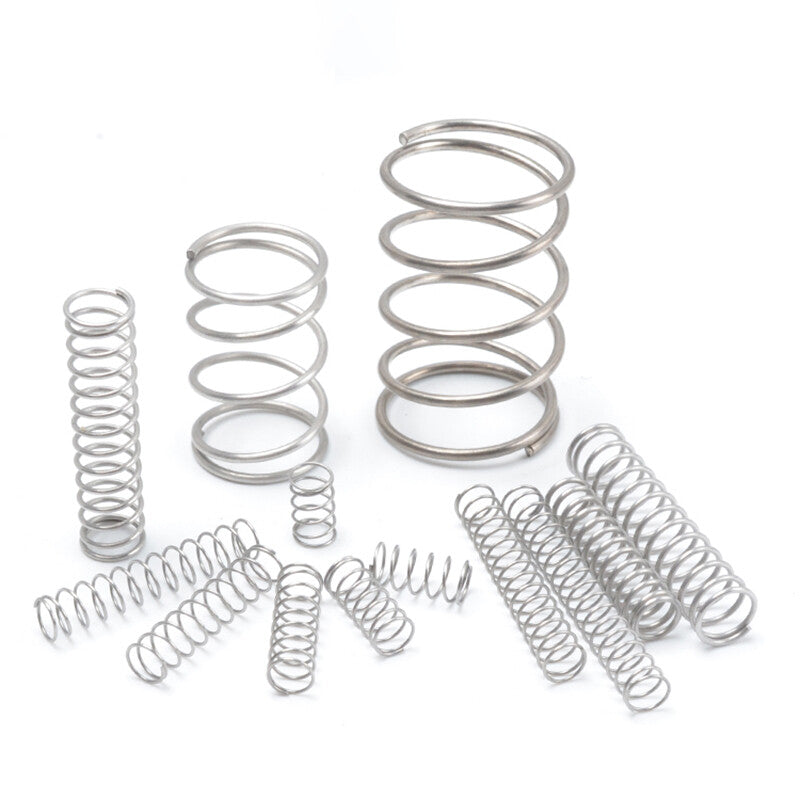
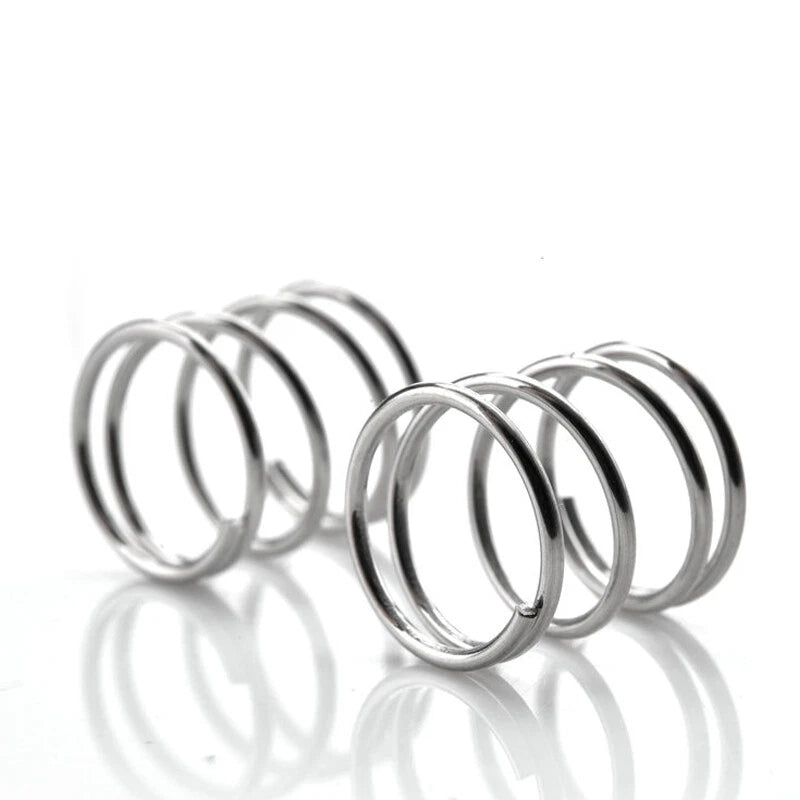
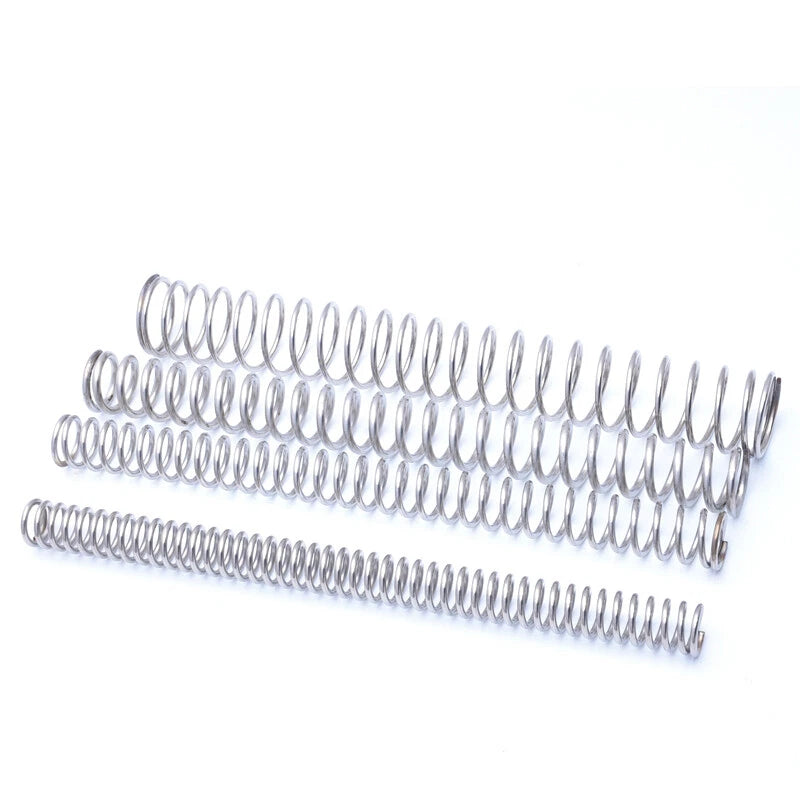
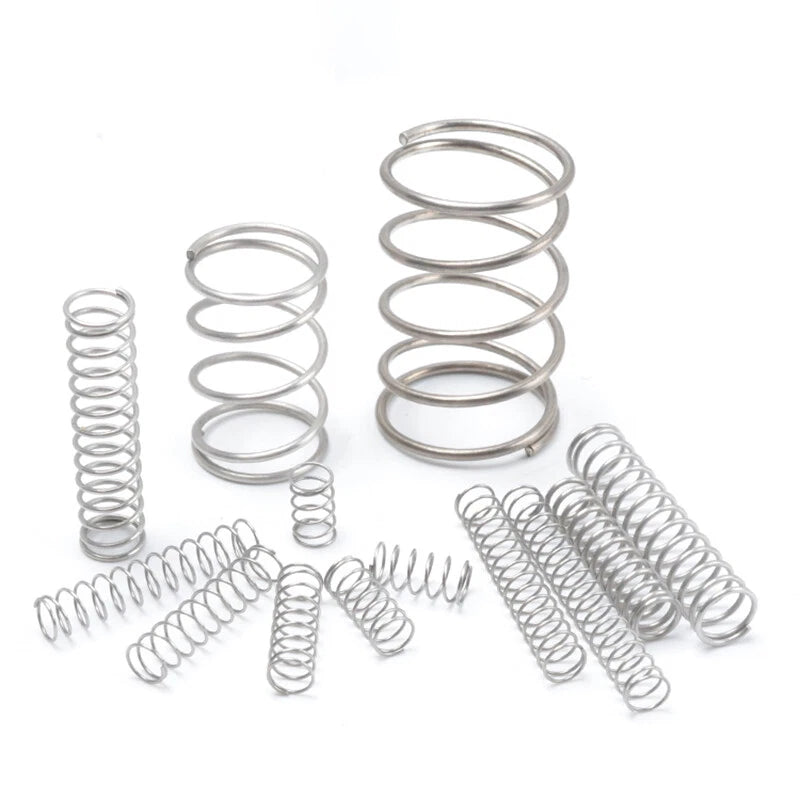
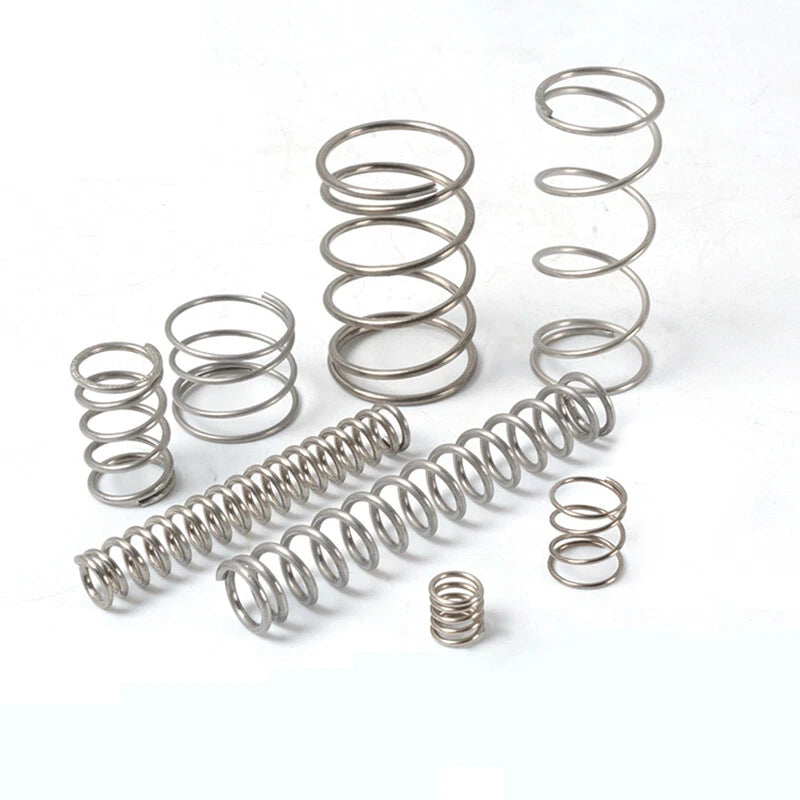
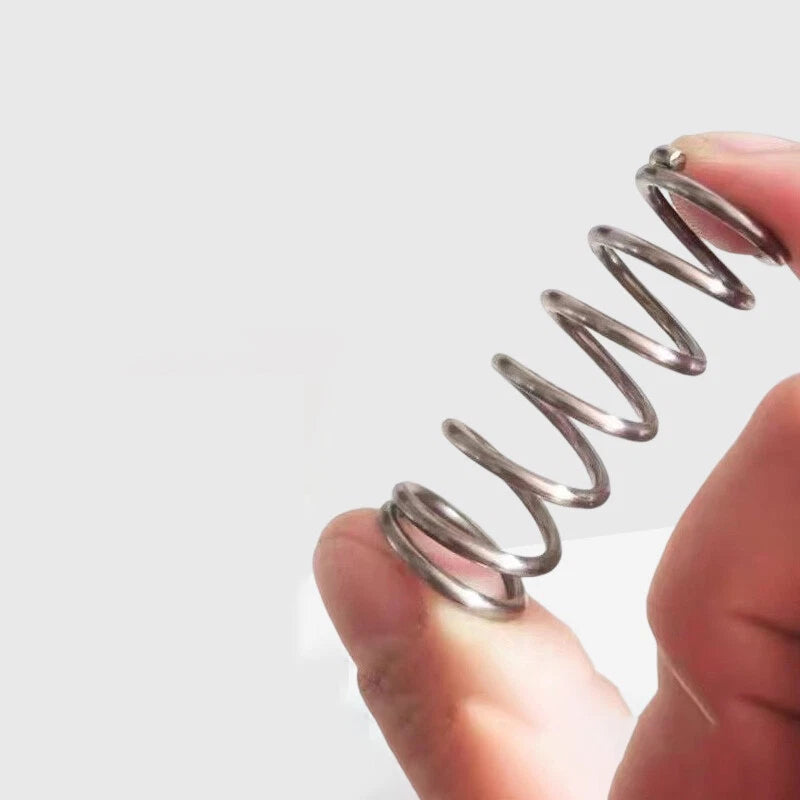
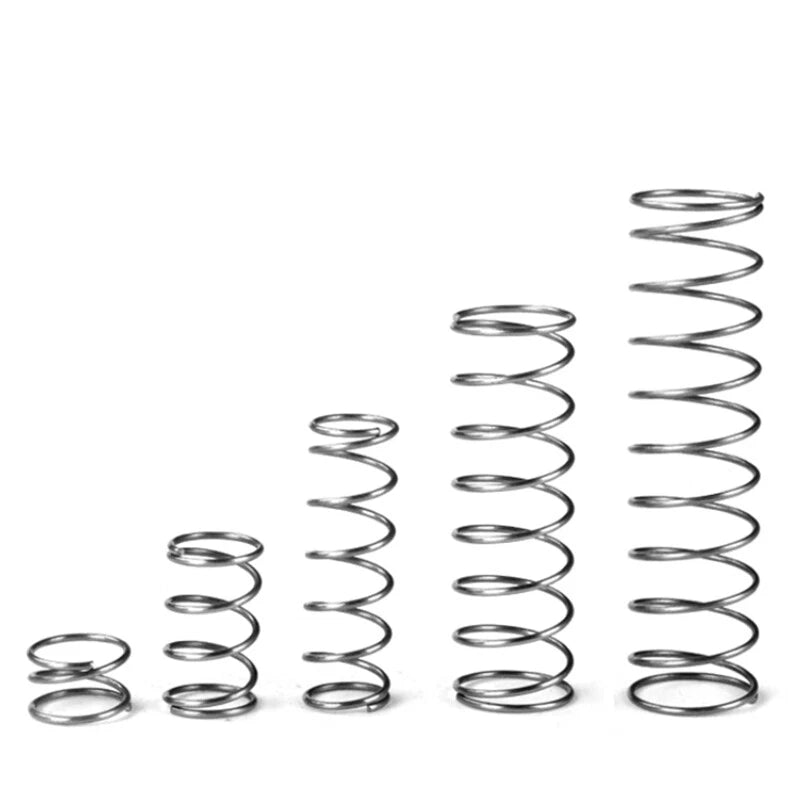
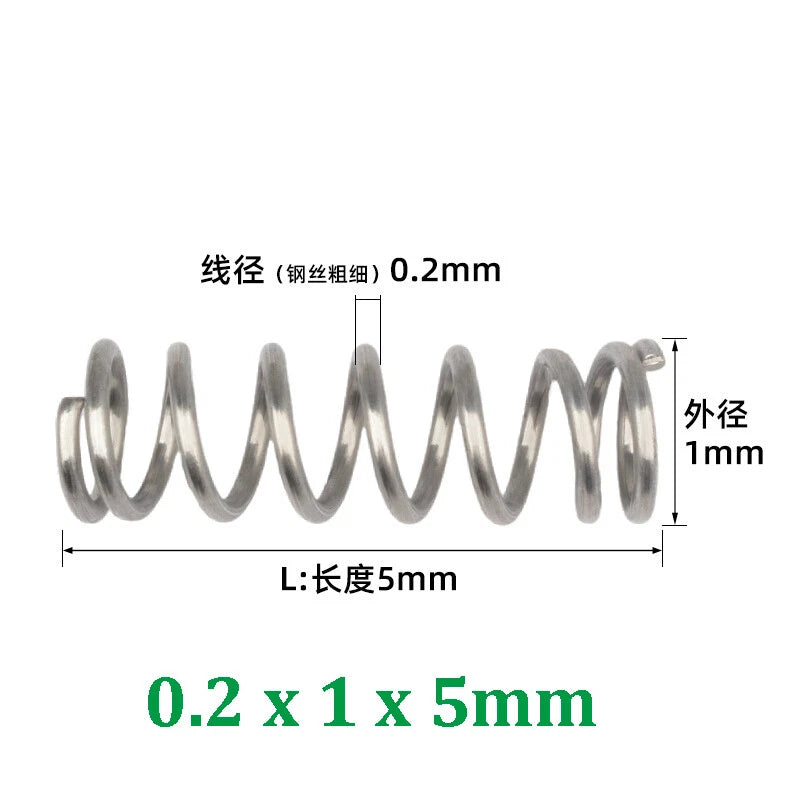
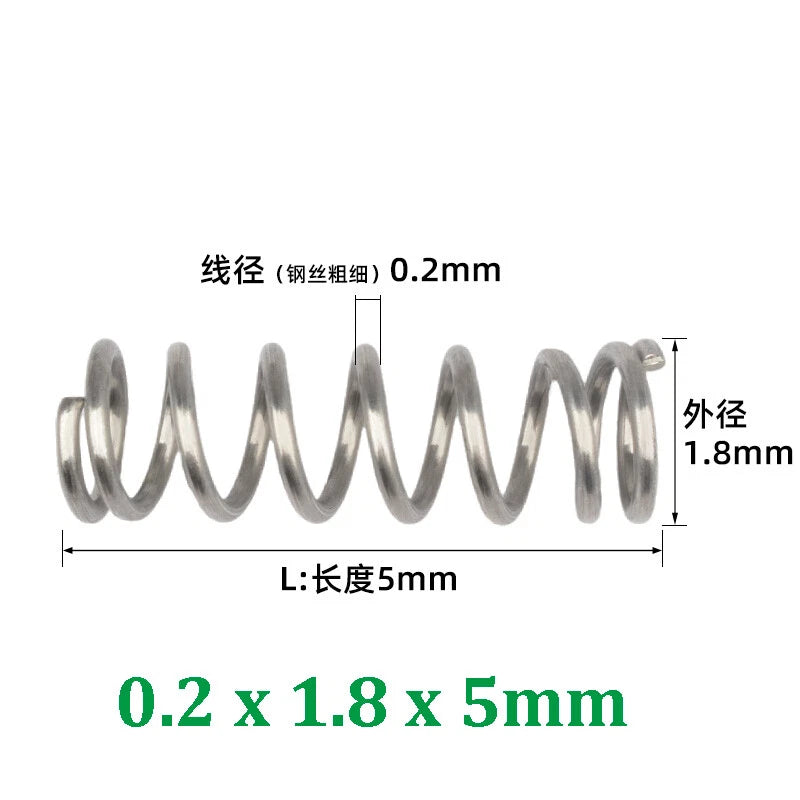
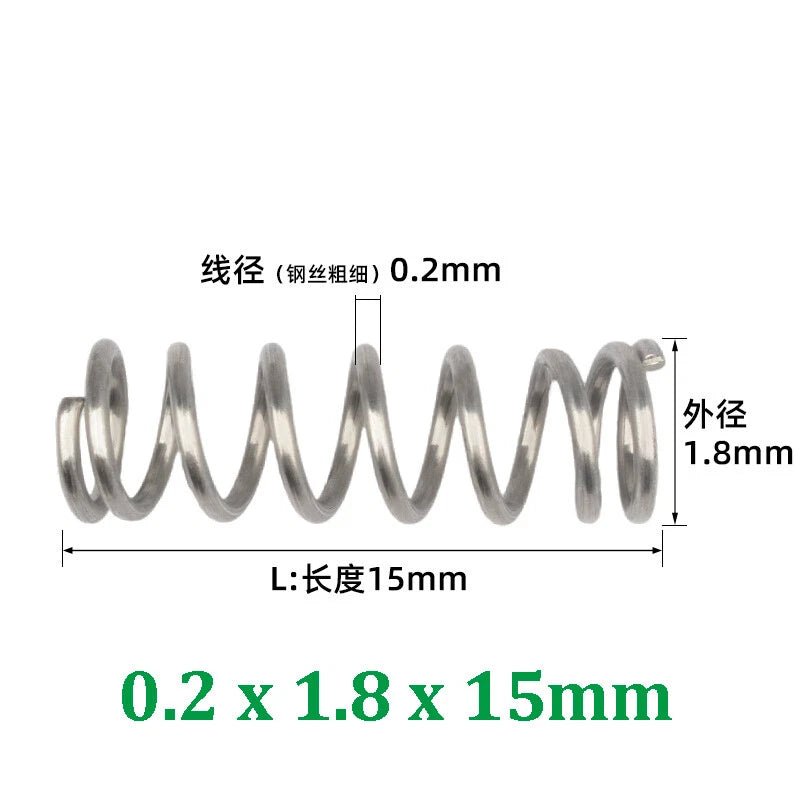
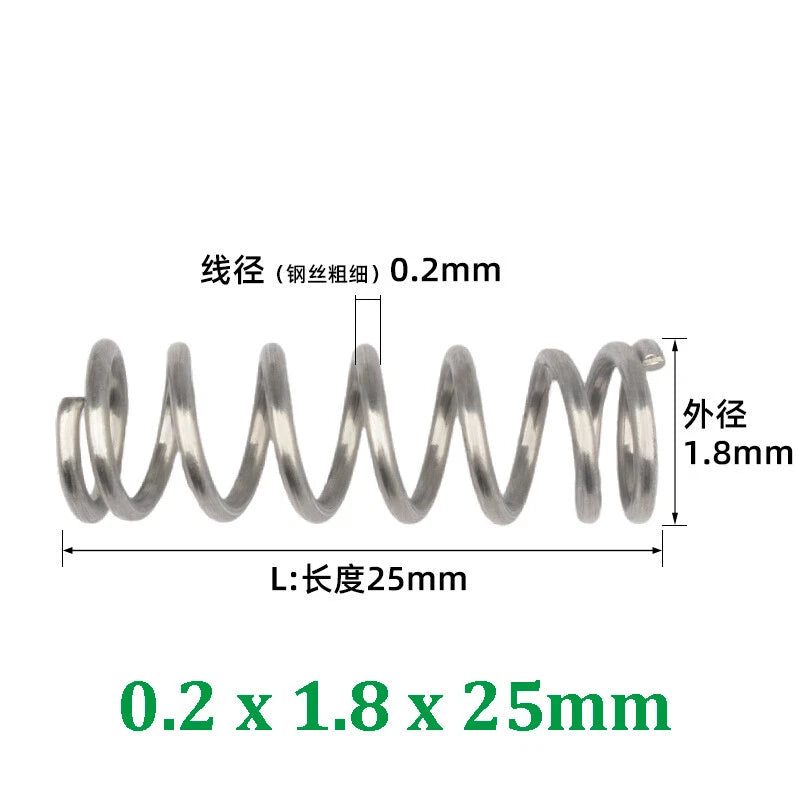
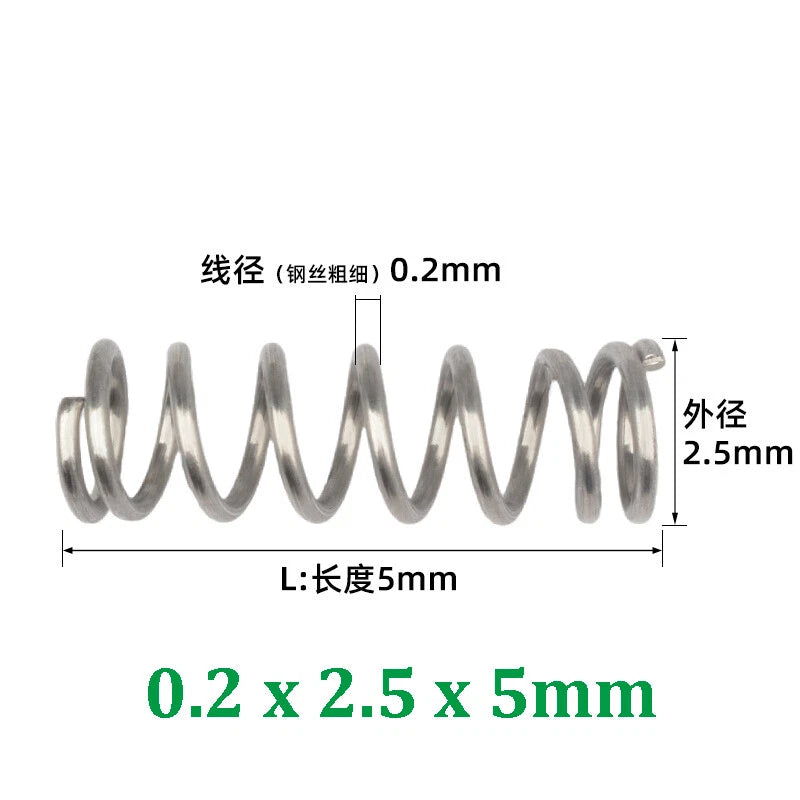
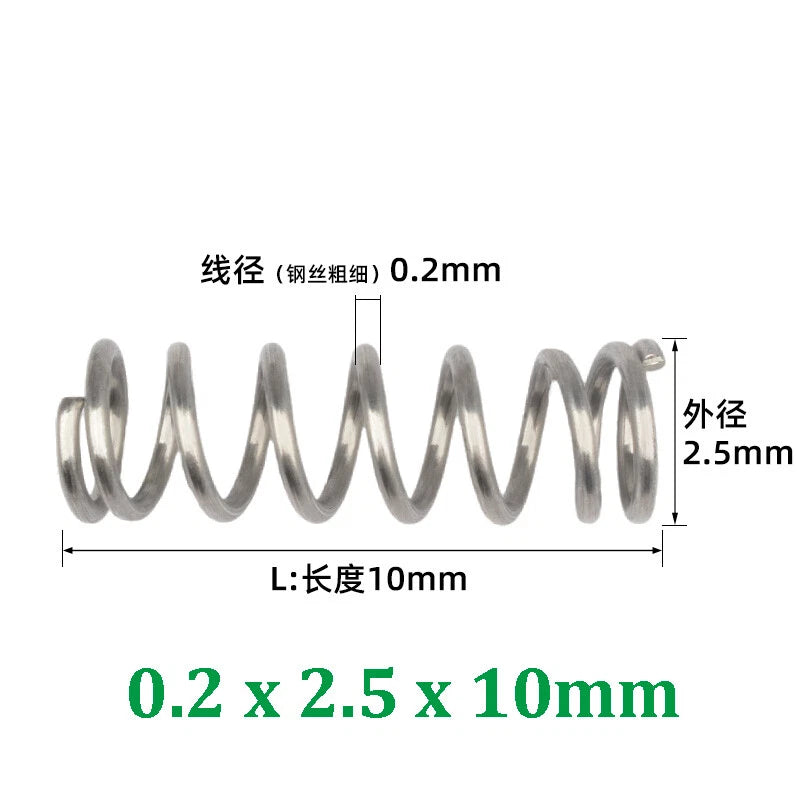
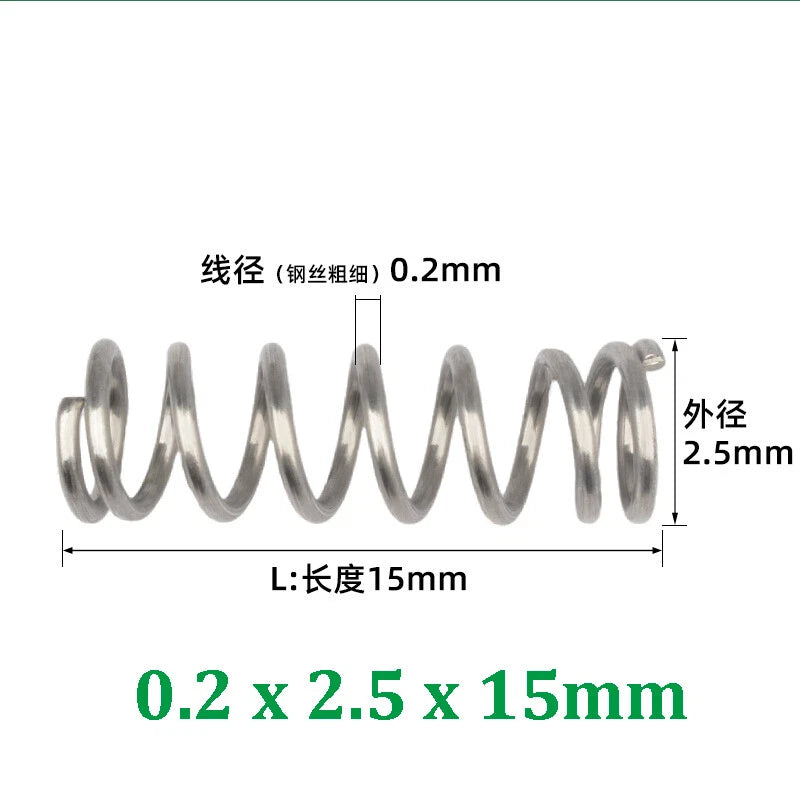
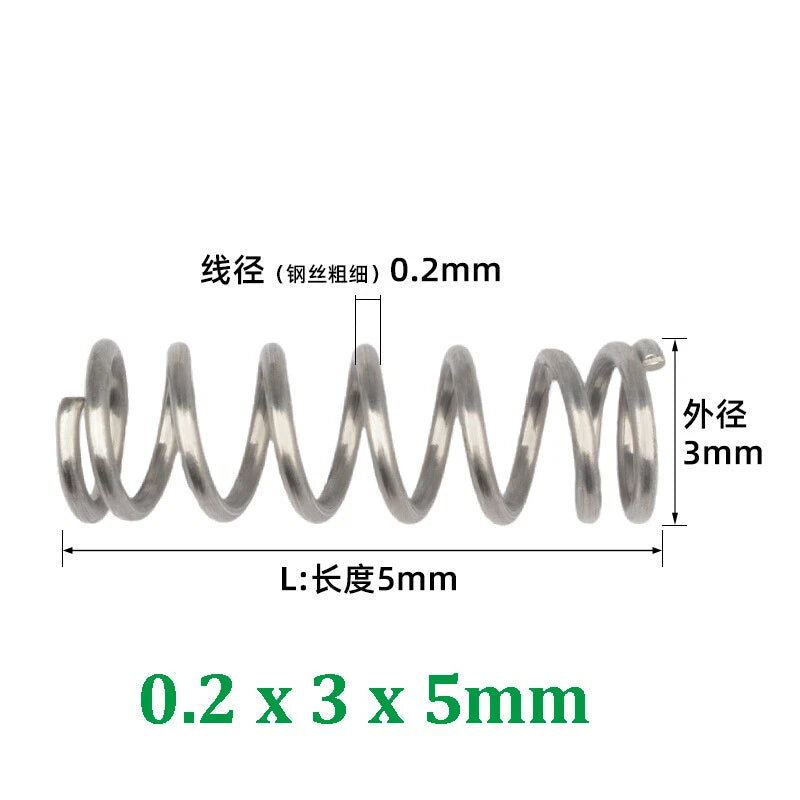
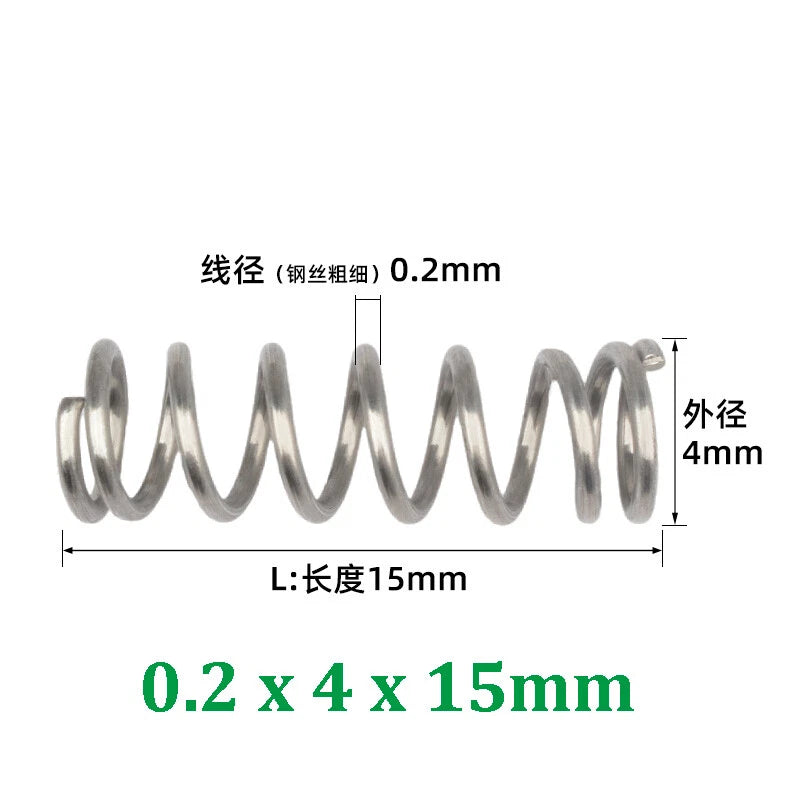
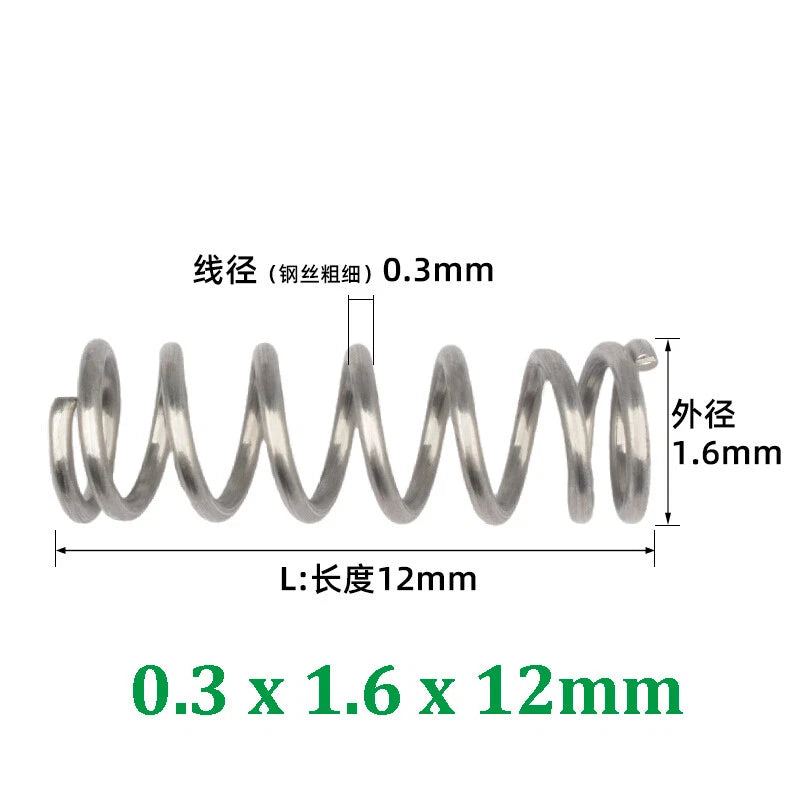
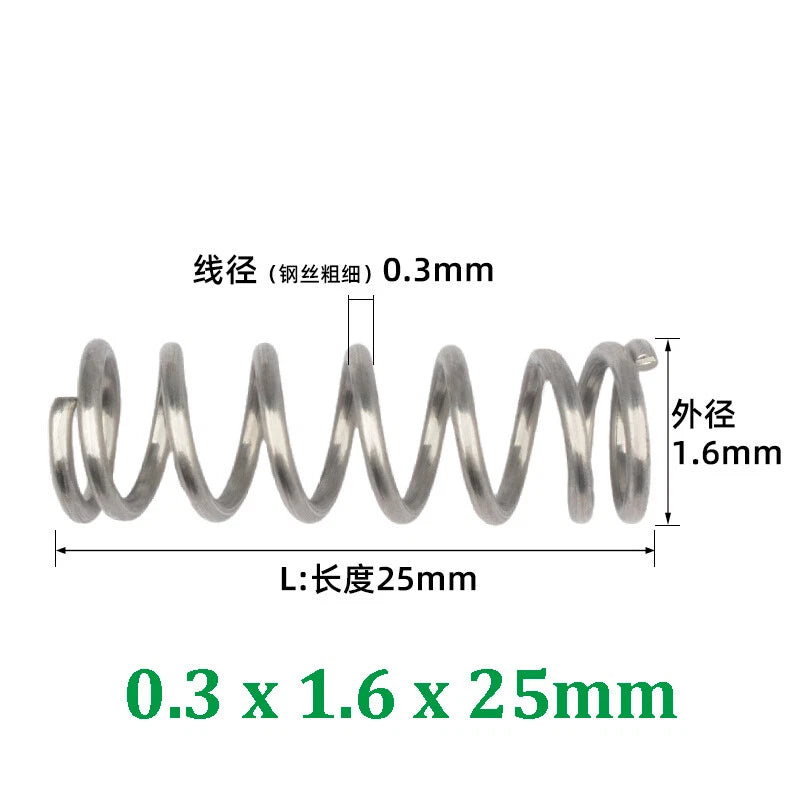
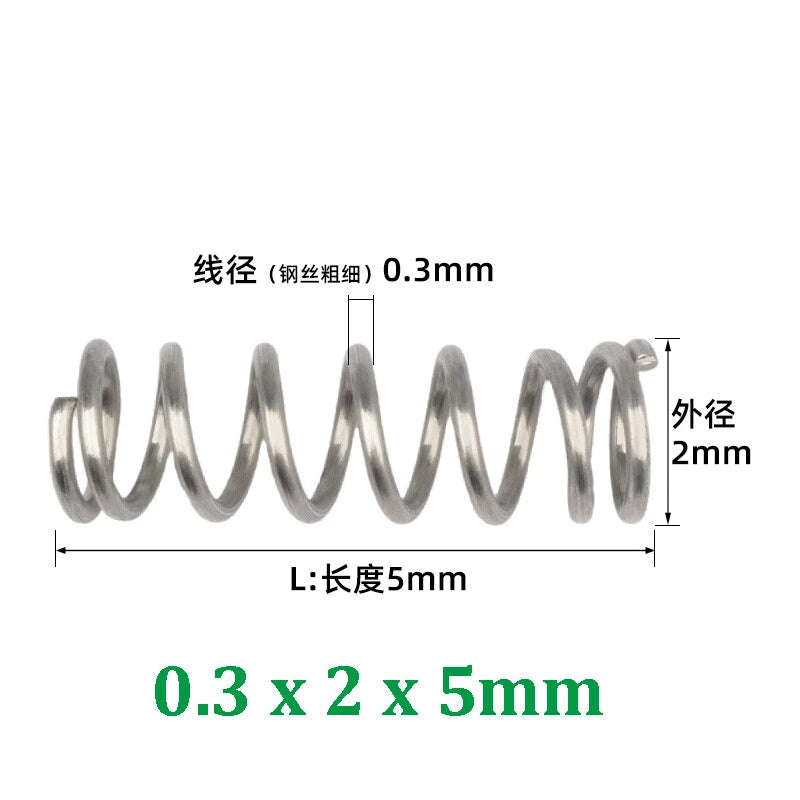
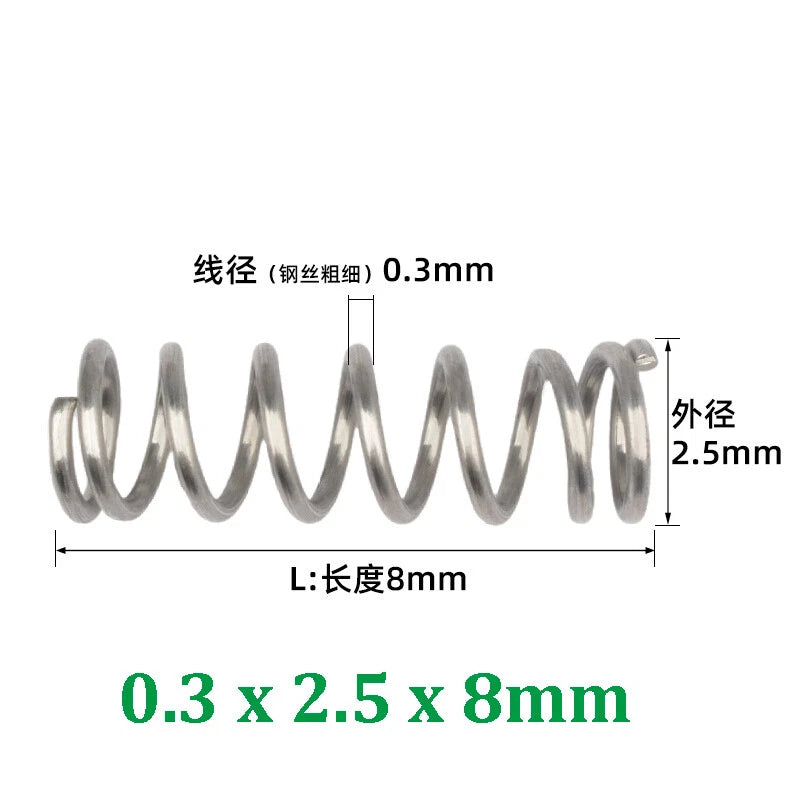
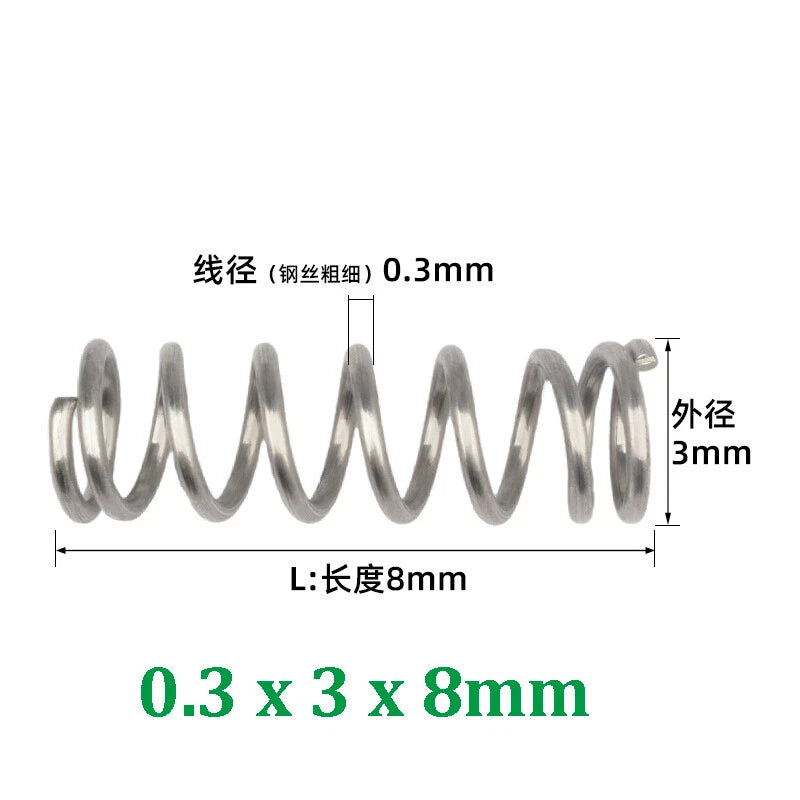
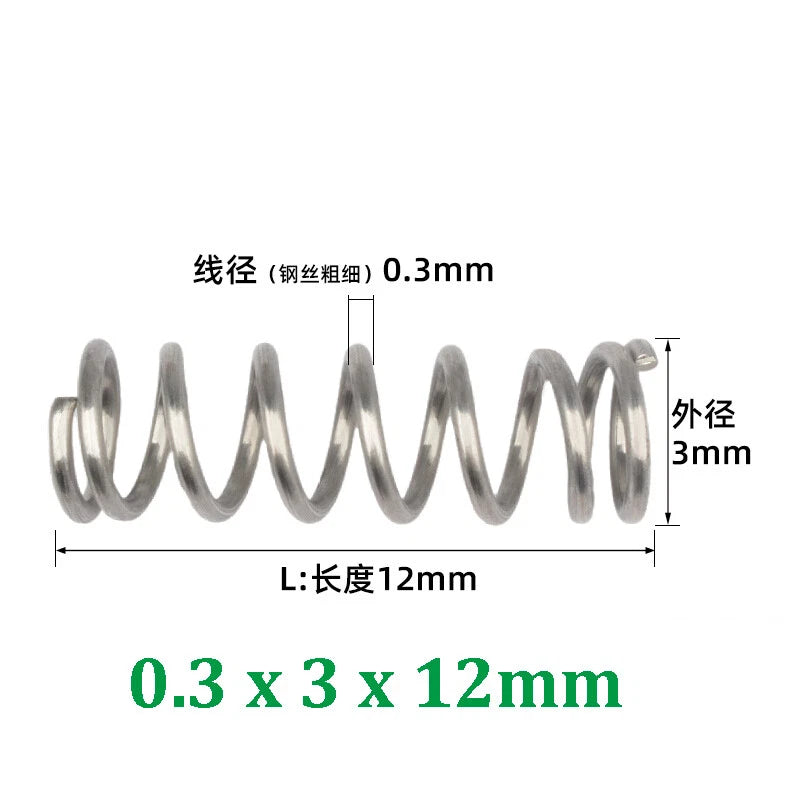
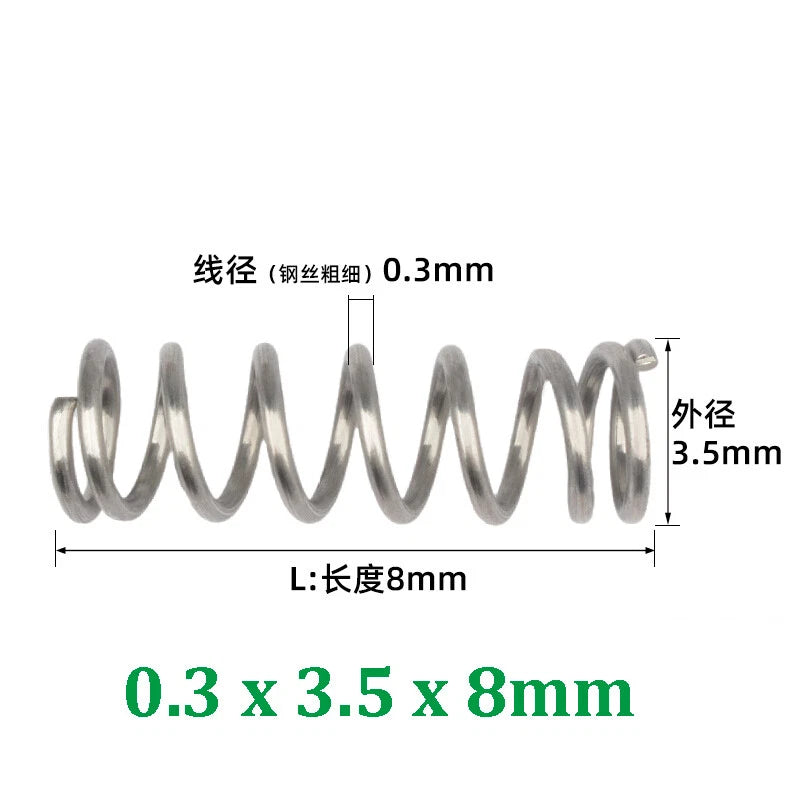
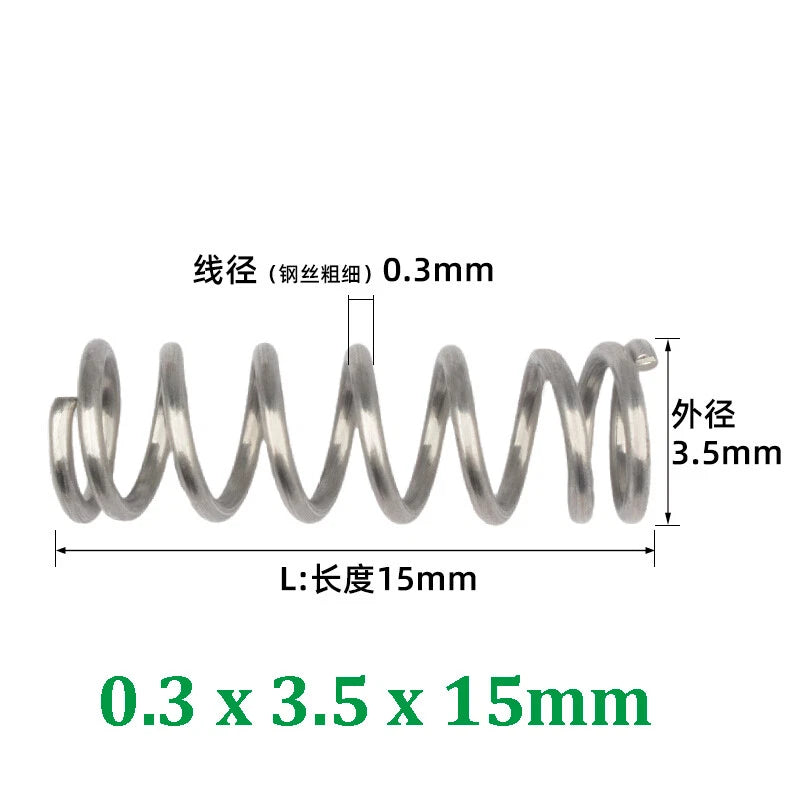
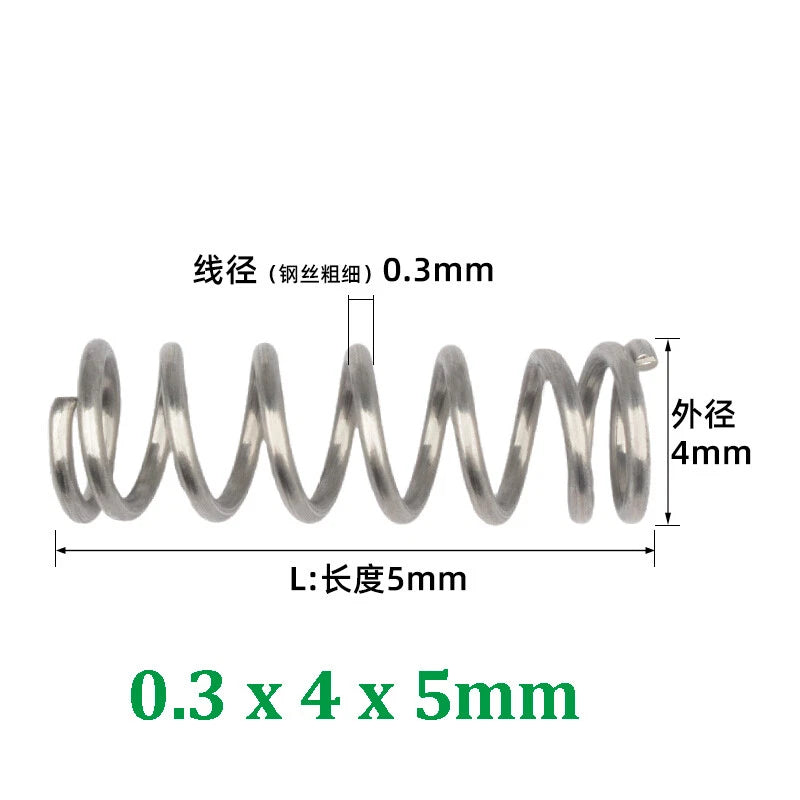
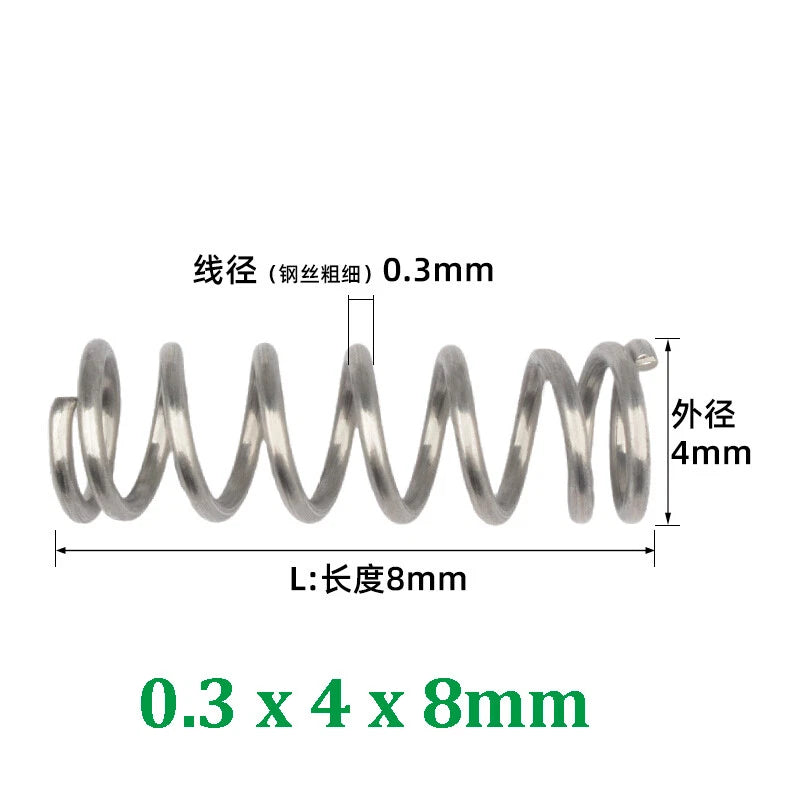
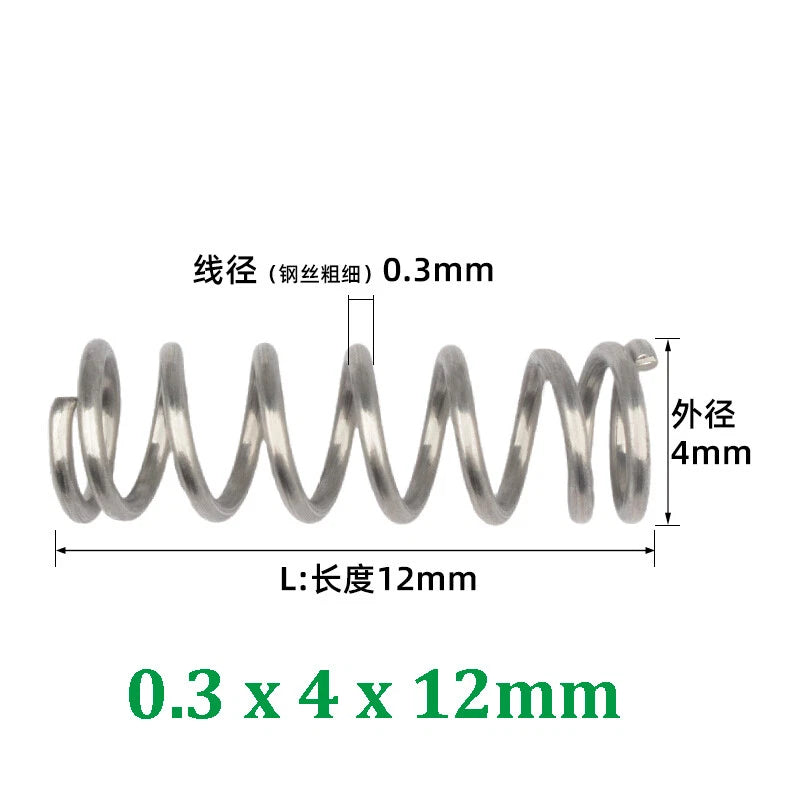
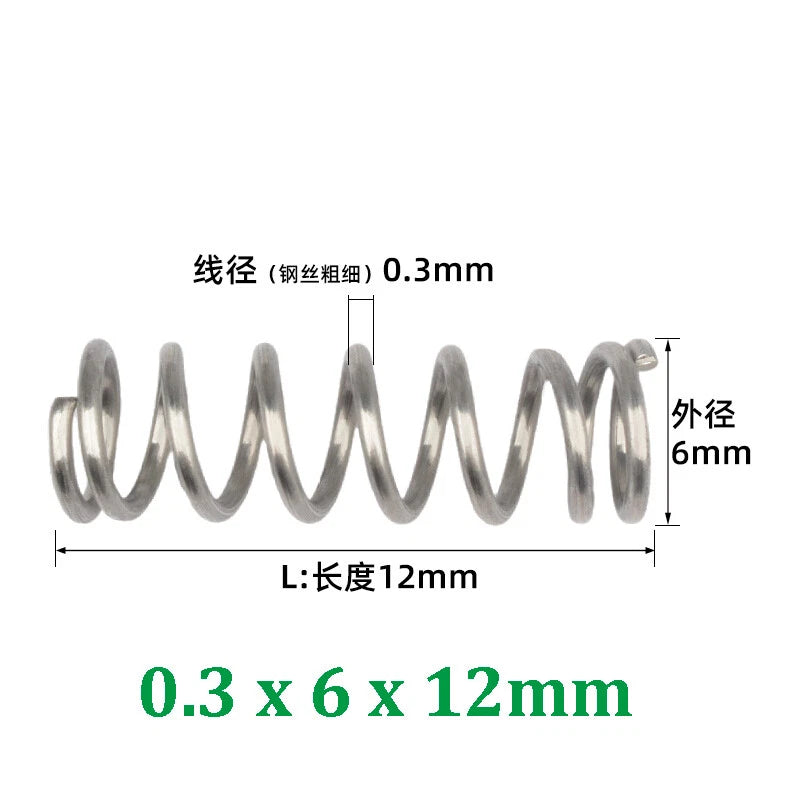
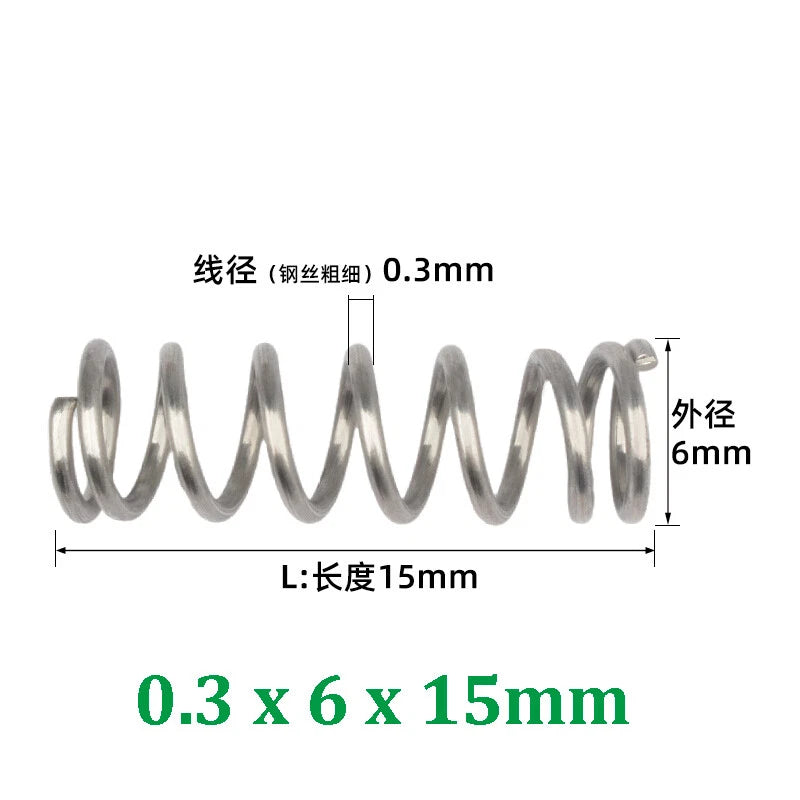
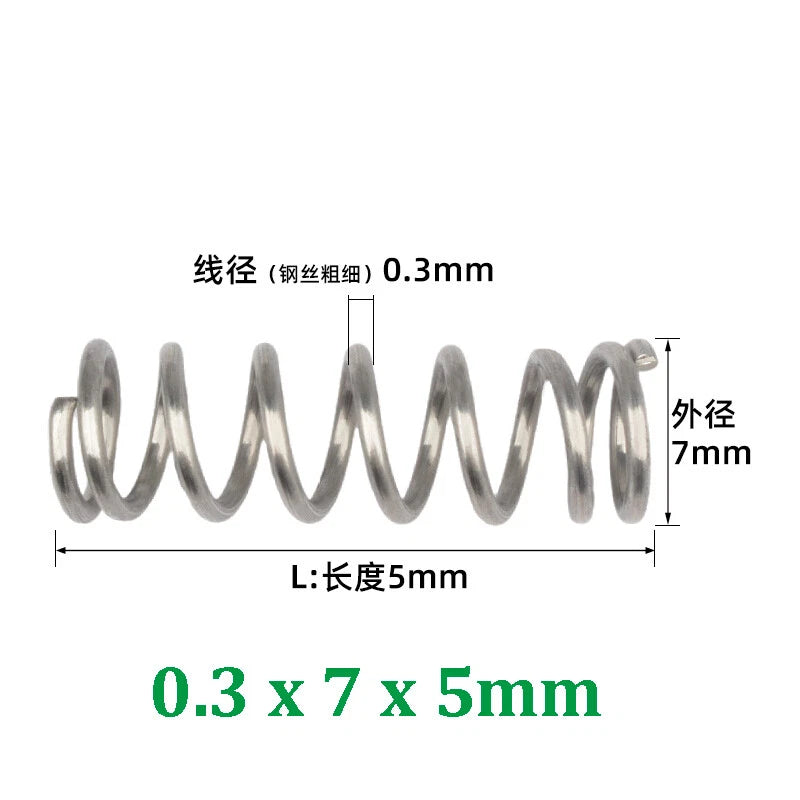
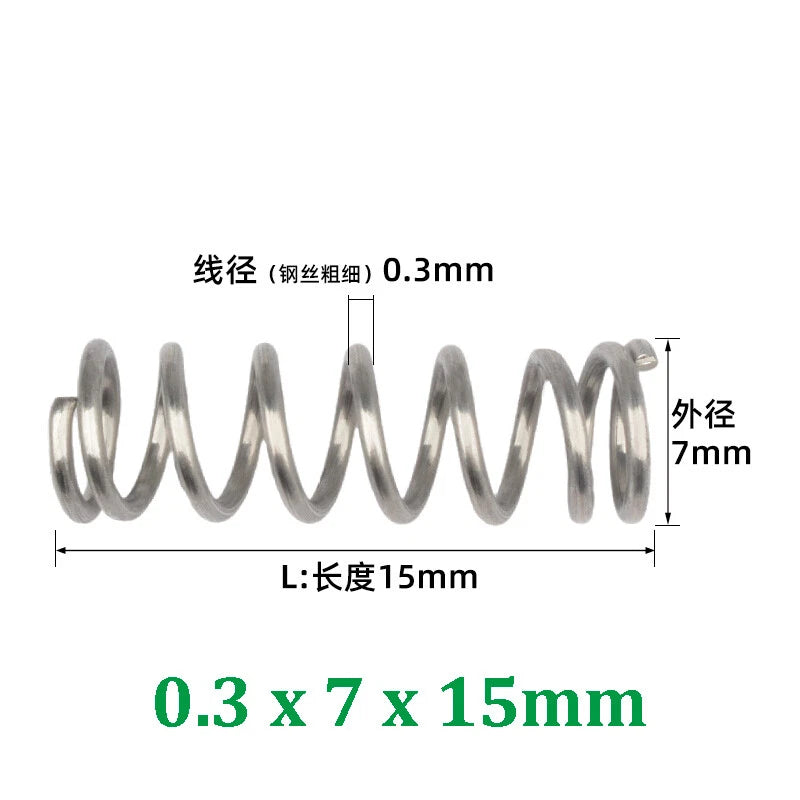
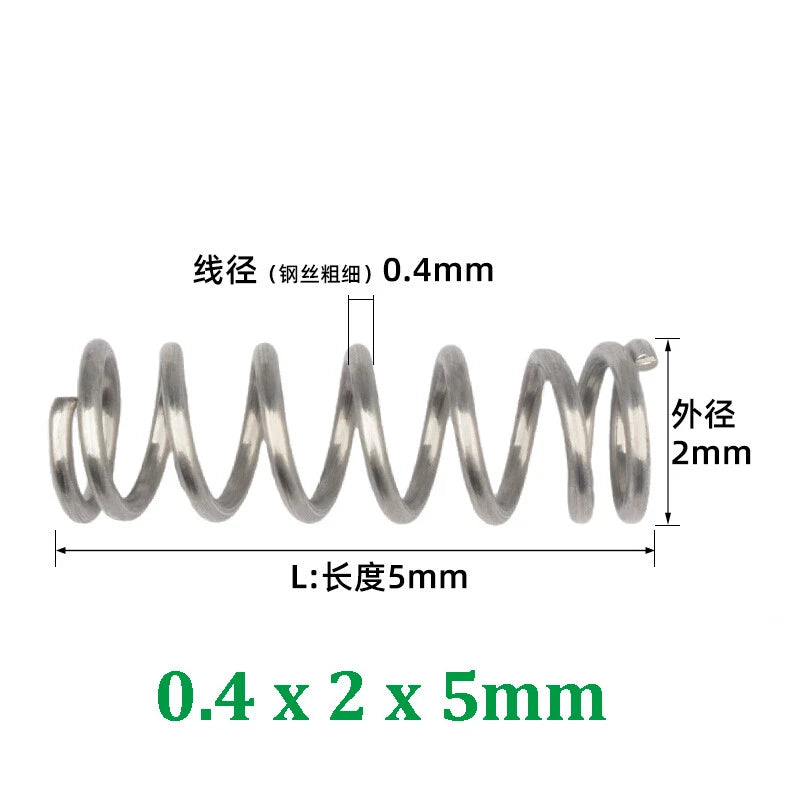
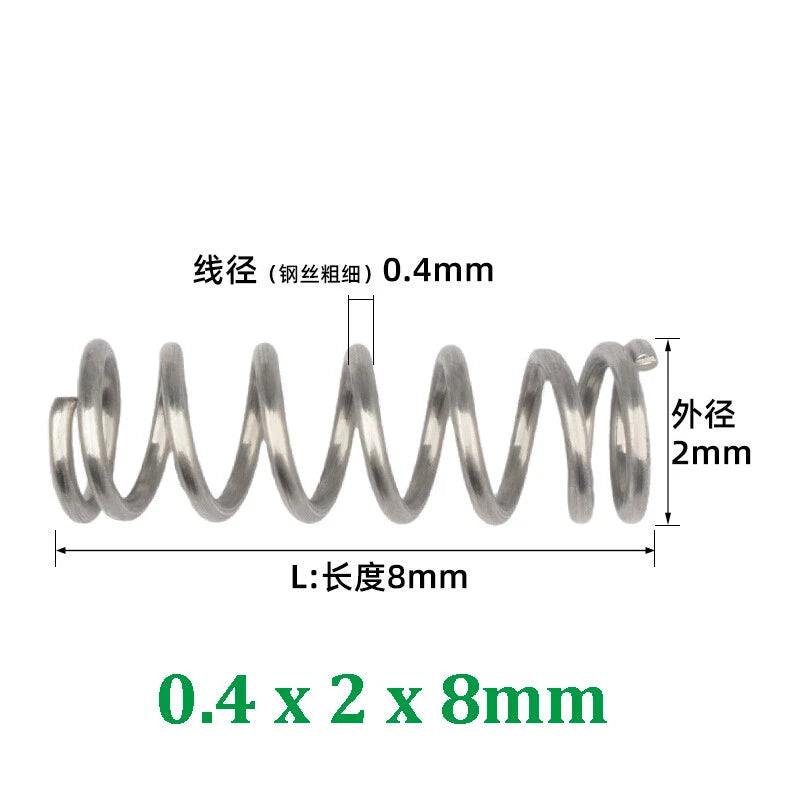
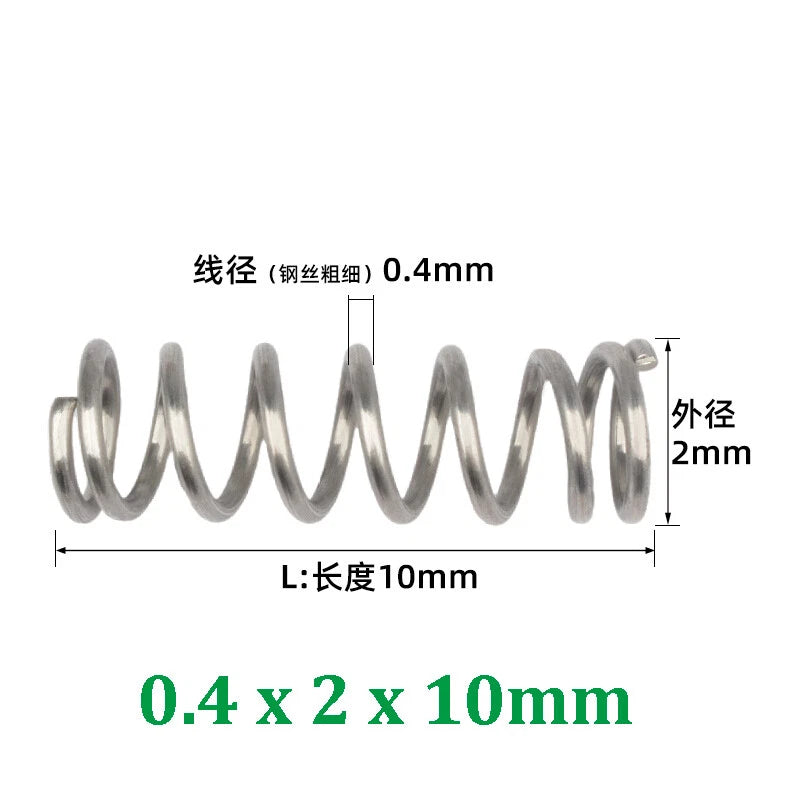
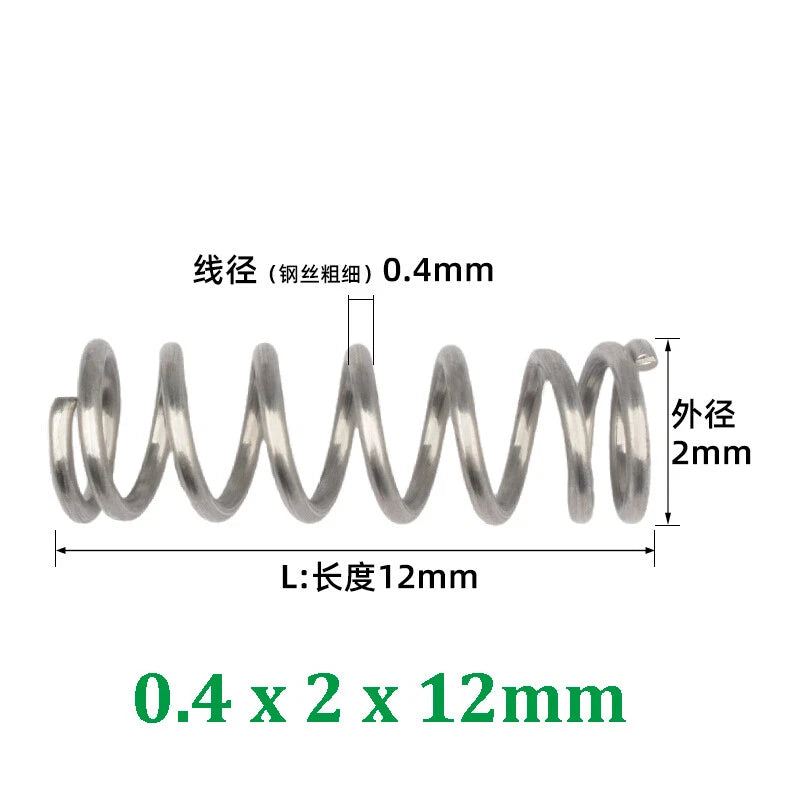
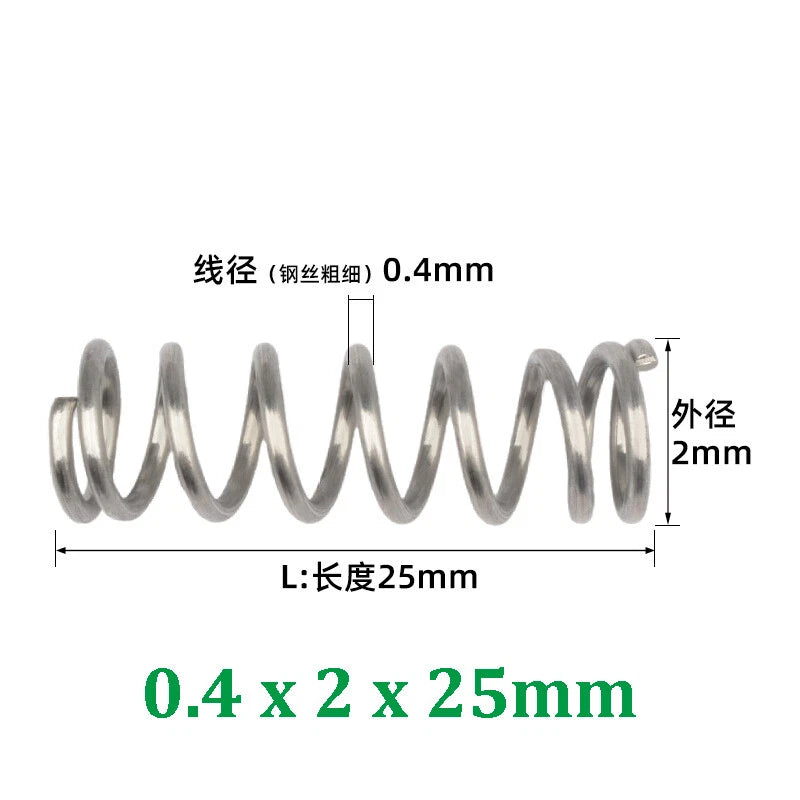
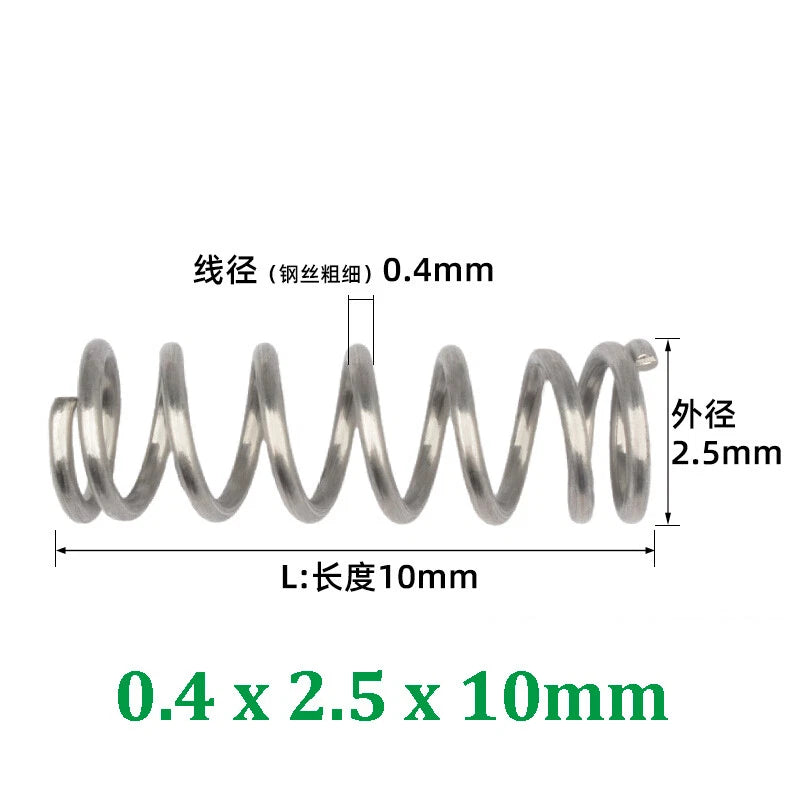
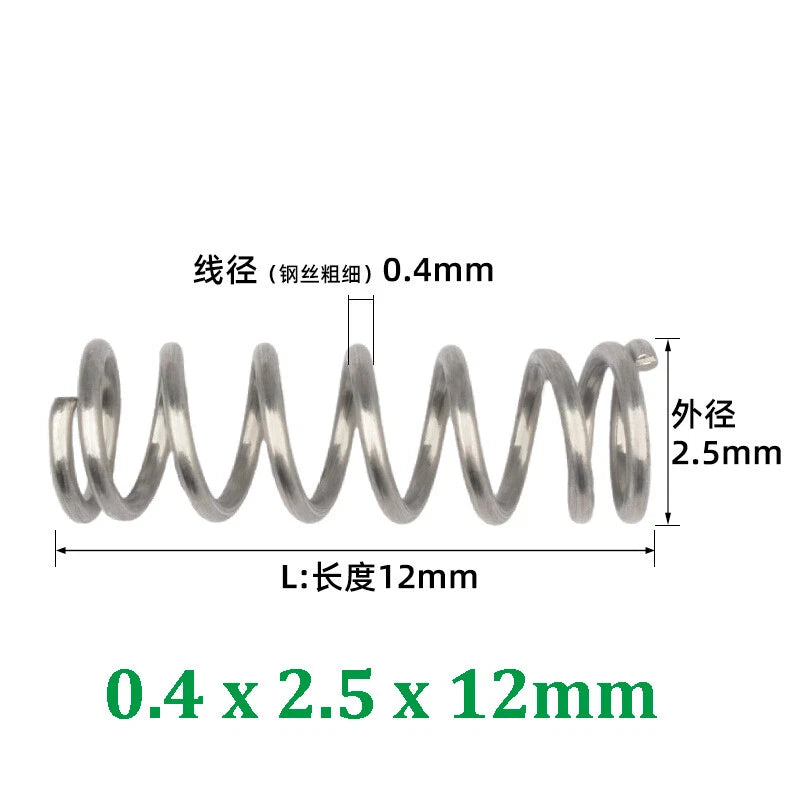
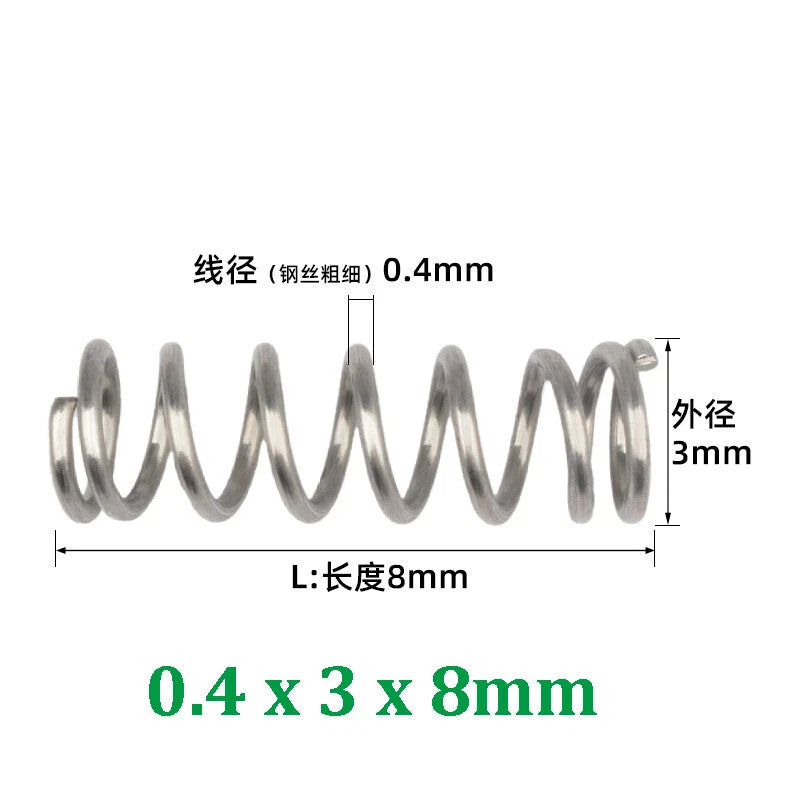
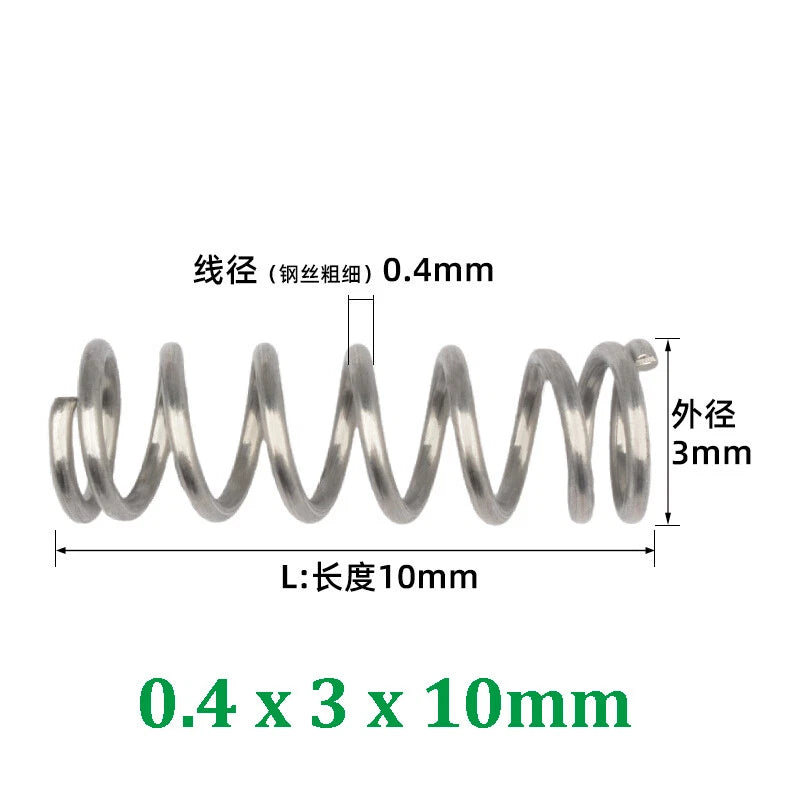
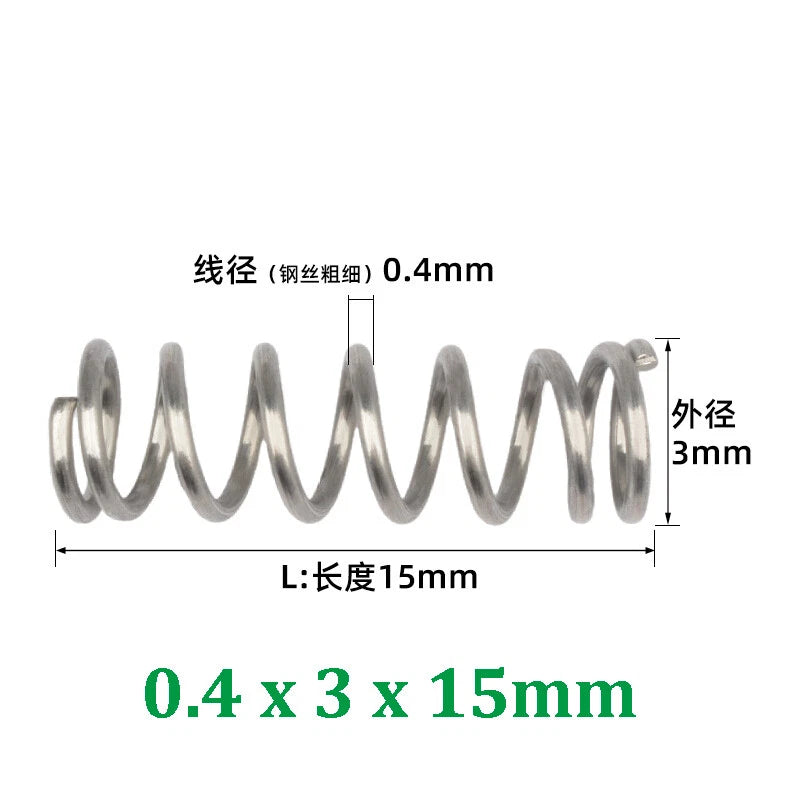
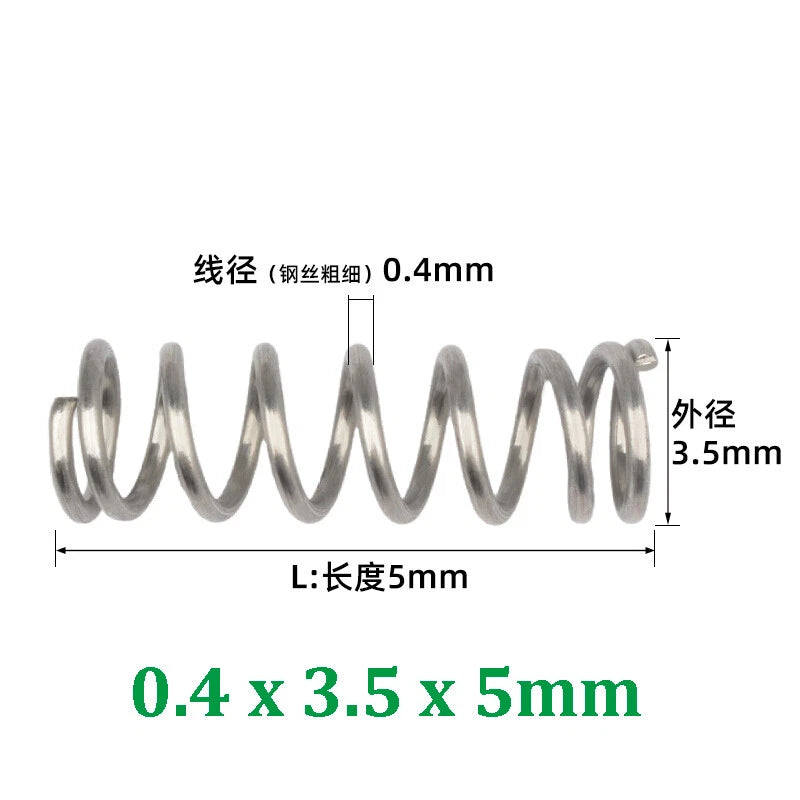
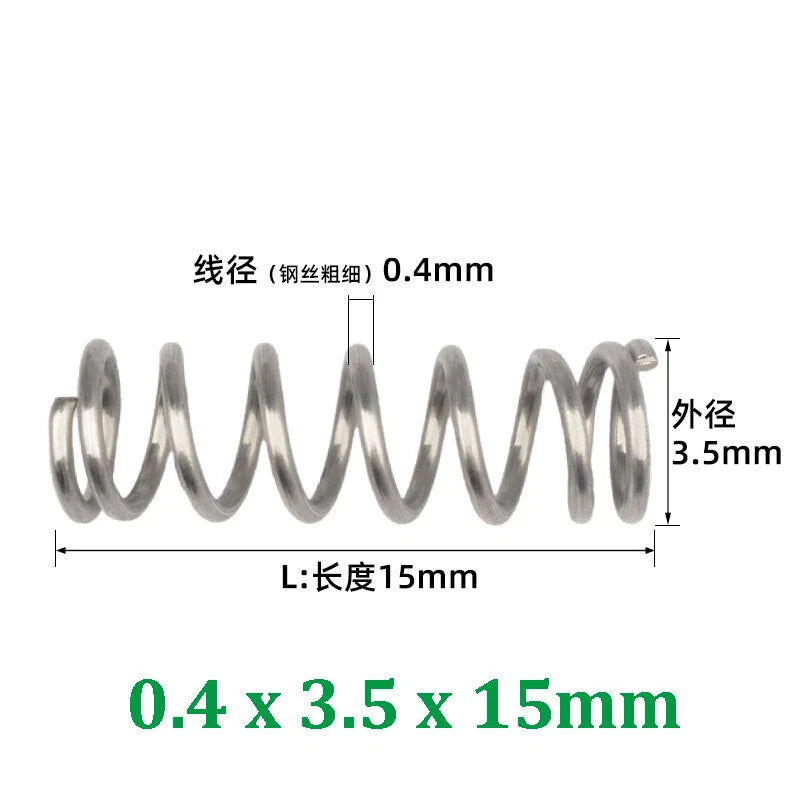
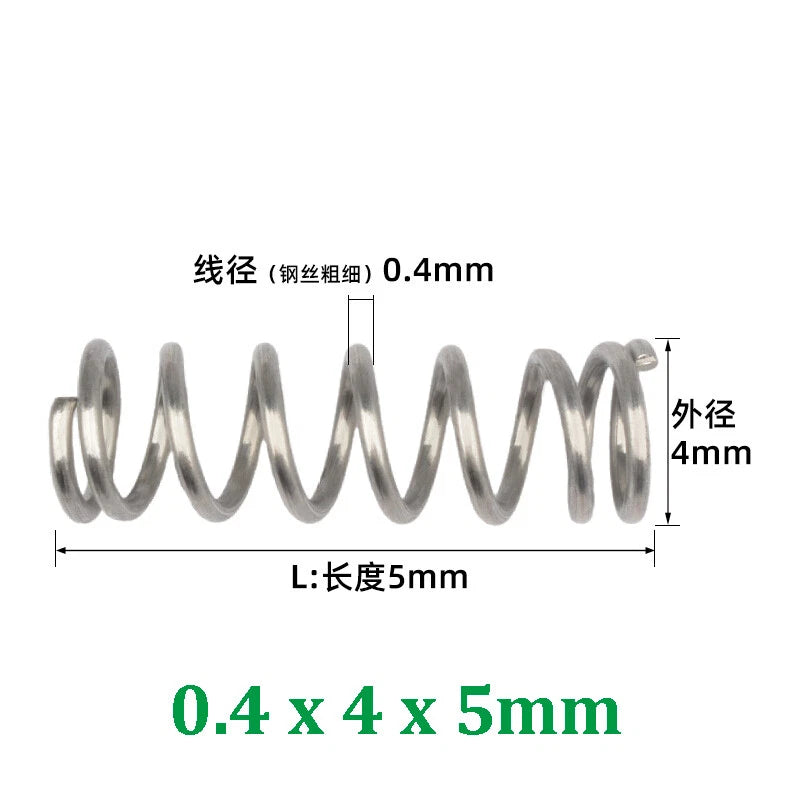
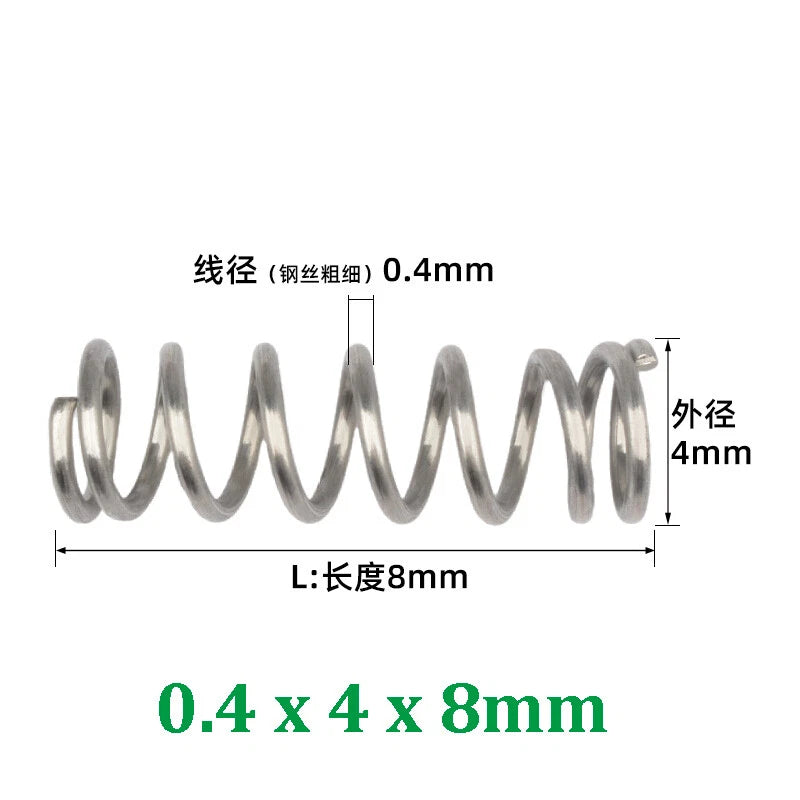
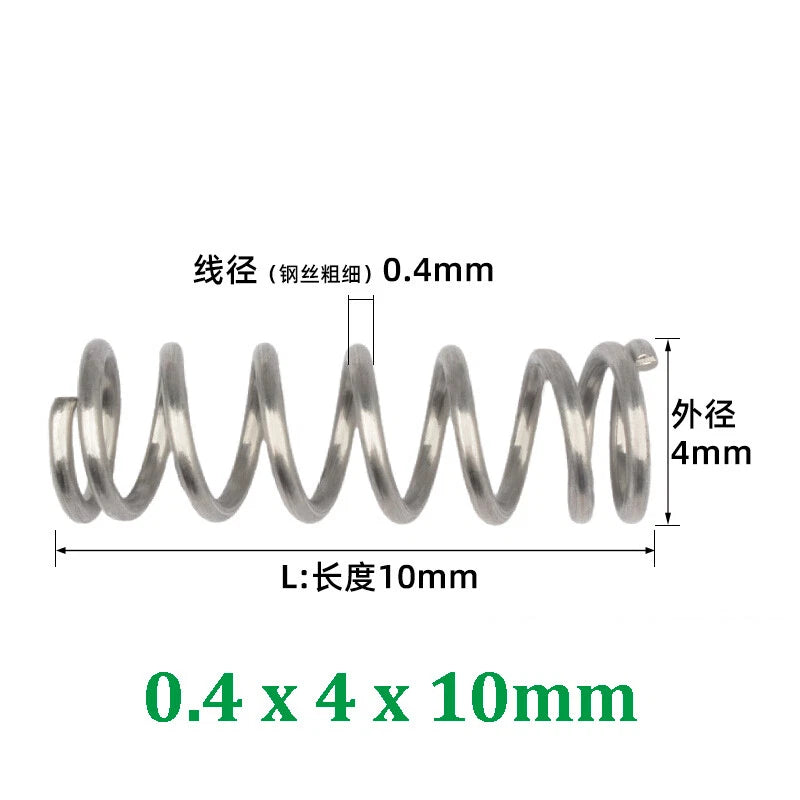
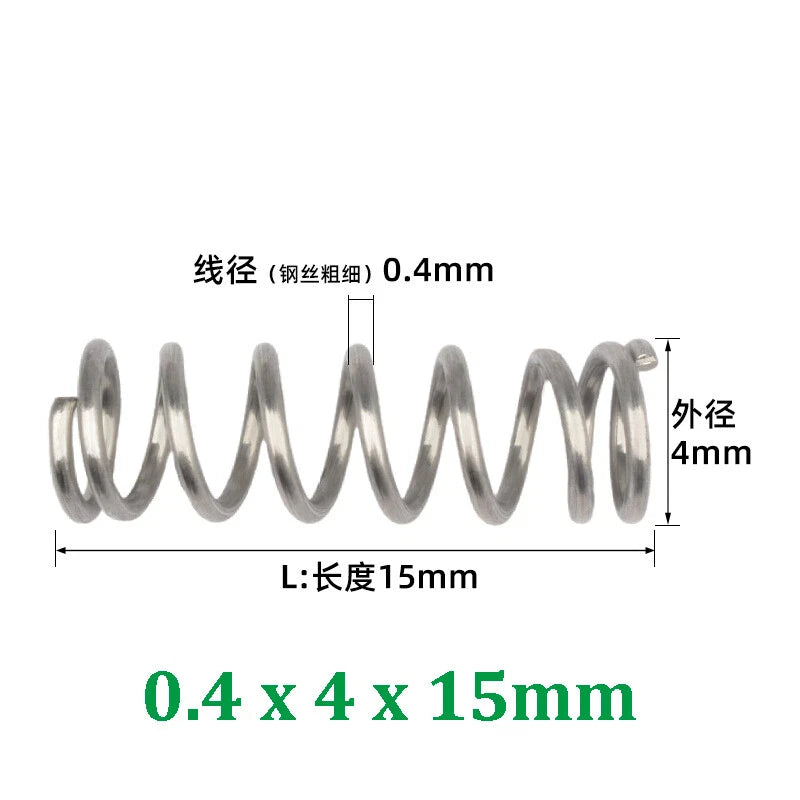
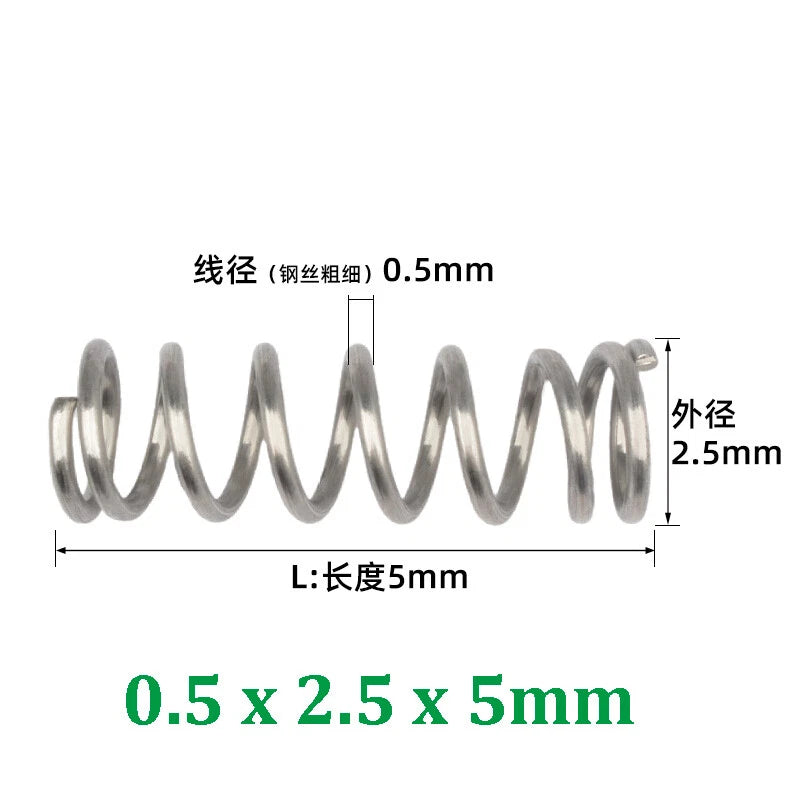
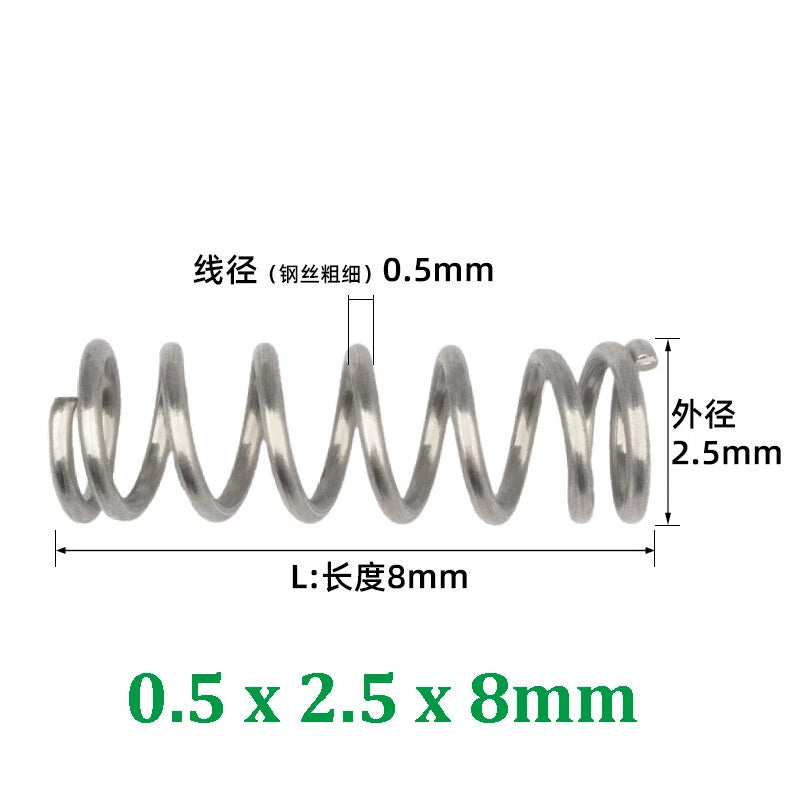
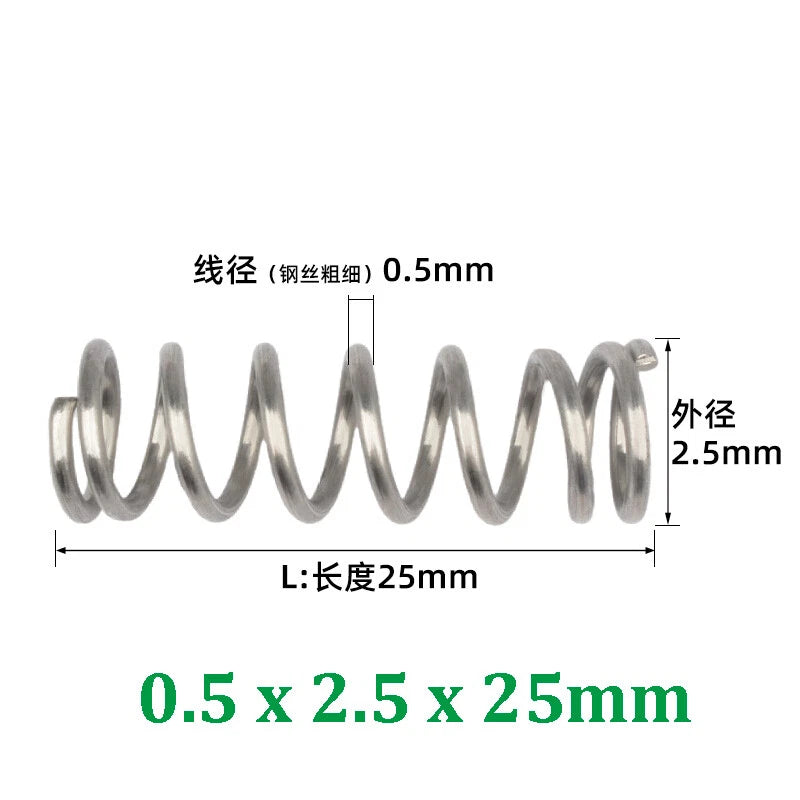
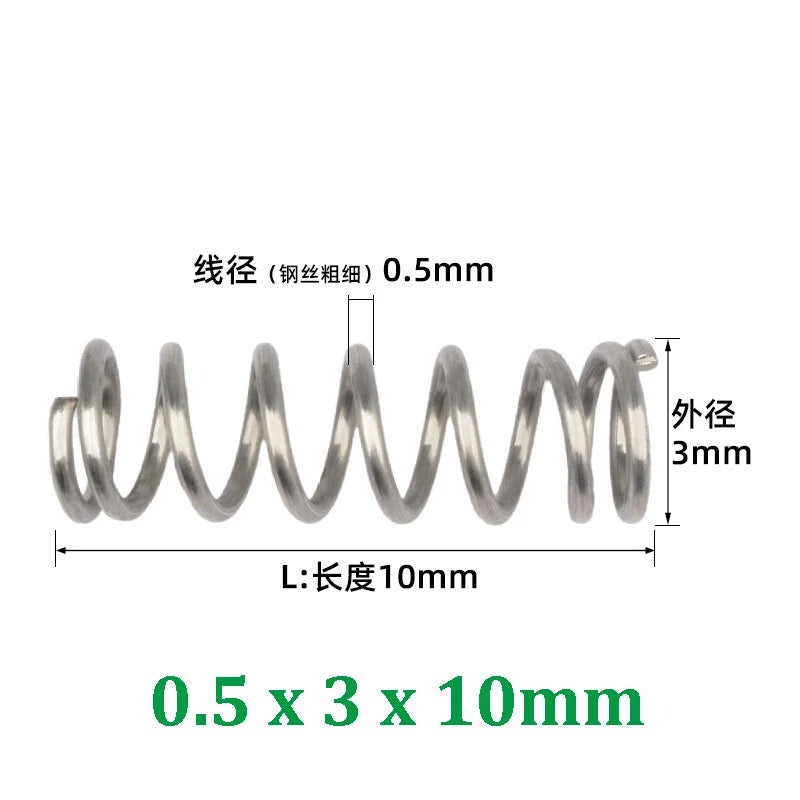
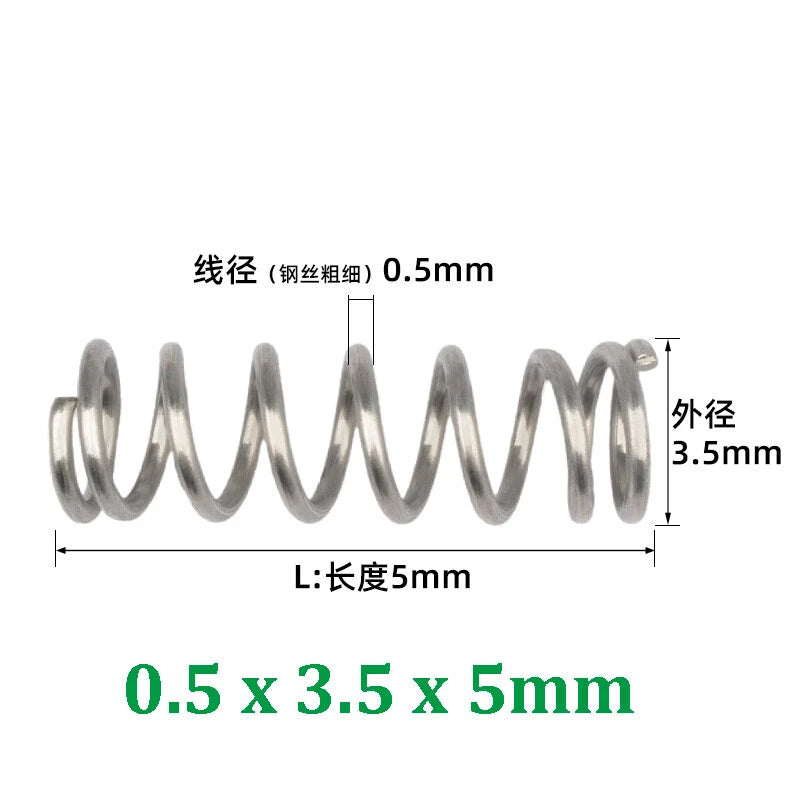
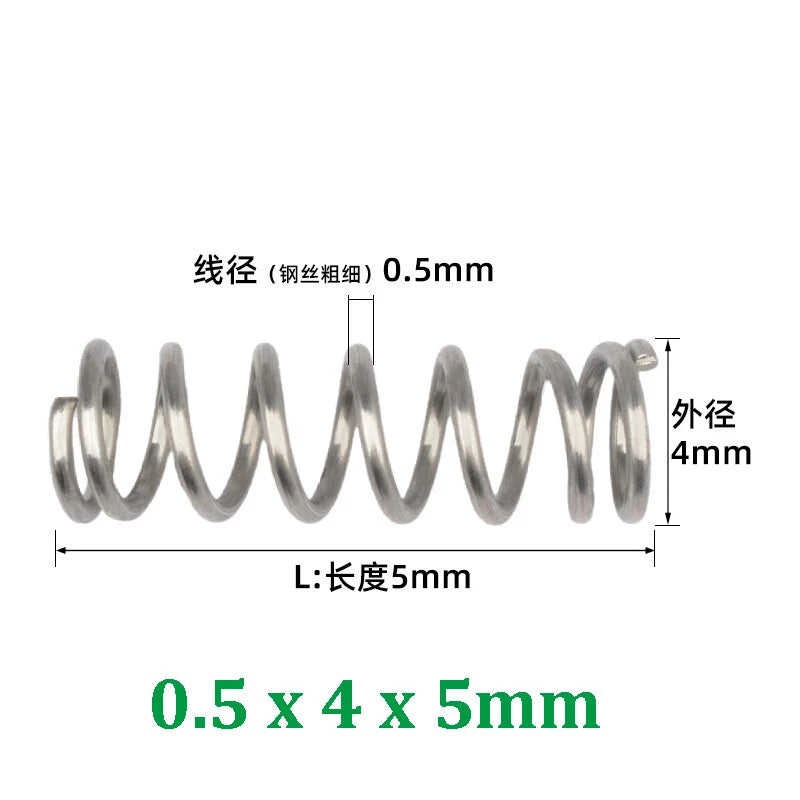
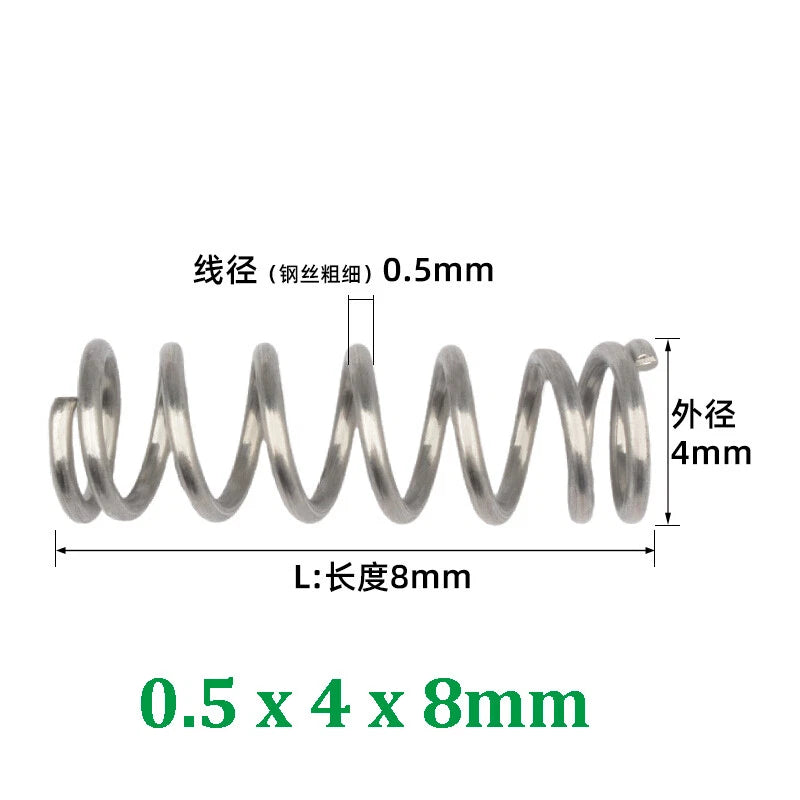
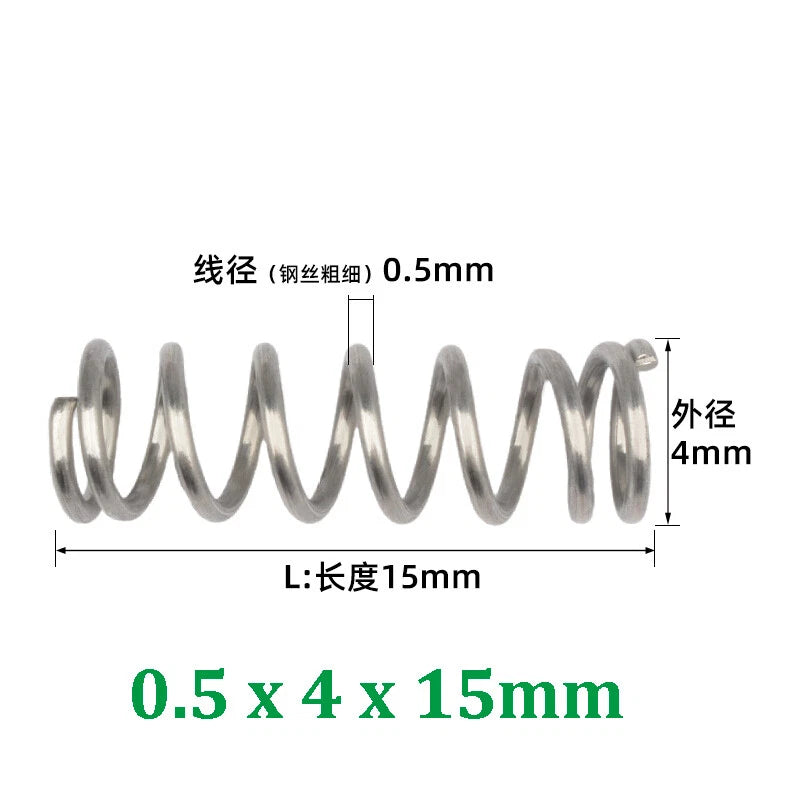
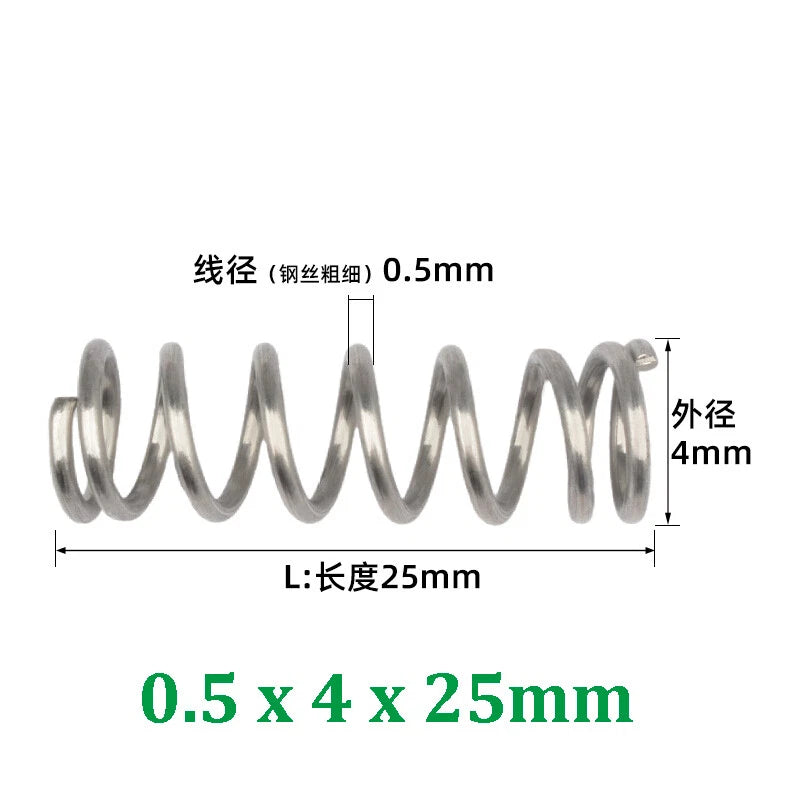
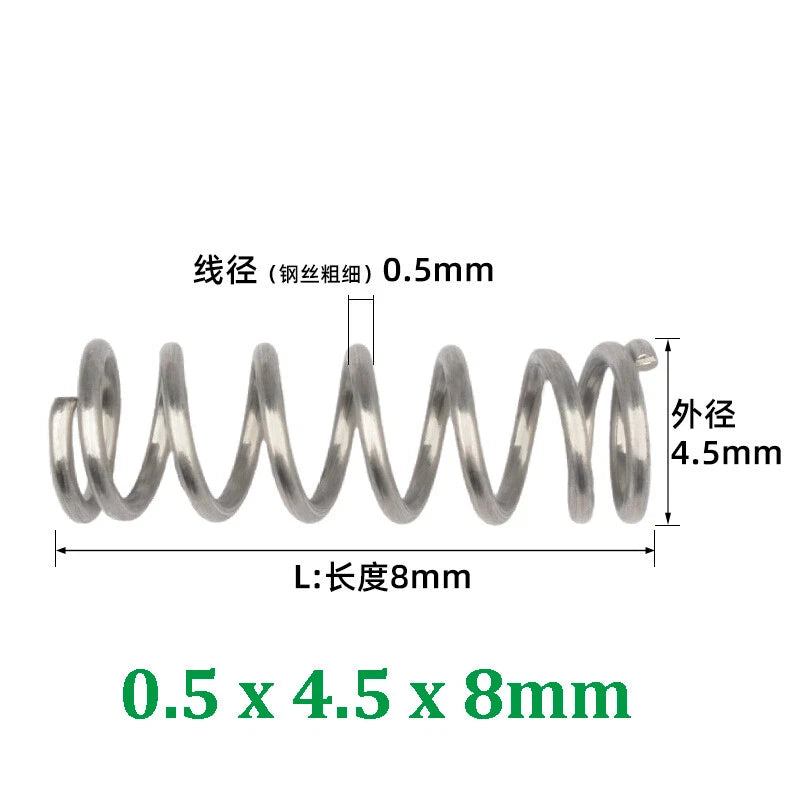
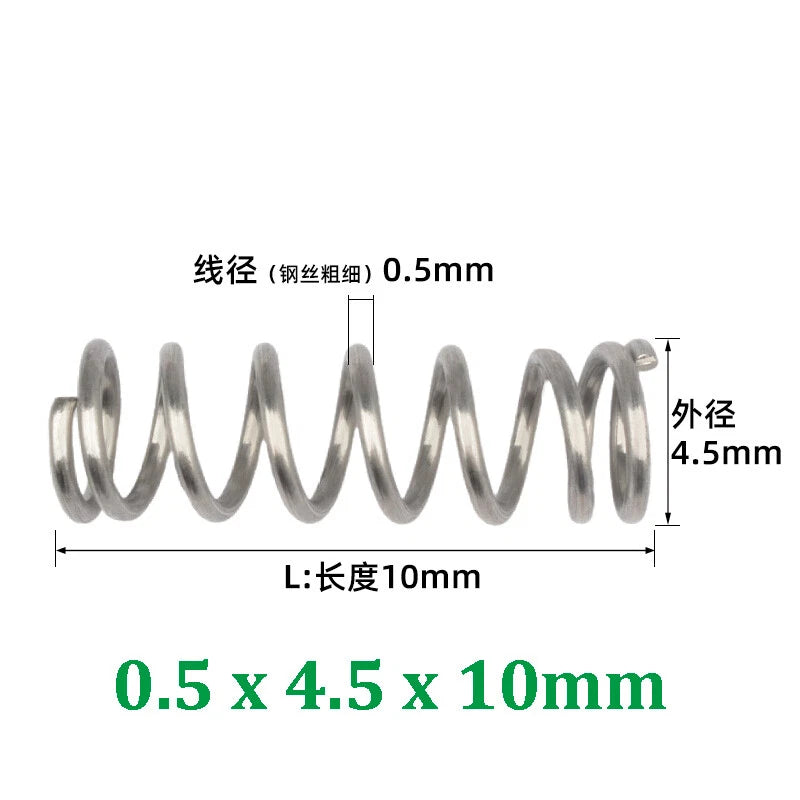
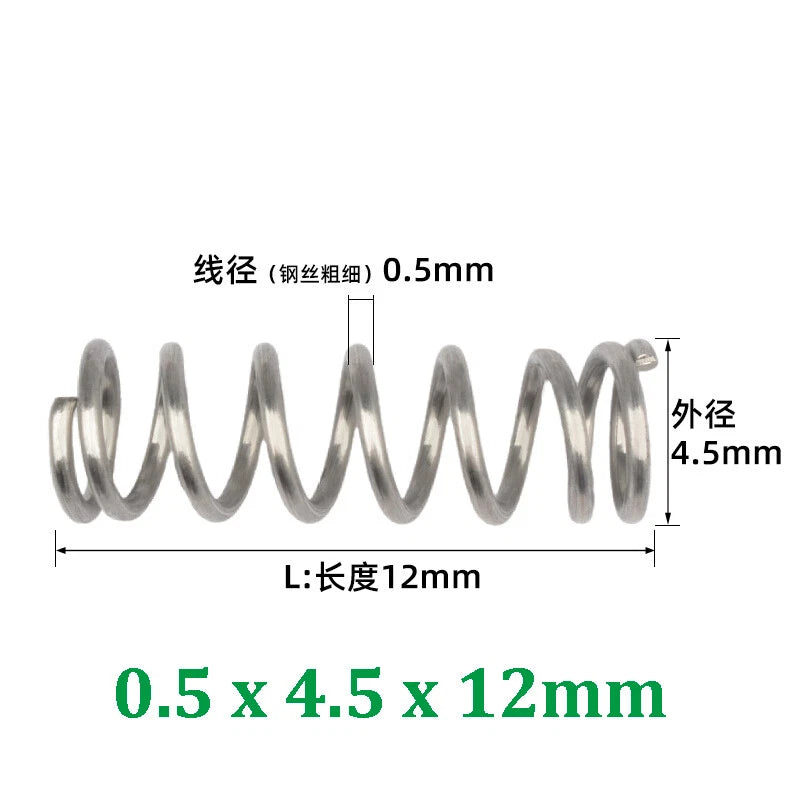
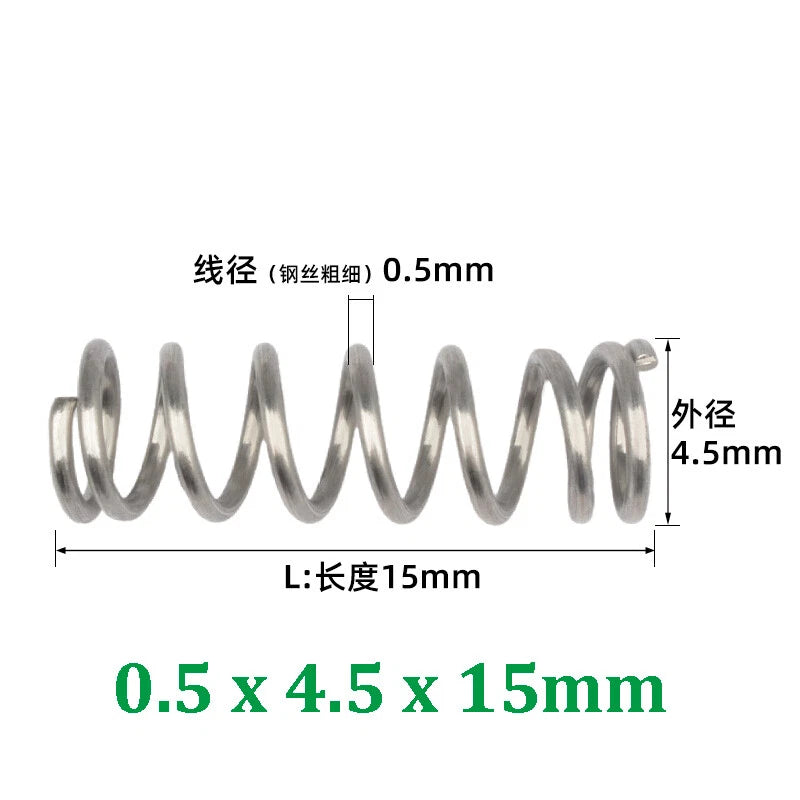
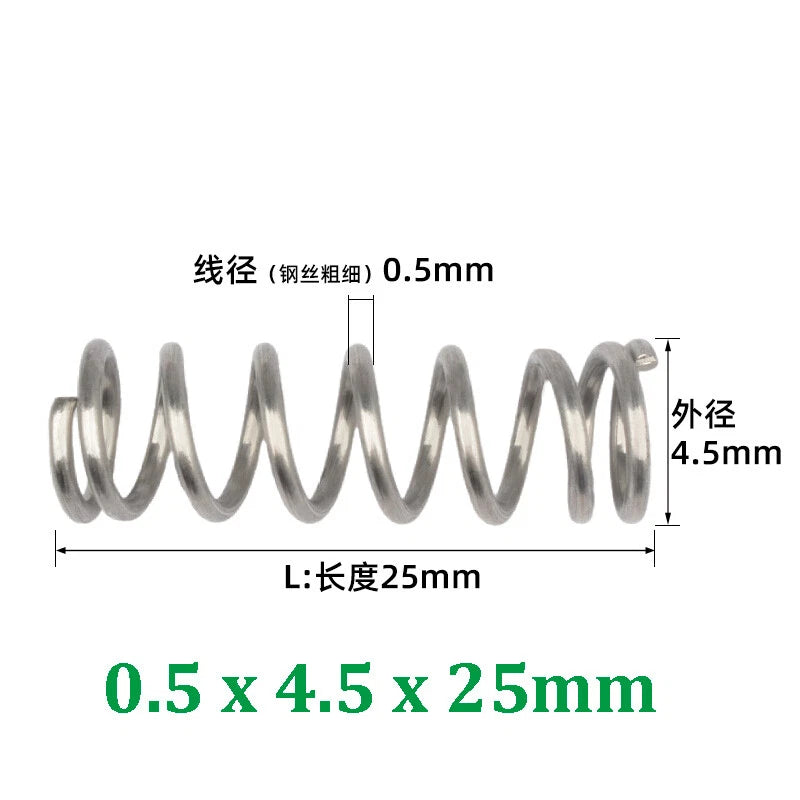
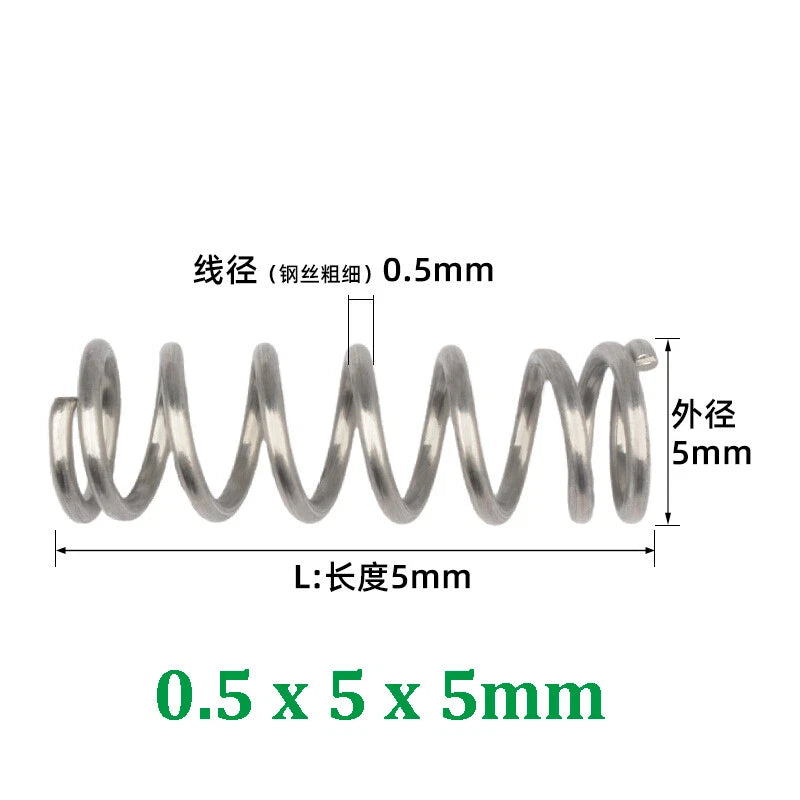
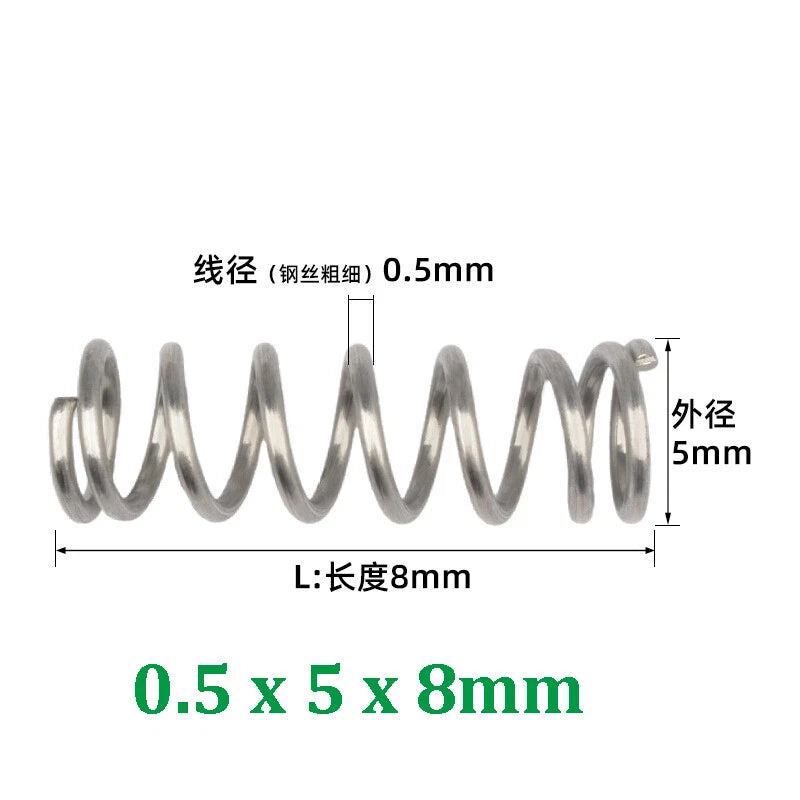
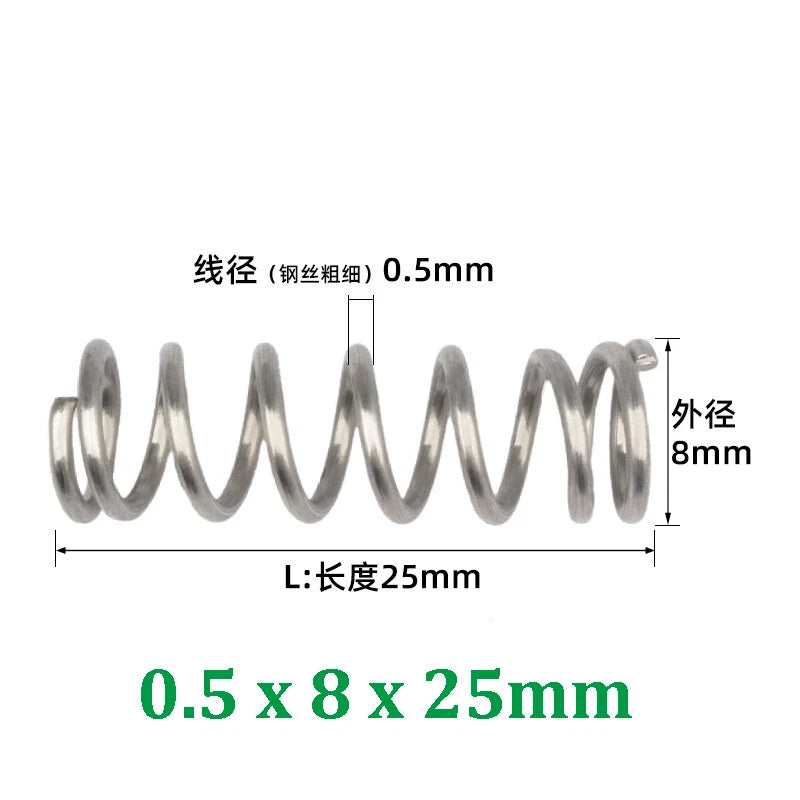
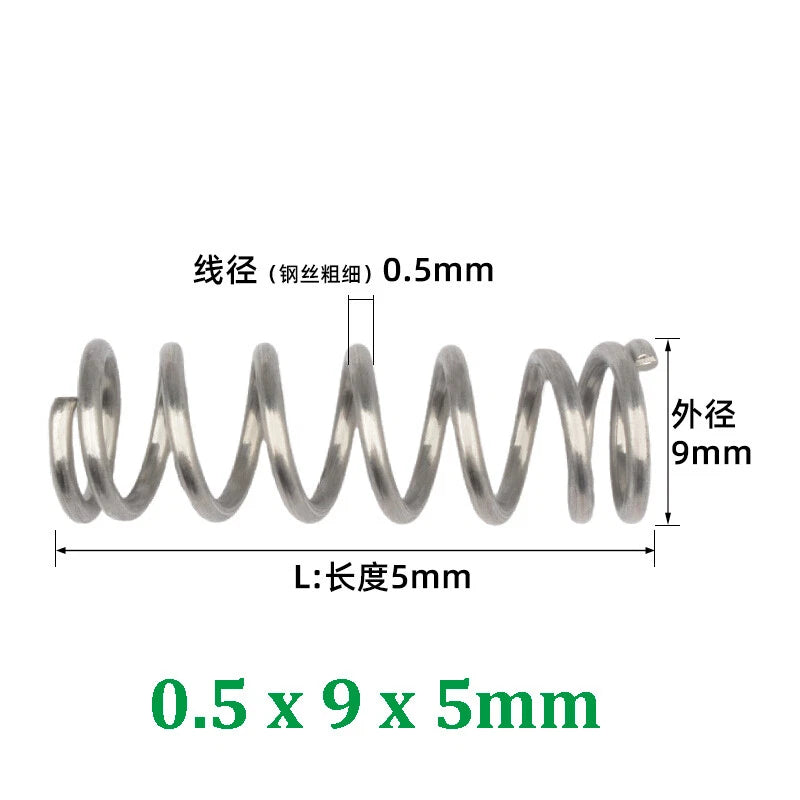
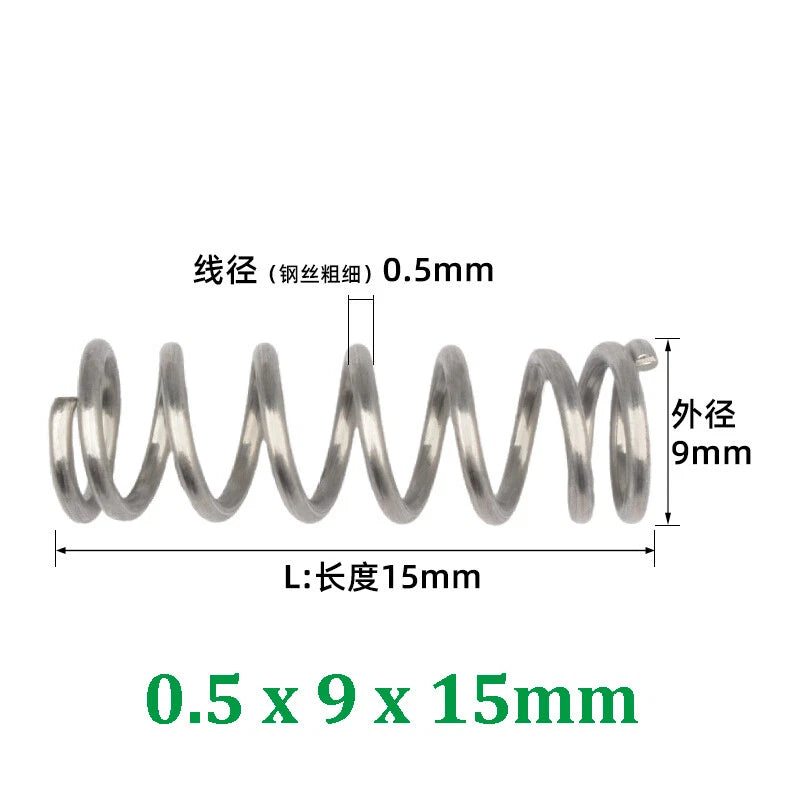
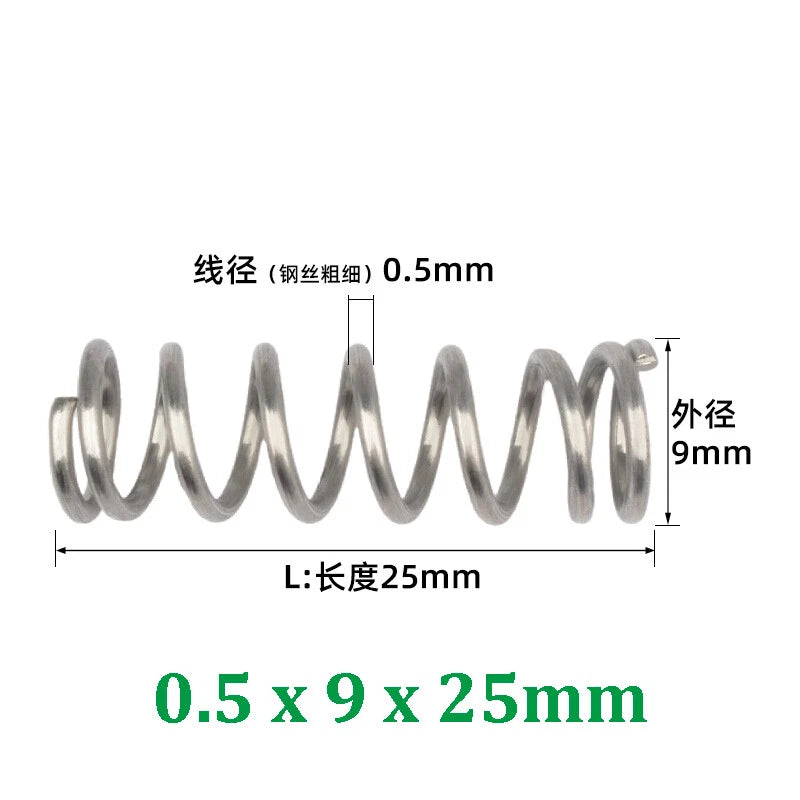
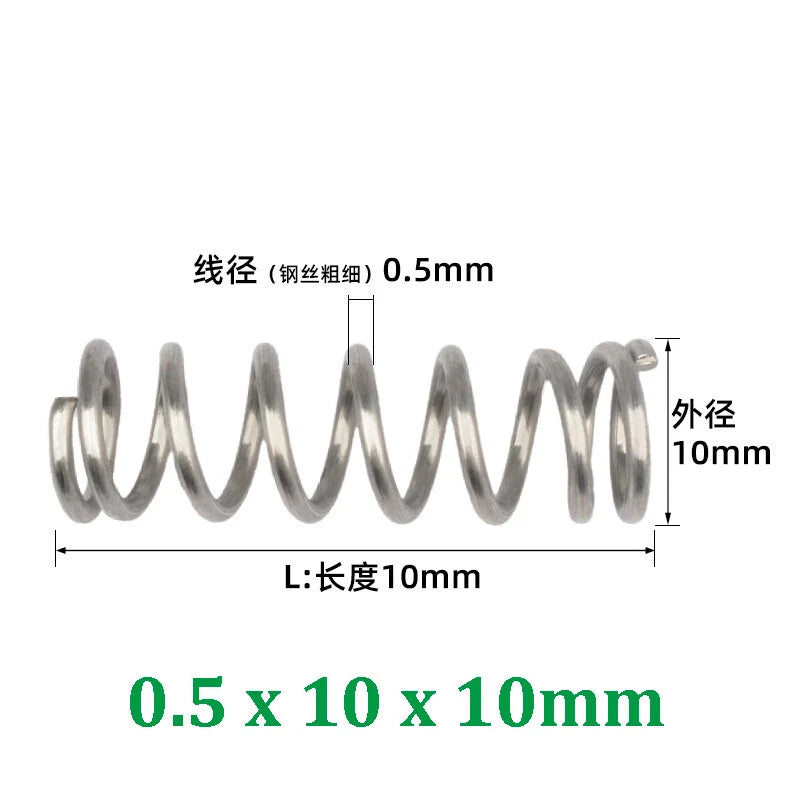
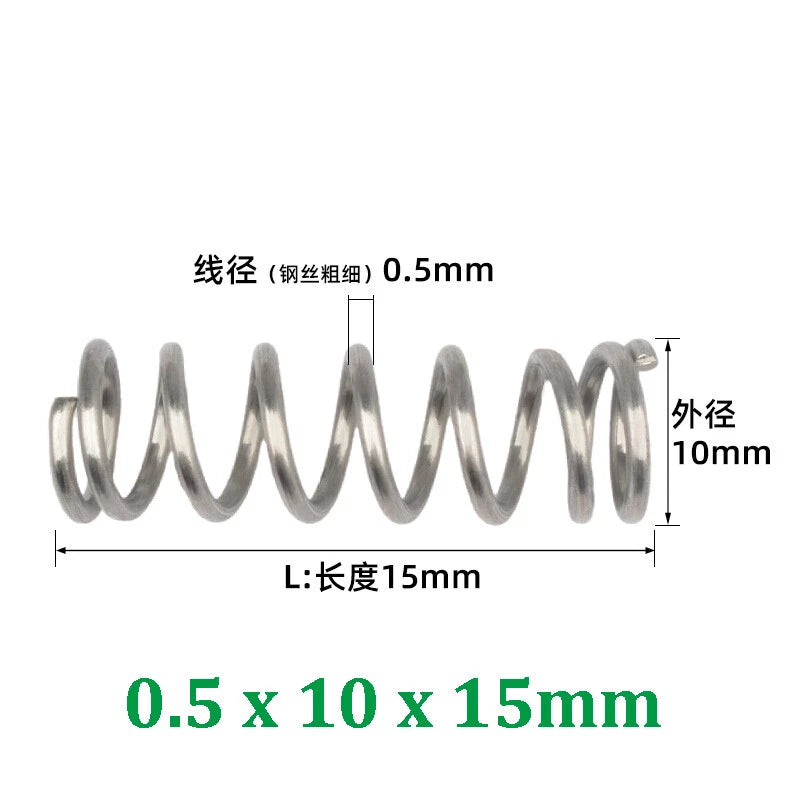
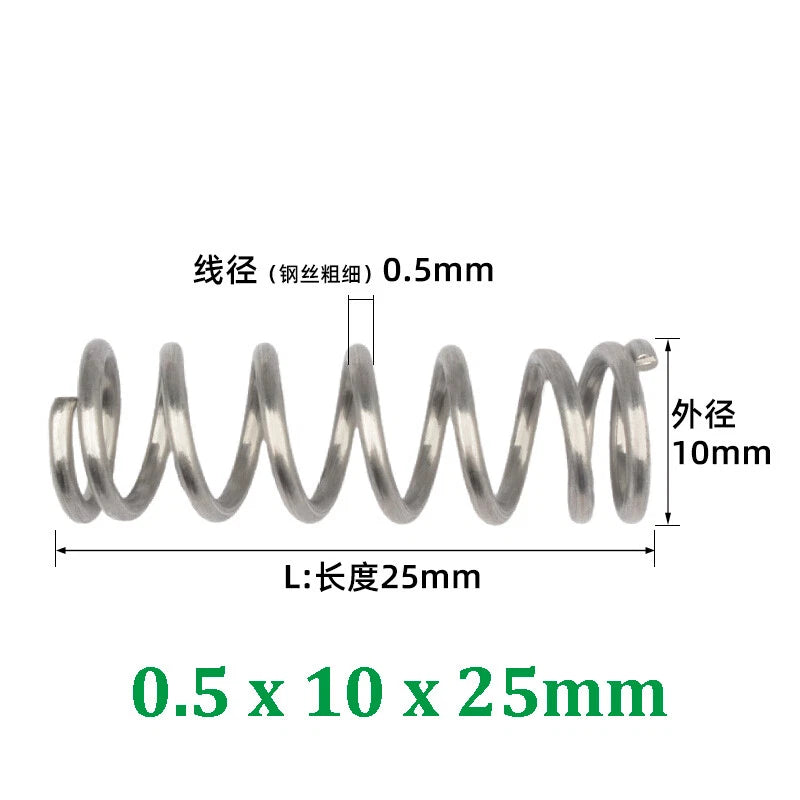
Compression Spring 0.2-0.5mm Wire Diameter Pressure Small Spring Stainless Steel

No reviews

Price:
Sale price$6.17 USD
Stock:
In stock (500 units), ready to be shipped

Payment & Security

Ach Direct Debit Amazon American Express Apple Pay Bancontact BLIK Diners Club Discover EPS Google Pay iDEAL Wero JCB Maestro Mastercard Multibanco MobilePay PayPal Przelewy24 Shop Pay Twint Union Pay USDC Visa

Your payment information is processed securely. We do not store credit card details nor have access to your credit card information.

Limited Offer — Spend More, Save More
Spend $55+
Save $5
Spend $100+
Save $10
Spend $200+
Save $25
HomeDIYer DIY Expert Support

DIY Expert Support

Get fitment advice & recommendations

Mon–Fri  8:30 AM – 8:00 PM
24-Hour Fast Ship
Arrives in 3–14 Days
Worldwide Shipping
30-Day Returns
1 tree planted with every purchase

Description

Compression Spring 0.2–0.5mm Wire Diameter — Precision Stainless Steel for Tight Spaces

When a repair stalls because you can't find a spring small enough, the whole project stops. Whether you're a watchmaker, electronics technician, model builder, or mechanical engineer, sourcing the right miniature compression spring in the exact wire diameter, outer diameter, and free length is rarely straightforward. These stainless steel compression springs are stocked in an extensive matrix of sizes so you can match the spec you need without compromise.

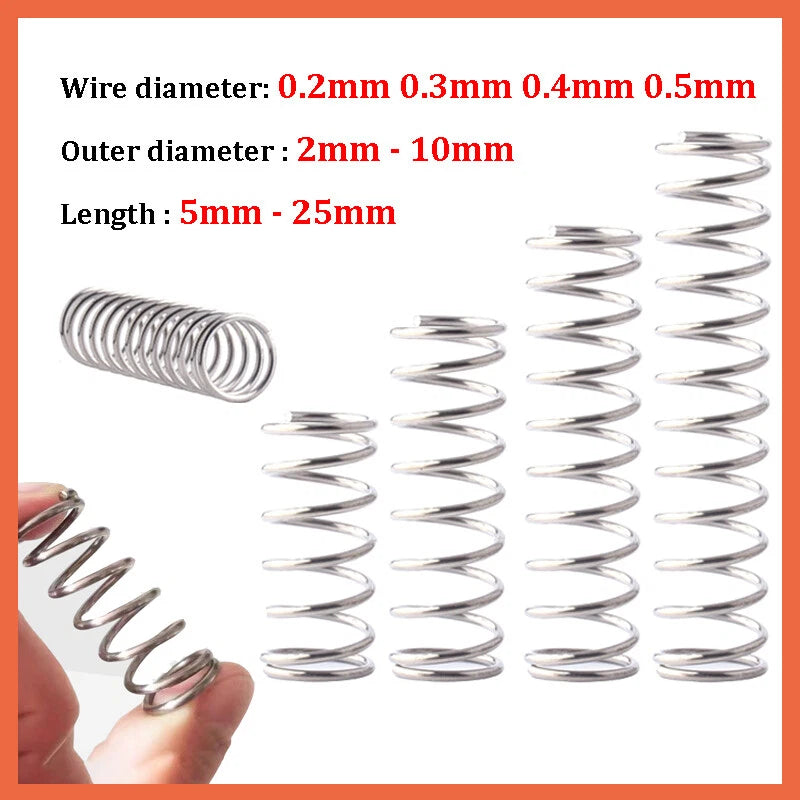
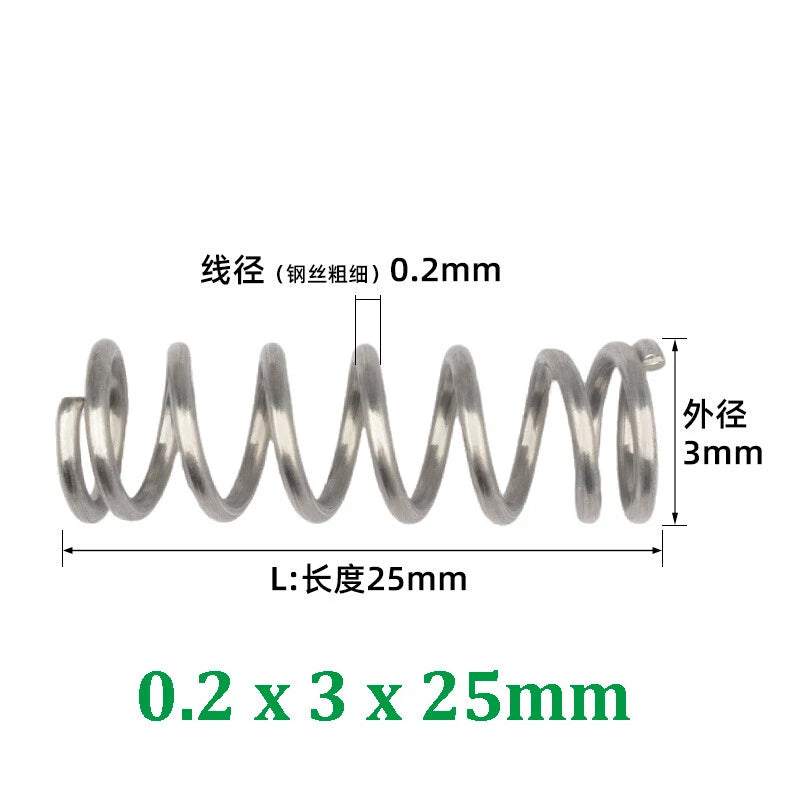
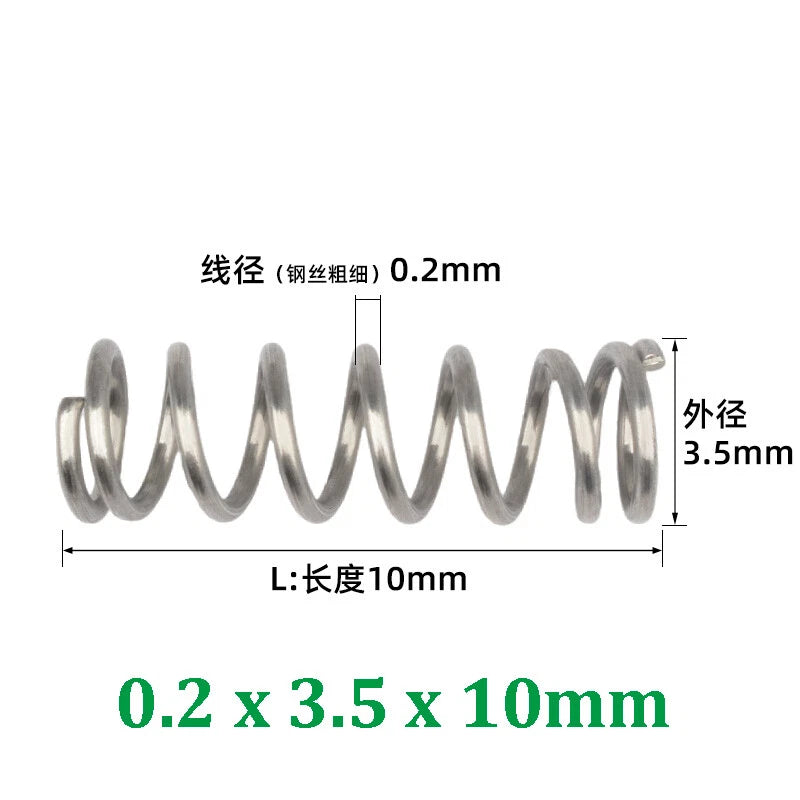
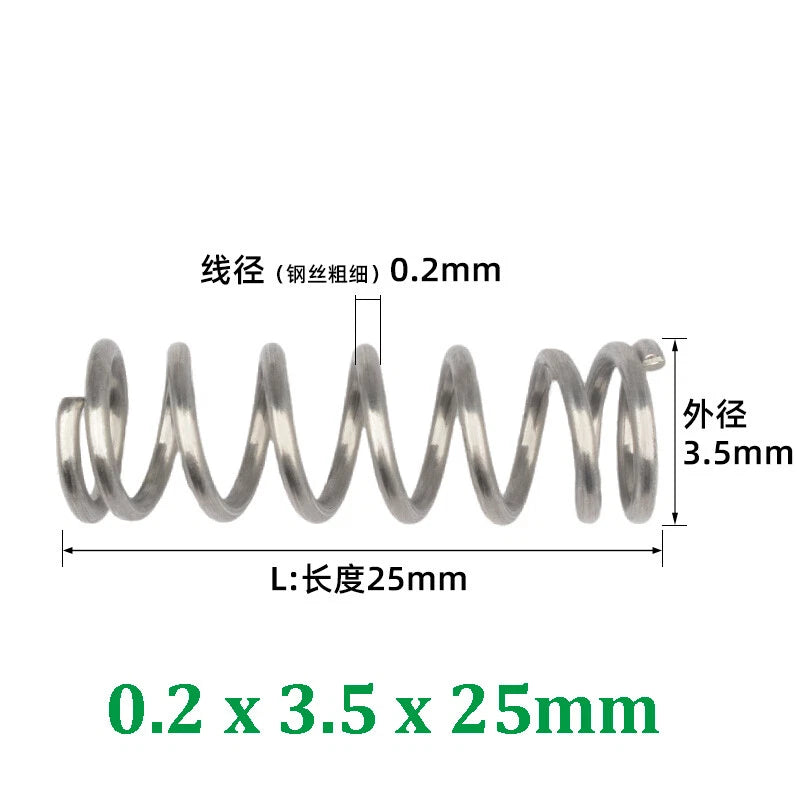
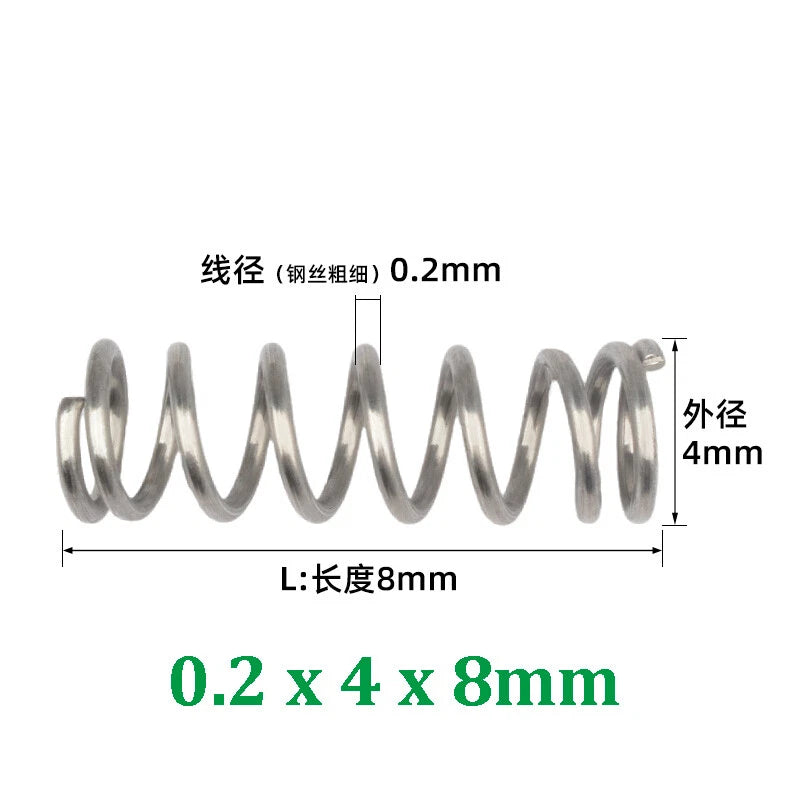
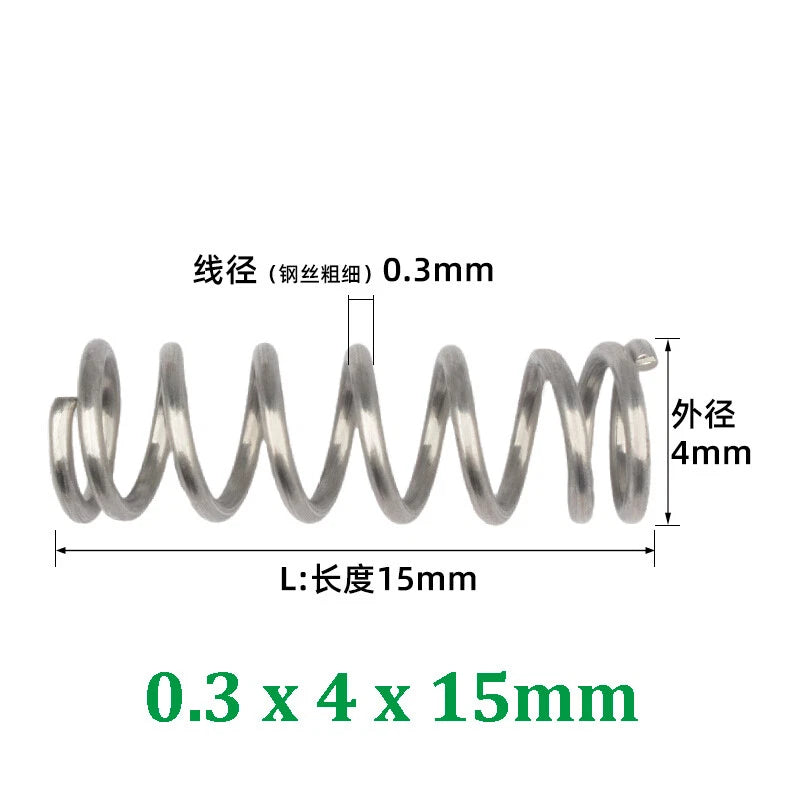
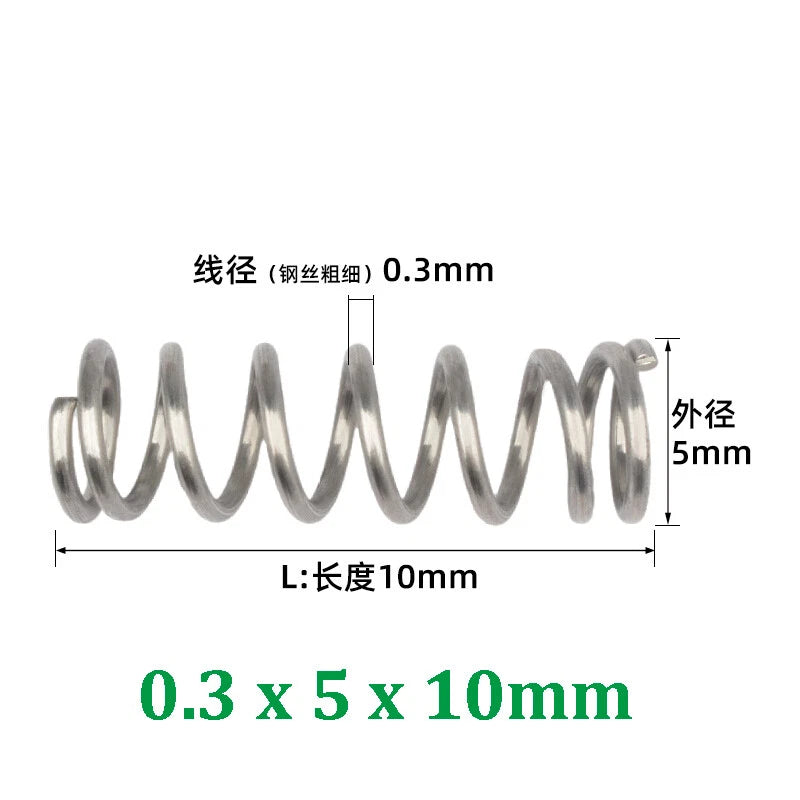
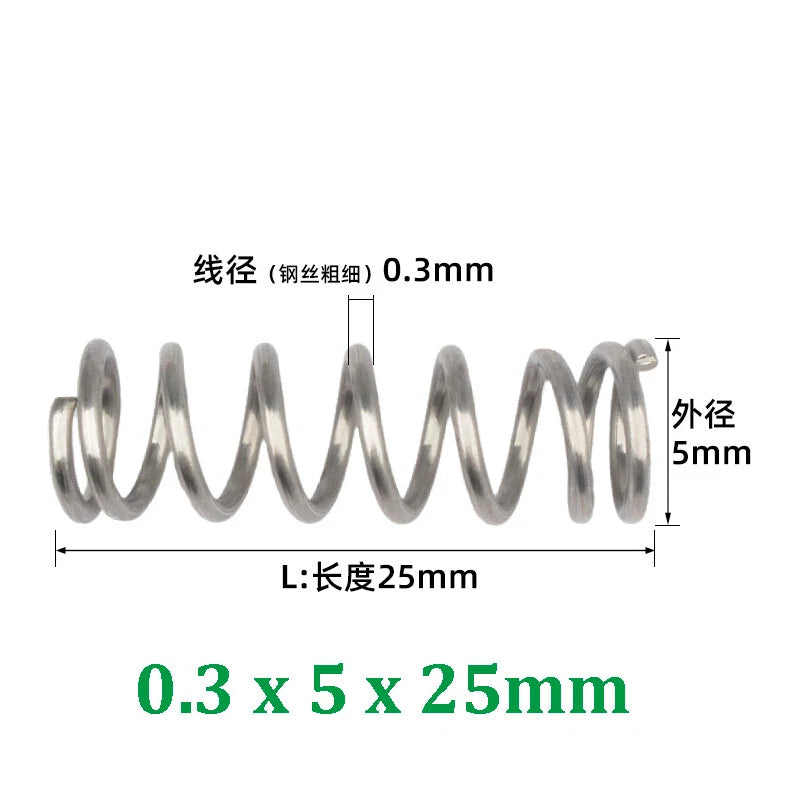
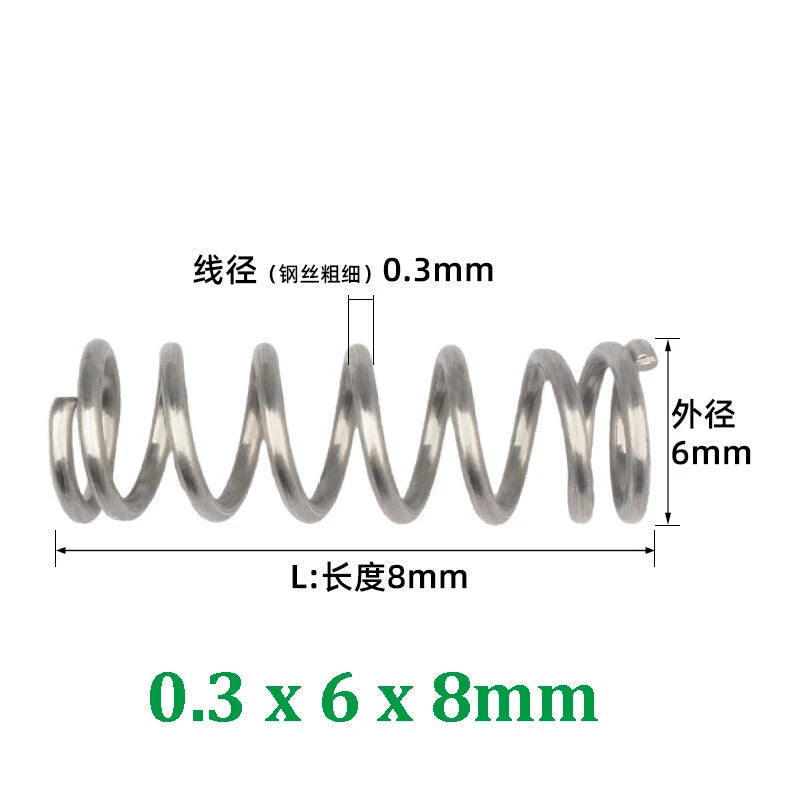
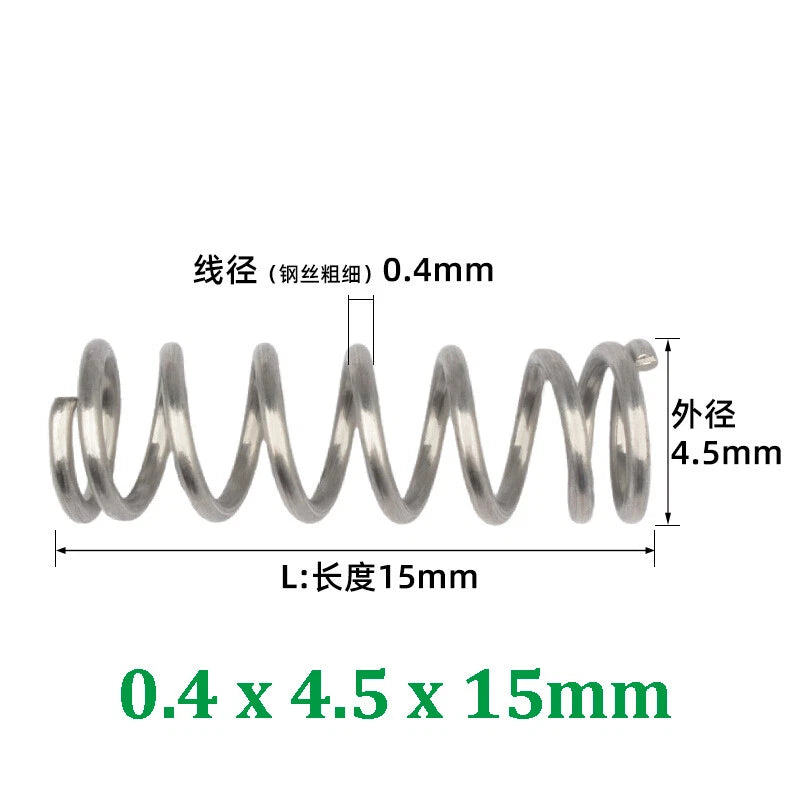
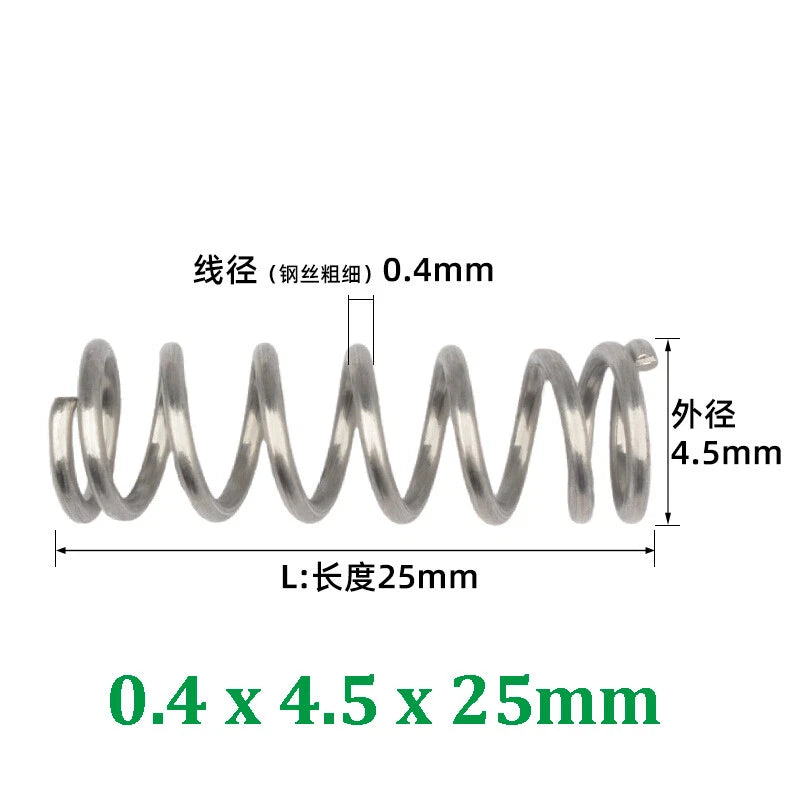
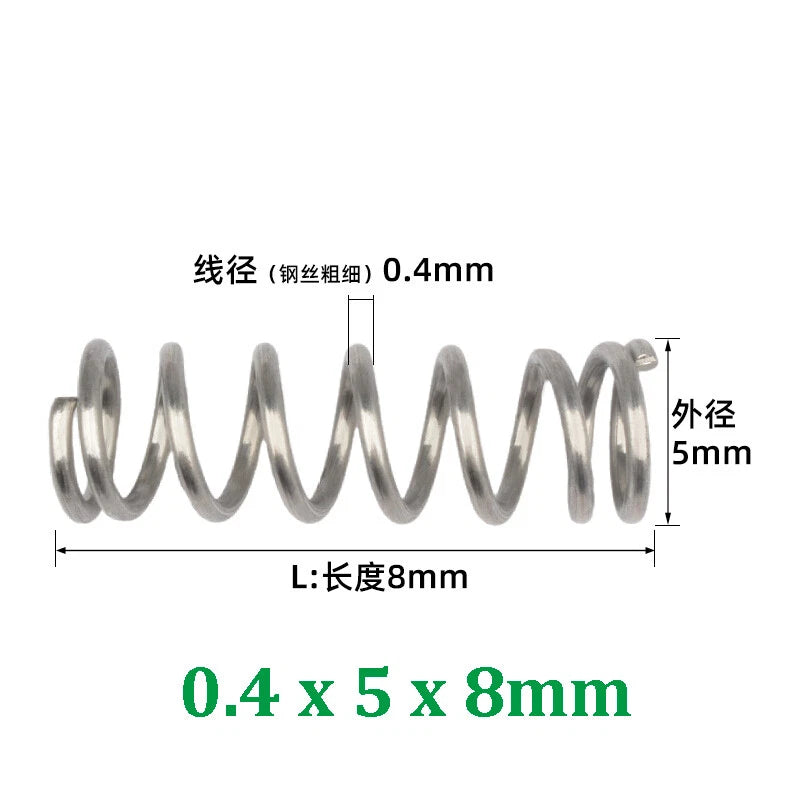
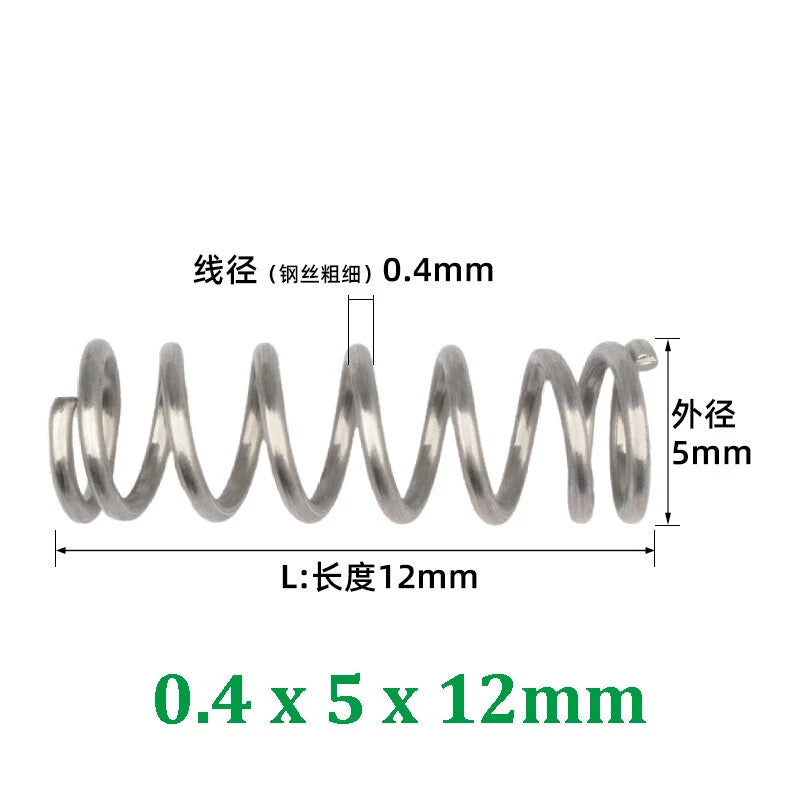
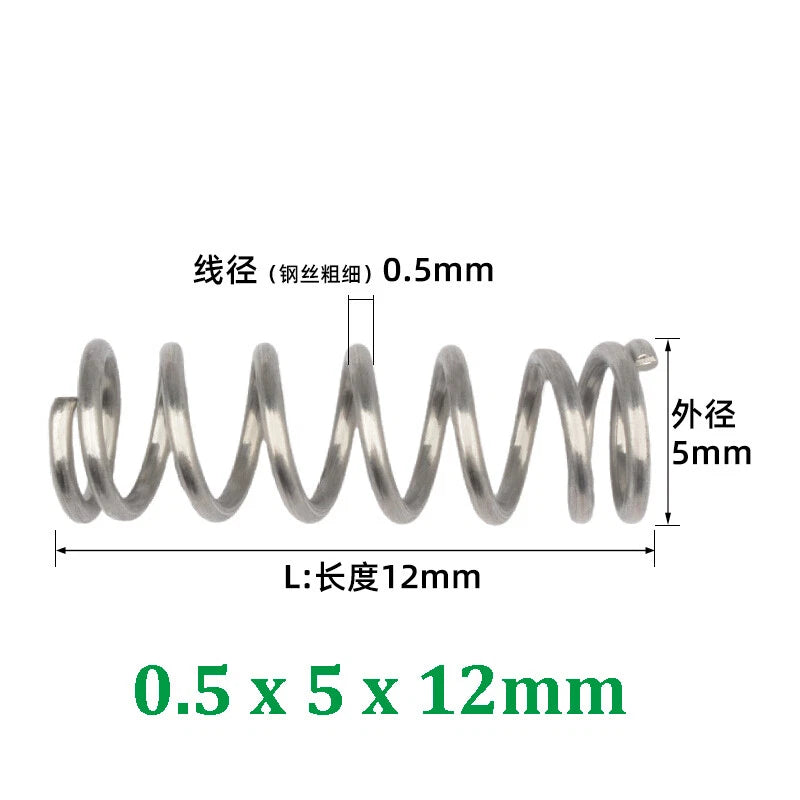
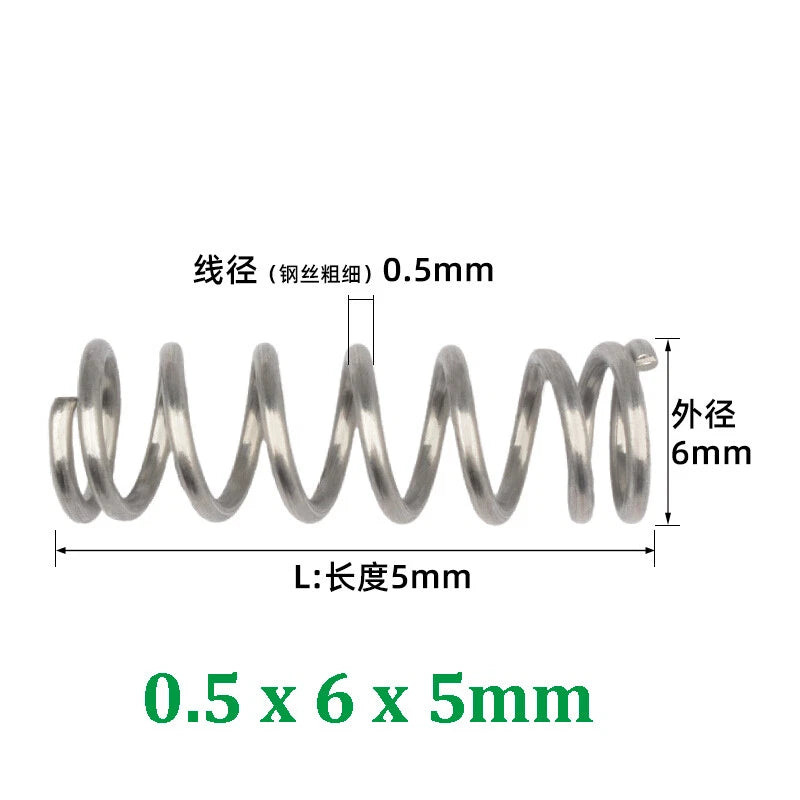
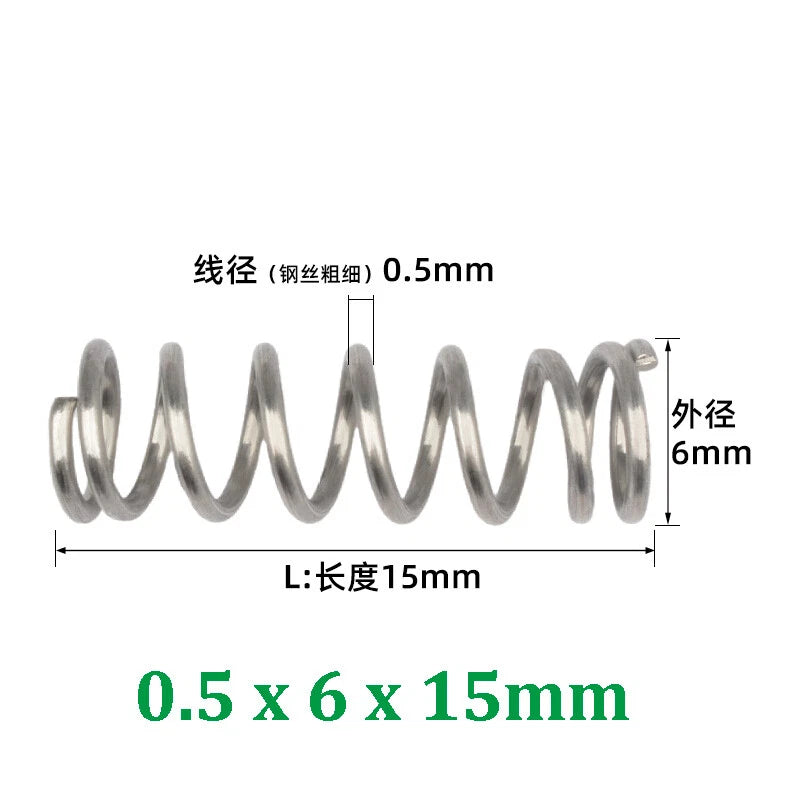
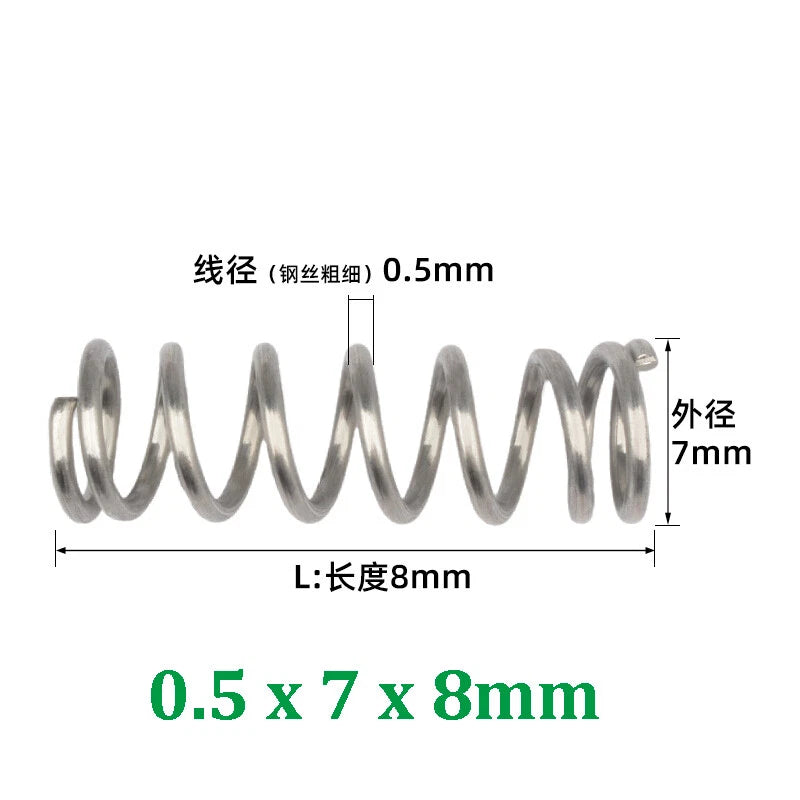
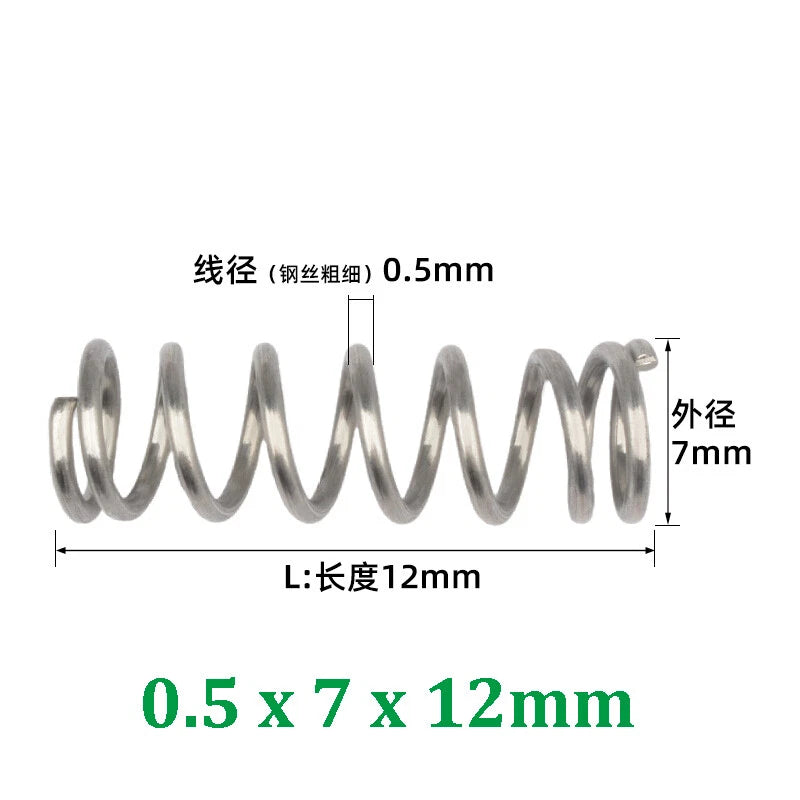
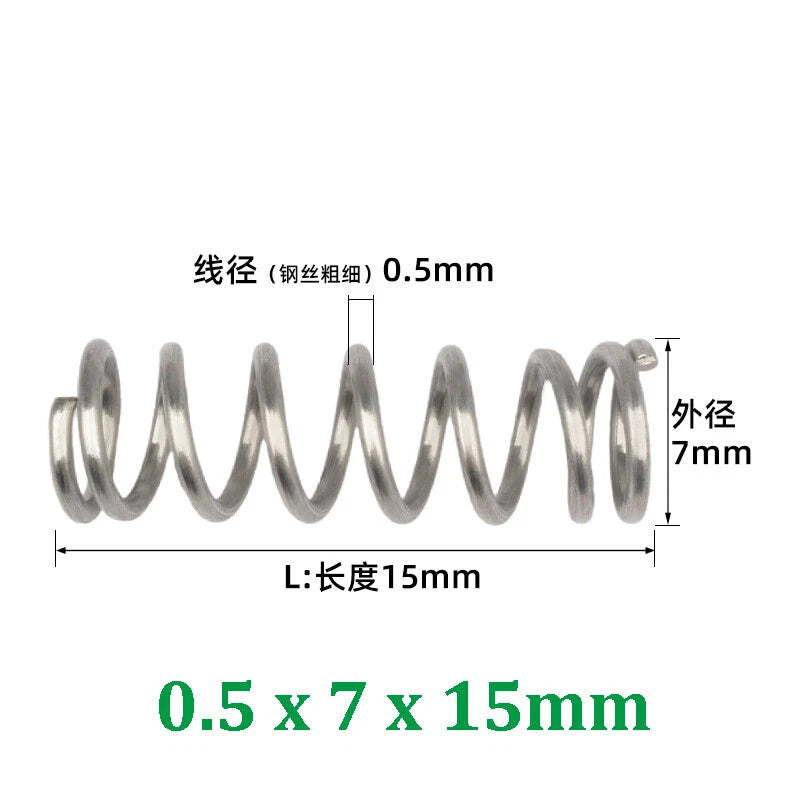
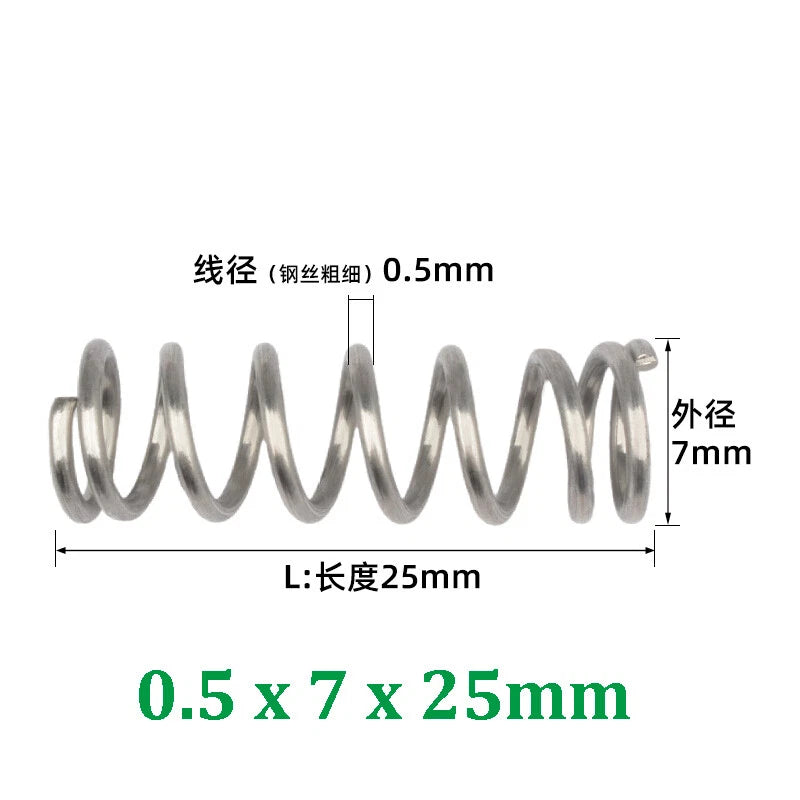
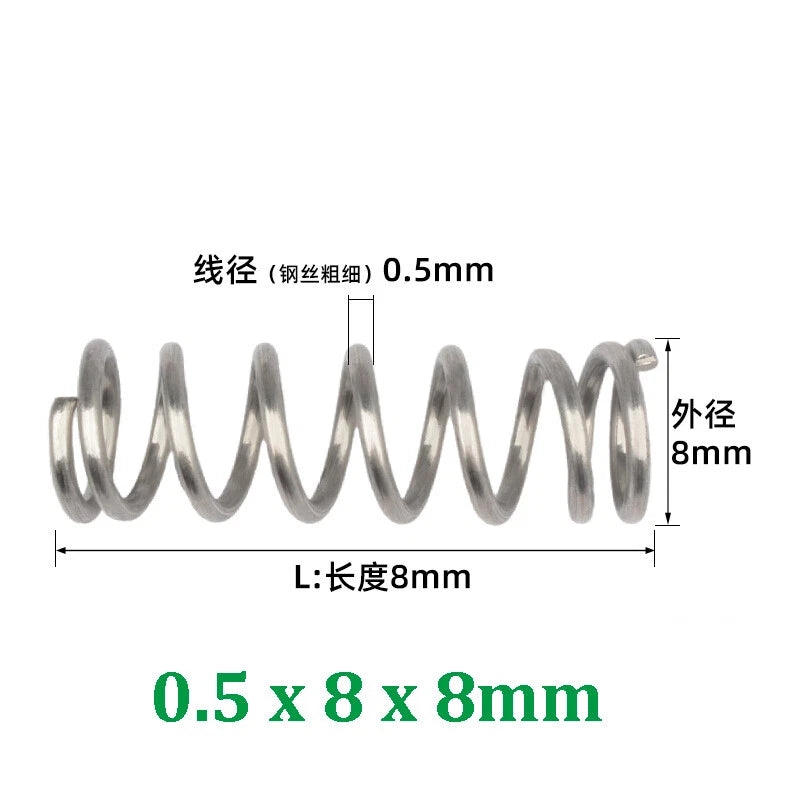
Each spring is formed from stainless steel wire in diameters ranging from 0.2 mm to 0.5 mm (approximately 0.008 in to 0.020 in), with outer diameters spanning 1.0 mm to 10 mm (approximately 0.039 in to 0.394 in) and free lengths from 5 mm to 25 mm (approximately 0.197 in to 0.984 in). The closed-end coil geometry provides stable seating and consistent load distribution across the full compression stroke.

Typical applications include miniature instrument mechanisms requiring a small compression spring for precise load control, PCB-mounted contact springs where a stainless steel micro spring resists corrosion from flux residue, and precision jig fixtures that need a repeatable return force from a small-diameter coil spring. The corrosion-resistant alloy also suits outdoor sensor housings and medical-device prototypes where hygiene and dimensional stability matter.

⚙️ Compatibility: Suitable for spring seats, bores, and housings designed for the selected outer diameter. Verify your bore ID is at least 0.1–0.2 mm larger than the spring OD to allow free travel. Confirm free length and spring rate requirements against your application before ordering.

✅ Key Features of These Stainless Steel Compression Springs

🔩 Wide Size Matrix

Wire diameters 0.2–0.5 mm paired with outer diameters 1.0–10 mm and free lengths 5–25 mm give you precise dimensional control for miniature mechanisms.

🛡️ Stainless Steel Construction

Corrosion-resistant alloy maintains dimensional stability in humid, chemical, or outdoor environments where carbon steel would degrade.

📐 Closed-End Coil Geometry

Closed and ground ends provide a flat seating surface for consistent load transfer and reduced lateral deflection under compression.

Consistent Spring Rate

Uniform wire diameter and coil pitch across each variant deliver repeatable force-deflection characteristics for reliable performance in precision assemblies.

📦 10-Piece Pack

Each listing ships 10 springs of the selected size — enough for prototyping, repair batches, or keeping spares on hand without over-ordering.

🔍 Exact-Size Selection

Choose your Wire Dia × Outer Dia × Length combination from the variant selector to get the precise spring geometry your application requires.

📐 Technical Specifications — Compression Spring

Material Stainless Steel
Wire Diameter Range 0.2 mm – 0.5 mm (0.008 in – 0.020 in)
Outer Diameter Range 1.0 mm – 10 mm (0.039 in – 0.394 in)
Free Length Range 5 mm – 25 mm (0.197 in – 0.984 in)
End Type Closed ends
Spring Type Compression
Finish Natural stainless (uncoated)
Spring Rate See variant options
Number of Coils See variant options
Pack Quantity 10 pcs per pack

❓ Frequently Asked Questions

How do I choose the right wire diameter for my application?

Wire diameter determines the spring's stiffness and load capacity. Thinner wire (0.2–0.3 mm) produces lighter, more flexible springs suited to delicate instruments and low-force contacts. Thicker wire (0.4–0.5 mm) yields stiffer springs for higher-load mechanisms. Match the wire diameter to your required spring rate and the available space in your housing.

What is the difference between outer diameter and inner diameter?

The outer diameter (OD) listed in the variant name is the overall coil width. The inner diameter (ID) is approximately OD minus twice the wire diameter. When fitting a spring over a post, the ID must be larger than the post. When fitting inside a bore, the OD must be smaller than the bore — typically by 0.1–0.2 mm for free travel.

Are these springs corrosion-resistant enough for outdoor or wet environments?

Yes. Stainless steel provides good resistance to moisture, mild chemicals, and atmospheric corrosion. For highly aggressive environments such as salt spray or strong acids, verify the specific alloy grade meets your requirements. For most indoor, outdoor, and light-industrial applications these springs perform reliably without surface treatment.

Can I use these springs in electronics or PCB assemblies?

Yes. The small wire diameters and outer diameters make these springs well-suited for PCB contact springs, battery terminals, and push-button mechanisms. Stainless steel resists flux residue and cleaning solvents commonly used in electronics assembly. Confirm the spring's free length and compressed height fit within your PCB stack-up clearance.

How do I measure free length to confirm the spring fits my design?

Free length is the overall length of the spring when no load is applied. Measure from the flat seating surface of one closed end to the flat seating surface of the other. Compare this to the cavity depth in your assembly. The spring's compressed length (solid height) must be less than the minimum cavity depth at full compression to avoid coil bind.

Why does price vary across different size combinations?

Price reflects the amount of material and the precision required to form each spring. Larger outer diameters and longer free lengths use more wire per spring, increasing material cost. Some combinations with very fine wire and large coil ratios also require tighter process controls, which is reflected in the variant price.

Can I order a single spring instead of a 10-piece pack?

The current listing is sold in 10-piece packs. This quantity is practical for prototyping, repair work, and keeping spares on hand. If you need a different quantity, please contact us through the store's contact page and we will do our best to assist.

🛒 Select your Wire Dia × Outer Dia × Length above, then add to cart.

You may also like

Recently viewed