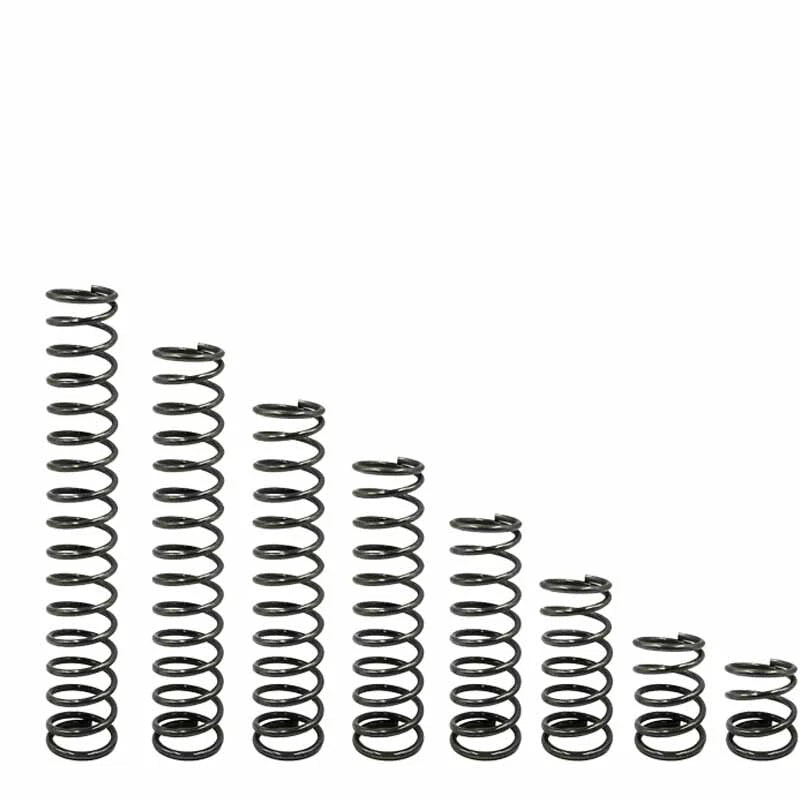
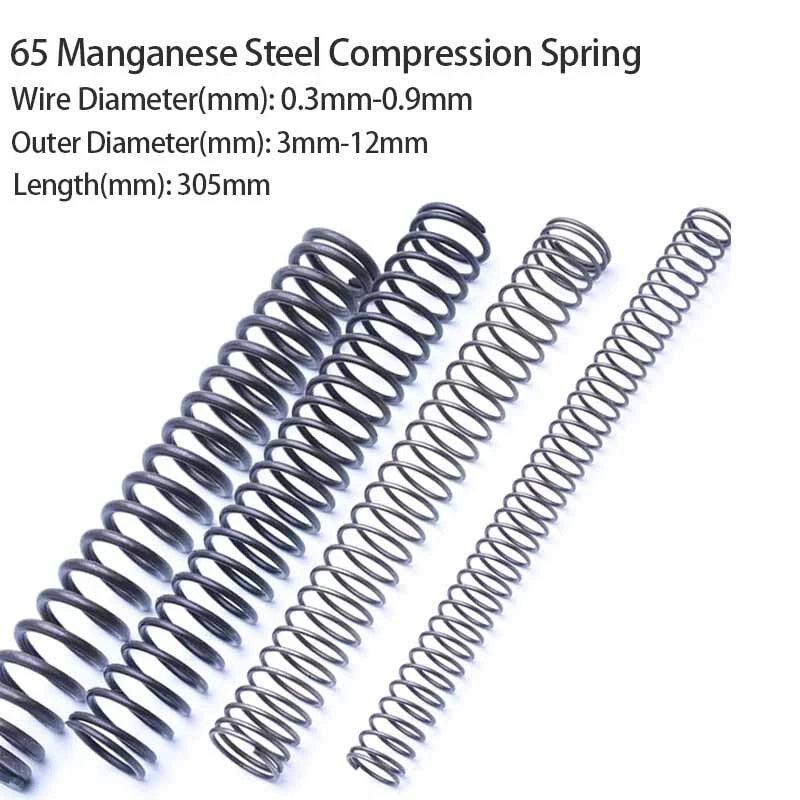
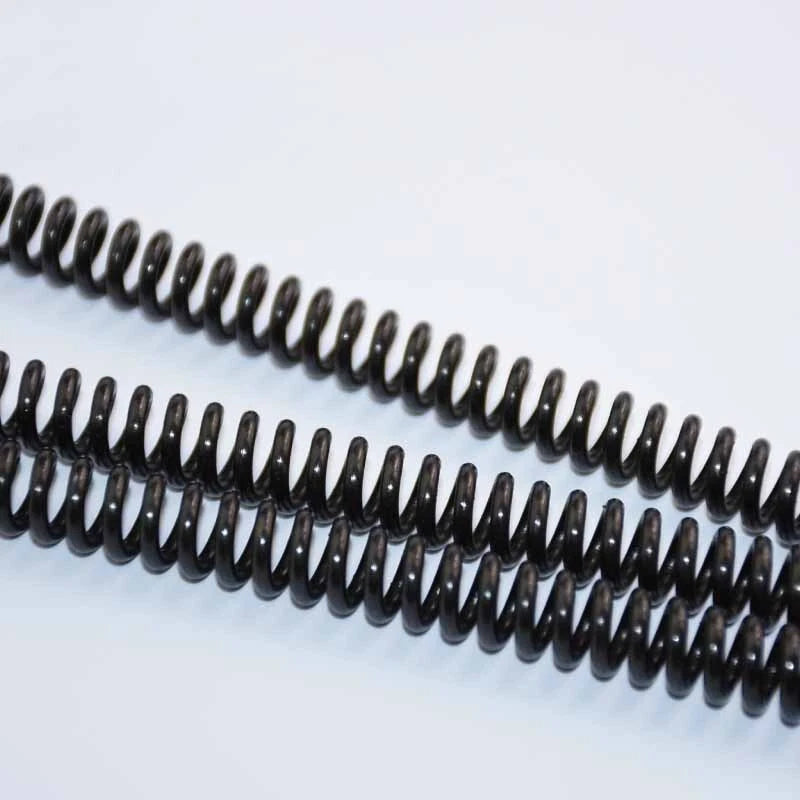
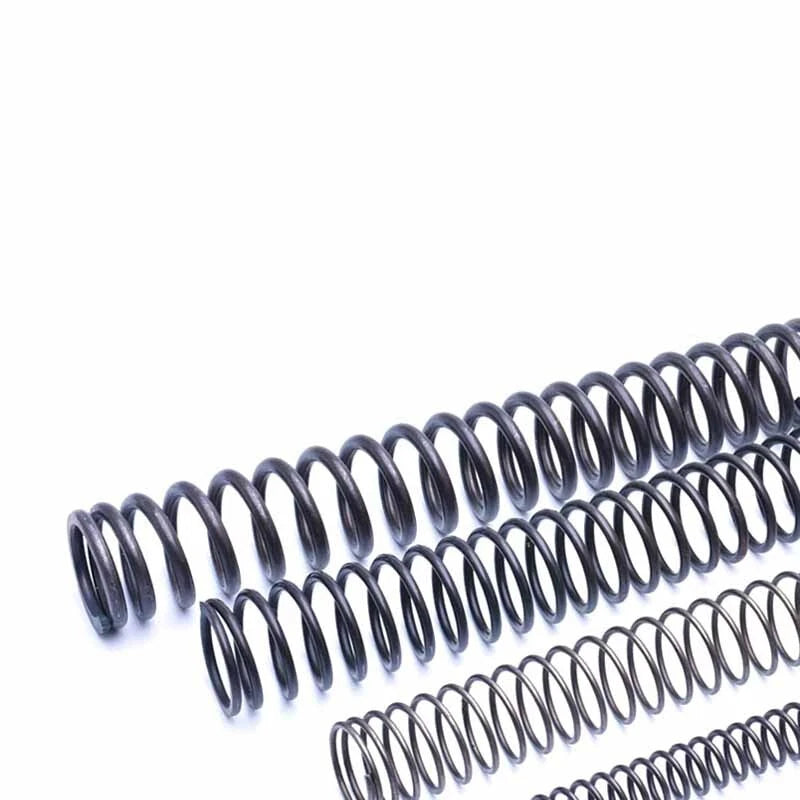
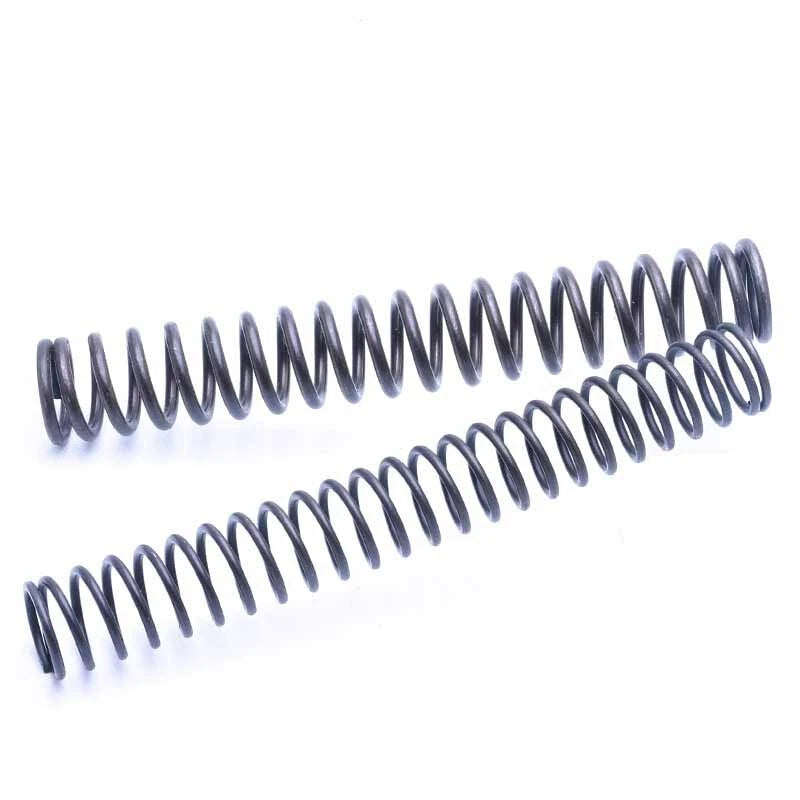
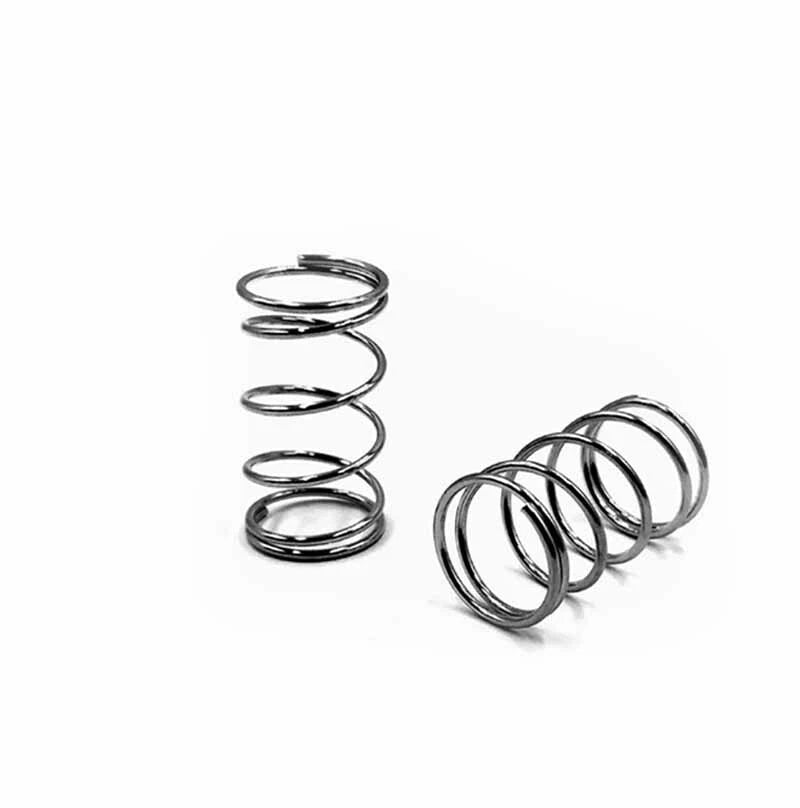
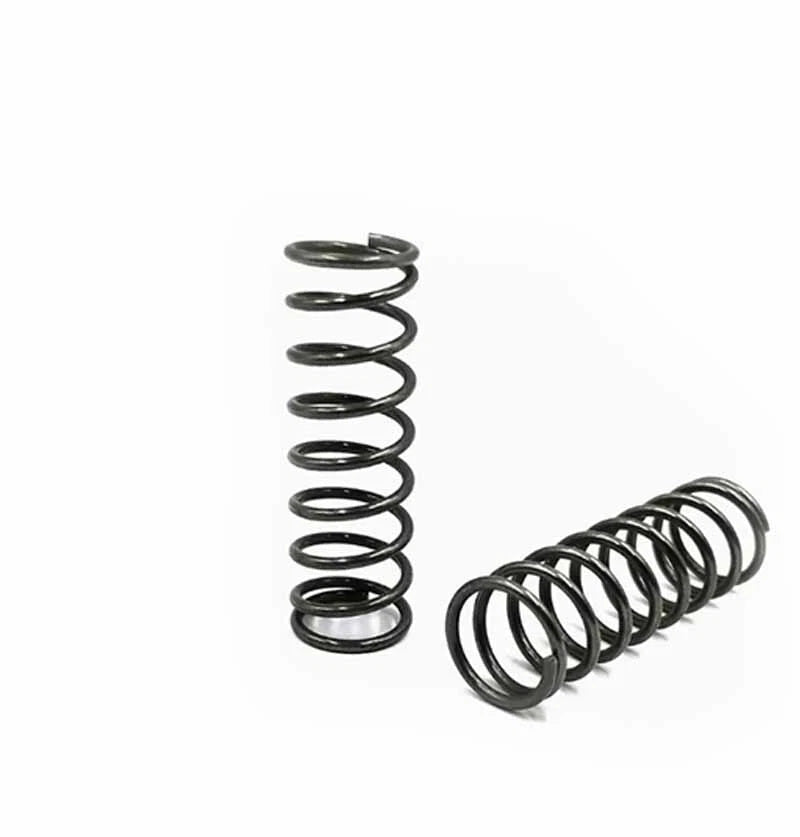
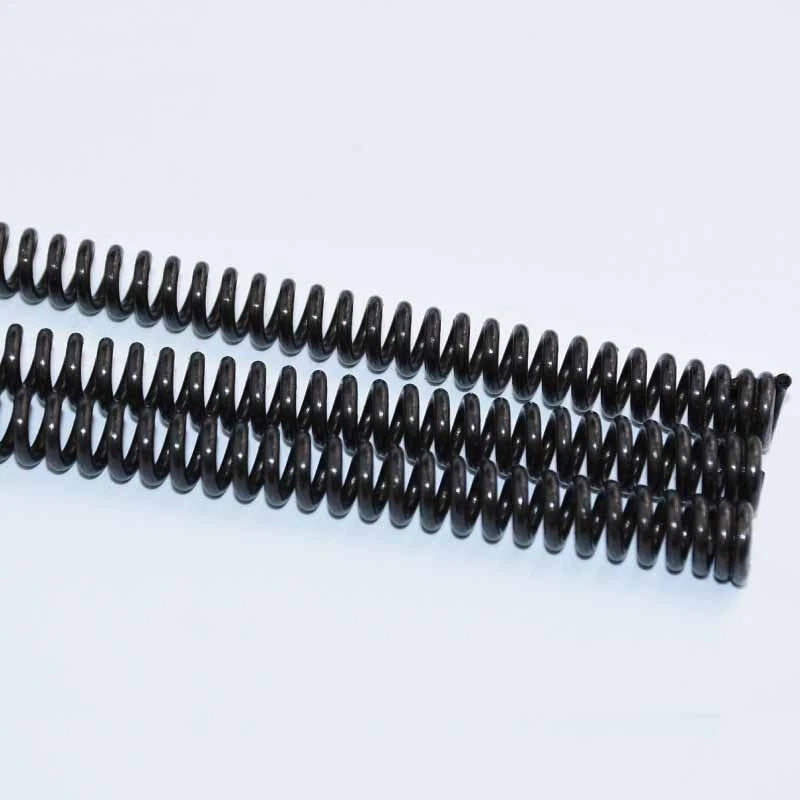
Compression Spring 65 Manganese Steel Wire Dia:0.3-0.9mm OD:3-12mm Length: 305mm

No reviews

Price:
Sale price$1.81 USD
Stock:
In stock (500 units), ready to be shipped

Payment & Security

Ach Direct Debit Amazon American Express Apple Pay Bancontact BLIK Diners Club Discover EPS Google Pay iDEAL Wero JCB Maestro Mastercard Multibanco MobilePay PayPal Przelewy24 Shop Pay Twint Union Pay USDC Visa

Your payment information is processed securely. We do not store credit card details nor have access to your credit card information.

Limited Offer — Spend More, Save More
Spend $55+
Save $5
Spend $100+
Save $10
Spend $200+
Save $25
HomeDIYer DIY Expert Support

DIY Expert Support

Get fitment advice & recommendations

Mon–Fri  8:30 AM – 8:00 PM
24-Hour Fast Ship
Arrives in 3–14 Days
Worldwide Shipping
30-Day Returns
1 tree planted with every purchase

Description

Compression Spring 65Mn Steel — Precision Coil Springs for Tight-Tolerance Mechanisms

When a mechanism demands consistent return force in a confined space, undersized or poorly wound springs become the weak link. Engineers, hobbyists, and repair technicians working on small-scale assemblies need compression springs that hold their rated load without set or fatigue — and that means starting with the right material and geometry. These 65 manganese steel compression springs are designed for exactly that scenario.

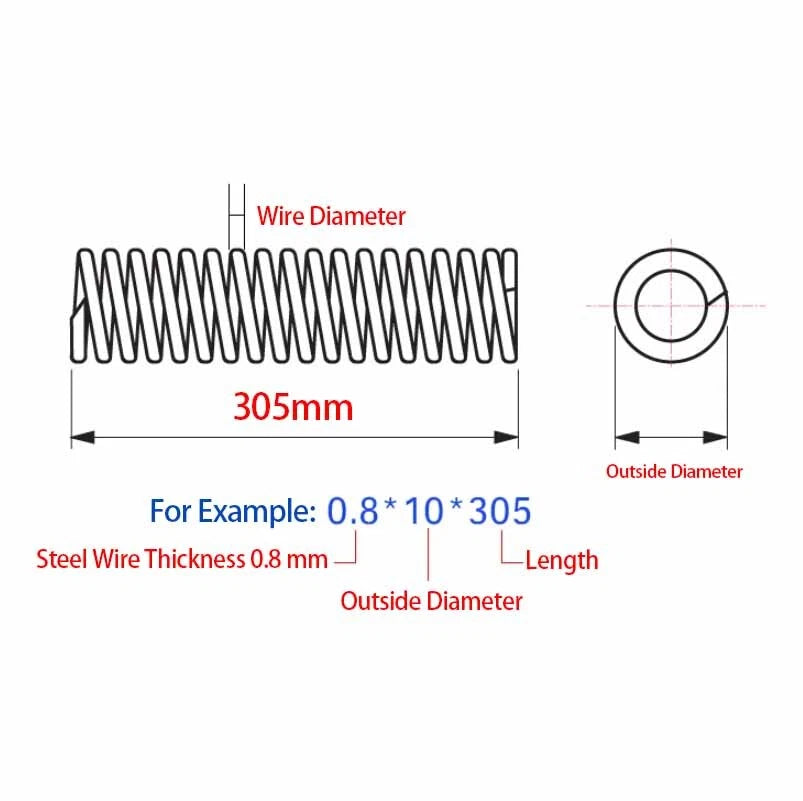
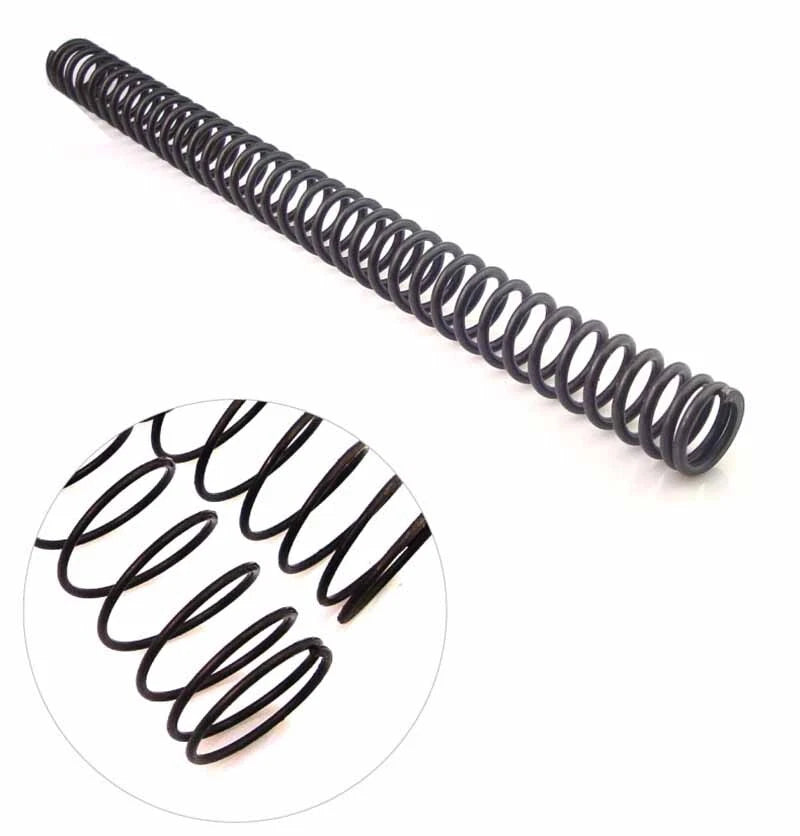
Each spring is cold-wound from 65Mn (65 manganese) spring steel wire, a carbon-manganese alloy known for its high elastic limit and fatigue resistance. Wire diameters span 0.3 mm to 0.9 mm (approx. 0.012″–0.035″); outer diameters range from 3 mm to 12 mm (approx. 0.118″–0.472″); all springs share a uniform free length of 305 mm (approx. 12.0″). Quantity options run from 1 piece up to 100 pieces per order.

Typical use cases include miniature robotics actuators requiring repeatable return force, pen and stylus mechanisms where a light-load compression spring controls tip extension, precision instrument housings that need a compact coil spring to preload a bearing or contact, and DIY electronics enclosures using small compression springs for button or switch return. The 305 mm free length also makes these springs suitable for cutting to custom lengths on a lathe or with a spring cutter.

⚙️ Compatibility: Suitable for spring-loaded mechanisms, jigs, fixtures, robotics, pen assemblies, precision instruments, and DIY projects requiring wire dia 0.3–0.9 mm and OD 3–12 mm coil springs.

✅ Key Features of These Compression Springs

  • 🔩65Mn Spring Steel Material — Carbon-manganese alloy delivers a high elastic limit and strong fatigue resistance compared to standard low-carbon wire, maintaining spring rate over repeated cycles.
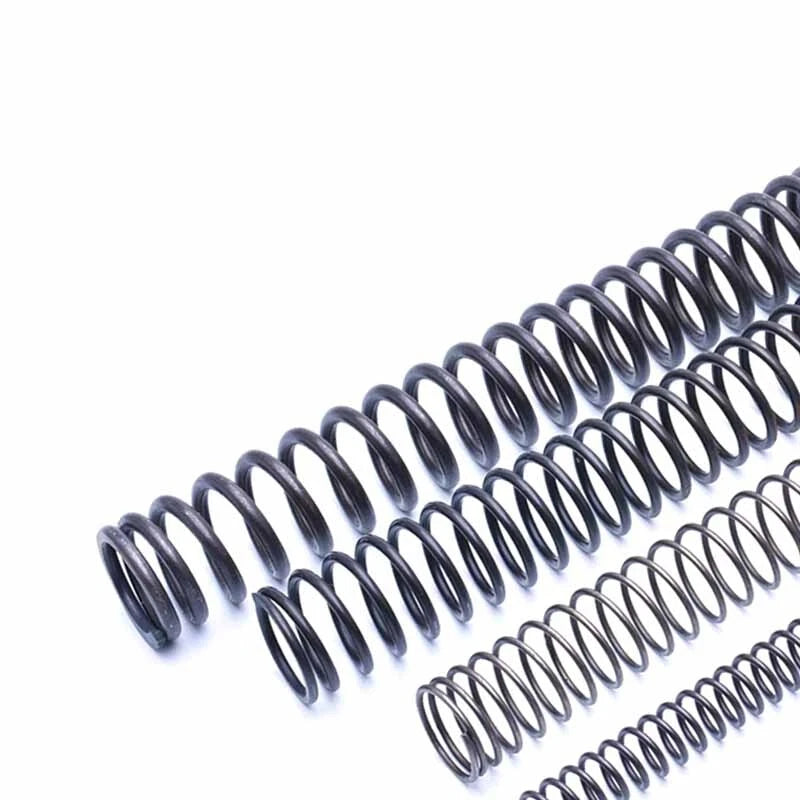
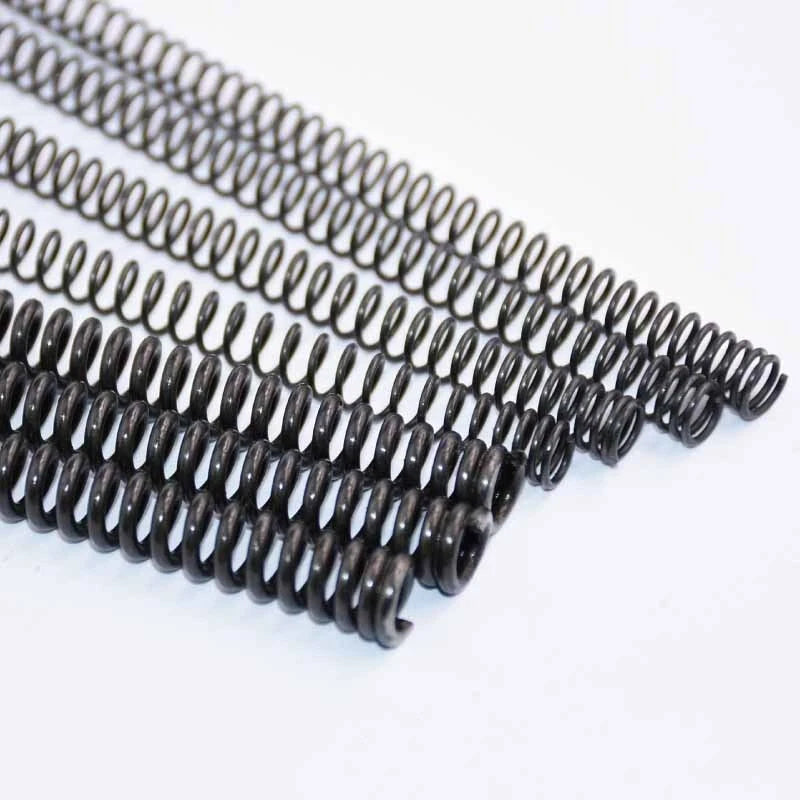
  • 📐Wide Size Matrix — Wire diameters from 0.3 mm to 0.9 mm paired with outer diameters from 3 mm to 12 mm give you 26 distinct wire/OD combinations to match your bore and load requirements precisely.
  • 📏305 mm Free Length — The extended free length (approx. 12.0″) lets you cut each spring to a custom working length, maximizing versatility from a single SKU.
  • 🔄Consistent Coil Pitch — Cold-wound construction maintains uniform pitch along the full length, ensuring even load distribution and predictable deflection behavior under compression.
  • 📦Flexible Pack Quantities — Order 1, 5, 10, 20, 30, 50, or 100 pieces per size to match prototyping, small-batch production, or bulk repair needs without overstocking.
  • 🛡️Corrosion Awareness — 65Mn steel provides good mechanical properties; for humid or outdoor environments, consider a light oil coating or zinc-plated alternative to extend service life.

📐 Technical Specifications — Compression Springs

Material 65Mn (65 Manganese) Spring Steel
Wire Diameter Range 0.3 mm – 0.9 mm (approx. 0.012″ – 0.035″)
Outer Diameter Range 3 mm – 12 mm (approx. 0.118″ – 0.472″)
Free Length 305 mm (approx. 12.0″)
Winding Direction Right-hand (standard)
End Type See variant options
Surface Finish Bare steel (natural)
Spring Rate See variant options
Packing Quantity 1 / 5 / 10 / 20 / 30 / 50 / 100 Pcs

❓ Frequently Asked Questions

How do I choose the right wire diameter and outer diameter for my application?

Start with the bore or housing inner diameter — the spring's outer diameter must be smaller than the bore to allow free movement. Then select a wire diameter based on the load you need: thicker wire (e.g., 0.8–0.9 mm) handles heavier loads, while thinner wire (0.3–0.4 mm) suits light-touch or low-force applications. Use the variant selector to pick the Wire Diameter × Outer Diameter combination that fits your assembly.

Can I cut these springs to a shorter working length?

Yes. The 305 mm free length is intentionally long to allow cutting. Use a spring cutter, rotary tool with a cut-off wheel, or a lathe parting tool. After cutting, lightly grind or file the cut end flat to ensure even seating. Note that cutting changes the number of active coils and therefore the spring rate — calculate accordingly if load precision matters.

How strong are these springs compared to stainless steel options?

65Mn spring steel has a higher tensile strength and elastic limit than standard 304 stainless steel wire of the same diameter, making it well-suited for applications requiring a firm spring rate in a small coil. However, 65Mn is more susceptible to corrosion than stainless steel. For dry indoor environments, 65Mn is an excellent choice; for wet or corrosive environments, stainless steel or a coated spring is preferable.

Are these springs corrosion-resistant?

65Mn steel is not inherently corrosion-resistant. In dry indoor conditions, bare steel springs perform reliably for extended periods. For humid, outdoor, or chemically exposed environments, apply a light machine oil or corrosion inhibitor, or consider a zinc-plated or stainless steel alternative. Surface rust does not immediately affect spring function but can cause fatigue cracking over time if left untreated.

What mechanisms are these compression springs compatible with?

These springs are compatible with any mechanism that accepts a coil spring with an outer diameter between 3 mm and 12 mm and a wire diameter between 0.3 mm and 0.9 mm. Common applications include pen and stylus tip return mechanisms, miniature robotics joints, precision instrument preload assemblies, button and switch return in electronics enclosures, jig and fixture clamping, and small-scale model engineering projects.

How do I decide how many pieces to order?

For prototyping or single-unit repair, the 1 Pcs or 5 Pcs options let you test fit and function without committing to bulk stock. For small-batch production runs (10–50 units), the 10 Pcs or 20 Pcs packs offer a cost-per-piece reduction. The 50 Pcs and 100 Pcs packs are suited for production lines, classroom kits, or stocking a workshop where multiple sizes are used regularly. Pricing scales down per piece as quantity increases.

What is the inner diameter of these springs?

The inner diameter equals the outer diameter minus twice the wire diameter. For example, a 0.5 mm wire / 4 mm OD spring has an inner diameter of approximately 3.0 mm (4 mm − 2 × 0.5 mm). Use this formula to verify the spring will clear any guide pin or mandrel in your assembly. Exact values vary slightly due to manufacturing tolerances.

🛒 Select your Wire Diameter × Outer Diameter and Packing Quantity above, then add to cart.


You may also like

Recently viewed