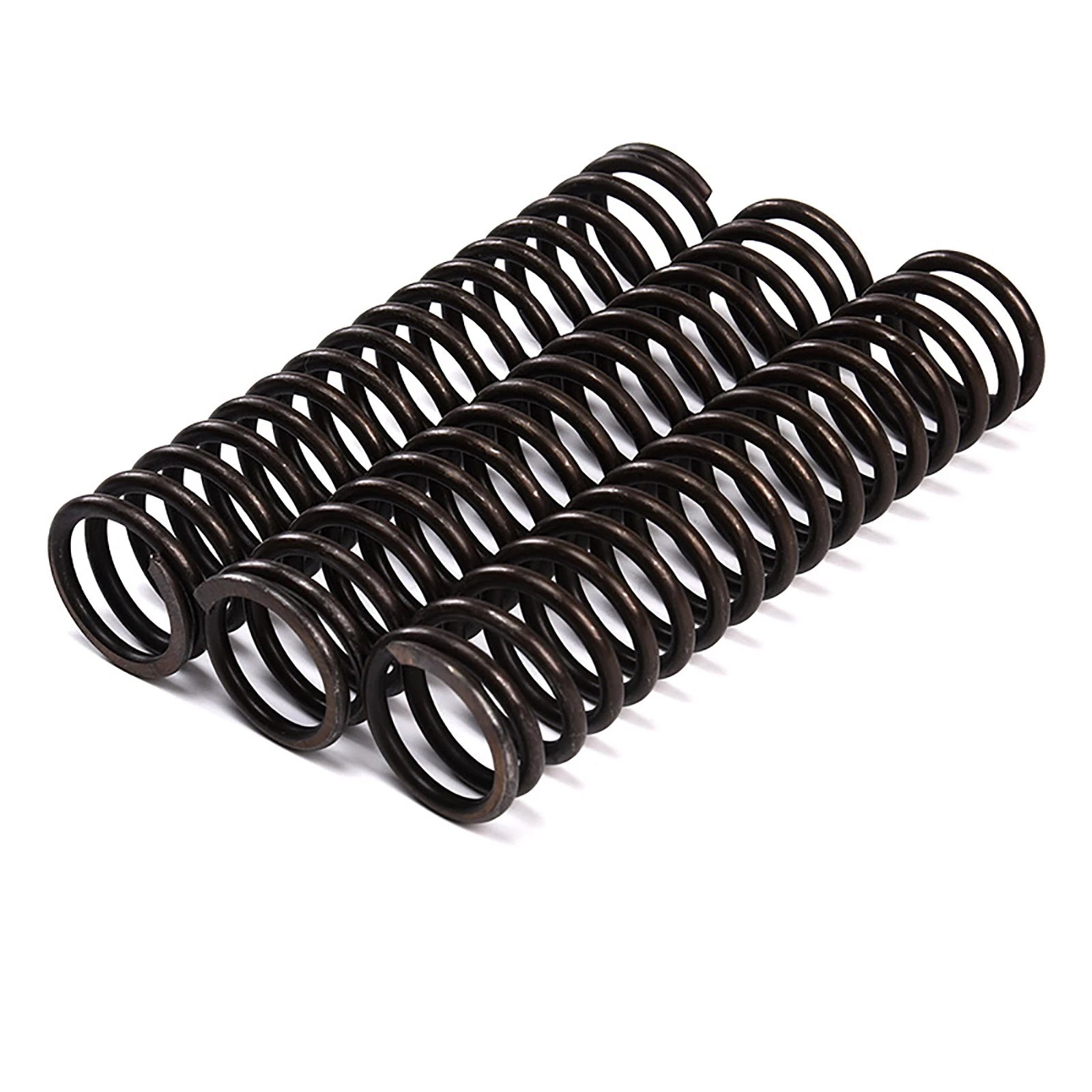
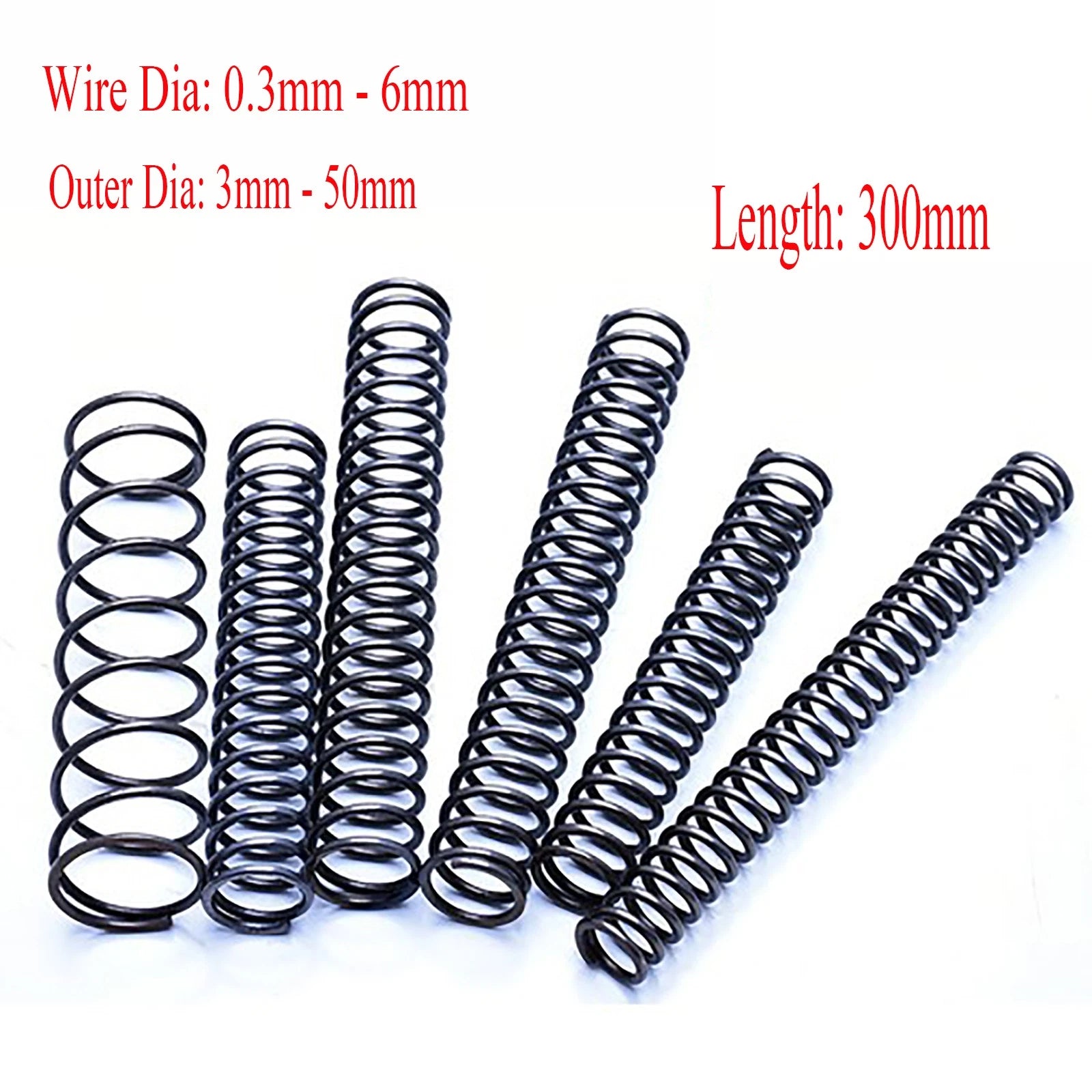
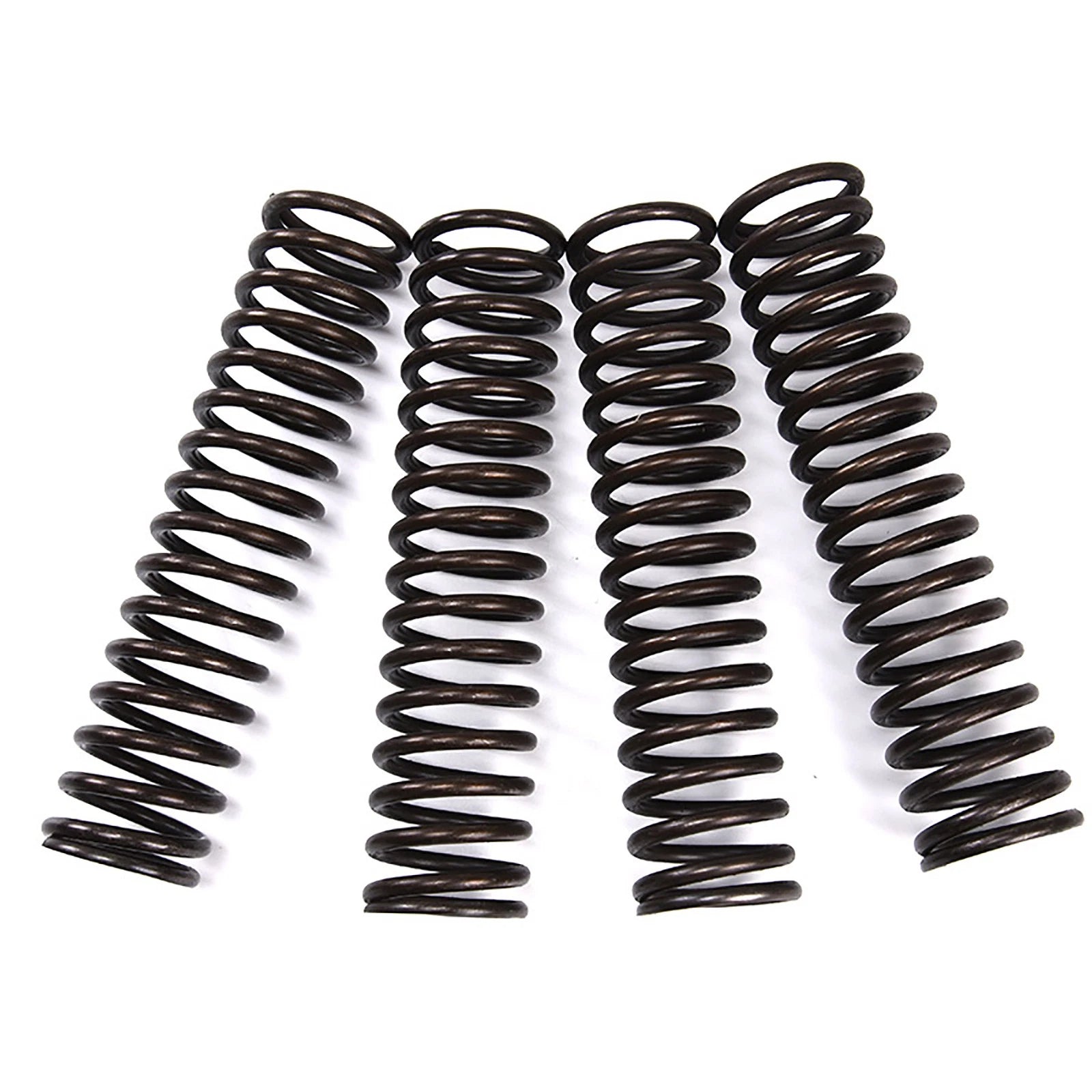
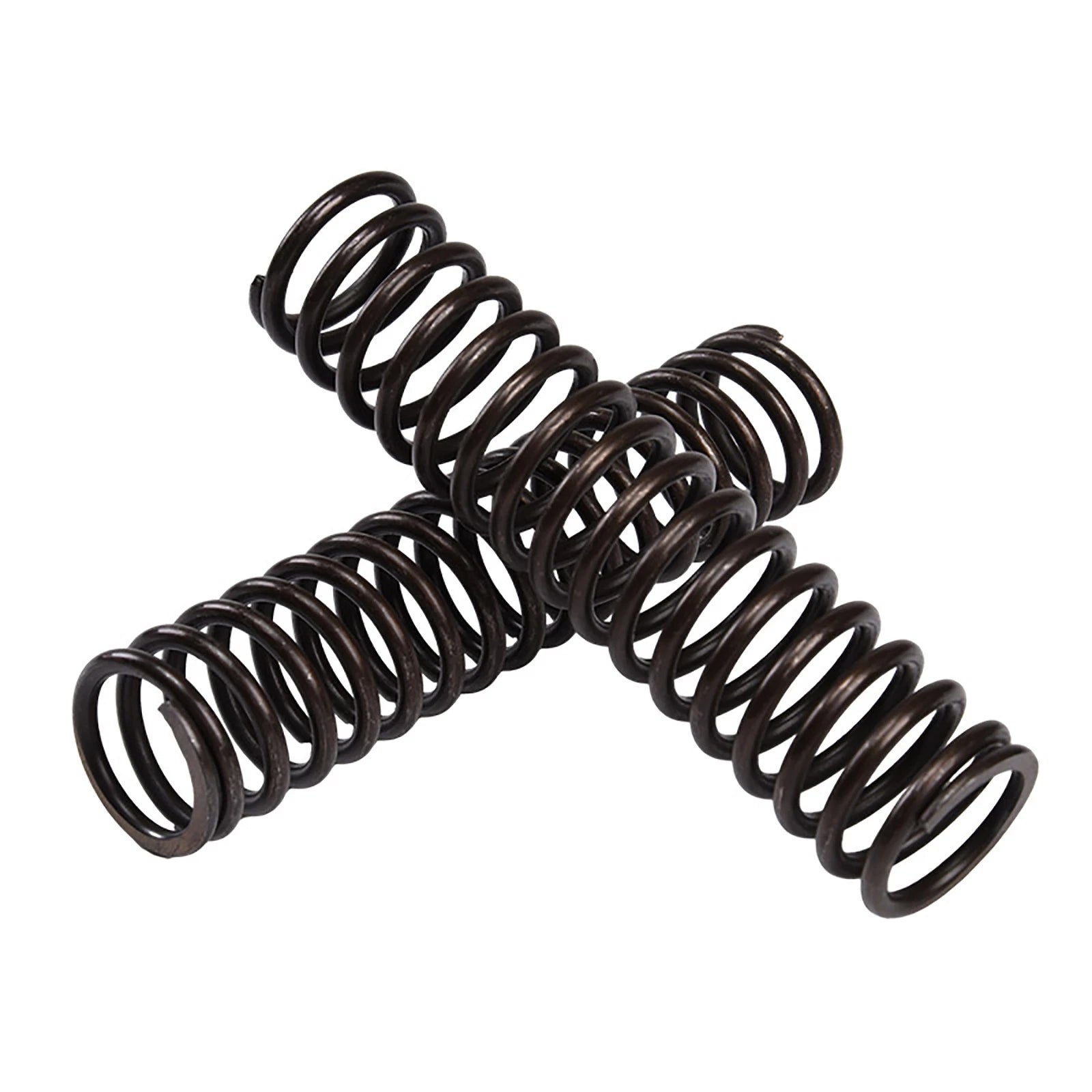
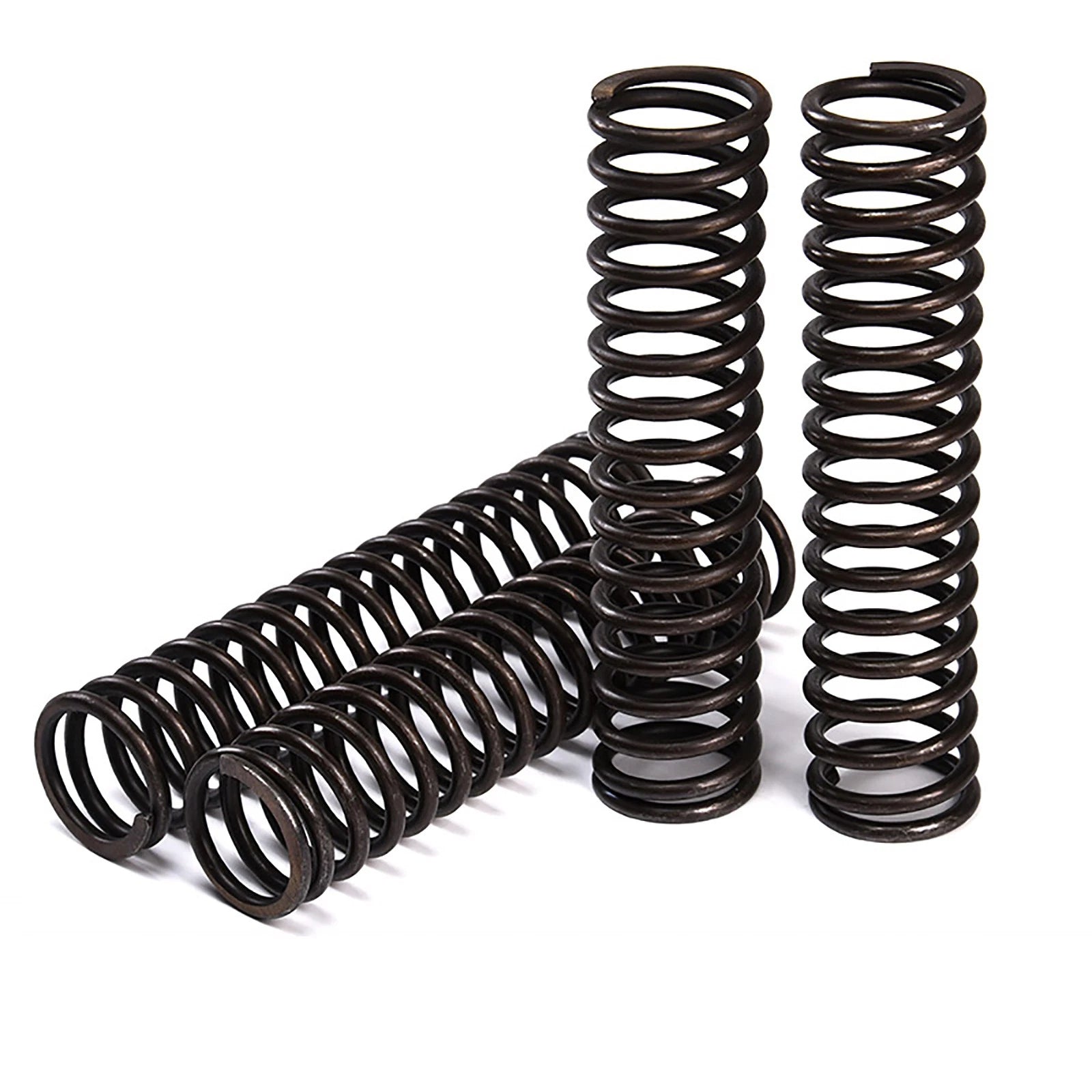
Compression Spring Pressure Springs Wire Dia 0.3 ~ 6mm OD 3 - 50mm Length 300mm

No reviews

Price:
Sale price$7.96 USD
Stock:
In stock (500 units), ready to be shipped

Payment & Security

Ach Direct Debit Amazon American Express Apple Pay Bancontact BLIK Diners Club Discover EPS Google Pay iDEAL Wero JCB Maestro Mastercard Multibanco MobilePay PayPal Przelewy24 Shop Pay Twint Union Pay USDC Visa

Your payment information is processed securely. We do not store credit card details nor have access to your credit card information.

Limited Offer — Spend More, Save More
Spend $55+
Save $5
Spend $100+
Save $10
Spend $200+
Save $25
HomeDIYer DIY Expert Support

DIY Expert Support

Get fitment advice & recommendations

Mon–Fri  8:30 AM – 8:00 PM
24-Hour Fast Ship
Arrives in 3–14 Days
Worldwide Shipping
30-Day Returns
1 tree planted with every purchase

Description

Compression Spring 0.3–6mm Wire Dia — Reliable Elastic Force for DIY Automation

When a loose mechanism, a rattling assembly, or an under-tensioned return stroke is slowing down your project, the right compression spring makes all the difference. These compression springs are engineered for makers, hobbyists, small workshop operators, and educational lab builders who need consistent elastic force across a wide range of mechanical applications.

Each spring is formed from round steel wire with diameters ranging from 0.3 mm to 6 mm (approx. 0.012" to 0.236"), outer diameters spanning 3 mm to 50 mm (approx. 0.118" to 1.969"), and a uniform body length of 300 mm (approx. 11.81"). The coil geometry delivers a predictable spring rate suited to light-duty to medium-duty load requirements.

Typical use cases include DIY automation return mechanisms, 3D printer bed leveling assemblies, robotics joint tensioning, electronic enclosure latches, and custom jig-and-fixture clamping systems — all scenarios where a compact compression spring with a defined wire-to-OD ratio is critical for repeatable performance.

⚙️ Compatible with standard spring seats, guide rods, and counterbores sized to match the selected outer diameter. Verify bore clearance and free-length requirements before ordering.

✅ Key Features of These Compression Springs

📐 Wide Size Range

Wire diameters from 0.3 mm to 6 mm and outer diameters from 3 mm to 50 mm cover the majority of light-to-medium DIY and automation spring requirements in a single product line.

📏 Consistent 300 mm Free Length

All variants share a 300 mm (11.81") free length, making it straightforward to cut, stack, or compare spring rates across different wire and OD combinations.

🔩 Round Wire Coil Construction

Uniform round-wire coiling provides even load distribution along the spring axis, reducing side-load deflection and extending service life in guided applications.

🛡️ Corrosion-Resistant Finish

Springs are finished to resist surface oxidation in typical indoor workshop and light-industrial environments, maintaining dimensional stability over repeated compression cycles.

🔄 Flexible Quantity Options

Available in packs of 1, 2, or 3 pieces per order, letting you source exactly what your prototype or production run requires without over-buying.

🧰 Broad Application Compatibility

Suited for 3D printer assemblies, robotics joints, electronic enclosure latches, jig-and-fixture clamping, and general return-mechanism applications across maker and workshop settings.

📐 Technical Specifications — Compression Spring

Wire Diameter 0.3 mm – 6 mm (0.012" – 0.236")
Outer Diameter (OD) 3 mm – 50 mm (0.118" – 1.969")
Free Length 300 mm (11.81")
Spring Type Compression (closed / ground ends)
Coil Direction Right-hand
Material See variant options
Surface Finish See variant options
Spring Rate See variant options
Load Capacity See variant options
Quantity per Pack 1 / 2 / 3 pcs (select above)

❓ Frequently Asked Questions

How do I choose the right wire diameter and outer diameter for my application?

Start with the load you need to support and the space available. A larger wire diameter produces a stiffer spring with a higher spring rate, while a larger outer diameter increases the coil area. For guided applications, the OD should be slightly smaller than the bore or housing ID. For rod-guided setups, the inner diameter (OD minus twice the wire diameter) should clear the rod with a small gap. If you are unsure, order a small quantity of two or three sizes to test fit and feel before committing to a larger batch.

What load can these compression springs handle?

Load capacity varies by wire diameter and OD combination. Thinner wire springs (0.3–0.8 mm wire dia) are suited to light-duty applications such as electronic latches, small sensor returns, and 3D printer bed leveling. Mid-range springs (1–2.5 mm wire dia) handle moderate clamping and tensioning tasks. Heavier springs (3–6 mm wire dia) are appropriate for fixture clamping and mechanical return mechanisms under higher loads. For precise load values, refer to the variant-specific spring rate data or contact us to confirm.

Are these springs corrosion-resistant for outdoor or humid environments?

These springs are finished to resist surface oxidation in typical indoor workshop and light-industrial conditions. For outdoor exposure, high-humidity environments, or contact with liquids, additional protection such as a light coating of machine oil or a corrosion-inhibiting spray is recommended. If your application requires stainless steel or a specific plating, please contact us to confirm material availability for the size you need.

Can I cut the 300 mm spring to a shorter free length?

Yes. Compression springs can be cut to a shorter free length using a rotary tool or spring cutter. After cutting, the end coil may need to be ground flat to restore a square seating surface. Keep in mind that cutting changes the number of active coils and therefore alters the spring rate — a shorter spring from the same wire will be stiffer. Plan your cut length with this in mind and test the modified spring before final assembly.

Are these springs compatible with standard guide rods and spring seats?

Yes, provided you match the OD and inner diameter to your hardware. For rod-guided setups, the rod diameter should be smaller than the spring's inner diameter (OD minus twice the wire diameter) by at least 0.5–1 mm to allow free compression without binding. For bore-guided setups, the OD should be 0.5–1 mm smaller than the bore. Standard spring seats and counterbores sized to the selected OD will seat these springs correctly.

How do I decide between ordering 1, 2, or 3 pieces?

If you are prototyping or testing a new design, ordering 2–3 pieces gives you spares in case of sizing adjustments or accidental over-compression during testing. For a confirmed design going into a small production run, order the quantity that matches your assembly count. The per-piece cost is the same across pack sizes, so the choice is purely about how many you need on hand.

What is the difference between wire diameter and outer diameter, and why do both matter?

Wire diameter is the thickness of the steel wire used to wind the coil — it directly determines the spring's stiffness (spring rate) and load capacity. Outer diameter is the overall width of the coiled spring — it determines whether the spring fits inside a bore or around a rod. Both dimensions must be matched to your application: the wire diameter for the force you need, and the OD for the physical space available. Selecting the wrong OD can cause binding or misalignment even if the spring rate is correct.

🛒 Select your Size (Wire Dia x Outer Dia x Length) and Quantity above, then add to cart.

You may also like

Recently viewed