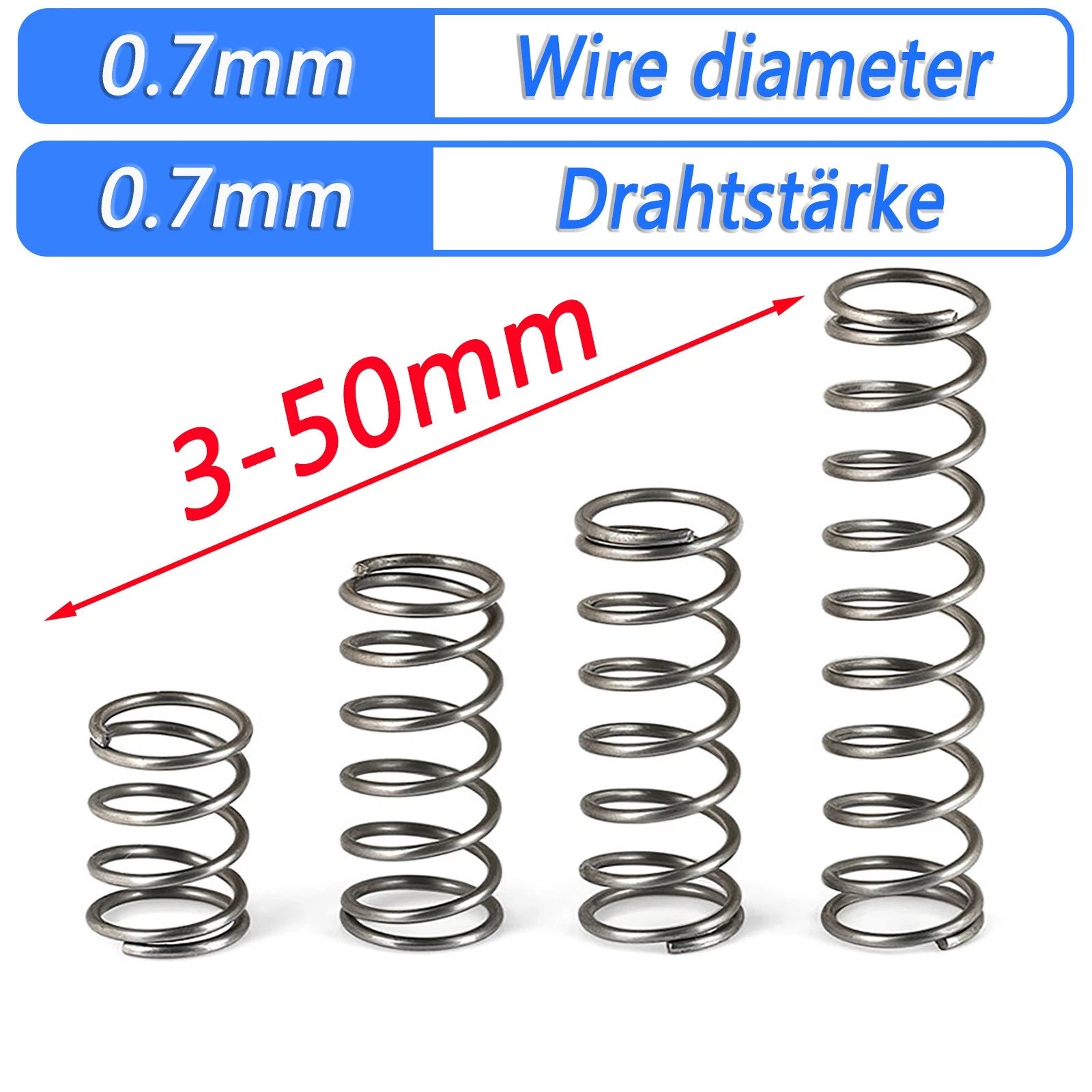
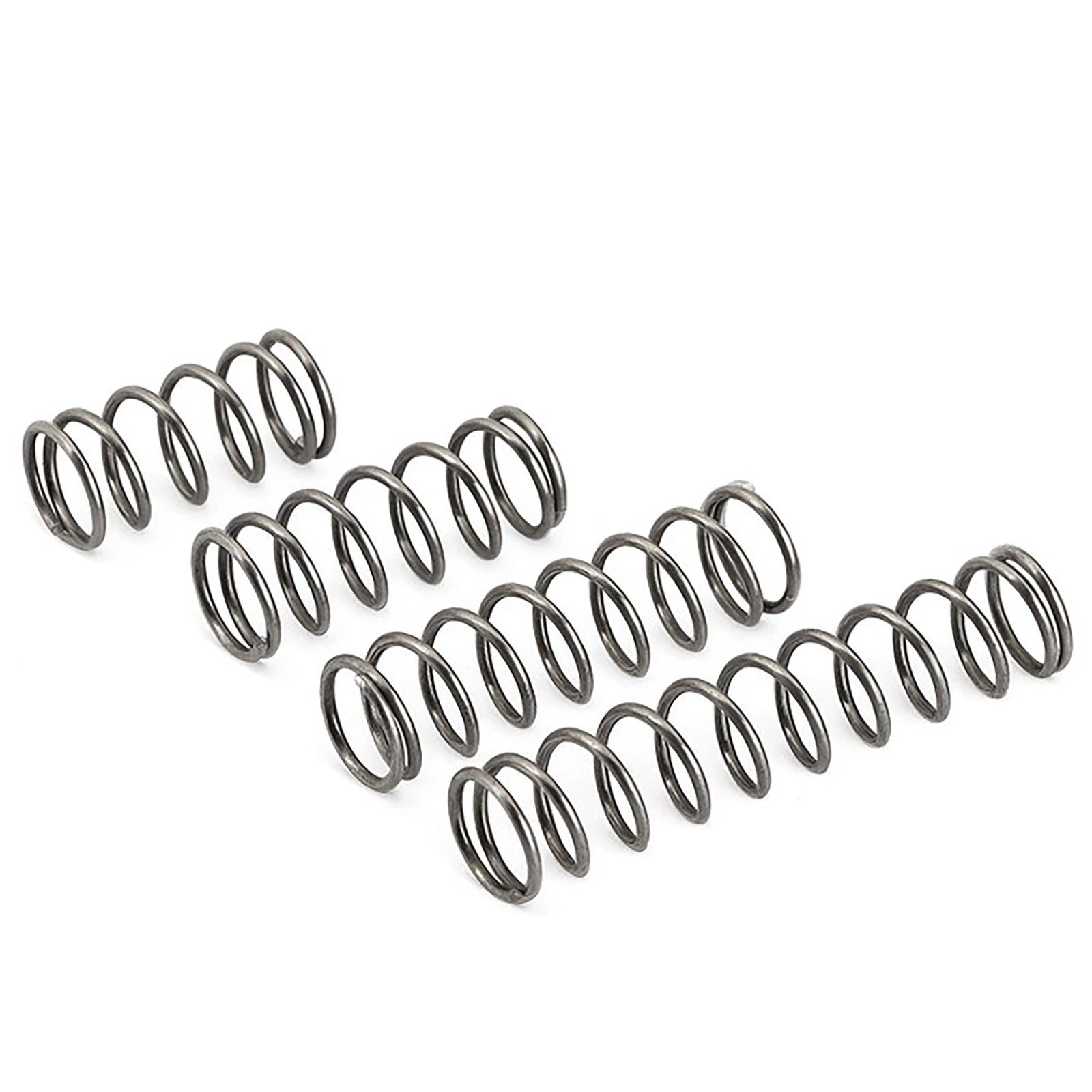
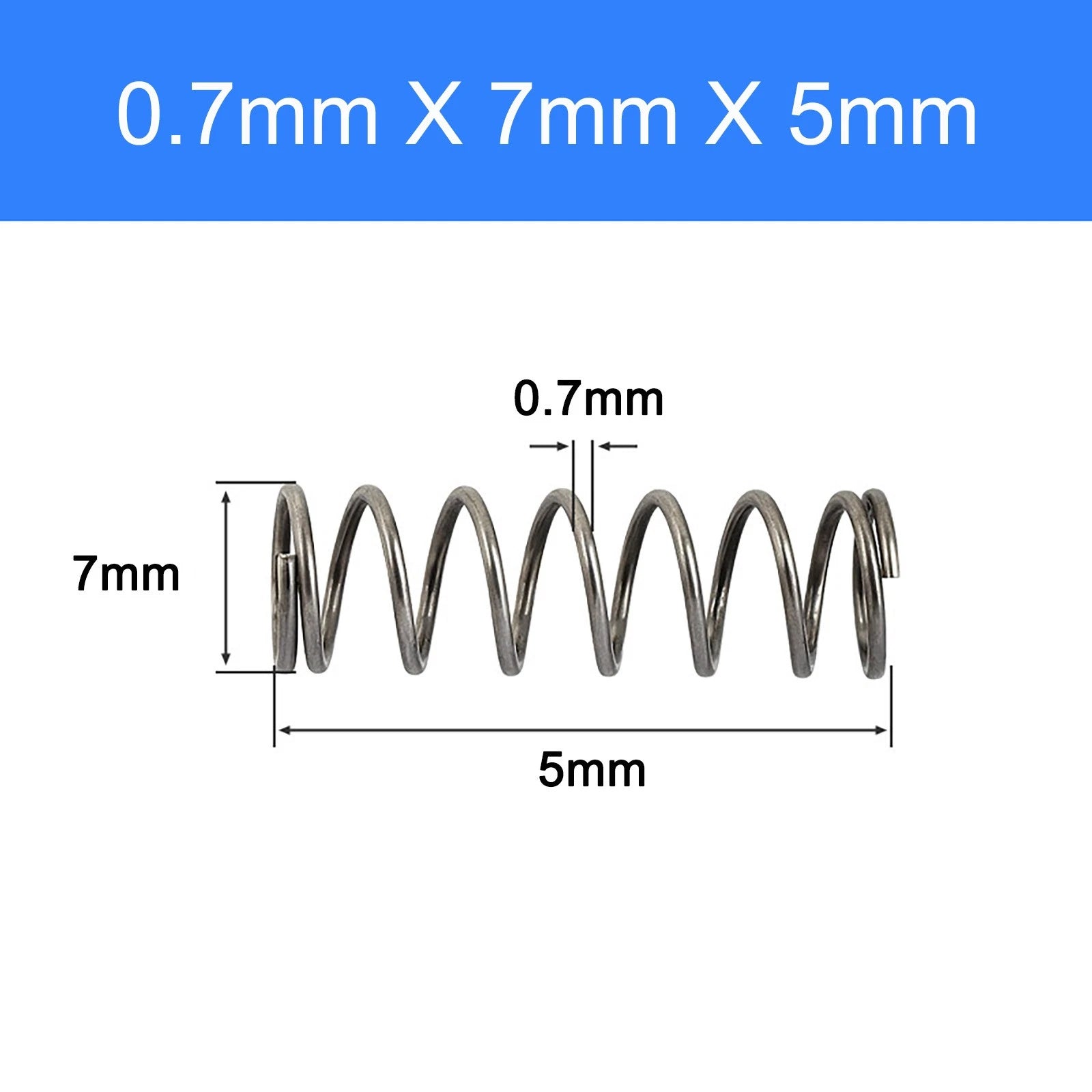
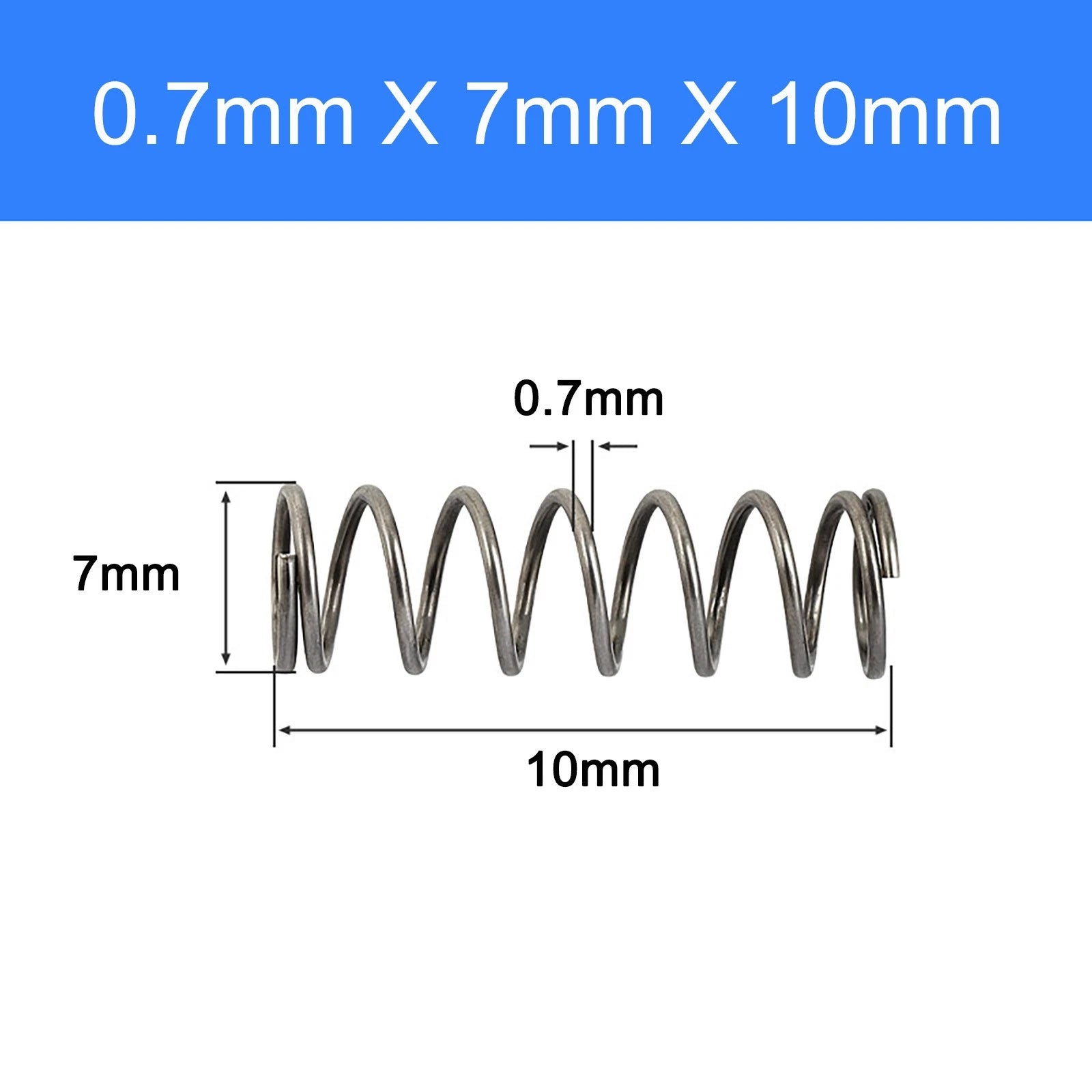
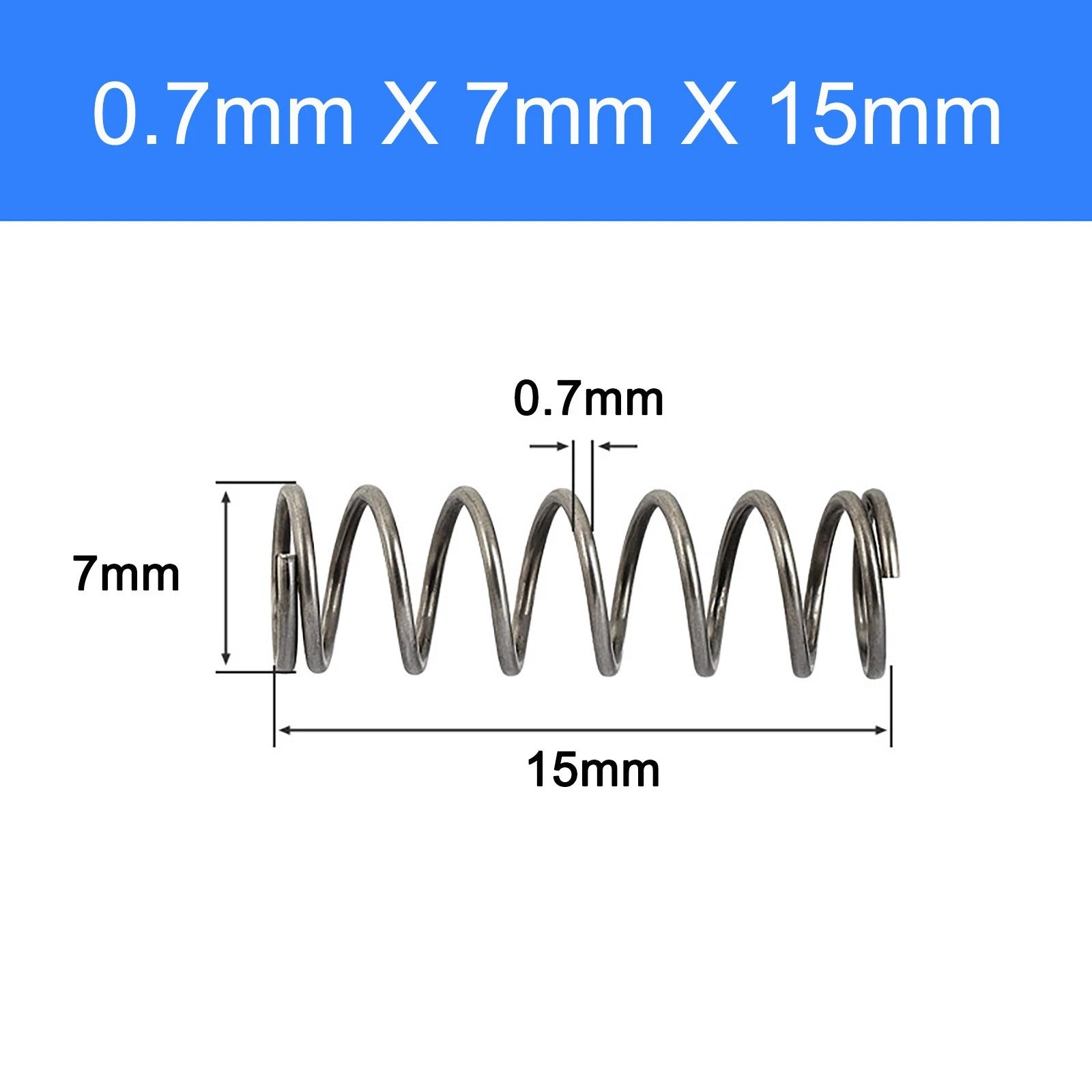
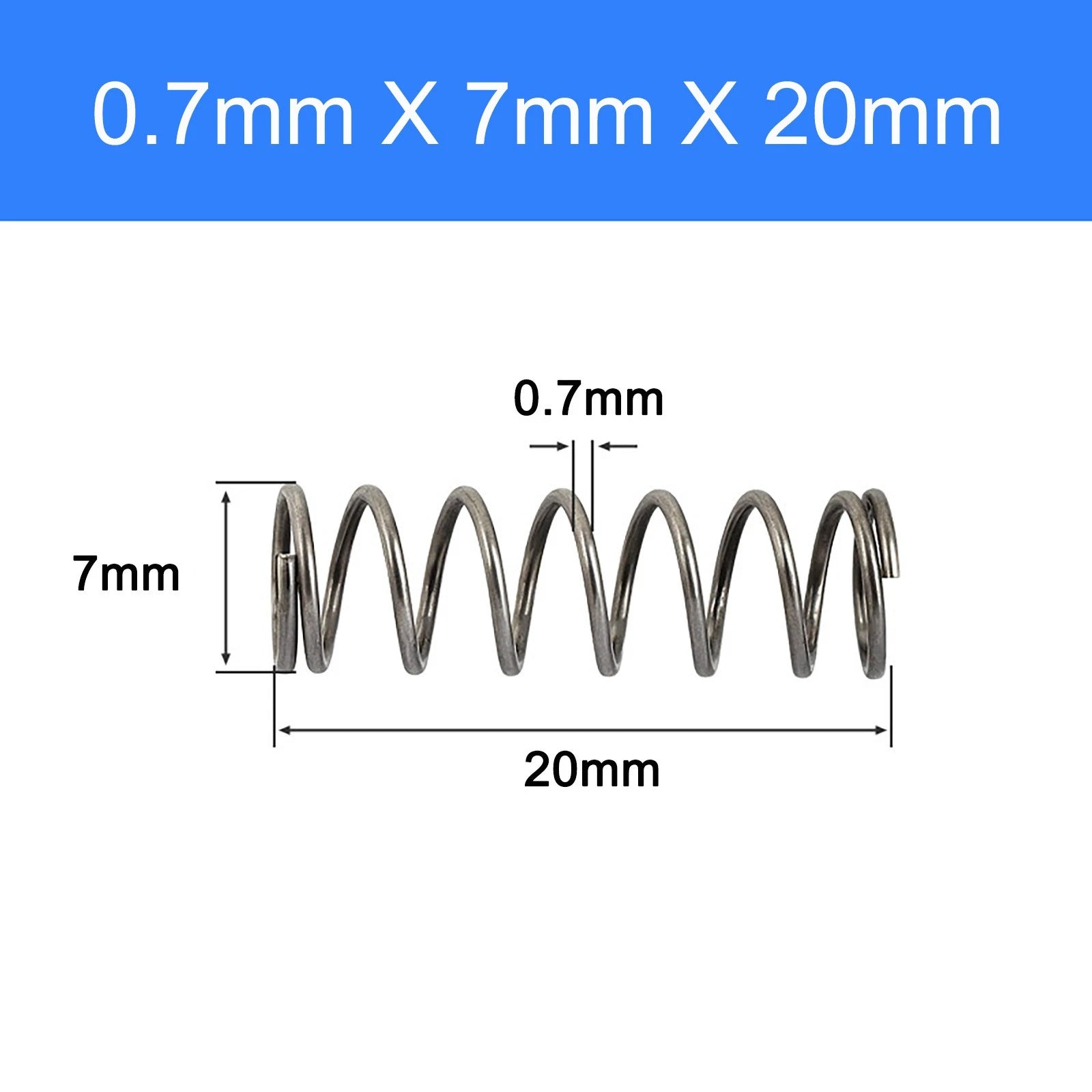
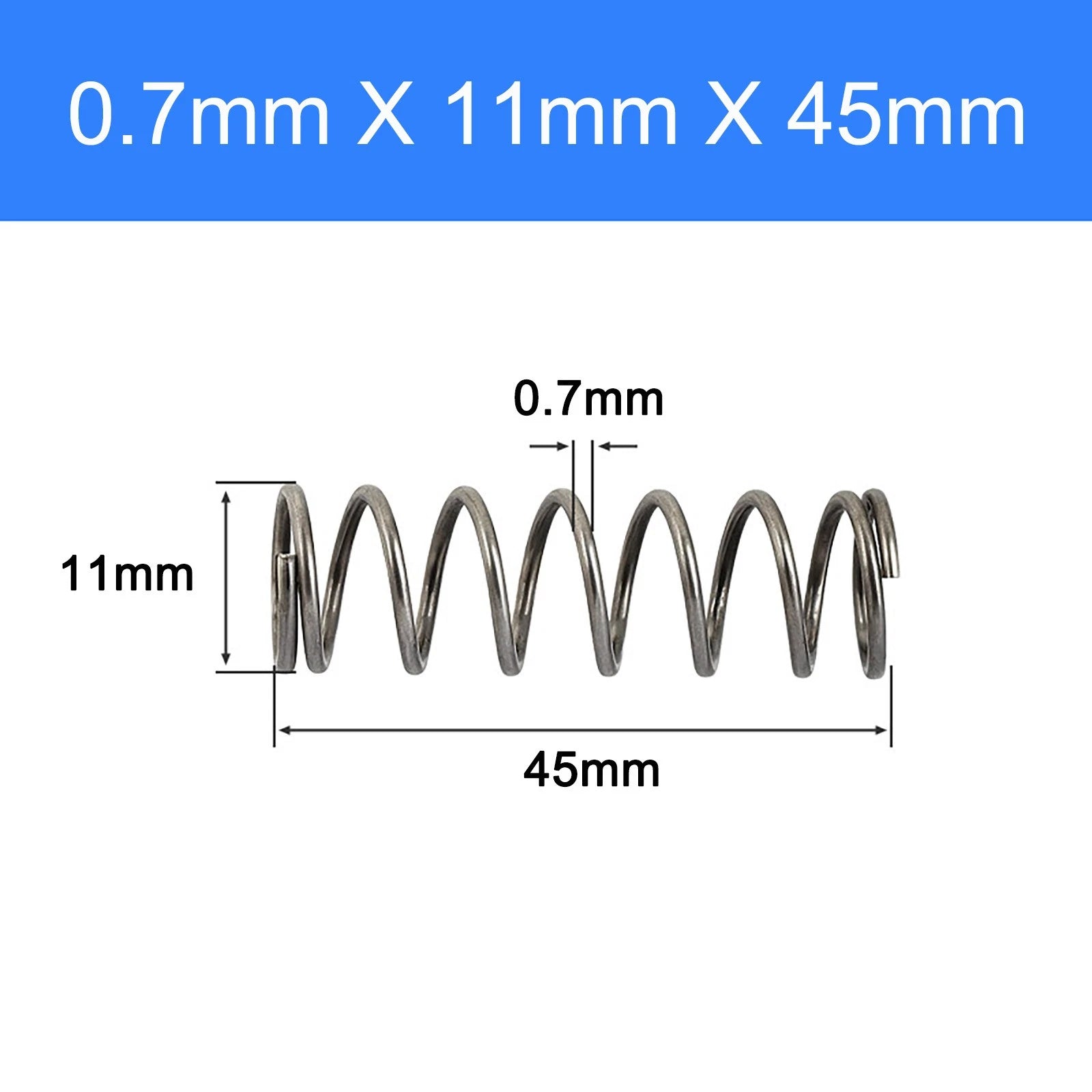
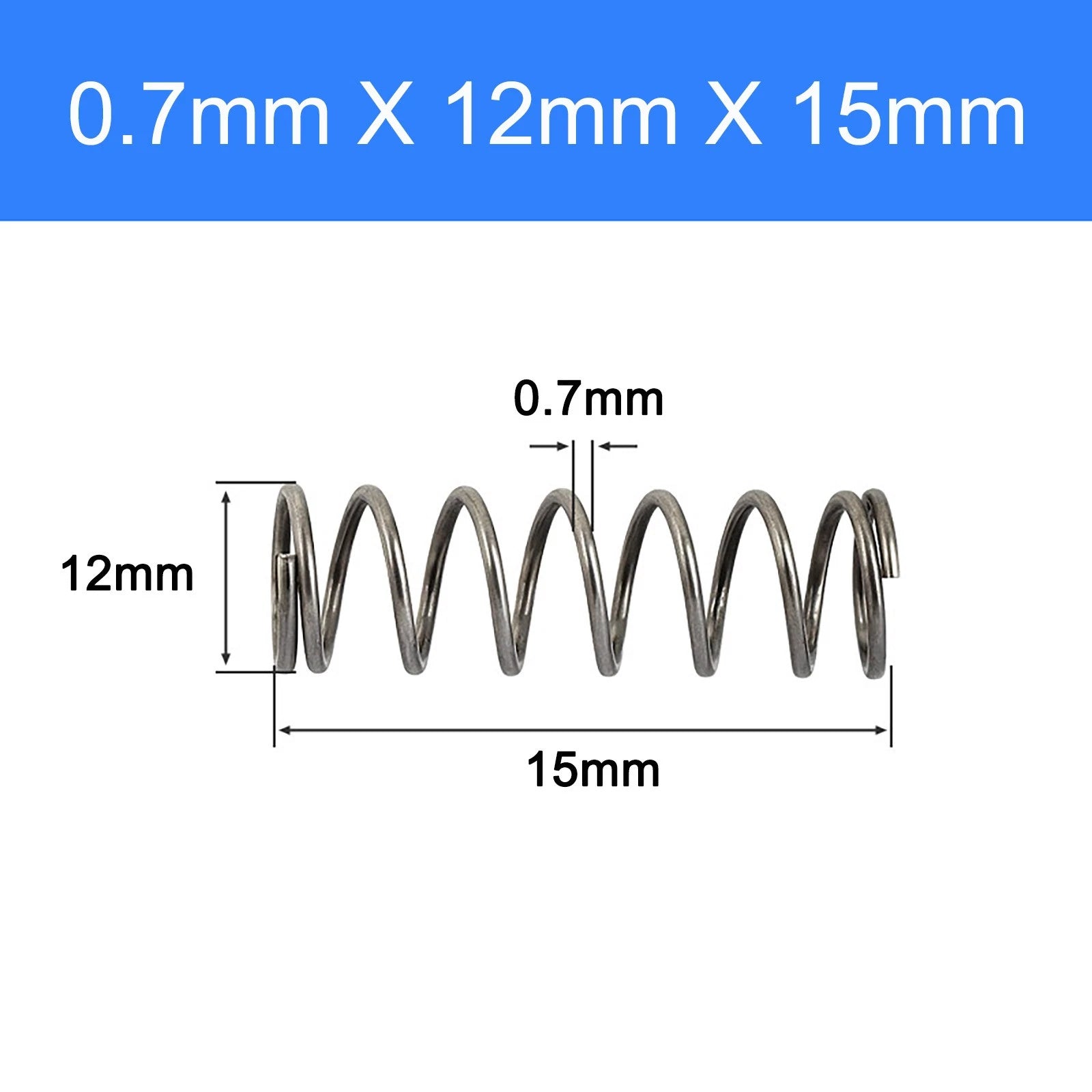
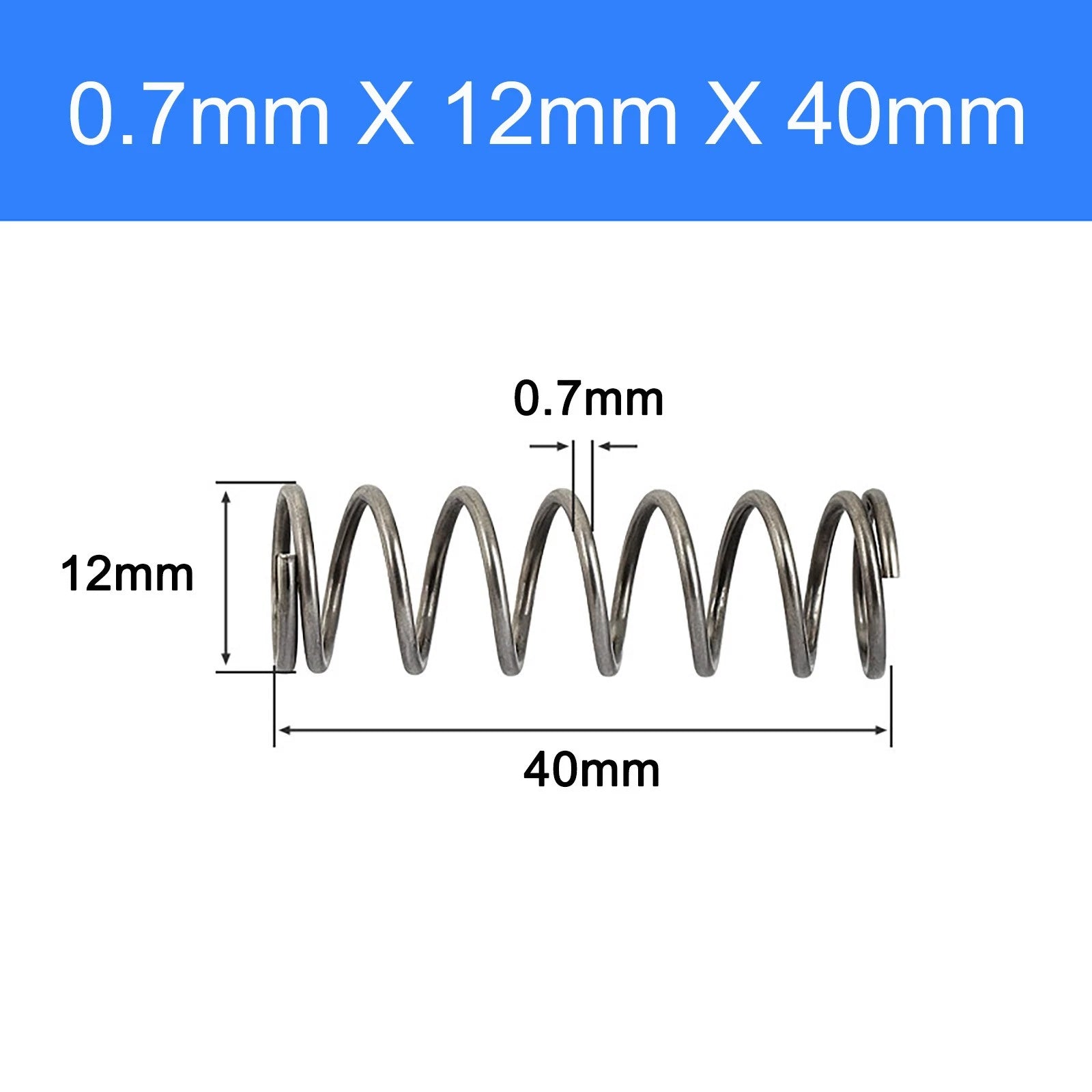
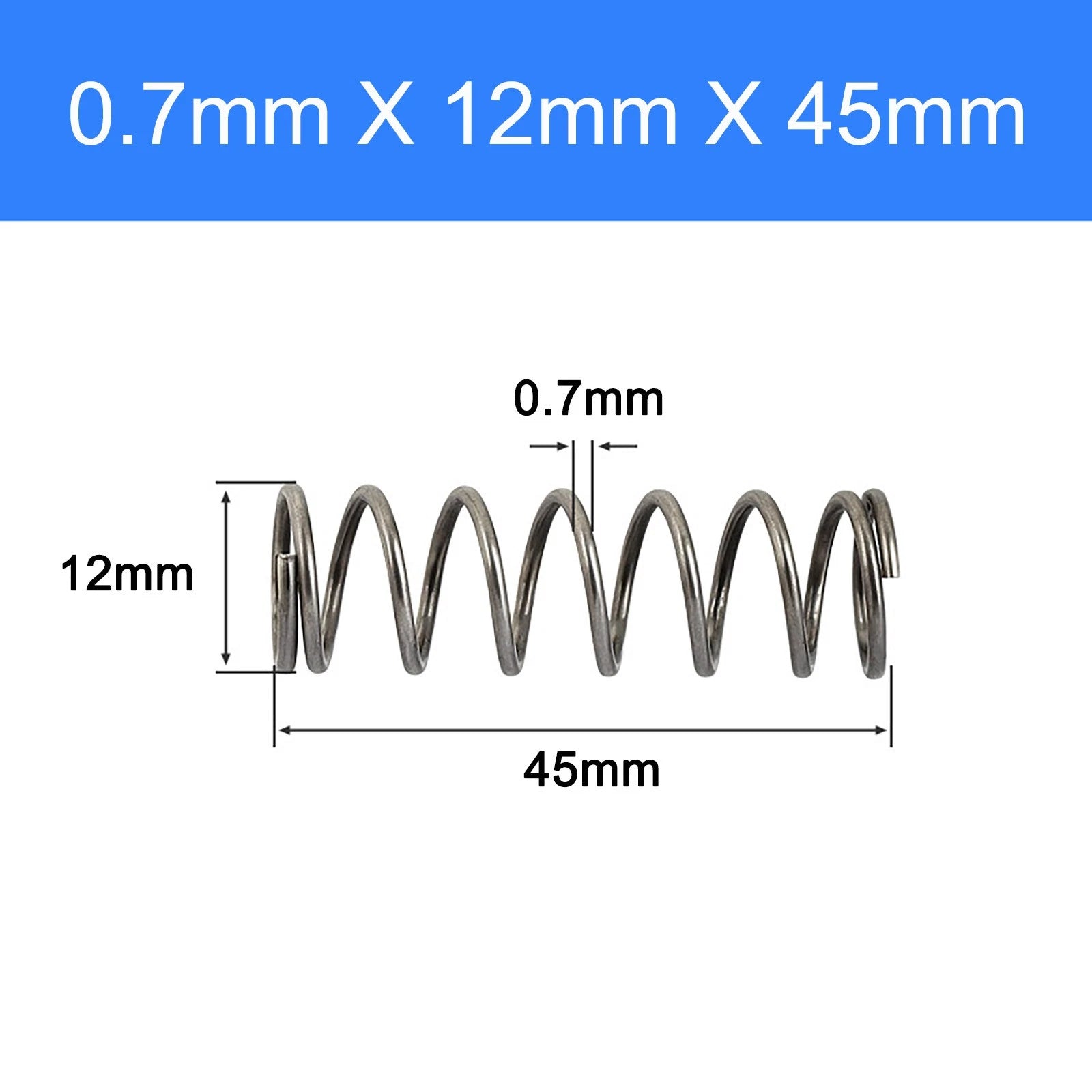
Compression Spring Spring Steel Pressure Coil Spring 0.7mm Wire OD 3-12mm DIY

No reviews

Price:
Sale price$4.75 USD
Stock:
In stock (500 units), ready to be shipped

Payment & Security

Ach Direct Debit Amazon American Express Apple Pay Bancontact BLIK Diners Club Discover EPS Google Pay iDEAL Wero JCB Maestro Mastercard Multibanco MobilePay PayPal Przelewy24 Shop Pay Twint Union Pay USDC Visa

Your payment information is processed securely. We do not store credit card details nor have access to your credit card information.

Limited Offer — Spend More, Save More
Spend $55+
Save $5
Spend $100+
Save $10
Spend $200+
Save $25
HomeDIYer DIY Expert Support

DIY Expert Support

Get fitment advice & recommendations

Mon–Fri  8:30 AM – 8:00 PM
24-Hour Fast Ship
Arrives in 3–14 Days
Worldwide Shipping
30-Day Returns
1 tree planted with every purchase

Description

Compression Spring 0.7mm Wire — Reliable Spring Steel Coil for DIY & Mechanical Projects

When a project demands precise, repeatable spring force in a compact form factor, undersized or mismatched springs cause frustrating failures — loose fits, premature fatigue, or inconsistent return force. Makers, hobbyists, engineers, and repair technicians who need exact-spec compression springs in small quantities will find this range covers the most common micro-spring dimensions in one place.

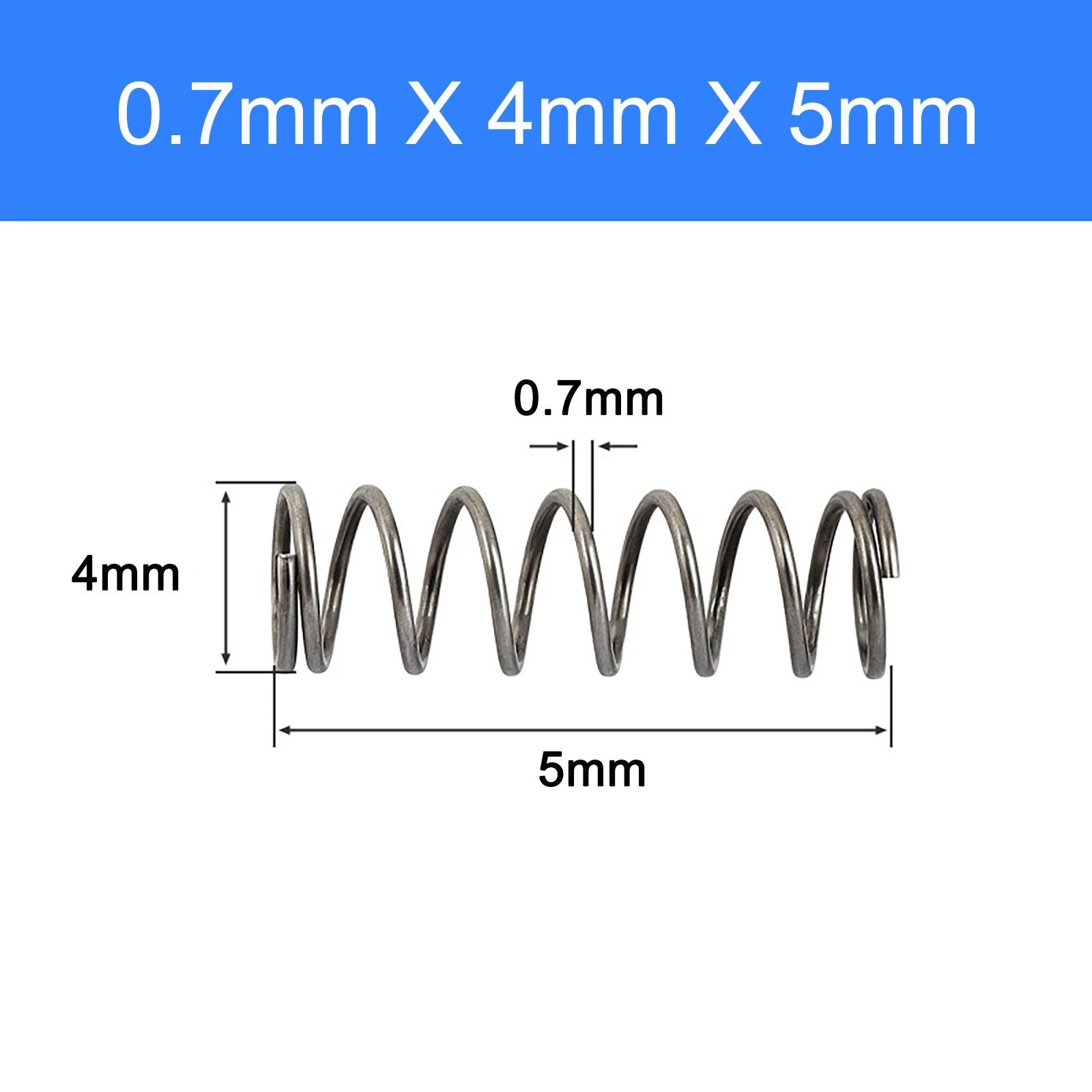
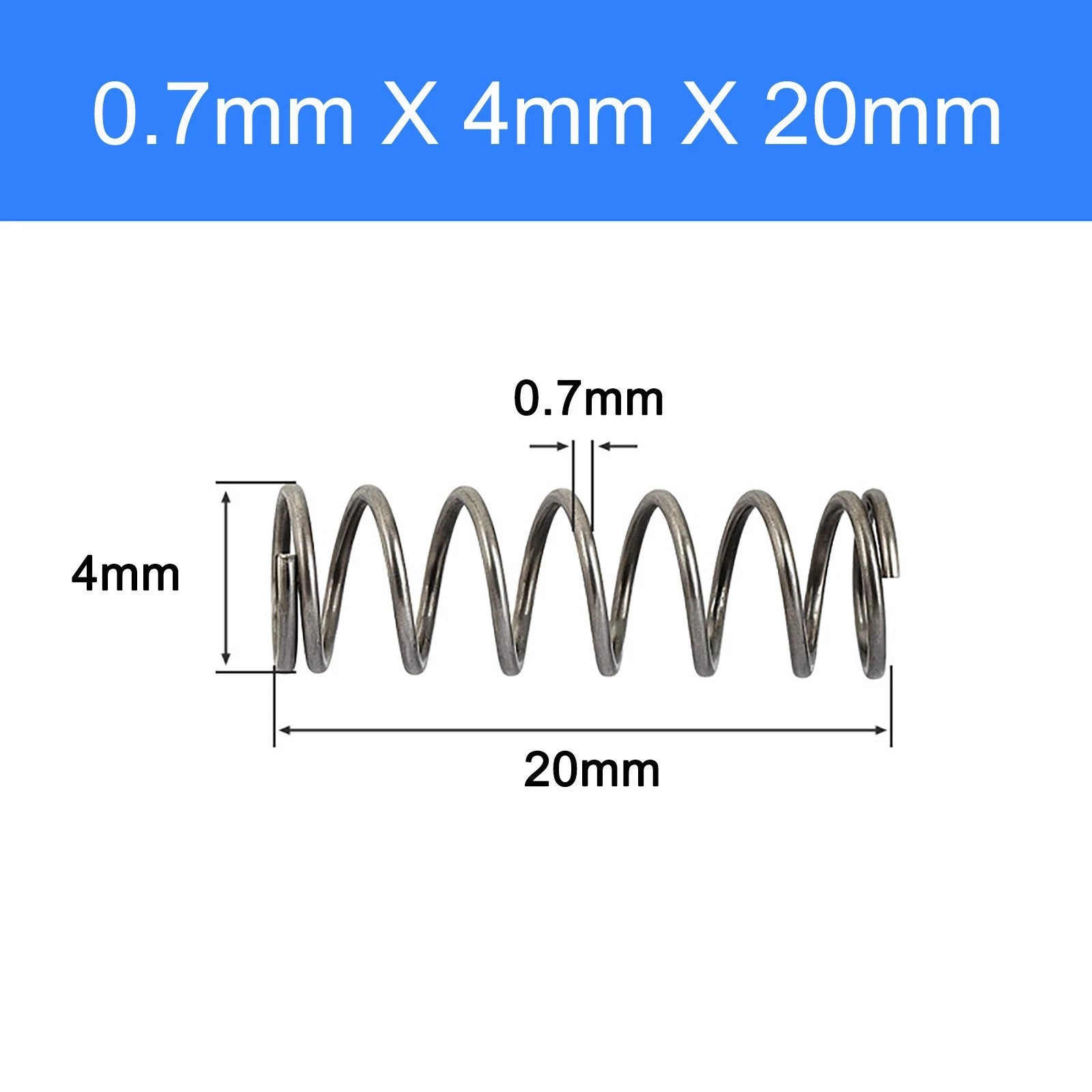
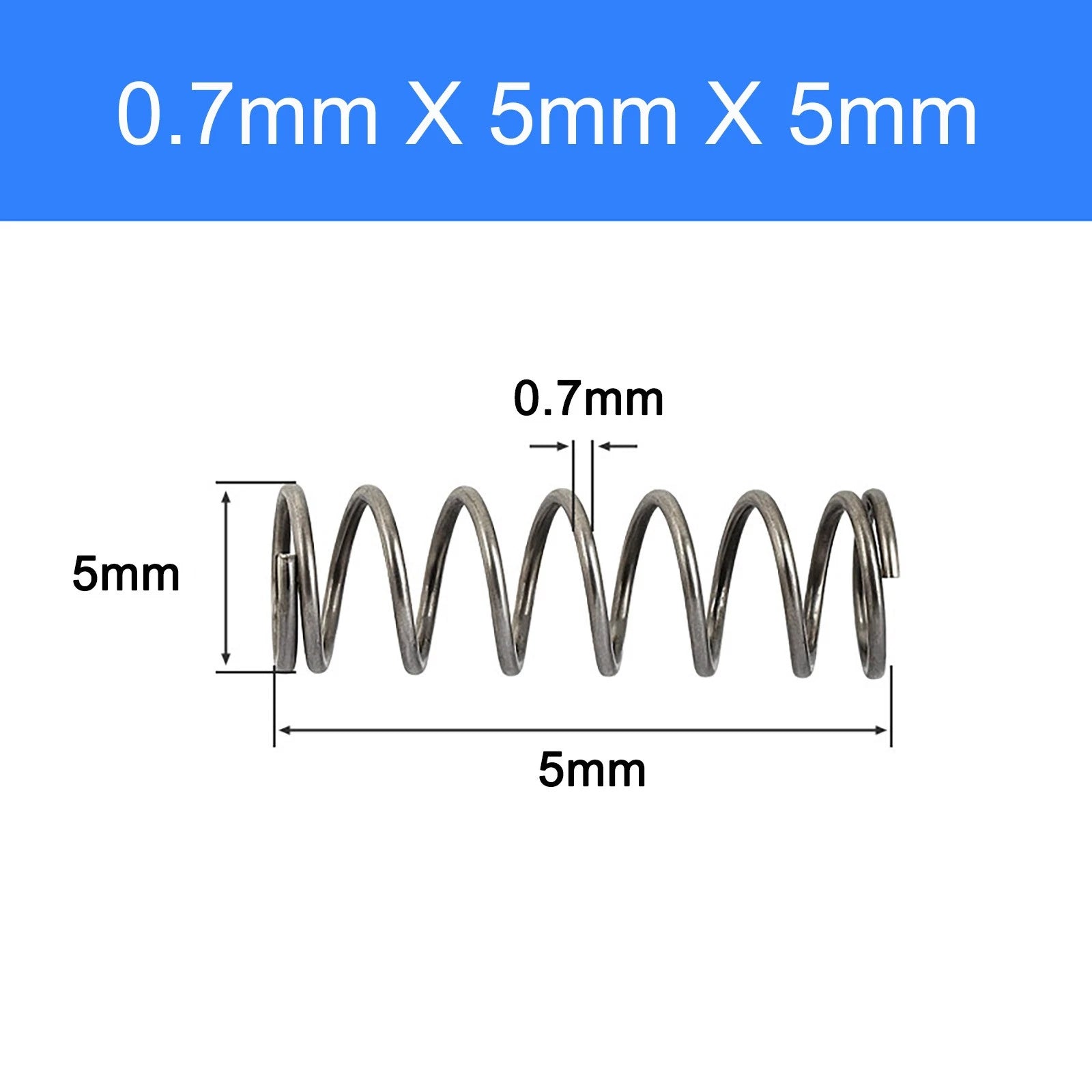
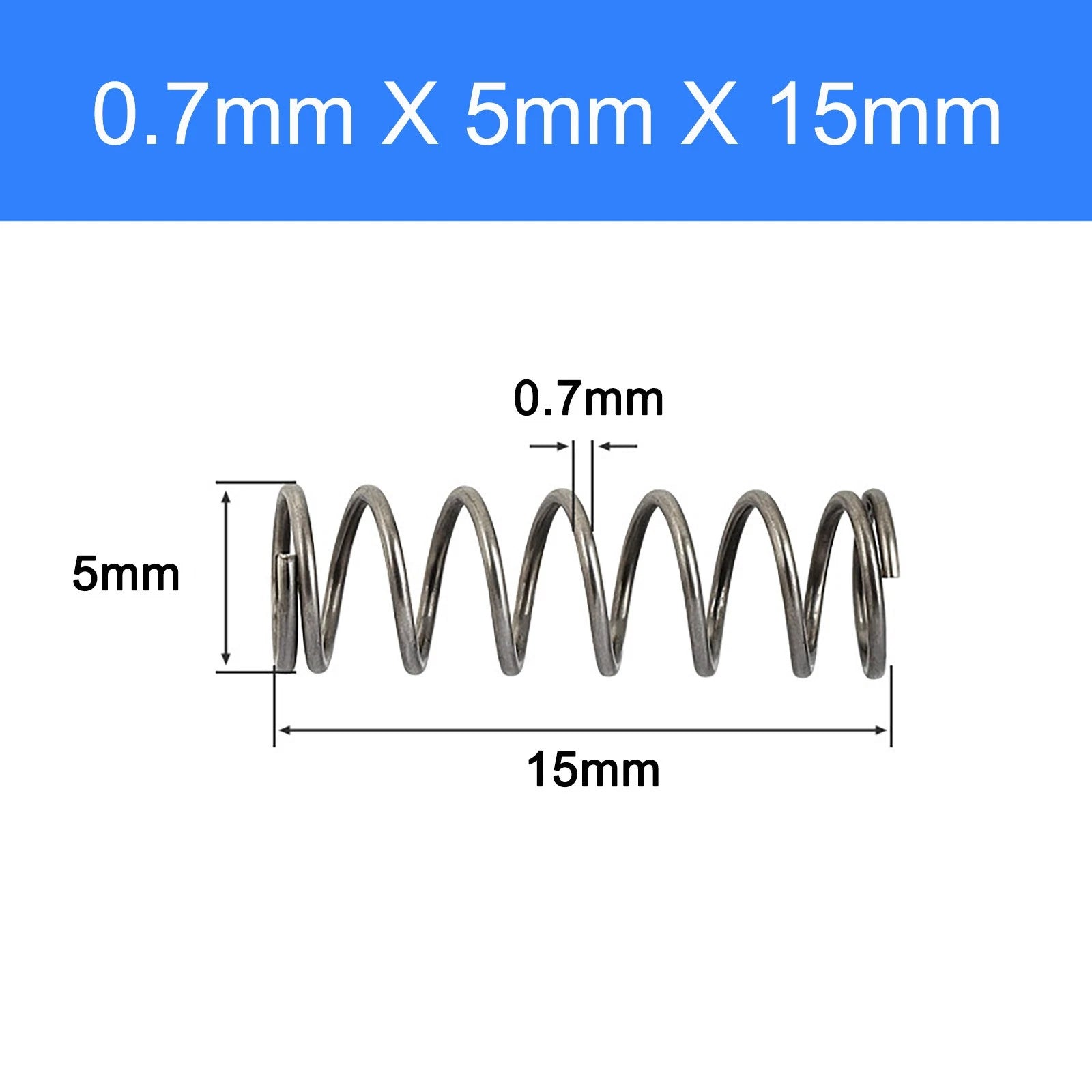
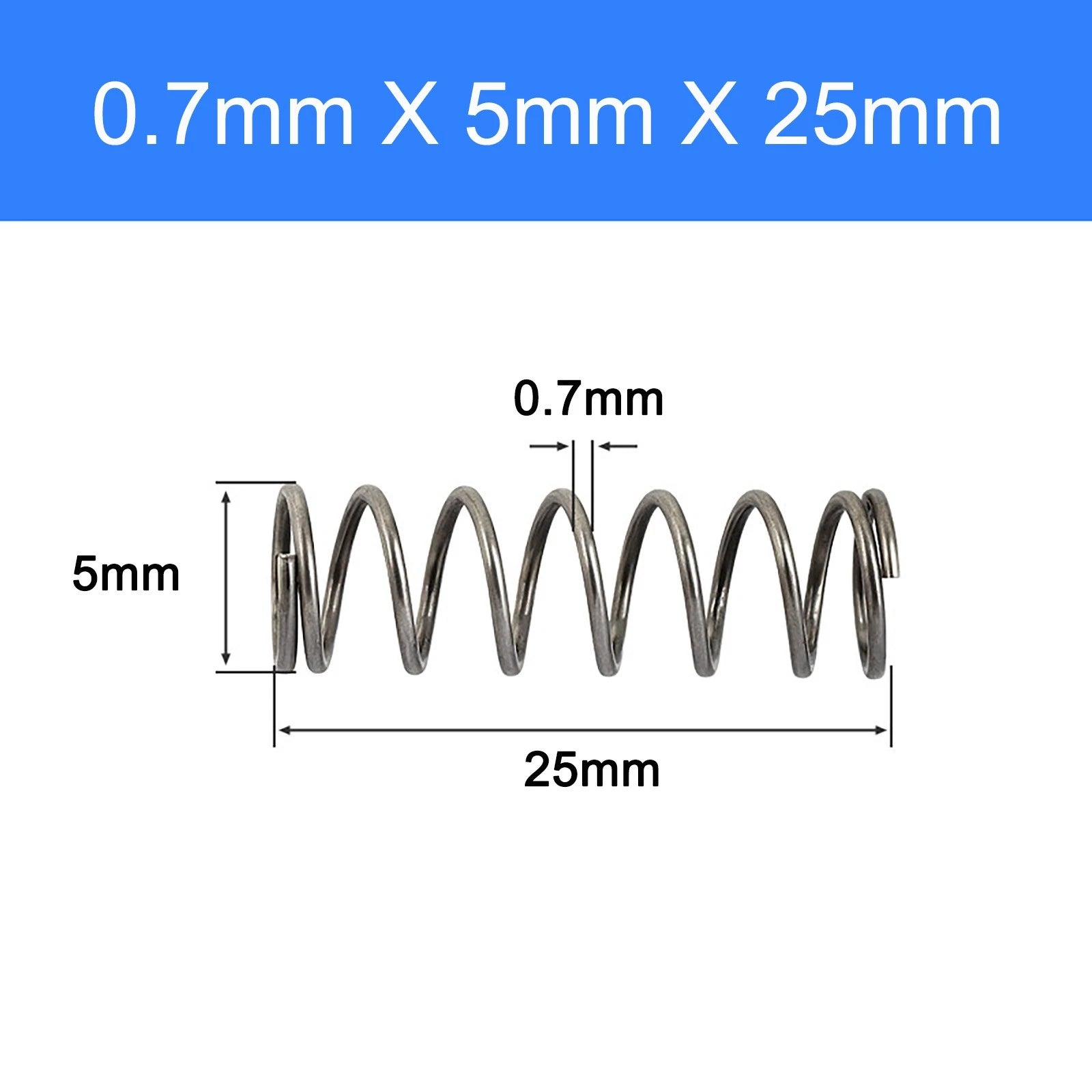
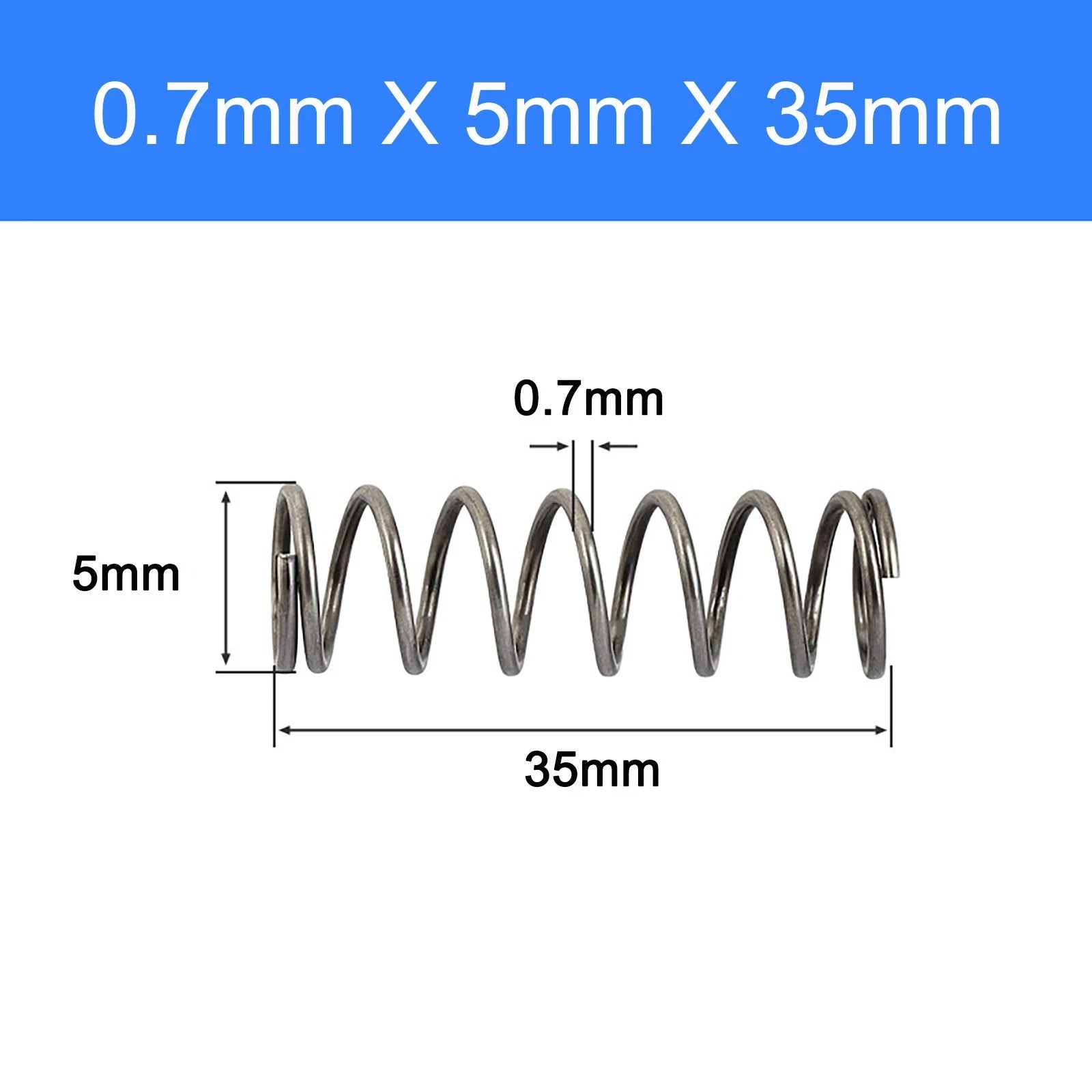
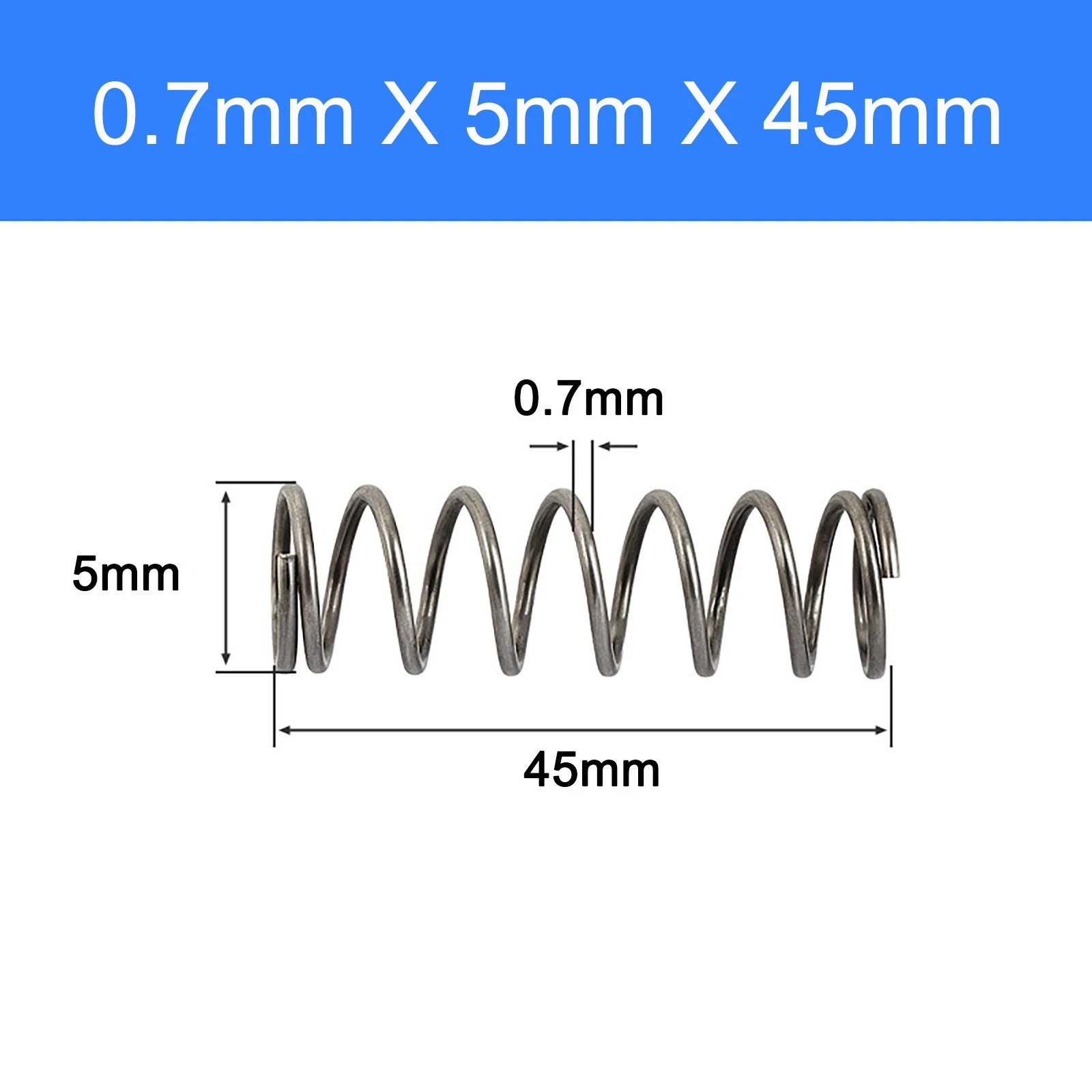
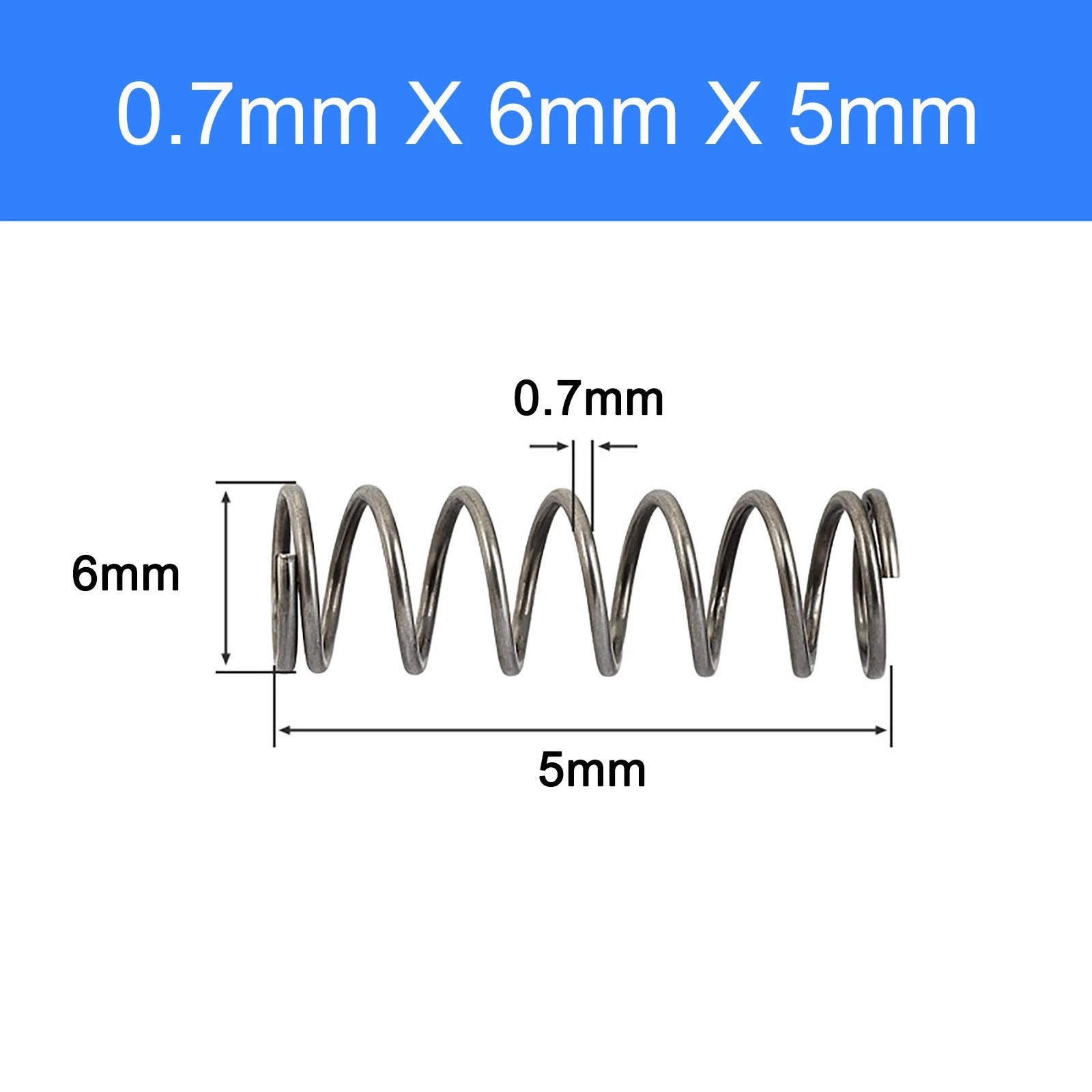
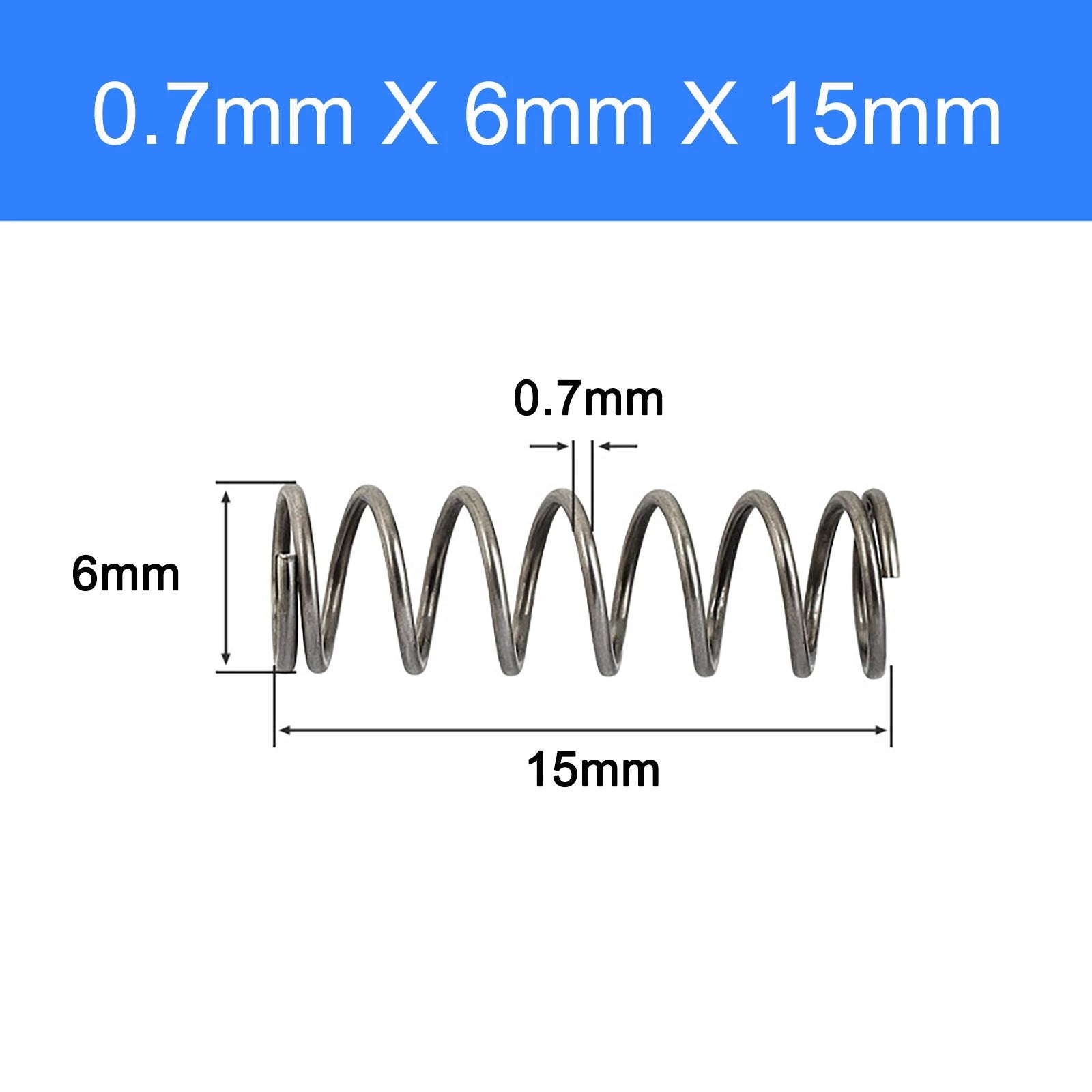
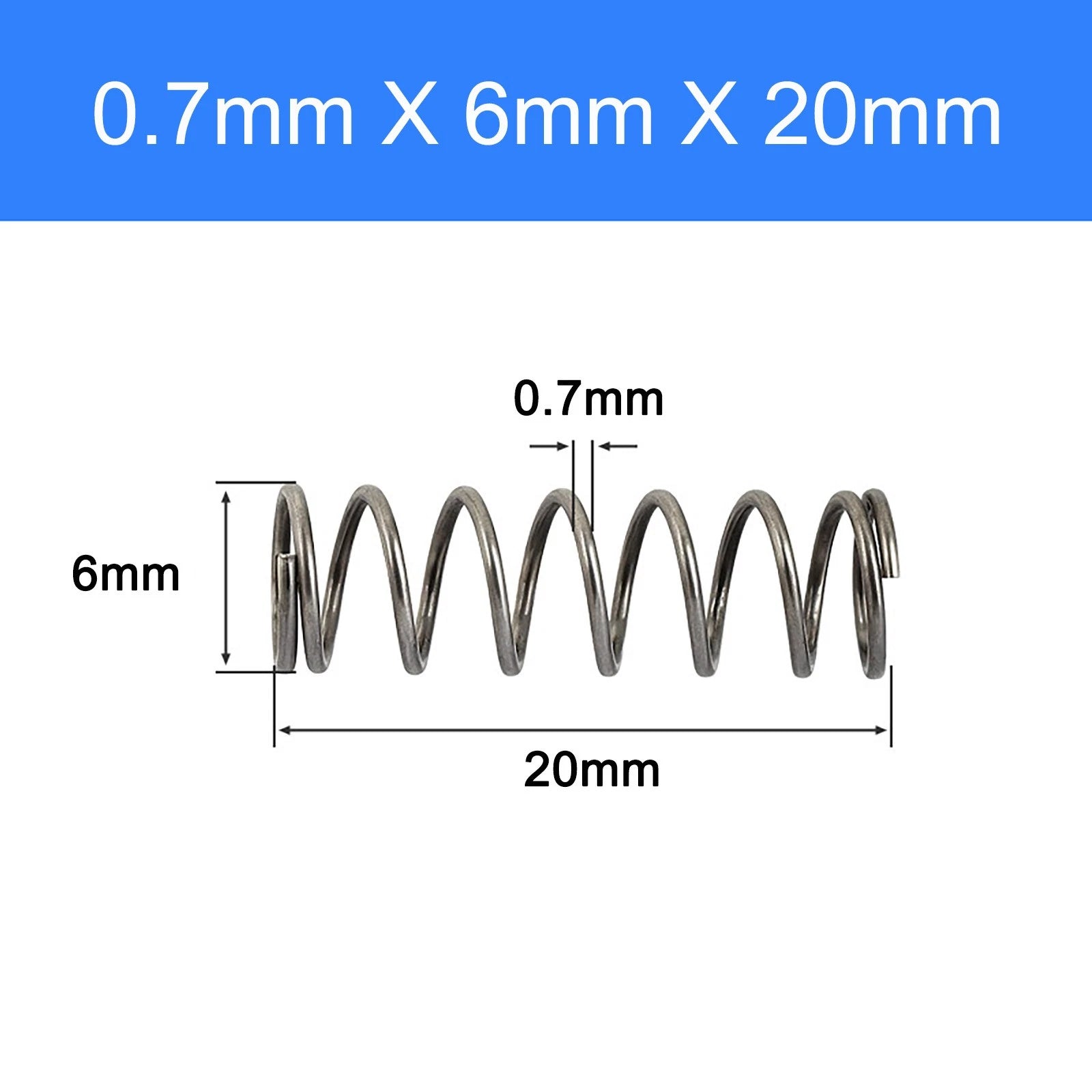
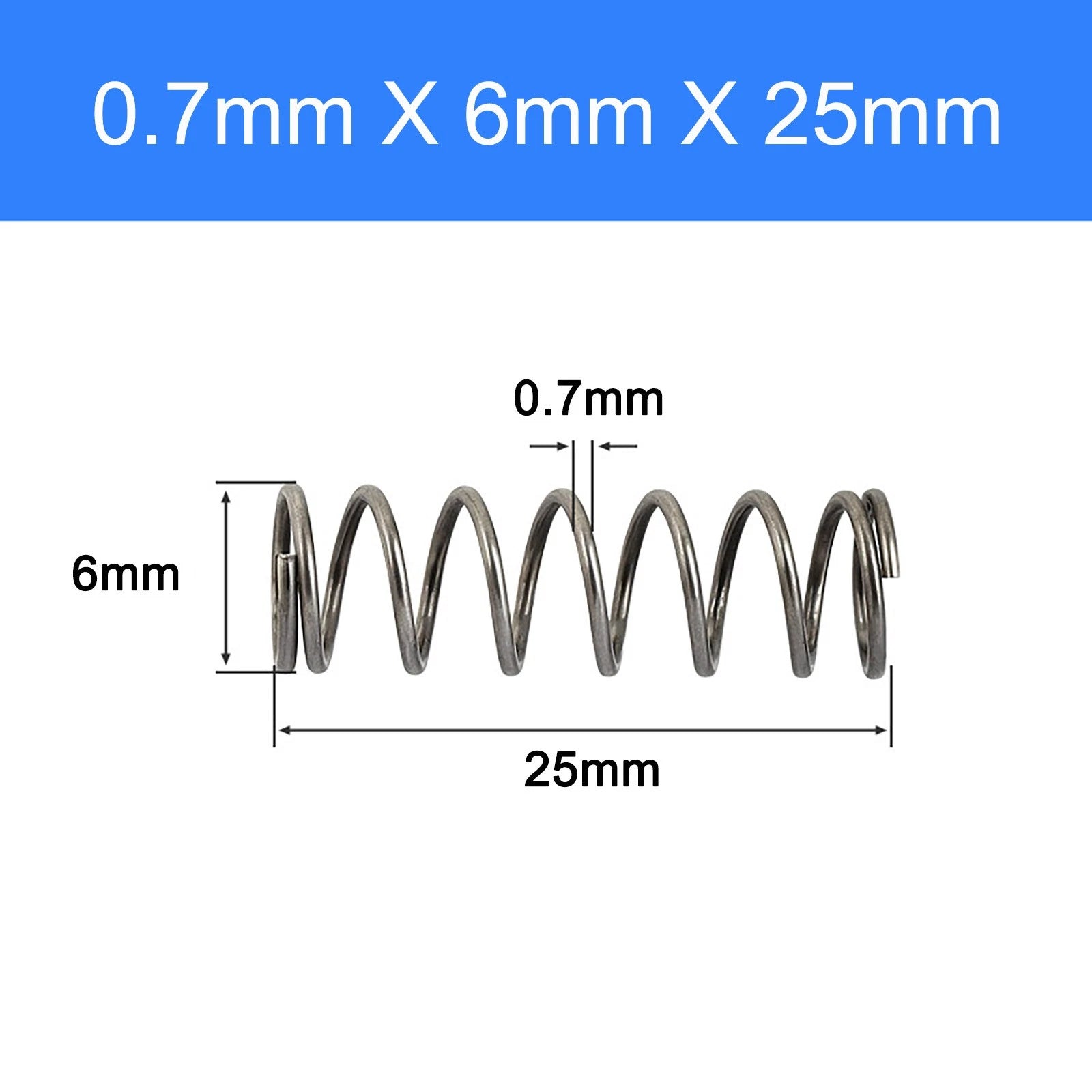
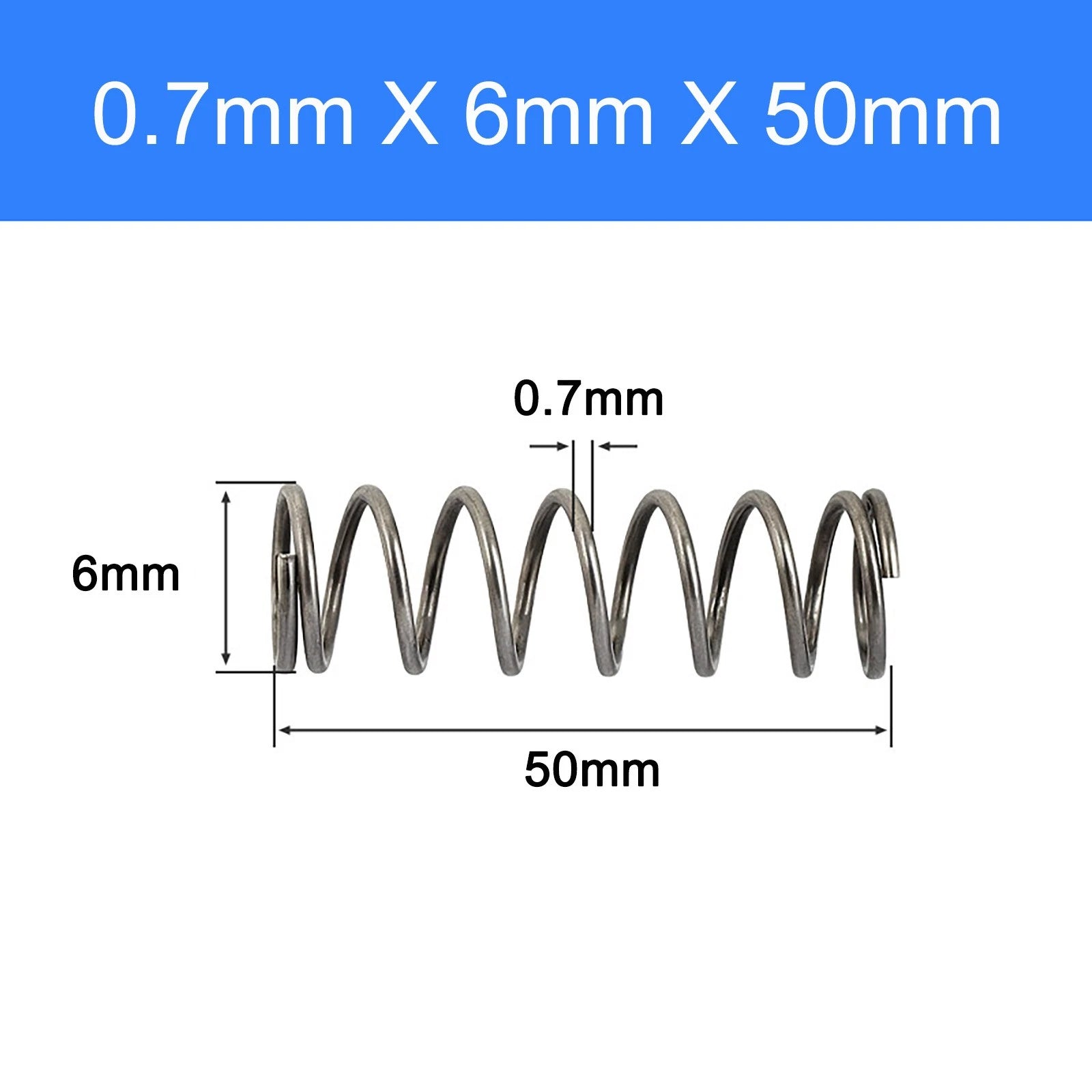
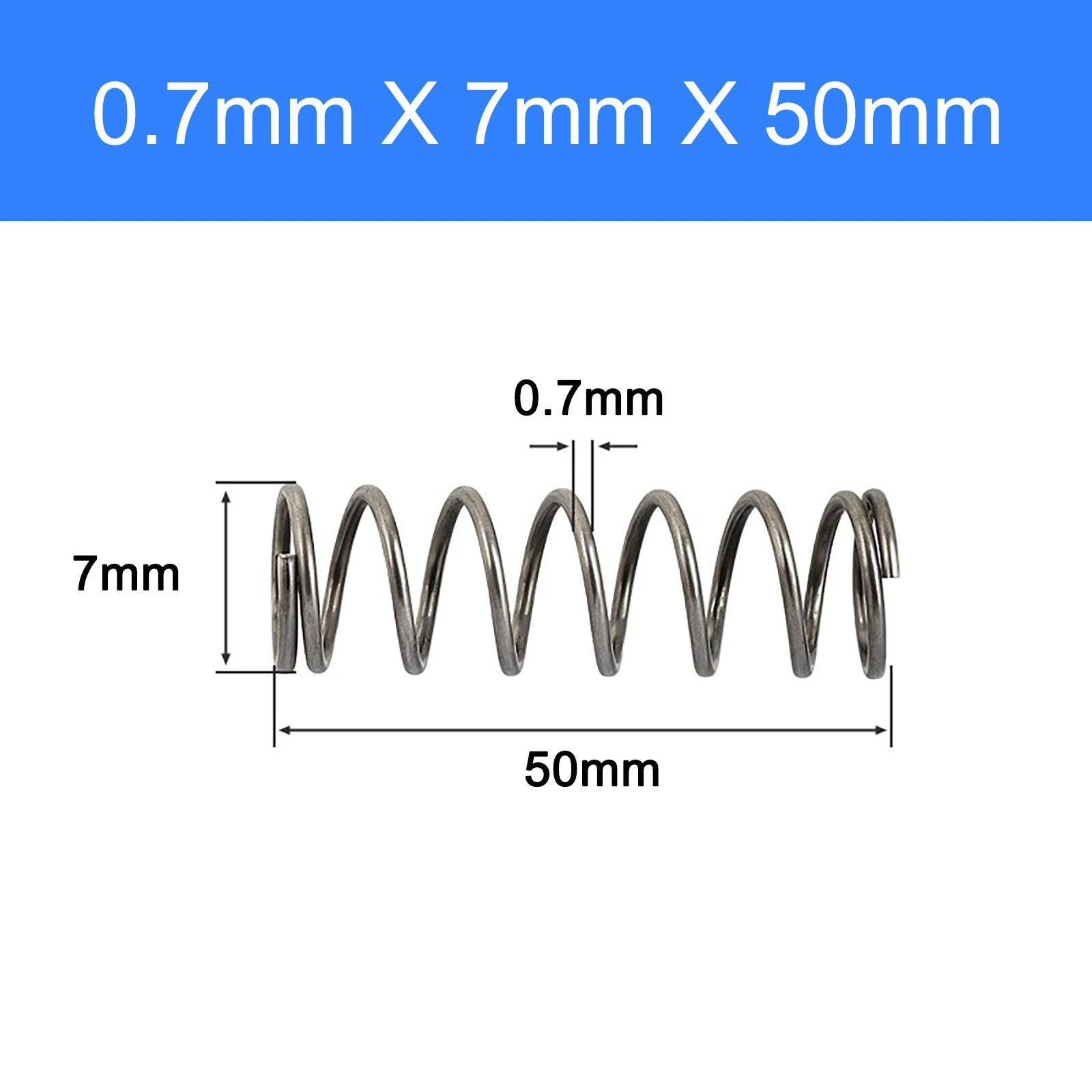
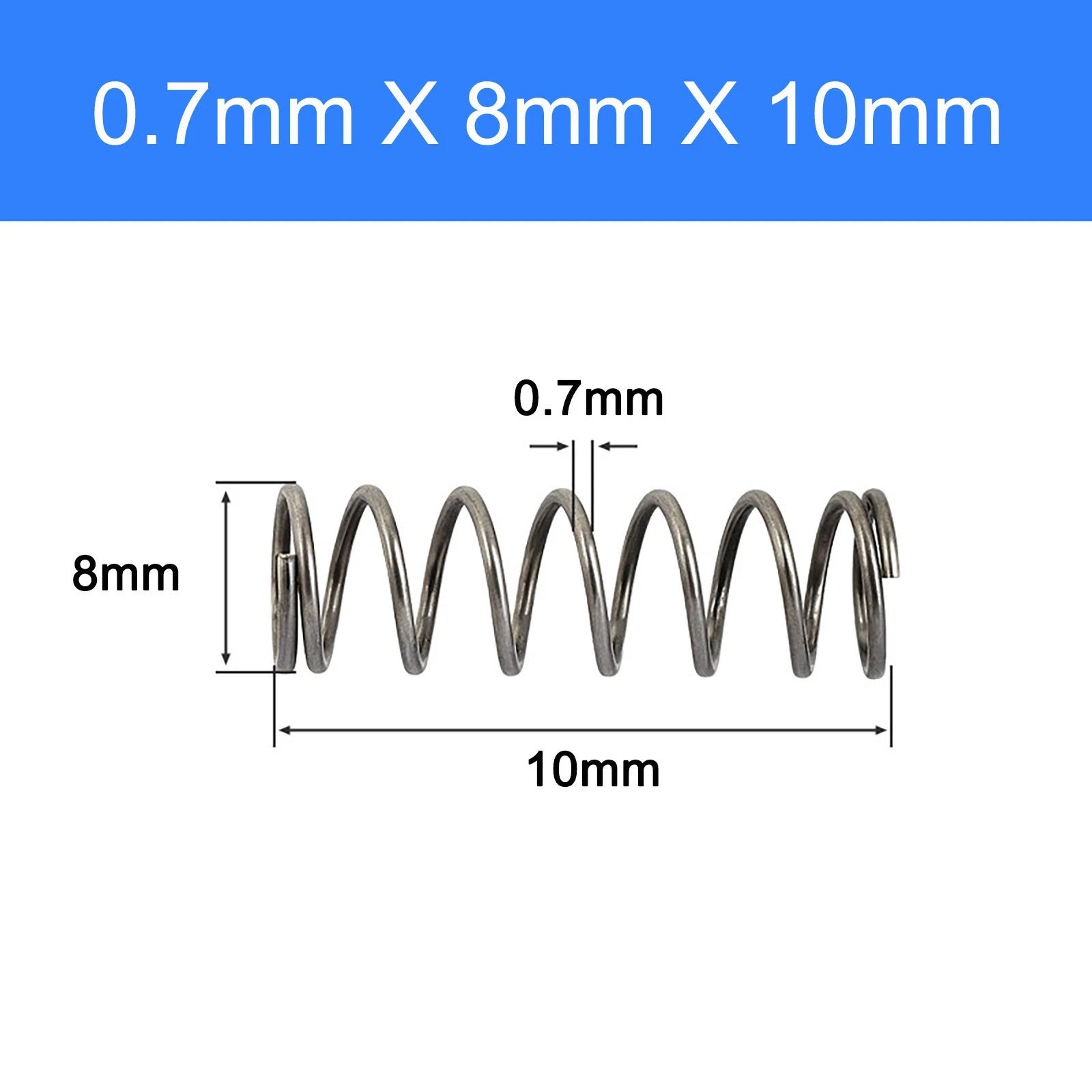
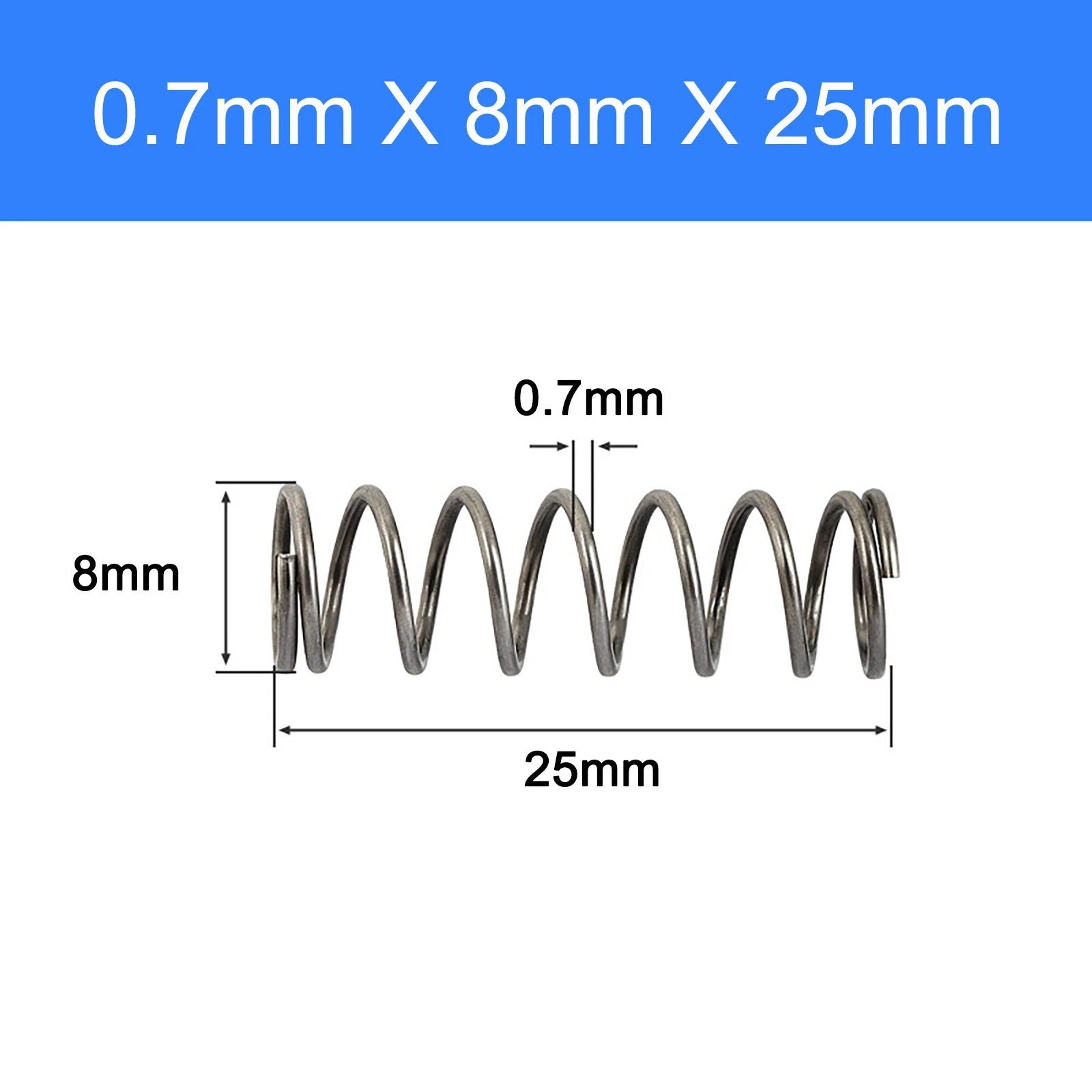
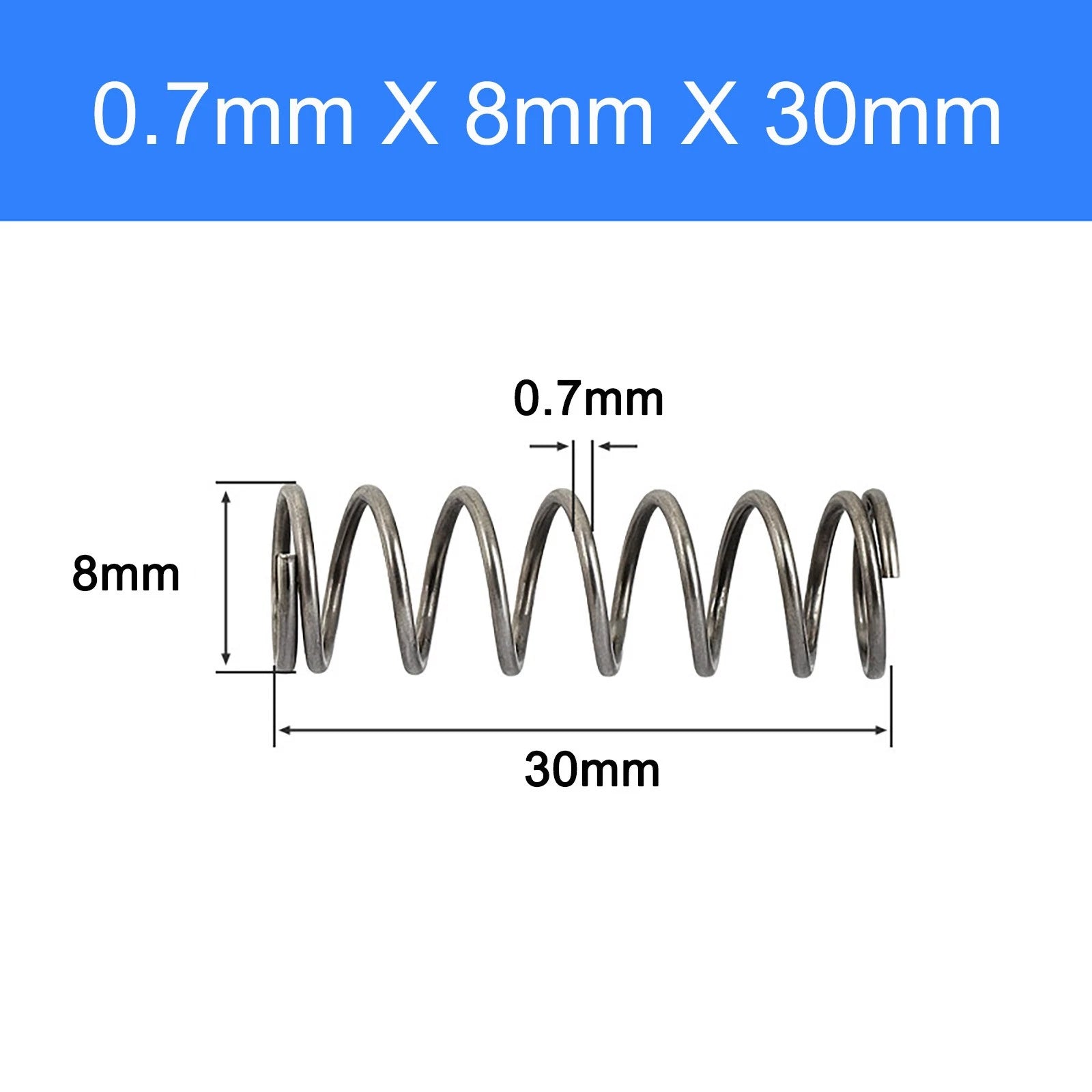
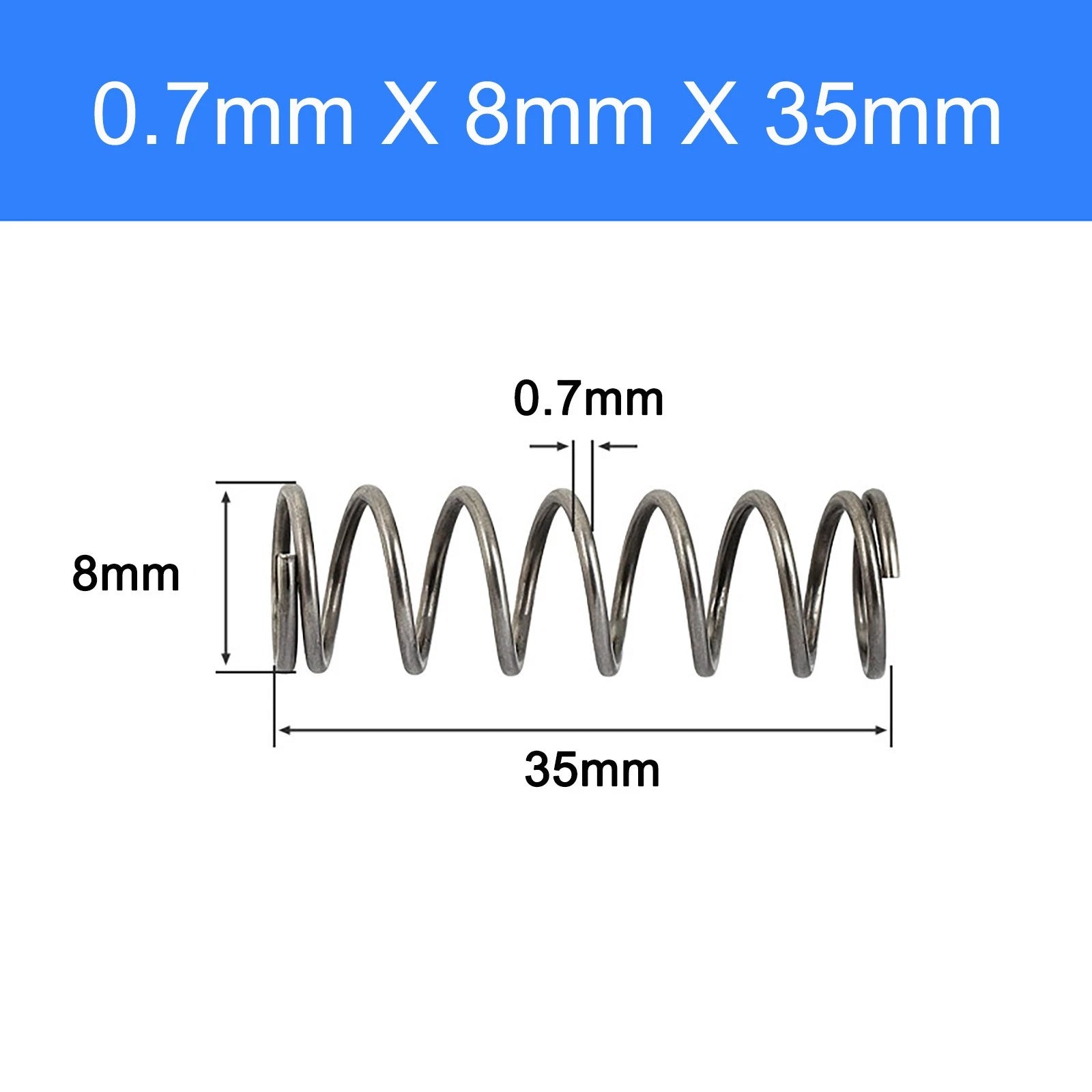
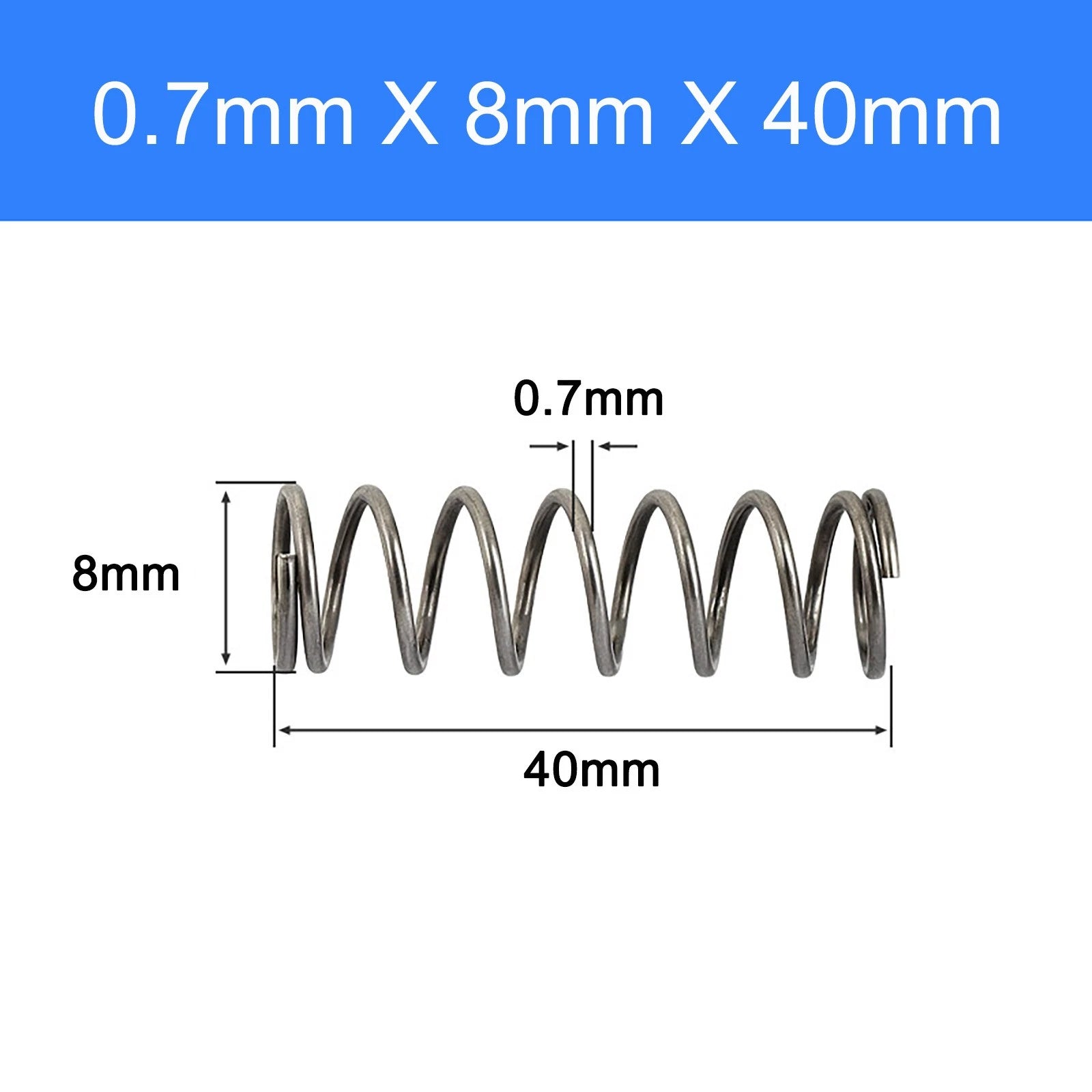
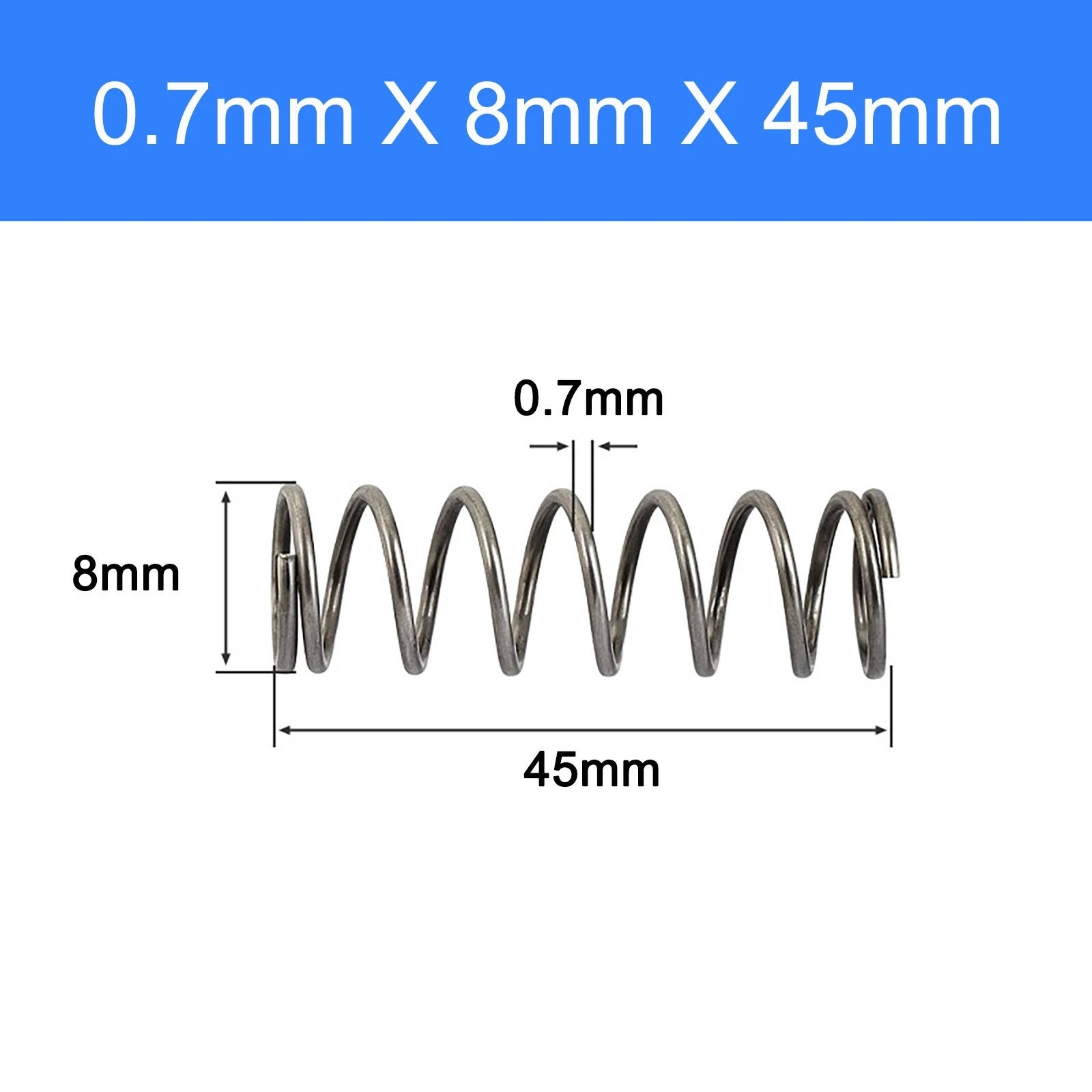
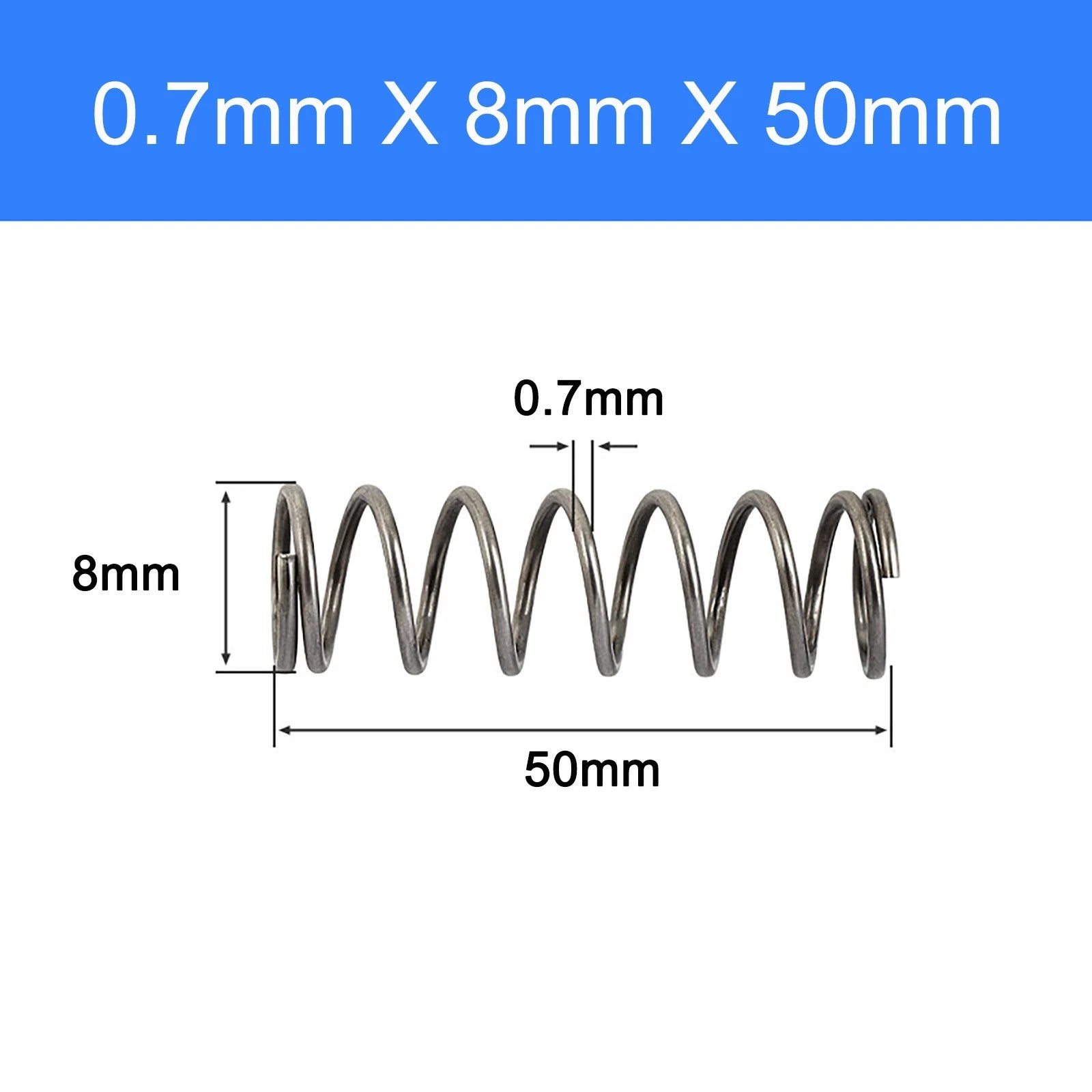
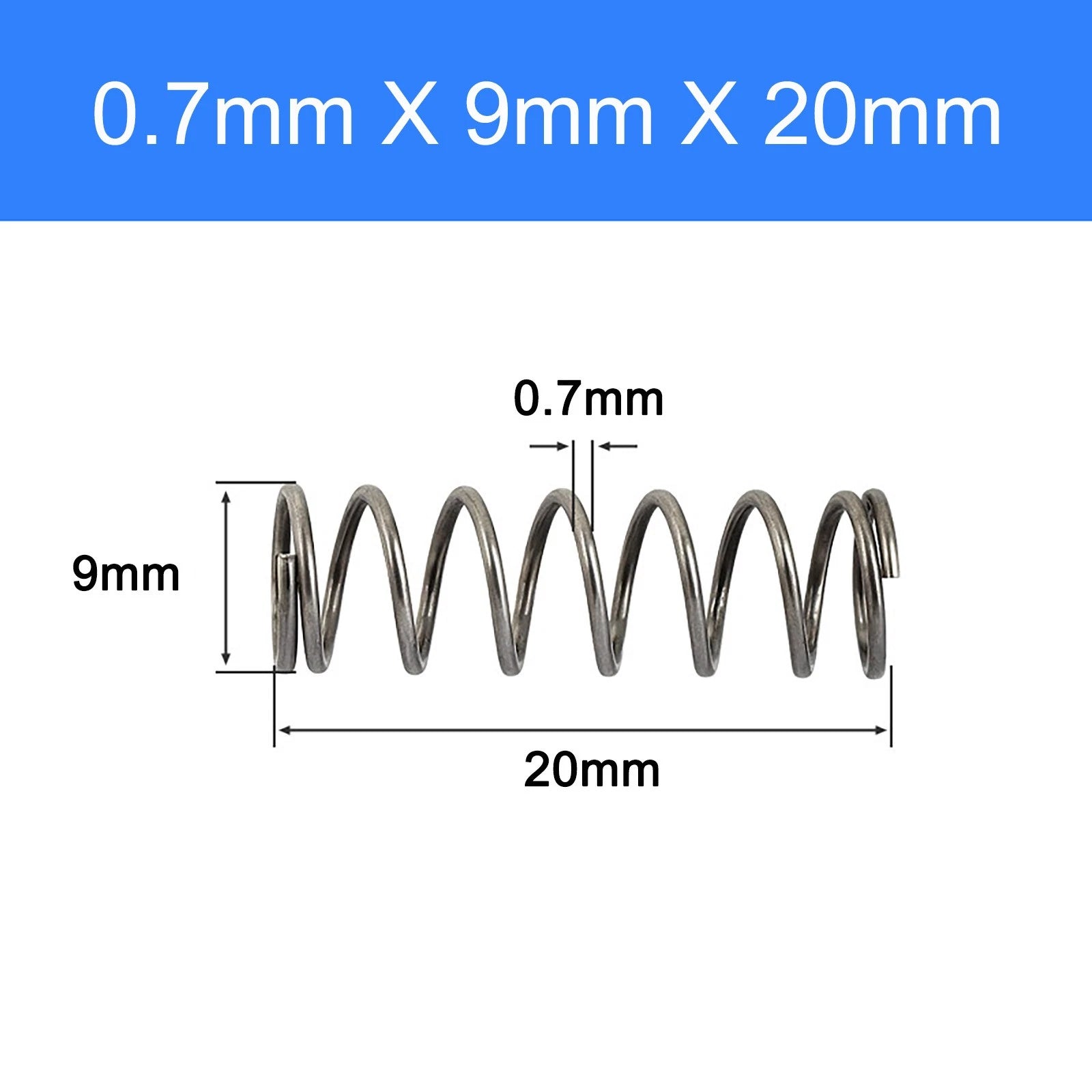
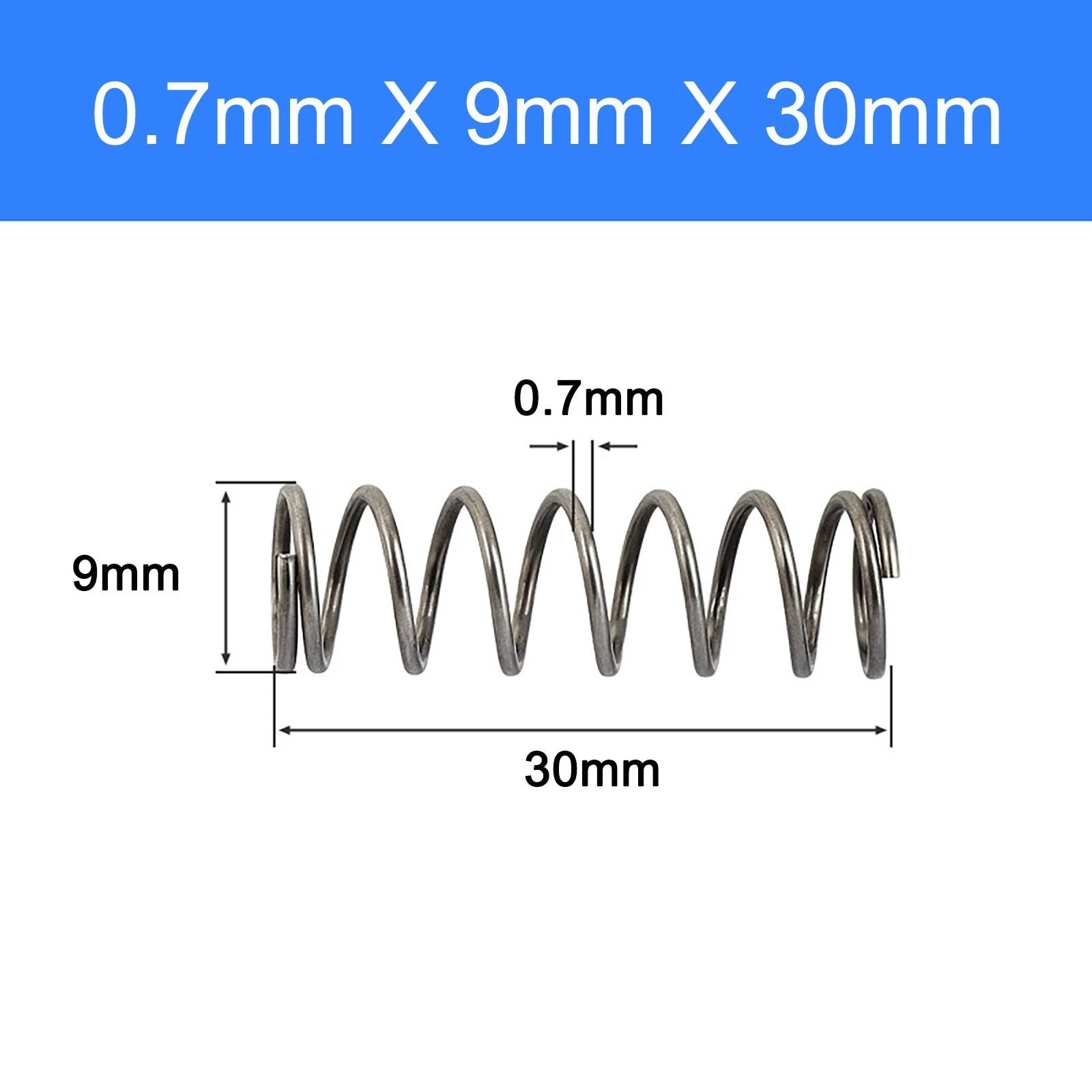
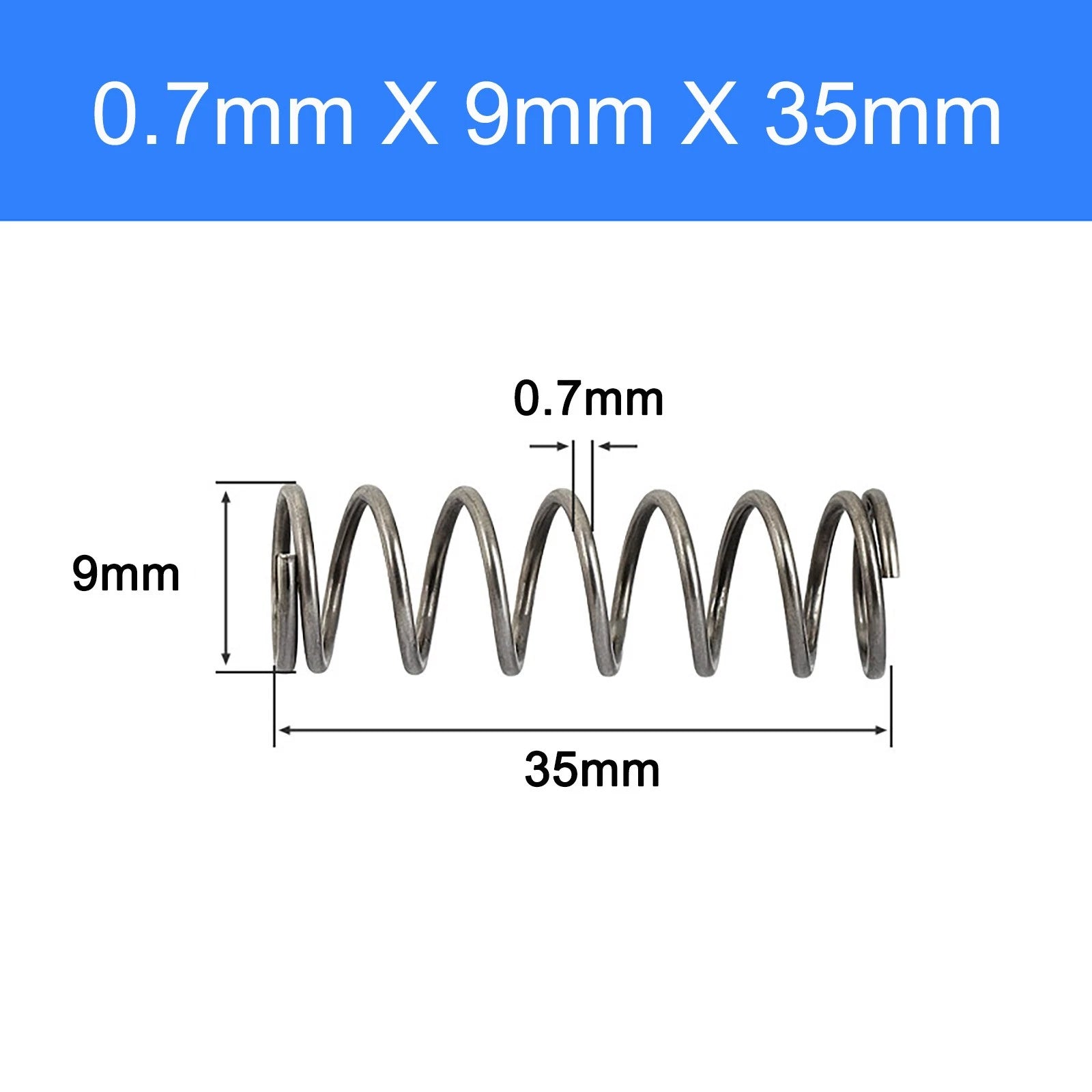
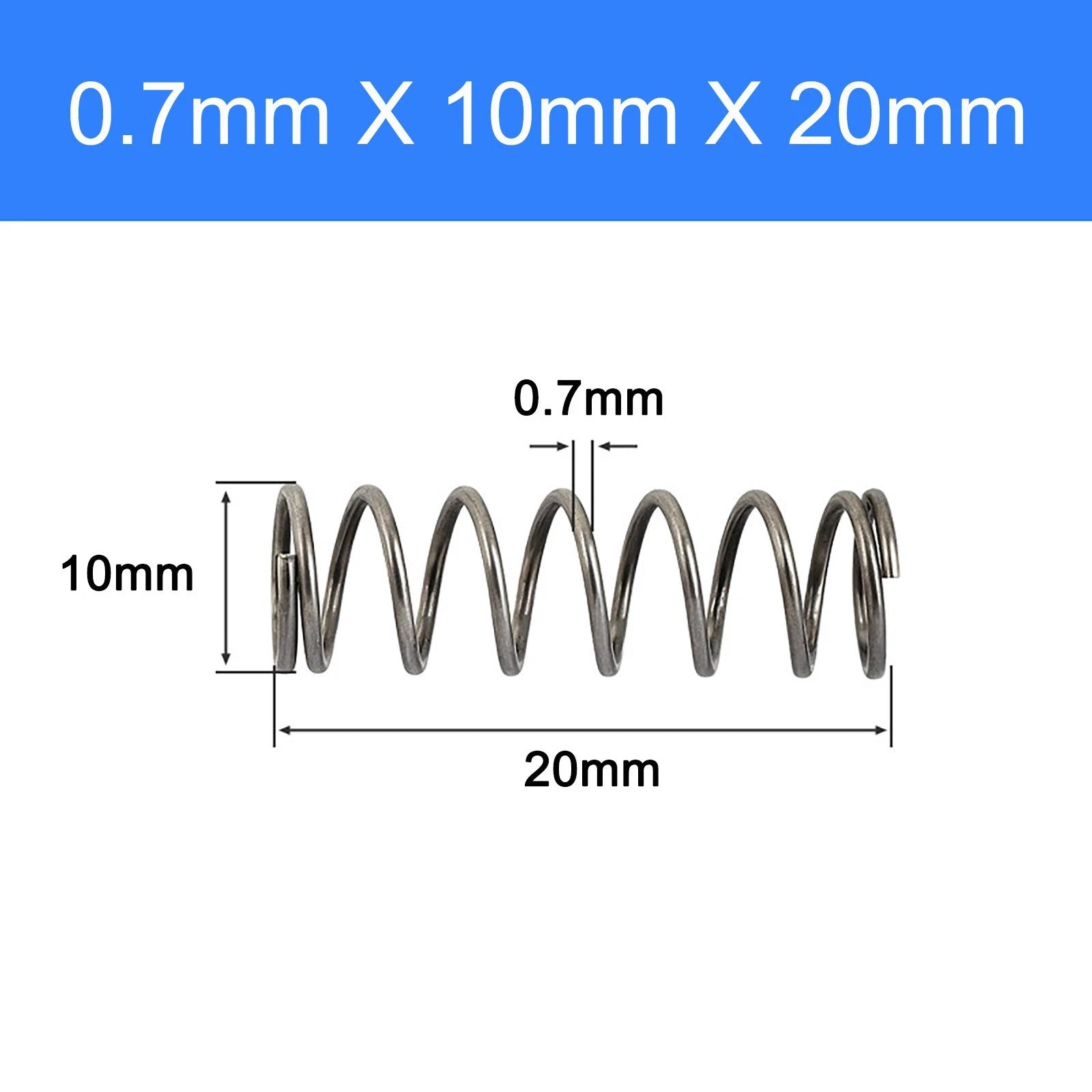
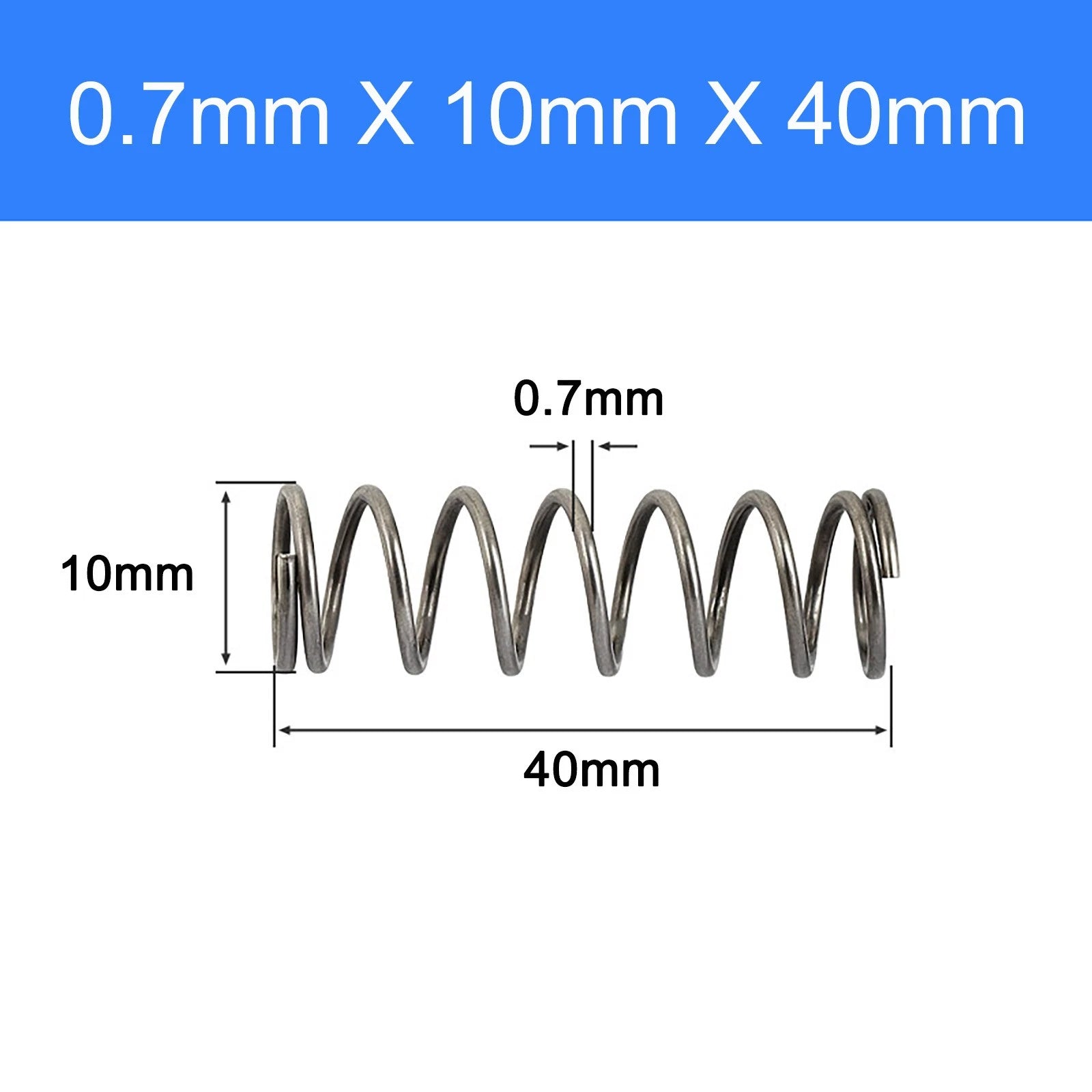
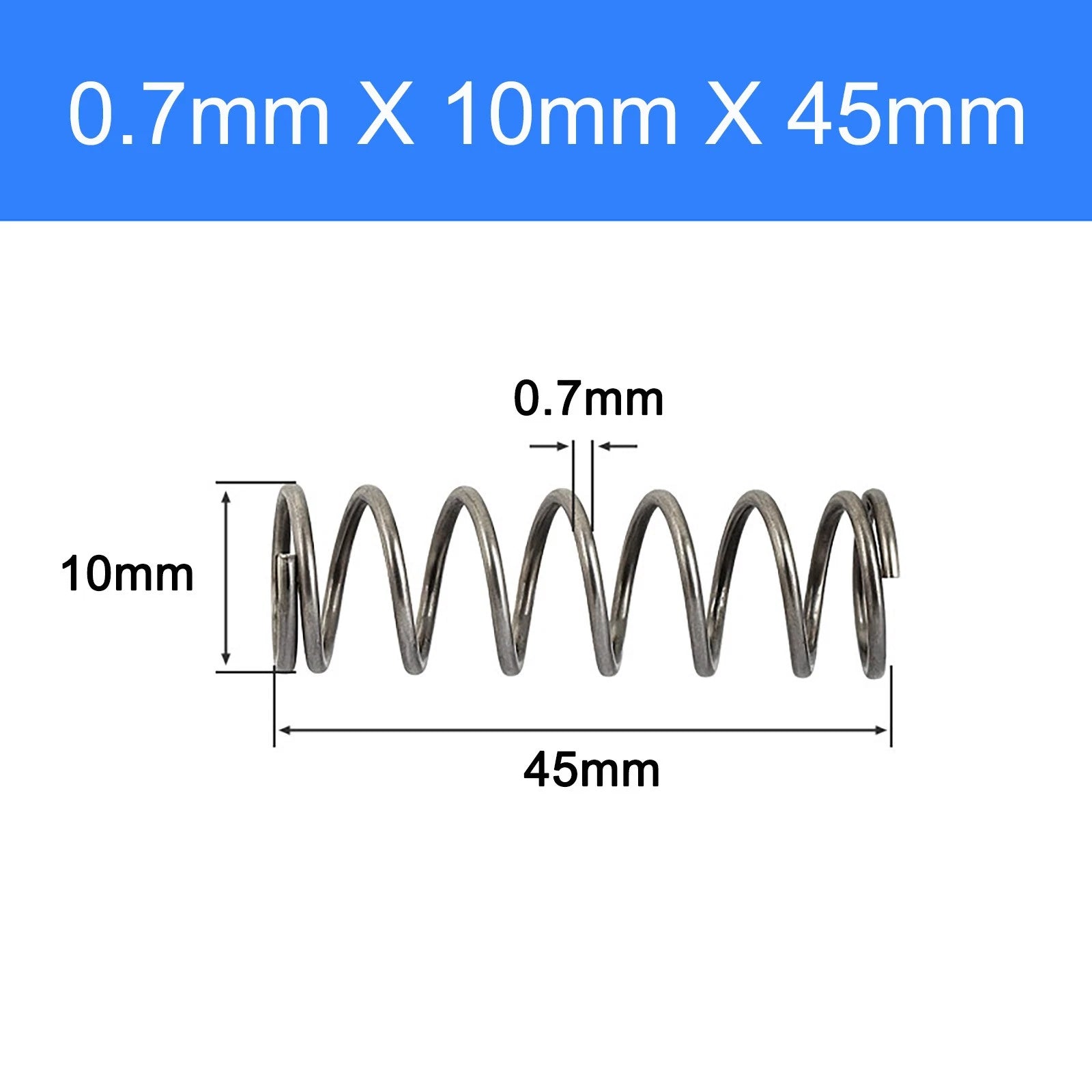
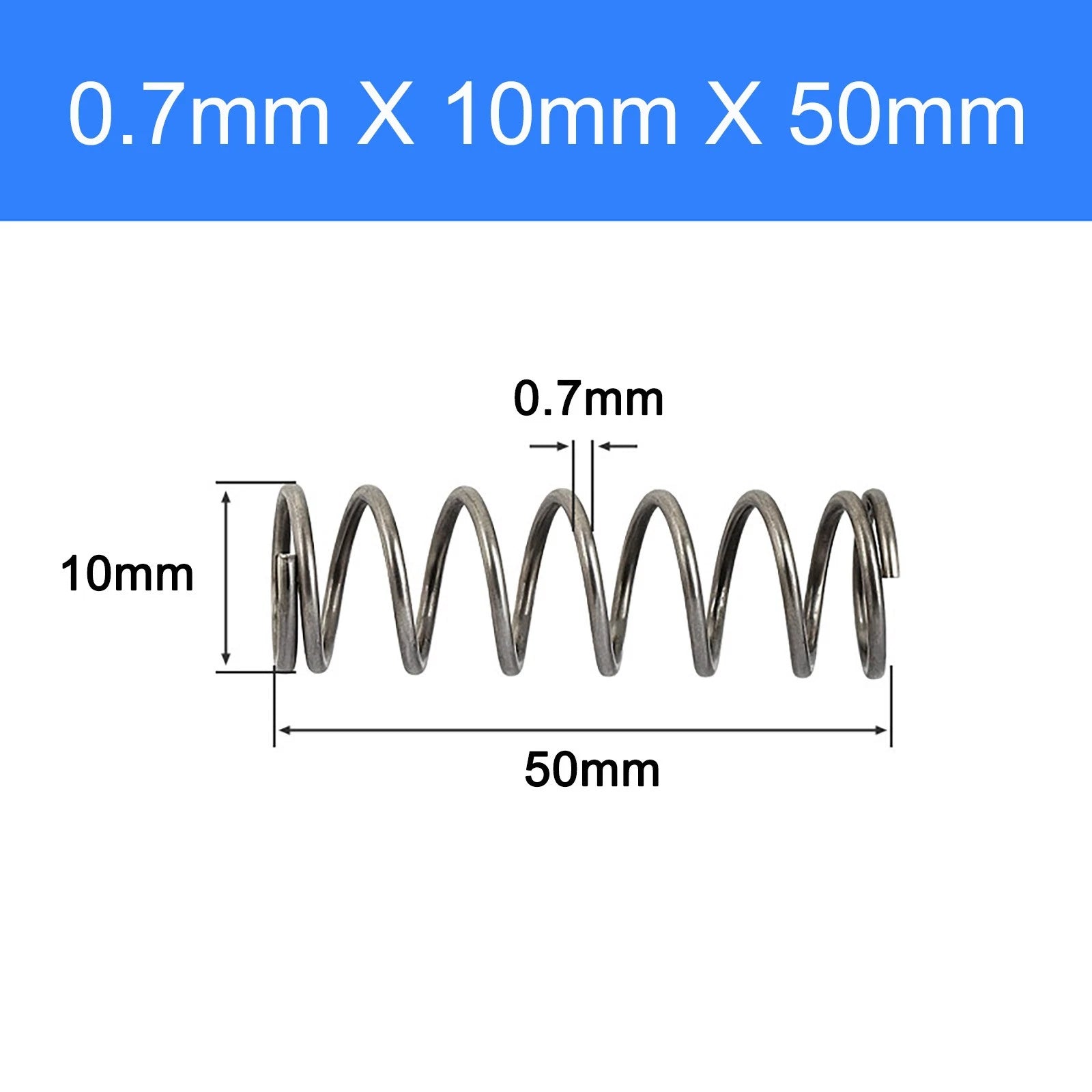
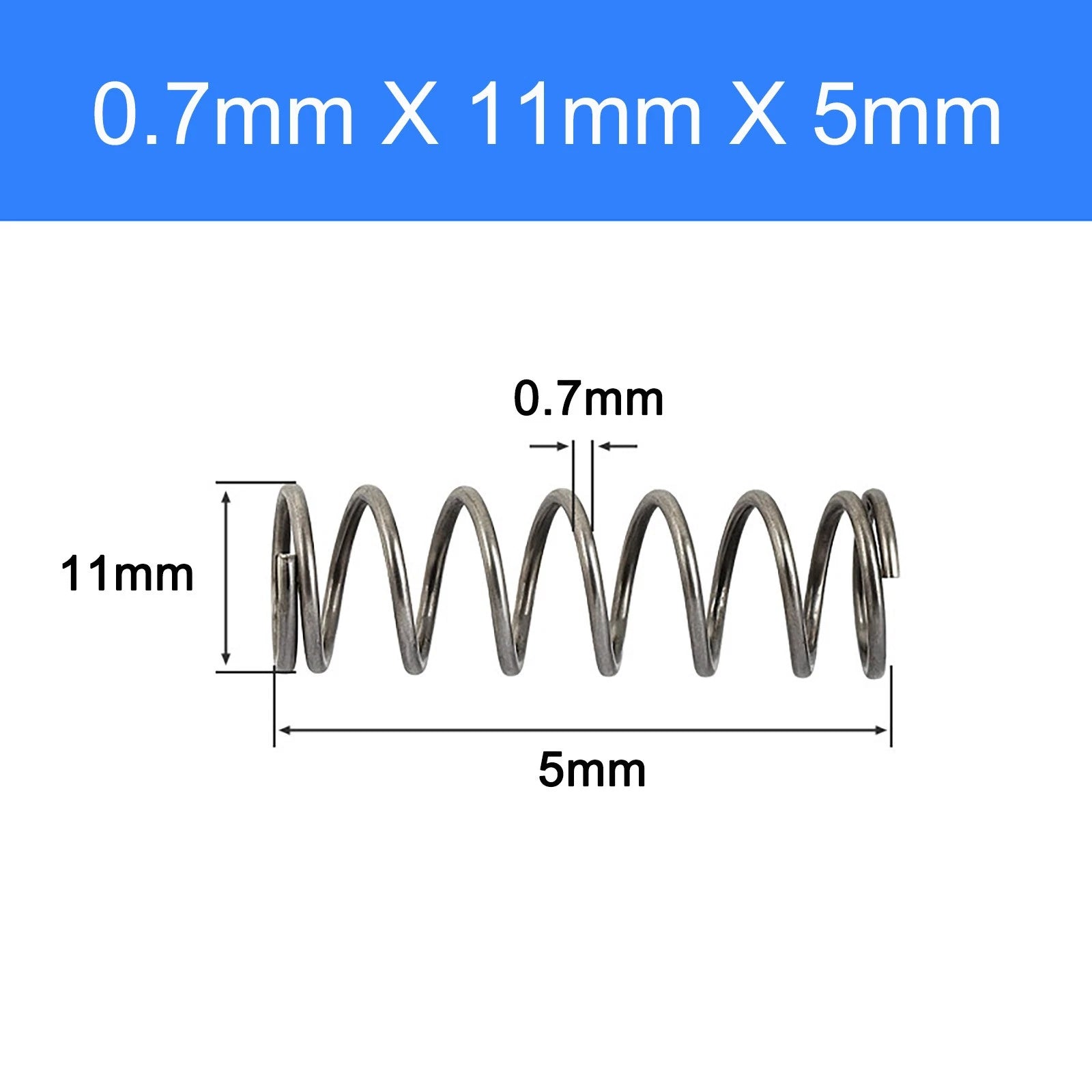
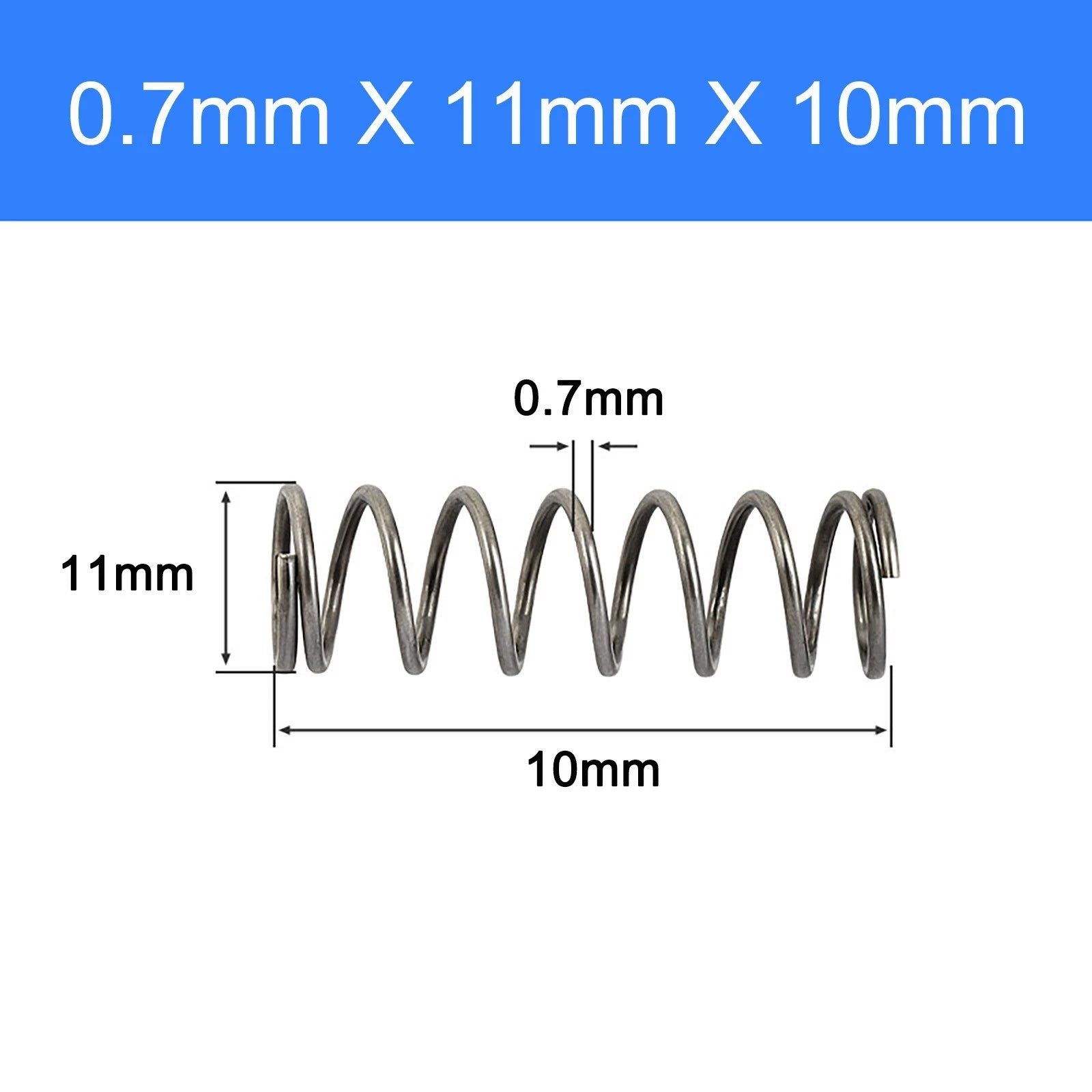
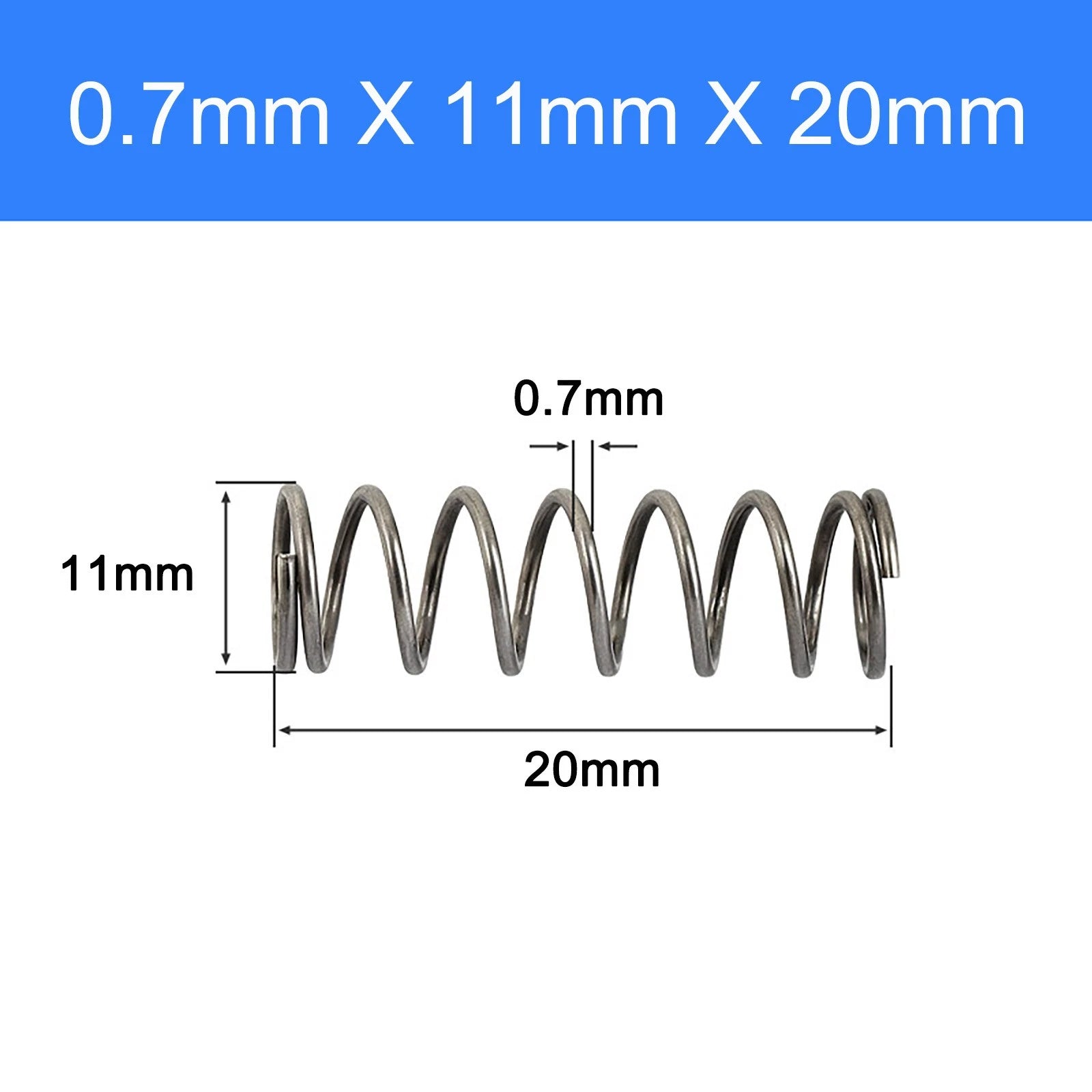
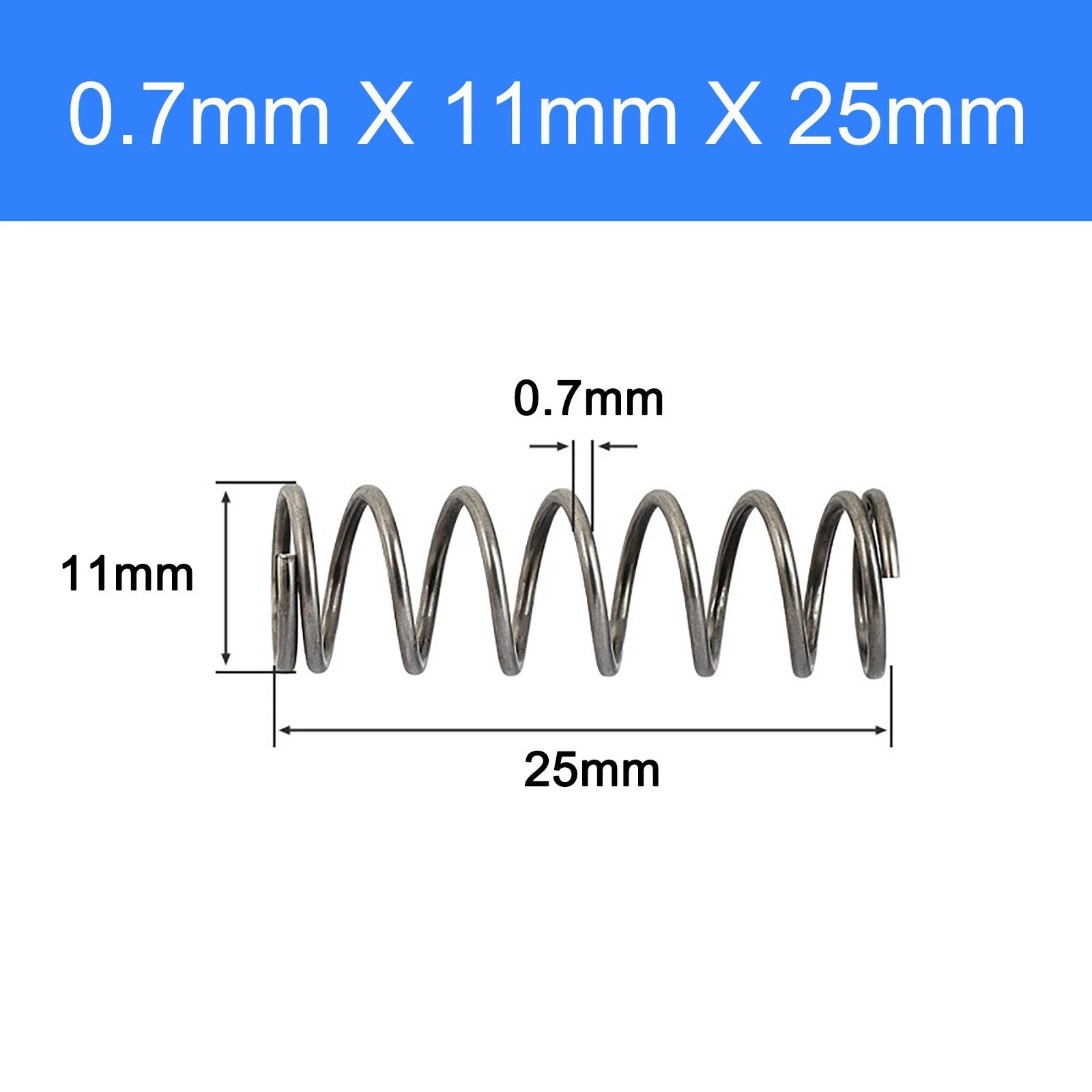
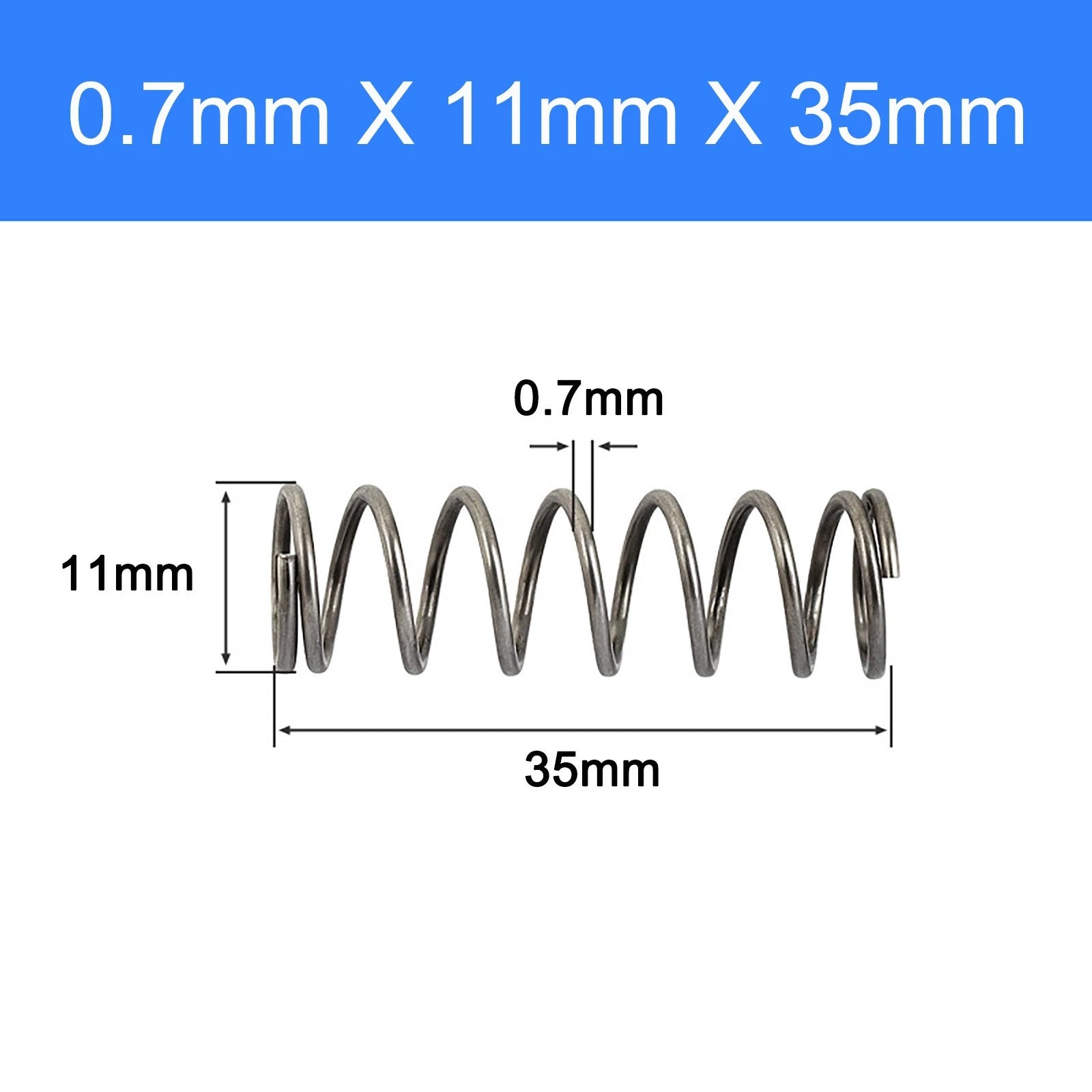
These compression springs are wound from spring steel wire with a nominal wire diameter of 0.7 mm. The outer diameter (OD) spans from 4 mm to 12 mm (~0.16 in to ~0.47 in), and free lengths range from 5 mm to 50 mm (~0.20 in to ~1.97 in). Each spring features an open-coil, cylindrical body with ground or squared ends typical of standard compression coil springs, providing stable seating and consistent load distribution.

Typical use cases include spring-loaded pen mechanisms and retractable tool components, small electronics enclosures requiring button-return or contact-pressure springs, and DIY robotics or automation builds where lightweight compression springs for robotics projects are needed in precise OD-to-bore fits.

⚙️ Compatibility: Suitable for spring bores or guide rods sized to match the selected OD variant. Verify bore clearance and free-length requirements before ordering. Works with standard spring steel applications; not rated for high-temperature or corrosive environments without additional treatment.

✅ Key Features of These Compression Coil Springs

🔩 0.7 mm Wire Diameter

Consistent wire gauge across all size variants ensures predictable spring rate and fatigue life for micro-spring applications.

📐 Wide OD Range: 4–12 mm

Nine outer diameter steps (4, 5, 6, 7, 8, 9, 10, 11, 12 mm) let you match the exact bore or guide-rod diameter in your assembly.

📏 10 Free-Length Options per OD

Free lengths from 5 mm to 50 mm in 5 mm increments give fine control over travel distance and installed-height clearance.

Spring Steel Construction

Spring steel provides the elastic memory and tensile strength needed for repeated compression cycles without permanent set under normal loads.

📦 10 or 100 Piece Packs

Choose a 10-piece pack for prototyping or a 100-piece bulk pack for production runs, repairs, or stocking your workshop.

🛠️ Versatile DIY & Engineering Use

Fits pen mechanisms, button-return assemblies, robotics actuators, jig fixtures, and countless other small-mechanism compression spring applications.

📐 Technical Specifications — Compression Coil Springs

Wire Diameter 0.7 mm
Outer Diameter (OD) 4 mm – 12 mm (see variant options)
Free Length 5 mm – 50 mm (see variant options)
Material Spring Steel
Spring Type Cylindrical Compression Coil Spring
End Type See variant options
Coil Direction See variant options
Surface Finish See variant options
Pack Quantity 10 PCS or 100 PCS (see variant options)
Weight (per pack) See variant options

❓ Frequently Asked Questions

How do I choose the right OD for my application?

Measure the inner diameter of the bore or the outer diameter of the guide rod your spring will seat against. For a bore-guided spring, the OD should be slightly smaller than the bore ID to allow free movement without binding — typically 0.2–0.5 mm clearance. For a rod-guided spring, the spring ID (OD minus 2× wire diameter, approximately OD − 1.4 mm) should be slightly larger than the rod OD.

What free length should I select?

Free length is the uncompressed length of the spring. Choose a free length that is longer than your required installed (compressed) length. The difference between free length and installed length is the working deflection. Ensure the spring does not reach solid height (coil bind) within your travel range — leave at least 15–20% of free length as safety margin above solid height.

How strong are these springs — what load can they handle?

Spring rate (force per unit deflection) depends on wire diameter, OD, and number of active coils. With a 0.7 mm wire and ODs of 4–12 mm, these are light-duty micro springs suited for low-to-moderate loads typically in the range of a few grams to a few hundred grams of force, depending on deflection. For exact load requirements, contact us to confirm or consult a spring rate calculator using the specific dimensions.

Are these springs corrosion resistant?

Spring steel offers good mechanical properties but has limited inherent corrosion resistance compared to stainless steel. For indoor, dry, or low-humidity environments these springs perform reliably. For outdoor, humid, or mildly corrosive environments, consider applying a light oil or protective coating after installation. If corrosion resistance is a primary requirement, a stainless steel spring variant may be more appropriate.

What applications are these compression springs compatible with?

These springs are compatible with a wide range of small-mechanism applications: retractable pens and styluses, push-button switches and latches, spring-loaded contacts in electronics, DIY robotics joints and actuators, 3D printer extruder mechanisms, jig and fixture clamping, and general hobby or maker projects requiring a compact cylindrical compression spring.

Should I order 10 PCS or 100 PCS?

The 10-piece pack is ideal for prototyping, one-off repairs, or testing fit and spring rate before committing to a larger quantity. The 100-piece bulk pack offers a lower per-unit cost and is suited for production runs, workshop stock, or projects requiring multiple springs of the same size. Both packs contain identical springs — only the quantity differs.

Can I use these springs at elevated temperatures?

Standard spring steel begins to lose temper and spring rate at sustained temperatures above approximately 120–150 °C (248–302 °F). For applications involving elevated heat, select a high-temperature alloy spring. For typical room-temperature and moderate-environment DIY or mechanical uses, these springs perform within their rated elastic range.

🛒 Select your Size and Quantity above, then add to cart.

You may also like

Recently viewed