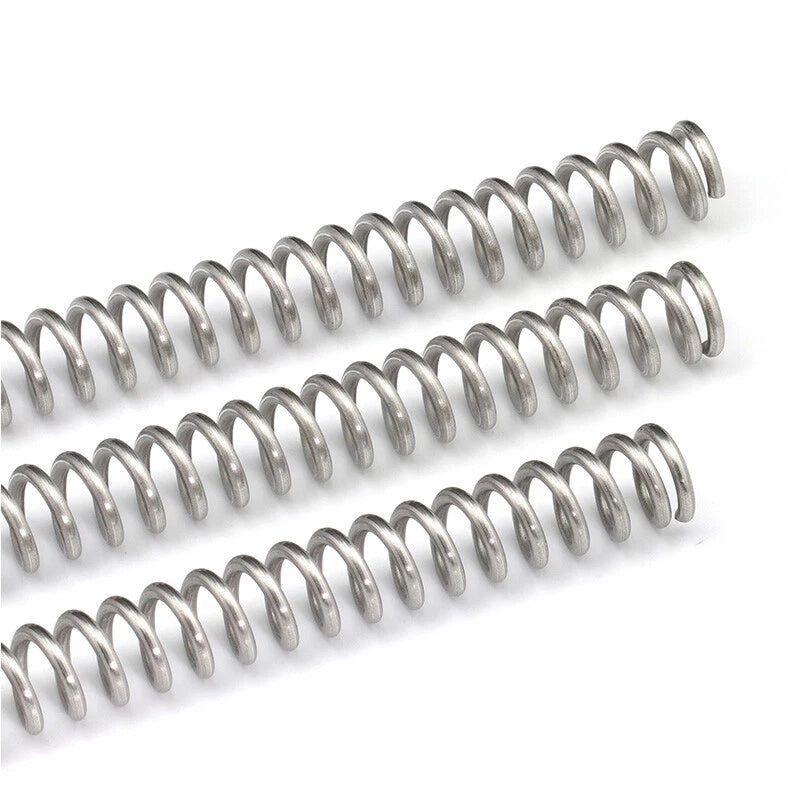
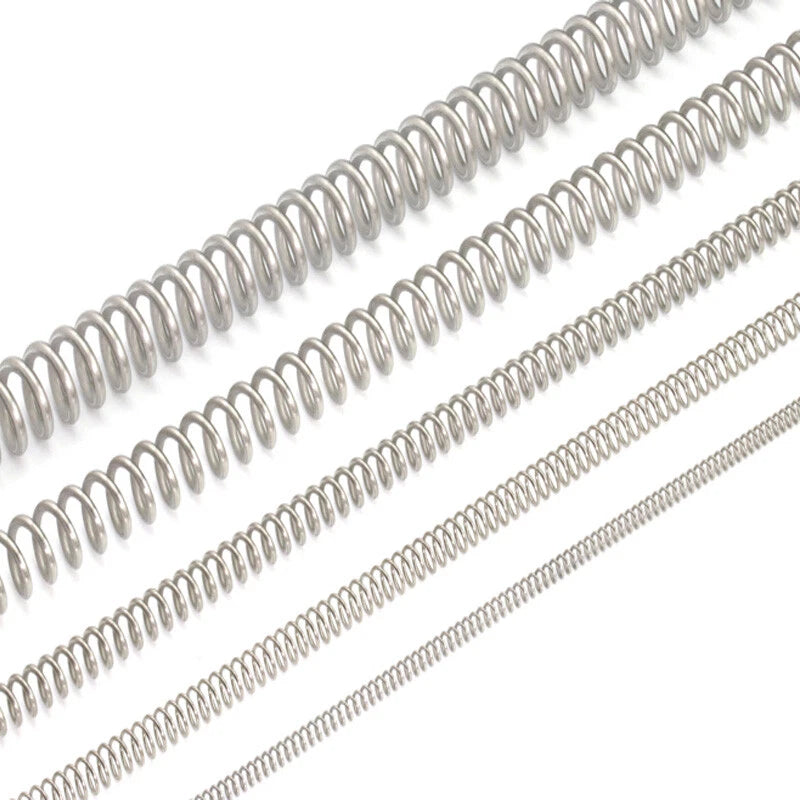
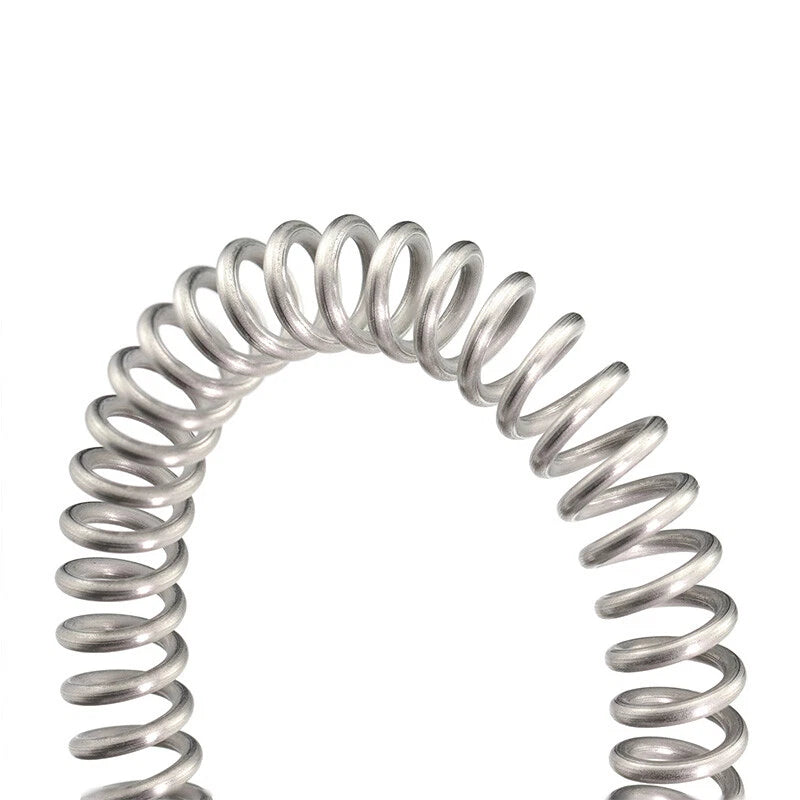
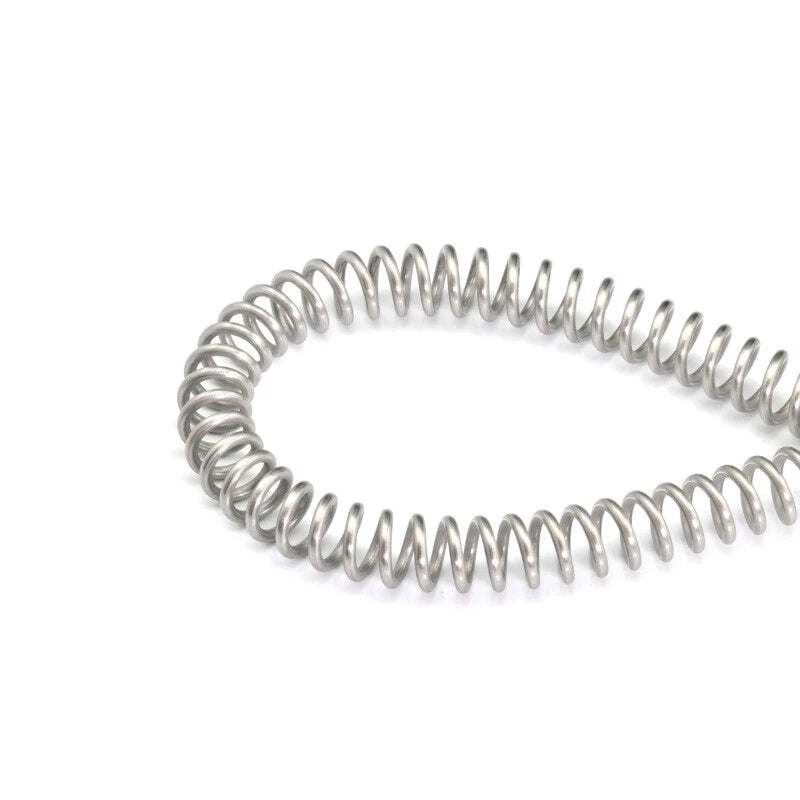
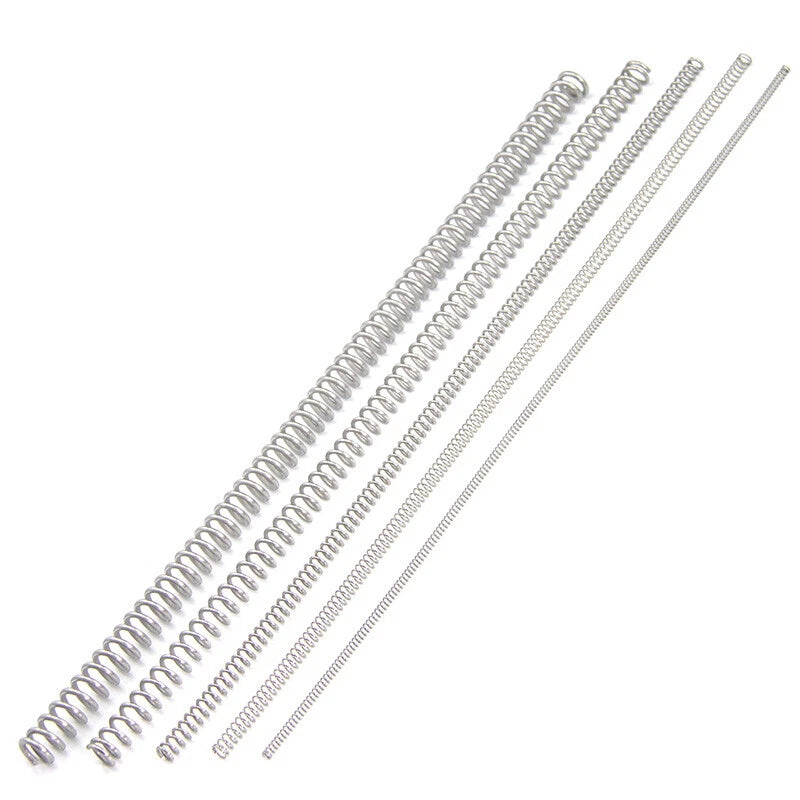
Compression Spring Various Size 2mm-30mm Diameter & 305mm Length Pressure Small

No reviews

Price:
Sale price$5.03 USD
Stock:
In stock (500 units), ready to be shipped

Payment & Security

Ach Direct Debit Amazon American Express Apple Pay Bancontact BLIK Diners Club Discover EPS Google Pay iDEAL Wero JCB Maestro Mastercard Multibanco MobilePay PayPal Przelewy24 Shop Pay Twint Union Pay USDC Visa

Your payment information is processed securely. We do not store credit card details nor have access to your credit card information.

Limited Offer — Spend More, Save More
Spend $55+
Save $5
Spend $100+
Save $10
Spend $200+
Save $25
HomeDIYer DIY Expert Support

DIY Expert Support

Get fitment advice & recommendations

Mon–Fri  8:30 AM – 8:00 PM
24-Hour Fast Ship
Arrives in 3–14 Days
Worldwide Shipping
30-Day Returns
1 tree planted with every purchase

Description

Compression Spring 2mm–30mm Diameter — Reliable Force for Every Mechanical Application

When a project demands consistent push-back force across a wide range of sizes, finding the right compression spring in one place saves hours of sourcing. Engineers, robotics builders, and hands-on DIYers who work with small-to-medium mechanical assemblies will find this compression spring selection covers the full spectrum from ultra-fine wire to heavy-duty coils.

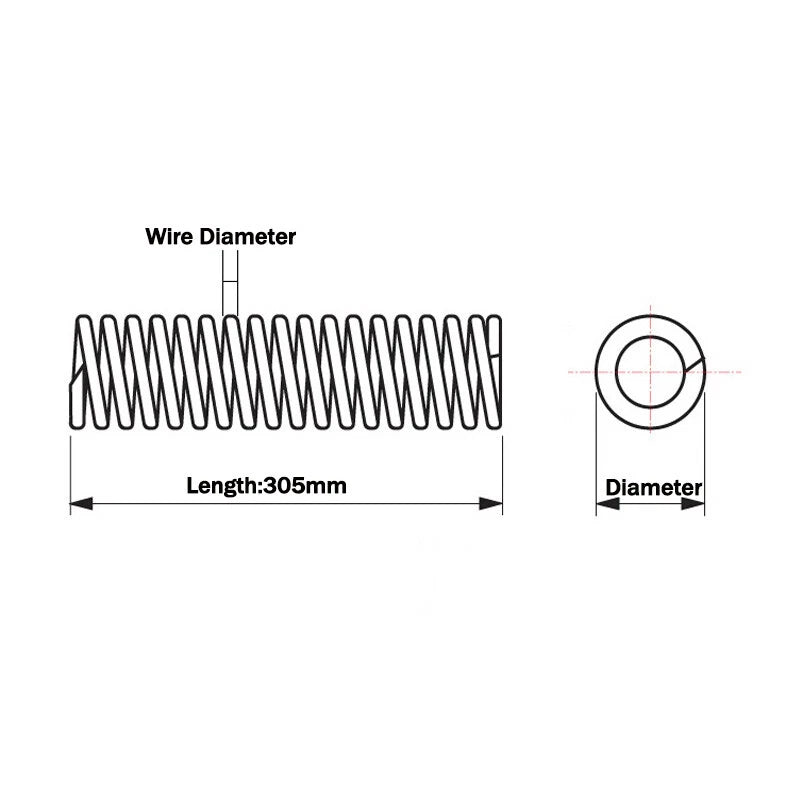
Each spring is wound from carbon steel wire with diameters ranging from 0.3 mm to 2 mm (approx. 0.012″–0.079″). Outer coil diameters span 2 mm to 30 mm (approx. 0.08″–1.18″), and every spring is cut to a free length of 305 mm (approx. 12.0″). Finish is a natural bright steel; surface treatment varies by wire gauge — see variant options for exact coating details.

Typical use cases include compression spring for robotics actuator return mechanisms, small compression spring for 3D printer bed leveling, and miniature compression spring for electronic switch assemblies and valve mechanisms.

⚙️ Compatible with standard spring seats, plungers, and guide rods sized to match the selected outer diameter. Verify inner diameter clearance against your guide rod before ordering.

✅ Key Features of These Compression Springs

  • 📐 Wide Size Matrix — Wire diameters 0.3–2 mm paired with outer diameters 2–30 mm give you precise spring rate control across dozens of combinations.
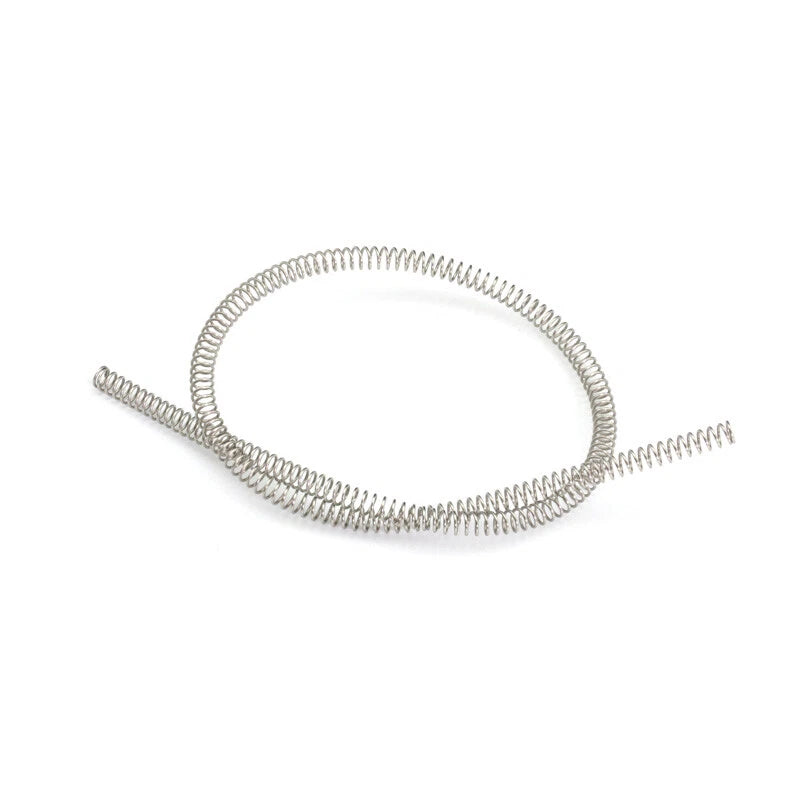
  • 📏 305 mm Free Length — Long stock length (≈12 in) lets you cut to a custom working length or use full-length for extended travel applications.
  • 🔩 Carbon Steel Construction — Wound from carbon steel wire for a firm, consistent spring rate and reliable cycle life in dry indoor environments.
  • 🎯 Closed & Ground Ends — Flat-ground ends ensure square seating on spring pockets, reducing lateral deflection and improving load accuracy.
  • 📦 Multi-Pack Options — Available in 1, 2, 3, 5, or 10-piece quantities so you can stock spares or prototype multiple assemblies in one order.
  • 🔄 Broad Application Range — Suited for robotics, automation, 3D printing, electronics, valve assemblies, and general mechanical DIY projects.

📐 Technical Specifications — Compression Springs

Spring Type Compression (helical coil)
Material Carbon steel wire
Wire Diameter Range 0.3 mm – 2 mm (0.012″ – 0.079″)
Outer Diameter Range 2 mm – 30 mm (0.08″ – 1.18″)
Free Length 305 mm (approx. 12.0″)
End Type See variant options
Surface Finish See variant options
Spring Rate See variant options
Max Load Capacity See variant options
Coil Direction Right-hand wound (standard)
Operating Temperature Typically –20 °C to +120 °C (–4 °F to +248 °F)
Quantity per Pack 1 / 2 / 3 / 5 / 10 pcs (select above)

❓ Frequently Asked Questions

How do I choose the right wire diameter and outer diameter for my project?

Start with the outer diameter: it must fit inside your spring pocket or around your guide rod with a small clearance (typically 0.5–1 mm). Then choose the wire diameter based on the load you need — a thicker wire produces a stiffer spring with a higher spring rate. For light-duty electronics or switch applications, 0.3–0.6 mm wire is typical; for robotics actuators or mechanical returns, 1–2 mm wire is more appropriate.

What load or force can these compression springs handle?

Load capacity varies significantly by wire diameter and outer diameter combination. Finer wire (0.3–0.5 mm) springs are suited for light loads in the range of a few grams to a few hundred grams. Heavier wire (1.5–2 mm) springs with larger outer diameters can handle loads in the kilogram range. For exact spring rate and load data for a specific variant, please contact us to confirm.

Are these springs corrosion-resistant? Can I use them outdoors or in humid environments?

These springs are made from carbon steel, which is not inherently corrosion-resistant. They are best suited for dry indoor environments. For humid, wet, or outdoor applications, consider applying a light coat of oil or grease, or contact us about stainless steel alternatives. Prolonged exposure to moisture without protection will cause surface rust.

Can I cut the 305 mm spring to a shorter working length?

Yes. The 305 mm free length is intentionally long to give you flexibility. You can cut the spring to your required working length using a rotary tool or spring cutter. Note that cutting will leave an open, unground end — if a flat seating surface is critical, you may need to grind the cut end flat after cutting.

Are these springs compatible with standard guide rods and spring seats?

Yes, as long as you match the inner diameter of the spring to your guide rod diameter. The inner diameter equals the outer diameter minus twice the wire diameter. For example, a 10 mm OD spring with 1 mm wire has an inner diameter of approximately 8 mm. Verify this clearance before ordering to ensure the spring slides freely on the rod without binding.

What is the difference between the quantity options (1, 2, 3, 5, 10 pcs)?

All quantity options are the same spring — only the number of pieces per order differs. Ordering in larger quantities (5 or 10 pcs) provides a lower per-unit cost and ensures you have spares on hand for prototyping, testing, or replacement. The 1-piece option is ideal for single-build projects or initial fit checks.

What applications are these compression springs commonly used for?

These springs are widely used in robotics return mechanisms, 3D printer bed leveling assemblies, electronic push-button switches, valve and plunger mechanisms, small appliance components, model engineering, and general mechanical DIY projects. The wide size range makes them versatile across hobby and light industrial applications.

How do I determine the spring rate (stiffness) of a specific variant?

Spring rate (k) for a helical compression spring is calculated as: k = (G × d⁴) / (8 × D³ × n), where G is the shear modulus of the material, d is the wire diameter, D is the mean coil diameter, and n is the number of active coils. For carbon steel, G ≈ 79,000 MPa. If you need a pre-calculated spring rate for a specific variant, contact us with your wire diameter and outer diameter selection.

🛒 Select your Wire Diameter, Outer Diameter, and Quantity above, then add to cart.


You may also like

Recently viewed