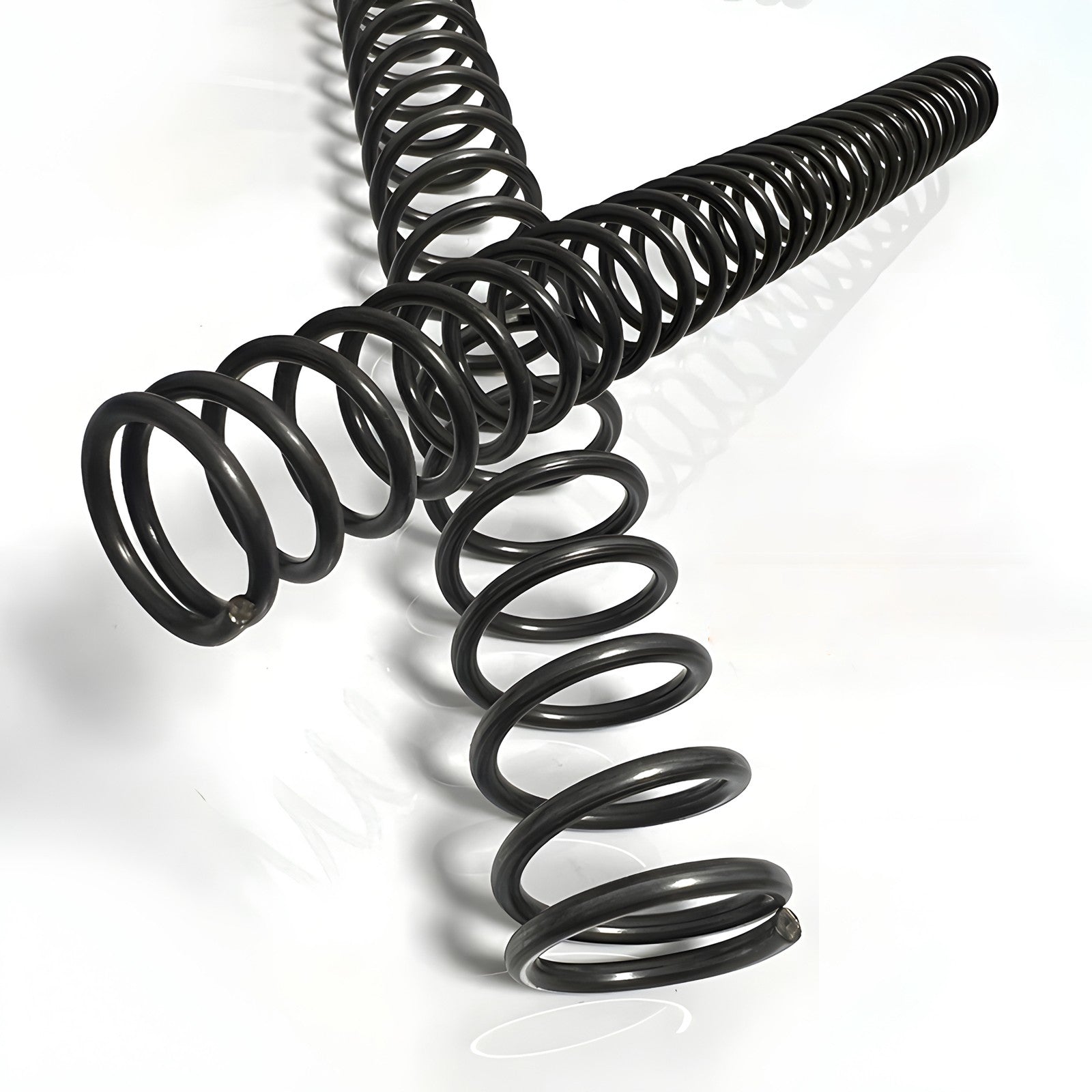
Compression Spring Pressure Springs, Wire Dia 1.2-1.8mm, OD 6-40mm, Length 300mm

No reviews

Price:
Sale price$6.54 USD
Stock:
In stock (500 units), ready to be shipped

Payment & Security

Ach Direct Debit Amazon American Express Apple Pay Bancontact BLIK Diners Club Discover EPS Google Pay iDEAL Wero JCB Maestro Mastercard Multibanco MobilePay PayPal Przelewy24 Shop Pay Twint Union Pay USDC Visa

Your payment information is processed securely. We do not store credit card details nor have access to your credit card information.

Limited Offer — Spend More, Save More
Spend $55+
Save $5
Spend $100+
Save $10
Spend $200+
Save $25
HomeDIYer DIY Expert Support

DIY Expert Support

Get fitment advice & recommendations

Mon–Fri  8:30 AM – 8:00 PM
24-Hour Fast Ship
Arrives in 3–14 Days
Worldwide Shipping
30-Day Returns
1 tree planted with every purchase

Description

Compression Spring for Mechanical Assemblies — Precise Wire & OD Sizing

When a worn-out or incorrectly sized spring causes equipment failure, finding an exact replacement quickly matters. Engineers, maintenance technicians, and DIY enthusiasts who need reliable compression springs across a wide dimensional range will find this listing covers the most commonly required specifications in a single place.

Each compression spring is formed from round steel wire with diameters ranging from 1.2mm to 1.8mm (approximately 0.047–0.071 in), wound to outer diameters of 6–40mm (approximately 0.24–1.57 in), and cut to a uniform free length of 300mm (approximately 11.81 in). The wire is wound in a closed-end coil configuration typical of standard compression springs, with a surface finish consistent with cold-wound spring steel wire.

Typical use cases include replacement compression springs for small machinery and jigs, return springs in DIY tool builds and fixtures, and load-bearing springs in custom mechanical assemblies requiring a specific wire-diameter-to-OD ratio for precise spring rate control.

🔧 Compatible with standard spring seats and guides sized to match the selected OD. Verify inner diameter clearance against your guide rod before ordering.

✅ Key Features of These Compression Springs

  • 📐 Wide Size Range — Wire diameters from 1.2mm to 1.8mm paired with outer diameters from 6mm to 40mm let you match the exact spring rate and fit your application requires.
  • 📏 Consistent 300mm Free Length — All variants share a uniform 300mm (11.81 in) free length, simplifying replacement and custom-cut applications where a longer starting length is needed.
  • 🔩 Cold-Wound Construction — Cold winding maintains consistent coil pitch and wire cross-section geometry throughout the spring body, supporting repeatable deflection behavior.
  • ⚙️ Closed-End Coil Design — Closed ends provide a flat bearing surface for stable seating against spring retainers, plates, and guide housings without additional machining.
  • 🛒 Single or 10-Piece Quantities — Available in 1 Pcs for prototyping or direct replacement, and 10 Pcs for batch builds, maintenance kits, or workshop stock.
  • 🔄 Broad Application Compatibility — Suitable for use in mechanical jigs, tooling fixtures, small appliance mechanisms, and custom fabrication projects requiring a standard compression spring geometry.

📐 Technical Specifications — Compression Spring

Spring Type Compression Spring
Wire Diameter Range 1.2mm – 1.8mm (0.047 – 0.071 in)
Outer Diameter Range 6mm – 40mm (0.24 – 1.57 in)
Free Length 300mm (11.81 in)
Coil End Type Closed ends
Winding Direction See variant options
Material Spring steel wire (cold-wound)
Surface Finish See variant options
Spring Rate See variant options
Number of Active Coils See variant options
Available Quantities 1 Pcs / 10 Pcs

❓ Frequently Asked Questions

How do I choose the right wire diameter and outer diameter for my application?

Start by measuring the guide rod or bore your spring will seat in. The inner diameter of the spring (outer diameter minus twice the wire diameter) must clear the guide rod with a small gap — typically 0.5–1mm. The outer diameter must fit inside any housing bore. Once you have those constraints, select the wire diameter based on the load you need: thicker wire (e.g., 1.8mm) produces a stiffer spring for the same OD and length, while thinner wire (e.g., 1.2mm) gives a softer rate.

What load capacity can I expect from these compression springs?

Load capacity depends on the specific wire diameter, outer diameter, number of active coils, and deflection distance — all of which vary by variant. As a general guide, springs with 1.8mm wire and smaller ODs (e.g., 10–15mm) will carry more load per unit deflection than 1.2mm wire springs with larger ODs. If you need a calculated spring rate for your variant, contact us with your selected Wire Diameter × OD combination.

Are these springs corrosion resistant?

These springs are made from cold-wound spring steel wire. Standard spring steel has moderate corrosion resistance suitable for indoor and dry environments. For applications exposed to moisture, chemicals, or outdoor conditions, consider applying a protective coating after installation (e.g., light oil, zinc spray) or contact us to confirm whether a coated variant is available for your size.

Can I cut the 300mm spring to a shorter length?

Yes. The 300mm free length is intentionally generous so you can cut the spring to your required working length. Use a rotary cutting tool or spring cutter for a clean cut. After cutting, the end coil may need to be ground flat if a stable bearing surface is required. Note that cutting changes the number of active coils and therefore the spring rate — plan your cut length accordingly.

What is the difference between the 1 Pcs and 10 Pcs options?

Both options supply the identical spring in your chosen Wire Diameter × OD combination. The 1 Pcs option is suited for single replacements or prototyping. The 10 Pcs option provides a cost-effective quantity for batch builds, maintenance kits, or keeping workshop stock on hand. Pricing per piece is lower in the 10 Pcs pack.

How do I verify the spring will fit my existing housing or retainer?

Measure three dimensions on your existing spring or housing: (1) the outer diameter of the spring seat or bore — your spring OD should be 0.5–1mm smaller; (2) the guide rod diameter — your spring inner diameter (OD minus 2× wire dia) should be 0.5–1mm larger than the rod; (3) the available cavity depth — your compressed length must not exceed this. If you are replacing a worn spring, measure the original wire diameter and OD directly with calipers before selecting a variant.

Are these springs suitable for high-cycle fatigue applications?

These are standard cold-wound compression springs appropriate for general mechanical use. For high-cycle fatigue applications (millions of cycles under dynamic load), shot-peened or pre-set springs are typically specified. If your application involves continuous dynamic cycling, contact us to confirm suitability or discuss alternative specifications.

🛒 Select your Wire Diameter x Outer Diameter and Amount above, then add to cart.

You may also like

Recently viewed