D25 L30 Shaft Coupler Flexible Plum Coupling CNC Stepper Motor Jaw Spider 5~14mm

No reviews

Price:
Sale price$13.52 USD
Stock:
In stock (500 units), ready to be shipped

Payment & Security

Ach Direct Debit Amazon American Express Apple Pay Bancontact BLIK Diners Club Discover EPS Google Pay iDEAL Wero JCB Maestro Mastercard Multibanco MobilePay PayPal Przelewy24 Shop Pay Twint Union Pay USDC Visa

Your payment information is processed securely. We do not store credit card details nor have access to your credit card information.

Limited Offer — Spend More, Save More
Spend $55+
Save $5
Spend $100+
Save $10
Spend $200+
Save $25
HomeDIYer DIY Expert Support

DIY Expert Support

Get fitment advice & recommendations

Mon–Fri  8:30 AM – 8:00 PM
24-Hour Fast Ship
Arrives in 3–14 Days
Worldwide Shipping
30-Day Returns
1 tree planted with every purchase

Description

D25 L30 Flexible Plum Jaw Shaft Coupler — Precision Motion for CNC and Stepper Motor Builds

When a rigid coupling transmits every vibration and amplifies shaft misalignment into binding, noise, and premature bearing wear, DIY CNC builders and motion-control engineers need a smarter solution. The D25 L30 flexible plum jaw shaft coupler is engineered for hobbyists and professionals who demand smooth, low-backlash power transmission between stepper motors, servo motors, and lead screws — without the headaches of perfect alignment.

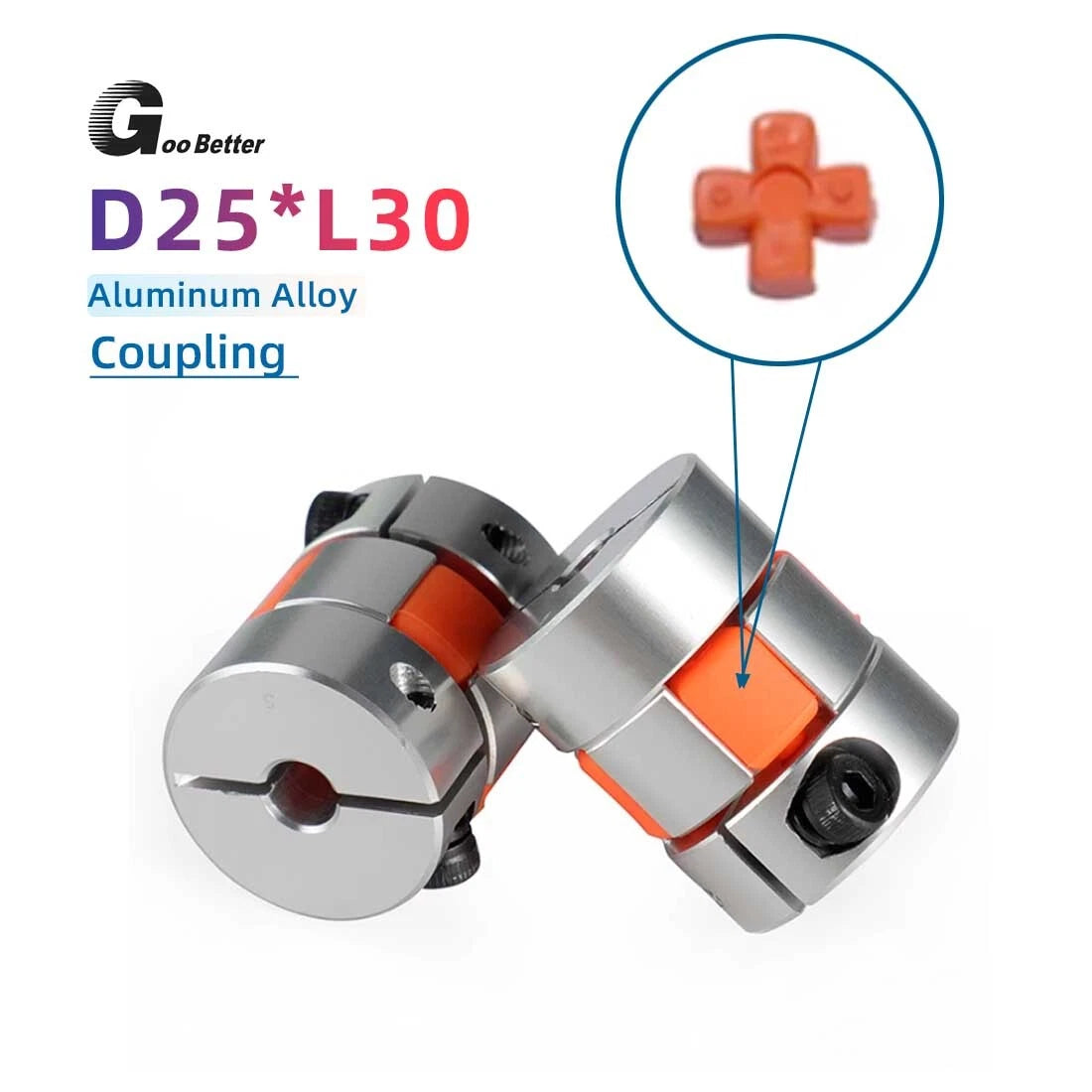
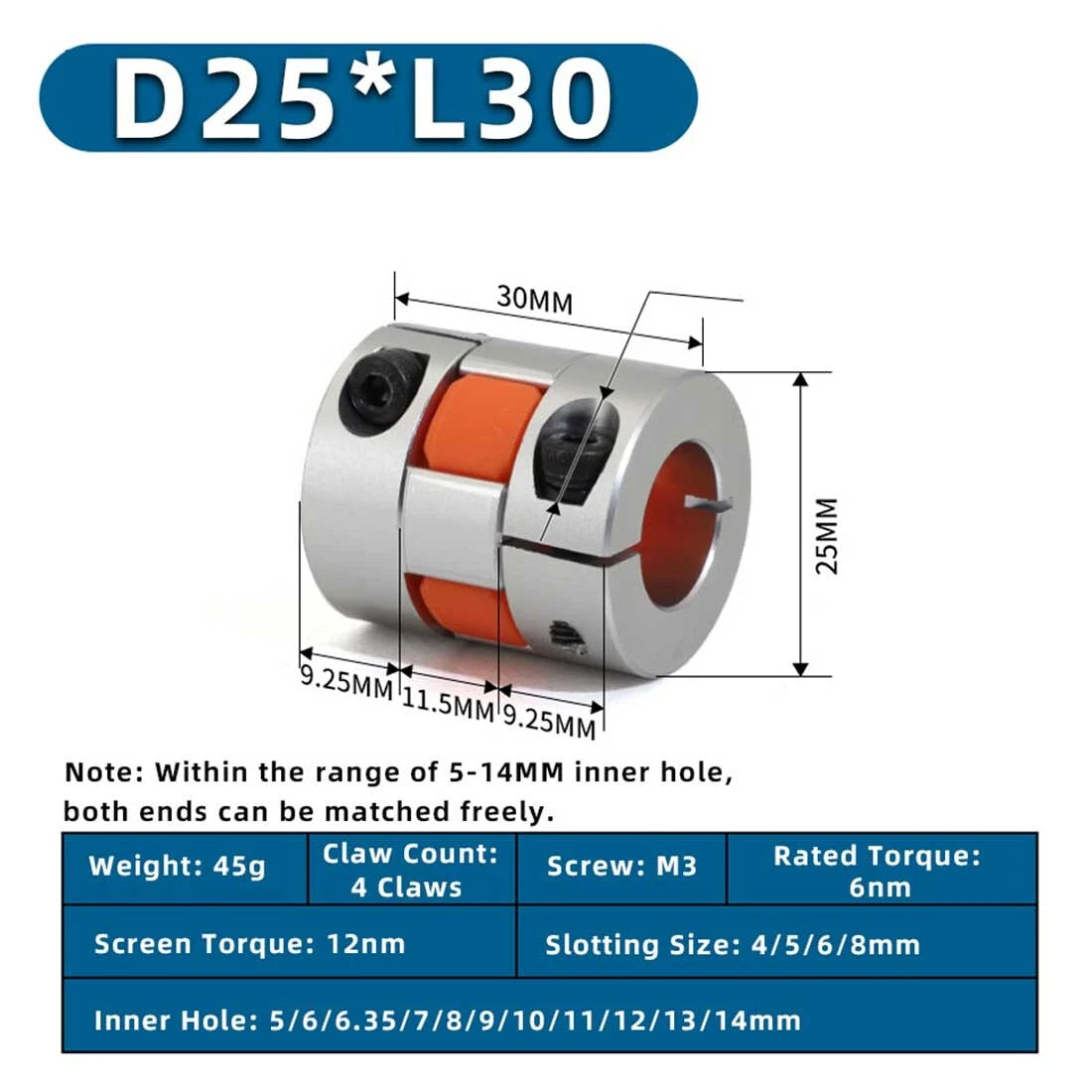
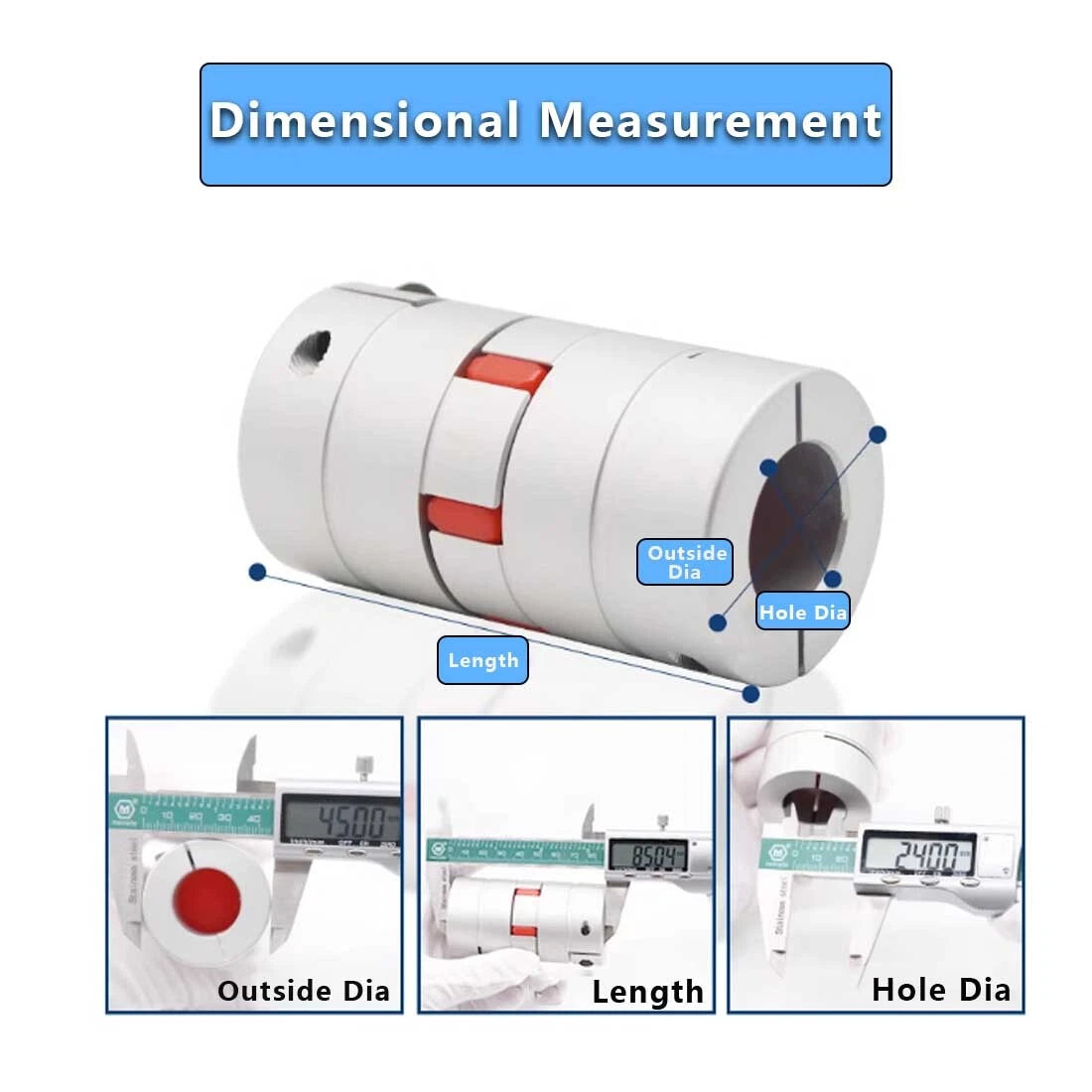
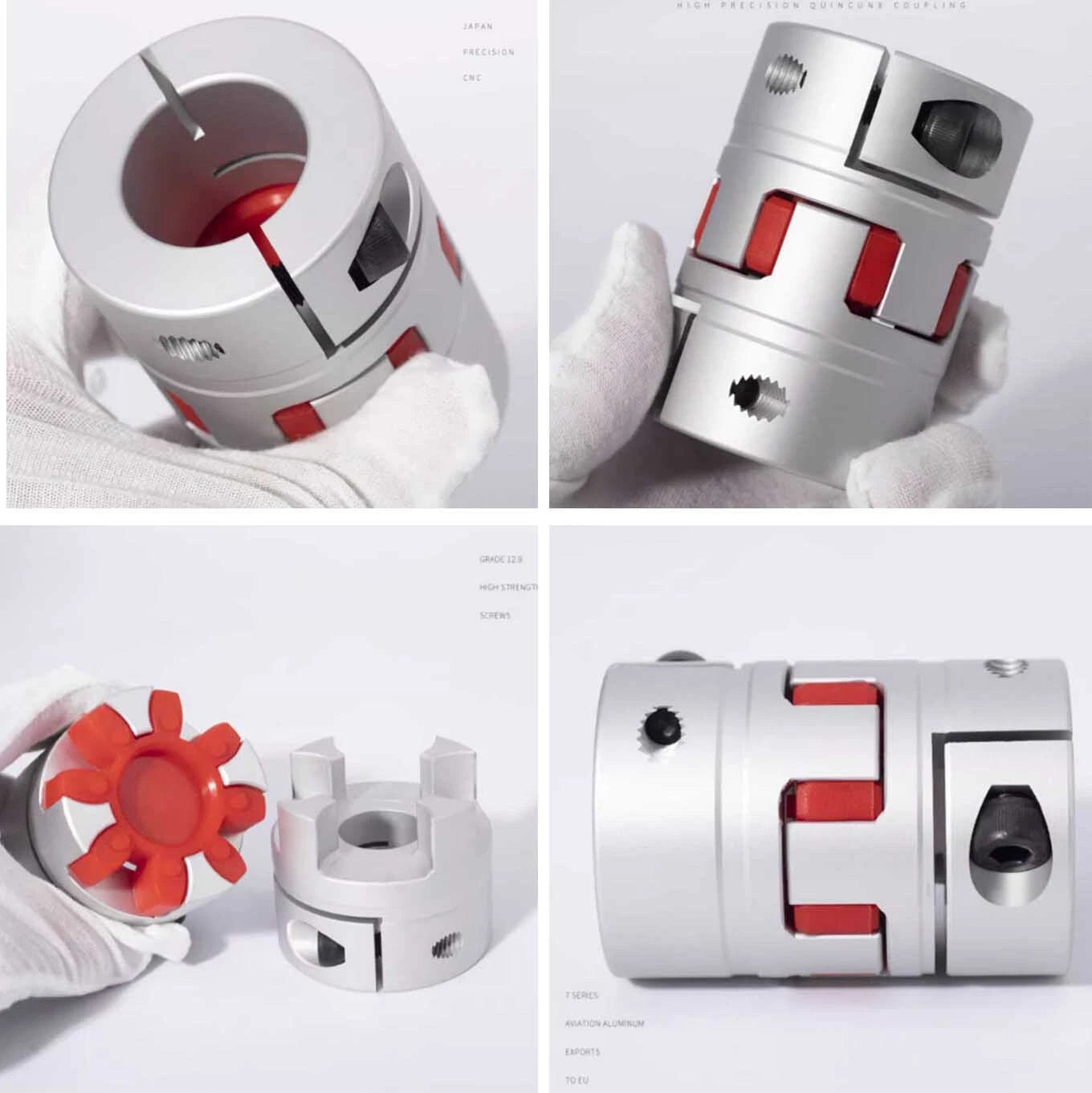
This coupler consists of two aluminum alloy hubs (outer diameter 25 mm / ~0.98 in, length 30 mm / ~1.18 in total) joined by a polyurethane spider insert. Bore sizes span 5 mm to 14 mm on each side, covering both same-bore (e.g., 5×5 mm) and stepped-bore (e.g., 6×10 mm) configurations. Each hub is secured with a radial clamping screw for a firm, slip-free grip on the shaft.

Typical use cases include connecting NEMA 17 or NEMA 23 stepper motors to T8 or T12 lead screws in 3D printers and CNC routers, coupling servo motor output shafts to ball screws in milling machines, and linking encoder shafts in precision measurement rigs where angular misalignment compensation is critical.

🔧 Compatible with: NEMA 17 / NEMA 23 stepper motors • T8 / T12 lead screws • 5 mm–14 mm motor and lead screw shafts • CNC routers, 3D printers, laser engravers, and servo-driven linear stages

✅ Key Features of These Flexible Plum Jaw Shaft Couplers

  • ⚙️Flexible Spider Insert — Polyurethane jaw spider absorbs angular and parallel misalignment up to ~1°, reducing vibration transmission and protecting motor bearings from side-load stress.
  • 🔩Aluminum Alloy Hubs — Lightweight yet rigid aluminum construction keeps rotational inertia low while maintaining structural integrity under continuous duty cycles in CNC and automation applications.
  • 📐D25 × L30 Form Factor — 25 mm outer diameter and 30 mm overall length fit within standard motor-mount clearances on most NEMA 17 and NEMA 23 frames without spacer modifications.
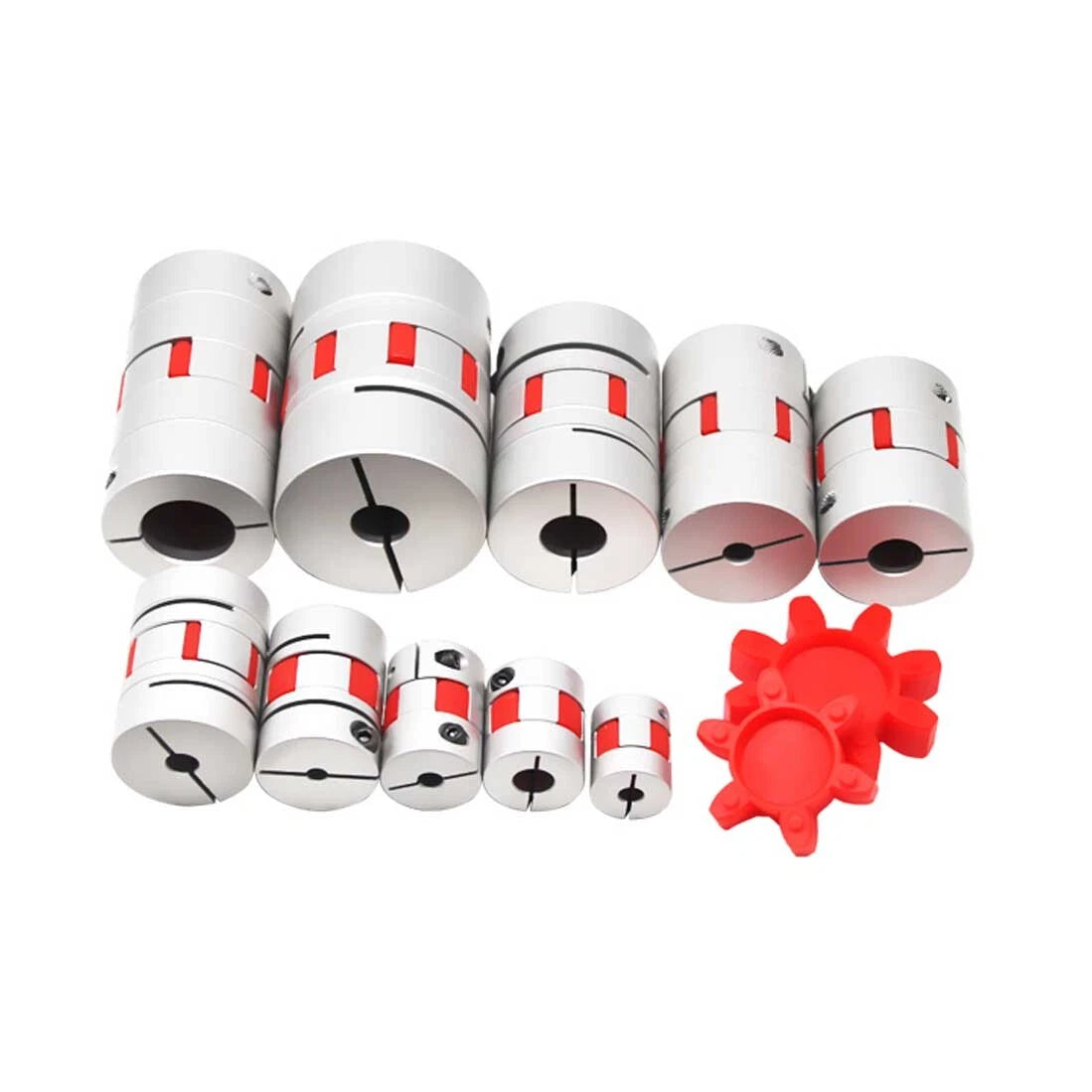
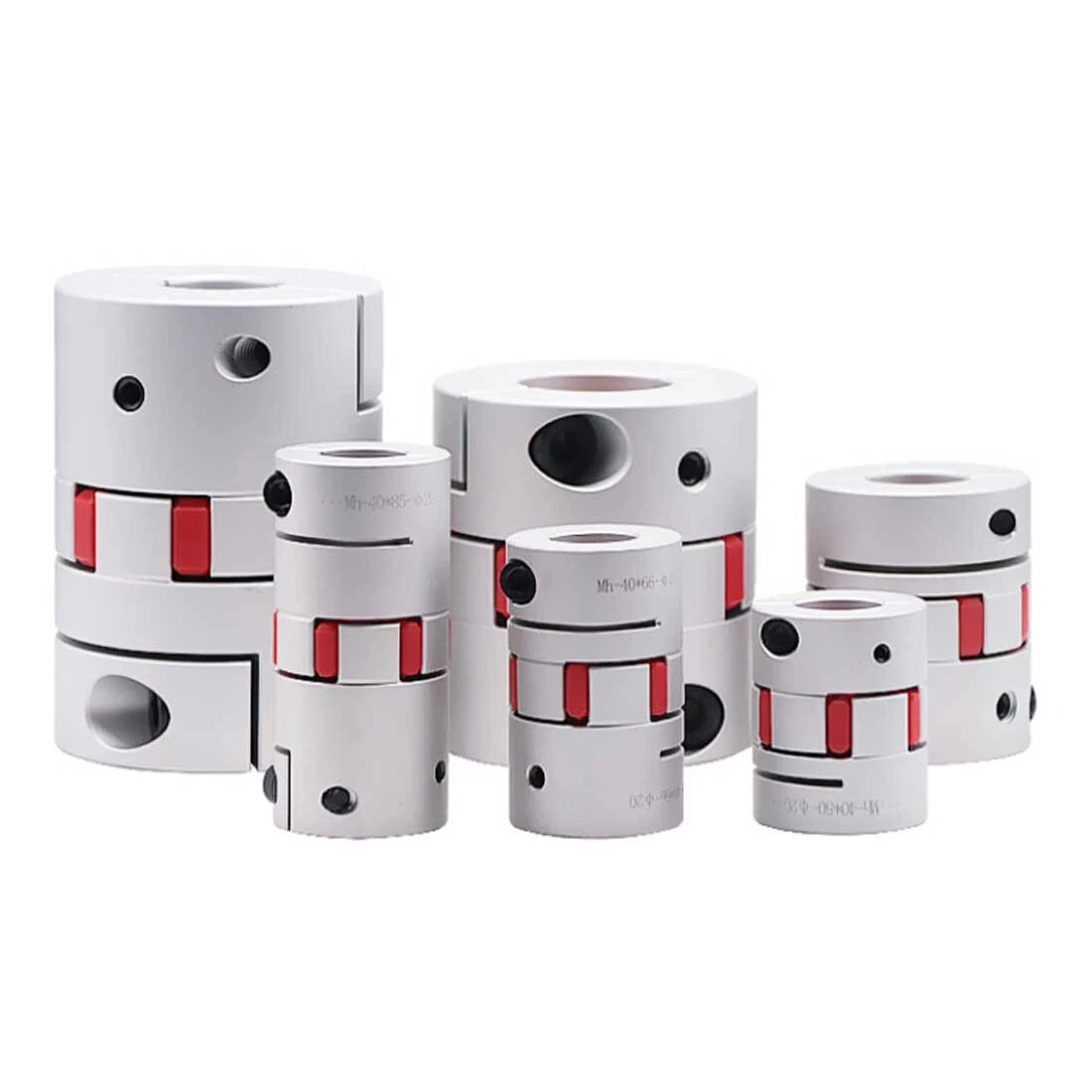
  • 🔄Wide Bore Range 5–14 mm — 65 stepped-bore and same-bore combinations (5×5 mm through 13×14 mm) cover virtually every common stepper motor shaft and lead screw pairing in one product family.
  • 🔐Radial Clamping Screw — Each hub is secured with a set screw tightened radially against the shaft, providing a positive, slip-resistant connection without requiring keyways or adhesives.
  • 🛠️Tool-Free Spider Replacement — The polyurethane spider can be swapped without removing the hubs from the shafts, making maintenance fast and keeping downtime minimal on active machines.

📐 Technical Specifications — Flexible Plum Jaw Shaft Coupler

Outer Diameter (OD) 25 mm (~0.98 in)
Overall Length (L) 30 mm (~1.18 in)
Bore Size (Side 1 × Side 2) See variant options (5 mm – 14 mm per side)
Hub Material Aluminum alloy
Spider / Insert Material Polyurethane (PU)
Fastening Method Radial set screw (hex key)
Misalignment Tolerance Angular: typically ≤1°; Parallel: typically ≤0.2 mm
Finish Natural anodized aluminum
Quantity per Order 1 Pcs
Compatible Motor Types Stepper motor, servo motor, DC motor

❓ Frequently Asked Questions

How do I choose the right bore size for my stepper motor and lead screw?

Measure the output shaft diameter of your motor (commonly 5 mm for NEMA 17, 6.35 mm or 8 mm for NEMA 23) and the lead screw shaft diameter (commonly 8 mm for T8, 12 mm for T12). Select the variant that matches both diameters — for example, a 5×8 mm coupler for a NEMA 17 motor driving a T8 lead screw. If both shafts are the same size, choose a same-bore variant such as 8×8 mm.

Can this coupler handle angular misalignment between the motor and lead screw?

Yes. The polyurethane spider insert is designed to absorb angular misalignment of typically up to 1° and parallel (radial) misalignment of up to approximately 0.2 mm. This flexibility reduces side-load stress on motor bearings and lead screw nuts, extending the service life of your drivetrain. For best results, minimize misalignment during installation rather than relying on the coupler to compensate for large offsets.

Is this coupler suitable for high-speed or high-torque applications?

This D25 L30 plum jaw coupler is well-suited for the torque and speed ranges typical of NEMA 17 and NEMA 23 stepper motors in CNC routers, 3D printers, and laser engravers. For very high-torque servo applications or speeds above approximately 3,000 RPM, verify that the polyurethane spider's rated torque capacity matches your system requirements. Contact us to confirm suitability for demanding industrial duty cycles.

Will the aluminum hubs corrode in a workshop or outdoor environment?

The aluminum alloy hubs have a natural anodized finish that provides a base level of corrosion resistance suitable for typical indoor workshop environments. For exposure to cutting fluids, coolants, or humid outdoor conditions, periodic inspection is recommended. Aluminum does not rust, but prolonged exposure to acidic or alkaline fluids may affect the surface finish over time.

How do I install and secure the coupler on the shafts?

Slide each hub onto its respective shaft, aligning the set screw hole with the shaft. Insert the polyurethane spider between the two hubs so the jaw lobes interlock. Tighten the set screws with the appropriate hex key (typically M3 or M4) to the manufacturer's recommended torque — finger-tight plus a quarter turn is a common starting point. Avoid over-tightening, which can deform the bore. Check alignment and re-tighten after the first few hours of operation.

Can I replace just the spider insert without buying a new coupler?

Yes. The polyurethane spider is a separate, replaceable component. You can remove it by sliding the two hubs apart slightly (without removing them from the shafts) and pulling the spider out. Insert a new spider of the same jaw count and OD to restore full coupling performance. This makes maintenance fast and cost-effective on active machines.

What is the difference between same-bore and stepped-bore variants?

A same-bore variant (e.g., 8×8 mm) has identical bore diameters on both sides and is used when the motor shaft and driven shaft are the same size. A stepped-bore variant (e.g., 5×8 mm) has different bore diameters on each side, allowing you to connect shafts of different diameters — common when pairing a NEMA 17 motor (5 mm shaft) with a T8 lead screw (8 mm shaft). Select the variant that matches your specific shaft combination.

🛒 Select your shaft diameter combination above, then add to cart.

You may also like

Recently viewed