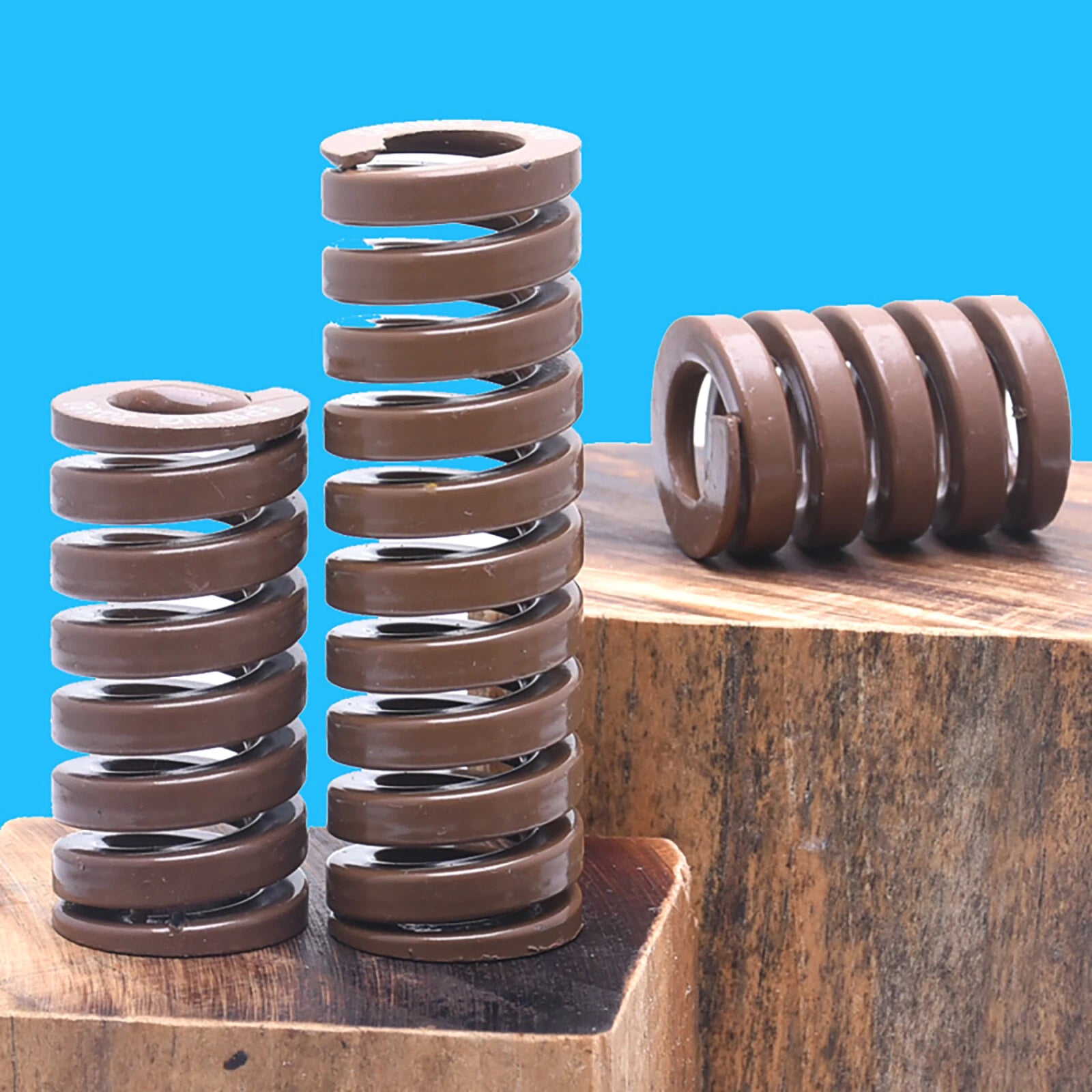
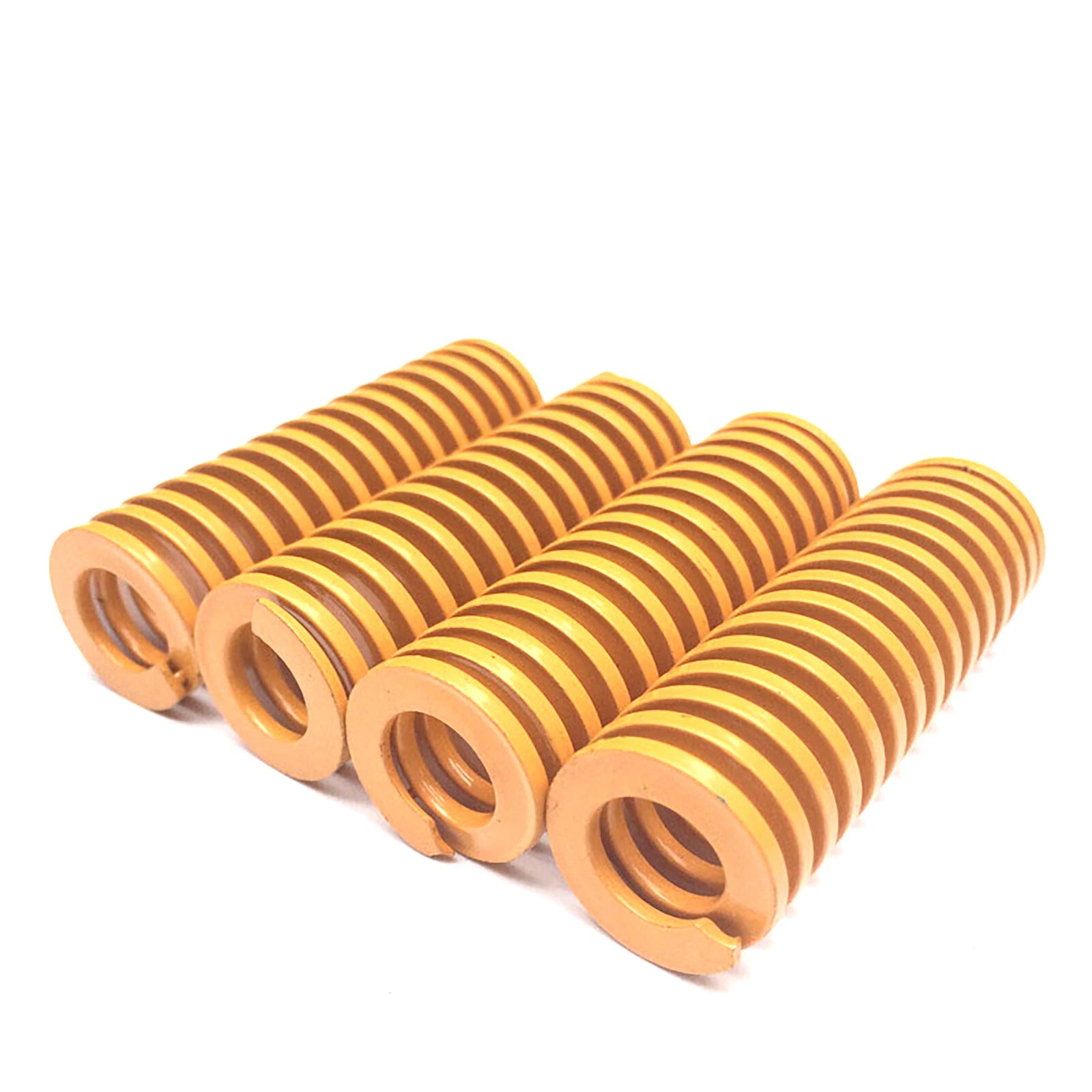
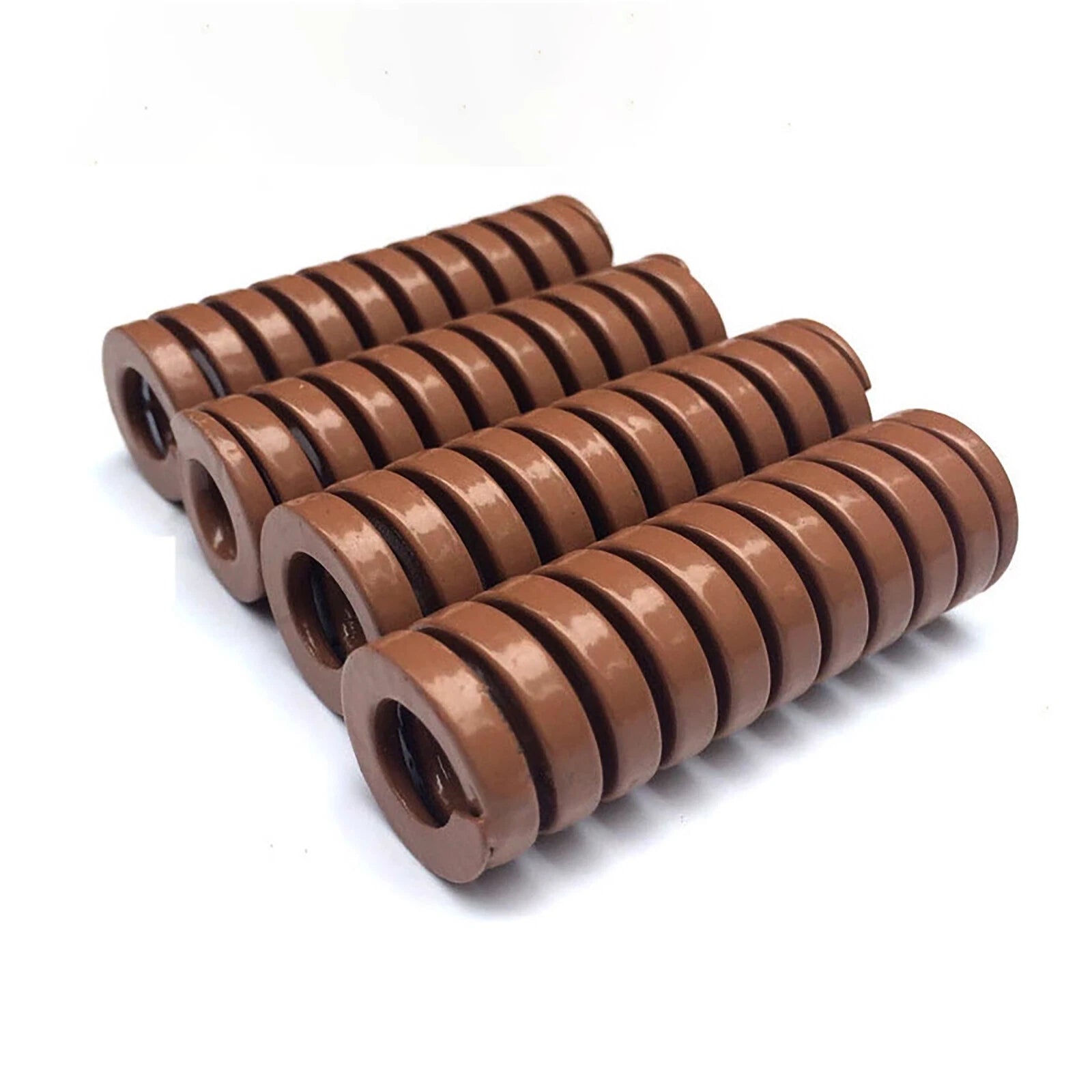
Die Springs Compression Mould Spring Light/Medium/Heavy Load Duty OD 8-51mm

No reviews

Price:
Sale price$5.97 USD
Stock:
In stock (500 units), ready to be shipped

Payment & Security

Ach Direct Debit Amazon American Express Apple Pay Bancontact BLIK Diners Club Discover EPS Google Pay iDEAL Wero JCB Maestro Mastercard Multibanco MobilePay PayPal Przelewy24 Shop Pay Twint Union Pay USDC Visa

Your payment information is processed securely. We do not store credit card details nor have access to your credit card information.

Limited Offer — Spend More, Save More
Spend $55+
Save $5
Spend $100+
Save $10
Spend $200+
Save $25
HomeDIYer DIY Expert Support

DIY Expert Support

Get fitment advice & recommendations

Mon–Fri  8:30 AM – 8:00 PM
24-Hour Fast Ship
Arrives in 3–14 Days
Worldwide Shipping
30-Day Returns
1 tree planted with every purchase

Description

Die Springs Compression Mould Spring — Reliable Load Control in OD 8–51mm

Engineers and toolmakers who rely on consistent spring force know how quickly a mismatched die spring can derail a production run. Whether you are building a stamping die, injection mould, or custom press fixture, these die springs compression mould springs deliver repeatable deflection and load ratings across light, medium, and heavy duty grades — all in a single, easy-to-navigate product listing.

Each spring is manufactured from rectangular cross-section wire wound to close tolerances. Outside diameters span 8 mm (0.31 in) to 51 mm (2.01 in), with inside diameters and free lengths available in a wide range of combinations to suit standard die-set pockets. Colour coding follows the ISO 10243 convention: TM-Red = medium load, TF-Yellow = light load, TB-Brown = heavy load, TL-Blue = extra-light load, TH-Green = heavy-extra load, making load-grade identification instant on the shop floor.

Typical applications include injection mould stripper plates, progressive stamping dies, hydraulic press return mechanisms, and custom automation fixtures requiring a compact compression die spring with predictable fatigue life. Long-tail use cases include CNC punch-press tooling, robotic end-of-arm tooling, and educational lab press kits.

⚙️ Compatibility: Fits standard ISO 10243 die-set spring pockets. Match the Outside Diameter to your pocket bore and the Inside Diameter to your guide pin diameter. Verify free length against your shut height before ordering.

✅ Key Features of These Die Springs Compression Mould Springs

  • 🎨ISO 10243 Colour-Coded Load Grades — TF-Yellow (light), TL-Blue (extra-light), TM-Red (medium), TH-Green (heavy-extra), TB-Brown (heavy) for instant visual identification on the shop floor.
  • 📐Wide Size Range — Outside diameters from 8 mm to 51 mm (0.31–2.01 in) with matching inside diameters and free lengths up to 500 mm, covering the majority of standard die-set pocket specifications.
  • 🔩Rectangular Wire Cross-Section — Flat-wire winding maximises the number of active coils per unit length, delivering higher load capacity and longer fatigue life compared to round-wire springs of the same envelope size.
  • 🔄Consistent Deflection Characteristics — Close-tolerance winding ensures repeatable spring rate across the full deflection range, critical for maintaining part quality in high-cycle stamping and moulding operations.
  • 🛡️Corrosion-Resistant Surface Treatment — Springs receive a protective surface finish to resist rust and extend service life in coolant-exposed or humid toolroom environments.
  • 📦Sold Individually — Mix and Match — Each variant is sold as a single spring, allowing you to order exactly the quantity, size, and load grade you need without buying a full assortment kit.

📐 Technical Specifications — Die Springs Compression Mould Spring

Spring Type Rectangular wire compression die spring
Load Grade Options Extra-Light (TL-Blue), Light (TF-Yellow), Medium (TM-Red), Heavy-Extra (TH-Green), Heavy (TB-Brown)
Outside Diameter Range 8 mm – 51 mm (0.31 in – 2.01 in)
Inside Diameter Range See variant options
Free Length Range 15 mm – 500 mm (0.59 in – 19.69 in)
Wire Cross-Section Rectangular (flat wire)
Surface Treatment Corrosion-resistant protective finish
Colour Coding Standard ISO 10243
Quantity per Order 1 piece
Application Injection moulds, stamping dies, press fixtures, automation tooling

❓ Frequently Asked Questions

How do I choose the right outside diameter for my die set?

Measure the spring pocket bore in your die plate. The spring's outside diameter should be 0.5–1 mm smaller than the pocket bore to allow free movement without binding. For example, if your pocket is 21 mm, select the 20 mm OD variant. Always confirm the inside diameter clears your guide pin with at least 0.5 mm of radial clearance.

What do the colour codes mean and which load grade should I choose?

The colours follow ISO 10243: TL-Blue = extra-light load (lowest spring rate), TF-Yellow = light load, TM-Red = medium load, TH-Green = heavy-extra load, TB-Brown = heavy load (highest spring rate). Choose based on the force required at your working deflection. If you are unsure, calculate the required force at 20–30% deflection and match it to the spring rate listed for your chosen size.

How much deflection can these springs handle before fatigue becomes a concern?

Rectangular wire die springs are typically rated for up to 30–40% of free length deflection at maximum load for long fatigue life (typically 1,000,000+ cycles). For shorter run tooling, deflection up to 50% of free length may be acceptable. Operating consistently beyond 40% deflection will shorten service life. Always design your shut height so the spring is not fully compressed (coil-bound) at bottom dead centre.

Are these springs compatible with standard ISO 10243 die sets?

Yes. The outside diameter, inside diameter, and free length combinations in this listing are designed to match ISO 10243 standard die-spring pocket dimensions. If you are using a non-standard die set, verify the pocket bore, guide pin diameter, and available spring space against the variant dimensions before ordering.

How do I prevent corrosion in coolant or humid environments?

These springs include a corrosion-resistant surface treatment suitable for typical toolroom and moulding environments. For aggressive coolant exposure, consider applying a light coat of grease or anti-corrosion spray during installation. Inspect springs periodically for surface rust, pitting, or set (permanent shortening), and replace any spring that shows visible damage before it causes tooling failure.

Can I use one spring instead of multiple smaller springs to save space?

It depends on the required force and available pocket space. A single larger-diameter spring can replace multiple smaller springs if the pocket geometry allows. However, using multiple springs in parallel is common when the required force exceeds what a single spring of the available OD can provide, or when load must be distributed evenly across a stripper plate. Calculate total force requirements first, then select the configuration that fits your die layout.

What is the difference between a die spring and a standard compression spring?

Die springs use rectangular (flat) wire cross-sections, which allows more wire volume per unit length compared to round-wire springs. This results in higher load capacity, greater energy storage, and longer fatigue life within the same outer envelope — making them the standard choice for high-cycle tooling applications like stamping dies and injection moulds where round-wire springs would wear out too quickly.

🛒 Select your Colour, Outside Diameter, and Inside Diameter & Length above, then add to cart.

You may also like

Recently viewed