Female Rod End Bearing Rose Joint Fish Eye Bearings M3 Spherical Bearings Thread

No reviews

Price:
Sale price$3.26 USD
Stock:
In stock (500 units), ready to be shipped

Payment & Security

Ach Direct Debit Amazon American Express Apple Pay Bancontact BLIK Diners Club Discover EPS Google Pay iDEAL Wero JCB Maestro Mastercard Multibanco MobilePay PayPal Przelewy24 Shop Pay Twint Union Pay USDC Visa

Your payment information is processed securely. We do not store credit card details nor have access to your credit card information.

Limited Offer — Spend More, Save More
Spend $55+
Save $5
Spend $100+
Save $10
Spend $200+
Save $25
HomeDIYer DIY Expert Support

DIY Expert Support

Get fitment advice & recommendations

Mon–Fri  8:30 AM – 8:00 PM
24-Hour Fast Ship
Arrives in 3–14 Days
Worldwide Shipping
30-Day Returns
1 tree planted with every purchase

Description

Female Rod End Bearing M3 — Precise Spherical Motion for Linkage & Control Systems

When a loose or worn linkage joint causes slop in your steering, throttle, or actuator system, the entire mechanism loses accuracy and reliability. Engineers, robotics builders, RC hobbyists, and CNC machine builders who demand tight tolerances need a rod end bearing that holds its geometry under load. These M3 female rod end bearings with a rose joint fish eye spherical design deliver the angular articulation and positional accuracy your build requires.

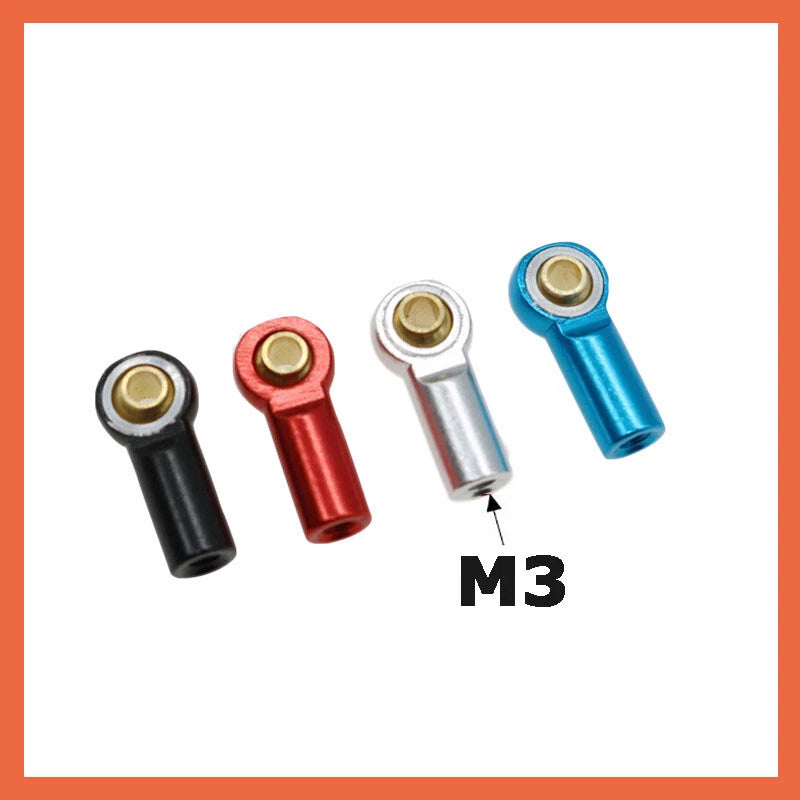
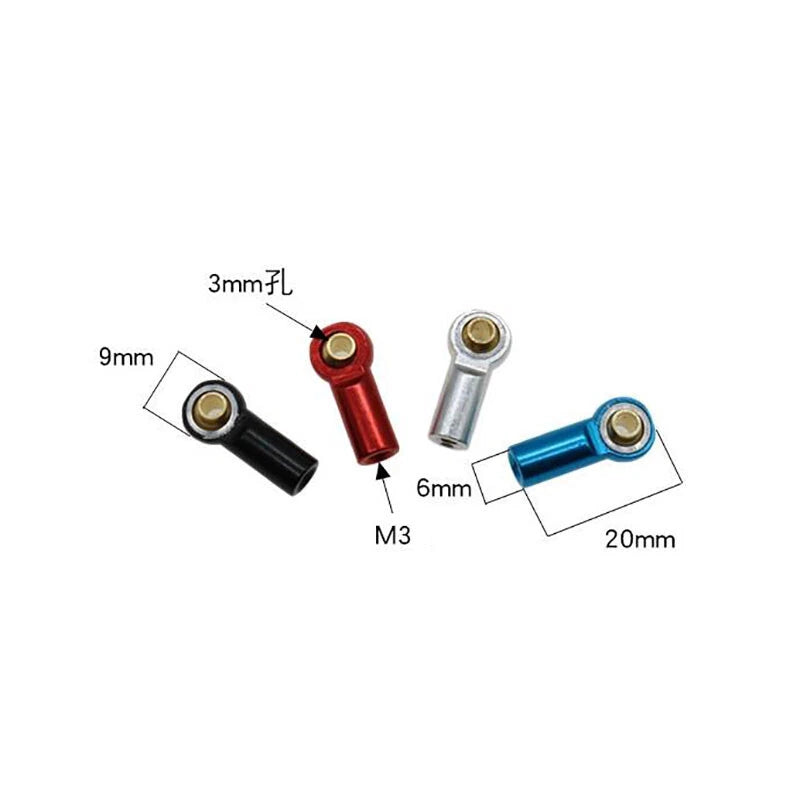
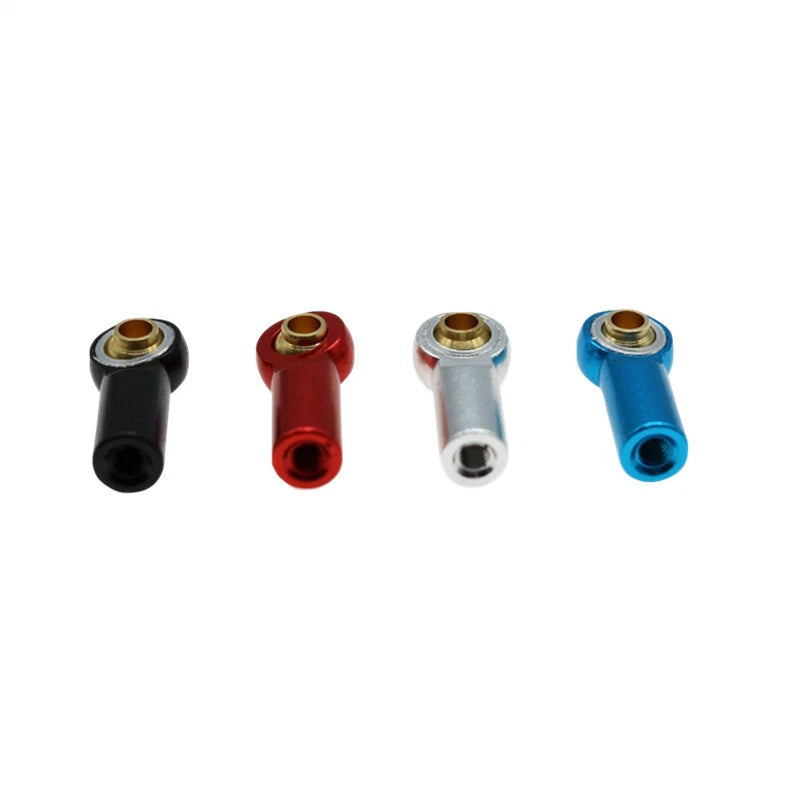
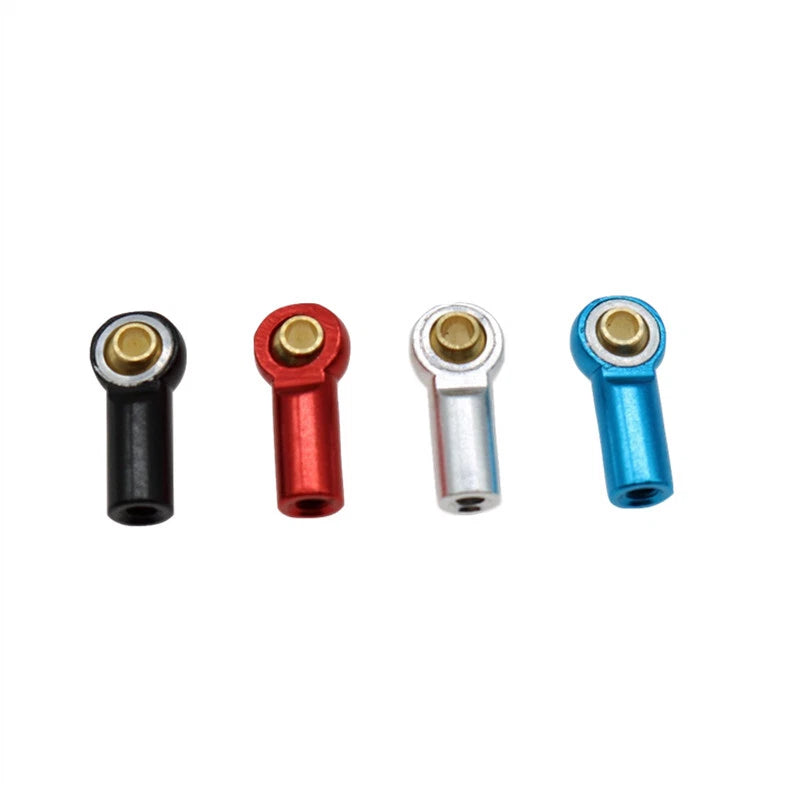
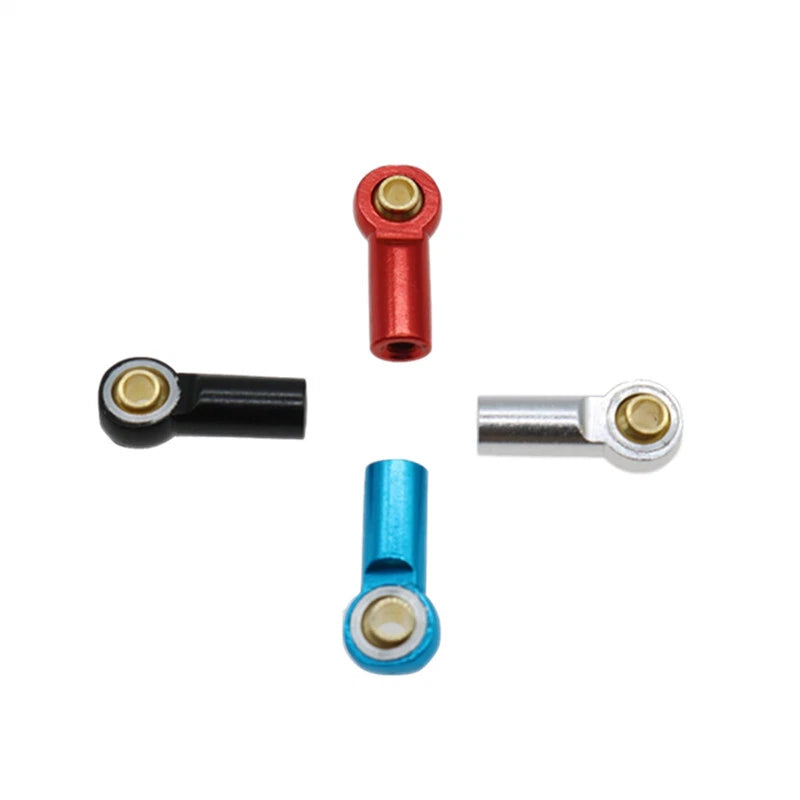
Each bearing consists of a threaded female body (M3 internal thread) paired with a spherical inner ball that allows multi-axis angular movement. The body is typically 10–16 mm in overall length, with a ball outer diameter of approximately 6–8 mm (0.24–0.31 in). Available in four colour options — Red, Blue, Black, and White — for easy identification in multi-axis assemblies. Sold in quantities from 1 to 50 pieces to suit prototyping through production runs.

Typical use cases include RC car steering linkages requiring precise toe and camber adjustment, robotic arm joints needing low-friction spherical articulation, and CNC machine axis control rods where angular misalignment compensation is critical. The M3 female thread rod end bearing is also widely used in 3D printer bed levelling arms and drone flight control linkages.

🔩 Compatible with M3 threaded rods, clevis pins, and standard 3mm linkage hardware used in RC, robotics, CNC, and automation applications.

✅ Key Features of These M3 Female Rod End Bearings

🔄 Full Spherical Articulation — Rose joint fish eye design allows multi-directional angular movement, compensating for misalignment in dynamic linkage systems without binding.
🧵 M3 Female Thread Body — Standard M3 internal thread for direct connection to M3 rods and turnbuckles; no adapters required for most RC and robotics builds.
🎨 4 Colour Options — Red, Blue, Black, and White variants allow colour-coded axis identification in complex multi-linkage assemblies, reducing wiring and assembly errors.
📦 Flexible Quantity Packs — Available in 1, 5, 10, 20, 25, 30, and 50-piece packs, scaling from single-unit prototyping to full production batch sourcing.
⚖️ Compact & Lightweight — Designed for space-constrained builds; the small form factor suits micro RC vehicles, lightweight robotic arms, and compact automation fixtures.
🔧 Drop-In Replacement Geometry — Standardised M3 rose joint dimensions ensure compatibility with existing linkage hardware, making these a direct swap for worn or damaged joints.

📐 Technical Specifications — M3 Female Rod End Bearings

Thread Type M3 Female (Internal Thread)
Thread Pitch 0.5 mm (standard M3)
Ball Outer Diameter Typically 6–8 mm (0.24–0.31 in)
Overall Body Length Typically 10–16 mm (0.39–0.63 in)
Material See variant options
Finish / Colour Red, Blue, Black, White
Angular Articulation See variant options
Load Rating See variant options
Pack Quantities 1 / 5 / 10 / 20 / 25 / 30 / 50 pcs
Application RC linkages, robotics joints, CNC control rods, automation fixtures

❓ Frequently Asked Questions

What does "M3 female thread" mean for this rod end bearing?

M3 refers to the metric thread diameter of 3 mm. "Female" means the thread is internal — you screw an M3 threaded rod or bolt into the bearing body. This is the standard configuration for adjustable linkage rods in RC, robotics, and CNC applications where you need to fine-tune arm length by threading the rod in or out.

What is the difference between a rose joint, fish eye bearing, and rod end bearing?

These terms all describe the same component type. "Rod end bearing" is the engineering term; "rose joint" is common in motorsport and aerospace; "fish eye bearing" is used in RC and hobby communities due to the spherical ball's appearance. All refer to a bearing with a threaded shank and a spherical inner race that allows angular misalignment.

How do I choose the right quantity pack for my project?

For prototyping or single-axis builds, the 1 or 5-piece pack is ideal. For a full RC car build (typically 4–8 rod ends per vehicle), the 10 or 20-piece pack offers better value. For production runs, workshop stock, or team builds, the 25, 30, or 50-piece packs provide the lowest per-unit cost. Select your quantity in the Qty(pcs) option above.

Are these rod end bearings compatible with standard M3 turnbuckles and clevis pins?

Yes. The M3 female thread is a universal metric standard, so these bearings thread directly onto any M3 turnbuckle, threaded rod, or clevis pin without adapters. They are compatible with hardware from common RC, robotics, and CNC suppliers that use the M3 metric standard.

What do the different colours indicate — are they different specifications?

The colour options (Red, Blue, Black, White) are the same M3 female rod end bearing in different anodised or coated finishes. They share the same thread specification and geometry. The colour variants are primarily used for visual identification in multi-axis assemblies — for example, using Red for left-side linkages and Blue for right-side linkages to reduce assembly errors.

How do I check if a rod end bearing is worn and needs replacement?

Signs of wear include noticeable play or slop when you manually move the ball in the socket, grinding or rough movement during articulation, or visible corrosion on the ball surface. In RC and robotics applications, worn rod ends cause imprecise steering response or actuator drift. Replace bearings in matched pairs on the same axis to maintain symmetrical geometry.

Can these be used in outdoor or high-moisture environments?

For outdoor or high-moisture use, inspect the finish condition regularly and apply a light machine oil or dry lubricant to the ball joint to prevent corrosion. If your application involves continuous water exposure (e.g., waterproof RC crawlers), consider contacting us to confirm the specific material and coating of the variant you need before ordering.

🛒 Select your colour and quantity above, then add to cart.

You may also like

Recently viewed