
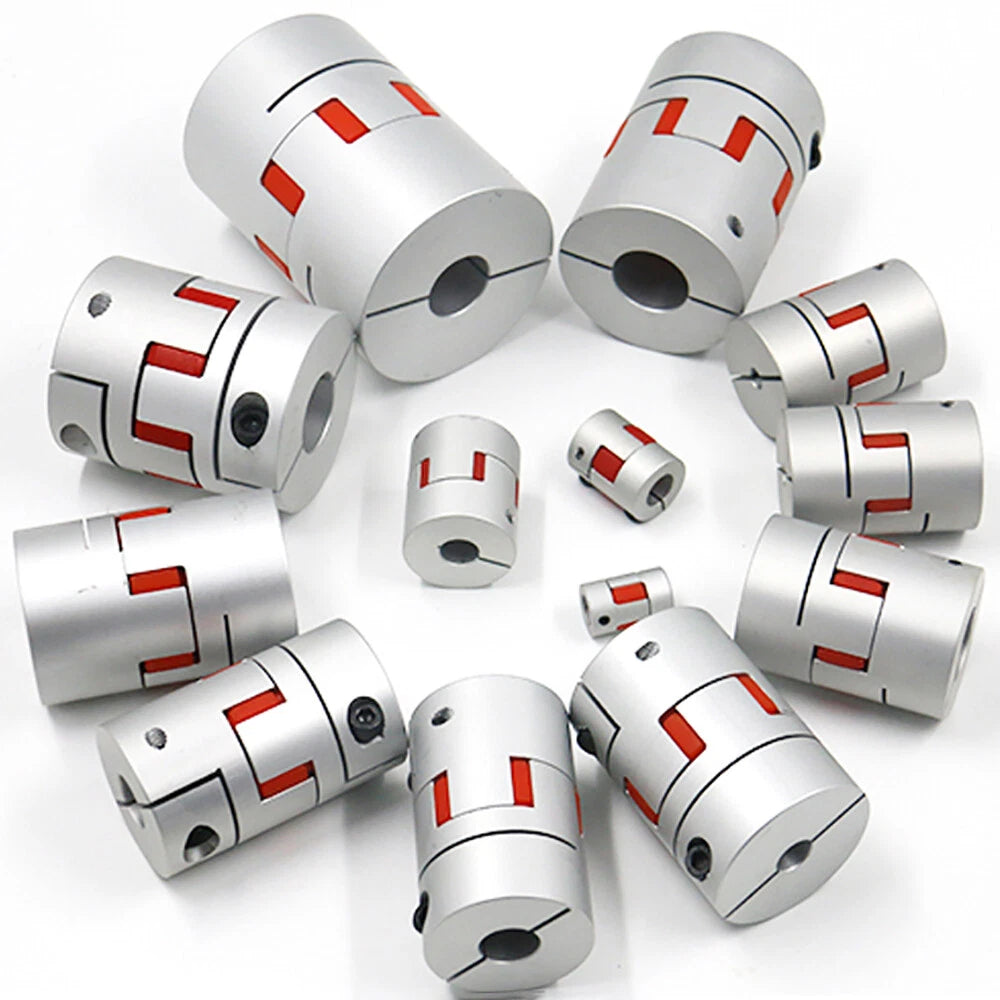
Flexible Plum Coupling Shaft Coupler D30 * L35/L40 CNC Stepper Motor 3D Printer

No reviews

Price:
Sale price$19.18 USD
Stock:
In stock (500 units), ready to be shipped

Payment & Security

Ach Direct Debit Amazon American Express Apple Pay Bancontact BLIK Diners Club Discover EPS Google Pay iDEAL Wero JCB Maestro Mastercard Multibanco MobilePay PayPal Przelewy24 Shop Pay Twint Union Pay USDC Visa

Your payment information is processed securely. We do not store credit card details nor have access to your credit card information.

Limited Offer — Spend More, Save More
Spend $55+
Save $5
Spend $100+
Save $10
Spend $200+
Save $25
HomeDIYer DIY Expert Support

DIY Expert Support

Get fitment advice & recommendations

Mon–Fri  8:30 AM – 8:00 PM
24-Hour Fast Ship
Arrives in 3–14 Days
Worldwide Shipping
30-Day Returns
1 tree planted with every purchase

Description

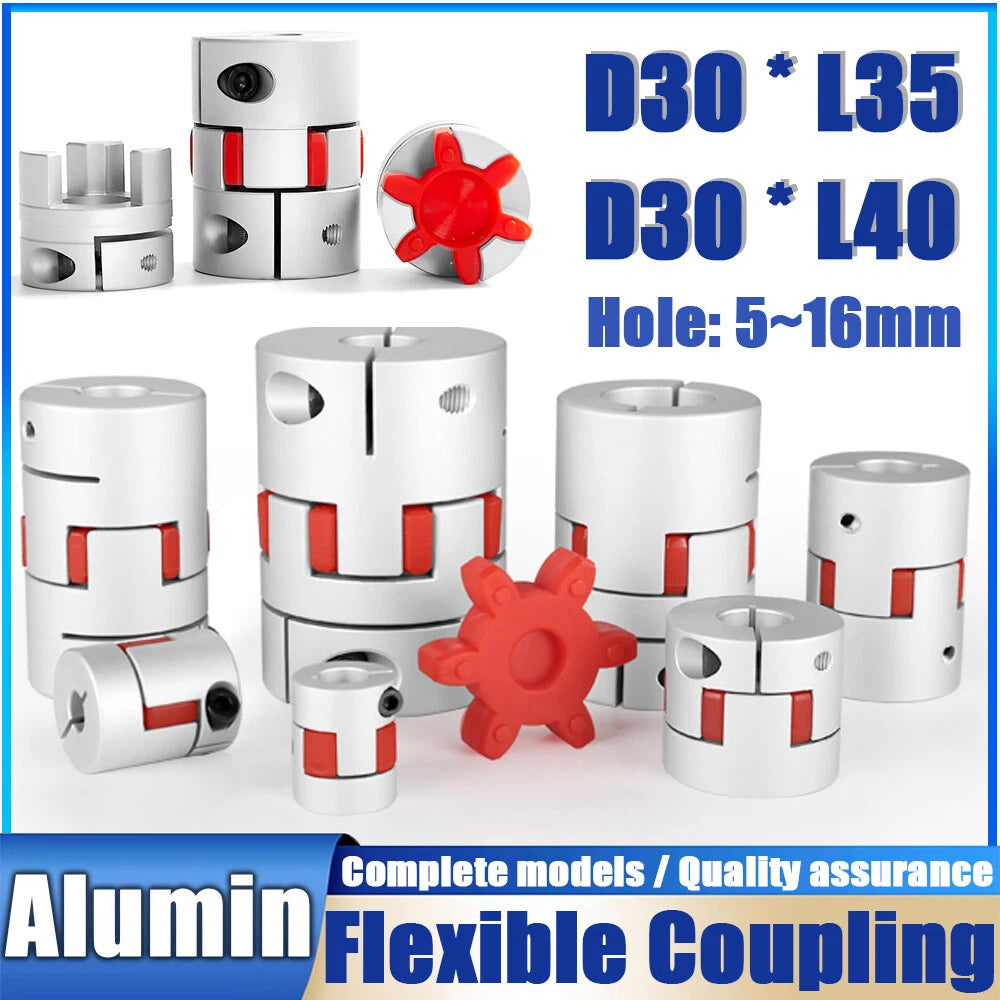
Flexible Plum Coupling Shaft Coupler D30 — Precision Motion for CNC & 3D Printers

When misaligned shafts cause vibration, noise, or premature wear in your CNC router, stepper motor drive, or 3D printer axis, a rigid coupling simply won't cut it. Engineers, makers, and machine builders who demand smooth, reliable torque transmission need a flexible jaw coupling that absorbs angular and parallel misalignment without sacrificing rotational accuracy.

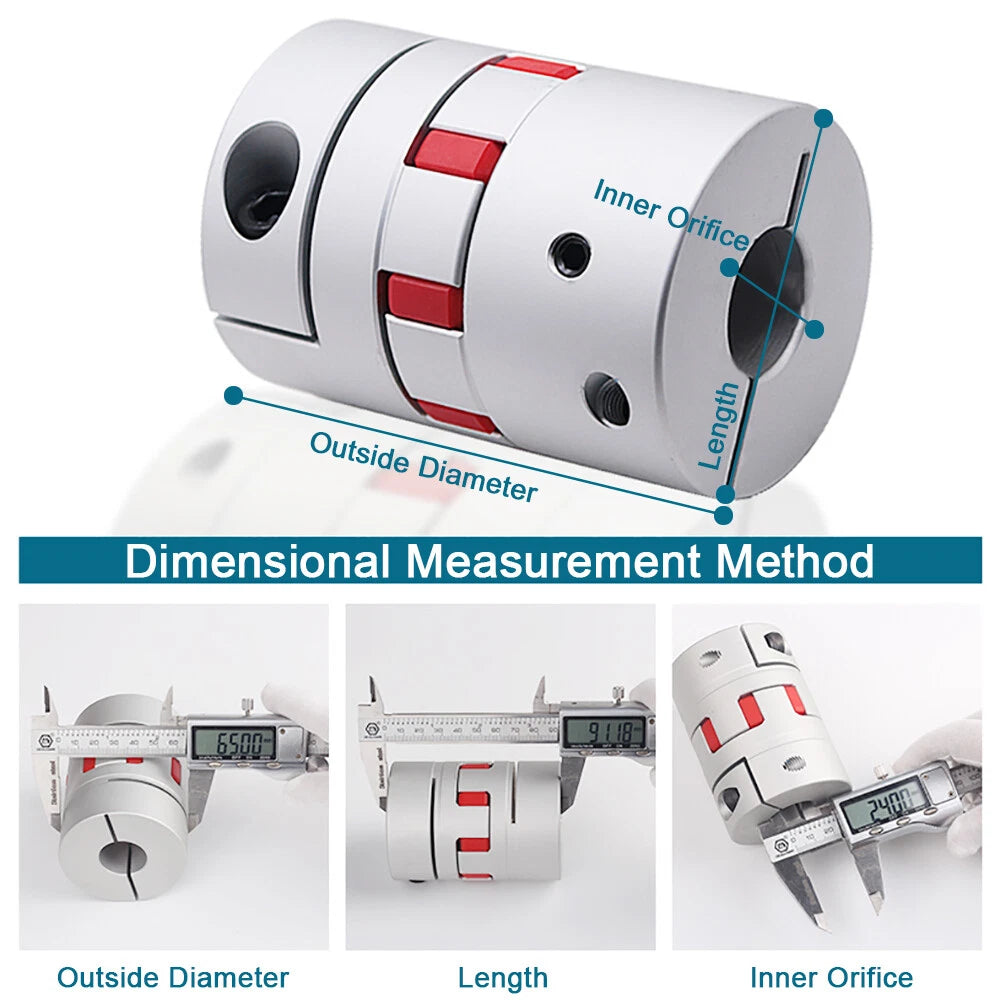
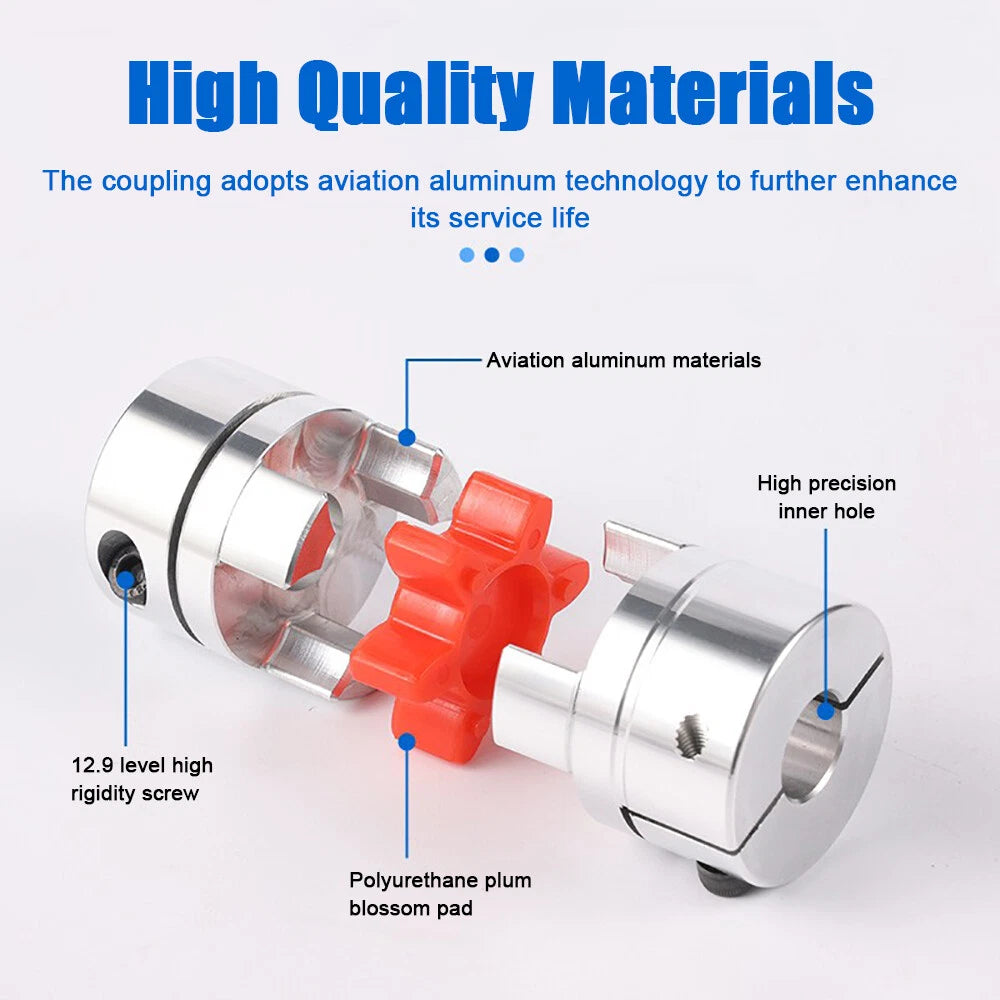
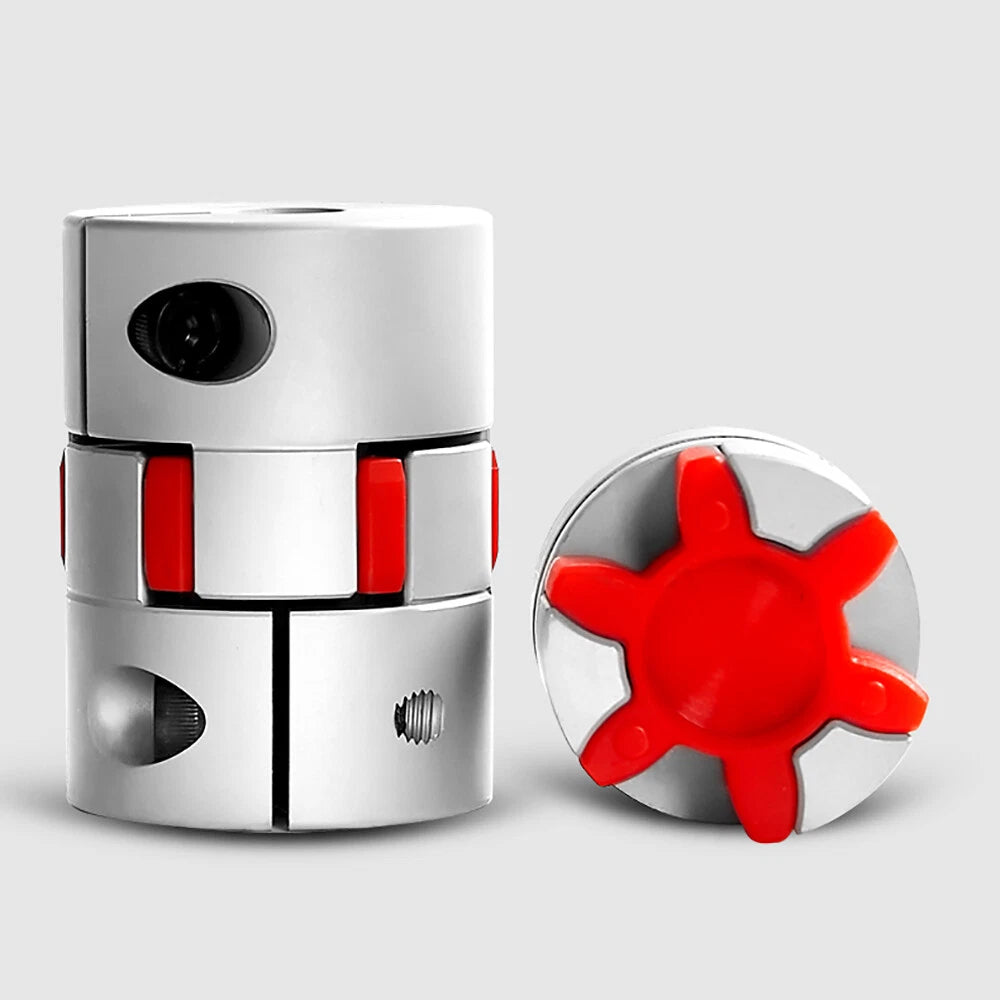
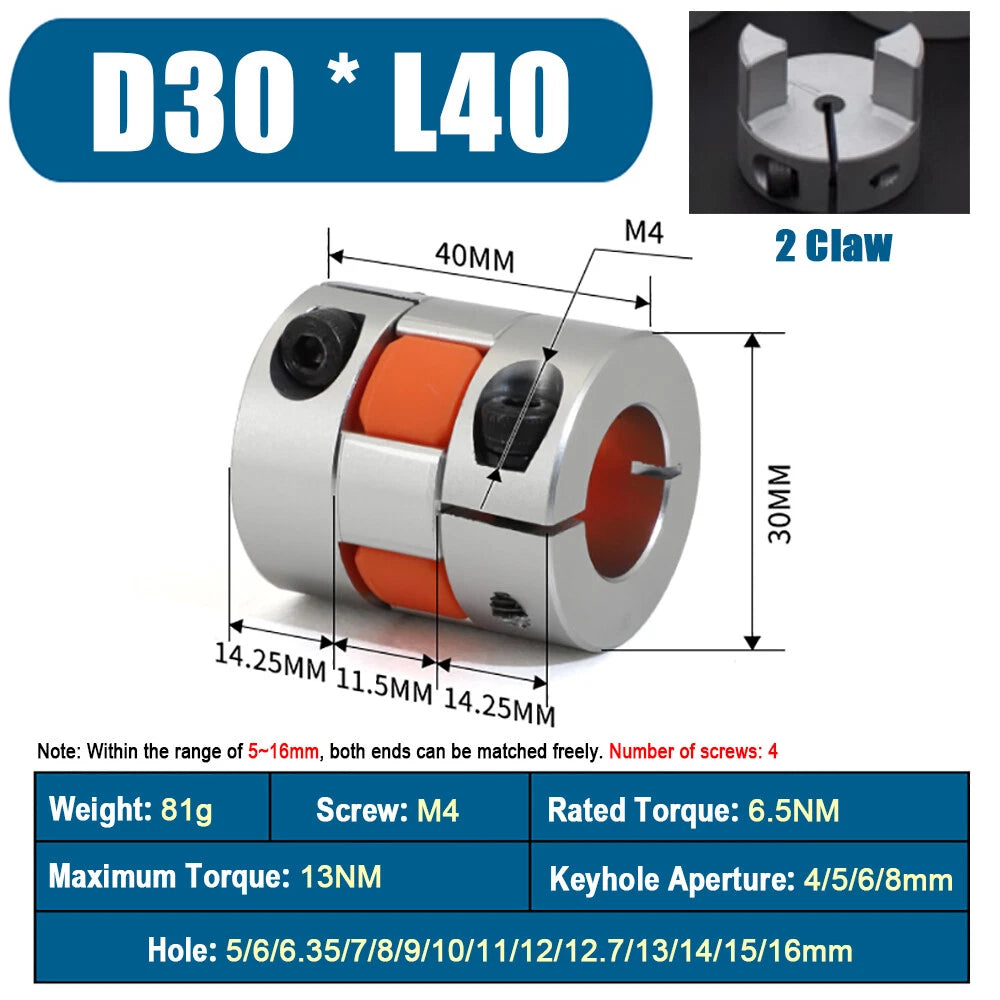
This flexible plum coupling features a two-piece aluminum alloy spider-jaw body with a polyurethane (PU) spider insert. The outer diameter is 30 mm (≈1.18 in), available in two body lengths: L35 (35 mm / ≈1.38 in) and L40 (40 mm / ≈1.57 in). Bore combinations span d1 × d2 from 5 mm × 5 mm up to 16 mm × 16 mm, covering both metric and 1/4-inch (6.35 mm) imperial shaft sizes.

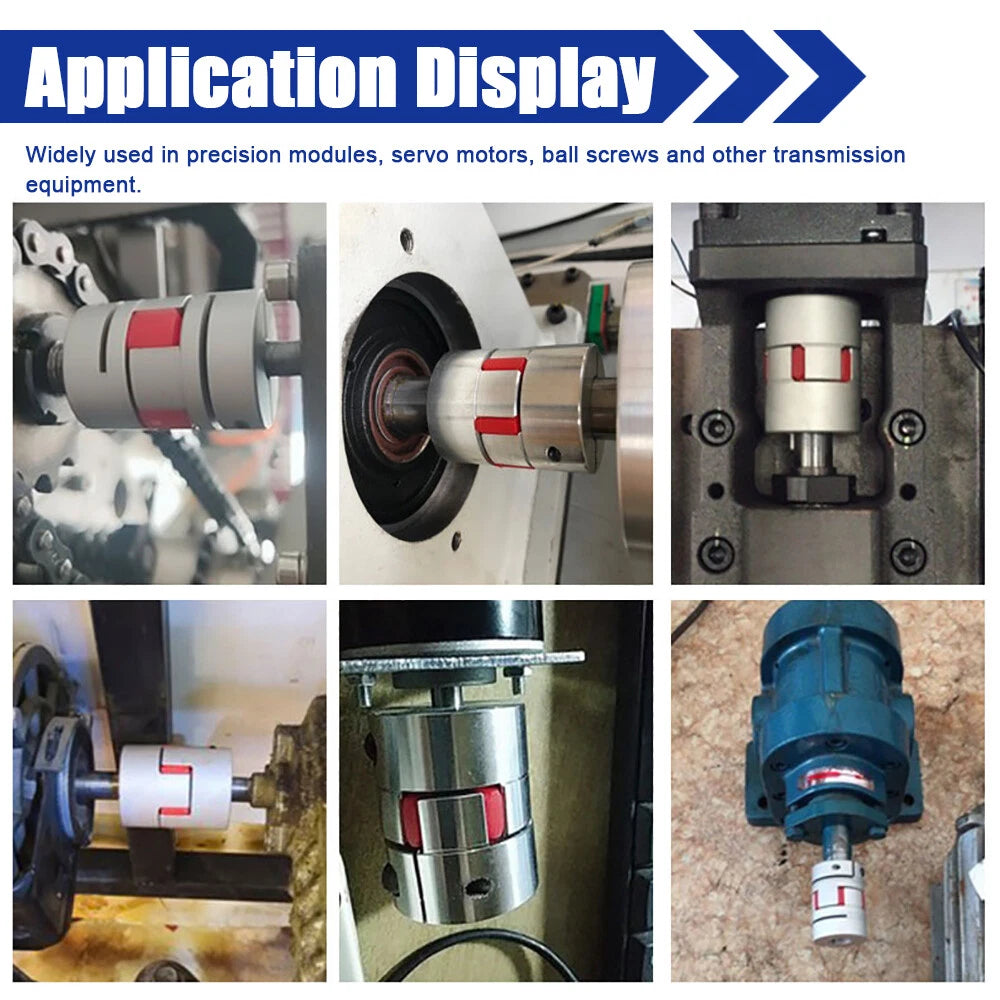
Typical use cases include CNC stepper motor shaft-to-leadscrew connections, 3D printer Z-axis couplings, and light-duty servo drive systems where vibration damping and zero-backlash torque transfer are required. Long-tail applications: "D30 flexible jaw coupling for NEMA 17 stepper," "plum coupling 5mm to 8mm bore CNC," "spider coupling 3D printer Z axis."

⚙️ Compatible with NEMA 17 / NEMA 23 stepper motors, standard CNC leadscrews, and 3D printer Z-axis rods with shaft diameters from 5 mm to 16 mm (including 6.35 mm / 1/4 in imperial shafts).

✅ Key Features of These Flexible Plum Shaft Couplers

🔩 Two-Piece Aluminum Alloy Body — Split-clamp design allows tool-free shaft insertion and secure clamping without set-screw damage to shaft surfaces.
🌀 Polyurethane Spider Insert — The PU jaw spider absorbs angular misalignment (typically up to 1°) and parallel offset, reducing vibration transmitted to bearings and frames.
📐 Wide Bore Range: 5 mm – 16 mm — Covers metric and 6.35 mm (1/4 in) imperial shaft sizes; both bores can be mixed (e.g., 5 mm motor shaft × 8 mm leadscrew).
📏 Two Body Lengths: L35 & L40 — Choose D30 × L35 for compact axis layouts or D30 × L40 for applications needing additional spider travel and damping length.
Low Backlash Torque Transfer — Jaw-and-spider engagement maintains near-zero backlash under reversing loads, critical for accurate CNC positioning and 3D print layer consistency.
🔧 Drop-In Replacement Geometry — D30 outer diameter is a widely used standard; fits existing motor mounts and coupling housings designed for 30 mm OD flexible couplings.

📐 Technical Specifications — Flexible Jaw Shaft Coupler

Outer Diameter (D) 30 mm (≈1.18 in)
Body Length (L) 35 mm or 40 mm — see variant options
Bore d1 (Motor Side) 5 mm – 16 mm — see variant options
Bore d2 (Leadscrew Side) 5 mm – 16 mm — see variant options
Imperial Bore Available 6.35 mm (1/4 in)
Body Material Aluminum alloy
Spider Insert Material Polyurethane (PU)
Coupling Type Flexible jaw / plum spider
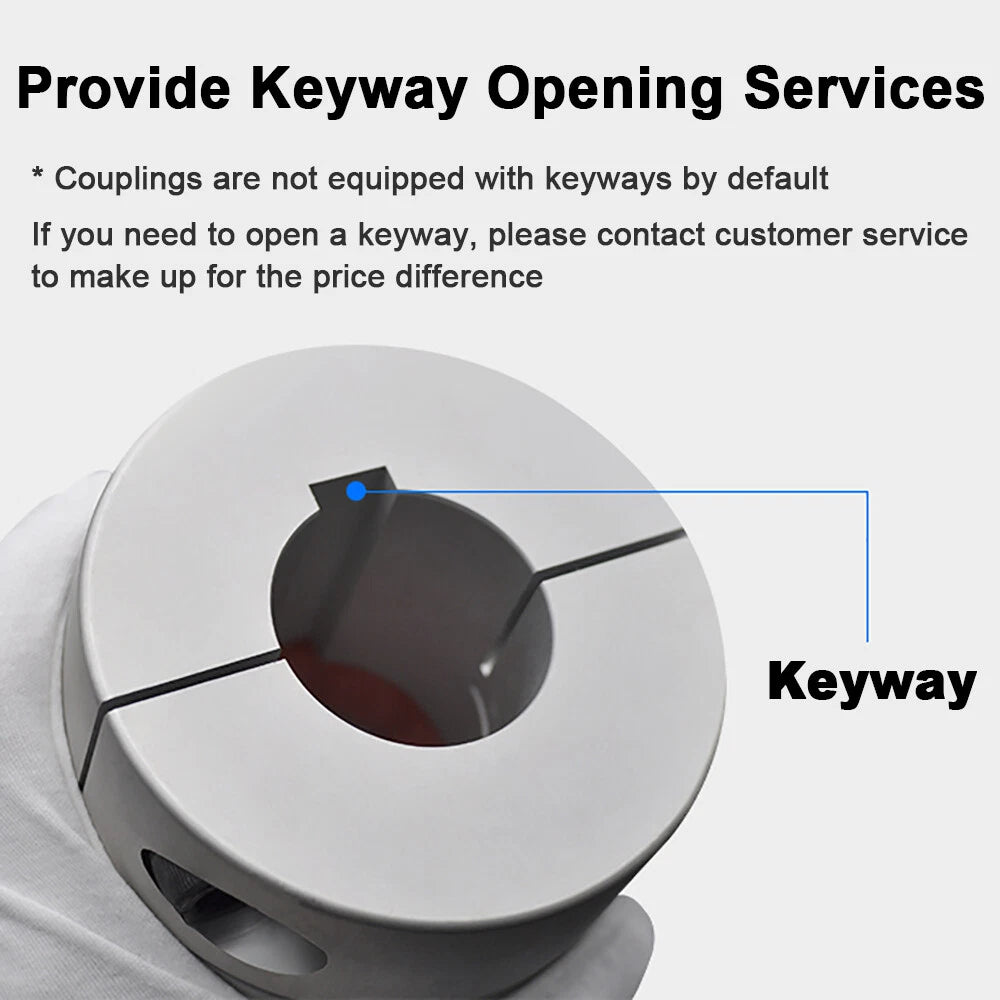
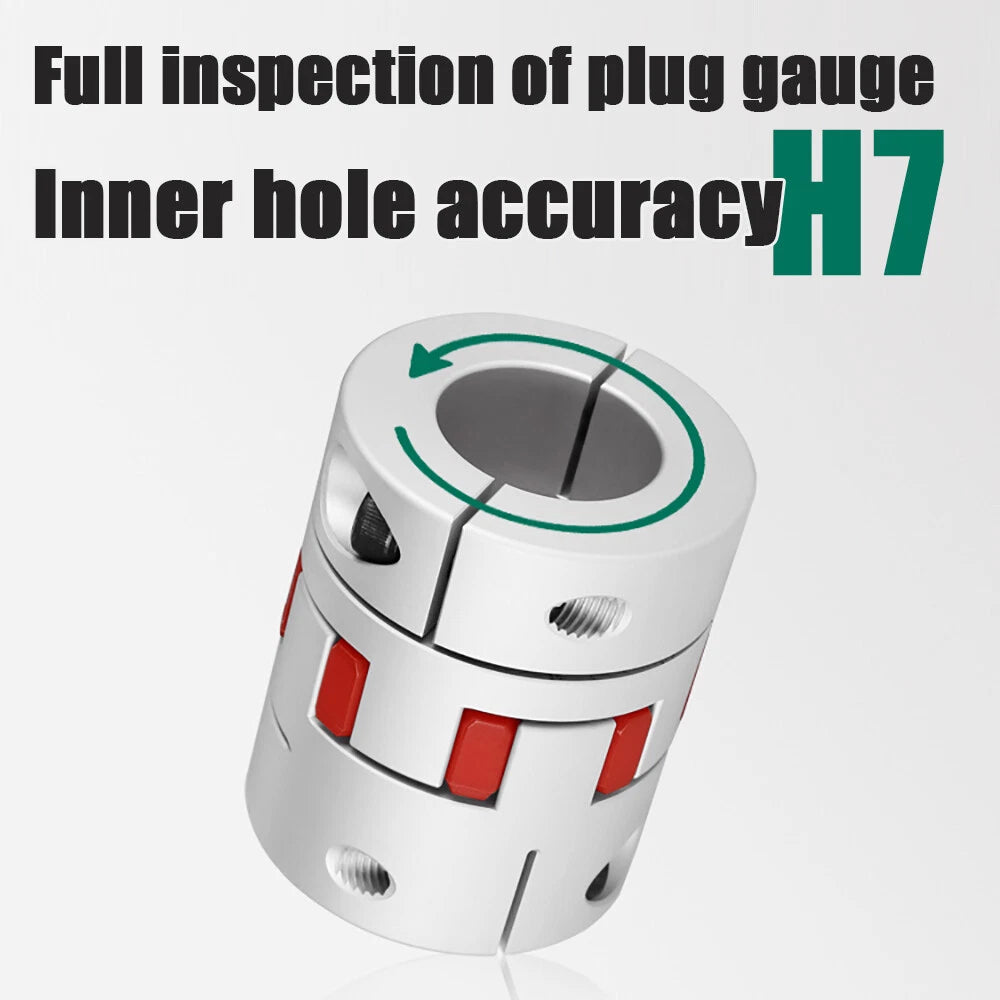
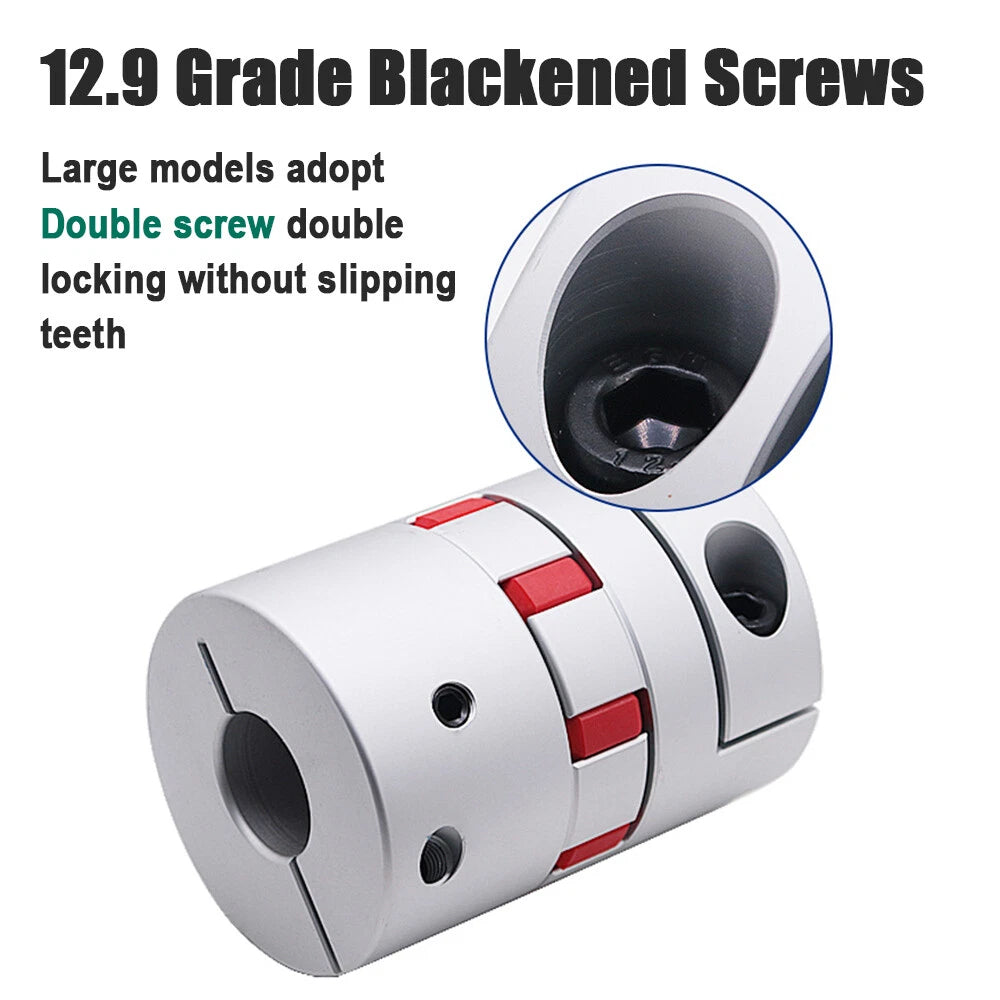
Clamping Style Split-clamp with socket-head cap screws
Angular Misalignment Tolerance Typically up to 1°
Max Torque See variant options
Units per Order 1 piece

❓ Frequently Asked Questions

How do I choose between L35 and L40 body length?

Choose L35 (35 mm) when your motor-to-leadscrew gap is tight and you need a compact coupling. Choose L40 (40 mm) when you want a slightly longer spider engagement zone for improved vibration damping or when your axis layout has more clearance. Both share the same D30 outer diameter and bore range, so the choice is purely based on your axial space and damping preference.

Can I use different bore sizes on each end (e.g., 5 mm motor shaft × 8 mm leadscrew)?

Yes. The "Hole (d1 × d2)" option lets you select mismatched bores — for example, 5 mm on the motor side and 8 mm on the leadscrew side. This is one of the main advantages of a two-piece jaw coupling over a rigid sleeve coupling. Simply select the d1 × d2 combination that matches your specific shaft diameters.

Is 6.35 mm the same as 1/4 inch? Will it fit my imperial-shaft motor?

Yes — 6.35 mm is exactly 1/4 inch (6.35 mm = 0.25 in). Variants listed as "6.35 mm" on either d1 or d2 are designed for 1/4-inch imperial shafts, which are common on North American stepper motors and some servo motors. You can mix metric and imperial bores freely across the two ends.

How much misalignment can this coupling handle?

The polyurethane spider insert accommodates angular misalignment of typically up to approximately 1° and small amounts of parallel (radial) offset. It is not designed for large misalignment — if your motor and leadscrew are significantly out of alignment, correct the mechanical alignment first. The coupling's primary role is to absorb minor residual misalignment and dampen vibration, not to compensate for poor machine assembly.

Will this coupling introduce backlash in my CNC or 3D printer?

Under normal operating loads, the jaw-and-spider engagement maintains near-zero backlash. The PU spider is slightly compliant, which provides vibration damping, but this compliance is minimal under the reversing loads typical of CNC and 3D printer axes. For high-precision applications, ensure the clamp screws are torqued correctly so the coupling does not slip on the shaft — shaft slip is the most common source of apparent "backlash" with clamp-style couplings.

How do I install and tighten the coupling correctly?

Slide each half of the coupling onto its respective shaft, insert the PU spider between the two halves, then align the shafts and tighten the split-clamp screws with a hex key (Allen wrench). Tighten evenly and to the screw manufacturer's recommended torque for the screw size used. Do not overtighten — the aluminum body can crack if the clamp screws are over-torqued. Check tightness after the first few hours of operation as screws may settle slightly.

What is the difference between a plum coupling and a rigid coupling?

A rigid coupling transmits torque with zero compliance — any misalignment between shafts is transferred directly to bearings, causing accelerated wear and noise. A plum (jaw/spider) coupling uses a flexible PU insert between the two aluminum jaws to absorb misalignment and vibration. This protects motor bearings and frame components, making it the preferred choice for CNC routers, 3D printers, and light automation where perfect shaft alignment is difficult to achieve mechanically.

🛒 Select your Hole (d1 × d2) size and Body Length (D30 × L35 or L40) above, then add to cart.

You may also like

Recently viewed